
Compact Thermal Imaging Camera: OEM Selection Guide for Drones & Micro-Inspection
2026年11月6日
Infrared Camera Thermal Modules: The Ultimate Industrial & OEM Selection Guide
Picking an infrared camera thermal core for a factory inspection rig, an autonomous UAV, or a perimeter security tower is a completely different engineering problem than buying an off-the-shelf handheld imager. Hardware architects have to trade off Size, Weight, Power, and Cost (SWaP-C) against radiometric accuracy, Noise Equivalent Temperature Difference (NETD), lens focal length, and deterministic video latency. Getting the detector resolution, pixel pitch, or electrical bus wrong—for instance, dropping a consumer USB dongle into an airborne gimbal that actually needs synchronized RTSP IP feeds or raw MIPI CSI-2 lanes—can force expensive carrier PCB respins, cause severe thermal drift inside sealed enclosures, and push production schedules back by months.
This OEM selection guide walks through the detector physics, optical trade-offs, and electrical integration steps behind modern uncooled long-wave infrared (LWIR) cores. If you are building an edge-AI inspection payload on top of computer vision libraries, wiring continuous temperature monitoring into medium-voltage switchgear, or scaling a commercial drone platform, the benchmarks, bus comparisons, and verified hardware specs below will help you specify the right infrared camera thermal module from early bench testing through volume manufacturing.
جدول المحتويات
- 👉 1. How an Infrared Camera Thermal Core Works: Physics, VOx Microbolometers & Radiometry
- 👉 2. Critical OEM Specifications: Decoding Resolution, 12μm Pixel Pitch, NETD & ASICs
- 👉 3. Hardware Interfaces & Software Integration: MIPI, USB, CVBS & RJ45 RTSP IP
- 👉 4. Industrial, Security & UAV Drone Integration Scenarios
- 👉 5. OEM Thermal Camera Module Showcase & Verified Specifications Comparison
- 👉 6. OEM/ODM Qualification & Thermal Module Procurement Checklist
- 👉 7. Deep-Dive Technical FAQ: Infrared Camera Thermal Engineering
1. How an Infrared Camera Thermal Core Works: Physics, VOx Microbolometers & Radiometry
To choose the right infrared camera thermal core, engineering teams first have to separate reflected-light imaging from passive thermal emission sensing. Standard silicon CMOS and CCD sensors only pick up reflected photons in the visible band (400nm to 700nm) and the near-infrared tail (700nm to 1000nm). Cut the ambient light to zero, and a silicon imager gives you pure noise unless you add an active visible or IR spotlight. Industrial thermal cores work passively without any illumination at all. Every object warmer than absolute zero (0 Kelvin, or -273.15°C) sheds electromagnetic radiation across a wide spectrum, with total radiant flux climbing proportionally to the fourth power of absolute temperature under the Stefan-Boltzmann law.
The Electromagnetic Spectrum: Why Industrial Cores Target LWIR (8μm–14μm)
Not all infrared wavelengths make it through open air cleanly. Water vapor (H2O) and carbon dioxide (CO2) molecules absorb huge chunks of outgoing energy, leaving electro-optical engineers with two main atmospheric windows where transmission stays high: Mid-Wave Infrared (MWIR, 3μm to 5μm) and Long-Wave Infrared (LWIR, 8μm to 14μm).
- ⚙️ Mid-Wave Infrared (MWIR, 3μm–5μm): MWIR imagers generally use quantum photon detectors built from indium antimonide (InSb) or mercury cadmium telluride (HgCdTe). Those materials must be chilled down to roughly 77 Kelvin by a closed-cycle Stirling cryocooler. Cooled MWIR optics deliver exceptional long-range sensitivity for military targeting pods and aerospace systems, yet cryocoolers add mechanical vibration, heavy power draw, finite cooler wear-out lifetimes, and unit costs that price out most commercial OEM builds.
- ⚙️ Long-Wave Infrared (LWIR, 8μm–14μm): Under Wien's displacement law, everyday terrestrial targets near room temperature (around 300 Kelvin or 27°C) radiate peak blackbody energy right around 9.66μm—dead center in the LWIR band. Because uncooled microbolometer focal plane arrays run reliably at ambient enclosure temperatures with zero moving cryogenic parts, LWIR dominates UAV inspection payloads, continuous machine monitoring, and 24/7 perimeter surveillance.
Inside the Uncooled VOx Microbolometer Focal Plane Array (FPA)
At the center of a modern uncooled infrared camera thermal module sits a micro-electromechanical systems (MEMS) Focal Plane Array (FPA), usually patterned from Vanadium Oxide (VOx) or Amorphous Silicon (a-Si) thin films. Most industrial OEMs lean toward Vanadium Oxide because of its steep Temperature Coefficient of Resistance (TCR, commonly -2% to -3% per Kelvin) and low 1/f flicker noise, both of which yield cleaner low-contrast scenes.
Every pixel on the chip is built like a microscopic suspended bridge sealed inside a vacuum package just above a silicon Readout Integrated Circuit (ROIC), held up by thin, thermally isolating legs. Incoming LWIR energy passes through a germanium or chalcogenide glass lens—standard optical glass blocks 8μm–14μm light completely—and hits the pixel's absorber membrane. That absorbed radiation warms the suspended VOx element by fractions of a millikelvin, dropping its electrical resistance by a tiny but measurable margin. The ROIC beneath the array biases each row and column in sequence, integrates those resistance shifts, and digitizes them into 14-bit or 16-bit raw counts for the downstream image processor.
Radiometric Calibration, Emissivity, and Atmospheric Compensation
Raw microbolometer counts do not equal surface temperature on their own; each pixel simply measures the total radiant power landing on its absorber. In a factory or outdoor yard, that incoming flux is always a mix of three separate energy sources:
- ⚙️ Emitted Target Radiation: Energy leaving the object itself, set by its true surface temperature and its surface emissivity (ε, scaled from 0.0 to 1.0). Oxidized steel, rubber cable jackets, and matte paint have high emissivity (>0.85), while shiny bare aluminum or clean copper busbars sit much lower (<0.20).
- ⚙️ Reflected Ambient Radiation: Infrared energy from nearby motors, walls, or open sky that bounces off the target into the lens. On shiny low-emissivity metals, reflected heat easily swamps the real reading if left uncompensated.
- ⚙️ Atmospheric Attenuation and Path Emission: Minor infrared absorption and air-column emission between the target surface and the front germanium lens, driven by relative humidity and standoff distance.
Industrial thermal cores store factory-measured Non-Uniformity Correction (NUC) tables, bad-pixel replacement maps, and Planck-curve radiometric models right in onboard firmware. Once the host software feeds in target emissivity, reflected background temperature, humidity, and distance offsets, the core converts raw counts into repeatable per-pixel temperatures instead of arbitrary relative heat maps.
2. Critical OEM Specifications: Decoding Resolution, 12μm Pixel Pitch, NETD & ASICs
Comparing datasheets across thermal core vendors means looking past headline numbers to see how sensor geometry drives lens cost, detection range, board power, and mechanical size.
Resolution Scaling: 384×288 vs. 640×512 for Detection, Recognition, and Identification (DRI)
In security, firefighting, and aerial inspection work, array resolution directly sets Johnson's Criteria—the classical electro-optical rule of thumb specifying how many resolved pixel cycles must span a target's critical dimension to achieve Detection (spotting an anomaly), Recognition (telling a person from a vehicle, or a transformer from a breaker), or Identification (making out fine structural details).
- ✅ 384×288 Resolution (110,592 Pixels): Often treated as the industrial "golden spec" for compact, budget-conscious OEM systems, a 384×288 detector packs nearly 5.8× the pixels of older 160×120 arrays. It delivers plenty of spatial detail for switchgear cabinet monitoring, automated perimeter intrusion alerts, and lightweight commercial drone payloads while keeping memory bandwidth and power draw modest.
- ✅ 640×512 Resolution (327,680 Pixels): Offering almost three times the pixel count of a 384×288 chip, a 640×512 infrared camera thermal module pays off in long-range and wide-swath missions. When mapping utility-scale solar farms from higher altitudes or watching wide coastal zones, 640×512 lets you fit a wider Field of View (FOV) lens while keeping enough pixels on target to spot single damaged PV cells or hot overhead splices from a safe distance.
12μm Pixel Pitch Physics and Optical Lens Size Reduction
One of the biggest practical shifts in uncooled detector manufacturing has been the move away from 25μm and 17μm pixels down to خطوة بكسل 12 ميكرومتر arrays. Shrinking the pixel pitch sends ripple savings straight through the rest of the hardware bill of materials (BOM).
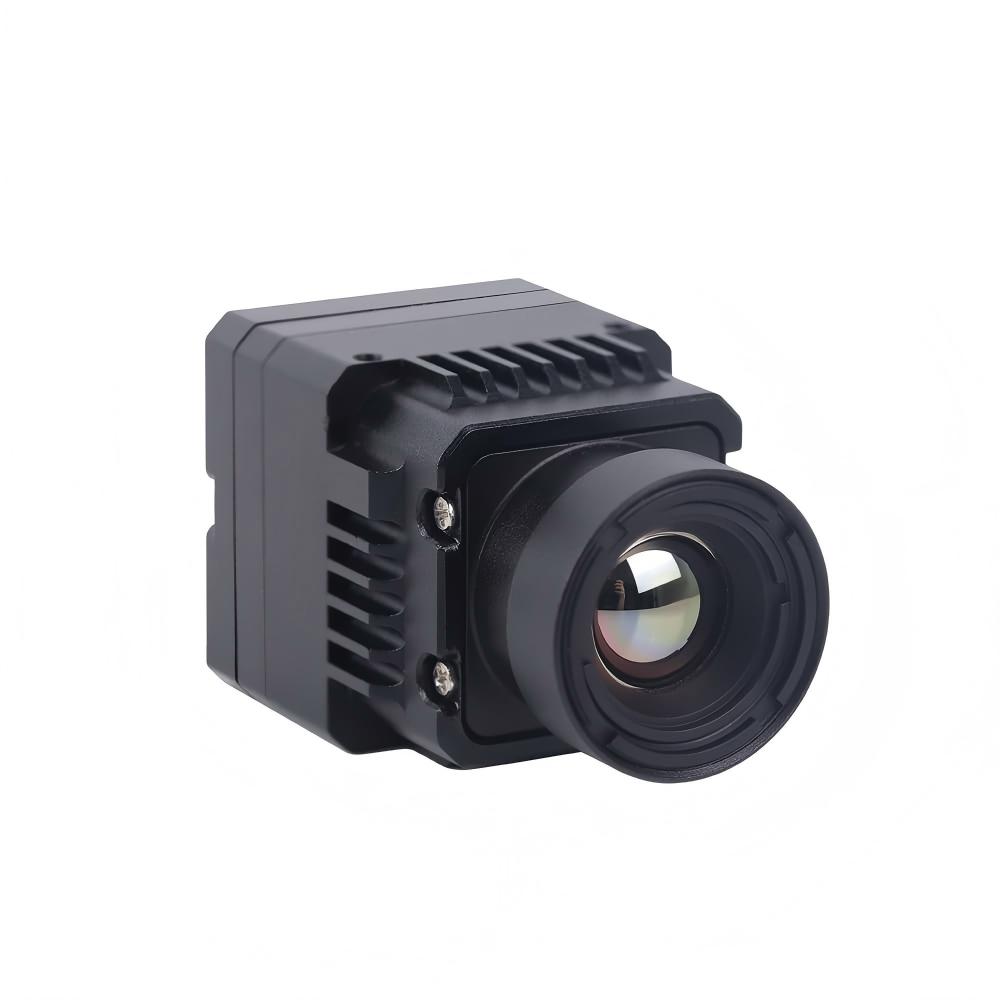
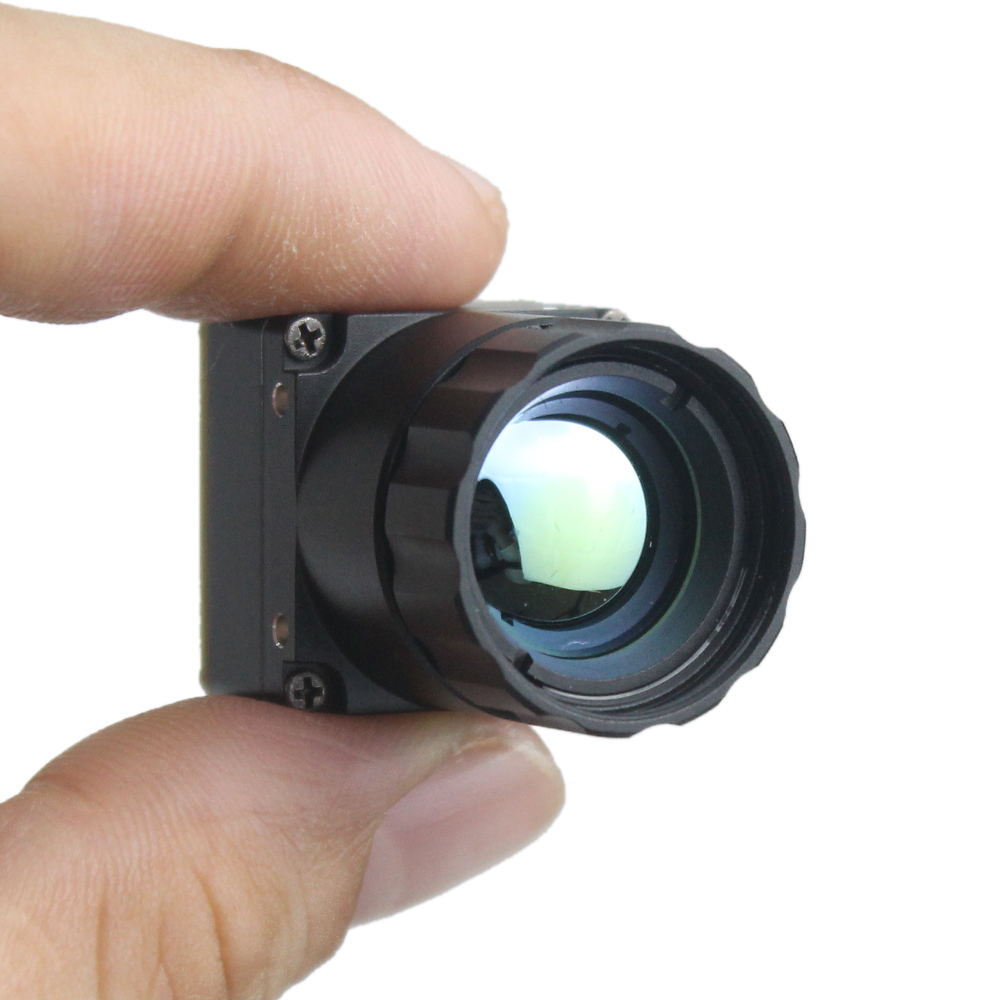
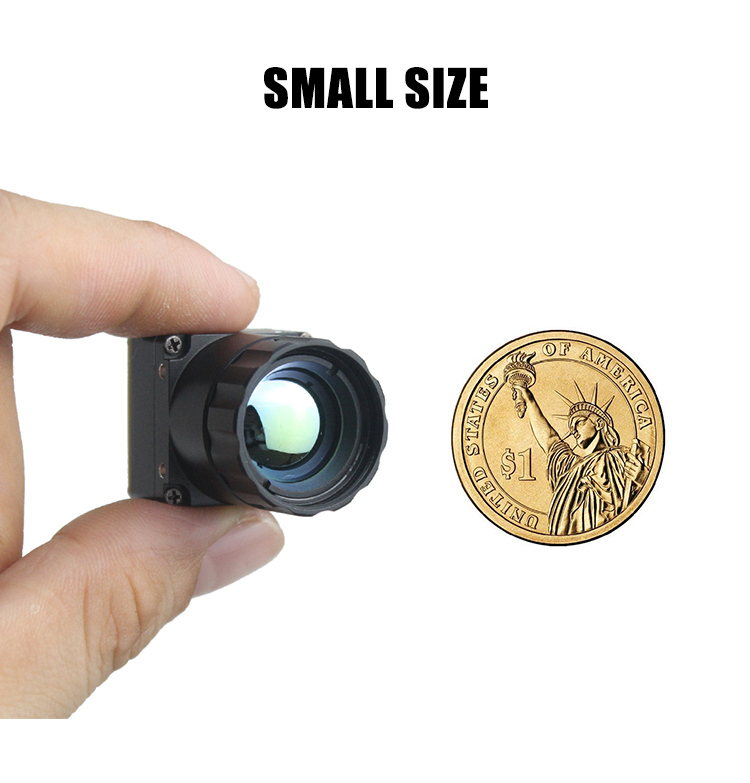
An array's active width is simply its horizontal pixel count times the pixel pitch. Dropping from 17μm to 12μm trims the physical width of the sensor by almost 30%. Because angular Field of View comes from the ratio of sensor width to lens focal length, a 12μm FPA needs a proportionally shorter focal length germanium lens to hit the exact same angular resolution (Instantaneous Field of View, or IFOV) and standoff range as a bulkier 17μm sensor. Diamond-turned germanium optics are often the heaviest and priciest subassembly in the entire payload, so stepping down to a 12μm core—like the sensor inside the MD Series 384x288 compact low-power thermal camera module—cuts lens diameter, lowers gimbal inertia, and shrinks the whole enclosure.
NETD, Thermal Time Constant, and Frame Rate Considerations
Resolution sets spatial sharpness, while thermal sensitivity is measured by فرق درجة الحرارة المكافئ للضوضاء (NETD) in millikelvins (mK). NETD tells you the smallest temperature gap between a target and its background that the detector can pull above its own electronic noise floor. Lower NETD figures yield noticeably cleaner imagery in coastal fog, light rain, or flat-temperature outdoor terrain where trees and soil sit near the same ambient temperature.
You also have to match frame rate and pixel thermal time constant to platform speed. Export-limited consumer gadgets are commonly capped at 9Hz, which blurs fast-moving vehicles or stabilized drone gimbals. Industrial OEM cores running full real-time video rates (such as 25Hz, 30Hz, 50Hz, or 60Hz depending on regional build) track rapid motion cleanly enough for closed-loop gimbal control and high-speed factory conveyors.
ASIC Image Processing Pipelines vs. Legacy FPGA-Based Cores
Early uncooled thermal cores leaned on multi-board Field-Programmable Gate Array (FPGA) stacks to handle ROIC timing and non-uniformity correction. FPGAs pull more current and shed extra heat, which speeds up internal temperature drift inside sealed IP67 boxes. Newer OEM modules swap bulky FPGA boards for dedicated Application-Specific Integrated Circuits (ASICs).
An infrared imaging ASIC packs detector biasing, 2-point NUC compensation, bad-pixel replacement, spatial/temporal noise filtering, dynamic contrast stretch (DDE/AGC), pseudo-color lookup tables, and digital video encoding onto one low-power piece of silicon. Semiconductor experience shows up fast in ASIC firmware tuning and board layout: engineering groups blending microelectronics research with high-speed embedded design—such as the Guangzhou Purple River Electronic Technology engineering team, drawing on Hong Kong University of Science and Technology (HKUST) academic roots and former Huawei HiSilicon chip talent—deliver tighter thermal-drift control, cleaner edge enhancement, and smaller PCBs.
3. Hardware Interfaces & Software Integration: MIPI, USB, CVBS & RJ45 RTSP IP
Even the sharpest microbolometer becomes a headache if its electrical connectors and video protocols clash with your host compute board. Industrial infrared camera thermal modules typically center on four hardware interfaces, each built for different latency, wiring distance, and processor setups.
Embedded Board-to-Board Buses: MIPI CSI-2 and USB Integration
- ✅ MIPI CSI-2 (واجهة معالج الصناعة المتنقلة): MIPI is the go-to board-to-board link for compact embedded designs running on ARM SoCs like NVIDIA Jetson Orin/Xavier, NXP i.MX8, Rockchip, or Qualcomm flight boards. Traveling over high-speed differential lanes on short FPC ribbons or mezzanine headers, MIPI feeds uncompressed frames straight into host memory or hardware ISPs with near-zero latency and no IP compression artifacts—a major win for onboard AI inference.
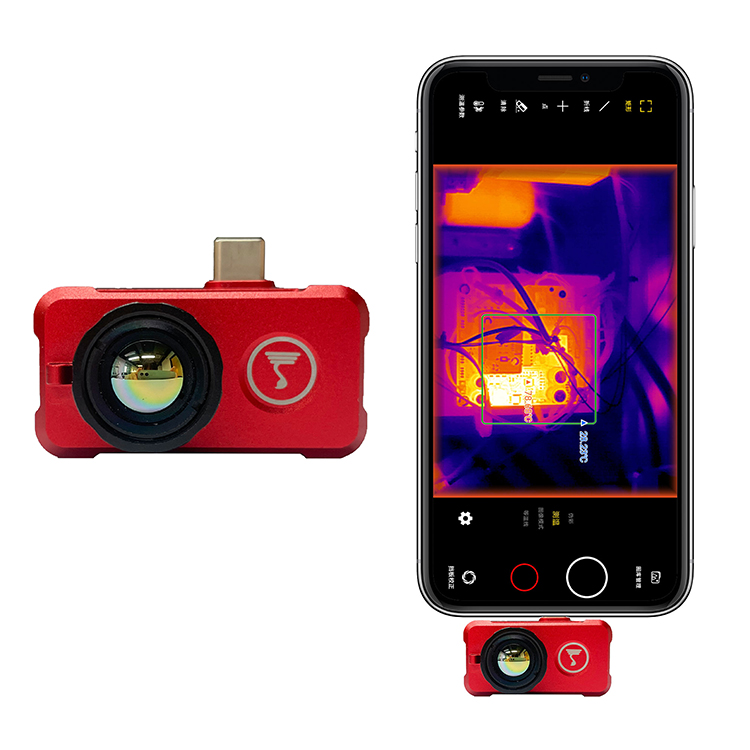
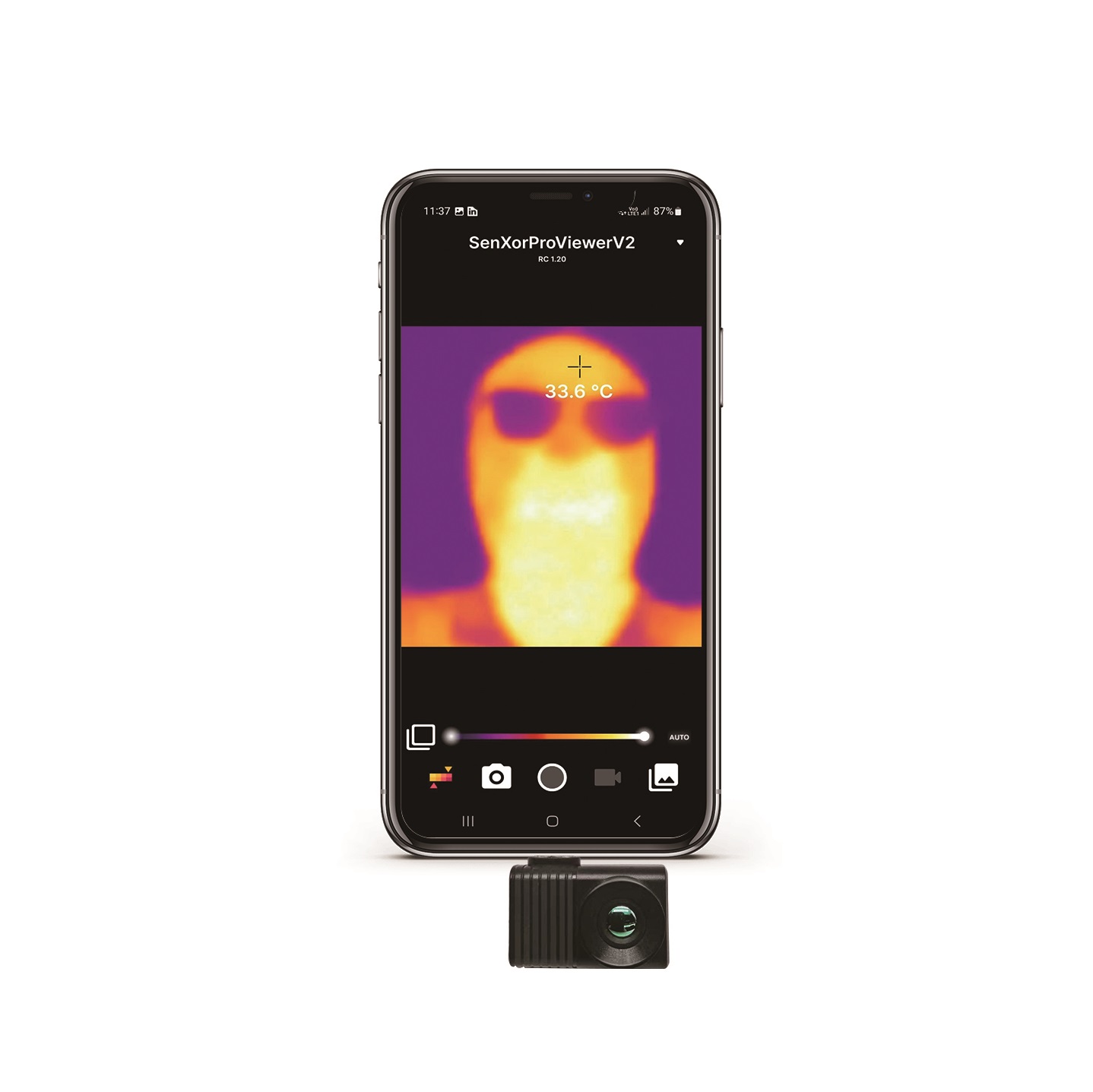
- ✅ USB (UVC Video & Control): USB gives you instant plug-and-play bring-up on Linux, Windows, and Android single-board computers. For benchtop validation, portable diagnostic tools, and modular lab rigs, USB skips custom high-speed carrier routing and talks directly to standard V4L2 or DirectShow drivers.
Analog Legacy & FPV Drone Telemetry: CVBS Output
Even with digital video everywhere, CVBS (Composite Video Baseband Signal, PAL/NTSC) remains standard across UAV First-Person View (FPV) links, vehicle retrofits, and legacy industrial monitors. CVBS pushes zero-buffer analog video down a single coax cable or 5.8GHz analog VTX link. When RF noise spikes at the edge of flight range, analog CVBS breaks up gradually with snow rather than freezing completely on a dropped H.264/H.265 keyframe or lagging behind multi-second network buffers.
Networked Payloads & Edge AI: RJ45 Ethernet and RTSP IP Streaming
For multi-sensor security masts, plant-wide condition monitoring networks, and Ethernet-wired drones (like tethered inspection UAVs or companion-computer payloads), an RJ45 IP module with native RTSP (Real-Time Streaming Protocol) keeps cabling simple. Onboard ASIC H.264/H.265 compression wraps the thermal stream into standard Ethernet packets, letting multiple Video Management Systems (VMS), Network Video Recorders (NVR), and cloud gateways pull feeds simultaneously over ordinary Cat5e/Cat6 runs.
Prototyping & Computer Vision Pipelines with Arduino and OpenCV
B2B hardware builds often split deterministic real-time housekeeping from heavy image analytics. During early prototyping and factory automation setups, engineers regularly pair thermal cores with أردوينو boards (or similar microcontrollers talking over UART, I2C, or PWM) to handle low-level tasks: stepping pan-tilt gimbals, sampling ambient temperature and humidity sensors for emissivity math, firing mechanical shutter NUC commands, and tripping PLC safety relays when a hotspot crosses an alarm threshold.
Upstream, frames arriving over USB, MIPI V4L2, or RJ45 RTSP are processed on companion computers using OpenCV. Inside an OpenCV pipeline, developers apply morphological thresholding to isolate electrical faults, undistort wide-angle lenses, blend thermal edges onto co-aligned RGB camera feeds for clearer operator views, and track moving targets across regions of interest (ROI). Before locking down schematic capture or ordering prototype carrier PCBs, hardware teams can also check structured B2B thermal camera module integration guidelines to double-check pinouts, power-rail sequencing, and SDK command frames.
4. Industrial, Security & UAV Drone Integration Scenarios
Picking the right infrared camera thermal core comes down to matching detector resolution, lens focal length, and interface buses to the physical realities of the job site.
UAV Payloads, Search & Rescue, and Autonomous Drone Inspection
Every extra gram on a multirotor or fixed-wing drone cuts flight time, heats up motors, and hurts stability in crosswinds. Drone builders look for mini uncooled modules with low power draw and dual-purpose interfaces—such as RJ45 RTSP IP streaming into an onboard flight recorder alongside CVBS output for low-latency pilot viewing. Common aerial missions include:
- ✅ Utility-Scale Solar Farm Diagnostics: Scanning megawatt PV fields quickly to spot hot junction boxes, shorted bypass diodes, and cracked cells without shutting down inverter banks.
- ✅ High-Voltage Powerline & Substation Audits: Finding corroded conductor splices, failing transformer bushings, and unbalanced three-phase loads from safe standoff clearances.
- ✅ Search & Rescue (SAR) and Wildfire Containment: Seeing through heavy forest smoke and dense night canopy where standard RGB gimbals and searchlights fail to locate lost hikers or lingering underground embers.
Industrial Predictive Maintenance & Continuous Temperature Monitoring
Unplanned downtime in wafer fabs, refineries, and automated assembly lines burns cash fast. Compact 384×288 uncooled cores over MIPI or USB are now mounted permanently inside medium-voltage switchgear cabinets, robotic laser welding booths, and lithium-ion Battery Energy Storage Systems (BESS). Whereas a single-spot IR pyrometer watches just one fixed point, a 384×288 array tracks 110,592 virtual measurement spots at once—catching dry bearings, loose busbar lugs, and early battery thermal runaway long before smoke alarms trip.
Perimeter Security, Smart Cities, and All-Weather Surveillance
Visible-light CCTV cameras struggle in pitch dark, harsh low-angle sunlight, oncoming headlights, light fog, and brush camouflage. Uncooled LWIR cores pull crisp human and vehicle silhouettes 24 hours a day without throwing visible or near-IR light that gives away camera positions. Paired with edge-AI classifiers, thermal perimeter nodes cut way down on false alerts from shifting tree shadows, rain streaks, and flying insects.
5. OEM Thermal Camera Module Showcase & Verified Specifications Comparison
To tie these selection rules to actual off-the-shelf hardware, here is a verified breakdown of two OEM infrared camera thermal modules built for drone payloads, industrial condition monitoring, and security systems.
عرض المنتج 1: وحدة كاميرا استشعار حراري غير مبردة بالأشعة تحت الحمراء RJ45 CVBS RTSP IP بدقة 640*512
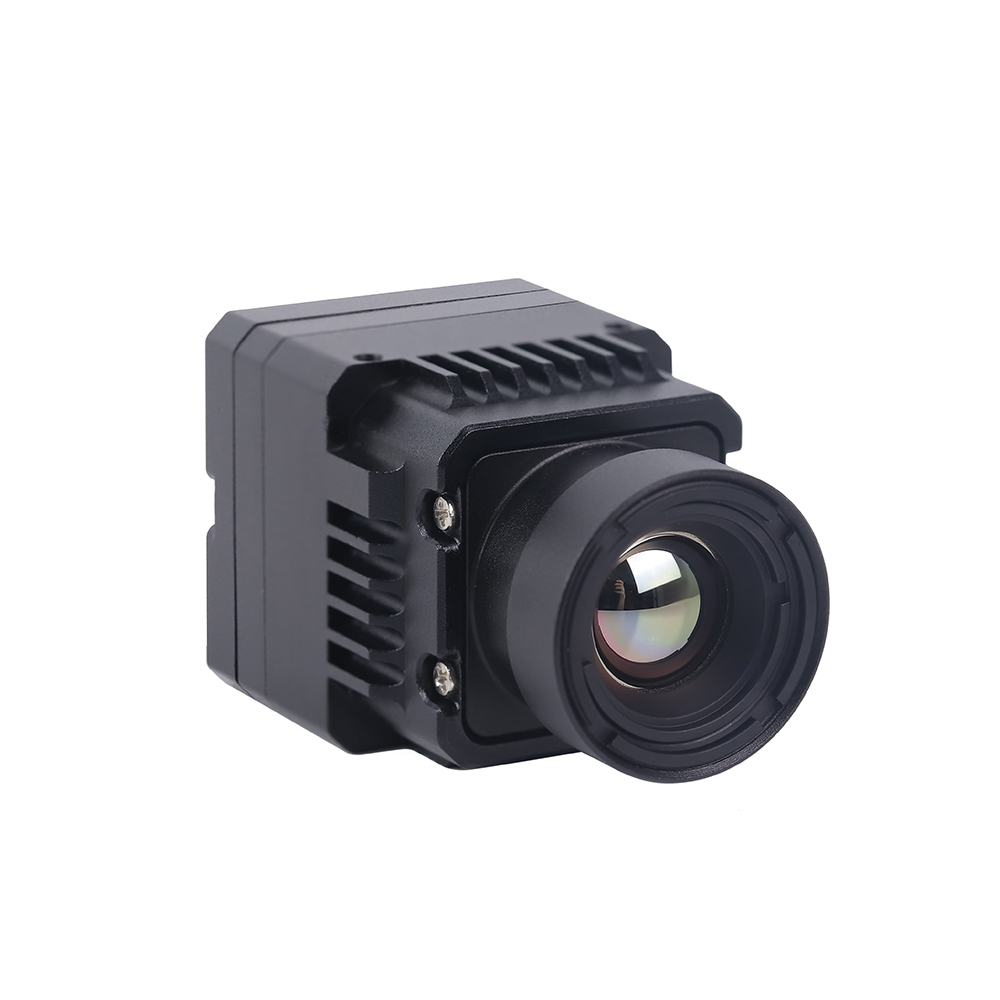
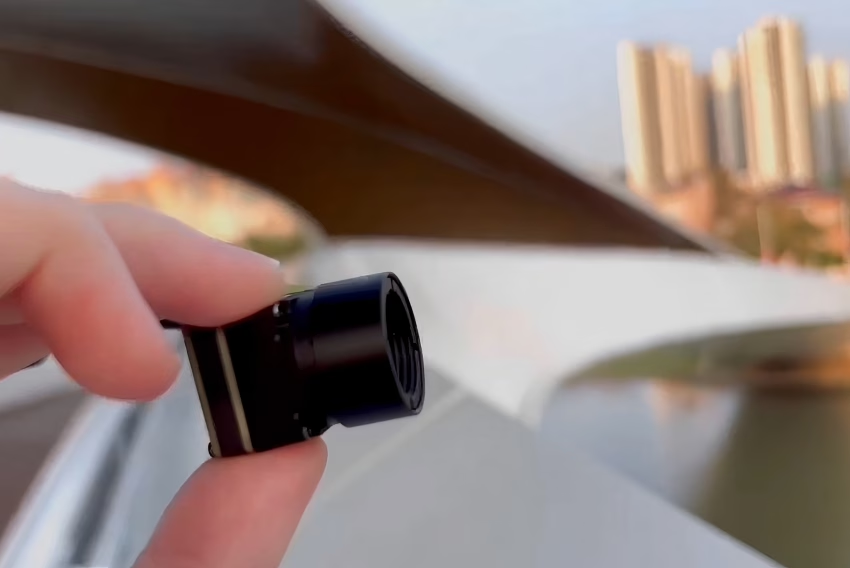
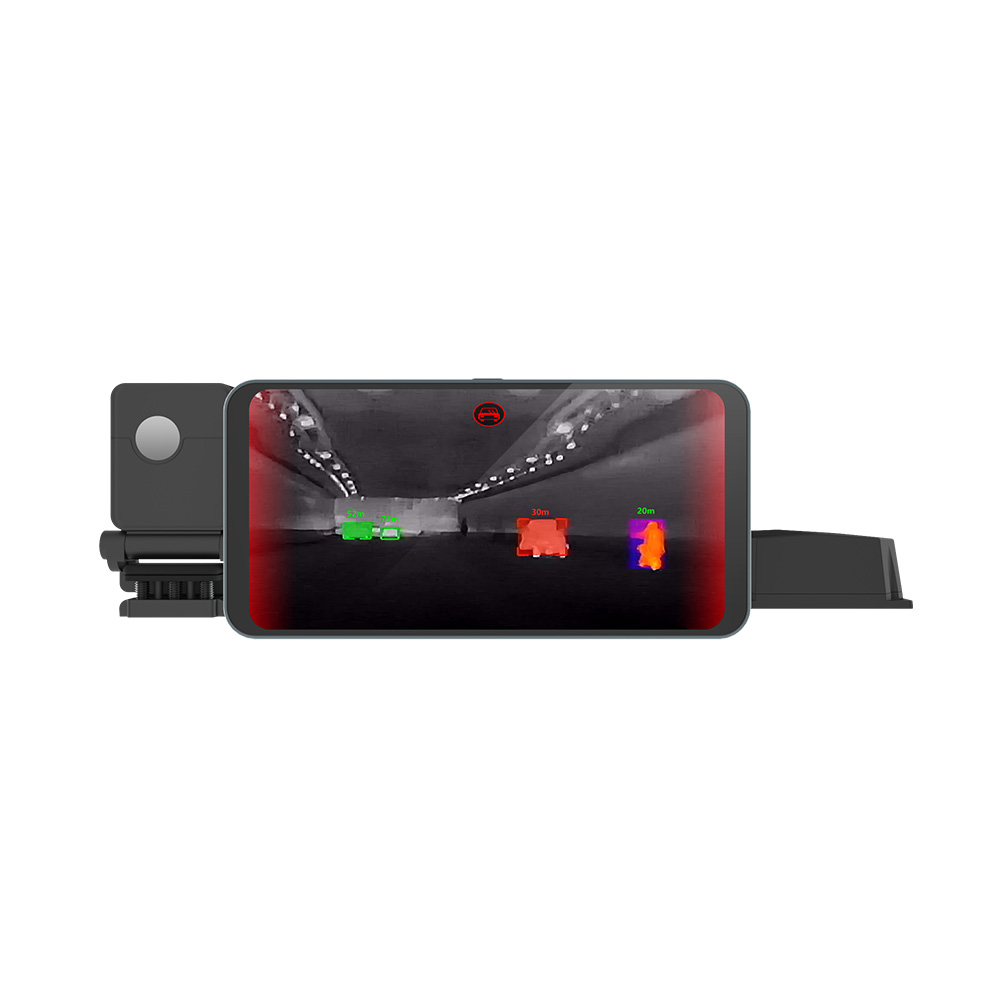
Built for high-resolution airborne gimbals and IP-connected industrial rigs, the وحدة كاميرا استشعار حراري غير مبردة RJ45 CVBS RTSP IP بدقة 640*512 combines a 640×512 uncooled infrared array with a mini ASIC imaging processor. Packaged as a mini thermal imaging camera module for drones, it brings native RJ45 Ethernet networking and RTSP IP streaming together with analog CVBS output—letting UAV builders and security integrators route sharp 640×512 video across IP flight networks while keeping direct analog output ready for FPV radio links or legacy displays.
| Verified Parameter | Specification Detail |
|---|---|
| اسم المنتج | وحدة كاميرا استشعار حراري غير مبردة RJ45 CVBS RTSP IP بدقة 640*512 |
| نوع الكاشف | Uncooled Infrared |
| الدقة | 640 × 512 |
| بنية المعالجة | ASIC Thermal Imaging Camera Module |
| عامل الشكل | Mini Module |
| واجهات الفيديو والشبكة | RJ45, CVBS, RTSP, IP |
| تركيز التطبيق الأساسي | Drones / UAV Thermal Imaging Payloads |
عرض المنتج 2: وحدة كاميرا حرارية بالأشعة تحت الحمراء غير مبردة من سلسلة MD بدقة 384x288
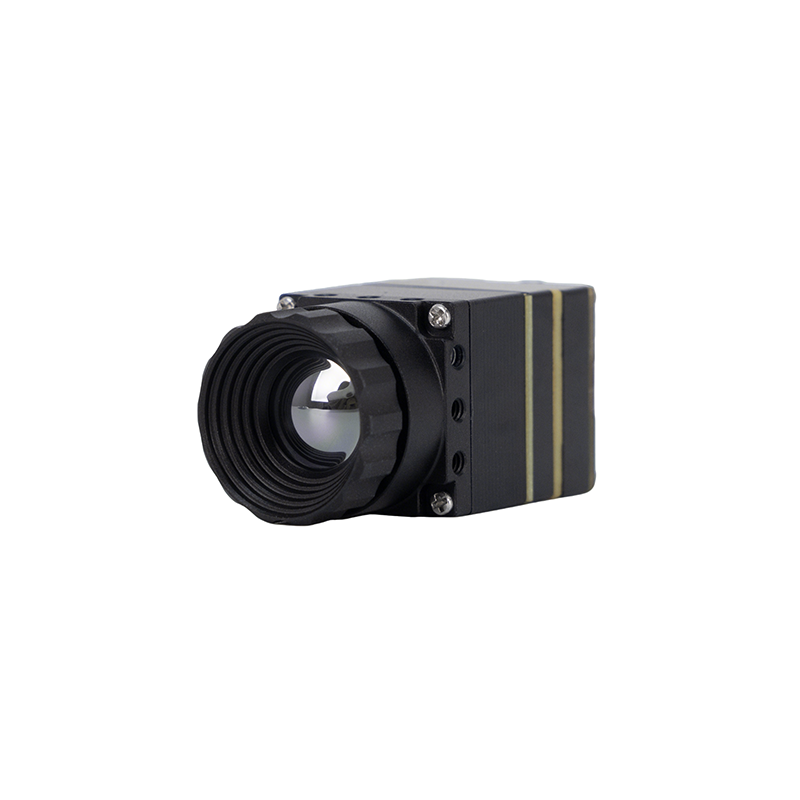
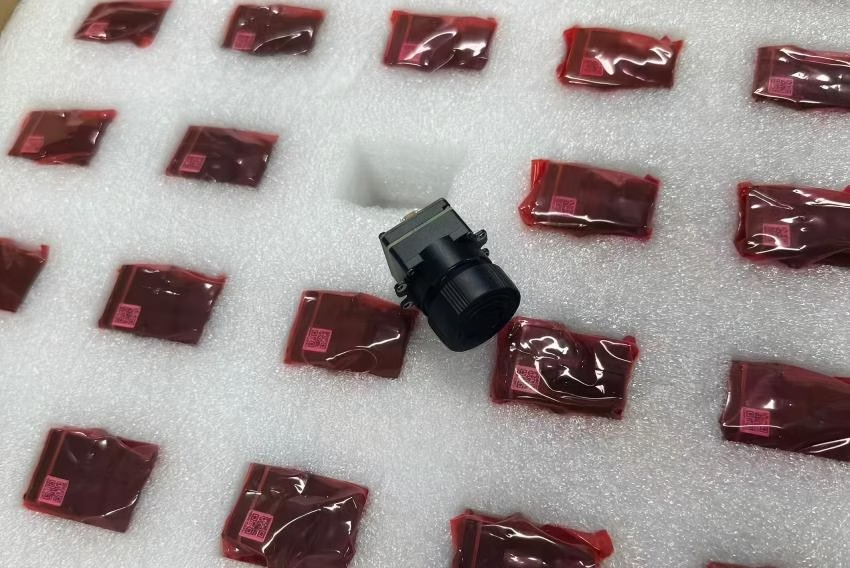
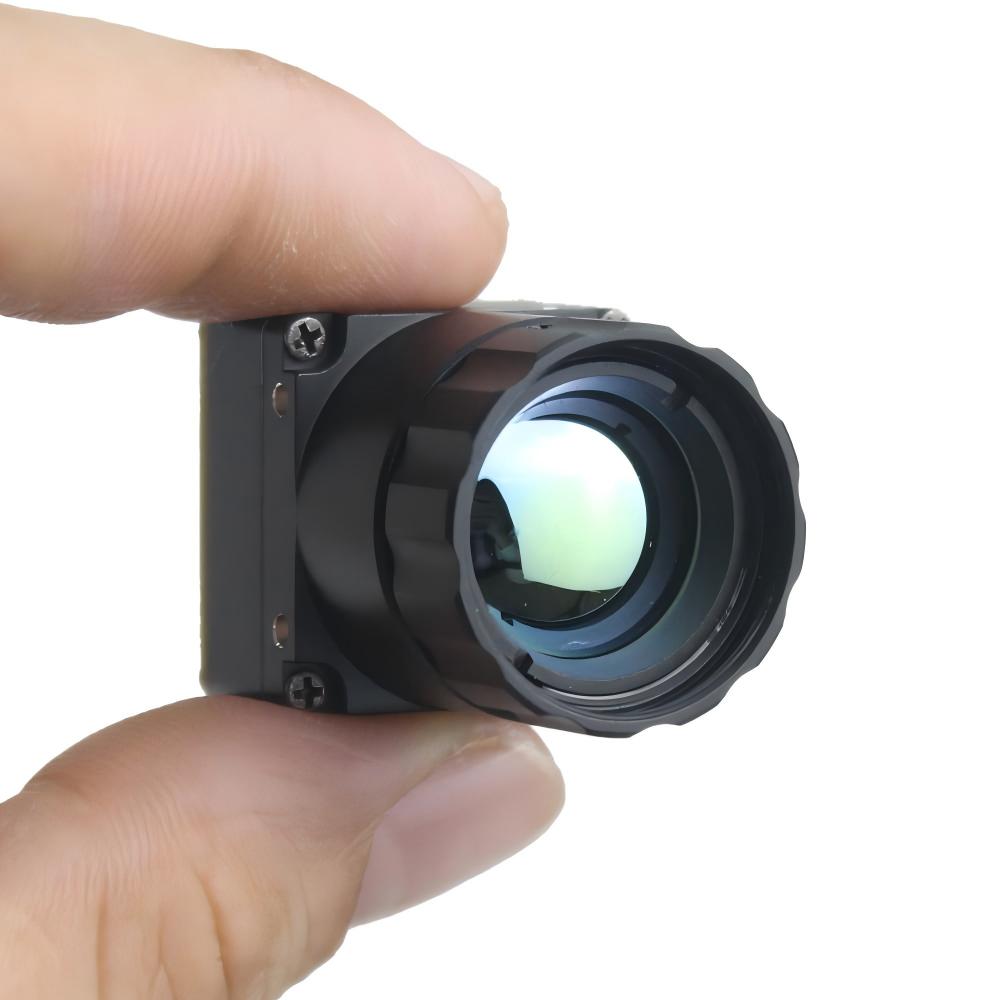
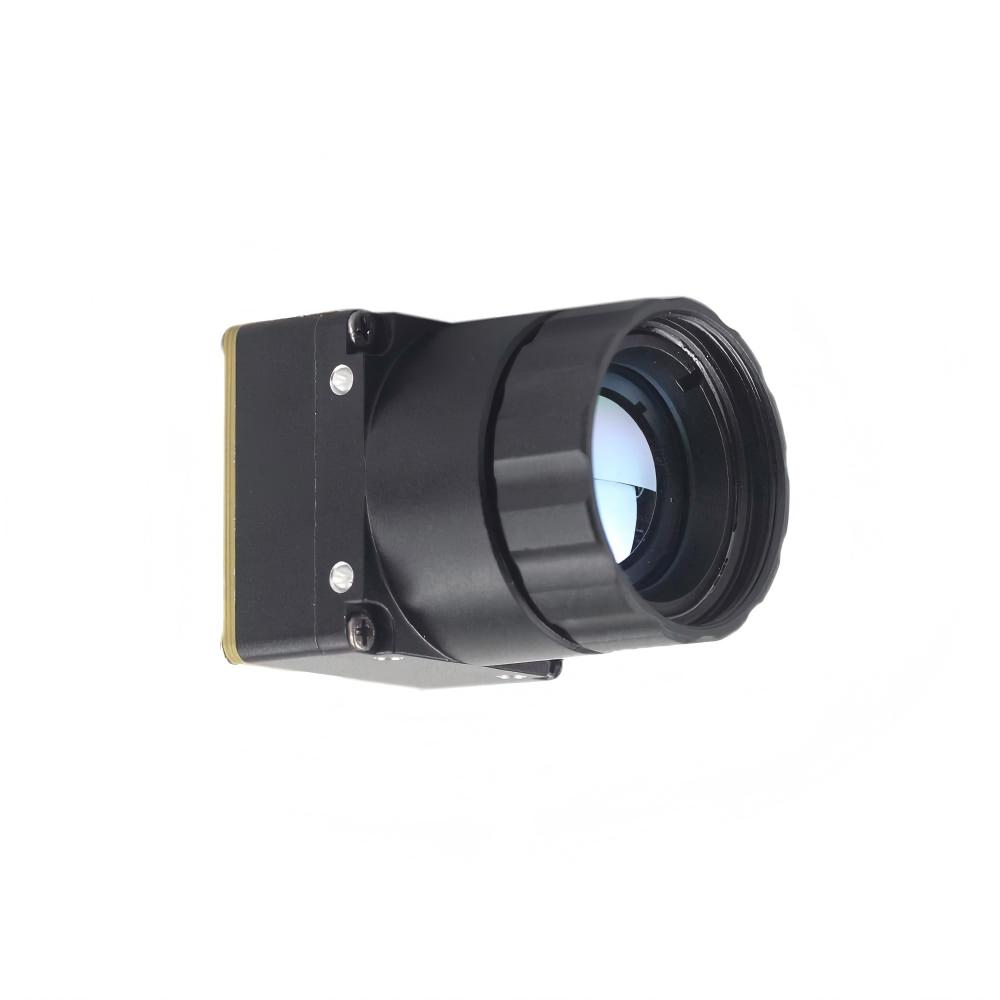
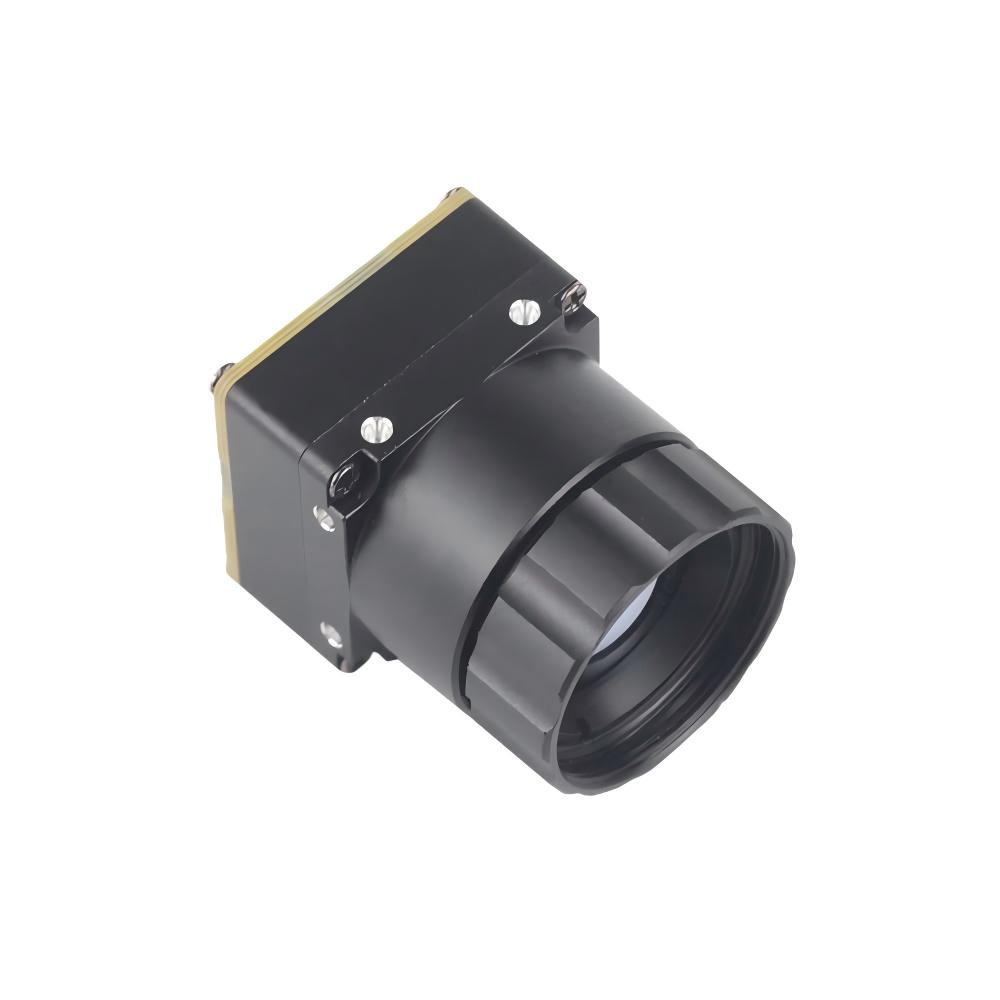
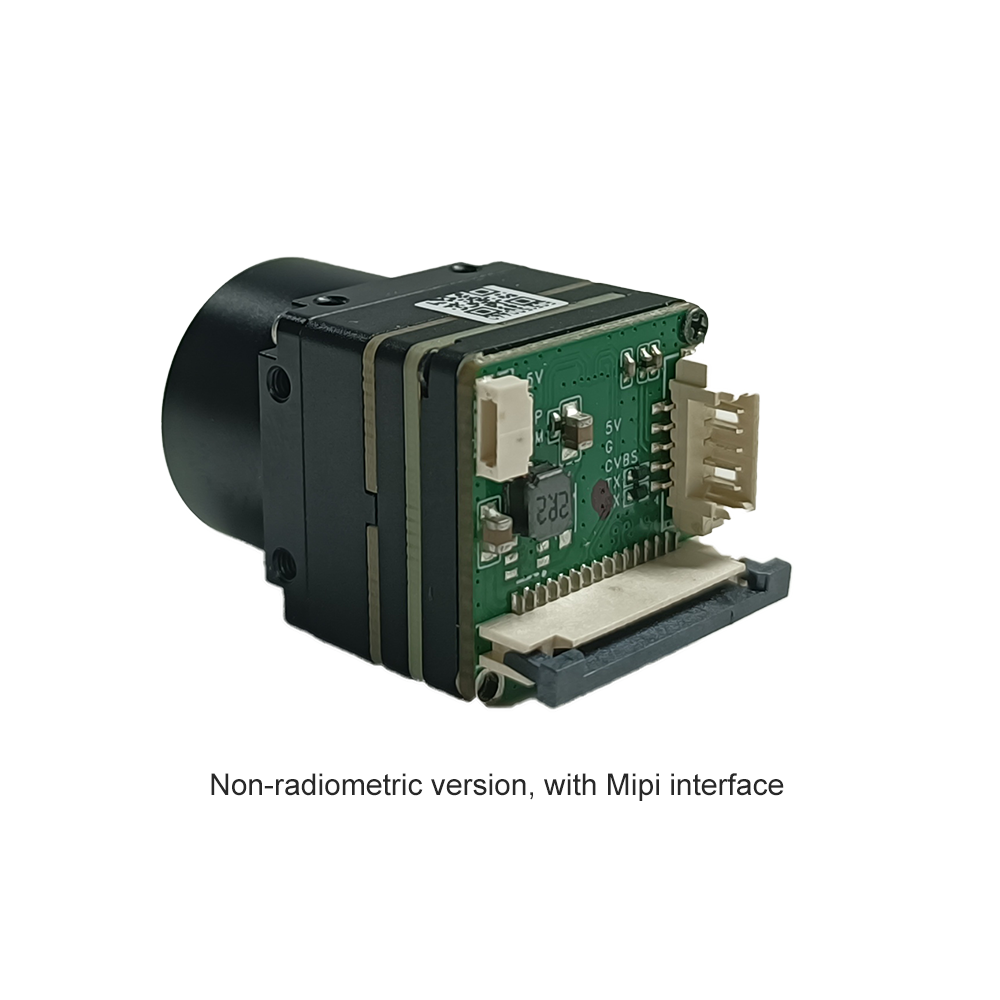
The Purpleriver وحدة كاميرا حرارية بالأشعة تحت الحمراء غير مبردة من سلسلة MD بدقة 384x288 targets industrial precision across security surveillance, continuous temperature monitoring, and drone integration. Running on an uncooled infrared detector with a 12μm pixel pitch, the MD Series packs high thermal sensitivity and crisp imaging into a very small mechanical footprint. Built for fast hardware bring-up, it offers plug-and-play operation alongside flexible multi-interface support (MIPI, USB, and CVBS) so it drops cleanly into embedded SoCs, PC inspection rigs, or analog UAV systems. Engineered by a team with a Hong Kong University of Science and Technology (HKUST) academic background and former Huawei HiSilicon semiconductor experience, the MD Series also supports full OEM/ODM customization for specialized housings, optics, or firmware workflows.
| Verified Parameter | Specification Detail |
|---|---|
| اسم المنتج | MD Series 384x288 uncooled infrared thermal camera module (Purpleriver) |
| نوع الكاشف | Uncooled Infrared Detector |
| الدقة | 384 × 288 |
| تباعد البكسل | 12μm |
| Key Performance Traits | Industrial-Grade Precision, High Sensitivity, Sharp Thermal Imaging, Compact Size, Plug-and-Play |
| الواجهات المدعومة | MIPI / USB / CVBS |
| التطبيقات المستهدفة | Security, Temperature Monitoring, Drone Integration |
| Engineering & Customization | HKUST & Former Huawei HiSilicon R&D Pedigree; OEM/ODM Customization Available |
Side-by-Side OEM Module Comparison
| Selection Criterion | 640×512 RJ45 CVBS RTSP IP ASIC Module | MD Series 384×288 Module (Purpleriver) |
|---|---|---|
| دقة المصفوفة | 640 × 512 | 384 × 288 |
| تقنية المستشعر | Uncooled Infrared | Uncooled Infrared Detector (12μm Pixel Pitch) |
| Core Architecture | Mini ASIC Thermal Imaging Module | Compact High-Sensitivity Core (HKUST & Ex-HiSilicon Team) |
| الواجهات المتاحة | RJ45, RTSP IP, CVBS | MIPI, USB, CVBS (Plug-and-Play) |
| Optimal Deployment Fit | High-resolution drone payloads & IP-networked thermal systems | Security, temperature monitoring, embedded OEM/ODM & compact drones |
Architectural Selection Summary: Go with the 640×512 RJ45 CVBS RTSP IP ASIC Module when your UAV gimbal or networked payload needs full 640×512 pixel density alongside native Ethernet RTSP IP streaming and analog CVBS backup. Go with the MD Series 384×288 Module when your build calls for 12μm optical compactness, plug-and-play embedded bus flexibility (MIPI, USB, or CVBS), industrial temperature monitoring accuracy, and direct OEM/ODM customization.
6. OEM/ODM Qualification & Thermal Module Procurement Checklist
Before freezing your bill of materials and cutting hard tooling for mass production, hardware and sourcing teams should sign off on three practical qualification areas.
Mechanical Envelopes, SWaP-C, and Conductive Heat Dissipation
Uncooled microbolometers react quickly to rapid temperature swings inside tight housings. Even low-wattage ASIC cores produce localized heat that needs a solid path away from the focal plane array, or offset drift will climb fast. When sealing a module inside an IP67 industrial box or a tight UAV nosecone, verify mounting hole tolerances against official 3D STEP CAD files and build a clean conductive path from the core chassis to your outer aluminum housing.
Non-Uniformity Correction (NUC) Strategy: Mechanical Shutter vs. Shutterless
As enclosure temperatures shift, individual microbolometer pixels drift slightly in resistance offset, showing up as faint vertical striping or fixed-pattern noise. Shutter-equipped cores flip a tiny uniform-temperature flag across the lens for a fraction of a second to run a clean 1-point NUC update. On fast drone photogrammetry runs or continuous security tracking—where even a 300ms frame pause could drop an OpenCV tracking lock—check whether the module supports external shutter trigger commands or shutterless background NUC compensation.
SDK Documentation, Lens Matching, and Supply Chain Continuity
Make sure the vendor ships complete interface control documents (ICDs), cross-compiled SDKs (Linux x86_64, ARM64, and Windows), and clear serial or IP command sets for switching color palettes, tuning AGC gain, and pulling radiometric data. Just as important, work with an OEM/ODM manufacturer that can commit to multi-year component supply, offer custom lens focal lengths sized for your target Detection/Recognition distances, and tweak firmware cleanly as your volume ramps up.
فيديو توضيحي لنواة التصوير الحراري المصغرة 640×512
7. Deep-Dive Technical FAQ: Infrared Camera Thermal Engineering
What is the technical difference between infrared photography and thermal imaging?
Are sub-$400 consumer thermal cameras viable for professional or commercial OEM applications?
How does an uncooled thermal sensor accurately measure temperature without physical contact?
Why is 12μm pixel pitch considered a major milestone for OEM drone and compact security modules?
What is the difference between radiometric thermal video and colorized (non-radiometric) thermal video?
How do engineers choose between MIPI, USB, CVBS, and RJ45 RTSP interfaces for an OEM build?
عند إحكام إغلاق نواة حرارية غير مبردة داخل علبة مقاومة للطقس IP67/IP68، يكون التصميم الحراري السلبي حاسمًا لإيقاف الانحراف الحراري الأساسي وتدهور الصورة. لا تحتاج الميكروبولومترات إلى مبردات نشطة، لكن ASIC الصورة المدمجة ومشفرات الفيديو الشبكية تستهلك بين 1.0 واط و 2.5 واط أثناء التشغيل. في صندوق محكم ضيق بدون تدفق هواء، تخلق الحرارة الداخلية المحتبسة نقاطًا ساخنة عبر هيكل النواة ومصفوفة المستوى البؤري. تؤدي هذه التدرجات الحرارية الموضعية إلى خلل في قراءات درجة الحرارة الإشعاعية وتزيد من ضوضاء المستشعر، مما يقلل من حساسية NETD الفعالة لديك. لحل هذا، صمم مسارات مباشرة لتبديد الحرارة المعدنية—مثل كتلة باردة من الألومنيوم أو النحاس مقترنة بوسادات فجوة عالية التوصيل—تربط اللوحة الحرارية للوحدة مباشرة بالغلاف المعدني الخارجي. هذا يحول كامل الهيكل الخارجي إلى مشتت حراري كبير. أيضًا، تجنب تركيب أجزاء عالية الطاقة (مثل أجهزة الراديو RF أو محولات الطاقة الساخنة) بجوار النواة البصرية مباشرة للحفاظ على استقرار الظروف الحرارية عبر المستشعر.
- Embedded Prototyping Platform: أردوينو
- Computer Vision & Edge AI Library: OpenCV
- Manufacturer Engineering Profile: Guangzhou Purple River Electronic Technology Thermal Imaging Overview
- 384×288 Module Technical Deep Dive: MD Series 384x288 Golden Specification Compact Low-Power Thermal Camera Module
- OEM Integration Resource: B2B Thermal Camera Module Integration Guide