
الدليل الشامل لأجهزة التصوير الحراري: الأداء الاحترافي، والذكاء الاصطناعي الطرفي، والعائد العملي على الاستثمار
23 أكتوبر 2026
Best Cheap Thermal Camera Guide: Budget IR Cores for DIY & Inspection (2025)
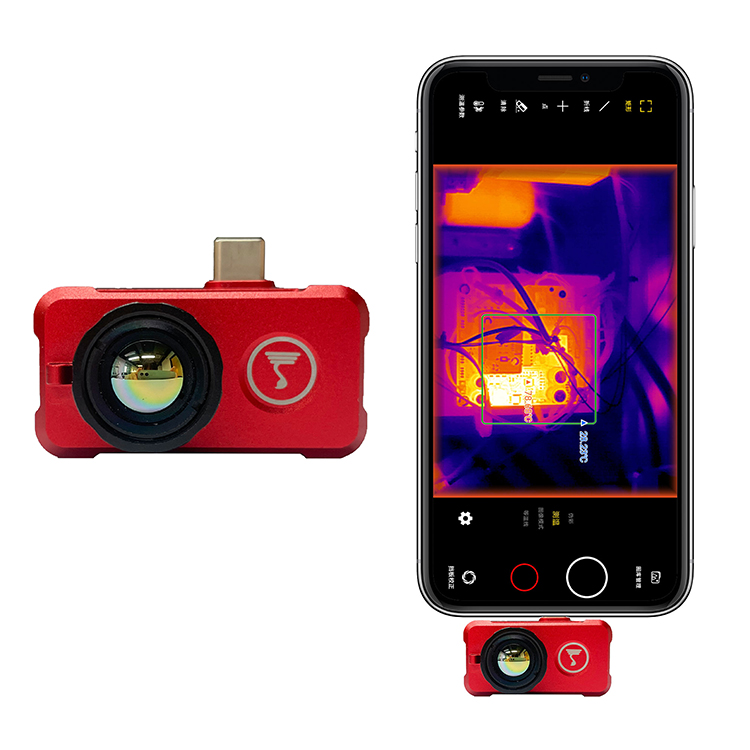
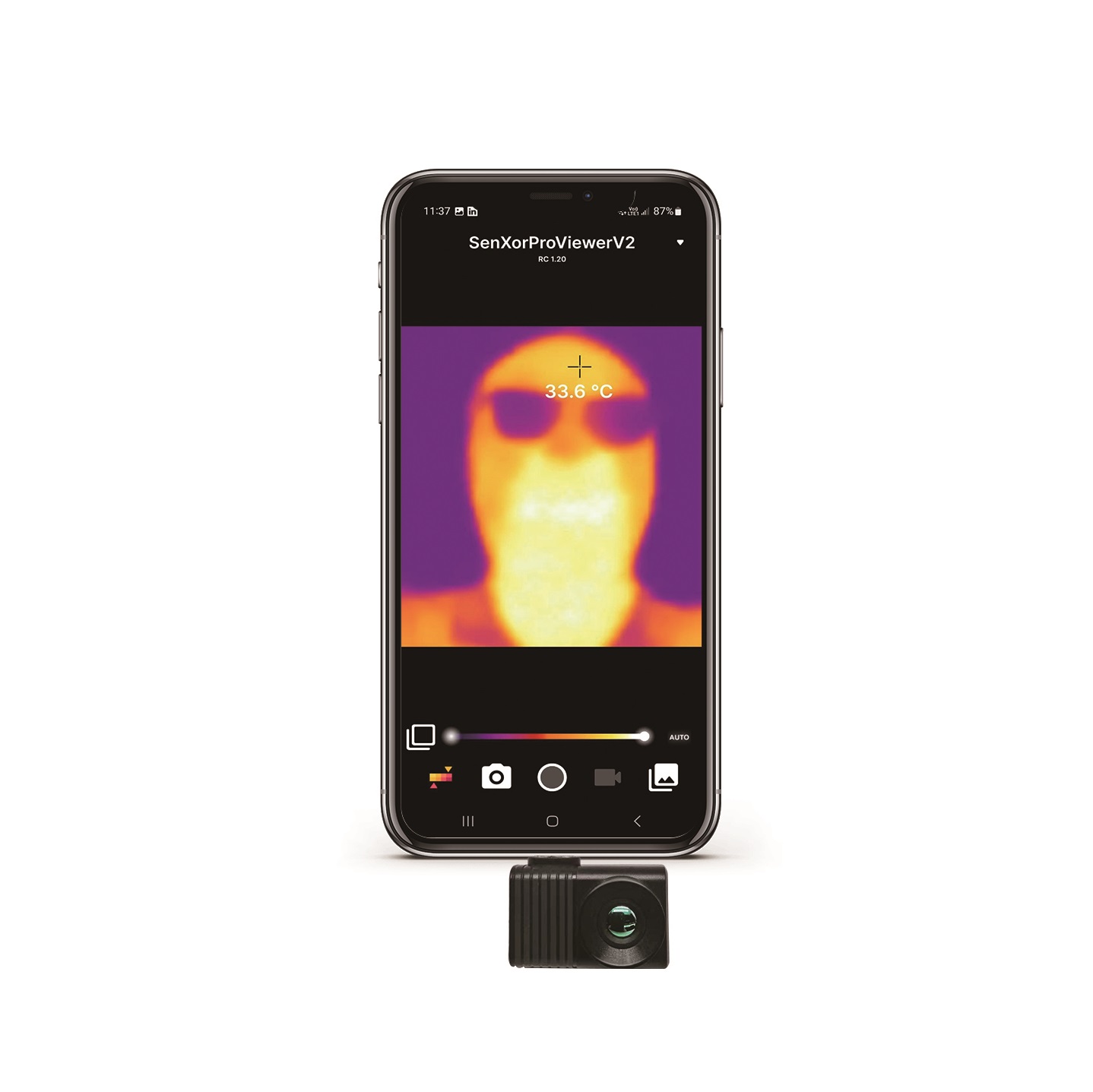
The commercial thermal imaging market is flooded with consumer gadgets masquerading as diagnostic tools. Most buyers searching for a cheap thermal camera fall into the trap of purchasing $250 smartphone dongles or entry-level handhelds. These consumer units typically house sub-VGA microbolometers (often as low as 80×60 or 120×90 native resolution), rely on aggressive edge-blending algorithms to hide sensor noise, and lock thermal data inside closed, sluggish mobile applications. For predictive maintenance engineers, drone integrators, and electronics developers, these consumer toys fail to deliver actionable, calibrated radiometric data under real-world industrial stresses.
True cost-efficiency in thermal imaging does not come from stripping away sensor performance; it comes from eliminating consumer markups, plastic enclosures, and proprietary displays by sourcing direct OEM Long-Wave Infrared (LWIR) camera cores. By utilizing bare-board uncooled Vanadium Oxide (VOx) modules with raw USB or MIPI CSI-2 interfaces, system architects can acquire high-grade 640×512 resolution, ≤40mK thermal sensitivity, and interchangeable optics at a fraction of traditional benchtop prices. This guide outlines how to select, benchmark, and deploy budget-conscious OEM thermal imaging cores for embedded systems, aerial inspection payloads, and benchtop diagnostics.
جدول المحتويات
- 👉 1. The Fallacy of Consumer "Cheap Thermal Cameras" vs. Bare-Board OEM Cores
- 👉 2. Engineering Benchmarks: Evaluating Budget LWIR Sensor Specs
- 👉 3. Hardware Bus Architectures: USB vs. MIPI CSI-2 for Edge Vision
- 👉 4. Industrial Budget Core Comparison: Real-World Specifications
- 👉 5. Deployment Architectures: Drone Payloads, PCB Tracing, & HVAC Inspection
- 👉 الأسئلة الشائعة الهندسية المتعمقة
1. The Fallacy of Consumer "Cheap Thermal Cameras" vs. Bare-Board OEM Cores
When engineering teams seek a cheap thermal camera to integrate into inspection platforms, they frequently encounter two distinct market categories: packaged consumer plug-ins (such as USB-C smartphone dongles and sub-$500 handheld diagnostic guns) and industrial bare-board Original Equipment Manufacturer (OEM) cores. While consumer units appear financially attractive on commercial retail platforms, their internal hardware architecture reveals significant limitations that compromise industrial workflows.
Consumer-tier handhelds reduce manufacturing costs by economizing on the physical focal plane array (FPA). Rather than utilizing a precision microbolometer matrix, these devices integrate low-cost arrays with resolutions as low as 80×60 (4,800 total measurement pixels) or 160×120 (19,200 pixels). To mask the resulting pixelated thermal output, manufacturers apply dynamic image blending techniques. This process extracts high-frequency spatial edge details from an inexpensive visible-light CMOS camera sensor and superimposes those outlines over the blurred, low-resolution thermal stream.
في حين أن مزج الحواف الديناميكي ينتج مخططًا يبدو حادًا على شاشة LCD مدمجة، فإنه يُدخل أخطاء قياس شديدة في الهندسة الحرارية الكمية. يفشل تسجيل الصورة المرئية كلما تغيرت المسافة إلى الهدف، مما يولد أخطاء اختلاف المنظر. والأكثر أهمية، أن الخطوط المرئية المتراكبة يمكن أن تضلل المفتش: يمكن تفسير خط بصري باهت على أنه تدرج حراري مفاجئ، بينما تظل الشذوذات الحرارية الفعلية المخفية بين العناصر المكانية الخشنة للميكروبولومتر غير مكتشفة تمامًا.
القيد الأساسي الثاني للأجهزة الحرارية من فئة المستهلك هو اعتمادها على تدفقات بيانات مغلقة وفقودة. الوحدات المحمولة وملحقات الهواتف الذكية تخرج عادةً تدفقات فيديو YUV ذات 8 بت أو H.264/MP4 مضغوطة. في عملية الترميز هذه، تُحوَّل البيانات الإشعاعية المطلقة التي يجمعها الكاشف بشكل دائم إلى قيم لونية اعتباطية (مثل Ironbow أو Rainbow أو White Hot) بناءً على خوارزمية التحكم التلقائي في الكسب (AGC) الخاصة بالكاميرا. بمجرد الضغط، تُفقد قراءات المستشعر الفيزيائية المنفصلة، مما يمنع المعالجة الإشعاعية بعد الرحلة، أو إعادة بناء مجال درجة الحرارة المطلق، أو الدمج في خطوط فحص الرؤية الحاسوبية الآلية.
على النقيض من ذلك، تتخلص نوى الكاميرات الحرارية OEM ذات اللوحة العارية من النفقات الطرفية الاستهلاكية. من خلال إزالة القوالب البلاستيكية بالحقن، والشاشات الاستهلاكية المدمجة، وبطاريات الليثيوم القابلة لإعادة الشحن، وهوامش البيع بالتجزئة للطرف الثالث، تُخصص تكلفة الوحدة بالكامل مباشرة للنواة الإلكترونية البصرية: مصفوفة المستوى البؤري بأكسيد الفاناديوم (VOx) أو السيليكون غير المتبلور (α-Si)، والمحولات التناظرية الرقمية الداخلية الدقيقة (ADCs)، وآليات مصراع تصحيح عدم الانتظام في الوقت الفعلي (NUC)، والتجمعات البصرية عالية النفاذية من الكالكوجينيد أو الجرمانيوم.
توفر نواة OEM تغذية بيانات رقمية غير مضغوطة 14 بت أو 16 بت مباشرة إلى المعالج المضيف عبر ناقلات صناعية موحدة مثل USB 2.0/3.0 أو MIPI CSI-2. في هذه البنية، يقدم كل بكسل عددًا رقميًا صريحًا يتناسب طرديًا مع الأشعة تحت الحمراء الساقطة التي تصل إلى تلك النقطة على الكاشف. يحتفظ المهندس المدمج بالتحكم الكامل في مصفوفات المعايرة، وتصحيح النفاذية الجوية، وتعويض الانبعاثية، ومصاريع تصحيح عدم الانتظام.
بالنسبة لمهندسي الأنظمة الذين يصممون أنظمة جوية بدون طيار (UAS)، أو تركيبات اختبار متخصصة على منضدة العمل، أو عقد مراقبة عمليات مستمرة موزعة، توفر نوى OEM العارية مزايا كبيرة في الحجم والوزن والطاقة والتكلفة (SWaP-C). إزالة الشاشات والأغلفة الزائدة ينتج وحدة نواة بقياس لا يتجاوز 21 مم × 21 مم ووزن أقل من 20 جرامًا. يتيح ذلك التكامل المحكم في محاور الدوران والإمالة والتقريب (PTZ)، ومؤثرات نهاية الروبوت، أو العبوات الكهربائية المدمجة دون تجاوز حدود الحمولة الصارمة أو الأغلفة الحرارية. لتقييم الاعتبارات الكهروميكانيكية منخفضة المستوى لدمج هذه المحركات المدمجة، راجع دليلنا المفصل دليل تكامل نواة الكاميرا الحرارية.
2. Engineering Benchmarks: Evaluating Budget LWIR Sensor Specs
يتطلب اختيار نواة كاميرا حرارية ميسورة التكلفة تقييم المقاييس الكهروضوئية منخفضة المستوى مقابل غلاف التشغيل المستهدف. غالبًا ما تفرض قيود الميزانية تنازلات؛ معرفة المعلمات التي تحدد أداء الفحص تضمن ألا تقوض وفورات التكلفة موثوقية النظام الأساسية.
مقاييس المستشعر الحرجة في شراء الأشعة تحت الحمراء طويلة الموجة (LWIR)
يجب تقييم النواة البصرية عبر أربعة مجالات أساسية: الدقة المكانية (عناصر الكاشف)، ومجال الرؤية اللحظي البصري (IFOV)، والحساسية الحرارية (فرق درجة الحرارة المكافئ للضوضاء، NETD)، وتباعد البكسل في المستشعر (الذي يحدد الحجم البصري الميكانيكي وتكلفة البصريات الخام).
دقة مصفوفة المستوى البؤري الأصلية والتحليل المكاني
تحدد الدقة الأصلية لمصفوفة المستوى البؤري بالأشعة تحت الحمراء العدد الإجمالي لنقاط استشعار درجة الحرارة المستقلة عبر المشهد المستهدف. تتبع دقة التصوير الحراري مستويات مميزة:
- ⚙️ 256×192 (49,152 بكسل): خط الأساس العملي للتشخيص الكهربائي الوظيفي وتحليل الدوائر على منضدة العمل من مسافة قريبة. عند مسافات عمل أقل من 0.5 متر، يعزل مستشعر 256×192 النقاط الساخنة على مكونات SMD المنفصلة الفردية مثل الدوائر المتكاملة SOIC-8 أو ملفات الحث الكهربائية بشكل موثوق.
- ⚙️ 384×288 (110,592 بكسل): معيار صناعي متوسط متعدد الاستخدامات. يوفر أكثر من ضعف عدد بكسلات المستشعرات الأساسية، مما يحقق توازنًا ممتازًا بين إنتاجية البيانات ومتطلبات المعالجة والوضوح البصري للفحص الهيكلي ومراقبة الآلات الصناعية.
- ⚙️ 640×512 (327,680 بكسل): المعيار الذهبي للتصوير الحراري الجوي الاحترافي، وتدقيق شبكات توزيع المرافق، والفحص البصري الصناعي الآلي. بدقة تبلغ نحو سبعة أضعاف دقة نواة 256×192، يميز جهاز التصوير 640×512 التفاصيل الهيكلية الدقيقة على مسافات تشغيلية بعيدة، مما يجعل من الممكن إجراء مسوحات مزارع الطاقة الشمسية الجوية أو تقييمات محطات نقل الجهد العالي من مسافات آمنة.
ترتبط الدقة المكانية مباشرة بـ مجال الرؤية اللحظي (IFOV), الذي يحدد المساحة المكانية الفيزيائية التي يرصدها بكسل كاشف واحد كدالة في البعد البؤري البصري. تُعبر العلاقة الرياضية على النحو التالي:
للحصول على قياس إشعاعي دقيق غير متوسط (بدلاً من مجرد اكتشاف وجود الجسم)، يجب أن يغطي الهدف المراد قياسه مصفوفة 3×3 بكسل على الأقل على المستشعر — وهو مقياس يُعرف باسم مجال الرؤية القياسي (MFOV). إذا كان نظامك البصري يعطي IFOV قدره 1.33 ملي راديان، فإن البكسل الواحد يغطي بقعة 1.33 مم على مسافة عمل متر واحد. يتطلب قياس درجة الحرارة بدقة على ذلك الهدف حدًا أدنى لحجم الميزة الفيزيائية يبلغ نحو 4 مم × 4 مم (3×3 بكسل). يجبر المستشعر منخفض الدقة المشغل على الاقتراب من المعدات النشطة أو الخطرة لتحقيق عتبة القياس هذه، مما يسبب مخاطر سلامة وتحديات لوجستية.
تباعد البكسل: معماريات 12μm مقابل 17μm
استخدمت أجهزة الميكروبولومتر غير المبردة من الجيل الأقدم تباعد بكسل 17μm أو 25μm. انتقلت عقد الإنتاج الحديثة إلى معماريات 12μm. يؤدي تقليص تباعد البكسل إلى تقليل البصمة السيليكونية الإجمالية لمصفوفة المستوى البؤري. على سبيل المثال، تبلغ أبعاد مصفوفة 640×512 بتباعد 17μm قطريًا 10.88 مم × 8.70 مم، بينما تبلغ أبعاد مصفوفة 12μm 7.68 مم × 6.14 مم فقط.
نظرًا لأن بصريات الجرمانيوم (Ge) تمثل مكون تكلفة كبيرًا في الكاميرات الحرارية ذات الموجات الطويلة (LWIR) بسبب تكاليف المواد الخام وتصنيع الخراطة الماسية أحادية النقطة الدقيقة (SPDT)، فإن تنسيق FPA الأصغر يسمح باستخدام عناصر عدسات أصغر بكثير لتحقيق نفس مجال الرؤية الزاوي (FOV). يقلل هذا الانخفاض من تكلفة قائمة المواد والوزن البصري الإجمالي، مما يجعل أنوية 12μm مناسبة بشكل خاص للحمولات الحرجة الكتلة مثل محاور الطائرات متعددة المراوح بدون طيار.
الحساسية الحرارية: فرق درجة الحرارة المكافئ للضوضاء (NETD)
Noise Equivalent Temperature Difference (NETD) represents the temperature difference that produces a signal-to-noise ratio of unity across the detector array. Expressed in milliKelvins (mK), lower values signify a sensor capable of resolving finer, more subtle temperature variations:
- 🔍 NETD ≤ 50mK: The acceptable standard for heavy electrical inspections, high-friction mechanical bearing failures, and high-contrast heating loads where temperature differentials (ΔT) routinely exceed 10°C.
- 🔍 NETD ≤ 40mK or ≤ 30mK: Essential for building science, low-temperature HVAC leak detection, composite delamination inspection, and circuit board copper trace thermal dissipation profiling. In these applications, the target anomalies often exhibit ΔT values of less than 0.5°C against ambient backgrounds. A sensor with an NETD of ≤40mK clearly delineates these subtle shifts, whereas an inferior ≥70mK sensor displays only static noise.
Frame Rates, Dynamics, and Export Controls
Thermal cameras are subject to strict international regulatory frameworks, specifically the International Traffic in Arms Regulations (ITAR) and Export Administration Regulations (EAR) in the United States, alongside equivalent Dual-Use controls internationally. To prevent uncooled microbolometers from being adapted into guided munitions, thermal sensors operating at frame refresh rates exceeding 9Hz (typically 25Hz, 30Hz, 50Hz, or 60Hz) are subject to stringent export oversight.
Consumer devices often cap their frame rate at 8.7Hz or 9Hz to bypass these export classifications, allowing global retail distribution. However, an 8.7Hz frame rate introduces significant motion latency, rolling shutter tearing, and severe image blur on moving platforms. For drone mapping missions or dynamic automated inspection lines, a 25Hz or 50Hz native core is vital to ensure stable geometric mapping and prevent motion-induced measurement errors.
3. Hardware Bus Architectures: USB vs. MIPI CSI-2 for Edge Vision
Integrating a bare-board LWIR module requires matching the hardware bus interface to the computational architecture of your host processing platform. The two primary communication interfaces encountered in modern budget-friendly cores are USB (Universal Serial Bus) and MIPI CSI-2 (Mobile Industry Processor Interface Camera Serial Interface 2).
The USB Bus: Versatility, Rapid Prototyping, and Industrial Computing
Thermal modules equipped with standard USB 2.0 or USB Type-C high-speed interfaces integrate an onboard bridge microcontroller that handles physical bus signaling, packaging the raw analog-to-digital FPA readouts into structured USB bulk packets or standard USB Video Class (UVC) streams.
Primary Advantages:
- ✅ Universal Host Interoperability: USB modules interface natively with x86 industrial PCs, standard laptops, and desktop computing environments, as well as Linux-driven single-board computers (such as the Raspberry Pi 4/5, Odroid, and Intel NUC) without requiring custom PCB daughtercards.
- ✅ Standardized Software Interfaces: On Linux-based platforms, the camera stream can be exposed via the standard Video4Linux2 (V4L2) driver framework. This architecture enables developers to query device capabilities, adjust basic exposure parameters, and pull video frames using standard system calls.
- ✅ Simplified Cabling & Isolation: USB cables provide power delivery (5V VBUS) and differential data transmission across a single four-conductor or Type-C shielded cable. This reduces wiring complexity over distances of 1 to 3 meters within large inspection enclosures.
Engineering Trade-offs: USB introduces software stack latency, non-deterministic packet transmission times, and continuous CPU interrupt overhead. In resource-constrained micro-drones or closed-loop robotic flight stabilization systems requiring sub-millisecond reaction times, the USB host controller stack can consume valuable processing overhead.
MIPI CSI-2: Ultra-Low Latency, Direct Memory Access, and Edge AI
The MIPI CSI-2 protocol provides a high-speed, direct differential serial interface linking the thermal core directly to the host processor's Image Signal Processor (ISP) or application processing core (such as the NVIDIA Jetson Orin Nano/NX, Rockchip RK3588, or NXP i.MX8 platforms).
Primary Advantages:
- ✅ Direct Hardware DMA Streaming: The MIPI D-PHY interface streams raw thermal data frames directly into system RAM via Direct Memory Access (DMA) controllers. This architecture bypasses intermediate microcontroller bridges, protocol transformations, and operating system scheduling delays.
- ✅ Minimal Latency & Zero CPU Overhead: Because frame transfer occurs independently of the CPU instruction cycle, edge devices maintain high processing availability for computer vision tasks, real-time object detection models (e.g., YOLOv8), or dynamic flight control loops.
- ✅ ملف SWaP محسن: Eliminating USB physical transceiver ICs, microcontrollers, and oversized connectors reduces the module's mass to the absolute minimum—a crucial benefit for stabilized drone gimbals. For a deeper technical perspective on low-overhead embedded routing, consult our engineering guide to 640x512 MIPI thermal module architecture.
Engineering Trade-offs: MIPI CSI-2 lines operate with high-frequency differential signals requiring carefully calculated trace impedance matching (typically 100Ω differential) and length matching across lane pairs. Cable lengths are generally limited to under 15–20 centimeters without using specialized FPD-Link or GMSL serializer/deserializer (SerDes) bridges. Additionally, deploying MIPI cores requires writing or compiling custom Linux kernel device tree overlays (DTS) and sensor drivers compatible with the host SoC.
Software Interfacing: Building a Custom Radiometric Computer Vision Pipeline
Once a bare-board core is connected to the host system via USB (V4L2) or MIPI, the primary engineering objective is extracting the native 14-bit radiometric counts and converting those integer values into accurate temperature matrices. Unlike consumer thermal imagers that present only colored visual displays, access to the raw 14-bit array allows direct mathematical manipulation of the scene using open-source tools such as OpenCV.
The following Python implementation demonstrates how an industrial edge processor captures an uncompressed 14-bit radiometric feed via V4L2, converts the raw digital counts into degrees Celsius using sensor-specific calibration multipliers, and automatically extracts overheating regions on an active circuit board:
import cv2
import numpy as np

# Initialize video capture using V4L2 backend for raw 16-bit / 14-bit data stream
# Ensure the camera node corresponds to the raw radiometric endpoint
cap = cv2.VideoCapture(0, cv2.CAP_V4L2)

# Request raw 16-bit grayscale format (Y16 / UNCOMPRESSED RAW)
cap.set(cv2.CAP_PROP_FOURCC, cv2.VideoWriter_fourcc(*'Y16 '))
cap.set(cv2.CAP_PROP_CONVERT_RGB, 0)
cap.set(cv2.CAP_PROP_FRAME_WIDTH, 640)
cap.set(cv2.CAP_PROP_FRAME_HEIGHT, 512)

if not cap.isOpened():
    raise IOError("Failed to initialize interface with the OEM thermal core.")

print("Radiometric pipeline successfully established. Processing real-time thermal matrix...")

try:
    while True:
        ret, raw_frame = cap.read()
        if not ret:
            print("Dropped frame or bus synchronization timeout.")
            continue

        # Sensor Calibration Conversion:
        # Many uncooled LWIR cores output raw digital numbers (DN) where:
        # Temperature (Kelvin) = DN * 0.04 (or specific manufacturer scale factor)
        # Temperature (Celsius) = (DN * 0.04) - 273.15
        temp_celsius = (raw_frame.astype(np.float32) * 0.04) - 273.15

        # Query frame-level thermal statistics
        min_temp = np.min(temp_celsius)
        max_temp = np.max(temp_celsius)
        mean_temp = np.mean(temp_celsius)

        # Dynamic Thresholding: Identify localized electronic shorts exceeding 80.0°C
        overheat_threshold = 80.0
        _, anomaly_mask = cv2.threshold(temp_celsius, overheat_threshold, 255, cv2.THRESH_BINARY)
        anomaly_mask = anomaly_mask.astype(np.uint8)

        # Extract spatial contours of thermal anomalies
        contours, _ = cv2.findContours(anomaly_mask, cv2.RETR_EXTERNAL, cv2.CHAIN_APPROX_SIMPLE)

        for cnt in contours:
            x, y, w, h = cv2.boundingRect(cnt)
            peak_fault_temp = np.max(temp_celsius[y:y+h, x:x+w])
            print(f"CRITICAL ANOMALY: Component at X:{x}, Y:{y} (Size: {w}x{h}px) reading {peak_fault_temp:.2f} C")

        # Normalize 14-bit radiometric matrix into 8-bit visual spectrum for operator display
        display_frame = cv2.normalize(temp_celsius, None, 0, 255, cv2.NORM_MINMAX)
        display_frame = np.uint8(display_frame)
        colorized_thermal = cv2.applyColorMap(display_frame, cv2.COLORMAP_INFERNO)

        # Highlight detected overheating regions with bounding boxes on visual output
        for cnt in contours:
            x, y, w, h = cv2.boundingRect(cnt)
            cv2.rectangle(colorized_thermal, (x, y), (x+w, y+h), (0, 255, 0), 2)
            cv2.putText(colorized_thermal, f"{np.max(temp_celsius[y:y+h, x:x+w]):.1f}C",
                        (x, y - 5), cv2.FONT_HERSHEY_SIMPLEX, 0.4, (0, 255, 0), 1)

        cv2.imshow("Automated Thermal Inspection Stream", colorized_thermal)
        if cv2.waitKey(1) & 0xFF == ord('q'):
            break

finally:
    cap.release()
    cv2.destroyAllWindows()
4. Industrial Budget Core Comparison: Real-World Specifications
To eliminate consumer markups while retaining full radiometric accuracy, engineering teams turn to direct-manufacturer OEM modules. The following uncooled LWIR camera cores offer professional 640×512 resolution, ultra-compact form factors, and modular optics, providing viable, budget-conscious alternatives to commercial packaged cameras.
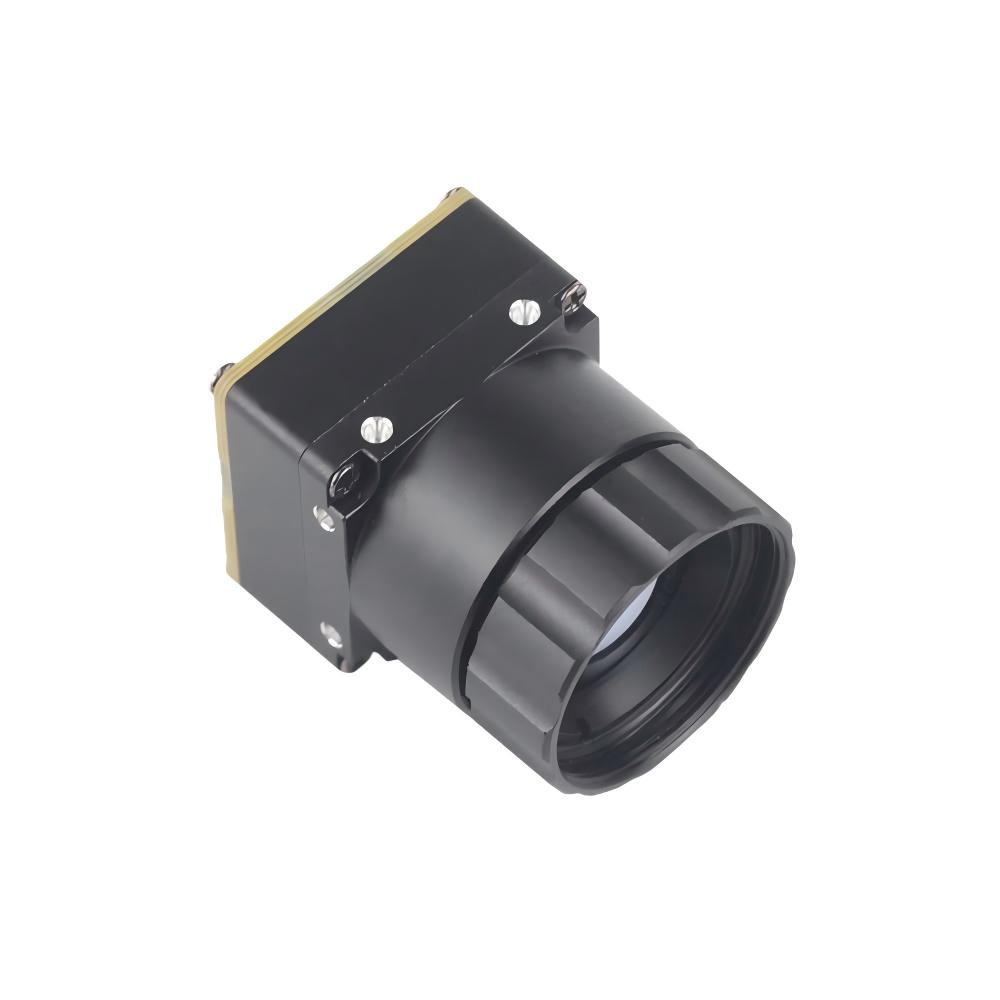
وحدة كاميرا تصوير حراري أساسية مصغرة LWIR غير مبردة بدقة 640*512 وواجهة USB
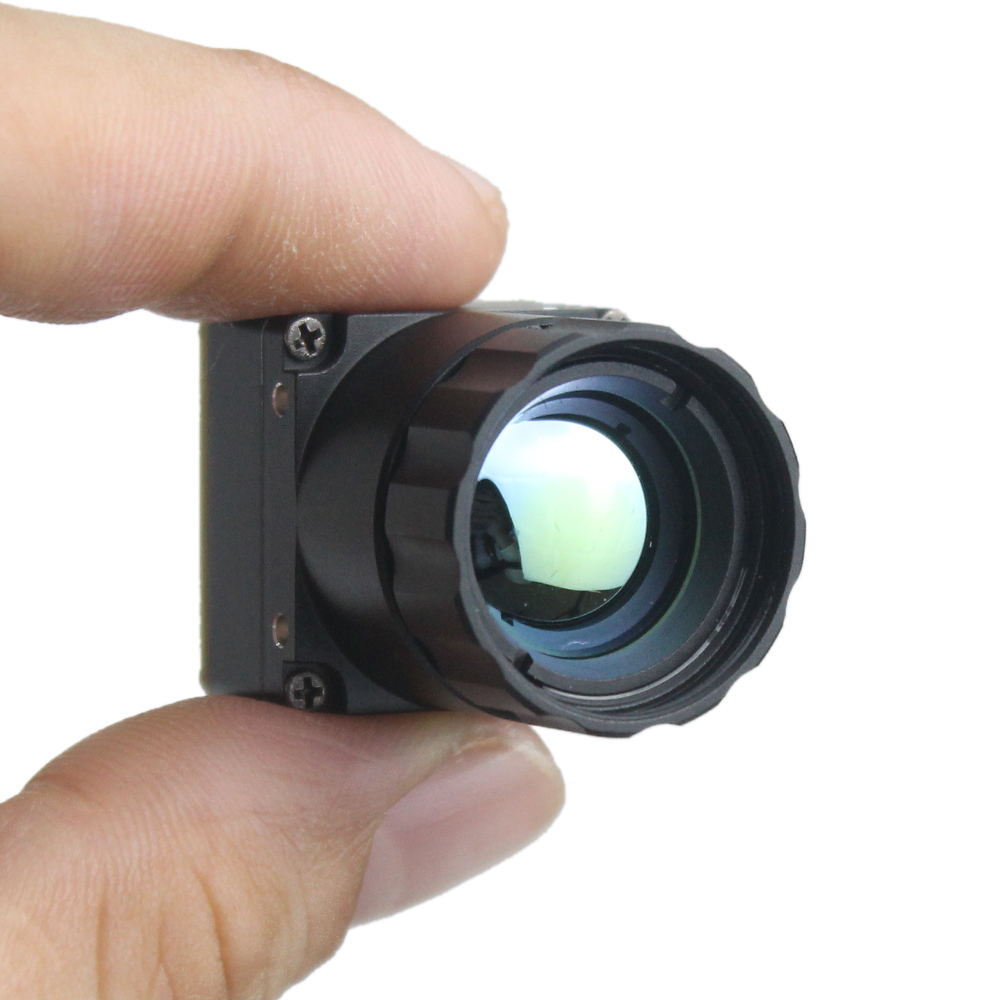
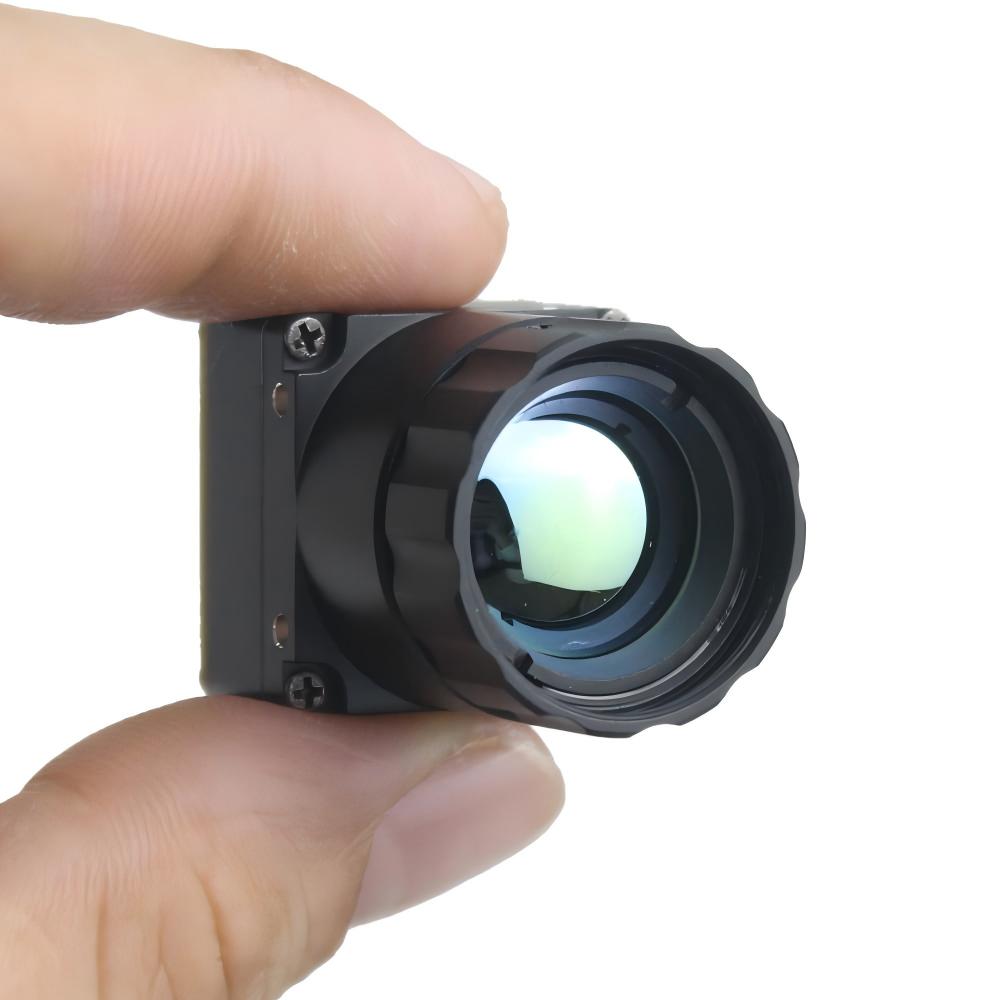
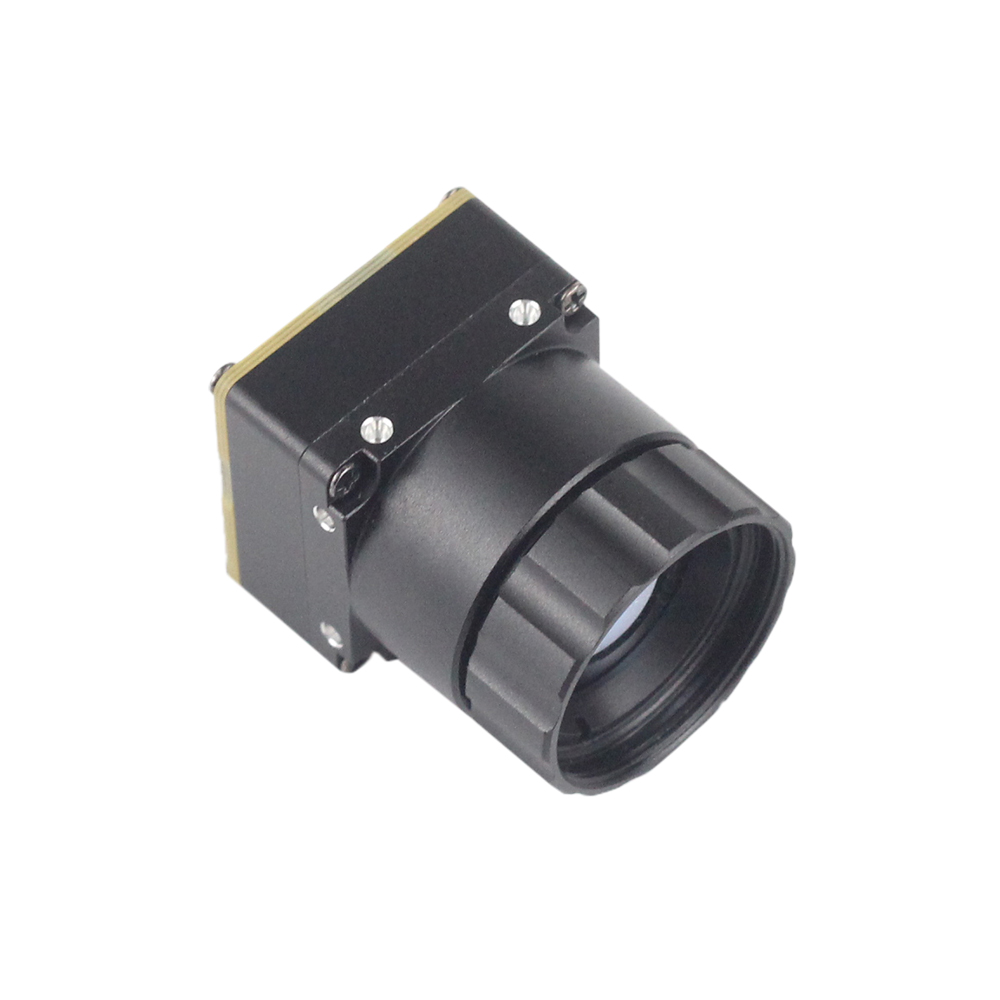
الـ وحدة Mini 640 USB الأساسية is an ultra-compact uncooled infrared thermal engine engineered for applications requiring high spatial resolution, low power consumption, and direct cross-platform computer interfacing. With an ultra-miniature cross-sectional profile of only 21mm × 21mm, this unit integrates seamlessly into tight enclosures, industrial machine vision rigs, and lightweight custom drone gimbals.
The core features an uncooled Vanadium Oxide (VOx) focal plane array capturing 640×512 pixels (with optional 640×480 configurations) across the standard 8μm to 14μm long-wave infrared atmospheric transmission window. It delivers sharp, high-contrast imagery with consistent environmental adaptability, functioning reliably across wide industrial temperature swings.
A notable feature of this core is its extensive optical versatility. System integrators can match the imager to their specific Instantaneous Field of View requirements by selecting from a broad range of factory-aligned athermalized lenses: 5 مم، 9 مم، 13 مم، 18 مم، 35 مم، 50 مم، 75 مم، 100 مم، و150 مم. Whether configured with a 5mm wide-angle lens for wide-area electronic circuit board overviews or a 150mm telephoto optic for long-range powerline surveillance, the Mini 640 maintains stable image geometry and radiometric response.
| معلمة المواصفة | Hardware Rating |
|---|---|
| نوع الكاشف | Uncooled VOx Microbolometer (8–14 μm) |
| دقة المصفوفة | 640×512 pixels (640×480 resolution optional) |
| أبعاد الوحدة | 21mm × 21mm ultra-miniature footprint |
| Interchangeable Optics | 5مم، 9مم، 13مم، 18مم، 35مم، 50مم، 75مم، 100مم، 150مم |
| Host Interface | Direct USB (High Speed Data & Power) |
| مهام النشر المستهدفة | Embedded vision, benchtop PCB diagnostics, UAV gimbals |
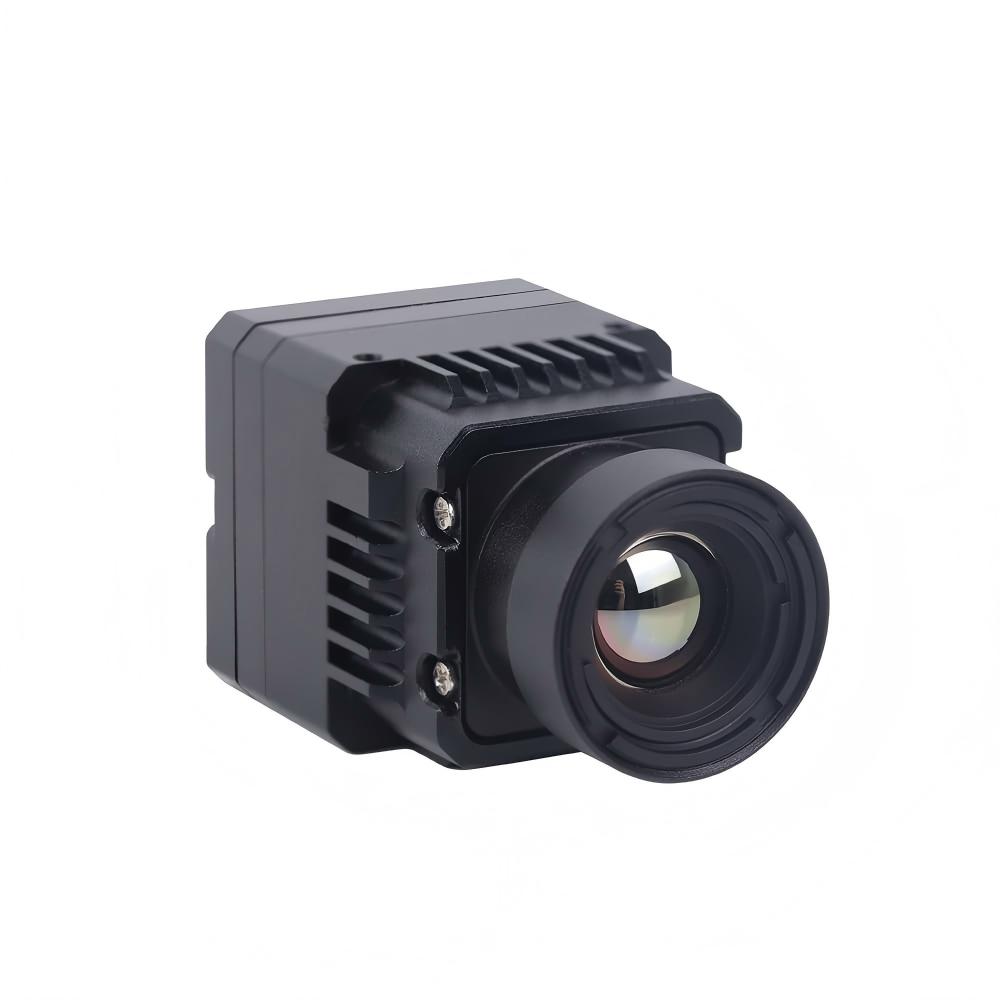
2. Uncooled Infrared MIPI Mini2 640×512 9mm Thermal Imaging Camera Module
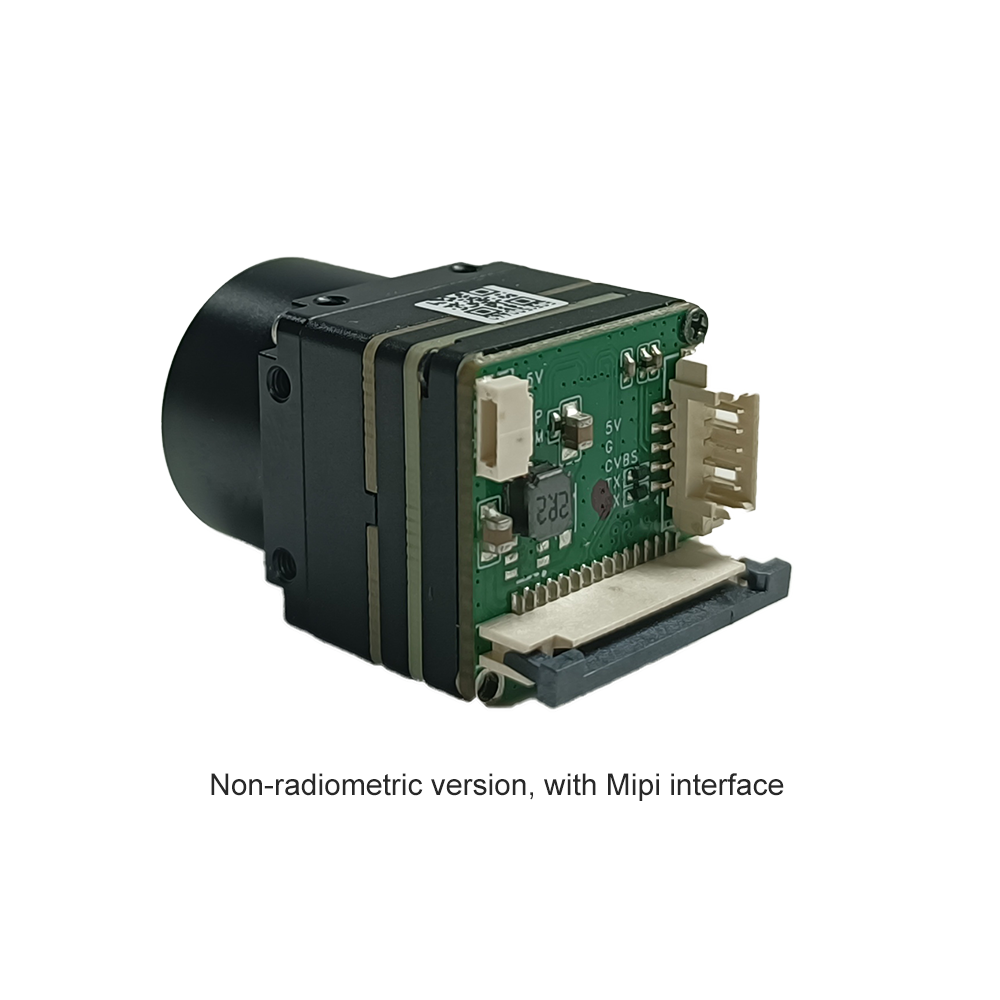
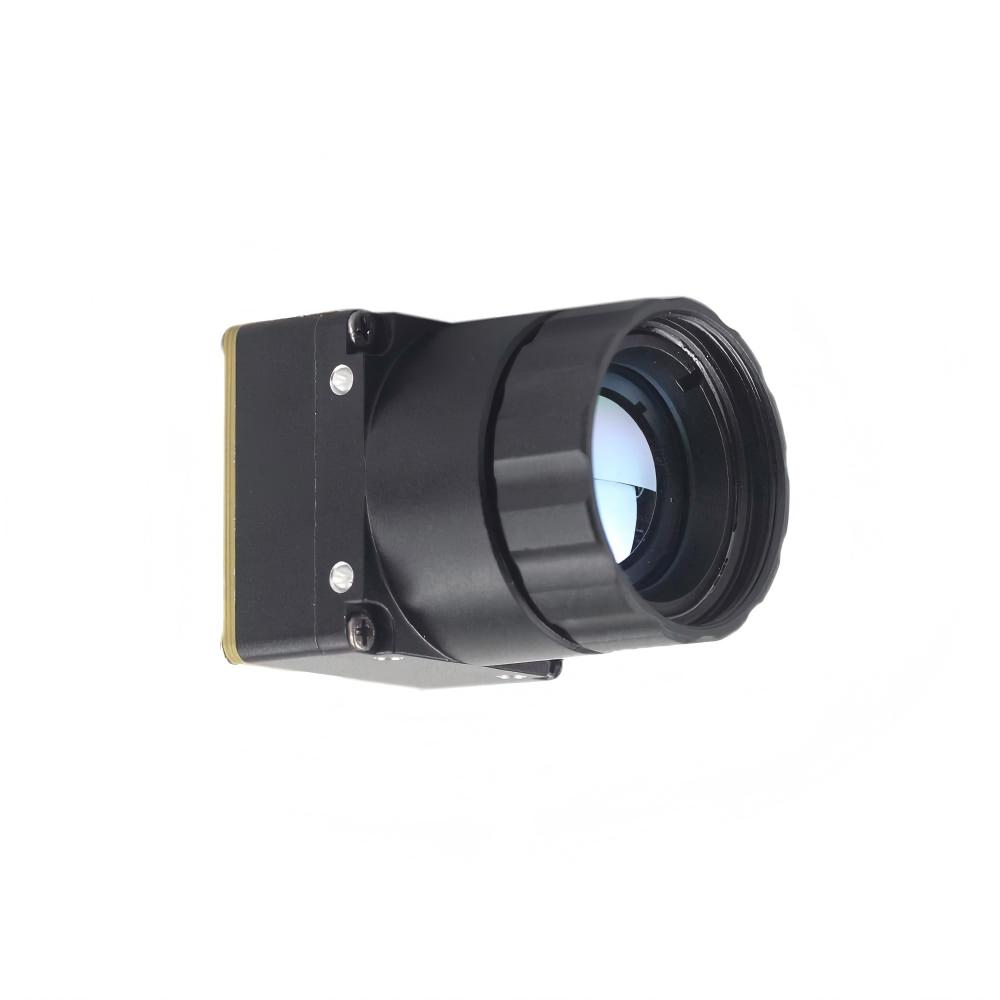
الـ Mini2 MIPI Core Module is engineered specifically for SWaP-constrained embedded applications, such as lightweight multirotor inspection drones, micro-gimbals, and high-speed robotic edge processors. By leveraging a high-bandwidth MIPI CSI-2 interface, the Mini2 streams uncompressed thermal frames directly into the host SoC's memory pipeline with near-zero bus latency.
Equipped with a compact 9mm athermalized infrared lens, the Mini2 balances spatial resolving power with a wide field of view, making it ideal for aerial reconnaissance, search and rescue operations, and automated agricultural health mapping. The underlying sensor architecture is versatile, supporting 640×512 high-resolution operation, with configurable factory options for 384×288 and 256×192 array configurations to match specific bandwidth and processing budgets.
Weighing only a few grams, the Mini2 eliminates peripheral conversion circuitry, drawing minimal power directly from the carrier board's regulated low-voltage rails. Its bare-board form factor allows engineers to mount the core directly onto custom carbon-fiber airframes or inside sealed sub-assemblies while maintaining direct access to 14-bit radiometric data streams.
| معلمة المواصفة | Hardware Rating |
|---|---|
| نوع الكاشف | Uncooled VOx LWIR Microbolometer |
| Native Array Options | 640×512 (Configurable to 384×288 / 256×192) |
| Installed Optic | 9mm Athermalized Germanium / Chalcogenide Lens |
| واجهة الأجهزة | MIPI CSI-2 (Direct High-Speed ISP Bus) |
| المنصة المستهدفة الأساسية | UAV payloads, autonomous robotics, edge AI SBCs |
| خصائص الصورة | Sharp edge presentation, low fixed-pattern noise, wide dynamic range |
For specialized installations requiring extended perimeter surveillance or standoff industrial monitoring, custom long-range optics can be integrated into high-performance cores. For an analysis of high-magnification systems, review our technical breakdown on long-range 90mm AI thermal module design.
5. Deployment Architectures: Drone Payloads, PCB Tracing, & HVAC Inspection
Scenario A: Lightweight UAV Thermal Gimbal Payloads
Commercial turnkey thermal drones from leading consumer brands frequently command prices between $5,000 and $10,000, placing them out of reach for small engineering consultancies and educational research teams. A custom radiometric drone payload can be developed at a fraction of that cost by integrating an uncooled MIPI or USB core module into an open-source airframe.
The system architecture utilizes the Mini2 640×512 9mm MIPI module mounted inside a custom 3D-printed carbon-nylon enclosure, balanced on a lightweight 2-axis or 3-axis brushless gimbal. Power is supplied through a step-down DC-DC switching regulator (BEC) tapping the drone's primary flight pack, providing a clean, noise-filtered 5V/3A DC bus to prevent switching motor noise from coupling into the sensitive microbolometer readout circuit.
The MIPI lines route directly into a compact companion single-board computer—such as a Raspberry Pi Compute Module 4 (CM4) or a Radxa Zero 3W. The companion computer executes a lightweight background script that records the raw 14-bit radiometric stream to an onboard high-endurance Class 10 U3 microSD card. Concurrently, it extracts a normalized visual stream, applies an onboard temperature-color palette along with telemetry text overlays (displaying GPS coordinates, altitude, and peak detected temperature), and feeds the composite video out via Micro-HDMI into a digital video transmission system (such as DJI O3 Enterprise or HDZero) for long-range real-time pilot viewing.
Scenario B: Automated Electronics Diagnostic Bench
In high-density electronics development and repair, detecting micro-shorts on power distribution networks (PDNs) presents a common troubleshooting challenge. A shorted multilayer ceramic capacitor (MLCC) or an internally damaged IC may generate only a few milliwatts of parasitic heat, causing a subtle temperature rise (ΔT < 1.5°C) that is easily masked by ambient thermal dissipation across large copper ground planes.
By mounting the نواة USB مصغرة بدقة 640 to an adjustable vertical microscope stand and pairing it with a short-focal-length optic or an auxiliary macro lens, engineers can build a high-resolution benchtop thermal diagnostic station. The core connects to an engineering workstation running an automated diagnostic script.
When current is injected into the board's power rail via a benchtop DC supply, the software captures a reference thermal frame at T=0 and continuously subtracts that baseline from incoming frames. This differential thermography method highlights rapid, localized micro-temperature changes while filtering out stable ambient heat sources, allowing developers to pinpoint shorted components in seconds without using messy freeze sprays or relying on guesswork.
Scenario C: Industrial Electrical Switchgear & Facilities Auditing
Industrial predictive maintenance requires documenting and tracking thermal performance across three-phase distribution panels, motor control centers (MCCs), and plant HVAC infrastructure. Standard handheld diagnostic tools require an operator to manually aim the unit, depress a trigger, and record separate visual and thermal photographs, transcribing data points into spreadsheets by hand.
An OEM core simplifies and automates this workflow. Connected via a flexible, strain-relieved USB interface to an IP67-rated industrial tablet running Linux or Windows, the core functions as an automated continuous thermal auditor. As the technician inspects an electrical cabinet, an automated edge computer-vision algorithm tracks three-phase connections, identifies maximum temperatures for Phase A, B, and C, calculates delta-T phase imbalances, and automatically flags violations of international maintenance standards (such as NETA MTS). The full 14-bit radiometric images and associated temperature matrices are automatically archived to a local database, eliminating manual transcription errors and speeding up facility-wide inspections.
الأسئلة الشائعة الهندسية المتعمقة
Are cheap thermal cameras in the $200-$400 range actually worth buying for HVAC and home inspection?
Why should tech enthusiasts and makers choose a thermal camera core module over an all-in-one handheld unit?
Can an affordable thermal imaging module accurately detect human body temperature and PCB hot spots?
عند إحكام إغلاق نواة حرارية غير مبردة داخل علبة مقاومة للطقس IP67/IP68، يكون التصميم الحراري السلبي حاسمًا لإيقاف الانحراف الحراري الأساسي وتدهور الصورة. لا تحتاج الميكروبولومترات إلى مبردات نشطة، لكن ASIC الصورة المدمجة ومشفرات الفيديو الشبكية تستهلك بين 1.0 واط و 2.5 واط أثناء التشغيل. في صندوق محكم ضيق بدون تدفق هواء، تخلق الحرارة الداخلية المحتبسة نقاطًا ساخنة عبر هيكل النواة ومصفوفة المستوى البؤري. تؤدي هذه التدرجات الحرارية الموضعية إلى خلل في قراءات درجة الحرارة الإشعاعية وتزيد من ضوضاء المستشعر، مما يقلل من حساسية NETD الفعالة لديك. لحل هذا، صمم مسارات مباشرة لتبديد الحرارة المعدنية—مثل كتلة باردة من الألومنيوم أو النحاس مقترنة بوسادات فجوة عالية التوصيل—تربط اللوحة الحرارية للوحدة مباشرة بالغلاف المعدني الخارجي. هذا يحول كامل الهيكل الخارجي إلى مشتت حراري كبير. أيضًا، تجنب تركيب أجزاء عالية الطاقة (مثل أجهزة الراديو RF أو محولات الطاقة الساخنة) بجوار النواة البصرية مباشرة للحفاظ على استقرار الظروف الحرارية عبر المستشعر.
- المعيار الصناعي: Real-time computer vision and image processing documentation via OpenCV
- دليل ذو صلة: Comprehensive mechanical, electrical, and optical دليل تكامل نواة الكاميرا الحرارية
- دليل ذو صلة: High-bandwidth embedded system implementation of 640x512 MIPI thermal module architecture
- دليل ذو صلة: Optomechanical considerations for long-range 90mm AI thermal module design