
حلول الوحدات الحرارية غير المبردة: دليل تكامل الذكاء الاصطناعي عالي الدقة وتصنيع المعدات الأصلية
30 يوليو 2026
أفضل حلول وحدات كاميرا الأشعة تحت الحمراء للطائرات بدون طيار والذكاء الاصطناعي المدمج: دليل التكامل للمصنعين الأصليين
31 يوليو 2026
دليل وحدة الاستشعار الحراري بالأشعة تحت الحمراء: اختيار وحدات الأشعة تحت الحمراء عالية الدقة لتطبيقات الذكاء الاصطناعي الطرفي والطائرات بدون طيار
انظر، إن إضافة رؤية حرارية عالية الدقة إلى محور تثبيت صغير لطائرة رباعية المراوح، أو مركبة ذاتية القيادة، أو جهاز إنترنت الأشياء الصناعي ليست بالمهمة السهلة. يوازن مهندسو الأجهزة باستمرار بين قيود SWaP الصارمة (الحجم والوزن والطاقة) ومتطلبات نسبة الإشارة إلى الضوضاء (SNR) ومعدلات الإطارات الزمنية العالية. الكاميرات ذات الطيف البصري القياسي عديمة الفائدة في الظلام الدامس، والدخان الكثيف، والضباب الجوي الثقيل، والوهج الشمسي المعمي. لهذا السبب تُعد وحدات الكاميرا الأصلية غير المبردة ذات الأشعة تحت الحمراء طويلة الموجة (LWIR) معدات قياسية للمهام الواقعية. لكن إليك جوهر الأمر: الحصول على تدفق بيانات حرارية خام 14-بت يتطلب خط أنابيب واجهة مادية قوي، وتصميمًا ميكانيكيًا بصريًا محكمًا، وتحويلاً ذكيًا للإشارات على اللوحة قبل أن يتمكن مسرّع الذكاء الاصطناعي الطرفي لديك حتى من بدء معالجة الإطارات.
إذا كنت تبني أنظمة ملاحة ذاتية، أو محاور تثبيت للحمولات، أو إعدادات صيانة تنبؤية صناعية، فأنت بحاجة إلى تقييم فيزياء الكاشف، وخيارات البعد البؤري، وزمن انتقال خط أنابيب الصور، ونواقل النقل. الاختيار بين واجهة بكسل خام مباشرة ذات نطاق ترددي عالٍ مثل MIPI-CSI2 وتدفق RTSP الشبكي H.264/H.265 عبر إيثرنت RJ45 يؤثر على كل من تخطيط لوحة الدائرة المطبوعة ومكدس برامج تشغيل لينكس لديك. اختيار المناسب وحدة مستشعر حراري بالأشعة تحت الحمراء يعتمد على فهم فيزياء الميكروبولومترات، والواجهات الخلفية الإلكترونية، والفيزياء البصرية، وكيفية إدخال البيانات بسرعة إلى نماذج الرؤية الحاسوبية لديك.
جدول المحتويات
البنية الأساسية لمستشعرات الميكروبولومتر LWIR
مصفوفات المستوى البؤري غير المبردة VOx
في قلب التصوير الحراري الحديث توجد مصفوفة المستوى البؤري (FPA) للميكروبولومتر غير المبردة بأكسيد الفاناديوم (VOx). على عكس كاشفات الفوتون المبردة القديمة التي تتطلب مبردات ستيرلنغ الدوارة المستهلكة للطاقة لخفض درجات حرارة التشغيل إلى 77 كلفن (-196 درجة مئوية)، تكتشف مستشعرات VOx غير المبردة طاقة الأشعة تحت الحمراء باستخدام الامتصاص الحراري وتحولات المقاومة. يمر الإشعاع في طيف 8-14 ميكرومتر عبر مجموعات عدسات متخصصة ويصطدم بهياكل جسرية مجهرية دقيقة معلقة فوق دائرة متكاملة لقراءة السيليكون (ROIC). يمتص كل بكسل طاقة LWIR، مما يسبب ارتفاعًا طفيفًا في درجة الحرارة يغير المقاومة الكهربائية لطبقة VOx الرقيقة في منحنى يمكن التنبؤ به.
في الورشة، نوصي دائمًا تقريبًا باستخدام VOx على السيليكون غير المتبلور (a-Si) لمنصات الطائرات بدون طيار والدفاع الجادة. يمنحك VOx معامل مقاومة حراري (TCR) أعلى بكثير وأرضية ضوضاء جوهرية أقل. يعني معامل TCR الأعلى حساسية حرارية أفضل، مما يسمح للنواة بفصل التفاصيل الحرارية الدقيقة بوضوح عبر التضاريس أو الجدران الهيكلية أو المعدات الكهربائية. يجلس كل هيكل جسري مجهري معلقًا فوق ركيزة السيليكون على أرجل دعم مصنعة بدقة متناهية داخل تجويف محكم الإغلاق بالتفريغ. يمنع عزل التفريغ هذا التسرب الحراري إلى البكسلات المجاورة ويحافظ على أوقات استجابة سريعة بما يكفي للفيديو في الوقت الفعلي.
تسلسل معالجة إشارة مستشعر الميكروبولومتر
- ⚙️ التقاط الفوتون الحراري: تدخل الطاقة الحرارية المشعة في نطاق LWIR (8-14 ميكرومتر) إلى نظام العدسات المضاد للانعكاس.
- ⚙️ امتصاص الجسر المجهري: يسخن الإشعاع الحراري الوارد أغشية البكسل المعلقة من أكسيد الفاناديوم (VOx).
- ⚙️ تحول المقاومة: يغير الفارق الحراري المقاومة الكهربائية للجسر الميكروي بما يتناسب مع التدفق الحراري للهدف.
- ⚙️ رقمنة ROIC: تقرأ شريحة السيليكون ROIC الأساسية هذا التباين في المقاومة وتُخرج تيارًا رقميًا خامًا نظيفًا بدقة 14 بت.
ديناميكيات تباعد البكسل والدقة المكانية
دفعت هندسة المستشعرات تباعد بكسل الكاشف من تصاميم 17 ميكرومتر الأقدم إلى بصمات 12 ميكرومتر الحديثة (و10 ميكرومتر المتطورة). يحقق تقليص تباعد البكسل مكاسب عملية هائلة عند تصميم محاور تثبيت الطائرات بدون طيار المدمجة وحمولات الروبوتات الضيقة:
- ✅ تقليل حجم البصريات: يتطلب كاشف بتباعد 12 ميكرومتر طولًا بؤريًا بصريًا أصغر ليعطي نفس مجال الرؤية (FOV) تمامًا مثل مستشعر 17 ميكرومتر. وهذا يقلل من إجمالي زجاج العدسة، ووزن البرميل، وإجهاد محرك المحور.
- ✅ كثافة مصفوفة أعلى: يمكن للمهندسين حشر مصفوفات عالية الدقة (640×512 أو 1280×1024) في قوالب مستشعر ضيقة تناسب المحاور الصغيرة الحساسة للوزن.
- ⚠️ إدارة الحيود: ضع في اعتبارك أنه مع تقلص البكسلات نحو الأطوال الموجية الحرارية (λ ≈ 10 ميكرومتر)، يجب أن يمنع التصميم البصري بدقة تشويش حيود الضوء البصري من طمس صورتك.
فرق درجة الحرارة المكافئ للضوضاء (NETD) والحساسية
تُقاس الحساسية الحرارية بفرق درجة الحرارة المكافئ للضوضاء (NETD)، معبرًا عنها بالميلي كلفن (mK). NETD هو معيار الإشارة إلى الضوضاء حيث تساوي الإشارة الناتجة عن تدرج حراري مستوى الضوضاء الداخلية للكاميرا:
NETD = Vn / (∂Vs / ∂T)
حيث Vn هو جهد الضوضاء RMS و ∂Vs / ∂T هو ميل استجابة الكاشف. عمليًا، وحدة مستشعر حراري بالأشعة تحت الحمراء بوحدة NETD أقل من 30 mK تعرض تغيرات درجة الحرارة دون الدرجة الواحدة بنظافة. هذا الأداء حيوي إذا كنت تحاول اكتشاف عزل مفقود، أو أعطال محامل مبكرة، أو تسربات سوائل دقيقة، أو أهداف بشرية مختبئة في أحراش منخفضة التباين. الوحدات ذات تصنيف NETD الضعيف (≥ 50 mK) تبث إطارات مشوشة ومحببة في البيئات الحرارية الموحدة، مما يتسبب في انخفاض ثقة اكتشاف الهدف لشبكات CNN اللاحقة. لمزيد من الخلفية التقنية حول النظرية الكهرومغناطيسية، راجع دليل ويكيبيديا للتصوير بالأشعة تحت الحمراء .
خطوط أنابيب الإشارة الحرارية: تطبيقات ASIC مقابل FPGA
البيانات الرقمية الخام القادمة مباشرة من ROIC لمقياس الميكروبولومتر غير خطية، وتظهر عدم تجانس بين البكسلات، وتنجرف مع تأرجح درجات حرارة القالب المحيط. يتطلب تحويل تيار البيانات الخام بدقة 14 بت إلى تغذية صور حرارية واضحة معالجة إشارات عتادية في الوقت الفعلي مباشرة على اللوحة الأساسية للوحدة.
مراحل خط أنابيب معالجة الصور الحرارية في الوقت الفعلي
- ⚙️ تيار مقياس الميكروبولومتر الخام بدقة 14 بت: قيم المحول الرقمي غير المعالجة المجمعة مباشرة من قالب ROIC.
- ⚙️ تصحيح عدم التجانس (NUC): Calibrates gain and offset variances across every individual micro-bridge pixel.
- ⚙️ Blind Pixel Replacement (BPR): Maps dead microbolometer elements and interpolates missing pixels using neighbor matrices.
- ⚙️ Digital Detail Enhancement (DDE): Filters out spatial high-frequency details to sharpen edges and object boundaries.
- ⚙️ Dynamic Range Compression (DRC) & AGC: Maps wide 14-bit radiometric ranges into clean 8-bit visual streams (256 grayscales).
Onboard Hardware Enhancement Algorithms
To convert raw infrared energy into actionable computer vision input, internal processors run several real-time mathematical operations:
- تصحيح عدم التجانس (NUC): Every microbolometer bridge has slight manufacturing variances. NUC applies pre-calibrated gain and offset correction matrices to equalize pixel responses across varying ambient temperatures.
- Shutterless Calibration / Automatic Gain Control (AGC): Modern drone cores use shutterless software NUC routines to eliminate physical mechanical shutter clicks during flight, keeping video streams continuous without freezing mid-flight.
- Digital Detail Enhancement (DDE): DDE separates subtle high-frequency spatial components (like thin wires, fence lines, and vehicle edges) from broad background gradients. It boosts fine structural edges without blowing out scene highlights.
- Dynamic Range Compression (DRC): Compresses wide 14-bit thermal dynamic ranges down to standard 8-bit grayscale values (0–255), tuned for human monitoring displays and low-power AI inference models.
Power & Latency Trade-offs: Dedicated ASIC vs. FPGA
Choosing your hardware core architecture comes down to a balance between Field Programmable Gate Array (FPGA) customization and Application-Specific Integrated Circuit (ASIC) efficiency.
| Architecture Metric | Custom FPGA Implementation | Dedicated Onboard ASIC Module |
|---|---|---|
| استهلاك الطاقة | High (2.5 W - 5.0 W) | Ultra-Low (< 1.2 W) |
| Thermal Dissipation | High output requiring dedicated heat sinks | Minimal passive thermal dissipation required |
| Boot Time | Bitstream loading delay (3 - 8 seconds) | Near-instantaneous (< 1.5 seconds) |
| Physical Footprint | Bulkier multi-chip or dual-board stack | Ultra-compact single-board footprint |
| Cost Profile | High per-unit silicon cost | Optimized mass-production unit economics |
In the field, opting for an ASIC-driven module provides predictable frame rates, minimal video lag, and an exceptionally low thermal signature. For a deeper breakdown on thermal design standards, check out our report on Enterprise-Grade Manufacturing & Testing Capabilities.
بروتوكولات الواجهة للتكامل المضمن
Hooking a thermal camera core into host processor boards requires matching hardware protocols with your target bandwidth, processing overhead, and physical cable limits.
MIPI-CSI2 Interface
High-speed point-to-point interface. Directly streams raw uncompressed pixels into host processor memory using Direct Memory Access (DMA). Zero encoder delay, latency under 5 ms. Perfect for Jetson Orin and Raspberry Pi builds.
RJ45 / RTSP Network
Onboard H.264/H.265 encoders pipe RTSP IP video streams over standard Ethernet cables. Ideal for tethered drones, long wire runs, and IP security setups.
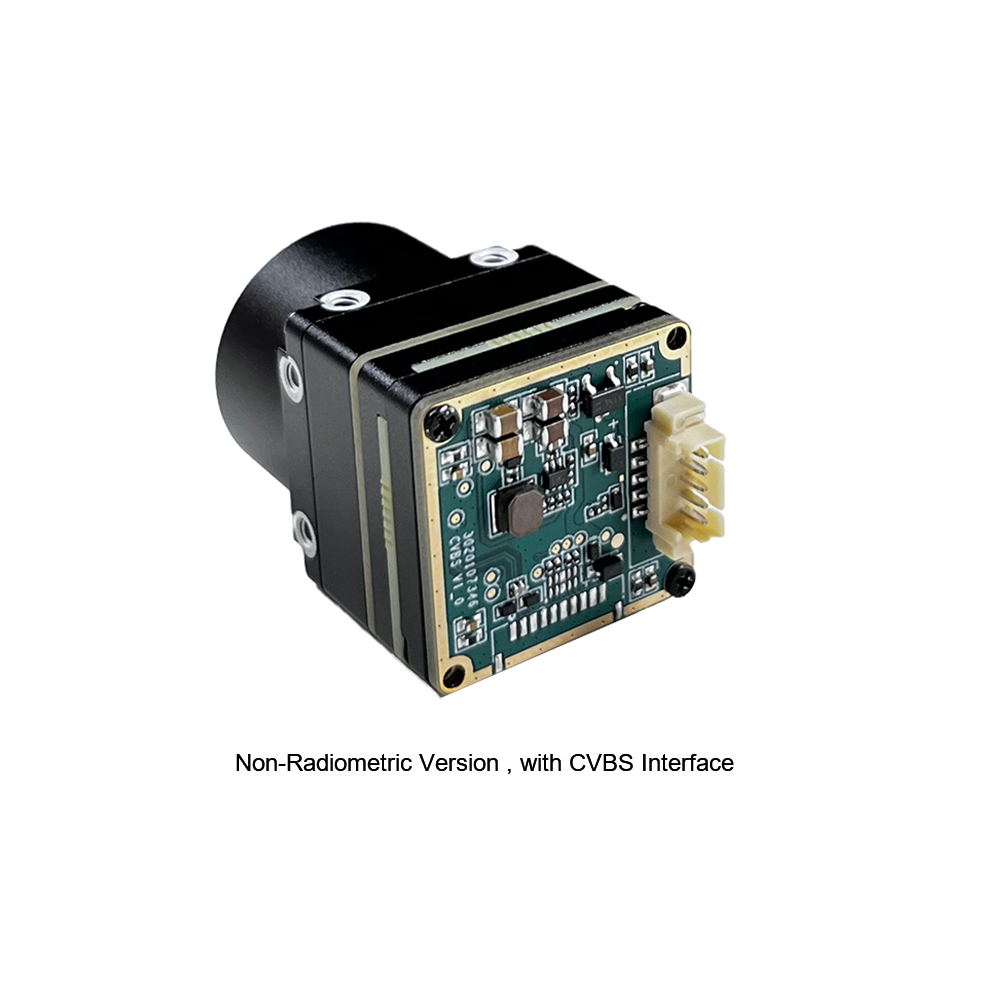
CVBS Analog & Serial
Legacy composite analog video streams instantly to ground station monitors or FPV transmitters. Separate TTL UART/RS485 ports handle serial control commands.
MIPI-CSI2 (Mobile Industry Processor Interface)
MIPI-CSI2 is the top choice for zero-latency, raw pixel pipelines connecting directly to host SoCs like NVIDIA Jetson Orin, Rockchip RK3588, or Raspberry Pi Compute Modules.
- ✅ Architectural Advantages: Completely bypasses network protocol overhead and hardware compression delays; pipes raw 14-bit radiometric or pre-processed 8-bit YUV video straight into host system RAM via Direct Memory Access (DMA). Total latency stays below 5 milliseconds.
- ⚠️ Physical Limitations: Cable runs must stay extremely short—usually under 15–20 cm over flex ribbons. High susceptibility to EMI requires proper ground shielding and careful PCB traces.
Network Interfaces: RJ45 / IP / RTSP
When you're building long-distance links, distributed edge nodes, or tethered payloads, networked thermal camera modules pack embedded H.264/H.265 video compression hardware right on the core board.
- ⚙️ Transport Mechanism: Packages encoded video frames into Real-Time Streaming Protocol (RTSP) streams sent across standard RJ45 Ethernet wiring or slip-ring interconnects.
- ✅ Integration Capabilities: Offers native ONVIF support, straightforward web UI setup, and immediate streaming into enterprise Video Management Systems (VMS).
- ⚠️ Latency Profile: Adds modest encoding and decoding latency (80–150 ms depending on host buffer size), making it better suited for tethered inspection drones, static perimeter towers, and ground inspection rovers.
Legacy Analog CVBS & Serial Control Protocols
Analog Composite Video Burst Signal (CVBS) provides direct backward compatibility with analog FPV transmitters and legacy monitors. System controls operate on secondary 3.3V TTL UART or RS485 differential lines, relying on PELCO-D or hex command sets to toggle palette modes, trigger digital zoom, adjust AGC curve offsets, and fire manual NUC routines. For assistance mapping interface layouts to your platform, see our Integrated Thermal Camera Selection Guide.
البصريات، طلاءات الجرمانيوم وحسابات مسافة DRI
Standard glass lenses act like solid brick walls to long-wave infrared thermal photons. Thermal optical builds require specialized semiconductor materials—primarily monocrystalline Germanium (Ge), Chalcogenide glass, or Zinc Selenide (ZnSe).
Optical Material Physics & DLC Coatings
Monocrystalline Germanium offers a refractive index (n ≈ 4.0 in the LWIR spectrum), allowing optical engineers to build high-performance, fast aperture lenses with fewer physical elements. However, raw Germanium reflects over 30% of thermal radiation at each air-to-glass interface. To maintain optical throughput, interior lens surfaces receive multi-layer Anti-Reflective (AR) coatings, while exposed front elements are treated with Diamond-Like Carbon (DLC) hard coatings.
DLC coatings protect front optics from high-velocity airborne dust, rain strikes, salt spray, and sand abrasion on moving UAVs while keeping light transmission above 92%. Germanium also exhibits thermal drift in its refractive index (∂n/∂T). To prevent focus drift across operating environments (-40°C to +80°C), industrial thermal lenses rely on passive mechanical athermalization—combining specific metal barrel alloys whose thermal expansion physically shifts lens elements to maintain precise focus automatically.
Calculating DRI Distance (Johnson's Criteria)
Calculating optical focal length requirements comes down to standard target resolution metrics defined by Johnson's Criteria. The target critical dimension must span a minimum number of pixel line-pairs:
- ⚙️ الاكتشاف: 1.5 line pairs (3 pixels) — Confirms an object is present in the scene.
- ⚙️ التعرف: 6 line pairs (12 pixels) — Classifies target class (e.g., distinguishing a person from a vehicle).
- ⚙️ تحديد الهوية: 12 line pairs (24 pixels) — Identifies specific object attributes (e.g., distinguishing a pickup truck from a sedan).
The mathematical maximum range (R) is derived from this optical formula:
R = (f × H) / (p × N)
حيث f is lens focal length (mm), H is physical target height (m), p is sensor pixel pitch (mm; e.g., 0.012 mm for a 12 μm sensor), and N is required resolved pixels.
DRI Distance Reference Matrix (1.8m Human Target, 12µm Pixel Pitch, 640×512 Array)
| Focal Length (f) | Field of View (FOV) | Detection Range (N=3) | Recognition Range (N=12) | Identification Range (N=24) |
|---|---|---|---|---|
| 9 mm | 48.6° × 39.7° | 450 meters | 112 meters | 56 meters |
| 13 mm | 33.8° × 27.3° | 650 meters | 162 meters | 81 meters |
| 19 mm | 23.0° × 18.5° | 950 meters | 237 meters | 118 meters |
تكامل الذكاء الاصطناعي الطرفي والرؤية الحاسوبية
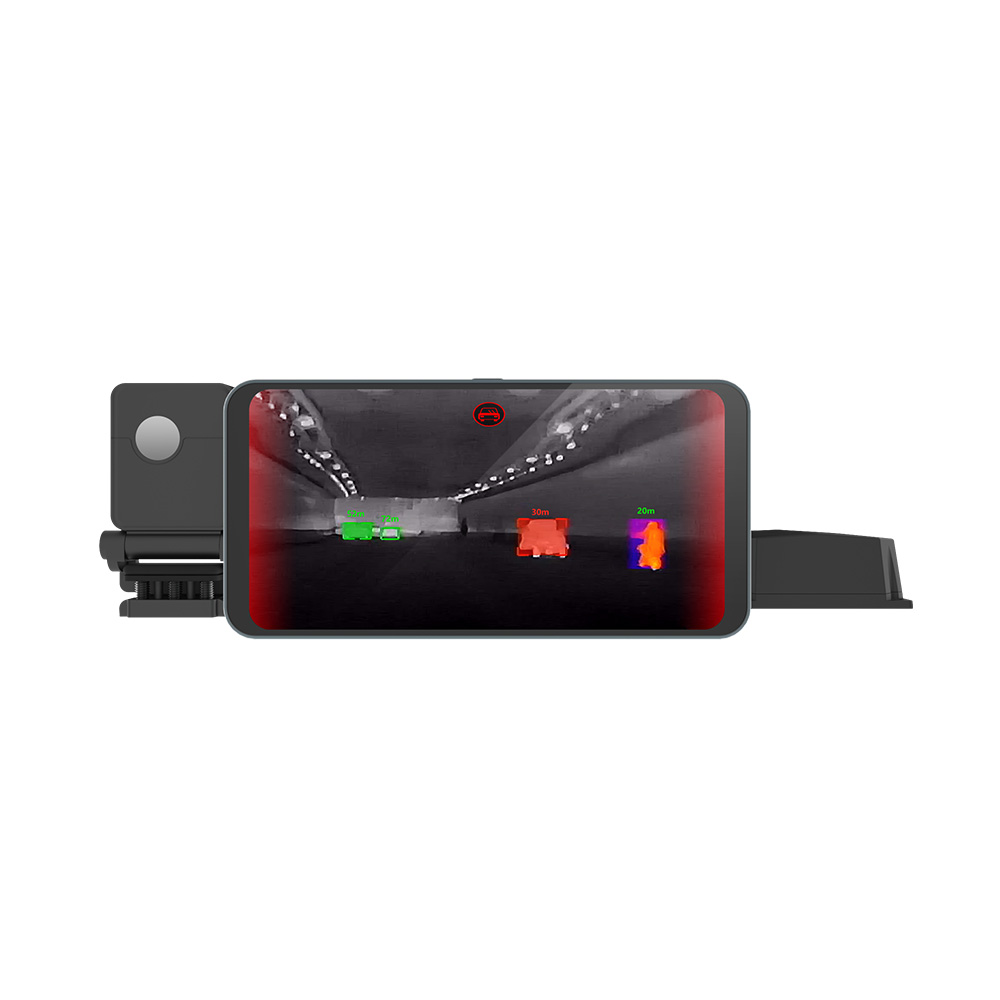
Deploying detection models onto edge hardware accelerators (NVIDIA Jetson, Google Coral, Hailo-8) requires feeding preprocessed single-channel thermal arrays properly into network layers designed for visual light images.
Preprocessing Single-Channel Thermal Data
Most object detection neural networks expect standard 3-channel RGB image matrices. Infrared sensors output a single-channel 16-bit or 8-bit grayscale array representing relative radiometric temperature or thermal flux.
- Dynamic Normalization: High-temperature hotspots in otherwise cool scenes crush histogram distributions during naive min-max scaling. Using Contrast Limited Adaptive Histogram Equalization (CLAHE) via OpenCV normalizes local image contrast dynamically before passing tensors to input layers.
- Channel Duplication vs. Sensor Fusion: For standalone thermal vision networks, duplicate the single grayscale channel across 3 RGB input channels to align with pretrained network backbones. On dual-camera platforms, align and overlay thermal LWIR frames onto visual cameras using spatial homography matrices. Read more on multi-spectrum systems in our PTZ Dual-Sensor Thermal Security Systems Guide.
Quantization and Model Acceleration
To keep inference speeds above 30 FPS on low-power embedded processors, quantize object detection networks (e.g., YOLOv8-nano, MobileNet-SSD) from FP32 floating-point values down to FP16 or INT8 using TensorRT or ONNX Runtime tools. Here’s a crucial field tip: your INT8 calibration image sets must contain real target thermal frames. Calibrating thermal neural networks using visual RGB datasets ruins detection accuracy because of fundamental differences in visual textures and thermal edge characteristics.
مقارنة المنتجات والمواصفات الصناعية
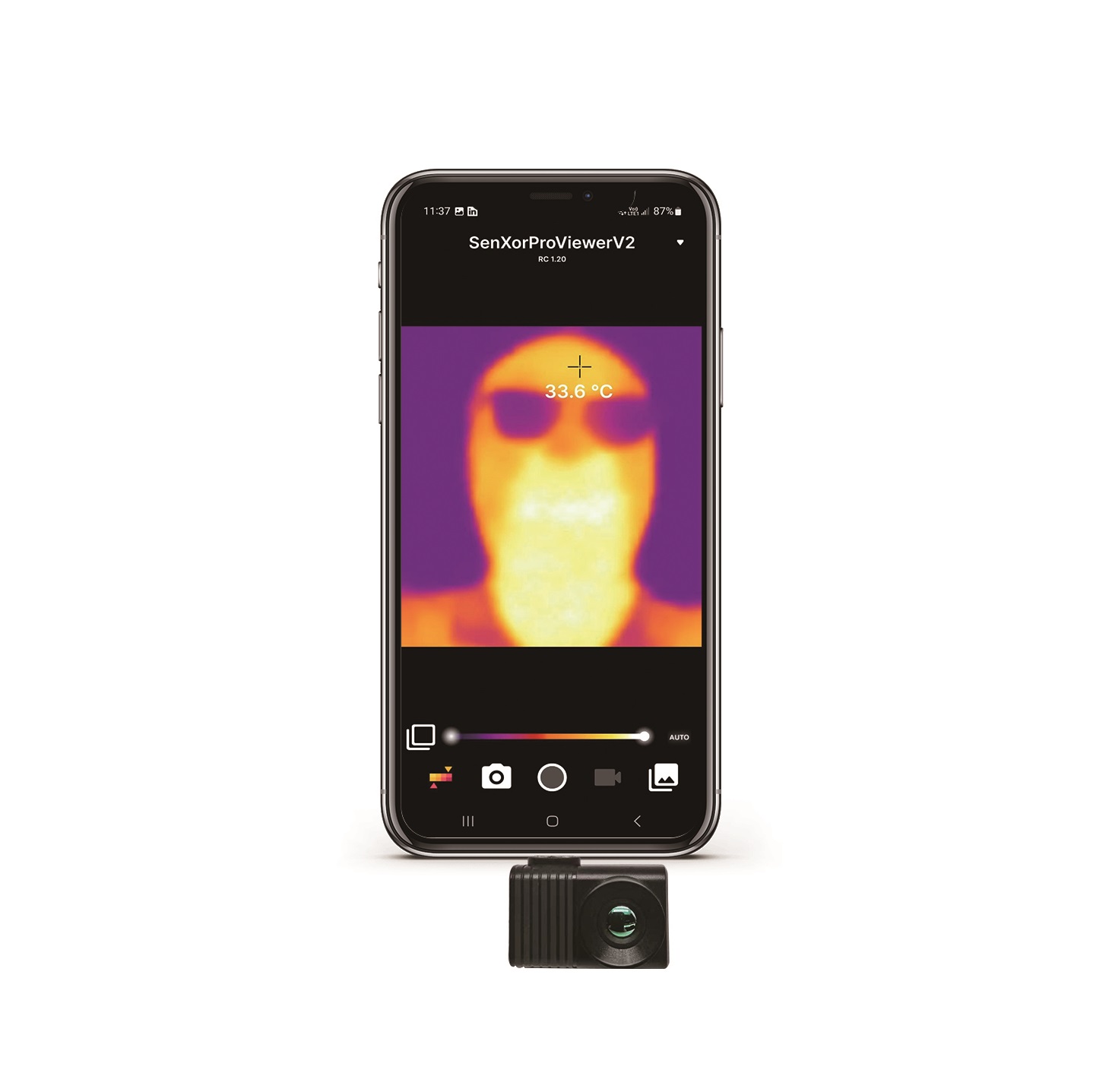
Below is a detailed breakdown of two industrial-grade uncooled وحدة مستشعر حراري بالأشعة تحت الحمراء designs built for drone payloads, robotic inspection rigs, and integrated OEM platforms.
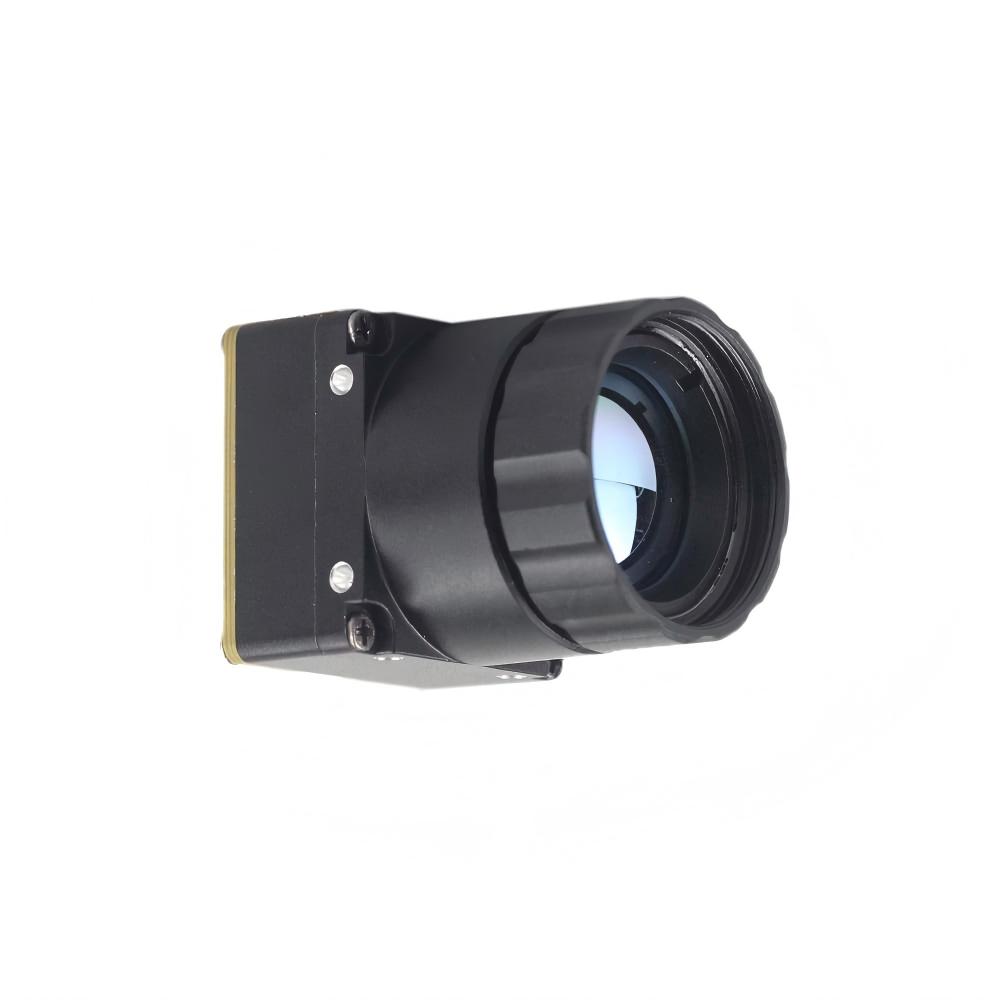
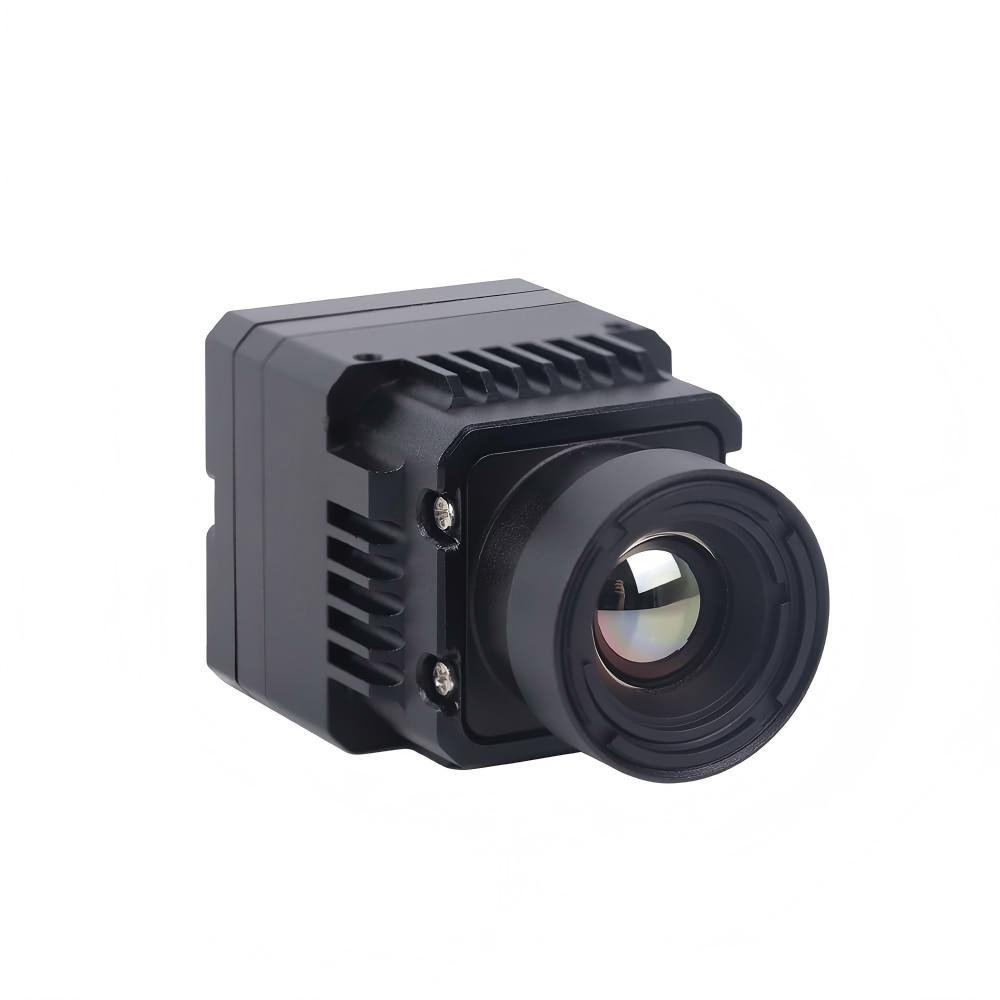
Product 1: Uncooled Infrared RJ45 CVBS RTSP IP 640*512 Module
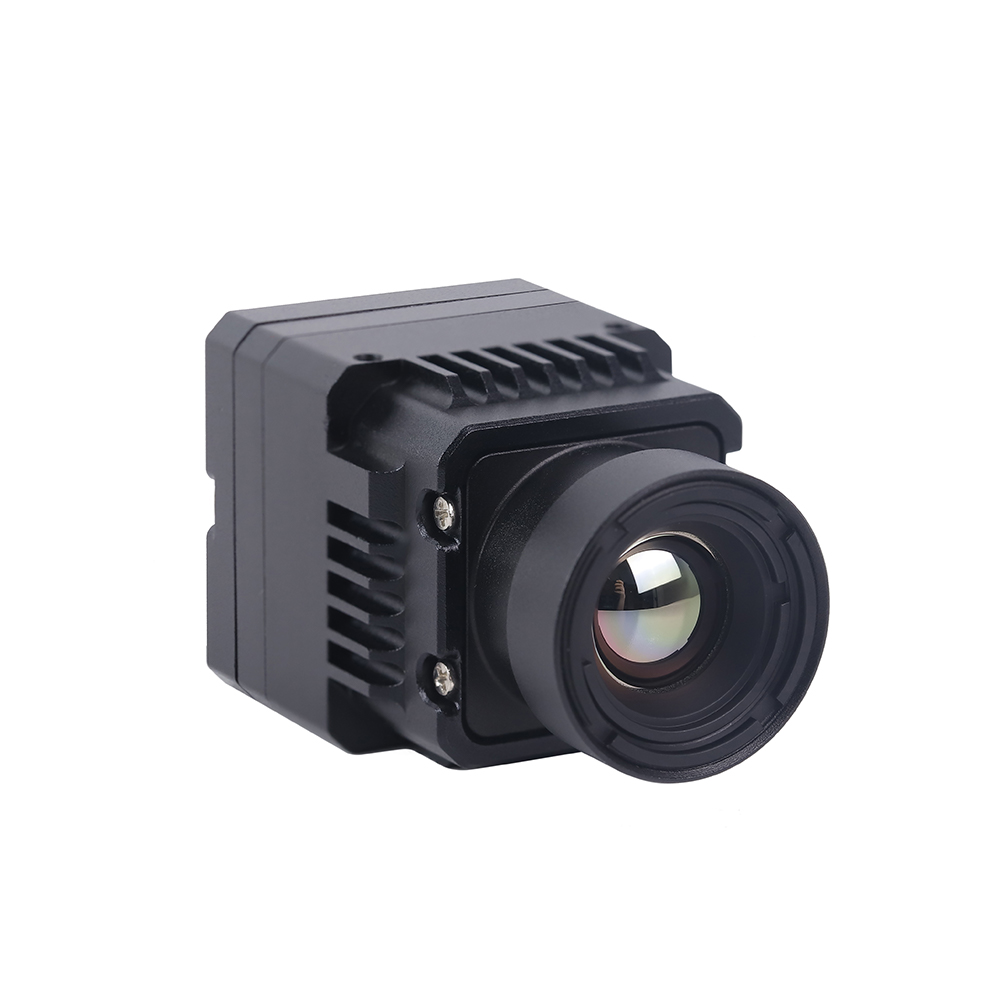
Overview: High-resolution 640×512 thermal imaging core managed by an onboard low-power ASIC hardware processor. Features native network IP capabilities delivering encoded H.264/H.265 video, live RTSP output, and concurrent CVBS analog signals.
- ⚙️ Resolution & Pitch: 640 × 512 array density featuring a tight 12 µm pixel pitch.
- ⚙️ Spectral Response: 8 to 14 µm (LWIR band coverage).
- ⚙️ Sensitivity: NETD ≤ 40 mK at 25°C for sharp edge definition.
- ⚙️ Video Protocols: Dual RJ45 Ethernet (IP/RTSP) and direct CVBS analog channels.
- ⚙️ Control Interfaces: UART / RS485 for custom serial command logic and palette switching.
- ⚙️ Onboard Processing: ASIC-driven Auto-NUC, DDE, shutterless tuning, and digital AGC.
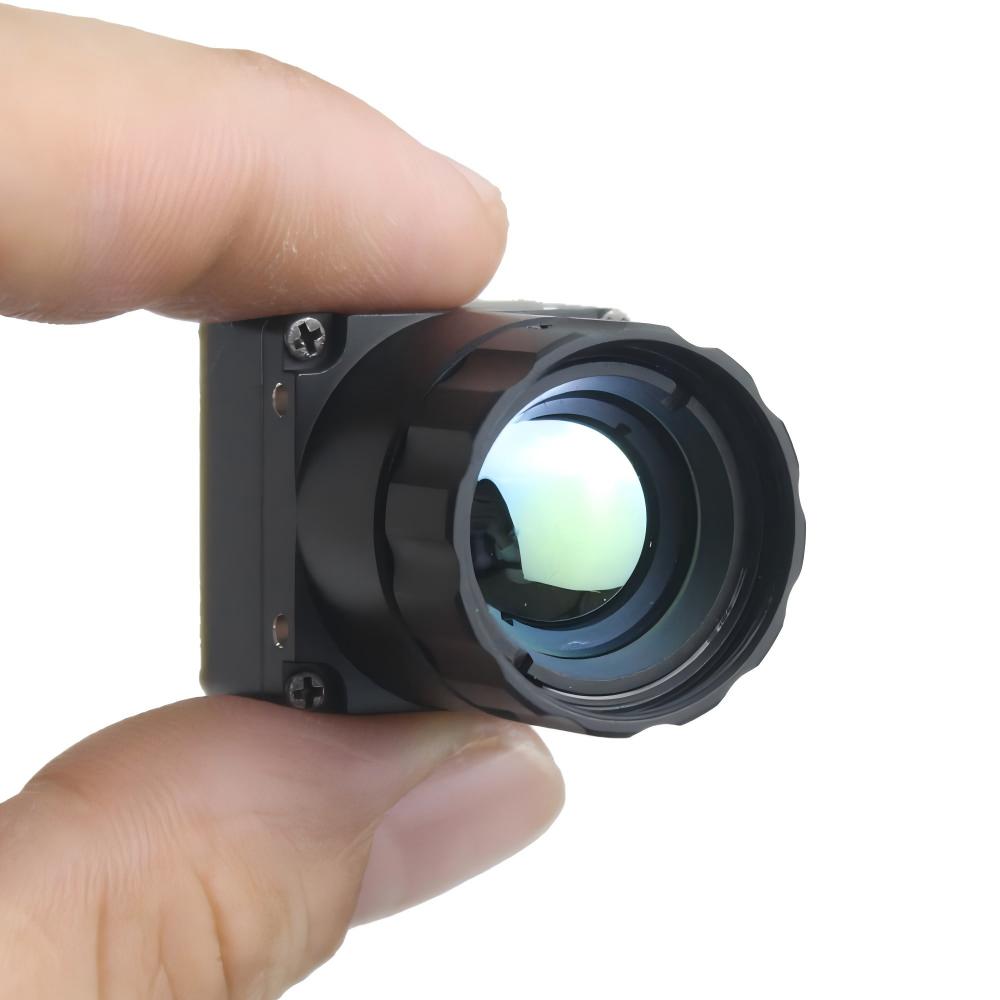
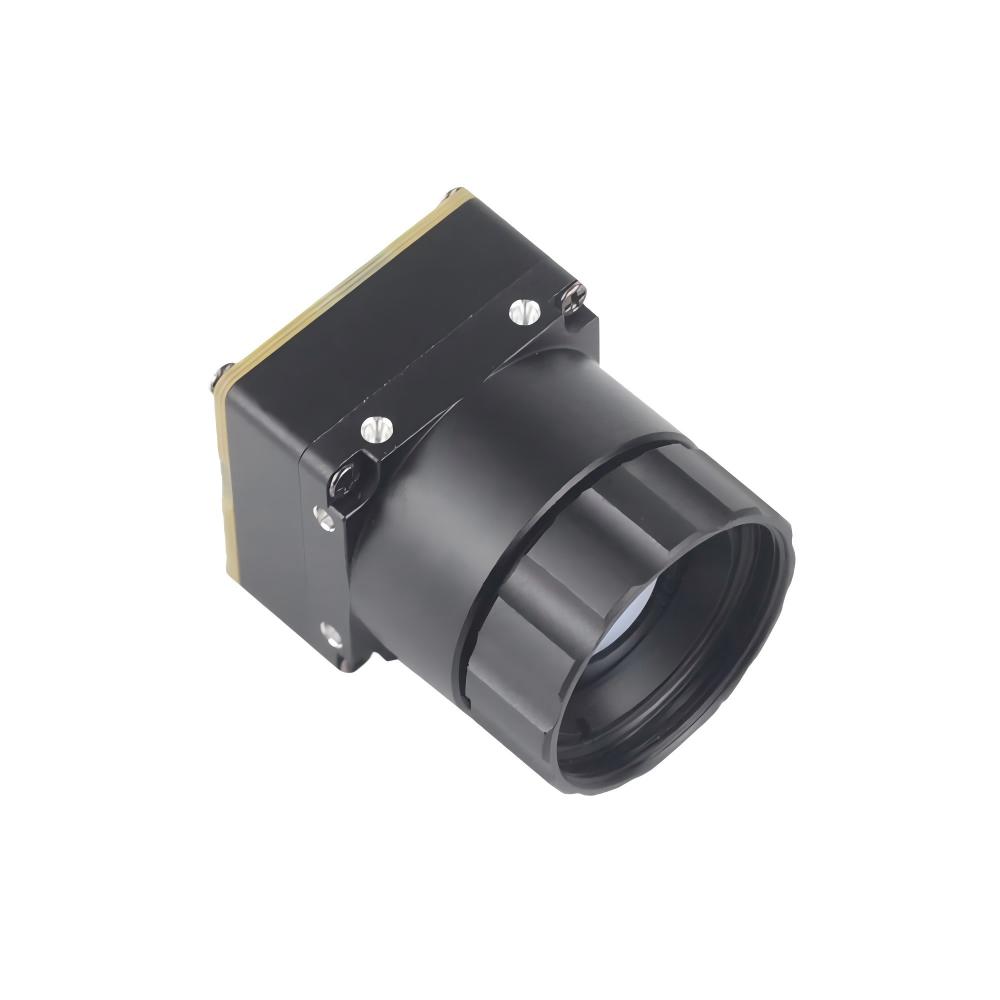
Product 2: Uncooled Infrared Mini2 MIPI 640*512 9mm Thermal Module
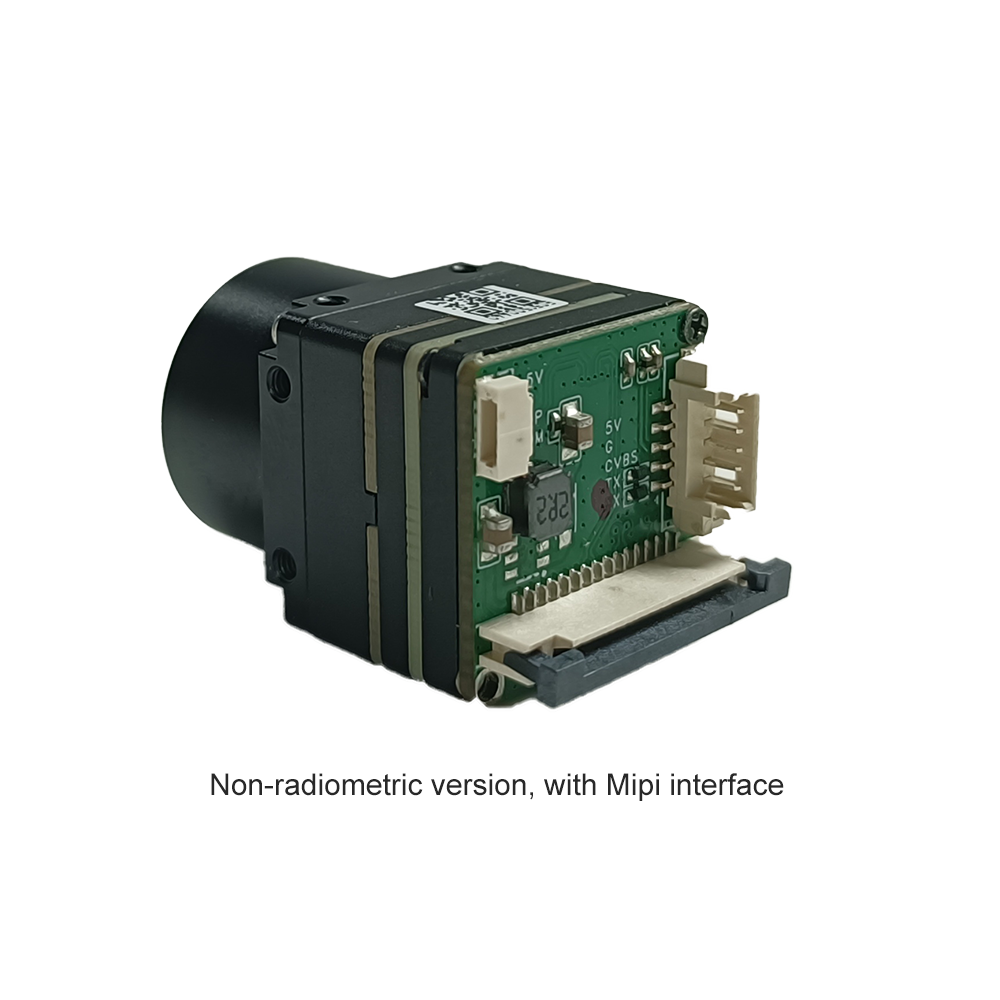
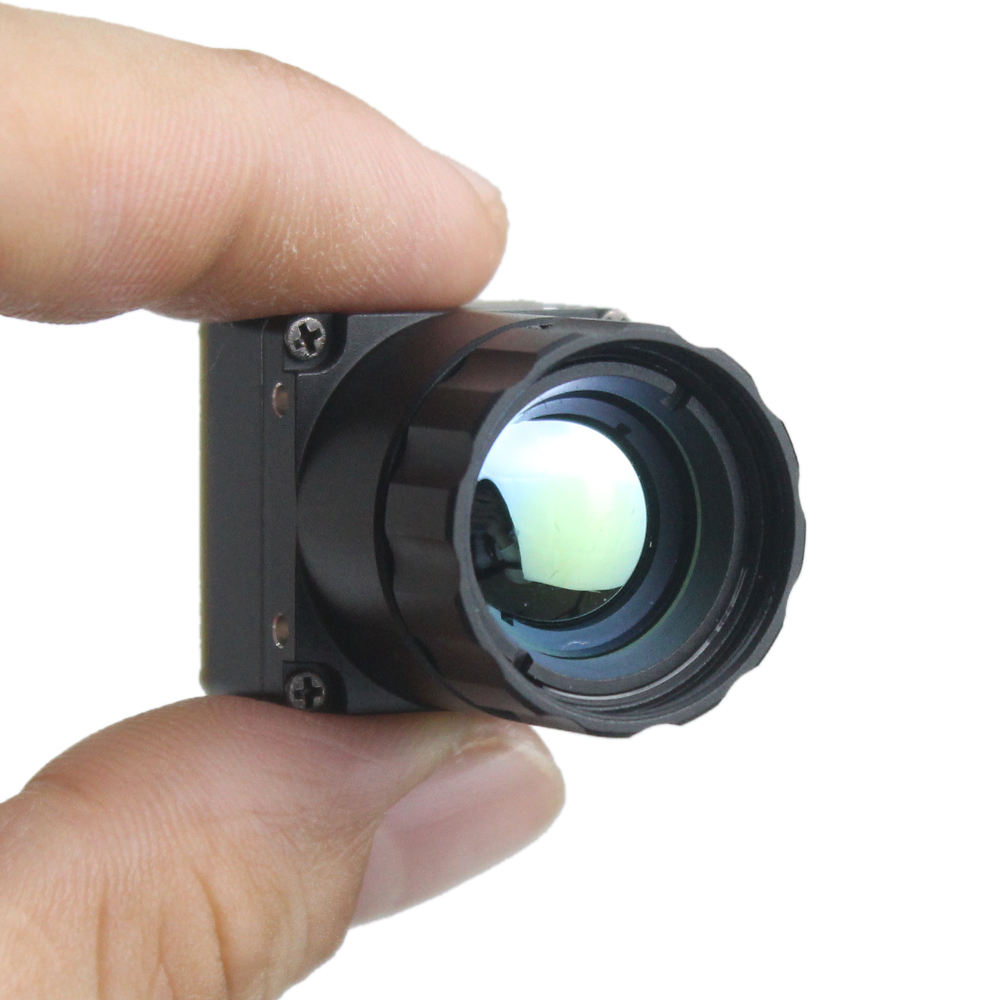
Overview: Miniaturized ultra-lightweight thermal imaging module designed explicitly for SWaP-constrained UAV gimbals and compact computer vision setups. Offers high-speed MIPI-CSI2 digital connectivity and low power draw.
- ⚙️ خيارات الدقة: High-res 640×512 array (also available in 384/256 options).
- ⚙️ Integrated Optics: 9 mm Athermalized Germanium lens with hard protective coating.
- ⚙️ Digital Output Interface: High-throughput MIPI-CSI2 connector for direct host system integration.
- ⚙️ عامل الشكل: Ultra-lightweight, single-board construction for small gimbals and rovers.
- ⚙️ Core Processing: Low-power custom hardware processing ASIC.
- ⚙️ Primary Focus: SWaP drone gimbals, embedded Edge AI nodes, and field robotics.
الأسئلة الشائعة (FAQ)
How do I stream real-time thermal video from an infrared thermal sensor module to a Raspberry Pi or Edge AI platform?
Streaming low-latency real-time thermal video to an embedded single-board computer (SBC) like a Raspberry Pi 4/5 or NVIDIA Jetson platform depends primarily on your module's physical hardware output interface.
For high-speed real-time computer vision processing, select a module equipped with a MIPI-CSI2 digital interface. Connect the camera module directly to the SBC's ribbon cable header via a flexible printed circuit (FPC). Within the Linux kernel, configure the corresponding V4L2 driver to expose the camera device as a native video node (/dev/video0). This setup passes raw uncompressed 8-bit or 14-bit pixel tensors straight into host system memory using Direct Memory Access (DMA), achieving sub-10 millisecond glass-to-glass latencies suitable for target tracking and autonomous obstacle avoidance.
Alternatively, if your thermal sensor module utilizes an RJ45 Ethernet interface, establish an IP network link over Ethernet using static or DHCP configurations. You can then open and capture the stream directly within Python or C++ applications using OpenCV's VideoCapture API connected to the RTSP endpoint URL. To eliminate buffer delays in network streams, ensure you set low-latency flags inside OpenCV or FFmpeg pipeline parameters (e.g., setting fflags=nobuffer و max_delay=0).
Should I select a 256x192 or 640x512 infrared thermal sensor module for drones and automation?
Choosing between an entry-level resolution (256×192 or 384×288) and a high-resolution array (640×512) depends directly on your operational standoff distance, required Field of View (FOV), and target AI classification needs.
A 256×192 thermal sensor module contains 49,152 active pixels. This provides sufficient resolution for close-range industrial maintenance, HVAC duct inspections, electrical enclosure diagnostics, and basic obstacle sensing for small indoor mobile robots (AMRs). However, when deployed on an airborne UAV flying at typical safe altitudes (30 to 100 meters), a 256×192 sensor spreads its pixels across a broad ground area. This drastically reduces the pixel count across small targets (such as humans or structural defects), dropping targets below the minimum line-pair threshold needed for reliable target recognition or AI inference model accuracy.
A 640×512 thermal sensor module delivers 327,680 pixels—providing over 6.6 times the pixel density of a 256×192 module. This substantial resolution increase provides three key benefits:
1. Extended Standoff Distance: Detect, recognize, and track human targets or equipment faults at much greater distances without changing lenses.
2. Wider Area Coverage: Capture broad situational awareness while preserving fine spatial details across the entire frame.
3. Superior Computer Vision Precision: Object detection algorithms like YOLO require distinct edge profiles to make high-confidence detections. A distant target represented by a 3x3 pixel grid on a low-res camera appears as indistinct noise, whereas a 640×512 sensor renders the target across a larger pixel region, providing clear thermal edge gradients needed for automated classification.
Can these thermal sensor modules be integrated with custom OEM hardware carrier boards?
Yes, both featured thermal camera core modules are specifically engineered for custom OEM integration, embedded robotics platforms, custom PCB carrier boards, and lightweight payload gimbals. Hardware integration spans three primary layers:
1. Mechanical and Thermal Mounting: The modules feature ultra-compact single-board form factors equipped with standardized M2/M3 mounting holes. Because onboard ASIC image processors consume under 1.2 Watts, heat dissipation can be managed passively via thermal pad contact with aluminum housing enclosures, avoiding the need for heavy active cooling fans.
2. Electrical Interface Connections: Engineers can connect custom carrier boards using flexible header configurations. High-speed digital video streams can be routed directly to host SoCs via MIPI-CSI2 flat flexible cables (FFC). Alternatively, breakout board connectors provide access to Ethernet lines (RJ45), power inputs (3.3V - 5V DC), CVBS analog channels, and UART/RS485 control lines.
3. SDK and Software Driver Tools: Modules include dedicated Software Development Kits (SDKs) and configuration toolchains supporting C/C++, Python, Linux V4L2 drivers, and Windows utilities. Software APIs give development teams complete programmatic control over internal camera parameters—including changing dynamic palettes (White-Hot, Black-Hot, Rainbow), triggering Non-Uniformity Correction (NUC), configuring shutterless operations, reading die temperature telemetry, and tuning digital enhancement parameters.
📚 المراجع والقراءات الإضافية
- Industry Standard: OpenCV Computer Vision Library
- Industry Standard: Wikipedia Infrared Imaging Fundamentals
- Related Guide: Enterprise-Grade Manufacturing & Testing Capabilities
- Related Guide: Integrated Thermal Camera Selection Guide
- Related Product: PTZ Dual-Sensor Thermal Security Systems