
أفضل مورد لنواة كاميرا حرارية LWIR غير مبردة | وحدات OEM بدقة 640 و1280
10 سبتمبر 2026
طلب بالجملة لوحدات الكاميرا الحرارية: نوى LWIR الأصلية للطائرات بدون طيار والأنظمة المدمجة
إن نقل بناء تصوير بالأشعة تحت الحمراء طويلة الموجة (LWIR) غير المبردة من نموذج أولي على طاولة المختبر يعمل على عدة تطوير إلى آلاف الوحدات المنتشرة في الميدان سيجعل أي فريق هندسي يتواضع. إذا كنت تبني طائرات بدون طيار تجارية، أو روبوتات متحركة ذاتية القيادة، أو أجهزة بصرية محمولة، أو عقدًا صناعية ذكية على الحافة، فأنت تعلم بالفعل أن شراء نوى المستشعرات بكميات كبيرة ليس مثل شراء كاميرات ويب سلعية. لا يمكنك فقط تصفح كتالوج، وإلقاء نظرة على دقة البكسل، والتحقق من خصم السعر، والانتهاء من الأمر. في العالم الحقيقي، يعتمد نجاحك على فيزياء الحالة الصلبة الخام للميكروبولومتر، وميزانيات الحجم والوزن والطاقة (SWaP) القاسية، وانتقال الحرارة الطفيلي داخل العلب المغلقة، ودالة نقل التضمين البصرية (MTF)، وكمونات الواجهة على مستوى العتاد. إذا اتخذت القرار الخاطئ بشأن النواة أثناء مرحلة المختبر، فستدفع الثمن عشرة أضعاف مع انحراف القياس الإشعاعي، وعدم استقرار المحاور، وفشل ميداني كارثي بمجرد بدء الإنتاج.
تنفيذ طلب OEM طلب بالجملة لوحدات الكاميرا الحرارية يتطلب شفافية كاملة في العتاد، وتحكمًا منخفض المستوى في البرامج الثابتة، واتساقًا مطلقًا في التصنيع بين دفعات الإنتاج. إن الحصول على نوى LWIR الأصلية بلوحة مكشوفة أو داخل علبة يعني أن مهندسي البصريات الميكانيكية والبرامج الثابتة والأنظمة لديك يجب أن يقيموا خطوط البيانات الرقمية الخام، والتوافق المدمج الأصلي - مثل جسور MIPI-CSI2 بدون عبء إضافي أو جسور UVC بدون تعريفات - وخوارزميات تصحيح عدم الانتظام الداخلي (NUC)، واستقرار قياس درجة الحرارة في ظروف التشغيل القاسية. انظر، لقد بنينا هذا الدليل ليكون مرجعًا جادًا على مستوى العتاد لمهندسي الأنظمة، وكبار مصممي البصريات الميكانيكية، ومديري المشتريات الذين يدمجون الرؤية الحرارية في حمولات الطائرات بدون طيار، والمناظير التكتيكية، وأنظمة المراقبة المحيطية، ومنصات الذكاء الاصطناعي الصناعية على الحافة.
جدول المحتويات
- 👉 فيزياء الميكروبولومتر وبنية المستشعر: تقييم VOx مقابل a-Si في المشتريات الأصلية بالجملة
- 👉 هندسة SWaP-C للمنصات الجوية والمتحركة: تفصيل الوزن والطاقة وعامل الشكل
- 👉 الواجهات المدمجة عالية السرعة: خطوط MIPI-CSI2 الأصلية وUSB 3.0 UVC والفيديو التناظري
- 👉 القياس الإشعاعي الصناعي: إدارة NUC وأعلام الغالق والانحراف الحراري عبر عمليات النشر عالية الحجم
- 👉 نوى Purpleriver الأصلية LWIR: المواصفات التقنية ومصفوفة الحجم
- 👉 ضمان جودة الطلبات بالجملة، والتحقق من MTBF، وتخفيف مخاطر سلسلة التوريد
- 👉 قسم الأسئلة الشائعة التقنية المتعمقة
فيزياء الميكروبولومتر وبنية المستشعر: تقييم VOx مقابل a-Si في المشتريات الأصلية بالجملة
عندما تقوم بالتوقيع على دفعات إنتاج كبيرة من نوى LWIR، فإن كيمياء أشباه الموصلات الرقيقة الخام لمصفوفة المستوى البؤري (FPA) تحدد نسبة الإشارة إلى الضوضاء، وثابت الزمن الحراري للمستشعر، والاستقرار البيئي. في عالم LWIR غير المبرد، تهيمن مادتان للكاشف على المشهد التجاري: أكسيد الفاناديوم (VOx) والسيليكون غير المتبلور (a-Si). إن فهم المفاضلات الفيزيائية بين هاتين المادتين أمر بالغ الأهمية قبل تثبيت قائمة المواد (BOM).
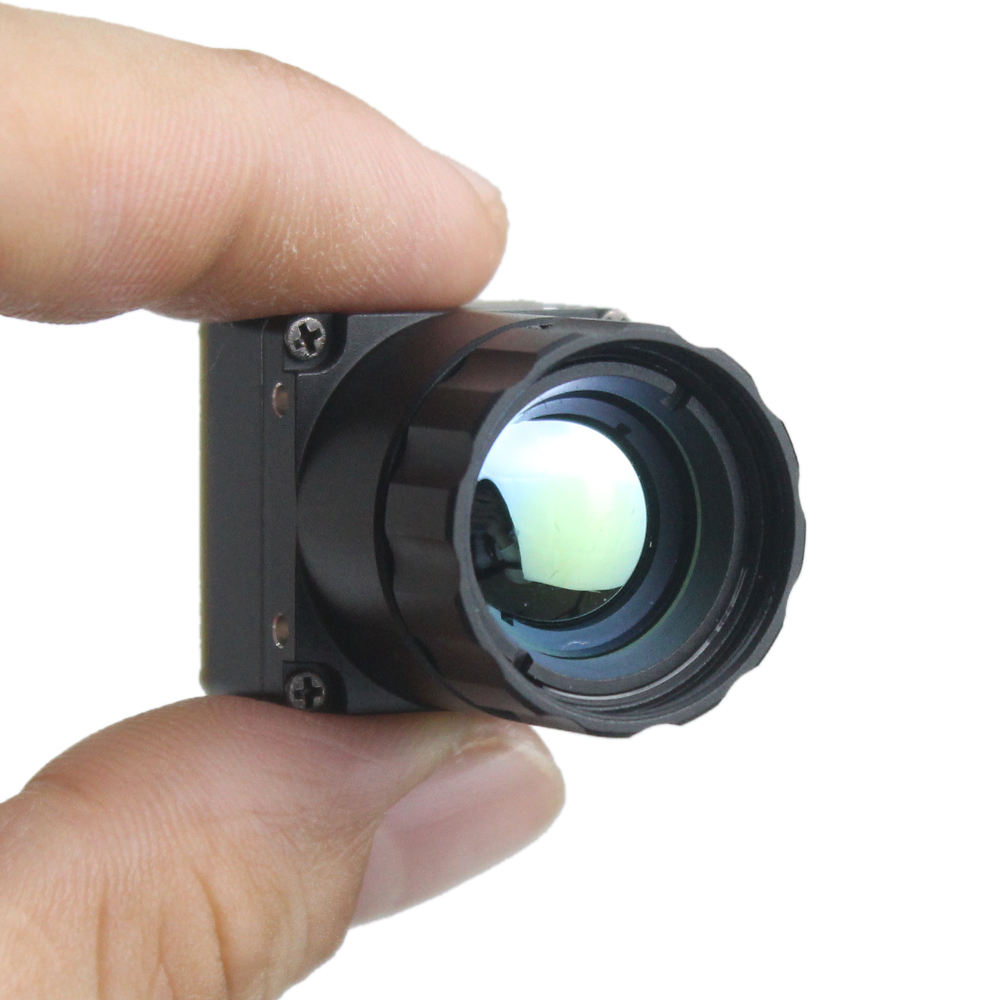
تبدأ الرحلة البصرية عندما تصطدم طاقة الأشعة تحت الحمراء طويلة الموجة عبر النافذة الطيفية من 8 ميكرومتر إلى 14 ميكرومتر بمجموعة بصرية من الجرمانيوم أو الكالكوجينيد المطلية بطبقة مضادة للانعكاس وتهبط على غشاء امتصاص البكسل في الميكروبولومتر، والذي يُصنع عادةً من نيتريد السيليكون (Si3N4). تعمل طاقة الفوتون الممتصة على تسخين مادة الثرمستور الأساسية، مما يؤدي إلى تحول قابل للقياس في المقاومة الكهربائية تحكمه معامل درجة حرارة المقاومة (TCR) للمادة. تقوم الدائرة المتكاملة لقراءة الإشارة (ROIC) بأخذ عينات من هذا التحول في المقاومة من خلال مكاملات مقاومة تحويلية سعوية منخفضة الضوضاء للغاية. ومن هناك، تقوم مصفوفة البوابات القابلة للبرمجة الميدانية (FPGA) المدمجة أو الدائرة المتكاملة المخصصة (ASIC) بتنفيذ استبدال البكسلات الميتة، وتصحيح الكسب/الإزاحة ثنائي النقاط في الوقت الفعلي، والحسابات الإشعاعية قبل إخراج الفيديو الرقمي الخام.
مزايا مادة أكسيد الفاناديوم (VOx)
إليك خلاصة الأمر مع VOx: إنه يوفر معامل درجة حرارة مقاومة أعلى بشكل ملحوظ، يتراوح عادةً بين -2%/كلفن و-3%/كلفن في درجات حرارة الغرفة. يغذي معامل TCR الأعلى هذا مباشرةً فرق درجة حرارة مكافئ ضوضاء (NETD) أفضل بكثير. على خطوط الإنتاج الآلية كبيرة الحجم، تحقق نوى Purpleriver من VOx حساسيات حرارية عند أو أقل من 40 مللي كلفن، وتنخفض إلى أقل من 30 مللي كلفن عند إقرانها ببصريات واسعة بفتحة f/1.0.
يجلب VOx أيضًا تردد زاوية ضوضاء الوميض 1/f أقل بشكل ملحوظ مقارنةً بالسيليكون غير المتبلور. تعود ضوضاء الوميض منخفضة التردد في الميكروبولومترات إلى تقلبات كثافة الحاملات على طول الحدود الحبيبية للبنية الدقيقة. ينتج الترسيب الدقيق لـ VOx أغشية رقيقة متكافئة العناصر موحدة بشكل استثنائي تحافظ على نسبة إشارة إلى ضوضاء (SNR) مثيرة للإعجاب على مدى دورات تكامل ممتدة. عندما تبني طائرات استطلاع تكتيكية بدون طيار، أو حمولات استطلاع حدودية، أو أنظمة كشف غاز آلية، فإن تمييز تباينات الهدف بكسور الكلفن عن ضوضاء خلفية المستشعر هو الفرق بين نجاح المهمة وبيانات قياس عديمة الفائدة.
خصائص السيليكون غير المتبلور (a-Si)
على الجانب الآخر، تعمل مصفوفات السيليكون غير المتبلور على خطوط أشباه الموصلات CMOS القياسية، وتُرسَّب على رقاقات سيليكون ضخمة خفّضت تاريخيًا نفقات التصنيع الأولية. لكن a-Si يجلب قيودًا فيزيائية حقيقية: معامل TCR أقل (عمومًا -1.5%/كلفن إلى -2%/كلفن) مقترنًا بأرضيات ضوضاء 1/f أعلى بكثير. لاستخراج صورة قابلة للاستخدام من تلك الضوضاء، يتعين على نوى a-Si الاعتماد على فترات تكامل أطول وتصفية ضوضاء زمنية قوية. يدفع ذلك ثابت الزمن الحراري للميكروبولومتر إلى ما يتجاوز 14 مللي ثانية. عندما تضع مستشعر a-Si في عمليات عالية الديناميكية—مثل الانعراج العنيف للطائرات بدون طيار، أو تتبع مكافحة الطائرات بدون طيار، أو تجنب العوائق الروبوتية عالية السرعة—يظهر ذلك الاستجابة الحرارية البطيئة فورًا كظلال، وحواف ملطخة، وفقدان للوضوح المكاني.
تقليص تباعد البكسلات: هندسات 17 ميكرومتر مقابل 12 ميكرومتر
لقد أعاد التحول من تباعد بكسل 17 ميكرومتر إلى 12 ميكرومتر كتابة قواعد اللعبة بالكامل لعمليات دمج OEM بالجملة. يُحسب القطر النشط لمصفوفة المستوى البؤري (FPA) عبر هندسة أساسية:
قطر FPA = √((العرض × التباعد)² + (الارتفاع × التباعد)²)
يؤدي النزول من بنية تباعد 17 ميكرومتر إلى بنية 12 ميكرومتر إلى خفض البصمة الفيزيائية النشطة لمصفوفة قياسية 640×512 بنحو 50% تقريبًا. في الورشة، يمنح هذا الانكماش البعدي فرقيك الميكانيكية وفرق الأنظمة مكسبين فوريين:
- ✅ التصغير البصري: لتحقيق نفس مجال الرؤية (FOV) بالضبط، يحتاج قلب مستشعر 12 ميكرومتر إلى طول بؤري لعدسة شيئية أقصر بنحو 29% مما يتطلبه مصفوفة 17 ميكرومتر. ونظرًا لأن حجم ووزن بصريات الجرمانيوم (Ge) يتناسبان تكعيبيًا مع الفتحة الصافية، فإن التحول إلى 12 ميكرومتر يقلل بشكل كبير من الكتلة البصرية ونفقات قائمة المواد الخام عبر جداول الإنتاج عالية الحجم.
- ✅ تقليل الثابت الزمني الحراري: تعمل جسور الميكروبولومتر الأصغر على خفض السعة الحرارية الفيزيائية (Cال) لكل غشاء بكسل معلق. وهذا يقلص زمن الاستجابة الحراري إلى نطاق 8 مللي ثانية إلى 10 مللي ثانية، مما يمنحك التقاط فيديو حاد وخالٍ من الضبابية بمعدل 50 هرتز/60 هرتز أثناء مناورات الطيران عالية السرعة.
هندسة SWaP-C للمنصات الجوية والمتحركة: تفصيل الوزن والطاقة وعامل الشكل
إن هندسة الأنظمة الجوية غير المأهولة (UAS)، والذخائر المتسكعة، والمناظير المحمولة باليد، والمركبات الأرضية المدمجة (UGVs) هي تمرين قاسٍ في موازنة الحجم والوزن والطاقة والتكلفة (SWaP-C). على المنصة الجوية، كل غرام واحد من وزن الحمولة الميتة يتطلب رفعًا إضافيًا، مما يسحب أمبيرات أكثر من وحدات التحكم الإلكترونية في السرعة (ESCs)، ويستنزف حزمة الطيران بشكل أسرع، ويقصر مدة التحمل التشغيلية.
داخل محور تثبيت محكم الإغلاق أو حجرة إلكترونيات الطيران، تكون ميزانياتك الهندسية مقترنة بإحكام. تحدد كتلة الهيكل الأساسية العزم المطلوب وتيار التثبيت لمحركات التحريك والإمالة بدون فرش. يتحول استهلاك الطاقة إلى حرارة طفيلية يجب أن تنتقل بعيدًا عن الميكروبولومتر دون توليد تدرجات حرارية غير متساوية عبر المصفوفة. يجب أن تحافظ البصريات على تركيز حاد عند اللانهاية عبر تحولات حرارية واسعة دون إضافة محركات تركيز ميكانيكية ثقيلة ومستهلكة للطاقة.
تقليل الكتلة دون المساس بالصلابة الهيكلية
تغلف النوى الحرارية المغلقة القديمة كل شيء في أغلفة ألمنيوم مبثوقة سميكة، مما يدفع قلب الحمولة وحده إلى 60 إلى 80 غرامًا أو أكثر. على محور تثبيت دقيق ثنائي المحاور أو ثلاثي المحاور، تتطلب تلك الكتلة الإضافية محركات بدون فرش أكبر، وأثقال موازنة نحاسية أثقل، وأقواس هيكلية أضخم.
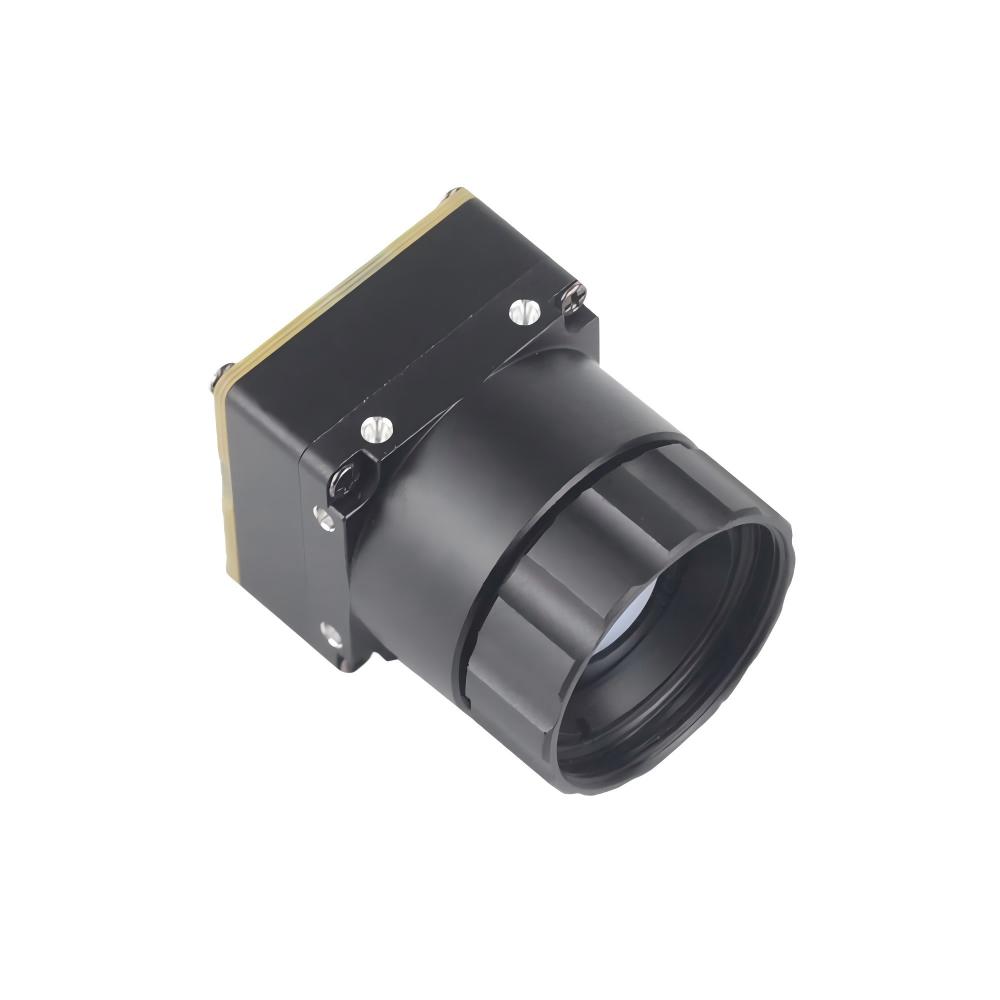
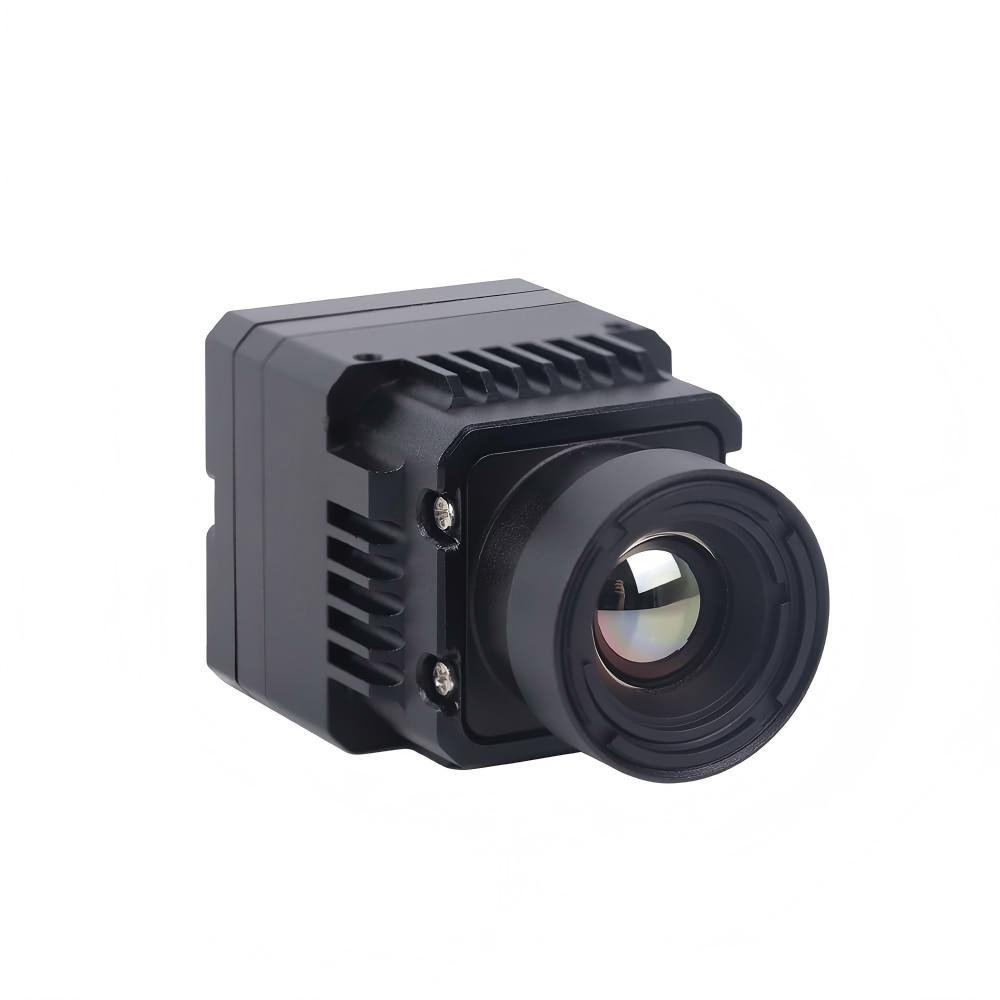
وحدات Purpleriver ذات اللوحة المكشوفة والهيكل الدقيق OEM—مثل Mini 256 وMini2 640—تقلص ذلك الوزن الهيكلي إلى 9 إلى 15 غرامًا نحيفًا. باستخدام سبائك المغنيسيوم والألمنيوم المصنعة بدقة CNC وفواصل هيكلية من البولي إيثيريميد (PEI) بدرجة الطيران، توفر هذه التجميعات صلابة ميكانيكية صخرية ومحاذاة بصرية دون معاقبة حلقات تثبيت المحور.
سحب الطاقة الديناميكي والتوازن الحراري داخل الحجرة
يستنزف استهلاك الطاقة قدرة تحمل البطارية مباشرة، لكن داخل مبيت محكم الإغلاق، يخلق مشكلة أسوأ: التغذية الراجعة الحرارية. يولد القلب غير المبرد تدفقًا حراريًا داخليًا خاصًا به. في حجرة طائرة بدون طيار محكمة الإغلاق، تسخن تلك الحرارة تجويف الهواء الداخلي والأقواس الهيكلية، مما يخلق تدرجات حرارية مكانية عبر وجه مستشعر الميكروبولومتر.
تستخدم نوى OEM الخاصة بنا سيليكون ROIC منخفض الطاقة للغاية إلى جانب FPGAs/ASICs مخصصة منخفضة التسرب، مما يحافظ على استهلاك الطاقة النشط بين 0.8 واط و1.2 واط. عند التشغيل بجهد اسمي 3.3 فولت إلى 5.0 فولت تيار مستمر، ينتقل نقل الحرارة بالتوصيل مباشرة عبر وسادات واجهة عالية التوصيل الحراري إلى الهيكل أو جلد التركيب الخارجي. يتجنب هذا الإعداد النقاط الساخنة، ويحد من ارتفاع درجة حرارة تجويف الهواء الداخلي إلى أقل من 15 درجة مئوية فوق المحيط، ويتيح لخوارزميات تعويض الثرمستور المدمجة في الوقت الفعلي العمل بأقصى استقرار رياضي.
الواجهات المدمجة عالية السرعة: خطوط MIPI-CSI2 الأصلية وUSB 3.0 UVC والفيديو التناظري
اختيار الواجهة الكهربائية والبرمجية هو بلا شك أحد أهم قرارات التكامل التي ستتخذها. اختر الطوبولوجيا الخاطئة، وستثقل نظامك بفك ترميز الإطارات المرتبط بوحدة المعالجة المركزية، وبرامج تشغيل مخصصة هشة، وخطوط معالجة متقطعة، وإطارات مسقطة في منتصف تتبع الهدف أو الطيران المستقل.
تعتمد بنيات التصوير الحراري المدمجة عمومًا على ثلاث طرق ناقلات فيزيائية:
- ⚙️ الذكاء الاصطناعي الطرفي المدمج المباشر: تمر دائرة قراءة الميكروبولومتر عبر منطق معالج الإشارة الموجود على اللوحة وتبث كلفن إشعاعي خام بدقة 14 بت أو فيديو YUV معالج مسبقًا عبر ناقل MIPI-CSI2 ثنائي المسارات مباشرة إلى محرك الوصول المباشر للذاكرة (DMA) في نظام على شريحة للذكاء الاصطناعي (مثل NVIDIA Jetson Orin Nano أو AGX أو Rockchip RK3588). يبقى زمن الانتقال العتادي من الزجاج إلى الذاكرة أقل من 10 مللي ثانية.
- ⚙️ المتحكمات الصناعية القياسية وأنظمة التشغيل: تتصل وحدة التصوير الحراري عبر جسر USB مدمج، وتقدم نقاط نهاية قياسية لفئة فيديو USB (UVC). يمنحك هذا الأسلوب تشغيلًا فوريًا بدون برامج تشغيل تحت منصات Linux Video4Linux2 (V4L2) وWindows مع زمن انتقال متوقع من البداية إلى النهاية حوالي 30 مللي ثانية.
- ⚙️ الطيران التكتيكي بدون زمن انتقال والاستهداف: يغذي معالج الإشارة مباشرة محولًا رقميًا إلى تماثلي عالي السرعة (DAC) موجودًا على اللوحة لإخراج تيار تماثلي مركب قياسي CVBS (NTSC/PAL) مباشرة إلى جهاز إرسال فيديو تماثلي بتردد 5.8 جيجاهرتز (VTX). يتجاوز هذا تمامًا التخزين المؤقت لنظام التشغيل، محققًا زمن انتقال شبه معدوم أقل من 5 مللي ثانية.
MIPI-CSI2 الأصلي: معالجة بدون نسخ للذكاء الاصطناعي الطرفي
عندما تبني حمولات ملاحة مستقلة أو تتبع أهداف أو دمج مستشعرات متعددة الأطياف، فإن MIPI-CSI2 هو البطل بلا منازع. من خلال بث حزم البكسلات مباشرة إلى ذاكرة النظام المضيف عبر DMA، لا يلمس معالجك المضيف أبدًا تجميع الإطارات أو فك ترميز البروتوكول. في بناءات الطائرات المسيرة المتطلبة، توفر هذه البنية بدون نسخ دورات وحدة معالجة مركزية حرجة لتشغيل الشبكات العصبية القائمة على YOLO وتتبع التدفق البصري والتوطين ورسم الخرائط المتزامن (SLAM).
للحفاظ على سلامة الإشارة عالية السرعة عبر التوجيهات المعقدة من لوحة إلى لوحة ومفاصل المحور الدوار ذات الحلقات المنزلقة المستمرة، تستخدم وحدات Purpleriver موصلات عالية الموثوقية من نوع micro-coaxial وmicro-pitch من لوحة إلى لوحة من Amphenol. للتسلسل العتادي المتخصص، والجسر متعدد المستشعرات عالي السرعة، وتحويل البروتوكولات منخفضة زمن الانتقال، تتعاون Purpleriver مع متخصصين هندسيين مثل جي إم شيب لضمان توزيع ساعة مستقر، وتوقيت ناقل نظيف، وحماية قوية من التداخل الكهرومغناطيسي (EMI) داخل حاويات إلكترونيات الطيران الكثيفة.
Standard USB 3.0 UVC: Driverless Flexibility
For benchtop test fixtures, industrial quality inspection benches, and x86 edge industrial computers, the USB Video Class (UVC) standard delivers seamless plug-and-play capability. Modules with UVC eliminate the maintenance headaches of signed, proprietary kernel drivers. Raw 14-bit radiometric matrices can be embedded within metadata channels or streamed through synchronized dual-endpoint streams: Endpoint 0 provides 8-bit AGC pseudo-color video for operator monitoring, while Endpoint 1 provides raw 14-bit radiometric arrays for telemetry recording and alarm evaluation.
Legacy Analog CVBS: Essential for Low-Latency FPV
For low-cost loitering munitions, expendable FPV strike systems, and clip-on night sights, analog Composite Video Blanking and Sync (CVBS) remains an absolute operational must-have. Because analog generation eliminates frame queues, OS buffers, and video compression pipelines, latency from photon capture to DAC transmission is nearly instantaneous (<5 ms). Pilots piloting fast-moving aircraft through dense brush or indoor facilities rely on this instant visual responsiveness to avoid hard crashes.
القياس الإشعاعي الصناعي: إدارة NUC وأعلام الغالق والانحراف الحراري عبر عمليات النشر عالية الحجم
Deploying thermal hardware across real-world environments exposes uncooled microbolometers to massive thermal swings. Because these sensors measure tiny resistance variations created by incident radiative energy, any temperature shift inside the camera enclosure directly alters the background reading of the array itself, leading to severe spatial non-uniformity and false temperature readings.
Fixed-Pattern Noise (FPN) and Microbolometer Non-Uniformity
Because of tiny lithographic and etching variations inherent in MEMS production, every microbolometer pixel on a focal plane array has a slightly different nominal electrical resistance, thermal capacitance, and responsivity. If you point an uncorrected microbolometer at a completely uniform thermal emitter, it will output a noisy, static curtain of lines and blotches known as Fixed-Pattern Noise (FPN).
To eliminate FPN, every Purpleriver module undergoes detailed multi-point radiometric calibration during volume manufacturing. Individual pixel responsivities are mapped into gain and offset matrices stored inside the module's non-volatile EEPROM. During operation, real-time image correction is executed on the FPGA using the standard two-point correction equation:
Sالمصحح(x,y) = G(x,y) × [Sخام(x,y) - O(x,y)]
Where Sخام(x,y) represents the raw ADC digitizer reading, O(x,y) is the pixel-specific thermal offset map, and G(x,y) is the normalized gain calibration value. For a deeper breakdown of resolving power, optical MTF curves, and high-frequency edge performance over long standoffs, check out our comprehensive guide on أداء وحدة الكاميرا الحرارية ميني 640.
Mechanical Shutter Correction vs. Scene-Based NUC (SBNUC)
As the camera chassis warms or cools, the baseline offset map drifts continuously. Historically, uncooled thermal cameras handle this by firing an internal solenoid to drop an opaque mechanical shutter flag in front of the array every few minutes. The camera treats that uniform shutter blade as a zero-contrast thermal reference and recalculates the offset map O(x,y). But on real-world missions, that mechanical shutter brings two huge headaches:
- ❌ Video Freezes: The video pipeline freezes dead for 250 ms to 500 ms while the flag drops. That's an eternity when you're flying an autonomous drone at 20 m/s or running high-speed neural network target tracking loops.
- ❌ Acoustic Clatter & Wear: The mechanical solenoid makes a sharp acoustic click that can compromise tactical night operations, while introducing a physical electromechanical wear item rated for limited cycles.
To solve this, Purpleriver OEM cores support hybrid NUC strategies. Systems can utilize our silent, low-wear miniature shutter flags, or switch directly to software-based Scene-Based Non-Uniformity Correction (SBNUC). Our SBNUC engines analyze scene optical flow vectors and high-frequency spatial motion across sequential frames, mathematically isolating actual real-world thermal features from static sensor FPN patterns. The result? Unbroken, 100% shutterless video streaming without dropped frames or clicking solenoids.
Factory Radiometric Calibration Across Production Batches
For applications where you need hard surface temperature figures—such as electrical substation scanning, automated battery pack thermal inspection, or agricultural soil profiling—every digital pixel must output reliable radiometric measurements. During our high-volume factory runs, modules are loaded into automated environmental chambers facing calibrated multi-target blackbody arrays across operational temperatures from -20°C up to +150°C (standard range) or up to +550°C (high-gain industrial range). Calibration polynomial curves are flashed directly into non-volatile memory, ensuring batch-to-batch repeatability within ±2°C or ±2% across the entire operational window.
نوى Purpleriver الأصلية LWIR: المواصفات التقنية ومصفوفة الحجم
To meet the structural, mechanical, and optical needs of enterprise integration teams, Purpleriver provides two primary micro-core platforms for bulk OEM and defense procurement. Both platforms are available in bare-board or enclosed form factors, offering flexible optics and industry-standard embedded buses.
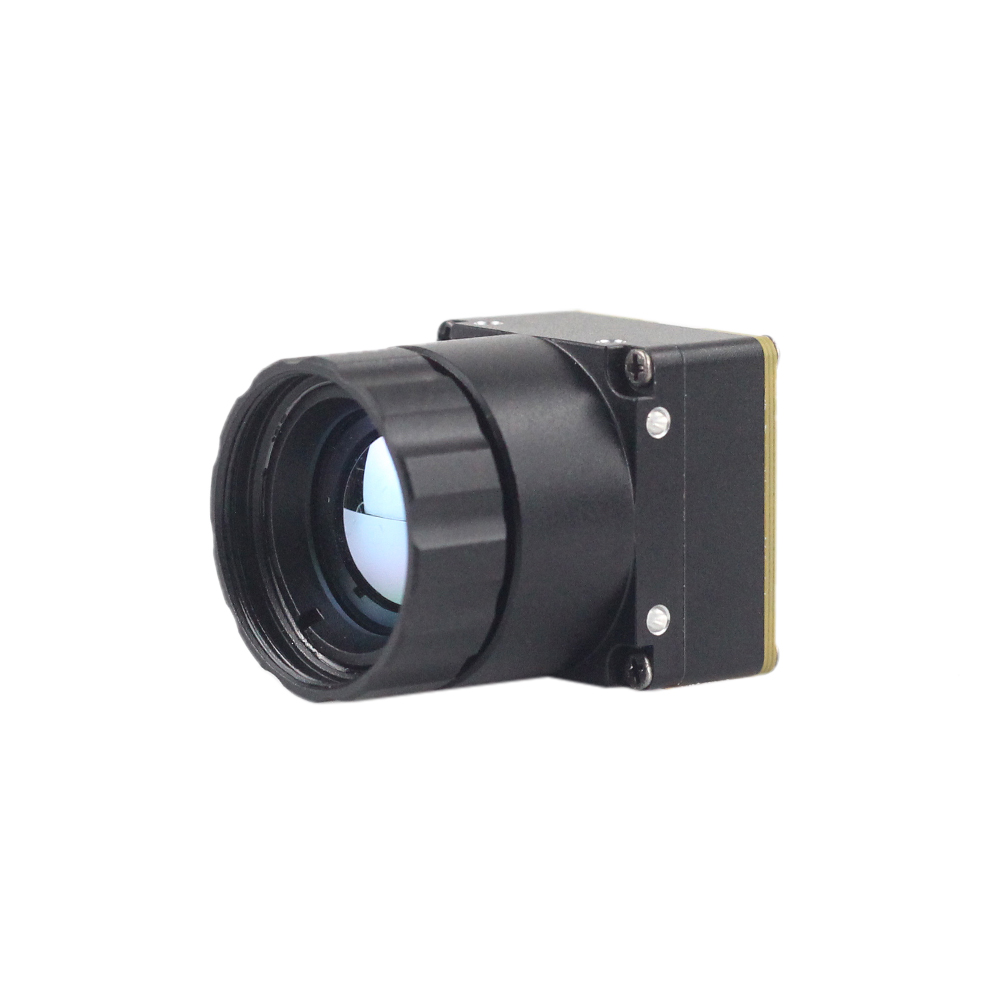
وحدة الكاميرا الحرارية المصغرة 256 غير المبرّدة بالأشعة تحت الحمراء طويلة الموجة
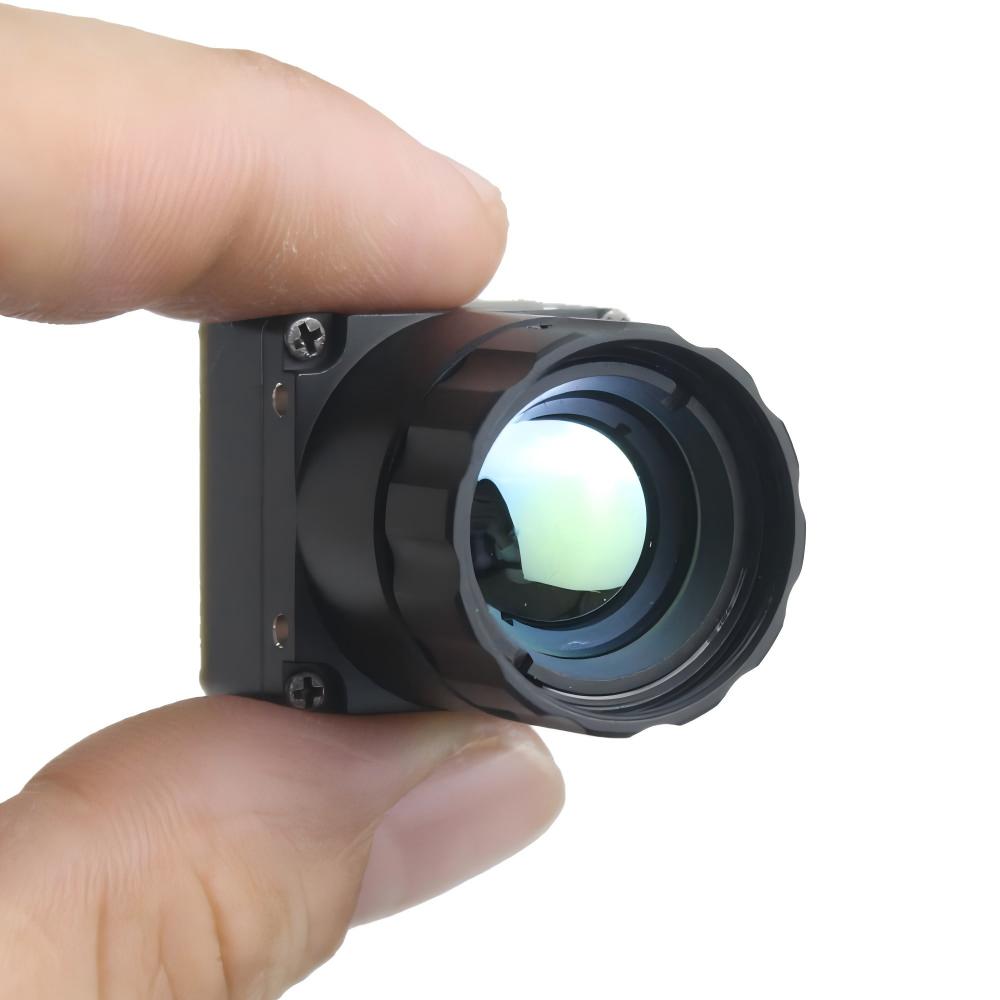
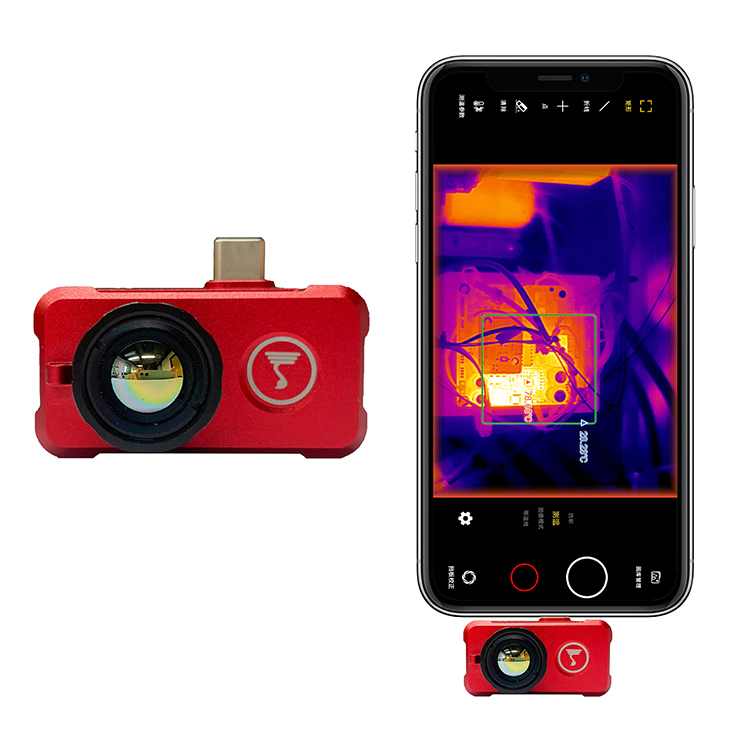
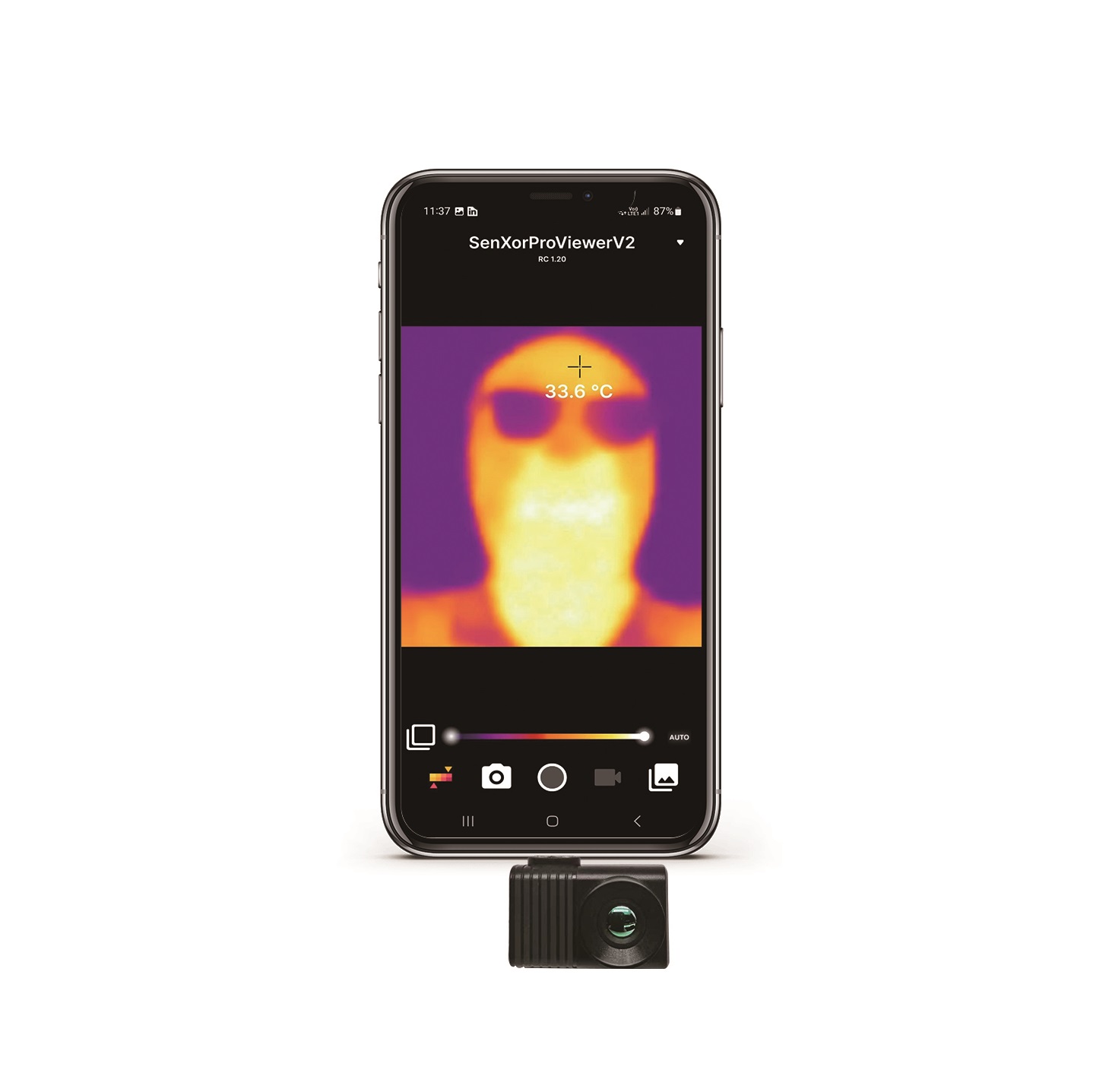
الـ وحدة كاميرا تصوير حراري مصغرة غير مبردة LWIR بدقة 256*192 packs a high-performance imaging core into an ultra-compact footprint designed specifically for micro-UAS platforms, compact rifle sights, and tactical defense payloads such as surface mine and unexploded ordnance detection. Designed to match the form factor and field performance seen on high-end enterprise thermal drones, the Mini 256 uses advanced uncooled VOx infrared detectors for ultra-clear thermal imaging and precise temperature measurement. It captures ambient long-wave infrared radiation and outputs an exceptionally uniform thermal image complete with per-pixel radiometric temperature data.
- ✅ الدقة وتباعد البكسلات: 256×192 active array, 12 µm high-sensitivity VOx microbolometer.
- ✅ الحساسية الحرارية: NETD ≤ 40 mK at f/1.0, 25°C.
- ✅ Form Factor & Mass: Ultra-miniaturized bare-board footprint weighing approximately 9 grams without optics.
- ✅ استهلاك الطاقة: Highly optimized low-power electronics consuming under 0.8 W at 3.3V–5.0V DC.
- ✅ Radiometric Support: Real-time temperature measurement across -20°C to +150°C with ±2°C accuracy.
- ✅ التطبيقات الأساسية: Mine and IED detection, robotic obstacle avoidance, personal thermal scopes, and micro-FPV drones.
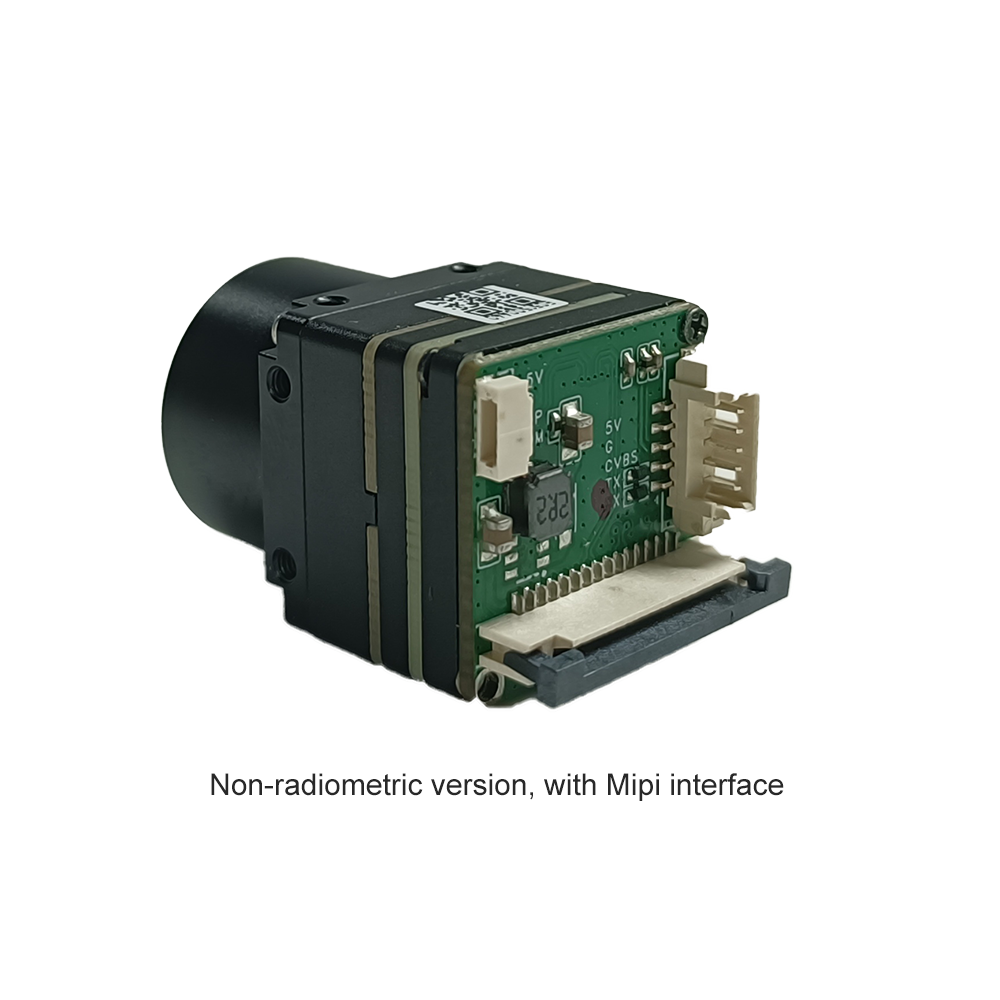
Mini2 640x512 9mm Thermal Imaging Camera Module For Drones
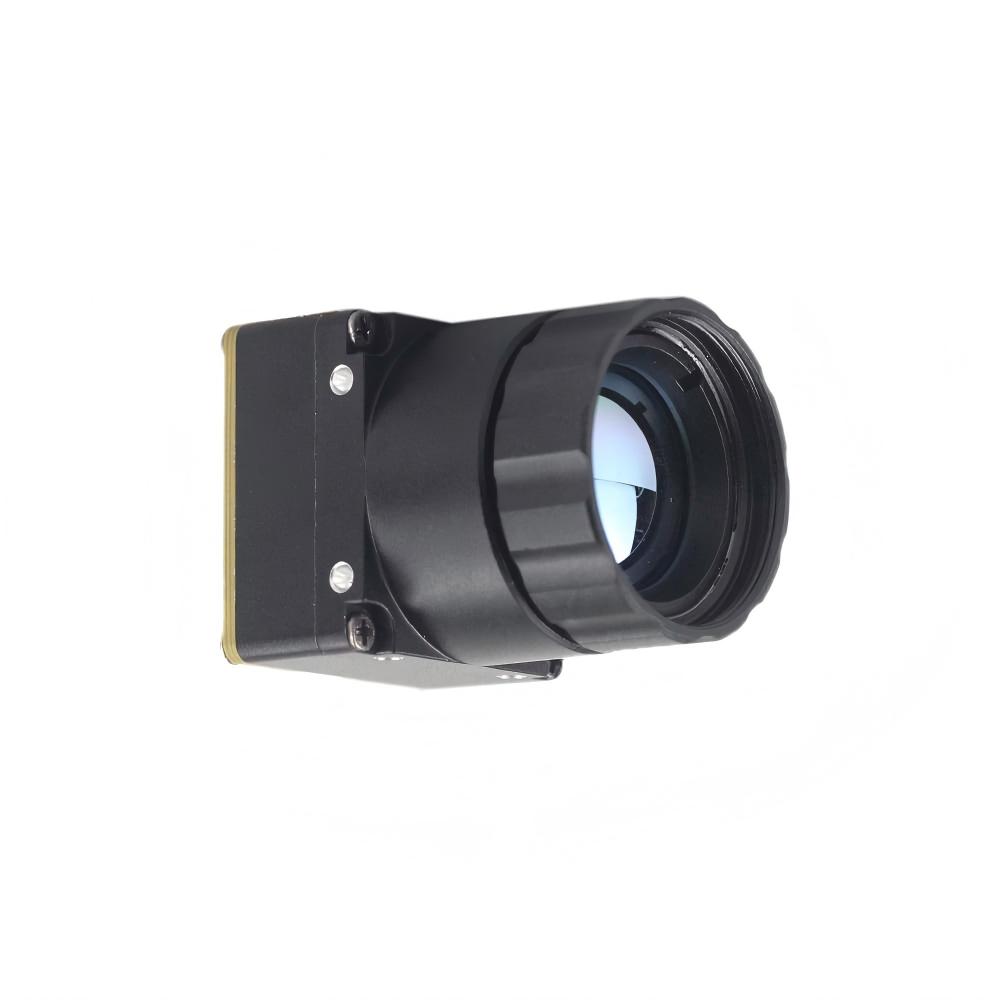
الـ وحدة كاميرا تصوير حراري بالأشعة تحت الحمراء غير مبردة Mipi 640 384 256 9mm للطائرات بدون طيار is Purpleriver's premier aerial imaging solution. Offering flexible resolution configurations (native 640×512, with scalable binning options for 384×288 and 256×192), this core comes integrated with a factory-aligned, athermalized 9mm optical lens assembly engineered specifically for enterprise drone gimbals. The Mini2 uncooled infrared thermal imaging module features sharp and crisp image presentation, an exceptionally compact size, and low volume manufacturing cost. Native support for high-bandwidth MIPI-CSI2 interfaces alongside standard USB and analog outputs gives your engineering team immediate plug-and-play compatibility with modern edge-computing AI boards.
- ✅ الدقة وتباعد البكسلات: Native 640×512 pixels with 12 µm pixel architecture.
- ✅ البصريات: Integrated 9mm athermalized Germanium lens delivering an expansive wide field-of-view for search and rescue or situational reconnaissance.
- ✅ الحساسية الحرارية: NETD ≤ 35 mK to 40 mK at f/1.0.
- ✅ Interface Pipeline: Native hardware MIPI-CSI2 (D-PHY), USB 3.0 UVC driverless streaming, and zero-latency CVBS analog video.
- ✅ Structural Footprint: Engineered for direct micro-gimbal mounting, weighing approximately 15 grams complete with the 9mm optical assembly.
- ✅ التطبيقات الأساسية: Enterprise drone gimbal payloads, aerial utility inspection, border security, wildlife surveying, and automated SAR.
| المعامل | Mini 256 Uncooled LWIR Core | وحدة الطائرات بدون طيار Mini2 640x512 |
|---|---|---|
| الدقة النشطة | 256 × 192 بكسل | 640 × 512 pixels (Scalable to 384/256) |
| معمارية الكاشف | ميكروبولومتر أكسيد الفاناديوم (VOx) | ميكروبولومتر أكسيد الفاناديوم (VOx) |
| تباعد البكسل | 12 ميكرومتر | 12 ميكرومتر |
| النطاق الطيفي | 8 ميكرومتر إلى 14 ميكرومتر (LWIR) | 8 ميكرومتر إلى 14 ميكرومتر (LWIR) |
| فرق درجة الحرارة المكافئ للضوضاء (الحساسية) | ≤ 40 mK @ f/1.0, 25°C | ≤ 35 mK – 40 mK @ f/1.0 |
| معدلات الإطارات | 25 هرتز / 50 هرتز | 25 هرتز / 30 هرتز / 50 هرتز |
| Standard Optical Setup | Custom athermalized fixed-focus mounts | 9mm athermalized wide-FOV drone lens |
| Interface Ports | USB (UVC) / UART / Digital Raw | Native MIPI-CSI2 (2-lane), USB UVC, CVBS |
| الدقة الإشعاعية | ±2°C or ±2% of reading | ±2°C or ±2% (Full dynamic range) |
| طاقة التشغيل | 3.3V – 5.0V DC, < 0.8 W | 3.3V – 5.0V DC, ≤ 1.0 W |
| وزن الوحدة | Approx. 9 grams (bare-board) | Approx. 15 grams (with 9mm lens) |
ضمان جودة الطلبات بالجملة، والتحقق من MTBF، وتخفيف مخاطر سلسلة التوريد
Executing a thermal camera module bulk order—whether you're ordering a 100-piece pilot run or signing off on an annual delivery schedule for 10,000 cores—introduces production risks that never show up during single-board desktop testing. Semiconductor yield rates, vacuum seal integrity over years of field storage, Mean Time Between Failures (MTBF), and mechanical fatigue under continuous vibration determine whether your integration rollout thrives or crashes in the field.
Every single mass production lot follows a strict verification pipeline. Semiconductor dicing of the microbolometer wafer leads into laser vacuum-seal integrity auditing. Surface Mount Technology (SMT) lines populate the multi-layer rigid-flex boards. Assembled modules enter thermal shock environmental chambers cycling across operational limits (-40°C to +85°C), before undergoing automated multi-point blackbody calibration. Dynamic multi-axis vibration testing verifies mechanical solder joints and optical alignment, followed by final serialized logging.
Wafer-Level Packaging (WLP) vs. Hermetic Metal Can Packaging
Maintaining the internal vacuum around the microbolometer die is the absolute most critical factor governing long-term sensitivity and operating life. If the vacuum envelope fails, atmospheric gas molecules leak in and conduct heat directly to the pixel bridges, completely destroying your NETD sensitivity. When planning volume procurement, you need to match your packaging method to the operational mission:
- ✅ التغليف على مستوى الرقاقة (WLP): In WLP manufacturing, an entire semiconductor wafer carrying hundreds of microbolometer FPAs is vacuum-bonded to an infrared-transmissive silicon cap wafer inside an ultra-clean vacuum chamber. The bonded sandwich is diced into individual sensor chips. WLP yields dramatic size and weight reductions while drastically cutting fabrication costs on high-volume runs. It represents the standard for commercial UAS, consumer robotics, and compact handheld optics.
- ✅ Hermetic Metal Can Packaging: The microbolometer die is wire-bonded into a robust ceramic or metallic tub backed by an internal sintered chemical getter that traps gas molecules over decades of service, then vacuum-sealed with a Germanium window. While heavier and more expensive, metal can packaging provides the ruggedness needed for defense programs, aerospace platforms, and extreme MIL-STD multi-decade lifespans.
For European defense and security integrators evaluating extreme low-light optical performance in field operations, detailed test records can be examined in our engineering guide on kamera termowizyjna przenikliwe oczy w ciemna noc. To review our centralized component inventory and international logistics fulfillment hubs, browse our компоненты магазина тепловизионных модулей.
Environmental Stress Screening (ESS) & Reliability Auditing
To eliminate infant mortality across bulk shipments, every Purpleriver OEM manufacturing lot undergoes rigorous Environmental Stress Screening:
- ⚙️ Thermal Shock Profiling: Production cores undergo extreme thermal cycling between -40°C and +85°C with rapid transition rates. This weed out micro-fractures in SMT solder joints, adhesive outgassing near internal optics, or coefficient of thermal expansion (CTE) mismatches between lens barrels and sensor mounts.
- ⚙️ MIL-STD-810H Vibration Profiling: Uncooled cores are secured to multi-axis electrodynamic shakers and subjected to sinusoidal and wideband random vibration sweeps (20 Hz to 2,000 Hz reaching 6.06 grms). This replicates years of brutal drone motor harmonics, piston engine vibration, and tracked military transport.
- ⚙️ Automated Bad-Pixel Replacement Auditing: Microbolometers can develop blinking or drifting pixels under high thermal and mechanical shock. Automated machine vision stations test every sensor, ensuring dead pixels are mapped, isolated, and interpolated using neighboring pixel matrices in non-volatile flash, delivering 100% cosmetic and functional compliance upon receipt.
قسم الأسئلة الشائعة التقنية المتعمقة
How do these thermal camera modules handle real-time low-latency streaming on platforms like Raspberry Pi or Jetson?
Purpleriver OEM cores are built entirely around low-latency embedded pipelines. Connecting over native 2-lane MIPI-CSI2 to an NVIDIA Jetson (Nano, Orin NX, AGX) or Raspberry Pi CM4/CM5 pushes raw thermal packets straight into system Direct Memory Access (DMA) ring buffers. Using our production-grade Linux V4L2 drivers and lean C++ SDKs, glass-to-memory latency stays locked between 10 ms and 30 ms. The host CPU gets unbroken 14-bit radiometric Kelvin streams or pre-mapped YUV video at full 25Hz, 30Hz, or 50Hz refresh rates, giving you rock-solid deterministic timing for collision avoidance, automated target recognition, and rapid gimbal stabilization.
What ensures image consistency when scaling from single-unit testing to a bulk order?
Each module is clamped into automated robotic test stations inside climate-controlled chambers facing precision extended-area blackbody emitters traceable to national standards. The automated system stress-tests the array across wide ambient envelopes (-20°C to +60°C) and target scenes (-20°C to +150°C/550°C). Unit-specific gain matrices, two-point offset tables, bad-pixel maps, and polynomial curves are flashed directly to the core's on-board non-volatile memory. Automated optical collimation fixtures ensure that MTF, infinity focus, and optical centration match your exact mechanical tolerances. Whether you're ordering an initial run of 10 cores or scaling to a framework shipment of 5,000 units, every single camera outputs matching thermal data and spatial clarity out of the box.
Are these modules compact and lightweight enough for custom FPV builds and modular scopes?
For manual FPV piloting, our cores support native analog CVBS (NTSC/PAL) right alongside digital lines. The analog signal bypasses all frame and compression buffering to feed directly into standard 5.8 GHz analog video transmitters, delivering sub-5 ms latency for high-speed maneuvering around tight obstacles. Supported by precision athermalized optics ranging from wide-angle 9mm lenses to telephoto setups, you can drop these cores into aerodynamic drone pods or modular weapon optics without throwing off platform balance.
OEM Bulk Order Procurement Blueprint: Engineering Integration Process
To keep your program on schedule from initial design sign-off to full factory delivery, our applications engineering team runs a proven 5-stage qualification process for bulk accounts:
- ⚙️ Optical & Interface Alignment: Joint engineering review to nail down focal plane resolution (256×192 vs. 640×512), optical focal lengths (such as 9mm wide FOV), and low-level bus topologies (MIPI-CSI2, USB UVC, or CVBS).
- ⚙️ Evaluation Staging & SDK Bring-Up: Fast-track delivery of developer kits equipped with breakout testing boards, ribbon cabling, and full Linux/ROS kernel documentation.
- ⚙️ Mechanical & Thermal Path Verification: Reviewing structural CAD integration, confirming gimbal center of gravity, and designing passive conduction paths to host enclosures.
- ⚙️ Pilot Lot Validation: Pre-production run of 50 to 100 modules subjected to full environmental stress screening and calibration audits inside customer test jigs.
- ⚙️ Scheduled High-Volume Production: Full-rate production delivery backed by serialized calibration logs, rigorous QA documentation, and guaranteed long-term component availability.
Get in touch with our OEM engineering team today to review your project SWaP budget, request custom pinout documentation, and schedule sample evaluation kits for your integration bench.
📚 المراجع والقراءات الإضافية
- المعيار الصناعي: High-reliability interconnect systems and micro-pitch board-to-board solutions: Amphenol
- المعيار الصناعي: Advanced embedded video conversion, serialization, and high-speed processing architectures: جي إم شيب
- دليل ذو صلة: Comprehensive optical resolving performance and Modulation Transfer Function analysis: تقييم أداء وحدة الكاميرا الحرارية Mini 640
- دليل ذو صلة: Operational documentation and night reconnaissance tactical capabilities: Kamera termowizyjna przenikliwe oczy w ciemna noc
- دليل ذو صلة: Industrial components catalog and global inventory distribution pathways: Компоненты магазина тепловизионных модулей