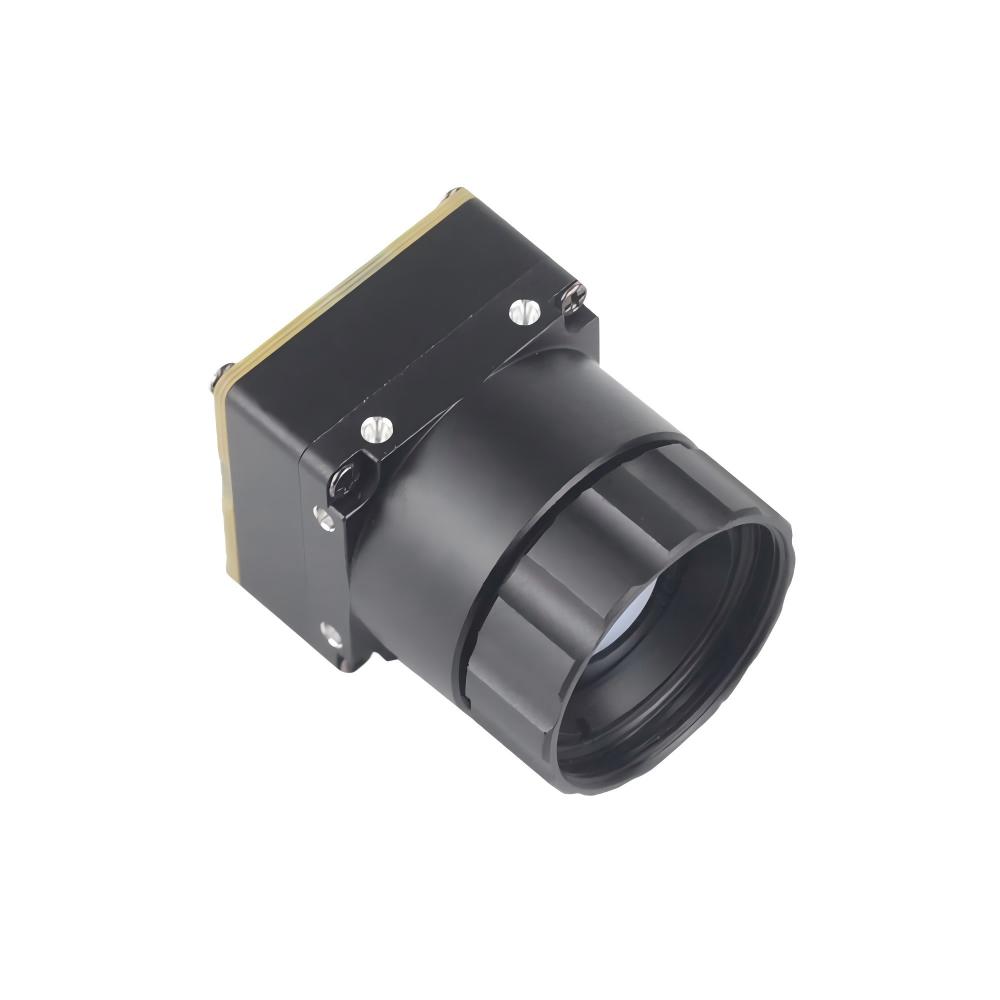
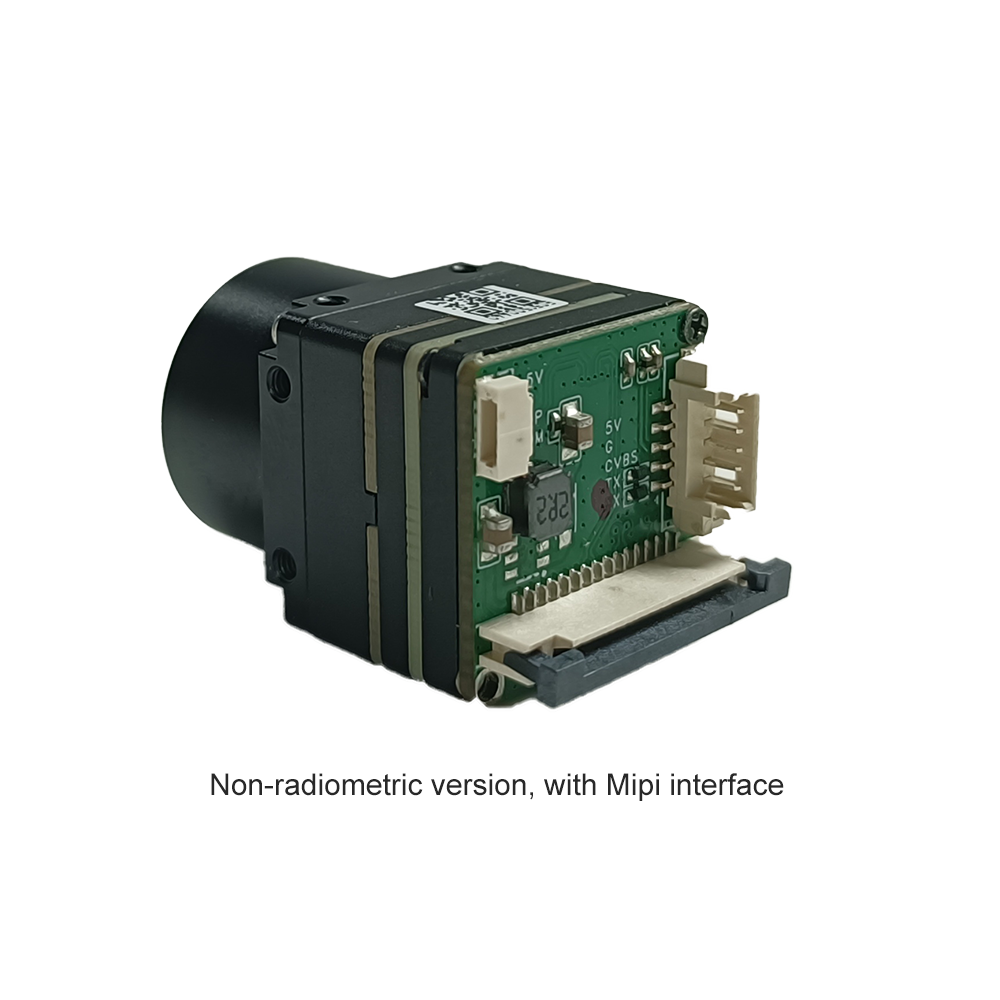
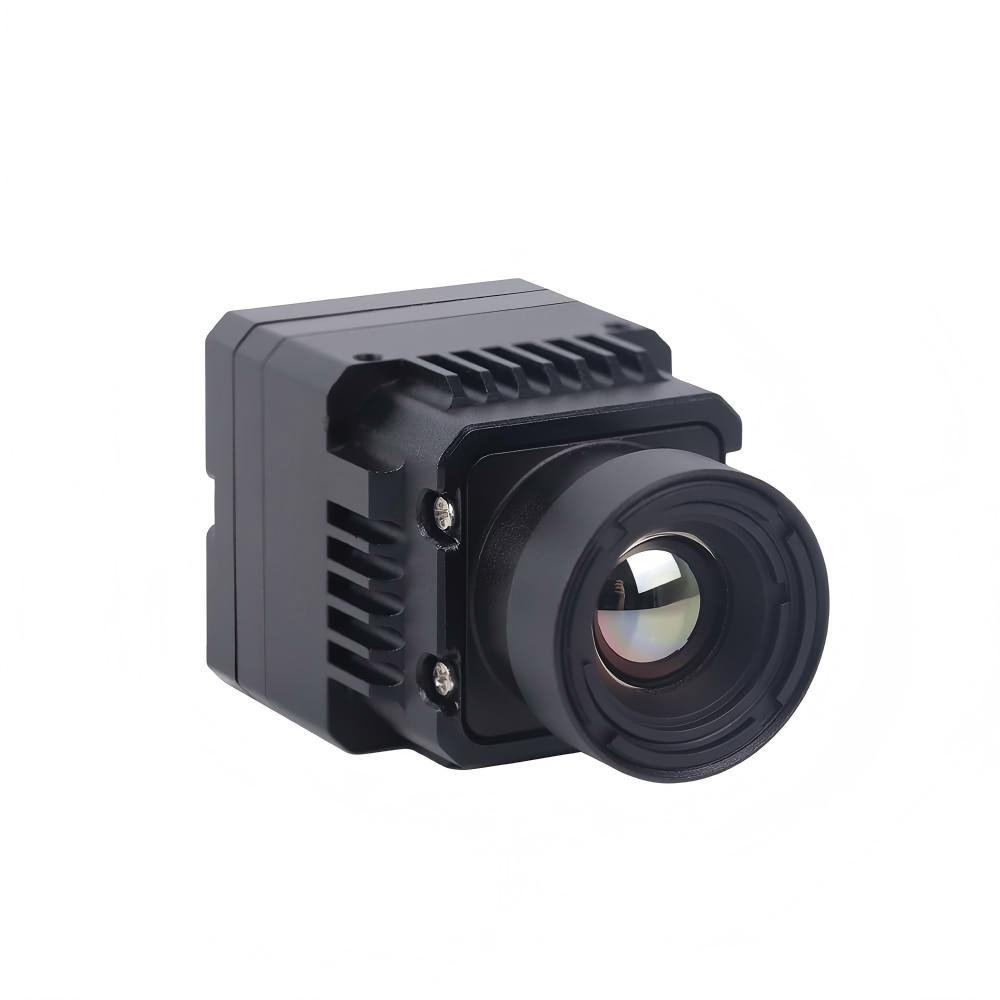

شراء وحدة كاميرا حرارية بتركيز إلكتروني 25 مم (640x512 VOx، 35mk، H.265/BT.656/CVBS) للطائرات بدون طيار وFPV
16 يوليو 2026
وحدة كاميرا حرارية MIPI USB من قوانغتشو بيربل ريفر: حلول الأشعة تحت الحمراء المدمجة عالية الدقة
17 يوليو 2026
دليل دمج وحدة الكاميرا الحرارية المصغرة 640: فيديو تناظري CMOS للرؤية الليلية ومعيار H.265
أدى التقارب السريع بين التصوير الحراري المعتمد على الطائرات بدون طيار وأنظمة الرؤية الليلية التكتيكية والمراقبة بالحوسبة الطرفية إلى خلق طلب عاجل على مكونات تصوير حراري خفيفة الوزن وعالية الأداء. بالنسبة لمهندسي العمارة المادية والمتعاقدين الدفاعيين ومهندسي البحث والتطوير، لم يعد دمج نواة حرارية يقتصر على التقاط البصمات الحرارية؛ بل أصبح تحديًا هندسيًا معقدًا يشمل تحسين الحجم والوزن والطاقة والتكلفة (SWaP-C)، ومزامنة المستشعرات المتعددة، وبث الفيديو بزمن انتقال منخفض.
يُعد هذا الدليل بمثابة مخطط شامل لتكامل الأنظمة لوحدة **الكاميرا الحرارية المصغرة 640**. سنتناول المبادئ الهندسية الأساسية لكاشفات الأشعة تحت الحمراء طويلة الموجة (LWIR) غير المبردة، ونحلل الواجهات الميكانيكية والكهربائية اللازمة لدمج نواة حرارية بدقة 640×512 مع مستشعرات CMOS عالية الحساسية للرؤية الليلية، ونقيّم استراتيجيات تكامل برمجية ملموسة لمعالجة تغذية الفيديو الخام عبر بيئات مادية متنوعة - من نظارات FPV التناظرية إلى حواسيب اللوحة الواحدة (SBCs) العاملة بالذكاء الاصطناعي الطرفي مثل Raspberry Pi التي تشغل أطر رؤية حاسوبية في الزمن الحقيقي.
جدول المحتويات
- 👉 الأساسيات التقنية للنوى الحرارية LWIR غير المبردة
- 👉 دمج المستشعرين: LWIR غير المبرد وتكامل CMOS
- 👉 واجهات الفيديو الرقمية والتناظرية: H.265 وMIPI وCVBS
- 👉 الاختيار البصري وتحسين معاملات العدسة
- 👉 تحسين SWaP-C لحمولات الطائرات بدون طيار والأنظمة المحمولة يدويًا
- 👉 عرض توضيحي ومواصفات المنتج
- 👉 دليل التكامل البرمجي خطوة بخطوة وتحليلات الذكاء الاصطناعي الطرفي
- 👉 الأسئلة الشائعة حول التكامل المتعمق
---
الأساسيات التقنية للنوى الحرارية LWIR غير المبردة
يكمن في قلب وحدة الكاميرا الحرارية المصغرة 640 مصفوفة مستوية بصرية (FPA) من الميكروبولومتر غير المبرد تعمل في طيف الأشعة تحت الحمراء طويلة الموجة (عادةً من 8 ميكرومتر إلى 14 ميكرومتر). على عكس المستشعرات الحرارية المبردة التي تتطلب مبردات تقليدية ضخمة ومستهلكة للطاقة لخفض درجة حرارة المستشعر إلى ما يقرب من 77 كلفن، تعمل النوى LWIR غير المبردة في درجات الحرارة المحيطة. وهذا يجعلها مناسبة للغاية للتطبيقات المقيدة بـ SWaP مثل الأجهزة التكتيكية القابلة للارتداء والطائرات الصغيرة بدون طيار (UAVs).
إليك ما يميز المستشعرات غير المبردة: إنها تجعل حياة التصميم أسهل بلا حدود عندما تكون المساحة محدودة، لكن عليك فهم فيزياء المستشعر الأساسية لاستخراج أقصى أداء منها.
### معمارية الميكروبولومتر: VOx مقابل a-Si
تعتمد المستشعرات الحرارية الحديثة غير المبردة بشكل أساسي على إحدى مادتي أشباه الموصلات ذات الأغشية الرقيقة: **أكسيد الفاناديوم (VOx)** أو **السيليكون غير المتبلور (a-Si)**.
انظر، في الورشة، نواجه هذا الجدل طوال الوقت. إليك كيفية المقارنة بينهما:
✅ **VOx (أكسيد الفاناديوم):** هذا هو المعيار الذهبي للتصوير الحراري عالي الأداء. توفر كواشف VOx معامل درجة حرارة أعلى للمقاومة (TCR). ما يعنيه هذا لتصميمك بسيط: تحصل على أرضية ضوضاء أقل بكثير وحساسية حرارية فائقة. وهذا يترجم مباشرة إلى فرق درجة حرارة مكافئ للضوضاء (NETD) أقل.
✅ **a-Si (السيليكون غير المتبلور):** توفر مصفوفات FPA القائمة على السيليكون بنية مادية عالية التجانس. يسهل هذا التجانس الاتساق بين البكسل ويساعد في تخفيف أنماط الضوضاء المكانية بمرور الوقت. المقايضة؟ عادةً ما تحصل على حساسية خام أقل هامشيًا مقارنة بـ VOx.
تتكون بكسلات الاستشعار من هيكل جسر ميكروني معلق من نيتريد السيليكون مطلي بطبقة الثرمستور النشطة VOx أو a-Si. عندما يصطدم إشعاع LWIR الساقط بالبكسل، يمتص الجسر الميكروني الفوتونات، مما يرفع درجة حرارته الفيزيائية. يغير هذا التحول في درجة الحرارة المقاومة الكهربائية للثرمستور. تطبق دائرة متكاملة للقراءة (ROIC) موصولة مباشرة أسفل مصفوفة المستشعر جهد انحياز عبر البكسل، محولة تغير المقاومة إلى إشارة تناظرية قابلة للقياس. ثم يتم ترقيم هذه الإشارة عبر محولات تناظرية رقمية (ADCs) عالية السرعة على اللوحة.
فيديو توضيحي لنواة التصوير الحراري المصغرة 640×512
دقة ###، وتباعد البكسلات، والدقة المكانية
يتم تعريف الدقة المكانية والأداء العام للصورة لنواة حرارية غير مبردة بثلاثة معاملات أساسية:
**دقة مصفوفة المستوى البؤري:** تمثل مصفوفة بدقة 640x512 بكسل 327,680 بكسلًا حراريًا فرديًا. هذه زيادة هائلة في البيانات المكانية مقارنة بمجالات الدقة المنخفضة 256x192 (49,152 بكسل). تتيح للمشغلين تمييز الأهداف على مسافات فيزيائية أطول بكثير.
**تباعد البكسلات:** المسافة من المركز إلى المركز بين بكسلات الكاشف المتجاورة على FPA. مع تقدم تصنيع أشباه الموصلات، تقلص تباعد البكسلات من 25 ميكرومتر إلى 17 ميكرومتر، والآن إلى 12 ميكرومتر. يقلل تقليل تباعد البكسلات من البصمة الفيزيائية لشريحة الكاشف، مما يتيح عدسات أكثر إحكامًا وخفة مع الحفاظ على مجال رؤية واسع (FOV).
**مجال الرؤية اللحظي (IFOV):** يقاس بالميليراديان (mrad)، ويمثل IFOV الدقة المكانية لبكسل واحد ويُحسب باستخدام تباعد البكسلات (d) والبعد البؤري (f) للعدسة. الصيغة هي IFOV = d / f. يوفر تباعد بكسلات أصغر مع بعد بؤري أكبر IFOV أضيق، مما يسمح للنظام البصري بإسقاط بكسل واحد على مساحة فيزيائية أصغر بكثير على مسافات طويلة. هذا مطلب أساسي لاقتناء الأهداف من الدرجة العسكرية وفحص شبكات الطاقة.
الحساسية الحرارية ### (NETD) ومعايرة الضوضاء المكانية
تُعرف الحساسية الحرارية لمستشعر الأشعة تحت الحمراء بفرق درجة الحرارة المكافئ للضوضاء (NETD)، ويقاس بالميلي كلفن (mK). يمثل NETD فرق درجة الحرارة الذي ينتج نسبة إشارة إلى ضوضاء (SNR) تساوي الوحدة. يشير NETD الأقل إلى كاميرا أكثر حساسية. الأنظمة التجارية القياسية تكون أقل من 50 mK، بينما النوى عالية الأداء، مثل وحدات Mini 640، تصل إلى أقل من 35 mK. هذا يسمح لها بتمييز التفاصيل الحرارية الدقيقة حتى في ظروف التباين المنخفض الصعبة مثل الضباب الكثيف، أو الأمطار الغزيرة، أو الظلام الدامس.
تعاني الميكروبولومترات غير المبردة من عدم انتظام مكاني متأصل ناتج عن اختلافات طفيفة في مقاومة بكسل إلى بكسل، والانحيازات، والتظليل البصري. يظهر هذا كضوضاء نمط ثابت (FPN) عبر الصورة النشطة. لمواجهة ذلك، تنفذ الوحدات تصحيح عدم الانتظام (NUC).
⚙️ **خط أنابيب معايرة NUC:**
* **حدث الغالق الميكانيكي:** يغلق النظام بشكل دوري غالقًا ميكانيكيًا - أو يستخدم خوارزمية برمجية بدون غالق - لتقديم مرجع درجة حرارة حراري منتظم لمصفوفة المستشعر بأكملها.
* **حساب المعاملات:** يعيد المعالج الداخلي للوحدة حساب معاملات تصحيح الإزاحة والكسب لكل بكسل فردي.
* **إعادة تخطيط انتظام البكسلات:** يطبق معالج الفيديو الفوري جداول التصحيح هذه بشكل فوري، مما يزيل ضوضاء النمط الثابت تمامًا.
يُعد دمج خوارزميات NUC المستمرة أمرًا بالغ الأهمية للتركيبات ذات المهام الحرجة للحفاظ على صور نظيفة وخالية من العيوب. لمزيد من المعلومات حول النشر التكتيكي للأنظمة الحرارية في ظل ظروف صعبة، راجع هذا الدليل حول أفضل وحدة كاميرا حرارية للرؤية الليلية لمشاريع DIY والتطبيقات التكتيكية.
---
دمج المستشعرين: LWIR غير المبرد وتكامل CMOS
بينما يتفوق قلب LWIR غير المبرد في اكتشاف البصمات الحرارية في بيئات الإضاءة الصفرية، فإنه يفتقر إلى التفاصيل المكانية عالية التردد - مثل النصوص والحروف والخطوط الهيكلية الدقيقة والألوان - التي توفرها كاميرات الضوء المرئي. يدمج دمج المستشعرات المزدوجة نقاط قوة مستشعر LWIR مع مستشعر أشباه الموصلات المعدنية المؤكسدة المكملة (CMOS) عالي الحساسية ومنخفض الإضاءة لإنتاج دفق فيديو واحد غني بالمعلومات.
### المحاذاة البصرية المشتركة ومعايرة خطأ اختلاف المنظر
يتطلب دمج المستشعر الحراري ومستشعر CMOS محاذاة فيزيائية مشتركة. نظرًا لأن المركزين البصريين يفصل بينهما مسافة خط أساس فيزيائية، فإنهما ينظران إلى المشهد من منظورين مختلفين قليلاً، مما يخلق خطأ اختلاف المنظر.
لحل هذه المشكلة، تحتاج إلى تكوين النظام باستخدام هذه الخطوات الرئيسية:
⚙️ **الخطوة 1: التثبيت الفيزيائي الصلب:** قم بتركيب المستشعرات الفيزيائية بأقرب ما يمكن على مبيت صلب ومستقر حراريًا لمنع الانجراف الميكانيكي تحت الاهتزاز.
⚙️ **الخطوة 2: معايرة مصفوفة الهوموغرافيا:** قم بتطبيق تصحيح اختلاف المنظر القائم على البرمجيات في الوقت الفعلي. تتم معايرة العلاقة الهندسية بين الفضاء الإحداثي لمستشعر CMOS ومستشعر LWIR باستخدام مصفوفة هوموغرافيا 3x3 (H). يأخذ هذا التحويل في الاعتبار الإزاحات في X و Y، والدوران، واختلافات المقياس البؤري.
⚙️ **الخطوة 3: روتين معايرة رقعة الشطرنج:** قم بتعريض مجموعة الكاميرا لهدف رقعة شطرنج حراري مرئي محاذي بصريًا. تعمل خوارزميات اكتشاف الزوايا لحساب معاملات الهوموغرافيا الدقيقة، والتي يتم تخزينها في ذاكرة الوحدة غير المتطايرة.
⚙️ **الخطوة 4: إعادة الإسقاط في وقت التشغيل:** في وقت التشغيل، يطبق DSP مصفوفة التحويل هذه لإعادة محاذاة بكسلات CMOS، مما يضمن معايرة مثالية على مستوى البكسل بغض النظر عن مسافة الهدف.
### خوارزميات الدمج على مستوى البكسل
بمجرد المحاذاة، يتم دمج الدفقين الحراري والمرئي باستخدام خوارزميات الدمج على مستوى البكسل. الهدف هو الاحتفاظ بالتفاصيل المكانية عالية الطاقة لصورة CMOS مع استخدام البيانات الحرارية لتلوين البصمات الحرارية:
**الترشيح عالي التمرير / استخراج الحواف:** يتم تحويل صورة CMOS إلى قناة إضاءة وتمريرها عبر مرشح مكاني عالي التمرير (مثل مرشح سوبل، أو لابلاسيان، أو كاني) لعزل الخطوط الهيكلية والأنسجة.
**تحويل الفضاء اللوني (YCbCr):** يتم تعيين قناة LWIR إلى لوحة ألوان زائفة مختارة (مثل Ironbow، أو White Hot، أو Black Hot).
**تداخل الإضاءة والصفاء:** يتم تركيب الخطوط الهيكلية عالية التردد المستخرجة من مستشعر CMOS على قناة الإضاءة للصورة الحرارية. بالتزامن، يتم دمج بيانات اللون وشدة الحرارة للكاميرا الحرارية في قنوات الصفاء.
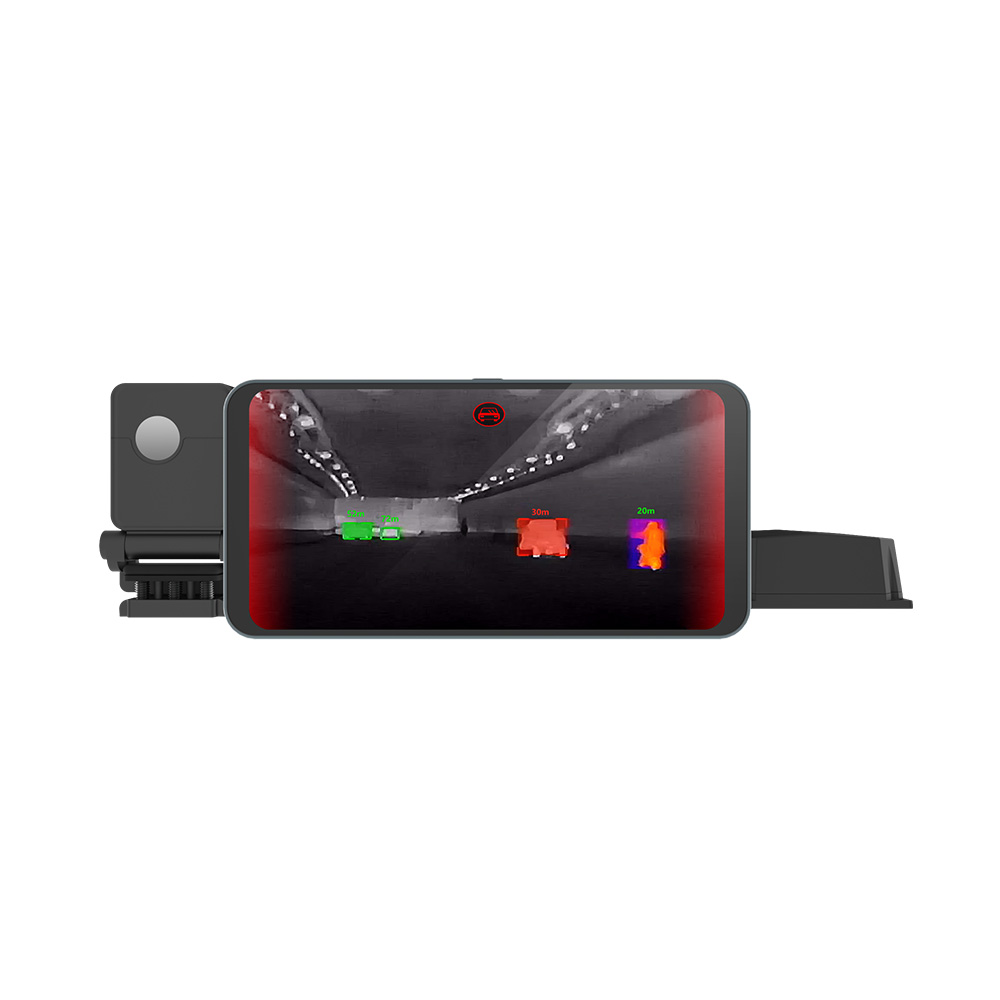
يحافظ إطار الفيديو المدمج الناتج على كل من البصمات الحرارية عالية التباين وملصقات النصوص أو ملامح الوجوه القابلة للقراءة. هذا يجعل النظام مثاليًا لفرق البحث والإنقاذ، والمفتشين الصناعيين، وقوات الأمن العاملة تحت ظلام دامس.
---
واجهات الفيديو الرقمية والتناظرية: H.265 وMIPI وCVBS
تتطلب التطبيقات المختلفة واجهات فيديو محددة. يجب على المطورين تقييم متطلبات الطبقة المادية والبروتوكولات وتأثيرات زمن الانتقال لإشارات الفيديو الأساسية الثلاث التي تدعمها وحدات mini 640 الحديثة لموازنة قيود أداء النظام.
### MIPI CSI-2 (الواجهة التسلسلية للكاميرا من تحالف معالج صناعة الأجهزة المحمولة)
For edge-AI, robotics, and tight embedded processor integration, MIPI CSI-2 is the preferred interface. It is a high-speed, differential serial bus designed for point-to-point connections between image sensors and application processors, such as the NVIDIA Jetson, Raspberry Pi, or NXP i.MX8.
The Mini 640 module transfers uncompressed 14-bit raw radiometric data over two MIPI data lanes, along with a dedicated differential clock lane. This high bit depth provides access to raw thermal ADC counts (radiometric temperature measurements) rather than just an 8-bit visual image. MIPI CSI-2 operates with near-zero latency, as the raw sensor data is DMA-transferred directly into the host processor's memory buffer. Because MIPI relies on high-frequency, low-voltage signaling, the transmission distance is physically constrained. Traces on custom carrier boards must be impedance-matched to 100 ohms (+/- 10%) and must not exceed 15–20 cm in length without specialized active re-driver chips.
### H.265/HEVC and H.264 IP Video Streaming
For network-based security cameras, long-distance drone telemetry links, and remote industrial monitoring, the module's on-board system-on-chip converts raw data into compressed H.265 (High-Efficiency Video Coding) or H.264 streams.
H.265 offers up to a 50% bitrate reduction compared to progress-generation H.264 codecs at equivalent visual quality. This is vital when transmitting high-resolution 640x512 thermal video at 30 frames per second (fps) over cellular links or crowded ISM band telemetry transmitters. The H.265 stream is encapsulated inside standard networking protocols like RTSP (Real-Time Streaming Protocol) or ONVIF (Open Network Video Interface Profile). This allows systems to connect the mini thermal IP core directly into commercial-off-the-shelf Network Video Recorders (NVRs) or common video management systems (VMS). However, compression introduces a latency penalty of 50 to 150 ms due to the processing time required for macroblock analysis, motion estimation, and frame buffering.
### CVBS (Color, Video, Blanking, and Sync) Analog Video
For tactical FPV drones and legacy integration, CVBS remains highly relevant. It transmits composite baseband analog video over a single coaxial cable or differential pair.
Unlike digital pipelines that require packet buffering and decoding steps, CVBS presents a continuous analog signal. It features sub-millisecond propagation latency, making it the preferred standard for high-speed piloting through analog FPV goggles. Operators can configure the analog output of the Mini 640 module for either NTSC (640x480 resolution at 29.97 fps) or PAL (720x576 resolution at 25 fps). However, CVBS is susceptible to RF interference and suffers from signal attenuation over long cables. High-frequency video components can degrade, resulting in a slightly softer image with analog artifacts in electrically noisy environments.
---
الاختيار البصري وتحسين معاملات العدسة
An infrared detector's performance is heavily limited by its optical assembly. Because regular optical glass absorbs LWIR wavelengths, thermal lenses are constructed using specialized materials like **Germanium (Ge)**, **Chalcogenide Glass**, or **Silicon (Si)** with specialized anti-reflective coatings. Selecting the optimal optics is critical to match the system's mission profile.
### Optical Transmission Materials
In the shop, we work with these core optical materials:
✅ **Germanium (Ge):** This is the gold standard for high-performance LWIR lens systems. It offers an exceptionally high refractive index (approximately 4.0 in the LWIR band) and low dispersion. It provides high optical transmission efficiency (greater than 90% with anti-reflective coatings) but is relatively heavy and sensitive to thermal variance, which can cause focus shifts (thermal defocus).
✅ **Chalcogenide Glass:** A cost-effective, lighter alternative to Germanium that can be precision molded into complex aspheric shapes. This reduces spherical aberrations while keeping raw production costs low.
✅ **Silicon (Si):** Primarily utilized for short focal length lenses or lightweight, lower-cost configurations. Though more rugged than Germanium, its dispersion characteristics and transmission efficiency in the 8-14 micron band restrict its usage to less critical consumer configurations.
### Aperture (f-number) and Transmission Efficiency
The f-number, or aperture, is the ratio of the lens focal length (f) to the diameter of the entering aperture (D). The mathematical representation is:
$$\text{Aperture } (F) = \frac{\text{Focal Length } (f)}{\text{Diameter of Aperture } (D)}$$
The amount of thermal radiation that reaches the FPA is inversely proportional to the square of the lens's f-number:
$$\text{Radiation Flux} \propto \frac{1}{F^2}$$
A lens with an aperture of F/1.0 captures twice as much infrared radiation as a lens with F/1.4. Selecting an objective lens with a low f-number is crucial to maximizing the effective NETD of the camera sensor. This produces sharp, high-contrast images even in low thermal gradient conditions.
### Lens Focal Length Options and Detection Ranges (DRI)
Designing or procuring a thermal system requires calculating the DRI (Detection, Recognition, Identification) distances based on the Johnson Criteria:
* **Detection:** Is an object present? (requires at least 1.5 pixels on target).
* **Recognition:** What type of object is it? (requires at least 6.0 pixels on target).
* **Identification:** Specific details of the object? (requires at least 12.0 pixels on target).
Below is an optical configuration matrix mapping focal lengths to target Fields of View (FOV) and safe-side 12-micron FPA DRI calculations for a standard human target (1.8 meters x 0.5 meters):
---
تحسين SWaP-C لحمولات الطائرات بدون طيار والأنظمة المحمولة يدويًا
Designing tactical soldier-worn equipment (like monoculars or goggles) or UAV payloads places strict limits on physical parameters. Engineers must manage SWaP-C (Size, Weight, Power, and Cost) to maximize flight times and minimize operator fatigue.
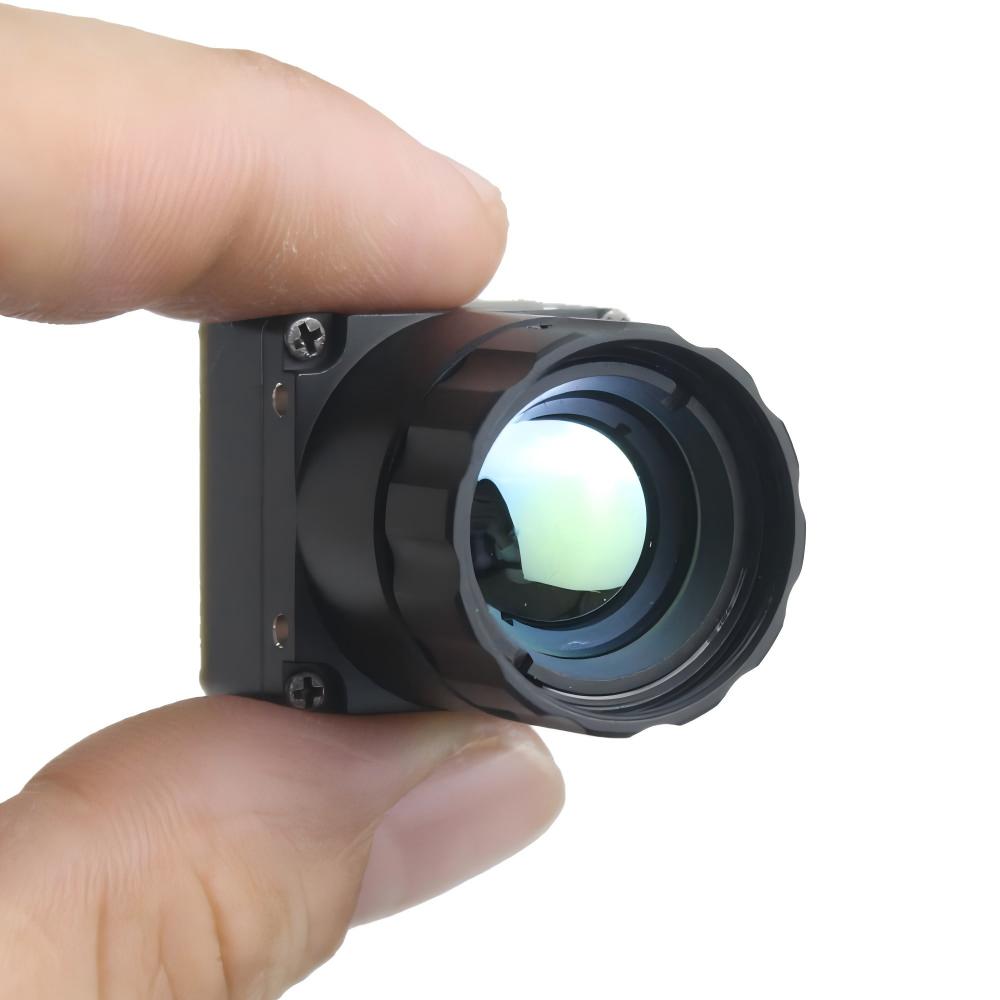
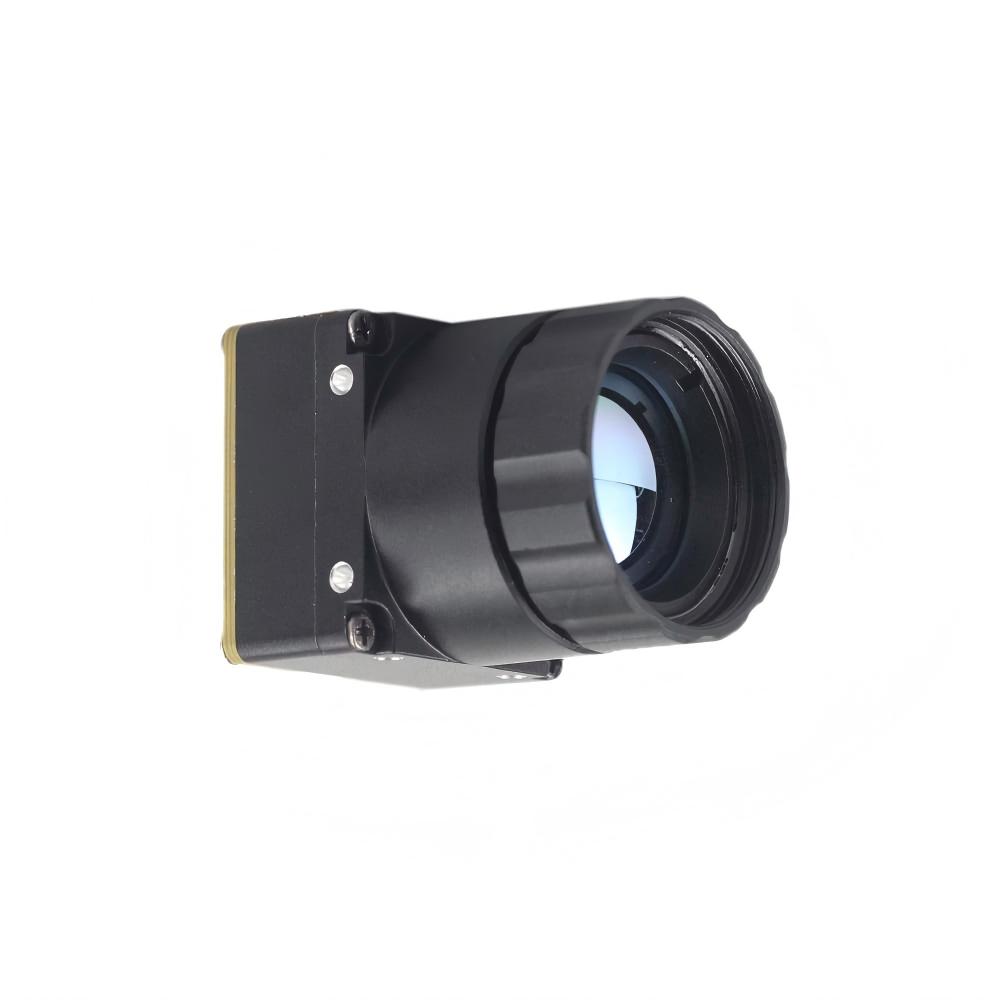
* **Size (Footprint Reduction):** The ultra-compact footprint of **21mm x 21mm** allows the thermal module to fit into tight setups, such as miniature gimbals on DJI-type civilian search drones, tactical helmet-mounted NVG/thermal fusion housings, and compact weapon-mounted sights.
* **Weight (Flight and Combat Optimization):** Standard thermal cameras can weigh over 100 grams, requiring heavy structural mounts. A lightweight mini thermal core (under 15 grams without optics) reduces the mechanical load on gimbal motors. This translates directly to smoother stabilization and extended flight times for battery-dependent quadcopters. For handheld tactical gear, this light weight reduces neck strain during long missions.
* **Power Consumption (Under 1.5W Operational Draw):** The uncooled LWIR core is optimized for dynamic power savings. It runs on a wide input range (typically 3.3V to 5.0V DC) and consumes less than 1.5W of power during steady-state operation. This low power draw limits self-heating, which can otherwise introduce thermal noise and compromise sensor readings over prolonged use.
* **Environmental Survivability (IP54 Enclosure Rating):** Devices intended for wilderness search-and-rescue, tactical operations, or industrial inspections require robust protection against environmental hazards. An IP54-rated ingress protection housing shields the sensitive uncooled microbolometer sensor and internal processing electronics from dust storms and splashing water. This ensures reliable performance in hostile elements. Interested in historical deployments of airborne observation networks under intense environmental pressures? Read more about the remote sensor systems deployed during the landmark October 2007 wildfires in Santa Clara, California.
---
عرض توضيحي ومواصفات المنتج
To assist system integrators and layout designers in selecting the appropriate core relative to budget and payload targets, this technical registry compiles detailed specifications of high-performance mini modules.
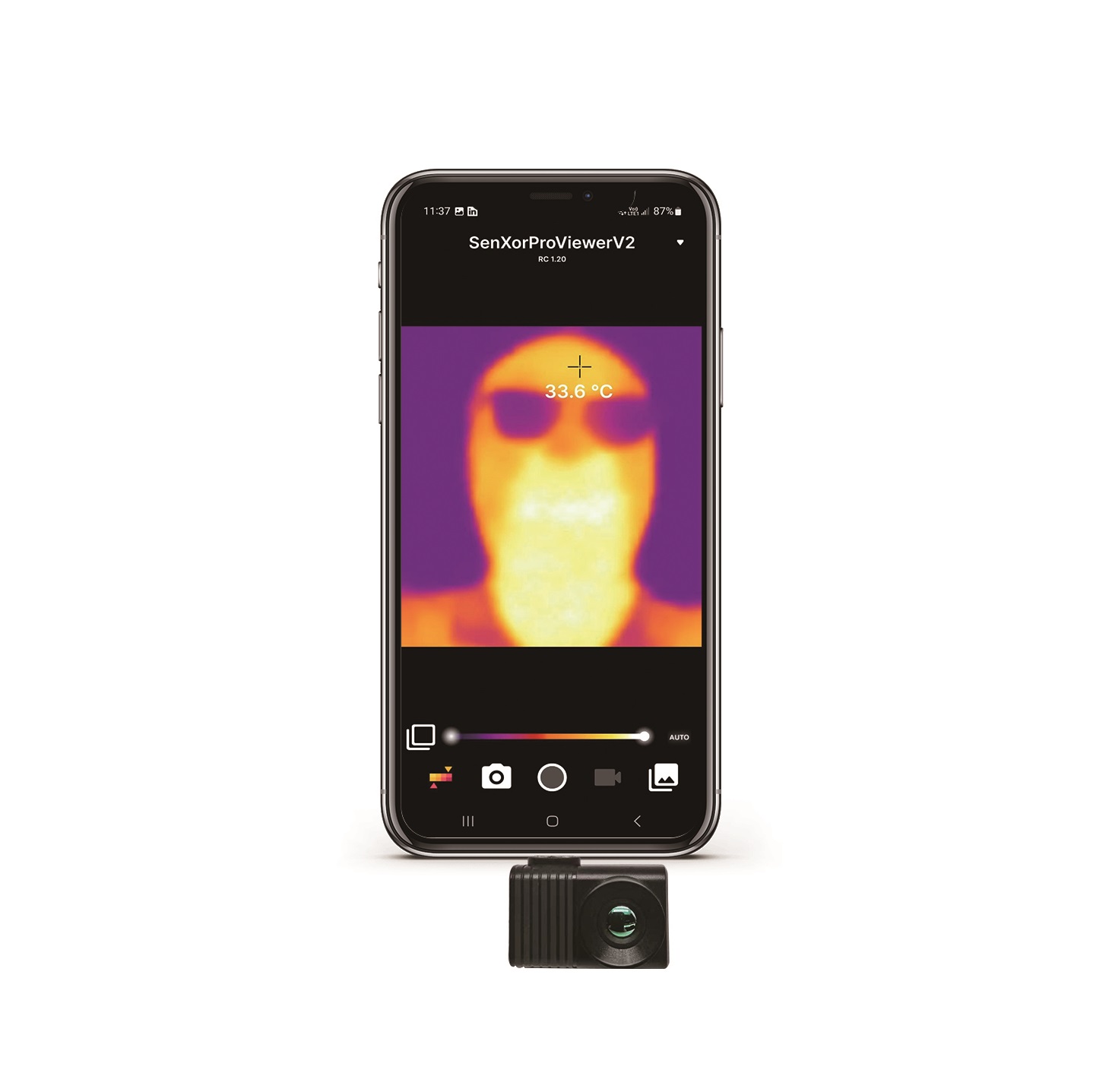
وحدة كاميرا تصوير حراري مصغرة LWIR غير مبردة بدقة 640*512 مع USB للطائرات بدون طيار مشابهة لـ DJI
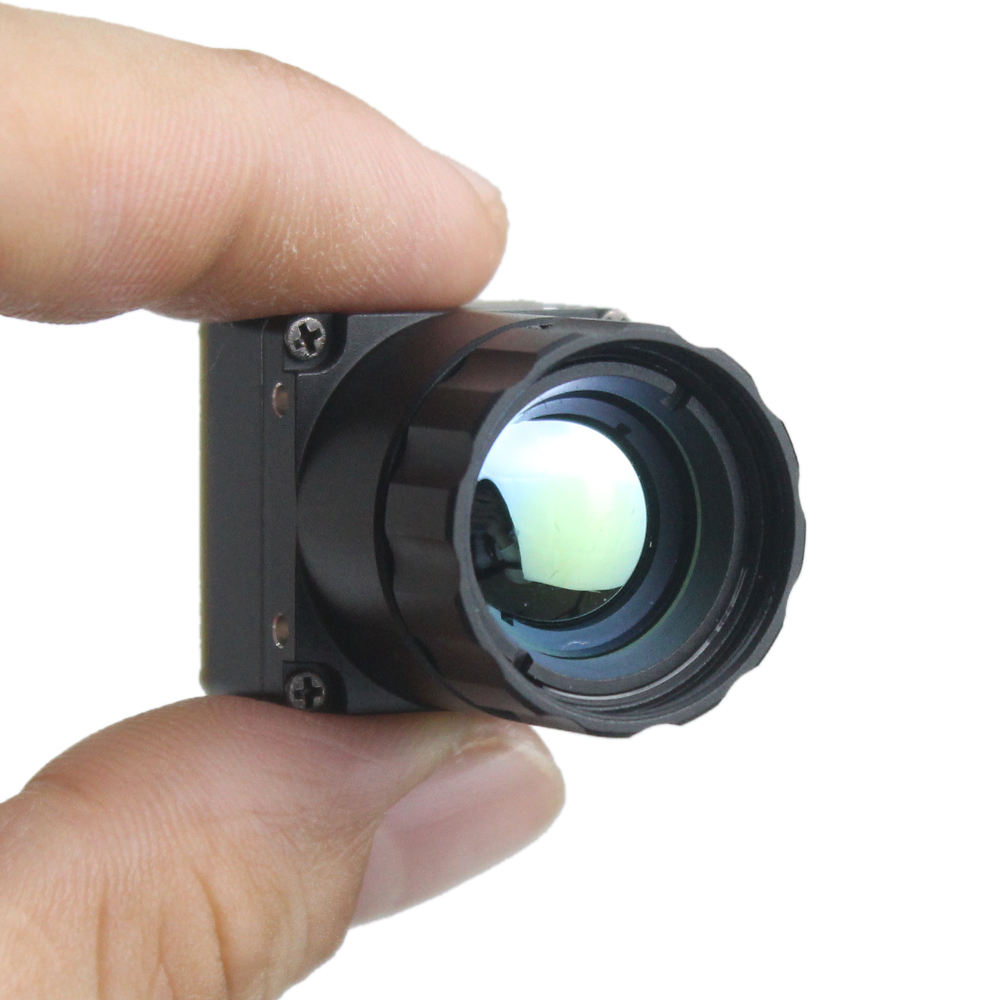
تتميز وحدة التصوير الحراري المصغرة غير المبردة بالأشعة تحت الحمراء بتقديم صورة حادة وواضحة وحجم صغير وتكلفة منخفضة.
Mini-Size of 21mm*21mm, 5/9/13/18/35/50/75/100/150mm, 640*480 resolution optional, stable performance and strong environmental adaptability.
* * *
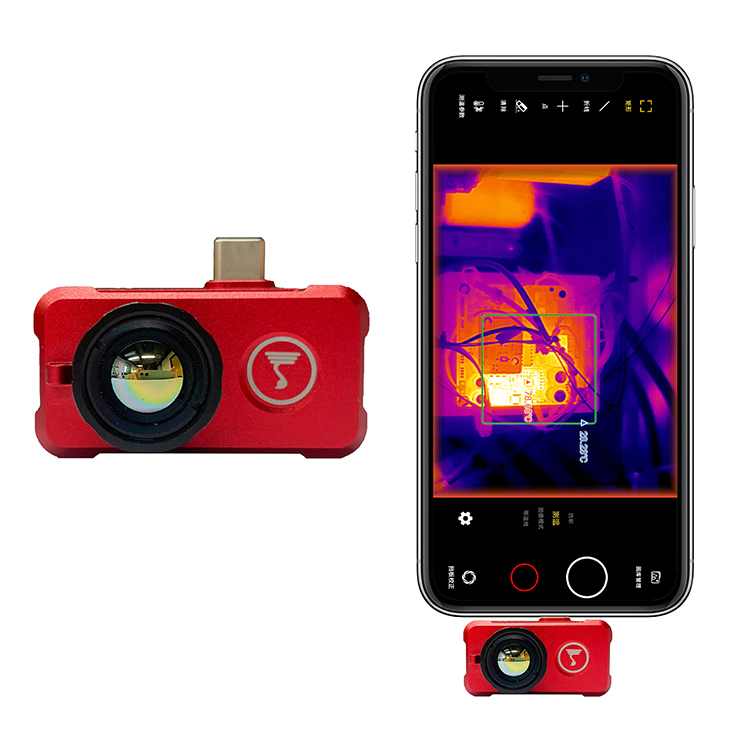
وحدة كاميرا تصوير حراري بالأشعة تحت الحمراء ذات الموجة الطويلة غير المبردة Mini 256*192 مشابهة لـ DJI للكشف عن الألغام
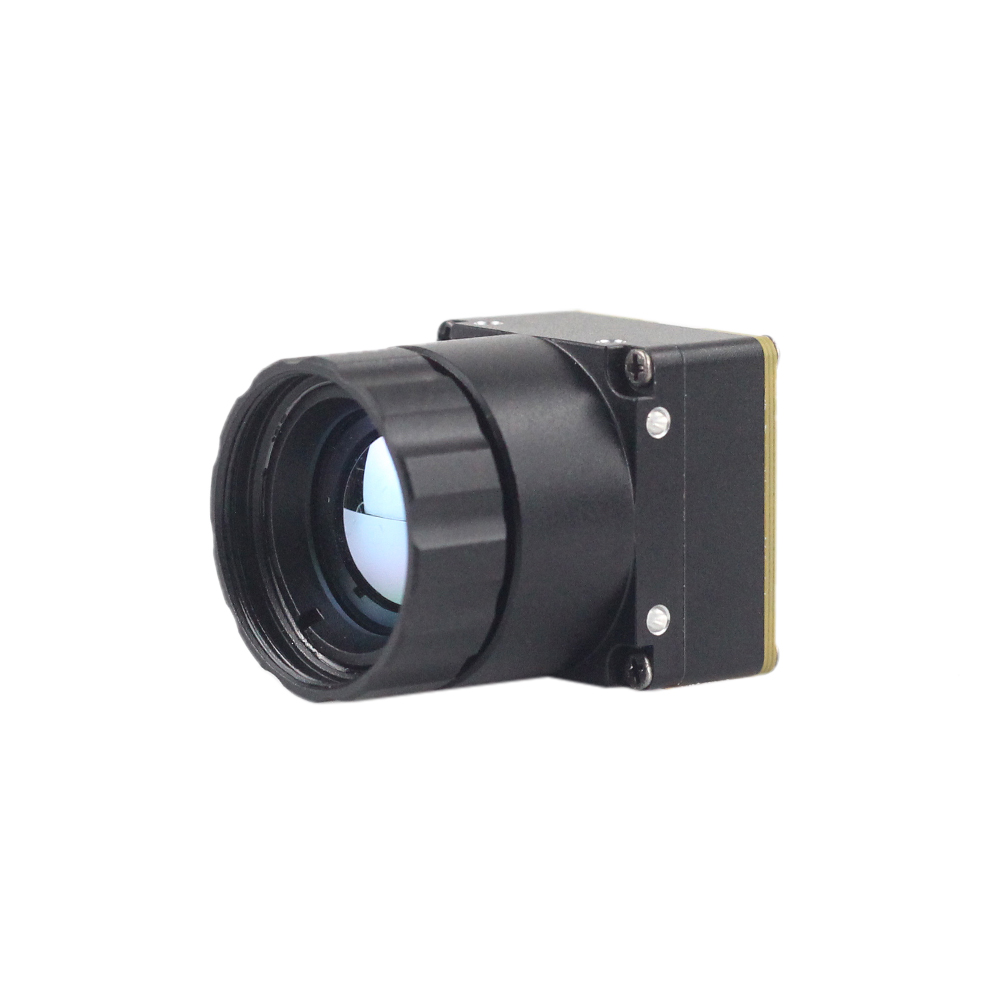
تعتمد وحدة الكاميرا الحرارية Mini 256 غير المبردة بالأشعة تحت الحمراء ذات الموجة الطويلة كواشف عالية الأداء بالأشعة تحت الحمراء للحصول على تصوير حراري فائق الوضوح وقياس دقيق لدرجة الحرارة. تلتقط الأشعة تحت الحمراء وتخرج صورة حرارية موحدة مع قياس إشعاعي.
* * *
Comparative Technical Specifications
---
دليل التكامل البرمجي خطوة بخطوة وتحليلات الذكاء الاصطناعي الطرفي
Processing raw video from the Mini 640 over USB or MIPI CSI-2 requires a structured software pipeline. The code sample below demonstrates how to interface with the camera using OpenCV in Python on a Linux-based SBC (such as a Raspberry Pi). This program captures raw video frames, runs threshold-based hotspot detection, and overlays tracking indicators in real-time.
```python
#!/usr/bin/env python3
"""
Developer Integration Blueprint: Real-Time Dynamic Target Tracking
Component Target Hardware: Mini 640 Uncooled LWIR Thermal Imaging Core Module
"""
import cv2
import numpy as np
import sys
def initialize_thermal_pipeline(device_id=0):
"""
Establishes communication with the Mini 640 over standard USB UVC or MIPI Virtual driver interface.
"""
# Open capture stream (0 is typically the default system camera link)
cap = cv2.VideoCapture(device_id)
# Configure capture frame attributes for natural 640x512 resolution configuration
cap.set(cv2.CAP_PROP_FRAME_WIDTH, 640)
cap.set(cv2.CAP_PROP_FRAME_HEIGHT, 512)
if not cap.isOpened():
print(f"Error: Unable to connect to thermal module on device index {device_id}")
sys.exit(1)
return cap
def run_analytical_process_loop(cap):
print("Initiating thermal tracking segment. Press 'q' to safely terminate loop.")
while True:
ret, frame = cap.read()
if not ret:
print("Error: Empty frame buffer received from sensor.")
break
# Convert frame to grayscale if received as color, for calculations
if len(frame.shape) == 3:
gray_frame = cv2.cvtColor(frame, cv2.COLOR_BGR2GRAY)
else:
gray_frame = frame
# Apply a Gaussian blur to mitigate fixed pattern noise (FPN) artifacts and high-frequency outliers
blurred = cv2.GaussianBlur(gray_frame, (5, 5), 0)
# Locate the absolute brightest (hottest) pixel in the thermal frame
min_val, max_val, min_loc, max_loc = cv2.minMaxLoc(blurred)
# Dynamically segment hotspots using thresholding
# Pixels with values above 90% of the maximum value are isolated
threshold_value = max_val * 0.90
_, thresholded_img = cv2.threshold(blurred, threshold_value, 255, cv2.THRESH_BINARY)
# Retrieve structural contours from the segmented hotspot regions
contours, _ = cv2.findContours(thresholded_img, cv2.RETR_EXTERNAL, cv2.CHAIN_APPROX_SIMPLE)
# Draw a custom pseudo-color map for display (Jet or Ironbow approximation)
colored_frame = cv2.applyColorMap(gray_frame, cv2.COLORMAP_JET)
# Iterate over located contours and draw a bounding box around large hotspots
for contour in contours:
# Ignore tiny signal spikes (e.g., area < 20 pixels) to avoid false positives
if cv2.contourArea(contour) < 20:
continue
# Calculate bounding rectangle metrics for valid thermal targets
x, y, w, h = cv2.boundingRect(contour)
# Draw green bounding box around target
cv2.rectangle(colored_frame, (x, y), (x + w, y + h), (0, 255, 0), 2)
# Label the hotspot location with its localized value
cv2.putText(colored_frame, f"HOTSPOT VAL: {int(max_val)}", (x, max(y - 10, 15)),
cv2.FONT_HERSHEY_SIMPLEX, 0.5, (0, 255, 255), 2)
# Point target marker at the exact hottest peak coordinate
cv2.drawMarker(colored_frame, max_loc, (0, 0, 255), cv2.MARKER_CROSS, 20, 2)
# Render the final processing visualization to the active viewport
cv2.imshow("Mini 640 Real-Time Thermal Analytics Overlay", colored_frame)
# Handle keyboard interrupts for clean application termination
if cv2.waitKey(1) & 0xFF == ord('q'):
break
# Release pipeline resources upon loop exit
cap.release()
cv2.destroyAllWindows()
if __name__ == "__main__":
thermal_cap = initialize_thermal_pipeline(0)
run_analytical_process_loop(thermal_cap)
```

الأسئلة الشائعة حول التكامل المتعمق
Can I stream real-time, high-resolution 640x512 thermal video to a Raspberry Pi or Arduino?
How do you achieve night vision fusion with an analog thermal module and a CMOS sensor?
What makes this mini 640 module suitable for custom DIY monoculars or drone payloads compared to closed commercial systems?
---
📚 المراجع والقراءات الإضافية
- المعيار الصناعي: Real-time computer vision development via the open-source OpenCV Library.
- دليل ذو صلة: Explore our design resources for building lightweight, tactical thermal gear in our Tactical Night Thermal Camera DIY Integration Guide.
- Sitemap & Product Selection: Browse our complete uncooled core lineup through the Thermal-Image Shop Portal.