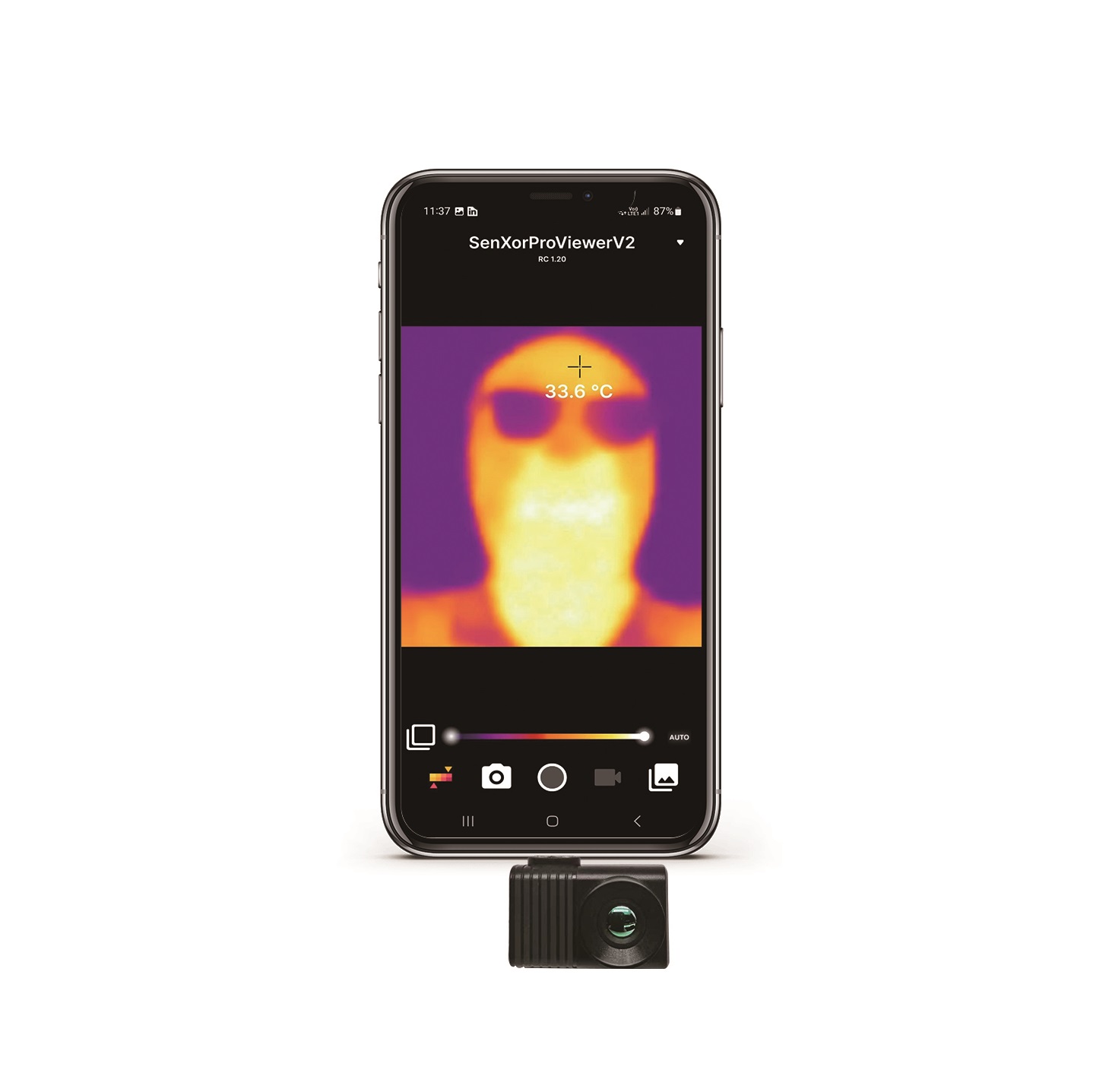
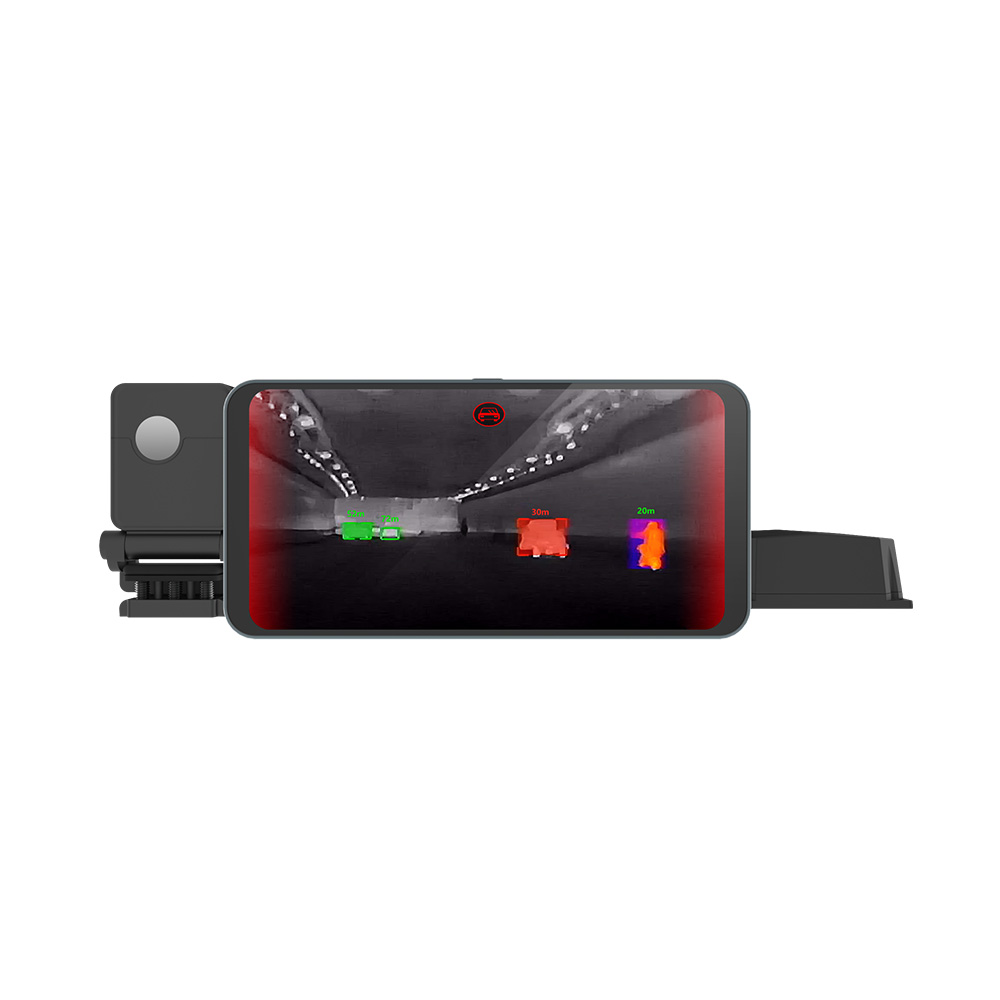

وحدات استشعار حراري بأكسيد الفاناديوم: نوى تصوير بالأشعة تحت الحمراء عالية الأداء لتكامل المصنّعين الأصليين
18 أغسطس 2026
وحدات الكاميرا الحرارية VOx (أكسيد الفاناديوم): الدليل المرجعي النهائي لمصنعي المعدات الأصلية لرؤية الذكاء الاصطناعي والطائرات المسيّرة
عندما تبني أنظمة ذاتية التشغيل، أو طائرات مسيّرة تكتيكية، أو منصات فحص بالذكاء الاصطناعي على الحافة، فإنك تصطدم مباشرة بقيود صارمة في الحجم والوزن والطاقة والتكلفة (SWaP-C). VOx (أكسيد الفاناديوم) تُعد الميكروبولومترات غير المبردة العاملة بالأشعة تحت الحمراء ذات الموجة الطويلة (LWIR) هي العمود الفقري بلا منازع للتصوير الحراري الحديث. فعلى عكس المواد القديمة، يوفر VOx معامل مقاومة حراري (TCR) ثابتًا وصلبًا إلى جانب ضوضاء وميض 1/f منخفضة بشكل ملحوظ. هذا يعني أن المستشعر الخاص بك يستخرج تفاصيل حرارية قابلة للاستخدام وعالية التباين من مشاهد مسطحة منخفضة الفروق الحرارية حيث تتحول المواد الأقدم إلى فوضى مشوشة. في عالم الرؤية المدمجة، اختيار نواة الميكروبولومتر المناسبة يحدد ما إذا كانت شبكتك العصبية ستتتبع الهدف بنظافة عبر الدخان الكثيف أم ستفقد صناديق التحديد بالكامل.
إن إدماج محرك حراري VOx في أجهزة الإنتاج — من طائرات الفحص التجارية الرباعية التي يقل وزنها عن 250 جرامًا إلى وحدات الحراسة الروبوتية — يتطلب إتقانًا عمليًا لبروتوكولات النواقل (MIPI CSI-2 وUSB وDVP)، وخطوط تصحيح عدم التجانس (NUC)، ودالة نقل التضمين البصرية (MTF)، وحلقات المعايرة الإشعاعية. يفصّل هذا الدليل كل ما يحتاجه مهندسو الميدان ومعماريو الأنظمة المدمجة وقادة منتجات OEM لمواصفات واختبار ونشر نوى VOx الحرارية الصناعية في حمولات رؤية متينة.
جدول المحتويات
- 👉 أساسيات ميكروبولومترات أكسيد الفاناديوم (VOx)
- 👉 هندسة قيود SWaP-C في حمولات الطائرات المسيّرة والدرون
- 👉 رؤية الذكاء الاصطناعي على الحافة وخطوط الواجهات: MIPI CSI-2 وUSB وDVP
- 👉 حلول OEM الصناعية: المواصفات التقنية والتحليل المقارن
- 👉 دليل اختيار بصريات LWIR: الفتحات والأبعاد البؤرية والمدى (DRI)
- 👉 معالجة الإشارات المتقدمة: خوارزميات بدون غالق وNUC وDDE
- 👉 الأسئلة الشائعة الهندسية المتعمقة
- 👉 خارطة طريق إدماج OEM والخطوات التالية
أساسيات ميكروبولومترات أكسيد الفاناديوم (VOx)
فيزياء المواد: معامل المقاومة الحراري (TCR) وضوضاء 1/f
إليك جوهر التصوير الحراري غير المبرد: أنت تتعامل مع مصفوفة من ميكروبولومترات دقيقة معلقة على جسور دقيقة عند المستوى البؤري مباشرة. عندما تصطدم الأشعة تحت الحمراء ذات الموجة الطويلة في نطاق 8 ميكرومتر إلى 14 ميكرومتر بغشاء البكسل المعزول حراريًا، يسخن الغشاء بشكل طفيف جدًا. هذا الجزء الضئيل من الدرجة يسبب تحولًا قابلًا للتنبؤ في المقاومة الكهربائية. تقوم الدائرة المتكاملة للقراءة (ROIC) المثبتة أسفلها مباشرة بقياس هذا التحول في المقاومة وتحويله إلى قيمة رقمية خام.
المقياس الأساسي الذي يحدد مدى استجابة مادة الميكروبولومتر هو معامل المقاومة الحراري (TCR)، ويُعرَّف رياضيًا على النحو التالي:
أكسيد الفاناديوم هو مادة فلز انتقالي متعدد التكافؤ مضبوطة خصيصًا للعمل في حالة شبه موصلة مستقرة عند درجات الحرارة المحيطة النموذجية. في الترسيب الغشائي الرقيق المضبوط جيدًا، يحقق VOx بشكل روتيني TCR سالبًا بين -2%/كلفن و-3%/كلفن. هذا المستوى من الاستجابة يضمن حتى أن فرق درجة حرارة ضئيل بمقدار ميلي كلفن عبر المشهد يُسجل كتأرجح جهد واضح وقابل للقياس عند ROIC.
أكسيد الفاناديوم هو مادة فلز انتقالي متعدد التكافؤ مضبوطة خصيصًا لتعمل في حالة شبه موصلة مستقرة عند درجات الحرارة المحيطة النموذجية. في الترسيب الغشائي الرقيق المضبوط جيدًا، يحقق VOx عادةً معامل مقاومة حراري سالب بين -2%/K و -3%/K.
هذا المستوى من الاستجابة يضمن حتى فارق درجة حرارة صغير جدًا بالميلي كلفن عبر المشهد يظهر كتغير جهد واضح قابل للقياس عند ROIC.
في الميدان، الحساسية الخام لا تعني شيئًا إذا ابتُلعت إشارتك بضوضاء المستشعر. تكافح الكواشف الحرارية باستمرار ضوضاء جونسون وضوضاء الوميض منخفضة التردد 1/f. ولأن أغشية VOx الرقيقة عالية الجودة تُرش بالتفريغ العالي، فإنها تشكل مصفوفة نانوية البلورية متجانسة بشكل استثنائي مع الحد الأدنى من عيوب الشبكة. هذه البنية الدقيقة المحكمة تُبقي ضوضاء الوميض 1/f منخفضة بشكل استثنائي عبر نطاق القراءة، ولهذا تسجل نوى VOx الحديثة عادةً أرقام فرق درجة الحرارة المكافئ للضوضاء (NETD) أقل من.
| المقياس الهندسي | أكسيد الفاناديوم (VOx) | السيليكون غير المتبلور (a-Si) | 35mK إلى 40mK عند f/1.0 |
|---|---|---|---|
| VOx مقابل a-Si (السيليكون غير المتبلور): المقارنة المعمارية الحاسمة | في الورشة، يوازن المهندسون كثيرًا بين أكسيد الفاناديوم والسيليكون غير المتبلور (a-Si). بينما يمتلك a-Si جذورًا عميقة في مسابك CMOS القياسية، فإن فيزياء مادته تفرض مقايضات خطيرة بمجرد تقليص تباعد البكسلات أو المطالبة بدقة إشعاعية محكمة في البيئات الحارة. | التأثير على الحمولات ذاتية التشغيل | معامل المقاومة الحراري النموذجي |
| -2.0% إلى -3.0%/K | -2.5% إلى -4.0%/K | يحافظ VOx على خطية تشغيلية فائقة واستقرار حراري | أرضية ضوضاء 1/f |
| منخفضة للغاية | متوسطة إلى مرتفعة | يوفر VOx تباين حواف أكثر وضوحًا وميزات استدلال ذكاء اصطناعي فائقة | NETD الأساسي (الحساسية) |
| <35mK إلى 40mK | >50mK إلى 60mK | يحل VOx تفاصيل المشهد الدقيقة في ظروف التدرج الحراري المنخفض | الثابت الزمني الحراري |
| 8ms إلى 12ms | 10ms إلى 15ms | يقلل VOx من ضبابية الحركة وتشوه التدحرج أثناء الطيران السريع للطائرة بدون طيار | تقليص تباعد البكسلات |
يتقلص بسهولة إلى 12µm و 8µm يتدهور بشكل كبير تحت 17µm.
هندسة قيود SWaP-C في حمولات الطائرات المسيّرة والدرون
يدعم VOx بصريات مدمجة وأبعاد حمولة إجمالية مخفضة
انظر ماذا يحدث عندما تقلص تباعد البكسلات إلى 12µm أو 8µm: البنية الذرية غير المنتظمة للسيليكون غير المتبلور تجعل ضوضاء 1/f ترتفع بقوة، مما يدهور تباين الصورة بشدة. يحافظ VOx على نسبة الإشارة إلى الضوضاء ثابتة عند تباعدات البكسلات الصغيرة، مما يسمح لمصممي البصريات بإقران مستشعرات أصغر مع بصريات أخف وأقصر بُعدًا بؤريًا. لتفصيل أعمق في فيزياء مصفوفات المستوى البؤري، راجع.
Look at mass distribution: a compact VOx module with a 21 مم × 21 مم footprint makes it straightforward to design multi-sensor EO/IR gimbals that stay well under 150 grams total. Keeping the core mass close to the center of rotation slashes the moment of inertia on both pitch and yaw axes. That means smaller brushless motors, lower current draw, and responsive mechanical stabilization loops operating above 400 Hz without motor jitter.
Power management is just as critical. High-efficiency VOx microbolometer cores draw only 1.0W to 1.2W under full streaming workloads. Keeping thermal dissipation low protects your main flight pack and stops waste heat from getting trapped inside sealed IP67 enclosures. Trapped heat causes non-uniform thermal drift across the FPA frame, forcing constant offset recalibrations.
Radiometric Accuracy vs. Non-Radiometric Spatial Vision
Before you spec a thermal sensor core for an autonomous airframe, decide whether your mission requires quantitative radiometric telemetry or raw spatial dynamic range:
- ✅ Calibrated Radiometric Engines: Convert digitized thermal flux into true temperature values per pixel (°C/°K) in real time. The core's onboard processor continuously runs compensation curves using internal thermistors on the ROIC, lens housing, and shutter. Radiometry is mandatory for predictive utility audits, solar farm hotspot mapping, and industrial pipe inspection.
- ✅ Non-Radiometric Spatial Pipelines: Prioritize visual scene contrast, local edge sharpness, and high dynamic range over absolute temperature values. By bypassing floating-point radiometric lookups, non-radiometric cores minimize pipeline latency and deliver clean, high-contrast imagery optimized for real-time edge AI object tracking and collision avoidance.
رؤية الذكاء الاصطناعي على الحافة وخطوط الواجهات: MIPI CSI-2 وUSB وDVP
Direct MIPI Interfacing for Low-Latency Neural Networks
When running object detection models like YOLOv8 or custom TensorRT architectures on edge SoCs (NVIDIA Jetson Orin, Rockchip RK3588, NXP i.MX8), interface latency makes or breaks high-speed flight tracking. If your video frame arrives 40ms late, an autonomous quadrotor traveling at 15 m/s has already covered more than half a meter before inference even starts.
الـ MIPI CSI-2 bus provides a direct, high-speed pipe between the VOx core and the host SoC's hardware Video Input (VI) subsystem. By transferring raw 14-bit or 16-bit linear microbolometer frames across differential lanes using zero-copy Direct Memory Access (DMA), MIPI CSI-2 completely avoids the USB packetization and driver stack. This pulls capture latency down to under 10 milliseconds, ensuring your neural network receives fresh sensor data every frame cycle.
USB Core Integration for Embedded SBCs and Fast Prototyping
While MIPI is the standard for custom carrier boards, standard USB remains the most practical choice for rapid prototyping, benchtop test fixtures, and modular ground robots:
- ✅ UVC (USB Video Class) Standard Compatibility: Streams standard 8-bit YUV/grayscale or raw 14-bit radiometric telemetry over virtual COM channels. Runs out of the box on Linux (V4L2), Windows, and ROS/ROS2 without custom kernel modifications.
- ✅ Rapid Prototyping Across Single Board Computers: Speeds up integration when building robotic prototypes using ecosystem hardware from developers like DFRobot.
If you're retrofitting visual camera mounts for thermal payloads, check our practical guide on converting standard optical cameras into thermal imaging systems to review optomechanical footprint requirements.
حلول OEM الصناعية: المواصفات التقنية والتحليل المقارن
To help system architects evaluate hardware options, here is a breakdown of two battle-tested uncooled VOx LWIR modules engineered for airborne gimbals and edge vision platforms.
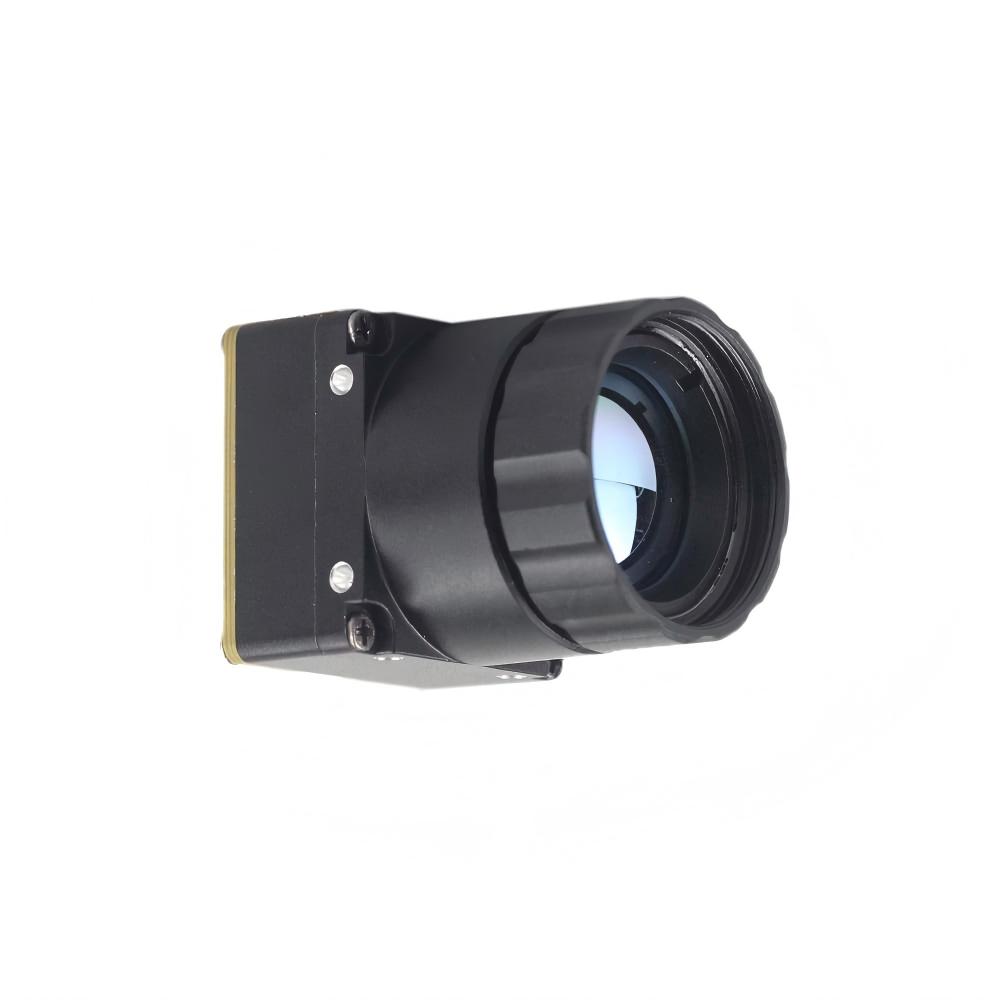
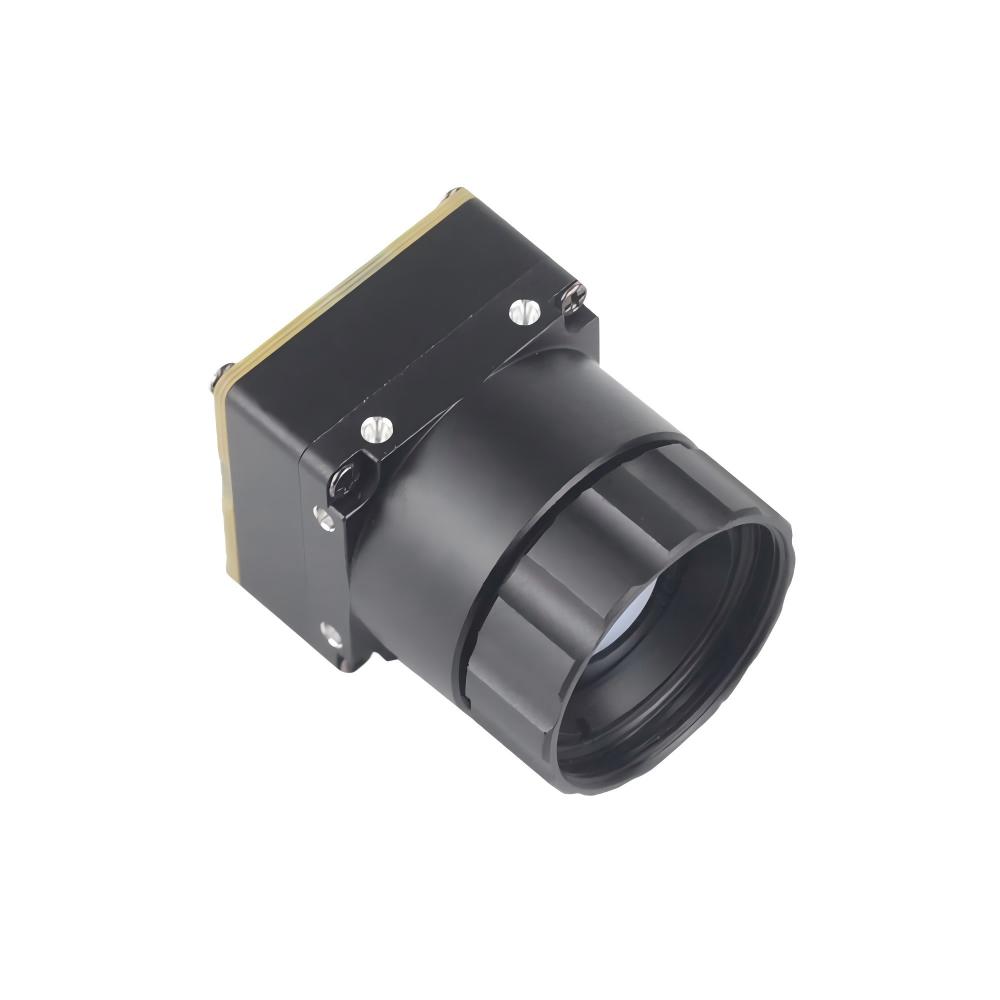
Product Showcase 1: Uncooled LWIR USB Mini 640*512 Thermal Imaging Camera Core Module For Drones Similar To DJI
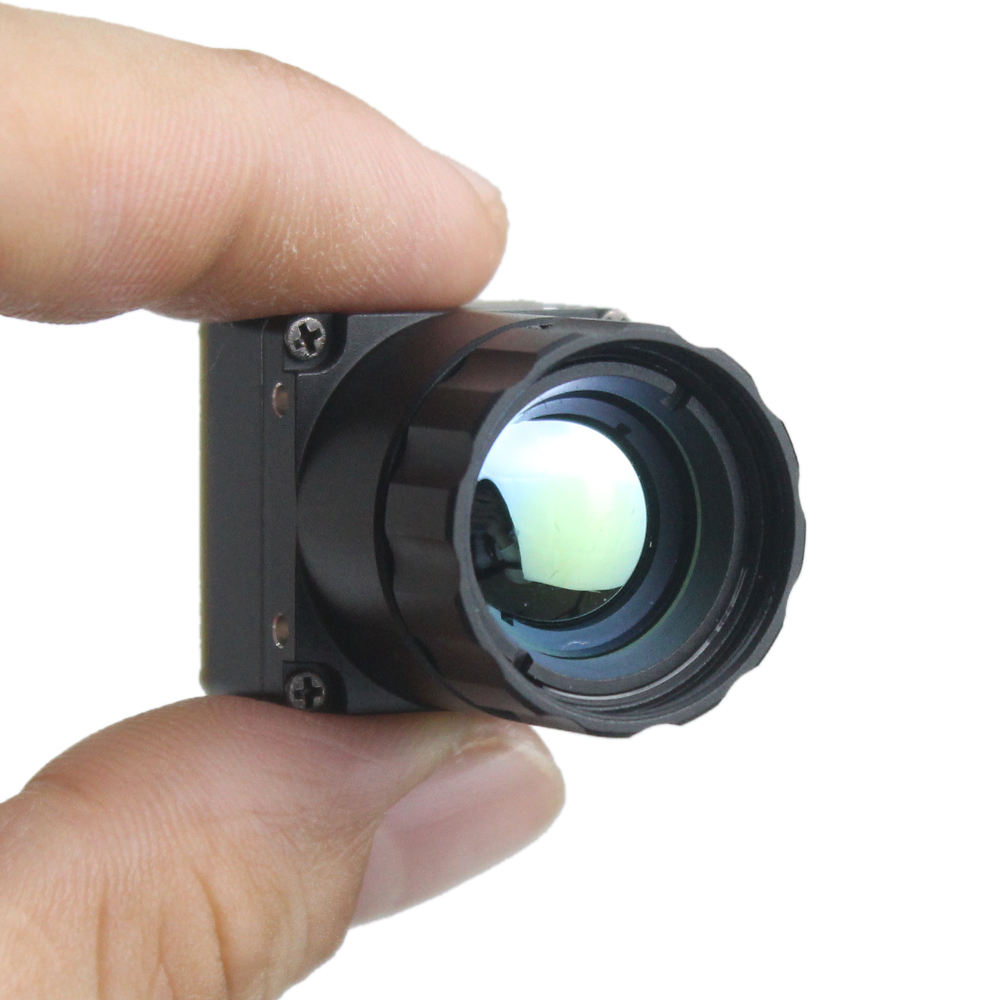
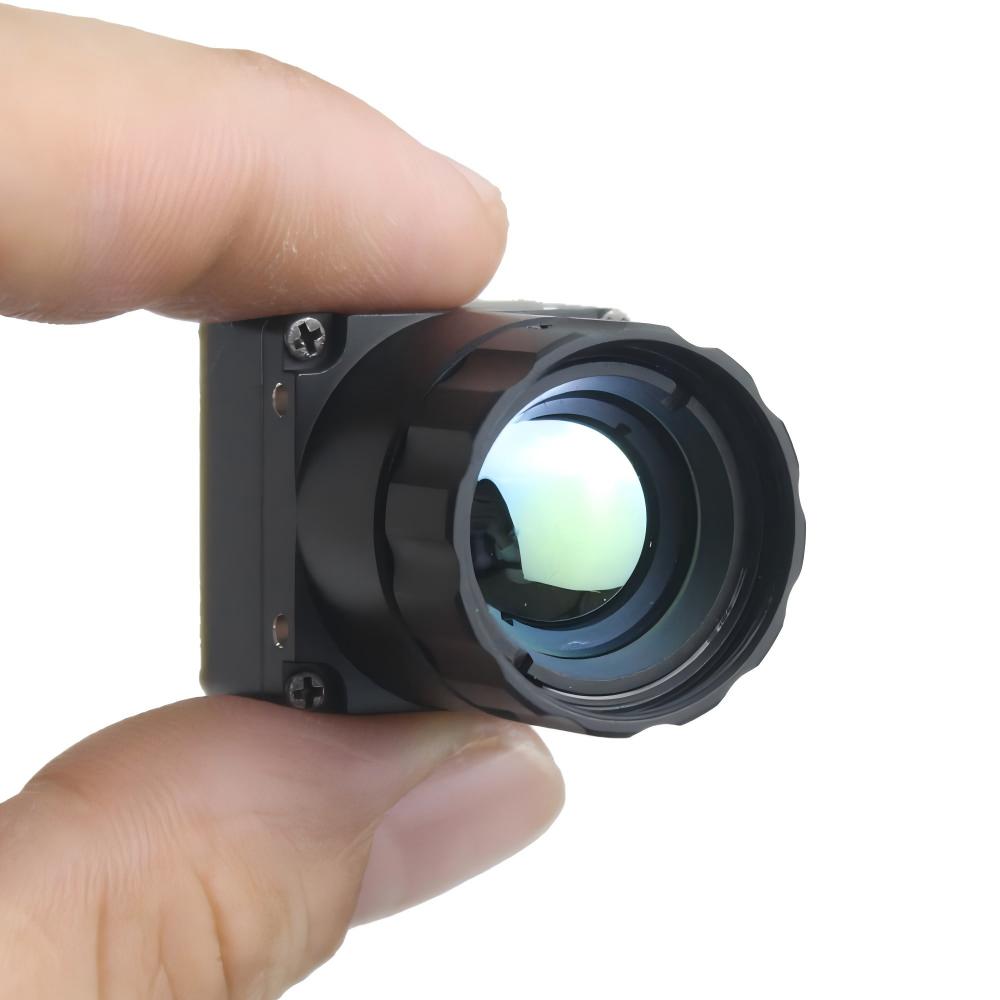
الـ وحدة نواة كاميرا تصوير حراري مصغرة غير مبردة LWIR USB بدقة 640*512 is an ultra-compact thermal engine designed for drone gimbals, industrial machine vision rigs, and handheld inspection tools. Featuring sharp, high-contrast image presentation, an ultra-small 21mm × 21mm footprint, and low unit power draw, this core fits comfortably into tight payload envelopes.
This module provides wide optical versatility, offering lens configurations from wide-angle 5mm up to 150mm telephoto optics, and supports both 640×512 and 640×480 output options. Its robust optomechanical build ensures stable imaging and environmental adaptability across industrial temperature ranges.
| طراز المنتج | وحدة الكاميرا الحرارية المصغرة 640 غير المبردة LWIR |
| الأبعاد | Mini-Size 21mm * 21mm |
| دقة المصفوفة | 640×512 (640×480 اختياري) |
| Focal Length Options | 5مم، 9مم، 13مم، 18مم، 35مم، 50مم، 75مم، 100مم، 150مم |
| Interface Support | USB Digital Video / Control Protocol |
| Application Profile | Drone Gimbals (DJI class), Industrial USB Vision, Autonomous Inspection Payloads |
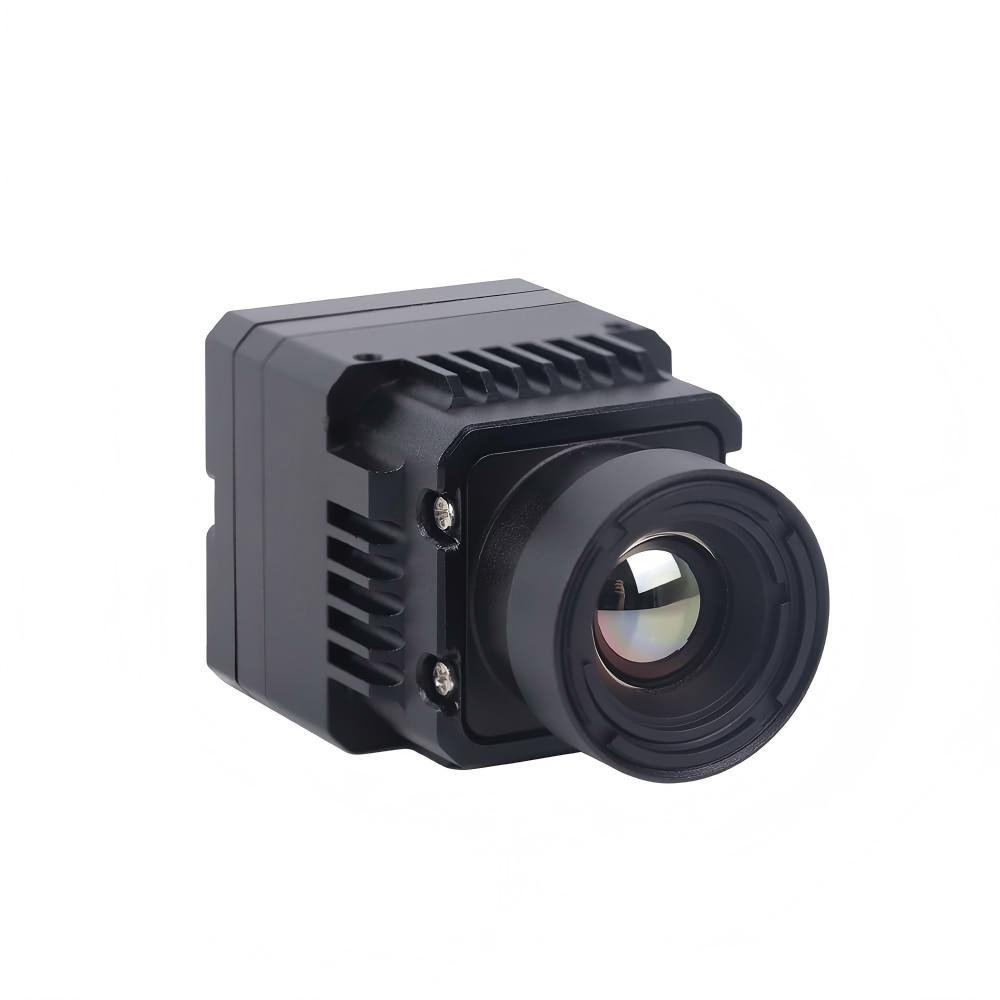
Product Showcase 2: Uncooled Infrared Mipi 640 384 256 9mm Thermal Imaging Camera Module For Drones
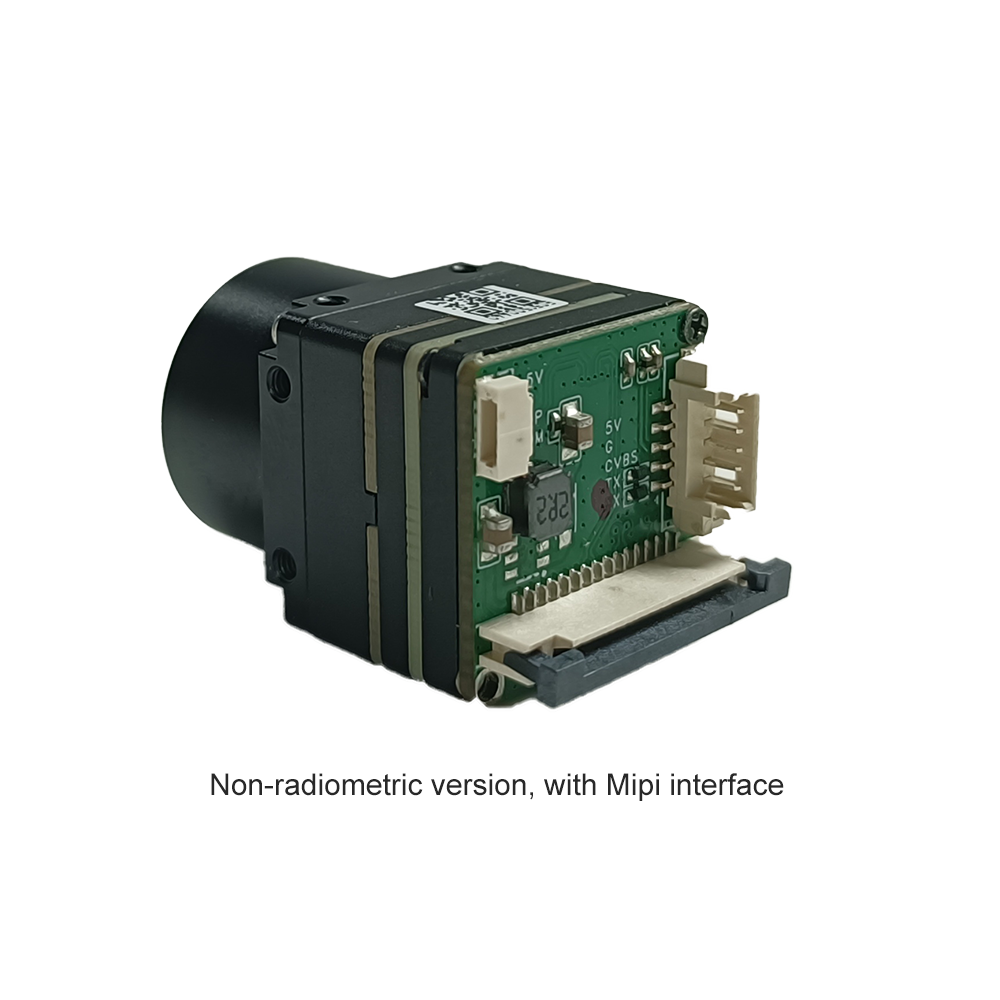
الـ وحدة كاميرا التصوير الحراري بالأشعة تحت الحمراء غير المبردة Mini2 640x512 9 مم للطائرات بدون طيار is designed specifically for direct embedded system integration. Built for platforms where every millisecond of processing latency and every gram of weight matters, the Mini2 pairs a high-sensitivity VOx detector with a native MIPI output interface.
The Mini2 module features an integrated 9mm athermalized lens assembly, providing a well-balanced field of view for drone navigation, AI object detection, and infrastructure inspection. Available in 640×512, 384×288, and 256×192 array configurations, it allows developers to balance bill-of-materials cost against computing requirements across different product tiers.
| طراز المنتج | Mini2 MIPI Uncooled Thermal Module |
| Resolution Configurations | 640×512 / 384×288 / 256×192 |
| التكوين البصري | 9mm Athermalized Optical Assembly |
| بروتوكول الواجهة | MIPI CSI-2 Direct Bus Output |
| Primary Target Architecture | Embedded AI Systems, Autonomous Drones, Micro Gimbal Payloads |
| Key Features | Ultra-low latency streaming, crisp image presentation, compact footprint, low power consumption |
دليل اختيار بصريات LWIR: الفتحات والأبعاد البؤرية والمدى (DRI)
Matching Lens Focal Lengths (5mm to 150mm) to Tactical Missions (DRI Analysis)
In thermal systems engineering, selecting optics is always a direct trade-off between Field of View (FOV) and target pixels across Johnson's Criteria (Detection, Recognition, Identification):
- ⚙️ Wide-Angle Lenses (5mm to 9mm): Deliver a wide horizontal field of view (HFOV > 45°). These are your go-to optics for indoor robotic navigation, close-quarters situational awareness, SLAM obstacle mapping, and automated landing pads.
- ⚙️ Mid-Range Lenses (13mm to 35mm): Provide a balanced field of view (between 30° and 12° HFOV). This is the sweet spot for search-and-rescue (SAR) drones, utility line auditing, and solar inspection from standard 30m to 60m operating altitudes.
- ⚙️ Telephoto Optics (50mm, 75mm, 100mm, 150mm): Narrow the FOV down below 6°, putting maximum pixels on distant targets. Used for long-range perimeter defense, border surveillance, and maritime patrol. For extreme standoff distance requirements, system integrators often step up to 1280x1024 12µm high-resolution thermal imaging systems.
Germanium vs. Chalcogenide Optical Elements & Athermalization
Standard glass blocks LWIR light entirely. You must use infrared-transparent materials with specific optomechanical properties:
- ⚙️ Single-Crystal Germanium (Ge): Boasts a very high refractive index (~4.0), making it easy to design fast f/1.0 and f/1.1 lenses with minimal spherical aberration. However, Germanium is dense, pricey, and has a high thermal index shift (dn/dT), which will blur your image if temperature shifts and the lens isn't compensated.
- ⚙️ زجاج الكالكوجينيد: Can be precision-molded into aspheric elements at higher production volumes, cutting lens unit costs. It has a significantly lower dn/dT than Germanium, making optical athermalization much simpler to achieve.
- ⚙️ التكيف الحراري الميكانيكي السلبي: When a drone climbs from sea-level heat into freezing high altitudes (-20°C), lens focus will drift. Passively athermalized barrels combine aluminum, Delrin, or Invar sleeves that expand and contract at calculated rates to keep the optical focal point locked onto the FPA without noisy focus motors.
معالجة الإشارات المتقدمة: خوارزميات بدون غالق وNUC وDDE
Non-Uniformity Correction (NUC) and Shutterless Operation
Due to micro-scale manufacturing tolerances, no two microbolometer pixels have identical gain or baseline offset. Left uncalibrated, you get Fixed Pattern Noise (FPN)—a heavy static grain overlaying your image. NUC corrects this by applying a two-point linear transformation per pixel:
Where G(i,j) is your gain calibration matrix and O(i,j) is your offset matrix.
Mechanical shutters drop an internal flag in front of the sensor to recalculate the offset matrix, freezing video output for 300ms to 600ms. On a high-speed drone, that brief freeze can cause your visual tracking or flight controller to lose lock. Advanced VOx modules implement Scene-Based Non-Uniformity Correction (SBNUC). SBNUC continuously tracks spatial non-uniformities from natural scene motion over time, eliminating the mechanical shutter entirely, eliminating moving-part failures, and guaranteeing a smooth, uninterrupted frame stream.
Digital Detail Enhancement (DDE) and Contrast Optimization for Machine Vision
VOx cores output raw scenes with 14 bits of linear thermal dynamic range, but deep learning neural networks (like YOLO or SSD) and standard displays consume 8-bit data (0–255 grayscale). Simple linear down-sampling crushes low-contrast details, making subtle thermal signatures vanish into background clutter.
Digital Detail Enhancement (DDE) solves this by splitting the 14-bit image into two streams: a low-frequency base layer (overall background temperature gradients) and a high-frequency detail layer (fine edges, wire structures, target silhouettes). Adaptive bilateral filters boost the high-frequency detail layer without blowing out high-temperature regions, then compress the composite image into an 8-bit dynamic range. That gives your AI models razor-sharp edge boundaries to run object detection without false positives.
الأسئلة الشائعة الهندسية المتعمقة
Why is VOx (Vanadium Oxide) preferred over Amorphous Silicon (a-Si) for thermal camera cores?
How do VOx thermal camera modules maintain stability under extreme environmental conditions?
Can VOx thermal cores be easily integrated into Edge AI systems via MIPI or USB interfaces?
خارطة طريق إدماج OEM والخطوات التالية
Here is the battle-tested engineering blueprint for getting a VOx thermal engine integrated into your autonomous hardware platform:
- ⚙️ Stage 1: Optics & Range Budgeting: Calculate your Detection, Recognition, and Identification (DRI) targets using Johnson's Criteria. Pick the right focal length (from wide-angle 5mm for navigation up to 150mm for narrow ISR tracking) and lock down your interface requirements (MIPI CSI-2 for ultra-low latency or USB for modular prototyping).
- ⚙️ Stage 2: Power and Optomechanical Packaging: Route clean, isolated power rails drawing under 1.2W to keep electrical noise away from the ROIC. Match impedance on MIPI differential lines, clamp the core inside an athermalized, IP67 housing, and ensure structural heatsinking moves heat away from the focal plane.
- ⚙️ Stage 3: Firmware & Video Pipeline Tuning: Ingest the raw 14-bit linear stream into DMA buffers via V4L2. Configure SBNUC algorithms and tune Digital Detail Enhancement (DDE) bilateral filters to provide clean 8-bit dynamic contrast for your neural network models (YOLOv8, SSD, or custom classifiers).
- ⚙️ Stage 4: Chamber Stressing & Flight Validation: Run thermal soak cycles from -40°C to +80°C in an environmental chamber to verify athermal lens stability and radiometric lookup accuracy. Perform high-G vibration and gimbal resonance testing to ensure stabilization loops hold up under turbulent real-world flight conditions.
By pairing compact, industrial-grade VOx (أكسيد الفاناديوم) microbolometer cores with flexible MIPI and USB interfaces, OEM engineering teams can deploy lightweight, high-performance thermal vision systems built to withstand the toughest operating environments.
📚 المراجع والقراءات الإضافية
- المعيار الصناعي: DFRobot Open Robotics & Embedded Vision Hardware Ecosystem
- دليل ذو صلة: Thermal Imaging Engineering & Sensor Technical Knowledge Base
- دليل ذو صلة: Converting Standard Visual Cameras to Thermal Systems: Engineering Principles
- دليل ذو صلة: 1280x1024 12µm Long-Range High-Resolution Thermal Optical Systems