
Модули тепловых датчиков на основе оксида ванадия: высокопроизводительные ИК-ядра формирования изображения для OEM-интеграции
18 августа 2026 г.
Модули тепловизионных камер на основе VOx (оксида ванадия): полное OEM-руководство для систем ИИ и дронного зрения
Когда вы создаёте автономные системы, тактические БПЛА или периферийные установки ИИ-инспекции, вы сразу же сталкиваетесь с жёсткими ограничениями по габаритам, весу, энергопотреблению и стоимости (SWaP-C). VOx (оксид ванадия) неохлаждаемые длинноволновые инфракрасные (LWIR) микроболометры являются бесспорной рабочей лошадкой современной тепловизионной съёмки. В отличие от материалов предыдущего поколения, VOx обеспечивает стабильно высокий температурный коэффициент сопротивления (ТКС) наряду с исключительно низким фликкер-шумом 1/f. Это означает, что ваш сенсор извлекает полезные высококонтрастные тепловые детали из плоских сцен с малым перепадом температур, где старые материалы превращаются в мутное месиво. В мире встраиваемого зрения выбор правильного микроболометрического ядра определяет, будет ли ваша нейронная сеть чисто сопровождать цель сквозь плотный дым или полностью потеряет ограничивающие рамки.
Установка теплового модуля на основе VOx в серийное оборудование — от коммерческих инспекционных квадрокоптеров массой менее 250 г до роботизированных сторожевых комплексов — требует практического владения шинными протоколами (MIPI CSI-2, USB, DVP), конвейерами коррекции неоднородности (NUC), оптической MTF и контурами радиометрической калибровки. Это руководство раскрывает всё, что нужно полевым инженерам, архитекторам встраиваемых систем и руководителям OEM-продуктов для составления спецификаций, стендовых испытаний и внедрения промышленных тепловых ядер на основе VOx в защищённые полезные нагрузки систем технического зрения.
Содержание
- 👉 Основы микроболометров на основе оксида ванадия (VOx)
- 👉 Проектирование с учётом ограничений SWaP-C в полезных нагрузках БПЛА и дронов
- 👉 Периферийное ИИ-зрение и интерфейсные конвейеры: MIPI CSI-2, USB и DVP
- 👉 Промышленные OEM-решения: технические характеристики и сравнительный анализ
- 👉 Руководство по выбору LWIR-оптики: апертуры, фокусные расстояния и дальность (DRI)
- 👉 Продвинутая обработка сигналов: алгоритмы без затвора, NUC и DDE
- 👉 7. Deep-Dive Engineering FAQ
- 👉 Дорожная карта OEM-интеграции и дальнейшие шаги
Основы микроболометров на основе оксида ванадия (VOx)
Физика материалов: температурный коэффициент сопротивления (ТКС) и шум 1/f
Суть неохлаждаемой тепловизионной съёмки такова: вы работаете с матрицей крошечных микроболометров, подвешенных на микромостиках непосредственно в фокальной плоскости. Когда длинноволновое инфракрасное излучение в диапазоне от 8 до 14 мкм попадает на эту теплоизолированную пиксельную мембрану, мембрана нагревается на ничтожно малую величину. Эта крошечная доля градуса вызывает предсказуемое изменение электрического сопротивления. Интегральная схема считывания (ROIC), прикреплённая непосредственно снизу, измеряет это изменение сопротивления и преобразует его в необработанный цифровой отсчёт.
Ключевой показатель, определяющий отзывчивость материала микроболометра, — это его температурный коэффициент сопротивления (ТКС), математически определяемый как:
Оксид ванадия — это материал на основе переходного металла со смешанной валентностью, специально настроенный для работы в стабильном полупроводниковом состоянии при типичных температурах окружающей среды. При качественном тонкоплёночном осаждении VOx стабильно достигает отрицательного ТКС в диапазоне от -2%/K до -3%/K. Такой уровень отзывчивости гарантирует, что даже крошечный перепад температуры в милликельвины по сцене регистрируется как чёткое, количественно измеримое изменение напряжения на ROIC.
В полевых условиях чистая чувствительность ничего не значит, если ваш сигнал тонет в шумах датчика. Тепловые детекторы постоянно борются с шумом Джонсона и низкочастотным фликкер-шумом 1/f. Поскольку высококачественные тонкие плёнки VOx напыляются в условиях высокого вакуума, они образуют исключительно однородную нанокристаллическую матрицу с минимальными дефектами решётки. Такая плотная микроструктура удерживает фликкер-шум 1/f на исключительно низком уровне во всей полосе считывания, поэтому современные ядра VOx регулярно демонстрируют значения эквивалентной шуму разности температур (NETD) ниже 35 мК–40 мК при f/1.0.
VOx против a-Si (аморфного кремния): решающее архитектурное сравнение
В производственных условиях инженеры часто сравнивают оксид ванадия с аморфным кремнием (a-Si). Хотя a-Si глубоко укоренён в стандартных КМОП-производствах, его физика материалов создаёт серьёзные компромиссы, как только вы уменьшаете шаг пикселя или требуете высокой радиометрической точности в жарких условиях.
| Инженерная метрика | Оксид ванадия (VOx) | Аморфный кремний (a-Si) | Влияние на автономные полезные нагрузки |
|---|---|---|---|
| Типичный ТКС | от -2,0%/K до -3,0%/K | от -2,5%/K до -4,0%/K | VOx сохраняет превосходную линейность работы и термическую стабильность |
| Уровень шума 1/f | Исключительно низкий | От умеренного до высокого | VOx обеспечивает более чёткий контраст краёв и превосходные возможности ИИ-логического вывода |
| NETD ядра (чувствительность) | <35 мК–40 мК | >50 мК–60 мК | VOx различает мельчайшие детали сцены в условиях низкого теплового градиента |
| Тепловая постоянная времени | 8 мс–12 мс | 10 мс–15 мс | VOx минимизирует смазывание движения и искажение при качении во время быстрого полёта дрона |
| Масштабирование шага пикселя | Легко масштабируется до 12 мкм и 8 мкм | Значительно деградирует ниже 17 мкм | VOx поддерживает компактную оптику и уменьшенные габариты полезной нагрузки |
Посмотрите, что происходит при уменьшении шага пикселя до 12 мкм или 8 мкм: неупорядоченная атомная структура аморфного кремния вызывает резкий рост шума 1/f, серьёзно ухудшая контраст изображения. VOx сохраняет стабильное отношение сигнал/шум при малых шагах пикселя, позволяя разработчикам оптики сочетать меньшие датчики с более лёгкой и короткофокусной оптикой. Для более глубокого разбора физики матриц в фокальной плоскости обратитесь к нашей базе технических знаний по тепловизионной инженерии.
Проектирование с учётом ограничений SWaP-C в полезных нагрузках БПЛА и дронов
Оптимизация размеров, веса, мощности и стоимости (SWaP-C)
Когда вы подвешиваете оптическую полезную нагрузку на мультироторный дрон или БПЛА с неподвижным крылом, каждый грамм и каждый милливатт напрямую отнимаются от продолжительности полёта. Интеграция тепловизионного модуля меняет всю механическую динамику контуров стабилизации подвеса и системы терморегулирования.
Look at mass distribution: a compact VOx module with a 21 мм × 21 мм footprint makes it straightforward to design multi-sensor EO/IR gimbals that stay well under 150 grams total. Keeping the core mass close to the center of rotation slashes the moment of inertia on both pitch and yaw axes. That means smaller brushless motors, lower current draw, and responsive mechanical stabilization loops operating above 400 Hz without motor jitter.
Power management is just as critical. High-efficiency VOx microbolometer cores draw only 1.0W to 1.2W under full streaming workloads. Keeping thermal dissipation low protects your main flight pack and stops waste heat from getting trapped inside sealed IP67 enclosures. Trapped heat causes non-uniform thermal drift across the FPA frame, forcing constant offset recalibrations.
Radiometric Accuracy vs. Non-Radiometric Spatial Vision
Before you spec a thermal sensor core for an autonomous airframe, decide whether your mission requires quantitative radiometric telemetry or raw spatial dynamic range:
- ✅ Calibrated Radiometric Engines: Convert digitized thermal flux into true temperature values per pixel (°C/°K) in real time. The core's onboard processor continuously runs compensation curves using internal thermistors on the ROIC, lens housing, and shutter. Radiometry is mandatory for predictive utility audits, solar farm hotspot mapping, and industrial pipe inspection.
- ✅ Non-Radiometric Spatial Pipelines: Prioritize visual scene contrast, local edge sharpness, and high dynamic range over absolute temperature values. By bypassing floating-point radiometric lookups, non-radiometric cores minimize pipeline latency and deliver clean, high-contrast imagery optimized for real-time edge AI object tracking and collision avoidance.
Периферийное ИИ-зрение и интерфейсные конвейеры: MIPI CSI-2, USB и DVP
Direct MIPI Interfacing for Low-Latency Neural Networks
When running object detection models like YOLOv8 or custom TensorRT architectures on edge SoCs (NVIDIA Jetson Orin, Rockchip RK3588, NXP i.MX8), interface latency makes or breaks high-speed flight tracking. If your video frame arrives 40ms late, an autonomous quadrotor traveling at 15 m/s has already covered more than half a meter before inference even starts.
The → MIPI CSI-2 bus provides a direct, high-speed pipe between the VOx core and the host SoC's hardware Video Input (VI) subsystem. By transferring raw 14-bit or 16-bit linear microbolometer frames across differential lanes using zero-copy Direct Memory Access (DMA), MIPI CSI-2 completely avoids the USB packetization and driver stack. This pulls capture latency down to under 10 milliseconds, ensuring your neural network receives fresh sensor data every frame cycle.
USB Core Integration for Embedded SBCs and Fast Prototyping
While MIPI is the standard for custom carrier boards, standard USB remains the most practical choice for rapid prototyping, benchtop test fixtures, and modular ground robots:
- ✅ UVC (USB Video Class) Standard Compatibility: Streams standard 8-bit YUV/grayscale or raw 14-bit radiometric telemetry over virtual COM channels. Runs out of the box on Linux (V4L2), Windows, and ROS/ROS2 without custom kernel modifications.
- ✅ Rapid Prototyping Across Single Board Computers: Speeds up integration when building robotic prototypes using ecosystem hardware from developers like DFRobot.
If you're retrofitting visual camera mounts for thermal payloads, check our practical guide on converting standard optical cameras into thermal imaging systems to review optomechanical footprint requirements.
Промышленные OEM-решения: технические характеристики и сравнительный анализ
To help system architects evaluate hardware options, here is a breakdown of two battle-tested uncooled VOx LWIR modules engineered for airborne gimbals and edge vision platforms.
Product Showcase 1: Uncooled LWIR USB Mini 640*512 Thermal Imaging Camera Core Module For Drones Similar To DJI
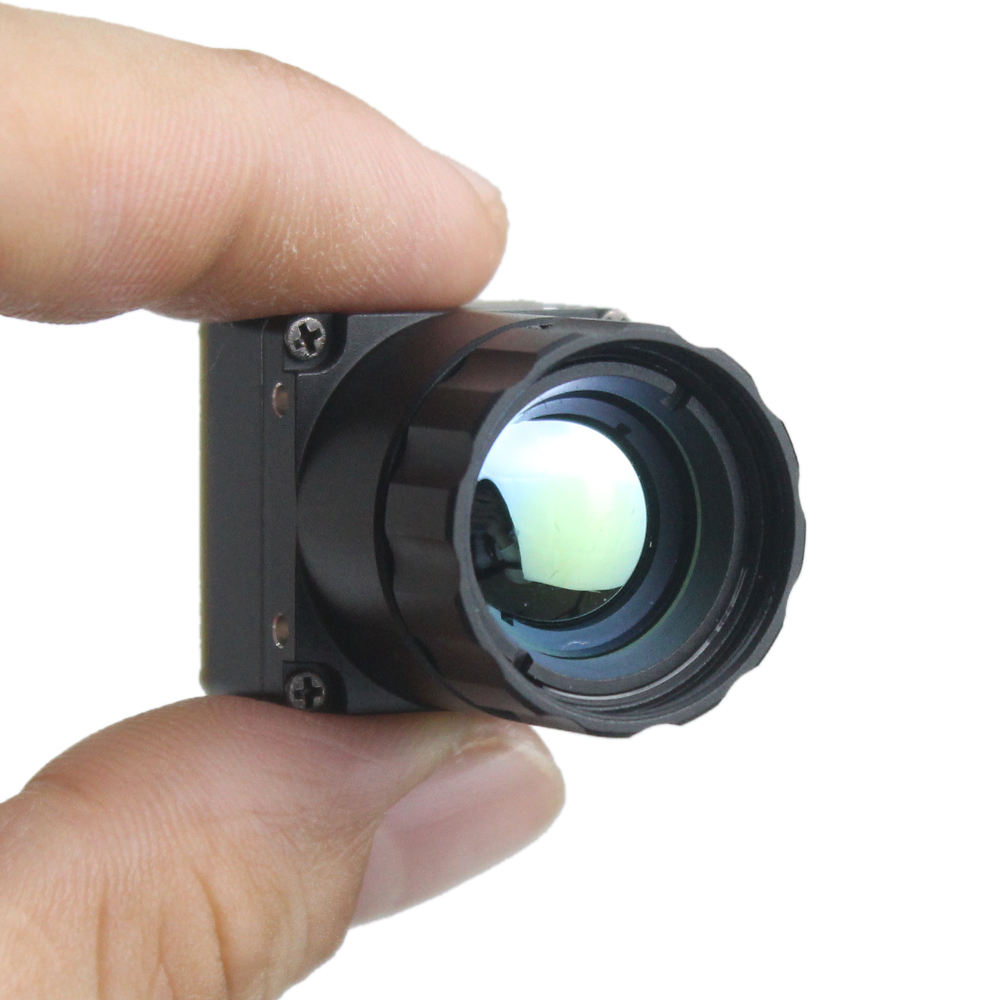
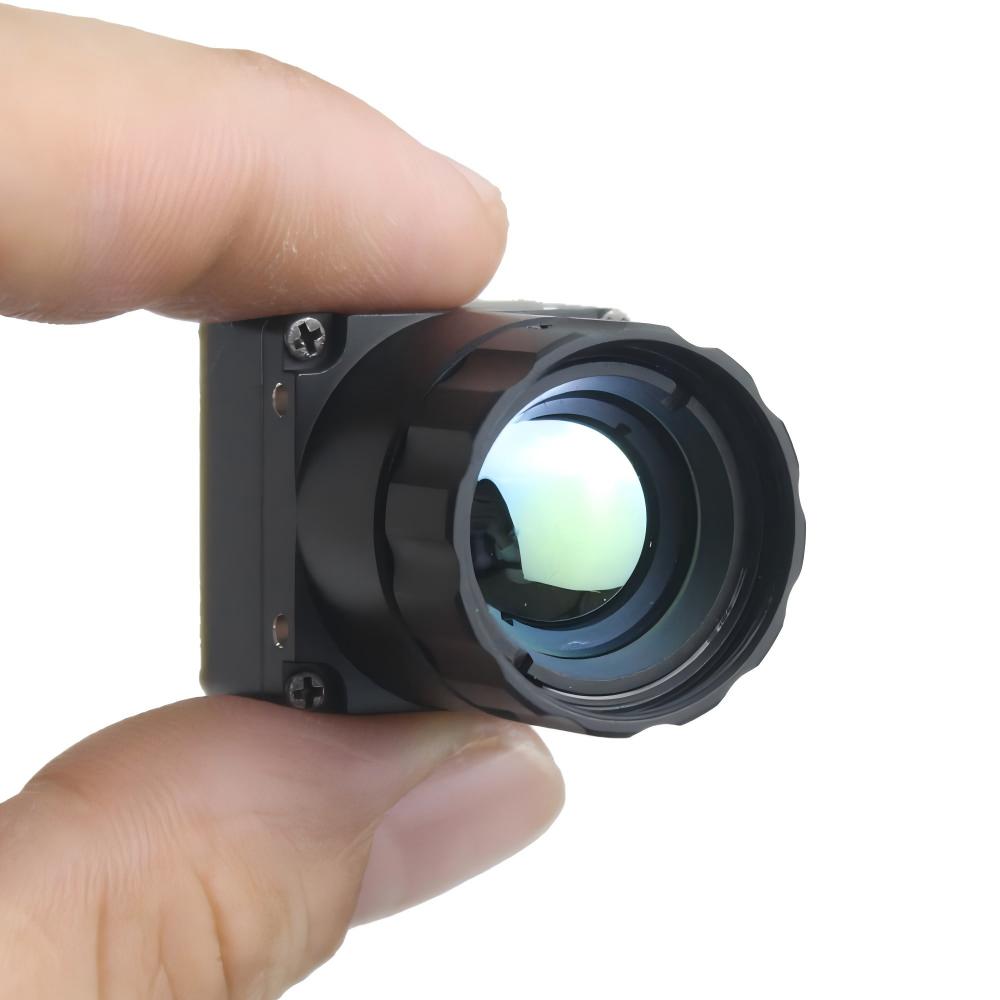
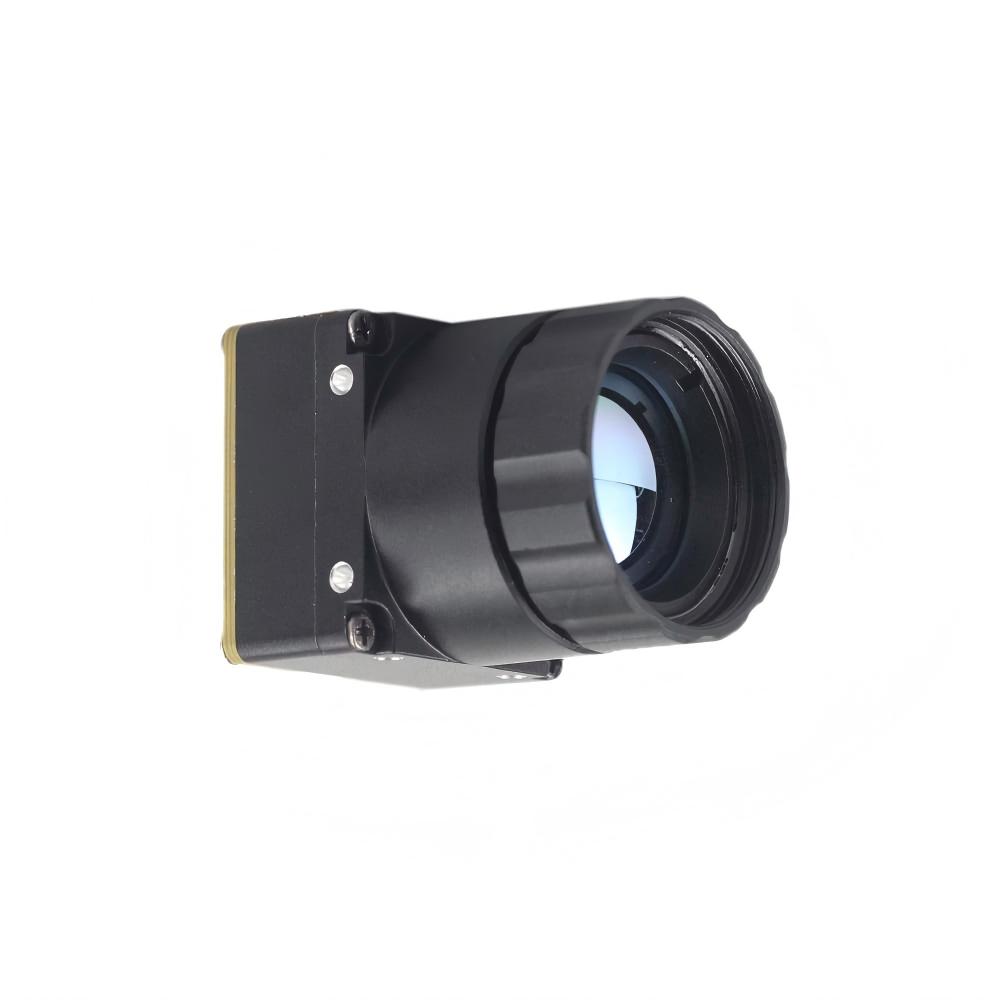
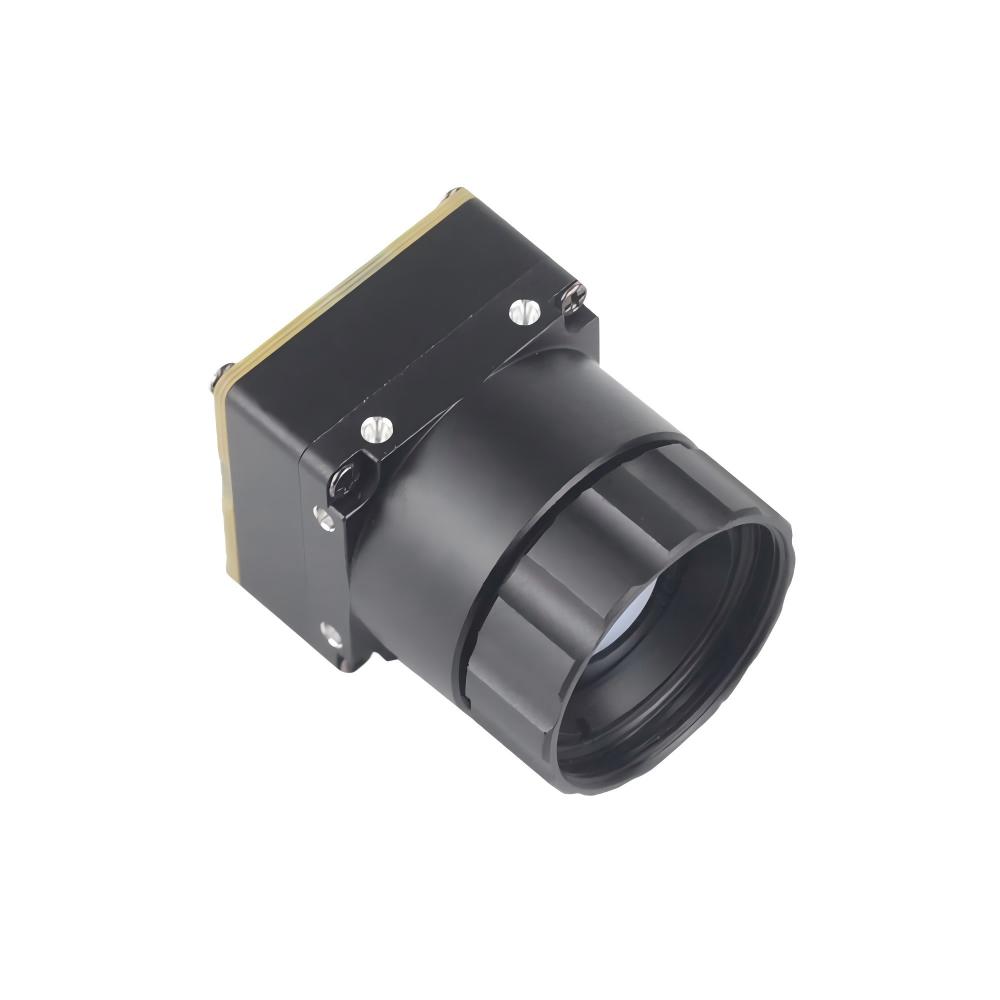
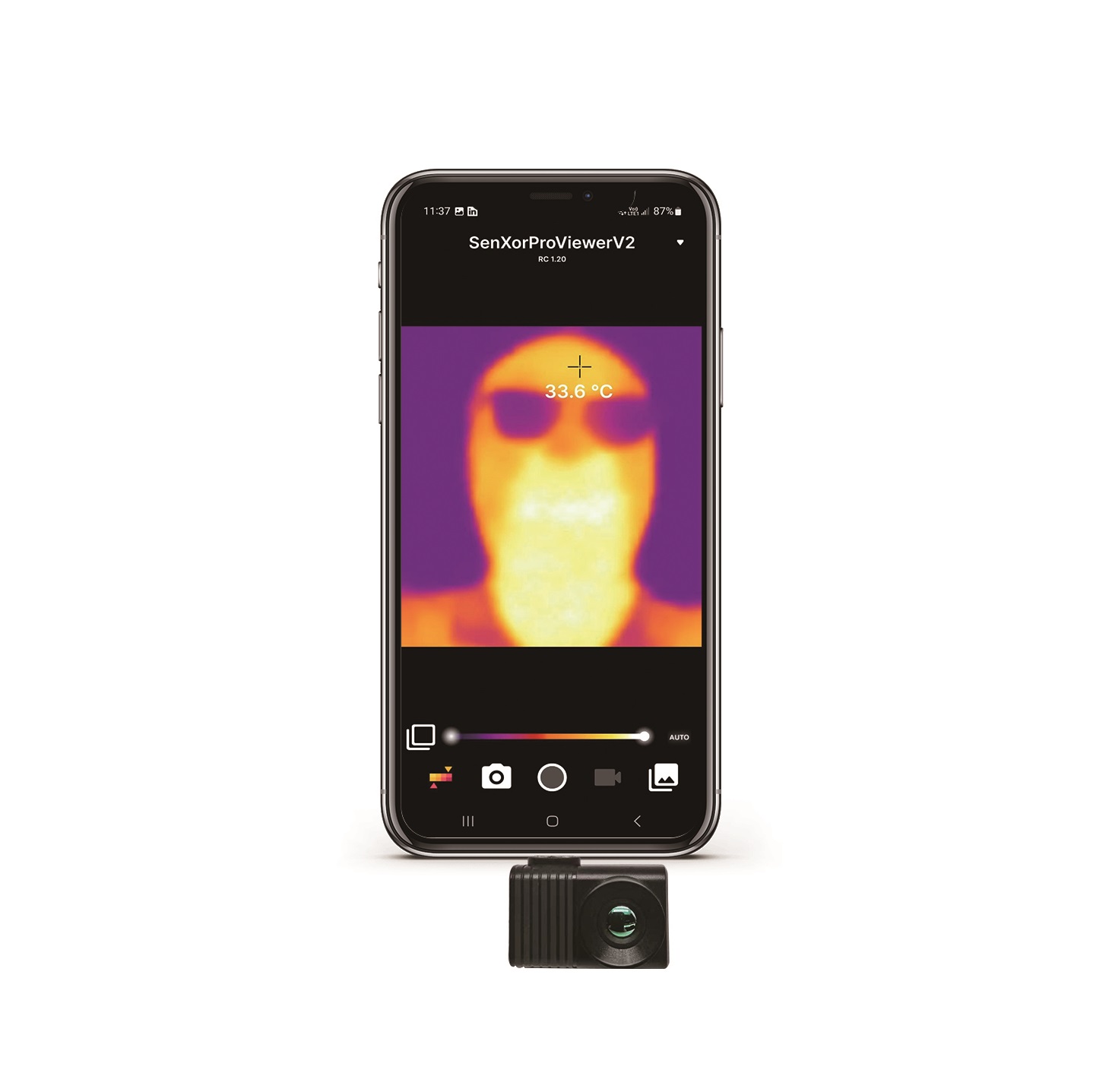
The → Неохлаждаемый LWIR USB миниатюрный модуль ядра тепловизионной камеры 640*512 is an ultra-compact thermal engine designed for drone gimbals, industrial machine vision rigs, and handheld inspection tools. Featuring sharp, high-contrast image presentation, an ultra-small 21mm × 21mm footprint, and low unit power draw, this core fits comfortably into tight payload envelopes.
This module provides wide optical versatility, offering lens configurations from wide-angle 5mm up to 150mm telephoto optics, and supports both 640×512 and 640×480 output options. Its robust optomechanical build ensures stable imaging and environmental adaptability across industrial temperature ranges.
| Модель продукта | Миниатюрный неохлаждаемый LWIR-тепловизионный модуль Mini 640 |
| Размеры | Mini-Size 21mm * 21mm |
| Разрешение матрицы | 640×512 (опционально 640×480) |
| Focal Length Options | 5 мм, 9 мм, 13 мм, 18 мм, 35 мм, 50 мм, 75 мм, 100 мм, 150 мм |
| Interface Support | USB Digital Video / Control Protocol |
| Application Profile | Drone Gimbals (DJI class), Industrial USB Vision, Autonomous Inspection Payloads |
Product Showcase 2: Uncooled Infrared Mipi 640 384 256 9mm Thermal Imaging Camera Module For Drones
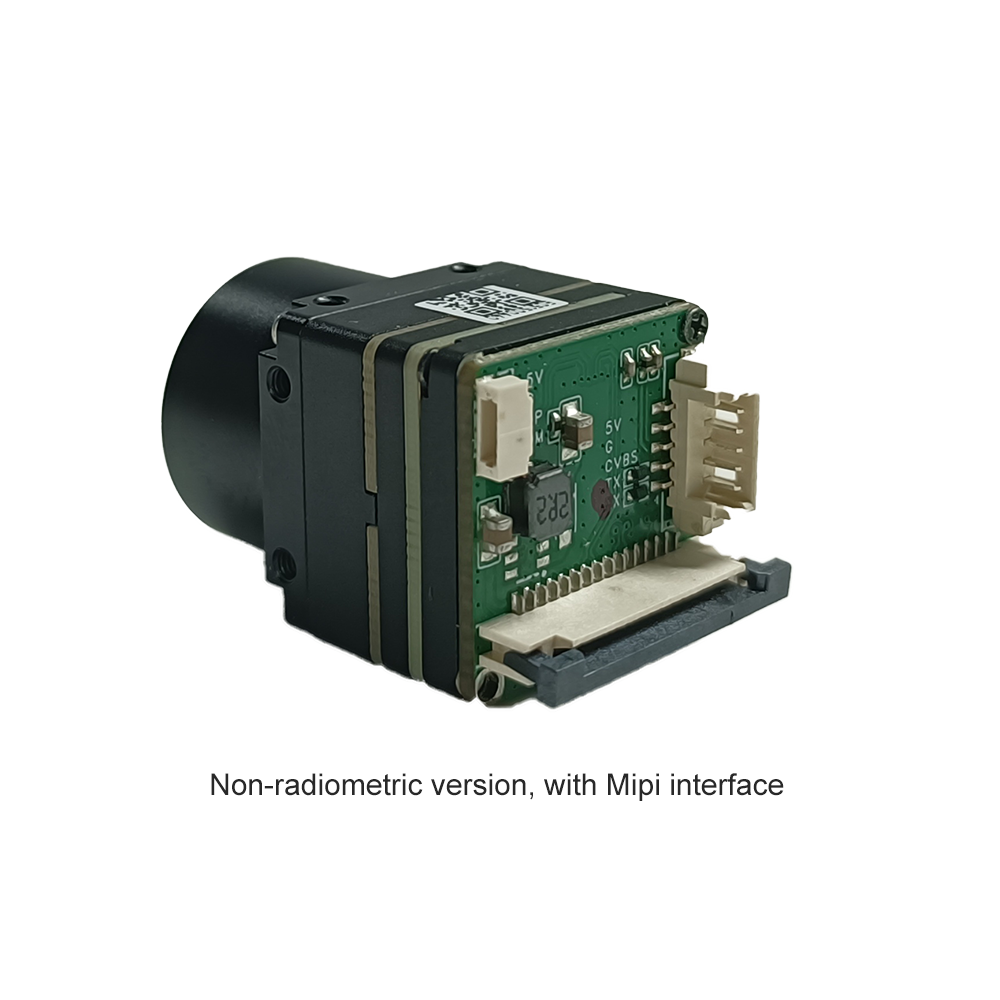
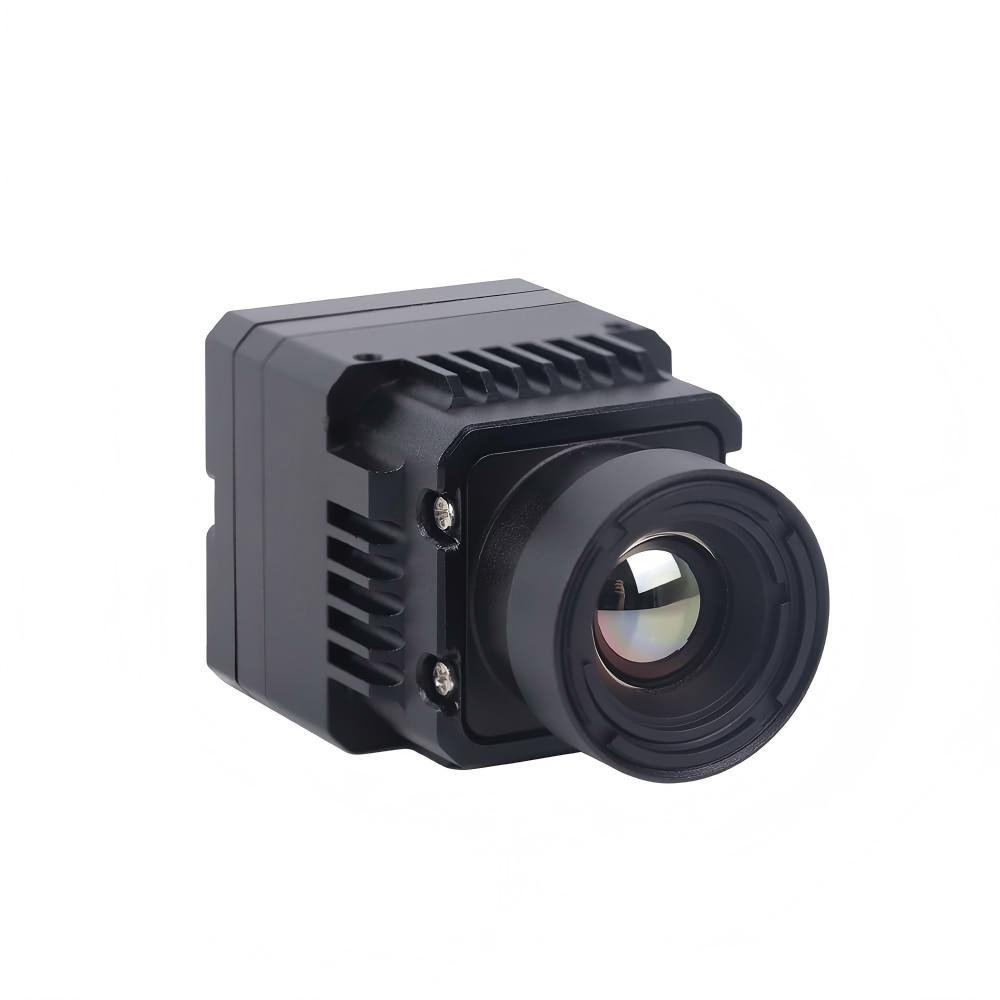
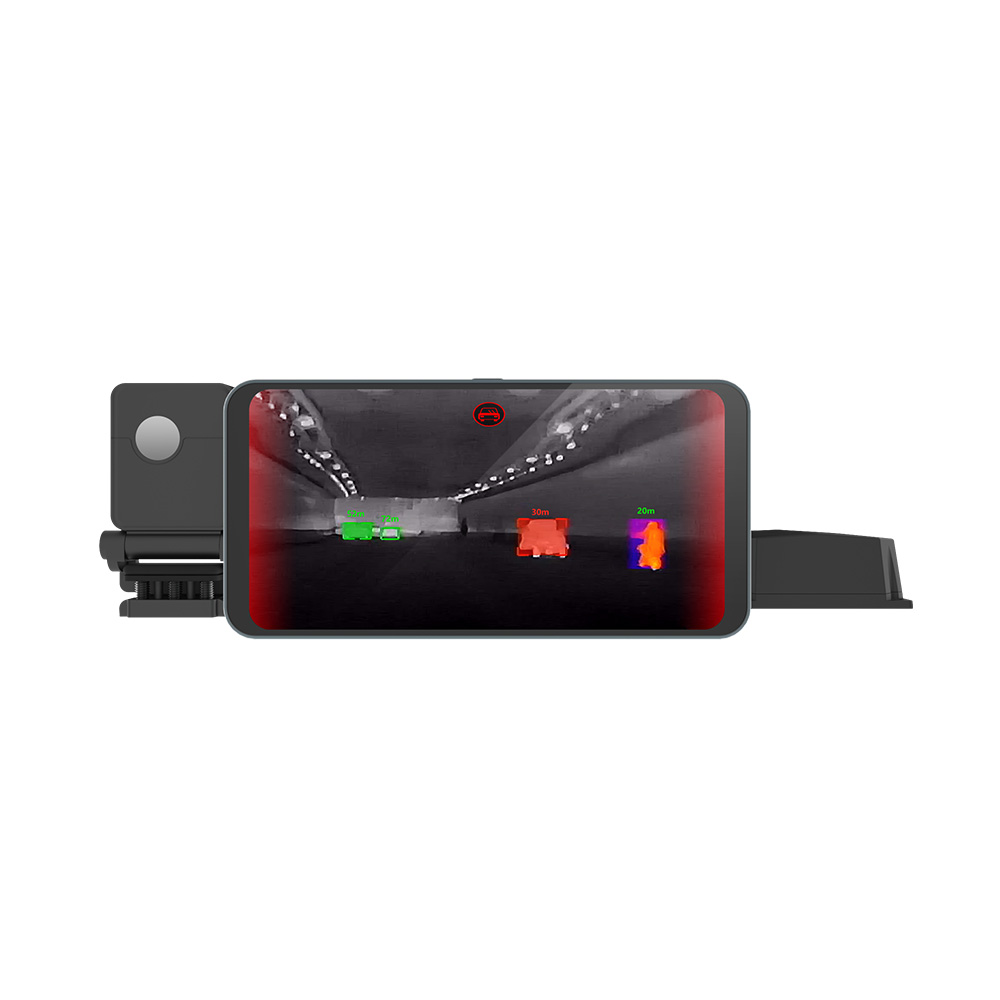
The → Неохлаждаемый инфракрасный мини-модуль тепловизионной камеры Mini2 640x512 9 мм для дронов is designed specifically for direct embedded system integration. Built for platforms where every millisecond of processing latency and every gram of weight matters, the Mini2 pairs a high-sensitivity VOx detector with a native MIPI output interface.
The Mini2 module features an integrated 9mm athermalized lens assembly, providing a well-balanced field of view for drone navigation, AI object detection, and infrastructure inspection. Available in 640×512, 384×288, and 256×192 array configurations, it allows developers to balance bill-of-materials cost against computing requirements across different product tiers.
| Модель продукта | Mini2 MIPI Uncooled Thermal Module |
| Resolution Configurations | 640×512 / 384×288 / 256×192 |
| Оптическая конфигурация | 9mm Athermalized Optical Assembly |
| Протокол интерфейса | MIPI CSI-2 Direct Bus Output |
| Primary Target Architecture | Embedded AI Systems, Autonomous Drones, Micro Gimbal Payloads |
| Key Features | Ultra-low latency streaming, crisp image presentation, compact footprint, low power consumption |
Руководство по выбору LWIR-оптики: апертуры, фокусные расстояния и дальность (DRI)
Matching Lens Focal Lengths (5mm to 150mm) to Tactical Missions (DRI Analysis)
In thermal systems engineering, selecting optics is always a direct trade-off between Field of View (FOV) and target pixels across Johnson's Criteria (Detection, Recognition, Identification):
- ⚙️ Wide-Angle Lenses (5mm to 9mm): Deliver a wide horizontal field of view (HFOV > 45°). These are your go-to optics for indoor robotic navigation, close-quarters situational awareness, SLAM obstacle mapping, and automated landing pads.
- ⚙️ Mid-Range Lenses (13mm to 35mm): Provide a balanced field of view (between 30° and 12° HFOV). This is the sweet spot for search-and-rescue (SAR) drones, utility line auditing, and solar inspection from standard 30m to 60m operating altitudes.
- ⚙️ Telephoto Optics (50mm, 75mm, 100mm, 150mm): Narrow the FOV down below 6°, putting maximum pixels on distant targets. Used for long-range perimeter defense, border surveillance, and maritime patrol. For extreme standoff distance requirements, system integrators often step up to 1280x1024 12µm high-resolution thermal imaging systems.
Germanium vs. Chalcogenide Optical Elements & Athermalization
Standard glass blocks LWIR light entirely. You must use infrared-transparent materials with specific optomechanical properties:
- ⚙️ Single-Crystal Germanium (Ge): Boasts a very high refractive index (~4.0), making it easy to design fast f/1.0 and f/1.1 lenses with minimal spherical aberration. However, Germanium is dense, pricey, and has a high thermal index shift (dn/dT), which will blur your image if temperature shifts and the lens isn't compensated.
- ⚙️ Халькогенидное стекло: Can be precision-molded into aspheric elements at higher production volumes, cutting lens unit costs. It has a significantly lower dn/dT than Germanium, making optical athermalization much simpler to achieve.
- ⚙️ Пассивная механическая атермализация: When a drone climbs from sea-level heat into freezing high altitudes (-20°C), lens focus will drift. Passively athermalized barrels combine aluminum, Delrin, or Invar sleeves that expand and contract at calculated rates to keep the optical focal point locked onto the FPA without noisy focus motors.
Продвинутая обработка сигналов: алгоритмы без затвора, NUC и DDE
Non-Uniformity Correction (NUC) and Shutterless Operation
Due to micro-scale manufacturing tolerances, no two microbolometer pixels have identical gain or baseline offset. Left uncalibrated, you get Fixed Pattern Noise (FPN)—a heavy static grain overlaying your image. NUC corrects this by applying a two-point linear transformation per pixel:
Where G(i,j) is your gain calibration matrix and O(i,j) is your offset matrix.
Mechanical shutters drop an internal flag in front of the sensor to recalculate the offset matrix, freezing video output for 300ms to 600ms. On a high-speed drone, that brief freeze can cause your visual tracking or flight controller to lose lock. Advanced VOx modules implement Scene-Based Non-Uniformity Correction (SBNUC). SBNUC continuously tracks spatial non-uniformities from natural scene motion over time, eliminating the mechanical shutter entirely, eliminating moving-part failures, and guaranteeing a smooth, uninterrupted frame stream.
Digital Detail Enhancement (DDE) and Contrast Optimization for Machine Vision
VOx cores output raw scenes with 14 bits of linear thermal dynamic range, but deep learning neural networks (like YOLO or SSD) and standard displays consume 8-bit data (0–255 grayscale). Simple linear down-sampling crushes low-contrast details, making subtle thermal signatures vanish into background clutter.
Digital Detail Enhancement (DDE) solves this by splitting the 14-bit image into two streams: a low-frequency base layer (overall background temperature gradients) and a high-frequency detail layer (fine edges, wire structures, target silhouettes). Adaptive bilateral filters boost the high-frequency detail layer without blowing out high-temperature regions, then compress the composite image into an 8-bit dynamic range. That gives your AI models razor-sharp edge boundaries to run object detection without false positives.
7. Deep-Dive Engineering FAQ
Why is VOx (Vanadium Oxide) preferred over Amorphous Silicon (a-Si) for thermal camera cores?
How do VOx thermal camera modules maintain stability under extreme environmental conditions?
Can VOx thermal cores be easily integrated into Edge AI systems via MIPI or USB interfaces?
Дорожная карта OEM-интеграции и дальнейшие шаги
Here is the battle-tested engineering blueprint for getting a VOx thermal engine integrated into your autonomous hardware platform:
- ⚙️ Stage 1: Optics & Range Budgeting: Calculate your Detection, Recognition, and Identification (DRI) targets using Johnson's Criteria. Pick the right focal length (from wide-angle 5mm for navigation up to 150mm for narrow ISR tracking) and lock down your interface requirements (MIPI CSI-2 for ultra-low latency or USB for modular prototyping).
- ⚙️ Stage 2: Power and Optomechanical Packaging: Route clean, isolated power rails drawing under 1.2W to keep electrical noise away from the ROIC. Match impedance on MIPI differential lines, clamp the core inside an athermalized, IP67 housing, and ensure structural heatsinking moves heat away from the focal plane.
- ⚙️ Stage 3: Firmware & Video Pipeline Tuning: Ingest the raw 14-bit linear stream into DMA buffers via V4L2. Configure SBNUC algorithms and tune Digital Detail Enhancement (DDE) bilateral filters to provide clean 8-bit dynamic contrast for your neural network models (YOLOv8, SSD, or custom classifiers).
- ⚙️ Stage 4: Chamber Stressing & Flight Validation: Run thermal soak cycles from -40°C to +80°C in an environmental chamber to verify athermal lens stability and radiometric lookup accuracy. Perform high-G vibration and gimbal resonance testing to ensure stabilization loops hold up under turbulent real-world flight conditions.
By pairing compact, industrial-grade VOx (оксид ванадия) microbolometer cores with flexible MIPI and USB interfaces, OEM engineering teams can deploy lightweight, high-performance thermal vision systems built to withstand the toughest operating environments.
📚 Ссылки и дополнительная литература
- Отраслевой стандарт: DFRobot Open Robotics & Embedded Vision Hardware Ecosystem
- Связанное руководство: Thermal Imaging Engineering & Sensor Technical Knowledge Base
- Связанное руководство: Converting Standard Visual Cameras to Thermal Systems: Engineering Principles
- Связанное руководство: 1280x1024 12µm Long-Range High-Resolution Thermal Optical Systems