
Руководство по лучшему мини-модулю тепловизионной камеры: LWIR-ядра высокого разрешения для Raspberry Pi, дронов и DIY
9 июля 2026 г.
Лучший LWIR Тепловизионный модуль камеры: Мини-ядра для Edge AI и интеграции БПЛА
10 июля 2026 г.
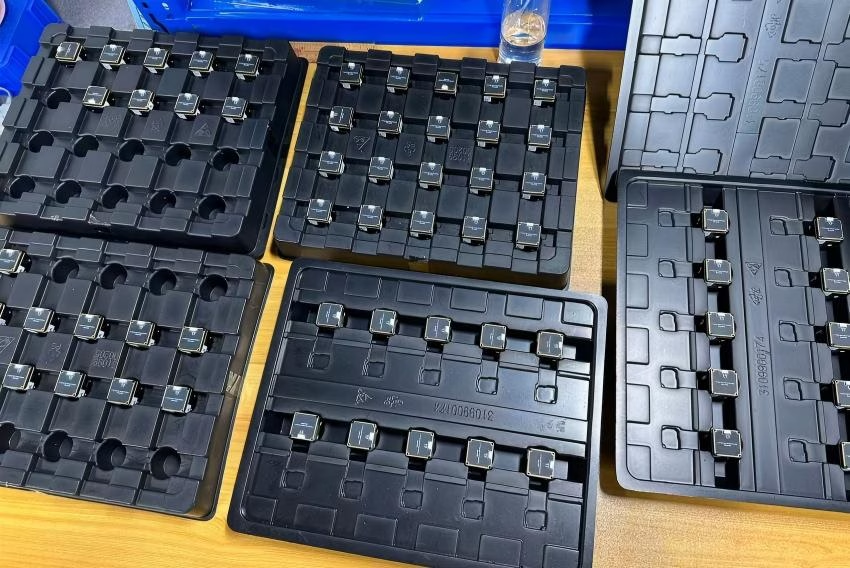
Лучший тепловизионный модуль 256x192: руководство по интеграции и OEM-решения
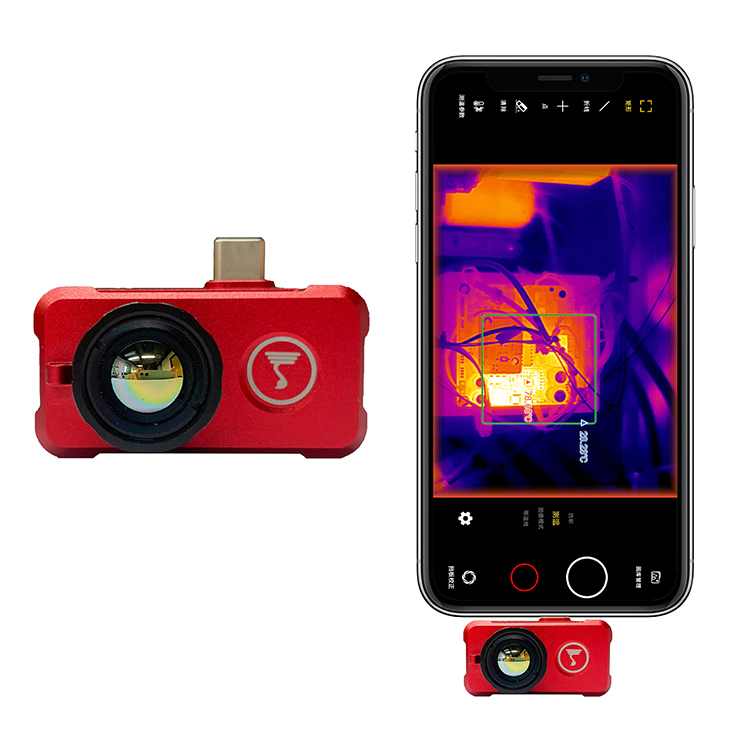
Для системных интеграторов, разработчиков полезной нагрузки дронов и оптоэлектронных инженеров выбор оптимального длинноволнового инфракрасного (LWIR) ядра — это баланс между производительностью, стоимостью и физическими размерами. тепловизионный модуль 256x192 стал отраслевым стандартом для приложений, требующих высокоточной термографии в жестких ограничениях SWaP-C (размер, вес, мощность и стоимость). В отличие от потребительских тепловизионных адаптеров, промышленные неохлаждаемые LWIR микроядра обеспечивают плотность пикселей и радиометрическую точность, необходимые для автономной навигации, промышленного профилактического обслуживания и точной аэроинспекции.
Это техническое руководство представляет план выбора, интеграции и развертывания тепловизионных ядер 256x192. Мы анализируем физику сенсора, оцениваем компромиссы шага микроболометра и проводим сравнительный анализ ведущих промышленных модулей. Независимо от того, проектируете ли вы беспилотные летательные аппараты (БПЛА) для оборонных задач или строите стационарные сети мониторинга подстанций, это всестороннее руководство предлагает технические параметры и этапы интеграции, необходимые для оптимизации вашей системы видения.
На практике мы часто видим, как команды избыточно специфицируют свои системы, полагая, что им нужны массивные, энергоемкие сенсоры, в то время как высокооптимизированный микроболометр может выполнять работу лучше, холоднее и за малую долю стоимости. Давайте рассмотрим, как извлечь максимум из этих компактных мощных устройств.
Содержание
Физика сенсора и оптимизация SWaP-C
Выбор термографического сенсора требует понимания физики неохлаждаемых микроболометров на основе VOx (оксида ванадия) или a-Si (аморфного кремния). Матрицы детекторов внутри этих модулей преобразуют инфракрасное излучение в диапазоне длин волн от 8 мкм до 14 мкм в цифровые значения, сопоставляя сигнатуры тепловой энергии с дискретными измерениями температуры. Когда инженеры-разработчики оценивают эти ядра, они должны анализировать, как параметры микроструктуры влияют на физическую упаковку, четкость изображения и долгосрочную диагностическую стабильность.
1 Разрешение против практического выхода
Нативное разрешение 256x192 дает ровно 49 152 активных пикселя. Хотя это может показаться скромным по сравнению с мегапиксельными КМОП-сенсорами видимого света, тепловидение работает в существенно иных физических и материальных ограничениях. В спектре LWIR дифракционные пределы значительно больше, а стоимость сырой германиевой оптики экспоненциально растет с увеличением физической диагностической площади фокальной плоскости (FPA).
Сравнение матрицы 256x192 с устаревшей матрицей 160x120 (которая содержит всего 19 200 пикселей) показывает увеличение плотности пикселей в 2,5 раза. Это улучшение обеспечивает пространственное разрешение, необходимое для распознавания человеческих целей на больших расстояниях, выявления мельчайших структурных дефектов и обнаружения горячих точек на плотных печатных платах (PCB) во время циклов проверки.
Вот в чем дело: по сравнению с премиальной матрицей 320x240, модуль 256x192 предлагает невероятно экономичную альтернативу. Когда разработчики сочетают этот размер матрицы с передовыми алгоритмами цифрового повышения детализации краев (DDE) и пространственной фильтрации, современное VOx микроядро достигает практической эффективности идентификации целей, сопоставимой с устаревшими структурами 320x240, занимая при этом меньше аппаратного пространства, выделяя меньше тепла и работая за малую долю стоимости.
2 Понимание шага пикселя микроболометра
Шаг пикселя — физическое расстояние, измеряемое от центра одного пикселя до центра соседнего пикселя — является критическим фактором при проектировании тепловизионных камер. Рынок промышленной оптоэлектроники перешел от устаревших матриц с шагом 17 мкм к высокоэффективным 12-мкм микроболометрическим матрицам. Этот поколенческий скачок в технологии изготовления напрямую влияет на оптическую компоновку и корпусирование современных встраиваемых систем.
Послушайте, переход на меньший 12-мкм шаг пикселя дает два ключевых инженерных преимущества:
- ✅ Уменьшенный диаметр объектива: Поскольку пиксели упакованы более плотно, объектив с более коротким фокусным расстоянием может обеспечить то же поле зрения (FOV), что и более крупный и тяжелый объектив на устаревшем сенсоре с шагом 17 мкм. Это значительно уменьшает размер и вес германиевой оптики, которая составляет значительную часть производственной стоимости модуля.
- ✅ Уменьшенный форм-фактор и масса: Уменьшение матрицы в фокальной плоскости позволяет миниатюризировать корпус ядра до ультракомпактных размеров, таких как промышленный стандарт 21 мм * 21 мм. Это обеспечивает бесшовную механическую интеграцию в системы, чувствительные к весу, такие как подвесы микро-БПЛА и карманные тепловизионные устройства.
3 Радиометрия против сенсоров только для визуализации
При выборе тепловизионных ядер инженеры должны различать модули только для визуализации (наблюдения) . Выбор неправильной категории может привести к серьезным эксплуатационным проблемам, если ваша система требует абсолютных аналитических данных: Модули только для визуализации: Эти модули применяют автоматическую регулировку усиления (AGC) и коррекцию контрастности по полю кадра для вывода динамического изображения. Они оптимизированы для человеческого зрения, обнаружения целей и обхода препятствий, но не предоставляют абсолютных данных о температуре для каждого пикселя.
- ⚙️ Радиометрические модули: Эти модули выполняют абсолютные измерения температуры для каждого пикселя. Каждый отдельный пиксель действует как индивидуальный бесконтактный термометр, передавая калиброванные показания температуры обратно в хост-систему. Это критически важно для таких применений, как предиктивное обслуживание электрических сетей, тепловое профилирование печатных плат и раннее обнаружение возгораний.
- ⚙️ Для достижения радиометрической точности (обычно ±2°C или ±2%) основной модуль должен активно компенсировать внутренний тепловой дрейф. Это осуществляется с помощью физической внутренней шторки, которая периодически перекрывает сенсор для выполнения коррекции неоднородности (NUC), наряду с интегрированными датчиками температуры на матрице в фокальной плоскости. Для тех, кто ищет индивидуальные решения, изучение таких вариантов, как может преодолеть разрыв между визуализацией для человека и точными научными измерениями.
Успешная интеграция тепловизионного модуля 256x192 во встраиваемую платформу требует тщательного учета физических интерфейсов, управления питанием и программной коммуникации. 256 Двойной тепловизионный и визуальный сенсорный модуль 1 Аппаратные интерфейсы: USB против MIPI против DVP.
Протоколы аппаратной и программной интеграции
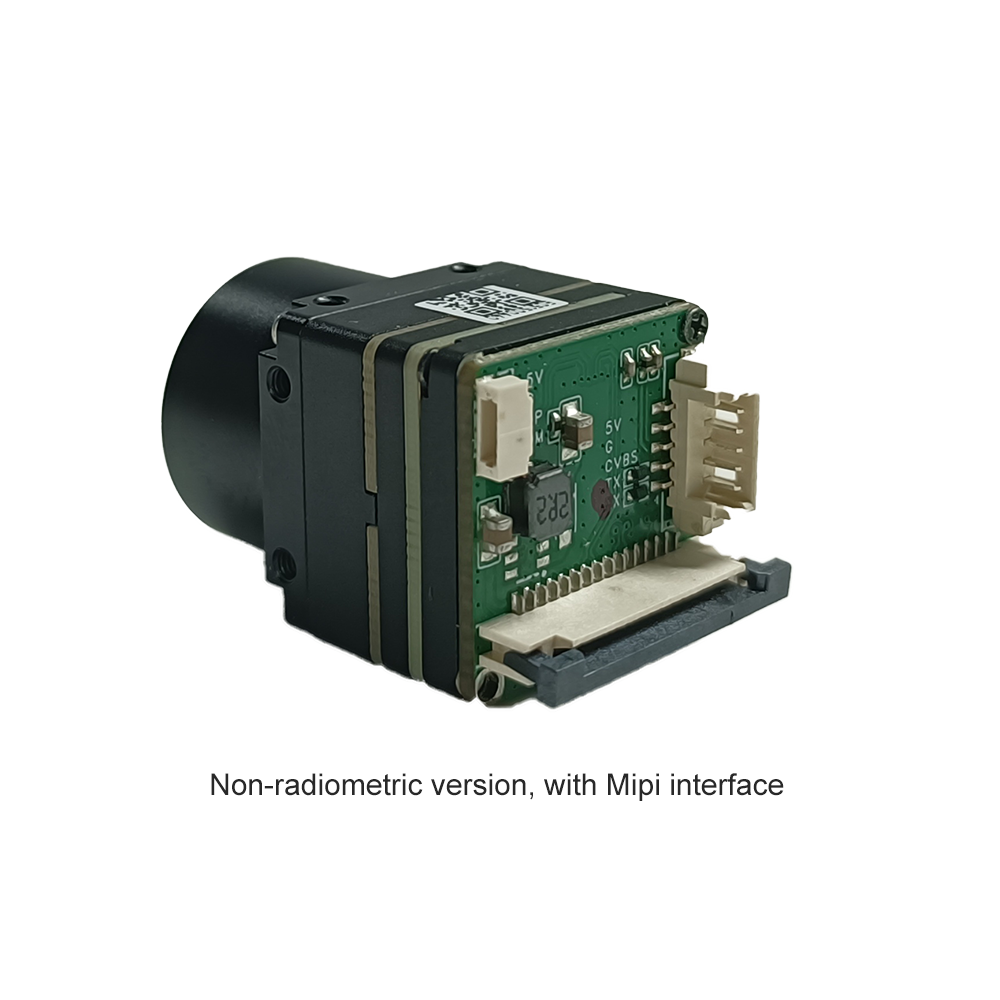
Тепловизионные ядра обычно экспортируют видео и телеметрию через несколько физических интерфейсов в зависимости от архитектуры процессора приложения и ограничений драйверов:.
Тип интерфейса
Формат данных
| Типичная задержка | Формат данных | Типичная задержка | Cable/Trace Max Length | Best Architecture Fit |
|---|---|---|---|---|
| USB 2.0 / Type-C (UVC) | Compressed MJPEG / Raw YUV / 16-bit payload | 30ms - 80ms | Up to 3 meters | Windows/Linux Single Board Computers (Raspberry Pi, Jetson Nano) |
| MIPI CSI-2 | Raw Bayer / RAW8 / RAW16 | < 10ms | < 15cm (Strict layout) | Low-power mobile APPs, high-speed RTOS processors |
| DVP (Parallel) | 8-bit or 14-bit Parallel Digital | < 5ms | < 10cm (Ultra-short RF path) | Low-cost microcontrollers, FPGA frame grabbers |
For rapid development cycles, USB (UVC-compliant) modules are incredibly easy to deploy. Because they present themselves to the host OS as standard USB video class devices, you can capture the raw thermal stream instantly without compiling proprietary kernel drivers or managing complex MIPI timing parameters.
2.2 Communication and Telemetry: UART & SPI
While UVC or MIPI handles pipeline video delivery (the visual thermal matrix), configuration commands and per-pixel radiometric arrays are typically routed over separate low-speed serial interfaces:
- ⚙️ UART (Universal Asynchronous Receiver-Transmitter): Used for host-side configuration. Over a standard 115200bps connection, the host can send hex commands to trigger a manual shutter NUC, change color palettes (e.g., White-Hot, Ironbow, Rainbow), control digital zoom, or set specific region-of-interest (ROI) emissivity coefficients.
- ⚙️ SPI (последовательный периферийный интерфейс): Typically used in high-speed microcontrollers to pull raw 14-bit or 16-bit radiometric frames synchronously at high master clock frequencies (up to 50 MHz). This completely bypasses the overhead of USB stacks for real-time operating systems (RTOS).
2.3 Host Processing and SDK Architecture
To convert raw outputs into actual temperature readouts, your application must process the pixel values provided by the module. Standard 14-bit digital outputs supply raw Analog-to-Digital Converter (ADC) counts, often referred to as Digital Numbers (DN).
A robust SDK converts these values using a clean, systematic flow. The raw 14-bit digital value of the pixel is multiplied by the calibration scaling slope factor (defined in the module's micro-EEPROM) and then added to the offset constant. This offset constant is adjusted automatically by the on-board processor based on the current internal temperature of the sensor, preventing measurement drift as the camera body warms up under load.
Professional integrations benefit greatly from pre-compiled libraries. Implementing projects using a comprehensive OEM thermal module integration guide provides pre-compiled C/C++, Python, and Android SDK wrappers that perform these calculations in the background. This allows your developers to query simple APIs, such as calling a single function to return the precise temperature value at specific coordinates.
Сравнение ведущих промышленных модулей 256x192 и 640x512
To assist in system design and component sourcing, the section below provides a detailed comparison of our two main industrial thermal imaging modules: the ultra-compact Mini 256 and the high-resolution Mini 640.
3.1 Product Specifications Matrix
| Metric & Feature | Mini 256 Uncooled LWIR Thermal Module | Mini 640 Uncooled LWIR Thermal Module |
|---|---|---|
| Native Resolution | 256 * 192 (49,152 pixels) | 640 * 480 / 512 (Up to 327,680 pixels) |
| Тип детектора | Неохлаждаемый VOx микроболометр | Неохлаждаемый VOx микроболометр |
| Шаг пикселя | 12 мкм | 12 мкм |
| Wavelength Range | 8μm to 14μm | 8μm to 14μm |
| NETD (Thermal Sensitivity) | < 50mK (at 25°C, F/1.0) | < 40mK (at 25°C, F/1.0) |
| Диапазон измерения температуры | -20°C to +150°C (Standard); up to +550°C (Optional) | -20°C to +150°C (Standard); up to +550°C (Optional) |
| Физические размеры | 21mm * 21mm (Mini-Size) | 21mm * 21mm (Mini-Size) |
| Module Weight | < 15g (Super lightweight core) | < 20g (Ultra lightweight core) |
| Digital Interfaces Supported | USB 2.0 / Type-C (UVC), UART, SPI, MIPI | USB, UART, SPI, MIPI (640*480 optional) |
| Потребляемая мощность | < 0.8W (at constant 25°C) | < 1.2W (at constant 25°C) |
| Lens Focal Lengths | 3.2mm, 6mm options standard | 5/9/13/18/35/50/75/100/150mm optional |
| Product Detail Link | Core 256 Specs | Core 640 Specs |
3.2 Deep Dive: Mini 256 LWIR Module
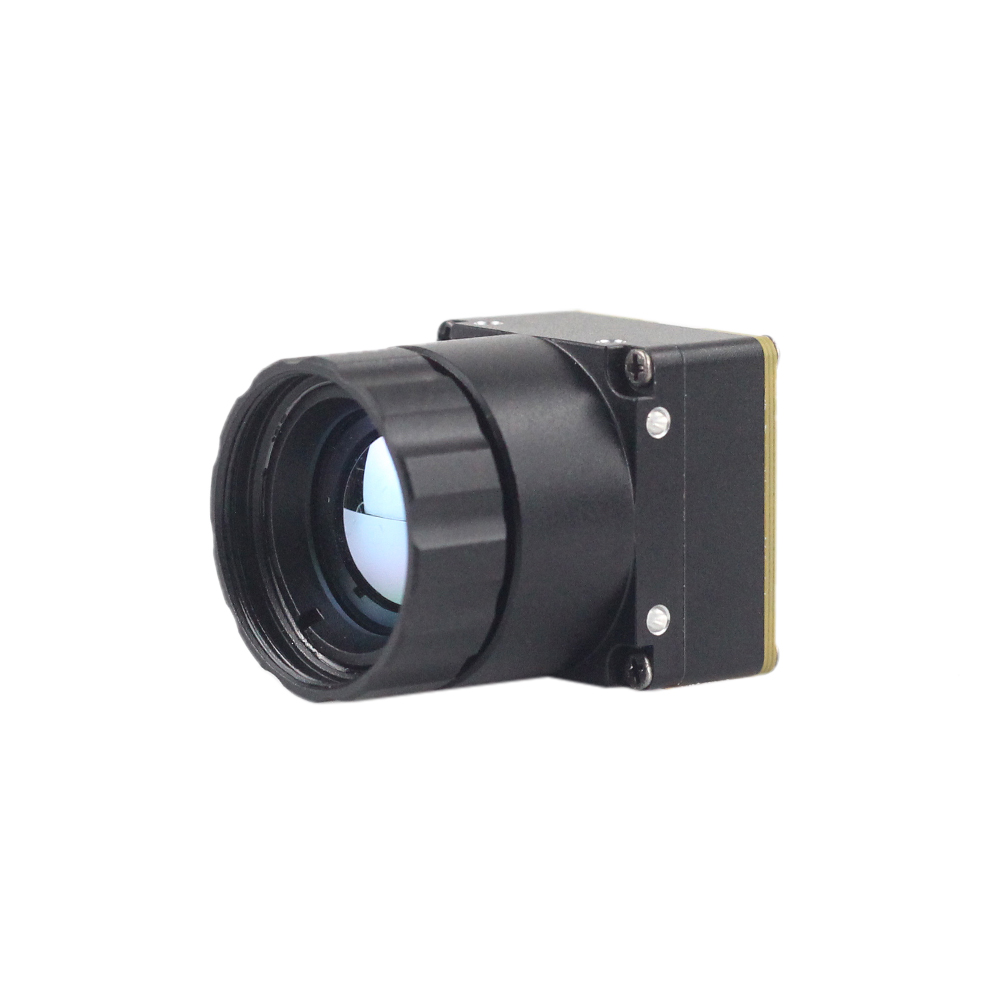
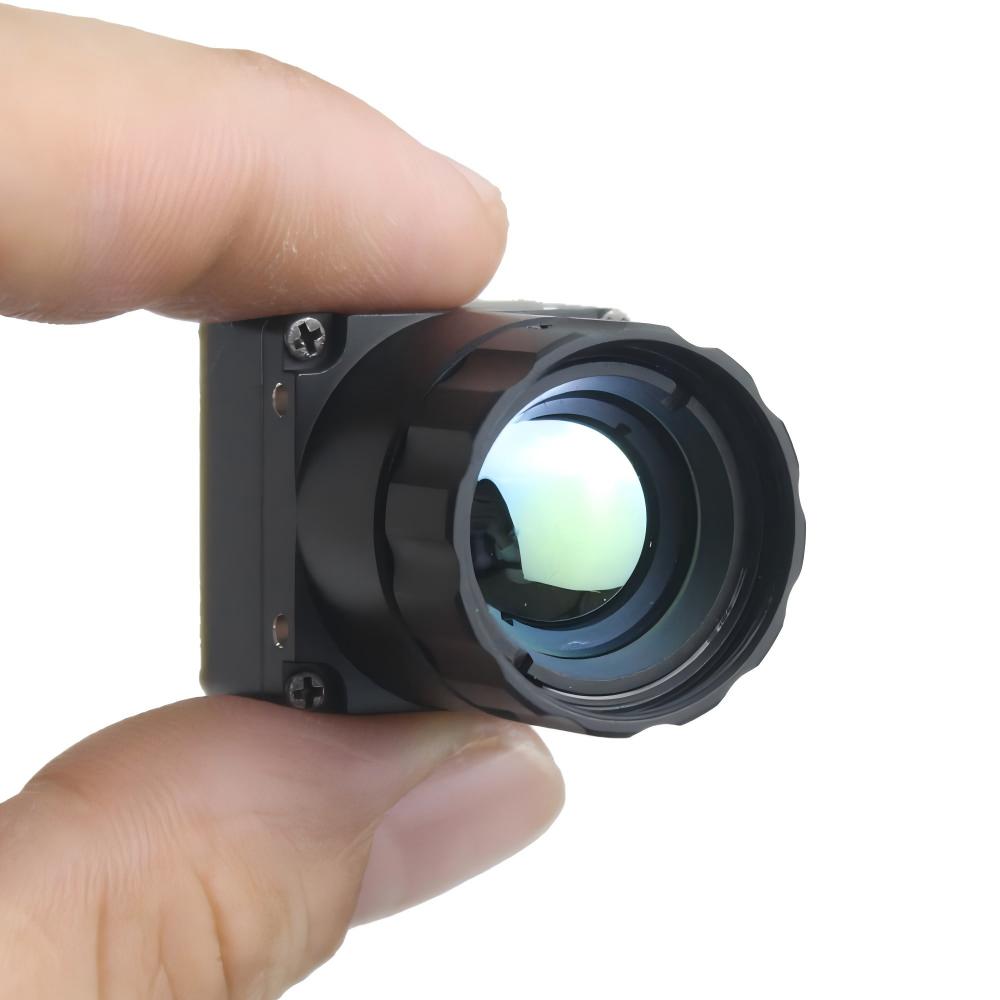
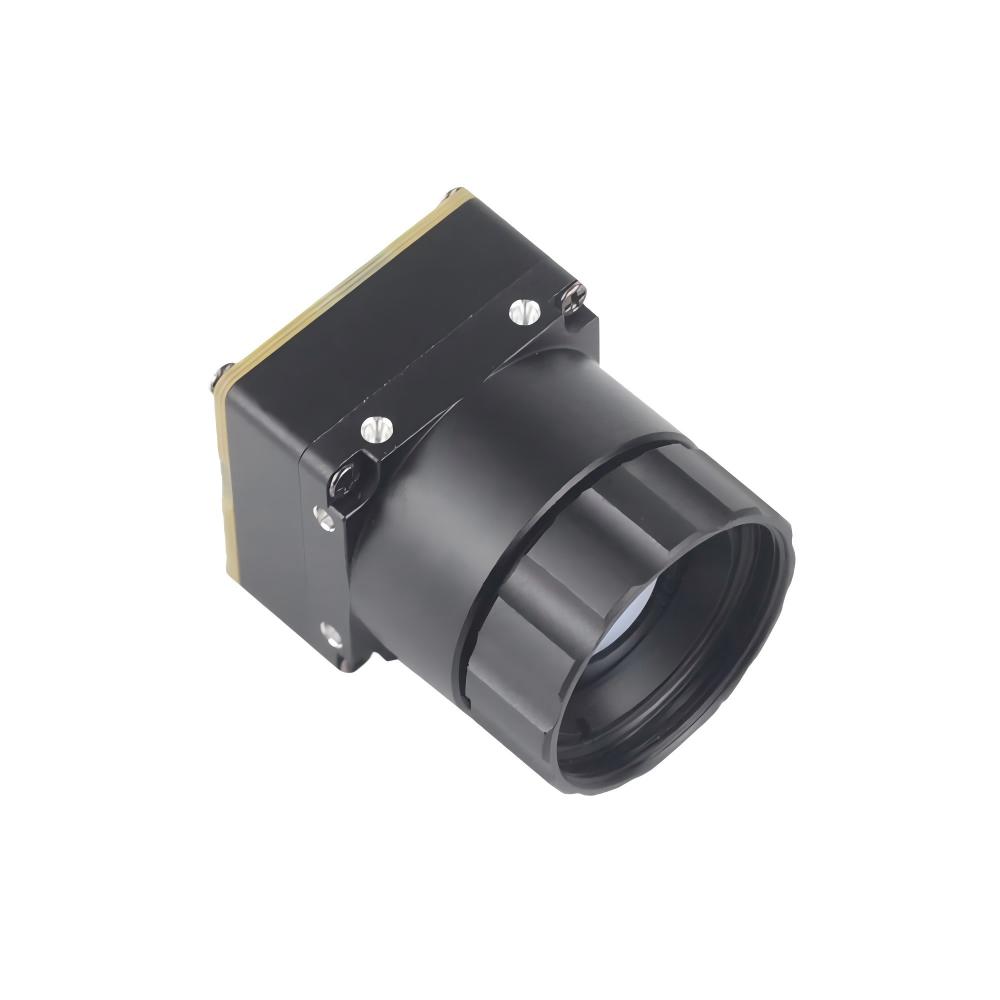
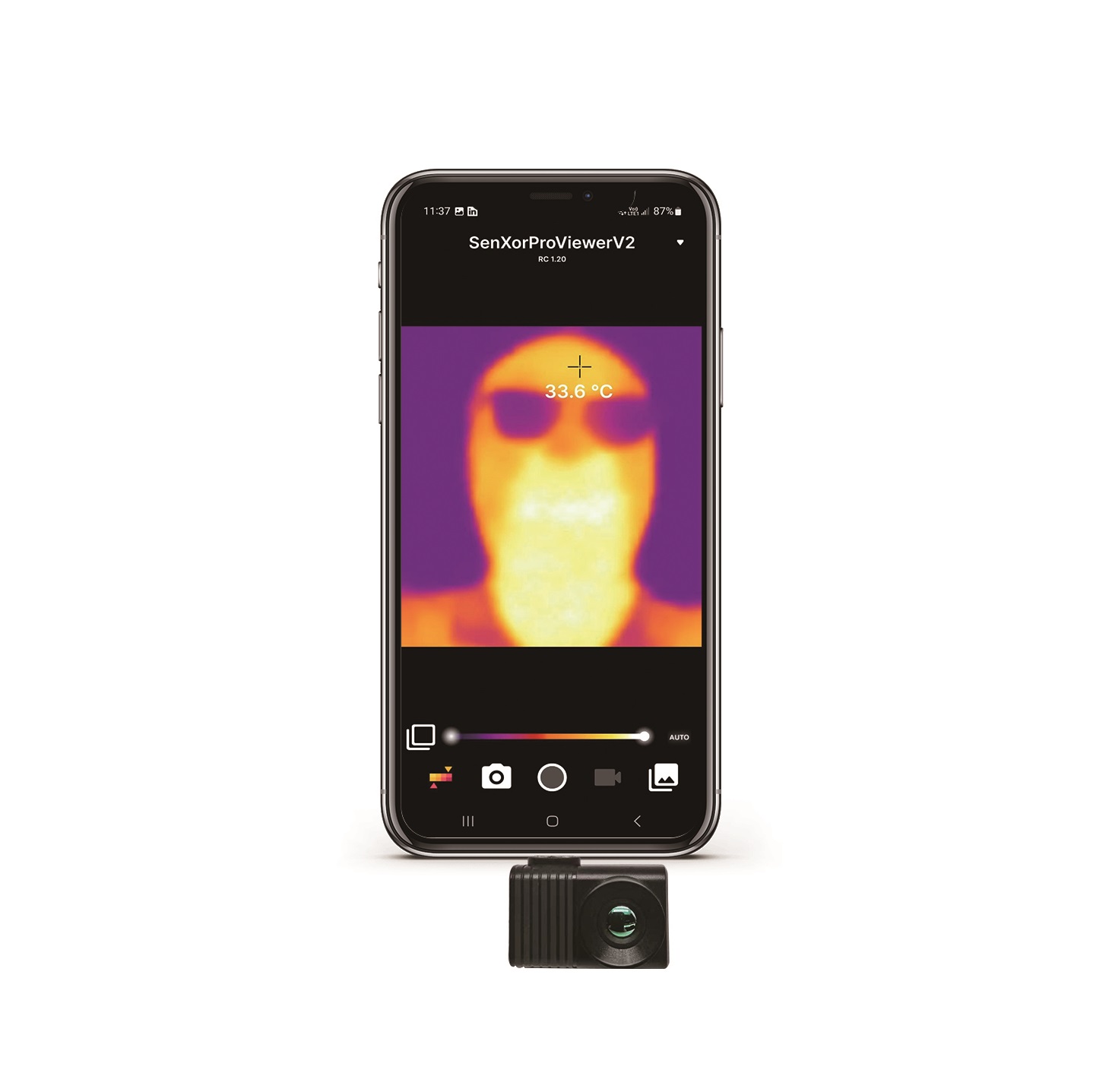
Figure 1: Mini 256 Uncooled LWIR Thermal Image Core, featuring high-aspect Radiometry & low-power design.
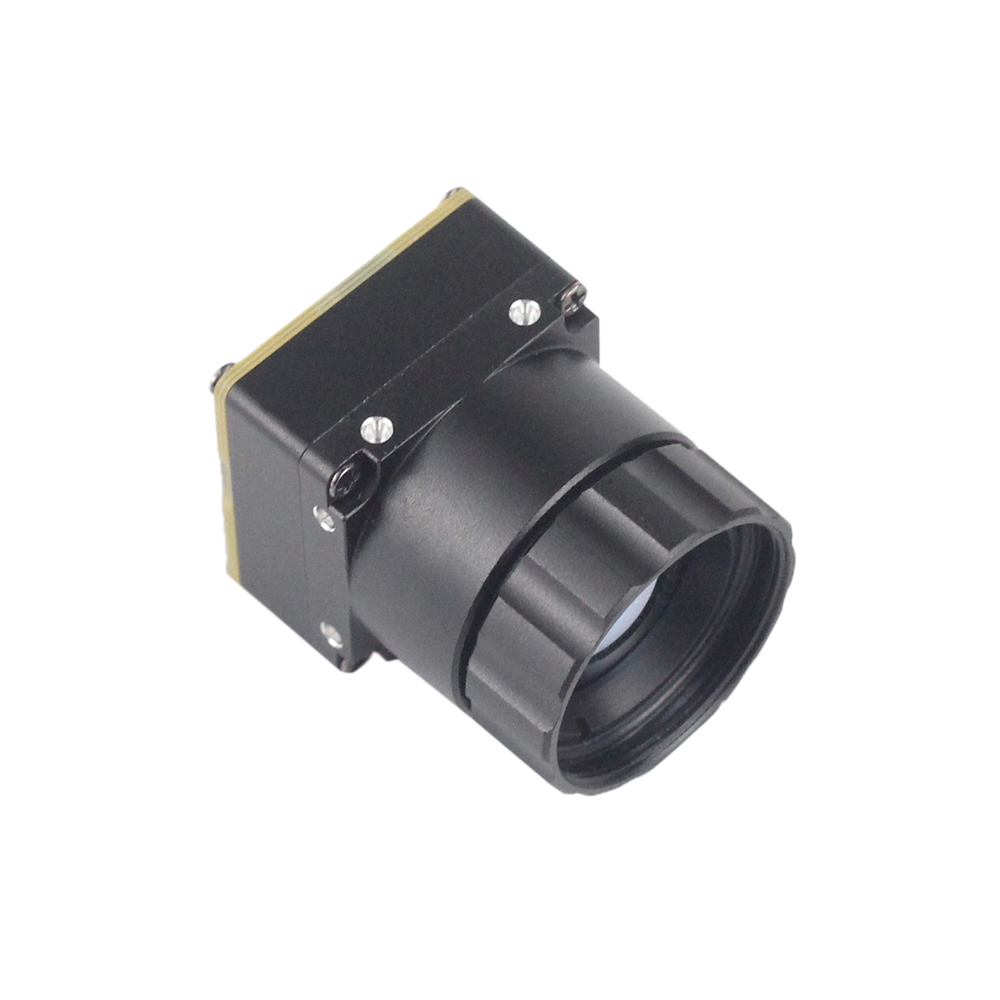
The → Неохлаждаемый мини-модуль тепловизионной камеры LWIR 256*192, аналогичный DJI, для обнаружения мин is designed for space-constrained, battery-powered applications. Weighing less than 15 grams, this core provides native 256 * 192 thermal resolution while drawing less than 0.8W of power, preserving vehicle runtime in robotic applications.
Engineered with advanced uncooled VOx microbolometer technology, it features high thermal sensitivity (<50mK) to capture clear heat maps and output a uniform thermal image with radiometry through smoke, dust, and complete darkness. It is an excellent choice for lightweight drone integration, search-and-rescue payloads, portable inspection tools, and early fire warning systems.
View Product Details & Pricing ➔
3.3 Upgrade Path: Mini 640 LWIR Module
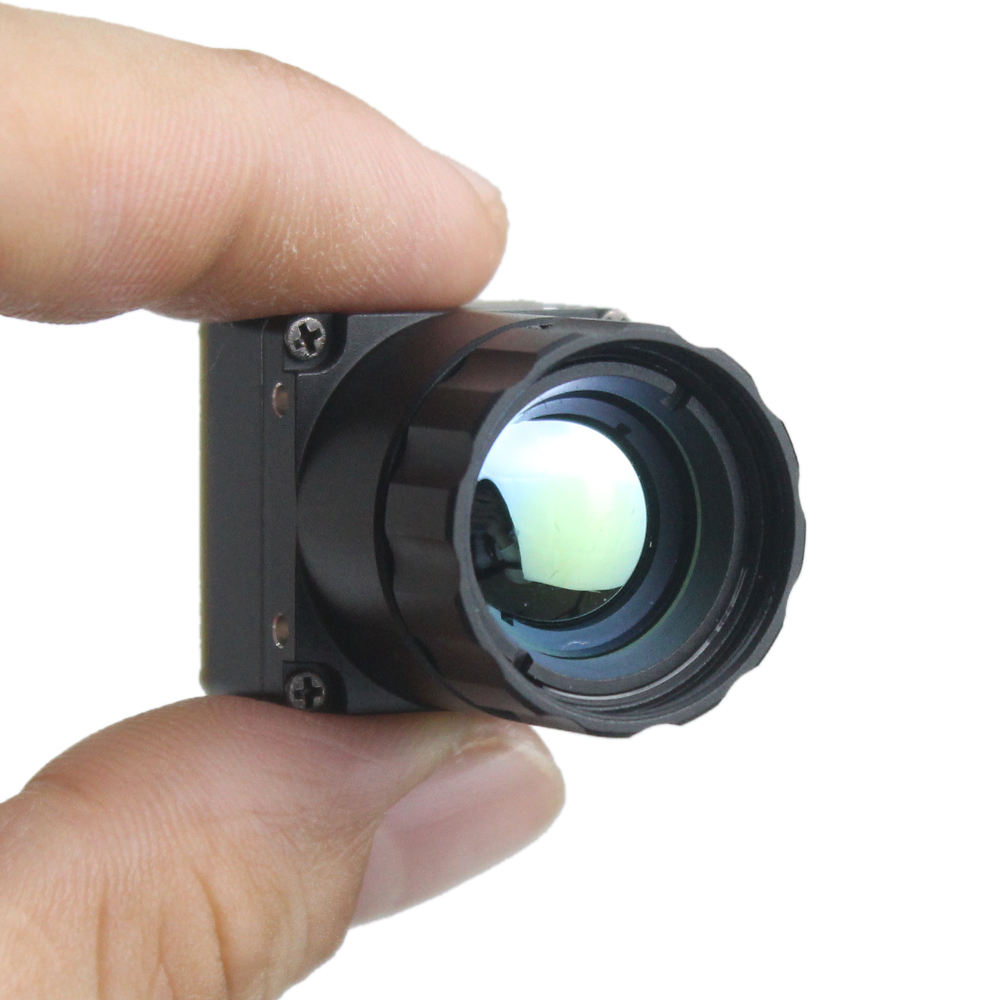
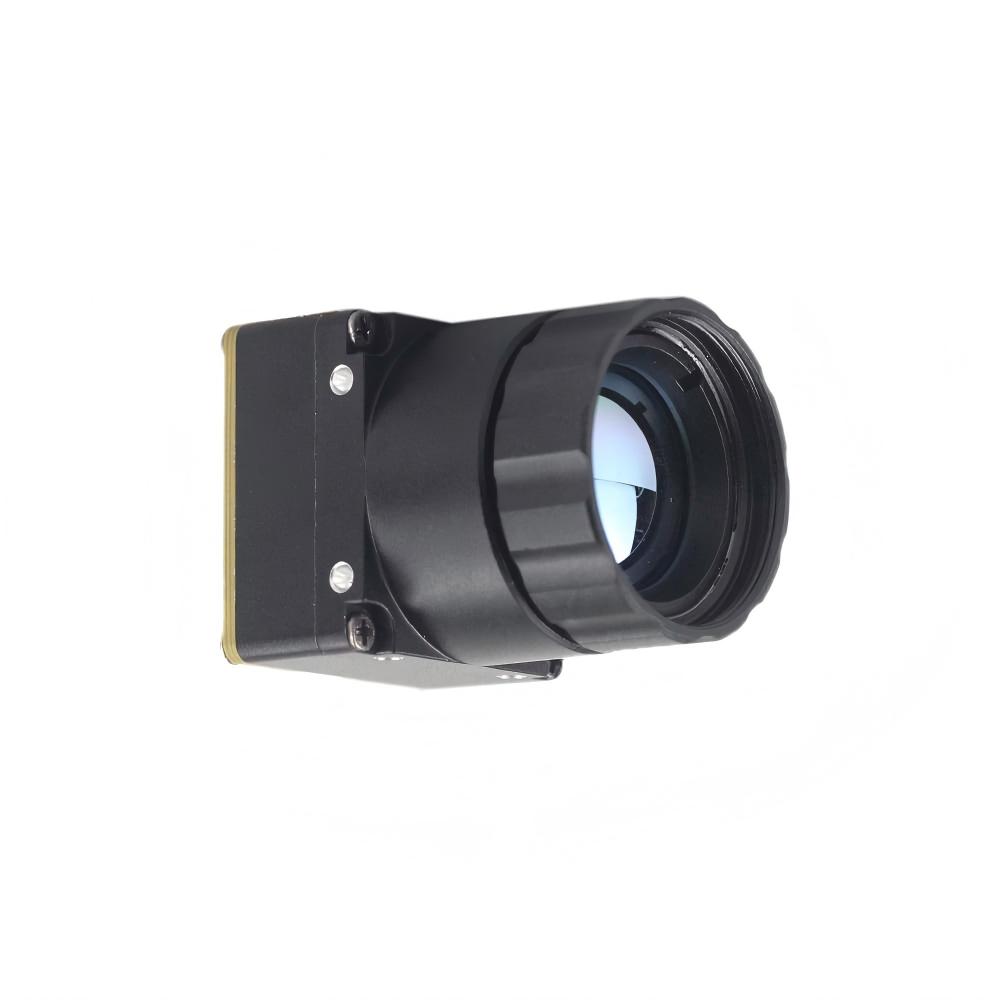
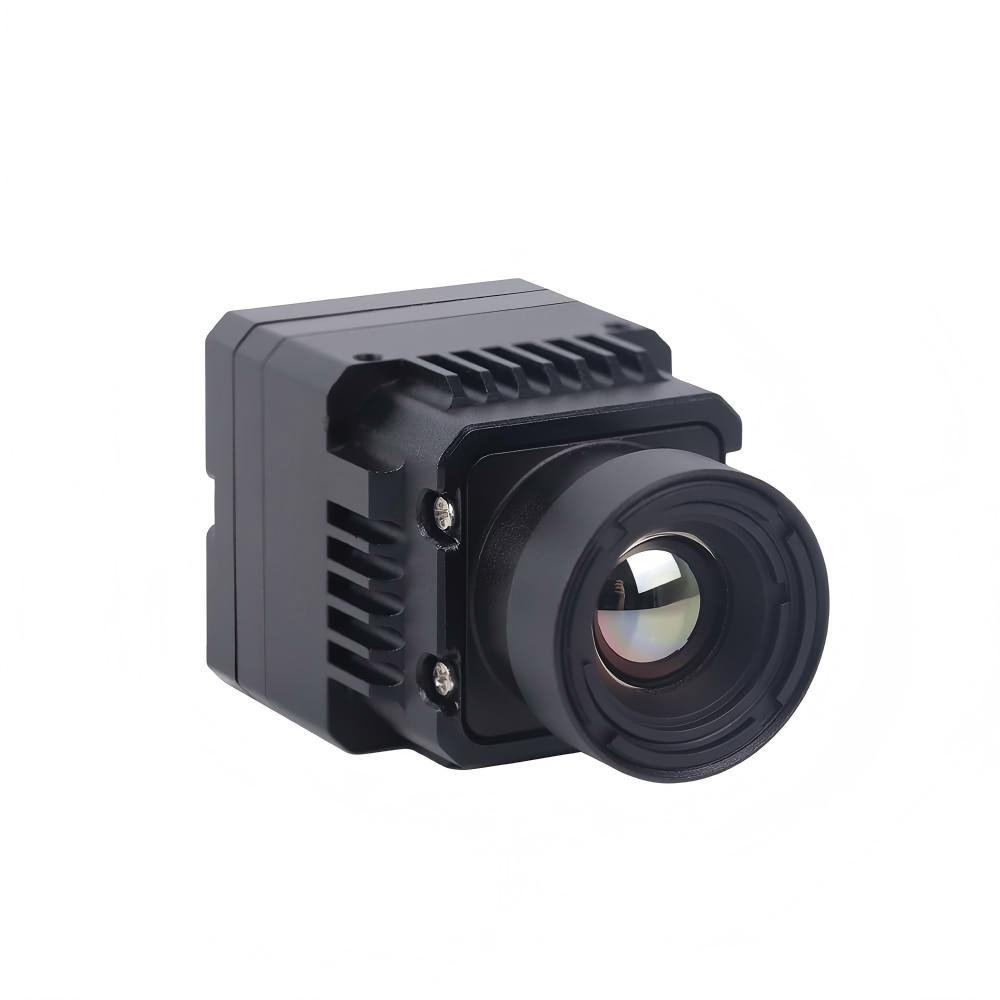
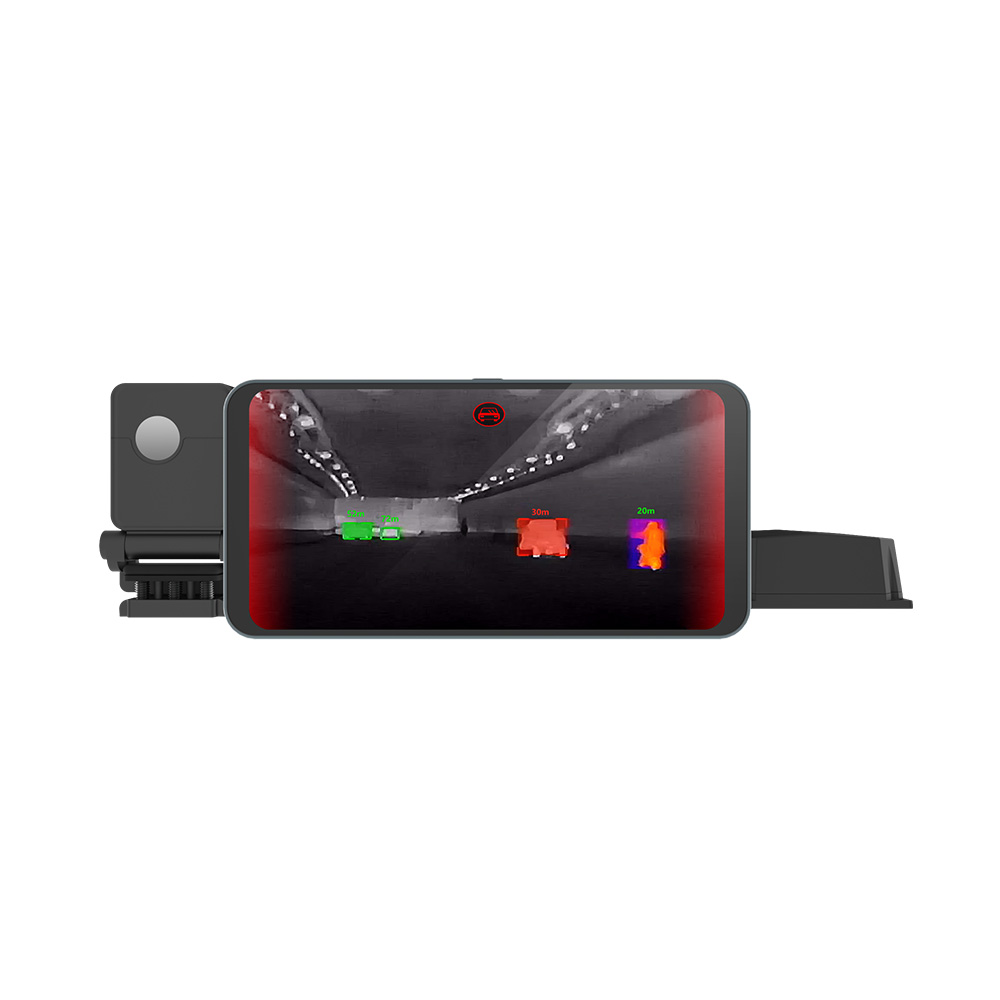
Figure 2: Mini 640 LWIR Thermal Imaging Core Module, designed for longer range and similar to DJI payloads.
For missions requiring longer recognition ranges, such as high-altitude drone surveillance, industrial substation health mapping, or security applications, the Неохлаждаемый LWIR USB мини-модуль ядра тепловизионной камеры 640*512 для дронов, аналогичный DJI serves as a drop-in upgrade path.
Sharing a highly compatible 21mm * 21mm mechanical footprint, this high-performance core offers up to 640*480 optional resolution. This 6.6x increase in spatial resolution compared to the 256x192 model enables long-range target acquisition, broad-area surveillance, and detailed environmental analysis under demanding conditions. It can be paired with high-end optics from Rising Optics and drone accessories from OBSETECH.
View Product Details & Pricing ➔
Проектирование оптической системы и выбор объектива
Selecting the correct lens is critical to maximizing the performance of your 256*192 microbolometer module. The optical assembly must be matched to both the target distance and the raw pixel geometry of the uncooled array.
4.1 Chalcogenide vs. Germanium Optics
Unlike visible-light sensors that utilize standard silica optical glass, infrared wavelengths within the LWIR band (8-14μm) require specialized materials. This requires choosing between two main options:
- ⚙️ Germanium (Ge): Germanium is the gold standard for high-performance thermal imaging. It offers outstanding transmission efficiency (typically greater than 95% when optimized with anti-reflective coatings) and excellent refractive index stability over temperature. However, raw Germanium represents a significant portion of the module's overall cost.
- ⚙️ Chalcogenide Glass (GASIR): Chalcogenide optical elements can be mass-produced using glass molding techniques. This significantly lowers raw manufacturing costs, making it a popular choice for high-volume commercial thermal cores. However, it has slightly lower transmission values and is more susceptible to thermal expansion than pure Germanium.
4.2 Calculating Field of View (FOV) and DRI Ranges
To select the appropriate lens focal length for a 12μm 256x192 core, use this simplified formula to calculate the Horizontal Field of View (HFOV): where the sensor width is calculated as the number of horizontal pixels multiplied by the pixel pitch (256 * 12μm = 3.072mm). This value is then divided by twice the lens focal length, with the arc-tangent of the result multiplied by two in order to find the HFOV in degrees.
Applying this formula to typical lens options yields the following configurations:
- ✅ 3.2mm Focal Length Lens: Delivers a wide horizontal field of view of approximately 51.2 degrees. This configuration is ideal for close-range broad-area scanning, PCB diagnostics, and static room monitoring.
- ✅ 6.0mm Focal Length Lens: Delivers a narrower horizontal field of view of approximately 28.7 degrees. This configuration is optimized for medium-range target tracking and outdoor patrol applications.
Thermal range performance is categorized by Detection, Recognition, and Identification (DRI) distances, calculated based on Johnson's criteria:
- ⚙️ Detection (resolving a target at 1.5 pixels): Resolving a standard human target (1.8m * 0.5m) at up to 250 meters using a 6mm lens.
- ⚙️ Recognition (resolving a target at 6 pixels): Correctly identifying a human target at up to 62 meters using a 6mm lens.
- ⚙️ Identification (resolving a target at 12 pixels): Positive identification of a human target at up to 31 meters using a 6mm lens.
For systems that require longer detection distances (e.g., hundreds of meters), integrating a dual-sensor module, such as the 256 Двойной тепловизионный и визуальный сенсорный модуль, can significantly improve target verification by fusing visible and infrared channels.

Углубленные технические вопросы и ответы
Is a 256x192 thermal resolution enough for outdoor security scanning, drone integration, and PCB inspection compared to 320x240?
Yes, absolutely. For system integrators and OEM design engineers, a 256x192 detector array represents an excellent balance of size, weight, power, and cost (SWaP-C). While a 320x240 array provides slightly higher native resolution, the incremental gain may not justify the added cost for many applications.
By utilizing advanced digital detail enhancement (DDE) and spatial filtering algorithms directly on the module's image signal processor (ISP), a modern 256x192 uncooled microbolometer can deliver clarity and structural detail comparable to legacy 320x240 systems. This performance comes at a significantly reduced unit cost, helping to lower production bills of materials (BOM).
For weight-sensitive platforms like autonomous micro-UAVs, hand-held search finders, or precise PCB thermal testing rigs, this resolution provides the necessary detail to locate thermal pathways, trace short circuits, or track human/wildlife heat signatures efficiently.
How reliable are compact thermal cores for custom Linux/Windows integration and continuous industrial operation?
In industrial software engineering, system reliability depends directly on the quality of the underlying firmware, SDK, and hardware thermal compensation. Entry-level thermal dongles often suffer from high thermal drift, freeze-ups, and sudden calibration intervals due to uncompensated internal heat building up near the focal plane array.
Our uncooled LWIR core modules are engineered for professional integration. Led by an R&D team with extensive experience in optoelectronics and chip design, these cores are built for demanding environments. They include industrial-grade SDKs with native libraries for Linux, Windows, and Android.
Additionally, we use a hard-vacuum sealed uncooled VOx microbolometer core with an automated, ultra-reliable shutter mechanism. The SDK provides structured APIs that allow for manual, automatic, or host-triggered NUCs, ensuring stable, noise-free outputs during continuous operation in environments ranging from -20°C to +60°C.
Can these mini 256x192 thermal modules handle absolute radiometric temperature measurement?
Our thermal camera modules are fully radiometric cores. Each pixel on the 256x192 array captures independent thermal radiation and converts it into temperature values in degrees Celsius or Kelvin. The sensor does not just produce a visual representation of temperature gradients; it outputs a detailed matrix of per-pixel temperature measurements.
This capability is essential for critical automated monitoring networks, such as substation overload tracking, data center server inspections, conveyor belt friction monitoring, and early fire warning systems. To maintain measurement accuracy (±2°C or ±2%) across varying ambient conditions, the firmware monitors internal board-mounted thermistors.
The core automatically compensates for changes in ambient temperature by updating the correction offset applied to the raw ADC counts. This maintains consistent accuracy without requiring manual recalibration in the field.
📚 References & Further Reading
- Industry Standard: Rising Optics Optoelectronic Lens Design
- Partner Drone Solutions: OBSETECH Unmanned Aerial Systems
- Related Guide: 2025 Thermal Module Architectural Integration Guide
- Our Engineering Portal: About Thermal-Type.com & Custom Sourcing