
Руководство по выбору модуля инфракрасной камеры: тепловидение высокого разрешения для дронов и встраиваемого ИИ
29 июля 2026 г.
Решения на основе неохлаждаемых тепловых модулей: руководство по ИИ высокого разрешения и OEM-интеграции
30 июля 2026 г.
Руководство по покупке OEM-ядра тепловизионной камеры: Edge AI, MIPI/USB и интеграция с дронами
Посмотрите, мир электрооптической инженерии кардинально изменился за последние несколько лет. Раньше мы были вынуждены иметь дело с тяжелыми, энергоемкими тепловизионными камерами, которые стоили целое состояние и требовали массивных радиаторов только для поддержания работоспособности. Больше нет. Сегодня, создаете ли вы легкую полезную нагрузку для малого беспилотного летательного аппарата (sUAV), проектируете портативную диагностическую оптику или устанавливаете автономное инспекционное оборудование на заводском цеху, неохлаждаемые длинноволновые инфракрасные (LWIR) двигатели — это то, что нужно.
Современные встраиваемые сборки требуют видения высокого разрешения, которое может поместиться в тесные, термически ограниченные корпуса, не истощая ваш бюджет мощности. Выбор правильного ядра тепловизионной камеры — это не просто взять самое высокое разрешение сенсора из спецификации. В цехе мы смотрим на полную картину: размер, вес, мощность и стоимость (SWaP-C), узкие места маршрутизации сигналов (MIPI CSI-2 против USB UVC), исходную тепловую чувствительность NETD и вычислительную мощность бортового Edge AI.
Я составил это руководство по интеграции как инженерный план для оптических проектировщиков, системных интеграторов и руководителей OEM-аппаратных разработок. Мы разберем протоколы аппаратной связи, конвейеры обработки ISP, механические нюансы монтажа и реальные стратегии управления теплом, чтобы вы могли обойти узкие места интерфейсов и сократить цикл проектирования аппаратного обеспечения на месяцы.
Содержание
- 👉 Что такое ядро тепловизионной камеры? Основы и архитектура SWaP
- 👉 Аппаратные интерфейсы: MIPI CSI-2, USB, Ethernet и аналоговое видео
- 👉 Обработка Edge AI и конвейеры процессора обработки изображений (ISP)
- 👉 Интеграция дронов, БПЛА и механической полезной нагрузки
- 👉 Представленные OEM-ядра тепловизионных камер: спецификации и сравнение
- 👉 Углубленные часто задаваемые вопросы (FAQ)
Что такое ядро тепловизионной камеры? Основы и архитектура SWaP
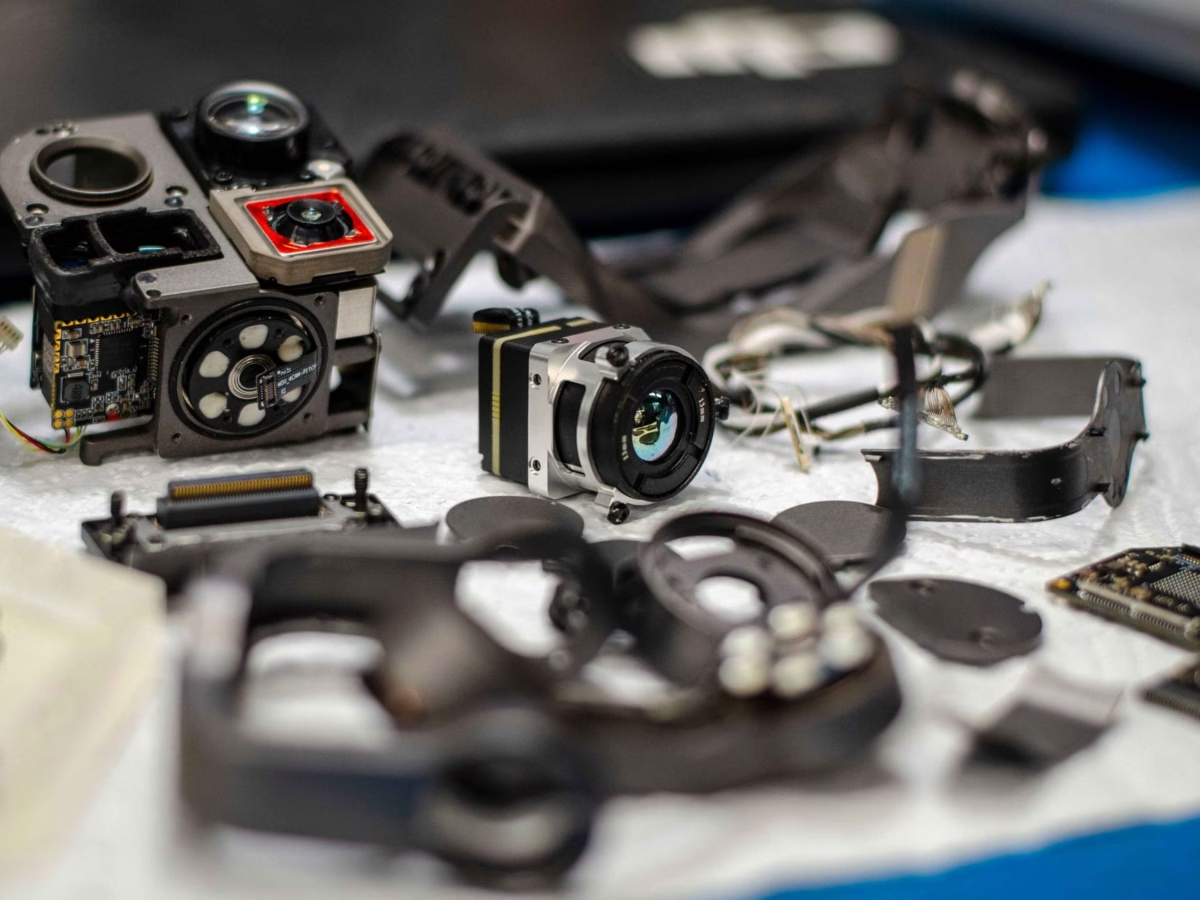
Когда инженеры говорят о ядра тепловизионной камеры— или OEM-тепловизионном двигателе — мы имеем в виду урезанный электрооптический двигатель инфракрасной системы. Уберите внешний погодозащищенный корпус, ручные рукоятки, батареи и внешние дисплеи, и у вас останется основной двигатель: объективная оптика, специализированный детектор на основе матрицы фокальной плоскости (FPA), схемы считывания (ROIC) и бортовая плата обработки, управляющая смещением детектора, аналого-цифровым преобразованием, коррекцией неоднородности (NUC) и форматированием видео.
Стандартные камеры видимого спектра улавливают свет, отраженный от объектов, в диапазоне от 0,4 мкм до 0,7 мкм. LWIR-тепловизионные ядра работают в спектральном диапазоне от 8 мкм до 14 мкм, обнаруживая чистое тепло, излучаемое непосредственно материей. Каждый объект выше абсолютного нуля излучает тепло пропорционально своей температуре, и микроболометрическая FPA внутри ядра преобразует эти микроскопические сдвиги лучистой энергии в изменения сопротивления. Бортовая электроника обрабатывает эти сигналы в чистый 2D-тепловизионный кадр.
Технология микроболометрического сенсора: VOx против a-Si
Вот в чем дело с подложками сенсоров: материаловедение под капотом напрямую определяет шум сцены, тепловую чувствительность, скорость запуска и стабильность работы, когда температура окружающей среды начинает резко колебаться в полевых условиях. Сегодня на рынке вы встретите две основные подложки сенсоров: оксид ванадия (VOx) и аморфный кремний (a-Si).
- ✅ Оксид ванадия (VOx): В цехе VOx — наш безусловный выбор для промышленных, оборонных и высококлассных коммерческих платформ. VOx обеспечивает значительно более высокий температурный коэффициент сопротивления (TCR) и более низкий шум 1/f по сравнению с альтернативными кремниевыми подложками. Что это значит для вас? Превосходную разность температур, эквивалентную шуму (NETD) — часто чувствительность достигает <30 мК до <40 мК. Такое экстремальное тепловое разрешение означает, что ядро VOx может выделять четкие детали цели из малоконтрастных сред, таких как сильный туман, дождь или полная оптическая темнота.
- ⚙️ Аморфный кремний (a-Si): Детекторы на основе аморфного кремния изготавливаются с использованием стандартной кремниевой литографии, что делает их более дешевыми для массового потребительского производства. Но послушайте, матрицы a-Si имеют более низкие значения TCR и более высокие тепловые постоянные времени, что дает вам более высокий шум сцены и повышенные показатели NETD. Они нормально работают для базовых датчиков движения или бюджетных тепловых инструментов, но если вы создаете полезные нагрузки для дронов, подвесы для отслеживания целей или установки для оптической газовой диагностики, придерживайтесь VOx.
Если вы хотите глубже погрузиться в физическую химию и абсорбционные характеристики микроболометров, ознакомьтесь с технической статьей на Википедия Микроболометр.
Императив SWaP-C в OEM оптико-электронных системах
Спросите любого ведущего инженера аэрокосмической или робототехнической отрасли о самой большой головной боли, и они скажут вам, что все сводится к SWaP-C: размеру, весу, мощности и стоимости. Старые устаревшие двигатели были настоящими танками — размером более 50 мм x 50 мм, весом более 100 граммов, потребляемой мощностью более 2,5 Вт и нуждались в громоздких радиаторах, чтобы просто выжить. Ядра OEM следующего поколения полностью перевернули сценарий:
Ориентиры SWaP-C для тепловых ядер следующего поколения
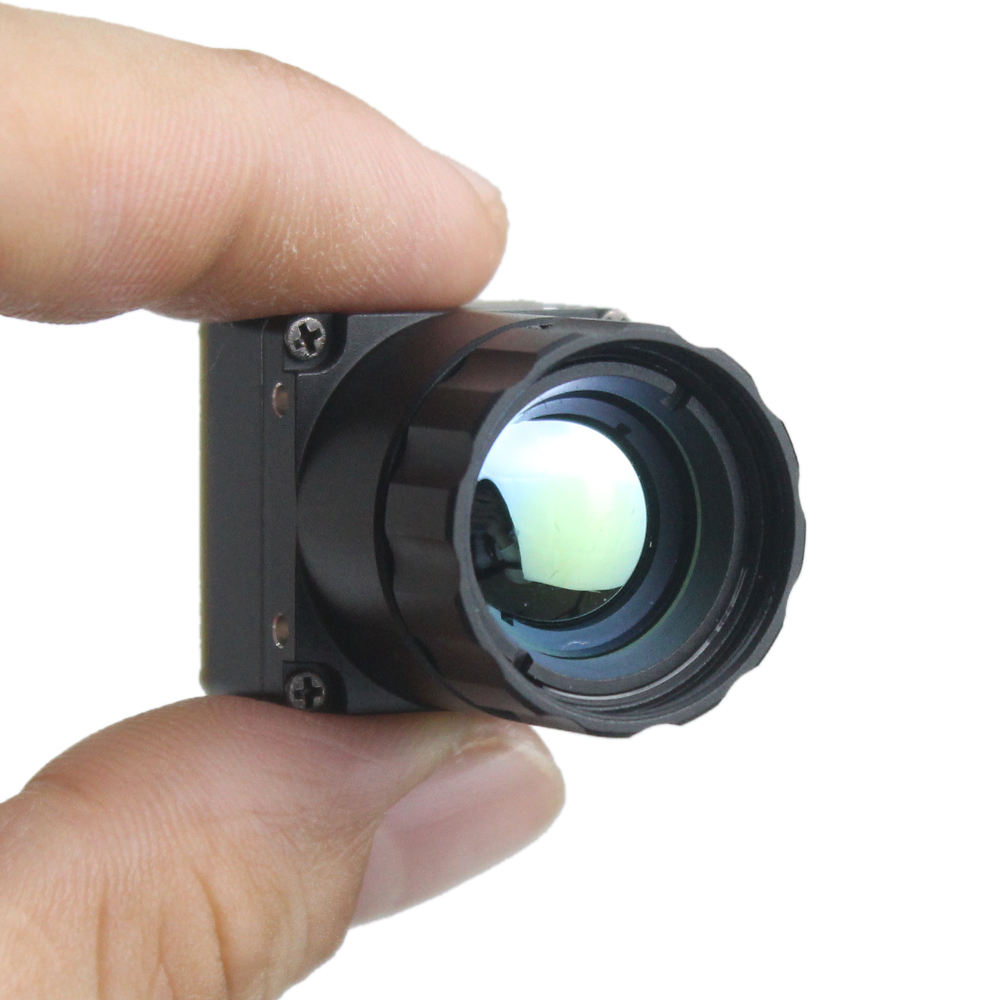
📏 Размер (миниатюрный форм-фактор): Стандартные размеры ядра уменьшились до компактного 21 мм × 21 мм профиля. Этот компактный след позволяет устанавливать тепловую оптику непосредственно в стандартные крепления M12, крошечные пан-тильт-подвесы, портативное диагностическое оборудование и тесные отсеки БПЛА без перепроектирования корпусов.
⚖️ Вес (минимизация полезной нагрузки): Легкие конструкции ядра весом менее 15 граммов снижают инерцию вращения на моторизованных подвесах, позволяя использовать меньшие драйверы двигателей и даря вашему БПЛА с батарейным питанием драгоценные дополнительные минуты полетного времени.
⚡ Мощность (тепловая эффективность): Мало потребляющие интегральные схемы считывания (ROIC) снижают установившееся потребление до <0,8 Вт до <1,0 Вт. Меньшее энергопотребление означает меньшее внутреннее тепловыделение, что значительно упрощает пассивный тепловой дизайн внутри герметичных корпусов IP67/IP68.
💰 Стоимость (коммерческая жизнеспособность): Упаковка на уровне пластины (WLP) и улучшенный выход годных микроболометров VOx снизили стоимость единицы продукции до приемлемого уровня, сделав массовую интеграцию практичной для коммерческих сетей безопасности, промышленного IoT и сельскохозяйственной оптики.
Аппаратные интерфейсы: MIPI CSI-2, USB, Ethernet и аналоговое видео
Подключение OEM-ядра тепловизионной камеры к вашему главному процессору — будь то встроенная система на кристалле (SoC), полетный компьютер, FPGA или промышленный одноплатный компьютер — означает выбор правильного стандарта интерфейса. Ошибитесь здесь, и вы сразу же столкнетесь с высокой задержкой видео, плохой целостностью сигнала, беспорядочной кабельной разводкой или потерей радиометрических данных.
| Стандарт интерфейса | Целевое главное оборудование | Задержка видео | Макс. длина кабеля | Основной вариант использования |
|---|---|---|---|---|
| MIPI CSI-2 | Встроенные SoC (Jetson, Rockchip, NXP, HiSilicon) | Сверхнизкая (< 5 мс) | Короткая трасса (< 15 см) | Подвесы дронов, периферийное зрение с ИИ, прямая интеграция с SoC |
| USB 2.0 / USB-C (UVC) | Industrial PCs, Laptops, SBCs (Raspberry Pi, x86) | Low-Medium (20 - 50ms) | Standard (< 3m to 5m) | Plug-and-play prototyping, handheld tools, inspection labs |
| Ethernet (GigE / IP) | Network Video Recorders (NVR), Industrial Switches | Medium (50 - 100ms) | Long (< 100m Cat6) | Perimeter security, fixed industrial thermography networks |
| Analog Video (CVBS) | Legacy FPV Transmitters, Field Monitors | Zero Latency (< 1ms) | Coaxial (< 50m) | Tactical FPV drones, legacy analog composite displays |
MIPI CSI-2 (Mobile Industry Processor Interface)
If you're designing for zero latency and low processing overhead, MIPI CSI-2 is the industry gold standard. It plugs the thermal camera core straight into the application processor's native camera interface logic. By pushing raw uncompressed digital frames over high-speed differential pairs, MIPI eliminates extra bridge chips, driver translation layers, and protocol conversion bloat.
The big win here is sub-frame latency (< 5 ms), dropping frames directly into the host's Direct Memory Access (DMA) pipeline. When you're building high-speed drone sense-and-avoid algorithms, fast-tracking gimbals, or tactical military optics, every millisecond counts. Just keep in mind: high-speed differential signal routing takes careful board layout work—you'll need 100-ohm controlled differential impedance on your PCB and flex cables kept under 15 cm.
USB 2.0 / USB-C (USB Video Class - UVC)
USB-equipped thermal cores leverage standard USB Video Class (UVC) protocols, making them driverless plug-and-play video devices across Linux, Windows, macOS, and Android platforms. In the shop, USB cores are our top choice when we want to get quick evaluation builds running on standard bench PCs or single-board computers like Raspberry Pis.
Beyond streaming standard 8-bit visual feeds, advanced USB thermal cores feature dual-stream data pathways. Utilizing vendor SDKs, your application can pull raw 14-bit radiometric telemetry over secondary USB endpoints simultaneously while displaying normal UVC video. If you're building compact diagnostic gear or lower-resolution systems, check out our guide on 256x192 Thermal Camera Module Integration Strategies for practical OEM setup approaches.
Обработка Edge AI и конвейеры процессора обработки изображений (ISP)
Raw physical outputs straight off an uncooled VOx microbolometer look like noise without serious signal processing behind them. Tiny pixel-to-pixel silicon inconsistencies, ambient housing temperature drift, and flat high-dynamic-range scenes mean an advanced onboard Image Signal Processor (ISP) pipeline is mandatory inside the core hardware.
The Standard Thermal ISP Hardware Sequence
- ⚙️ Коррекция неоднородности (NUC): Calibrates individual pixel response variations across non-linear temperature curves using 2-point offset/gain matrix tables. Cores use either ultra-quiet flag shutters or continuous shutterless digital NUC algorithms.
- ⚙️ Замена плохих пикселей (BPR): Tracks dead, stuck, or noisy pixels on the microbolometer sensor in real time and smoothly interpolates their values using surrounding healthy pixels.
- ⚙️ 3. 3D Spatial-Temporal Noise Reduction (3D DNR): Combines multi-frame temporal filters with spatial edge preservation to clean out background thermal white noise without causing motion blur or target ghosting artifacts.
- ⚙️ 4. Digital Detail Enhancement (DDE): Uses spatial high-pass filtering to pull out subtle fine-structure thermal details—like thin wires, fence lines, or distant vehicle structures—hidden inside wide dynamic scenes.
- ⚙️ 5. Dynamic Range Compression (DRC): Compresses wide 14-bit raw radiometric sensor depth (16,384 discrete energy levels) down into standard 8-bit display color matrices (256 grayscale values) using smart adaptive histogram equalization.
Integrating Onboard Edge AI Acceleration
Modern high-tier thermal cores are now adding onboard Neural Processing Units (NPUs) directly into the processing pipeline. Pushing inference operations down to the edge camera core cuts host communication bandwidth demands and unloads heavy compute workloads from your main system CPU.
Onboard NPU acceleration lets you run tight, compressed deep-learning convolutional neural networks (like YOLOv8 nano models) right on the sensor. The thermal core can handle Automated Target Recognition (ATR)—finding, classifying, and tracking humans, vehicles, drones, or hot spots right inside the engine hardware. The engine then passes light bounding-box metadata streams over serial links alongside video, giving tracking gimbals the data they need to stay locked on target without burning power on external mission GPUs.
For more details on thermal radiant emission equations and quantitative imaging physics, review Wikipedia Thermography.
Интеграция дронов, БПЛА и механической полезной нагрузки
Dropping an OEM thermal camera core into an aerial payload or stabilized gimbal assembly throws plenty of tough electro-mechanical challenges your way. UAV platforms are nasty operational environments: motor vibration, rapid ambient temperature changes, tight mechanical enclosures, and continuous RF noise from telemetry transmitters and motor ESCs.
Optical Lens Selection Strategy & DRI Performance
Matching your core to the right Germanium lens dictates your overall spatial resolution, Field of View (FOV), and real-world Detection, Recognition, and Identification (DRI) distance metrics under Johnson's Criteria.
- 🔍 Short Focal Lengths (5mm to 9mm Optics): Delivers wide field-of-view profiles (from 45° to over 60° horizontal FOV). Perfect for low-altitude pilot situational awareness, obstacle avoidance, indoor search and rescue, or wide field ag inspection.
- 🔍 Mid-Range Focal Lengths (13mm to 25mm Optics): Offers balanced spatial resolution for medium-altitude operations. Great for spotting thermal faults in solar arrays, powerline infrastructure inspection, and regional perimeter guard duties.
- 🔍 Long-Range Telephoto Optics (35mm to 150mm Optics): Narrow FOV setups tailored for high-altitude tactical flight, border patrol, wildlife monitoring, and maritime search and rescue.
Thermal Management & Mechanical Isolation Guidelines
Microbolometer FPAs are sensitive to physical thermal gradients. If onboard processing electronics dump heat unevenly across the sensor housing, thermal gradients creep across the VOx chip, causing ugly image shading and severe offset calibration drift. In the shop, we follow three strict physical layout rules:
- 🛠️ 1. Passive Thermal Heat Dissipation: Ensure the metallic core housing is thermally coupled to your aluminum gimbal chassis or internal heatsink using thermal interface pads with high thermal conductivity (k > 3.0 W/mK).
- 🛠️ 2. Mechanical Vibration Damping: High-frequency motor vibration causes optical jitter and connector wear over time. Secure core modules inside vibration-isolated gimbal mounts using tuned silicone dampening grommets. Always add service loops to flexible flat cables (FFC) to isolate mechanical movement from internal connectors.
- 🛠️ 3. Electromagnetic Shielding (EMI): Unshielded camera electronics pick up high-frequency RF noise from 2.4GHz/5.8GHz telemetry links and ESC switching harmonics. Maintain continuous ground plane bonding across the core chassis, interface breakout boards, and host frame, wrapping sensitive ribbon cables in lightweight aluminum EMI shielding.
Представленные OEM-ядра тепловизионных камер: спецификации и сравнение
To help system integrators and engineering managers select the right platform, here is an engineering teardown of top-tier, ultra-compact LWIR OEM camera cores engineered specifically for custom optical assemblies, embedded vision systems, and UAV payloads.
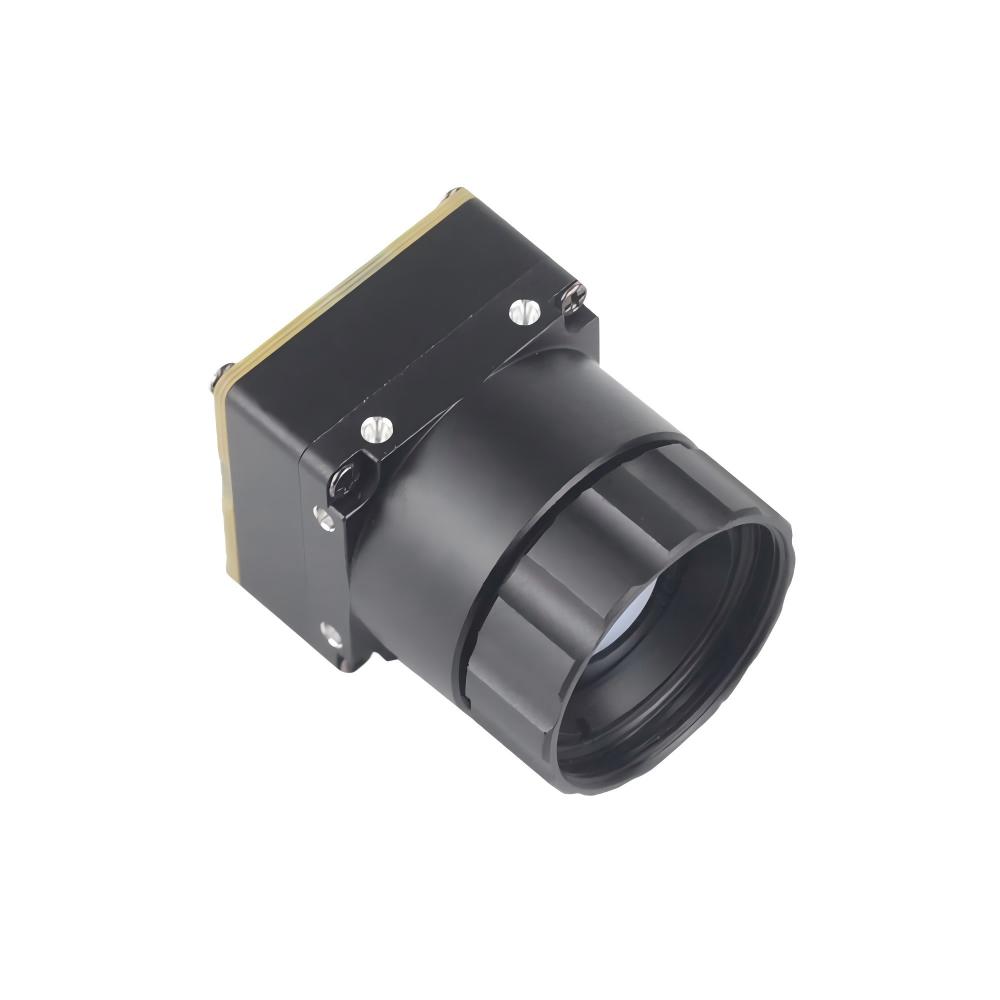
Неохлаждаемый LWIR USB миниатюрный модуль ядра тепловизионной камеры 640*512
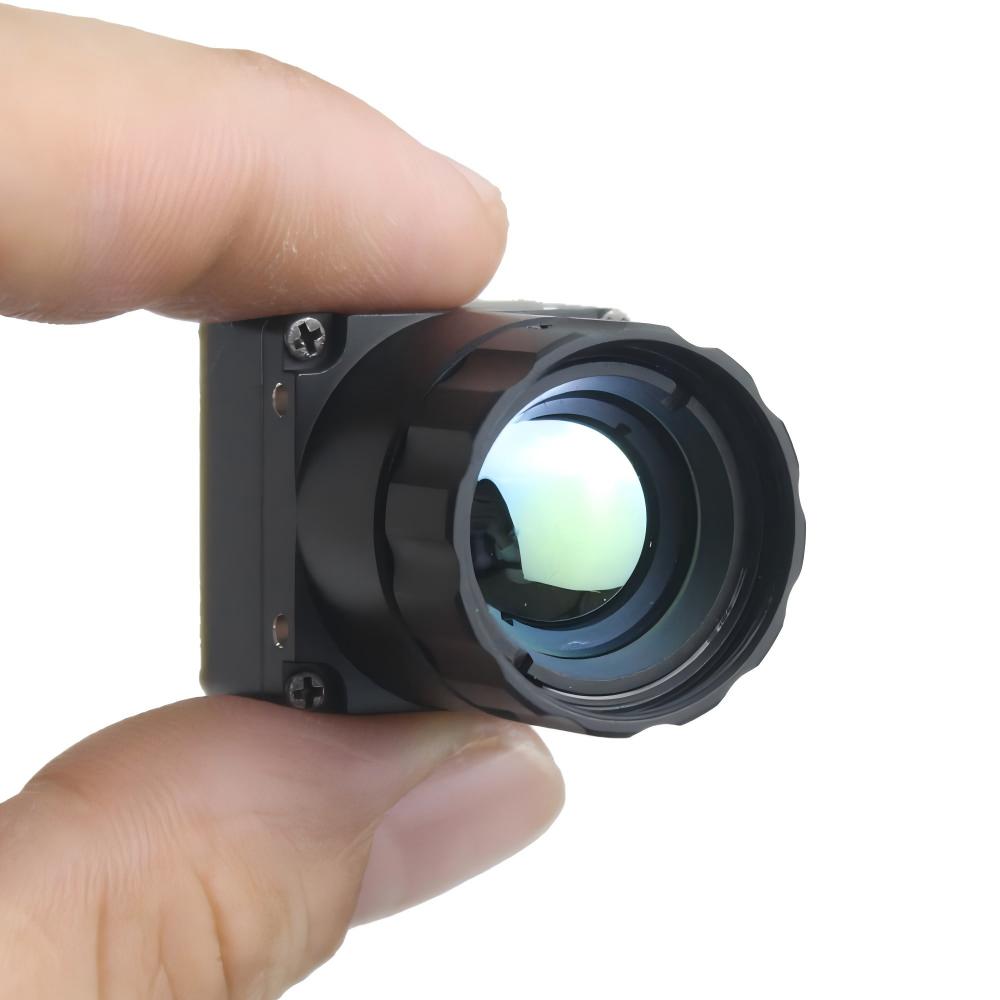
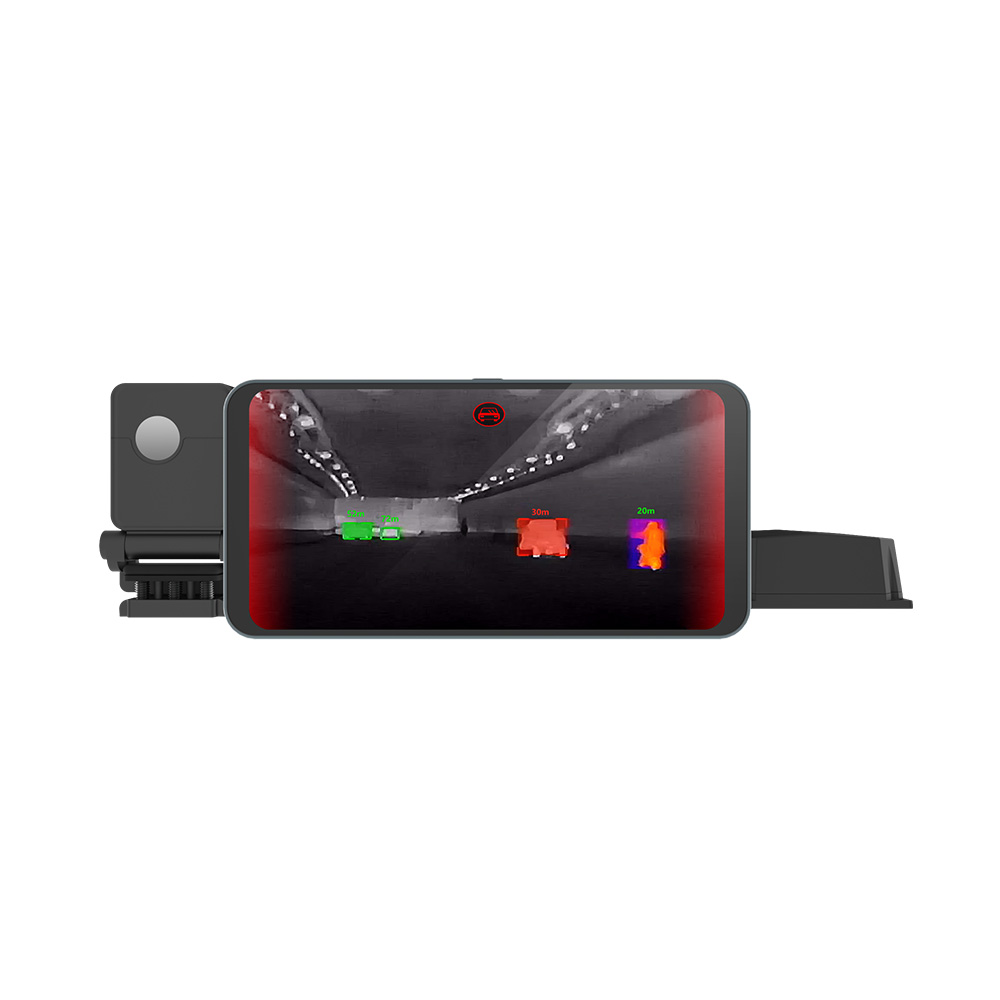
The → Uncooled LWIR USB Mini 640*512 Thermal Camera Core is an ultra-compact, high-resolution electro-optical engine designed for seamless plug-and-play integration into small unmanned aerial vehicles (drones similar to DJI platforms), handheld diagnostic tools, and compact industrial vision systems. Featuring a high-sensitivity VOx microbolometer detector packaged within an ultra-miniature 21 мм × 21 мм footprint, this thermal module delivers exceptionally sharp, crisp thermal image presentation at standard display resolutions (640×512 and 640×480 optional).
Engineered for maximum optical flexibility, the module supports a wide spectrum of modular focal length Germanium lenses—ranging from ultra-wide 5mm optics up to long-range 150mm telephoto assemblies. Operating under low power consumption profiles (< 1.0W), it offers superior environmental adaptability and stable radiometric performance across extreme industrial operating conditions.
| Тип детектора | Неохлаждаемый VOx микроболометр | Разрешение | 640×512 / 640×480 Optional |
| Шаг пикселя | 12µm | Спектральный диапазон | 8 µm – 14 µm (LWIR) |
| Dimensions | Mini-Size 21mm × 21mm | Interface Protocol | USB 2.0 / Type-C (UVC Standard) |
| Lens Options | 5 / 9 / 13 / 18 / 35 / 50 / 75 / 100 / 150 мм | Потребляемая мощность | < 1.0W Steady State |
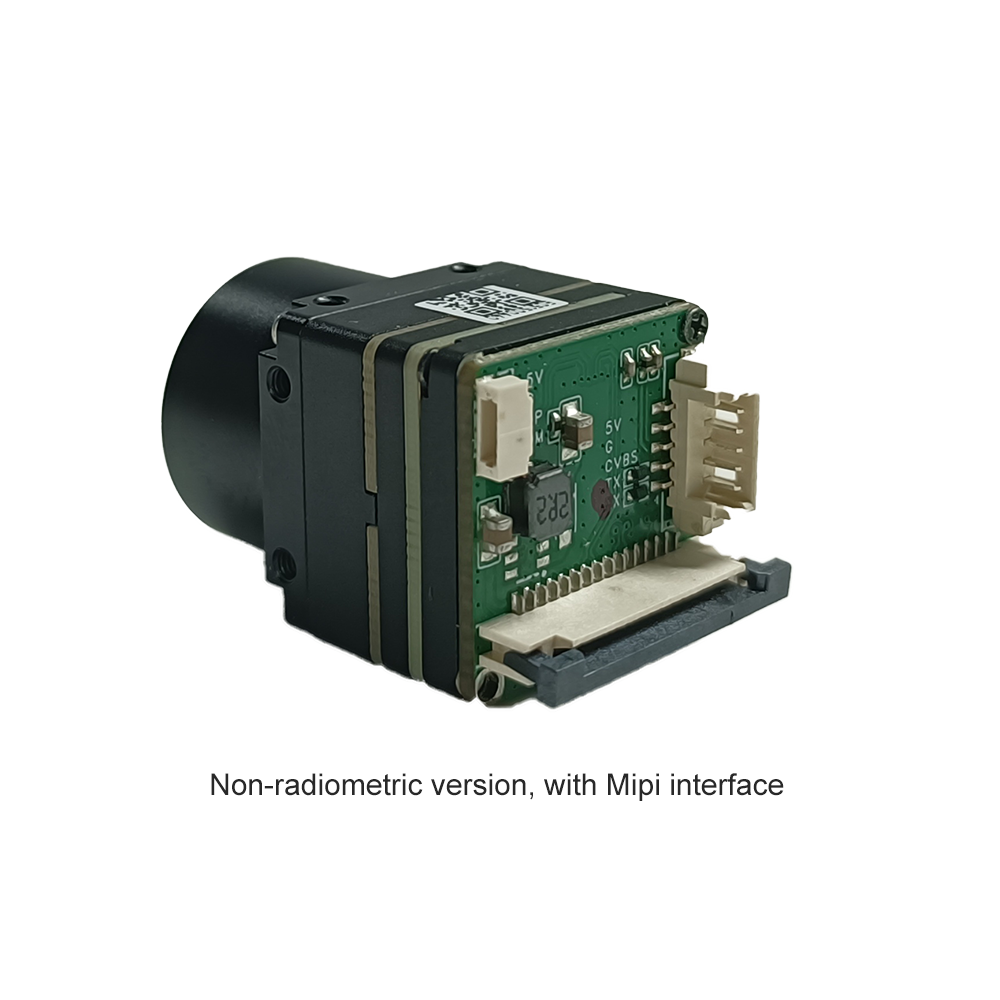
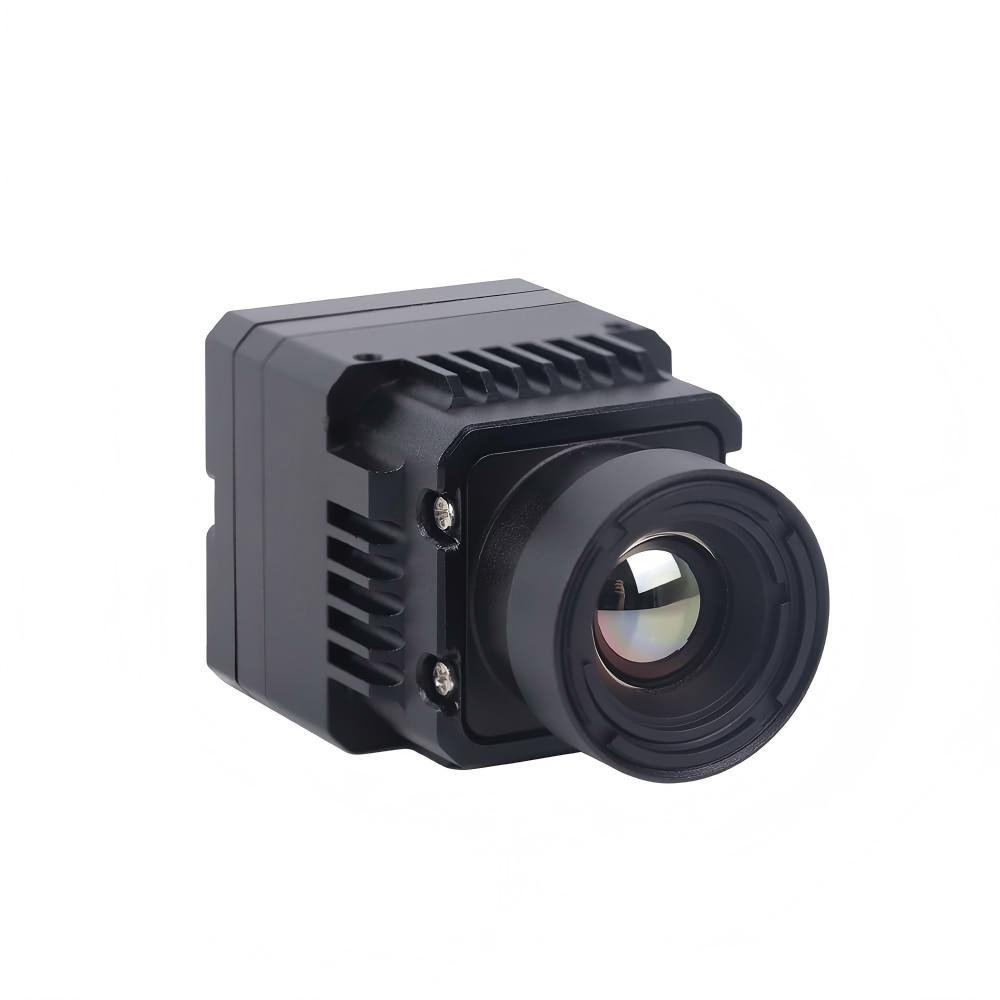
Uncooled Infrared MIPI Mini2 640 / 384 / 256 Thermal Imaging Module
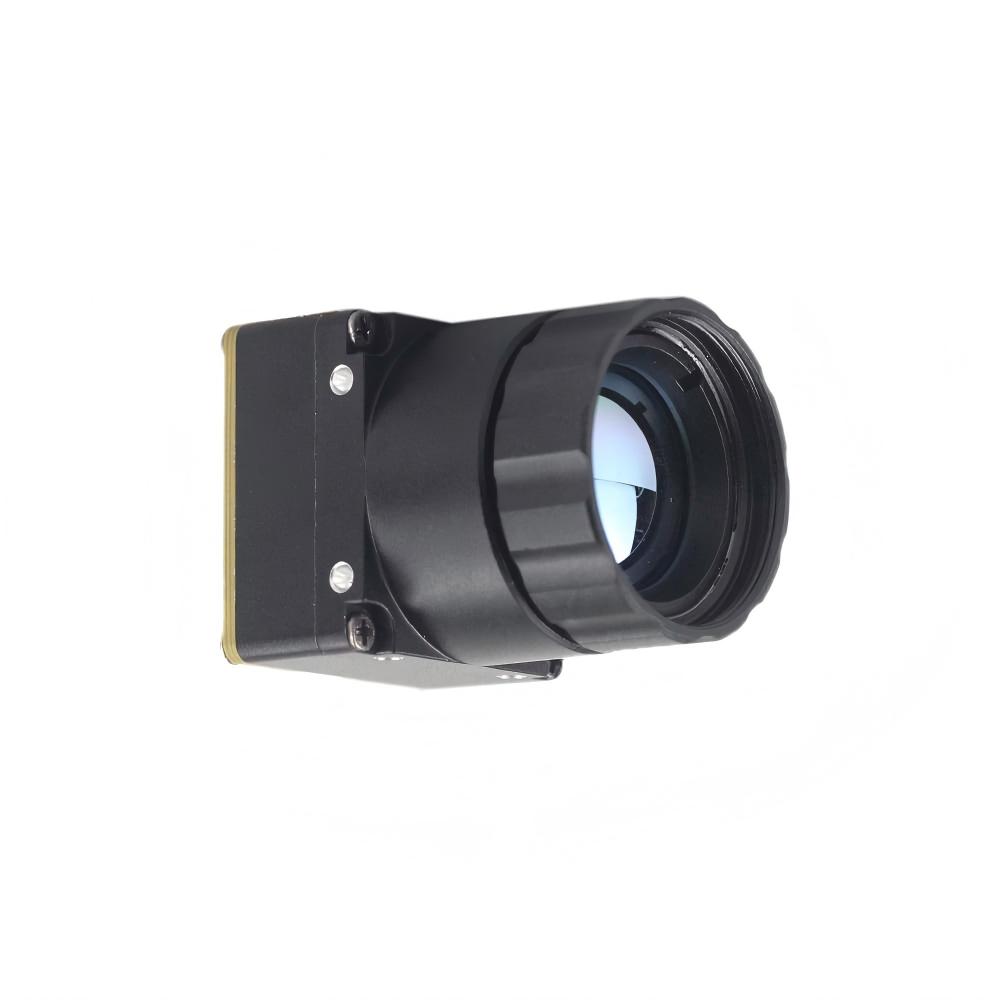
The → Uncooled Infrared MIPI Mini2 Thermal Camera Core Module is specifically designed for weight-critical sUAV payloads, tactical reconnaissance drones, and embedded edge vision platforms requiring zero-latency image streaming. Built around high-performance VOx microbolometer technology, the Mini2 series offers multi-resolution array configurations (640×512, 384×288, and 256×192) paired with a standard lightweight 9mm thermal lens assembly.
By utilizing a native high-speed MIPI CSI-2 hardware interface, the Mini2 module connects straight to embedded host SoCs, bypassing USB hub latencies and delivering sub-frame raw thermal feeds directly into AI target-tracking algorithms. Featuring a compact 21mm × 21mm cross-section, low power draw (< 0.8W), and a sub-15 gram mass profile, this thermal engine represents an ideal solution for commercial drone gimbals and robotic optics.
| Тип детектора | Неохлаждаемый VOx микроболометр | Array Resolutions | 640×512 / 384×288 / 256×192 |
| Шаг пикселя | 12µm | Interface Protocol | MIPI CSI-2 Low Latency Direct SoC Bus |
| Dimensions | Mini-Size 21mm × 21mm | Standard Optics | 9mm Germanium Fixed Lens |
| Thermal Sensitivity | NETD < 40mK (@25°C, F/1.0) | Module Weight | Ultra-lightweight (< 15g) |
Comprehensive Side-by-Side Architectural Matrix
| Feature Parameter | Uncooled LWIR USB Mini 640 Module | Uncooled Infrared MIPI Mini2 Module |
|---|---|---|
| Sensor Core Material | Неохлаждаемый VOx микроболометр | Неохлаждаемый VOx микроболометр |
| Native Resolution Options | 640 × 512 / 640 × 480 | 640 × 512 / 384 × 288 / 256 × 192 |
| Шаг пикселя | 12µm | 12µm |
| Спектральный диапазон | 8 µm – 14 µm (LWIR) | 8 µm – 14 µm (LWIR) |
| Тепловая чувствительность (NETD) | < 40mK (@25°C, F/1.0) | < 40mK (@25°C, F/1.0) |
| Primary Hardware Bus | USB 2.0 / Type-C (UVC) | MIPI CSI-2 High Speed Bus |
| Form Factor Footprint | 21mm × 21mm Miniature Profile | 21mm × 21mm Ultra-Mini Profile |
| Optics Versatility | Wide Range: 5mm up to 150mm Lens Mounts | Standard 9mm Fixed Lens (Modular Options) |
| Power Draw | < 1.0W Steady State | < 0.8W Steady State |
| Оптимальная цель интеграции | SBCs, Industrial PCs, Diagnostic Tools | Weight-Critical UAV Gimbals, SoC Edge AI |
Углубленные часто задаваемые вопросы (FAQ)
Q1: Can I replace or upgrade the thermal camera core in an existing imager, optical sight, or industrial drone payload?
Look, retrofitting a legacy imager with a modern micro LWIR camera core is totally doable, but you need to lock down three major engineering constraints: physical mechanical packaging, optical back focal length, and electronic bus signaling.
First off, today's OEM cores use ultra-compact 21mm × 21mm physical footprints, which are way smaller than legacy thermal engines. You'll need to design custom CNC-machined aluminum adapter mounts or precision 3D-printed brackets to align the new core's optical axis with your enclosure's lens centerline. Second, your Back Focal Length (BFL) between the primary Germanium lens and the microbolometer cover glass has to be set precisely using metallic precision shims or adjustable optical mounts to keep focus locked over broad temperature shifts.
Finally, address the electronic signaling. If your older housing expects composite CVBS analog or custom serial data, upgrading to a modern MIPI CSI-2 or USB core means adding an onboard bridge processor or routing direct to an upgraded host SBC. If you're managing custom hardware sample orders or reviewing build specs, hit the secure client interface over at Customer Portal Management.
Q2: How reliable are modern uncooled VOx thermal camera core modules for high-stress commercial and defense drone builds?
In the shop, we treat tier-1 uncooled Vanadium Oxide (VOx) cores as bulletproof industrial solutions. Modern manufacturing relies on Wafer-Level Packaging (WLP), hermetically sealing the VOx microbolometer under high vacuum right on the semiconductor wafer before assembly. That seals out moisture and keeps vacuum degradation from ever becoming an issue in the field.
These core engines undergo brutal Environmental Stress Screening (ESS)—including thermal shock testing from -40°C to +80°C and dynamic multi-axis vibration profiles matching military specs. Because uncooled VOx engines don't use failure-prone mechanical cryocoolers like cooled photon detectors do, MTBF (Mean Time Between Failures) specs regularly cross 10,000 continuous operational hours. Combined with continuous shutterless NUC algorithms, these engines hold steady thermal sensitivity (NETD < 40mK) even when mounted on high-vibration drone frames.
Q3: How do I select and configure the optimal output protocol (MIPI CSI-2, USB, or Composite/HDMI) for custom target hardware?
Picking your output protocol comes down to a few cold, hard project realities: your host compute hardware, system latency limits, software stack overhead, and physical wiring distances.
Go with MIPI CSI-2: When you're building UAV payloads, fast gimbals, or autonomous edge platforms powered by embedded SoCs (NVIDIA Jetson Orin, Rockchip RK3588, NXP i.MX series). MIPI streams raw video directly into memory via DMA with practically zero latency (< 5 ms), perfect for real-time target tracking and Edge AI networks. Keep your flex circuits short (under 15 cm) with strict 100-ohm differential traces.
Go with USB 2.0 / USB-C (UVC): When you're interfacing with x86 single-board computers, industrial PCs, or mobile diagnostic tools where driverless, plug-and-play capability speeds up software development. USB cables can run up to 3–5 meters easily, and you can pull both 8-bit visual streams and raw 14-bit radiometric telemetry simultaneously using software SDKs.
Go with Composite (CVBS) / HDMI: When piping video straight into standard FPV transmitters, field monitors, or legacy analog ground stations without needing host CPU processing. To order hardware evaluation setups or breakout accessories, drop by the OEM Order Processing Page.
Q4: What is the technical distinction between raw 14-bit radiometric output and 8-bit AGC visual video streaming?
Here's the technical reality: it boils down to absolute temperature measurement data versus pretty picture display streams.
Raw 14-Bit Radiometric Data: This is the uncompressed, pure physical signal straight off every single pixel on the microbolometer array. A 14-bit depth gives you 16,384 distinct digital energy steps per pixel. This raw feed carries absolute, calibrated temperature math, letting host software calculate exact surface temperatures, trigger dynamic alarm thresholds, or run non-destructive testing (NDT) algorithms. It takes higher bus bandwidth and vendor SDK parsing, but it gives you total data access.
8-Bit AGC Visual Video: This is a processed video stream formatted purely for human eyes or standard displays. The core's internal ISP takes that heavy 14-bit radiometric data, applies dynamic range compression (DRC), Automatic Gain Control (AGC), and detail enhancements, and squeezes it down into 256 grayscale or false-color levels (like White Hot, Black Hot, or Ironbow). It looks sharp on a screen, but absolute temperature readings get discarded during compression—so you can't run quantitative temperature measurements off an 8-bit stream.
Q5: How does shutterless Non-Uniformity Correction (NUC) differ from mechanical flag shutter calibration in continuous thermal imaging?
Non-Uniformity Correction (NUC) is essential for maintaining a clean thermal image. As an uncooled microbolometer warms up or cools down, individual pixel offset values drift, creating noise and vignetting if left uncalibrated.
Mechanical Flag Shutter NUC: Uses a small physical solenoid flag that drops down in front of the sensor for a fraction of a second. The camera captures a uniform temperature baseline off the shutter blade and recalculates its offset tables. It's accurate, but it brings three drawbacks: your video drops out for a second (which can mess up high-speed missile tracking or autonomous flight code), it makes an audible click, and it adds a mechanical moving part that can eventually wear out.
Shutterless NUC Algorithms: Replaces physical hardware shutters with Scene-Based Non-Uniformity Correction (SBNUC) algorithms running inside the core's ISP board. By analyzing spatial frame motion and temporal statistics continuously, shutterless logic dynamically calculates and wipes out pixel drift without blocking the optical path. That gives you uninterrupted 50Hz/60Hz video streaming, total silent operation, and zero moving mechanical parts—making shutterless cores hands-down better for high-speed tracking, covert ops, and mission-critical UAV flight safety.
📚 Ссылки и дополнительная литература
- Microbolometer Fundamentals: Wikipedia Microbolometer Sensor Technology Guide
- Thermographic Principles: Wikipedia Infrared Thermography Physics Overview
- Modular Core Integration: 256x192 Thermal Camera Module OEM Integration Architecture
- USB 640 Product Architecture: Purpleriver Mini 640 Uncooled LWIR USB Thermal Camera Core Datasheet
- MIPI Mini2 Product Architecture: Purpleriver Uncooled Infrared MIPI Mini2 Thermal Module Datasheet