
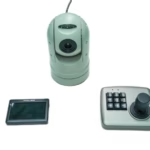
Thermal Spherical PTZ Camera - Equipped with professional thermal imaging, this integrated all-time security guard system.
2026年3月31日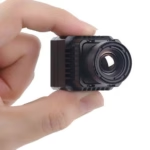
Can we convert a regular camera into a thermal imaging camera? From DIY beginners to professional-level thermal imaging solutions
2026年5月9日
1.In the global thermal imaging market, with the rapid development of security, industrial automation, unmanned aerial vehicle (UAV) technology, and the Internet of Things (IoT) industry, the demand for thermal imaging modules has grown exponentially. Buyers are facing an increasingly prominent pain point: how to find a product that can balance performance, size, power consumption, and cost. For most manufacturers and distributors, excessive pursuit of high resolution leads to soaring costs, making the product lose market competitiveness; while choosing low-resolution modules would sacrifice image clarity and fail to meet the practical application requirements of security monitoring, industrial maintenance, and other scenarios. At the same time, the miniaturization and low power consumption requirements for portable devices, UAV payloads, and smart hardware are becoming increasingly strict, which poses higher demands on the design of thermal imaging modules. Today, we will focus on the MD series 384x288 uncooled infrared thermal camera module - a "golden specification" widely recognized in the global thermal imaging industry. It perfectly combines the three core advantages of high resolution, small size, and low power consumption, achieving a balance between high performance and high cost-effectiveness, thereby solving the core pain point of buyers and becoming the preferred choice for high-performance and cost-effective thermal imaging applications in various fields.
2. Product Core: MD 384×288 Thermal Imaging Module Deep Analysis
2.1. Product Positioning and Design Concept
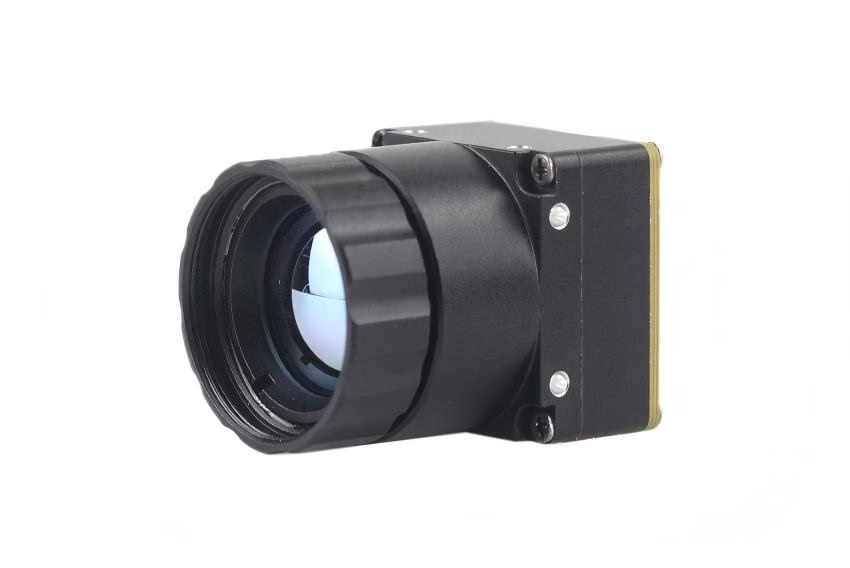
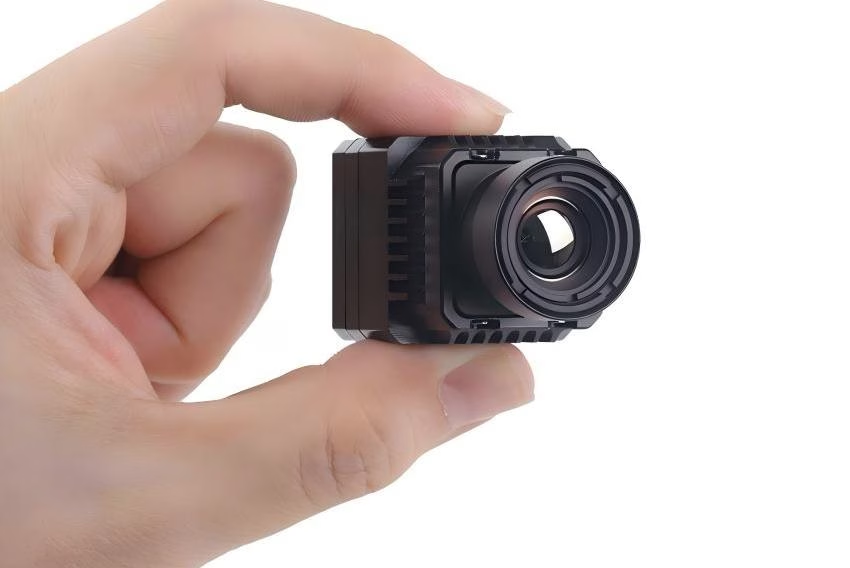
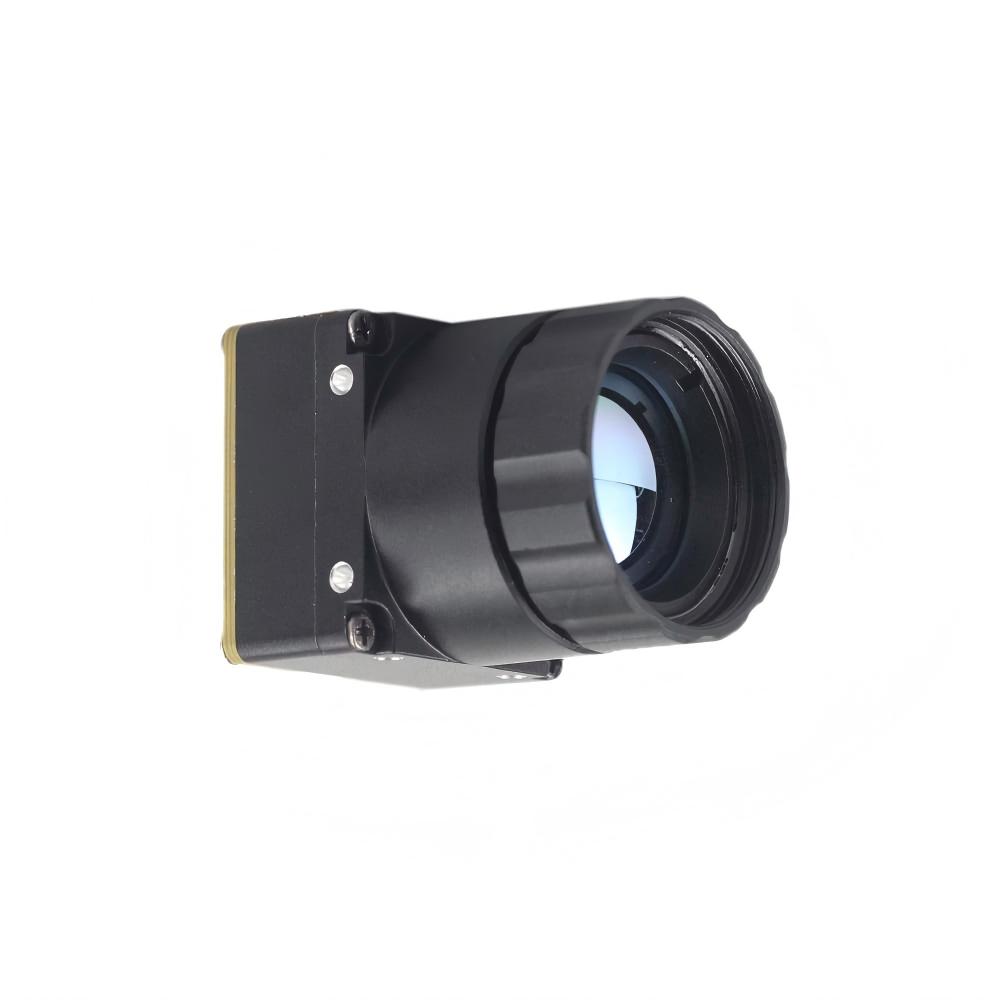
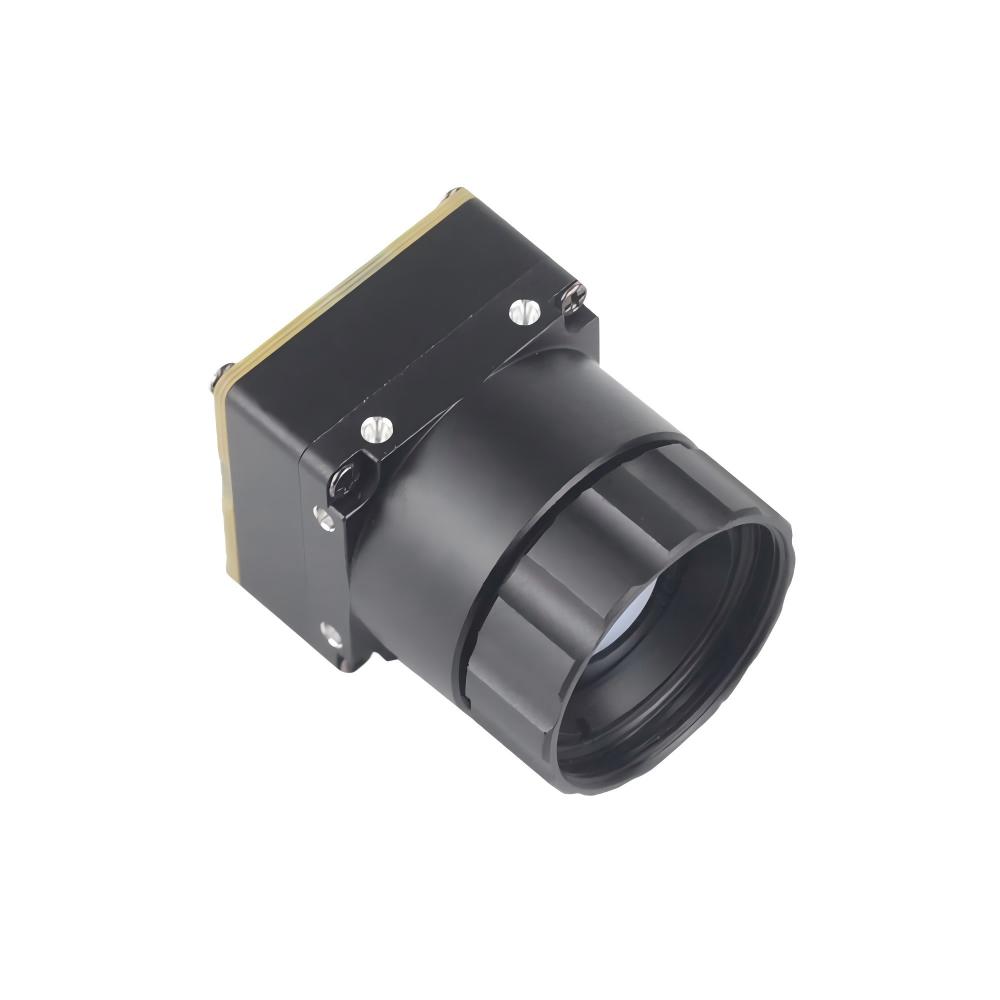
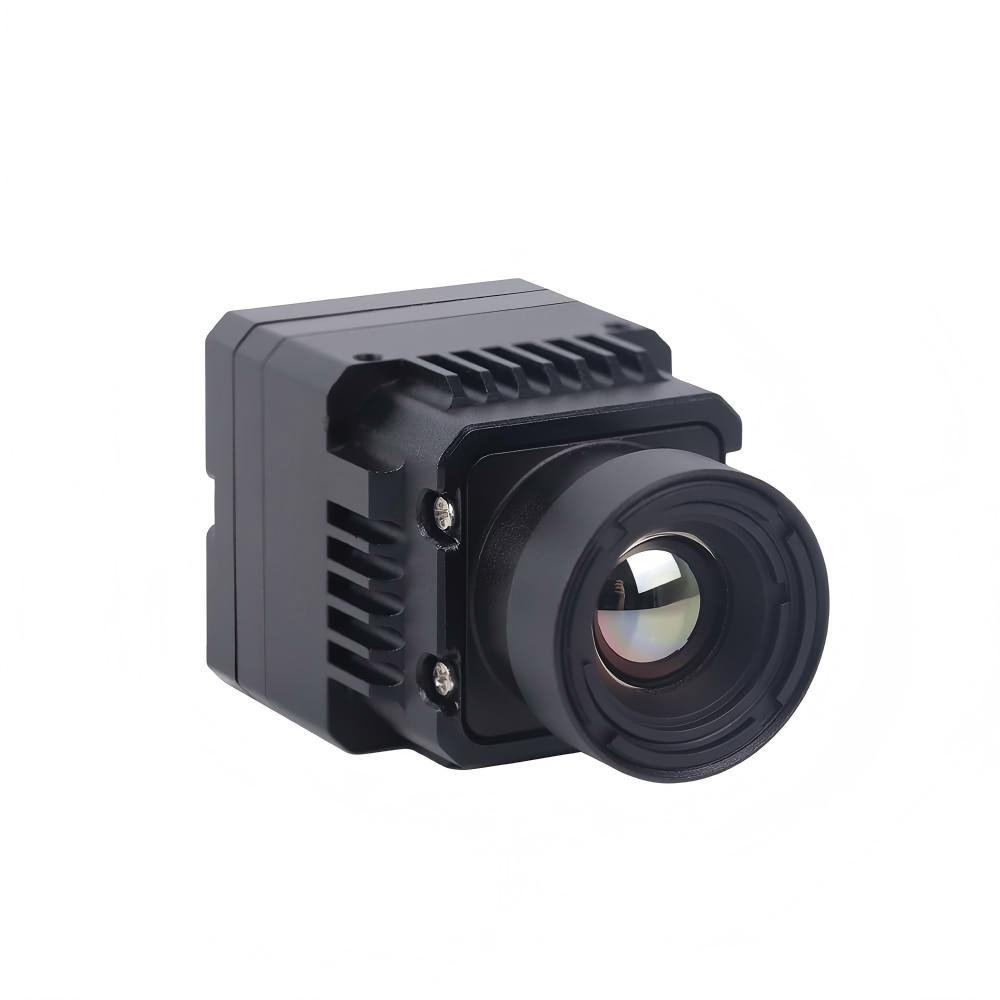
The MD 384×288 non-cooled infrared thermal imaging module is a standardized thermal imaging module specifically designed for general-purpose embedded integration, machine vision, and miniaturized intelligent terminal scenarios. The product adheres to the core design concept of "high integration, low power consumption, strong compatibility, and excellent image quality", based on the MD 384×288 golden resolution. Through the highly integrated SoC architecture design and self-developed algorithm optimization, it achieves a golden balance of size, weight, power consumption, performance, and cost, perfectly meeting the core SWaP (Size, Weight and Power/Price) application requirements of the industry.
The product can seamlessly integrate into various industrial equipment, intelligent terminals, and portable devices, and can quickly deploy thermal imaging capabilities without complex secondary development. It provides standardized and cost-effective core components for thermal imaging in multiple fields such as security monitoring, industrial automation, unmanned aircraft onboard, consumer electronics, and fire rescue, enabling professional-level thermal imaging performance to be more accessible and efficient in all scenarios.
2.2. Core Working Principle and Technical Architecture
Consistent with all professional-level thermal imaging module products, the imaging core of the MD 384×288 series is based on fundamental physical characteristics: all objects with temperatures above absolute zero (-273.15℃) continuously radiate infrared energy, and the radiation intensity is directly proportional to the surface temperature of the object. The product uses a vanadium oxide non-cooled infrared focal plane detector to accurately capture the radiation signals in the 8~14μm long-wave infrared band (the optimal infrared window for atmospheric penetration), converts them into processable electrical signals, and then completes signal decoding, image optimization, and temperature data calculation through the built-in high-performance processing chip, ultimately generating high-definition thermal imaging pictures and high-precision temperature measurement results. It can work stably in all-black, thick smoke, rain, and fog environments without relying on any external light sources.
Compared with conventional products of the same specification, the Purpleriver MD series has achieved comprehensive optimization in the technical architecture: adopting a single-chip highly integrated SoC design, integrating all link functions such as detector driving, signal processing, image enhancement, and interface conversion into one, significantly reducing the module size and hardware redundancy, and simultaneously lowering operating power consumption; equipped with a new generation of non-blocking image processing algorithm, running at full frame rate without lag or stuttering, and maintaining a smooth and clear picture even in dynamic scenes; equipped with exclusive infrared image enhancement and detail restoration algorithms, effectively optimizing image noise and contrast, even in complex scenes with low temperature difference and low contrast, can accurately present the temperature differences and contour details of the target, achieving professional-level imaging effects.
3. Core advantages under the gold standard: In-depth comparison of the MD series 384 with the Mini 384 module at the same resolution
The 384×288 resolution, as the core mainstream specification in the mid-range market of thermal imaging, the Uncooled Mini 384*288 Thermal Camera Module For Drones under Purpleriver has already become a benchmark product in the field of unmanned aerial vehicle-mounted and handheld observation equipment with balanced performance, rich lens configurations and strong environmental adaptability. While the 384×288 module of the MD series has made in-depth optimizations based on the same resolution and core detection performance at the same level, targeting embedded integration, machine vision, and standardized batch deployment scenarios, it has formed distinct differentiation advantages, providing more precise selection solutions for customers with different needs.
3.1. Horizontal comparison of core specifications
| Comparison Dimension | MD Series 384×288 | Mini 384 |
| Core Resolution | 384×288 | 384×288 |
| Detector Type | Vanadium Oxide Uncooled Infrared Focal Plane Detector | Vanadium Oxide Uncooled Infrared Focal Plane Detector |
| Pixel Pitch | 12μm | 12μm |
| Thermal Sensitivity (NETD) | ≤50mK@25℃,F#1.0 | ≤50mK@25℃,F#1.0 |
| Body Size (without lens) | 17.3mm×17.3mm | 21mm×21mm |
| Weight (without lens) | <12g | <8g |
| Typical Operating Power Consumption | Normal Operation <0.3W | Full Frame Rate Operation <0.55W |
| Standard Frame Rate | Full Series 50Hz High Refresh Rate | Radiometric Version 25Hz / Non-radiometric Version 60Hz |
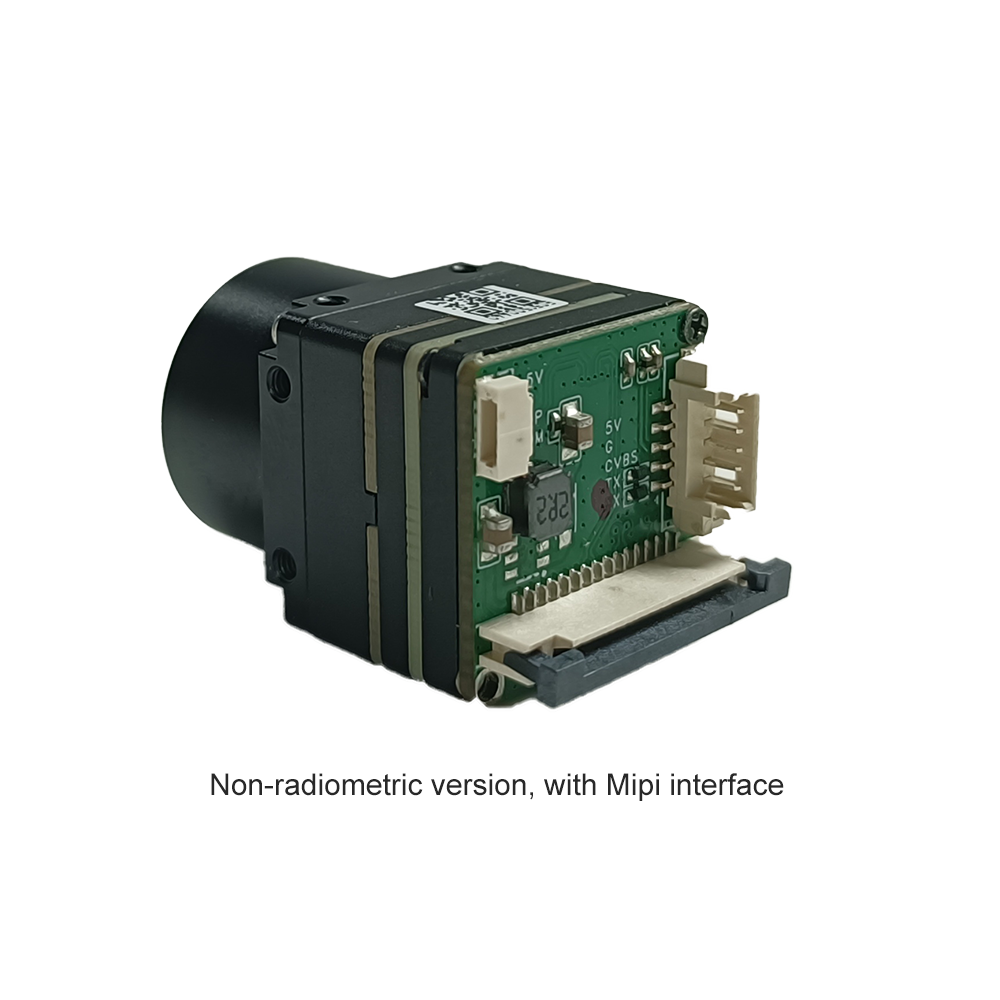
| Core Interfaces | CVBS、USB、MIPI、DVP | CVBS、USB、MIPI、DVP、BT.656 |
| Optional Lens Specifications | 9mm/13mm/18mm | Full Specifications from 4mm to 75mm Optional |
| Standard Version Pricing | $310 | $299~$1270 |
| Core Adaptation Scenarios | Integration, Machine Vision, Standardized Batch Terminals, Miniaturized Intelligent Hardware | UAV Airborne, Handheld Observation Equipment, Customized Telephoto Monitoring Scenarios |
3.2. Detailed Explanation of Differentiated Core Advantages
① Ultra-compact design for extreme miniaturization, suitable for ultra-small terminal integration
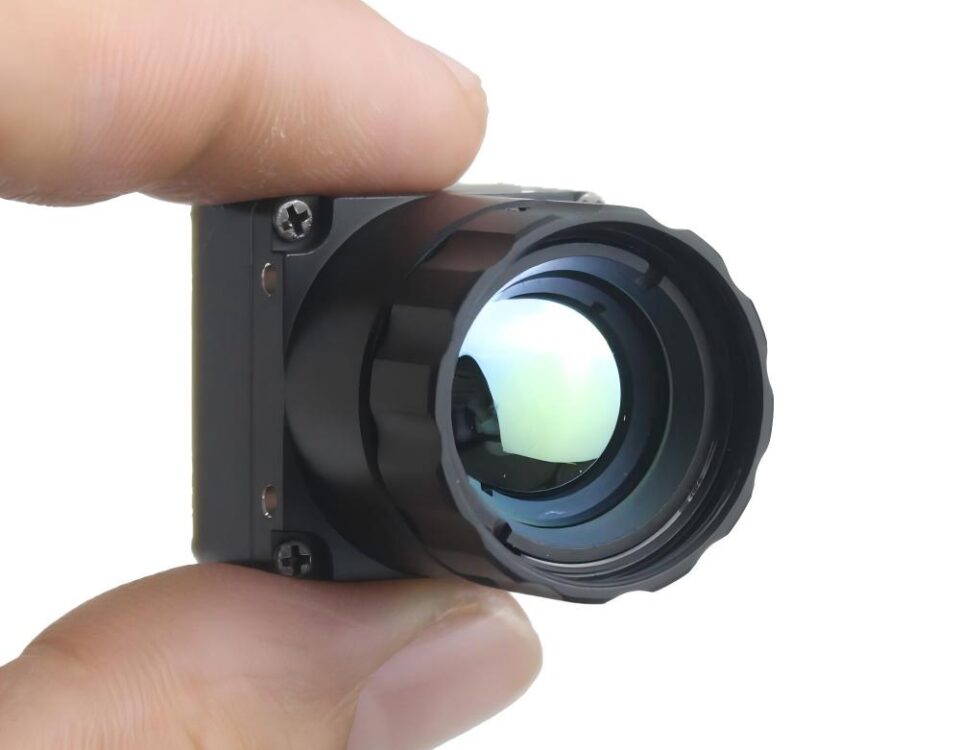
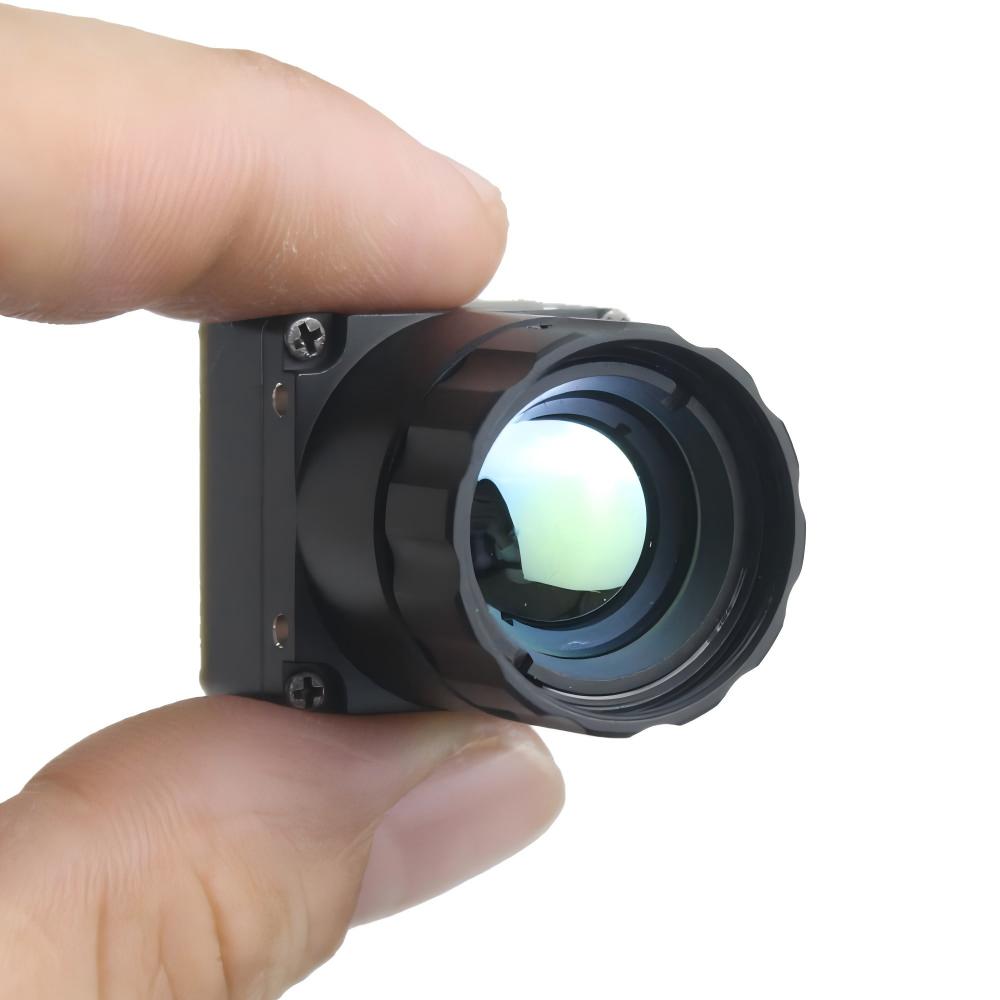
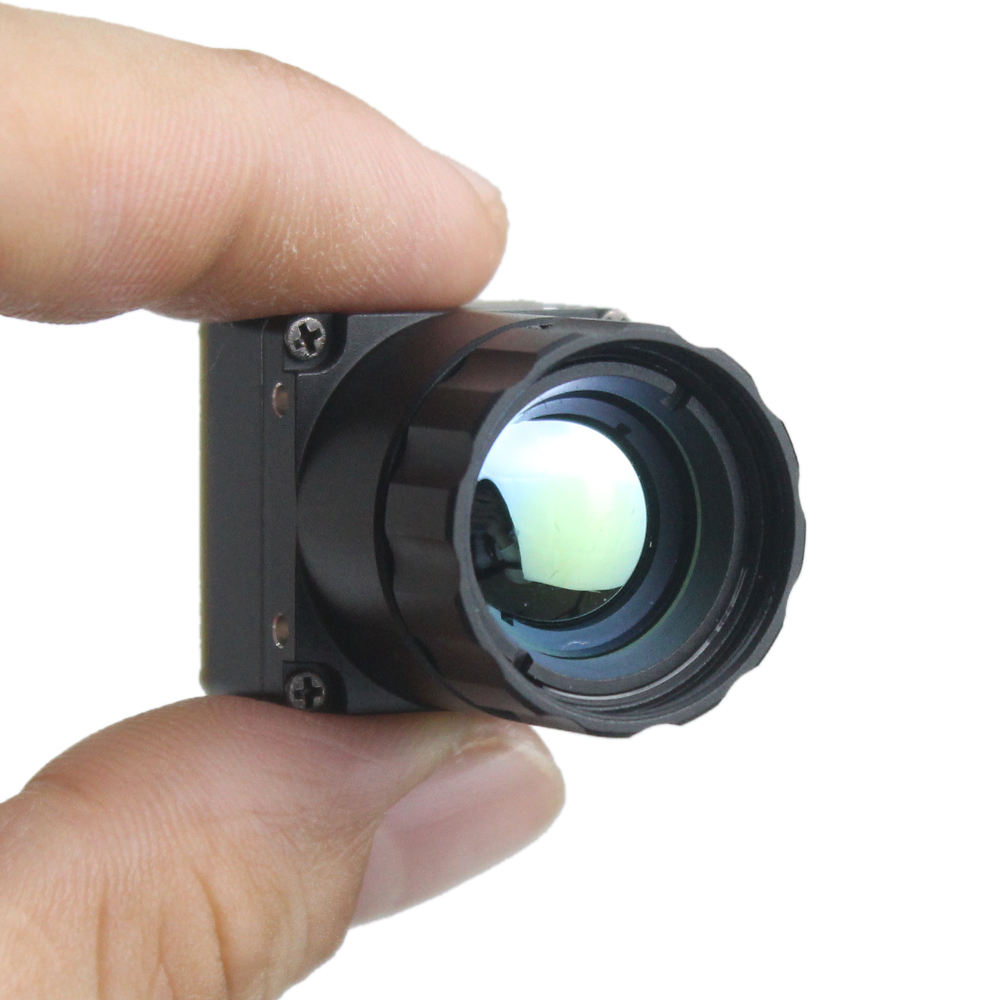
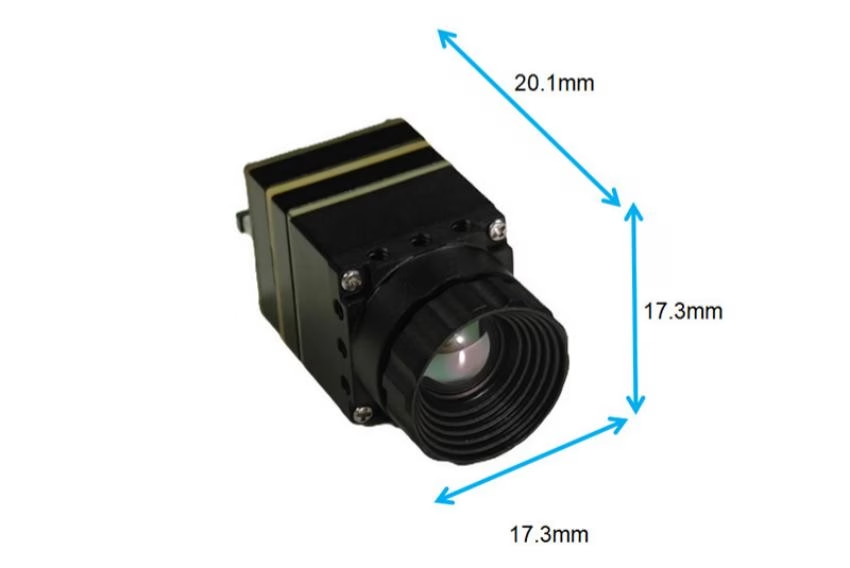
The MD series has achieved an ultra-small body size of 17.3mm×17.3mm, compared to the 21mm×21mm specification of Mini 384, the body area has been reduced by over 30%. It is at the industry-leading level in terms of resolution thermal imaging modules. The extremely compact structural design enables the module to be easily embedded in space-constrained ultra-small intelligent terminals, industrial robots, miniature security equipment, etc., completely solving the pain point of oversized products that cannot be adapted to miniaturization scenarios.
② Industry-leading low-power optimization, significantly extending the battery life of portable devices
The MD series achieves extreme power consumption control through a single-chip integrated architecture and power management optimization: under normal operation, the power consumption is less than 0.3W, compared to the 0.55W full-frame operation power consumption of Mini 384, the energy consumption is reduced by nearly 50%. The peak power consumption during shutter action is only 1.23W. The ultra-low power design significantly reduces the heat dissipation pressure and power supply requirements of the device, especially suitable for battery-powered portable devices, wearable equipment, unmanned terminal scenarios, etc., which can significantly extend the device's battery life and ensure stable operation 7×24 hours.
③ Unified high frame rate across the entire series, unobstructed smooth imaging experience
The MD series is fully equipped with 50Hz high refresh rate, compared to the 25Hz frame rate limit of the radiation measurement version of Mini 384, the MD series can still maintain full-frame rate smooth operation while achieving the temperature measurement function. Combined with the built-in non-blocking image processing algorithm, it completely eliminates issues such as screen lag, motion blur, and delay. Whether it is dynamic drone inspection, high-speed industrial quality inspection, or real-time temperature monitoring scenarios, it can accurately capture dynamic targets, present detailed image information without delay, providing stable image support for real-time analysis and decision-making.
④ Lower development threshold, native compatibility with mainstream development platforms
The MD series has optimized interface compatibility, in addition to the standard CVBS, USB, MIPI, DVP, etc. universal interfaces, it is also natively compatible with mainstream development boards such as Raspberry Pi 4 and Raspberry Pi 5, providing dedicated wiring and driver materials, without the need for additional hardware conversion to complete hardware connection. At the same time, the product provides complete development materials and simple calling interfaces, significantly reducing the secondary development threshold. Whether it is individual developers, start-up solution providers, or large equipment manufacturers, they can quickly complete the integration and function debugging of the module, significantly shortening the product's research and development and launch cycle.
⑤ Standardized high-performance and cost-effective pricing, lowering the threshold for batch integration procurement
The MD series adopts standardized configuration and pricing strategies, the official pricing of the standard version is only $310, compared to the same configuration Mini 384 module, it has a more significant price advantage. The standardized hardware and software design gives the product strong batch delivery capabilities, can perfectly adapt to the large-scale production needs of equipment manufacturers, significantly reducing the hardware cost of batch procurement. At the same time, the product maintains Purpleriver's consistent high-quality quality control standards, on the basis of high performance and cost-effectiveness, guarantees the stability and consistency of the product, providing reliable support for the large-scale commercial implementation of customers.
4. Full-scenario Implementation: Multi-application solution for the gold-standard thermal imaging module
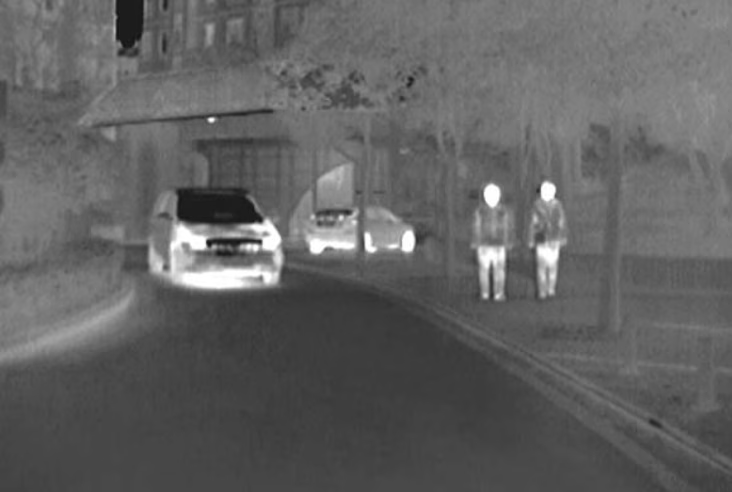
4.1. Night driving assistance
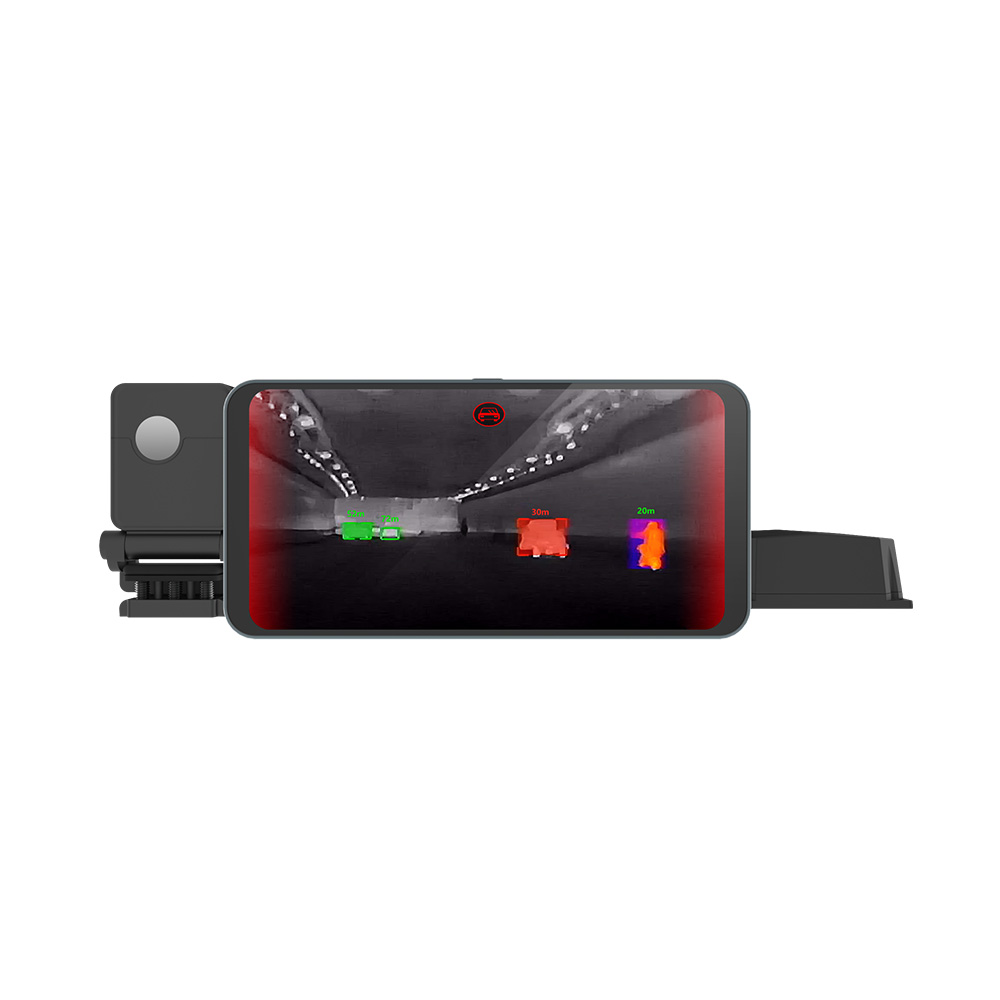
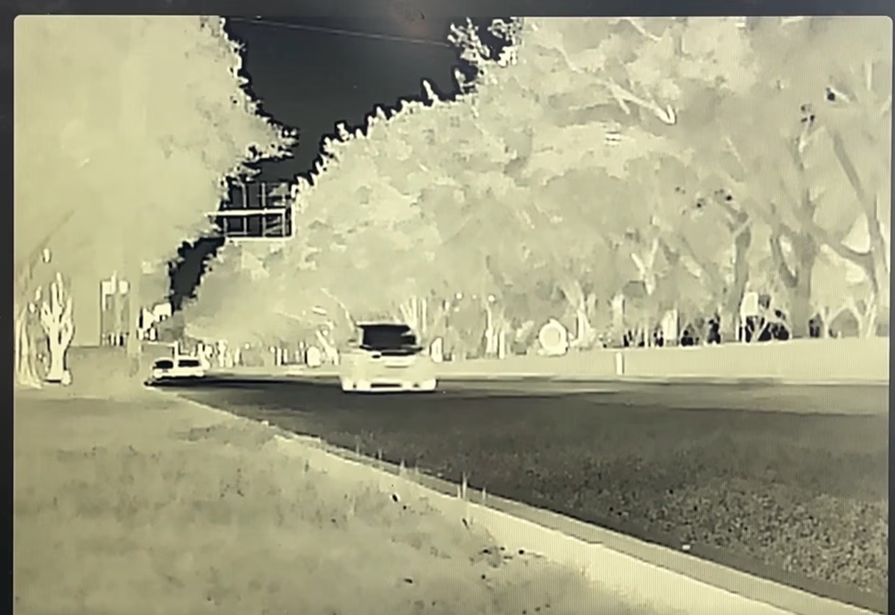
The module is compact and easy to install in the vehicle. The thermal imaging is not affected by strong light glare, and can clearly identify non-motor vehicles and roadside obstacles. It can provide early warnings of potential dangers and has low power consumption, without increasing the vehicle's load, thereby enhancing driving safety.
4.2. Reverse parking and low-speed passage assistance
It is installed covertly in the vehicle. During reverse parking or low-speed passage in residential areas or parks, the thermal imaging can quickly identify children, pets, and low obstacles. It solves the blind spots of rearview mirrors and radars, and provides clear and responsive images, enhancing parking safety in complex environments.
4.3. Lightweight Onboard Load for Unmanned Aerial Vehicles
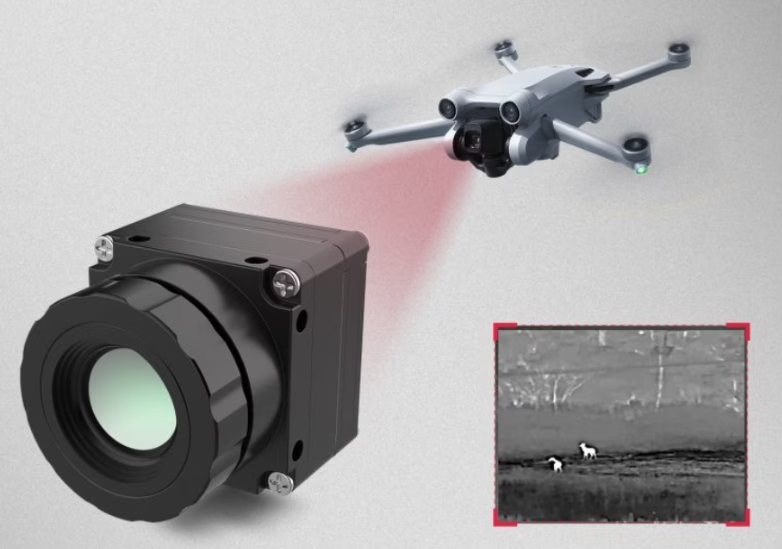
The design of lightweight and low-power consumption for the module enables it to be compatible with various types of small consumer-grade unmanned aerial vehicles, inspection drones, and agricultural spraying drones, without adding additional load to the unmanned aerial vehicle. Meanwhile, the 50Hz high frame rate video can perfectly adapt to dynamic flight scenarios, enabling functions such as farmland inspection, power line inspection, search and rescue positioning, and illegal construction monitoring, and endowing the unmanned aerial vehicle with professional-level thermal imaging perception capabilities.
5. Core Product: MD Series 384×288 Thermal Imaging Module
5.1. Product Features
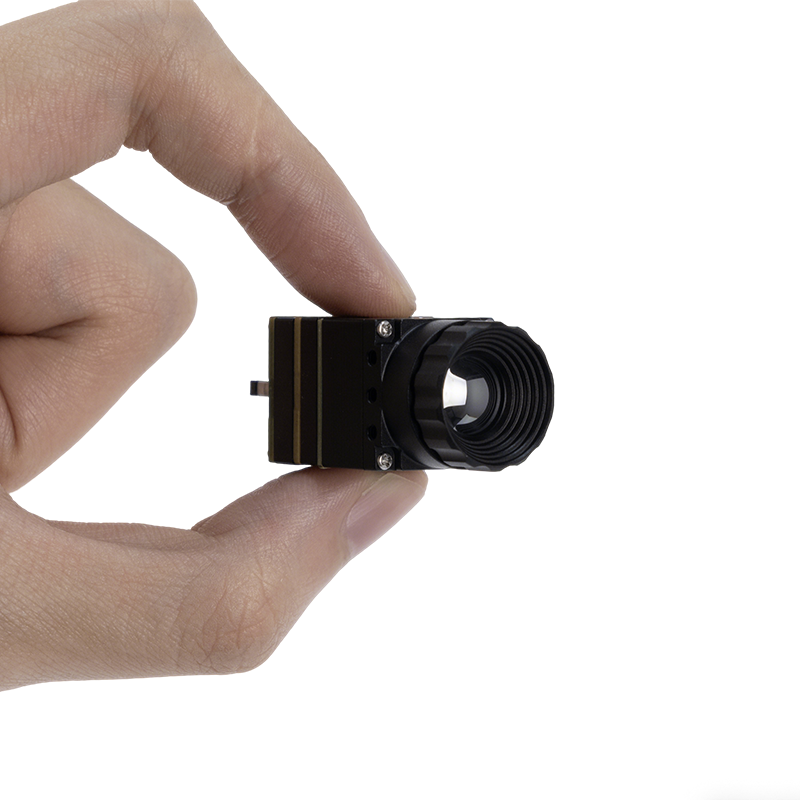
The non-cooled infrared module of the MD series, featuring 384 × 288, is part of the entire series that uses our self-developed high refresh rate, 12um WLP packaged detector. It boasts high performance, small size, light weight, low power consumption, and low cost, meeting the SWaP (size, weight, and power/price) application requirements. The entire series is equipped with a non-blocking algorithm, which operates smoothly without lag. It is equipped with a new generation of infrared-specific image algorithms, providing detailed and clear image quality. This module offers multiple digital interfaces, allowing for flexible connection to various intelligent processing platforms.
5.2. Application Scenarios
Security Inspection: Industrial monitoring, perimeter scanning, inspection robots, electro-optical pods
Firefighting and Rescue: Fire warning, firefighting helmets
Other Specific Applications: Unmanned aircraft, power inspection, thermal imaging guiding missiles and landmine detection
5.3. Technical Parameters
| Model | MD |
| Sensor | |
| Detector | Vanadium oxide uncooled infrared focal plane detector |
| Resolution | 384×288 |
| Lens | 9mm/13mm/18mm optional |
| Frame rate | 50Hz |
| Pixel pitch | 12μm |
| Working waveband | 8~14μm |
| NETD | ≤50mK@25℃,F#1.0,25Hz |
| Thermal time constant | <12ms |
| Image | |
| Brightness/Contrast Adjustment | 0~255 scale optional |
| Polarity | White heat/Black heat |
| Pseudo Color | Available |
| Electronic zoom | 0.25~2.0 continuous zoom |
| Mirror | Up and down/left and right/diagonal |
| Interface | |
| Analog | CVBS/ PAL/NTSC |
| Digital | DVP/USB/MIPI |
| Communication interface | USB |
| Power | 5V |
| USB power consumption @25℃ | Normal operation:<0.3W;Shutter operation:<1.23W |
| Physics | |
| Weight(without lens) | <12g |
| Size(without lens) | 17.3mm×17.3mm ×20.1mm |
| Environment | |
| Working temperature | -40℃~+80℃ |
| Storage temperature | -50℃~+85℃ |
| Humidity | 5%-95%,No condensation |
| Vibration | 6.06g,Random vibration, all axial directions |
| Impact | 80g @ 4ms ,back peak sawtooth wave,3-axis 6-ways |
The 384×288 resolution, as the gold standard in the thermal imaging industry, is the optimal solution that balances performance and cost. It is also the core carrier that drives the thermal imaging technology to be widely and scaleably popularized across the entire industry from the professional field. The Purpleriver MD series 384×288 thermal imaging module is precisely a benchmark product based on this industry trend. It achieves comprehensive breakthroughs such as smaller size, lower power consumption, better compatibility, smoother imaging, and higher cost-effectiveness on the basis of the golden resolution. It has broken through the industry pain point of "inability to achieve both performance and integration" for products of the same specification.
Whether it is equipment manufacturers requiring large-scale standardized mass production, solution integrators seeking rapid implementation, or individual creators needing low-barrier development, all can obtain professional-level thermal imaging performance support at a lower cost through the MD series 384×288 thermal imaging module. In the future, Purpleriver will continue to deeply explore the core technology of infrared thermal imaging, continuously iterate and optimize the product system, and provide more high-performance, high-adaptability, and high-cost-effectiveness thermal imaging module products and customized solutions for global customers. For more details about the product, technical specifications, sample application, and customization requirements, you can visit the Purpleriver official website or contact our professional team. We will provide you with one-stop thermal imaging technical support and services.
FAQ
1. Why is 384×288 referred to as the "golden specification" instead of a higher resolution like 640×512?
The core answer is quite simple: a balance must be struck between performance and cost. Although the mini 640 uncooled lwir thermal camera module has a higher resolution, its cost is more than 2-3 times that of 384×288. This would significantly increase the production cost of the product and thereby reduce its market competitiveness. In most civilian and industrial scenarios we encounter in daily life, such as security monitoring in residential areas, industrial maintenance in factories, and daily patrol by drones, 384×288 resolution is perfectly sufficient. It can capture clear thermal images and accurately distinguish the key details of the target. It won't waste performance due to a too high resolution and can keep the cost within a reasonable range. That's why it has always been called the "golden specification" in the industry.
2. How do the compact size and low power consumption of the 384×288 module specifically contribute to product development?
When we develop products such as portable thermal imaging devices and smart wearable equipment, the small size of the 384×288 module is truly crucial. It enables the products to be designed more compactly and lightweight, making them more user-friendly and significantly enhancing the user experience. Especially for devices like drones and portable detectors that rely on battery power, its low power consumption advantage is particularly prominent. It can extend the battery life by 30% to 50% compared to using high-power modules, eliminating the need for frequent charging and making the product more convenient to use and more practical. In addition, the small size and low power consumption can also reduce the heat generated by the module itself, which is very helpful for the stable operation of the entire device. It also reduces the difficulty of thermal design during the development process and saves a lot of effort.
3. Will thermal imaging lose its effectiveness in strong light?
Many people have this question: In fact, thermal imaging relies on detecting the thermal radiation of the object itself, so it will not be directly interfered with by visible light or strong light. However, it should be noted that strong light will cause the temperature of the surrounding environment to rise. As a result, the temperature difference between the target and the background becomes smaller, making identification less clear. Additionally, if the sunlight directly hits the lens, it may damage the detector, resulting in bad pixels appearing in the image. This point must be noted.
4. Why can't we see people behind the glass in thermal imaging?
This is actually related to the properties of glass. Ordinary glass blocks the transmission of thermal infrared rays. The infrared rays emitted by the human body cannot pass through the glass. Thermal imaging devices can only capture the temperature of the glass surface and cannot see the people behind the glass. They can only see the thermal image of the glass itself, so it is impossible to identify the people inside through the glass.
5. What are the key differences between the MD series with a resolution of 384×288 and the Mini 384 module with the same resolution? How should one make a selection?
The core detection performance and resolution of these two modules are the same. The key difference lies in the applicable scenarios and design priorities. The lens options for the Mini 384 module are more diverse, suitable for scenarios such as drones and handheld observation that require customized telephoto or wide-angle lenses, and can meet various customized needs. While the MD series focuses on extreme compactness, low power consumption, and standardized integration, making it more suitable for embedded machine vision, small intelligent terminals, and large-scale batch production equipment. It has better compatibility and mass production capabilities. To sum up simply: If you need customization and have multiple lens requirements, choose Mini 384; if you value standardized integration, low power consumption, and small size, choose the MD series.