
High-Resolution Uncooled Detector Modules for Drone & Industrial AI Vision | Purpleriver
2026年8月13日
Commercial Infrared & Thermal Imaging Solutions: High-Res Modules for AI Integration
2026年8月14日

Non-Radiometric Thermal Camera Modules: OEM Selection & Integration Guide
In optical engineering and embedded vision architecture, choosing the right infrared sensor core comes down to a clear-eyed balance between thermal sensitivity, computational overhead, and physical constraints (SWaP-C: Size, Weight, Power, and Cost). While radiometric thermal camera modules calculate absolute thermodynamic temperature values for every single pixel on a focal plane array (FPA), non-radiometric thermal camera modules focus on qualitative thermal imaging, contrast maximization, and instant situational awareness. For OEMs building perimeter surveillance turrets, tactical micro-UAV gimbals, autonomous mobile robot (AMR) navigation payloads, and edge AI vision systems, deploying a non-radiometric thermal module cuts out the algorithmic and processing overhead of per-pixel temperature calibration while delivering responsive, high-contrast long-wave infrared (LWIR) video.
Here's the deal: engineering teams hit massive integration bottlenecks when attempting to shoehorn full radiometric cores into SWaP-constrained edge devices. Real-time temperature measurement demands continuous lookup table (LUT) processing, dynamic atmospheric transmission modeling, surface emissivity tweaking, and constant compensation for housing temperature drift. That thermographic processing chain burns through DSP or FPGA resources, drives up thermal dissipation on your carrier board, drains battery life, and introduces unnecessary pipeline latency. Shifting to a dedicated non-radiometric thermal imaging architecture lets you lean on hardware-level Image Signal Processors (ISPs) that focus strictly on non-uniformity correction (NUC), dynamic range compression, and spatial filtering. This guide delivers a hands-on engineering blueprint for evaluating, selecting, and integrating high-performance non-radiometric thermal camera modules into modern industrial and edge systems.
Table of Contents
- 👉 1. Fundamentals of Non-Radiometric Thermal Imaging
- 👉 2. Architectural Comparison: Non-Radiometric vs. Radiometric Pipelines
- 👉 3. Critical OEM Hardware & Optical Selection Criteria
- 👉 4. Interface Integration: MIPI CSI-2, USB UVC, and CVBS
- 👉 5. Edge AI & Computer Vision Optimization for Qualitative LWIR
- 👉 6. Featured High-Performance OEM Thermal Modules (Specs & Benchmarks)
- 👉 7. Target Application Profiles: UAV, Security, and Robotics
- 👉 8. Deep-Dive OEM Integration FAQ
- 👉 9. Engineering Conclusion & Customization Roadmap
1. Fundamentals of Non-Radiometric Thermal Imaging
Non-radiometric thermal imaging operates across the Long-Wave Infrared (LWIR) band—specifically within the 8μm to 14μm atmospheric transmission window. At the hardware level, the core utilizes uncooled microbolometer focal plane arrays fabricated from Vanadium Oxide (VOx) or Amorphous Silicon (α-Si). The sole engineering objective of a non-radiometric thermal module is to detect subtle variations in infrared flux emitted by objects in the field of view and convert those thermal gradients into high-contrast grayscale or false-color luminance data.
Unlike standard visible-light CMOS or CCD sensors that capture reflected photons, microbolometer pixels directly absorb incident infrared radiation. This absorption causes a physical temperature increase in the thermally isolated, suspended micro-bridge structure of each pixel. That microscopic thermal shift alters the electrical resistance of the VOx thin film, which the underlying Readout Integrated Circuit (ROIC) samples as a differential voltage. As established in classical thermodynamics and detailed in Wikipedia Infrared Imaging references, the radiant flux follows the Stefan-Boltzmann and Planck radiation laws, linking target surface temperature and emissivity directly to spectral radiance.
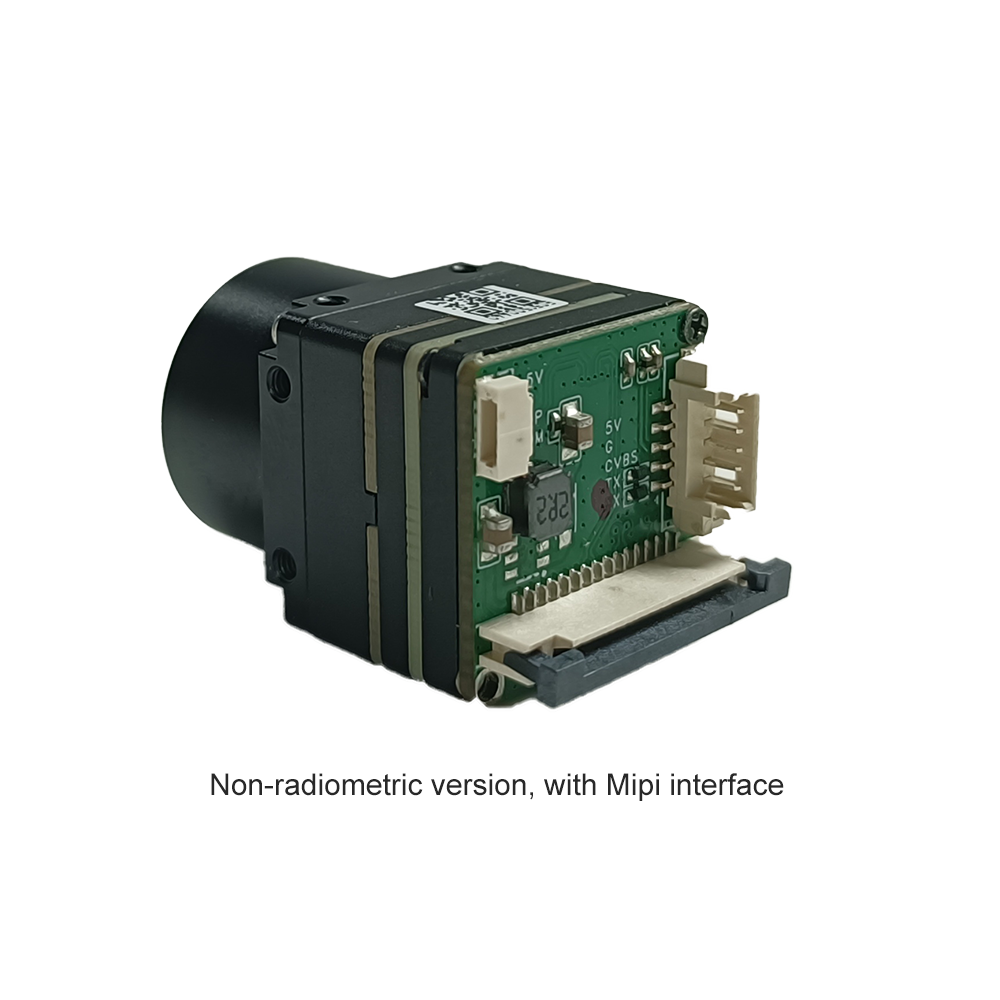
In a non-radiometric module, the system does not waste cycles attempting to translate these resistance deltas back into calibrated Kelvin or Celsius readings. Instead, the native 14-bit or 16-bit analog-to-digital converter (ADC) output feeds straight into real-time dynamic range management and image enhancement hardware. The algorithms maximize spatial edge contrast, strip away spatial and temporal noise, and map the scene's dynamic range into an 8-bit digital video stream (such as YUV, RGB, or standard analog composite).
Because the core is freed from tracking absolute thermal calibration curves across changing ambient environments, the onboard ISP dedicates its compute budget entirely to image clarity:
- ⚙️ Digital Detail Enhancement (DDE): High-pass spatial filtering that pulls faint target contours and textures out of uniform, low-contrast backgrounds.
- ⚙️ 3D Noise Reduction (3D-DNR): Temporal and spatial filtering routines that clean up fixed-pattern noise (FPN) and sensor hiss without smearing moving objects.
- ⚙️ Contrast-Limited Adaptive Histogram Equalization (CLAHE): Dynamic local luminance management that prevents total scene blowout or black crush when a hot target enters a cold frame.
2. Architectural Comparison: Non-Radiometric vs. Radiometric Pipelines
Deciding between non-radiometric and radiometric cores impacts your hardware architecture from day one. It changes the digital signal processing pipeline, bill of materials (BOM), thermal budget, and host CPU headroom. In a radiometric pipeline, every pixel output represents a calibrated temperature reading. To maintain absolute accuracy, the core must continuously read onboard thermistors across the optical barrel, mechanical shutter, and sensor ceramic substrate. The host processor or onboard DSP has to constantly execute complex polynomial corrections to account for ambient reflections, atmospheric transmission loss, optical path transmission, and housing temperature gradients.
A non-radiometric thermal core skips that entire computational tax. Raw 14-bit pixel data moves directly through hardware spatial and temporal enhancement engines. The ISP dynamically stretches contrast across the minimum and maximum flux levels in the current frame. When integrating thermal video into embedded platforms, utilizing optimized cores—such as those detailed in the reference guide for modułu kamery termowizyjnej do integracji UAV—allows developers to bypass CPU-heavy thermographic parsing completely and stream straight to the display or inference model.
| Architectural Parameter | Non-Radiometric Thermal Module | Radiometric Thermal Module |
|---|---|---|
| Primary Operational Goal | Target detection, contrast maximization, spatial detail | Per-pixel absolute thermodynamic measurement |
| ISP Pipeline Complexity | Streamlined (NUC + Dynamic AGC + Spatial Filtering) | Complex (NUC + Multi-Point Calibration LUTs + Temp Engine) |
| Output Formats | 8-bit YUV422, RGB888, Grayscale, Raw14 (optional) | 14-bit/16-bit Temperature Arrays + Telemetry Metadata |
| Host Compute Utilization | Minimal (Standard UVC / V4L2 video stream ingestion) | Heavy (Requires radiometric SDK parsing & math libraries) |
| Typical Core Power Draw | Low (< 0.6W to 1.2W typical for uncooled cores) | Moderate to High (1.5W to 3.5W+ due to continuous calculations) |
| Boot to First Frame Time | Rapid (< 2.5 to 4.0 seconds) | Extended (< 5.0 to 12.0 seconds for stabilization & calibration) |
| Manufacturing & Unit Cost | Cost-effective; ideal for high-volume deployments | 30% – 70% higher unit cost due to factory blackbody calibration |
3. Critical OEM Hardware & Optical Selection Criteria
When selecting an uncooled thermal core for industrial hardware, evaluate sensor geometry, optical physics, mechanical ruggedization, and electrical interfaces side by side.
Sensor Resolution and Pixel Pitch
Modern microbolometer design has shifted decisively from 17μm pixel pitches to 12μm pixel pitch architectures. A 12μm detector shrinks the physical footprint of the focal plane array for any target resolution. This means you can specify a smaller objective lens while achieving the exact same Instantaneous Field of View (IFOV). That directly translates to smaller gimbals, lower payload mass, and reduced BOM costs.
- ⚙️ 256×192 Resolution: Best for ultra-compact, cost-driven payloads like helmet-mounted setups, tactical micro-drones, and compact hand-held diagnostic viewers.
- ⚙️ 384×288 Resolution: The sweet spot for mid-range industrial integration. Offers 2.25× the pixel density of 256×192 sensors, giving you clean Detection, Recognition, and Identification (DRI) ranges for perimeter turrets, drone gimbals, and mobile robots.
- ⚙️ 640×512 Resolution: Built for long-range tactical surveillance, wide-area defense, and border platforms where you need a broad field of view without sacrificing angular resolution.
Thermal Sensitivity (NETD) and Optics
Noise Equivalent Temperature Difference (NETD), measured in milliKelvins (mK), defines the smallest thermal gradient the sensor can pull above its internal electronic noise floor. Premium uncooled VOx cores hit an NETD of ≤ 40mK or ≤ 50mK at F/1.0 at 25°C. In the shop, a lower NETD means that low-contrast thermal scenes—like high-humidity coastal zones, thick fog, or washed-out nocturnal terrain—render with clear, distinct object boundaries rather than snow.
Pairing a high-sensitivity detector with high-transmission, anti-reflective athermalized Germanium or Chalcogenide lenses (with fast apertures of F/1.0 or F/1.1) maximizes photon collection on the active microbolometer surface, holding optical focus rock-solid from -40°C up to +80°C.
Mechanical Durability and Interconnect Reliability
Thermal modules mounted on mobile gear (like airborne gimbals, heavy machinery, or rugged industrial UGVs) face continuous high-frequency vibration and sharp mechanical shocks over 500g (0.5ms). Embedded engineers should specify cores built with ruggedized board-to-board connectors or locking flex assemblies, utilizing components adhering to proven industrial interconnect standards from manufacturers like TE Connectivity to eliminate frame drops and intermittent bus resets in the field.
4. Interface Integration: MIPI CSI-2, USB UVC, and CVBS
Your hardware interface choice defines latency, processor overhead, and carrier board complexity.
MIPI CSI-2 Integration (Embedded Processing & Edge AI)
The MIPI CSI-2 interface is the preferred standard for low-latency, SWaP-optimized embedded architectures using system-on-chips (SoCs) such as NVIDIA Jetson, NXP i.MX8/i.MX9, Rockchip RK3588, or Raspberry Pi Compute Modules. MIPI CSI-2 transmits 8-bit YUV422 or 14-bit raw frames across 1 or 2 D-PHY differential data lanes at speeds up to 1.5 Gbps per lane. Video frames flow directly into host memory through Direct Memory Access (DMA), avoiding USB host controller overhead and keeping glass-to-glass latency under 30ms.
USB 2.0 / USB-C UVC Integration (Industrial Computing)
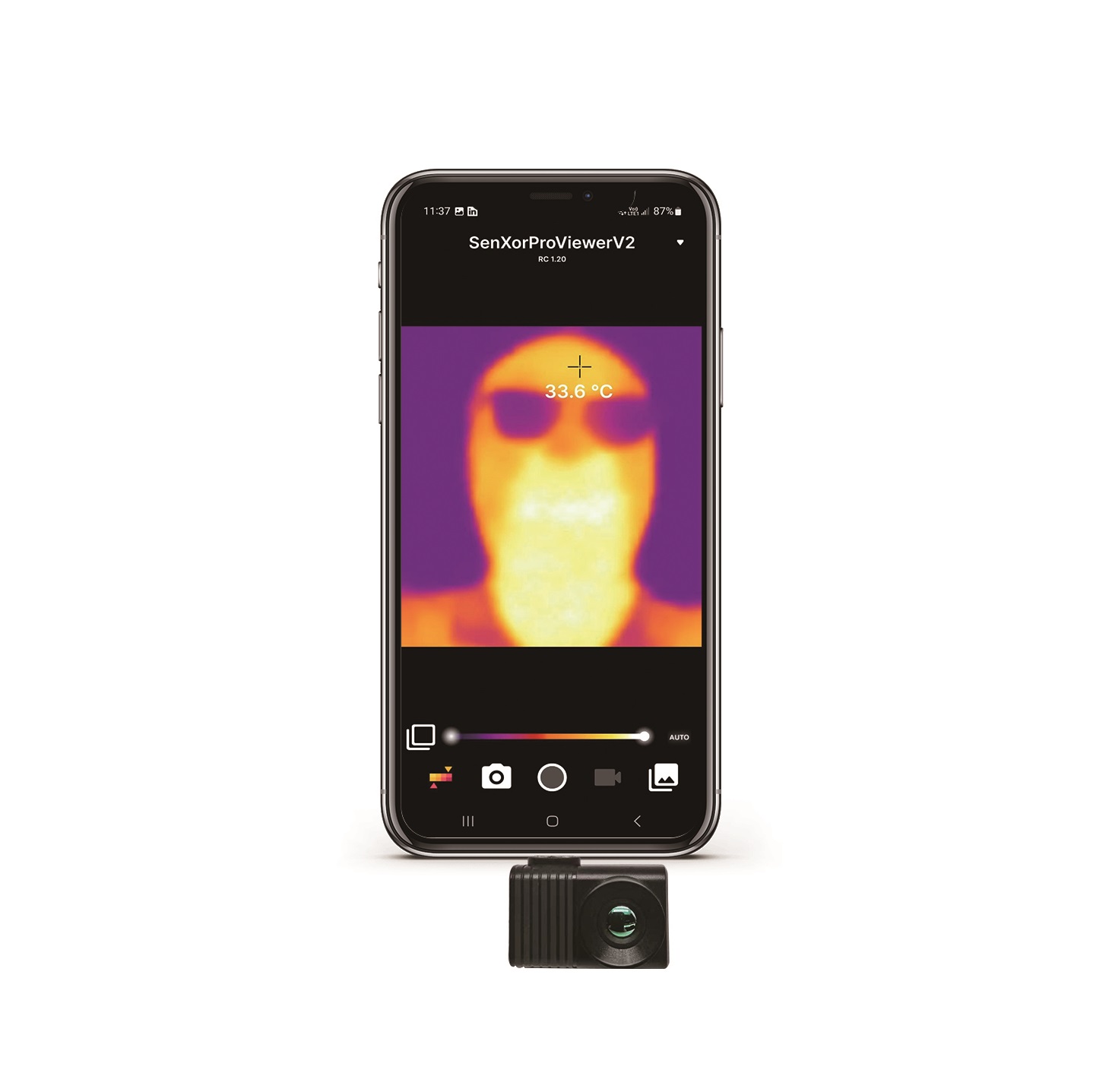
For industrial computers, field tablets, and standard Linux/Windows hosts, USB Video Class (UVC) offers driverless integration. The camera registers as a standard video capture device via Video4Linux2 (V4L2) on Linux or DirectShow on Windows. For high-resolution USB setups, refer to the integration specifications in our USB модуль тепловизора высокого разрешения overview. Dual-endpoint USB configurations allow simultaneous streaming of 8-bit visual video while transmitting control commands and telemetry via a virtual COM port (CDC-ACM).
CVBS (Composite Video Broadcast Signal)
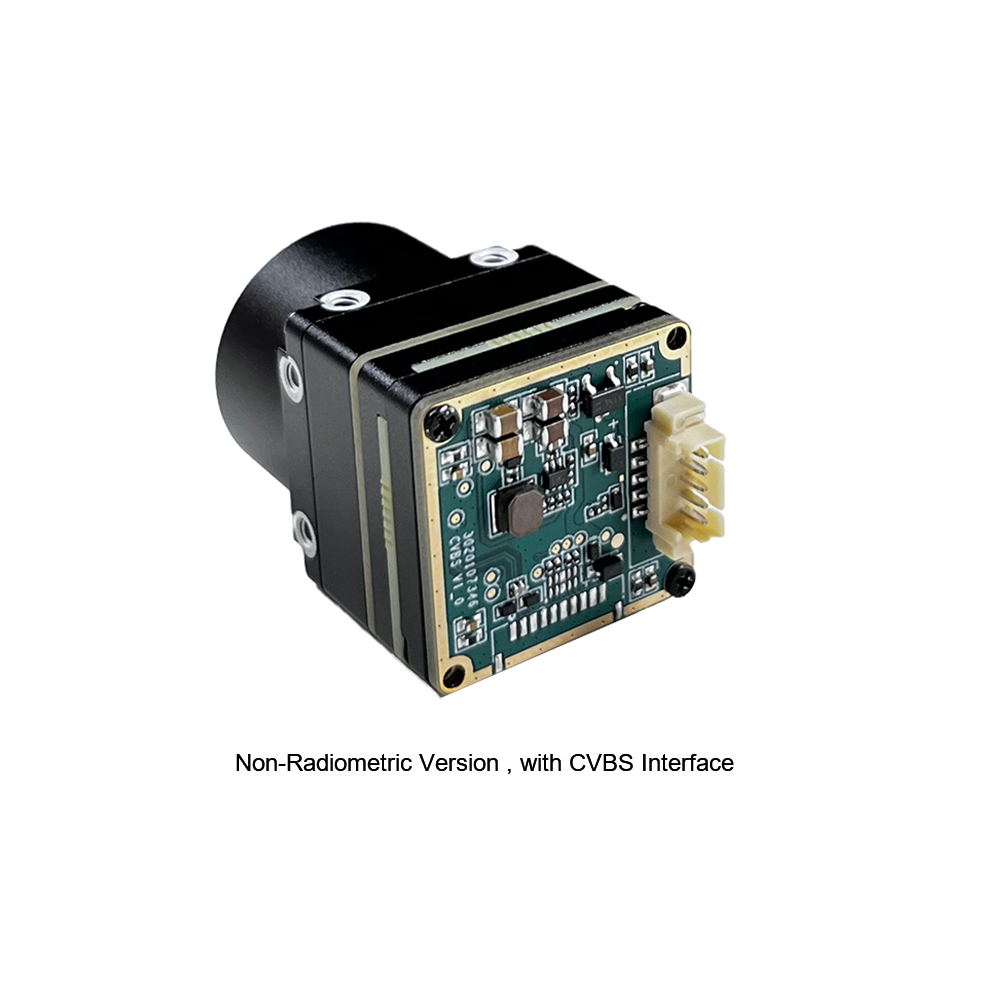
In tactical FPV flight, long-range analog links, and legacy security retrofits, analog CVBS (NTSC/PAL) remains indispensable. It delivers zero-latency video without digital packet loss or frame buffering artifacts. Industrial non-radiometric modules incorporate onboard DACs built to drive 75Ω coaxial or twisted-pair lines directly.
5. Edge AI & Computer Vision Optimization for Qualitative LWIR
Modern thermal imaging architectures rely heavily on automated edge AI analytics. Because non-radiometric thermal modules output pre-processed, high-contrast, noise-filtered 8-bit luminance streams, they plug straight into deep learning inference pipelines without needing complex normalization or custom 14-bit quantization layers.
When running real-time object detection models (such as YOLOv8, YOLOv9, or SSD MobileNet) on edge Neural Processing Units (NPUs), non-radiometric video provides distinct advantages:
- ✅ Total Illumination Invariance: The thermal stream is unaffected by zero-lux darkness, shadows, high-beam glare, or sudden day-to-night lighting shifts.
- ✅ Reduced Compute Footprint: Retraining vision models to accept single-channel thermal luminance inputs cuts model compute weight (GFLOPs) by up to 30%, boosting inference frame rates on edge SoCs.
- ✅ Enhanced Edge Features: Onboard Digital Detail Enhancement (DDE) sharpens silhouettes and physical contours, boosting detection confidence scores for partially obscured people, vehicles, and assets.
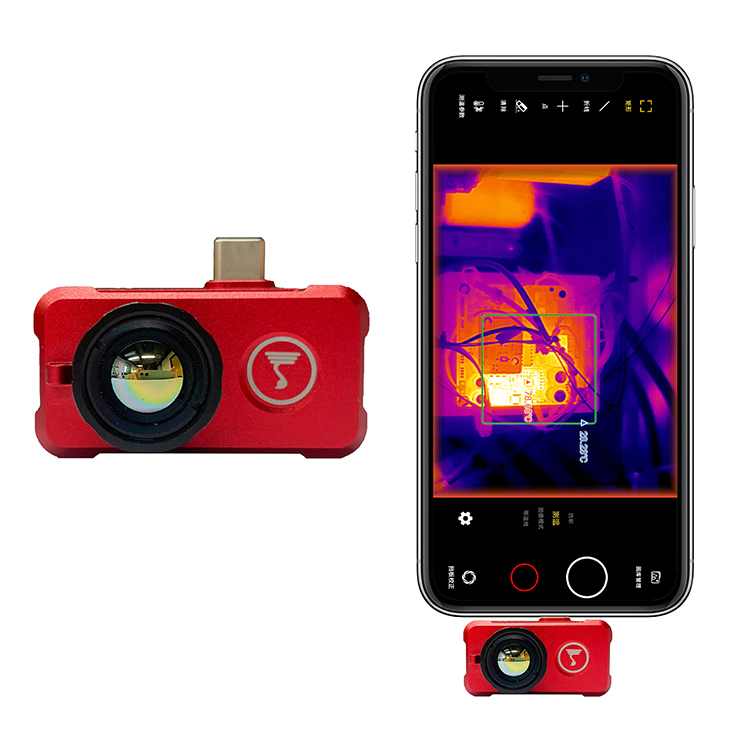
For compact and mobile integrations, reference implementation details are available in our technical brief on the портативный тепловизионный USB модуль.
6. Featured High-Performance OEM Thermal Modules
Purpleriver supplies industrial-grade thermal imaging cores engineered by an R&D team with research roots from the Hong Kong University of Science and Technology (HKUST) and former Huawei HiSilicon ISP chip architects. These modules deliver dependable performance across security, robotics, and aerial reconnaissance platforms.
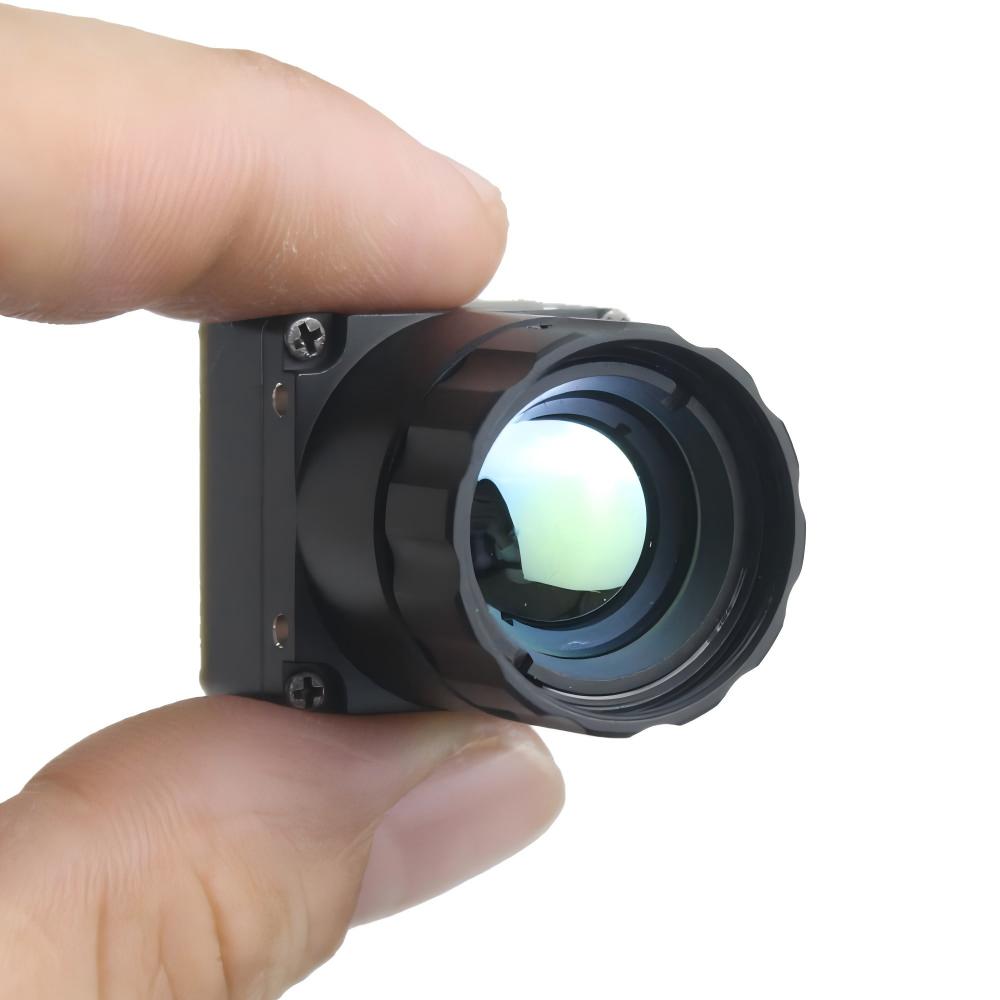
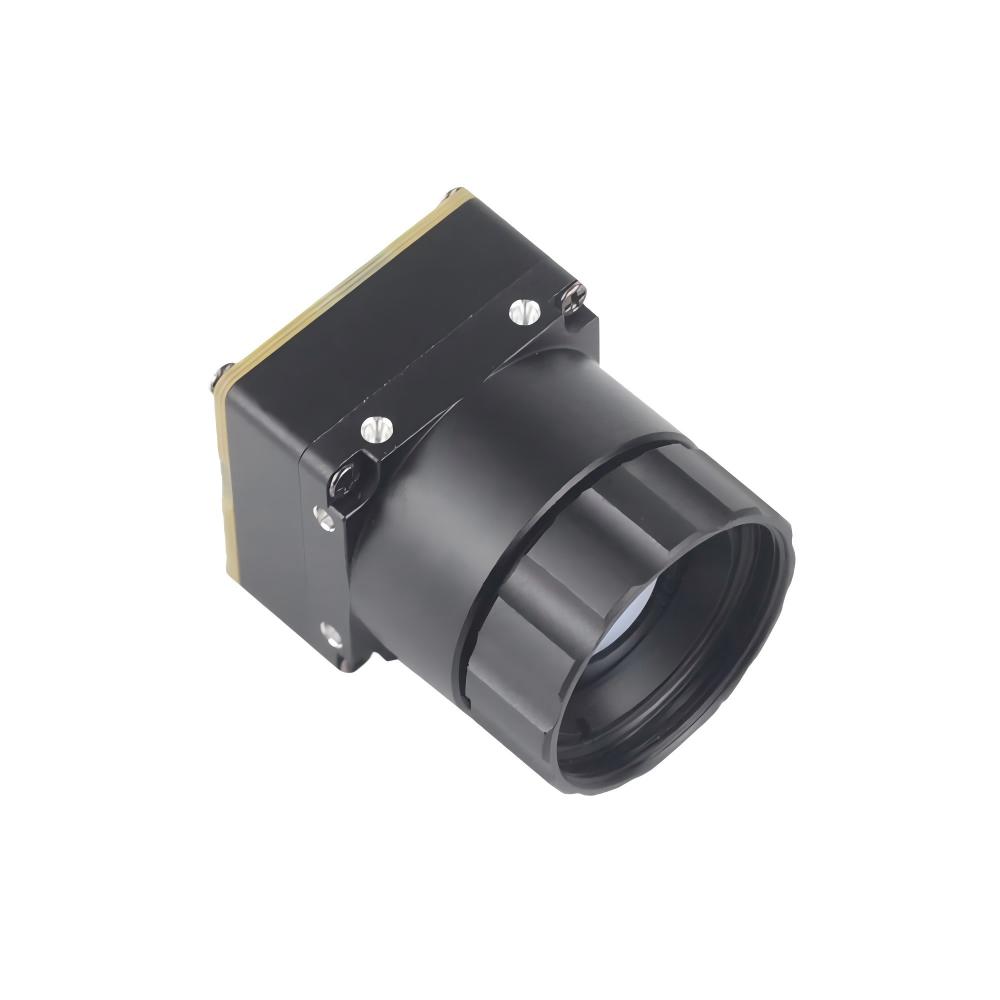
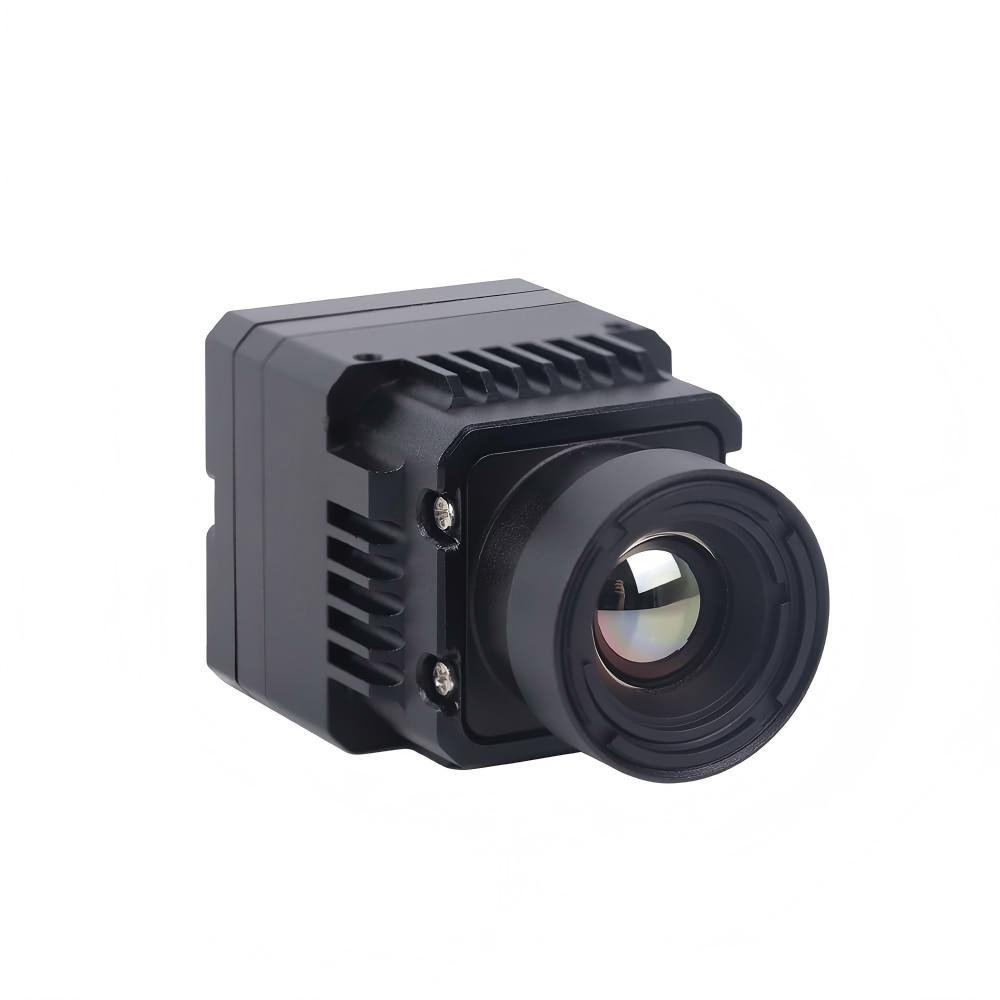
MD Series 384x288 Uncooled Infrared Thermal Camera Module
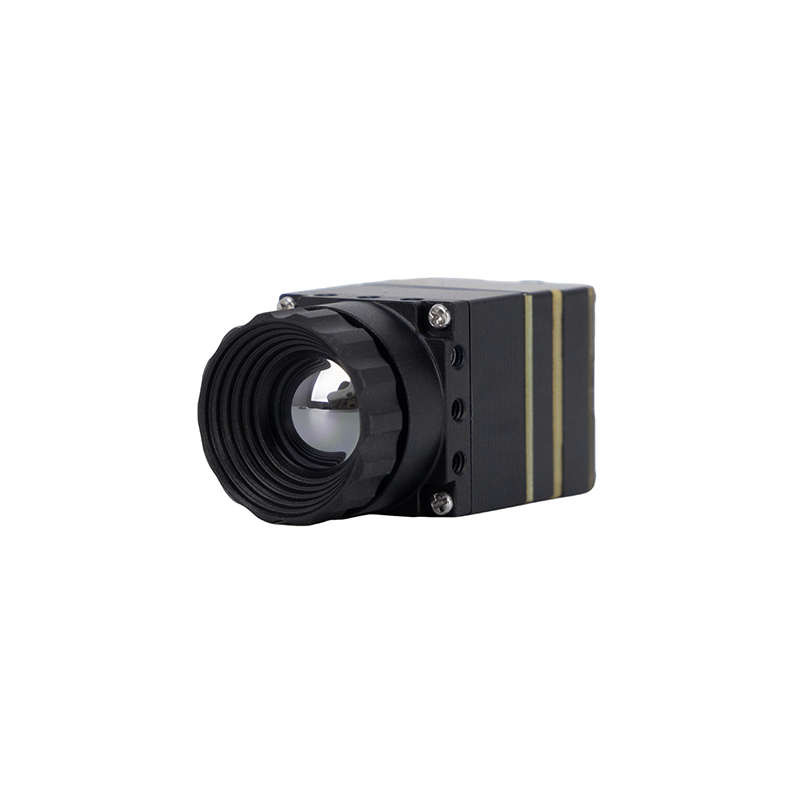
The Purpleriver thermal camera module is designed for industrial-grade precision in applications such as security, temperature monitoring, and drone integration. Featuring an uncooled infrared detector with a 12μm pixel pitch, it delivers high sensitivity and sharp thermal imaging. Its compact size, plug-and-play functionality, and multiple interfaces (MIPI/USB/CVBS) ensure versatile and rapid integration into various systems. Backed by a team with a Hong Kong University of Science and Technology background and former Huawei Hisilicon expertise, this module offers OEM/ODM customization to meet specific project requirements, ensuring unparalleled performance and adaptability.
| Array Resolution | 384 × 288 pixels |
| Pixel Pitch | 12μm Uncooled VOx |
| Spectral Band | 8 to 14μm (LWIR) |
| Thermal Sensitivity (NETD) | ≤ 40mK (@25°C, F/1.0) |
| Digital Interfaces | MIPI CSI-2 / USB 2.0 / CVBS Composite |
| Customization Options | Full OEM/ODM: Lens mounts, custom ISP algorithms, PCB form factors |
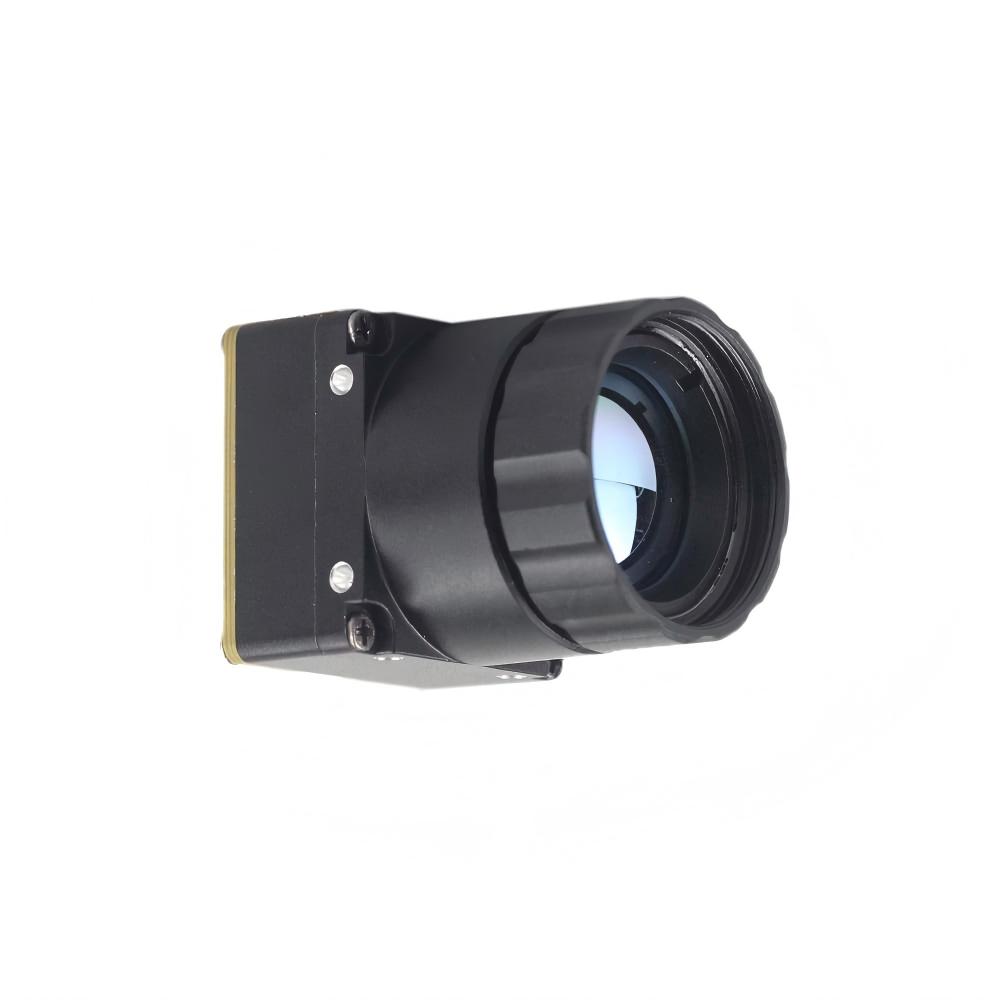
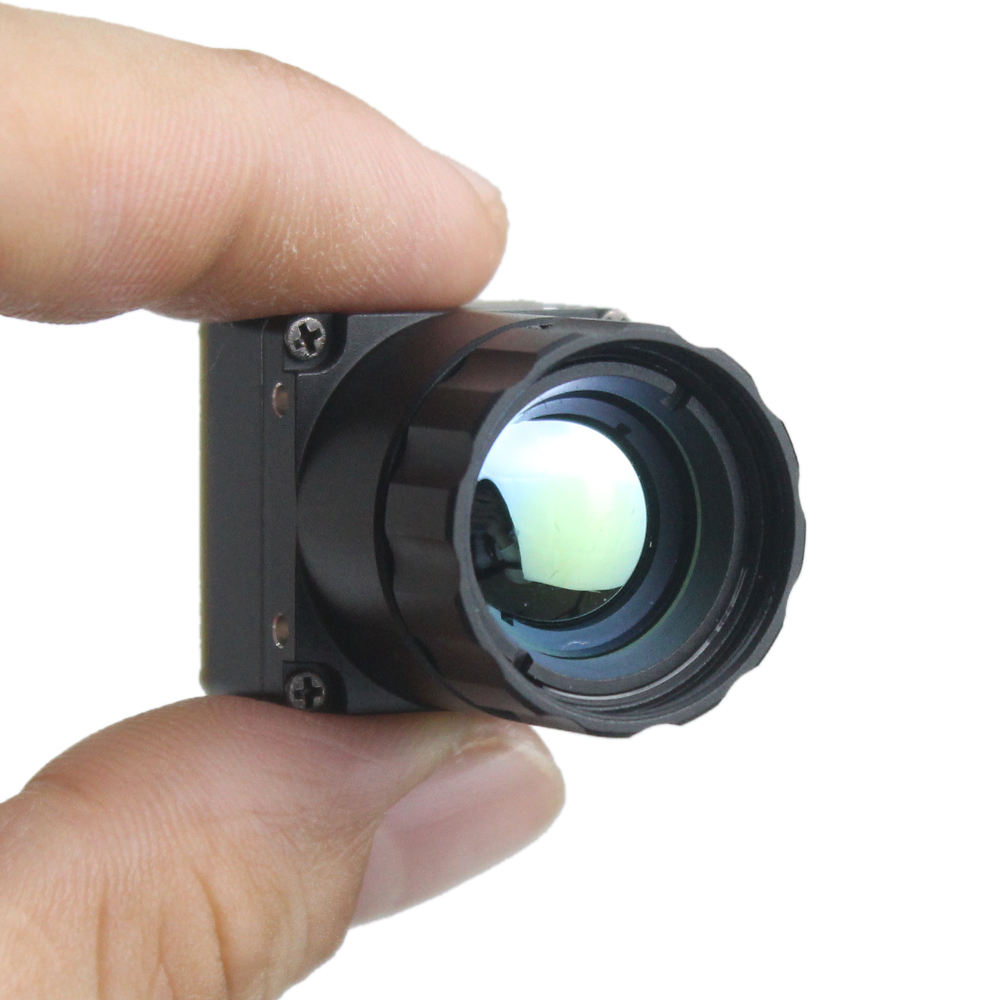
Mini 256 Uncooled LWIR Thermal Imaging Camera Module
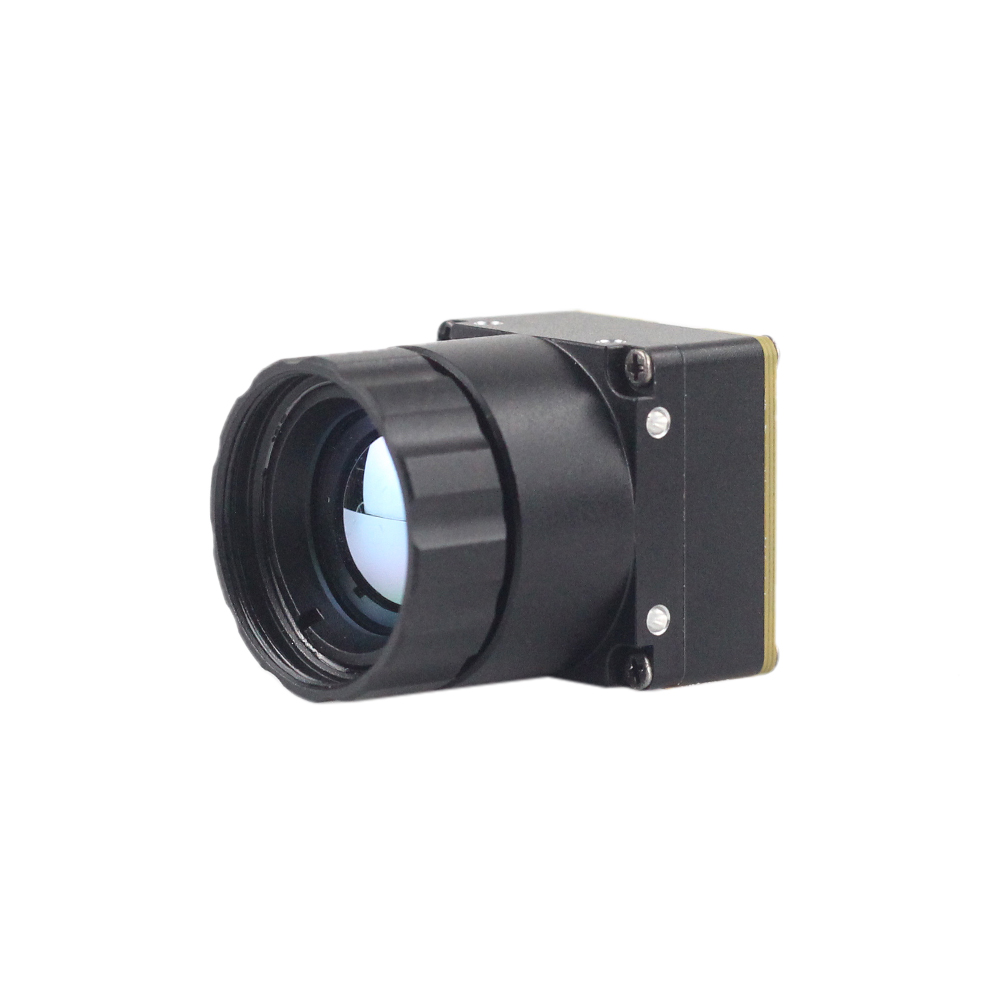
Mini 256 Uncooled LWIR thermal Camera Module adopts high-performance infrared detectors for ultra-clear thermal imaging and accurate temperature measurement. It captures infrared radiation and outputs a uniform thermal image with radiometry. Engineered for applications similar to DJI platforms and tactical mine detection, this ultra-lightweight thermal imaging core provides exceptional contrast and detection capabilities in highly restricted physical envelopes.
| Array Resolution | 256 × 192 pixels |
| Detector Pitch | 12μm LWIR VOx Detector |
| Frame Rate | 25Hz / 50Hz Real-Time Output |
| Thermal Sensitivity | ≤ 50mK (@25°C, F/1.0) |
| Key Application Target | Micro-drone payloads, mine detection, portable thermal systems |
7. Target Application Profiles: UAV, Security, and Robotics
1. Tactical Micro-UAVs and Airborne Gimbal Payloads
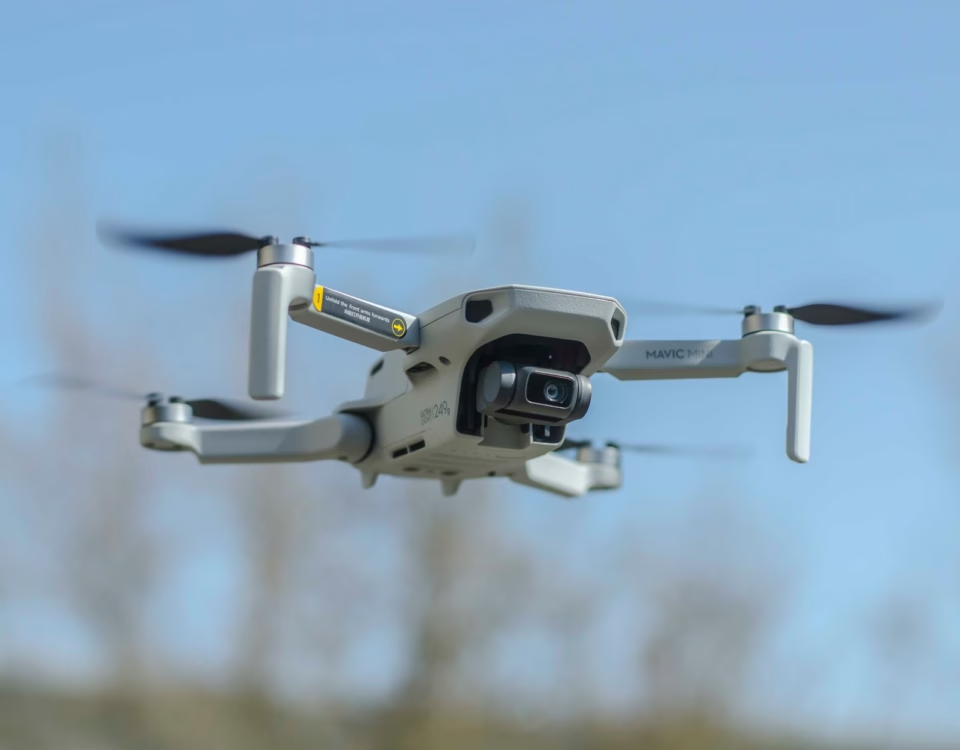
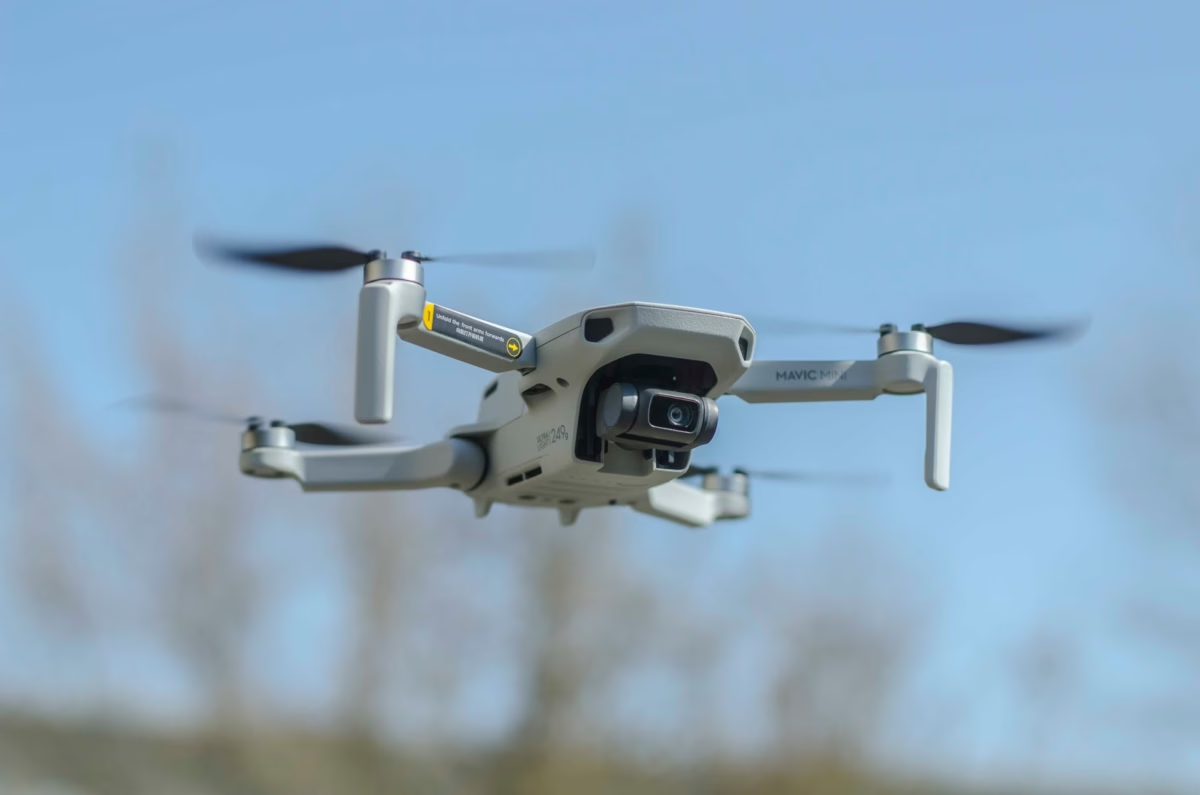
In airborne platforms, flight duration is dictated by payload mass and power draw. Deploying a 12μm non-radiometric thermal core cuts optical volume and structural weight by up to 40% compared to legacy 17μm cores. The streamlined video pipeline eliminates the need for secondary coprocessors on the gimbal carrier, allowing micro-UAVs to stay airborne longer during night reconnaissance, perimeter security, and search-and-rescue operations.
2. Perimeter Defense and PTZ Security Systems
Fixed security cameras and PTZ tracking turrets demand reliable human and vehicle detection across changing outdoor conditions. Non-radiometric modules equipped with dynamic contrast optimization adapt automatically to challenging environments—such as targets stepping out from tree lines or crossing hot asphalt. Standard 8-bit YUV or MIPI outputs feed directly into standard network camera SoCs running H.264/H.265 compression streams.
3. Industrial Autonomous Mobile Robots (AMRs)
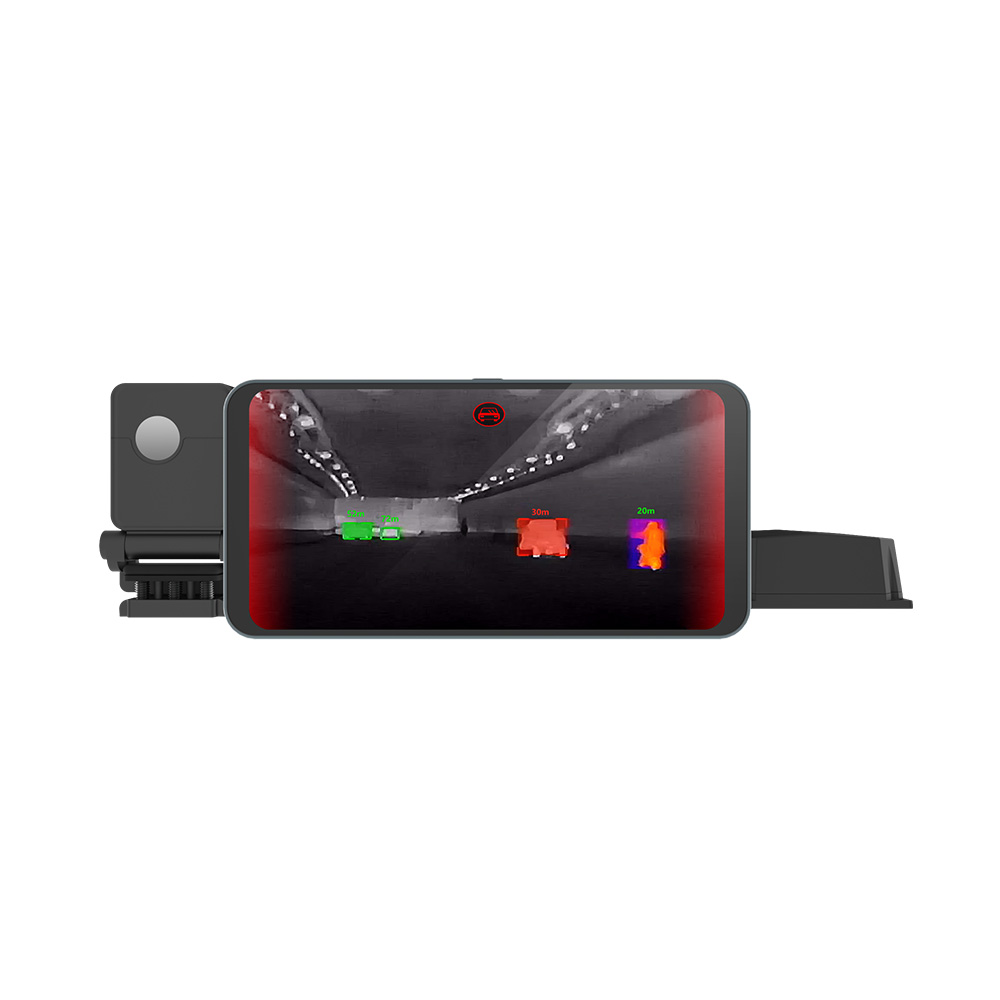
AMRs working in dusty warehouses, heavy industrial plants, or outdoor agricultural plots run into real issues with visible cameras and LiDAR when dust, steam, or sun glare hits the sensors. Adding non-radiometric thermal modules to the sensor suite provides illumination-independent obstacle detection and situational awareness with low computational latency.
8. Deep-Dive OEM Integration FAQ
What is the primary difference between non-radiometric and radiometric thermal camera modules?
When should engineering teams choose a non-radiometric thermal module over a radiometric one?
Can non-radiometric thermal modules be customized for specific embedded systems and specialized enclosures?
Hardware interfaces can be tailored to specific mechanical footprints, rigid-flex PCB configurations, or custom pinouts supporting MIPI CSI-2, USB Type-C, Parallel DVP, Ethernet, or analog CVBS. Optics can be customized with various focal lengths of athermalized Germanium or Chalcogenide lenses, with custom IP67-sealed optical barrels. ISP algorithms can be tuned for specialized target enhancement, custom color palettes, and motion filtering. Additionally, custom Board Support Packages (BSPs) and V4L2 drivers are available for embedded platforms including NVIDIA Jetson, Rockchip, NXP, and Raspberry Pi architectures.
9. Engineering Conclusion & Customization Roadmap
Choosing a non-radiometric thermal camera core provides an optimal balance of imaging performance, power efficiency, and integration simplicity for embedded systems. By bypassing the computational and thermal penalties of per-pixel temperature math, OEM developers can integrate high-resolution, uncooled 12μm LWIR imaging directly into SWaP-constrained airborne payloads, perimeter nodes, and mobile robotics platforms.
Purpleriver provides standard and fully customized thermal modules—including the MD Series 384×288 and Mini 256 LWIR platforms—to streamline your engineering cycle and maintain low unit costs.
Our OEM/ODM integration workflow follows a structured engineering cycle:
- ⚙️ Stage 1: Specification Review: Aligning optical FOV, array resolution, target frame rates, and hardware interfaces (MIPI CSI-2, USB, CVBS) with system requirements.
- ⚙️ Stage 2: Bench Evaluation & SDK Integration: Rapid prototyping using reference driver packages, V4L2 Linux kernels, and hardware evaluation kits.
- ⚙️ Stage 3: Mechanical & Electrical Customization: Custom PCB layout shaping, connector placement, and optical housing adaptation.
- ⚙️ Stage 4: Environmental & Optical Validation: Thermal chamber verification (-40°C to +80°C), vibration screening, and optical MTF testing.
- ⚙️ Stage 5: Production & Lifecycle Management: Scaled batch manufacturing backed by sustained firmware, driver, and component lifecycle support.
Contact Purpleriver's engineering team to request evaluation hardware, carrier board schematics, or customized firmware specifications for your next build.
📚 References & Further Reading
- Industry Standard: TE Connectivity
- Industry Standard: Wikipedia Infrared Imaging
- Related Guide: Портативный тепловизионный USB модуль
- Related Guide: Moduł kamery termowizyjnej do integracji UAV
- Related Guide: USB модуль тепловизора высокого разрешения