
دليل مطور وحدة SDK الحرارية للتكامل: دليل المطور للذكاء الاصطناعي المدمج والقياس الإشعاعي
7 سبتمبر 2026
نواة كاميرا الأشعة تحت الحمراء المخصصة: حلول تصوير حراري عالية الدقة للمصنعين الأصليين
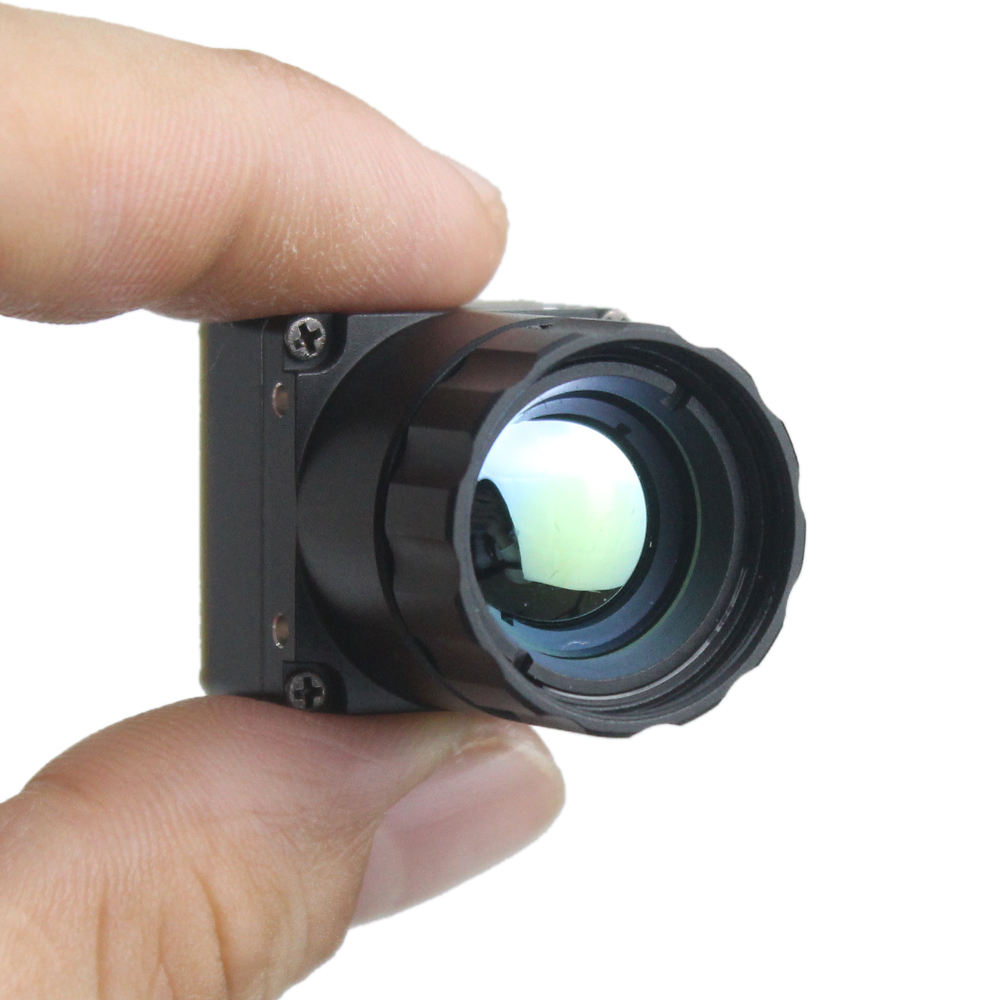
إليك خلاصة القول في هندسة الأنظمة الكهروضوئية الحديثة: لقد ولّت أيام القبول بالتسويات بين الحساسية البصرية فائقة الدقة، وميزانيات الحجم والوزن والطاقة (SWaP) الصارمة، والمعالجة الطرفية في الوقت الفعلي. سواء كنت تجهز حمولة لطائرة مسيّرة غير مأهولة قابلة للاستهلاك (UAS)، أو تبني منظار تصويب محمولاً يعمل بالأشعة تحت الحمراء الأمامية (FLIR)، أو تنشئ مصفوفات صناعية تنبؤية تعمل على مدار الساعة طوال أيام الأسبوع، فأنت بحاجة إلى وحدة قابلة للتكيف نواة كاميرا الأشعة تحت الحمراء المخصصة. يجب أن تعمل ككتلة بناء مفتوحة ومعيارية — وليس صندوقًا أسود احتكاريًا مغلقًا من مورّد مصنّع أصلي يرفض منحك التحكم على مستوى السجلات.
في الورشة، نشاهد بشكل روتيني محركات حرارية جاهزة قياسية تخنق البرامج الحقيقية. فهي تشع الحرارة مباشرة إلى مصفوفات كواشفها الخاصة، وتحزم أنماط تثبيت غريبة تفسد التوازن البصري الميكانيكي، وتفرض طبقات نقل فيديو احتكارية ثقيلة، وتشغّل برمجيات ثابتة منتفخة تحد من معدل الإطارات، وتفجّر زمن انتقال خط المعالجة، وتشل رقائق الذكاء الاصطناعي الطرفية الموجودة على متن المنظومة.
يتطلب حل هذه الاختناقات قابلية تخصيص كاملة من الأساس عبر سلسلة الإشارات والأجهزة بأكملها. عليك تكييف مصفوفة كاشف الميكروبولومتر غير المبرد طويل الموجة تحت الحمراء (LWIR)، وهندسة زجاج بصري غير متأثر بالحرارة، وتحديد إلكترونيات قراءة منخفضة الضوضاء من نوع الدوائر المتكاملة محددة التطبيقات (ASIC)، وإتاحة واجهات أصلية جاهزة للميدان مثل MIPI CSI-2 وUSB 3.0 وبث RJ45 RTSP. يفصّل هذا المخطط المتطلبات الفيزيائية والبصرية الميكانيكية والهندسية الكهربائية الدقيقة لتحديد وبناء ونشر نوى كاميرات حرارية من فئة المهام مخصصة للمصنعين الأصليين.
جدول المحتويات
- 👉 فيزياء وبنية الميكروبولومترات غير المبردة طويلة الموجة تحت الحمراء (LWIR)
- 👉 المقايضات الهندسية: تحسين SWaP-C في وحدات المصنعين الأصليين
- 👉 تخصيص العتاد والبصريات والواجهات الكهربائية
- 👉 مقارنة منتجات المصنعين الأصليين في العالم الحقيقي: النوى عالية الدقة مقابل نوى SWaP
- 👉 خطوط البرمجيات: المعايرة الإشعاعية وتكامل الذكاء الاصطناعي الطرفي
- 👉 الأسئلة الشائعة حول التكامل المتعمق
فيزياء وبنية الميكروبولومترات غير المبردة طويلة الموجة تحت الحمراء (LWIR)
في قلب أي نواة كاميرا تحت حمراء مخصصة تقع مصفوفة المستوى البؤري (FPA). تجاوز مبردات ستيرلينغ المبردة التي تتطلبها وحدات الأشعة تحت الحمراء متوسطة الموجة (MWIR) أو قصيرة الموجة (SWIR) العاملة عند نحو 77 كلفن؛ تعمل محركات المصنعين الأصليين الحديثة طويلة الموجة تحت الحمراء (LWIR) عبر نافذة النقل الجوي من 8 ميكرومتر إلى 14 ميكرومتر باستخدام كواشف حرارية غير مبردة. يصطدم التدفق الحراري للهدف بغشاء جسر معلق مجهري، مما يثير الشبكة البلورية للمادة ويعدّل مباشرة المقاومة الكهربائية لطبقة رقيقة نشطة.
إن كيفية بناء ذلك الجسر المعلق الصغير تحدد حد حساسيتك الحرارية، ونسبة الإشارة إلى الضوضاء الخام (SNR)، والثابت الزمني الحراري، واستقرار العمر الافتراضي تحت الصدمات الحرارية الشديدة.
مواد الكاشف: أكسيد الفاناديوم (VOx) مقابل السيليكون غير المتبلور (a-Si)
عندما تبدأ تصميم وحدة حرارية مخصصة، فإن أول مفترق طرق هو اختيار الطبقة الرقيقة النشطة للكاشف: أكسيد الفاناديوم (VOx) أو السيليكون غير المتبلور (a-Si). إليك كيفية مقارنتهما على منصة الاختبار:
- ✅ أكسيد الفاناديوم (VOx): يظل VOx هو المعيار الذي لا يُنافَس عبر التصوير الحراري الدفاعي والتكتيكي والصناعي عالي الدقة. فهو يوفر معامل درجة حرارة مقاومة (TCR) قويًا يتراوح بين -2% و-3% لكل كلفن عند درجات حرارة التشغيل المحيطة. ما يميز VOx حقًا هو مستوى ضوضاءه الإلكترونية 1/f (الوميض) المنخفض بشكل ملحوظ مقارنة بخيارات السيليكون. هذا المستوى المنخفض من الضوضاء الأساسية يسمح للنوى المخصصة بدفع عتبات فرق درجة الحرارة المكافئ للضوضاء (NETD) بشكل موثوق إلى ما دون 35 mK إلى 40 mK باستخدام فتحة f/1.0. عندما تعمل في ظروف باهتة منعدمة التباين—فكّر في ضباب بحري كثيف، أو عواصف غبارية شديدة، أو سماء رطبة ملبدة بالغيوم—فإن انخفاض NETD هو السبب الوحيد لالتقاط توقيع هدف قابل للتنفيذ بدلاً من شاشة مليئة بالطين الرمادي.
- ⚙️ السيليكون غير المتبلور (a-Si): يعمل السيليكون غير المتبلور عبر مصانع الطباعة الحجرية CMOS القياسية، حيث يترسب طبقات الكاشف النشطة مباشرة فوق رقائق القراءة. وهذا يُبقي تكاليف قائمة المواد (BOM) للكميات الكبيرة منخفضة للأجهزة الاستهلاكية. لكنك تدفع الثمن في الأداء: يُظهر a-Si اضطرابًا ذريًا بنيويًا، مما يرفع مستويات ضوضاء 1/f الداخلية ويثبّت TCR عند نحو -1.5% إلى -2.0% لكل كلفن. معظم مستشعرات a-Si تحوم حول NETD بين 50 mK و70 mK. ما لم يفرض هدف تكلفة تجاري متطرف قرارك، تختار الفرق الكهروضوئية ذات الخبرة VOx في كل مرة للبنى الحرجة للمهام.
تطور تباعد البكسلات: التحول إلى 12 µm والتدرج البصري
دفعت المسابك الحرارية تباعد البكسلات من عقد 25 µm و17 µm القديمة مباشرة إلى تباعد بكسلات الميكروبولومتر 12 µm, ، بينما تعمل الأبحاث والتطوير المتطورة الآن على تحسين الطباعة الحجرية 10 µm و8 µm. بالنسبة لفريق التصميم البصري الميكانيكي، فإن تقليص هذا التباعد يعيد تشكيل البنية الفيزيائية بالكامل.
يحدد تباعد البكسلات مباشرة بصمة السيليكون النشطة لمصفوفة المستوى البؤري عند أي دقة محددة. خذ محرك دقة 640×512 كلاسيكي: مبني على عملية 17 µm، يبلغ قطر المستشعر 13.93 مم (بمساحة نشطة 10.88 مم × 8.60 مم). انقل نفس مصفوفة 640×512 بالضبط إلى عملية 12 µm، وتنكمش المساحة النشطة إلى 7.68 مم × 6.14 مم (القطر: 9.83 مم). هذا تقليص في المساحة النشطة بأكثر من 50%. المكاسب الهندسية الناتجة هائلة:
- ✅ بصريات مدمجة وخفيفة الوزن: لتقديم نفس مجال الرؤية اللحظي (IFOV) وحجم بقعة الهدف بالضبط، تحتاج نواة 12 µm إلى طول بؤري أقصر بنسبة 29.4% من مصفوفة 17 µm. الأطوال البؤرية الأقصر تخفض فورًا الفتحة البصرية الصافية المطلوبة للحفاظ على دلو ضوء f/1.0. وهذا يزيل كتلة وحجمًا كبيرين من الجرمانيوم البصري أحادي البلورة، وهو كثيف ومكلف.
- ✅ كثافة معلومات مكانية مضاعفة أربع مرات: إذا كان لديك حجرة حمولة موجودة مبنية حول محرك 17 µm بدقة 640×512، يمكنك استبدالها بنواة كاميرا تحت حمراء مخصصة أصلية بدقة 1280×1024 (SXGA) وتباعد 12 µm ضمن نفس الغلاف البصري الفيزيائي بالضبط. تقفز من 327,680 بكسل إلى 1,310,720 بكسل. هذا يضاعف أربع مرات بكسلاتك على الهدف، مما يمدد بشكل كبير مسافات الكشف والتعرف والتحديد (DRI) وفق معايير جونسون دون إضافة غرام واحد من الوزن إلى منصتك.
تغليف المستشعر: التغليف على مستوى الرقاقة (WLP) مقابل العلبة المعدنية الخزفية
لا يمكن لجسور الميكروبولومتر أن تعمل في الهواء الطلق؛ فالجزيئات الجوية تخلق توصيلًا حراريًا طفيليًا ينزف طاقة الفوتون الواردة بالكامل. لكي تعمل، يجب أن يجلس جسر الكاشف في فراغ محكم وعميق ($<10^{-3}\text{ Torr}$). لعقود من الزمن، حقق المصنعون ذلك بتغليف الكواشف داخل أغلفة تفريغ خزفية أو معدنية ضخمة، مع إحكام إغلاقها بنوافذ من الياقوت أو الجرمانيوم وجامعات غاز غير قابلة للتبخر مُفعّلة (NEG).
تعتمد نوى الكاميرات المدمجة اليوم على التغليف على مستوى الرقاقة (WLP). يتم محاذاة رقاقة غطاء مصنوعة من السيليكون أو الجرمانيوم المحفور — مزودة بتجاويف داخلية مُصنّعة بدقة ميكرومترية وطلاءات مضادة للانعكاس — وربطها بإحكام محكم مباشرةً برقاقة كاشف الميكروبولومتر تحت تفريغ صلب قبل تقطيع الرقاقة إطلاقًا. يقلص WLP الارتفاع الرأسي لبصمة المستشعر بنسبة تصل إلى 70%، ويخفض كتلة الهيكل إلى جرامات، ويعزز المتانة الميكانيكية ضد أحمال الصدمات التي تتجاوز 1,500g عند نبضات 0.4 مللي ثانية. لنقل خطوط المستشعر التفاضلية متعددة الجيجابت إلى لوحات المعالجة دون التقاط ترددات لاسلكية شاردة من مصادر تغذية التحويل، نعتمد على أنظمة ربط بيني عالية الكثافة ذات خطوة دقيقة من موردين موثوقين مثل تي إي كونيكتيفيتي لحماية نقاء الإشارة التناظرية.
المقايضات الهندسية: تحسين SWaP-C في وحدات المصنعين الأصليين
كل بناء إلكتروبصري مدمج يتلخص في إدارة الحجم والوزن والطاقة والتكلفة (SWaP-C). عند هندسة نواة كاميرا تحت حمراء مخصصة في هيكل طائرة أو مركبة أرضية أو جهاز محمول، فأنت توازن باستمرار بين تبديد الحرارة والسحب الكهربائي وحمل المعالجة الزائد.
معماريات معالجة إشارات الصور (ISP) بين ASIC وFPGA
محرك المعالجة خلف مصفوفة المستوى البؤري (FPA) يتولى الرفع الرقمي الثقيل: تصحيح عدم الانتظام ثنائي النقطة (NUC)، واستبدال البكسلات التالفة (BPR)، وضغط المدى الديناميكي (DRC)، وتحسين التفاصيل الرقمية (DDE). تاريخيًا، اعتمدت الوحدات الحرارية المخصصة بشدة على مصفوفات البوابات القابلة للبرمجة ميدانيًا (FPGAs) مثل شرائح Xilinx Artix أو Zynq. تمنحك FPGAs منطقًا قابلًا لإعادة التشكيل، لكنها تحمل عقوبات واضحة في الحمولات الضيقة:
- ⚙️ الطاقة الزائدة والانفلات الحراري: شرائح FPGA عالية عدد البوابات التي تشغّل خطوط أنابيب ISP متعددة الساعات تستهلك من 3.0 واط إلى 8.0 واط من الطاقة المستمرة. احبس ذلك داخل محور دوران محكم الإغلاق IP67 أو منظار محمول مغلق، وستولّد أعمدة حرارية موضعية تسخّن مصفوفة الكاشف بشكل غير متساوٍ.
- ⚙️ مساحة اللوحة وزمن الإقلاع: تتطلب FPGAs بنية تحتية داعمة: منظمات هبوط منخفضة متعددة (LDOs)، ومتسلسلات طاقة مخصصة، وذاكرة إقلاع SPI flash، وذاكرة DDR RAM عالية السرعة. هذا يضخم النواة بسهولة إلى كومة ثلاثية اللوحات سميكة تتطلب ثوانٍ للإقلاع.
نوى الأشعة تحت الحمراء المخصصة الحديثة تقلص هذا الحجم باستخدام دارات متكاملة مخصصة للتطبيق (ASICs). توصيل المرشحات المكانية وحسابات عدم الانتظام ومنطق تنسيق الإطارات مباشرةً في سيليكون مخصص منخفض الطاقة يخفض سحب طاقة النواة إلى أقل من 1.2 واط عند معدلات إطارات كاملة 50Hz/60Hz. كما يلغي معالج ISP من نوع ASIC دورات الاحتفاظ بمخزن الإطارات الخارجي، مما يُبقي زمن انتقال خط الأنابيب من الزجاج إلى السلك عند أرقام دون الإطار ($<30\text{ ms}$). أداء أقل من 30 مللي ثانية هو المتطلب الأساسي لحلقات التتبع المغلقة لأنظمة مكافحة الطائرات بدون طيار (C-UAS) وحلقات تثبيت الدفاع الصاروخي الضيقة.
التبديد الحراري الداخلي وتعويض الانجراف
الميكروبولومتر غير المبرد يكتشف أجزاءً ضئيلة من الدرجة. لا يستطيع التمييز بين فوتونات الأشعة تحت الحمراء القادمة عبر العدسة والحرارة الشاردة المنبعثة من محث تحويل ساخن أو معالج طرفي يبعد نصف بوصة. إذا تسربت الحرارة الداخلية إلى مصفوفة المستوى البؤري بشكل غير متساوٍ، تظهر في صورتك تظليل مكاني ثقيل، وضوضاء نمط ثابت مقززة (FPN)، وقراءات درجة حرارة إشعاعية منجرفة.
ترويض الاقتران الحراري الداخلي يتطلب انضباطًا صلبًا على مستوى اللوحة:
- ⚙️ عزل ركيزة المستشعر: افصل لوحة FPA ميكانيكيًا وحراريًا عن محرك المعالجة الرقمية الرئيسي باستخدام فواصل PEEK منخفضة التوصيل الحراري مصممة هندسيًا أو فتحات عزل محفورة في مجموعة لوحة FR4.
- ⚙️ Design Dedicated Heat Paths: Drop thick continuous 2 oz or 3 oz copper ground planes into your PCB, stitch thermal via arrays beneath heat-generating components, and drop high-performance thermal gap pads ($>6\text{ W/m}\cdot\text{K}$) directly between the power stage and the external housing. The heat needs to sink into the outer chassis, completely avoiding the lens mount and optical barrel.
- ⚙️ Thermistor Multiplexing: High-end custom engines place calibrated NTC thermistors across the housing: right at the optical lens collar, on the interface board, and directly behind the bolometer die. The internal firmware continuously reads this thermal mesh, dynamically adjusting spatial mathematical offset compensation tables in real time. That keeps the image uniform without constantly firing an intrusive mechanical shutter.
تخصيص العتاد والبصريات والواجهات الكهربائية
A truly usable custom infrared core must adapt to its environment. The mechanical lens mount and electrical pinouts are the physical bridge between raw thermal physics and your software stack.
Optical Materials: Monocrystalline Germanium vs. Chalcogenide Glass
Standard optical glasses like BK7 or fused silica are completely opaque across the 8 µm to 14 µm band. To build an LWIR optical assembly, you rely on two core optical media:
- ⚙️ الجرمانيوم أحادي البلورة (Ge): Germanium remains the gold standard for high-performance thermal optics. It delivers an exceptionally high refractive index ($n \approx 4.0$ at 10 µm) combined with remarkably low chromatic dispersion. This high index lets optical engineers design compact, fast lenses ($f/1.0$ to $f/1.2$) using just two or three elements while keeping spherical aberrations well controlled. However, Germanium has a massive thermal focal drift coefficient ($dn/dt \approx 3.96 \times 10^{-4}\text{ K}^{-1}$), meaning uncompensated lenses quickly lose focus as ambient temperatures shift. Germanium also suffers from thermal runaway, going nearly opaque to LWIR energy once its temperature crosses 100°C.
- ⚙️ Chalcogenide Glass (e.g., GASIR, AMTIR): Chalcogenide glasses are amorphous alloys formed from sulfur, selenium, and tellurium. They feature substantially lower $dn/dt$ values than Germanium, making them ideal for passive optical athermalization. By pairing single-point diamond turned (SPDT) Germanium elements with precision molded Chalcogenide elements inside a balanced aluminum or invar barrel, your lens stack holds diffraction-limited focus across wide operating environments (-40°C to +80°C) without the weight, complexity, and power draw of a motorized focus drive.
Electrical Data Transport & Protocol Interfacing
Every payload presents its own wiring and interface challenges. A modular custom infrared core should offer native, solderable, or pin-compatible interfaces to suit the host platform:
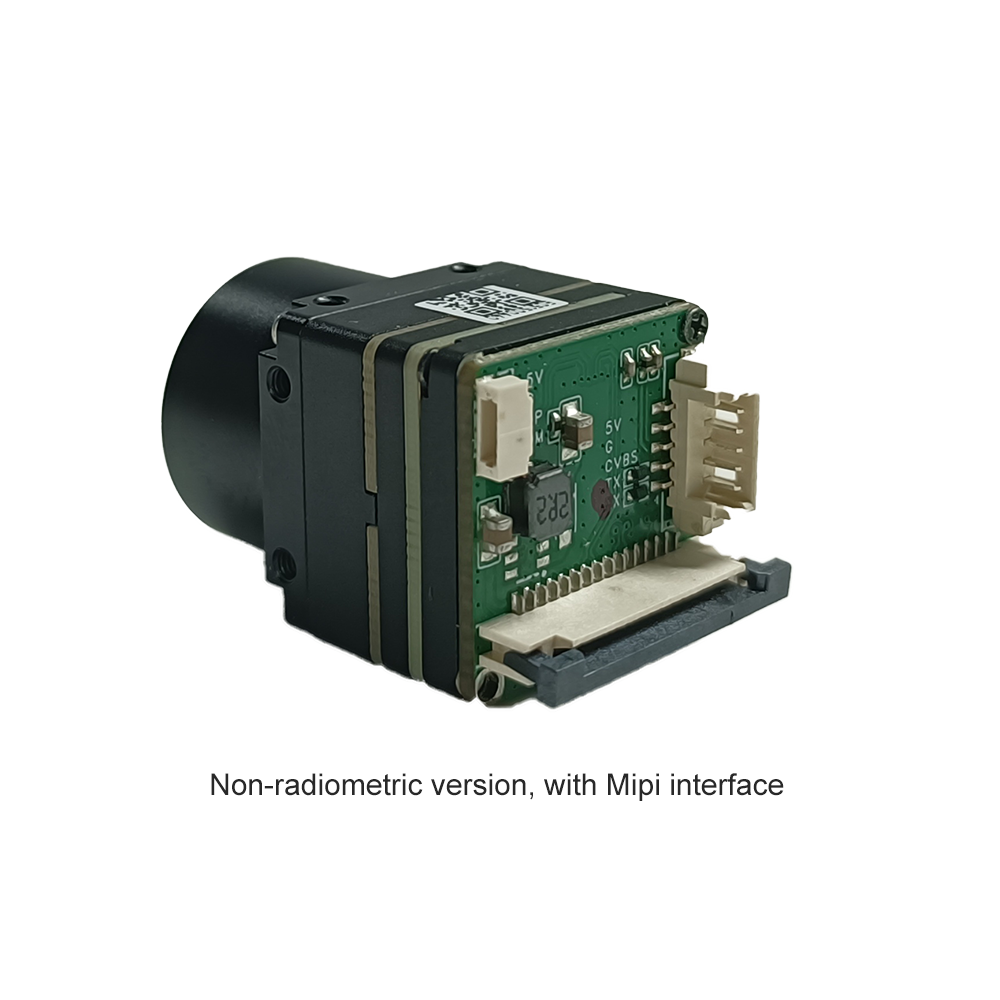
- ✅ MIPI CSI-2: The modern standard for direct interconnects to System-on-Chips (SoCs) like the NVIDIA Jetson Orin family, NXP i.MX8, or Rockchip RK3588. MIPI CSI-2 bypasses protocol-conversion hardware, pushing raw 14-bit or 16-bit thermal pixel streams over low-voltage differential pairs directly into the host processor's hardware Image Signal Processor or unified memory pool.
- ✅ USB 3.0 (UVC Compliant): The go-to interface for bench test benches, industrial automated optical inspection (AOI), and PC-based systems. Operating on native UVC drivers across Linux, Windows, and macOS, a UVC core streams raw 16-bit greyscale radiometric data or 8-bit colorized frames right out of the box, while exposing a simple virtual COM port for core register configuration.
- ✅ RJ45 Ethernet IP (RTSP / ONVIF): Built for fixed facility infrastructure, process monitoring, and perimeter security. An onboard network chip handles H.264 or H.265 compression, feeding an RTSP stream formatted to ONVIF Profile S and T standards directly into your Video Management System (VMS) without extra intermediary hardware.
- ✅ CVBS Analog (NTSC/PAL): Even with modern digital networks, direct analog composite video remains unmatched for ultra-low latency analog FPV downlinks on attritable drones and tactical helmet displays. To see how these modules perform in the air under dynamic vibration, review our field footage from this الفيديو التشغيلي لوحدة كاميرا التصوير الحراري مع طائرة بدون طيار flight trials.
مقارنة منتجات المصنعين الأصليين في العالم الحقيقي: النوى عالية الدقة مقابل نوى SWaP
To see how these architectural choices play out on real flight hardware, let's look at two production-ready cores designed for distinct mission envelopes: the long-range كاميرا تصوير حراري عالية الدقة غير مبردة بالأشعة تحت الحمراء 1280*1024 LWIR and the tight-envelope وحدة كاميرا استشعار حراري غير مبردة RJ45 CVBS RTSP IP بدقة 640*512.
Platform A: High Resolution Uncooled Infrared 1280*1024 Thermal Imaging LWIR Camera
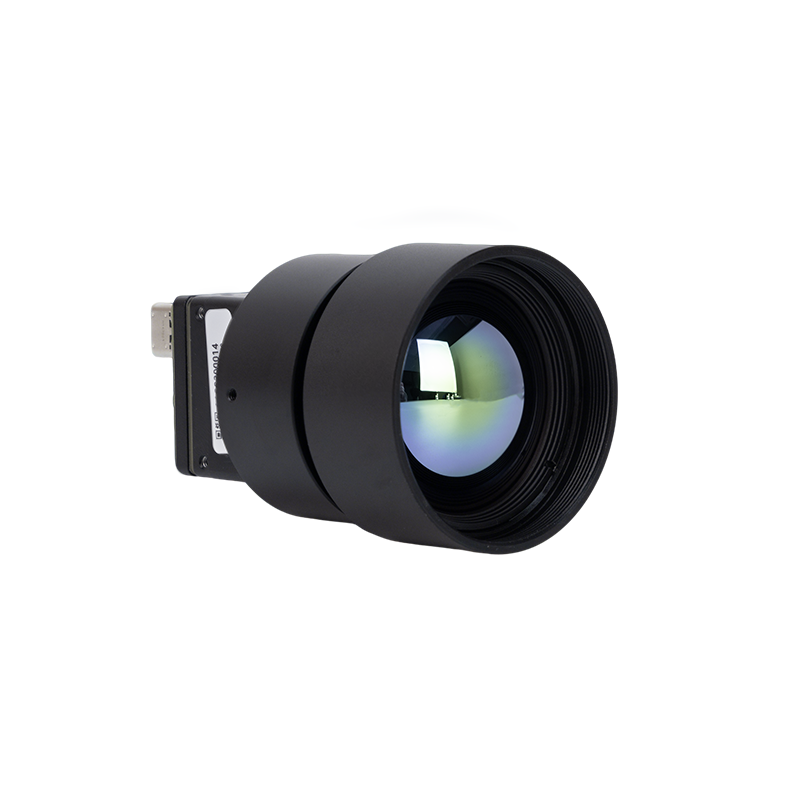
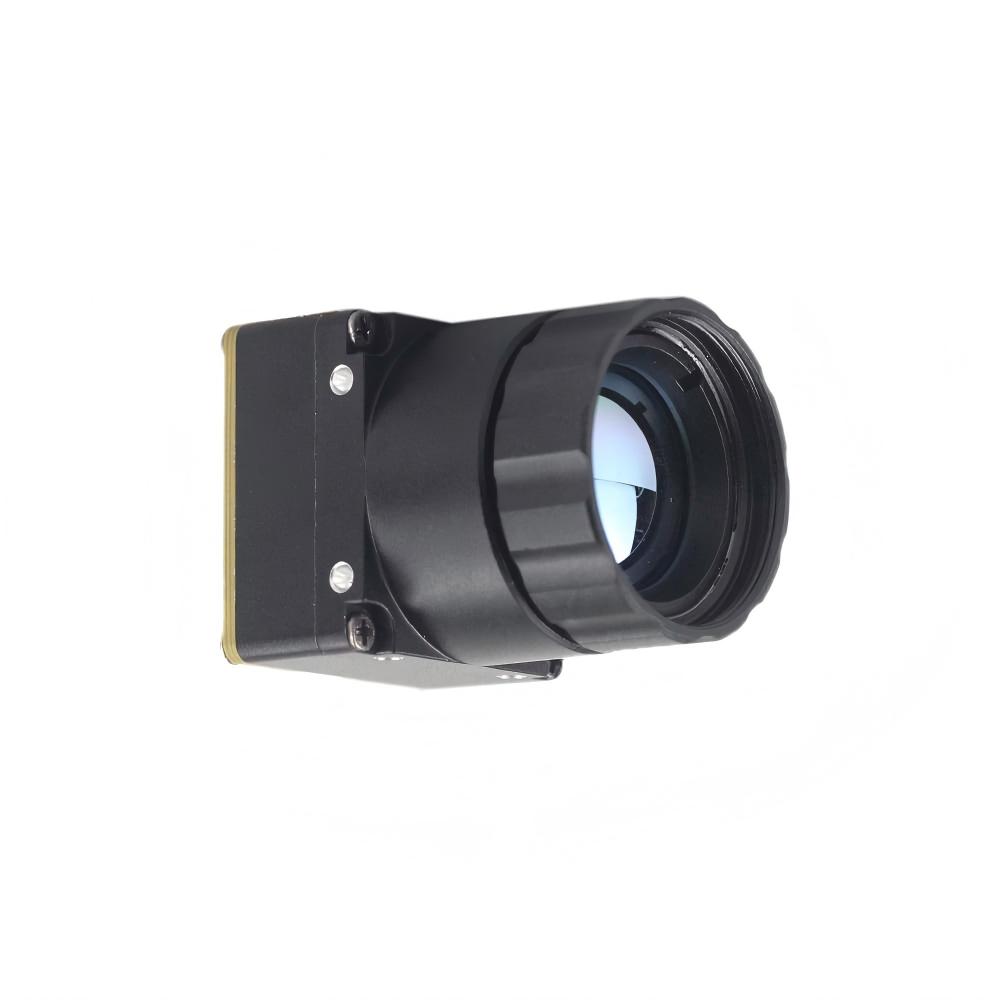
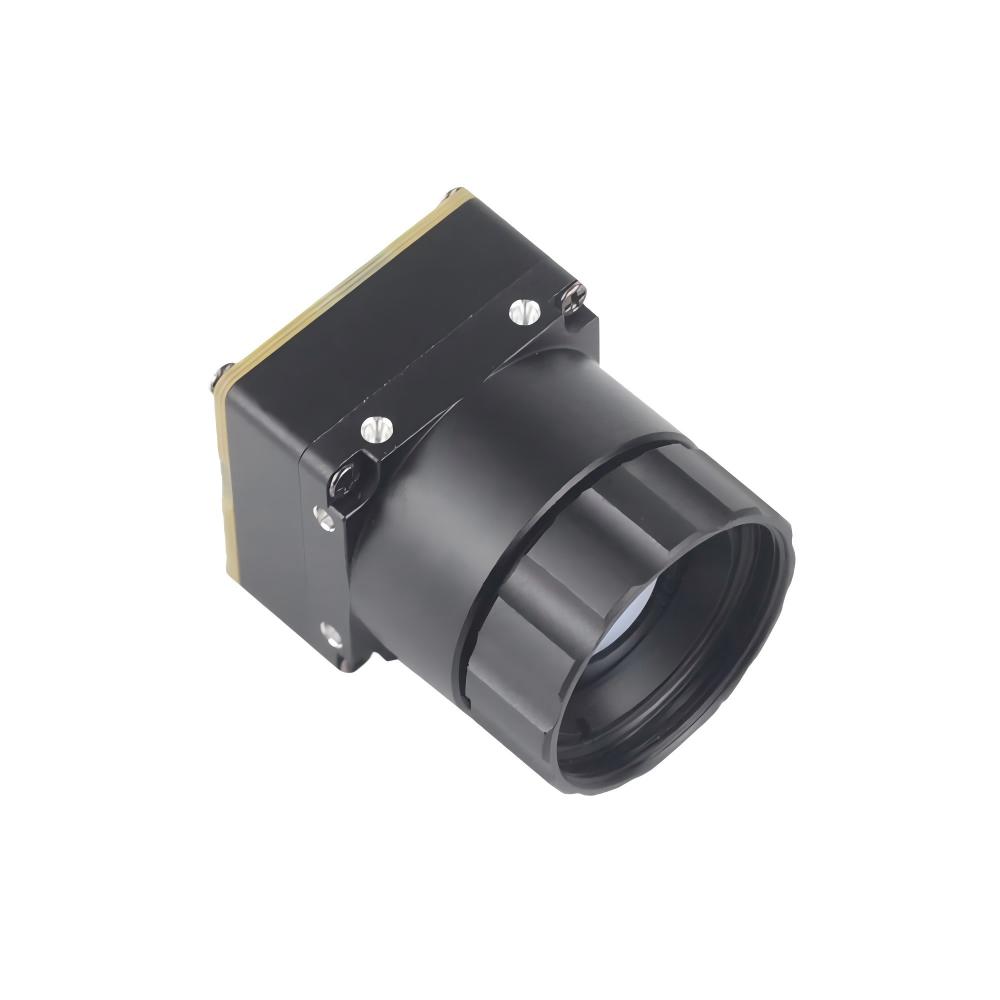
The 1280×1024 custom infrared camera core is engineered for mission-critical electro-optical applications where spatial target resolution, instantaneous field of view, and extreme standoff distance are paramount. Fabricated with a high-sensitivity uncooled Vanadium Oxide (VOx) focal plane array, this core packs 1.31 million detector pixels on a tight 12 µm pitch, achieving an industry-leading NETD sensitivity of <35 mK. The native SXGA resolution provides four times the pixel density of standard 640×512 VGA thermal modules, allowing operators to detect, recognize, and track human and vehicular targets at multi-kilometer distances without requiring excessive optical magnification.
Optically, the module comes standard with a factory-calibrated 25 mm athermalized high-transmission Germanium lens, maintaining absolute focus integrity across the entire industrial temperature envelope. The optomechanical interface supports customized optical configurations, including 19 mm, 35 mm, 50 mm fixed optics, and motorized continuous zoom groups. The digital core supports dual-output pipelines: high-speed digital streaming via USB Type-C and raw parallel CMOS/MIPI CSI-2, alongside serial control via RS-232/RS-422 and UART. Full-frame radiometric output enables pixel-by-pixel temperature extraction, making it an ideal core for border surveillance arrays, counter-UAS tracking pedestals, and automated predictive substation monitoring.
Platform B: Uncooled Infrared RJ45 CVBS RTSP IP 640*512 Thermal Sensor Camera Module
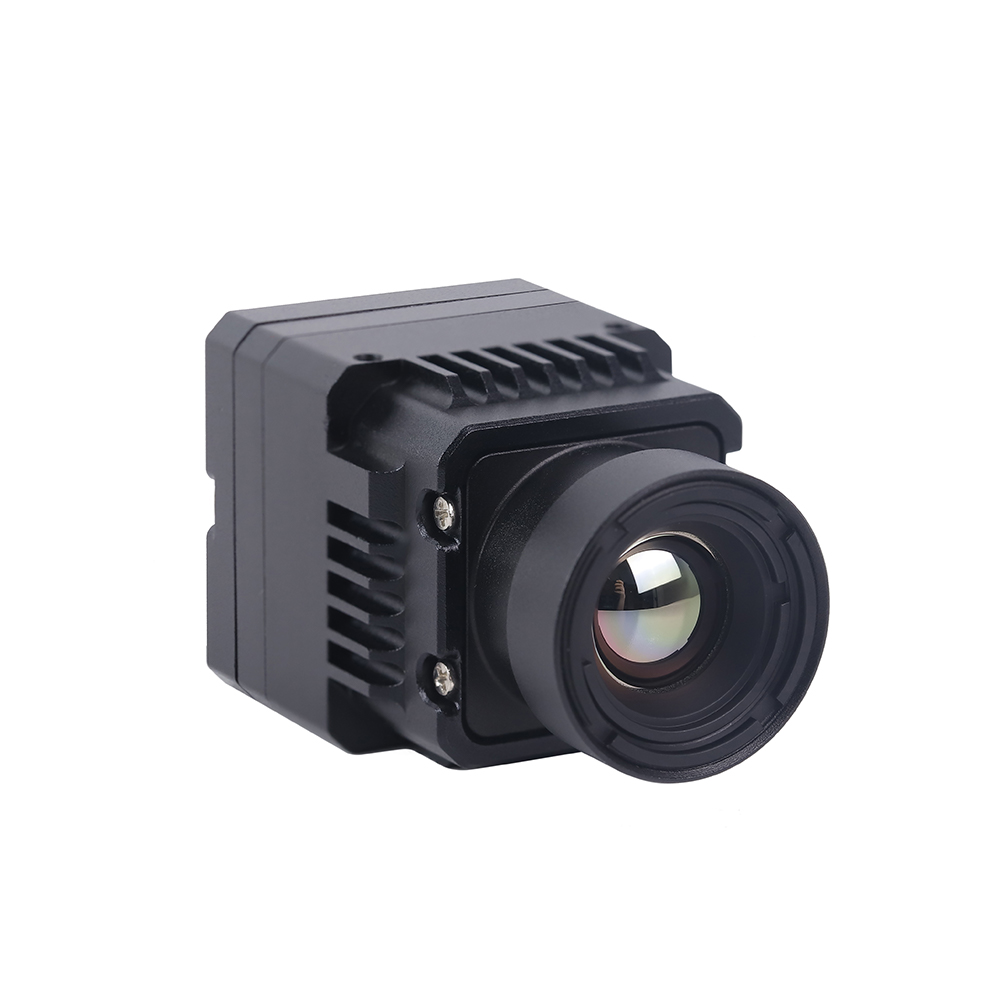
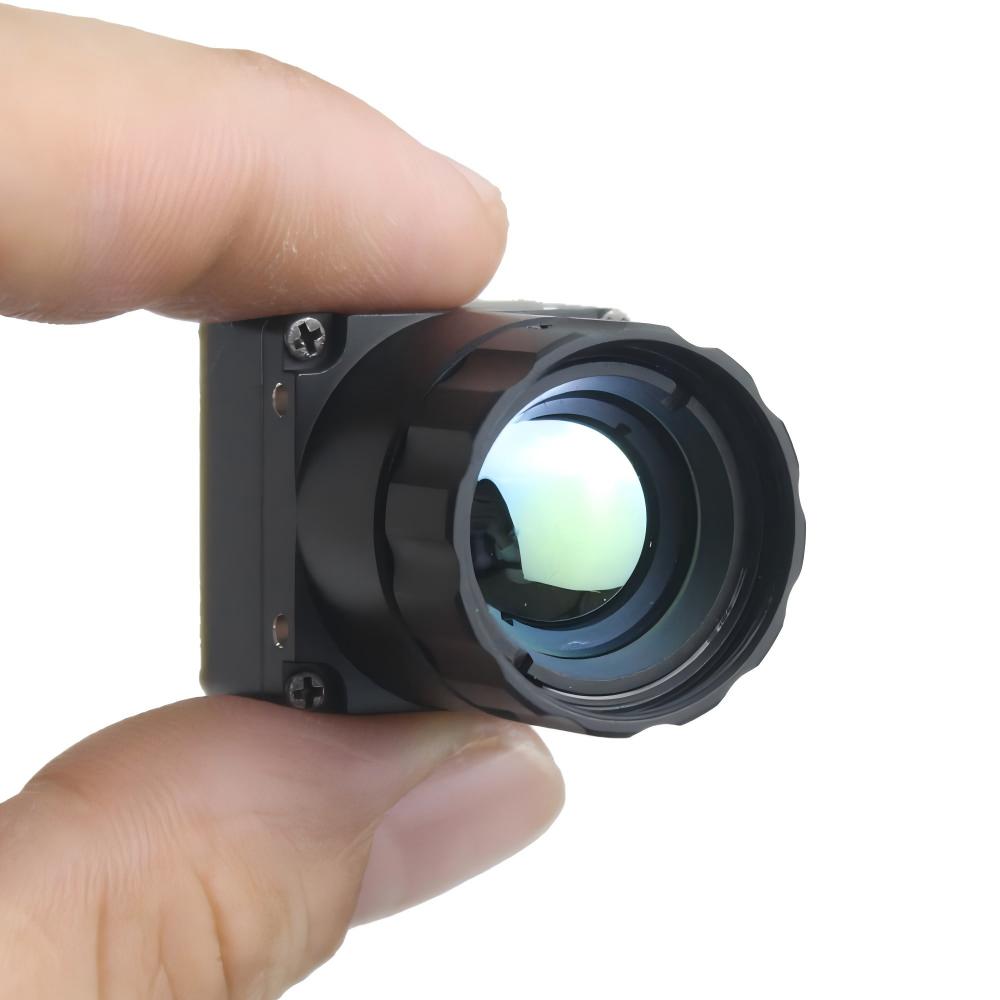
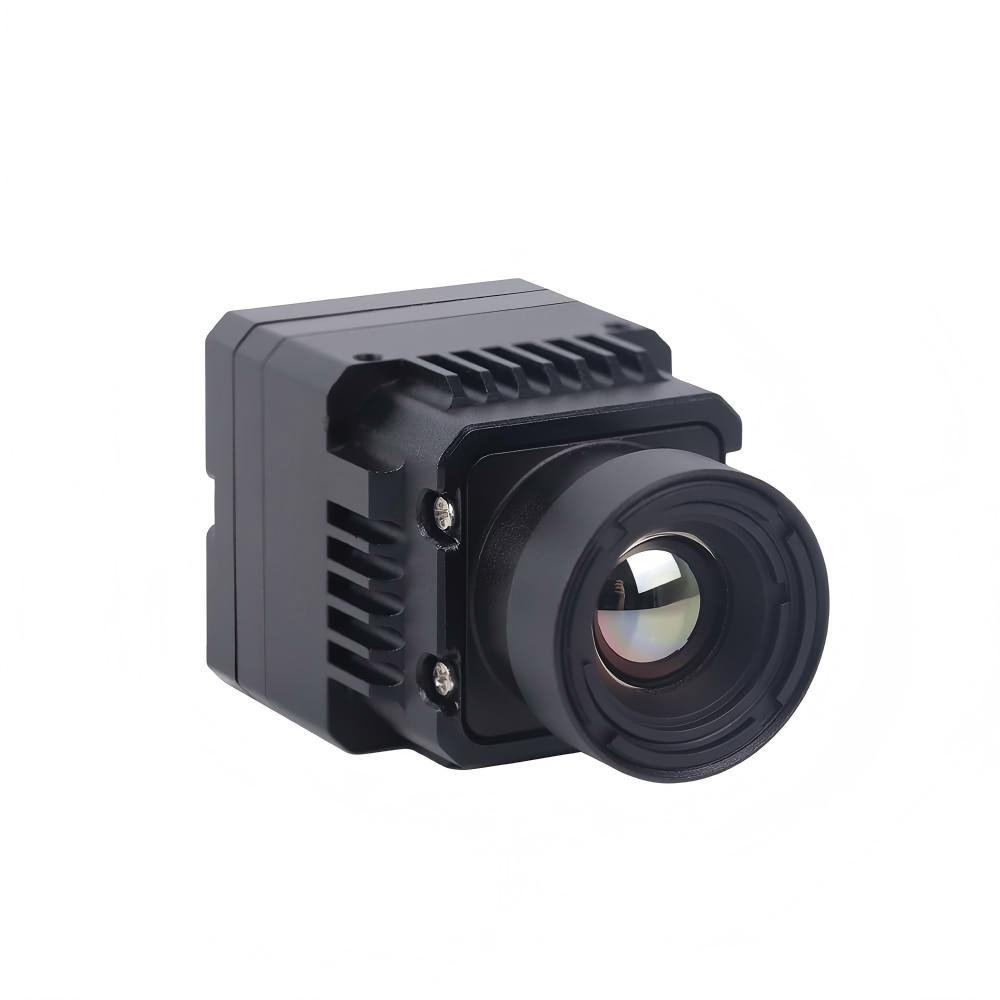
Designed specifically to meet stringent SWaP parameters in uncrewed aerial vehicles, miniature robotic platforms, and compact surveillance systems, this 640×512 thermal core is driven by a specialized low-power imaging ASIC engine. Built around a 12 µm VOx microbolometer array operating at <40 mK NETD, this module prioritizes integration flexibility by natively incorporating both an analog CVBS interface and a complete hardware-encoded RJ45 IP network stack on a miniature electronics footprint. Total core power consumption is throttled to less than 1.2 Watts, preventing parasitic heat buildup in tightly enclosed drone gimbals.
The module encodes real-time H.264/H.265 RTSP video streams natively, allowing system designers to connect the core directly into network switches, wireless IP data links, or standard Ethernet routers without requiring external SBC encoding hardware. Concurrently, the analog CVBS port feeds direct, uncompressed video signals to legacy drone FPV transmitters with sub-frame transmission latency. With customizable optical mounts accommodating ultra-compact 9.1 mm, 13 mm, and 19 mm athermalized lenses, this module provides the definitive hardware blueprint for tactical micro-gimbals and autonomous mobile robot (AMR) obstacle-avoidance suites.
Here is an apples-to-apples technical matrix comparing these platforms across baseline integration metrics:
| معلمة المواصفة | High-Resolution Core (1280×1024) | SWaP-Optimized Core (640×512) |
|---|---|---|
| نوع الكاشف والمادة | مصفوفة مستوية بؤرية بمقياس ميكروبولومتر VOx غير مبرد | مصفوفة مستوية بؤرية بمقياس ميكروبولومتر VOx غير مبرد |
| دقة المصفوفة | 1280 × 1024 بكسل (SXGA) | 640 × 512 pixels (VGA) |
| تباعد البكسل | 12 ميكرومتر | 12 ميكرومتر |
| النطاق الطيفي | 8 ميكرومتر إلى 14 ميكرومتر (LWIR) | 8 ميكرومتر إلى 14 ميكرومتر (LWIR) |
| الحساسية الحرارية (NETD) | < 35 mK (@ f/1.0, 300K) | < 40 mK (@ f/1.0, 300K) |
| Frame Rates Supported | 25 هرتز / 30 هرتز / 50 هرتز | 25 Hz / 30 Hz / 50 Hz / 60 Hz |
| استهلاك الطاقة | Approx. 2.0 W – 2.8 W (Config Dependent) | < 1.2 W (Ultra-Low Power ASIC) |
| Hardware Video Interfaces | USB Type-C, Raw 16-bit CMOS, MIPI CSI-2 | RJ45 Ethernet (IP RTSP), Analog CVBS |
| Optical Configurations | 25 mm Athermalized (Options: 19/35/50 mm, CZ) | Fixed Focus: 9.1 mm, 13 mm, 19 mm |
| Primary Target Use-Case | C-UAS, Long-Range Defense, Fixed Radiometry | UAV Micro-Gimbals, Tactical Scopes, AMRs |
خطوط البرمجيات: المعايرة الإشعاعية وتكامل الذكاء الاصطناعي الطرفي
Capturing raw infrared energy on the microbolometer bridge is only the first step. You have to turn those microvolt resistance changes into stable digital data that an edge computer or targeting algorithm can parse without human intervention.
Raw Digital Numbers (DN) vs. Radiometric Temperature Linear (T-Linear)
When pulling raw data out of your custom core, you generally run one of two operational modes depending on whether your software cares about quantitative surface thermography or dynamic situational vision:
- ⚙️ Raw Digital Numbers (DN Mode): In this mode, the core bypasses radiometric conversion and pumps out uncalibrated 14-bit or 16-bit counts directly from the ADC post-NUC. These Digital Numbers represent relative thermal contrast across the scene. They do not account for external atmosphere, optics transmissivity, or housing drift. If your system runs automated computer vision pipelines—like training a neural network to detect humans, vehicles, or airborne drones—DN mode is the correct choice. You skip radiometric processing overhead and slash end-to-end latency.
- ⚙️ Temperature-Linear (T-Linear Mode): If you are monitoring substation transformers, detecting industrial pipeline leaks, or managing structural firefighting ops, relative intensity is useless; you need calibrated temperatures per pixel. In T-Linear mode, the onboard ASIC uses multi-point factory blackbody calibration tables to convert raw readings directly into absolute temperature values. The stream delivers a linear output where each LSB maps directly to temperature (for instance, 0.1 K or 0.01 K per count). For specialized environments, our industrial thermal camera selection guide walks through dynamic range scaling from -20°C up past 1200°C.
Non-Uniformity Correction: Mechanical Shutter vs. Shutterless Algorithms
Every single bolometer pixel on that micro-machined array has a slightly different baseline resistance and thermal response curve. Without real-time corrections, fixed-pattern noise (FPN) rapidly blinds your image behind an impenetrable curtain of static.
You have two practical approaches to address this drift:
- ⚙️ تصحيح عدم التجانس بالغالق الميكانيكي: A solenoid drops an insulated paddle in front of the array for 200 ms to 400 ms. The core samples that uniform surface, computes offset corrections across the pixel field, and updates its active correction table. It is rock-solid and straightforward, but that physical shutter has moving parts that can fail under shock, makes an audible click, and freezes your video feed. In a terminal missile-guidance track or a high-speed drone dive, a 300 ms video blackout is completely unacceptable.
- ✅ تصحيح عدم الانتظام القائم على المشهد بدون غالق (SBNUC): For high-reliability, zero-freeze architectures, we rely on Scene-Based NUC. The DSP continuously evaluates frame-to-frame pixel statistics and platform motion vectors. By mathematically isolating fixed spatial noise from moving scene dynamics over time, the algorithm updates correction offsets without moving mechanical parts. Zero freeze, zero mechanical click, and zero moving parts to wear out. For an in-depth breakdown of SBNUC implementation parameters, consult the thermal module integration guide.
Embedded Edge AI Pipelines (NVIDIA Jetson & Embedded Linux)
Most modern custom cores bypass display panels altogether, routing thermal frames straight into edge neural networks. Bringing high-bandwidth 16-bit thermal video into an NVIDIA Jetson Orin Nano, AGX Orin, or modern embedded Linux platform requires a clean memory strategy.
Look at the memory pipeline: you cannot afford to have your host CPU copying multi-megapixel 16-bit frames around system RAM. We write custom Video4Linux2 (V4L2) driver layers that set up direct DMA ring buffers. When raw thermal frames arrive over MIPI CSI-2 or USB3, DMA routes them straight into unified CUDA or NPU memory using hardware-accelerated memory APIs like NVIDIA's NvBuffer. This zero-copy path completely bypasses CPU memory bottlenecks, freeing hardware accelerators to run heavy edge networks—like YOLOv8-Thermal, MobileNet-SSD, or custom infrared segmentation models—at over 50 frames per second with minimal CPU load.
الأسئلة الشائعة حول التكامل المتعمق
How do I integrate a custom infrared camera core with single-board computers like Raspberry Pi or NVIDIA Jetson for low-latency streaming?
Can a custom thermal camera core be tailored for SWaP-constrained applications like drones and handheld scopes?
What level of customization is supported for OEM/ODM thermal imaging modules?
📚 المراجع والقراءات الإضافية
- المعيار الصناعي: High-reliability interconnect systems and electromechanical board interfaces from تي إي كونيكتيفيتي
- دليل ذو صلة: Comprehensive selection parameters for machine vision in our industrial thermal camera selection guide
- دليل ذو صلة: Step-by-step firmware and hardware integration protocols detailed in the thermal module integration guide
- Field Demonstration: Real-world flight payload verification shown in the الفيديو التشغيلي لوحدة كاميرا التصوير الحراري مع طائرة بدون طيار