
أفضل وحدات الكاميرا الحرارية لراسبيري باي: دليل البث عالي الدقة LWIR (2024)
5 يونيو 2026
دليل تكامل وحدة الكاميرا الحرارية IR: حلول OEM عالية الدقة للطائرات بدون طيار والذكاء الاصطناعي الطرفي
9 يونيو 2026
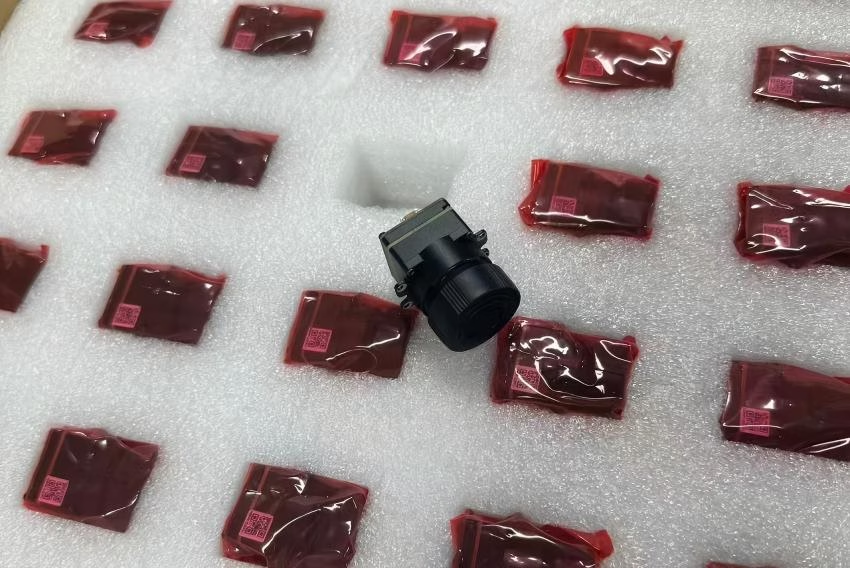
وحدة كاميرا حرارية عالية الدقة: نوى LWIR غير مبردة بدقة 640x512 للطائرات بدون طيار والتركيبات اليدوية
إليكم الأمر: عالم العتاد الصناعي يمر بتحول هائل وهادئ، والسبب في ذلك كله أننا نعبئ قوة استشعار أكبر للأشعة تحت الحمراء ذات الموجة الطويلة (LWIR) في حزم أصغر وأخف وزنًا. حتى وقت ليس ببعيد، إذا كنت تريد تصويرًا حراريًا عالي الدقة، كنت مضطرًا لتركيب أنظمة حرارية مبردة ضخمة ومستهلكة للطاقة وباهظة الثمن بشكل جنوني. كانت تلك الوحوش تستخدم مبردات ستيرلنغ المبردة بالتبريد المتكاملة فقط لخفض درجة حرارة المستشعر إلى مستويات النيتروجين السائل. إذا حاولت وضع واحدة على طائرة بدون طيار تجارية، لسقطت من السماء بسبب الوزن وحده.
اليوم، الأمور مختلفة. في الورشة، نرى وحدات كاميرا حرارية عالية الدقة تستخدم تقنية الميكروبولومتر غير المبرد بدقة 640x512 التي تضاهي الدقة المكانية القديمة ذات المستوى العسكري. وهي تفعل ذلك في مساحة صغيرة بما يكفي لتركيبها على طائرة رباعية المراوح تجارية أو لحامها مباشرة على لوحة PCB مخصصة ومبنية يدويًا. يفصل هذا الدليل الفيزياء الواقعية، وبروتوكولات الاتصال على مستوى اللوحة، واستراتيجيات تكامل النظام التي تحتاجها لبناء هذه النوى المتقدمة غير المبردة LWIR بدقة 640x512 في مشروعك القادم.
جدول المحتويات
- 👉 فيزياء دقة LWIR: 640x512 مقابل المصفوفات القديمة
- 👉 الميكروبولومترات غير المبردة: الفيزياء الحرارية واختيار المواد
- 👉 معماريات النظام: النوى المدمجة ASIC مقابل FPGA
- 👉 كتالوج المنتجات المفصل والجداول التقنية
- 👉 مخطط تكامل العتاد: الواجهات، الطائرات بدون طيار، ولوحات SBC المخصصة
- 👉 الهندسة البصرية: اختيارات العدسات (5 مم إلى 150 مم) وحسابات iFOV
- 👉 الأسئلة الشائعة الهندسية: البث منخفض الكمون، الحدة، والنقل اليدوي
فيزياء دقة LWIR: 640x512 مقابل المصفوفات القديمة
لنبدأ بالفيزياء الأساسية. يغطي نطاق LWIR الطيف الكهرومغناطيسي من 8 إلى 14 ميكرومترًا. هذه منطقة حاسمة لأن الغلاف الجوي للأرض لديه توهين منخفض جدًا هنا، مما يسمح للانبعاثات الحرارية من الأجسام والبشر والآلات بالسفر لمسافات طويلة بأقل فقد للإشارة. لالتقاط هذه الانبعاثات، يستخدم نواة الكاميرا لدينا مصفوفة مستوية بؤرية (FPA) معبأة بآلاف المقاومات المجهرية تسمى الميكروبولومترات التي تغير مقاومتها عندما تصطدم بها الطاقة الحرارية.
عندما تبني نظامًا للتعرف الآلي على الأهداف، أو مراقبة الحرارة الصناعية، أو رسم خرائط البحث والإنقاذ بالطائرات بدون طيار، فإن الدقة ليست مجرد صور جميلة. إنها تتحكم مباشرة في حد التردد المكاني وكثافة البكسل. إذا لم يكن لديك عدد كافٍ من البكسلات، لا يمكنك تشغيل خوارزميات الرؤية الحاسوبية بشكل موثوق. دعونا نرى كيف تتراكم الدقات الشائعة على منصة الاختبار:
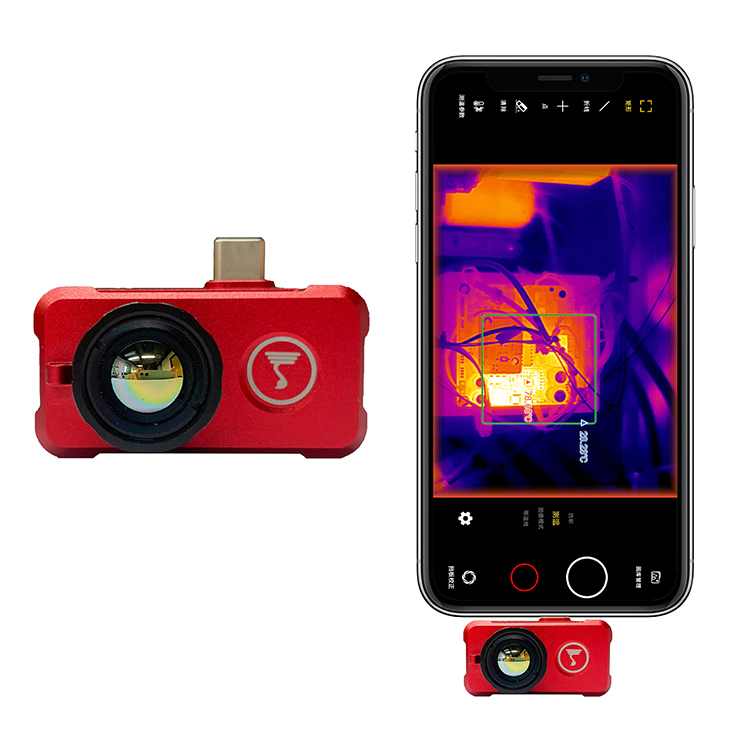
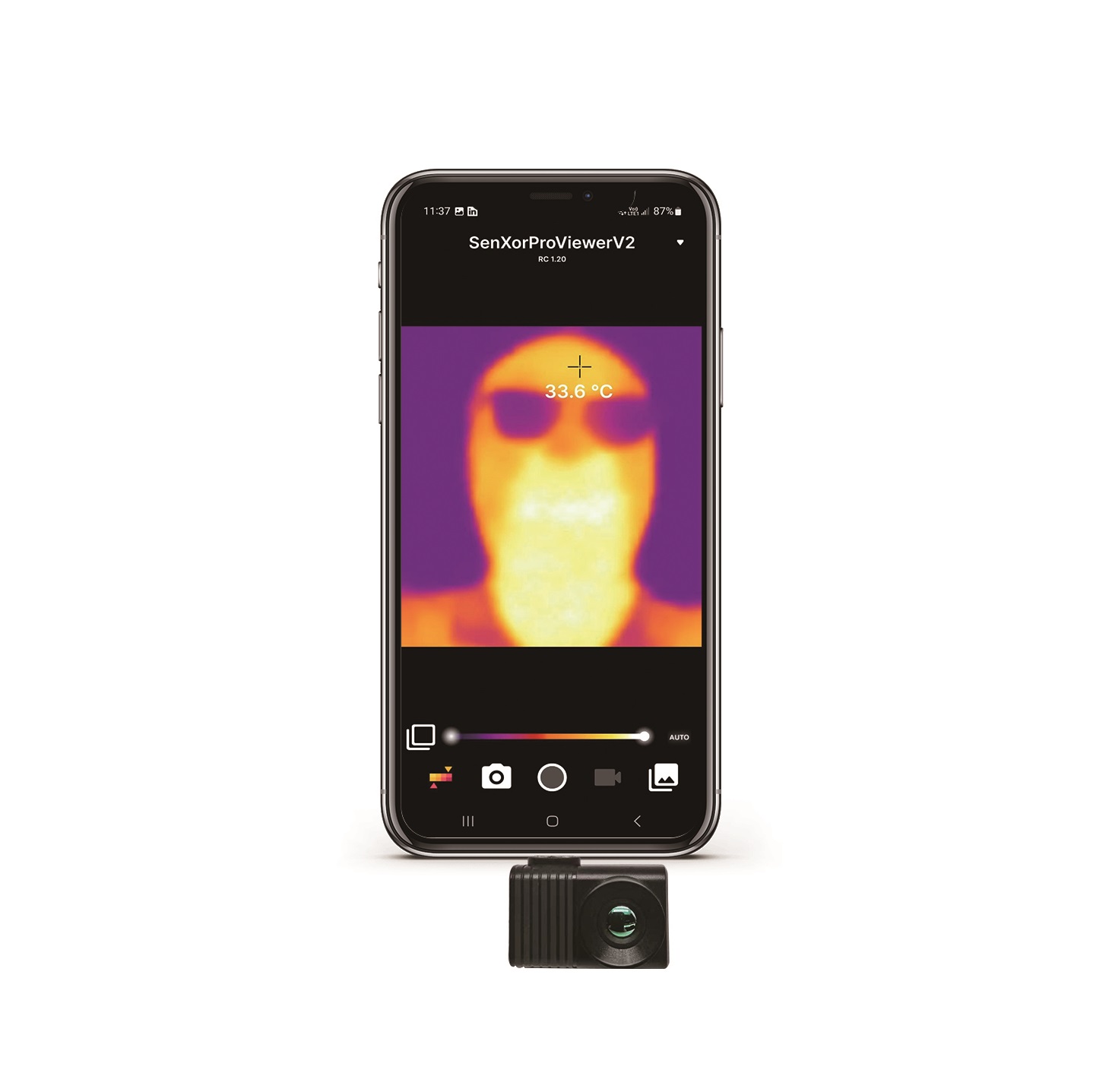
- ✅ 256x192 (49,152 بكسل): هذا ما تجده في العتاد الأساسي مثل ملحقات USB الحرارية الصغيرة للهواتف الذكية. إنها تعمل بشكل مقبول لفحص لوحة قواطع كهربائية من على بعد متر، لكن حاول تصنيف هدف على بعد 30 مترًا وسترى فقط كتلة ضبابية ومتقطعة البكسل.
- ✅ 384x288 (110,592 بكسل): كان هذا هو الخيار القياسي متوسط المدى لعمليات التفتيش البسيطة. لكنه يقصر عند إقرانه بعدسة واسعة؛ يصبح مجال الرؤية واسعًا، لكن الدقة المكانية تنخفض، مما يجعلك أعمى عن الشذوذ الحراري الصغير.
- ✅ 640x512 (327,680 بكسل): هذا هو المعيار الاحترافي. تحصل على ما يقرب من 300% من البكسلات الخام أكثر من مصفوفة 384x288 وزيادة هائلة بنسبة 660% عن مستشعرات 256x192.
في الميدان، هذه القفزة في الدقة تغير كل شيء. أولاً، إنها تعزز بشكل مباشر مدى الكشف والتعرف والتمييز (DRI) لديك. باستخدام نفس البصريات بالضبط، يمكنك رصد تواقيع الأهداف على مسافة ثلاثة أضعاف ما توفره النوى من فئة 384. ثانياً، تحصل على اقتصاص رقمي نظيف. إذا قمت بقص إطار 640×512 بمقدار 2x، فستظل لديك صورة قابلة للاستخدام بشكل كبير بدقة 320×256. جرب ذلك مع مستشعر منخفض الدقة 256×192، وستبقى مع فوضى مكونة من بكسلات بدقة 128×96 عديمة الفائدة للخوارزميات الآلية.
أخيراً، تساعد كثافة البكسل الأعلى في منع "النزف" الحراري. يحدث هذا عندما تنتقل البصمة الحرارية لجسم صغير (مثل مقاومة تثبيت سطحي معطلة على لوحة PCB) إلى البكسلات المجاورة لأن العينات المكانية للمستشعر لا تستطيع حلها. مستشعر 640×512 الأصلي المعزول إلى 12 ميكرومتر يعالج هذه المشكلة، محتجزاً القياس للمكون الدقيق الذي تختبره.
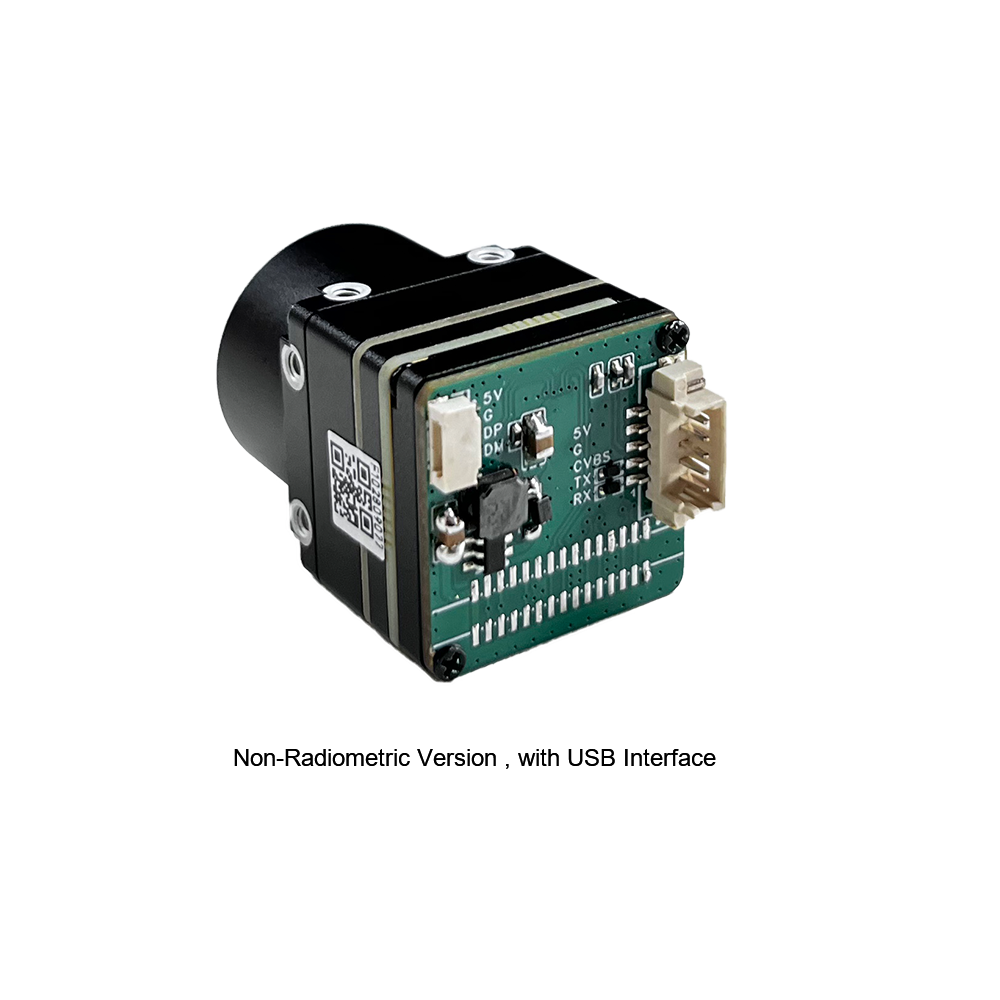
الميكروبولومترات غير المبردة: الفيزياء الحرارية واختيار المواد
تعمل الميكروبولومترات غير المبردة بالسماح للأشعة تحت الحمراء بالقيام بالتسخين الفيزيائي. كل بكسل عبارة عن صفيحة صغيرة معلقة فوق ركيزة من السيليكون على أرجل دقيقة التشغيل. هذا التعليق يعزل البكسل حرارياً، مما يسمح له بالتسخين من فوتونات الأشعة تحت الحمراء الواردة. طبقة من مادة الثرمستور على الصفيحة تغير مقاومتها الكهربائية مع تغير درجة الحرارة، ويتم قياس هذا التغير بواسطة الدائرة المتكاملة لقراءة الخرج (ROIC) الموجودة أسفلها.
لعبة المواد تنحصر في خيارين:
- ⚙️ أكسيد الفاناديوم (VOx): VOx هو الخيار الممتاز للأجهزة. إنه يوفر معامل درجة حرارة مرتفع للمقاومة (TCR)، مما يعني أن مقاومته تتغير بشكل كبير حتى مع تغير طفيف في درجة الحرارة. كما أنه يُظهر ضوضاء 1/f (وميض) منخفضة، مما يمنحك فرق درجة حرارة مكافئ للضوضاء (NETD) أفضل بكثير. إذا كان على نظامك العمل في درجات حرارة متجمدة أو أمطار موسمية غزيرة، فإن VOx هي المادة التي تريدها.
- ⚙️ السيليكون غير المتبلور (a-Si): هذه المادة أسهل في الدمج في خطوط تصنيع السيليكون القياسية، مما يبقي التكاليف منخفضة. لكن a-Si تعاني عادةً من مستويات ضوضاء أعلى وحساسية حرارية أقل، مما يجعلها عرضة لانحراف الإشارة عندما يسخن هيكل الكاميرا أثناء التشغيل.
باستخدام ميكروبولومترات VOx بمسافة تباعد بكسلي ضيقة تبلغ 12 ميكرومتر، تحقق النوى الحديثة عالية الدقة NETD أقل من 40 ملي كلفن (وغالباً أقل من 30 ملي كلفن في الأنظمة المعايرة جيداً). بعبارات بسيطة، يمكن للنواة حل فروق درجات الحرارة حتى 0.03 درجة مئوية، مما يمنحك انتقالات حرارية نظيفة حتى في البيئات المسطحة منخفضة التباين.
لكن المستشعر ليس سوى نصف المعركة. الزجاج البصري العادي يحجب أطوال موجات الأشعة تحت الحمراء طويلة الموجة (LWIR) بالكامل، لذا لا يمكنك استخدام عدسات الكاميرا القياسية. بدلاً من ذلك، نستخدم مواد غريبة مثل الجرمانيوم أحادي البلورة عالي النقاء (Ge) أو بصريات زجاج الكالكوجينيد المقولب المتخصصة.
تقوم شركات تصنيع البصريات من الدرجة الأولى مثل لايت باث تكنولوجيز بتصميم وطلاء هذه العدسات المتخصصة. تطبق طلاءات مضادة للانعكاس (AR) ومقواة بالكربون لضمان تجاوز النفاذية البصرية 90% في النطاق 8-14 ميكرومتر. هذا يمنع الانعكاسات والتشوه عند حواف المستشعر، محافظاً على التفاصيل عبر كامل إطار 640×512.
معماريات النظام: النوى المدمجة ASIC مقابل FPGA
عندما تصمم بناءً مخصصاً، فإن أجهزة المعالجة داخل النواة هي التي ستحدد ميزانية الطاقة، والمساحة الفيزيائية، وسرعة بدء التشغيل لديك. سيكون عليك الاختيار بين مصفوفة البوابات القابلة للبرمجة حقلياً (FPGA) والدائرة المتكاملة محددة التطبيق (ASIC).
قبل اتخاذ هذا الاختيار، دعنا ننظر إلى ما يفعله المعالج فعلياً بشكل فوري:
- تصحيح عدم التجانس (NUC): يضبط اختلافات التصنيع عبر جميع وحدات البكسل البالغ عددها 327,680 بكسلًا فرديًا. يستخدم غالقًا ماديًا داخليًا لحجب المستشعر، وأخذ قراءة موحدة لدرجة الحرارة لإعادة المعايرة وتوحيد مخرجات البكسل (تصحيح المجال المسطح).
- استبدال البكسل التالف (BPR): يكتشف وحدات البكسل الميتة أو العالقة على السخونة ويستبدل قيمها عن طريق استيفاء البيانات من وحدات البكسل المجاورة في الوقت الفعلي.
- تحسين التفاصيل الرقمية (DDE): يطبق مرشحات مكانية لتحسين الخطوط الدقيقة والحواف دون تعزيز الضوضاء الخلفية.
- التحكم التلقائي في الكسب (AGC): يضغط البيانات الحرارية الخام ذات 14 بت إلى تدفق 8 بت يمكن للشاشات وأجهزة العرض التعامل معه فعليًا، باستخدام خوارزميات مثل معادلة الرسم البياني التكيفية المحدودة التباين (CLAHE).
دعونا ننظر في كيفية تعامل منصات المعالجة مع هذه العمليات تحت قيود تصميم مختلفة:
النوى المدفوعة بـ FPGA
تمنحك FPGA مرونة كبيرة لتحميل خوارزميات مخصصة لمعالجة البكسل أو تتبع الهدف مباشرة على السيليكون. لكن لها بعض المقايضات الملحوظة في البيئات الواقعية:
استهلاك الطاقة: تستهلك FPGA طاقة كبيرة، وغالبًا ما تسحب بين 1.5 إلى 3 واط. في حمولة الطائرة بدون طيار، هذا السحب الإضافي يقلل من وقت الطيران. كما يولد حرارة كبيرة داخل الهيكل، مما قد يسبب انجرافًا محليًا في المستشعر ويجبر النظام على تشغيل عمليات إعادة معايرة الغالق بشكل متكرر مما يؤدي إلى تجميد تغذية الفيديو للحظات.
زمن انتقال الإقلاع: يجب على FPGA تحميل تدفق بت من الذاكرة عند التشغيل. هذا يمكن أن يؤخر بدء التشغيل بعدة ثوانٍ عند تشغيل النظام.
المظهر الجانبي للحجم: تتطلب FPGA رقائق دعم إضافية، وخطوط طاقة، ومكثفات فصل، مما يزيد من مساحة لوحة الدوائر المطبوعة.
النوى المدفوعة بـ ASIC
من خلال ترميز خط أنابيب معالجة الصور مباشرة في الرقائق الدقيقة، تقدم النوى الحرارية القائمة على ASIC بديلاً عالي الكفاءة:
Ultra-Low Power Draw: ASIC cores typically pull less than 0.8 Watts. This low power draw keeps the camera cool, preventing local heat buildup from affecting the sensor's calibration.
Near-Instantaneous Booting: Real-time operations begin within milliseconds of power application since there is no gate array configuration step.
Minimal Footprint: ASIC integration allows manufacturers to shrink the entire processing logic onto a single board, enabling miniature 21mm x 21mm form factors ideal for integration into standard handheld devices or small drone optical gimbals.
كتالوج المنتجات المفصل والجداول التقنية
To meet the needs of different projects, we manufacture two main 640x512 thermal camera models. Both offer professional uncooled performance but use different interfaces to fit into your system's communication pipeline.
Product 1: The Network/ASIC Sovereign Core
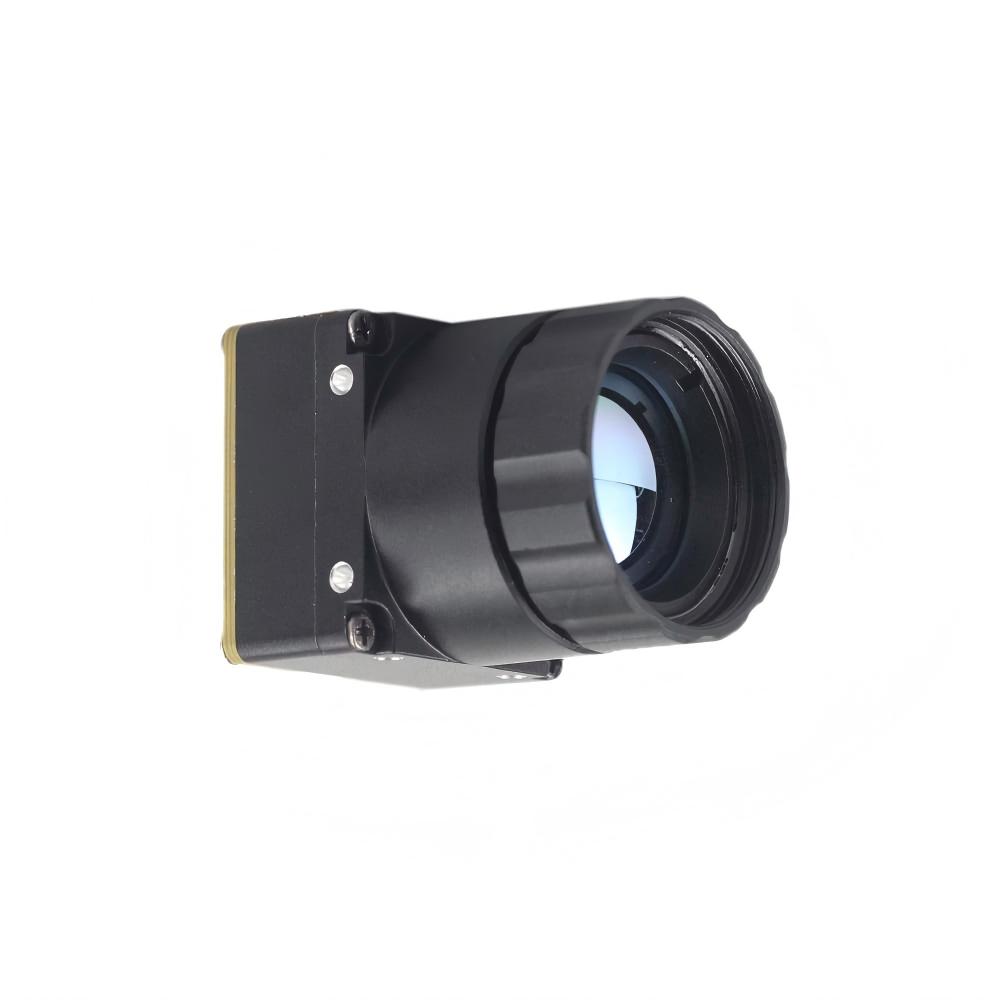
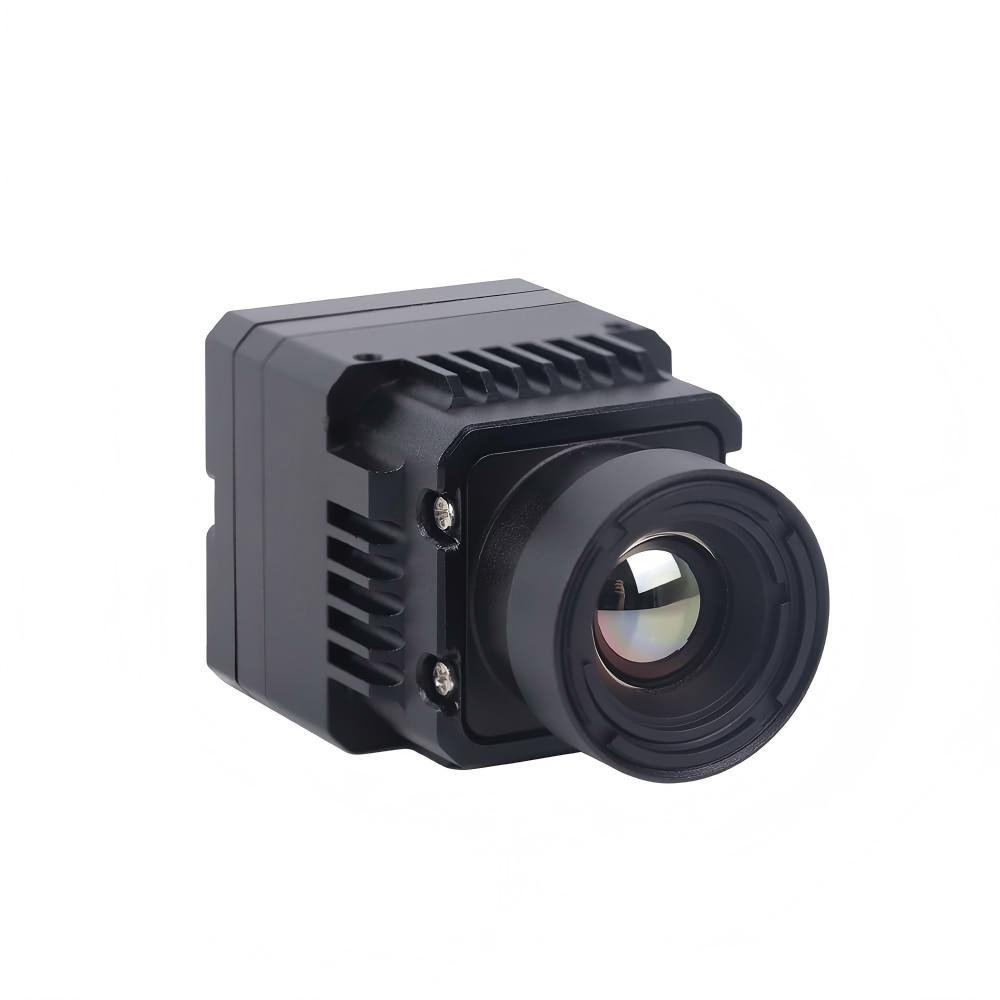
الـ وحدة كاميرا استشعار حراري غير مبردة RJ45 CVBS RTSP IP بدقة 640*512 is built for network-heavy security setups, long-range facility monitoring, and smart-city edge hardware. It features built-in Ethernet (RTSP/IP), dual-channel analog CVBS, and onboard ASIC processing, making it easy to plug directly into IP video setups.
This module also pairs well with specialized thermal spherical PTZ camera systems, acting as a high-resolution, long-range node in a multi-camera security layout.
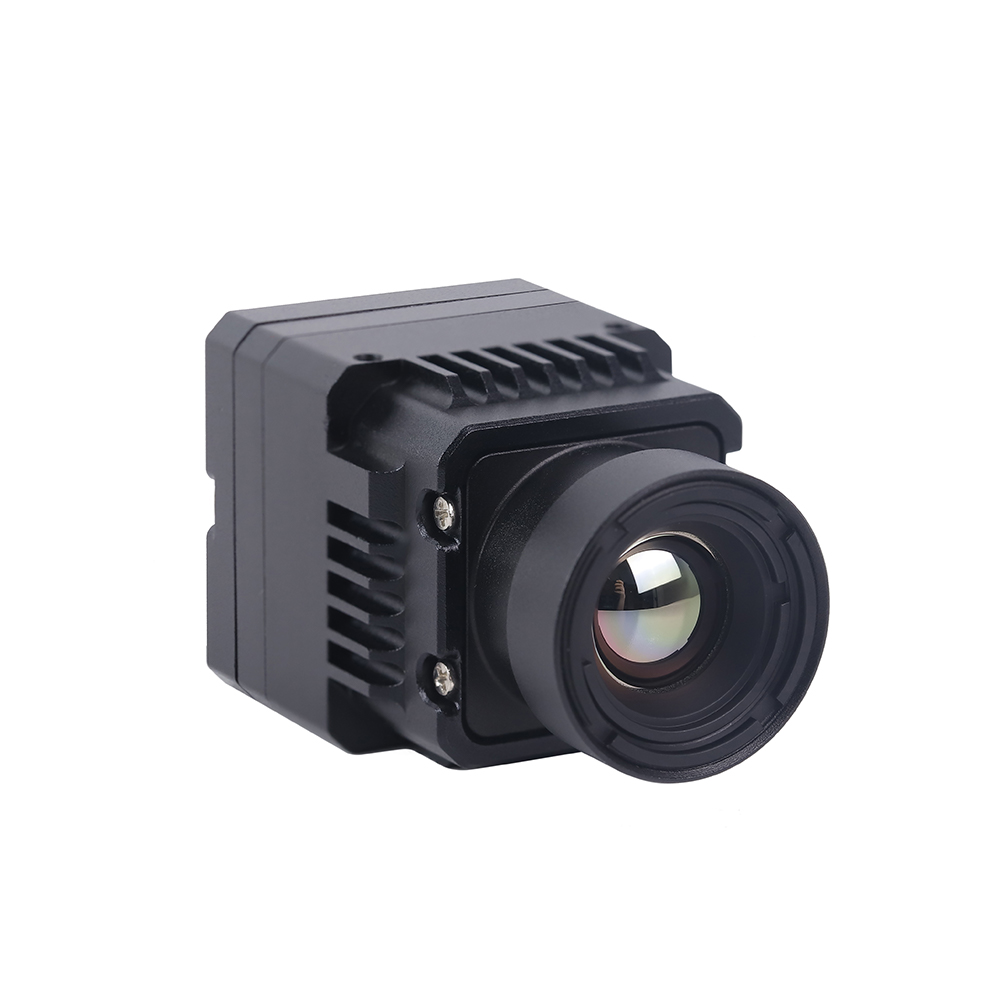
Figure 1: The RJ45 IP ASIC Thermal Camera Module featuring integrated networking.
Product 2: The Ultra-Miniature SWaP Core
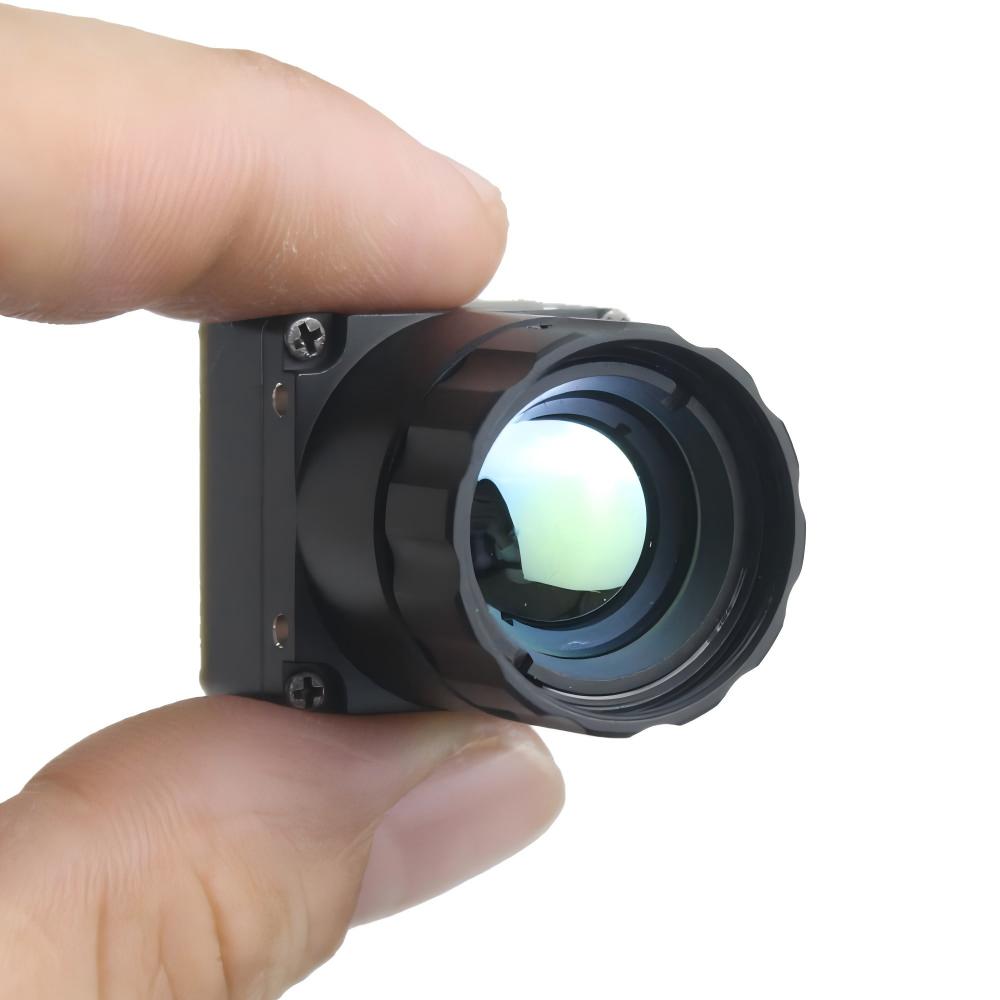
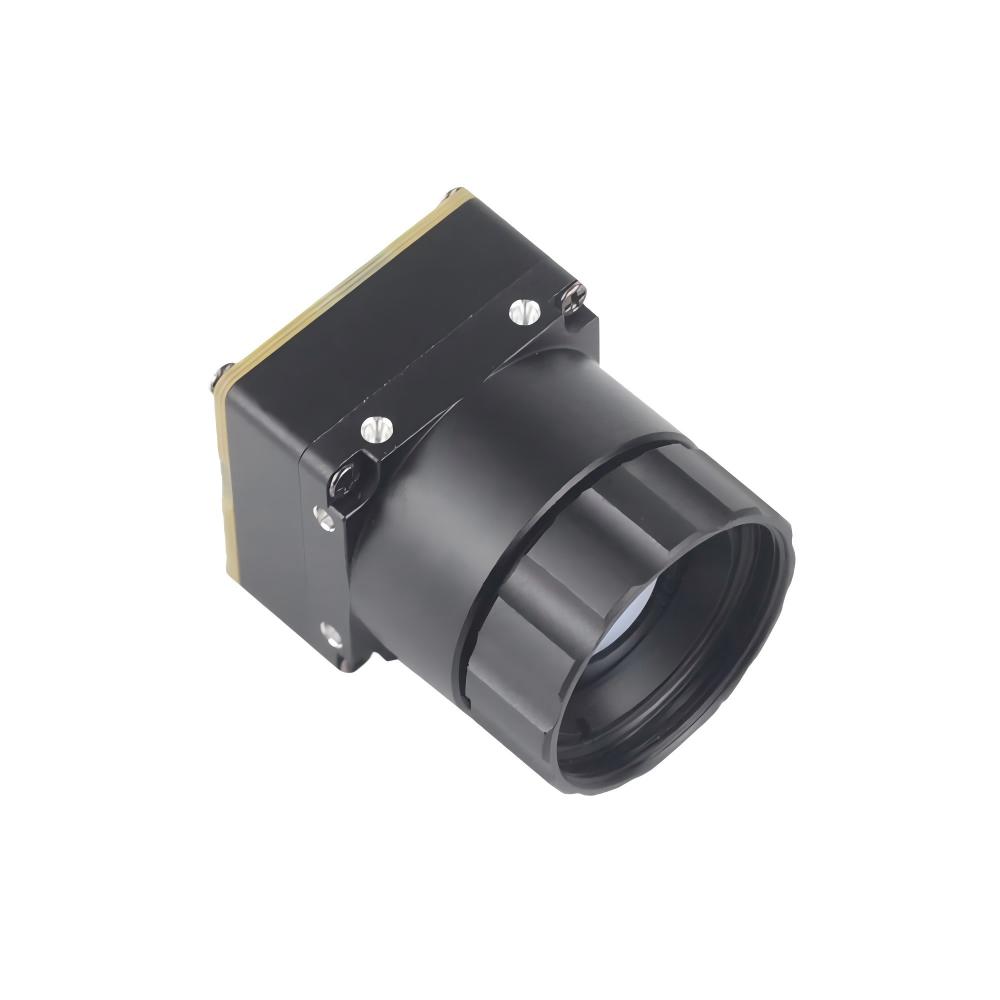
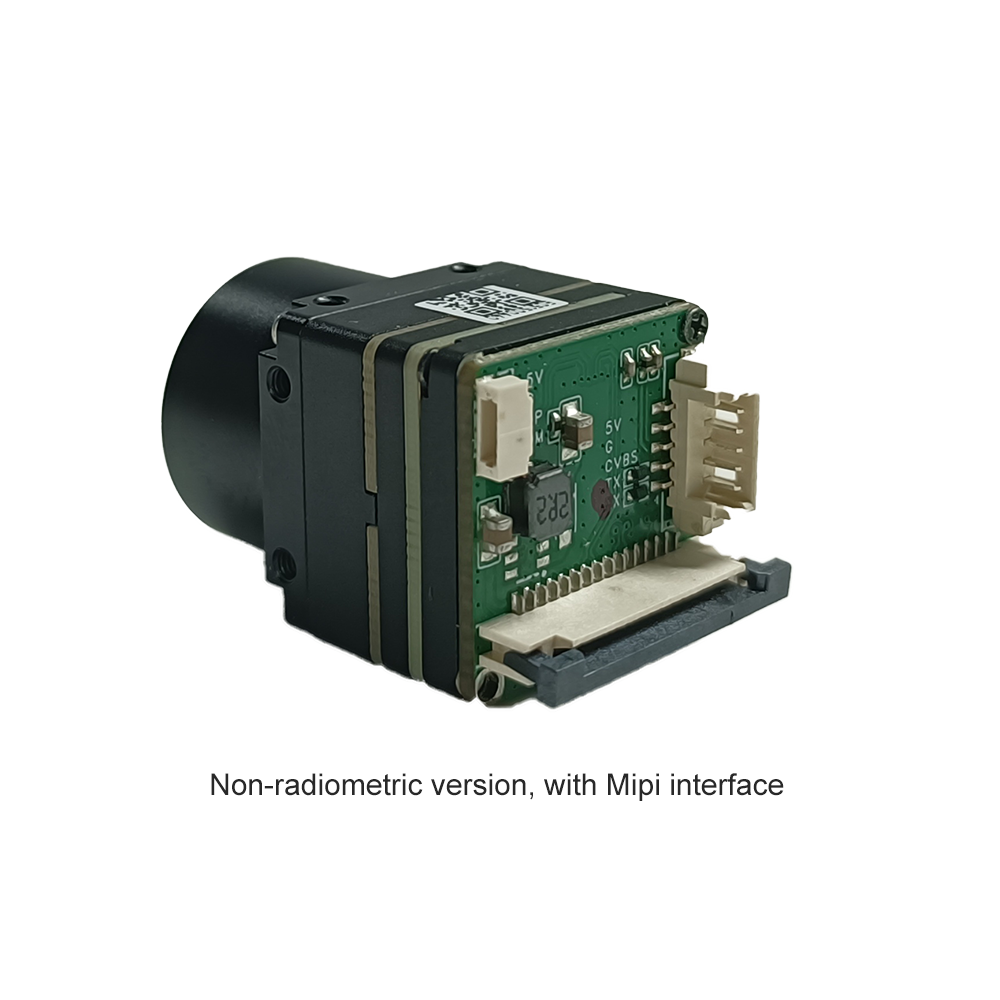
الـ وحدة كاميرا تصوير حراري مصغرة LWIR غير مبردة بدقة 640*512 مع USB للطائرات بدون طيار مشابهة لـ DJI is optimized for low size, weight, power, and cost (SWaP-C). It packs a 640x512 array into a tiny 21mm x 21mm layout, using USB UVC output to interface directly with space-constrained drone gimbals and DIY SBCs.
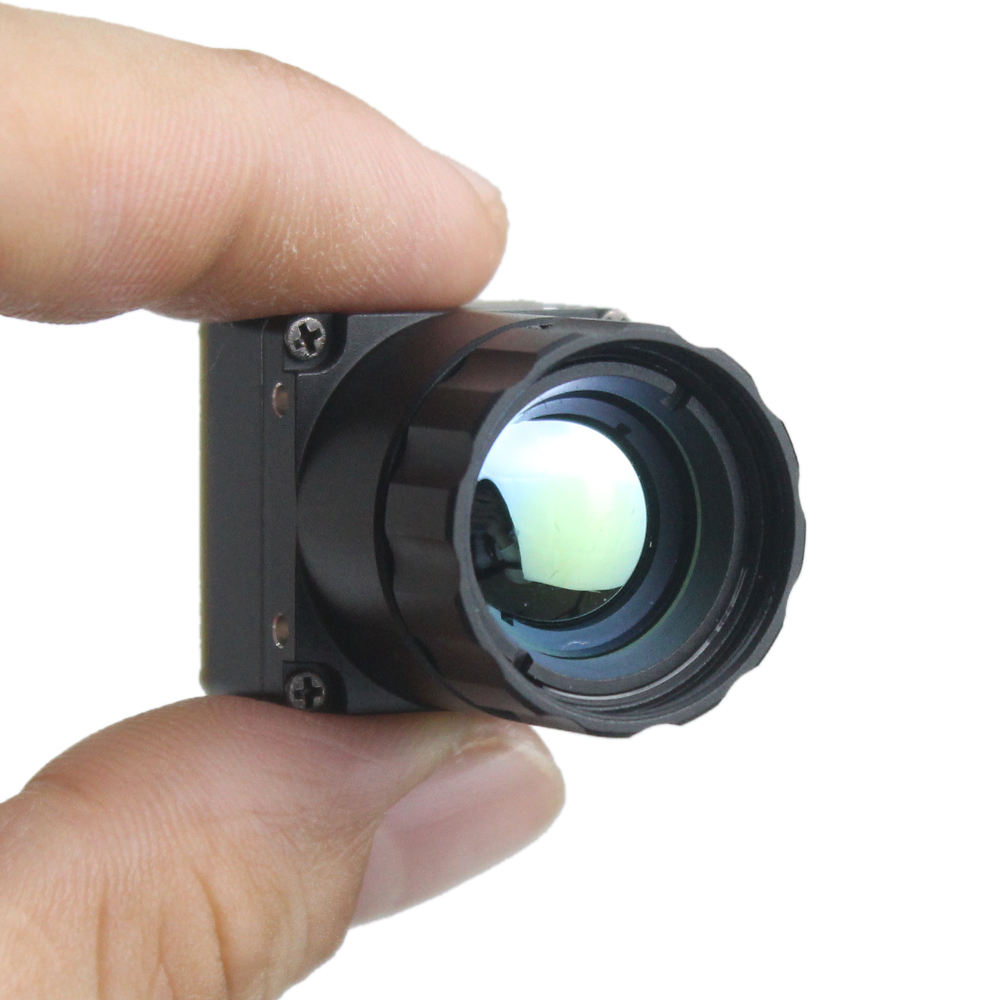
Figure 2: The Mini 640 LWIR Thermal Core Module, displaying its ultra-compact form factor.
The table below provides a detailed technical comparison of these two high-resolution modules:
| Engineering Metric | RJ45 IP ASIC Module (640x512) | LWIR USB Mini Drone Core (640x480/512) |
|---|---|---|
| Sensor Resolution | Native 640 x 512 pixels | Native 640 x 512 (640x480 option available) |
| Detector Pitch & Material | 12 µm Vanadium Oxide (VOx) Microbolometer | 12 µm Vanadium Oxide (VOx) Microbolometer |
| الأبعاد المادية | 28mm x 28mm (Main PCB Profile) | Ultra-miniature 21mm x 21mm footprint |
| Output Interfaces | RJ45 Ethernet (IP/RTSP) + Analog CVBS | USB UVC (OTG-Compliant) + Digital Parallel |
| زمن انتقال البث | ~120ms (over RTSP H.264/H.265 pipeline) | <30ms (uncompressed USB UVC raw direct video) |
| استهلاك الطاقة | < 1.2 Watts (during active stream, with peak shutter spikes) | < 0.7 Watts (steady state output) |
| Optics Support | Fixed thread options standard (9/13/19mm typical) | Threaded mount options: 5/9/13/18/35/50/75/100/150mm lenses |
| Software Configuration | Onboard Web GUI, ONVIF Profile S protocols | Direct USB UVC, serial command SDK controls |
| Primary Deployments | Security networks, perimeter defense, PTZ cameras | UAV Gimbal integration, thermal scopes, DIY PCB rigs |
مخطط تكامل العتاد: الواجهات، الطائرات بدون طيار، ولوحات SBC المخصصة
When you're routing high-frequency serial lines, balancing power distributions, and designing gimbals, mechanical and electrical integration is where things get tricky. Getting a clean signal from a 640x512 LWIR core to a custom SBC or drone controller requires careful setup.
Interface Strategy: USB UVC vs. RJ45 IP
Your choice depends on how your hardware architecture handles video stream data:
- ✅ When using the RJ45 IP/ASIC Core: This module runs an internal, hardware-level Linux kernel that compresses raw frame structures into standard H.264/H.265 streams directly in real time. It's built for remote monitoring over long copper runs. You can pull the RTSP stream using standard players like VLC or video libraries like GStreamer. Compatibility with ONVIF means you can easily drop it into existing security networks.
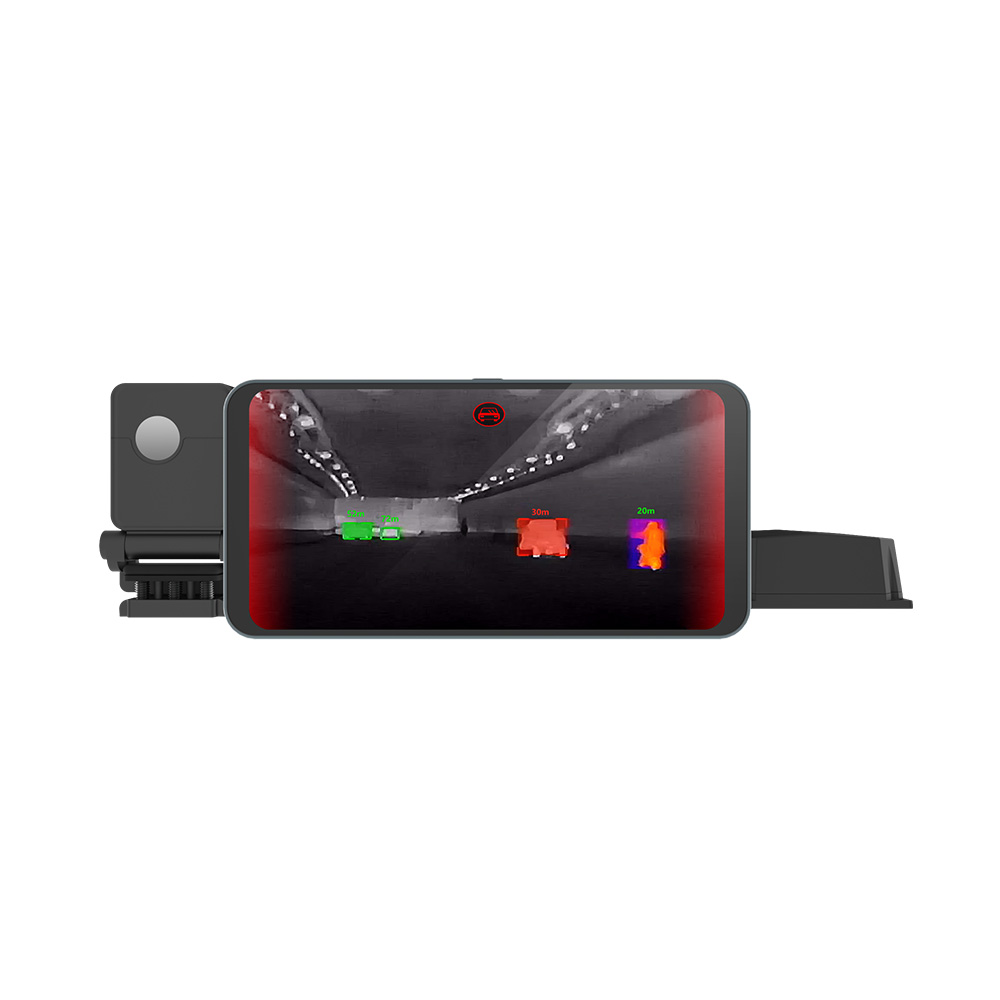
- ✅ When using the Mini USB Core: This module runs as a standard UVC device. Plugging it into an SBC like a Raspberry Pi or an NVIDIA Jetson gives you immediate access to raw, uncompressed thermal frames. This makes it ideal for low-latency computer vision, edge AI detection, and close-range processing.
Coordinated Physical Integration with Hardware Platforms
To control the camera core or mix in other sensor data (like GPS coordinates or telemetry), you'll want to wire your control board to the core's serial lines.
If you're using the Arduino hardware ecosystem, you can connect the micro-serial RX/TX pins of the 640x512 core to your board's UART lines. This lets you send serial hex commands to trigger a NUC shutter calibration, switch digital color palettes, or pull specific pixel temperature data.
If you're on a platform like the Raspberry Pi running Linux, you can capture full-resolution raw video frames over the USB UVC connection for processing:
import cv2

# Initialize the Mini USB 640 thermal sensor as standard UVC input
cap = cv2.VideoCapture(0)

# Request the high-resolution uncompressed acquisition
cap.set(cv2.CAP_PROP_FRAME_WIDTH, 640)
cap.set(cv2.CAP_PROP_FRAME_HEIGHT, 512)

while True:
    ret, frame = cap.read()
    if not ret:
        break

    # Process the thermal frame (e.g., color map, spot-temperature tracking)
    # ...

    cv2.imshow('High-Res Thermal Pipeline', frame)
    if cv2.waitKey(1) & 0xFF == ord('q'):
        break

cap.release()
cv2.destroyAllWindows()
Key Considerations for Drone Deployment
If you are building a custom thermal camera payload for an inspection drone or an agricultural quadcopter, keep these three integration rules in mind:
- ⚙️ Thermal Isolation: Uncooled microbolometers are highly sensitive to rapid variations in temperature. If you mount your core right next to hot power distribution lines or speed controllers (ESCs), the thermal drift will mess up your calibration. Use thermal isolation mounts, dry carbon fiber plates, or air gaps to shield the core.
- ⚙️ RF Shielding: High-powered video transmitters and telemetry antennas can bleed RF interference into analog video lines or clean parallel buses, causing diagonal noise lines on your thermal feed. Run shielded coaxial lines, use twisted-pair wiring, and keep raw digital runs as short as possible.
- ⚙️ Inertial Balance: At 21mm x 21mm, the Mini USB core is lightweight, but pairing it with larger telephoto lenses (such as 75mm or 100mm optics) shifts the center of gravity forward. Make sure you mount the camera assembly at its physical balance point inside the gimbal to avoid burning out your stabilization motors.
الهندسة البصرية: اختيارات العدسات (5 مم إلى 150 مم) وحسابات iFOV
A high-quality 640x512 core is only as good as the lens in front of it. Choosing the right focal length controls your field of view and determines how far away you can spot a target.
To evaluate performance, we calculate the Instantaneous Field of View (iFOV). This tells you the physical area on the ground representing a single pixel on the FPA:
iFOV = Pixel Pitch (µm) / Lens Focal Length (mm)
Let's look at how the math plays out with our 12-micrometer (0.012 mm) VOx cores across two different lens configurations:
Case A: Wide-Angle Optics (9.0 mm Focal Length)
Applying the formula:
iFOV = 12 µm / 9.0 mm = 1.33 milliradians (mrad)
At a distance of 100 meters, each pixel covers a physical square dimension of:
Dimension = 1.33 mrad × 100 m = 13.3 cm (per pixel)
Primary Application: Crop health mapping, short-range building air leak surveys, and wide-area industrial monitoring.
Case B: Long-Range Telephoto Optics (75.0 mm Focal Length)
Applying the formula:
iFOV = 12 µm / 75.0 mm = 0.16 milliradians (mrad)
At the same distance of 100 meters, each pixel covers a physical square dimension of:
Dimension = 0.16 mrad × 100 m = 1.6 cm (per pixel)
Primary Application: Inspections on high-voltage substation lines, long-range search and rescue, and perimeter security.
The math is clear: the telephoto lens concentrates your 640x512 resolution onto a much smaller spot, giving you highly detailed thermal readings and excellent target recognition at long ranges.
الأسئلة الشائعة الهندسية: البث منخفض الكمون، الحدة، والنقل اليدوي
Question: What is the best interface pattern for real-time streaming to a micro-controller or low-power SBC?
For low-latency real-time streaming to low-power host boards, the **USB Mini 640 Core** using USB UVC is the ideal interface pattern. Because the UVC driver is baked into the Linux kernel of host boards like Raspberry Pi, BeagleBone, and Jetson, the thermal core is recognized immediately as a typical USB camera node (e.g., `/dev/video0`). This architecture bypasses custom frame grabbers and decoders. Alternatively, if your system operates within connected IP architectures of surveillance environments, the RJ45 IP ASIC module provides onboard H.264/H.265 compression. This compresses the raw video metadata stream and broadcasts it via RTSP/UDP protocols, allowing any connected edge network station to monitor the high-resolution thermal stream without demanding high processing power from the host computer.
Question: Why do cheap consumer thermal modules look blurry, and how do I guarantee true high resolution?
Many low-cost consumer thermal sensors display a blurry image because they pair low-resolution detector arrays (like 80x60 or 160x120) with cheap chalcogenide lens models and use soft digital interpolation to upscale the image block to standard display sizes. This upscaling duplicates adjacent pixels but cannot resolve actual fine details, masking critical temperature faults. True high resolution is achieved through three key hardware components: a genuine, native 640x512 uncooled VOx focal plane array; low sensor noise levels (NETD < 40mK or < 30mK) to distinguish faint thermal signals; and high-quality Germanium or chalcogenide glass optics that preserve edge contrast without geometric distortion.
Question: Can these uncooled cores be used in agricultural mapping drones and hand-held search units?
Absolutely. Both of these uncooled 640x512 core models are explicitly designed for lightweight payloads and mobile integrations. The Mini USB Core is particularly well-suited for agricultural mapping drones and custom search units, weighing just 15 grams (excluding optics) and measuring 21mm x 21mm. Operating on less than 0.7 Watts of power, it minimizes drain on aircraft batteries. For developers building handheld monoculars or thermal scopes, the serial SDK makes it straightforward to interface with small custom display screens and control buttons. This allows users to easily cycle through color palettes (such as Ironbow, Rainbow, White-Hot, and Black-Hot), configure high-voltage alarm overlays, run shutter calibrations, and record diagnostic data directly to an onboard SD card.
You can read more technical design comparisons and software execution methods in our dedicated uncategorized thermal technology updates archive.
📚 References & Further Reading
- المعيار الصناعي: Microcontroller platform controls and driver integration methods on Arduino Development Hub
- Optical Engineering: High-transmission infrared Germanium and chalcogenide design principles at لايت باث تكنولوجيز
- دليل ذو صلة: Comprehensive breakdown of hand-held mobile structures and Type-C temperature measurement systems
- Industrial Integration: Designing multi-sensor arrays and thermal spherical PTZ cameras for wide-area deployment
- Technical Archive: System integration manuals and uncategorized thermal technology updates