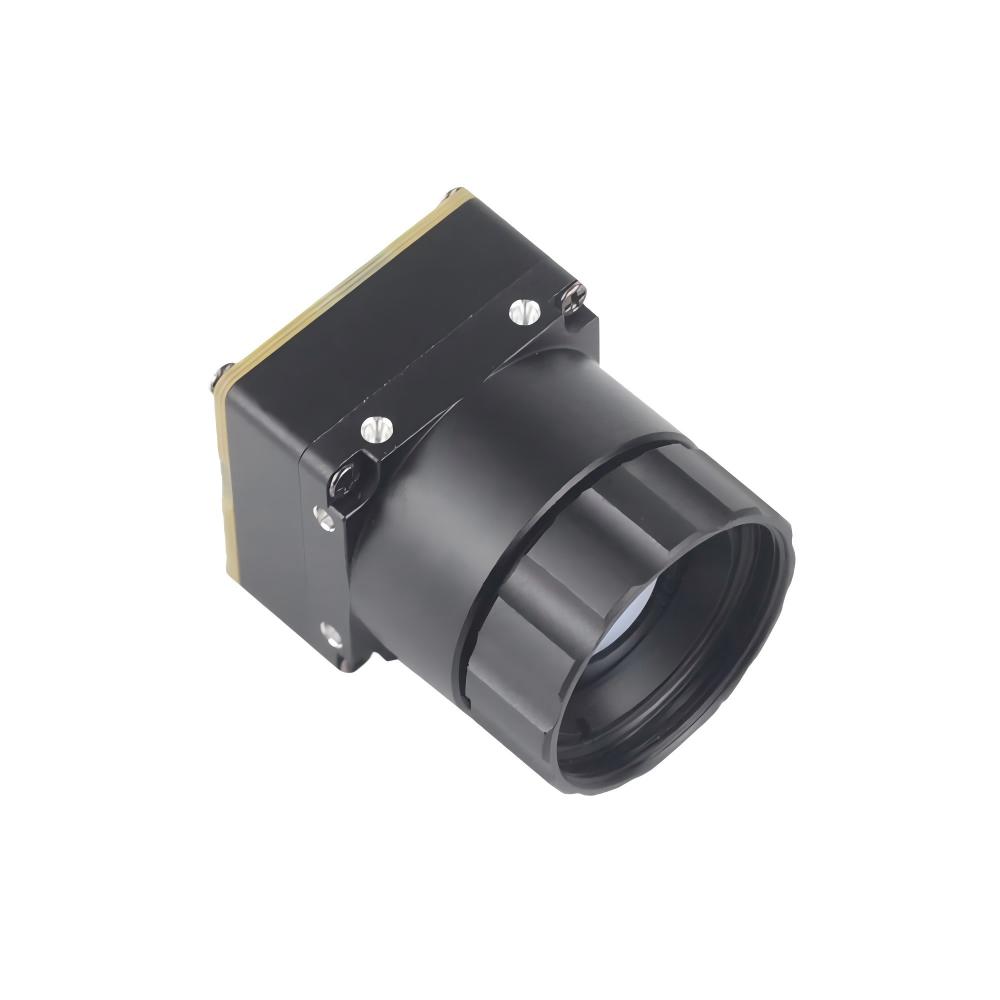
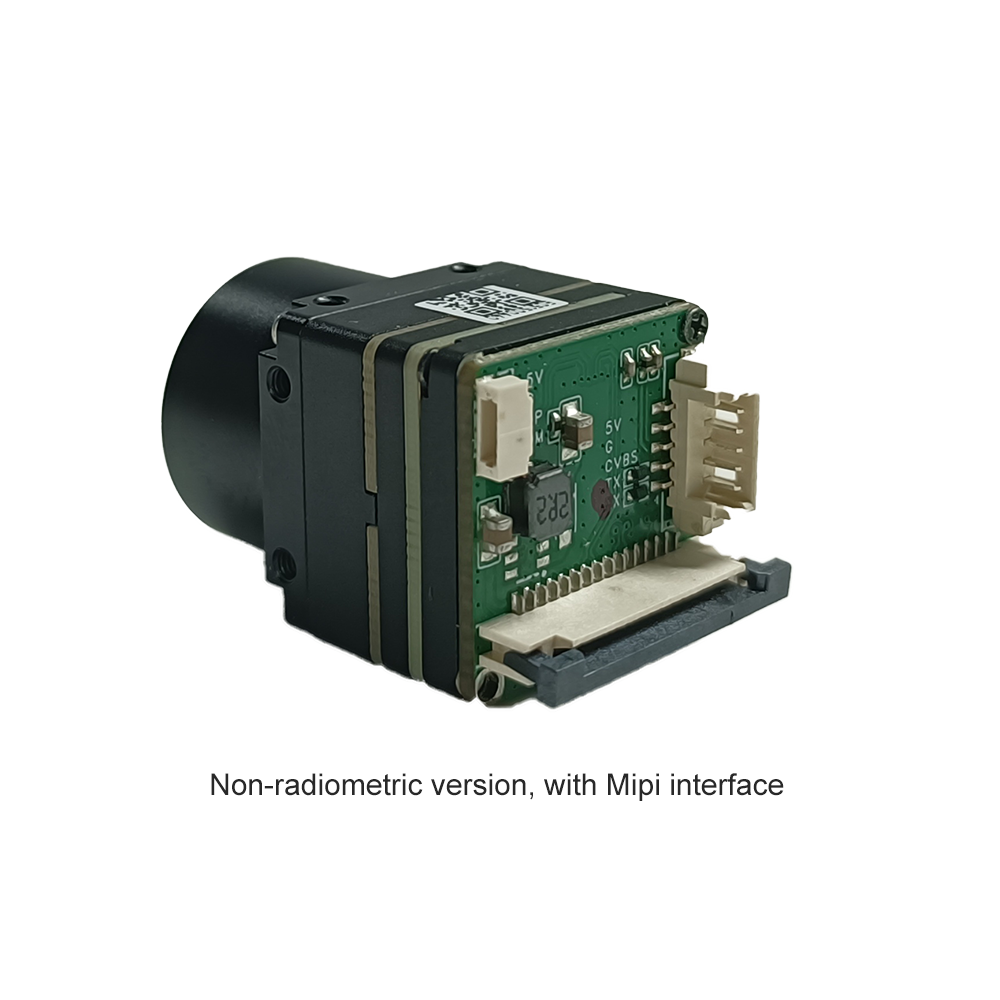
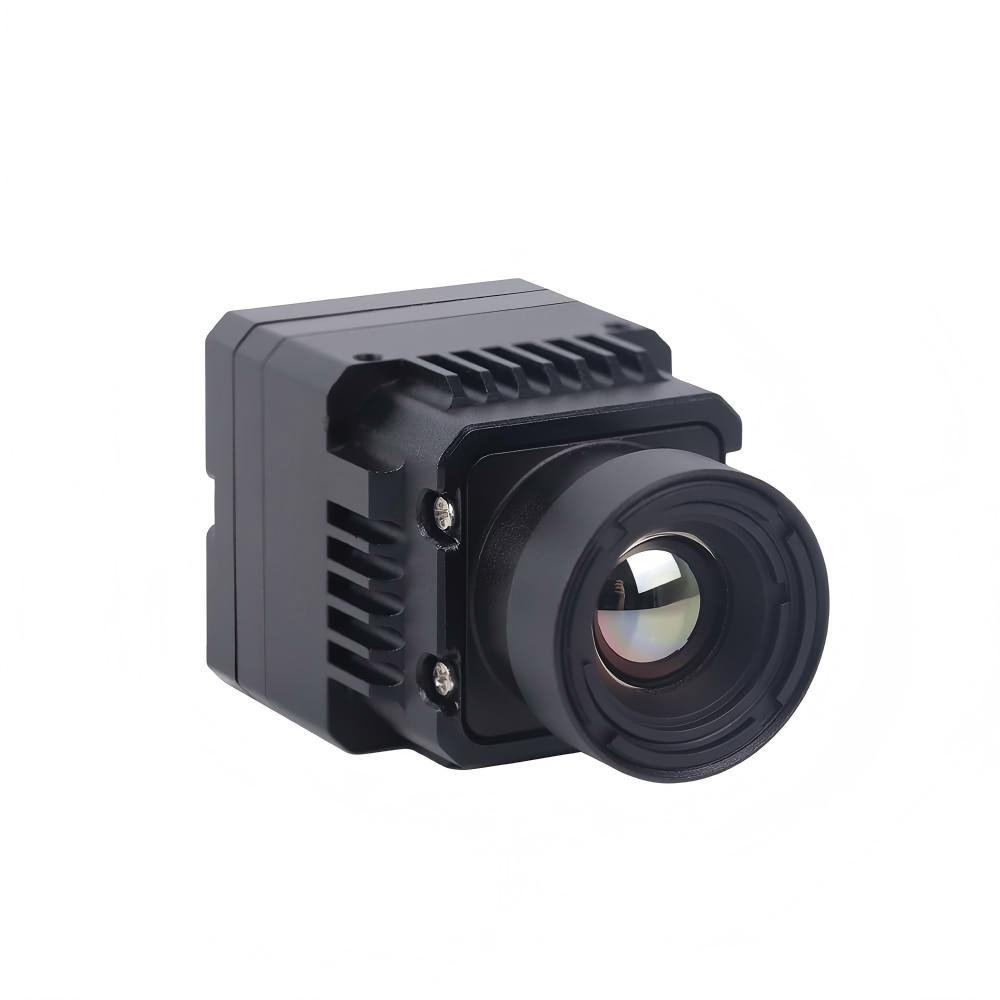
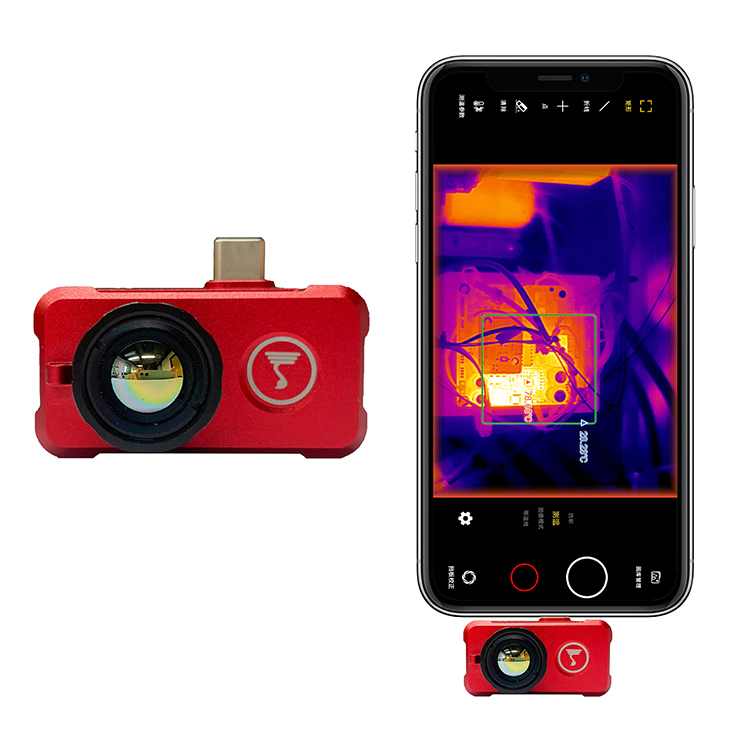
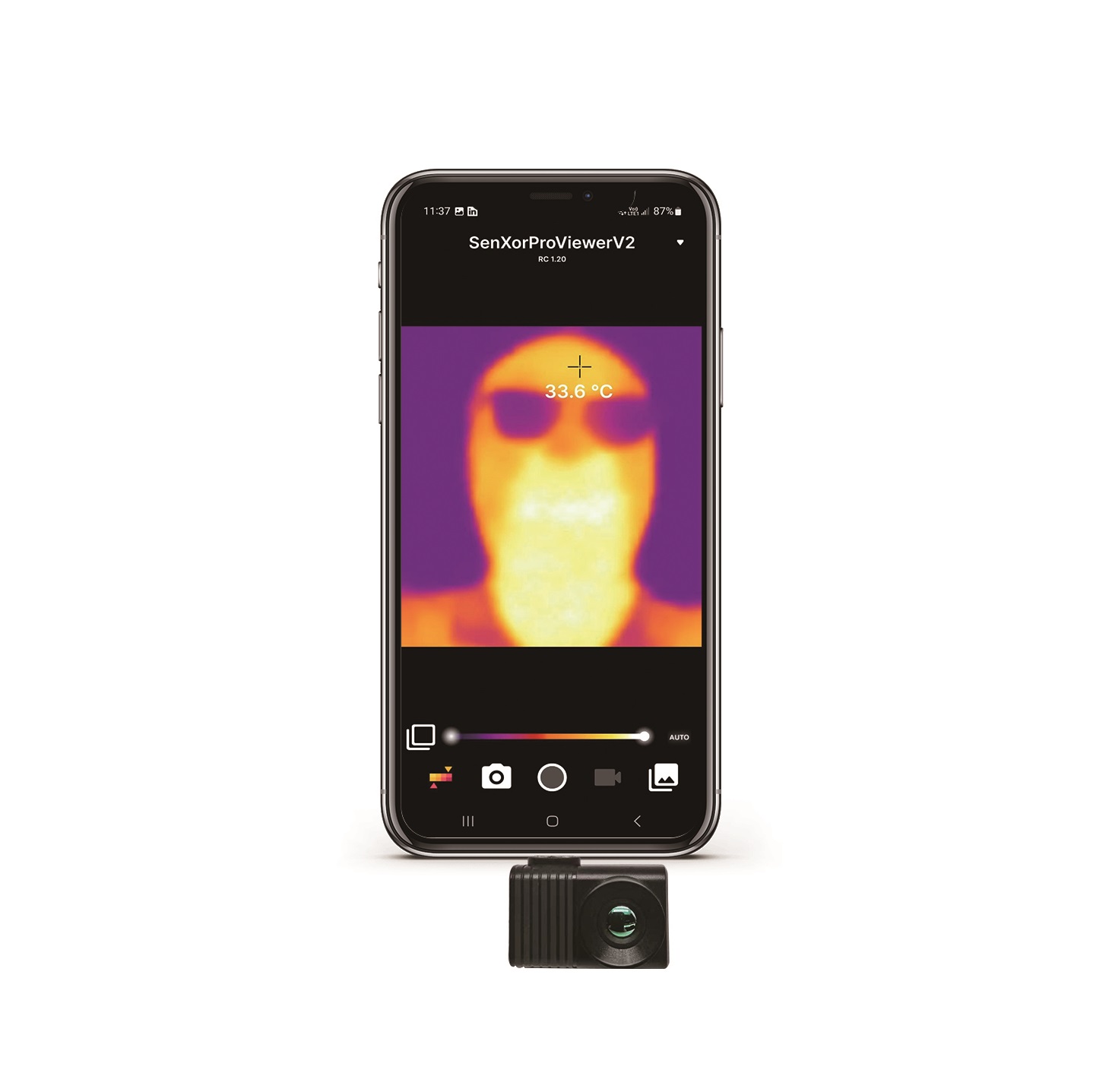
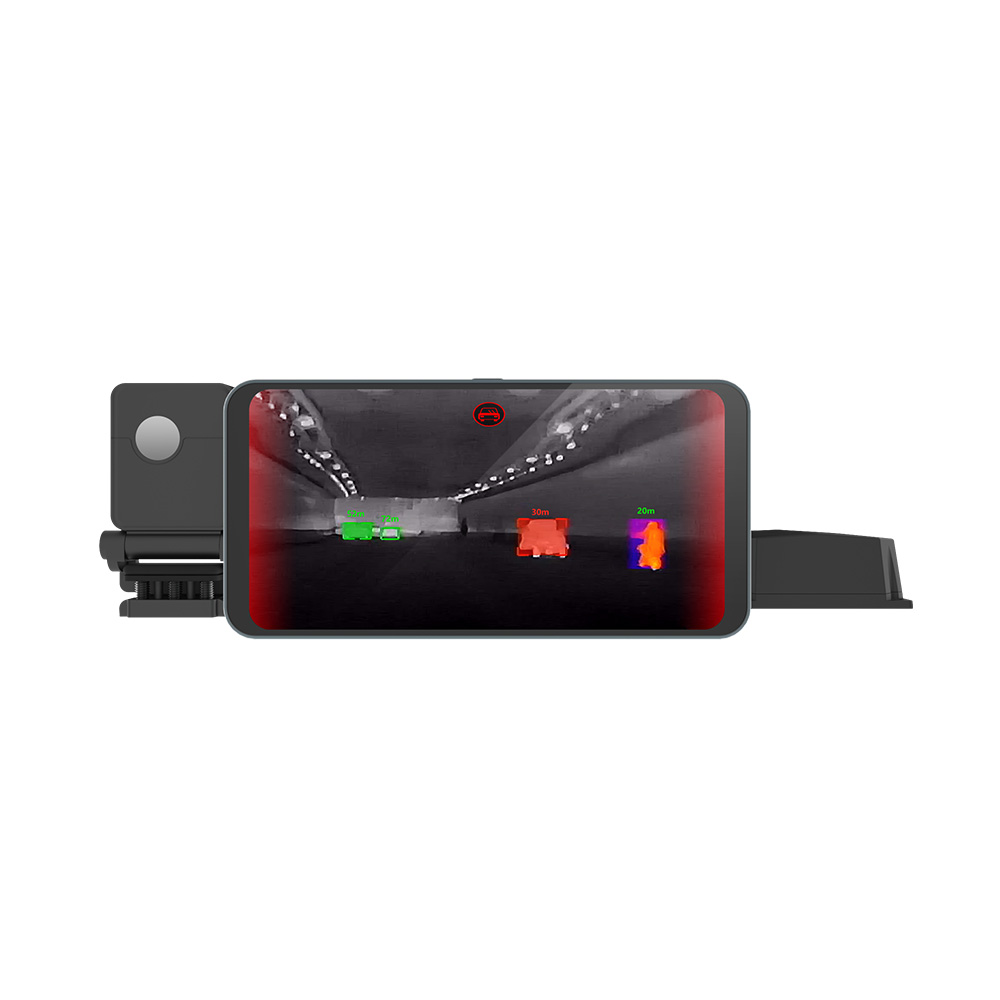

وحدة كاميرا حرارية عالية الدقة: أنوية LWIR غير مبردة بدقة 640x512 للطائرات بدون طيار والبناء الذاتي
9 يونيو 2026
وحدة الكاميرا الحرارية الصغيرة LWIR: دليل التكامل النهائي للطائرات بدون طيار وحلول الذكاء الاصطناعي الطرفي
10 يونيو 2026
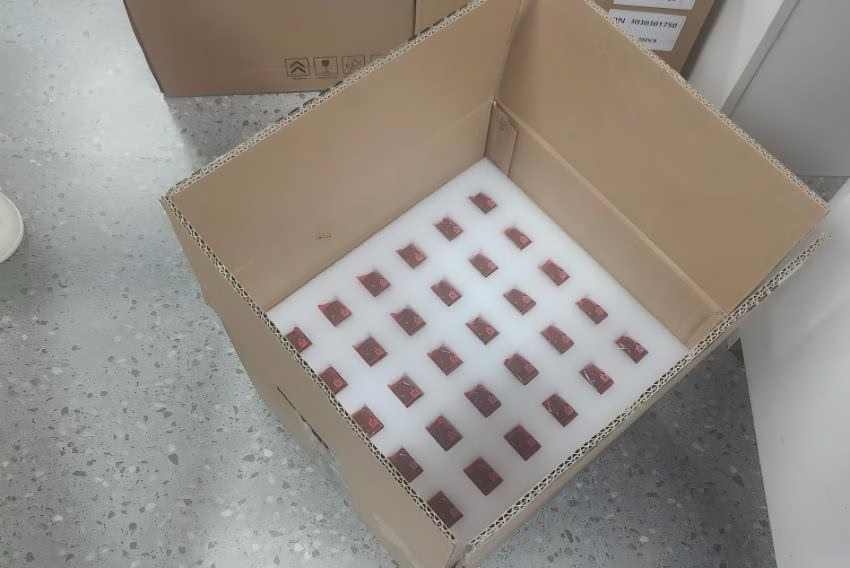
دليل دمج وحدة الكاميرا الحرارية بالأشعة تحت الحمراء: حلول OEM عالية الدقة للطائرات بدون طيار والذكاء الاصطناعي الطرفي
لنكن صادقين: تثبيت وحدة كاميرا حرارية بالأشعة تحت الحمراء في نظام تكتيكي ذاتي التشغيل حديث، أو حمولة طائرة بدون طيار، أو خط رؤية آلية صناعي هو أمر مختلف تمامًا مقارنة بمعدات الضوء المرئي القياسية. تعمل مستشعرات كاميرات RGB للضوء المرئي القياسية عن طريق جمع الفوتونات المنعكسة. من ناحية أخرى، تعمل وحدات الكاميرا بالأشعة تحت الحمراء طويلة الموجة (LWIR) ضمن النطاق الطيفي المكثف 8–14 ميكرومتر. إنها تكتشف الحرارة - اختلالات الإشعاع الحراري بالميكرو-كلفن المنبعثة مباشرة من الأهداف نفسها. هذا الاختلاف الفيزيائي الأساسي يغير تمامًا كيفية تعاملك مع الدمج الميكانيكي، وتوجيه إشاراتك الكهربائية، ومعالجة البيانات الوصفية الحرارية في طبقات البرامج الثابتة.
بالنسبة لمصممي أنظمة الحمولات، ومطوري الذكاء الاصطناعي المدمج، ومهندسي الدفاع، فإن ترجمة القياسات الحرارية الخام إلى معلومات رقمية واضحة وقابلة للتنفيذ هي مسار دمج مليء بالتحديات. يعمل دليل الدمج الشامل هذا كمخطط هندسي لك. أدناه، نقوم بتفصيل فيزياء مستشعر الميكروبولومتر، وبروتوكولات اتصال الأجهزة، والقيود الميكانيكية، واختيار التجميع البصري، وتكوينات الحوسبة الطرفية الإشعاعية. من خلال إنشاء واجهات مستقرة وذات زمن انتقال منخفض، يمكن لمدمجي OEM الاستفادة من النوى الحرارية ASIC غير المبردة عالية الدقة لإطلاق قدرات رؤية آلية على مدار الساعة في أصعب بيئات التشغيل.
جدول المحتويات
بنية الميكروبولومتر الأساسية والاختيار البصري
الميكروبولومتر غير المبرد وحدة كاميرا حرارية بالأشعة تحت الحمراء يستخدم مصفوفة من عناصر كاشف صغيرة حساسة لدرجة الحرارة تسمى مصفوفة المستوى البؤري (FPA). كل بكسل في مستشعر الأنظمة الكهروميكانيكية الدقيقة (MEMS) هذا عبارة عن هياكل جسرية دقيقة معلقة مصممة بطبقة امتصاص حراري نشطة في الأعلى. هذه الطبقة، المصنوعة عادةً من أكسيد الفاناديوم (VOx) أو السيليكون غير المتبلور (a-Si)، تغير مقاومتها عند امتصاص الأشعة تحت الحمراء طويلة الموجة. تقوم دائرة القراءة المتكاملة (ROIC) بأخذ عينات من هذا التغير في المقاومة بالتتابع عبر الشبكة بأكملها، مترجمة تلك التقلبات التناظرية إلى إشارة رقمية 14 بت. يرتبط فهم هذه الميكانيكا الهيكلية ارتباطًا وثيقًا بفهم الفيزياء الأساسية الموضحة في ويكيبيديا التصوير الحراري, ، والذي يوضح بالتفصيل كيفية فهرسة الطاقة الحرارية ذاتية الانبعاث بدون إضاءة نشطة.
في الورشة، نواجه تحديين رئيسيين: الانجراف الحراري والاهتزاز الميكانيكي. لأن الجسور الدقيقة رفيعة للغاية لتقليل الكتلة الحرارية، يمكن للصدمات الميكانيكية أن تشوه القراءات الخام. أيضًا، يمكن لتحولات درجة الحرارة المحيطة أن تسخن إطار الكاميرا نفسه، مما يطغى على الإشارة الحرارية للهدف. لهذا السبب يعد اختيار كيمياء المستشعر الصحيحة وهيكل الميكروبولومتر أمرًا بالغ الأهمية منذ اليوم الأول.
فيديو مباشر للتصوير الحراري
ديناميكيات بنية المستشعر: VOx مقابل السيليكون غير المتبلور
اختيار التركيب الكيميائي الصحيح لمصفوفة المستشعر الخاص بك يحدد الأداء مباشرة في البيئات التشغيلية القاسية:
- ✅ أكسيد الفاناديوم (VOx): يتميز بمعامل مقاومة حراري (TCR) مرتفع بشكل استثنائي، عادة حوالي -2% لكل كلفن. يوفر هذا حساسية حرارية فائقة وخصائص ضوضاء 1/f أقل، مما ينتج عنه منحنيات معايرة مستقرة للغاية وجودة صورة واضحة. هذا يجعل VOx المعيار الصناعي الواضح لتطبيقات الطائرات بدون طيار التكتيكية والمهنية.
- ✅ السيليكون غير المتبلور (a-Si): يوفر منحنى استجابة أكثر استواءً عبر التحولات الحرارية الواسعة لأنه أكثر تجانسًا كيميائيًا وأسهل في الترسيب على رقائق السيليكون الكبيرة. ومع ذلك، غالبًا ما تؤدي حساسيته الإجمالية المنخفضة إلى مستويات ضوضاء أساسية أعلى وميل لانجراف المستشعر تحت تغيرات درجة الحرارة السريعة.
الدقة، وتباعد البكسلات، ورياضيات NETD
تتجه التطبيقات الحديثة نحو بصمات بكسلات أصغر، منتقلة من مصفوفات 17 ميكرومتر القديمة إلى تباعدات بكسلات 12 ميكرومتر فائقة الاكتناز. يؤدي الانتقال إلى تباعد 12 ميكرومتر إلى تقليص حجم FPA الإجمالي مباشرة. يتيح هذا الاختراق للمكاملين إقران المستشعر بعدسات بصرية أصغر وأخف وزنًا، مما يحسن بشكل كبير بصمات SWaP على مستوى النظام مع الحفاظ على دقة مكانية عالية. من خلال الحفاظ على تنسيق دقة 640×512 على عقدة 12 ميكرومتر، يحقق المطورون مجالات رؤية أوسع ونطاقات كشف أعمق من أطر 384×288 الأبسط.
تُقاس حساسية الوحدة الأساسية من خلال فرق درجة الحرارة المكافئ للضوضاء (NETD)، معبرًا عنه بالميلي كلفن (mK). رياضيًا، يمثل NETD تغير درجة حرارة المشهد الدقيق على هدف الجسم الأسود الذي ينتج نسبة إشارة إلى ضوضاء تساوي واحدًا بالضبط:
حيث Vn هو جذر متوسط مربع الضوضاء الكهربائية،, R هو الاستجابة الحرارية، و ΔT هو التدرج الحراري. يشير NETD البالغ ≤ 40mK أو ≤ 50mK إلى أن الكاميرا يمكنها تمييز فروق درجات حرارة دقيقة تبلغ 0.04°C إلى 0.05°C فقط. هذا أمر بالغ الأهمية لاكتشاف الأهداف في الضباب الكثيف أو الرطوبة العالية أو التضاريس المعقدة حيث تكون التدرجات الحرارية ضئيلة.
لوضع هذا في منظوره الصحيح: في البيئات الساحلية عالية الرطوبة، تصاب الكاميرات المرئية القياسية بالعمى تمامًا. يمكن لمقياس الميكروبولومتر غير المبرد بحساسية ≤ 40mK اختراق الرطوبة بسهولة. إنه يميز الفروق الحرارية الدقيقة بين الأهداف الديناميكية وخلفياتها المائية من خلال تتبع الاختلافات الصغيرة في كيفية انبعاثها للحرارة.
البصريات تحت الحمراء: عدسات الجرمانيوم والكالكوجينيد
تحجب الزجاجات البصرية القياسية مثل ثاني أكسيد السيليكون موجات الأشعة تحت الحمراء طويلة الموجة. نتيجة لذلك، يجب قطع بصريات LWIR من مواد متخصصة ناقلة للأشعة تحت الحمراء. الجرمانيوم أحادي البلورة (Ge) ذو قيمة عالية لمعامل انكساره العالي بشكل استثنائي (حوالي 4.0)، مما يتيح تصميمات عدسات مدمجة بفتحات بصرية سريعة (F/1.0 أو F/1.1) تلتقط أقصى طاقة حرارية واردة. ومع ذلك، للجرمانيوم عيب رئيسي: معامل انكساره يتغير بشكل كبير مع درجة الحرارة (dn/dT يساوي 3.96 × 10⁻⁴ K-1). يتسبب هذا الانجراف الحراري في تحولات بؤرية مرئية مع تقلب درجات الحرارة المحيطة أثناء الطيران.
لتخفيف الوزن وتعويض التكاليف، يعتمد التصميم البصري على زجاجات الكالكوجينيد. المتخصصة. تتميز هذه الهياكل الزجاجية الاصطناعية القابلة للتشكيل (مثل BD-2 أو IG6) بمعامل حراري أقل بكثير لمعامل الانكسار، مما يجعلها مثالية لتصميم مجموعات عدسات سلبية غير حرارية ثابتة التركيز تبقى حادة من -40°C إلى +80°C. يقوم مبتكرو البصريات مثل لايت باث تكنولوجيز بتصميم عدسات دقيقة من الكالكوجينيد والجرمانيوم المقولب تقلل الانحرافات اللونية للحمولات ثنائية المجال أو بعيدة المدى. للتطبيقات التي تتطلب نطاقات مراقبة قصوى، يمكن للمطورين إقران هذه الوحدات بمكونات بصرية عالية الجودة وشديدة التحمل، مثل تلك الموجودة في الأنظمة البصرية عالية الأداء 1280x1024 12µm المصممة لأقصى كشف بعيد المدى.
واجهات الأجهزة والتدفق الرقمي
انظر، عندما تقوم بتوصيل وحدة كاميرا حرارية بالأشعة تحت الحمراء عند التوصيل مع المعالجات المضيفة (مثل NVIDIA Jetson، أو Edge TPUs، أو الحواسيب الصناعية أحادية اللوحة)، فإن اختيارك للطبقة المادية وبروتوكول النقل يؤثر مباشرةً على زمن انتقال المعالجة، واستقرار النظام، وتعقيد تعريف التشغيل:
Designing within these specifications is critical. For instance, while streaming via an RJ45 IP interface allows you to route compressed H.264 video streams over long distances using standard switches, the internal compression step on the integrated ASIC adds processing latency. Alternatively, USB UVC streams uncompressed 14-bit frames or 8-bit visual buffers with lower latency, making it ideal for real-time edge processing. However, keeping the cable runs under three meters is essential to avoid timing desynchronization.
For setups that interface directly with custom PCB expansion boards, parallel 14-bit streams route the direct digitizations of the ROIC straight into the processor's input buffers. Although this method provides near-zero latency, it requires writing complex device drivers (such as Linux V4L2 device trees) and routing highly sensitive differential signal lines with strict impedance matching.
حلول منتجات OEM عالية الدقة
To implement these interface technologies, integrators can select from high-performance uncooled VOx core assemblies depending on their system constraints. Below are two industry-proven sensor options designed for rapid hardware deployment.
A. Uncooled Infrared RJ45 CVBS RTSP IP 640*512 ASIC Thermal Sensor Camera Module
Built on a powerful ASIC-centered image processing core, this design offers both network-ready digital and analog connectivity in an integrated package. It is engineered specifically for autonomous monitoring stations, pan-tilt-zoom (PTZ) arrays, and real-time security systems requiring multi-path signal outputs.
Critical Specifications:
- ⚙️ FPA Resolution: 640×512 pixels (highly accurate 12μm pitch VOx array)
- ⚙️ Dual Output: Simultaneous digital RTSP stream over RJ45 Ethernet and raw CVBS analog composite video
- ⚙️ On-Board ASIC: Real-time hardware-accelerated non-uniformity correction, digital zoom, and multi-palette color mapping
- ⚙️ Target Use: Persistent perimeter security, robotic surveillance rigs, and networked AI nodes
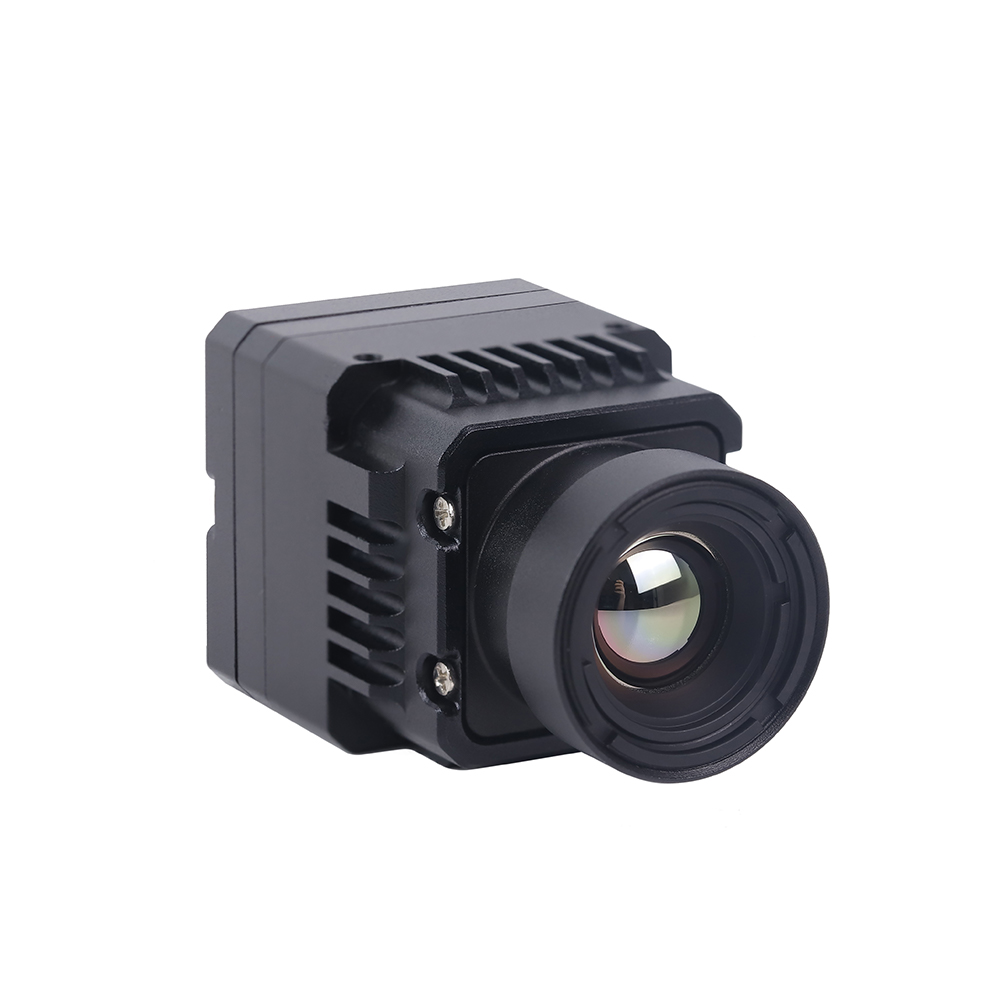
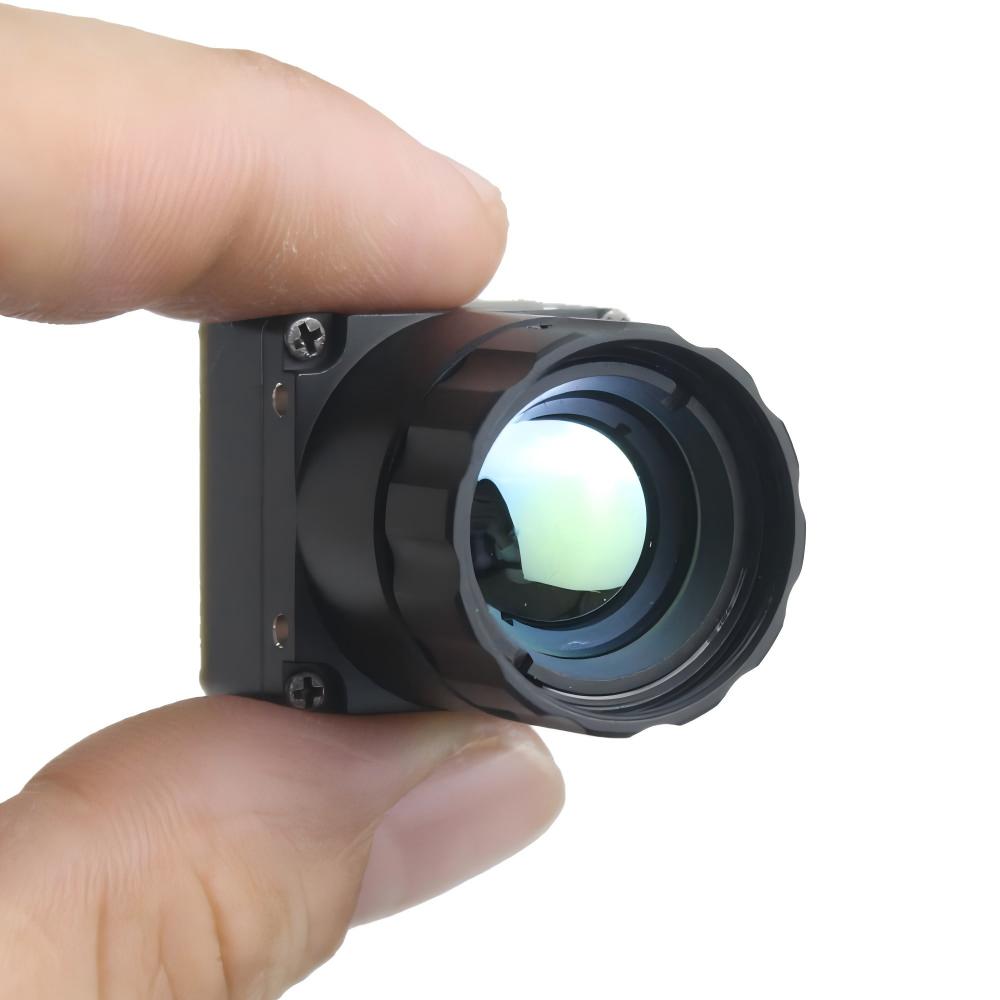
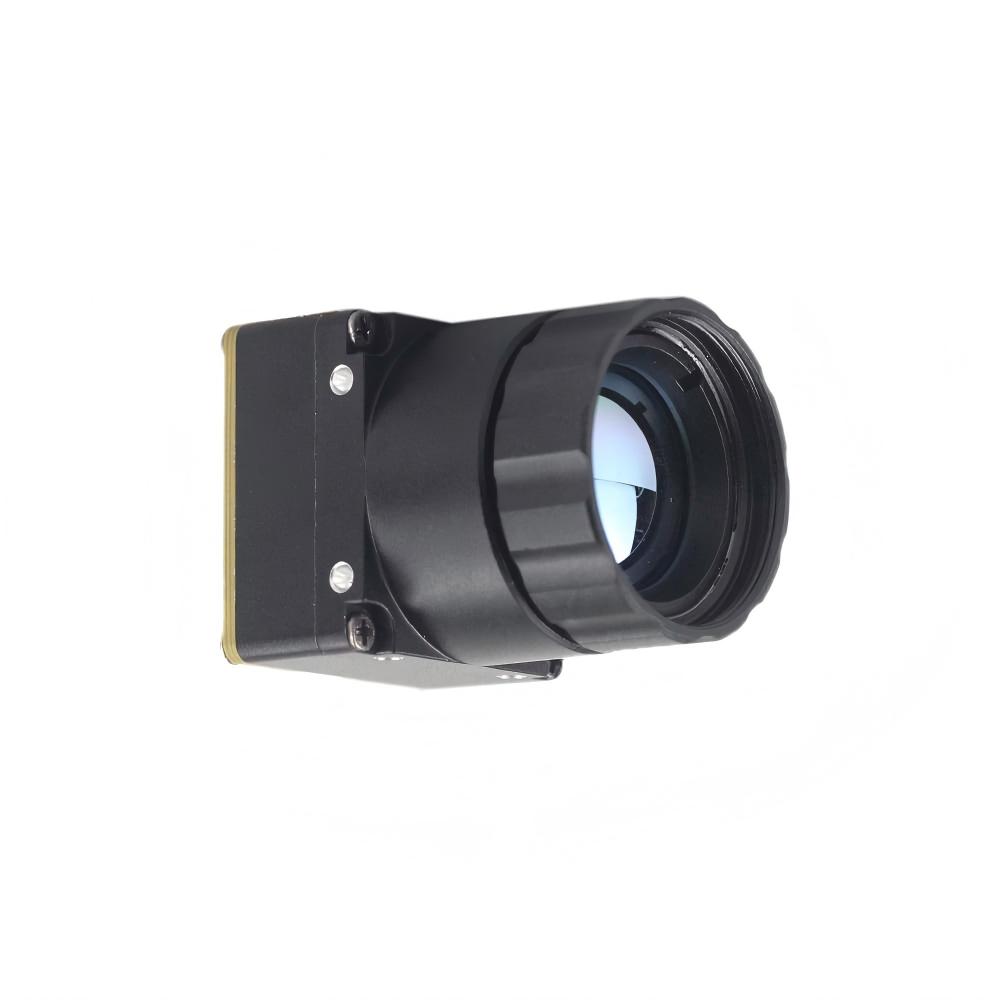
B. Uncooled LWIR USB Mini 640*512 Thermal Imaging Camera Core Module For Drones
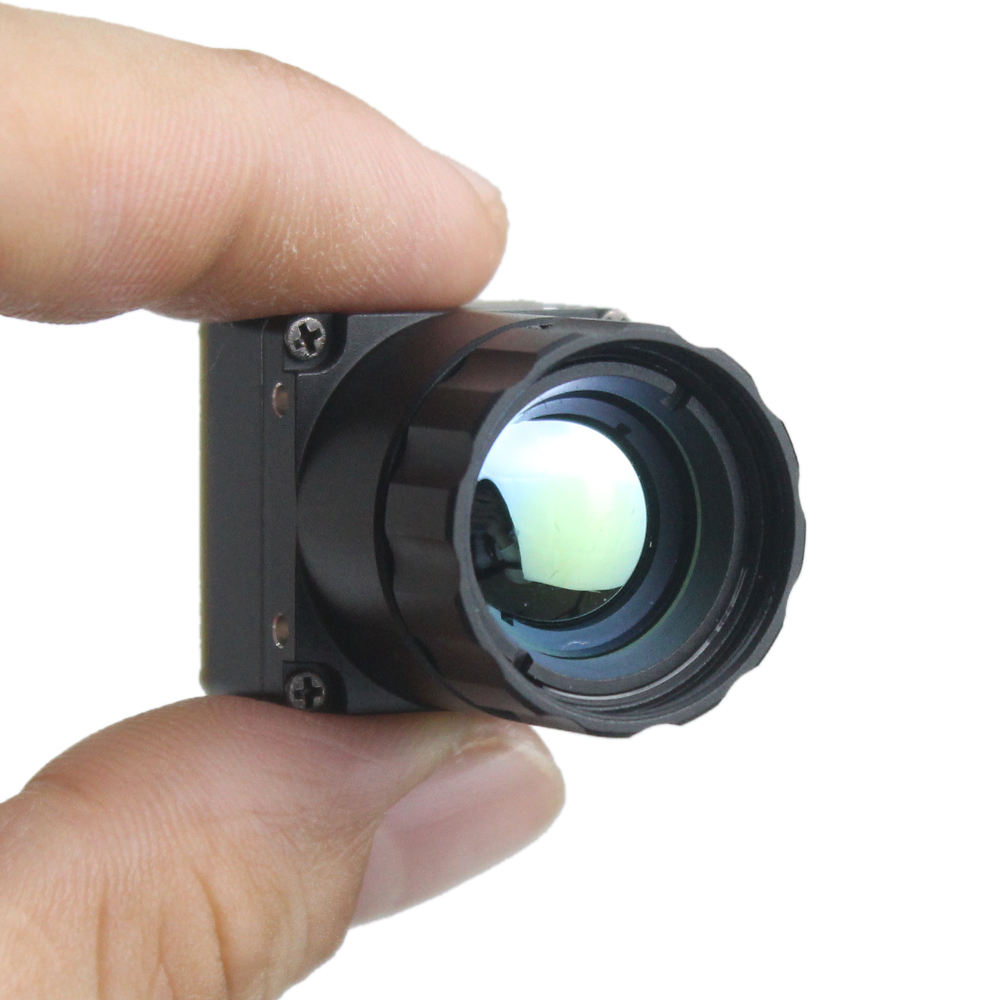
When weight and physical volume are your primary design constraints, this micro-core offers a solution similar in performance to DJI industrial thermal payloads. Measuring just 21mm × 21mm, it is designed for direct integration into weight-critical drone gimbals and compact handheld systems.
Critical Specifications:
- ⚙️ عامل الشكل: Ultra-miniature 21mm × 21mm footprint
- ⚙️ Wide Lens Ecosystem: Threaded mount supports focal lengths including 5mm, 9mm, 13mm, 18mm, 35mm, 50mm, 75mm, 100mm, and 150mm
- ⚙️ خيارات الدقة: Native 640×512 layout with 640×480 resolution options
- ⚙️ Host Connectivity: Plug-and-play UVC protocol via standard USB, ensuring simple integration with Linux and Android systems
For architectural variations that require simpler resolution brackets relative to budget layouts, engineers can use the smaller MD Series 384x288 LWIR uncooled thermal core modules. Alternatively, for rapid field-testing, dynamic spot validations, or plug-and-play prototyping, you can utilize a mobile-compatible Android USB thermal camera to quickly capture imagery and calibrate target fields in real time.
هندسة الدمج في الطائرات بدون طيار
Here’s the deal: physical drone integration is where standard engineering concepts often fail. You are mounting a highly temperature-sensitive sensor inside a carbon-fiber housing that is constantly shaken by high-frequency motor vibrations and subjected to massive electromagnetic interference (EMI) from nearby Electronic Speed Controllers (ESCs). If you don't design your payload around these realities, your clean thermal signal will end up looking like static on an old CRT TV.
SWaP-C Optimization and Mechanical Isolation
Every gram of excess payload weight directly reduces your drone's flight window. For weight-critical systems, custom camera enclosures should be machined from lightweight 6061-T6 aluminum or printed using carbon-fiber-filled thermoplastic materials like PA12-CF. Aluminum alloy offers a distinct advantage by doubling as an EMI shield and an efficient passive heat sink.
Unlike cooled sensors, uncooled microbolometers do not require power-hungry cryogenic cooling engines. However, because their sensor calibration is highly sensitive to ambient temperature changes, heat from nearby electronics can warm the microbolometer FPA. This localized heating causes "thermal drift," showing up as spatial noise or cloud-like artifacts on your video feed. To prevent this, isolate the وحدة كاميرا حرارية بالأشعة تحت الحمراء with low-conductivity mounting spacers made from PEEK or Ultem. Additionally, use high-conductivity thermal interface materials (with a thermal conductivity of ≤ 5 W/mK) to vent heat away from the rear ASIC components to the outer metallic frame of the gimbal assembly.
Electrical Isolation and Power Supply Filtering
A drone’s electrical system is a challenging environment for sensitive sensor arrays. Brushless electronic speed controllers (ESCs) and high-power motors generate significant switching noise and voltage sags across the raw battery terminals. This high-frequency noise can degrade the performance of the microbolometer's sensitive ROIC.
To maintain clean power delivery, isolate the module's supply lines from the main battery bus:
- ⚙️ Dual-Stage Filtration: Route power through a high-efficiency switching buck regulator to step voltage down to 5.5V-6.0V, followed by a dedicated high-rejection Low-Dropout (LDO) linear regulator to lock in a clean, ripple-free +5.0V output (≤ 10mV peak-to-peak ripple). This prevents electrical noise from bleeding into your raw thermal frames.
- ⚙️ Proper Shielding: Enclose high-speed digital lines (such as USB and MIPI arrays) in tin-plated copper shielding socks, and ground code lines at a single common grounding point on the power management card to avoid ground loops.
Communication Integrations using MAVLink Control Loops
To capture payload data and adjust settings from a ground control station, the drone's autopilot (running PX4 or ArduPilot) must translate MAVLink commands into instructions the thermal camera module can understand:
- ⚙️ Triggering Calibration (NUC): Uncooled bolometers regularly run a mechanical shutter calibration called Non-Uniformity Correction (NUC) to reset pixel response variations. Map a dynamic MAVLink command (such as
MAV_CMD_DO_DIGITAL_IMAGER_CONTROL) directly to a serial output channel on the autopilot to manual trigger the camera shutter before critical scanning tasks. - ⚙️ Palette Switching: Send serial control packets via UART or RS232 interfaces to switch the module's internal lookup tables (LUTs) in real time. This allows pilots to jump from "White-Hot" or "Black-Hot" modes to high-contrast "Ironbow" palettes during Search and Rescue (SAR) operations.
الذكاء الاصطناعي الطرفي ودمج المستشعرات الإشعاعية
For automated target tracking, gas leaks detection, and structural anomaly mapping, feeding flat video output into a machine learning model is not enough. Systems must utilize the raw 14-bit radiometric stream to preserve accurate thermal measurement data.
Extracting Precise Radiometric Temperature Data
In automatic tracking platforms, standard 8-bit visual images (0-255 pixels) lack the depth of detail of raw sensor data. Instead, engineers capture raw 14-bit streams (0-16383 values) to capture every micro-Kelvin measurement. Converting these raw pixel values into actual temperature readings (Celsius) is typically done with a simple linear equation:
For standard uncooled sensor arrays, the scaling factor is 0.1K per Least Significant Bit (LSB). Subtracting the Kelvin offset (273.15) converts the scale to Celsius. The following Python template shows how to read raw 14-bit data vectors, calculate localized temperatures, and generate normalized visual maps using Python and open-source computer vision libraries:
import cv2
import numpy as np

def convert_and_process_radiometric(raw_14bit_array):
    # Establish default uncooled VOx calibration constants
    scaling_slope = 0.1
    kelvin_offset = 273.15

    # Calculate spot temperature in Celsius across the array
    celsius_grid = (raw_14bit_array * scaling_slope) - kelvin_offset

    # Extract structural extremes for localized evaluations
    absolute_min, absolute_max, min_x_y, max_x_y = cv2.minMaxLoc(celsius_grid)

    # Normalize the frame to 8-bit to display and run AI inference
    normalized_8bit = cv2.normalize(raw_14bit_array, None, 0, 255, cv2.NORM_MINMAX, dtype=cv2.CV_8U)
    visual_color_mapped = cv2.applyColorMap(normalized_8bit, cv2.COLORMAP_JET)

    return celsius_grid, visual_color_mapped, absolute_max, max_x_y

# Integration Application Example
# raw_sample = read_usb_14bit_driver_frame()
# temperatures, color_map, max_temp, coordinate = convert_and_process_radiometric(raw_sample)
# print(f"Hot-spot verified: {max_temp:.2f}°C located at coordinates {coordinate}")
Multi-Spectral Alignments and Bi-Spectral Sensor Fusion
To maximize situational awareness, engineers often combine high-resolution visible-light RGB sensors with uncooled thermal cameras. However, overlaying these two fields of view presents two technical challenges: Parallax Errors (caused by the physical distance between the lenses) and differences in الدقة المكانية (such as pairing a 1080p visible camera with a 640×512 thermal core).
To resolve these spatial differences, systems calculate a 2D affine transformation matrix. By aligning known, high-contrast thermal and optical calibration targets on a flat surface, you map pixel coordinates from the thermal camera onto the visible-light image:
Where the transformation matrix M handles scale, rotation, and alignment translations. Once calibrated, this step ensures that when your AI model (such as YOLOv8) detects a target, the visual bounding box matches the thermal reading with pixel-level precision. This enables robust object tracking across changing lighting conditions.

الأسئلة الشائعة لدمج الشركة المصنعة للمعدات الأصلية بشكل معمق
Q1: How do I achieve real-time, low-latency thermal streaming on a Raspberry Pi or other SBC?
cv2.VideoCapture with V4L2 and requesting raw Y16 (16-bit) streams avoids color-space conversion overhead. This allows the host card to focus on edge AI inference and metric tracking, maintaining stable video framerates of 30Hz or 50Hz.
Q2: Which thermal module is best for weight-sensitive applications like DIY or commercial drones?
Q3: Can these thermal sensor modules output raw temperature data for custom AI algorithm analysis?
📚 المراجع والقراءات الإضافية
- المعيار الصناعي: Explore advanced thermal optics design and chalcogenide material developments at لايت باث تكنولوجيز.
- Underlying Physics: Understand the electromagnetics of radiation and microbolometer properties at ويكيبيديا التصوير الحراري.
- System Setup Reference: Review alternative uncooled cores for industrial integration at our MD Series Uncooled Core Guide.