
دليل شراء وحدة التصوير الحراري غير المبردة VOx: تكامل الذكاء الاصطناعي الطرفي وتصنيع المعدات الأصلية
20 أغسطس 2026
وحدات الكاميرا الحرارية LWIR: دليل المشتري التجاري للذكاء الاصطناعي الطرفي والتصوير الحراري الصناعي
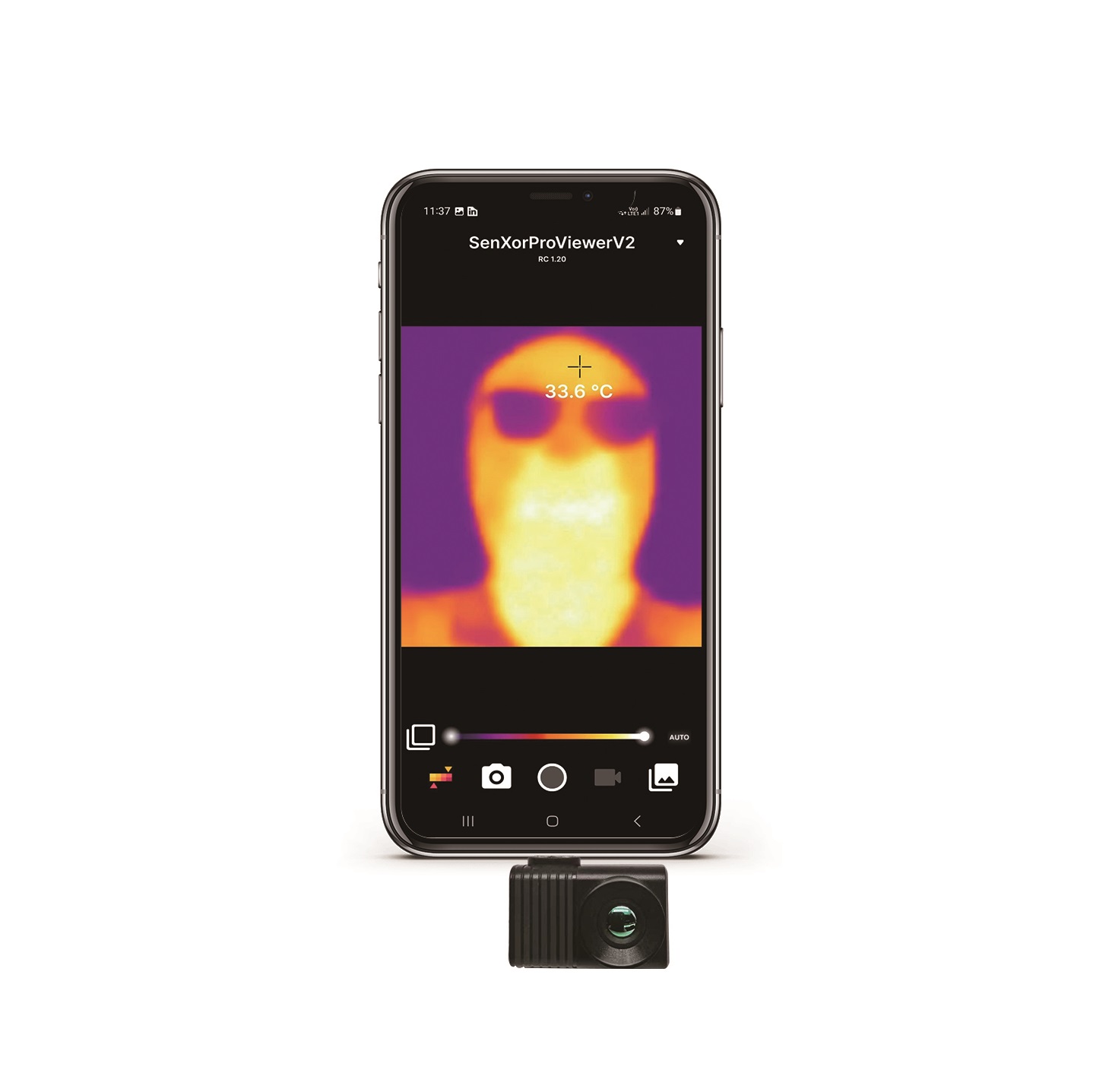
في الميدان، عندما تقوم ببناء أنظمة ذاتية التشغيل للأتمتة الصناعية أو روبوتات الدفاع أو الزراعة الدقيقة أو المحطات الكهربائية الفرعية، تصطدم الرؤية البصرية بجدار فيزيائي صلب. مستشعرات CMOS القياسية رهينة للإضاءة المحيطة والتشتت العكسي والغبار والضباب البحري الكثيف. هنا تغيّر الاستشعارات بالأشعة تحت الحمراء طويلة الموجة (LWIR) قواعد اللعبة. تعمل وحدات الميكروبولومتر LWIR غير المبردة عبر الطيف الكهرومغناطيسي من 8 إلى 14 ميكرومتر (μm)، ولا تبحث عن الضوء المرئي المنعكس. بل تلتقط الإشعاع الحراري المنبعث مباشرة من الأجسام الفيزيائية نفسها. يمنح هذا نظامك القدرة على الرؤية في ظلام دامس بصفر لوكس، والاختراق عبر الدخان، واستخراج درجات حرارة سطحية دقيقة بكسلًا بكسل عبر كامل مجال الرؤية.
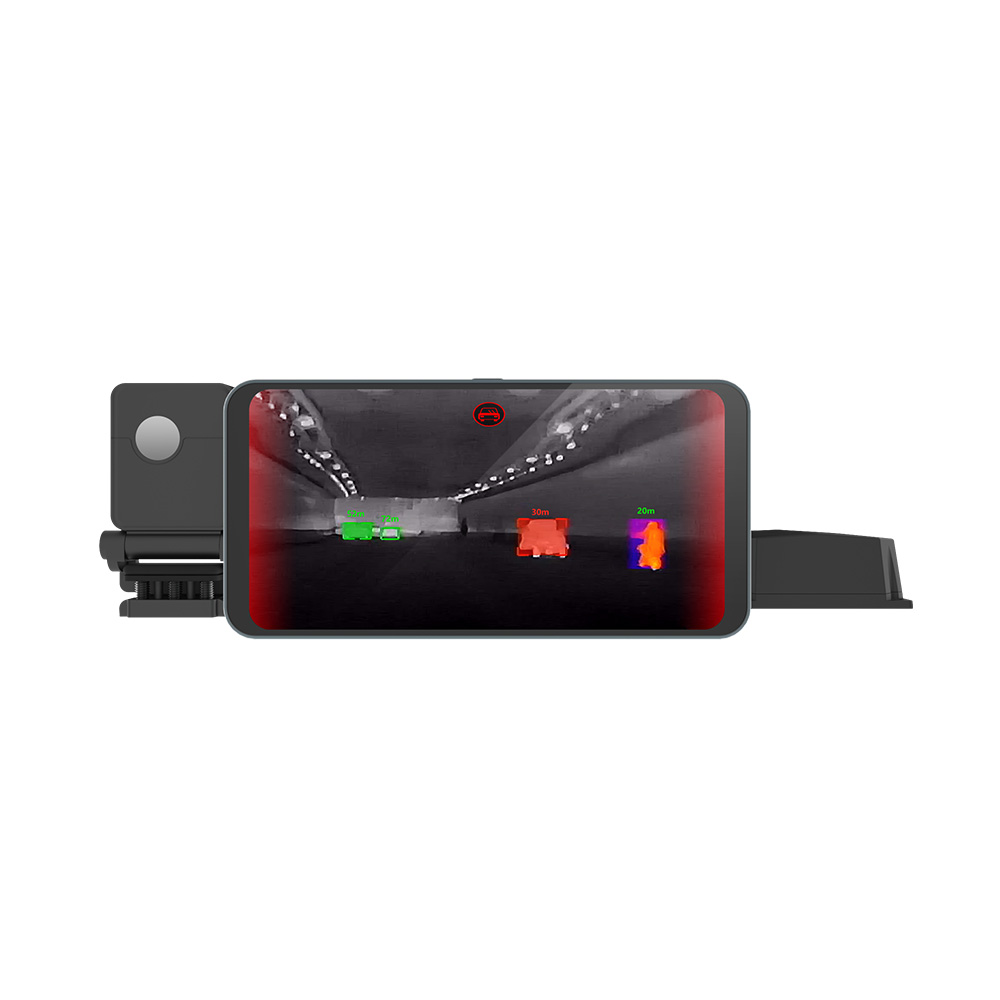
خلال السنوات القليلة الماضية، تغيّر المشهد الحراري بالكامل. لقد شهدنا مصفوفات المستوى البؤري (FPAs) بمسافة بكسل أقل من 12 ميكرومتر تصل إلى النطاق التجاري في اللحظة ذاتها التي أصبحت فيها وحدات المعالجة العصبية المدمجة منخفضة الطاقة (NPUs) رخيصة وسريعة. لم تعد بحاجة إلى حاسوب صناعي ضخم متعطش للطاقة في المصب فقط لتشغيل رؤية حاسوبية أساسية على البيانات الحرارية. يمكنك الآن تنفيذ تصنيف الأهداف وتجزئة العيوب والتصوير الحراري الواقعي مباشرة على الطرف على محور دقيق أو رأس مستشعر بعيد.
بالنسبة لمهندسي البصريات ومكاملي الأنظمة وفرق المشتريات لدى مصنعي المعدات الأصلية، فإن اختيار نواة LWIR غير المبردة هو درس متقدم في المقايضات. عليك الموازنة باستمرار بين الحجم والوزن والطاقة والتكلفة (SWaP-C) مقابل الدقة الإشعاعية الحرجة ودالة نقل التضمين (MTF) والحساسية الحرارية. سواء كنت تقوم بتغليف حمولة فائقة الخفة لطائرة بدون طيار (UAV) لتحديد مواقع الألغام المدفونة، أو تثبيت عيون حرارية ثابتة بدقة 1280×1024 على شبكة مراقبة مرافق مستمرة، فإن تصميمك الميكانيكي وحزمة العدسات وروتينات المعايرة تصنع النظام أو تحطمه. يفكك هذا الدليل الهندسي الفيزياء الأساسية وخطوط معالجة الرقاقة والبصريات وعقبات التكامل العملية التي ستواجهها على منضدة العمل وفي الميدان.
جدول المحتويات
- 👉 الأسس الفيزيائية: ميكانيكا النطاق الموجي LWIR (8–14 ميكرومتر)
- 👉 بنية مستشعر الميكروبولومتر والفيزياء الأساسية
- 👉 خطوط معالجة الذكاء الاصطناعي الطرفي في الرؤية الحرارية
- 👉 التطبيقات الصناعية والدفاعية الحرجة للمهام
- 👉 معيار الوحدات التجارية ومصفوفة المواصفات
- 👉 التكامل الميكانيكي والكهربائي وتكامل SWaP-C
- 👉 الأسئلة الشائعة الصناعية المتعمقة
الأسس الفيزيائية: ميكانيكا النطاق الموجي LWIR (8–14 ميكرومتر)
يعود التصوير الحراري في طيف الأشعة تحت الحمراء طويلة الموجة إلى الديناميكا الحرارية الأساسية: كل جسم تزيد درجة حرارته عن الصفر المطلق (0 كلفن / -273.15 درجة مئوية) يشع طاقة كهرومغناطيسية. نحسب هذا الخروج الطيفي الإشعاعي باستخدام قانون بلانك للإشعاع, ، الذي يوضح توزيع الطاقة لجسم أسود مثالي عبر الأطوال الموجية (λ) عند درجة حرارة ترموديناميكية (T):
B(λ, T) = (2hc² / λ⁵) × [1 / (exp(hc / λkBT) - 1)]
هنا،, h يمثل ثابت بلانك (6.626 × 10&sup-;³&sup4; جول·ثانية)،, c هو سرعة الضوء (2.998 × 10&sup8; م/ث)، و kB هو ثابت بولتزمان (1.381 × 10&sup-;²³ جول/كلفن). عندما تدمج هذا عبر كامل الطيف، تحصل على قانون ستيفان-بولتزمان (W = σT⁴، حيث σ ≈ 5.670 × 10⁻⁸ واط/م²·ك⁴)، مما يخبرنا أن إجمالي الطاقة المطروحة في البيئة يتناسب مع القوة الرابعة لدرجة الحرارة المطلقة.
عندما تنظر إلى أهداف أرضية محيطة وآلات قياسية تعمل بين -40 درجة مئوية و+150 درجة مئوية (233.15 كلفن إلى 423.15 كلفن)، فأنت بحاجة إلى معرفة أين يتركز الجزء الأكبر من تلك الطاقة الإشعاعية. باستخدام قانون فين للإزاحة, ، نجد الطول الموجي لذروة الانبعاث:
λالذروة = b / T ≈ 2897.8 ميكرومتر·كلفن / 300 كلفن ≈ 9.66 ميكرومتر
نظرًا لأن الجزء الأكبر من الإشعاع اليومي يبلغ ذروته عند حوالي 9.6 إلى 10 ميكرومتر، فإن نافذة النقل الجوي من 8 إلى 14 ميكرومتر هي النقطة المثالية لمستشعرات التصوير الحراري غير المبردة.
نوافذ النقل الجوي: مقارنة بين SWIR وMWIR وLWIR
الغلاف الجوي مليء ببخار الماء (H2O)، وثاني أكسيد الكربون (CO2)، والأوزون (O3)، والميثان (CH4). تمتص هذه الجزيئات الإشعاع بشدة عبر مساحات شاسعة من طيف الأشعة تحت الحمراء. في الهندسة الكهروضوئية العملية، نقسم التصوير الحراري والأشعة تحت الحمراء إلى ثلاث نوافذ تشغيلية مميزة:
- ⚙️ الأشعة تحت الحمراء قصيرة الموجة (SWIR، 0.9–1.7 ميكرومتر / ممتدة إلى 2.5 ميكرومتر): تتصرف SWIR بشكل مشابه للضوء المرئي، حيث تلتقط الفوتونات المنعكسة بدلاً من الانبعاث الحراري. تحتاج إلى إضاءة نشطة أو ضوء النجوم أو التوهج الليلي لرؤية أي شيء. تتألق SWIR في فحص رقائق السيليكون وتحليل الرطوبة وتتبع الليزر المتخصص.
- ⚙️ الأشعة تحت الحمراء متوسطة الموجة (MWIR، 3.0–5.0 ميكرومتر): تكتشف MWIR الفوتونات عالية الطاقة المنبعثة من أهداف شديدة الحرارة مثل عوادم التوربينات وأعمدة الصواريخ والغلايات الصناعية. يلزم استخدام مبردات ستيرلينغ المبردة لتبريد هذه الكواشف إلى حوالي 77 كلفن (-196 درجة مئوية) لإيقاف تشبع الحاملات الحرارية الداخلية. يوفر هذا المحرك المبرد حساسية مذهلة، لكنه يستهلك 15–30 واط من الطاقة، ويصدر طنينًا صوتيًا، ويكلف ثروة، ويتآكل ميكانيكيًا بعد 8000 إلى 15000 ساعة تشغيل.
- ✅ الأشعة تحت الحمراء طويلة الموجة (LWIR، 8.0–14.0 ميكرومتر): تلتقط LWIR ذروة إشعاع الجسم الأسود للأجسام الأرضية اليومية. نظرًا لأن الميكروبولومترات غير المبردة تعمل في درجة الحرارة المحيطة، فإنها تستهلك طاقة قليلة جدًا (أقل من 1.0 واط إلى 2.5 واط)، وتعمل في أقل من 3 ثوانٍ، وتصدر ضوضاء صوتية معدومة، ويمكن أن تعمل لأكثر من 50000 ساعة دون صيانة. بالنسبة للاستخدامات العملية طويلة الأمد، فإن LWIR هي العمود الفقري للصناعة.
آليات التشتت في البيئات الجسيمية
انظر، أحد أكبر الأسباب التي تدفع المهندسين لاستخدام LWIR بدلاً من الكاميرات المرئية أو كاميرات NIR هو الاختراق البيئي الخالص. عندما يغطي دخان حرائق الغابات أو غبار المصانع أو الضباب الكثيف أو رذاذ الزيت المحمول جوًا المشهد، تصاب المستشعرات المرئية بالعمى. يعود هذا إلى فيزياء تشتت رايلي و تشتت مي.
يحدث تشتت رايلي عندما يكون نصف القطر (r) of airborne particles is significantly smaller than the wavelength (λ) of the incoming light (r << λ). The scattering cross-section (σs) scales inversely with the fourth power of the wavelength:
σs ∝ 1 / λ&sup4;
Do the math on this: a visible wavelength is roughly 0.5 μm, while an LWIR wavelength is around 10.0 μm—a 20-fold difference. Raising 20 to the fourth power gives an attenuation reduction factor of 160,000. That means tiny smoke and aerosol particles that completely block visible light are virtually invisible to an LWIR sensor. When water droplets swell up to the size of the wavelength (Mie scattering conditions), LWIR still experiences drastically less signal degradation than visible cameras, keeping your vision feed alive.
Radiometric Temperature Extraction
A true radiometric LWIR core is not just a thermal night vision camera; it is a calibrated, non-contact thermometer for every pixel in your array. The total radiant flux (Wالإجمالي) hitting an individual microbolometer pixel consists of three energy sources: energy emitted by the target, ambient energy reflecting off the target, and path radiance emitted by the air itself:
Wالإجمالي = ε τالجوي σ Tالهدف&sup4; + (1 - ε) τالجوي σ Tالمنعكس&sup4; + (1 - τالجوي) σ Tالجوي&sup4;
In this equation, ε is the surface emissivity (0.0 for a shiny mirror, 1.0 for a true blackbody), τالجوي is atmospheric transmission over distance, Tالمنعكس is the reflected background ambient temperature, and Tالجوي is the air temperature. The onboard DSP runs these calculations continuously on-the-fly, cross-referencing factory-calibrated look-up tables to spit out accurate temperature readings across varying ambient operating conditions.
بنية مستشعر الميكروبولومتر والفيزياء الأساسية
At the center of any modern uncooled LWIR module sits a microbolometer Focal Plane Array (FPA). Unlike cooled photon detectors that rely on quantum bandgap excitation, a microbolometer is fundamentally a thermal resistor network suspended over a silicon Readout Integrated Circuit (ROIC).
Every single pixel is its own microscopic bridge. The absorbing layer—typically silicon nitride (Si3N4) paired with an active resistive film—absorbs incoming 8–14 μm thermal photons. As that membrane heats up, its electrical resistance shifts. Two micro-machined, high-aspect-ratio metal legs hold the bridge suspended over the substrate in a vacuum package. Those legs act as thermal bottlenecks, isolating the pixel so that incoming energy actually heats the membrane instead of instantly leaking into the silicon floor below.
Active Material Composition: Vanadium Oxide (VOx) vs. Amorphous Silicon (a-Si)
The core material of the micro-bridge dictates detector performance, measured primarily by its معامل درجة الحرارة للمقاومة (TCR)—the percentage shift in electrical resistance for every degree Celsius change (α = (1/R) × (dR/dT)):
- ✅ أكسيد الفاناديوم (VOx): VOx is the industry standard for aerospace, defense, and high-end industrial systems. It offers an impressive TCR between -2% and -3% per Kelvin at room temperature, while keeping 1/f flicker noise extremely low. That combination provides cleaner signals, higher signal-to-noise ratios (SNR), and razor-sharp thermal anomaly detection.
- ⚙️ السيليكون غير المتبلور (a-Si): a-Si microbolometers can be manufactured using standard CMOS foundry processes, allowing direct wafer-level integration of the detector membrane right on top of the ROIC. While this lowers unit production costs for high-volume commercial gadgets, a-Si suffers from higher 1/f noise and lower TCR, translating into noticeably lower sensitivity when compared head-to-head with VOx.
فرق درجة الحرارة المكافئ للضوضاء (NETD)
When you are evaluating thermal cores on a spec sheet, the absolute most critical number is فرق درجة الحرارة المكافئ للضوضاء (NETD), measured in millikelvins (mK). NETD tells you the exact target temperature difference required to produce an electrical output signal equal to the sensor's baseline noise floor (SNR = 1). The formula is defined as:
NETD = (4 F² √Δf) / [Ad × τo × (dV/dT) × D*]
حيث F is the optical f-number of the lens, Δf is noise bandwidth, Ad is active pixel area, τo is optical transmittance, dV/dT is detector responsivity, and D* is detectivity.
Here is what that translates to in practical applications:
- ⚙️ Standard Commercial Grade (NETD ≤ 50 mK): Good enough for presence detection, vehicle perimeter tracking, basic HVAC scans, and simple robotic navigation.
- ✅ Precision Industrial / Defense Grade (NETD ≤ 30–40 mK): Required for pinpointing early-stage resistance spikes on high-voltage switchgear, tracking subtle moisture ingress inside roofing structures, surveying buried ordnance via diurnal ground heating changes, and precision gas flare inspections.
Specialized Optical Materials in the LWIR Waveband
Standard optical glass like BK7 or fused silica is essentially an opaque wall to wavelengths beyond 2.5 μm due to heavy multi-phonon absorption. You cannot put a standard glass lens in front of an LWIR microbolometer. Instead, precision optical fabricators like جيندي engineer custom assemblies from specialized infrared substrates:
- ⚙️ الجرمانيوم أحادي البلورة (Ge): Germanium is the undisputed king of high-performance LWIR optics. Its refractive index is exceptionally high (n ≈ 4.003 at 10 μm), allowing designers to craft fast f/1.0 and f/1.1 optical systems with low spherical aberration in compact lengths. The trade-off is thermal runaway: raw Germanium turns completely opaque above 100°C, and bare surfaces produce significant Fresnel reflections unless treated with high-efficiency Anti-Reflective (AR) or Diamond-Like Carbon (DLC) hard coatings.
- ✅ Chalcogenide Glass (Ge-Sb-Se compounds): Chalcogenide glasses can be precision-molded directly into aspheric and diffractive optical elements at scale. Most importantly, their thermal refractive index shift (dn/dT ≈ +35 × 10&sup-;&sup6;/°C) is roughly ten times lower than Germanium (+396 × 10&sup-;&sup6;/°C). This lets optical engineers build passively athermalized lens housings that maintain pin-sharp focus from -40°C up to +80°C without adding complex mechanical focus motors.
خطوط معالجة الذكاء الاصطناعي الطرفي في الرؤية الحرارية
Running modern edge AI models on thermal feeds sounds straightforward until you look at how raw thermal data is structured. Unlike visible cameras that output ready-to-use 8-bit RGB frames based on reflected lighting, an uncooled microbolometer streams single-channel, high-dynamic-range radiometric data (typically 14-bit or 16-bit raw digital counts).
You cannot simply pipe this 14-bit stream directly into an edge neural network like YOLOv8-Thermal or a segmentation model. Without extensive low-level DSP processing, sensor noise and dynamic range compression will destroy your detection accuracy.
Raw Signal Conditioning & Non-Uniformity Correction (NUC)
Because micro-machined bolometer pixels each have microscopic variations in resistance, mass, and gain, an uncalibrated raw thermal frame looks like a wall of static—an artifact known as fixed-pattern noise (FPN). The camera's digital signal processor (DSP) cleans this up via a multi-stage pipeline:
- ⚙️ تصحيح البكسلات التالفة (BPC): Dead or non-responsive pixels are mapped during factory calibration and dynamically patched at runtime using neighboring spatial interpolation.
- ⚙️ Two-Point Non-Uniformity Correction (NUC): The DSP applies per-pixel offset and gain arrays across the active matrix:
Scorrected(i,j) = G(i,j) × [Sخام(i,j) - O(i,j)]
Here, G(i,j) is the pixel gain matrix and O(i,j) is the offset matrix, which is re-zeroed periodically by dropping a small mechanical shutter in front of the array for a fraction of a second.
- ✅ Scene-Based Non-Uniformity Correction (SBNUC): For mission-critical tracking where you cannot afford a shutter freeze during flight or robotic movement, modern DSPs run motion-based continuous estimation algorithms to scrub drift out of the frame dynamically without physical shutters.
Dynamic Range Compression & Digital Detail Enhancement (DDE)
Edge inference engines and operator screens generally work on 8-bit inputs (0 to 255 grayscale). If you take a 14-bit raw thermal stream (16,384 discrete levels) and linearly squeeze it into an 8-bit container, low-contrast targets—like a person walking across warm asphalt—disappear into the background noise floor. Modern thermal processors resolve this with two key algorithms:
- ⚙️ معادلة المدرج التكراري التكيفية محدودة التباين (CLAHE): Rather than calculating a global histogram, CLAHE works locally across distinct contextual grid tiles, boosting weak local temperature differences while preventing noisy backgrounds from saturating.
- ✅ تحسين التفاصيل الرقمية (DDE): This algorithm uses non-linear bilateral spatial filtering to split the thermal image into two distinct bands: a low-frequency base layer (representing overall broad environmental temperature gradients) and a high-frequency detail layer (fine edges, wires, mechanical seams, and subtle textures). The detail layer is amplified and combined back with the compressed base layer, giving neural networks sharp object boundaries to latch onto.
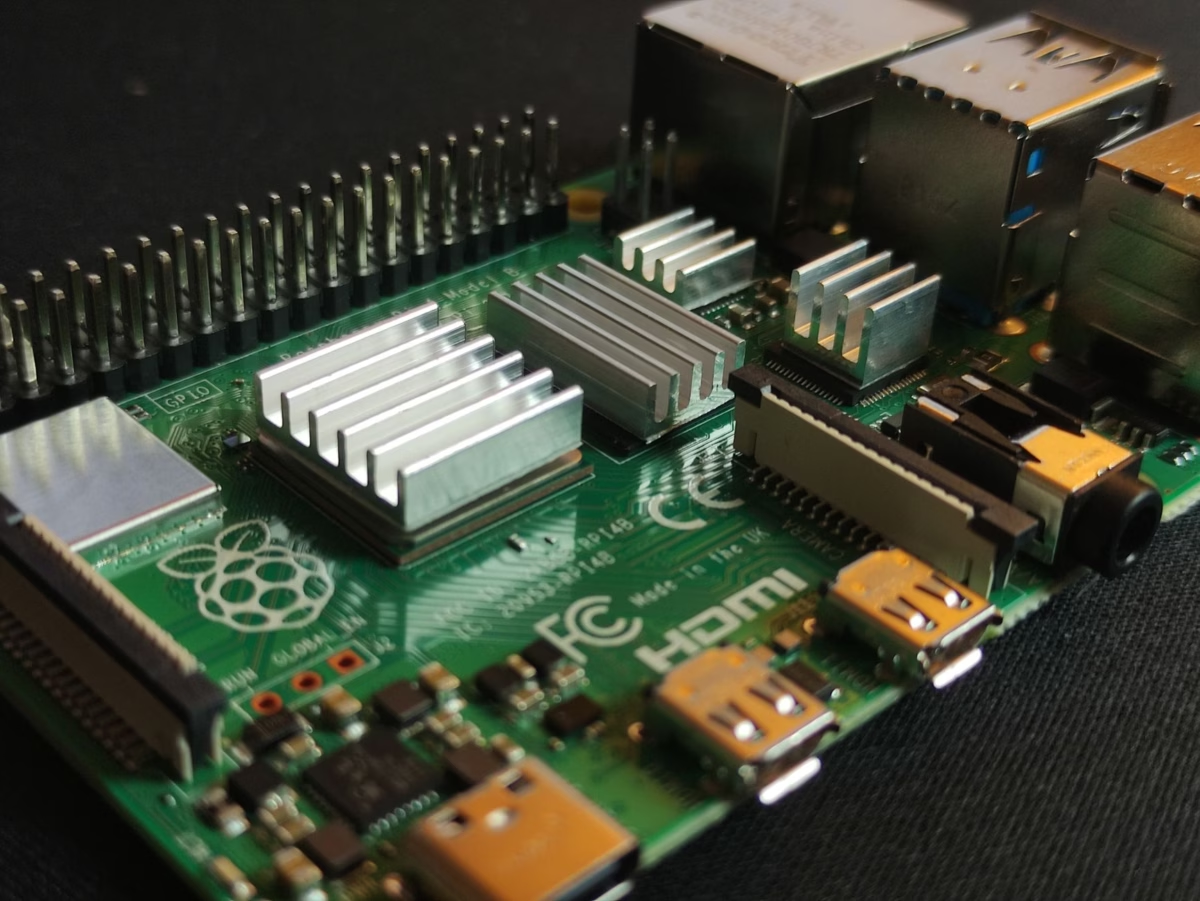
If you are integrating these pipelines onto embedded platforms like a Raspberry Pi or NVIDIA Jetson, smooth performance depends heavily on the underlying Linux video architecture. Review our hands-on walkthrough on Raspberry Pi thermal module driver implementations for configuring V4L2 kernel modules and SPI/I2C communication pipelines. To map out custom bus architectures and OEM hardware pinouts, check our in-depth resource on OEM thermal core integration architectures.
التطبيقات الصناعية والدفاعية الحرجة للمهام
Industrial Predictive Maintenance & High-Voltage Utilities
In heavy manufacturing facilities and electrical utility grids, sudden component failure causes massive operational downtime and catastrophic safety risks. When bolted busbar joints, disconnect switches, breaker terminals, or motor bearings begin to fail, mechanical friction or electrical resistance climbs. Based on Joule’s First Law (P = I²R), that added resistance converts directly into localized heat dissipation well before an arc flash occurs or a bearing seizes up.
Radiometric LWIR modules continuously scan switchgear and high-voltage assets, allowing maintenance automation systems to trigger alerts based on Delta-T (ΔT) criteria:
- ⚙️ 1°C to 10°C Rise Above Ambient/Baseline: Early resistance warning; log for routine inspection during the next maintenance cycle.
- ⚙️ 11°C to 30°C Rise: Serious localized defect; requires corrective maintenance during upcoming planned outages.
- ✅ >30°C Rise Above Baseline: Critical hazard; immediate threat of catastrophic dielectric breakdown or fire. Disconnect immediately.
Autonomous Perimeter Security & Force Protection
Standard visible cameras and active IR illuminators struggle with headlight bloom, tree shadows, camouflage, and adverse weather. Uncooled LWIR cores operate as true passive optical sentinels. System designers calculate perimeter detection limits using the standardized Johnson Criteria, which defines the line pairs required across a target's critical dimension:
- ⚙️ Detection (1.0 ± 0.25 line pairs): Confirming that an object of interest (person, vehicle) is present in the scene.
- ⚙️ Recognition (4.0 ± 0.8 line pairs): Classifying the target type (e.g., separating a human from a stray deer, or a truck from a passenger car).
- ✅ Identification (6.4 ± 1.5 line pairs): High-confidence determination (e.g., distinguishing an armed intruder from an unarmed worker).
To see how multi-spectral thermal payloads integrate into large-scale automated border systems, dive into our technical guide on industrial security thermography frameworks.
UAV Payloads, Humanitarian Demining, and Field Robotics
Mounting ultra-compact LWIR thermal cores on robotic crawlers and aerial drones has modernized unexploded ordnance (UXO) and humanitarian landmine clearance. Buried landmines—including low-metal plastic designs—disrupt the natural compaction, moisture migration, and heat capacity of the soil directly above them.
During morning sunrise and evening sunset cycles—known as thermal crossover periods—the ground right over a buried threat changes temperature at a measurably different rate than the surrounding native soil. Aerial gimbals equipped with high-sensitivity radiometric LWIR modules pick up these tiny surface thermal deviations (ΔT ≤ 0.05°C) from safe standoff altitudes, mapping minefields without risking deminers on the ground.
معيار الوحدات التجارية ومصفوفة المواصفات
Selecting the right LWIR core means aligning your resolution, pixel pitch, thermal sensitivity, optics, and video output protocols directly with your platform constraints. For sourcing high-volume industrial electronics and managing production supply chains, integrators can coordinate directly through certified component suppliers like كويانغ. Below is an engineering overview and specification matrix comparing two benchmark OEM thermal cores.
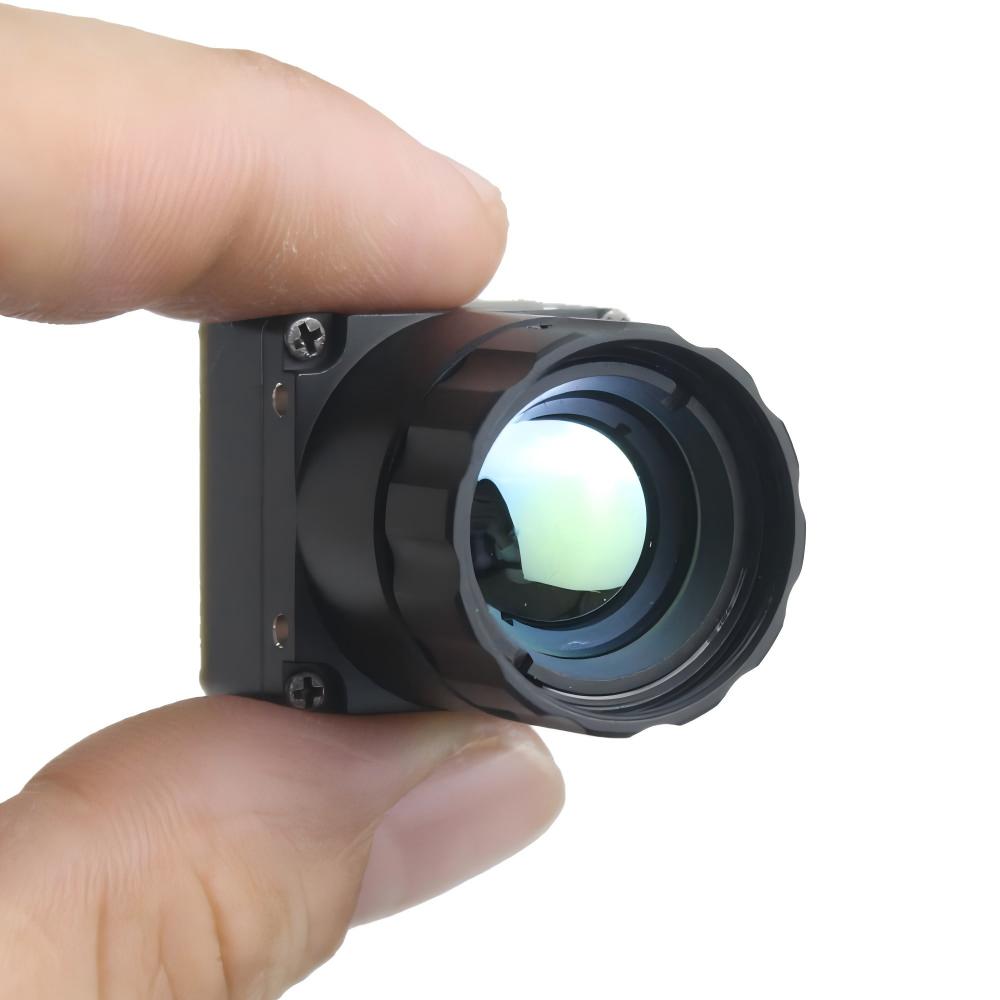
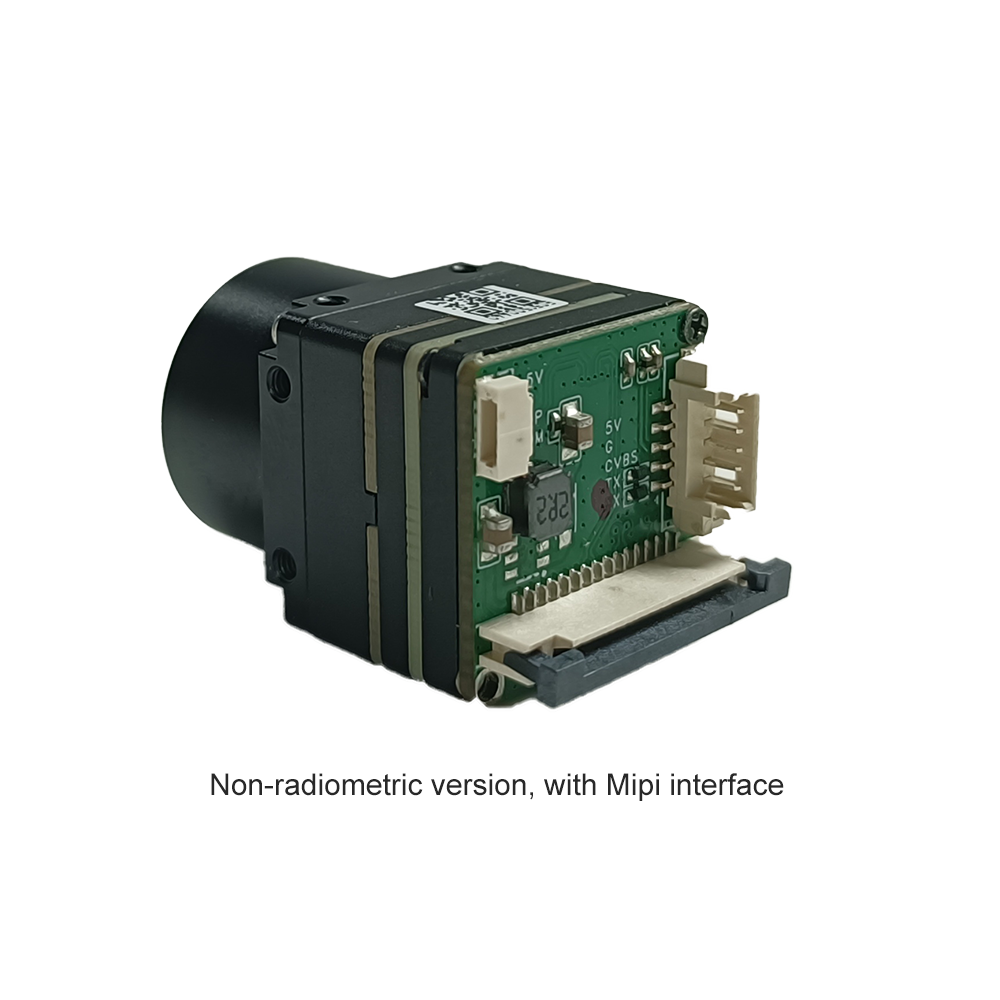
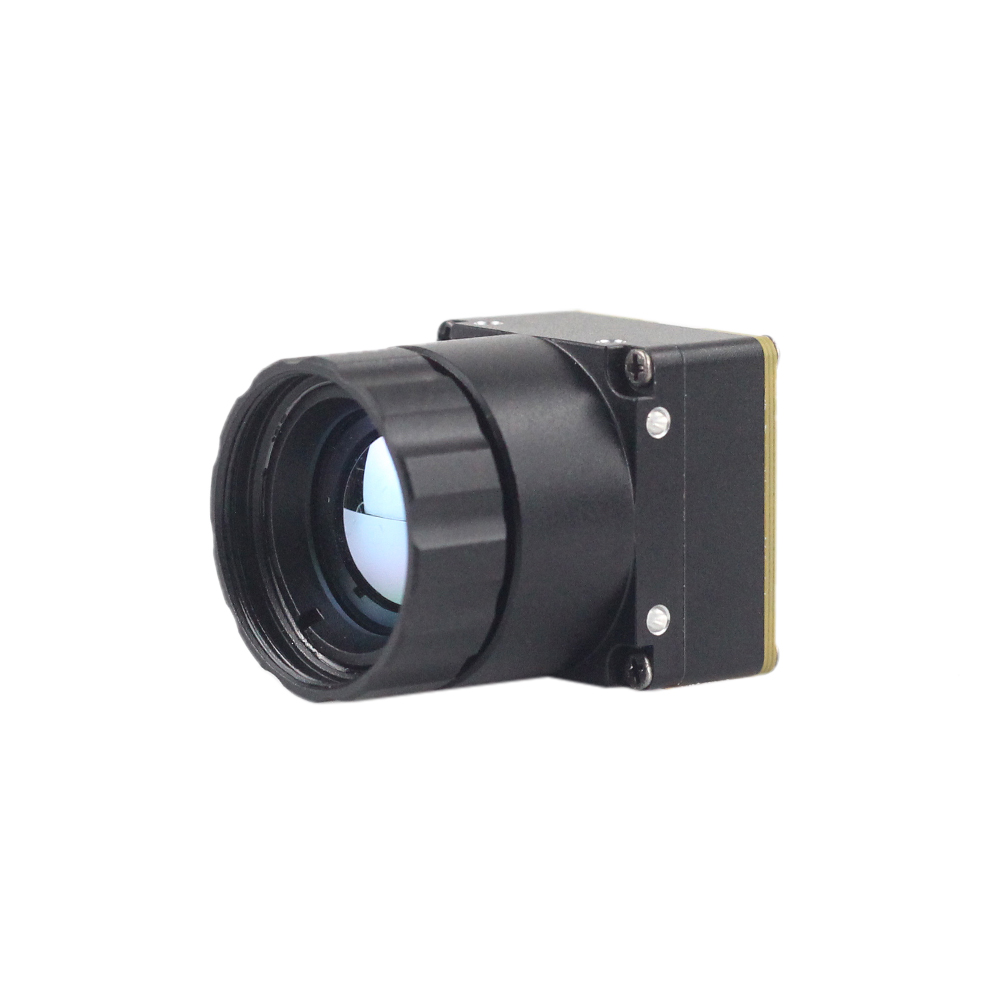
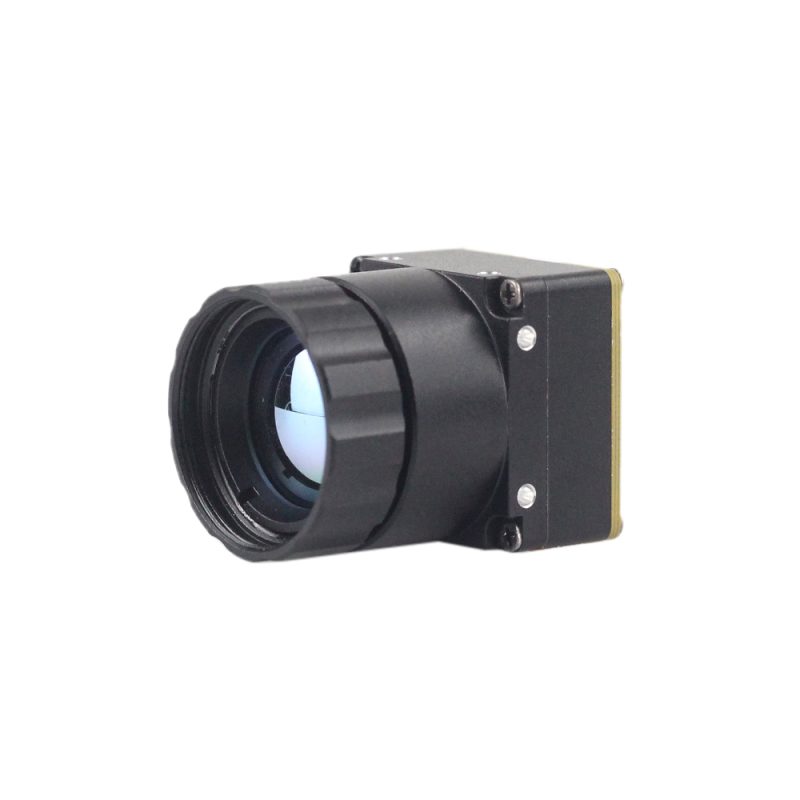
1. Mini 256 Uncooled LWIR Thermal Camera Module
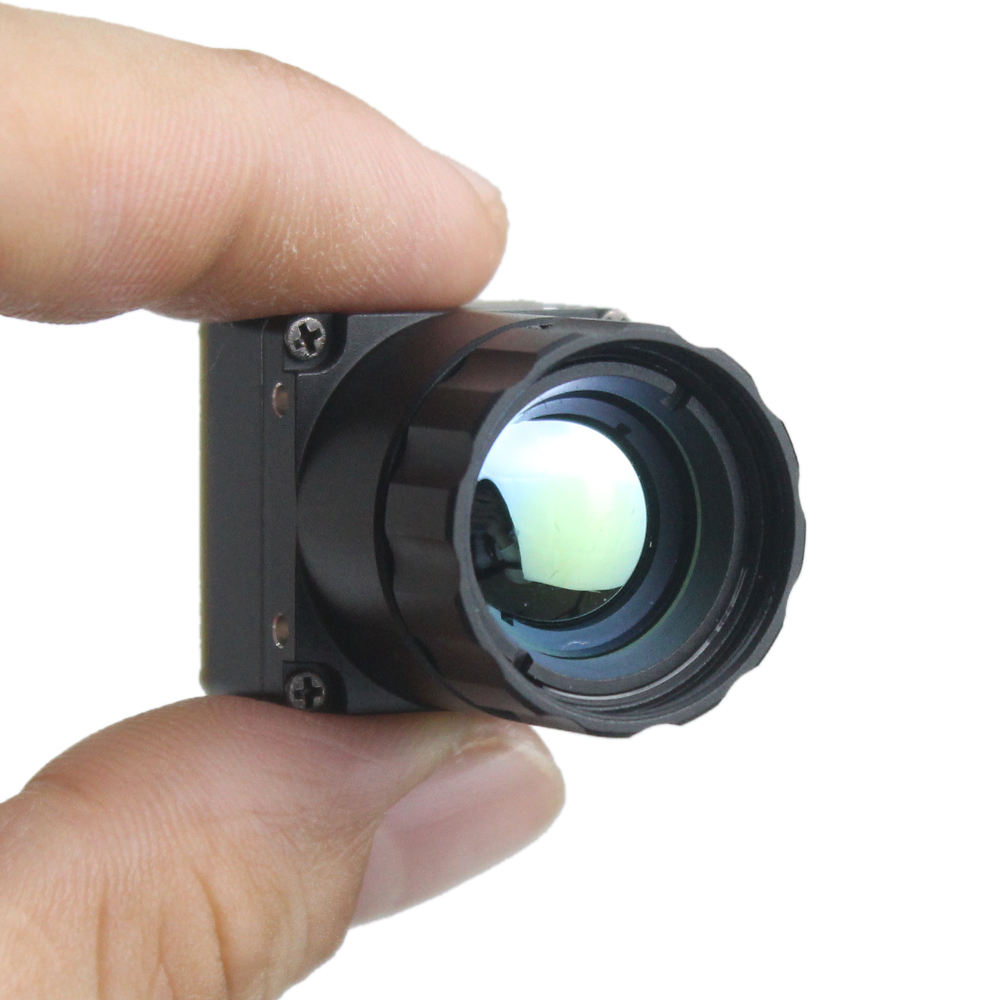
الـ وحدة الكاميرا الحرارية المصغرة 256 غير المبرّدة بالأشعة تحت الحمراء طويلة الموجة is an ultra-compact, featherweight thermal engine engineered specifically for micro-gimbals, commercial drone payloads (similar in form factor and mission profile to DJI enterprise platforms for detecting mines), search-and-rescue robotics, and body-worn tactical observation systems. Adopting advanced high-performance infrared detectors, the Mini 256 captures terrestrial infrared radiation and outputs a uniform, ultra-clear thermal image with integrated radiometry for precise temperature measurement.
Key architectural characteristics include:
- ✅ High-Sensitivity Microbolometer: Features a 256×192 resolution focal plane array with a 12 μm pixel pitch, delivering sharp spatial resolution while minimizing optical diameter requirements.
- ⚙️ Integrated Radiometric Engine: Captures raw thermal radiation and converts it into accurate, per-pixel temperature measurements, allowing onboard edge systems to detect thermal anomalies automatically.
- ✅ SWaP-Optimized Footprint: Engineered for extreme Size, Weight, and Power (SWaP) constraints, making it directly embeddable into miniature aerial platforms, handheld thermography devices, and robotic mine-clearing crawlers.
- ⚙️ Flexible Output Standards: Supports digital video output protocols (DVP/USB) alongside serial command interfaces for seamless host communication.
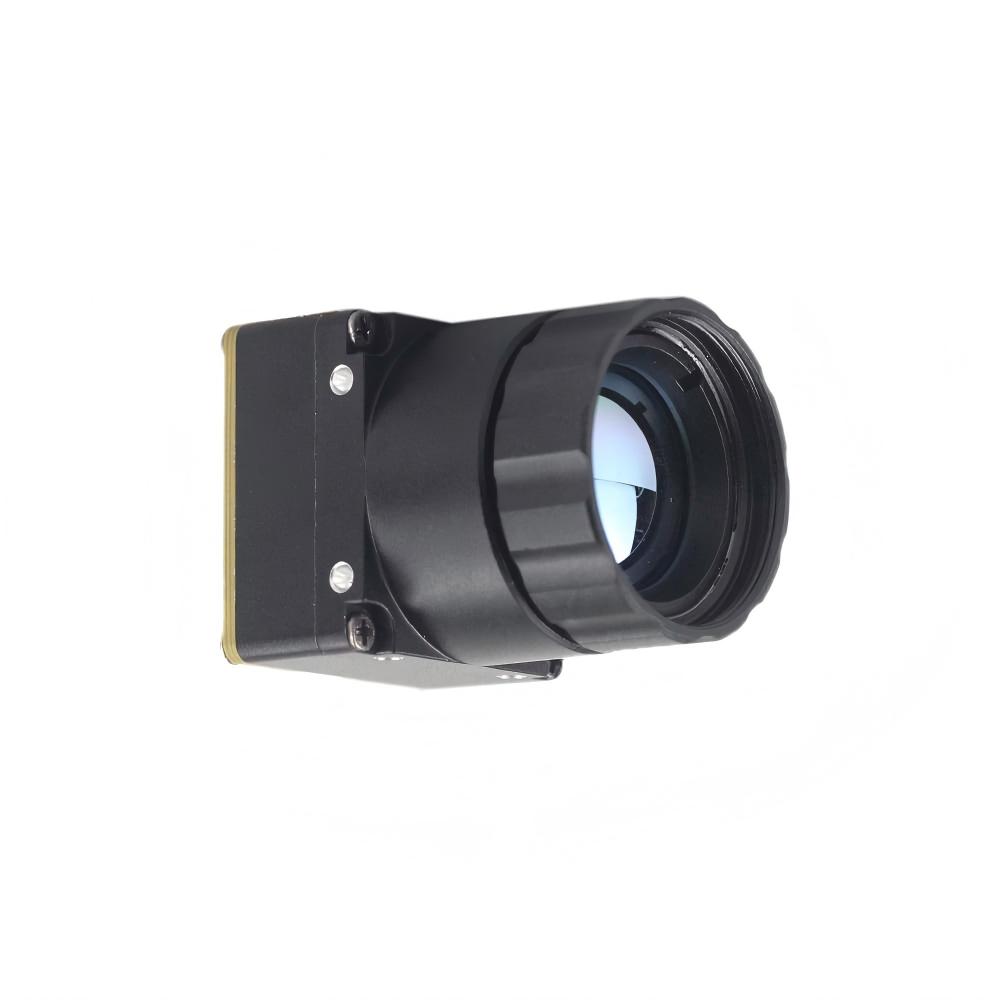
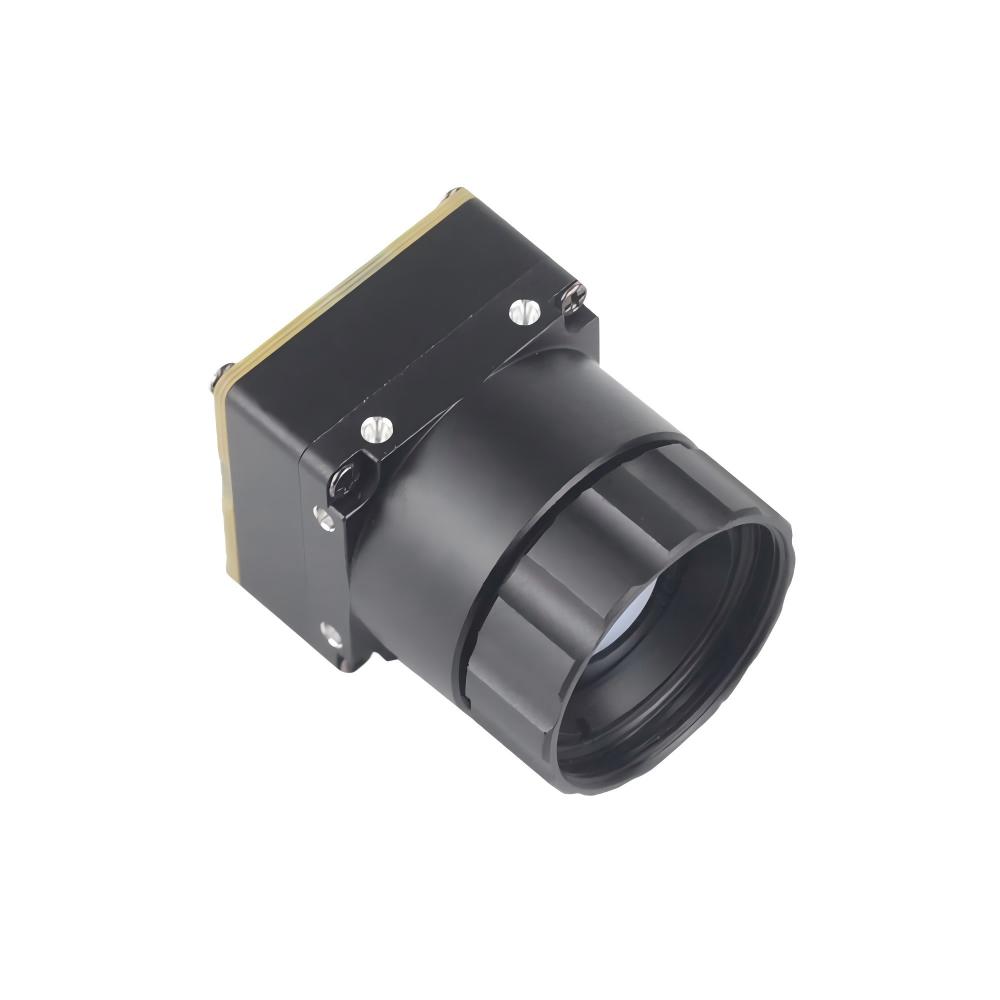
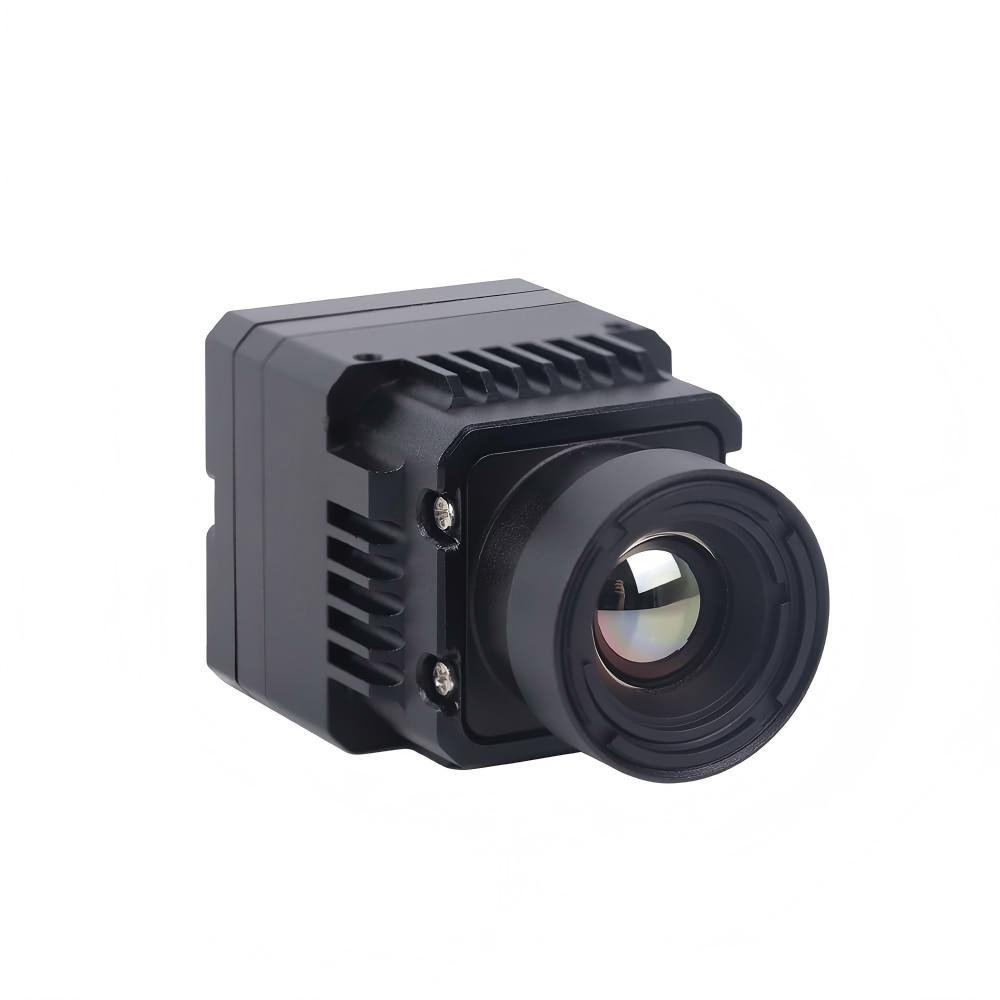
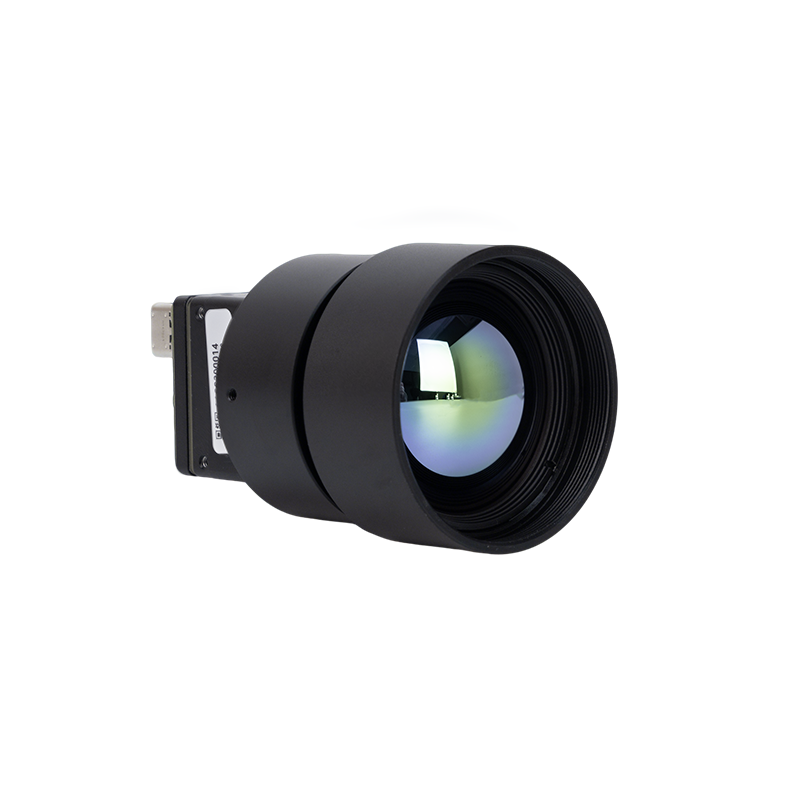
2. High Resolution Uncooled Infrared 1280×1024 Thermal Imaging LWIR Camera
For wide-area perimeter defense, high-altitude UAV payloads, and precision electrical substation inspection, the High Resolution Uncooled Infrared 1280×1024 Thermal Imaging LWIR Camera is the benchmark. Pushing true 1.3-megapixel radiometric thermal frames, this core eliminates pixelation and captures minute thermal gradients across massive scenes.
Key architectural characteristics include:
- ✅ Megapixel Thermal Array: Boasts a 1280×1024 detector array (over 1.31 million active radiometric pixels), providing 4.3 times the spatial data of standard VGA (640×512) cores.
- ⚙️ High-Fidelity 25mm Optics: Standard configuration features a precision-machined 25mm athermalized Germanium lens, delivering superior optical throughput and high Instantaneous Field of View (IFOV).
- ✅ Advanced Radiometric Calibration: Factory calibrated across extensive dynamic ranges to deliver accurate temperature readings under extreme environmental operating conditions.
- ⚙️ High-Throughput Digital Interconnects: Engineered with industrial-grade high-speed digital interfaces suitable for direct connection to embedded DSPs, FPGAs, and Edge AI accelerators.
Comprehensive Engineering Specification Benchmark
| معلمة المواصفة | وحدة Mini 256 غير المبردة بالأشعة تحت الحمراء طويلة الموجة | High Resolution 1280×1024 LWIR Camera |
|---|---|---|
| دقة الكاشف | 256 × 192 pixels (49,152 measurement points) | 1280 × 1024 pixels (1,310,720 measurement points) |
| تباعد البكسل | 12 ميكرومتر | 12 ميكرومتر |
| النطاق الطيفي | 8.0 to 14.0 μm (LWIR) | 8.0 to 14.0 μm (LWIR) |
| تقنية الكاشف | ميكروبولومتر VOx غير مبرد | High-Density Uncooled VOx Microbolometer |
| الحساسية الحرارية (NETD) | ≤ 40–50 mK @ f/1.0, 300 K | ≤ 35–40 mK @ f/1.0, 300 K |
| معدل الإطارات | 25 Hz / 30 Hz / 50 Hz | 25 Hz / 30 Hz / 50 Hz |
| Standard Lens Configuration | Athermalized micro-optics | 25 mm precision Germanium lens (optional telephoto) |
| المعايرة الإشعاعية | Per-pixel radiometric output (±2°C or ±2%) | Precision full-frame radiometry (±2°C or ±2%) |
| Digital Video Interfaces | DVP, USB 2.0, UART control | Cameralink, USB 3.0, MIPI-CSI-2, Ethernet / GigE |
| استهلاك الطاقة | ≤ 0.8 W (ultra-low power consumption) | ≤ 2.5 W (full DSP pipeline active) |
| Primary Target Deployments | Micro-gimbals, UAV demining payloads, SAR drones, handhelds | Fixed utility monitoring, border defense, high-altitude UAVs |
التكامل الميكانيكي والكهربائي وتكامل SWaP-C
Here's the deal: dropping an uncooled LWIR core into an autonomous vehicle or an industrial pan-tilt-zoom head is not just plug-and-play. You have to treat the sensor as an electro-optical thermal engine with strict mechanical and thermal boundaries.
Thermal Management and Sensor Housing Isolation
While uncooled FPAs do not need cryogenic coolers, the microbolometer works by measuring tiny millikelvin shifts across isolated pixel bridges. If heat from your onboard power supply, motor driver, or edge AI compute board flows unevenly into the camera chassis, the FPA will suffer severe thermal drift. This causes image shading, fixed-pattern noise, and ruined radiometric accuracy.
In the shop, follow these thermal isolation practices:
- ⚙️ Conductive Isolation: Mount your thermal core on low-thermal-conductivity standoffs (such as PEEK or ceramic spacers) to thermally isolate the sensor from adjacent host compute boards.
- ✅ Dedicated Chassis Sinking: Direct heat generated by the module's onboard DSP through dedicated thermal pads out to the external aluminum enclosure, maintaining a stable, uniform temperature across the sensor plane.
- ⚙️ Avoid Direct Forced Air: Never point cooling fan exhaust directly over the exposed lens barrel or bolometer chassis. Uneven, turbulent airflow creates localized temperature fluctuations that throw off radiometric calibration algorithms.
High-Speed Digital Video Interface Architectures
Choosing the right digital interface determines your latency, system complexity, and host processing requirements:
- ⚙️ MIPI-CSI-2 / CMOS DVP: The gold standard for embedded board-to-board designs with SoCs like the NVIDIA Jetson Orin Nano, Rockchip RK3588, or NXP i.MX8. MIPI-CSI-2 transfers uncompressed 14-bit raw radiometric frames straight into host DMA memory with microsecond latency, bypassing USB protocol stacks.
- ✅ USB 3.0 / USB-C (UVC Radiometric Class): Best for industrial PCs, fast bench prototyping, and lab testing. Make sure your module firmware supports USB Video Class (UVC) extensions to transmit synchronized 14-bit radiometric metadata alongside the 8-bit visual stream over a single physical cable.
- ⚙️ GigE Vision / Industrial Ethernet: The standard choice for long-distance factory floor automation. Run uncompressed radiometric feeds up to 100 meters over standard Cat6 cabling straight into centralized industrial servers or PLCs.
Optomechanical Alignment and High-Vibration Ruggedization
When you are working with small 12 μm pixels, optical depth of focus (δ) is razor thin:
δ ≈ 2 × (f/#) × (Pixel Pitch) ≈ 2 × 1.0 × 12 μm = 24 μm
Because your focus tolerance is less than 25 micrometers, any mechanical deformation or thermal expansion in the lens mount will blur the image. On high-vibration drone airframes or stamping press inspection systems, you need fine-pitch locked optical threads (such as M12 or M10 with locking set-screws) combined with aerospace-grade thread-locking adhesives to maintain optical alignment under harsh mechanical shock (MIL-STD-810H standards).
الأسئلة الشائعة الصناعية المتعمقة
What is the primary practical difference between cooled MWIR and uncooled LWIR thermal cameras?
How do high-resolution 1280×1024 LWIR cores improve predictive maintenance and infrastructure inspection?
Can miniature LWIR camera modules be integrated directly with Edge AI for custom drone mine-detection payloads?
📚 المراجع والقراءات الإضافية
- المعيار الصناعي: Precision Infrared Optics Fabrication & Coatings – Jinde Optical Engineering
- المعيار الصناعي: Industrial Electronics & Thermal Component Sourcing – KUYANG Supply Chain Portal
- دليل ذو صلة: Multi-Sensor Security Architectures & Thermography Frameworks – Industrial Security Vision Systems
- دليل ذو صلة: Comprehensive OEM Core Hardware & Protocol Integration – Thermal Module Integration Guide
- دليل ذو صلة: Embedded Thermal Camera Driver Configuration – Raspberry Pi RS300 Thermal Driver Setup