
Руководство по покупке неохлаждаемого тепловизионного модуля VOx: Edge AI и OEM-интеграция
20 августа 2026 г.
Модули LWIR-тепловизионных камер: коммерческое руководство покупателя по Edge AI и промышленной термографии
В полевых условиях, когда вы создаёте автономные системы для промышленной автоматизации, оборонной робототехники, точного земледелия или электрических подстанций, оптическое зрение упирается в жёсткую физическую стену. Стандартные КМОП-сенсоры зависят от окружающего освещения, обратного рассеяния, пыли и густого морского тумана. Именно здесь длинноволновое инфракрасное (LWIR) зондирование меняет правила игры. Работая в диапазоне электромагнитного спектра от 8 до 14 микрометров (мкм), неохлаждаемые LWIR-модули на микроболометрах не ищут отражённый видимый свет. Вместо этого они улавливают испускаемое тепловое излучение непосредственно от самих физических объектов. Это даёт вашей системе способность видеть в абсолютной кромешной темноте при нулевой освещённости, проникать сквозь дым и получать точные, попиксельные значения температуры поверхности по всему полю зрения.
За последние несколько лет весь тепловизионный ландшафт изменился. Мы увидели, как матрицы фокальной плоскости (FPA) с шагом пикселя менее 12 мкм достигли коммерческого масштаба ровно в тот момент, когда малопотребляющие встраиваемые нейронные процессоры (NPU) стали дешёвыми и быстрыми. Вам больше не нужен громоздкий и энергоёмкий промышленный компьютер ниже по потоку только для того, чтобы выполнять базовое компьютерное зрение на тепловых данных. Теперь вы можете выполнять классификацию целей, сегментацию дефектов и реальную термографию непосредственно на периферии — на микроподвесе или выносной сенсорной головке.
Для оптических инженеров, системных интеграторов и закупочных команд OEM выбор неохлаждаемого LWIR-ядра — это мастер-класс по компромиссам. Вам приходится постоянно балансировать между габаритами, весом, энергопотреблением и стоимостью (SWaP-C) и критически важными радиометрической точностью, функцией передачи модуляции (MTF) и тепловой чувствительностью. Упаковываете ли вы сверхлёгкую полезную нагрузку для беспилотного летательного аппарата (БПЛА) для обнаружения заглублённых мин или устанавливаете стационарные тепловые «глаза» 1280×1024 на непрерывную сеть мониторинга коммунальных объектов — ваша механическая конструкция, оптический стек и процедуры калибровки решают судьбу системы. Это инженерное руководство разбирает базовую физику, конвейеры обработки на кристалле, оптику и практические трудности интеграции, с которыми вы столкнётесь на стенде и в полевых условиях.
Содержание
- 👉 Физические основы: механика волнового диапазона LWIR (8–14 мкм)
- 👉 Архитектура микроболометрического сенсора и базовая физика
- 👉 Конвейеры обработки Edge AI в тепловизионном зрении
- 👉 Критически важные промышленные и оборонные применения
- 👉 Коммерческие модули: сравнительный тест и матрица спецификаций
- 👉 Механическая, электрическая интеграция и интеграция по SWaP-C
- 👉 Углублённый промышленный FAQ
Физические основы: механика волнового диапазона LWIR (8–14 мкм)
Тепловидение в длинноволновом инфракрасном спектре сводится к базовой термодинамике: каждый объект с температурой выше абсолютного нуля (0 Кельвин / -273,15 °C) излучает электромагнитную энергию. Мы рассчитываем эту спектральную энергетическую светимость с помощью закона излучения Планка, который описывает распределение энергии идеального абсолютно чёрного тела по длинам волн (λ) при термодинамической температуре (T):
B(λ, T) = (2hc² / λ&sup5;) × [1 / (exp(hc / λkBT) - 1)]
Здесь, h обозначает постоянную Планка (6,626 × 10&sup-;³&sup4; Дж·с), c — скорость света (2,998 × 10&sup8; м/с), а kB — постоянная Больцмана (1,381 × 10&sup-;²³ Дж/К). Когда вы интегрируете это по всему спектру, вы получаете закон Стефана — Больцмана (W = σT&sup4;, при σ ≈ 5,670 × 10&sup-;&sup8; Вт/м²·К&sup4;), что говорит нам о том, что полная энергия, излучаемая в окружающую среду, пропорциональна четвёртой степени абсолютной температуры.
Когда вы рассматриваете окружающие наземные объекты и стандартное оборудование, работающее в диапазоне от -40°C до +150°C (от 233,15 К до 423,15 К), вам необходимо знать, где сосредоточена основная часть этой лучистой энергии. Используя закон смещения Вина, находим длину волны пикового излучения:
λпик = b / T ≈ 2897,8 мкм·К / 300 К ≈ 9,66 мкм
Поскольку основная часть повседневного излучения достигает пика в районе 9,6–10 мкм, атмосферное окно пропускания 8–14 мкм является оптимальным диапазоном для неохлаждаемых тепловизионных датчиков.
Атмосферные окна пропускания: сравнение SWIR, MWIR и LWIR
Атмосфера насыщена водяным паром (H2O), углекислым газом (CO2), озоном (O3) и метаном (CH4). Эти молекулы интенсивно поглощают излучение в широких диапазонах инфракрасного спектра. В практической оптико-электронной инженерии мы разделяем тепловизионную и инфракрасную съёмку на три отдельных рабочих окна:
- ⚙️ Коротковолновый инфракрасный диапазон (SWIR, 0,9–1,7 мкм / расширенный до 2,5 мкм): SWIR ведёт себя аналогично видимому свету, улавливая отражённые фотоны, а не тепловое излучение. Чтобы что-то увидеть, требуется активная подсветка, звёздный свет или ночное свечение атмосферы. SWIR незаменим при контроле кремниевых пластин, анализе влажности и специализированном лазерном сопровождении.
- ⚙️ Средневолновый инфракрасный диапазон (MWIR, 3,0–5,0 мкм): MWIR регистрирует высокоэнергетические фотоны, испускаемые чрезвычайно горячими объектами, такими как выхлопы турбин, факелы ракет и промышленные котлы. Для охлаждения таких детекторов до ~77 Кельвинов (-196°C) требуются криогенные охладители Стирлинга, чтобы предотвратить насыщение внутренними тепловыми носителями. Такая криогенная система обеспечивает невероятную чувствительность, но потребляет 15–30 Вт мощности, создаёт акустический гул, стоит очень дорого и механически изнашивается после 8 000–15 000 часов работы.
- ✅ Длинноволновый инфракрасный диапазон (LWIR, 8,0–14,0 мкм): LWIR улавливает пиковое излучение абсолютно чёрного тела от повседневных наземных объектов. Поскольку неохлаждаемые микроболометры работают при температуре окружающей среды, они потребляют очень мало энергии (<1,0–2,5 Вт), включаются менее чем за 3 секунды, не создают акустического шума и могут работать более 50 000 часов без обслуживания. Для практического долгосрочного применения LWIR является рабочей лошадкой отрасли.
Механика рассеяния в средах с частицами
Одна из главных причин, по которой инженеры выбирают LWIR вместо камер видимого или ближнего ИК-диапазона, — это превосходная проникающая способность в сложных условиях окружающей среды. Когда дым лесных пожаров, заводская пыль, густой туман или аэрозоли масел в воздухе окутывают сцену, датчики видимого диапазона слепнут. Это объясняется физикой рэлеевского рассеяния и рассеяния Ми.
Рэлеевское рассеяние возникает, когда радиус (r) of airborne particles is significantly smaller than the wavelength (λ) of the incoming light (r << λ). The scattering cross-section (σs) scales inversely with the fourth power of the wavelength:
σs ∝ 1 / λ&sup4;
Do the math on this: a visible wavelength is roughly 0.5 μm, while an LWIR wavelength is around 10.0 μm—a 20-fold difference. Raising 20 to the fourth power gives an attenuation reduction factor of 160,000. That means tiny smoke and aerosol particles that completely block visible light are virtually invisible to an LWIR sensor. When water droplets swell up to the size of the wavelength (Mie scattering conditions), LWIR still experiences drastically less signal degradation than visible cameras, keeping your vision feed alive.
Radiometric Temperature Extraction
A true radiometric LWIR core is not just a thermal night vision camera; it is a calibrated, non-contact thermometer for every pixel in your array. The total radiant flux (Wобщ) hitting an individual microbolometer pixel consists of three energy sources: energy emitted by the target, ambient energy reflecting off the target, and path radiance emitted by the air itself:
Wобщ = ε τатм σ Tцель&sup4; + (1 - ε) τатм σ Tотр&sup4; + (1 - τатм) σ Tатм&sup4;
In this equation, ε is the surface emissivity (0.0 for a shiny mirror, 1.0 for a true blackbody), τатм is atmospheric transmission over distance, Tотр is the reflected background ambient temperature, and Tатм is the air temperature. The onboard DSP runs these calculations continuously on-the-fly, cross-referencing factory-calibrated look-up tables to spit out accurate temperature readings across varying ambient operating conditions.
Архитектура микроболометрического сенсора и базовая физика
At the center of any modern uncooled LWIR module sits a microbolometer Focal Plane Array (FPA). Unlike cooled photon detectors that rely on quantum bandgap excitation, a microbolometer is fundamentally a thermal resistor network suspended over a silicon Readout Integrated Circuit (ROIC).
Every single pixel is its own microscopic bridge. The absorbing layer—typically silicon nitride (Si3N4) paired with an active resistive film—absorbs incoming 8–14 μm thermal photons. As that membrane heats up, its electrical resistance shifts. Two micro-machined, high-aspect-ratio metal legs hold the bridge suspended over the substrate in a vacuum package. Those legs act as thermal bottlenecks, isolating the pixel so that incoming energy actually heats the membrane instead of instantly leaking into the silicon floor below.
Active Material Composition: Vanadium Oxide (VOx) vs. Amorphous Silicon (a-Si)
The core material of the micro-bridge dictates detector performance, measured primarily by its Температурный коэффициент сопротивления (ТКС)—the percentage shift in electrical resistance for every degree Celsius change (α = (1/R) × (dR/dT)):
- ✅ Оксид ванадия (VOx): VOx is the industry standard for aerospace, defense, and high-end industrial systems. It offers an impressive TCR between -2% and -3% per Kelvin at room temperature, while keeping 1/f flicker noise extremely low. That combination provides cleaner signals, higher signal-to-noise ratios (SNR), and razor-sharp thermal anomaly detection.
- ⚙️ Аморфный кремний (a-Si): a-Si microbolometers can be manufactured using standard CMOS foundry processes, allowing direct wafer-level integration of the detector membrane right on top of the ROIC. While this lowers unit production costs for high-volume commercial gadgets, a-Si suffers from higher 1/f noise and lower TCR, translating into noticeably lower sensitivity when compared head-to-head with VOx.
Разность температур, эквивалентная шуму (NETD)
When you are evaluating thermal cores on a spec sheet, the absolute most critical number is Разность температур, эквивалентная шуму (NETD), measured in millikelvins (mK). NETD tells you the exact target temperature difference required to produce an electrical output signal equal to the sensor's baseline noise floor (SNR = 1). The formula is defined as:
NETD = (4 F² √Δf) / [Ad × τo × (dV/dT) × D*]
Где F is the optical f-number of the lens, Δf is noise bandwidth, Ad is active pixel area, τo is optical transmittance, dV/dT is detector responsivity, and D* is detectivity.
Here is what that translates to in practical applications:
- ⚙️ Standard Commercial Grade (NETD ≤ 50 mK): Good enough for presence detection, vehicle perimeter tracking, basic HVAC scans, and simple robotic navigation.
- ✅ Precision Industrial / Defense Grade (NETD ≤ 30–40 mK): Required for pinpointing early-stage resistance spikes on high-voltage switchgear, tracking subtle moisture ingress inside roofing structures, surveying buried ordnance via diurnal ground heating changes, and precision gas flare inspections.
Specialized Optical Materials in the LWIR Waveband
Standard optical glass like BK7 or fused silica is essentially an opaque wall to wavelengths beyond 2.5 μm due to heavy multi-phonon absorption. You cannot put a standard glass lens in front of an LWIR microbolometer. Instead, precision optical fabricators like Цзиньдэ engineer custom assemblies from specialized infrared substrates:
- ⚙️ Монокристаллический германий (Ge): Germanium is the undisputed king of high-performance LWIR optics. Its refractive index is exceptionally high (n ≈ 4.003 at 10 μm), allowing designers to craft fast f/1.0 and f/1.1 optical systems with low spherical aberration in compact lengths. The trade-off is thermal runaway: raw Germanium turns completely opaque above 100°C, and bare surfaces produce significant Fresnel reflections unless treated with high-efficiency Anti-Reflective (AR) or Diamond-Like Carbon (DLC) hard coatings.
- ✅ Chalcogenide Glass (Ge-Sb-Se compounds): Chalcogenide glasses can be precision-molded directly into aspheric and diffractive optical elements at scale. Most importantly, their thermal refractive index shift (dn/dT ≈ +35 × 10&sup-;&sup6;/°C) is roughly ten times lower than Germanium (+396 × 10&sup-;&sup6;/°C). This lets optical engineers build passively athermalized lens housings that maintain pin-sharp focus from -40°C up to +80°C without adding complex mechanical focus motors.
Конвейеры обработки Edge AI в тепловизионном зрении
Running modern edge AI models on thermal feeds sounds straightforward until you look at how raw thermal data is structured. Unlike visible cameras that output ready-to-use 8-bit RGB frames based on reflected lighting, an uncooled microbolometer streams single-channel, high-dynamic-range radiometric data (typically 14-bit or 16-bit raw digital counts).
You cannot simply pipe this 14-bit stream directly into an edge neural network like YOLOv8-Thermal or a segmentation model. Without extensive low-level DSP processing, sensor noise and dynamic range compression will destroy your detection accuracy.
Raw Signal Conditioning & Non-Uniformity Correction (NUC)
Because micro-machined bolometer pixels each have microscopic variations in resistance, mass, and gain, an uncalibrated raw thermal frame looks like a wall of static—an artifact known as fixed-pattern noise (FPN). The camera's digital signal processor (DSP) cleans this up via a multi-stage pipeline:
- ⚙️ Коррекция дефектных пикселей (BPC): Dead or non-responsive pixels are mapped during factory calibration and dynamically patched at runtime using neighboring spatial interpolation.
- ⚙️ Two-Point Non-Uniformity Correction (NUC): The DSP applies per-pixel offset and gain arrays across the active matrix:
Scorrected(i,j) = G(i,j) × [Sнеобработанный(i,j) - O(i,j)]
Here, G(i,j) is the pixel gain matrix and O(i,j) is the offset matrix, which is re-zeroed periodically by dropping a small mechanical shutter in front of the array for a fraction of a second.
- ✅ Scene-Based Non-Uniformity Correction (SBNUC): For mission-critical tracking where you cannot afford a shutter freeze during flight or robotic movement, modern DSPs run motion-based continuous estimation algorithms to scrub drift out of the frame dynamically without physical shutters.
Dynamic Range Compression & Digital Detail Enhancement (DDE)
Edge inference engines and operator screens generally work on 8-bit inputs (0 to 255 grayscale). If you take a 14-bit raw thermal stream (16,384 discrete levels) and linearly squeeze it into an 8-bit container, low-contrast targets—like a person walking across warm asphalt—disappear into the background noise floor. Modern thermal processors resolve this with two key algorithms:
- ⚙️ Контрастно-ограниченное адаптивное выравнивание гистограммы (CLAHE): Rather than calculating a global histogram, CLAHE works locally across distinct contextual grid tiles, boosting weak local temperature differences while preventing noisy backgrounds from saturating.
- ✅ Цифровое улучшение детализации (DDE): This algorithm uses non-linear bilateral spatial filtering to split the thermal image into two distinct bands: a low-frequency base layer (representing overall broad environmental temperature gradients) and a high-frequency detail layer (fine edges, wires, mechanical seams, and subtle textures). The detail layer is amplified and combined back with the compressed base layer, giving neural networks sharp object boundaries to latch onto.
If you are integrating these pipelines onto embedded platforms like a Raspberry Pi or NVIDIA Jetson, smooth performance depends heavily on the underlying Linux video architecture. Review our hands-on walkthrough on Raspberry Pi thermal module driver implementations for configuring V4L2 kernel modules and SPI/I2C communication pipelines. To map out custom bus architectures and OEM hardware pinouts, check our in-depth resource on OEM thermal core integration architectures.
Критически важные промышленные и оборонные применения
Industrial Predictive Maintenance & High-Voltage Utilities
In heavy manufacturing facilities and electrical utility grids, sudden component failure causes massive operational downtime and catastrophic safety risks. When bolted busbar joints, disconnect switches, breaker terminals, or motor bearings begin to fail, mechanical friction or electrical resistance climbs. Based on Joule’s First Law (P = I²R), that added resistance converts directly into localized heat dissipation well before an arc flash occurs or a bearing seizes up.
Radiometric LWIR modules continuously scan switchgear and high-voltage assets, allowing maintenance automation systems to trigger alerts based on Delta-T (ΔT) criteria:
- ⚙️ 1°C to 10°C Rise Above Ambient/Baseline: Early resistance warning; log for routine inspection during the next maintenance cycle.
- ⚙️ 11°C to 30°C Rise: Serious localized defect; requires corrective maintenance during upcoming planned outages.
- ✅ >30°C Rise Above Baseline: Critical hazard; immediate threat of catastrophic dielectric breakdown or fire. Disconnect immediately.
Autonomous Perimeter Security & Force Protection
Standard visible cameras and active IR illuminators struggle with headlight bloom, tree shadows, camouflage, and adverse weather. Uncooled LWIR cores operate as true passive optical sentinels. System designers calculate perimeter detection limits using the standardized Johnson Criteria, which defines the line pairs required across a target's critical dimension:
- ⚙️ Detection (1.0 ± 0.25 line pairs): Confirming that an object of interest (person, vehicle) is present in the scene.
- ⚙️ Recognition (4.0 ± 0.8 line pairs): Classifying the target type (e.g., separating a human from a stray deer, or a truck from a passenger car).
- ✅ Identification (6.4 ± 1.5 line pairs): High-confidence determination (e.g., distinguishing an armed intruder from an unarmed worker).
To see how multi-spectral thermal payloads integrate into large-scale automated border systems, dive into our technical guide on industrial security thermography frameworks.
UAV Payloads, Humanitarian Demining, and Field Robotics
Mounting ultra-compact LWIR thermal cores on robotic crawlers and aerial drones has modernized unexploded ordnance (UXO) and humanitarian landmine clearance. Buried landmines—including low-metal plastic designs—disrupt the natural compaction, moisture migration, and heat capacity of the soil directly above them.
During morning sunrise and evening sunset cycles—known as thermal crossover periods—the ground right over a buried threat changes temperature at a measurably different rate than the surrounding native soil. Aerial gimbals equipped with high-sensitivity radiometric LWIR modules pick up these tiny surface thermal deviations (ΔT ≤ 0.05°C) from safe standoff altitudes, mapping minefields without risking deminers on the ground.
Коммерческие модули: сравнительный тест и матрица спецификаций
Selecting the right LWIR core means aligning your resolution, pixel pitch, thermal sensitivity, optics, and video output protocols directly with your platform constraints. For sourcing high-volume industrial electronics and managing production supply chains, integrators can coordinate directly through certified component suppliers like КУЯНГ. Below is an engineering overview and specification matrix comparing two benchmark OEM thermal cores.
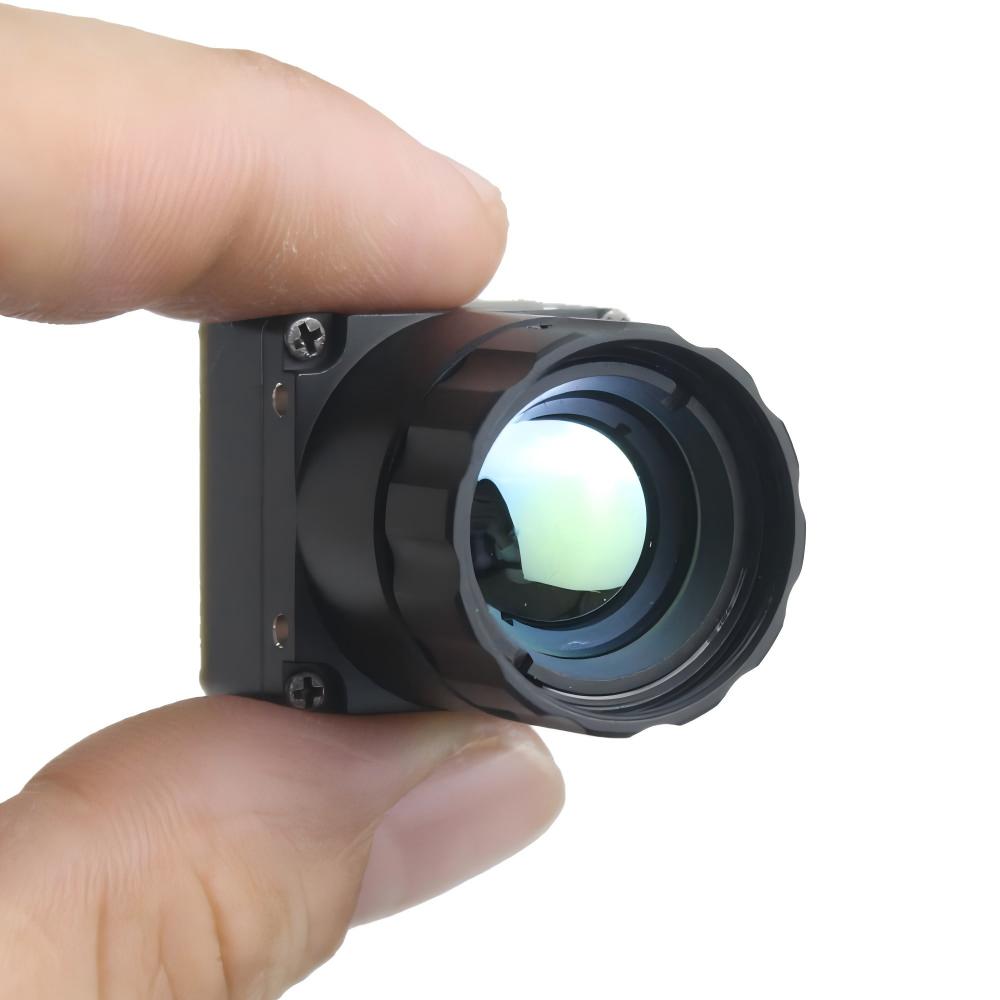
1. Mini 256 Uncooled LWIR Thermal Camera Module
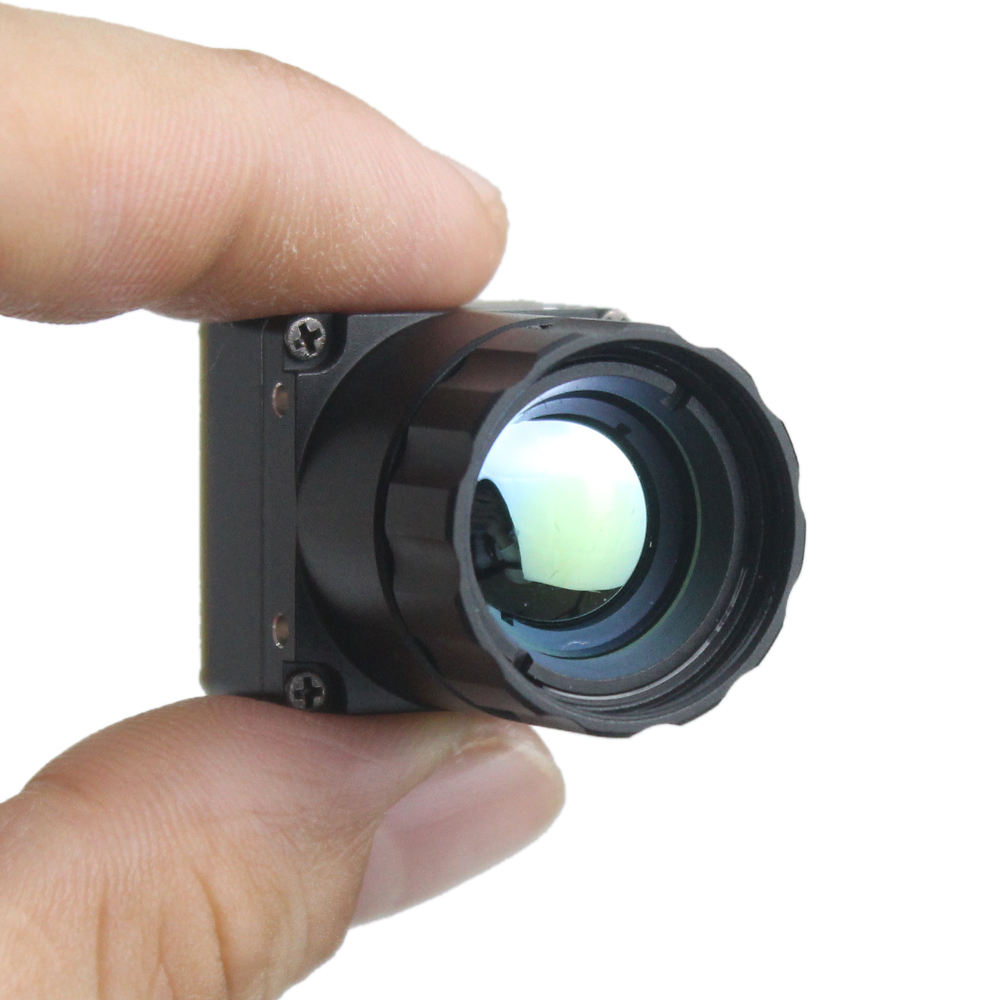
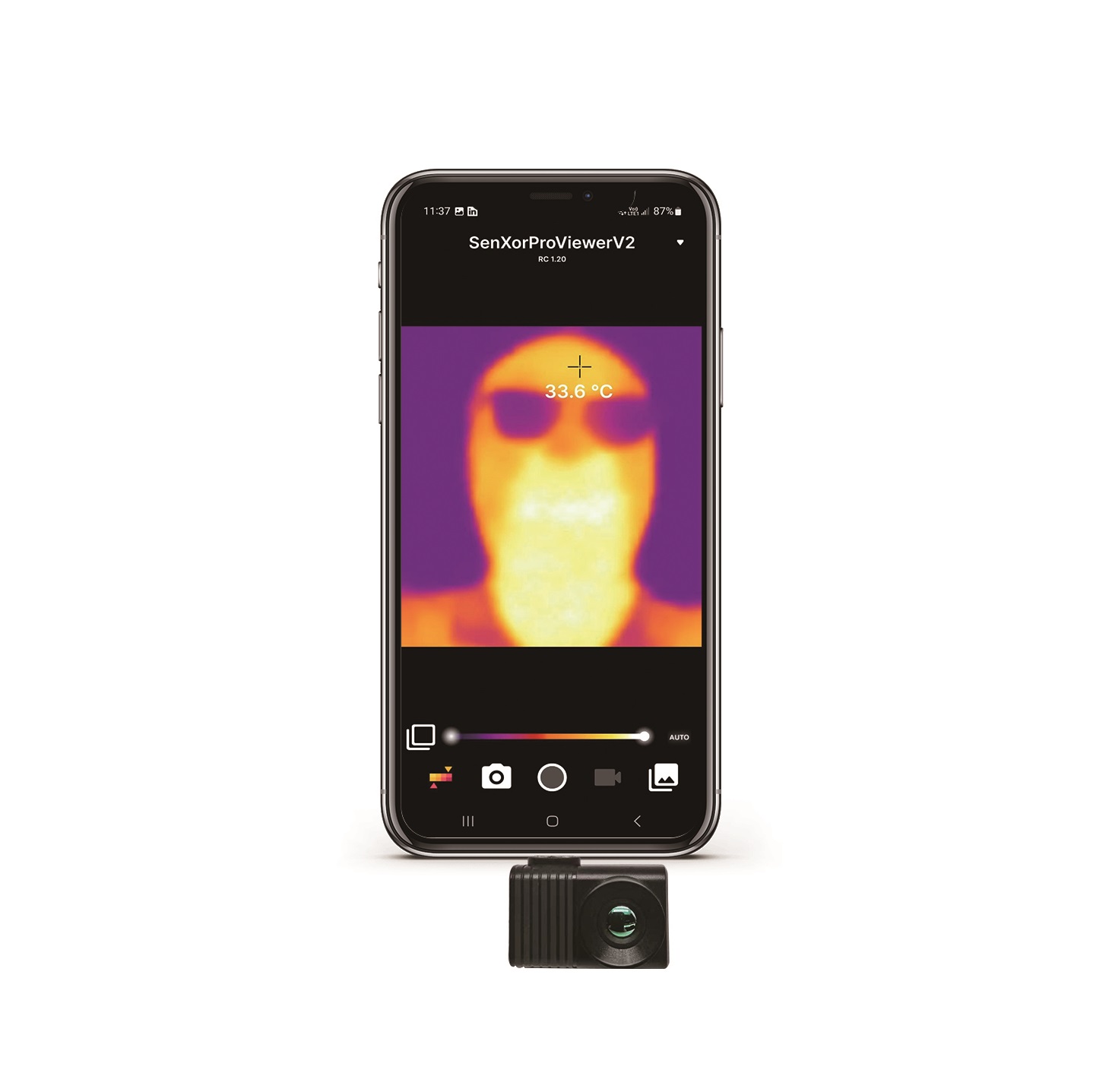
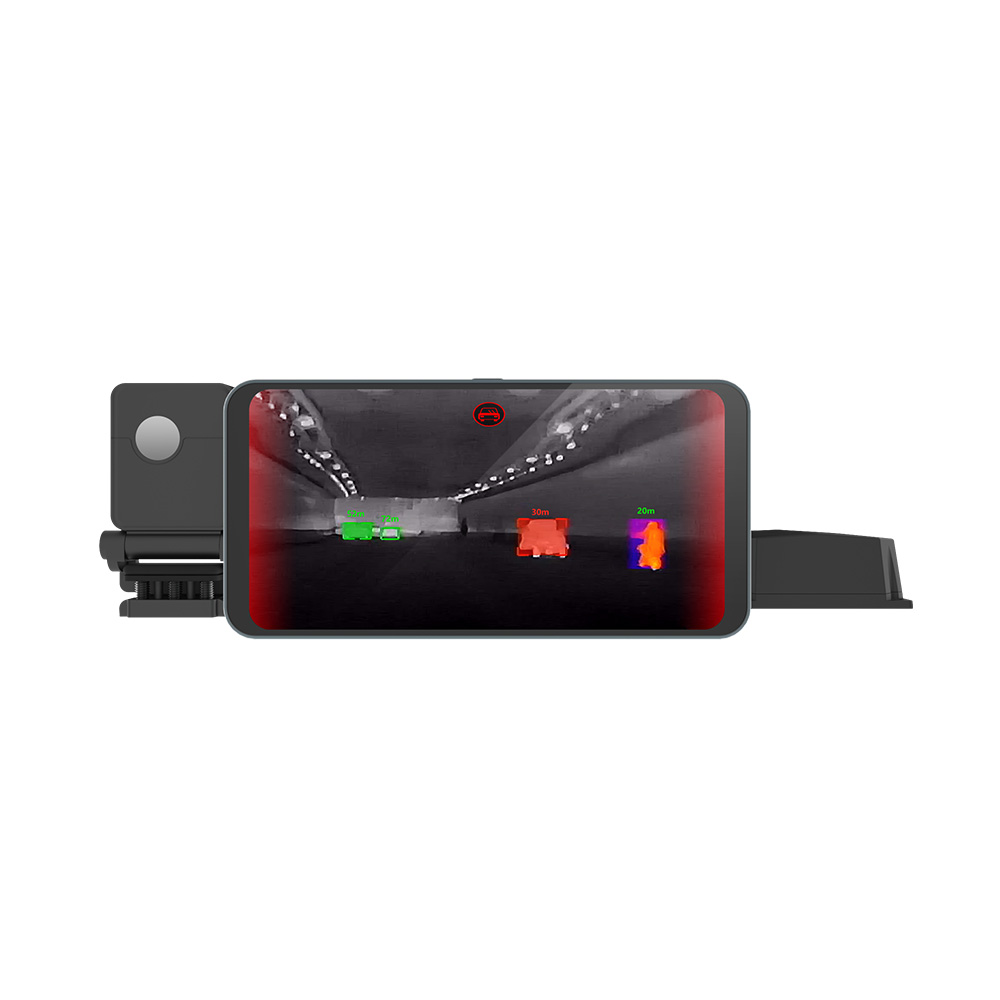
The → Миниатюрный неохлаждаемый длинноволновый инфракрасный тепловизионный модуль Mini 256 is an ultra-compact, featherweight thermal engine engineered specifically for micro-gimbals, commercial drone payloads (similar in form factor and mission profile to DJI enterprise platforms for detecting mines), search-and-rescue robotics, and body-worn tactical observation systems. Adopting advanced high-performance infrared detectors, the Mini 256 captures terrestrial infrared radiation and outputs a uniform, ultra-clear thermal image with integrated radiometry for precise temperature measurement.
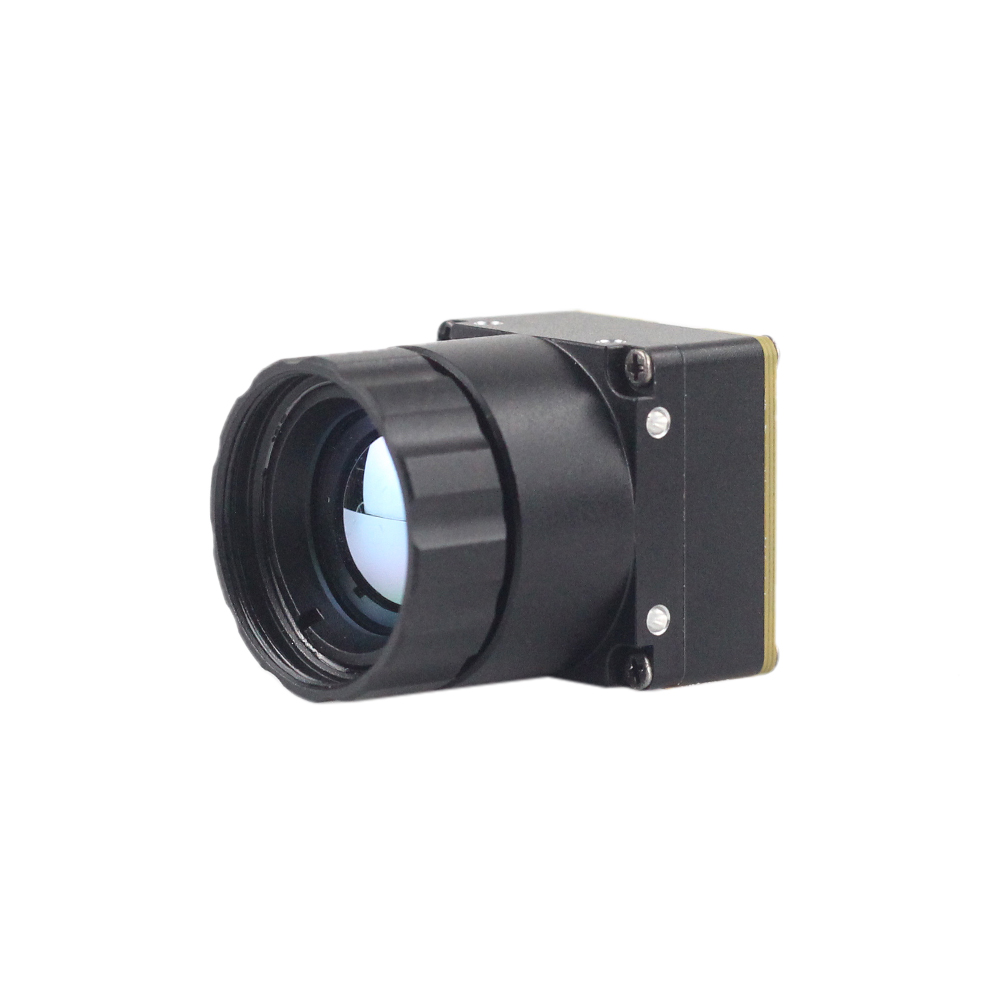
Key architectural characteristics include:
- ✅ High-Sensitivity Microbolometer: Features a 256×192 resolution focal plane array with a 12 μm pixel pitch, delivering sharp spatial resolution while minimizing optical diameter requirements.
- ⚙️ Integrated Radiometric Engine: Captures raw thermal radiation and converts it into accurate, per-pixel temperature measurements, allowing onboard edge systems to detect thermal anomalies automatically.
- ✅ SWaP-Optimized Footprint: Engineered for extreme Size, Weight, and Power (SWaP) constraints, making it directly embeddable into miniature aerial platforms, handheld thermography devices, and robotic mine-clearing crawlers.
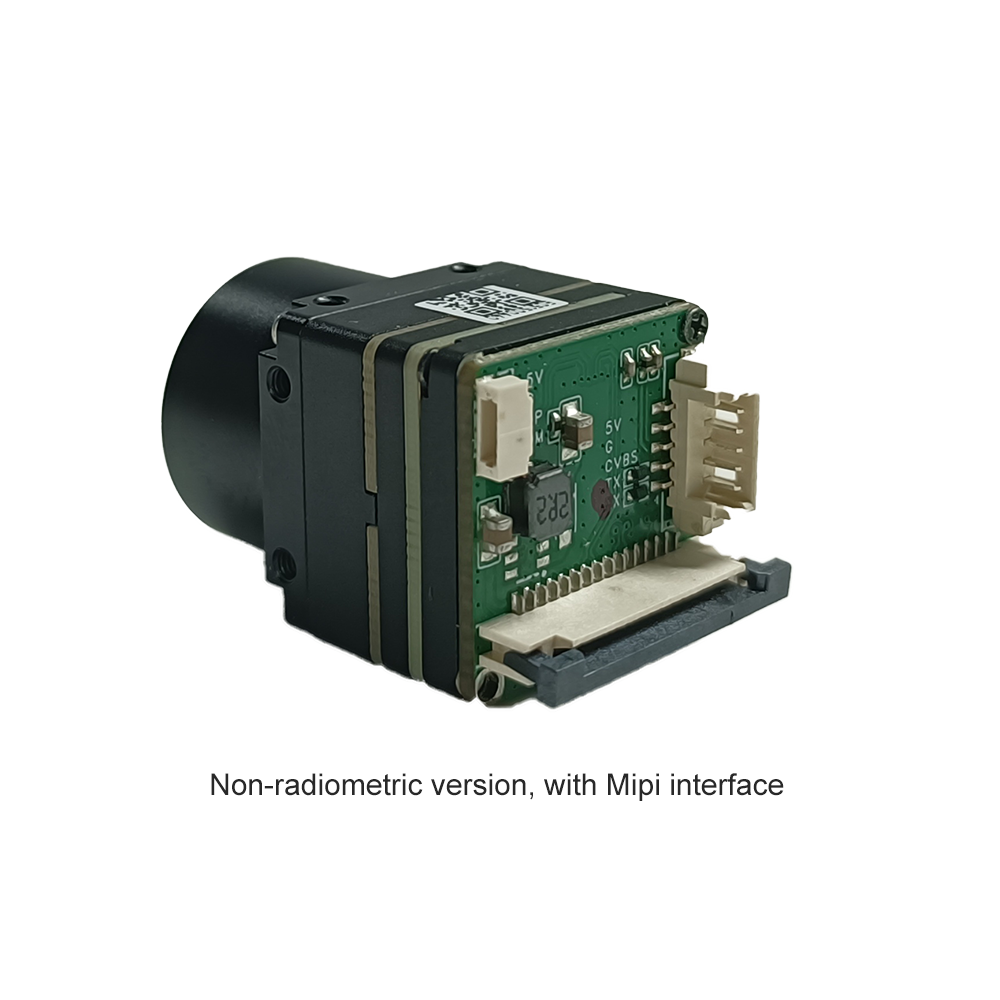
- ⚙️ Flexible Output Standards: Supports digital video output protocols (DVP/USB) alongside serial command interfaces for seamless host communication.
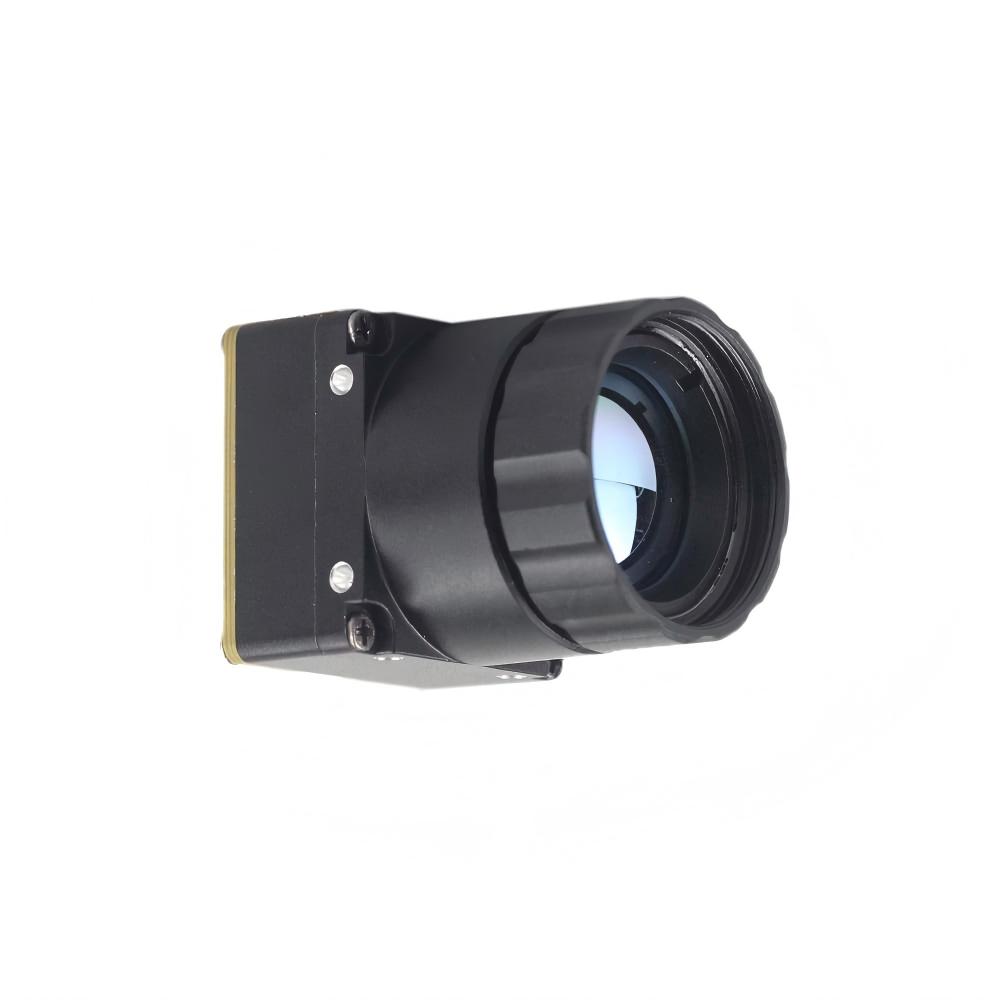
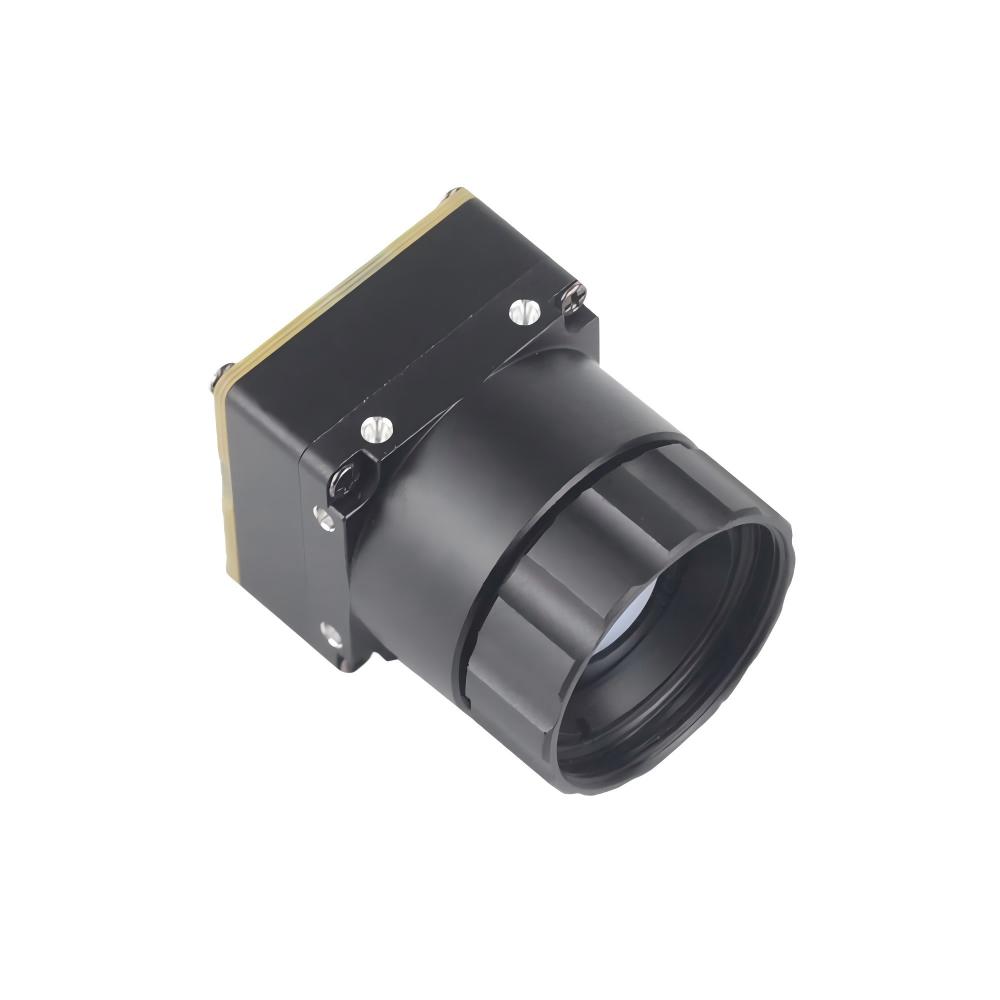
2. High Resolution Uncooled Infrared 1280×1024 Thermal Imaging LWIR Camera
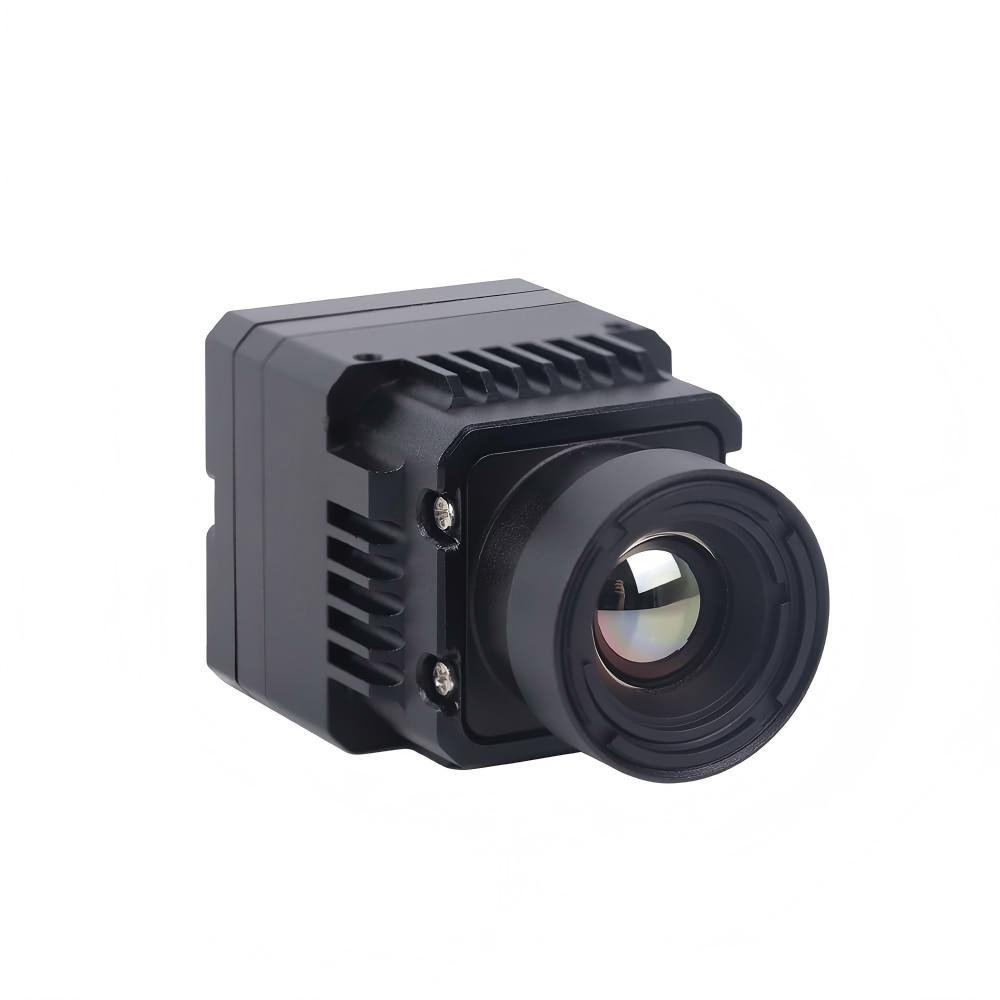
For wide-area perimeter defense, high-altitude UAV payloads, and precision electrical substation inspection, the High Resolution Uncooled Infrared 1280×1024 Thermal Imaging LWIR Camera is the benchmark. Pushing true 1.3-megapixel radiometric thermal frames, this core eliminates pixelation and captures minute thermal gradients across massive scenes.
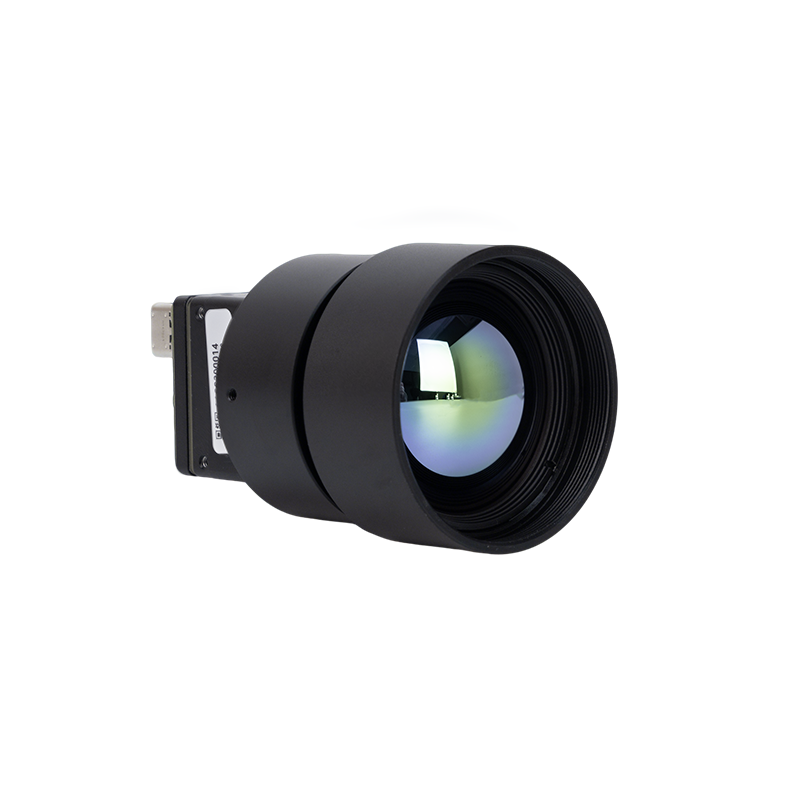
Key architectural characteristics include:
- ✅ Megapixel Thermal Array: Boasts a 1280×1024 detector array (over 1.31 million active radiometric pixels), providing 4.3 times the spatial data of standard VGA (640×512) cores.
- ⚙️ High-Fidelity 25mm Optics: Standard configuration features a precision-machined 25mm athermalized Germanium lens, delivering superior optical throughput and high Instantaneous Field of View (IFOV).
- ✅ Advanced Radiometric Calibration: Factory calibrated across extensive dynamic ranges to deliver accurate temperature readings under extreme environmental operating conditions.
- ⚙️ High-Throughput Digital Interconnects: Engineered with industrial-grade high-speed digital interfaces suitable for direct connection to embedded DSPs, FPGAs, and Edge AI accelerators.
Comprehensive Engineering Specification Benchmark
| Параметр спецификации | Мини-неохлаждаемый модуль LWIR 256 | High Resolution 1280×1024 LWIR Camera |
|---|---|---|
| Разрешение детектора | 256 × 192 pixels (49,152 measurement points) | 1280 × 1024 pixels (1,310,720 measurement points) |
| Шаг пикселя | 12 мкм | 12 мкм |
| Спектральный диапазон | 8.0 to 14.0 μm (LWIR) | 8.0 to 14.0 μm (LWIR) |
| Технология детектора | Неохлаждаемый VOx микроболометр | High-Density Uncooled VOx Microbolometer |
| Тепловая чувствительность (NETD) | ≤ 40–50 mK @ f/1.0, 300 K | ≤ 35–40 mK @ f/1.0, 300 K |
| Частота кадров | 25 Hz / 30 Hz / 50 Hz | 25 Hz / 30 Hz / 50 Hz |
| Standard Lens Configuration | Athermalized micro-optics | 25 mm precision Germanium lens (optional telephoto) |
| Радиометрическая калибровка | Per-pixel radiometric output (±2°C or ±2%) | Precision full-frame radiometry (±2°C or ±2%) |
| Digital Video Interfaces | DVP, USB 2.0, UART control | Cameralink, USB 3.0, MIPI-CSI-2, Ethernet / GigE |
| Потребляемая мощность | ≤ 0.8 W (ultra-low power consumption) | ≤ 2.5 W (full DSP pipeline active) |
| Primary Target Deployments | Micro-gimbals, UAV demining payloads, SAR drones, handhelds | Fixed utility monitoring, border defense, high-altitude UAVs |
Механическая, электрическая интеграция и интеграция по SWaP-C
Here's the deal: dropping an uncooled LWIR core into an autonomous vehicle or an industrial pan-tilt-zoom head is not just plug-and-play. You have to treat the sensor as an electro-optical thermal engine with strict mechanical and thermal boundaries.
Thermal Management and Sensor Housing Isolation
While uncooled FPAs do not need cryogenic coolers, the microbolometer works by measuring tiny millikelvin shifts across isolated pixel bridges. If heat from your onboard power supply, motor driver, or edge AI compute board flows unevenly into the camera chassis, the FPA will suffer severe thermal drift. This causes image shading, fixed-pattern noise, and ruined radiometric accuracy.
In the shop, follow these thermal isolation practices:
- ⚙️ Conductive Isolation: Mount your thermal core on low-thermal-conductivity standoffs (such as PEEK or ceramic spacers) to thermally isolate the sensor from adjacent host compute boards.
- ✅ Dedicated Chassis Sinking: Direct heat generated by the module's onboard DSP through dedicated thermal pads out to the external aluminum enclosure, maintaining a stable, uniform temperature across the sensor plane.
- ⚙️ Avoid Direct Forced Air: Never point cooling fan exhaust directly over the exposed lens barrel or bolometer chassis. Uneven, turbulent airflow creates localized temperature fluctuations that throw off radiometric calibration algorithms.
High-Speed Digital Video Interface Architectures
Choosing the right digital interface determines your latency, system complexity, and host processing requirements:
- ⚙️ MIPI-CSI-2 / CMOS DVP: The gold standard for embedded board-to-board designs with SoCs like the NVIDIA Jetson Orin Nano, Rockchip RK3588, or NXP i.MX8. MIPI-CSI-2 transfers uncompressed 14-bit raw radiometric frames straight into host DMA memory with microsecond latency, bypassing USB protocol stacks.
- ✅ USB 3.0 / USB-C (UVC Radiometric Class): Best for industrial PCs, fast bench prototyping, and lab testing. Make sure your module firmware supports USB Video Class (UVC) extensions to transmit synchronized 14-bit radiometric metadata alongside the 8-bit visual stream over a single physical cable.
- ⚙️ GigE Vision / Industrial Ethernet: The standard choice for long-distance factory floor automation. Run uncompressed radiometric feeds up to 100 meters over standard Cat6 cabling straight into centralized industrial servers or PLCs.
Optomechanical Alignment and High-Vibration Ruggedization
When you are working with small 12 μm pixels, optical depth of focus (δ) is razor thin:
δ ≈ 2 × (f/#) × (Pixel Pitch) ≈ 2 × 1.0 × 12 μm = 24 μm
Because your focus tolerance is less than 25 micrometers, any mechanical deformation or thermal expansion in the lens mount will blur the image. On high-vibration drone airframes or stamping press inspection systems, you need fine-pitch locked optical threads (such as M12 or M10 with locking set-screws) combined with aerospace-grade thread-locking adhesives to maintain optical alignment under harsh mechanical shock (MIL-STD-810H standards).
Углублённый промышленный FAQ
What is the primary practical difference between cooled MWIR and uncooled LWIR thermal cameras?
How do high-resolution 1280×1024 LWIR cores improve predictive maintenance and infrastructure inspection?
Can miniature LWIR camera modules be integrated directly with Edge AI for custom drone mine-detection payloads?
📚 Ссылки и дополнительная литература
- Отраслевой стандарт: Precision Infrared Optics Fabrication & Coatings – Jinde Optical Engineering
- Отраслевой стандарт: Industrial Electronics & Thermal Component Sourcing – KUYANG Supply Chain Portal
- Связанное руководство: Multi-Sensor Security Architectures & Thermography Frameworks – Industrial Security Vision Systems
- Связанное руководство: Comprehensive OEM Core Hardware & Protocol Integration – Thermal Module Integration Guide
- Связанное руководство: Embedded Thermal Camera Driver Configuration – Raspberry Pi RS300 Thermal Driver Setup