
وحدة كاميرا حرارية 640*512: دليل OEM الشامل لتكامل الطائرات بدون طيار والذكاء الاصطناعي
15 يوليو 2026
أفضل وحدة كاميرا حرارية صغيرة بمستشعر CMOS بدقة 256*192 مع رؤية ليلية لأنظمة DIY وOEM
16 يوليو 2026
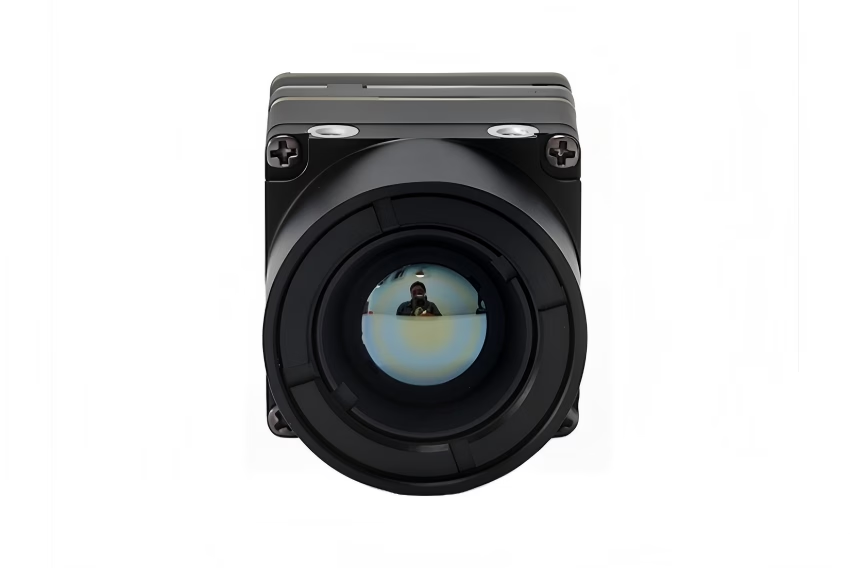
وحدة كاميرا حرارية محمولة بالأشعة تحت الحمراء صغيرة بالجملة: حلول OEM
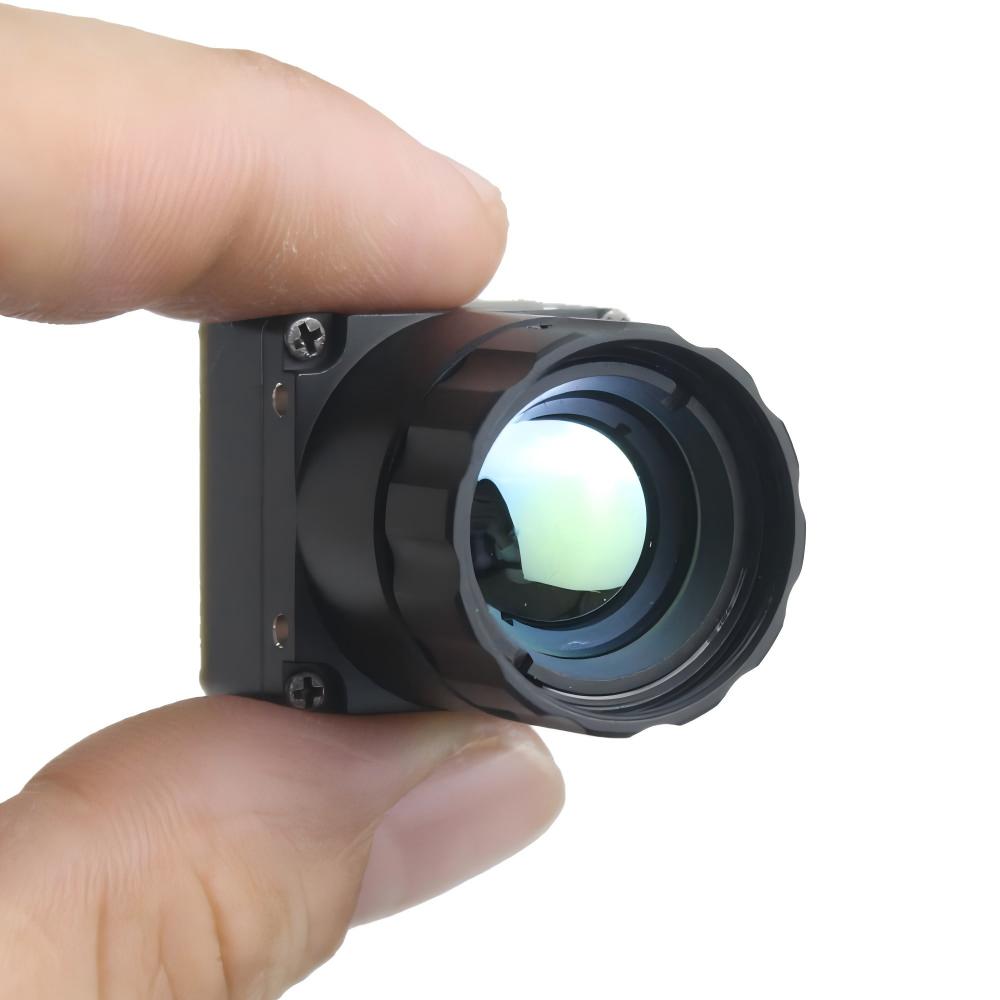
الطلب التجاري والدفاعي العالمي على التصوير الحراري خفيف الوزن وعالي الأداء يقود تحولاً تقنياً هائلاً. في الميدان، يتخلى مهندسو تكامل الأنظمة وأطقم الطائرات بدون طيار ومهندسو الأتمتة الصناعية عن الكاميرات الحرارية الضخمة والمغلقة. بدلاً من ذلك، يتجهون نحو النوى المصغرة غير المبردة ذات الإطار المفتوح. لكن إليكم الأمر: التنقل في سوق الجملة لـ وحدة كاميرا حرارية محمولة بالأشعة تحت الحمراء للبيع بالجملة مصغرة يتطلب أكثر بكثير من مجرد مقارنة جداول الأسعار. إنه يتطلب فهماً واقعياً لبنى المستشعرات وبروتوكولات الواجهات والمطابقة البصرية.
يقدم هذا الدليل كتيباً تقنياً شاملاً ومباشراً من الورشة لمهندسي الأجهزة ومسؤولي المشتريات ومديري منتجات الشركات المصنعة الأصلية. سنقوم بتفصيل المفاضلات الهندسية لمصفوفات الميكروبولومتر الحديثة، وتحليل تكامل واجهات MIPI و USB و CVBS، وشرح كيف تقدم عمليات التصنيع المتطورة من رواد الصناعة مثل Purpleriver حساسية حرارية بدرجة دفاعية في حزم على مستوى الرقاقة. سواء كنت تبني أجهزة تشخيص طبية محمولة، أو تصمم حمولات للمركبات الجوية غير المأهولة (UAV)، أو تنشئ شبكات أمنية مؤتمتة، فإن المواصفات والمخططات الهيكلية المفصلة أدناه ستساعد في تبسيط دورة التطوير الخاصة بك وتحسين قائمة المواد (BOM) لديك.
جدول المحتويات
- 👉 إتقان المواصفات الهندسية: فك شفرة النواة الحرارية المصغرة
- 👉 ثورة الميكروبولومتر: تقنيات النوى غير المبردة مقابل المبردة
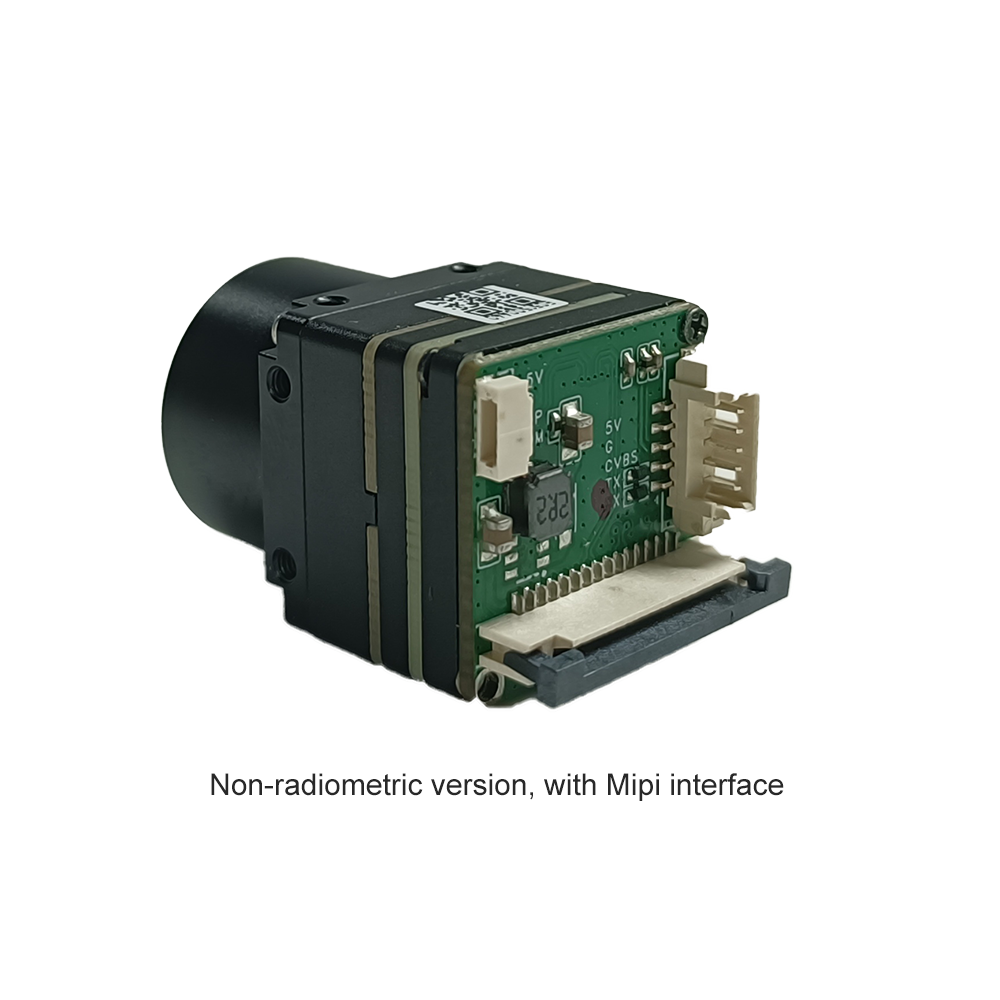
- 👉 بروتوكولات الواجهات وتكامل الذكاء الاصطناعي الطرفي (MIPI، USB، CVBS)
- 👉 المطابقة البصرية واختيار العدسات: ديناميكية 9 مم وما بعدها
- 👉 عروض المنتجات الصناعية ومقارنات المواصفات التقنية
- 👉 هندسة الشركات المصنعة الأصلية/التصميم حسب الطلب المخصصة: لوحات الدوائر المطبوعة المخصصة والمعايرة المكانية
- 👉 الأسئلة الشائعة حول التكامل المتعمق (الأداء الحراري والميزانيات المتعمقة)
إتقان المواصفات الهندسية: فك شفرة النواة الحرارية المصغرة
لدمج وحدة كاميرا حرارية محمولة بالأشعة تحت الحمراء للبيع بالجملة مصغرة في تصميم منتج صناعي، يجب على المهندسين أولاً فهم فيزياء نواتها. داخل وحدة الأشعة تحت الحمراء طويلة الموجة (LWIR) غير المبردة توجد مصفوفة المستوى البؤري (FPA) المكونة من ميكروبولومترات. هذه المقاومات متناهية الصغر معلقة على هياكل من نيتريد السيليكون مباشرة فوق دائرة متكاملة للقراءة (ROIC). عندما يصطدم إشعاع LWIR - عادة في النطاق الطيفي 8-14 ميكرومتر - بهذه الميكروبولومترات، تمتص الطبقة النشطة (المكونة عادة من أكسيد الفاناديوم (VOx) أو السيليكون غير المتبلور) طاقة الفوتون. هذا يسبب تغيراً مفاجئاً وقابلاً للقياس في المقاومة الكهربائية، والذي يتم ترجمته بعد ذلك بواسطة ROIC إلى قيمة درجة حرارة رقمية.
عندما تصمم نظاماً محمولاً ومضغوطاً، يجب عليك موازنة ثلاثة مقاييس فيزيائية أساسية: تباعد البكسل، وتكوين مصفوفة الدقة، وفرق درجة الحرارة المكافئ للضوضاء (NETD). إدارة هذه المتغيرات هي المفتاح لتحقيق دقة حرارية مثلى ضمن قيود مكانية وحرارية وكهربائية صارمة.
تباعد البكسل (يقاس بالميكرومتر، μm)
تباعد البكسل هو ببساطة المسافة من المركز إلى المركز بين بكسلات الكاشف المتجاورة على مصفوفة المستوى البؤري. عملت المصفوفات القياسية القديمة على تباعد 17 ميكرومتر. وحدات الأداء الحديثة، مثل تلك التي نصممها في Purpleriver، تستخدم تباعد بكسل 12 ميكرومتر. تقليص هذا التباعد من 17 ميكرومتر إلى 12 ميكرومتر يحقق فوائد كبيرة على لوحة الرسم:
- ✅ تقليل حجم العدسة القابلة للتبديل: بالنسبة لمجال رؤية (FOV) وبعد بؤري معينين، يتطلب تباعد البكسل الأصغر مساحة مستشعر أصغر فيزيائياً. هذا يعني أنه يمكنك استخدام بصريات جرمانيوم أصغر وأخف وزناً وأكثر فعالية من حيث التكلفة بكثير.
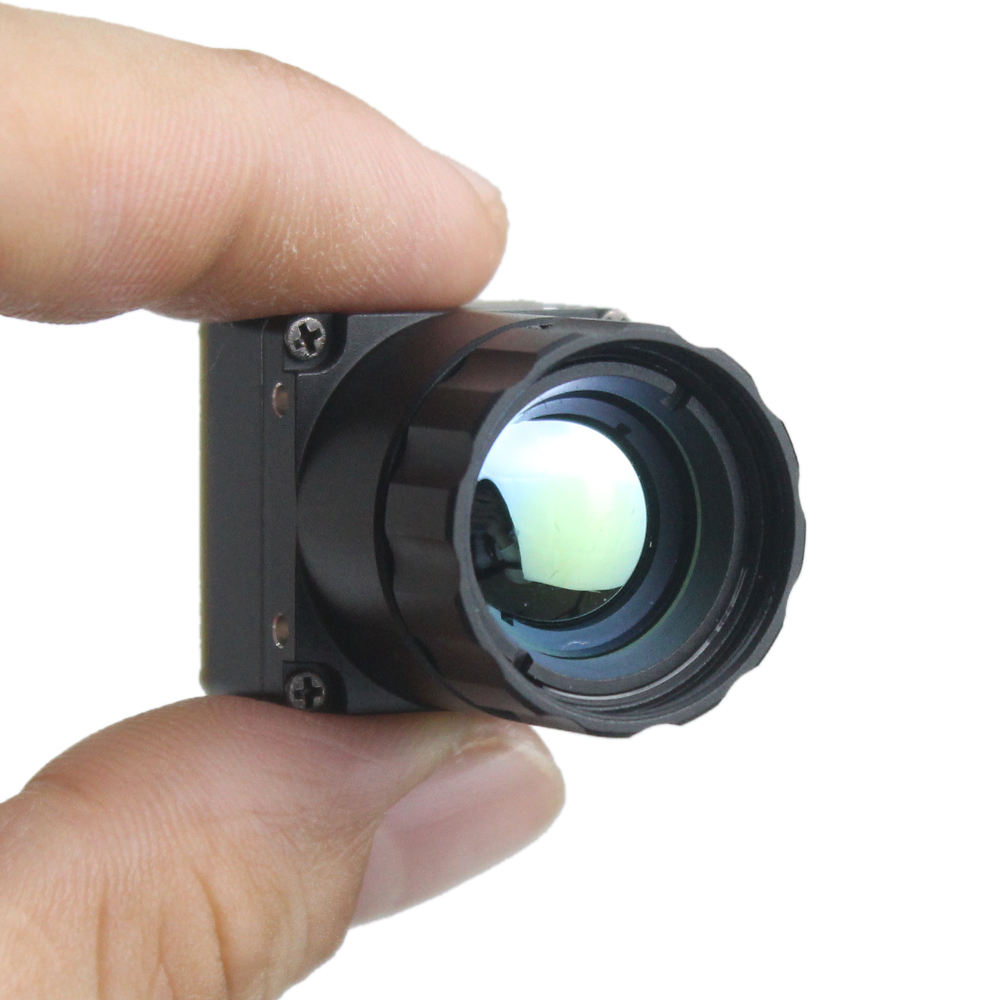
- ✅ تقليل مساحة الوحدة: حجم قالب المستشعر الأصغر يسمح بتصغير هيكل نواة الكاميرا بالكامل، مما يتناسب بسهولة مع قيود المساحة الضيقة في الأجهزة المحمولة ومحاور تثبيت الطائرات بدون طيار الصغيرة.
- ✅ زيادة الدقة المكانية: عند حجم مستشعر فيزيائي ثابت، تسمح لك مسافة البكسل الأصغر بتعبئة المزيد من البكسلات على منطقة المستشعر النشطة، مما ينتج صورًا أكثر وضوحًا ومدى كشف أطول في الميدان.
تكوين مصفوفة الدقة
يعتمد اختيار متغير الدقة المناسب على تطبيقك المستهدف وميزانية المعالجة:
- ⚙️ 256x192 / 384x288 بكسل: هذا هو الخيار الأمثل للميزانيات التصميمية المحدودة، والمناظير الحرارية المحمولة المدمجة، ومقاييس الحرارة النقطية، وأنظمة الفحص الكهربائي الأساسية.
- ⚙️ 640x512 بكسل: هذا هو المعيار الذهبي في الصناعة لاستطلاع الطائرات بدون طيار على ارتفاعات عالية، وتشخيص لوحات الدوائر المطبوعة الفرعية المفصلة، والمحيطات الأمنية الحرجة. توفر هذه الدقة أكثر من أربعة أضعاف تفاصيل العينات لمصفوفات 256x192، مما يتيح قياسات حرارية دقيقة لأهداف على مسافات أكبر.
فرق درجة الحرارة المكافئ للضوضاء (NETD، مقاسًا بالميلي كلفن، mK)
NETD هو المقياس القياسي المستخدم لتحديد حساسية المستشعر الحراري. بعبارات بسيطة، يمثل فرق درجة الحرارة الذي تكون عنده نسبة الإشارة إلى الضوضاء (SNR) مساوية للواحد. قيمة NETD الأقل تعني مستشعرًا أكثر حساسية قادرًا على تمييز فروق درجات حرارة صغيرة جدًا. تنقسم المواصفات القياسية إلى عدة مستويات أداء:
- ✅ ≤ 40 mK (المعيار الصناعي): يحل الهياكل الحرارية بوضوح في البيئات منخفضة التباين مثل الظروف الرطبة، والطقس الممطر، أو الهواء الضبابي. مستوى الحساسية هذا ضروري لإيجاد الشذوذات الهيكلية في أغلفة المباني وتحديد الأعطال الدقيقة على لوحات الدوائر عالية الجهد.
- ✅ ≤ 50 mK (التجاري القياسي): مثالي للفحوصات الكهربائية الأساسية، وتشخيص التآكل الميكانيكي، ومهام الأمن للمبتدئين.
بالانتقال إلى نواة غير مبردة بمسافة بكسل 12 ميكرومتر و NETD منخفض، يمكن للمطورين بناء أنظمة تعمل بشكل موثوق في الظروف القاسية. يمكن استكشاف طرق الدمج الميكانيكي المفصلة لهذه النوى في أنظمة المستشعرات المعقدة في دليلنا حول نواة وحدة كاميرا التصوير الحراري متعددة الوظائف LTC لدمج الأمن، والطائرات بدون طيار، والمركبات، والمعدات البصرية.
ثورة الميكروبولومتر: تقنيات النوى غير المبردة مقابل المبردة
دعونا نلقي نظرة على الفرق بين أنظمة التصوير الحراري غير المبردة والمبردة. هذا ضروري لمديري المنتجات الذين يختارون المكونات لطلبات الجملة كبيرة الحجم. تستخدم الأنظمة المبردة كاشفات ضوئية تعمل بالأشعة تحت الحمراء ذات البئر الكمومي التي يجب تبريدها إلى درجات حرارة شديدة البرودة عبر محركات دورة ستيرلينغ. هذا يضيف استهلاك طاقة هائل، ووزن، وتعقيد صيانة لا ترغب به بالتأكيد في جهاز محمول.
| المعامل | الميكروبولومتر غير المبرد (VOx / a-Si) | MCT / InSb المبرد (كاشفات كمومية) |
|---|---|---|
| درجة حرارة التشغيل | درجة الحرارة المحيطة (25 درجة مئوية اسميًا، مستقرة عبر TEC داخلي أو خوارزميات بدون غالق) | شديدة البرودة (-196 درجة مئوية عبر مبرد ستيرلينغ) |
| النطاق الطيفي | 8 ميكرومتر – 14 ميكرومتر (LWIR) | 3 ميكرومتر – 5 ميكرومتر (MWIR) / 8 ميكرومتر – 12 ميكرومتر (LWIR) |
| الحساسية (NETD) | 35 مللي كلفن - 50 مللي كلفن | < 15 مللي كلفن - 20 مللي كلفن |
| الدعم البصري | جرمانيوم عالي النفاذية، زجاج كالكوجينيد | بصريات متعددة الأطياف متخصصة، ضيقة النطاق |
| وقت البدء / الاستقرار | < 3 - 5 seconds | 5 - 10 minutes (required for cooldown cycles) |
| Overall Lifespan | Virtually unlimited (> 50,000 hours MTBF) | Limited by Stirling cooler mechanics (5,000 - 10,000 hours) |
| Unit Cost & Dimensions | Ultra-low wholesale cost; ultra-miniature, lightweight footprint | Extremely high cost; bulky, power-intensive (> 10W) |
For portable applications, uncooled VOx micro-bolometer technology wins hands down. It eliminates the heavy, power-hungry compressors of cooled sensors, enabling continuous operation from standard 5V USB or low-power lithium-ion battery packs. In addition, uncooled cores require virtually zero routine maintenance, making them ideal for long-term deployments in remote security grids, portable test gear, and UAV payloads.
فيديو تعريف بالشركة
بروتوكولات الواجهات وتكامل الذكاء الاصطناعي الطرفي (MIPI، USB، CVBS)
Modern miniature thermal cores are not standalone cameras; they are high-speed data engines. Under the hood, achieving low-latency signal distribution and effective Edge AI integration requires choosing the correct hardware and software interface for your application.
MIPI CSI-2 (واجهة معالج الصناعة المتنقلة)
MIPI CSI-2 is the design standard for high-bandwidth, direct-to-processor camera integration. It connects the thermal core directly to the application processor (like an NVIDIA Jetson Nano, راسبيري باي, or custom NXP/Rockchip designs). Because MIPI bypasses the USB protocol layer entirely, it offers massive computational benefits:
- ✅ Near-Zero Latency: Essential for closed-loop drone flight controls, obstacle avoidance, and real-time panning/tilt security systems.
- ✅ Direct Raw Data Access: Transmits uncompressed 14-bit digital temperature values directly into the processor's memory space, enabling fast local calculations and real-time radiometric analysis.
- ✅ Reduced CPU Overhead: Because the data is routed through a dedicated hardware interface, the host CPU doesn't waste precious cycles parsing USB packet headers.
Modern developers looking to implement real-time thermal analysis on affordable single-board computers often use custom drivers. For a step-by-step programming guide, see our detailed technical walkthrough on developing a high-performance thermal camera driver for Raspberry Pi.
USB 2.0 / USB-C (UVC and Virtual COM Port)
For systems where raw hardware design cycles must be kept to a minimum, USB-based modules are highly effective. Operating as a standard USB Video Class (UVC) device, these cores can stream active thermal video immediately upon connection to any Linux, Windows, or Android host.
- ⚙️ Dual-Channel Transmission: The module streams raw, unprocessed 14-bit radiometric data via a virtual COM Port alongside standard, high-contrast 8-bit visual streams (YUV/MJPEG) over the UVC channel.
- ⚙️ Component Ruggedness: Connectors configured with robust board-to-board arrays (such as those manufactured by تي إي كونيكتيفيتي) help ensure electrical and physical stability in high-vibration drone payloads and industrial environments.
CVBS (إشارة الفيديو المركبة الأساسية)
For legacy analog systems and long-range analog video transmitters, select miniature modules retain an auxiliary CVBS analog output channel. This allows the thermal core to output direct PAL or NTSC composite video feeds without requiring any digital processing on the receiving end.
المطابقة البصرية واختيار العدسات: ديناميكية 9 مم وما بعدها
Selecting the right optics is critical to maximizing the performance of your uncooled micro-bolometer array. Because Silicon and standard glasses block LWIR wavelengths, thermal camera lenses are cut and polished from specialized materials, with Germanium (Ge) being the most common due to its high optical transmittance in the 8–14 μm spectral band. Under challenging physical conditions, alternative materials like Chalcogenide glasses can also be used for cost-sensitive configurations.
When designing a thermal imaging package, several key optical specifications must be managed:
Optical Transmission Coefficients
Germanium lenses must be coated with high-durability Anti-Reflective (AR) coatings to minimize surface reflection losses and maximize transmission to the FPA. Standard double-sided AR-coated Germanium lenses achieve transmission rates > 92%, maximizing image contrast and thermal sensitivity (NETD).
Focal Length vs. Field of View (FOV)
The focal length of your Germanium lens determines the target coverage of your sensor array:
- ⚙️ Wide-Angle Lenses (2.5mm - 4mm): Offer wide field-of-view coverage, making them ideal for close-range hand-held inspections, fire safety detection, and smart-home occupancy sensing.
- ⚙️ Medium Focal Lenses (9mm): Provide an optimal balance between wide spatial coverage and high angular resolution. A 9mm lens paired with a 640x512 array is the standard configuration for mid-altitude drone flights, offering wide search paths alongside high-resolution ground tracking.
- ⚙️ Narrow-Angle Telephoto Lenses (19mm - 35mm): Designed for long-range security perimeters, border control monitoring, and high-altitude UAV payload operations.
For professional-grade applications requiring long-range detection, dual-sensor payloads, or multi-spectral binoculars, optimizing these focal matrices is essential. Learn more about advanced optical integration in our guide on wholesale night reconnaissance equipment and multi-function infrared binoculars.
عروض المنتجات الصناعية ومقارنات المواصفات التقنية
For hardware engineers and manufacturing partners evaluating components for custom systems, our product lineup provides standardized parameters, ready-to-test SDKs, and compact footprints.
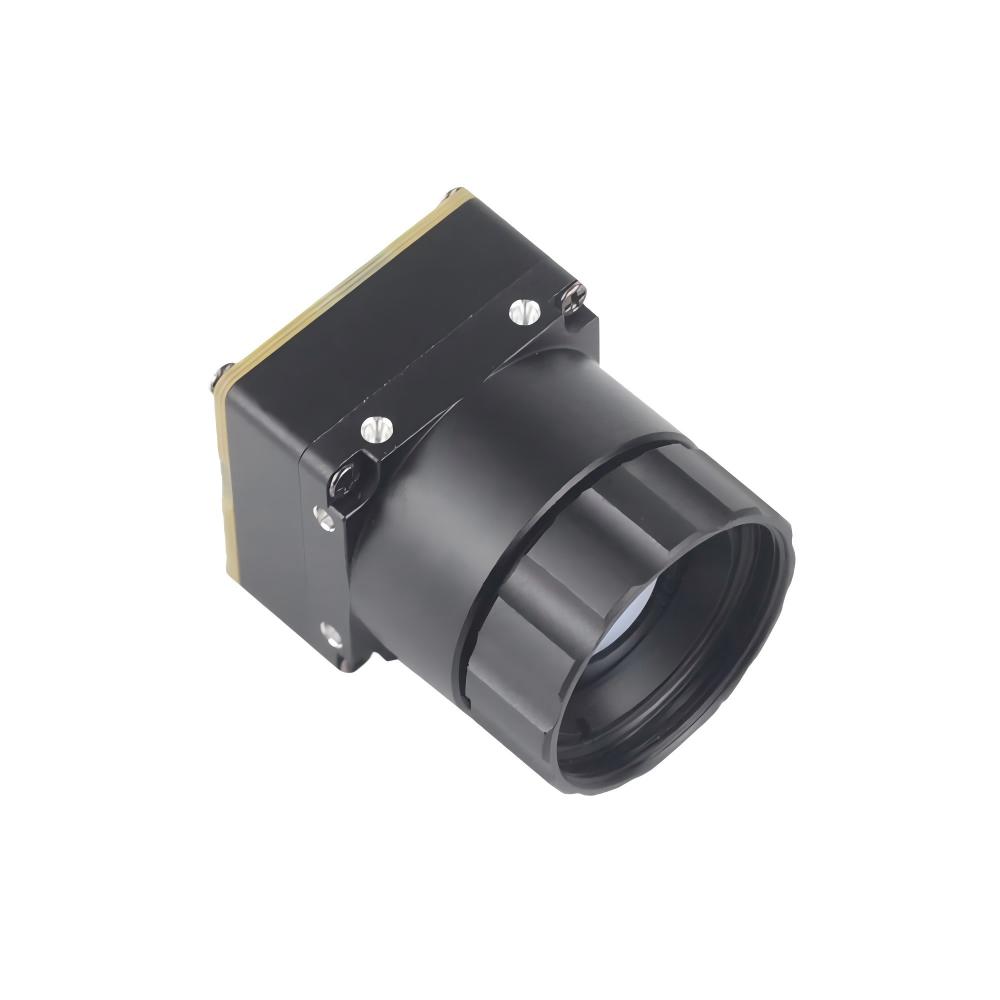
وحدة كاميرا حرارية بالأشعة تحت الحمراء غير مبرَّدة MD Series بدقة 384x288
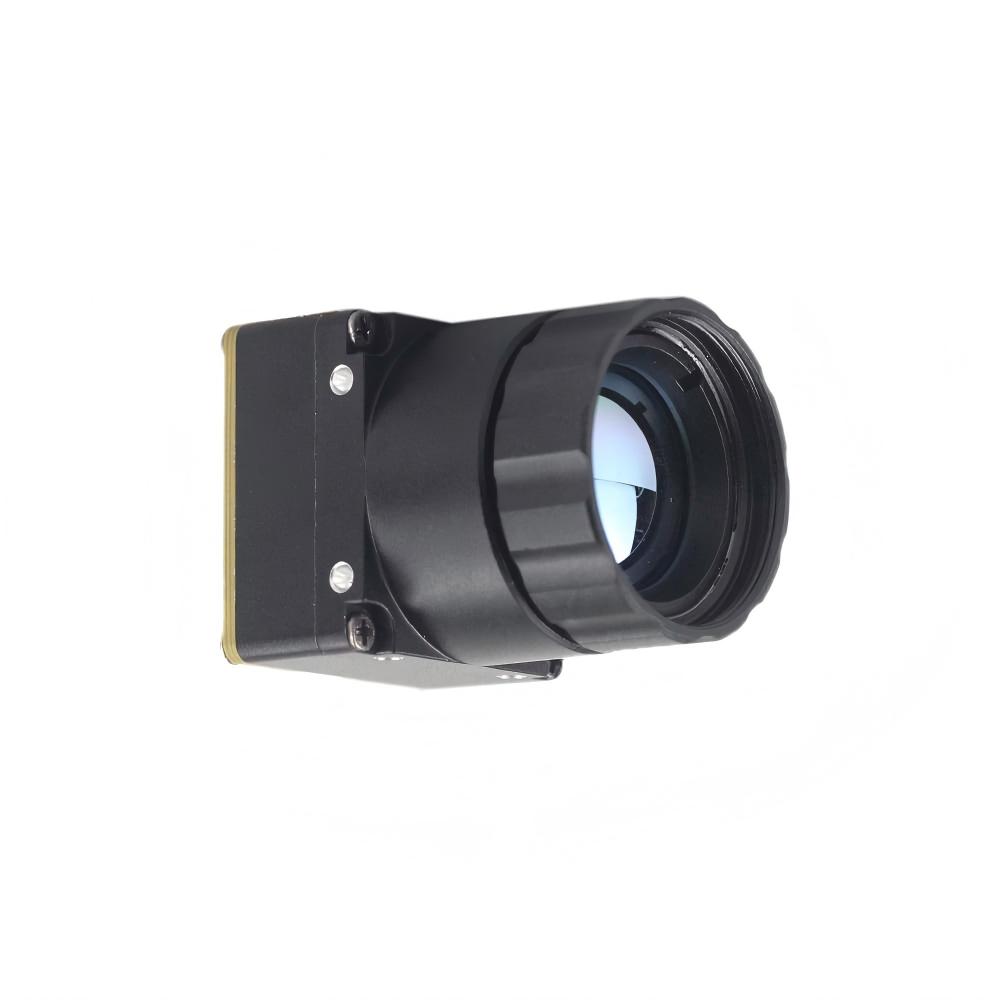
تم تصميم وحدة الكاميرا الحرارية من Purpleriver لتحقيق دقة على المستوى الصناعي في تطبيقات مثل الأمن ومراقبة درجة الحرارة والتكامل مع الطائرات بدون طيار. تتميز بكاشف غير مبرد بالأشعة تحت الحمراء بمسافة بكسل 12 ميكرومتر، مما يوفر حساسية عالية وتصويرًا حراريًا حادًا. يضمن حجمها الصغير ووظيفة التوصيل والتشغيل والواجهات المتعددة (MIPI/USB/CVBS) تكاملًا متعدد الاستخدامات وسريعًا في أنظمة مختلفة. بدعم من فريق ذي خلفية من جامعة هونغ كونغ للعلوم والتكنولوجيا وخبرة سابقة من Huawei Hisilicon، توفر هذه الوحدة تخصيص OEM/ODM لتلبية متطلبات المشاريع المحددة، مما يضمن أداءً وقدرة على التكيف لا مثيل لهما.
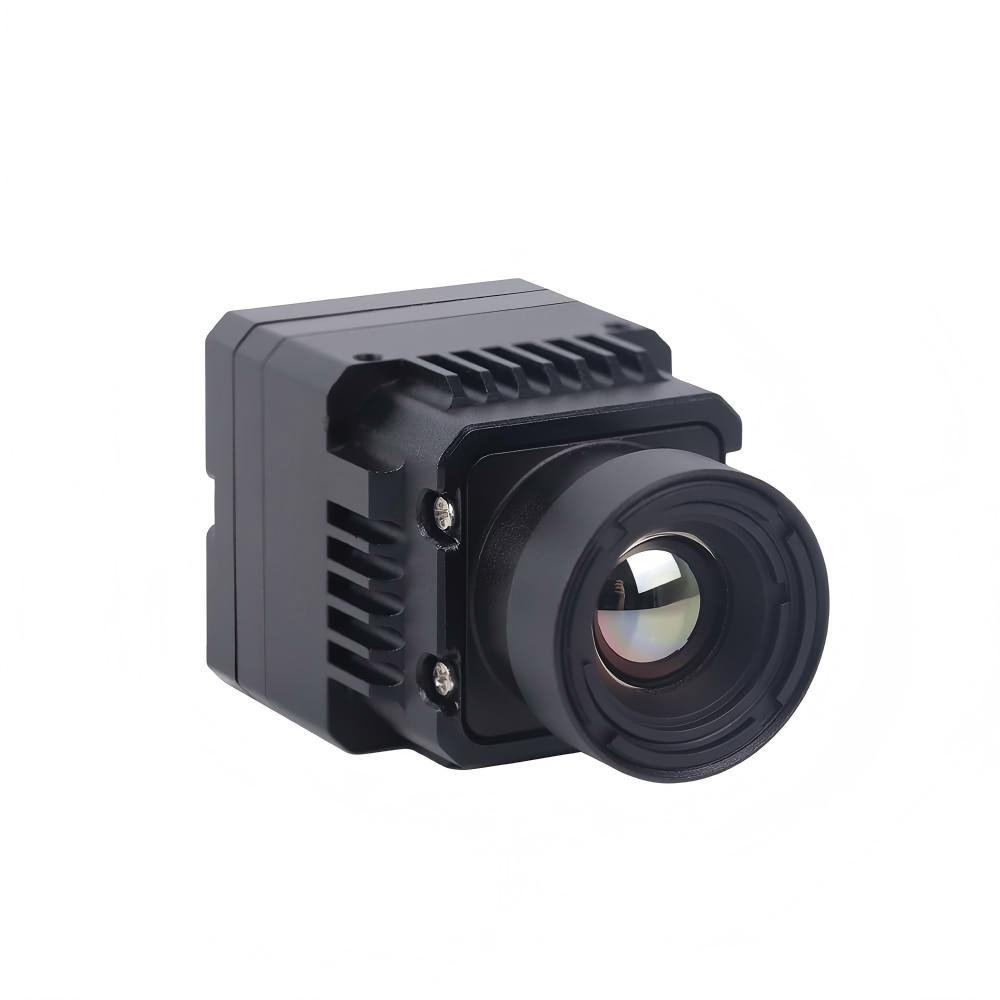
2. Uncooled Infrared Mipi 640 384 256 9mm Thermal Imaging Camera Module For Drones
وحدة كاميرا تصوير حراري بالأشعة تحت الحمراء غير مبردة Mini2 640x512 9mm للطائرات بدون طيار، تتميز وحدة التصوير الحراري المصغرة غير المبردة بالأشعة تحت الحمراء بتقديم صورة حادة وواضحة وحجم صغير وتكلفة منخفضة.
Comprehensive Engineering Technical Specifications Matrix
| Design Specification Parameter | MD Series 384x288 Core | Mini2 640x512 Drone Module |
|---|---|---|
| Focal Plane Array Type | Uncooled VOx Micro-bolometer | Uncooled VOx Micro-bolometer |
| Array Resolution | 384 x 288 Pixels | 640 x 512 Pixels |
| تباعد البكسل | 12 ميكرومتر | 12 ميكرومتر |
| نطاق الحزمة الطيفية | 8 ميكرومتر – 14 ميكرومتر (LWIR) | 8 ميكرومتر – 14 ميكرومتر (LWIR) |
| الحساسية الحرارية (NETD) | ≤ 40 mK @ 25°C, f/1.0 | ≤ 40 mK @ 25°C, f/1.0 |
| Frame Update Rate | 25 Hz / 50 Hz options | 25 Hz / 50 Hz options |
| Available Interface Ports | MIPI CSI-2, USB 2.0, CVBS Analog | Native MIPI CSI-2, USB 2.0 (Dual Channel) |
| Default Optical Assembly | Custom options available | 9mm Athermalized (Fixed Focus, AR-coated Ge) |
| Typical Power Consumption | < 0.8W (Normal Operation Mode) | < 1.1W (Including active processing) |
| Operating Voltage Range | 3.3V - 5.0V DC ± 10% | 3.3V - 5.0V DC ± 10% |
| Physical Weight (No Lens) | < 15 grams | < 18 grams |
| Temperature Range Support | -20°C to +60°C (Storage: -40°C to +85°C) | -20°C to +60°C (Industrial range option avail.) |
هندسة الشركات المصنعة الأصلية/التصميم حسب الطلب المخصصة: لوحات الدوائر المطبوعة المخصصة والمعايرة المكانية
When you are ready to scale from a benchtop prototype to a high-volume commercial launch, integrating a standard thermal core is rarely a simple drop-in job. Developing custom carrier boards or modifying standard core components is just part of the process. Our engineering group, drawing on expertise from the Hong Kong University of Science and Technology and Huawei Hisilicon, works directly with developers in three key areas:
Custom Carrier Board Design (PCB Spacing & Power Management)
Standard core interfaces often need to be modified to fit the tight spatial layout of a drone gimbal or handheld enclosure. We design custom HDI (High-Density Interconnect) PCBs to match your exact spatial footprint, load constraints, and physical mounting templates. We also design step-down switching power grids to thoroughly isolate sensitive analog sensor planes from the high-frequency switching noise of host CPUs or UAV motor controllers.
Physical & Thermal Integration
Miniature thermal cores require stable mounting to prevent measurement drift. We provide physical, structural, and mechanical design reviews, helping you select lightweight materials (such as magnesium/aluminum alloys) that optimize dissipation paths. We also customize flexible flat cabling (FFC) and board-to-board connectors to ensure high signal integrity in high-vibration environments.
Factory Calibration & Software Integration
Every single pixel on a micro-bolometer FPA has slightly different gain and offset characteristics. Our factories use automated blackbody reference targets to perform comprehensive Non-Uniformity Correction (NUC) across your target operating temperature range. To simplify software integration, we supply Board Support Packages (BSPs) and software development kits (SDKs) in C++ and Python, along with Linux-ready drivers, making it easy to capture and record real-time radiometric temperature files.
By working directly with our manufacturing facilities, OEMs can reduce R&D risks, simplify their supply chains, and accelerate their product launches.
الأسئلة الشائعة حول التكامل المتعمق (الأداء الحراري والميزانيات المتعمقة)
Are cheap thermal cameras under $200-$400 actually worth it for professional or drone integration?
Look, budget consumer-grade devices also typically operate at low frame rates (< 9 Hz) to bypass dual-use export regulations. This low frame rate results in terrible motion blur during UAV sweeps or handheld panning, which completely compromises critical diagnostic inspections. These consumer cameras also lack standard industrial communication interfaces, opting instead for fragile USB-C and Lightning connectors that lack mechanical stability in high-vibration applications.
For serious applications, you need an uncooled core like the Mini2 or MD Series (256x192 to 640x512 resolution, 12 μm pixel pitch, and 25 Hz / 50 Hz frame rates). They are engineered from the ground up for professional integration, offering native MIPI interface options, robust SDK support, and low-latency digital streams for long-term deployments.
What is the benefit of choosing an uncooled infrared MIPI module over a standard USB thermal dongle for embedded systems?
By contrast, a MIPI CSI-2 thermal module functions as a direct peripheral of the host processor's image processing pipelines. It writes raw pixel frames directly into system memory via Direct Memory Access (DMA), slashing latency to less than 10 milliseconds. This direct architectural connection also bypasses the power consumption of USB transceiver chips, saving 200–400 mW of energy—a key advantage for battery-powered, handheld, or flight-constrained devices. Physically, a bare MIPI module eliminates the connector housing and physical bulk of standard USB dongles, enabling direct board-to-board integration within tight IP-rated enclosures.
How does Purpleriver support custom OEM/ODM thermal module integration?
For customized hardware designs, we can redesign the interface board to meet custom physical footprints, integrate specific power rails, or swap interface connectors (such as changing standard flat flex connectors to ruggedized high-density board-to-board headers). On the optical side, we perform custom spatial calibrations for specialized lens focal configurations (such as athermalized 9mm, wide-angle 4mm, or long-range telephoto optics), ensuring high temperature measurement accuracy across different target ranges.
On the software side, we supply comprehensive, developer-ready software development kits (SDKs) written in C/C++ and Python. We also provide native Linux board support packages and optimized drivers, enabling your engineering team to easily capture raw radiometric data, apply custom pseudo-color maps, and deploy edge-based AI models quickly and efficiently.
عند إحكام إغلاق نواة حرارية غير مبردة داخل علبة مقاومة للطقس IP67/IP68، يكون التصميم الحراري السلبي حاسمًا لإيقاف الانحراف الحراري الأساسي وتدهور الصورة. لا تحتاج الميكروبولومترات إلى مبردات نشطة، لكن ASIC الصورة المدمجة ومشفرات الفيديو الشبكية تستهلك بين 1.0 واط و 2.5 واط أثناء التشغيل. في صندوق محكم ضيق بدون تدفق هواء، تخلق الحرارة الداخلية المحتبسة نقاطًا ساخنة عبر هيكل النواة ومصفوفة المستوى البؤري. تؤدي هذه التدرجات الحرارية الموضعية إلى خلل في قراءات درجة الحرارة الإشعاعية وتزيد من ضوضاء المستشعر، مما يقلل من حساسية NETD الفعالة لديك. لحل هذا، صمم مسارات مباشرة لتبديد الحرارة المعدنية—مثل كتلة باردة من الألومنيوم أو النحاس مقترنة بوسادات فجوة عالية التوصيل—تربط اللوحة الحرارية للوحدة مباشرة بالغلاف المعدني الخارجي. هذا يحول كامل الهيكل الخارجي إلى مشتت حراري كبير. أيضًا، تجنب تركيب أجزاء عالية الطاقة (مثل أجهزة الراديو RF أو محولات الطاقة الساخنة) بجوار النواة البصرية مباشرة للحفاظ على استقرار الظروف الحرارية عبر المستشعر.
- Industry Standard Platform: Raspberry Pi Computing Systems
- Hardware Components Manufacturer: TE Connectivity Electrical Connectors
- Related Driver Guide: RS300 Thermal Camera Driver Integration Guide for Raspberry Pi
- Device Optics & Custom Sourcing Guide: Wholesale Night Reconnaissance Equipment & Multifunction Infrared Binoculars
- Core Multi-Functional Integration Overview: The Core of the LTC Multi-Functional Thermal Imaging Camera Module Integration