
كيفية اختيار أفضل وحدة كاميرا تعمل بالأشعة تحت الحمراء: دليل تكامل OEM للطائرات بدون طيار والذكاء الاصطناعي المدمج
13 أكتوبر 2026
دليل الكاميرا الحرارية: كيف تعمل، تحليل القيمة، ودمج وحدات OEM
14 أكتوبر 2026
وحدة كاميرا حرارية MIPI: نوى LWIR مدمجة عالية الدقة للطائرات المسيّرة والذكاء الاصطناعي الطرفي
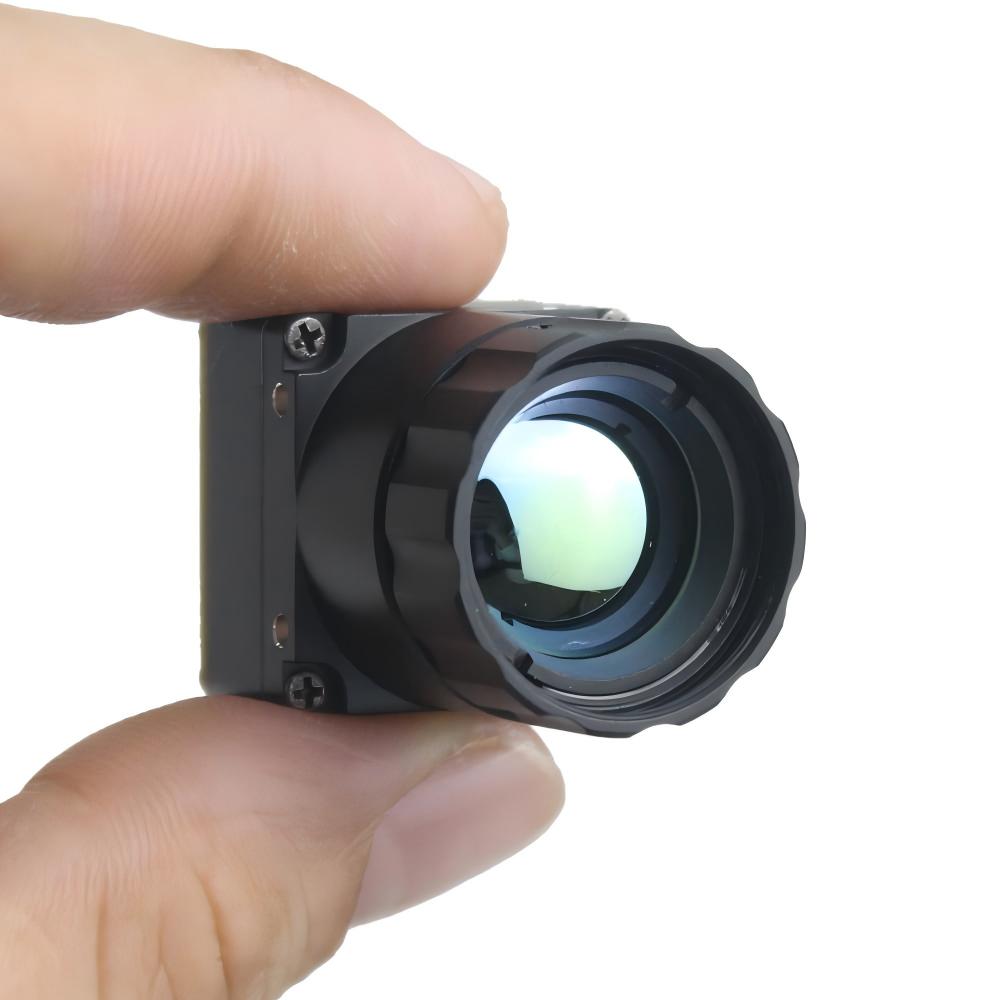
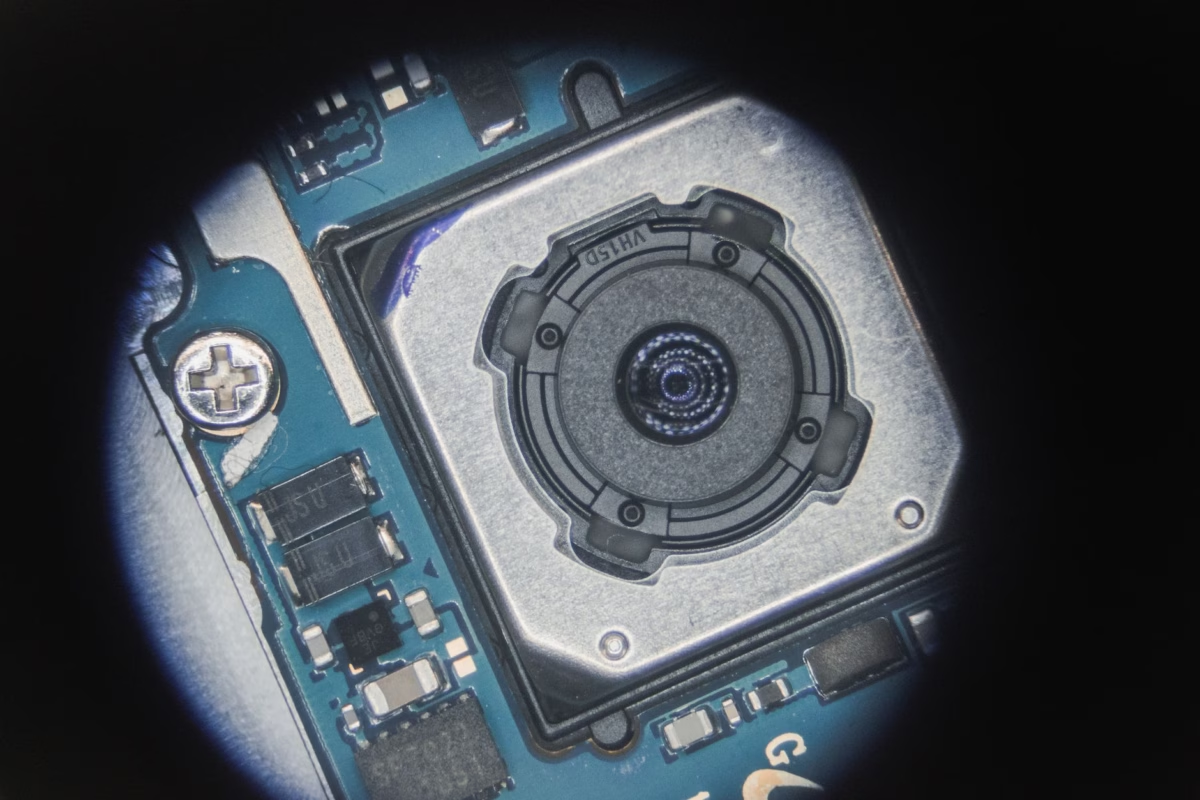
في المنصات الروبوتية ذاتية التشغيل، والمركبات الجوية غير المأهولة (UAVs)، ومصفوفات الرؤية الحاسوبية الطرفية، يحدد زمن انتقال التقاط الصور وقيود SWaP-C (الحجم والوزن والطاقة والتكلفة) نجاح المهمة. تعتمد الحمولات الحرارية التقليدية على وحدات تحكم جسر USB 3.0 أو واجهات Ethernet أو CVBS التناظرية القديمة لتحويل خرج الميكروبولومتر الرقمي للأشعة تحت الحمراء طويلة الموجة (LWIR) عبر طبقات ترجمة بروتوكول متعددة. يؤدي هذا إلى زمن انتقال معالجة كبير، واهتزاز في إرسال الإطارات، واستباق خيوط وحدة المعالجة المركزية، وتبديد طاقة طفيلي على مستوى اللوحة. إن الواجهة الأصلية وحدة كاميرا حرارية MIPI تتجاوز دوائر الجسر الطرفية المتكاملة تمامًا عن طريق تغذية تدفقات البكسل الإشعاعية غير المضغوطة ذات 14 بت أو 16 بت مباشرة إلى نظام الشريحة الواحدة (SoC) المضيف عبر بروتوكول الواجهة التسلسلية للكاميرا 2 (MIPI CSI-2) الخاص بواجهة معالج الصناعة المتنقلة.
من خلال ربط مصفوفات كاشف الميكروبولومتر مباشرة بمستقبلات الطبقة المادية D-PHY الأصلية في العتاد على منصات مثل NVIDIA Jetson وRockchip RK3588 وNXP i.MX8 وRaspberry Pi Compute Module 4 (CM4)، يفتح مهندسو الأنظمة المدمجة الباب أمام تدفق خط أنابيب الوصول المباشر للذاكرة (DMA) دون تدخل وحدة المعالجة المركزية المضيفة. يسهّل هذا النموذج المعماري زمن انتقال التقاط إطارات دون المللي ثانية، ومزامنة زمنية حتمية لدمج المستشعرات متعددة الأطياف، ووصولًا عتاديًا للذاكرة بدون نسخ ضروريًا لتشغيل الشبكات العصبية الالتفافية (CNNs) ومحولات الرؤية (ViTs) في الوقت الفعلي على الحافة المادية.
جدول المحتويات
- 👉 بنية MIPI CSI-2 لمستشعرات الأشعة تحت الحمراء طويلة الموجة (LWIR)
- 👉 مقارنة معيارية لبروتوكول الواجهة: MIPI CSI-2 مقابل USB 3.0 وGigE Vision وCVBS
- 👉 خط أنابيب العتاد المدمج: الوصول المباشر للذاكرة (DMA) والذكاء الاصطناعي الطرفي بدون نسخ
- 👉 مواصفات ومصفوفة اختيار نوى Purpleriver MINI Series MIPI الحرارية
- 👉 معالجة الإشارة الإشعاعية: تصحيح عدم الانتظام (NUC) والقياس عن بُعد المعاير
- 👉 تصميم اللوحة الحاملة للعتاد: التوجيه التفاضلي عالي السرعة ومعايير الموصلات
- 👉 الأسئلة الشائعة: الأنظمة المدمجة وتكامل الهندسة
بنية MIPI CSI-2 لمستشعرات الأشعة تحت الحمراء طويلة الموجة (LWIR)
تختلف البنية الداخلية لنواة الكاميرا الحرارية غير المبردة الأصلية MIPI CSI-2 اختلافًا جوهريًا عن مستشعرات CMOS التقليدية للطيف المرئي. تعتمد النواة غير المبردة للأشعة تحت الحمراء طويلة الموجة (LWIR) على مصفوفة مستوية بؤرية (FPA) من ميكروبولومتر أكسيد الفاناديوم (VOx) أو السيليكون غير المتبلور (α-Si). بدلًا من اكتشاف انتقالات الإلكترونات المستحثة بالفوتونات في وصلات p-n السيليكونية، يمتص كل بكسل ميكروبولومتر الإشعاع الحراري بين 8 ميكرومتر و14 ميكرومتر، مما يغير مقاومته الكهربائية الفيزيائية كدالة في درجة الحرارة.
تحت مصفوفة الميكروبولومتر توجد الدائرة المتكاملة للقراءة (ROIC). تستخدم ROIC مكاملات متوازية الأعمدة ومحولات تناظرية رقمية (ADCs) منخفضة الضوضاء ذات 14 بت أو 16 بت لأخذ عينات تغيرات المقاومة عبر كل بكسل. من ROIC، تُمرَّر قيم الرقمنة الخام إلى مصفوفة بوابات قابلة للبرمجة ميدانيًا (FPGA) فائقة الانخفاض في استهلاك الطاقة أو دائرة متكاملة مخصصة للتطبيق (ASIC). يتولى محرك المعالجة المدمج هذا التصحيحات الأساسية: تصحيح عدم الانتظام ثنائي النقاط (NUC)، واستبدال البكسلات التالفة الديناميكي (BPR)، وتحسين التفاصيل الرقمية (DDE).
بمجرد التصحيح، تدخل البيانات طبقة بروتوكول الإرسال MIPI CSI-2. هنا، تُحزم تدفقات البكسل في تسلسلات بايت مخصصة وتُدفع عبر طبقة مادية MIPI D-PHY مباشرة إلى SoC المضيف عبر خطوط شريطية تفاضلية.
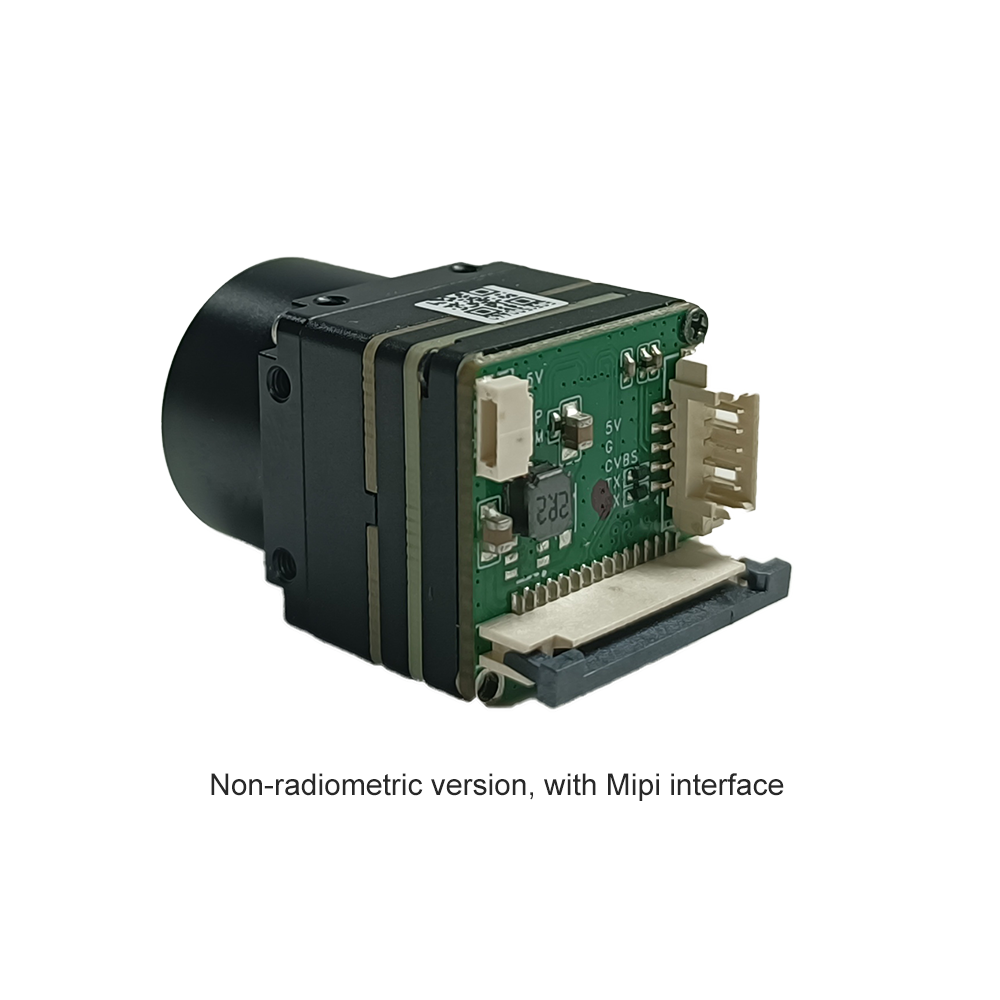
آليات الإشارة في الطبقة الفيزيائية (D-PHY)
تستخدم واجهة الإرسال مواصفات D-PHY من تحالف MIPI، وهي بنية غير متزامنة متزامنة المصدر مُحسَّنة للوصلات البينية منخفضة الطاقة ومن نقطة إلى نقطة. تعمل D-PHY في وضعين تشغيليين متميزين على نفس الأطراف الفيزيائية:
- ⚙️ وضع السرعة العالية (HS): تستخدم الإشارة التفاضلية منخفضة الجهد (SLVS) مع تأرجح جهد تفاضلي اسمي قدره 200 mV متمركز عند مستوى أرضي مشترك قدره 200 mV (يعمل بين 100 mV و300 mV). ينقل وضع HS بيانات الحمولة بمعدلات بتات من 80 Mbps حتى 1.5 Gbps لكل مسار، مما يزيد من إنتاجية التسليم العالية مع الحفاظ على انبعاثات ترددات راديوية منخفضة.
- ⚙️ وضع الطاقة المنخفضة (LP): ينتقل إلى إشارة أحادية الطرف بمستوى CMOS قدره 1.2V. يدير وضع LP حالات التحكم في الخط، ومصافحة البروتوكول، وانتقالات حالة الطاقة فائقة الانخفاض (ULPS)، وتحديد حدود الإطارات بأقل استهلاك طفيلي.
يستخدم توزيع الساعة مسار ساعة تفاضليًا مخصصًا بمعدل بيانات مضاعف (DDR) يرافق مسار بيانات تفاضليًا واحدًا أو اثنين. في التكوين ثنائي المسار، تتناوب تدفقات البايتات عبر مسار البيانات 0 ومسار البيانات 1. بالنسبة لمستشعر ميكروبولوميتر غير مبرد بدقة 640×512 يعمل عند 60 هرتز مع إرسال إشعاعي 16 بت، يُحسب عرض النطاق الترددي الإجمالي المطلوب على النحو التالي:
بما في ذلك تأطير حزم CSI-2، ومزامنة الخطوط، ونفقات التعتيم الرأسي (عادةً من 15% إلى 20%)، يبلغ إجمالي عرض النطاق الترددي للواجهة ذروته بالقرب من 375 Mbps. يستوعب مسار D-PHY واحد يعمل عند 800 Mbps هذا الإنتاجية بسهولة. يتيح تقسيم هذا التدفق عبر مسارين تفاضليين يعملان عند 400 Mbps لمهندسي الأجهزة خفض تردد الساعة التشغيلي، مما يكبح بشكل كبير التداخل الكهرومغناطيسي (EMI) داخل نطاقات GPS وأجهزة الإرسال والاستقبال RF الحساسة على هياكل الطائرات بدون طيار.
هيكلة الحزم وأنواع البيانات والقنوات الافتراضية
ينظم بروتوكول MIPI CSI-2 خط أنابيب البيانات الحرارية في طبقات حزم منظمة:
- ⚙️ الحزم القصيرة (4 بايتات): تحتوي على معرف بيانات (DI) بحجم 8 بت، وعداد إطارات أو عدّاد خطوط بحجم 16 بت، ورمز تصحيح أخطاء (ECC) بحجم 8 بت. تشير الحزم القصيرة إلى بداية الإطار (FS, DI =
0x00) ونهاية الإطار (FE, DI =0x01)، مما يحدد فترات التعريض الدقيقة للميكروبولوميتر الحراري. - ⚙️ الحزم الطويلة (حمولة متغيرة): تغلف خطوط المسح الحراري الأفقية الفردية. تتكون الحزمة الطويلة من ترويسة بحجم 4 بايتات (DI، وعداد كلمات بحجم 16 بت، وECC)، وبايتات بيانات الحمولة، وتذييل فحص التكرار الدوري (CRC) بحجم 2 بايت و16 بت للكشف عن أخطاء الإرسال أحادية ومتعددة البتات.
يحدد بايت DI تنسيق المستشعر الدقيق من خلال أنواع بيانات MIPI القياسية (DT):
- ⚙️ RAW14 (
DT 0x2D) أو RAW16 (DT 0x2E): يوفر عدادات رقمية خطية مطلقة متناسبة مباشرة مع تدفق سطح الميكروبولوميتر. هذا هو الوضع المستخدم للقياس الإشعاعي العلمي، ورسم الخرائط الزراعية الدقيقة، والصيانة التنبؤية الطرفية. - ⚙️ YUV422 8-بت (
DT 0x1E): يوفر فيديو معالجًا بـ AGC ومعينًا لدرجات الألوان للعرض الفوري على محطات التحكم الأرضية للطيار (GCS) أو أجهزة الإرسال التناظرية للوصلة الهابطة دون الحاجة إلى تمديد التباين من جانب المضيف. - ⚙️ أنواع البيانات المعرفة من قبل المستخدم (
DT 0x30حتى0x37): تسمح بتداخل خطوط القياس عن بُعد المضمنة. يحقن النواة الحرارية قراءات مستشعر درجة حرارة FPA الداخلي، وقياسات الثرمستور لركيزة ROIC، وحالة الغالق الحالية، وأعلام تكوين الكاميرا مباشرة في خطوط مساعدة أعلى أو أسفل حمولة الصورة.
باستخدام معرّفات القناة الافتراضية MIPI (VC) (من 0 إلى 3)، يمكن لاتصال مادي واحد مضاعفة إطارات إشعاعية خام 14-بت على VC0 جنبًا إلى جنب مع فيديو عرض معالج 8-بت على VC1. يلغي هذا التسليم ثنائي الدفق الحاجة إلى كاميرتين منفصلتين أو تحويل ترميز برمجي معقد على المعالج المضيف.
مقارنة معيارية لبروتوكول الواجهة: MIPI CSI-2 مقابل USB 3.0 وGigE Vision وCVBS
اعتمدت نوى التصوير الحراري المنتشرة في أنظمة الرؤية الطرفية تاريخيًا على USB 3.0 (UVC)، أو Gigabit Ethernet الصناعي (GigE Vision)، أو الفيديو التناظري المركب القديم (CVBS). بينما توفر هذه الواجهات نماذج أولية تعمل فور التوصيل أو توافقًا مع مسارات الكابلات الطويلة، فإن مقايضاتها المعمارية تجعلها غير مناسبة للاستقلالية الجوية والروبوتية المقيدة بـ SWaP وفي الوقت الفعلي.
| المقياس المعماري | MIPI CSI-2 الأصلية | USB 3.0 / UVC | GigE Vision | CVBS التناظري |
|---|---|---|---|---|
| زمن انتقال النقل | < 1.0 مللي ثانية (قائم على الخط) | 0 مللي ثانية – 45.0 مللي ثانية | 0 مللي ثانية – 50.0 مللي ثانية | > 20 مللي ثانية (تأخر التحويل الرقمي) |
| مسار واجهة المضيف | SoC D-PHY / DMA مباشر | وحدة تحكم مضيف USB (xHCI) | Ethernet MAC ومكدس IP | محول فيديو تناظري خارجي ADC |
| العبء على وحدة المعالجة المركزية المضيفة | 0% – 2% (DMA عتادي) | 12% – 25% (استقصاء النواة) | 10% – 20% (معالجة المقابس) | 5% – 10% (محرك الالتقاط) |
| كتلة الربط البيني | أقل من 1.5 غرام (كابل FPC) | 15 – 35 غرامًا (نحاس/غلاف) | 25 – 60 غرامًا (RJ45/Cat5e) | 8 – 15 غرامًا (كابل محوري) |
| تبديد طاقة الواجهة | أقل من 50 ميجاواط | 350 ميجاواط – 750 ميجاواط | 800 ميجاواط – 1500 ميجاواط | 150 ميجاواط – 300 ميجاواط |
| الدقة الإشعاعية | خام كامل 14 بت / 16 بت | كامل 14 بت (UVC مخصص) | كامل 14 بت (GenICam) | لا شيء (AGC فاقد 8 بت) |
| الاستقرار الميكانيكي للموصّلات | لوحة إلى لوحة / FPC بقفل | تثبيت احتكاكي (خطر الاهتزاز) | مزلاج/قفل لولبي RJ45 | محوري دقيق / دبوس ملحوم |
يتجذر التفوق المعماري لـ MIPI CSI-2 في تكامله العتادي منخفض المستوى. عند استخدام USB 3.0، يجب أن يمر التدفق المتوازي الأصلي أو تدفق MIPI القادم من النواة الحرارية عبر جسر IC (مثل وحدة تحكم Infineon CX3 أو Cypress FX3). تعيد شريحة الجسر هذه تغليف الفيديو في حزم USB من فئة الفيديو العامة (UVC)، عابرةً واجهة وحدة تحكم المضيف القابلة للتوسعة (xHCI)، ومطلقةً مقاطعات النظام، ومارةً عبر مكدس USB/الشبكة في نواة نظام التشغيل قبل الوصول إلى ذاكرة التطبيق. ينتج عن ذلك ارتعاش في النقل يتراوح بين 15 و45 ميلي ثانية.
والأكثر أهمية بالنسبة لمحاور الطائرات بدون طيار هو التبديد الحراري الطفيلي. تحرق وحدة تحكم جسر USB ما بين 350 ميجاواط و750 ميجاواط من الطاقة، بينما تستهلك طبقة GigE الفيزيائية أكثر من 1 واط. في محور مصغّر ثلاثي المحاور محكم الإغلاق، تشع هذه الحرارة الموضعية مباشرة إلى مبيت الميكروبولومتر غير المبرّد. ولأن البولومترات غير المبرّدة تعتمد على توازن حراري بمستوى الميكروكلفن، تسبب مصادر الحرارة الموضعية انجرافًا حراريًا عبر مصفوفة المستوى البؤري (FPA). يؤدي ذلك إلى إعادة معايرة متكررة لمصراع تصحيح عدم الانتظام (NUC)، مما يجمّد تدفق الفيديو أثناء مناورات الطيران الحرجة.
إن إزالة جسور IC عبر واجهة MIPI CSI-2 مباشرة يحافظ على استقرار المعايرة الحرارية، ويخفض استهلاك الطاقة إلى أقل من 50 ميجاواط للطبقة الفيزيائية للنقل، ويوفر حتى 50 غرامًا من كتلة الحمولة. للحصول على تحليل شامل لمفاضلات الأنظمة الطرفية، راجع دليلنا حول دمج وحدات التصوير الحراري عالية الأداء للذكاء الاصطناعي الطرفي ومصنعي الطائرات بدون طيار.
خط أنابيب العتاد المدمج: الوصول المباشر للذاكرة (DMA) والذكاء الاصطناعي الطرفي بدون نسخ
الميزة الأساسية لنشر وحدة كاميرا حرارية MIPI في خطوط أنابيب الذكاء الاصطناعي هي معالجة الذاكرة بدون نسخ. في الأنظمة المدمجة على الرقاقة (SoC) التي تتشارك ذاكرة فيزيائية موحدة — مثل NVIDIA Jetson Orin Nano/AGX (بنية Tegra) أو Rockchip RK3588 — يضع مستقبل MIPI CSI-2 خطوط المسح القادمة مباشرة في ذاكرة DRAM الفيزيائية عبر محركات وصول مباشر للذاكرة (DMA) عتادية مخصصة.
بنية مشغّل نواة لينكس ونظام V4L2 الفرعي
تحت لينكس المدمج، تتصل وحدات الكاميرا الحرارية MIPI من Purpleriver عبر إطار مشغّل Video4Linux2 (V4L2) وواجهة برمجة تطبيقات Linux Media Controller. تسجل النواة الحرارية ككيانين منطقيين: جهاز عميل I2C مسؤول عن الأوامر والتحكم في وقت التشغيل (تبديل حالة الكسب، تشغيل NUC يدويًا، تحميل منحنيات المعايرة، التقريب الرقمي) وجهاز فرعي V4L2 يقود مرسل MIPI CSI-2.
يبدأ التكامل في ملفات شجرة أجهزة اللوحة المصدرية (.dtsi)، التي ترسم طوبولوجيا العتاد الفيزيائي. تعرّف شجرة الأجهزة ربط منفذ CSI، وتخطيط مسارات البيانات، وتردد الساعة التفاضلية، ومنافذ GPIO لإعادة الضبط/إيقاف التشغيل:
// Device Tree node snippet for Jetson / RK3588 integration;&csi_port0 {
status = "okay";memcpyendpoint { DMA-BUF remote-endpoint = ;.
bus-type = ; // MIPI CSI-2 D-PHY
- ⚙️ تخصيص المخازن المؤقتة: clock-lanes = ;
V4L2_MEMORY_MMAPأوV4L2_MEMORY_DMABUFdata-lanes = ;. - ⚙️ link-frequencies = /bits/ 64/ ; Every buffer yields a unique file descriptor via the
VIDIOC_EXPBUFioctl call, mapping direct kernel memory handles. - ⚙️ Direct Hardware Binding: The descriptor is imported directly into deep learning engines. On NVIDIA Jetson platforms, the file descriptor maps into CUDA device memory via
cudaImportExternalMemory(), while computer vision pipelines wrap the buffer directly via OpenCV matrix headers without reallocating heap memory.
// C++ Zero-Copy Wrapping of 14-bit Radiometric Frame into OpenCV
struct v4l2_buffer buf = {0};
buf.type = V4L2_BUF_TYPE_VIDEO_CAPTURE;
buf.memory = V4L2_MEMORY_MMAP;
ioctl(v4l2_fd, VIDIOC_DQBUF, &buf);

// Wrap physical memory buffer into cv::Mat header without copying data
void* raw_kernel_ptr = buffer_mmap_ptrs[buf.index];
cv::Mat thermal_14bit(512, 640, CV_16UC1, raw_kernel_ptr);

// Direct pointer passage to TensorRT input tensor on unified memory
cudaExternalMemoryHandleDesc memDesc = {};
memDesc.type = cudaExternalMemoryHandleTypePosixFd;
memDesc.handle.fd = dma_buf_fds[buf.index];
memDesc.size = 640 * 512 * sizeof(uint16_t);
cudaImportExternalMemory(&extMem, &memDesc);

// Re-queue buffer immediately back to V4L2 capture queue
ioctl(v4l2_fd, VIDIOC_QBUF, &buf);
This unified pipeline delivers frame ingestion latencies under 1 millisecond. By freeing the host CPU from copying pixel data, system threads remain available for path planning, flight stabilization, and object tracking. To explore module selection strategies for embedded AI processing, review our AI thermal camera selection guide for high-precision OEM modules.
مواصفات ومصفوفة اختيار نوى Purpleriver MINI Series MIPI الحرارية
Purpleriver engineers and manufactures the MINI series of uncooled infrared camera modules, developed specifically to resolve SWaP-C challenges in airborne gimbals, tactical micro-drones, handheld test instrumentation, and embedded edge vision arrays.
Uncooled Infrared Mini2 640×512 9mm Thermal Imaging Camera Module For Drones
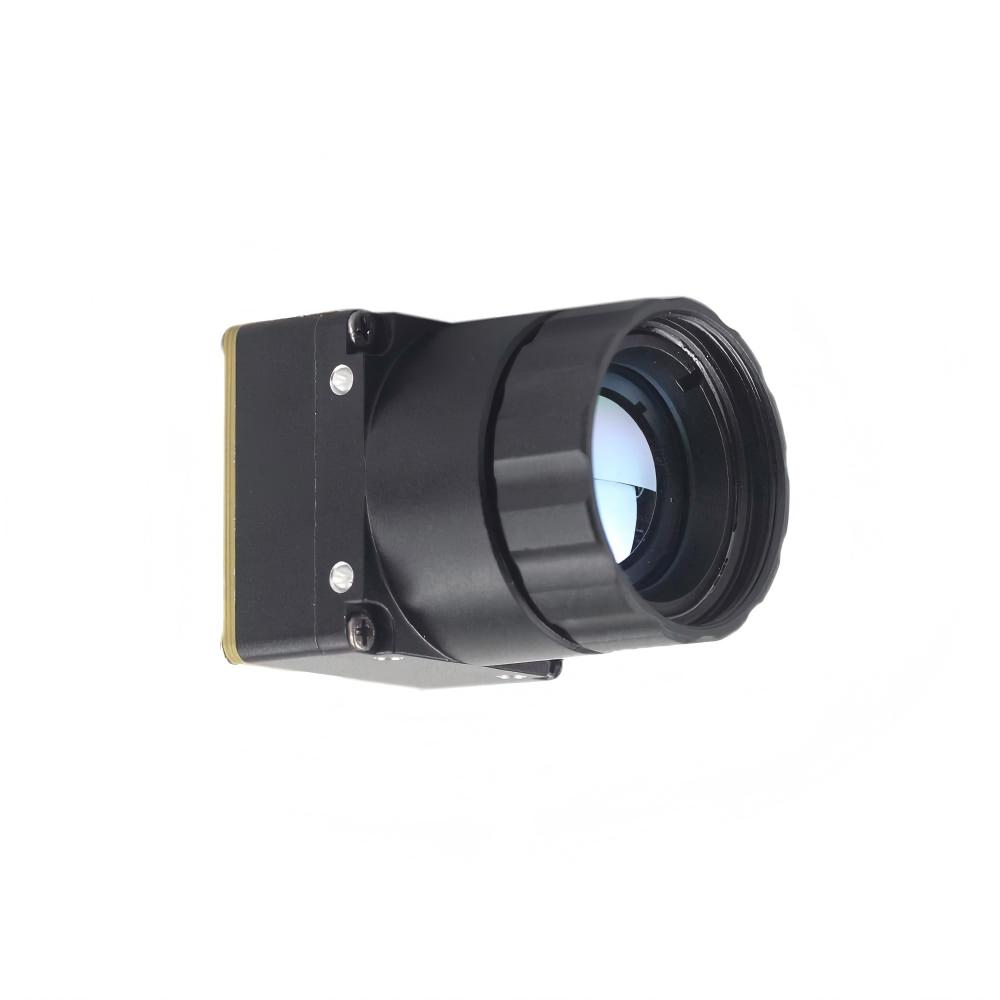
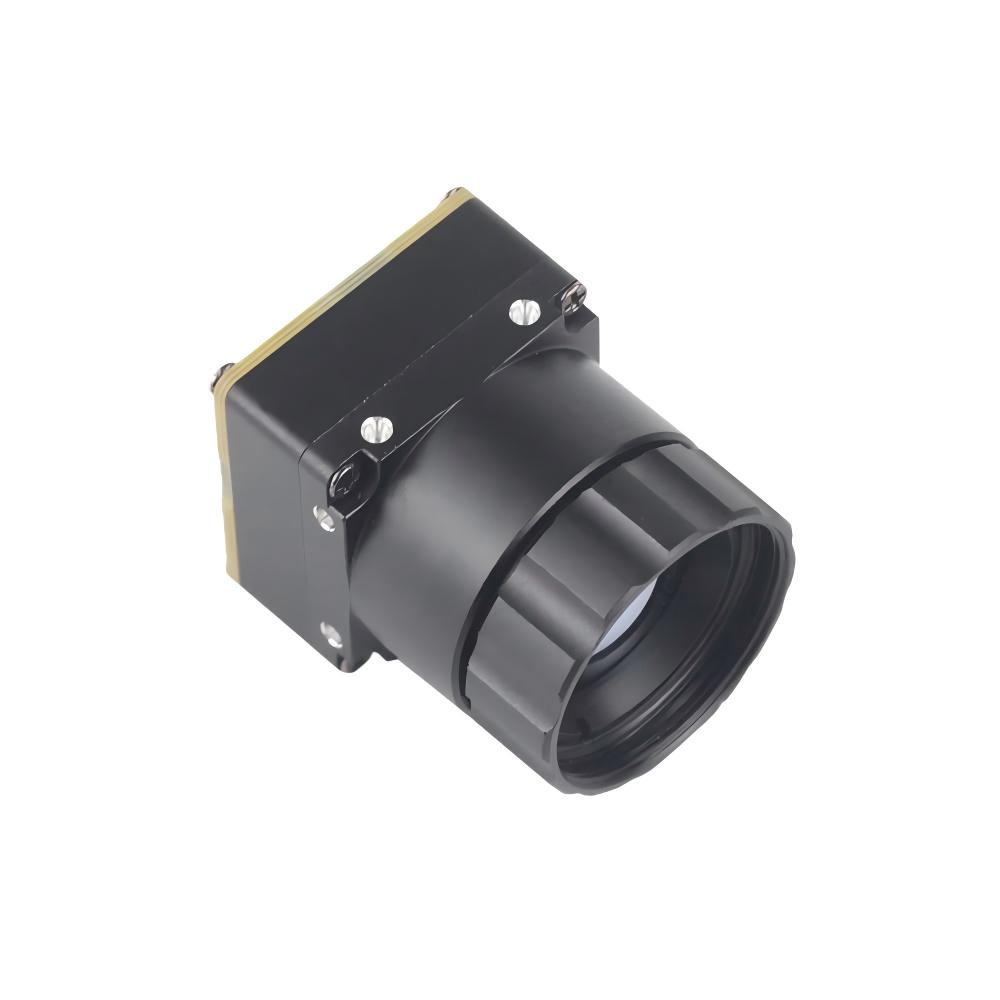
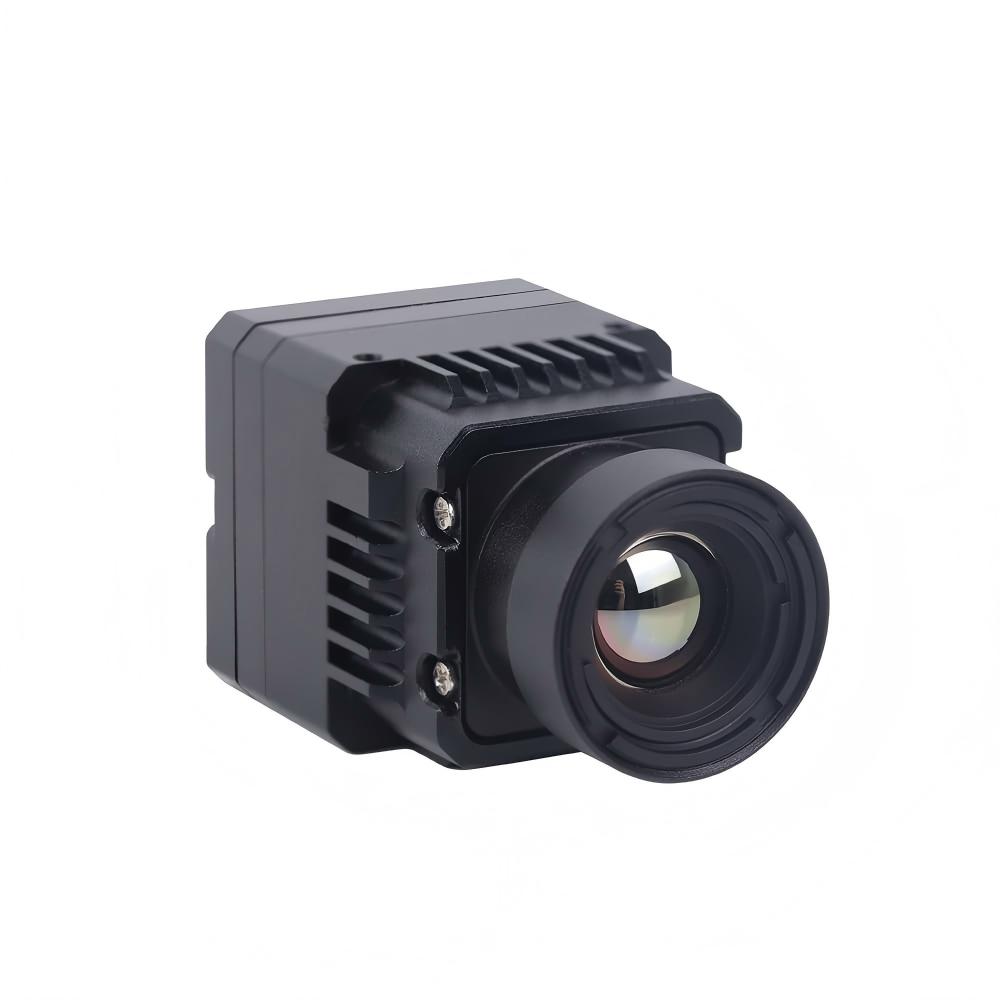
الـ Mini2 640×512 core represents our flagship high-resolution thermal imaging module designed for direct airborne deployment on drones and robotic platforms. Built around a sensitive 12 μm Vanadium Oxide (VOx) microbolometer array, the module delivers sharp, crisp image presentation, compact physical dimensions, and industry-leading cost-performance. Equipped with an integrated 9.0mm athermalized lens assembly and native MIPI CSI-2 interface, the Mini2 streams full 14-bit uncompressed digital raw temperature data alongside YUV display feeds, making it the ideal core for autonomous aerial surveillance, long-range thermal tracking, and search-and-rescue payloads.
- ✅ Array Format: 640 × 512 pixels (12 μm pixel pitch)
- ✅ الحساسية الحرارية: ≤ 40 mK (@25°C, F/1.0)
- ✅ التكوين البصري: 9.0 mm athermalized wide-FOV Germanium lens
- ✅ الواجهة: Native MIPI CSI-2 (Direct D-PHY), Low-profile FPC connectivity
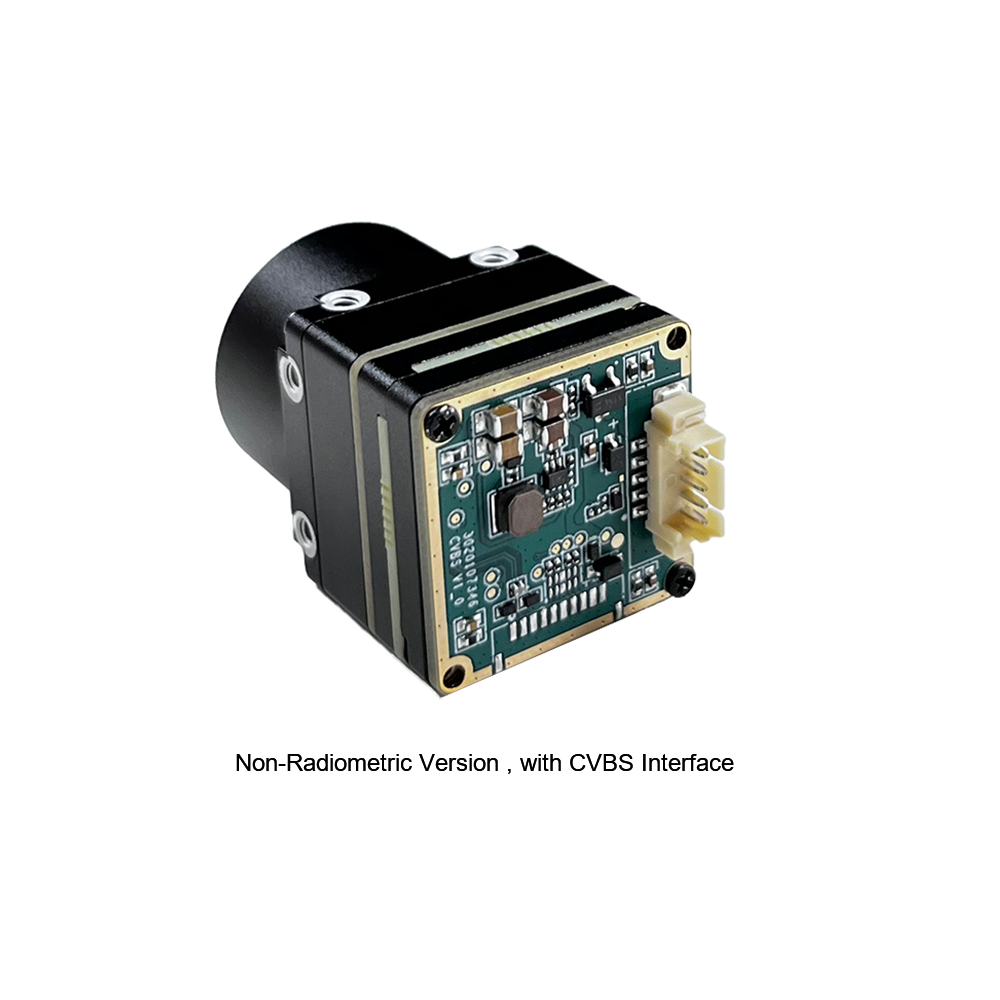
وحدة كاميرا حرارية مصغرة غير مبردة 384×288 للطائرات بدون طيار
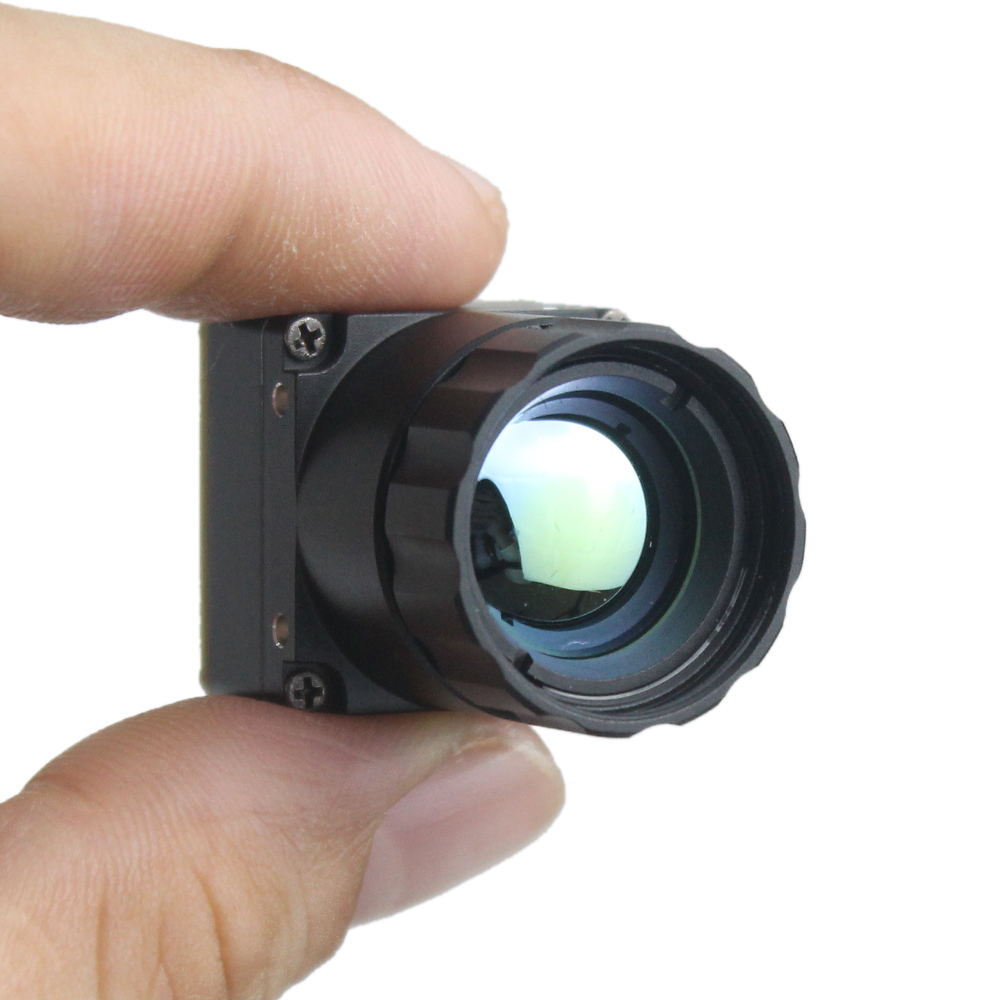
الـ MINI 384×288 series infrared thermal imaging temperature measurement module is an ultra-compact, high-precision online radiometric imager. Utilizing high-stability microbolometer detectors, it balances high thermal resolution with minimal power draw. The module features extensive functional versatility and multiple interface configurations (MIPI CSI-2, CVBS, and digital expansion), making it the primary choice across machine vision, safety inspection, intelligent manufacturing, equipment maintenance, and lightweight robot/drone airborne platforms.
- ✅ Array Format: 384 × 288 بكسل
- ✅ الدعم الإشعاعي: Precision point, line, and area online temperature measurement
- ✅ Multi-Interface Support: Direct MIPI CSI-2, Analog CVBS, and Industrial Expansion headers
- ✅ نطاق التطبيق: Industrial diagnostics, airborne pipeline inspection, automated optical inspection
Comprehensive Engineering Comparison Matrix
| المعلمة التقنية | Purpleriver Mini2 640×512 9mm | Purpleriver Mini 384×288 Series |
|---|---|---|
| معمارية الكاشف | مقياس الميكروبولومتر غير المبرد بأكسيد الفاناديوم (VOx) | High-Stability Uncooled Microbolometer |
| دقة مصفوفة المستوى البؤري | 640 × 512 بكسل | 384 × 288 بكسل |
| تباعد البكسل | 12 ميكرومتر | 12 μm / 17 μm options |
| Spectral Bandpass | 8 ميكرومتر إلى 14 ميكرومتر (LWIR) | 8 ميكرومتر إلى 14 ميكرومتر (LWIR) |
| الحساسية الحرارية (NETD) | ≤ 40 mK (@25°C, F/1.0) | ≤ 40 mK (@25°C, F/1.0) |
| Native Hardware Interface | MIPI CSI-2 (Direct D-PHY), Optional Parallel | MIPI CSI-2, Analog CVBS, Expansion I/O |
| Configurable Frame Rates | 25 هرتز / 30 هرتز / 50 هرتز / 60 هرتز | 25 Hz / 50 Hz / 60 Hz |
| Digital Output Pixel Formats | 14-bit RAW (Linear Radiometric), YUV422, YUV420 | 14-bit / 16-bit Radiometric Data, YUV/RGB Digital Out |
| خيارات العدسات | 9.0 mm Athermalized Germanium Lens | Configurable Athermalized / Manual Focus Lenses |
| Temperature Measurement Modes | Full-frame radiometric online analysis | Point, line, area online high-precision radiometry |
| Supply Voltage & Consumption | DC 3.3V – 5.0V | < 800 mW | DC 3.3V – 5.0V | < 700 mW |
| Core Module Weight | < 20 grams (Excluding external bracket) | < 18 grams (Bare-board configuration) |
| نطاق درجة حرارة التشغيل | -40°C to +80°C | -40°C to +70°C |
For procurement planning and detailed unit economics across custom development projects, refer to our comprehensive thermal camera module price guide 2024: from DIY kits to pro edge AI.
معالجة الإشارة الإشعاعية: تصحيح عدم الانتظام (NUC) والقياس عن بُعد المعاير
An uncalibrated microbolometer array cannot directly output true thermal imagery. Due to semiconductor manufacturing tolerances, individual microbolometer pixels exhibit variations in electrical resistance, temperature coefficients of resistance (TCR), and thermal dissipation characteristics. Without calibration, the raw output from a microbolometer array is dominated by fixed-pattern noise (FPN), obscuring the thermal scene.
Two-Point Non-Uniformity Correction (NUC) Physics
To convert spatial resistance offsets into a uniform image plane, Purpleriver MIPI cores implement real-time, hardware-accelerated Two-Point Non-Uniformity Correction:
حيث:
- ⚙️
S_raw(i, j)represents the raw 14-bit ADC output count for pixel coordinates(i, j). - ⚙️
الإزاحة(i, j)is the additive calibration matrix obtained during blackbody shutter calibration, compensating for differences in microbolometer thermal dissipation and substrate thermal gradients. - ⚙️
Gain(i, j)is the multiplicative responsivity correction matrix derived across wide-temperature calibration runs.
The thermal core balances two operational correction methods:
- ✅ تصحيح عدم التجانس بالغالق الميكانيكي: A solenoid drops an athermalized, uniform mechanical blade in front of the FPA for roughly 250 milliseconds. The module acquires uniform dark-field frames to refresh the offset matrix. This method provides the highest radiometric stability under rapid ambient temperature shifts.
- ✅ تصحيح عدم الانتظام القائم على المشهد بدون غالق (SBNUC): For high-speed drone racing or tactical tracking where a shutter freeze is unacceptable, internal motion-estimation algorithms analyze inter-frame camera motion. High-frequency spatial fixed-pattern noise is isolated from dynamic low-frequency scene data, continuously updating the offset matrix without mechanical interruption.
Bad Pixel Replacement (BPR) Engine
Uncooled microbolometer yields inevitably include a small fraction of defective pixels—elements that remain stuck high (open circuit), stuck low (shorted), or display excessive 1/f flicker noise. During factory blackbody qualification, the thermal core generates an onboard defect table mapping these pixel coordinates into non-volatile flash. During real-time pipeline streaming, an 8-neighbor spatial median interpolation filter replaces dead pixels on the fly, preventing missing data points from destabilizing convolutional feature extractors in downstream AI layers.
Linear Kelvin Radiometric Conversion
When configured for radiometric data delivery over the MIPI CSI-2 bus, output pixel intensities map linearly to absolute target temperatures. Depending on the configured telemetry bit depth, each Least Significant Bit (LSB) corresponds to an exact Kelvin increment:
Under this scaling, a 14-bit digital count of 30,000 translates precisely to 300.00 Kelvin (+26.85°C). Purpleriver modules incorporate two selectable gain calibration states:
- ⚙️ وضع الكسب العالي: Optimized for high sensitivity across environmental ranges (-20°C to +150°C). Noise Equivalent Temperature Difference (NETD) reaches ≤ 40 mK, resolving slight thermal variations across building envelopes, search-and-rescue scenes, or electrical wiring.
- ⚙️ وضع الكسب المنخفض: Compresses analog ROIC integration ramps to expand the dynamic range up to +550°C (or +650°C on custom configurations). This state is designed for industrial boiler monitoring, wildfire suppression, and localized smelting inspections.
تصميم اللوحة الحاملة للعتاد: التوجيه التفاضلي عالي السرعة ومعايير الموصلات
Interfacing a native MIPI thermal camera module to custom embedded carrier boards requires rigorous high-speed layout practices. The MIPI D-PHY interface combines high-speed, sub-nanosecond edge-rate differential signaling (HS mode) with single-ended 1.2V signaling (LP mode). Improper routing leads to common-mode phase skew, signal reflection, packet corruption, and frame drops.
Differential Trace Geometry and Impedance Control
High-speed MIPI lines require strict impedance control across the PCB trace topology:
- ⚙️ Differential Impedance: All MIPI D-PHY differential clock pairs (
CLK_P,CLK_N) and data pairs (DATA0_P/N,DATA1_P/N) must be routed to achieve a target differential impedance of 100 Ω ± 10% (corresponding to a 50 Ω single-ended impedance to the reference ground). - ⚙️ Intra-Pair Length Skew: The absolute trace length delta between the positive (
_P) and negative (_N) traces of any single differential pair must not exceed 0.15 mm (6 mils). Skew imbalances convert differential signals into common-mode radiation, degrading EMI performance and distorting the eye diagram. - ⚙️ Inter-Pair Length Matching: The length difference between data lane pairs and the high-speed differential clock pair must remain within 1.0 mm (40 mils) to satisfy receiver setup-and-hold timing parameters.
- ⚙️ Continuous Reference Plane: High-speed pairs must run over an unbroken, solid copper Ground (GND) return plane. Never route MIPI traces across power plane splits or ground voids; discontinuities disrupt the return current path and induce significant jitter.
- ⚙️ Via Transitions: Signal vias should be minimized. Where layer transitions are necessary, route data lines through symmetrical via pairs flanked immediately by adjacent ground stitching vias placed within 0.5 mm to provide a continuous return path.
Interconnect Standards: Hirose Board-to-Board & FPC Headers
Purpleriver MINI series modules utilize specialized ultra-compact, multi-pin connectors—such as the high-speed mezzanine series from هيروس إلكتريك (e.g., Hirose DF40 or DF12 low-profile families)—or locking micro-pitch Flexible Printed Circuit (FPC) headers.
| نطاق الأطراف | Signal Group | Signal Descriptions & Electrical Rules |
|---|---|---|
| 1, 4, 7, 10 | Digital GND | System ground return; isolates high-speed differential pairs to eliminate cross-talk. |
| 2, 3 | MIPI_CLK_N / P | Differential D-PHY DDR Clock Lane; requires 100 Ω differential trace routing. |
| 5, 6 | MIPI_DATA0_N / P | Differential High-Speed Data Lane 0; transmits packetized thermal byte streams. |
| 8, 9 | MIPI_DATA1_N / P | Differential High-Speed Data Lane 1; secondary data stream for 640×512 configurations. |
| 11, 12 | I2C_SDA / SCL | Control bus; requires 2.2 kΩ – 4.7 kΩ pull-up resistors to the 3.3V or 1.8V VDDIO rail. |
| 13, 14 | System Control | RESET_N (Active-low reset) and EXT_SYNC (Hardware genlock trigger for multi-spectral alignment). |
| 15, 16 | Core DC Power | Input supply rail (DC 3.3V to 5.0V); decouple locally with 0.1 μF and 10 μF ceramic capacitors. |
When routing flexible flat cables (FFC/FPC) across UAV 3-axis brushless gimbals, always select shielded flex designs featuring dual-sided solid silver or copper cross-hatch shielding. Gimbal motor commutations create localized electromagnetic fields; proper shielding prevents PWM switching transients from coupling into the high-speed differential D-PHY lines.
الأسئلة الشائعة: الأنظمة المدمجة وتكامل الهندسة
How do I integrate a MIPI CSI-2 thermal camera module into embedded Linux platforms like Nvidia Jetson or Raspberry Pi?
Why should I choose native MIPI over USB 3.0 or CVBS for drone and robotic vision payloads?
Can Purpleriver MIPI thermal camera modules deliver accurate radiometric temperature data on custom carrier boards?
📚 المراجع والقراءات الإضافية
- المعيار الصناعي: Real-time image processing pipelines and zero-copy computer vision acceleration using the official OpenCV framework.
- المعيار الصناعي: High-density micro-pitch board-to-board interconnect specifications by هيروس إلكتريك.
- دليل ذو صلة: In-depth engineering walkthrough on دمج وحدات التصوير الحراري عالية الأداء للذكاء الاصطناعي الطرفي ومصنعي الطائرات بدون طيار.
- دليل ذو صلة: Core sensor evaluation criteria in our AI thermal camera selection guide for high-precision OEM modules.
- دليل ذو صلة: Market architecture and budgetary tradeoffs in our thermal camera module price guide 2024: from DIY kits to pro edge AI.