

Mini 640 Thermal Camera Module: Night Vision CMOS Analog Video & H.265 Integration Guide
2026年7月17日
640x512 Thermal Camera Module: The Ultimate Guide for Drone & Edge AI Integration
2026年7月20日

Guangzhou Purple River MIPI USB Thermal Camera Module: High-Res Embedded IR Solutions
In the rapidly evolving landscape of autonomous systems, aerial thermography, and edge-computed robotics, integrating high-definition thermal imaging is no longer a luxury—it is a core engineering requirement. Industrial designers, drone manufacturers, and automation engineers frequently grapple with the trade-offs between physical payload weight, spatial resolution, interface latency, and system cost. When looking at elite-tier precision cores, the market highly values specialized solutions. Specifically, the search for a versatile system brings commercial developers to technologies aligned with the guangzhou purple river electronic technology co. thermal camera module mipiusb, bringing MIPI (Mobile Industry Processor Interface) and USB processing paradigms into a standardized, ultra-lightweight form factor.
As a senior industrial engineer specialized in electro-optical system integration, I understand that selecting a thermal core is not merely about choosing a sensor resolution. It is about understanding the signal integrity of the MIPI CSI-2 bus, managing the thermal dissipation of uncooled microbolometers, and ensuring driver compatibility with embedded compute platforms like NVIDIA Jetson, Raspberry Pi, and proprietary drone flight controllers. This deep-dive analytical guide explores the technical architecture of MIPI and USB thermal camera modules, reviews high-performance product solutions, and maps out critical integration workflows for demanding industrial applications.
Table of Contents
- 👉 1. Technical Architecture: MIPI vs. USB in Thermal Systems
- 👉 2. Industrial Engineering Applications & Payload Optimization
- 👉 3. High-Performance Thermal Module Showcase
- 👉 4. Overcoming Integration Challenges: Calibration & Thermal Drift
- 👉 5. Software Pipelines, SDK Integration, and OS Compatibility
- 👉 6. Engineering Selection Matrix: Choosing the Right Lens & Resolution
- 👉 7. Frequently Asked Questions (FAQ)
1. Technical Architecture: MIPI vs. USB in Thermal Systems
When designing an embedded thermal vision system, selecting the physical data interface is one of the most critical decisions. The interface dictates not only the maximum frame rate and latency but also the power envelope, the processing overhead of the host CPU, and the physical complexity of the Printed Circuit Board Assembly (PCBA).
MIPI CSI-2 interface: Low Latency, Direct-to-Processor Pipeline
The Mobile Industry Processor Interface Camera Serial Interface 2 (MIPI CSI-2) is a high-bandwidth, serial interface standard developed to connect camera sensors directly to application processors (SoCs). In a thermal imaging context, MIPI CSI-2 offers unparalleled performance. It bypasses the USB protocol stack completely, enabling direct-to-memory data transfers via Direct Memory Access (DMA) engines on the host SoC.
Because MIPI CSI-2 communicates using a differential signaling architecture (utilizing scalable data lanes and a dedicated clock lane), it minimizes electromagnetic interference (EMI)—a crucial attribute when mounting a camera inside compact drone housings packed with GPS, telemetry, and RC receivers. The latency of a MIPI-based thermal module from sensor capture to host memory is measured in microseconds, making it the ideal interface for real-time obstacle avoidance, precision agricultural targeting, and closed-loop flight control.
USB Interface: Universal Plug-and-Play Compatibility
Conversely, Universal Serial Bus (USB) interfaces—typically implemented as USB 2.0 or USB 3.0 UVC (USB Video Class) protocols—prioritize compatibility and simplicity. A USB thermal module contains an onboard micro-controller or dedicated bridge chip that packetizes the raw thermal data into standard UVC frames. This allows the module to be recognized immediately by any operating system (Linux, Windows, Android) without custom kernel compilation or proprietary drivers.
In the shop, we know this universality comes with a cost. The USB protocol stack introduces significant processing overhead, as the host CPU must manage polling schedules, packet assembly, and buffer transitions. Latency is noticeably higher than MIPI (often 15ms to 50ms depending on bus traffic and operating system scheduling). Nevertheless, for applications where the camera module must plug into modular industrial PCs or single-board computers (SBCs) without native CSI-2 interfaces, USB remains the industry's default choice.
2. Industrial Engineering Applications & Payload Optimization
Look, optimizing payloads for unmanned aerial vehicles (UAVs) and robotic platforms requires balancing every single gram and milliwatt. Incorporating advanced thermal intelligence, such as video of thermal imaging camera module with drone integration, into small UAV payloads demands components engineered specifically for size, weight, and power (SWaP) constraints.
Unmanned Aerial Vehicles (UAVs) and Drone Integration
Modern commercial drones used for search and rescue, power line inspection, and architectural heat-loss mapping demand dual-sensor payloads (visible light + thermal infrared). Here is the deal: the uncooled LWIR (Long-Wave Infrared) modular cores, possessing ultra-thin PCBAs and miniature Germanium optical lenses, are custom-built for these applications. In these platforms, minimizing weight is paramount; every 10-gram decrease in sensor weight translates directly into extended battery life and increased flight endurance.
For example, integrating a lightweight MIPI thermal module into a micro-gimbal assembly reduces the inertia that the gimbal’s brushless motors must overcome. This allows for faster stabilization response, tighter control loops, and sharper image acquisition even under severe aerodynamic turbulence. These modules are frequently deployed alongside optical modules from partners like Rising Optics to provide comprehensive multi-spectral aerial analysis.
Industrial Automation and Continuous Monitoring
Within manufacturing facilities, continuous thermographic monitoring is critical for predictive maintenance. Electrical switchgear, high-speed bearings, and chemical reaction vessels can fail catastrophically if they overheat. Using compact USB thermal camera cores, plant engineers can distribute dozens of monitoring nodes across a facility.
These modules stream real-time radiometric data back to a localized edge hub. Because they support standard USB interfaces, they can be easily multiplexed using active USB hubs and run directly into industrial PCs running supervisory control and data acquisition (SCADA) systems or custom machine learning pipelines trained on heat signature anomalies.
3. High-Performance Thermal Module Showcase
To assist in your engineering procurement process, let us examine two highly optimized uncooled thermal camera cores manufactured by leaders in the optoelectronic space.
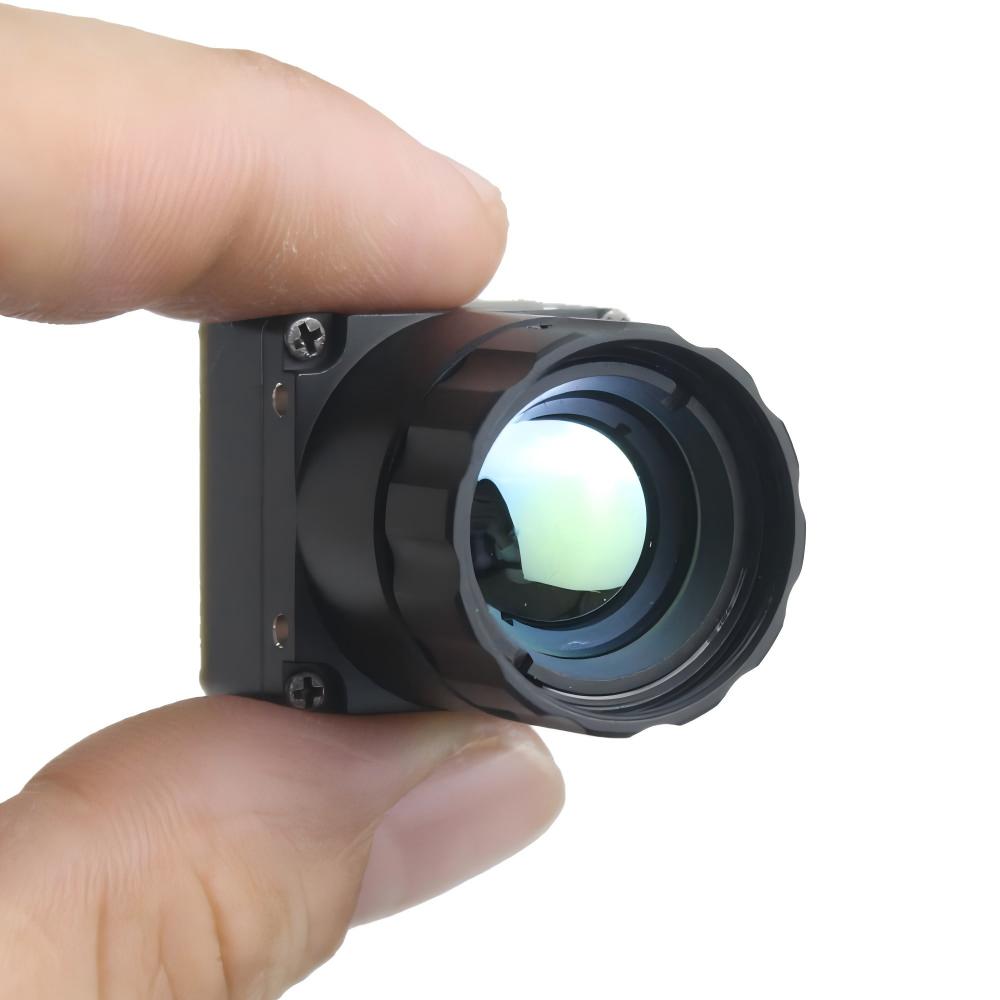
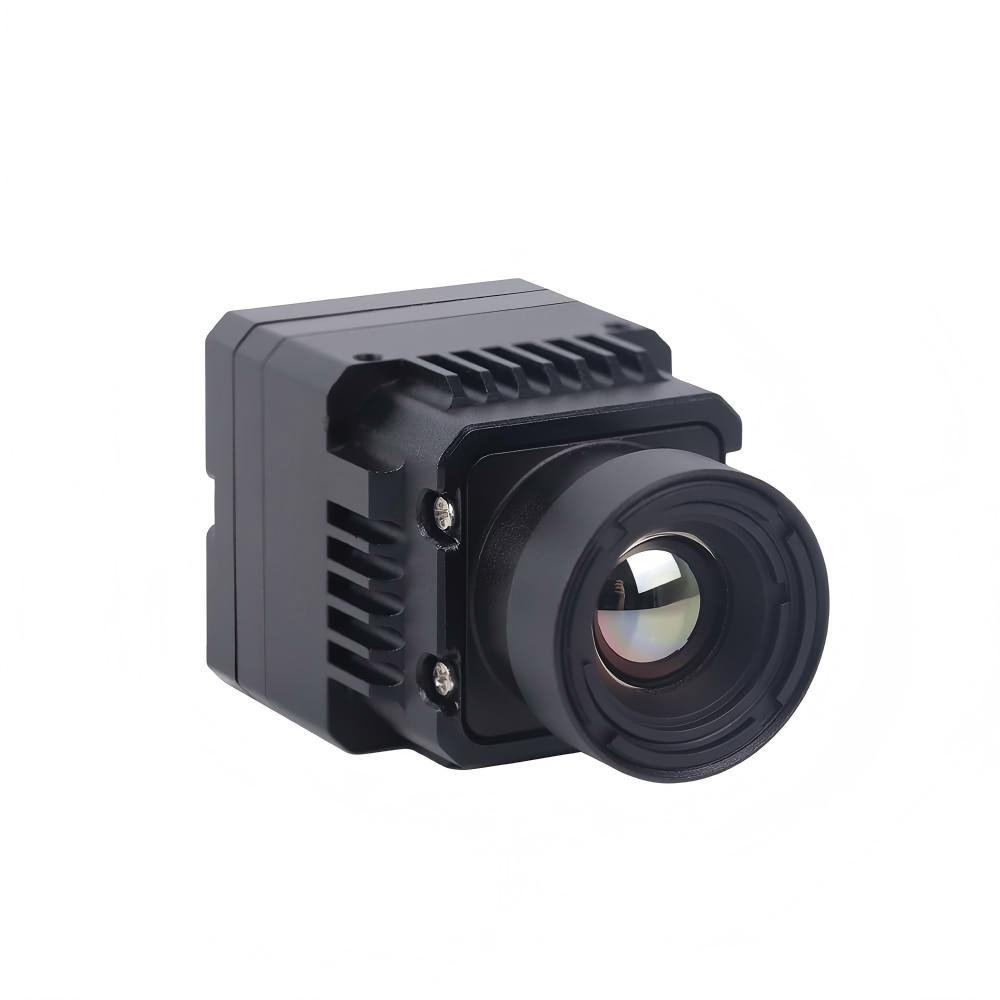
Product 1: Uncooled Infrared Mipi 640/384/256 9mm Thermal Imaging Camera Module For Drones
The Mini2 series represents a significant leap forward in compact, uncooled microbolometer design. Engineered specifically for high-mobility applications, this camera module balances raw sensor performance with an ultra-compact footstep, making it an excellent choice for modern surveillance, utility inspection, and commercial drone platforms.
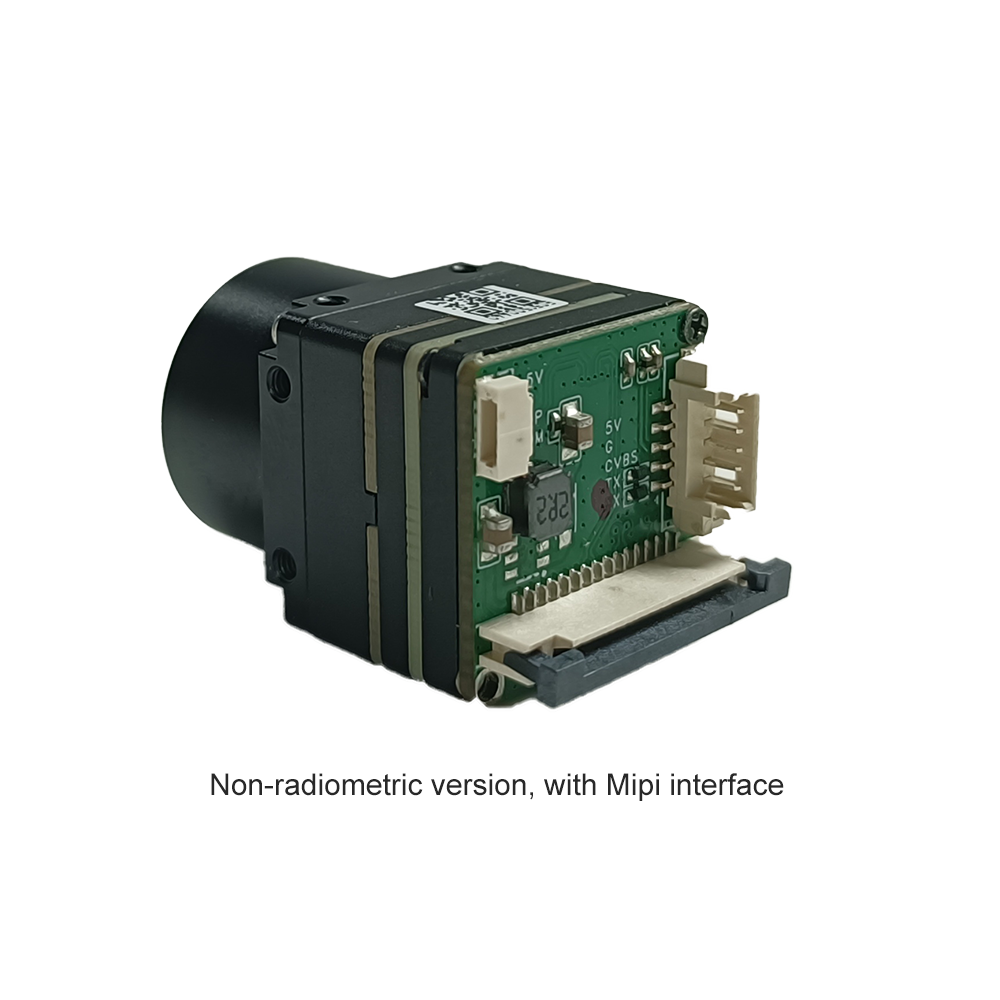
This module features the highly regarded Mini2 core, outputting extremely sharp thermal profiles and featuring low-latency MIPI data pipelines. This guarantees that your down-stream processing SoC receives un-compromised, uncompressed spatial data without the bottlenecking of standard USB buses.
Technical Specification Matrix
| Parameter | Specification Details |
|---|---|
| Detector Type | Uncooled VOx (Vanadium Oxide) Microbolometer |
| Resolution Variations | 640x512 / 384x288 / 256x192 Optional |
| Optical Focal Length | 9mm Fixed Germanium Lens |
| Interface Options | MIPI CSI-2 (Direct host bus connection) |
| Imagery Traits | Sharp and crisp image presentation, compact size and low cost |
View Product Details & Pricing ➔
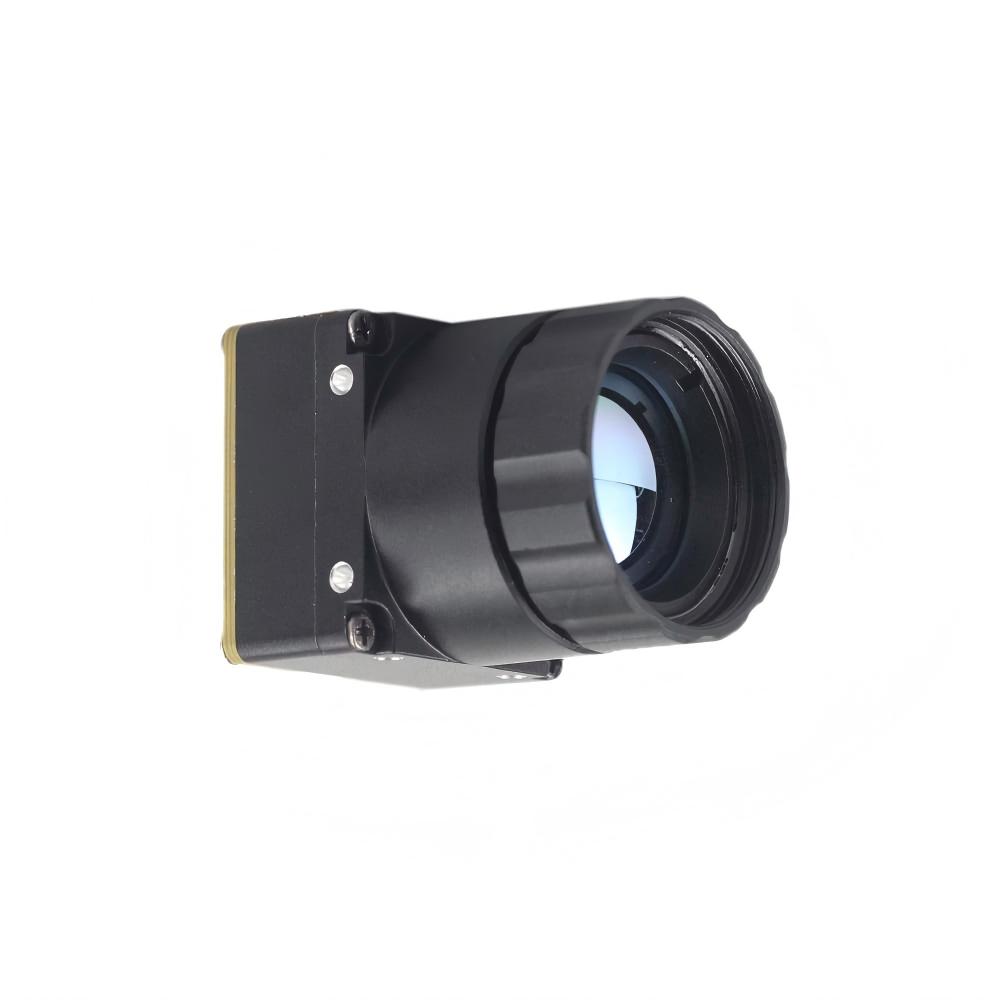
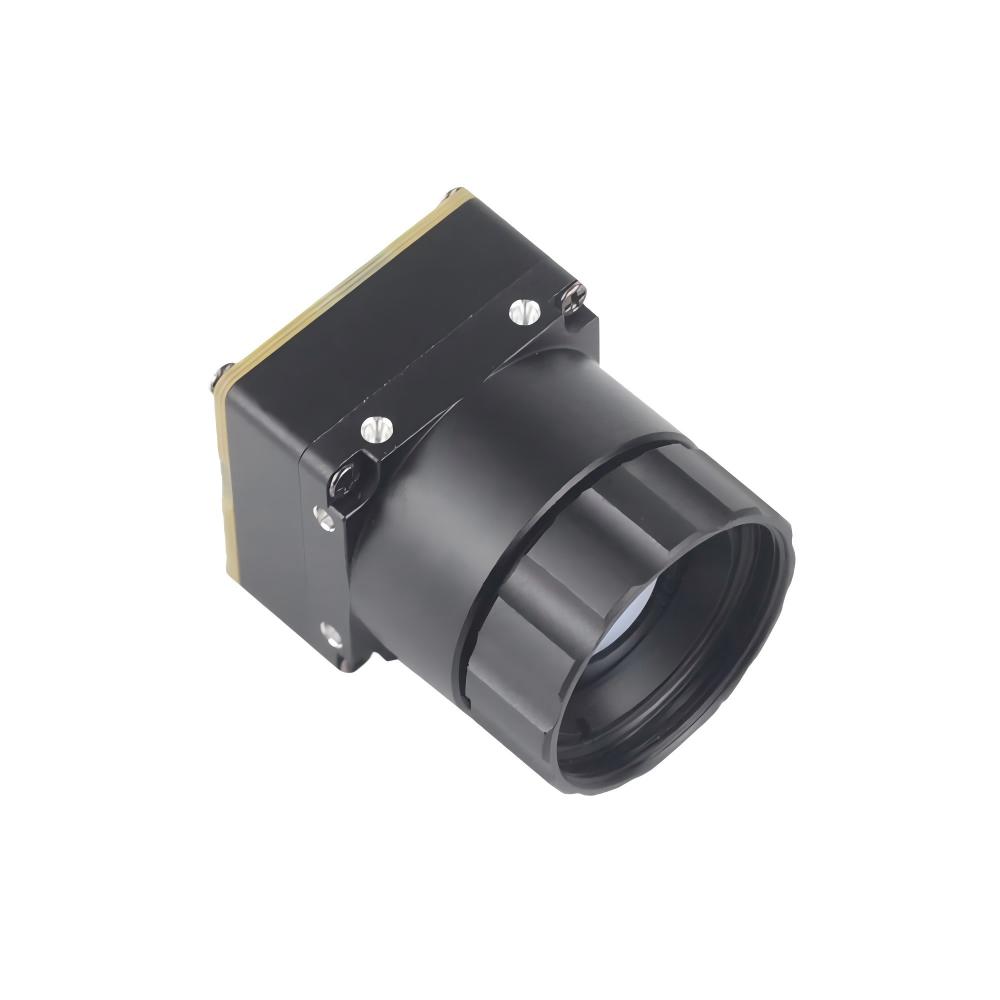
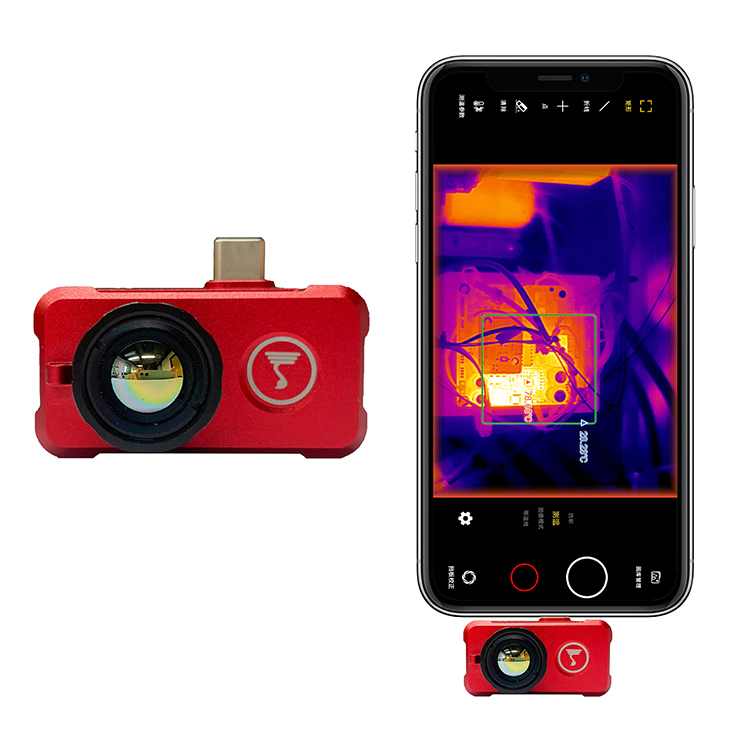
Product 2: Uncooled LWIR USB Mini 640*512 Thermal Imaging Camera Core Module For Drones Similar To DJI
For systems integration requiring standard interface compatibility, this miniaturized long-wave infrared (LWIR) core is engineered as a highly comparative solution to high-end DJI thermal payloads. This module is standard-equipped with an immense selection of optical configurations alongside a flexible interface protocol stack.
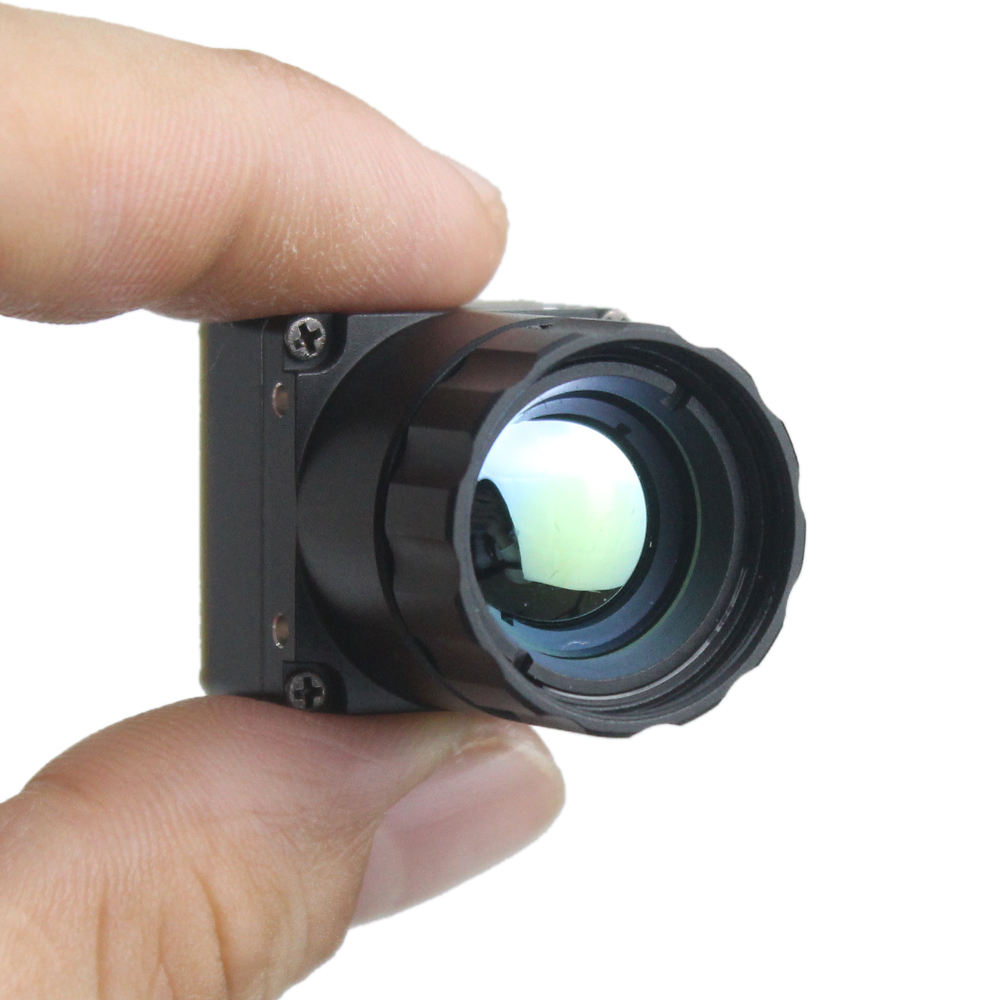
With its ultra-miniature 21mm x 21mm mechanical chassis footprint, this core serves as a versatile engineering building block for custom micro-gimbals, industrial inspection tools, and tactical payloads. The core's design isolates optical heat generation from the sensor plane, delivering consistent, drift-free radiometric readings in demanding environmental contexts.
Technical Specification Matrix
| Parameter | Specification Details |
|---|---|
| Dimension Size | Mini-Size of 21mm * 21mm |
| Lens Selection (Focal length mm) | 5 / 9 / 13 / 18 / 35 / 50 / 75 / 100 / 150 mm optional |
| Resolution Matrices | 640x512 resolution (640x480 resolution optional) |
| Operational Attributes | Stable performance, sharp/crisp image presentation, low cost |
| Environmental Adaptability | Strong design adaptation for high vibration and thermal swings |
View Product Details & Pricing ➔
4. Overcoming Integration Challenges: Calibration & Thermal Drift
Implementing an uncooled vanadium oxide (VOx) microbolometer isn't just about routing power and reading video frames. Infrared waves behave radically different than visible spectrum light, creating significant design hurdles for mechanical and firmware engineers.
The Challenge of Thermal Drift
An uncooled microbolometer sensor measures the temperature change of its internal pixel membrane caused by incoming infrared radiation. Because the sensor chip itself heats up during operation (due to convective heat transfer from neighboring electronics, solar radiation, and internal resistance), the microbolometer's baseline resistance values drift over time. This baseline drift distorts thermal measurements, manifesting as severe "vignetting," ghost images, or progressive calibration loss.
To combat thermal drift, high-quality camera modules implement two critical methods:
- ⚙️ Flat Field Correction (FFC): Every few minutes (or when temperature sensors detect a variation threshold), a micro-shutter sweeps in front of the sensor. Since the shutter has a completely uniform surface temperature, the software measures this baseline, calculates the offset calibration values for each individual pixel, and subtracts this drift from subsequent frames.
- ⚙️ Radiometric Native Calibration: Dynamic algorithms running in the module’s FPGA calculate internal sensor temperature variations continuously, updating pixel values dynamically to minimize the need for mechanical shutter operations during critical observation times.
Ensuring Electromagnetic Compatibility (EMC) in Drone Frames
Drones are highly noisy RF environments. Brushless speed controllers (ESCs), long-range telemetry transceivers, and switching power regulators emit substantial electromagnetic fields. Because MIPI CSI-2 is a high-speed bus with low-voltage thresholds, routing MIPI flat cables close to high-current power cables can corrupt the raw data packets. This results in dropped frames, visual tearing, or complete sensor decoupling.
Industrial integration engineers must utilize custom shielded flexible flat cables (FFC) with continuous ground planes, keep trace lengths under 10cm, and design a metal or carbon-fiber Faraday cage around the camera core assembly to block electromagnetic interference from nearby RF modules.
5. Software Pipelines, SDK Integration, and OS Compatibility
Once the physical linkages are complete, the software development pipeline begins. To build smart security devices or adaptive drones, developers must choose between reading compressed video or acquiring raw, uncompressed radiometric metadata.
Radiometric Metadata Processing vs. Video-Streaming Mode
Most thermal modules operate in one of two configurations:
- ✅ Video-Streaming Mode: In this mode, the module converts the internal 14-bit thermal measurements into pre-rendered, 8-bit visual representations using false color palettes (such as "Ironbow," "White Hot," or "Rainbow"). This is highly efficient for displaying live feeds directly onto operator screens but discards the raw temperature data.
- ✅ Radiometric Stream Output Mode: This mode delivers a raw, high-bitdepth (usually 14-bit or 16-bit) matrix, where each individual pixel coordinate correlates directly to a Kelvin or Celsius temperature. This pipeline is mandatory for thermal search algorithms, predictive automated fault mapping, and research analysis.
Linux V4L2 and GStreamer Integration Pipeline
For embedded Linux hosts (e.g., Jetson Nano, Xavier, Orin, or Raspberry Pi), integrating a USB thermal module utilizes the Video4Linux2 (V4L2) driver framework. This standard model exposes the thermal module as a device file such as /dev/video0. Utilizing GStreamer pipelines facilitates hardware-accelerated processing and streaming across networks:
# Stream live USB thermal camera input using GStreamer & display with custom scaling:
gst-launch-1.0 v4l2src device=/dev/video0 ! video/x-raw, width=640, height=512, format=UYVY ! videoconvert ! videoscale ! autovideosink
In applications requiring custom AI detection at the edge, developers can interface with the stream through OpenCV in Python or C++. This enables the deployment of lightweight semantic segmentation models (e.g., YOLOv8-Thermal) to detect humans, animals, or hot motors under trace conditions.
6. Engineering Selection Matrix: Choosing the Right Lens & Resolution
Selecting the optical configuration and resolution of your uncooled thermal sensor depends heavily on the target monitoring range and target size. High-resolution sensors allow developers to detect smaller objects from greater heights or distances.
For tactical operations, wildlife protection, and deep-range surveillance, choosing a 640x512 microbolometer over a 256x192 sensor yields four times the native pixel count. This expansion enables engineers to mount narrower lenses (such as a 35mm or 50mm lens) for distance mapping, or wide optics (like a 9mm or 13mm lens) to scan broad fields of view without losing critical thermal details in pixelation.
When selecting optics, consider the target detection range formula:
- ⚙️ Detection: Being able to distinguish that an anomaly is present (requires 1.5 to 2 pixels on the target).
- ⚙️ Recognition: Determining what the object is (e.g., distinguishing a human from an animal; requires 6 to 8 pixels across the target).
- ⚙️ Identification: Establishing detailed features (e.g., detecting if a person is holding an object; requires >12 pixels on the target).
If you are engineering an agricultural scanning system, a wide-angle 9mm lens paired with a 640x512 module provides perfect field coverage with high-speed ground resolution. For high-altitude transmission line scanning, transitioning to a narrower telephoto lens (such as 35mm or larger) is necessary to isolate hot connections from a safe flight envelope.
To learn more about the strategic tools used by field operators, consider reading our essential thermal tools and systems guide to see how compact thermographic systems perform under dynamic field environments.
7. Frequently Asked Questions (FAQ)
What is the primary visual difference between 640x512 and 384x288 thermal resolutions?
What does "uncooled VOx" mean, and how does it compare to other technologies?
Can I connect a MIPI CSI-2 thermal module directly to any standard microcontroller?
How do I calibrate my thermal camera system to read exact object temperatures in Celsius?
Why are Germanium (Ge) lenses always used in LWIR thermal camera modules?
📚 References & Further Reading
- Industry Electro-Optics Partner: Rising Optics
- Aerospace Payload Integration: OBSETECH (U.S. China Drone Alliance)
- Internal Integration Guide: Our Commercial Engineering Profile & Capabilities