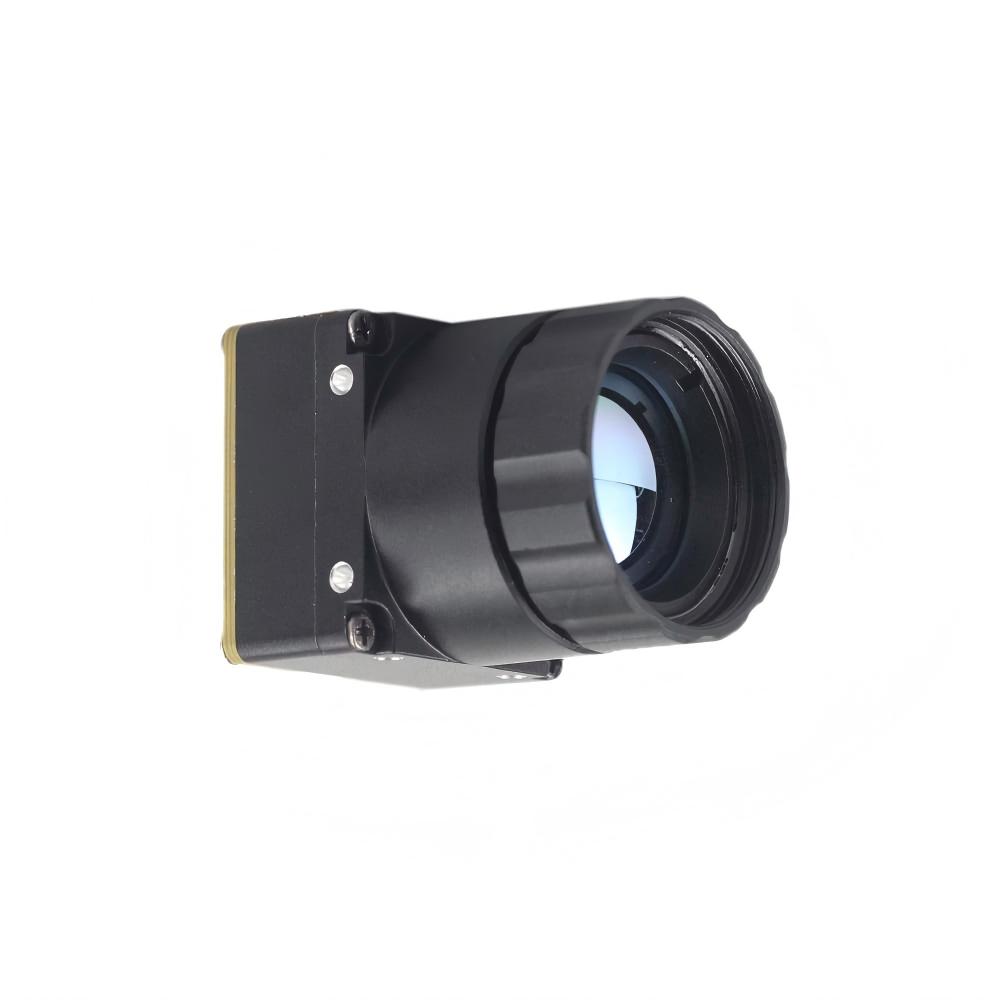
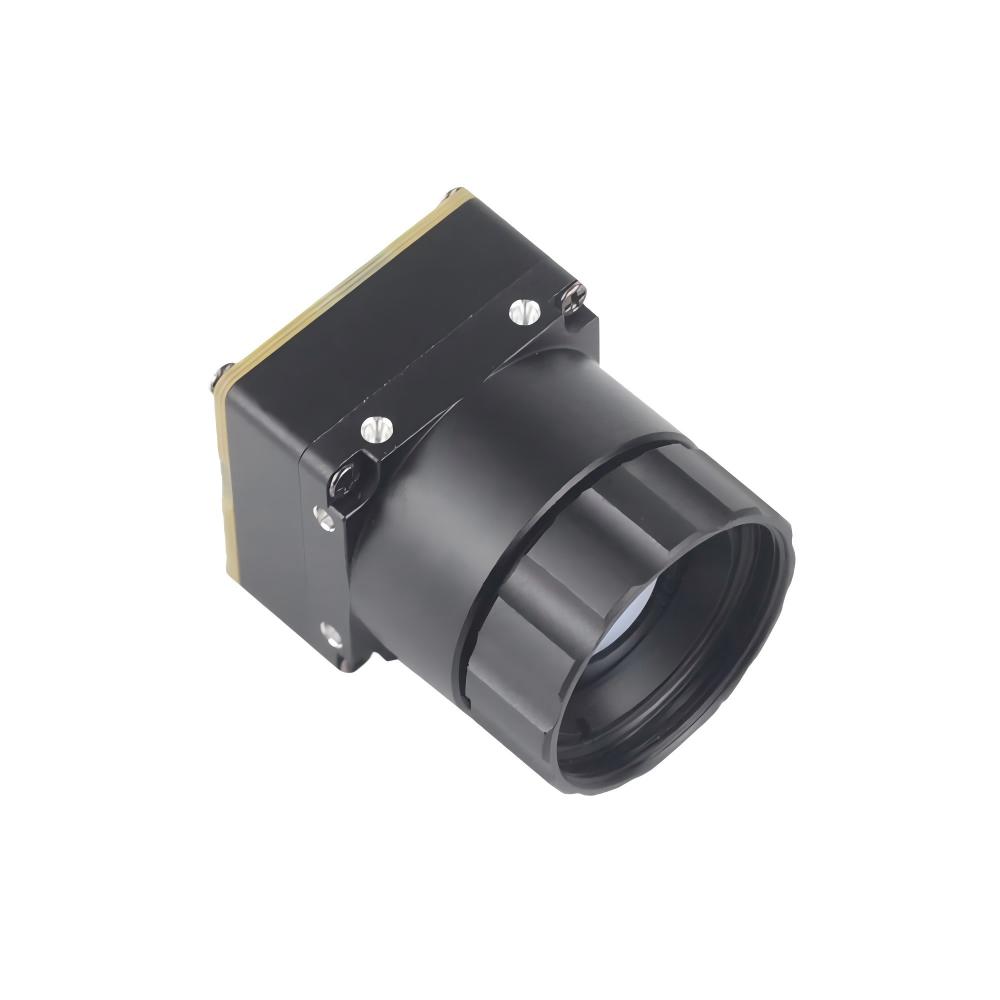
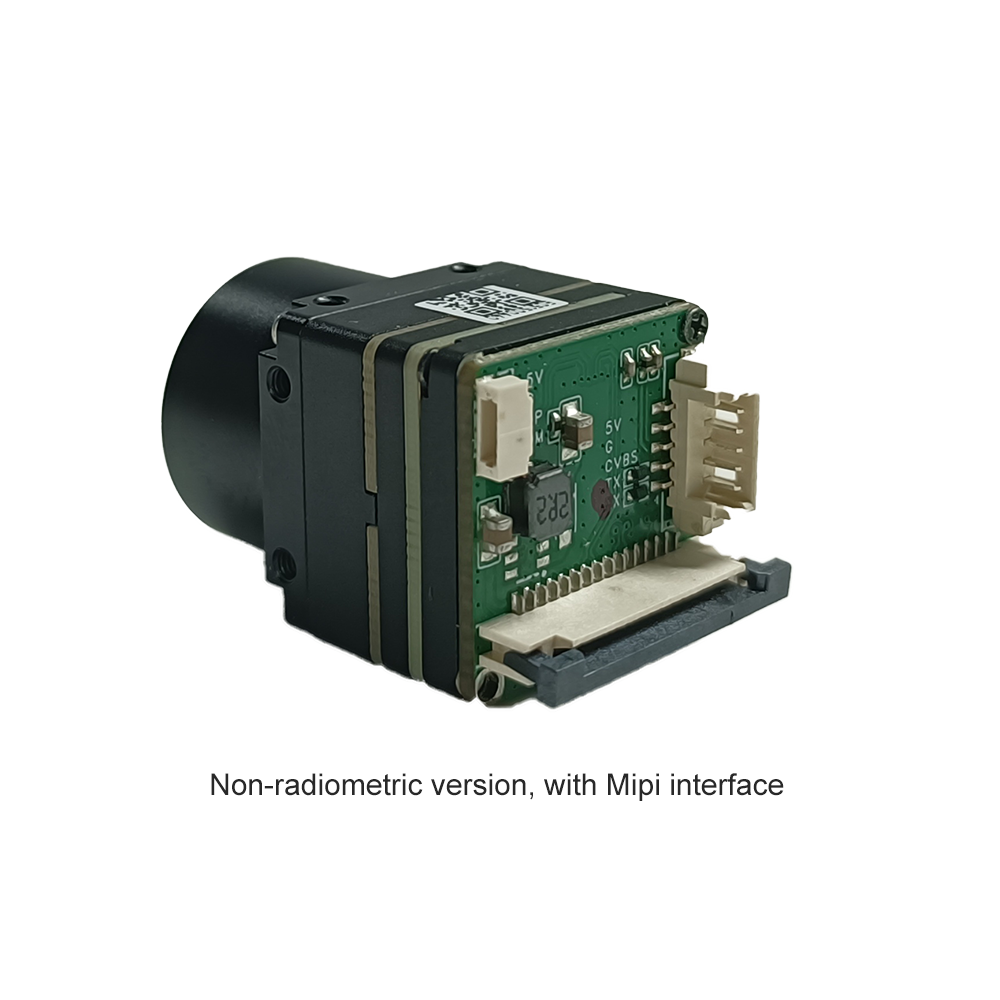
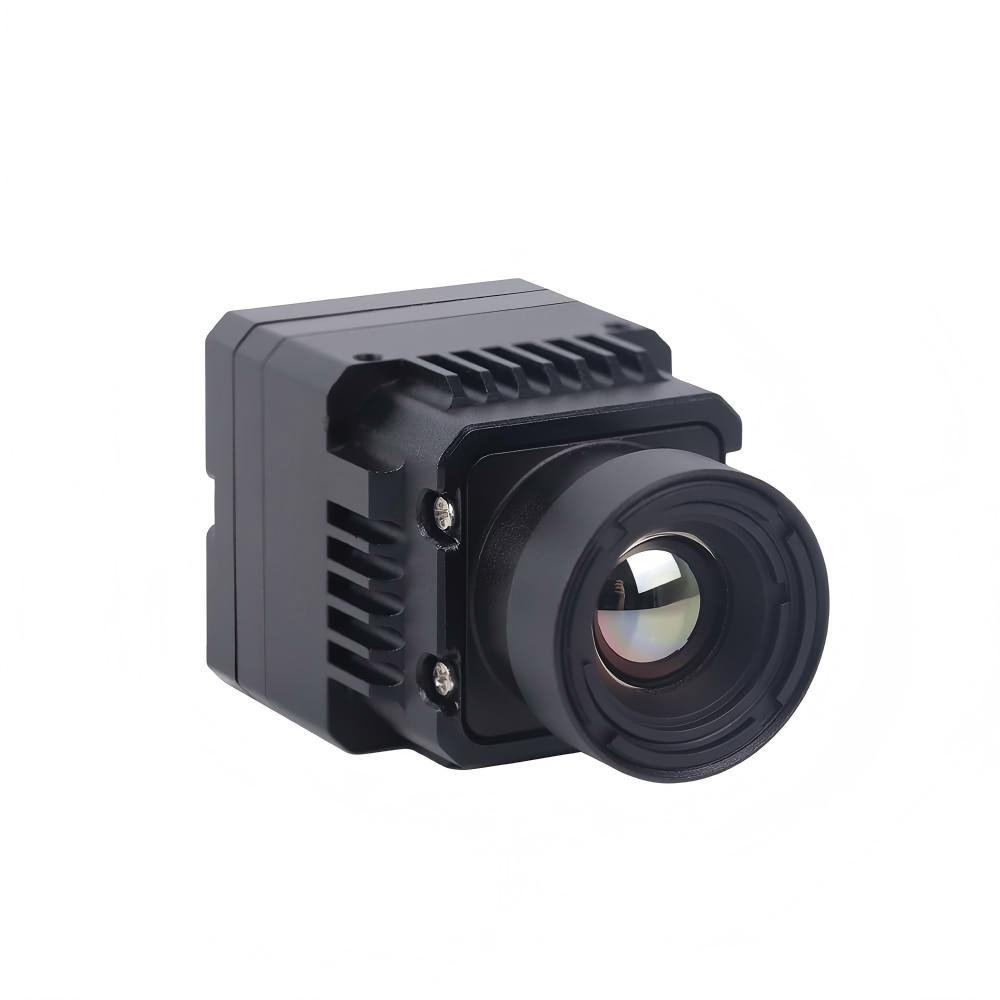

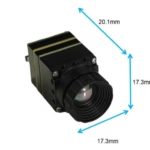
MD series 384×288 thermal imaging gold specification, a cost-effective thermal camera module with small volume and low power consumption
2026年4月22日
1.Introduction
Thermal imaging technology is becoming increasingly widespread; whether it be individual enthusiasts, small development teams, or numerous enterprises, everyone is exploring ways to utilize thermal imaging at a lower cost. The question I am asked most frequently is this: Can the devices I already own—such as a standard digital camera, a smartphone camera, or even a home security camera—be directly converted into a thermal imaging camera?
The reason why people ask this is fundamentally that professional thermal imaging equipment is too expensive, while the demand for thermal imaging is becoming increasingly urgent. Searching online, you can find a lot of "do-it-yourself thermal imaging cameras for only a few hundred yuan" tutorials. They sound incredibly amazing, as if just dismantling an old camera and adding some parts would do the trick. But are these methods really reliable? Can the modified devices be used in actual scenarios? Compared to the genuine professional thermal imaging modules(for example uncooled infrared RJ45 CVBS RTSP IP 640*512 Thermal Sensor Camera Module) ,how much do they differ?
In this article, I will first clarify the fundamental differences between ordinary cameras and thermal imaging cameras, then thoroughly analyze the mainstream DIY solutions online, to understand their principles and the unavoidable pitfalls. Finally, I will provide a complete set of recommendations based on different people's needs, ranging from beginner-level exploration to professional work.
2. Core Issue: The Essential Difference Between Ordinary Cameras and Thermal Imaging Cameras
2.1. The Imaging Principle of Ordinary Cameras
Ordinary digital cameras, mobile phone cameras, and surveillance cameras operate by capturing reflected light in the visible light and near-infrared bands (0.4μm - 1.0μm). Their core sensors (CCD or CMOS) can physically sense some infrared light, but to ensure the accuracy of color imaging, all consumer-grade cameras install an infrared cut-off filter (IR Cut Filter) in front of the sensor, specifically filtering out infrared light with wavelengths greater than 700nm.
Almost all DIY tutorials point the finger at the "infrared cut-off filter" in the camera, claiming that by removing it, one can achieve thermal imaging capabilities. This is the most deceptive part of the entire scam.
Manufacturers install infrared cut-off filters in front of the sensors to filter out near-infrared light that interferes with color imaging, ensuring the accuracy of photo colors. After removing it, the camera can indeed capture near-infrared light with wavelengths of 0.75μm - 1.0μm, but this is not thermal radiation. Near-infrared light, like visible light, requires a source to illuminate an object and reflect it before it can be seen - in a completely dark environment, a camera without the filter remains pitch black, unless you additionally turn on an infrared supplementary light.
The "thermal imaging images" shown in online tutorials are essentially post-processing colorized effects of near-infrared photos. The red areas represent objects that reflect more near-infrared light, not necessarily higher temperatures; the blue areas are not low temperatures, but rather reflect less near-infrared light. Such images have no relation to the actual temperature of the object.
This means that ordinary cameras are inherently designed to "not see" thermal radiation. Even if the infrared cut-off filter is removed, it can only capture near-infrared light and cannot sense the long-wave infrared radiation emitted by objects for thermal imaging, which is the wavelength used for thermal imaging.
2.2. The Technological Essence of True Thermal Imaging Cameras
All consumer-grade cameras using CMOS or CCD sensors have their core materials made of silicon. The photoelectric effect of silicon has an insurmountable physical boundary: it can only respond to electromagnetic waves with wavelengths less than 1.1μm. This means that no matter how you modify an ordinary camera, its sensor is completely unable to perceive long-wave infrared thermal radiation with wavelengths of 8μm - 14μm.
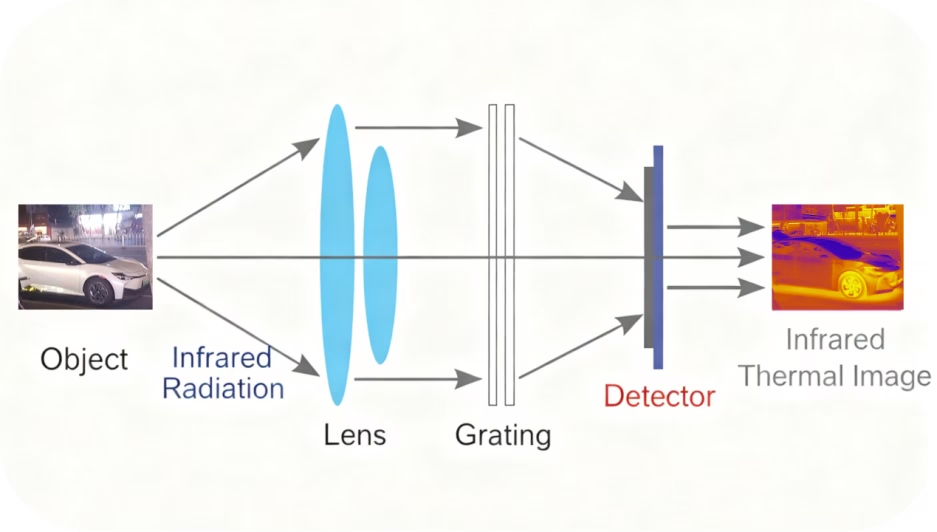
The working principle of professional thermal imaging cameras is completely different: it does not rely on any external light source but directly captures the long-wave infrared radiation (8μm - 14μm) emitted by objects above absolute zero (-273.15℃). Radiation in this wavelength band is directly related to the temperature of the object; the higher the temperature, the greater the radiation intensity.
Thermal imaging cameras convert infrared radiation into electrical signals through a specialized infrared focal plane array detector (FPA), then undergo signal processing and image enhancement, ultimately generating thermal images that can reflect the temperature distribution on the object's surface. This imaging method gives thermal imaging cameras the unique capabilities to work all day, penetrate smoke and fog, and conduct non-contact temperature measurement.
3. Detailed Explanation and Limitation Analysis of Main DIY Thermal Imaging Solutions
3.1. Solution One: Remove the Infrared Cut-off Filter from the Ordinary Camera
This is the most widely spread and most misleading DIY method, with over 100 million views on the internet. Operation steps
1. Disassemble your camera (mobile phone, computer camera or surveillance camera).
2. Locate the tightly attached infrared cut-off filter in front of the sensor.
3. Carefully pry it off using a blade or forceps (this could easily scratch the sensor and render the camera unusable).
4. Reassemble the camera.
5. Use Photoshop or a mobile app to apply "iron red" or "rainbow" pseudo-color filters to the near-infrared photos.
What you actually get:
l A camera capable of taking near-infrared photos.
l A pseudo-color image that looks like thermal imaging but is not related to temperature.
l A camera that must rely on infrared lighting to work in the dark.
l All visible light photos will have severe color bias.
l Cannot penetrate smoke or fog to identify targets.
Critical flaws:
l Completely unable to measure temperature: can only display differences in near-infrared reflectivity, unable to determine the temperature of objects.
l Ineffective in dark environments: nothing can be seen without an infrared lighting device.
l Easily misled: metal objects will reflect a large amount of infrared light, showing as "high temperature" in the image; black heat-absorbing objects will show as "low temperature" even if they are extremely hot.
l Permanent damage to the camera: 90% of beginners will scratch the sensor or damage the wiring when removing the filter.
l Cannot penetrate smoke: near-infrared light and visible light are both scattered by smoke particles.
3.2. Scheme Two: DIY Thermal Imager Based on Low-Cost Thermal Sensors
This is the only DIY method that can achieve true thermal imaging, but its performance flaws determine that it can only be used as an introductory teaching tool and cannot be used for practical applications. Operation steps
1. Purchase entry-level thermal sensor arrays, single-chip microcontrollers or Raspberry Pi development boards, displays and batteries.
2. Solder the sensors to the general input/output pins of the development board.
3. Install third-party driver libraries and programming runtime environment.
4. Write code to read temperature data and generate thermal images.
5. 3D print the shell and assemble into a complete device.
What you actually get:
l A device capable of detecting real thermal radiation and roughly measuring temperature.
l Extremely low resolution thermal images (usually only a few tens to a few hundred pixels).
l Slow refresh rate of 1-8 frames per second, with severe ghosting in dynamic scenes.
l Large and short-lasting portable device.
l Requires certain programming and electronic knowledge to use normally.
Critical defects:
l Poor resolution: The pixel count of mainstream DIY thermal sensors is only 0.2%-0.5% of our 640×512 module. At 5 meters away, only the outline of a human can be barely seen, and at 10 meters away, no target can be recognized at all.
l Poor temperature measurement accuracy: The error is usually between ±5°C and ±10°C, which can only determine "whether it's hot or not", and cannot be used for industrial detection.
l Low thermal sensitivity: Generally, it can only recognize temperature differences greater than 0.15°C, and cannot detect early electrical faults and other minor temperature abnormalities.
l Extremely low frame rate: The refresh rate of 1-8Hz cannot track moving targets. When a person runs, they will appear as a blurry color block in the picture.
l No industrial-level functions: Does not support network transmission, video compression, intelligent analysis, alarm linkage and any professional functions.
l Time-consuming and unstable: Assembly and debugging take at least 4-8 hours. The finished product is fragile and easily damaged, and has no protection level.
4. DIY vs Professional Thermal Imaging Module: Comprehensive Comparison
To enable you to visually perceive the differences between the two, we have conducted a comprehensive comparison between the mainstream DIY thermal imaging solution currently available on the market and Purpleriver's flagship 640×512 thermal imaging module:
| Comparison dimension | Entry-level DIY thermal sensor solution | Uncooled Infrared RJ45 CVBS RTSP IP 640*512 Thermal Sensor Camera Module |
| Core detection technology | Low-cost thermocouple array | High-performance vanadium oxide micro-thermopile focal plane array |
| Infrared resolution | 32×24~64×48 | 640×512 |
| Thermal sensitivity (NETD) | ≥150mK | ≤50mK(@25℃,F#1.0) |
| Temperature measurement accuracy | ±5℃~±10℃ | ±2℃ or ±2% of the reading (take the maximum value) |
| Temperature measurement range | -40℃~+300℃ | -20℃~+550℃ |
| Frame rate | 1-8Hz | 30/60Hz |
| Working frequency band | 5.5μm~14μm | 8μm - 14μm (optimal atmospheric penetration window) |
| Interface type | Only I2C No | RJ45 Ethernet, RS-485, CVBS analog video |
| Network protocol | no | IPv4、TCP/IP、UDP、HTTP、DHCP、RTP/RTCP/RTSP |
| Video compression | no | H.265/H.264/MJPEG |
| Edge intelligence | no | Built-in temperature threshold alarm, hotspot detection, motion analysis |
| Working temperature | 0℃~+40℃ | -20℃~+60℃ |
| Protection level | None (requires custom casing) | IP54 |
| Power consumption | 0.5W | ≤1.6W |
| Assembly time | 4-8 hours | 0 hours (plug-and-play) |
| Total cost | $80 - $150 | $780 - $850 |
| Applicable scenarios | Personal hobbies, teaching demonstrations | Industrial monitoring, security, vehicle-mounted, drones, firefighting |
From the comparison, it can be seen that although the DIY solution has a lower initial cost, the performance it offers is less than 1% of that of the professional module. For any application that requires reliability and accuracy, the professional module is a more cost-effective choice.
5. Professional-level Solution: Uncooled Infrared RJ45 CVBS RTSP IP 640*512 Thermal Sensor Camera Module
For enterprises, system integrators, and users who require true thermal imaging capabilities, Purpleriver's non-cooled infrared RJ45 CVBS RTSP IP 640*512 thermal sensor camera module is the globally recognized benchmark for high value and cost-effectiveness.
This module is not a consumer-grade toy, but is a core component for industrial applications widely used in thousands of commercial products worldwide, including security cameras, vehicle night vision systems, industrial inspection equipment, and unmanned aerial vehicle payloads. It combines industry-leading thermal imaging performance with compact size, extremely low power consumption, and comprehensive interface support, allowing you to complete the integration development of thermal imaging products in just a few days instead of several months.
5.1. Product Features
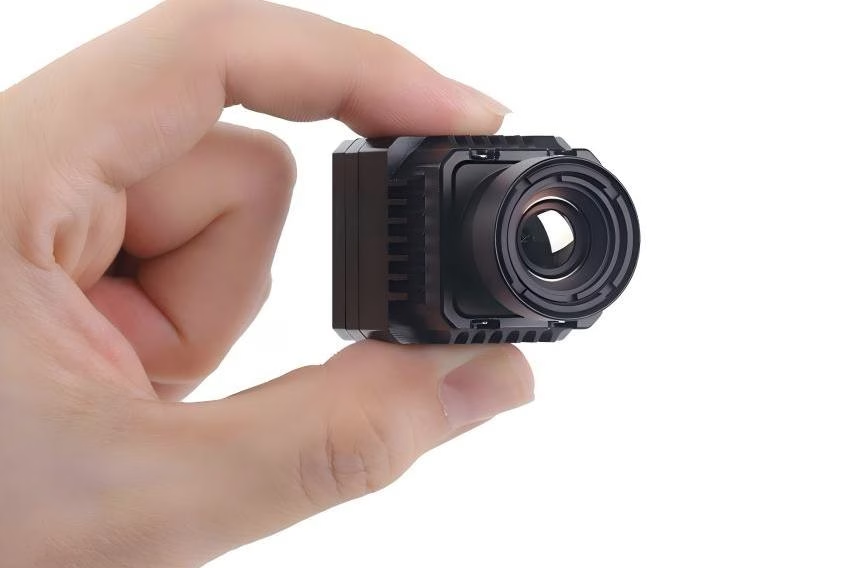
This is an ASIC thermal sensor camera module equipped with a 640×512 resolution vanadium oxide non-cooled infrared focal plane detector, supporting 30/60Hz frame rates, with 12μm pixel pitch, 8-14μm response band, and ≤50mK high sensitivity. It offers multiple lens options including 9/13/19/35mm.
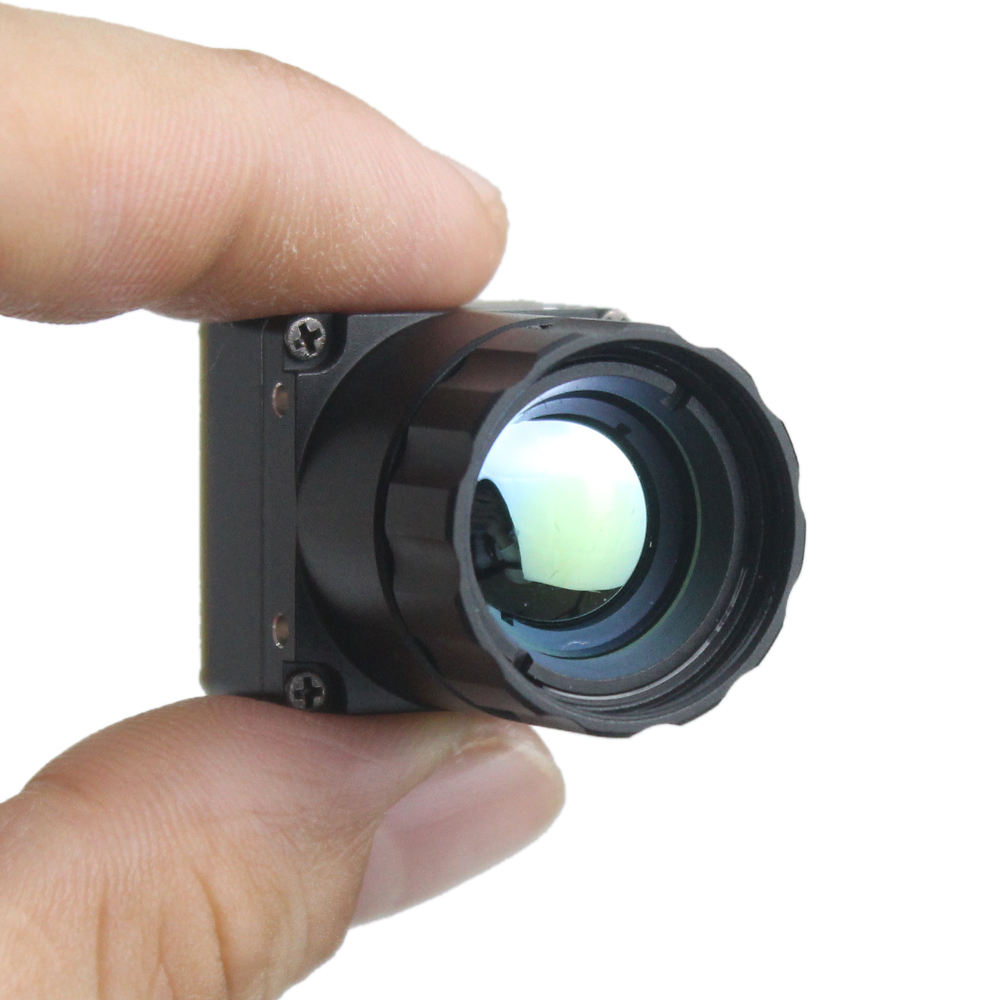
The module provides 18 pseudo-color display modes such as white heat and black heat, weighs no more than 50 grams, and measures only 45×28×28mm, being small and portable.
It adopts an ASIC integrated design with low power consumption and strong stability, and can be widely adapted for various application scenarios such as handheld thermometers, security monitoring, unmanned aerial vehicle inspection, and industrial automation.
5.2. Core Characteristics and Advantages
1. Outstanding Thermal Imaging Performance
Equipped with a 640×512 high-resolution detector, it can achieve 300 meters human recognition and 1000 meters vehicle recognition with different lenses; it has ≤50mK ultra-high thermal sensitivity, capable of detecting 0.05℃ micro temperature differences and early detecting equipment hazards; it adopts 12μm pixel pitch technology, balancing high performance and miniaturization while reducing costs; the 8-14μm working band has excellent atmospheric penetration ability, allowing clear imaging even in adverse weather conditions; it offers 18 pseudo-color palettes and supports real-time temperature measurement functions for the entire screen/selected area.
2. Comprehensive Interfaces and Protocol Support
To be compatible with various industrial and security systems, three standard interfaces are provided: RJ45 Ethernet, RS-485 serial, and CVBS analog video. The RJ45 interface supports high-speed data transmission, the RS-485 interface can directly connect to industrial control devices, and the CVBS interface can perfectly integrate with the old analog monitoring systems without the need for large-scale renovations, enabling quick deployment.
In terms of network protocols, it supports a complete standard network protocol stack and can seamlessly integrate with most of the mainstream video management platforms available on the market, such as Hikvision and Dahua. The video encoding is compatible with three formats: H.265, H.264, and MJPEG. Users can flexibly choose based on the network bandwidth of the site, ensuring image quality while minimizing storage space and transmission traffic to the greatest extent.
3. Industrial-grade Reliability and Durability
It has a wide temperature working range of -20℃ to +60℃, suitable for harsh industrial environments with cold and hot conditions; its maximum power consumption is only 1.6W, particularly suitable for battery-powered unmanned aerial vehicles and portable devices; it has an IP54 dustproof and waterproof rating and a sturdy aluminum alloy casing, providing good heat dissipation and mechanical protection; it uses DC12V standard power supply, compatible with industrial and vehicle power systems.
4. Flexible and User-friendly Integration Experience
It has an ultra-compact size of 45mm×28mm×28mm and a lightweight design of only 50g, allowing easy embedding in space-constrained devices without increasing load; it offers four focal lengths of 9mm, 13mm, 19mm, and 35mm, covering all scenarios from wide-angle to long-distance detection; it is equipped with a full-function SDK development package and complete documentation, with all modules having undergone strict temperature calibration before leaving the factory, ready for use out of the box.
5.3. Performance Parameters
| Model | LTC609 | LTC613 | LTC619 | LTC635 | |
| Thermal Imaging Parameters | Detector Type | Vanadium Oxide Uncooled Infrared Focal Plane Detector | |||
| Infrared Resolution | 640×512 | ||||
| Pixel Pitch | 12μm | ||||
| Operating Wavelength Band | 8 - 14μm | ||||
| Lens Focal Length | 9mm | 13mm | 19mm | 35mm | |
| Lens Field of View (FOV) | 51.4° × 41.1° | 32.9° × 26.6° | 23.8° × 19° | 12° × 10° | |
| Noise Equivalent Temperature Difference (NETD) | ≤50mK(@25°C,F#1.0) | ||||
| Color Palettes | White Hot/Black Hot/Fusion/Iron Red/Rainbow/Autumn Gold/Noon Sun/Amber/Jade/Sunset/Fire and Ice/Oil Painting/Pomegranate/Jadeite/Spring/Summer/Autumn/Winter (18 Pseudo - color Modes in Total) | ||||
| Temperature Display | Real - time Maximum, Minimum, and Average Temperatures | ||||
| Temperature Measurement Range | -20°C~+550°C | ||||
| Temperature Measurement Accuracy | ±2°C or ±2% of the Reading (Take the maximum value) | ||||
Network Interfaces | Network Protocols | IPv4, TCP/IP, UDP, HTTP, DHCP, RTP/RTCP/RTSP | |||
| Video Compression Standards | H.265/H.264/MJPEG | ||||
| Communication Interfaces | 1 RJ45 Interface (10M/100M Adaptive Ethernet Port), 1 RS - 485 Interface, 1 Analog Video Output (CVBS) | ||||
| Physical Specifications | Operating Temperature | -20°C~+60°C | |||
| Ambient Humidity | 5%~95%, No Condensation | ||||
| Protection Level | IP54 | ||||
| Power Supply | DC 12V | ||||
| Power Consumption | ≤1.6W | ||||
| Housing Material | Aluminum Alloy | ||||
| Core Dimensions | 45mm(L)×28mm(W)×28mm(H) | 120mm(L)×38mm(W)×38mm(H) | |||
| Weight | ≤50g | ≤200g | |||
4.5 Certification Qualifications
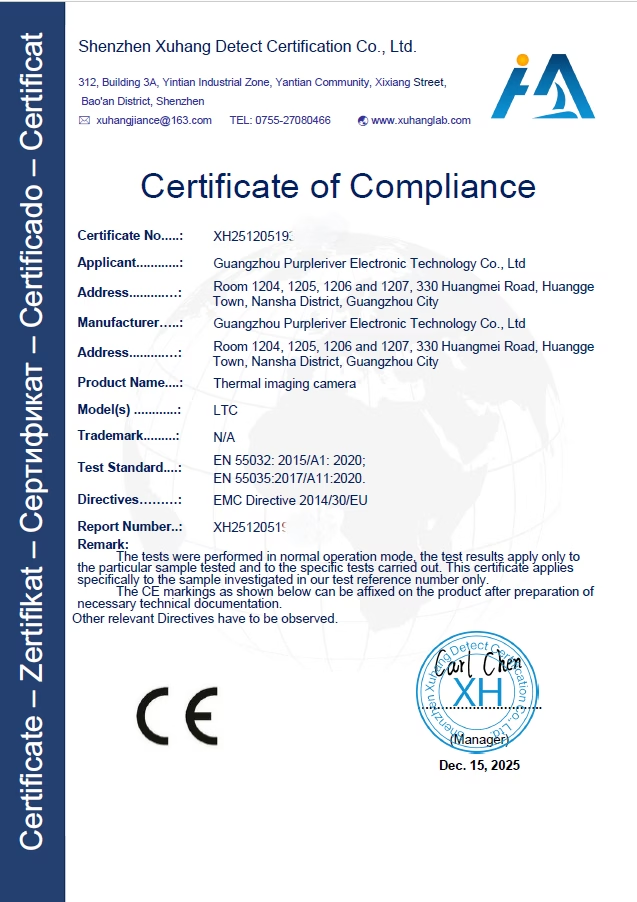
The LTC multi-functional thermal imaging camera module has passed the relevant compliance certification. The acquisition of the certification qualifications demonstrates the reliability and standardization of the product, providing a strong guarantee for users' selection. Visit PURPLERIVER's website or contact us for more information.
5.Typical Application Scenarios
1、Security Monitoring:
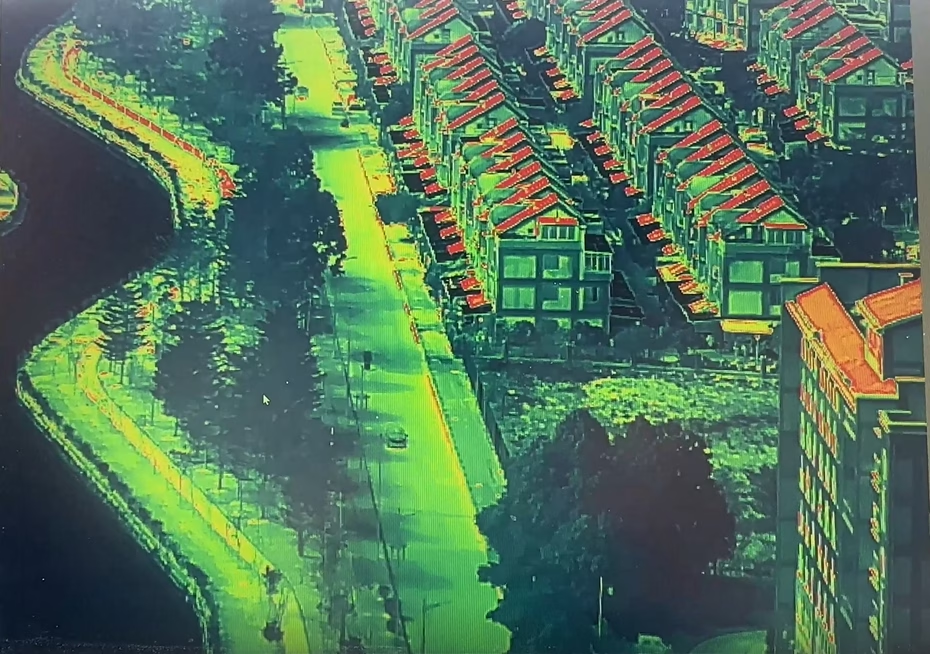
Compact and modular design, flexible and convenient for installation and deployment; equipped with high-definition thermal imaging technology, effectively resisting strong light and glare interference, accurately identifying personnel, non-motorized vehicles and surrounding obstacles, and promptly detecting abnormal movements and potential risks.
2、Industrial Monitoring:
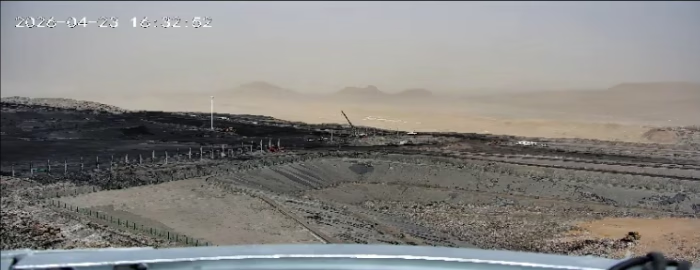
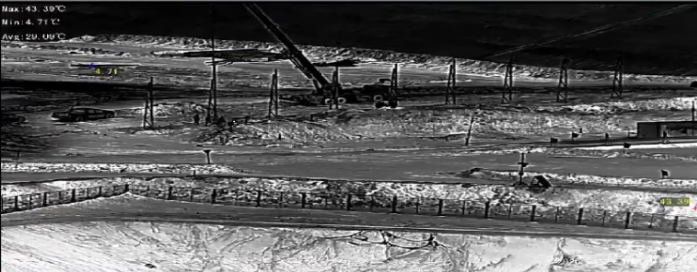
Compact and modular design, flexible and convenient for installation and deployment. Equipped with high-definition thermal imaging technology, resistant to strong light and glare, accurately identifying intruders, foreign vehicles and surrounding obstructive objects, quickly capturing abnormal movements and predicting potential safety hazards. The device operates with low power consumption for long-term operation, has a small maintenance burden, and provides 24/7 protection, comprehensively ensuring the safety and stability of energy stations, materials, equipment and the entire site.
3、Vehicle Safety:
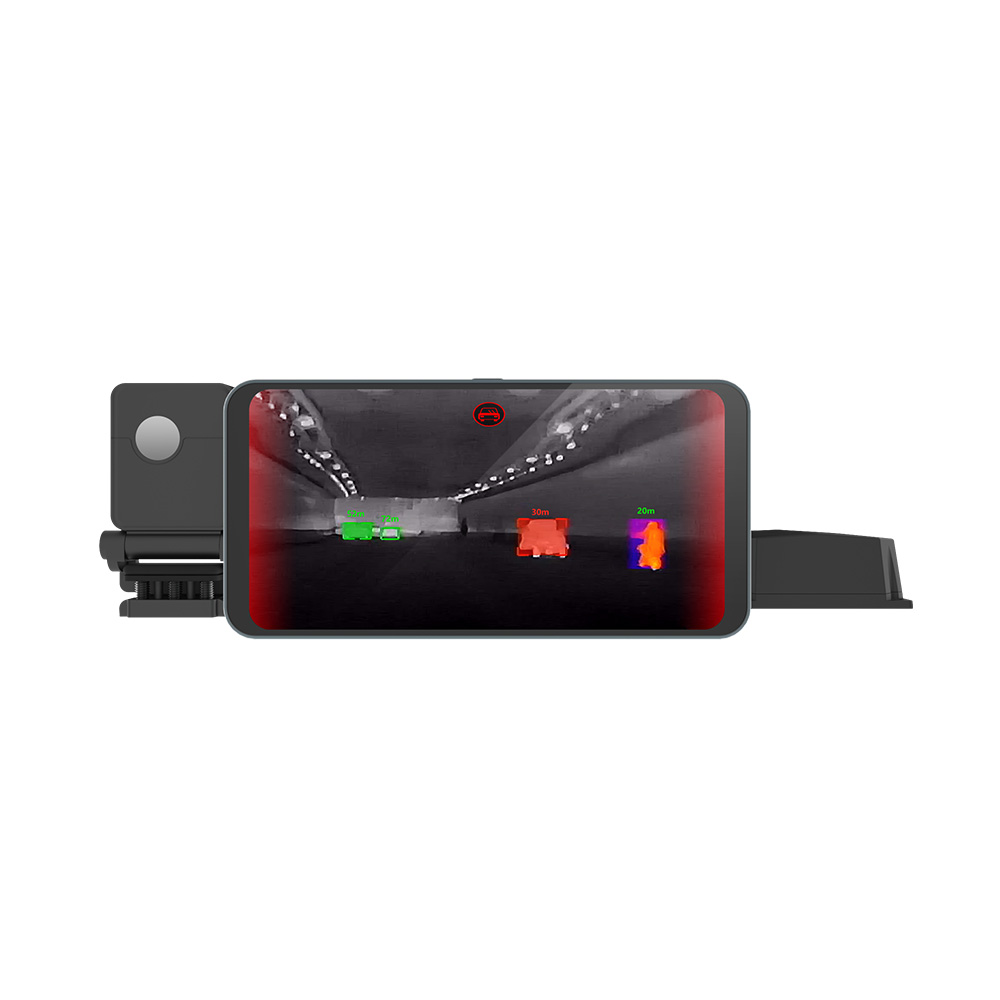
Compact and modular body, strong vehicle adaptability, easy and convenient installation. Equipped with professional infrared thermal imaging technology, effectively resisting strong light and glare interference, accurately identifying surrounding personnel, non-motorized vehicles and roadside obstacles, and real-time capturing abnormal conditions to avoid potential safety hazards in advance.
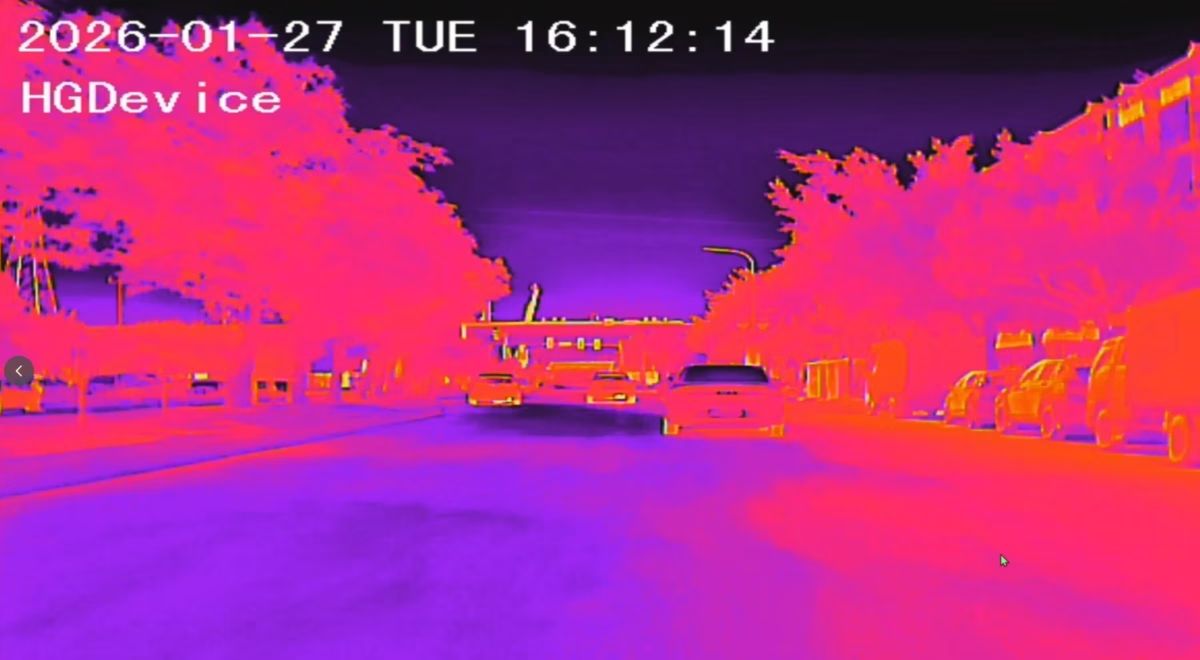
4、Drone Applications:
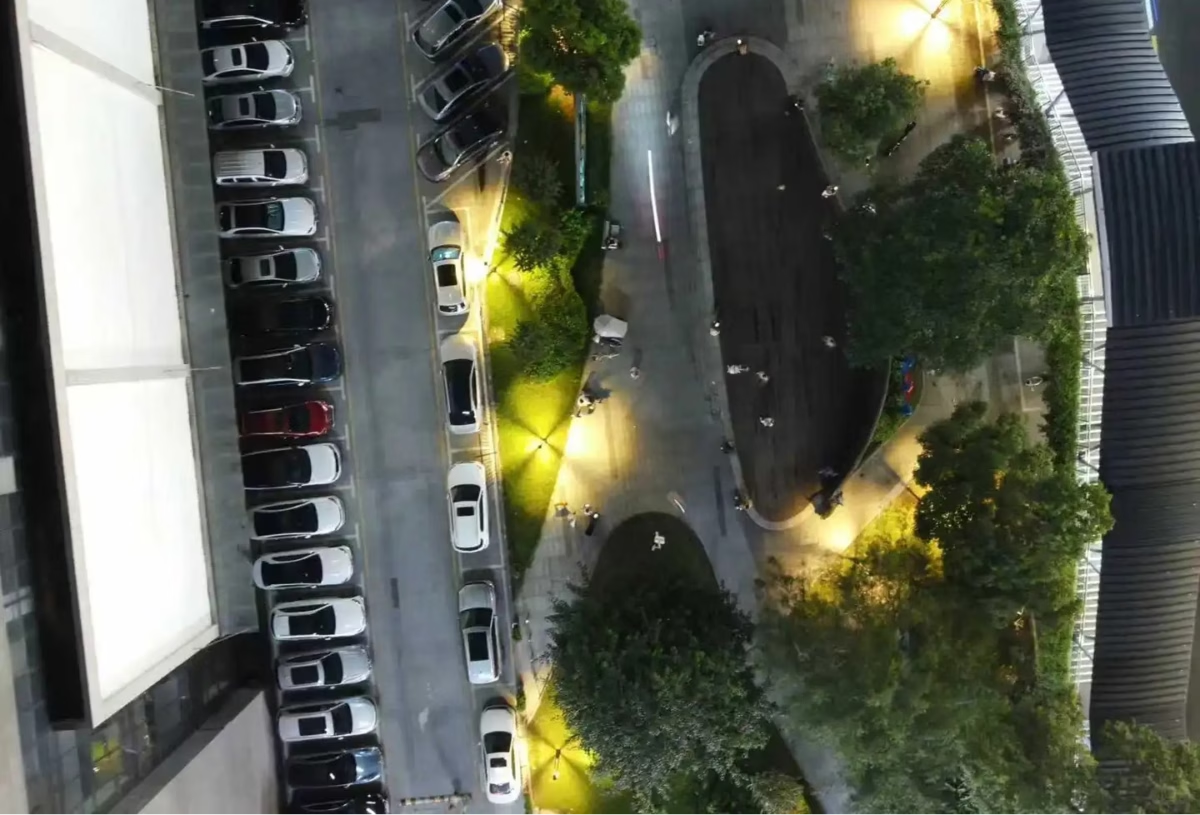
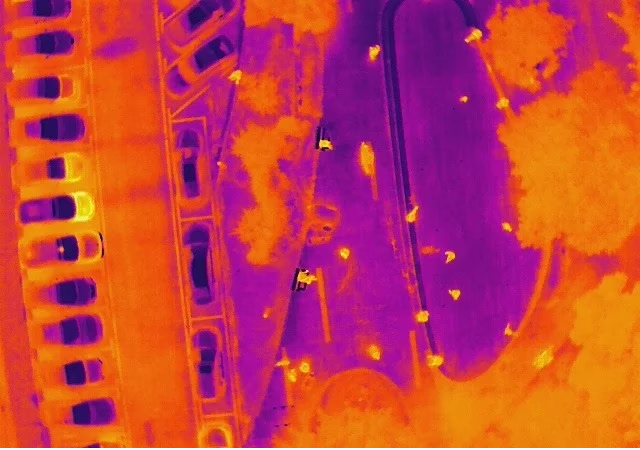
Lightweight and modular body, suitable for drone mounting, easy and convenient installation and integration. Equipped with high-performance infrared thermal imaging technology, resistant to strong light and glare interference, accurately identifying personnel, vehicles and obstacles in the area, quickly capturing abnormal targets and pre-emptively identifying potential hazards.
5、Fire Rescue:
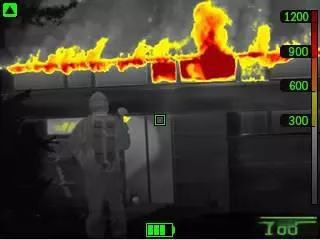
Lightweight and modular structure, suitable for fire rescue helmets, simple and convenient for mounting and installation. Equipped with professional infrared thermal imaging technology, capable of resisting strong light and glare interference, accurately locating trapped personnel, obstacles and complex environmental hazards. The device operates with low power consumption, is comfortable to wear, has long battery life, and is suitable for harsh environments such as thick smoke and backlighting in fire scenes, real-time monitoring of environmental conditions, assisting rescue personnel in quickly assessing the situation, and comprehensively enhancing the safety and efficiency of fire rescue operations.
6、Smart Buildings:
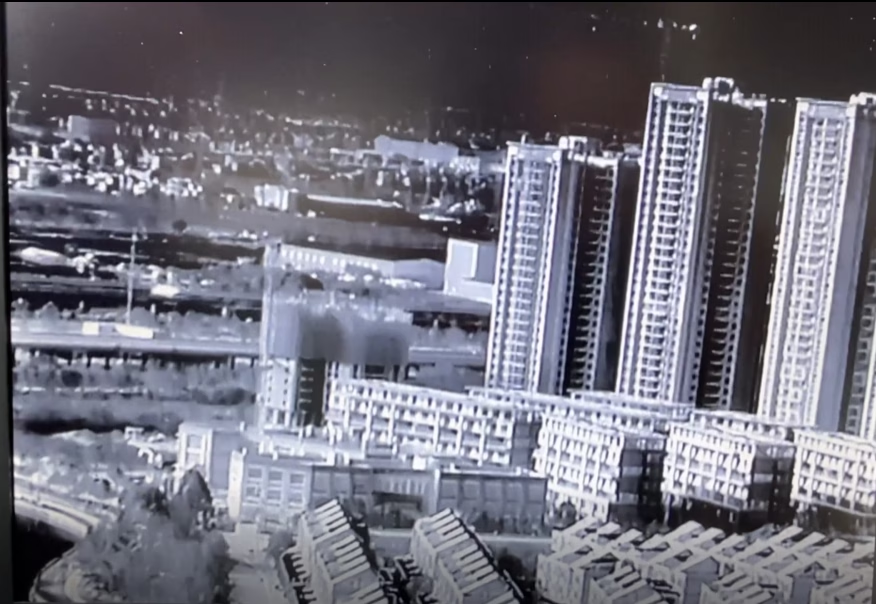
Compact and modular design, suitable for smart building scenarios, flexible and efficient for installation and deployment. Equipped with professional infrared thermal imaging technology, resistant to strong light and glare interference, accurately identifying personnel movement, foreign vehicles and surrounding obstructive objects, and real-time monitoring of abnormal dynamics. The device operates with low power consumption and energy efficiency, reducing building operation and maintenance costs, providing 24/7 stable protection, assisting in comprehensive risk warning for the entire building area, and comprehensively strengthening the security control capabilities of smart buildings.
6. Conclusion
Returning to the core question of this article: Can ordinary cameras really be transformed into thermal imaging cameras?
The answer is: No. The silicon-based sensors used in ordinary cameras physically cannot detect the long-wave infrared radiation used for thermal imaging. Those online tutorials that claim to "remove filters and convert to thermal imaging" are essentially disguising near-infrared cameras as thermal imaging cameras. The images they generate have no relation to the temperature of the objects.
The only DIY solution that can truly achieve thermal imaging is to use specialized thermal sensors combined with development boards. However, this solution has extremely low performance and can only be used as a personal hobby and teaching demonstration. It is completely unable to meet any practical application requirements.
For users who need to apply thermal imaging technology in commercial or industrial scenarios, choosing a professional thermal imaging sensor module is the only reliable and cost-effective solution. Purpleriver's non-cooled infrared RJ45/CVBS/RTSPI 640×512 thermal imaging sensor module, at less than half the price of a thermal imager, provides professional-level thermal imaging performance and comprehensive functional support. It is the common choice of thousands of enterprises worldwide.
Whether you want to add thermal imaging capabilities to your security system, develop the next generation of vehicle safety products, or create a high-performance unmanned aerial vehicle inspection payload, Purpleriver's modules can provide you with solid technical support and help you quickly launch competitive thermal imaging products.
7. Frequently Asked Questions (FAQ)
1. How long does the thermal imaging module last?
Our vanadium oxide detector has extremely high stability. Under normal usage conditions, its lifespan can reach over 10 years without significant performance degradation.
2. Since removing the infrared filter prevents thermal imaging, what is its purpose?
Removing the infrared filter can convert a regular camera into a near-infrared camera, suitable for infrared photography, artistic creation, anti-counterfeiting detection, and other scenarios. However, it cannot detect heat or work in complete darkness, and it is fundamentally different from a true thermal imaging camera.
3.Why can infrared sniper rifles in Hollywood movies penetrate walls, but in reality, they can't?
Simply put: Movies are for entertainment and plot development, so they make things up; in reality, infrared (thermal imaging) only "sees surface temperature" and cannot penetrate walls.
In real-world infrared thermal imaging, the core is to capture the thermal radiation emitted from the surface of an object, and it can only identify temperature differences on the surface layer. Walls have insulation and blocking effects, completely blocking the heat source of the human body behind them and isolating the transmission of thermal signals. Therefore, thermal imaging cannot penetrate walls and cannot observe people or objects behind them. There is no effect of seeing through walls.
4. Is there any way to modify an ordinary camera to enable it to detect long-wave infrared?
No. The physical properties of silicon-based sensors determine that they cannot respond to electromagnetic waves with a wavelength greater than 1.1 μm. To detect thermal radiation, specialized vanadium oxide or amorphous silicon infrared focal plane detectors must be used.