
Руководство по интеграции модуля ИК-тепловизионной камеры: OEM-решения высокого разрешения для дронов и периферийного ИИ
9 июня 2026 г.
Лучшее руководство по микромодулям тепловизионных камер: интеграция высокого разрешения для дронов, Raspberry Pi и периферийного ИИ
10 июня 2026 г.
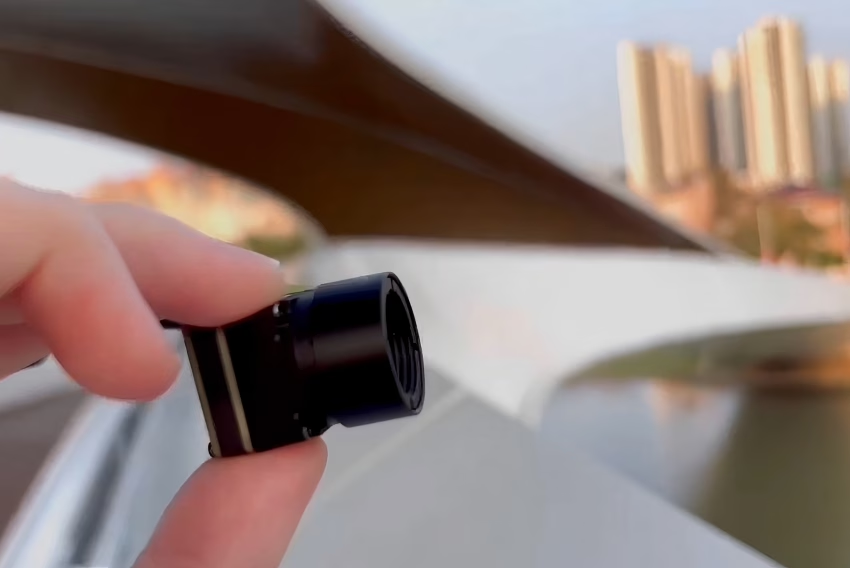
Микромодуль тепловизионной камеры LWIR: полное руководство по интеграции для дронов и решений периферийного ИИ
Стремительное распространение автономных систем, беспилотных летательных аппаратов (БПЛА) и децентрализованных узлов периферийного ИИ ускорило спрос на сверхкомпактные тепловизионные полезные нагрузки с высоким разрешением. Системные архитекторы и инженеры по полезным нагрузкам часто сталкиваются со сложной задачей соблюдения строгих ограничений по размерам, весу, мощности и стоимости (SWaP-C) при обеспечении высокоточных радиометрических данных. Длинноволновой инфракрасный (LWIR) диапазон (обычно 8–14 мкм) является основополагающим для этих применений. Он позволяет работать в полной темноте, сквозь атмосферные помехи и в сложных тепловых средах, где оптические датчики видимого света совершенно неэффективны.
Данное руководство по технической интеграции содержит всесторонний обзор микромодуля тепловизионной камеры lwir решений. В нем рассматриваются основы физики датчиков, электромеханические интерфейсы, программное управление через современные SDK и тепловые проблемы, присущие микроподвесам и воздушным развертываниям. Предназначенное для инженеров-аппаратчиков, системных интеграторов и разработчиков периферийного ИИ, это руководство упрощает процесс преобразования необработанного неохлаждаемого кремния в полезную пространственную и температурную информацию.
Послушайте, когда вы создаете оборудование для полевых условий, нельзя полагаться на чистые лабораторные условия. В реальном мире ваши датчики будут жариться на солнце, дребезжать на раме дрона и сталкиваться с бесконечными электрическими помехами. Преодоление этих конструктивных проблем требует выхода за рамки базовых маркетинговых спецификаций и понимания физики процессов и проблем на уровне плат, которые могут исказить ваши данные.
Содержание
- 👉 Разъяснение технологии микрокамер LWIR
- 👉 Технические характеристики и матрица продуктов
- 👉 Пути аппаратной интеграции: интерфейсы и протоколы
- 👉 Программные протоколы, управление SDK и радиометрия
- 👉 Проектирование тепловых систем для дронов/БПЛА
- 👉 Промышленный периферийный ИИ и сценарии тактического развертывания
- 👉 Углубленное техническое FAQ
Разъяснение технологии микрокамер LWIR
В основе каждого неохлаждаемого микромодуля тепловизионной камеры lwir лежит неохлаждаемая матрица микроболометров в фокальной плоскости (FPA). В отличие от охлаждаемых тепловых ядер, требующих тяжелых, энергоемких и хрупких криокулеров (использующих гелиевые двигатели Стирлинга для снижения рабочих температур до 77 Кельвинов), неохлаждаемые микроболометры работают при температуре окружающей среды. Это достигается за счет использования современных материалов, электрическое сопротивление которых динамически изменяется в ответ на поступающее тепловое излучение в спектральном диапазоне 8–14 мкм.
Вот как это работает на практике. Основной физический процесс начинается, когда входящее длинноволновое инфракрасное излучение проходит через высокопрозрачную германиевую оптику и попадает на матрицу подвешенных микромостиков. Каждый микромостик представляет собой отдельный пиксель детектора. Он состоит из тонкой поглощающей пластины, поддерживаемой узкими, термически изолирующими ножками из нитрида кремния, парящими над отражающим считывающим слоем на кремниевой подложке. Когда инфракрасные фотоны попадают на пластину, они нагревают материал датчика, вызывая отчетливое изменение электрического сопротивления. Интегральная схема считывания (ROIC) последовательно измеряет это изменение сопротивления по всей матрице (например, 640x512 раз), преобразуя физическое тепловое излучение в высокоточные цифровые напряжения для последующей обработки.
Состав материала датчика: VOx против α-Si
При выборе сенсорных ядер в этой отрасли вы столкнетесь с двумя основными коммерческими материалами, используемыми для создания структур пластин детекторов микроболометров: оксид ванадия (VOx) и аморфный кремний (α-Si).
- ⚙️ Оксид ванадия (VOx): Демонстрирует высокий температурный коэффициент сопротивления (ТКС), что приводит к снижению общего уровня шума и превосходной тепловой чувствительности. Матрицы VOx доминируют в высокопроизводительных коммерческих, промышленных и оборонных приложениях, где критически важно улавливать малые перепады температур. Если ваша задача требует обнаружения слабых тепловых выбросов или отслеживания объектов на больших расстояниях, VOx является отраслевым стандартом.
- ⚙️ Аморфный кремний (α-Si): Обеспечивает превосходную пространственную однородность по всей матрице и высокую совместимость со стандартными, экономичными производственными линиями КМОП-полупроводников. Хотя исторически α-Si демонстрирует более высокий шум 1/f, чем VOx, современные датчики на основе α-Si являются исключительно надежным выбором для бюджетного промышленного мониторинга конструкций и ближних охранных операций, где приоритет отдается высокому тепловому разрешению, а не сверхнизкому шуму и высокой скорости.
Объяснение критических показателей производительности
Разность температур, эквивалентная шуму (NETD)
NETD физически соответствует минимальной тепловой вариации, которую способен разрешить датчик. Он представляет собой порог отношения шума к сигналу детектора и измеряется в милликельвинах (мК). Математически, тепловизор с более низким значением NETD способен разрешать меньшие разности температур. На практике мы используем следующее простое правило:
- ✅ <30 мК до 40 мК (Высокая чувствительность): Позволяет обнаруживать мельчайшие изменения поверхности, что делает его незаменимым для обнаружения утечек газа, тонкого сельскохозяйственного анализа и дальнего наблюдения сквозь плотный атмосферный туман или легкую листву.
- ✅ 50 мК до 80 мК (Стандартная чувствительность): Оптимизирован для промышленного прогнозируемого обслуживания, выявления электрических горячих точек и рутинной навигации дронов, где цели сильно отличаются от окружающего фона.
Шаг пикселя
Шаг пикселя — это физическое расстояние между центрами соседних пикселей детектора на микроболометрической матрице, измеряемое в микрометрах (мкм). В последние годы в отрасли произошел массовый сдвиг от доминировавших ранее стандартов 17 мкм к высококомпактным конфигурациям с микропикселями 12 мкм. Это физическое уменьшение дает важное преимущество в производительности: повышение пространственного разрешения обратно пропорционально шагу пикселя. Меньший шаг пикселя (например, 12 мкм) позволяет инженерам-оптикам использовать физически меньшие и более легкие германиевые линзы для достижения того же эффективного пространственного разрешения (мгновенного поля зрения — МПЗ), что и у более крупной и тяжелой сборки с датчиком 17 мкм. Это механическое преимущество напрямую уменьшает общие показатели SWaP-C тепловизионного ядра.
Ограничения по SWaP-C (размер, вес, мощность и стоимость)
В конечном счете, интеграция высокопроизводительных возможностей LWIR в современные микро-БПЛА и автоматизированные периферийные устройства требует строгого соблюдения параметров SWaP-C. Каждый грамм, добавленный к полезной нагрузке воздушного судна, приводит к сокращению времени работы от батареи, снижению устойчивости к ветру и уменьшению общей продолжительности полета. Аналогично, работа высокомощных микросхем цифрового преобразования угрожает энергетическому бюджету систем с батарейным питанием. Для решения этой проблемы платформы нового поколения на базе ASIC (специализированных интегральных схем) объединяют управление питанием, цифровое преобразование видео и продвинутую фильтрацию шума на одном кремниевом кристалле (система-на-кристалле). Это устраняет тяжелые вычислительные накладные расходы и высокие требования к мощности, характерные для старых архитектур на основе ПЛИС. Платформы для прототипирования, такие как предоставляемые Seeed Studio, могут облегчить начальные этапы разработки аппаратного обеспечения, сохраняя при этом целевые профили SWaP-C.
Технические характеристики и матрица продуктов
В конечном счете, интеграция высокопроизводительных LWIR-возможностей в современные микро-БПЛА и автоматизированные периферийные устройства требует строгого соблюдения параметров SWaP-C. Каждый грамм, добавленный к полезной нагрузке воздушного судна, приводит к сокращению времени работы от батареи, снижению устойчивости к ветру и уменьшению общей продолжительности полета. Аналогично, использование мощных микросхем цифрового преобразования угрожает энергетическому бюджету систем с батарейным питанием. Для решения этой проблемы платформы нового поколения на базе ASIC (специализированных интегральных схем) объединяют управление питанием, цифровое видеопреобразование и продвинутую фильтрацию шумов на одном кремниевом чипе (система-на-кристалле). Это устраняет тяжелые вычислительные издержки и высокие требования к мощности, характерные для старых архитектур на основе FPGA. Платформы для прототипирования, такие как предоставляемые.
Лучшие вертикали развертывания
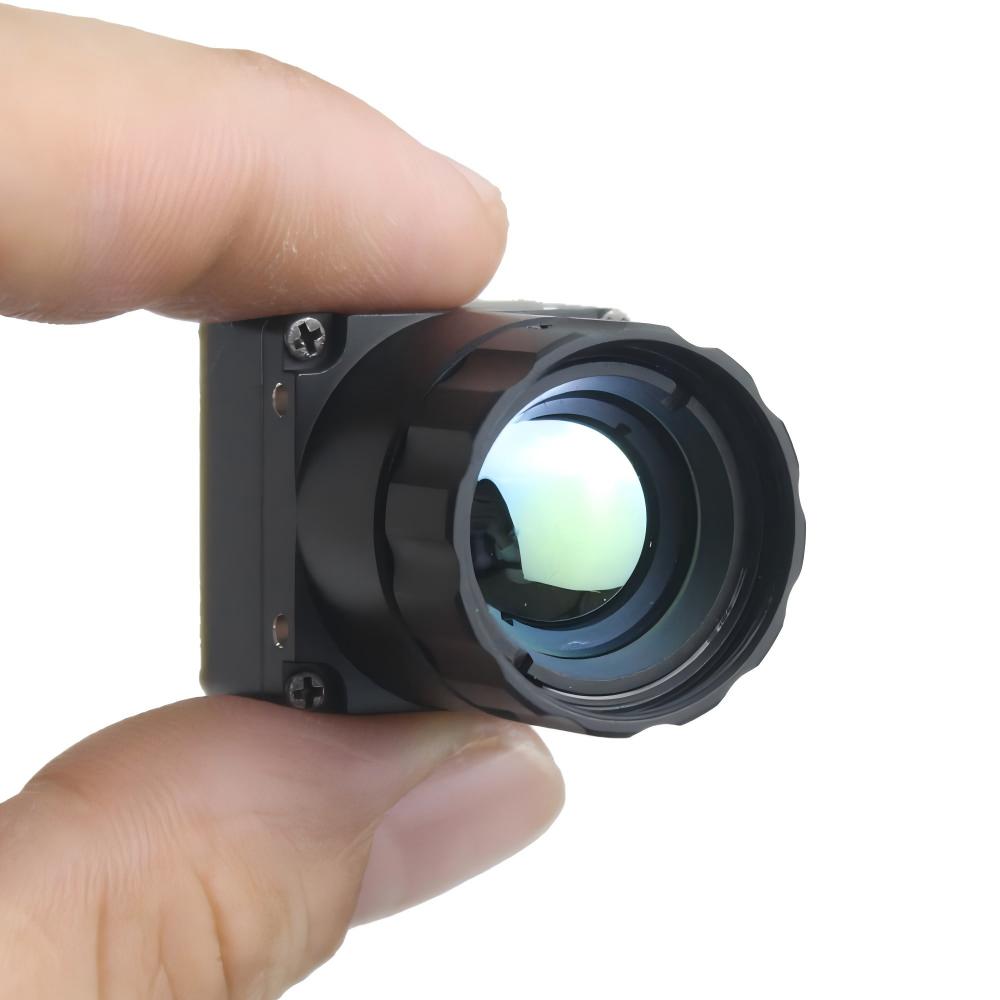
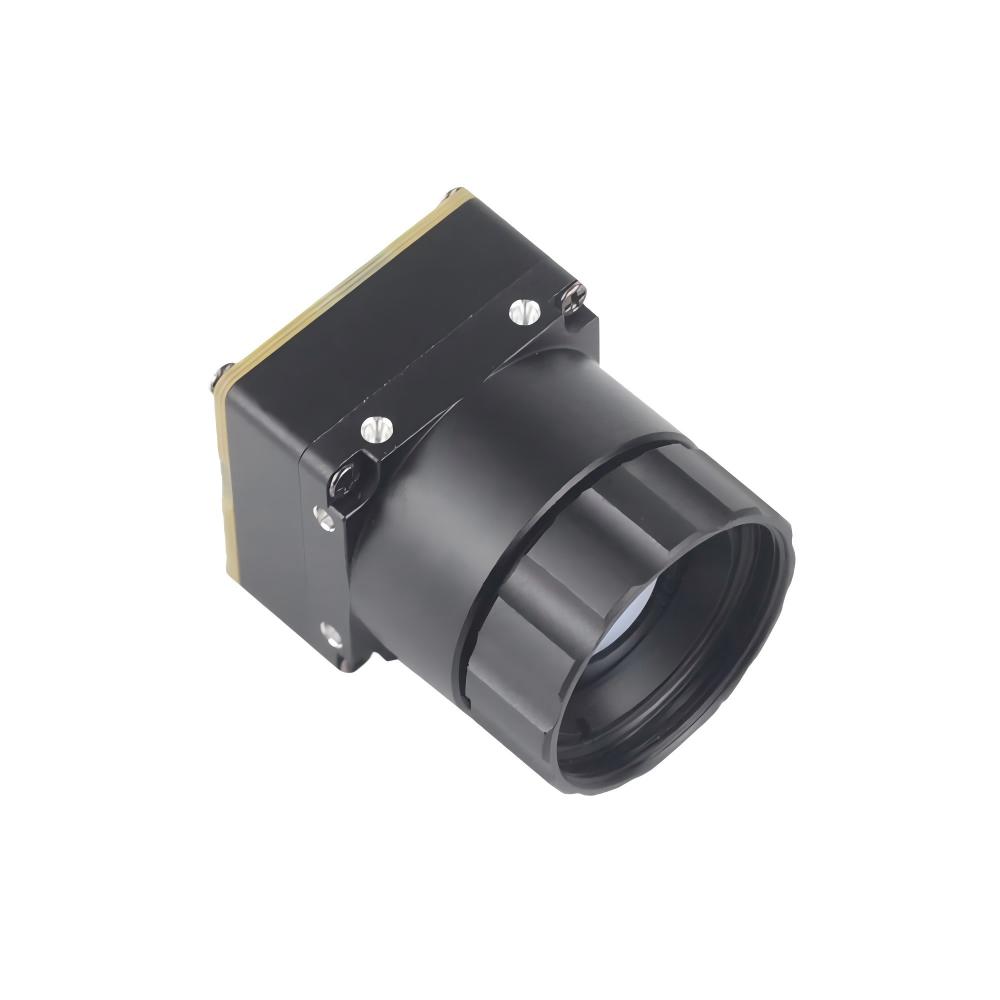
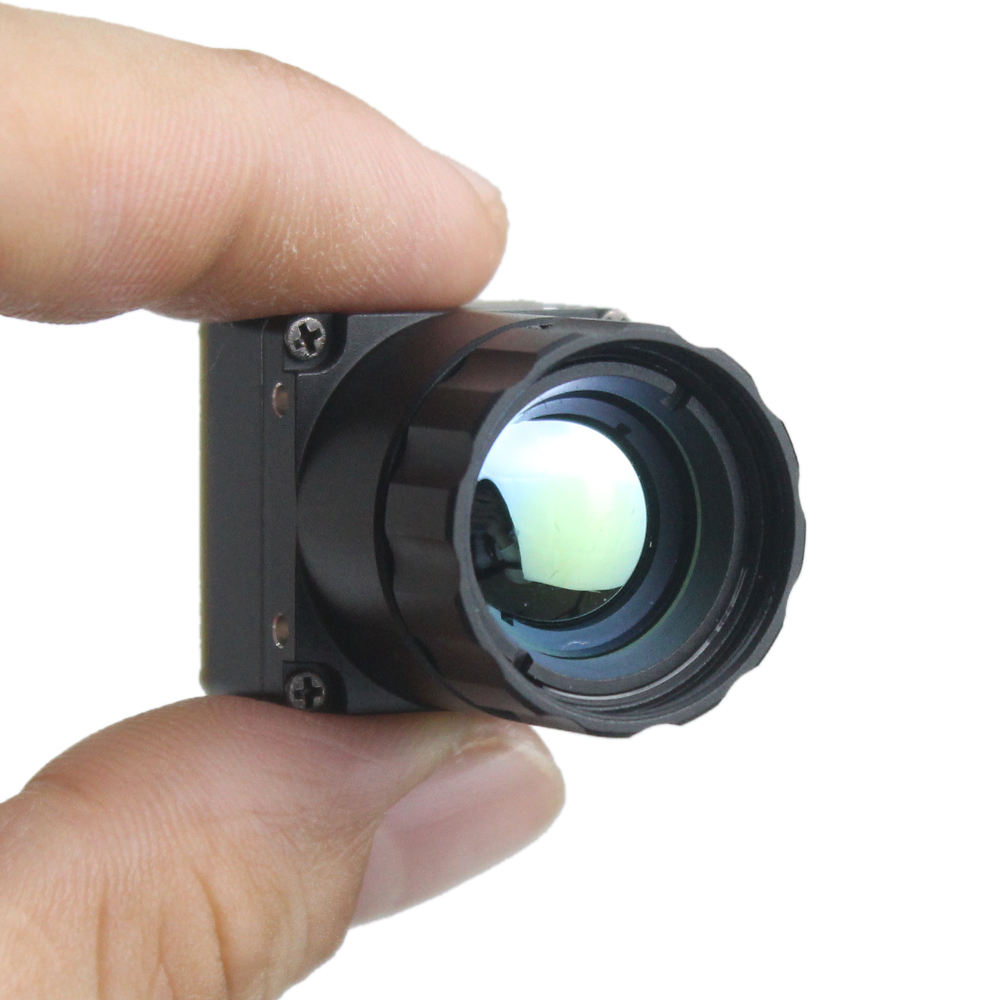
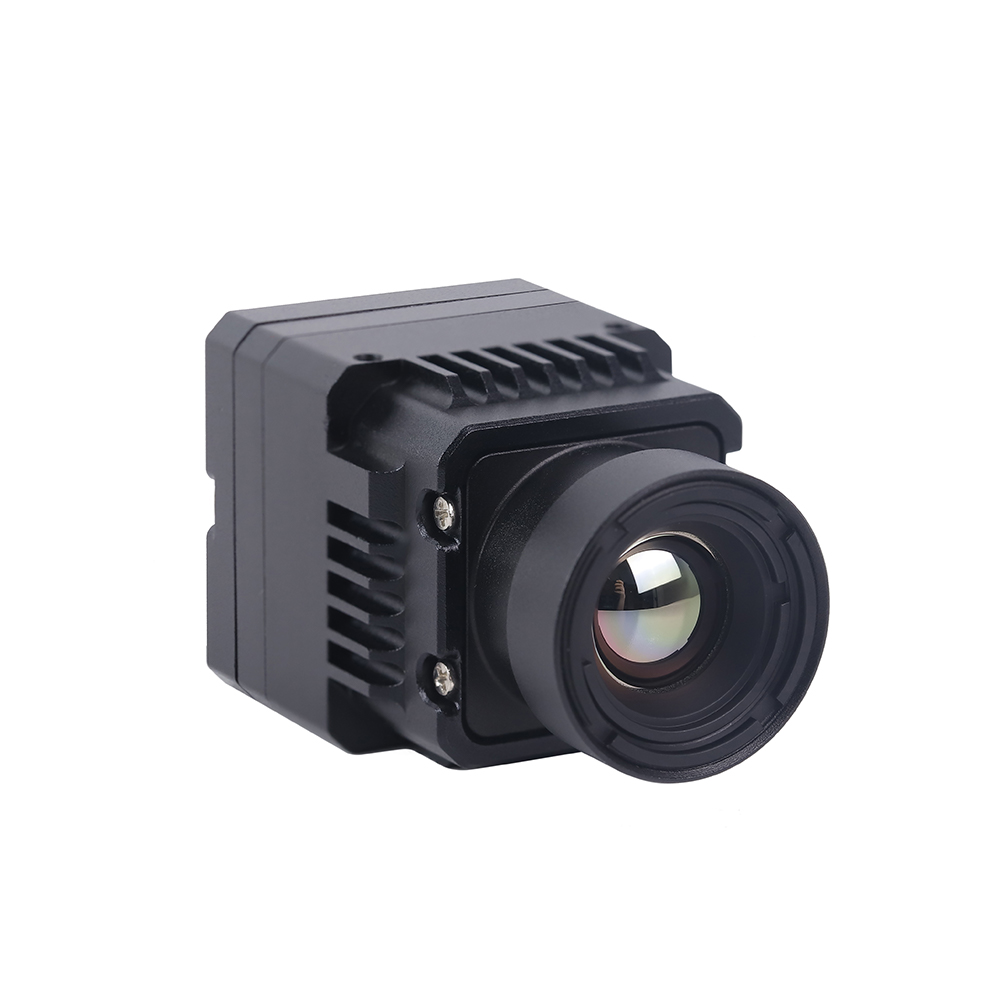
The → Неохлаждаемый LWIR USB миниатюрный модуль ядра тепловизионной камеры 640*512 features sharp and crisp image presentation, compact size and low cost. Measuring a microscopic 21mm*21mm, this device sets a new standard for integration. It offers 5/9/13/18/35/50/75/100/150mm lens focal lengths and an optional 640*480 physical resolution, making it highly versatile. It operates with stable performance and strong environmental adaptability, and serves as an exceptional solution for lightweight hand-held systems and small UAV micro-payloads.
When you hold this module in your hand, you realize just how far this tech has come. Weighing practically nothing and using standard USB power, it allows you to get a high-resolution, uncooled thermal pipeline up and running on a test bench in under five minutes. If you're building a hand-held monocular or packing a payload into a tight custom gimbal, this is the building block you want.
Посмотреть детали и цены продукта ➔
Detailed Showcase: Uncooled RJ45 CVBS RTSP IP 640*512 Thermal Sensor Camera Module
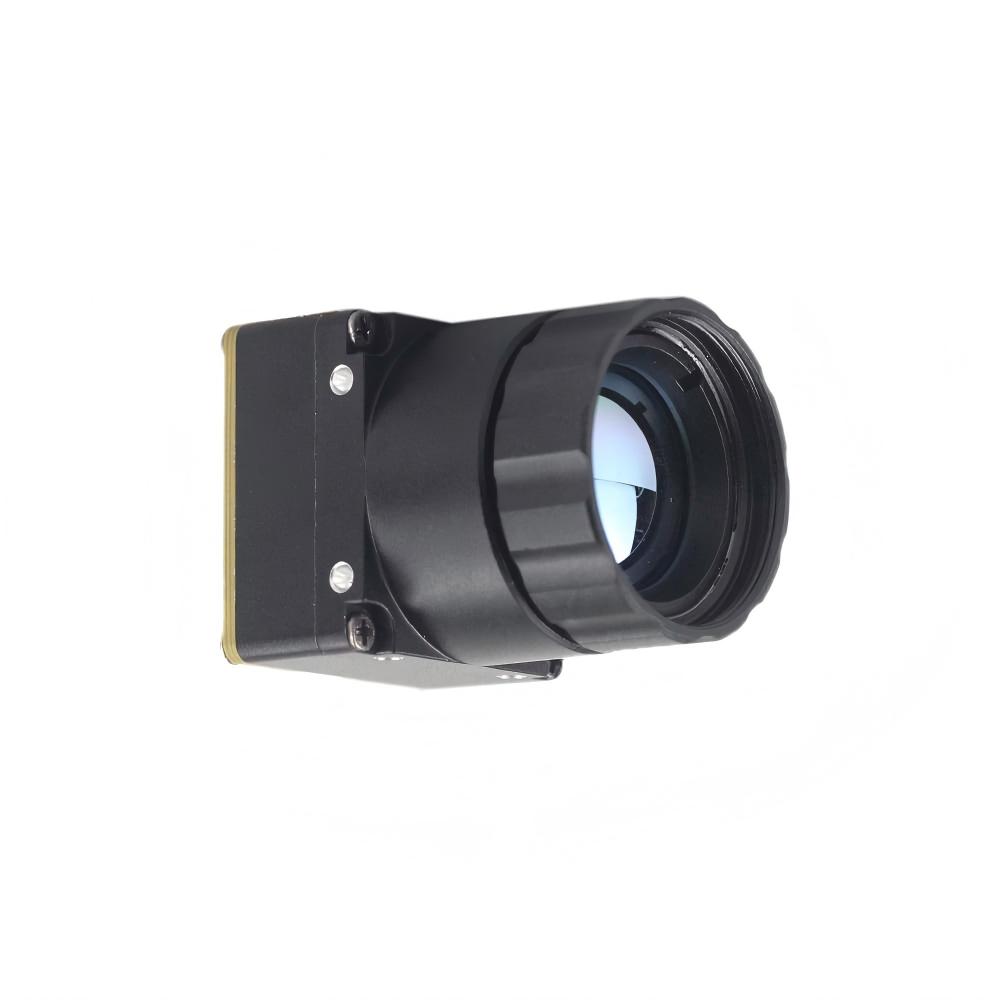
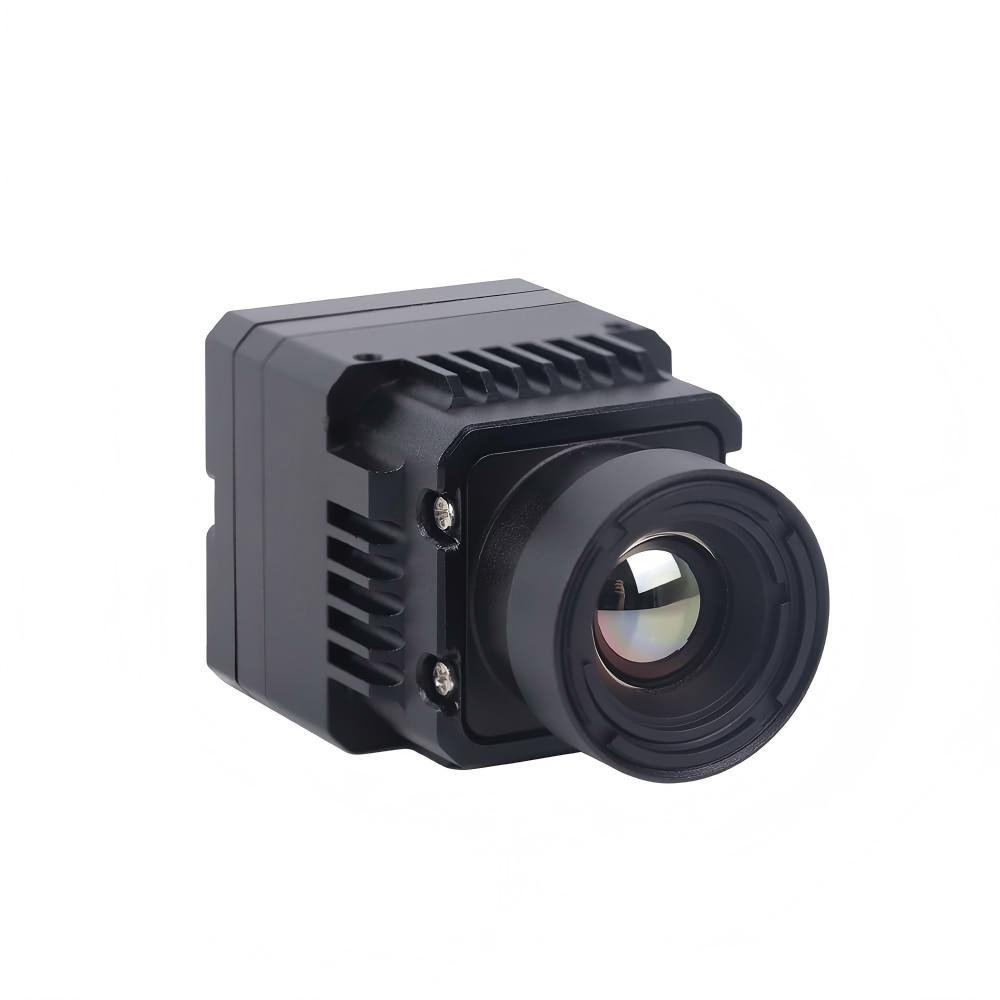
The → Неохлаждаемый инфракрасный RJ45 CVBS RTSP IP 640*512 тепловизионный сенсорный модуль камеры is a highly specialized ASIC-driven unit built for network structures. Ideal for long-range tactical systems, robotic monitoring, and advanced industrial inspections, this module combines multiple outputs—including RJ45 Ethernet, CVBS analog, and RTSP stream packing—into a single, high-performance platform. Its dynamic ASIC processor handles complex raw-to-compressed pipelines onboard, keeping system power requirements low while providing low-latency, network-ready thermal data.
Here’s the deal: if you are distributing cameras across an entire facility or running Ethernet down a drone tether, you don't want to mess with USB length limits or raw uncompressed video overhead. These network-ready modules handle all the heavy lifting onboard, compression included, and output standard, clean RTSP web streams that any modern network interface can ingest immediately.
Посмотреть детали и цены продукта ➔
Пути аппаратной интеграции: интерфейсы и протоколы
Selecting the correct hardware interface is critical. It determines video latency, electromagnetic interference (EMI) characteristics, and processing overhead on the host computer. Let's look at how the three primary interface options stack up in real-world scenarios.
1. USB Connection & Class Compliancy (UVC)
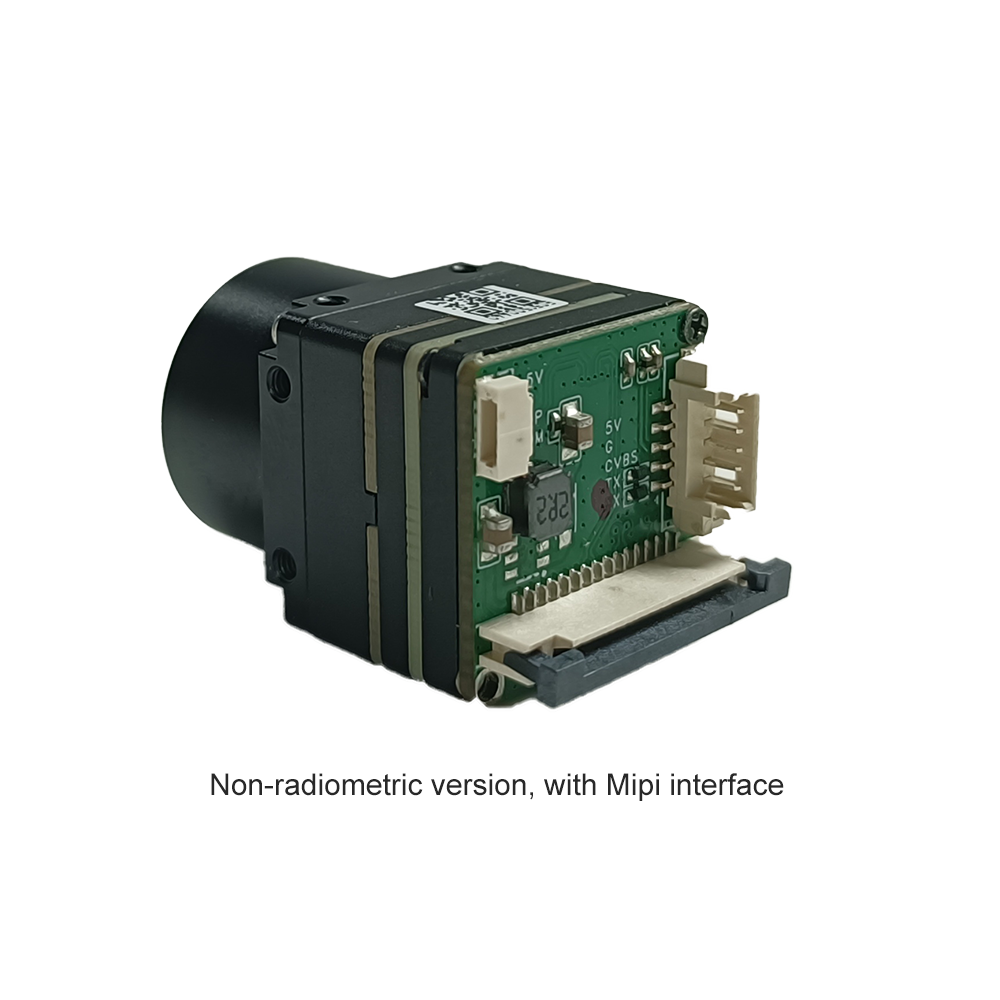
USB interfaces, such as the interface on the Uncooled LWIR USB Mini 640*512 Thermal Imaging Camera Core Module, are popular due to their standard UVC (USB Video Class) design. Key advantages include:
- ✅ Driverless Implementation: The host operating system (including Linux distributions run on single-board computers like Raspberry Pi or Nvidia Jetson, as well as Windows and Android systems) recognizes the thermal module as a generic webcam device. This allows developers to instantly display and capture thermal video streams without compiling complex native drivers.
- ✅ Uncompressed Digital Pipelines: USB 2.0 and USB 3.0 interfaces provide ample bandwidth to stream uncompressed raw digital frames (14-bit data) at high frame rates (30Hz/50Hz). This ensures that pixel-level radiometric accuracy is maintained with zero compression loss.
2. CVBS (Composite Video Broadcast Signal) Analog Video
For ultra-low latency applications, such as FPV piloting on racing drones or remote robotic exploration, analog CVBS remains a critical hardware interface:
- ✅ Zero-Latency Real-Time Feedback: Unlike digital signals that require frame packetization, encoding, and buffering, analog CVBS feeds transmit real-time video with effectively zero latency. This is crucial for drone pilots attempting to maneuver quickly around obstacles in complete darkness.
- ⚙️ EMI Shielding Requirements: Because CVBS is an analog signal, it is sensitive to electromagnetic noise generated by high-power electronic speed controllers (ESCs) and brushless drone motors. Integrators must protect the CVBS line with shielding, route it far from power distribution boards, and ground it properly to prevent dynamic lines and interference patterns across the display loop.
3. RJ45 RTSP / IP Net Linkages
For networked installations, such as security systems and automated factories, network streaming modules like the Uncooled RJ45 CVBS RTSP IP 640*512 Module are highly effective:
- ✅ Onboard H.264 / H.265 Compression: A specialized onboard ASIC chip compresses raw thermal frames into H.264 or H.265 video streams directly inside the camera housing. This compression dramatically reduces transmission bandwidth, allowing high-resolution thermal streams to be transmitted over long distances via Ethernet cables or long-range digital radio systems.
- ⚙️ Standard RTSP Handshake: Relies on the Real-Time Streaming Protocol (RTSP) over IP. This allows users to easily ingest the live video pipeline into commercial Video Management Systems (VMS), custom web apps, or security networks.
Программные протоколы, управление SDK и радиометрия
Developing custom software for an микромодуля тепловизионной камеры lwir requires a clear understanding of the difference between standard video streaming and radiometric data ingestion.
Radiometric Data (Temperature Matrices) vs. Non-Radiometric Video Stream
A conventional thermal camera can deliver two distinct types of digital video streams:
- ⚙️ Non-Radiometric Streams (AGC-Enabled): Designed for human visualization. The camera’s internal processor applies Automatic Gain Control (AGC) and lookup tables (LUTs) to output colored video (e.g., White-Hot, Black-Hot, Ironbow). This processes the complex dynamic range down to an 8-bit YUV or RGB format. While helpful for operators scanning a scene, actual temperature data is lost in this transformation.
- ⚙️ Radiometric Output (Raw 14-bit): Essential for quantitative engineering inspections and edge AI algorithms. Each pixel represents an analog-to-digital converter (ADC) count that maps to a specific temperature using the Planck radiation equation and calibration parameters:
T_pixel = (D_raw × S) + O
Где T_pixel represents absolute or relative target temperature, D_raw is the raw digital output count from the microbolometer sensor (typically 14-bit), S is the calibration sensitivity multiplier, and O is the offset parameter determined during factory and dynamic calibration. Outputting raw 14-bit integers preserves these critical temperature relationships across the entire sensor grid.
SDK Functionalities & API Integration
To fully leverage these features, manufacturers supply software development kits (SDKs) written in C, C++, Python, or C#. Key APIs allow systems to control internal parameters on the fly:
- ⚙️ Коррекция неоднородности (NUC): Uncooled microbolometers are highly sensitive to self-heating and environmental drift. The NUC API triggers a mechanical shutter to refresh flat-field correction equations. This recalibration process helps eliminate spatial noise and dynamic image artifacts.
- ⚙️ Manual & Automatic Gain Switching: High-gain modes provide low NETD performance across narrow temperature windows (e.g., -20°C to +150°C), ideal for search and rescue operations. Low-gain modes extend the temperature range (up to +550°C or higher), which is crucial for tracking forest fires or industrial smelters.
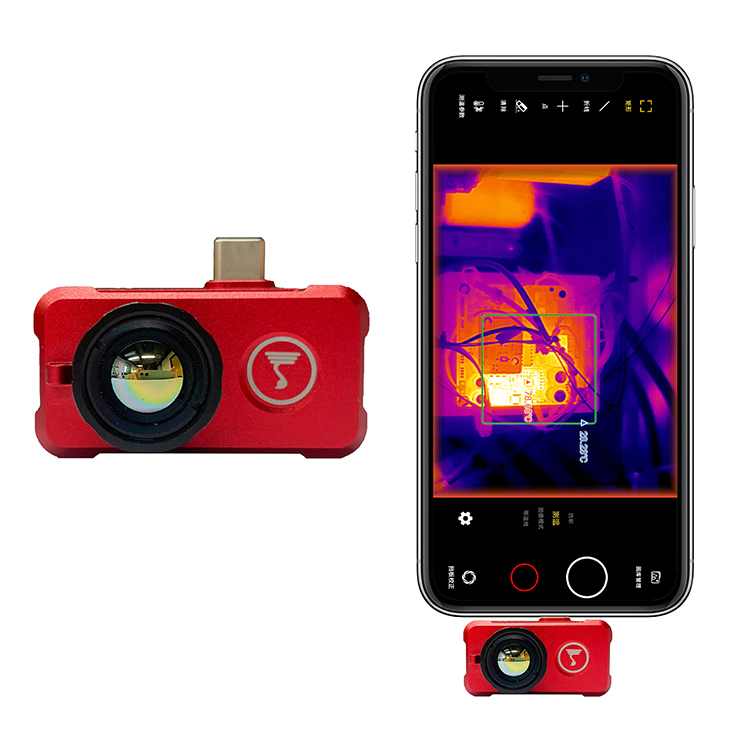
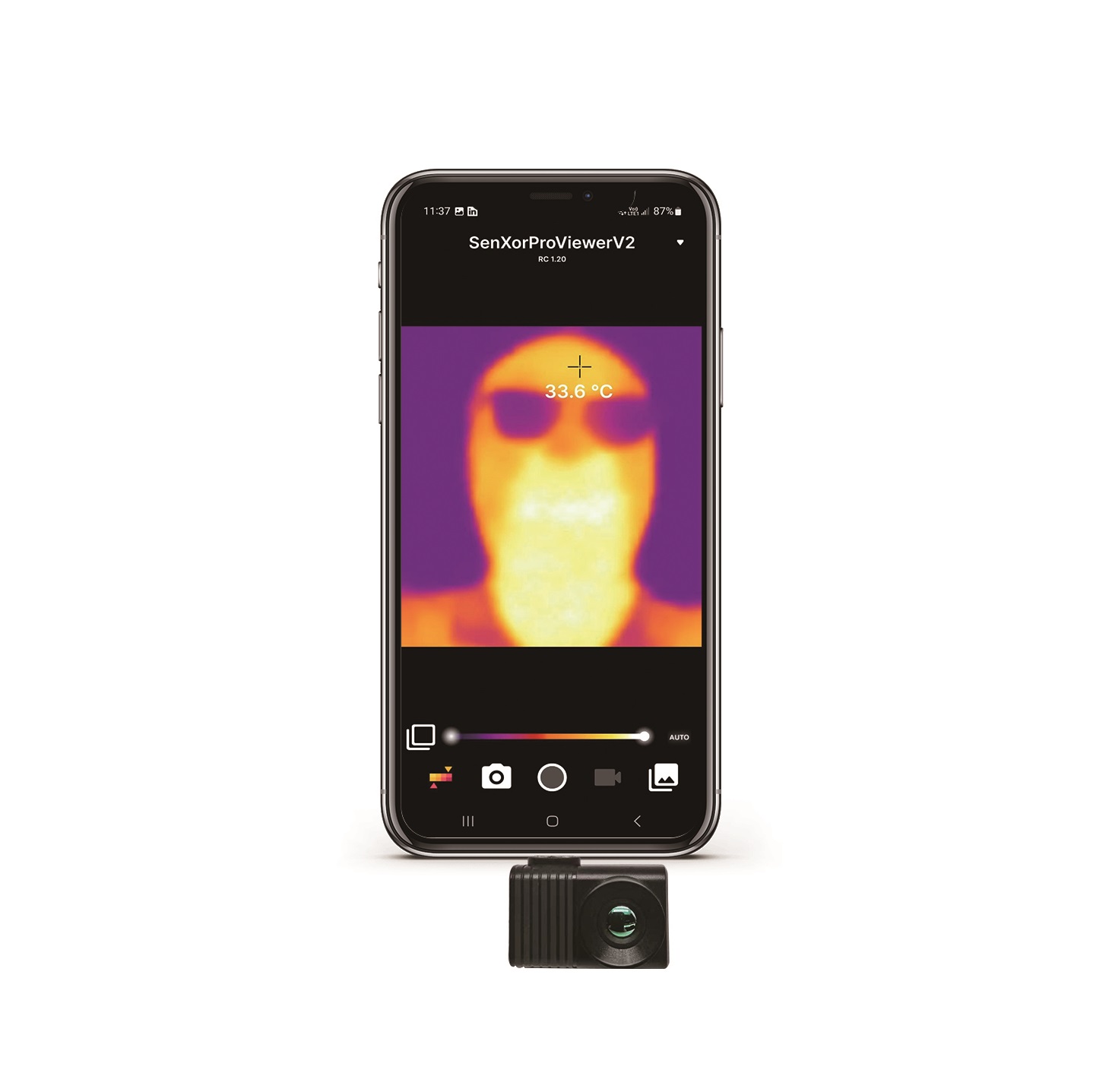
For mobile-specific platforms and localized field diagnostics, technical guides like the Mobile Thermal Imager Series Q3 User Manual help engineers easily map raw data parsing steps when building handheld mobile diagnostics.
The following conceptual Python script illustrates how a developer captures a 14-bit radiometric stream over USB (UVC) using standard developer frameworks, converting raw ADCs into a real-time thermal matrix with dynamic mapping:
import cv2
import numpy as np

# Mock importer representation of a manufacturer's C-DLL wrapper library
from thermal_sdk_wrapper import ThermalCameraCore

def main():
    # Instantiate the USB Mini 640 LWIR Module
    camera = ThermalCameraCore(device_id=0)
    camera.connect()

    # Configure the 14-bit radiometric output mode
    camera.set_output_format("RAW_14_BIT_RADIOMETRIC")
    camera.trigger_nuc_calibration()

    print("Stream online. Reading raw 14-bit sensor data...")

    while True:
        # Fetch raw ADC frame array from the camera core
        raw_frame = camera.grab_frame()

        # Parse pixel values to target temperature equivalents (Celsius)
        # Scaled conversion factors: 0.01 Kelvin step resolution, subtract absolute zero (273.15C)
        temp_celsius = (raw_frame * 0.01) - 273.15

        # Query specific point temperatures (e.g., center-point pixel)
        y_center, x_center = temp_celsius.shape[0] // 2, temp_celsius.shape[1] // 2
        center_temperature = temp_celsius[y_center, x_center]
        print(f"Target Center Temp: {center_temperature:.2f} °C")

        # Normalize the 14-bit image to 8-bit for basic visualization
        visual_gray = cv2.normalize(raw_frame, None, 0, 255, cv2.NORM_MINMAX, dtype=cv2.CV_8U)
        color_mapped = cv2.applyColorMap(visual_gray, cv2.COLORMAP_JET)

        # Display the live feed
        cv2.imshow("LWIR Radiometric Feedback", color_mapped)

        if cv2.waitKey(1) & 0xFF == ord('q'):
            break

    camera.disconnect()
    cv2.destroyAllWindows()

if __name__ == "__main__":
    main()
Проектирование тепловых систем для дронов/БПЛА
Integrating a micro LWIR module into an aerial payload requires balancing mechanical dynamics with electrical and optical variables. Because aircraft operate in dynamic environments with rapid temperature swings and high-frequency motor vibrations, protective design measures are essential.
Drone Optical Integration Challenges
1. Mechanical Stabilized Gimbals (2-Axis vs. 3-Axis)
Even with high-resolution 640 × 512 LWIR sensors, stable pointing is critical to prevent motion blur and ensure accurate spatial measurements from the air:
- ⚙️ 3-Axis Gimbals: Essential for broad aerial surveillance. By actively neutralizing yaw, pitch, and roll, they keep the sensor level during complex maneuvers and high-speed turns.
- ⚙️ Weight Dampening: Miniature LWIR cores with a 21mm × 21mm footprint are exceptionally lightweight. This low mass requires precise weight counterbalancing relative to the gimbal's brushless motors. Even a minor imbalance can overdrive the motor drivers, causing jitter and electrical noise in the video stream.
2. Electrical Ground Isolation & Shielding
Industrial drones generate substantial electromagnetic interference (EMI) from their motor ESCs and radio links (e.g., 2.4GHz control, 5.8GHz video telemetry). Unshielded microbolometer chips can read this EMI as high-frequency noise, causing horizontal or vertical banding across the thermal feed. To mitigate this, keep these steps in mind in the shop:
- ⚙️ Enclose the camera module in a grounded, CNC-machined aluminum housing.
- ⚙️ Use copper-foil tape to protect flexible ribbon cables carrying digital video lines.
- ⚙️ Isolate the camera's electrical ground from the main propulsion battery system using optocouplers or isolated DC-to-DC converters.
3. Lens Selection & Field of View (FOV) Configurations
LWIR wavelengths cannot pass through standard optical glass. Instead, they require specialized lenses made from materials like Germanium (Ge), Chalcogenide glass, or Zinc Selenide (ZnSe). Selecting the correct lens configuration depends directly on your mission profile:
- ✅ Short Focal Lengths (5mm, 9mm, 13mm): Provide a wide FOV. These are ideal for close-range mapping, indoor tactical surveillance, and sweeping search and rescue (SAR) operations where covering maximum ground is priority.
- ✅ Long Focal Lengths (50mm, 75mm, 100mm, 150mm): Provide a narrow FOV and higher spatial resolution over long distances. These lenses are critical for long-range defense observation, perimeter security, and high-altitude utility inspections.
When building advanced thermal tracking platforms, pairing these lightweight camera cores with heavy-duty PTZ hardware—such as a Сферическая поворотная тепловизионная камера—helps drone platforms transition smoothly from wide-area search to long-range threat tracking. For more options in advanced drone payloads and aerial component distribution, engineers can reference integration platforms such as OBSETECH.
Промышленный периферийный ИИ и сценарии тактического развертывания
Combining compact thermal cores with low-power Edge AI hardware acceleration allows engineers to deploy intelligent, uncrewed thermal detection systems directly in the field.
1. Autonomous Substation Inspection
Equipped with an LWIR core on a dynamic payload, drones can fly designated GPS routes to inspect high-voltage electrical infrastructure (substations, transformers, isolators).
- ⚙️ Edge AI Application: An onboard single-board computer (such as an Nvidia Jetson Nano) runs a PyTorch or TensorFlow model to process the real-time radiometric stream.
- ✅ Automated Action: By comparing real-time temperatures against historical baseline values, the system can automatically identify overheating components (hot spots) caused by localized resistance or insulation failure. It can then log geotagged alerts for maintenance teams without requiring a human operator to analyze the raw footage.
2. Precision Agriculture & Canopy Health Analysis
Thermal imaging is a highly effective tool for detecting water stress in crops. Dry, water-stressed plants have higher surface temperatures than well-hydrated crops, which are cooled by transpiration.
- ⚙️ Edge AI Application: Multispectral imagery and uncooled thermal video feeds are fused using custom spatial alignment algorithms.
- ✅ Automated Action: Onboard classifiers analyze plant temperatures relative to local environmental baselines, generating real-time Crop Water Stress Index (CWSI) spatial maps. This allows precision farming systems to optimize water consumption dynamically.
3. Tactical Defense & Autonomous Target Tracking
In defense and security applications, compact thermal cores are integrated into micro-UAVs for intelligence, surveillance, and reconnaissance (ISR) missions.
- ⚙️ Edge AI Application: A highly optimized, lightweight object detection algorithm (such as YOLOv8 Nano) is trained specifically on thermal datasets to detect human or vehicle heat signatures.
- ✅ Automated Action: The system automatically extracts targets through foliage, smoke, or complete darkness. Once targets are identified, the drone's flight controller can use visual feedback loops to autonomously track target coordinates, maintaining persistent surveillance.
Углубленное техническое FAQ
Are cost-effective Chinese LWIR micro thermal camera modules reliable compared to high-end legacy Western brands?
How can I stream real-time thermal video from a micro thermal module to a drone or PC?
- USB Core (Direct Digital Data): Connect the camera to an onboard computer (e.g., Raspberry Pi, Jetson Nano) via USB. Using standard UVC-compliant drivers, you can capture frames directly in Python or C++ using libraries like OpenCV. To access radiometric values, you must bypass standard RGB rendering and capture raw 14-bit frames via the manufacturer's proprietary SDK interface.
- CVBS Core (Analog Transmission): Connect the CVBS output wire directly to an analog video transmitter (VTX) operating on standard frequencies (e.g., 1.2GHz or 5.8GHz). On the ground station side, an analog receiver can capture the video and stream it to a low-latency monitor or DVR with virtually zero latency.
- RJ45 RTSP/IP Core (Network Streaming): Assign a static or DHCP IP address to the camera module while it is connected to a shared network switch or long-range digital bridge. You can then stream H.264/H.265 encoded video to your ground control station or software suite using the RTSP protocol. This can be executed with command-line tools like VLC or integrated directly into custom apps:
rtsp://192.168.1.120:554/stream0.
What is the difference between cheap hobbyist thermal sensors and commercial-grade micro LWIR modules?
- Resolution & Spatial Precision: A standard hobbyist sensor offers limited resolution, which translates to a low level of detail. A commercial-grade 640x512 array has approximately 6.6 times the pixel count of a 256x192 sensor:
(640 × 512) / (256 × 192) = 327,680 / 49,152 ≈ 6.67. This higher resolution provides significantly greater spatial clarity, allowing inspectors to identify small faults or targets from much longer, safer distances. - Radiometric Accuracy: Hobbyist sensors often lack precise thermal calibration, leading to temperature readouts that fluctuate with the housing's temperature. Commercial-grade modules are factory-calibrated across broad temperature ranges. They utilize active internal NUC mechanisms and real-time compensation algorithms to maintain accurate temperature measurement, even during rapid environmental changes.
- Integration & SDK Support: Hobbyist sensors typically output basic 8-bit colorized images over highly restricted interfaces. Commercial-grade LWIR cores, by contrast, offer robust SDKs and APIs. These resources allow developers to access raw 14-bit data, adjust microbolometer bias voltages on the fly, implement customized noise-filtering algorithms, and interface with advanced Edge AI platforms.
📚 References & Further Reading
- Отраслевой стандарт: Learn more about custom drone options and payloads from OBSETECH.
- Prototyping Frameworks: Explore hardware accessories and kits at Seeed Studio.
- Internal Product Guide: Read the technical specifications for the Mini 640 Неохлаждаемое LWIR тепловизионное ядро.
- Industrial Integration: See our deep dive on high-performance infrastructure with the Сферическая поворотная тепловизионная камера.
- Mobile Integration: Download resources and view setups in the Mobile Thermal Imager Series Q3 User Manual.