
Uncooled Infrared MIPI 640 384 256 9mm Thermal Imaging Camera Module for Drones: The Ultimate Customization Guide
2026年7月27日
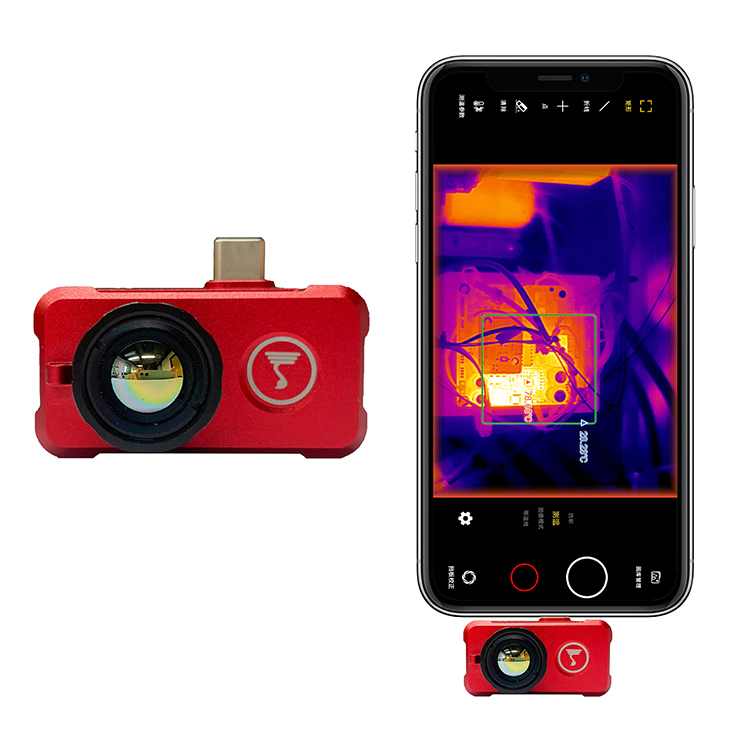
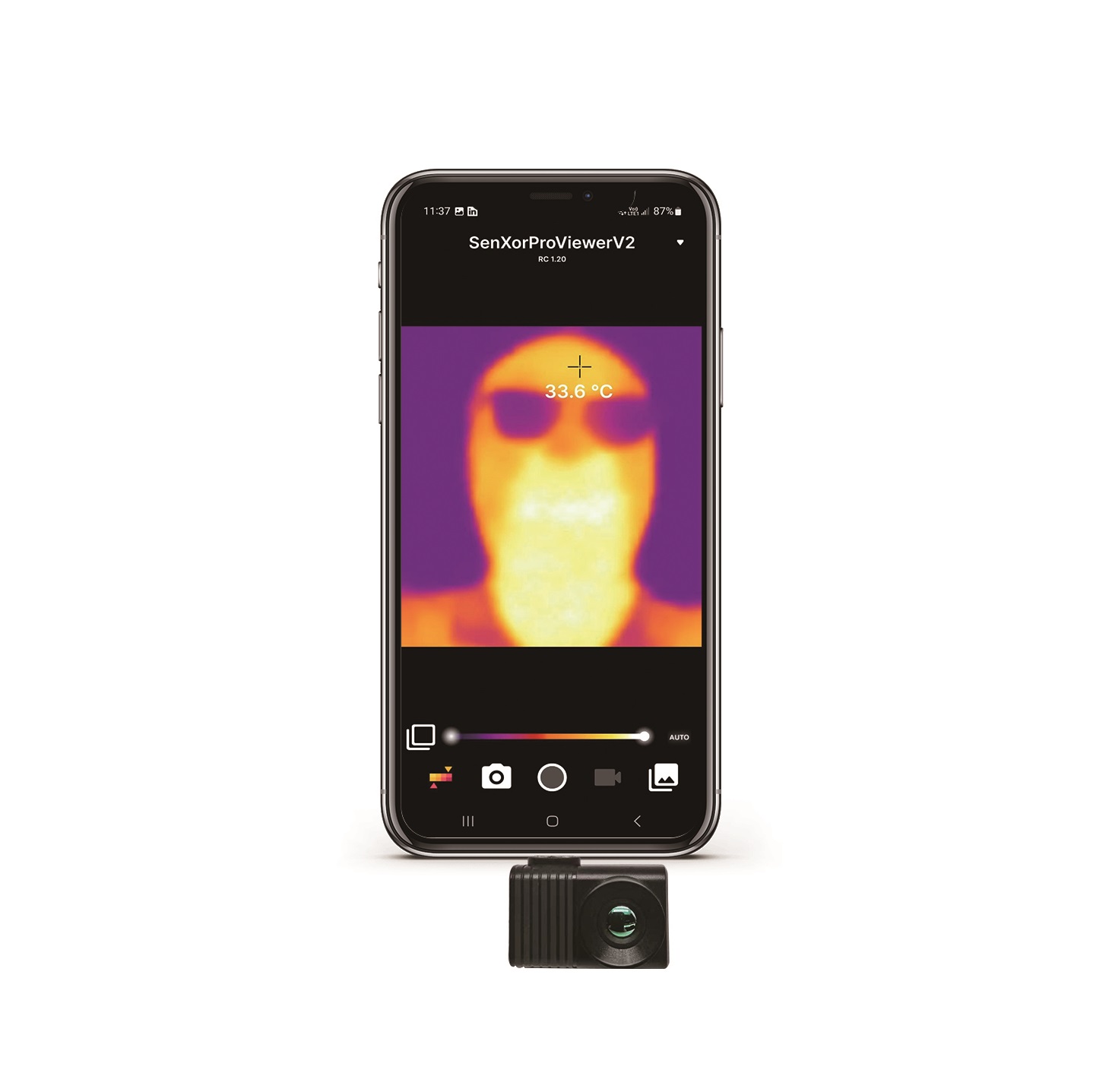
Portable Yourunxing YWX256 Mini Security USB Mobile Cell Phone Infrared Thermal Imaging Camera Module 256x192 Resolution 25hz: The Ultimate OEM Guide
2026年7月28日
Guide to Compact Thermal True IR Night Vision Camera Module with Built-in IR Illuminator
Modern industrial hardware, defense payloads, and autonomous sensing setups demand high-performance electro-optical vision systems. Look, when you are building equipment that has to operate across absolute dark, thick smoke, heavy fog, or messy terrain, standard optical sensors just won't cut it. Bringing together a compact thermal true IR night vision camera module with built-in IR illuminator is a game-changer for dual-spectrum imaging. By combining passive Long-Wave Infrared (LWIR) microbolometers with active Near-Infrared (NIR) VCSEL/LED lighting inside a tight footprint, OEM design engineers no longer have to pick between long-range thermal detection and sharp optical target identification.
Deploying these hybrid dual-spectrum camera modules lets hardware teams build solid unmanned aerial vehicles (UAVs), tactical ground robotics, perimeter defense systems, and automated factory inspection gear. Here's the deal: this guide walks you through the practical mechanics of integrating miniature thermal cores, evaluating radiometric performance, setting up embedded protocols, and getting the most out of active IR illumination when building next-generation payloads.
Whether you are dealing with power budgets on micro-drones or thermal dissipation in sealed IP67 enclosures, getting the hardware architecture right from day one saves months of board redesigns down the line.
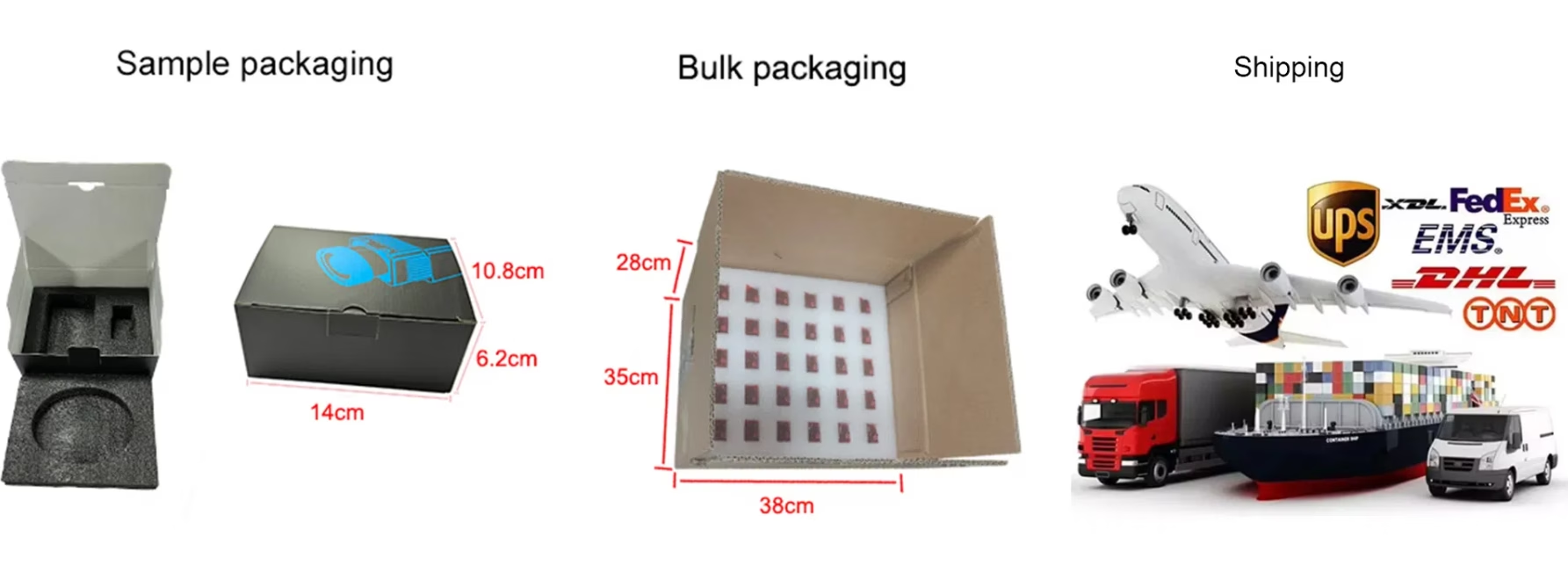
Let's roll up our sleeves and break down how these dual-spectrum optics work under real-world bench and field conditions.
Table of Contents
- 👉 1. Dual-Spectrum Engineering: Passive LWIR Thermal vs. Active NIR Illumination
- 👉 2. Electro-Optical Hardware Architecture & Sensor Fusion Mechanics
- 👉 3. Embedded Integration Protocols, SDKs, and Edge AI Architectures
- 👉 4. Primary Industrial, UAV, and Defense Application Domains
- 👉 5. Commercial OEM Product Comparison Matrix & Product Showcase
- 👉 6. Deep-Dive Technical FAQ & System Design Considerations
1. Dual-Spectrum Engineering: Passive LWIR Thermal vs. Active NIR Illumination
To pick and implement the right compact thermal true IR night vision camera module with built-in IR illuminator, you have to get comfortable with how active Near-Infrared (NIR) imaging and passive Long-Wave Infrared (LWIR) thermography behave out in the wild. Electromagnetic radiation spans multiple wavebands, and each band comes with its own physics, absorption curves, and photon tricks.
Passive Long-Wave Infrared (LWIR) Sensing
LWIR sensors operate within the 8.0 μm to 14.0 μm spectrum. Microbolometer arrays—usually built with Vanadium Oxide (VOx) or Amorphous Silicon (a-Si)—measure heat radiation coming directly off objects warmer than absolute zero (-273.15 °C). Because LWIR doesn't care about ambient visible light and tracks emitted thermal energy instead of reflected photons:
- ✅ Zero-Light Reliability: Runs cleanly in pitch darkness, underground mine shafts, unlit industrial corridors, and remote tactical sites without needing extra light sources.
- ✅ Obscurant Penetration: Longer LWIR waves pass right through small airborne particles. That means your image cuts through heavy diesel smoke, fog, dust clouds, and brush cover where visual cameras blind out.
- ✅ High Target Contrast: Heat signatures pop immediately. Humans, vehicle motors, high-voltage breakers, and friction hot-spots isolate instantly against cold backgrounds, making automated detection straightforward.
Understanding how heat transfers across these infrared bands is key if you are designing non-contact temperature measurement equipment. If you need a refresher on microbolometer math and spectral radiometry, check out Wikipedia's Thermography Guide.
Active Near-Infrared (NIR) Illumination
Active NIR night vision relies on standard silicon CMOS or CCD sensors that register light between 750 nm and 950 nm, just above what human eyes can see (380 nm to 740 nm). When night falls and ambient light drops to zero, an onboard active IR illuminator (using 850nm or 940nm NIR LEDs or VCSEL lasers) blasts the target area with invisible light.
- ⚙️ Reflected Fine Detail: The optical sensor catches reflected NIR light, rendering high-definition, high-frame-rate monochrome video.
- ⚙️ Positive Identification (PID): While thermal gives you unmistakable target blobs, it doesn't give you surface paint details or text. Active NIR clears up facial features, equipment serial numbers, license plates, and structural barcodes.
The Dual-Spectrum Hybrid Payload Advantage
In the shop, putting both sensors into one small module fixes the age-old compromise between long-range detection and close-range identification. In a blended vision pipeline, the passive LWIR channel handles long-range detection and queuing (finding a heat signature through trees or fog), while the active NIR channel acts as the verification trigger (illuminating the target close up to confirm what it is, read serial numbers, or guide tight robotics maneuvering).
2. Electro-Optical Hardware Architecture & Sensor Fusion Mechanics
Building an industrial-grade compact thermal camera with built-in IR lighting requires real electro-optical engineering. You have to align twin optical axes, isolate sensitive microbolometers from localized board heat, manage power delivery, and correct parallax errors inside a tiny metal housing.
Microbolometer Arrays and Pixel Scaling
The core of the thermal side is an uncooled microbolometer array. Modern thermal cores use thin-film Vanadium Oxide (VOx) resistors deposited over a silicon Read-Out Integrated Circuit (ROIC). Pixel matrix sizes range from compact $256 \times 192$ setups to crisp $640 \times 512$ or $1024 \times 768$ high-resolution arrays.
| Parameter | 17 μm Pixel Pitch Generation | 12 μm Pixel Pitch Generation (Current Standard) |
|---|---|---|
| Sensor Area (256x192) | ~4.35 mm × 3.26 mm | ~3.07 mm × 2.30 mm (30% Footprint Reduction) |
| Optical Lens Diameter | Requires larger Germanium glass elements | Uses smaller chalcogenide / compact focal length optics |
| Thermal Mass & Response | Higher thermal capacitance | Faster thermal time constants (≤10 ms) |
| Typical NETD Sensitivity | ≤ 50 mK | ≤ 35 mK to ≤ 40 mK |
Noise Equivalent Temperature Difference (NETD) defines thermal sensitivity—it tells you the smallest temperature delta the microbolometer array can pull out of background noise. Good OEM modules hit NETD ratings ≤ 35 mK @ f/1.0. Lower NETD numbers mean clean, detailed thermal frames even when high humidity, rain, or overcast conditions flatten out scene contrast.
Built-in Active IR Illuminator Engineering
Here's a common trap: putting a high-power active NIR illuminator right next to an uncooled thermal microbolometer inside a sealed housing generates heat. Active LEDs produce real thermal energy. If that heat bleeds into the microbolometer substrate, your radiometric calibration drifts off and image quality degrades fast.
- ⚙️ Wavelength Selection (850nm vs 940nm): 850nm NIR gives higher quantum efficiency on CMOS chips, delivering longer illumination range per watt. But keep in mind, 850nm diodes produce a faint dull red glow visible to human eyes nearby. If covert performance is mandatory for defense or tactical gear, 940nm is the way to go—it sits in a strong water absorption band and is completely invisible to human eyes.
- ⚙️ VCSEL vs. Traditional Surface-Emitting LEDs: Modern miniature dual-spectrum modules use Vertical-Cavity Surface-Emitting Lasers (VCSELs) instead of standard LED arrays. VCSELs give you superior wall-plug efficiency (>40%), tight spectral widths (<2 nm), predictable beam profiles, and tiny surface-mount footprints.
- ⚙️ Thermal Isolation & Heat Sinking: Quality modules use split copper ground planes, ceramic isolation layers, and active Non-Uniformity Correction (NUC) algorithms to prevent illuminator thermal bleed from messing up thermal readings.
Optical Axis Alignment & Parallax Correction
LWIR requires specialized transmissive optical materials like Germanium (Ge) or Chalcogenide glass, while NIR CMOS sensors use standard glass lenses. As a result, dual-spectrum camera modules feature two separate optical channels placed side-by-side. That physical offset creates parallax error when looking at close-up targets.
To resolve parallax, onboard FPGAs or DSP processors execute hardware image warping. By applying pre-calibrated factory lens matrices, internal firmware overlays the sharp NIR edge channel right over the thermal heatmap in real time, maintaining accurate pixel alignment from short inspection ranges out to infinity.
3. Embedded Integration Protocols, SDKs, and Edge AI Architectures
When you are hooking these modules up to drone payloads, autonomous mobile robots (AMR), or custom industrial boxes, physical pinouts, real-time video streaming, and flexible software APIs are critical.
Digital Communication and Video Interfaces
Modern miniature dual-spectrum modules come with standard high-speed parallel and serial interface options:
- ⚙️ MIPI CSI-2 (Camera Serial Interface): The go-to standard for embedded hardware. MIPI CSI-2 routes raw thermal and visual frames straight into host SoCs like NVIDIA Jetson, NXP i.MX, or Raspberry Pi compute modules with near-zero frame latency.
- ⚙️ USB 2.0 / USB 3.0 Type-C (UVC Compliant): Plug-and-play capability across Linux, Windows, and Android. Standard UVC handles visual streams, while custom vendor endpoints pass raw 16-bit radiometric temperature arrays for analysis.
- ⚙️ DVP Parallel & SPI / UART Serial Control: Digital Video Port (DVP) outputs facilitate low-level hardware connections with custom FPGAs and microcontrollers. Dedicated UART or I2C buses handle control commands (triggering NUC shutters, swapping color palettes, dimming IR illuminators via PWM) and reporting sensor health.
Software Driver Integration & Linux Platforms
Getting hardware running smoothly comes down to solid Linux kernel drivers and clean SDKs. If you want to check out step-by-step driver setup, V4L2 device bindings, and C/C++ frame grabbing on common embedded boards, read our step-by-step engineering walkthrough on thermal camera driver integration on Raspberry Pi setups.
Edge AI Computer Vision Pipelines
Once dual-spectrum streams hit your host processor, edge AI models can process both channels simultaneously. Hardware teams frequently use open-source frameworks like OpenCV alongside accelerated engines like TensorRT or ONNX Runtime to execute real-time fusion:
- 🚀 Dynamic Laplacian Fusion: High-frequency edge maps are pulled from the active NIR image using spatial gradients and blended straight into the thermal color space. You get razor-sharp visual outlines without destroying temperature accuracy.
- 🚀 Multi-Input Deep Learning Models: Multi-channel YOLO or MobileNet neural networks accept aligned thermal-NIR matrices together. This dual-input strategy keeps detection rates high even if targets wear thermal insulation or background ground temperatures match target heat signatures.
- 🚀 Automated Thermal Threshold Alarms: Background firmware routines check 16-bit radiometric array data continuously, firing hardware interrupts when designated spot or zone temperatures cross preset limits.
4. Primary Industrial, UAV, and Defense Application Domains
The flexibility of a compact thermal true IR night vision camera module with built-in IR illuminator makes it a frontline pick across multiple tough operational fields.
1. Unmanned Aerial Vehicles (UAVs) & Search and Rescue Payloads
Weight, dimensions, and power draw dictate drone payload design. Ultra-light thermal modules under 50 grams consuming ≤1.5W allow micro-drones to stay airborne longer on night missions. The LWIR sensor picks up body heat through thick brush or heavy smoke, while the built-in active IR illuminator assists close-in verification, landing alignment, and obstacle avoidance in complete darkness. For more field context, review our deep dive on thermal imaging technology applications in search and rescue operations.
2. Demining Operations & Subsurface Anomaly Detection
Finding buried landmines and unexploded ordnance (UXO) demands high thermal sensitivity and stable radiometry. Buried metallic or plastic objects change local soil density and moisture retention, creating subtle micro-kelvin surface temperature differentials as the ground heats up and cools down. Dual-spectrum drone payloads let operators survey minefields safely from the air, mapping thermal patterns across large land plots.
3. Mobile Industrial Robotics & Autonomous Guided Vehicles (AGVs)
AGVs and mobile inspection crawlers working unlit underground mines, power substations, and industrial manufacturing floors need non-stop spatial awareness. The active NIR illuminator feeds visual odometry and SLAM navigation algorithms, while the LWIR thermal camera scans overhead machinery, catching overheating bearings, failing electrical busbars, and steam leaks long before equipment fails. To see how we build and test these systems, explore our overview on enterprise optoelectronic manufacturing capabilities.
5. Commercial OEM Product Comparison Matrix & Product Showcase
Here is a direct side-by-side spec comparison of commercial uncooled thermal camera modules built for embedded drone payloads, robotic navigation, and tactical dual-spectrum night vision setups.
| Specification Parameter | Mini 256 Uncooled LWIR Thermal Core | Mini2 640x512 MIPI Thermal Module |
|---|---|---|
| Thermal Resolution | 256 × 192 Microbolometer Array | 640 × 512 HD Microbolometer Array |
| Pixel Pitch & Detector Material | 12 μm Uncooled VOx (8 ~ 14 μm LWIR) | 12 μm Uncooled VOx (8 ~ 14 μm LWIR) |
| Thermal Sensitivity (NETD) | ≤ 40 mK @ f/1.0, 25°C | ≤ 35 mK @ f/1.0, 25°C |
| Lens Configuration | Athermalized Fixed Focal Lens Optics | 9mm Precision Germanium Drone Optic |
| Primary Output Interfaces | DVP / USB 2.0 / Serial Communication | Low-Latency MIPI CSI-2 / USB 2.0 |
| Radiometric Measurement Range | Full-screen radiometric (-20°C to +150°C) | Spot, Line, & Regional telemetry calibration |
| Target Application Profile | Mine detection, portable instruments, micro UAVs | HD drone payloads, robotics, defense systems |
Detailed Product Specifications & Overview
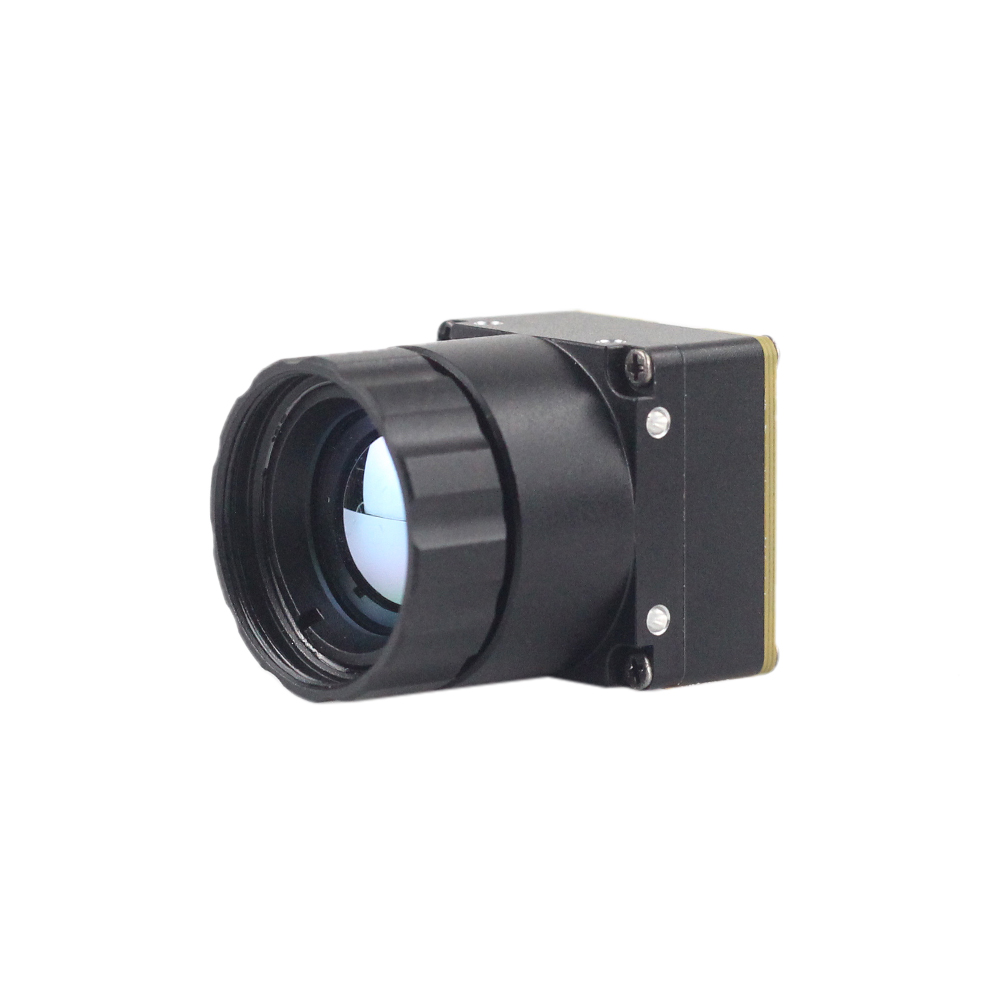
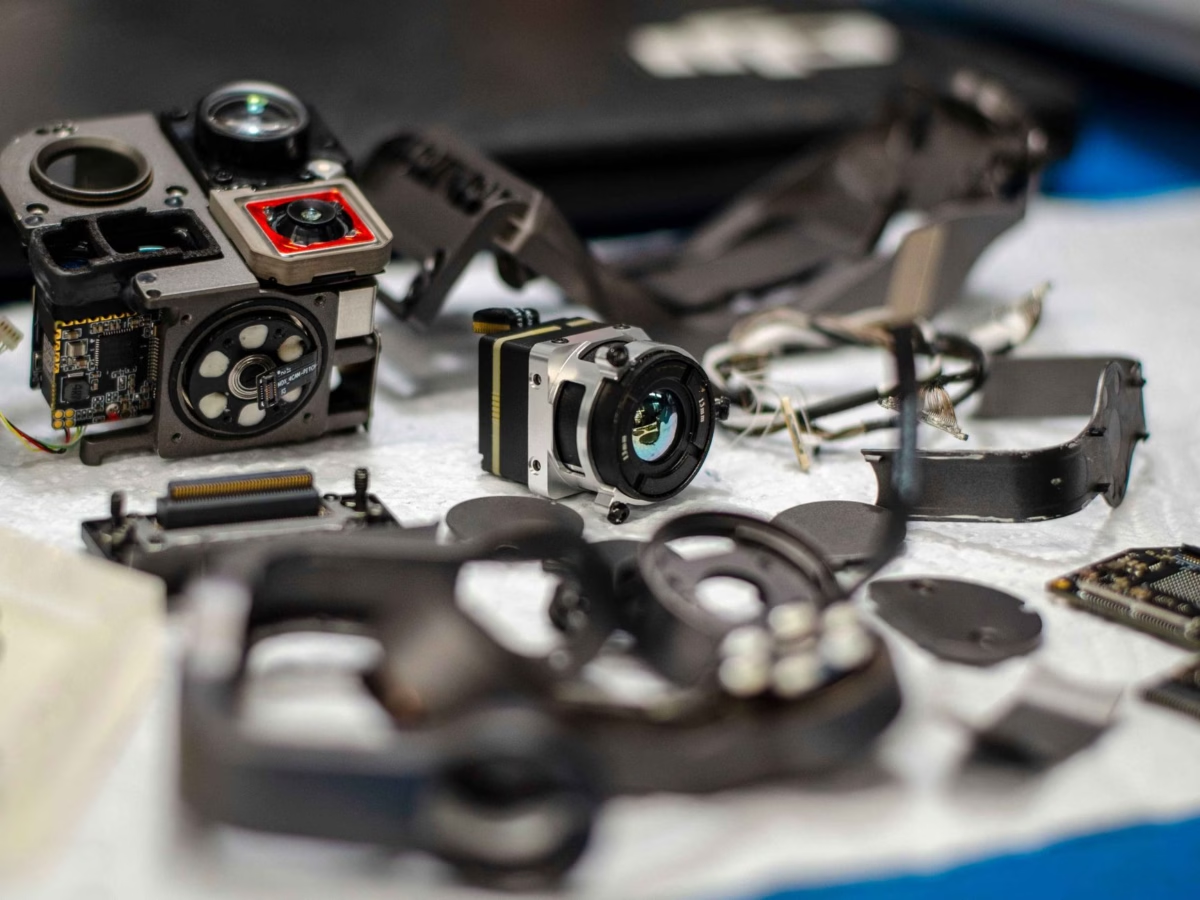
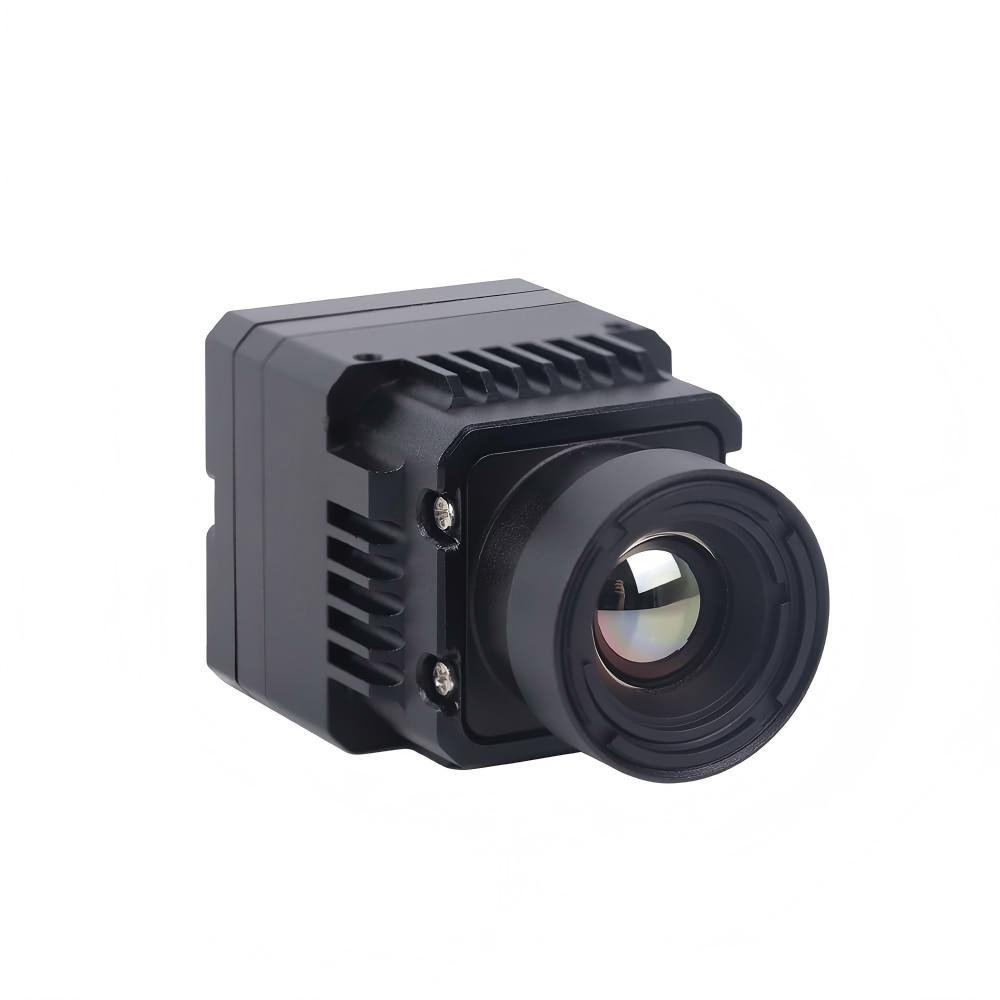
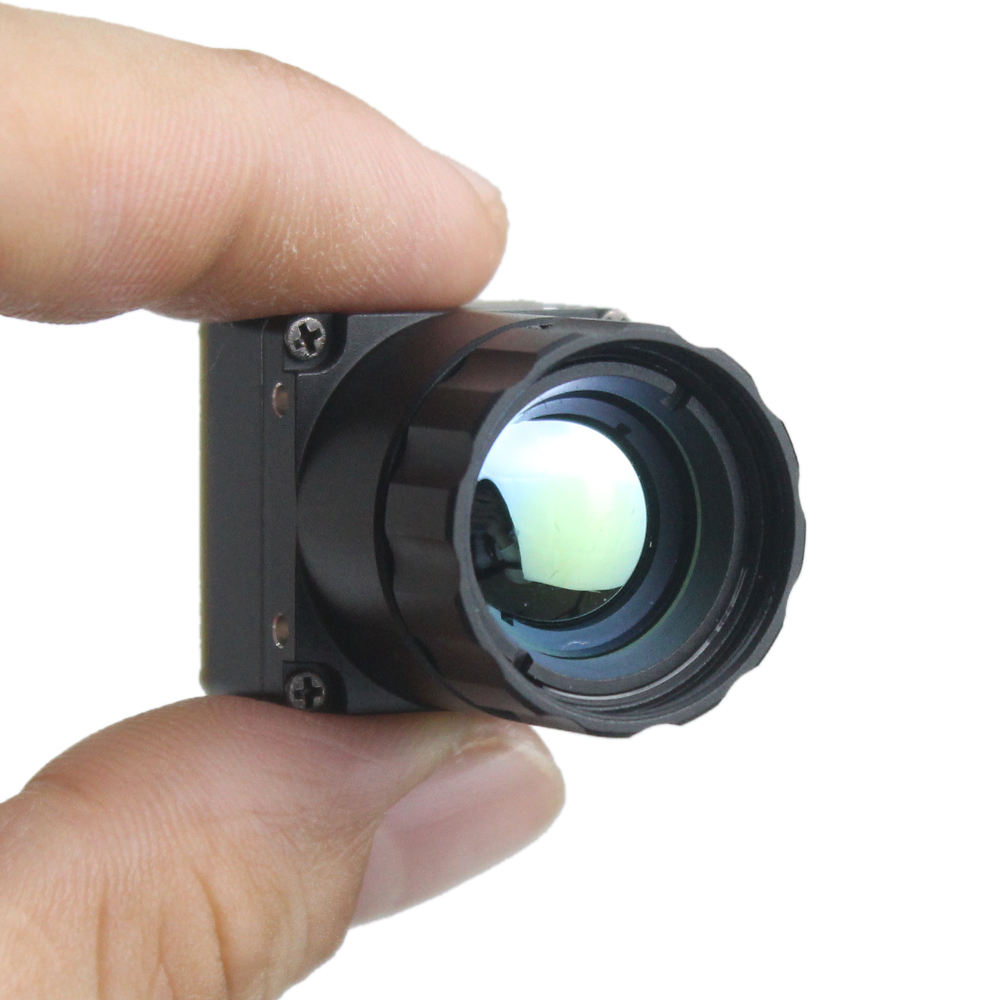
Uncooled LWIR Mini 256*192 Thermal Imaging Camera Module Similar To DJI For Detecting Mines
The Mini 256 Uncooled LWIR Thermal Camera Module incorporates high-performance Vanadium Oxide infrared detectors engineered for ultra-clear thermal imaging and precise non-contact temperature measurement. Designed for integration into lightweight drone gimbals, handheld survey tools, and mine-detection platforms, this module captures long-wave infrared radiation and outputs uniform, radiometrically calibrated thermal frames across challenging environmental conditions.
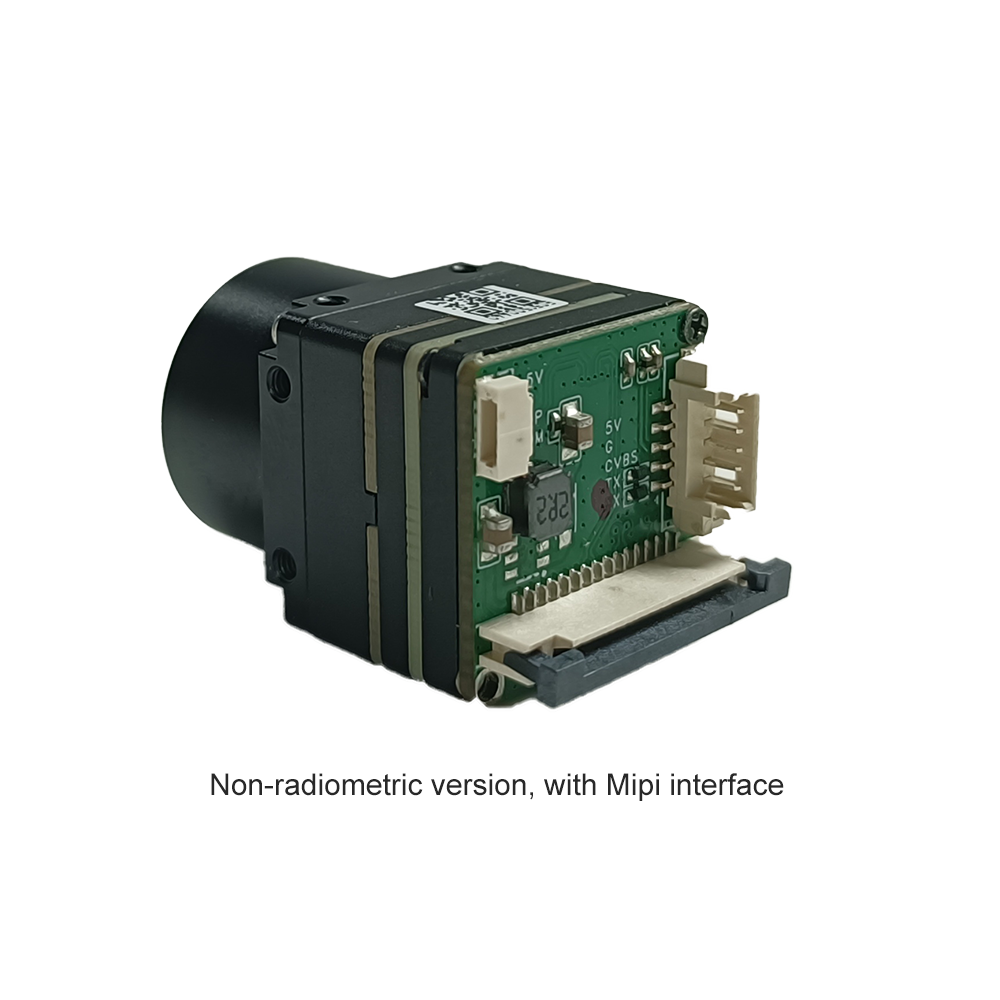
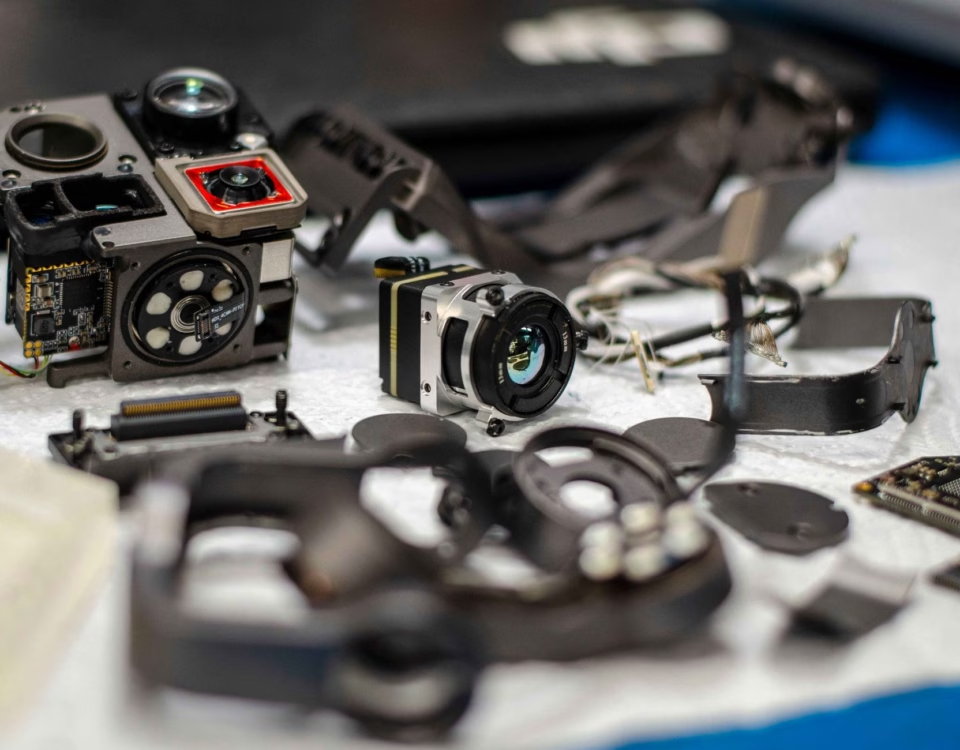
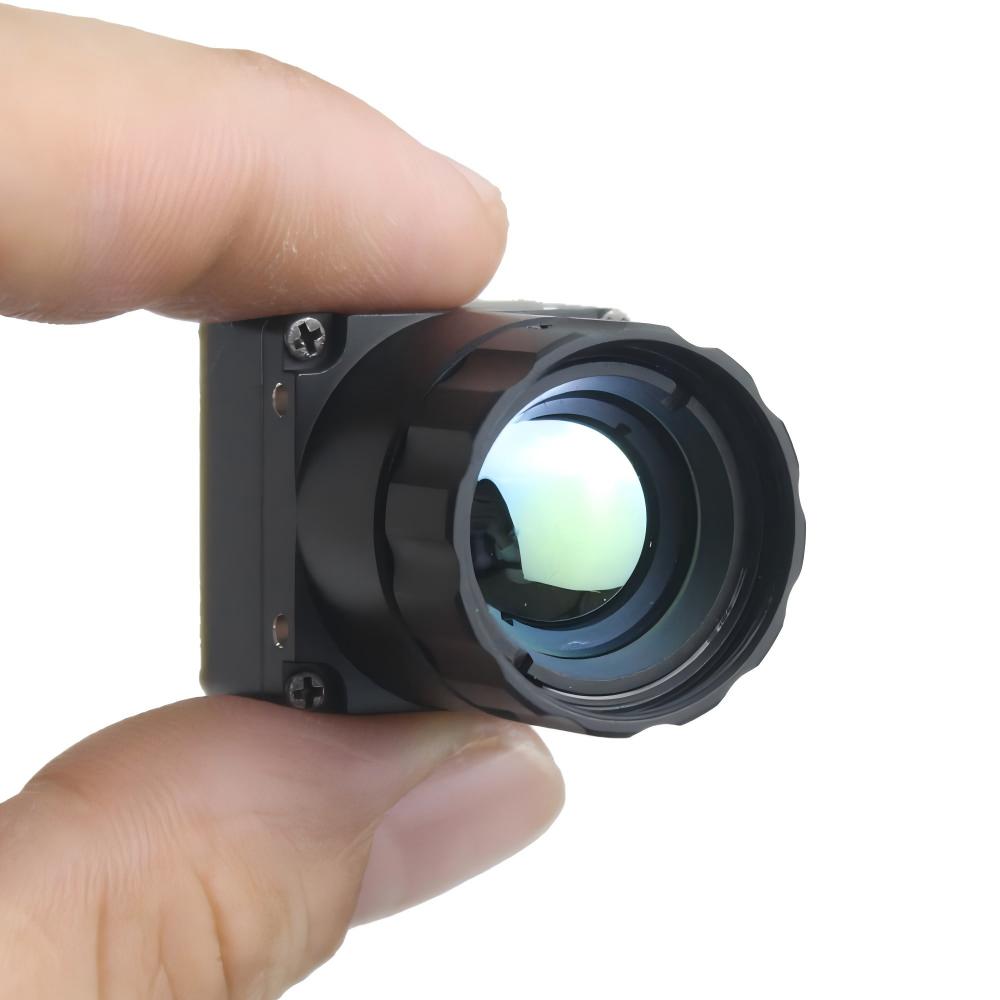
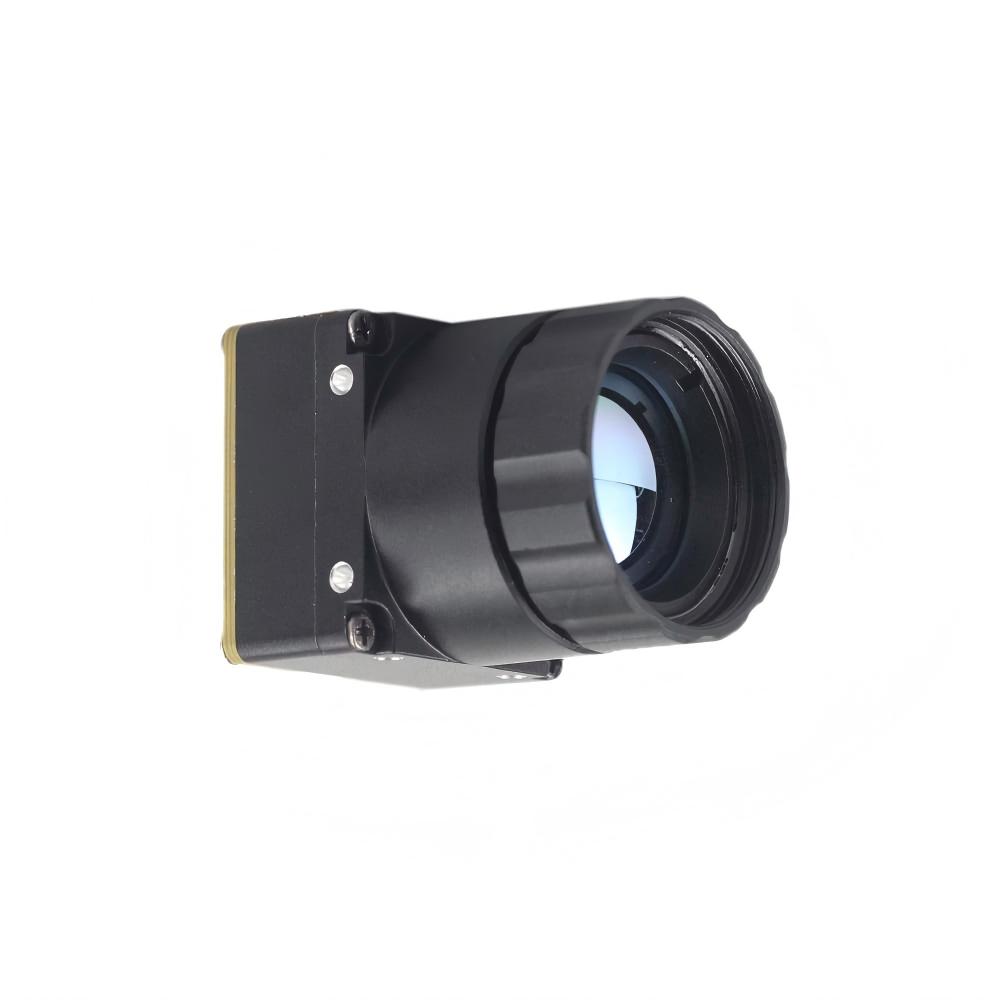
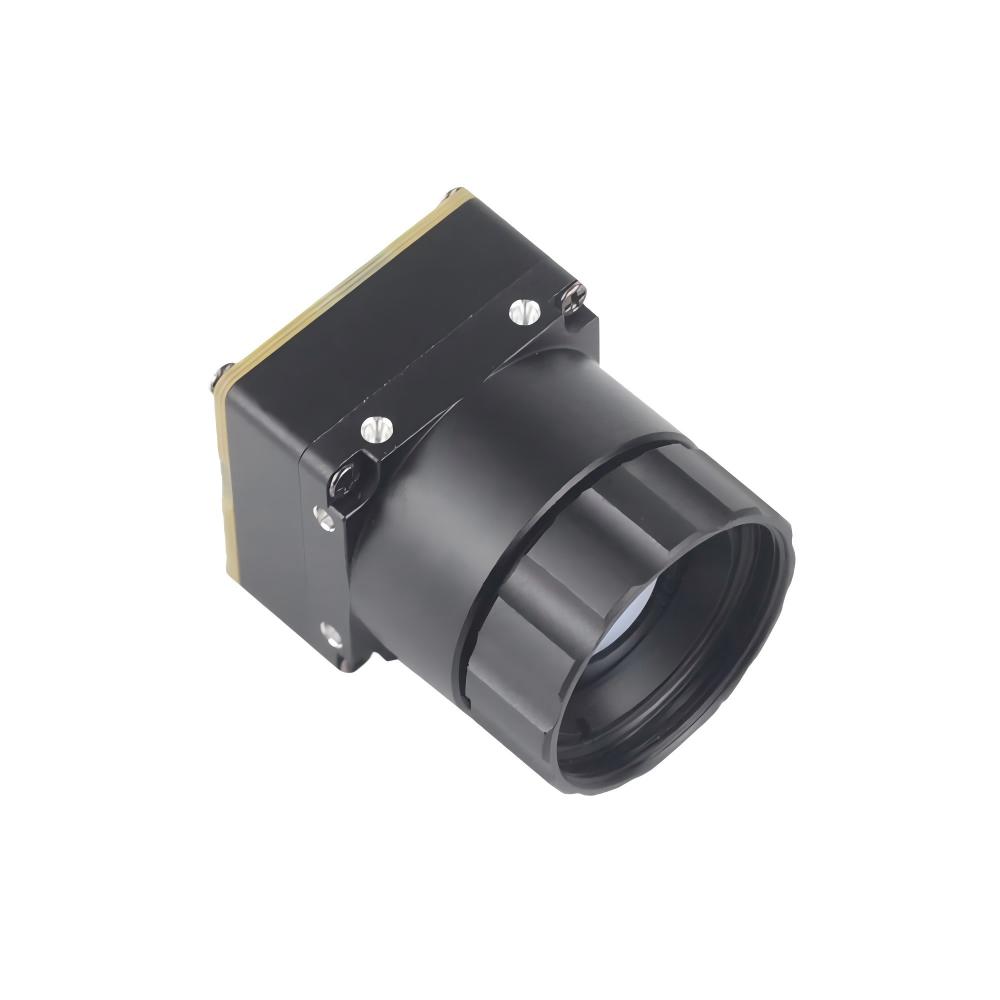
Uncooled Infrared Mipi 640 384 256 9mm Thermal Imaging Camera Module For Drones
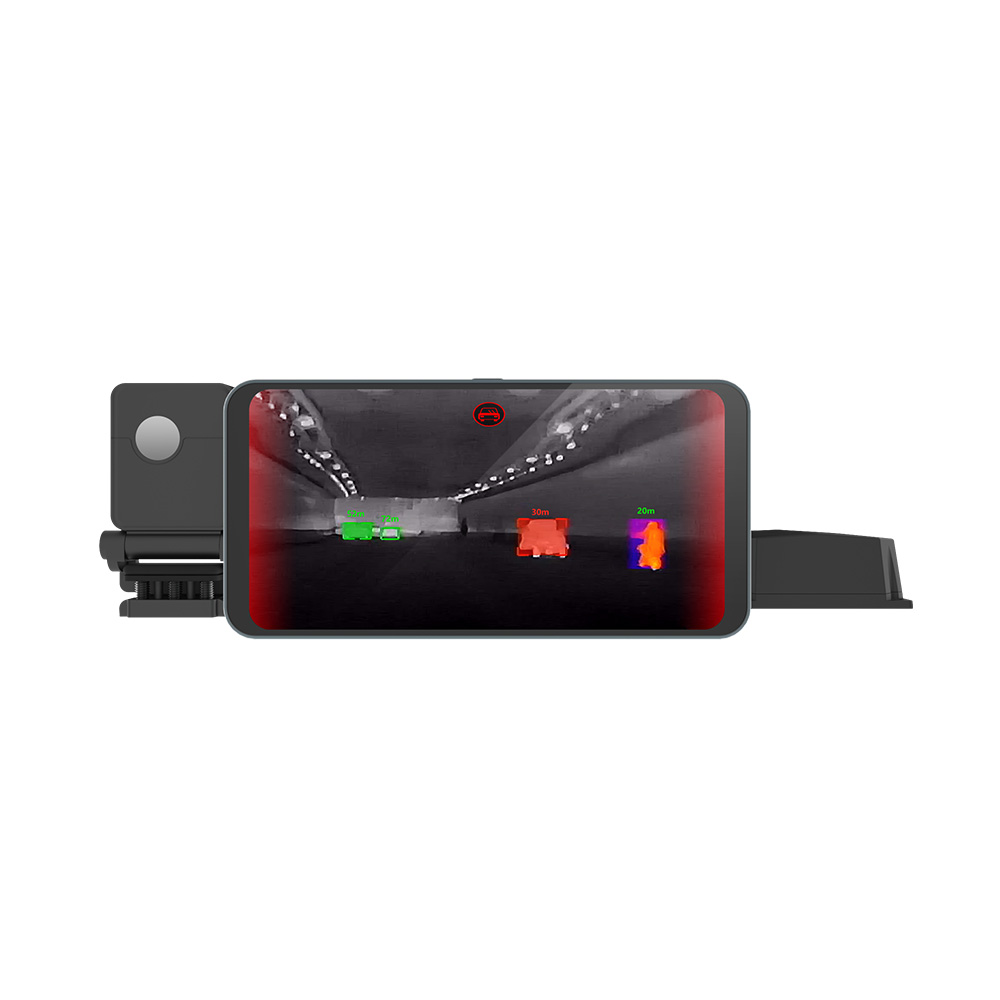
Engineered specifically for drone integration and autonomous systems, the Mini2 thermal camera module offers native MIPI CSI-2 digital connectivity and resolutions up to 640x512. Featuring a 9mm precision Germanium optical lens, a 12μm pixel pitch array, and an NETD rating ≤35mK, this module delivers sharp imagery, compact dimensions, and low power consumption for professional aerial surveillance and defense applications.

6. Deep-Dive Technical FAQ & System Design Considerations
What is the fundamental operational difference between low-light digital night vision and a true thermal module with an IR illuminator?
In contrast, a true thermal camera module operates within the Long-Wave Infrared (LWIR) waveband (8–14 μm), detecting thermal energy naturally emitted by objects relative to their absolute temperature. It requires zero ambient light and penetrates atmospheric obscurants with minimal beam attenuation. By combining a true thermal microbolometer with an active IR illuminator and a visible/NIR sensor into a unified payload, systems achieve long-range thermal detection through heavy obscurants, alongside active NIR illumination at closer range for positive target identification, reading labels, and navigating tight spatial environments.
How can design engineers integrate these miniature thermal camera modules into embedded Raspberry Pi or NVIDIA Jetson host boards?
Software integration relies on vendor-provided SDKs written in C/C++ or Python. These toolkits decode raw 16-bit radiometric telemetry (where each pixel value correlates directly to an absolute temperature value) alongside false-color YUV/RGB video buffers. Developers can route these array matrices into computer vision libraries like OpenCV to execute frame blending, automated region-of-interest (ROI) temperature monitoring, edge enhancement, and real-time deep learning inference using YOLO or MobileNet architectures.
Why is an active IR illuminator required if the thermal microbolometer already operates in total darkness?
Adding an active NIR illuminator paired with a visible/NIR sensor resolves this limitation. When the LWIR sensor detects a target signature at long range, the onboard active IR illuminator activates at closer distance, casting invisible 850nm or 940nm light across the target. The secondary optical sensor captures this reflected light, outputting high-definition video that reveals fine structural details, alphanumeric codes, and facial features. This dual-spectrum synergy ensures fast target detection combined with positive optical identification.
How does Noise Equivalent Temperature Difference (NETD) affect performance in low thermal contrast environments?
In low thermal contrast conditions—such as during steady rain, dense fog, high humidity, or cold uniform landscapes—targets and backgrounds tend to reach thermal equilibrium. Under these conditions, sensors with higher NETD ratings (≥50mK) generate noisy images where targets blend into the background. Conversely, high-sensitivity thermal cores featuring NETD ratings ≤35mK resolve subtle fractional-degree temperature differences, keeping targets clearly defined even in challenging environments.
What mechanical and optical window materials are required when designing custom weatherproof enclosures for thermal camera cores?
1. Optical Transmittance Windows: Standard optical glass, acrylic, and polycarbonate block Long-Wave Infrared radiation (8–14 μm). Thermal channels require specialized transmissive window materials such as optical-grade Germanium (Ge), Zinc Selenide (ZnSe), or specialized Chalcogenide glass coated with Anti-Reflective (AR) layers to ensure maximum thermal throughput.
2. Thermal Management & Isolation: Active NIR illuminators emit heat during operation. If this thermal energy transfers to the microbolometer substrate, it can introduce thermal drift and calibration errors. Enclosure designs must incorporate isolated aluminum or copper heat sinks and ceramic barriers to draw active illuminator heat away from the LWIR sensor board.
3. Environmental Ingress Protection: For drone and outdoor security applications requiring IP67 or IP68 ratings, housings should utilize dual fluoroelastomer O-rings, pressure-equalization vents (Gore-Tex membranes), and vibration-dampening mounts to protect sensitive electro-optics from mechanical shock.
📚 References & Further Reading
- Industry Standard: OpenCV Open-Source Computer Vision Library Platform
- Thermal Physics Overview: Wikipedia Thermography Technical Foundations
- Embedded Integration Guide: Thermal Camera Driver Setup on Raspberry Pi Platforms
- Field Deployment Analysis: Thermal Imaging Applications in Search and Rescue & Defense Operations
- Manufacturing Standards: Enterprise Strength & Optical Manufacturing Capabilities