
High-Performance Thermal Imaged Module Selection Guide for OEM & Drones
2026年8月12日
High-Resolution Uncooled Detector Modules for Drone & Industrial AI Vision | Purpleriver
2026年8月13日

Commercial Uncooled Thermal Sensor Modules: High-Res OEM & Edge AI Integration Guide
Look, if you've been integrating vision systems for more than a minute, you know the historic headaches of infrared sensor selection. Deploying long-range thermal vision used to mean picking your poison: either pay through the nose for a high-power, maintenance-heavy cryogenic cooled system, or settle for a low-resolution uncooled sensor plagued by atrocious Noise Equivalent Temperature Difference (NETD) and unacceptable pixelation. Today, high-resolution uncooled thermal sensor cores—specifically 640x512 and 384x288 matrix formats—have completely rewritten those rules. By shrinking the readout integrated circuit (ROIC) and moving hardware-level ASIC image signal processing (ISP) directly onto the motherboard, modern uncooled thermal modules deliver thermal sensitivity under 30–40mK, pull just 1 to 2 Watts of power, and fire up instantaneously in tight Size, Weight, Power, and Cost (SWaP-C) setups.
For OEMs, systems integrators, and robotics engineers, picking an uncooled thermal imager isn't just about picking a sensor chip off a shelf anymore; it's about how cleanly that hardware integrates into your full system stack. Modern mission-critical builds—from autonomous UAV gimbals and unmanned ground vehicles (UGVs) to continuous predictive facility monitoring—require zero-latency video pipelines, flexible multi-protocol connectivity (RJ45, RTSP/IP, CVBS), and native hardware-accelerated edge inference. This guide breaks down the real-world engineering mechanics you need to evaluate, integrate, and field these modules without hitting unexpected bottlenecks on the bench.
Table of Contents
- 👉 1. Physics & Architecture of Uncooled Thermal Microbolometers
- 👉 2. Low-Power ASIC Architectures & On-Sensor Edge AI Processing
- 👉 3. OEM Hardware Interfaces & Video Streaming Protocols
- 👉 4. Industrial Application Vectors: Drones, Robotics, & Smart Grids
- 👉 5. OEM Uncooled Thermal Sensor Specs & Product Matrix
- 👉 6. Deep-Dive Technical FAQ Engine
1. Physics & Architecture of Uncooled Thermal Microbolometers
Out in the field, uncooled thermal imaging sensors operate primarily within the Long-Wave Infrared (LWIR) atmospheric transmission window (8 to 14 micrometers, or μm). Photon detectors found in cooled Mid-Wave Infrared (MWIR) cameras demand energy-hungry Stirling cryogenic coolers to pull sensor temperatures down to 77 Kelvin (-196°C). Uncooled microbolometer arrays, on the other hand, operate right at ambient room temperature. Stripping out active mechanical coolers eliminates failing motorized components, drops your board-level power draw down from tens of watts to under 2 watts, and keeps systems running continuously for tens of thousands of hours without needing a bench teardown.
At the mechanical core of an uncooled thermal microbolometer lies a suspended matrix of micro-machined bridge structures held over a silicon substrate by thermally insulated legs. Incidental infrared energy emitted by scene objects passes through custom optical elements and hits an absorbing membrane on each microbridge. As that absorbed heat raises the membrane's temperature, the electrical resistance of the underlying active semiconductor shifts proportionally. The Readout Integrated Circuit (ROIC) sitting directly under the focal plane array (FPA) samples this resistance delta (ΔR) frame by frame, converting pure thermal variance into raw electrical signals.
1.1 Vanadium Oxide (VOx) vs. Amorphous Silicon (a-Si) Detector Physics
The semiconductor material deposited on those microbridge structures makes or breaks your sensor's thermal sensitivity, signal-to-noise ratio (SNR), and operational stability across severe environment swings. In industrial and defense-grade hardware, you'll run into two primary material setups:
- ✅ Vanadium Oxide (VOx): VOx delivers a higher Temperature Coefficient of Resistance (TCR)—typically -2%/K to -3%/K at room temperature. Higher TCR means a small shift in target temperature creates a much larger percentage change in electrical resistance. That gives VOx microbolometers a lower 1/f noise floor, razor-sharp spatial contrast, and sensitivity ratings down below 30mK to 40mK. When you're building systems for airborne surveillance, long-range SAR, or precise radiometric industrial thermal mapping, VOx is the industry workhorse.
- ⚙️ Amorphous Silicon (a-Si): Amorphous silicon exhibits a lower TCR and runs a bit noisier than VOx. Its main selling point is pure compatibility with standard CMOS silicon fabrication lines, making it cheap to crank out for high-volume commercial thermography or basic automotive blind-spot monitoring. That said, when your hardware faces harsh outdoor ambient thermal shifts (-40°C to +80°C), high-precision industrial builds overwhelmingly stick with VOx cores for their rock-solid thermal stability.
1.2 Pixel Pitch Optimization & Noise Equivalent Temperature Difference (NETD) Metrics
Balancing pixel pitch reduction, optical f-number requirements, and overall thermal sensitivity is a constant trade-off on the engineering bench:
- 📍 Pixel Pitch Shrink (17μm down to 12μm): Moving from legacy 17μm pixels down to a 12μm geometry lets manufacturers pack a full 640x512 array into a significantly smaller focal plane footprint. A smaller sensor plane shrinks the required optical image circle, meaning lens designers can craft much smaller, lighter Germanium and Chalcogenide glass assemblies. On drone gimbals or wearable optics where every gram counts, dropping to a 12μm VOx core slashes total weight without sacrificing spatial pixel count.
- 📍 Noise Equivalent Temperature Difference (NETD): Rated in millikelvins (mK), NETD defines the smallest thermal delta the uncooled sensor can extract above its own intrinsic system noise floor. A camera core rated at NETD < 30mK resolves temperature differences down to 0.03°C. In low-contrast scenes—like flying through thick coastal fog, scanning open water, or spotting an overloaded electrical breaker—a lower NETD rating directly translates to sharper target edges and vastly improved long-range detection.
When prototyping custom payload interface boards, many integration teams benchmark early pinouts using open development platforms from communities like Arducam or expansion hardware from Waveshare before spinning custom production PCBs.
2. Low-Power ASIC Architectures & On-Sensor Edge AI Processing
Raw analog voltages coming straight out of a microbolometer Readout Integrated Circuit (ROIC) are messy. Because thousands of microscopic bridge structures have tiny manufacturing variances in mass, electrical resistance, and thermal insulation, raw microbolometer data comes out loaded with fixed-pattern noise (FPN), dynamic gain variances, and thermal drift. Back in the day, fixing those artifacts meant sending raw high-bandwidth digital video to a power-hungry host PC or discrete GPU board. Modern high-res uncooled thermal modules clean up this mess directly on the camera hardware using high-efficiency Application-Specific Integrated Circuits (ASICs) mounted right behind the FPA.
2.1 Hardware Image Signal Processing (ISP) Pipelines
The onboard hardware ASIC executes an ultra-low-latency image processing pipeline right at the sensor's native frame rate (25Hz, 30Hz, or 50Hz). This hardware pipeline relies on three main algorithms running in silicon:
- ⚙️ Non-Uniformity Correction (NUC): Normalizes offset and gain variations across all 327,680 individual pixels (in a 640x512 core). Modern ASIC engines run intelligent shutterless or mechanical shutter NUC algorithms. By continually reading onboard housing thermistors, the ASIC dynamically adjusts offset tables on the fly, guaranteeing clean frame uniformity across ambient temperature sweeps (-40°C to +80°C) without freezing video feeds during critical moments.
- ⚙️ 3D Digital Noise Reduction (3D DNR): Merges spatial bilateral filtering inside individual frames with temporal recursive filtering across frame sequences. The ASIC isolates thermal background noise from actual target movement, removing fine background grain without creating ugly motion trails behind fast-moving drones or vehicles.
- ⚙️ Digital Detail Enhancement (DDE): Microbolometers harvest raw 14-bit data containing 16,384 discrete digital levels. Standard displays only render 8-bit video (256 grayscale values). The ASIC's DDE engine uses non-linear spatial histogram compression to preserve broad scene dynamic range while simultaneously boosting high-frequency detail. That lets operators view super-hot thermal anomalies (like a failing electrical junction) right alongside cold background geometry without blowing out or washing out the display.
2.2 Embedded Neural Network Inference at the Sensor Edge
In modern builds, these thermal ASICs do a lot more than clean up raw frames. They now feature embedded Neural Processing Units (NPUs) engineered to run quantized deep learning models (such as YOLO-Tiny, MobileNet, or custom CNN architectures) directly at the camera edge. This flips the thermal camera from a simple video pipeline into an autonomous spatial decision node:
Here's the real advantage: edge AI lets the sensor local-analyze scene motion and radiometric surface temperatures on the spot. Instead of burning wireless bandwidth streaming high-bitrate continuous video over cellular or radio links, the uncooled thermal core executes zero-latency target classification (detecting people, vehicles, or equipment in total darkness) and emits lightweight JSON telemetry metadata over serial or IP pipelines. If you're building software-driven thermal imaging workflows or exploring edge detection strategies, dive into our comprehensive infrared thermal imaging technical resource library.
3. OEM Hardware Interfaces & Video Streaming Protocols
Dropping an uncooled thermal core into a 3-axis drone gimbal, an autonomous rover, or a factory automation panel means picking the right physical connections and streaming protocols. OEM engineering setups typically leverage hybrid output architectures that deliver network IP streams and low-latency composite video at the same time.
3.1 Hybrid Output Connectivity: RJ45 Ethernet, RTSP IP, & Legacy CVBS
To hook up cleanly with modern VMS platforms and legacy control displays alike, dual-output thermal cores give you maximum interface flexibility:
- 🔌 RJ45 Network Output (RTSP / IP Engine): Onboard hardware H.264/H.265 encoders pack up processed frames into standard RTSP video streams over 10/100 Ethernet. This native network output drops straight into ONVIF Profile S/G/T Video Management Systems, remote ground stations, and cloud management consoles without requiring external encoder hardware.
- 🔌 Analog CVBS (Composite Video Baseband Signal): Outputs direct, zero-latency NTSC or PAL analog signals over micro coaxial or ribbon cables. Analog output remains vital for high-speed pilot tracking and FPV drone flight where network streaming encoding delays (typically 100ms to 250ms) cause control lag during fast flight maneuvers.
- 🔌 Serial Command Bus (UART / RS485 / Pelco-D): Camera control features—like palette changing (White Hot, Black Hot, Rainbow, Ironbow), digital zoom steps (1x to 8x), emissivity adjustments, and manual NUC triggering—are controlled via simple serial strings or standard ONVIF command structures.
3.2 Thermal Dissipation and Optical Window Engineering
Getting stable, repeatable imagery out of an uncooled thermal camera module inside an industrial or weatherproof enclosure requires attention to physical thermals and optics:
First off, watch your internal heat sources. Uncooled microbolometers don't need cryogenic chillers, but their internal offset calibration relies on predictable thermal equilibrium across the focal plane. Mounting a thermal camera core right next to hot motor drivers, compute SoCs, or wireless transmitters creates uneven thermal gradients across the camera housing, causing visible thermal drift or dark spots on the image. Always use non-conductive mechanical standoffs, proper heat sinking, and thermal gap pads to vent heat away from the camera's optical block.
Second, choose the right window material. Standard optical glass, acrylic, and polycarbonate windows are complete brick walls to Long-Wave Infrared radiation between 8μm and 14μm. Sealed housings must use specialized LWIR-transparent optical windows made from high-purity Germanium (Ge) or Chalcogenide glass with custom anti-reflective (AR) coatings to ensure maximum thermal transmission.
4. Industrial Application Vectors: Drones, Robotics, & Smart Grids
With high spatial resolution VOx microbolometers becoming smaller and pulling far less power, these modules are taking over core roles across multiple industrial sectors:
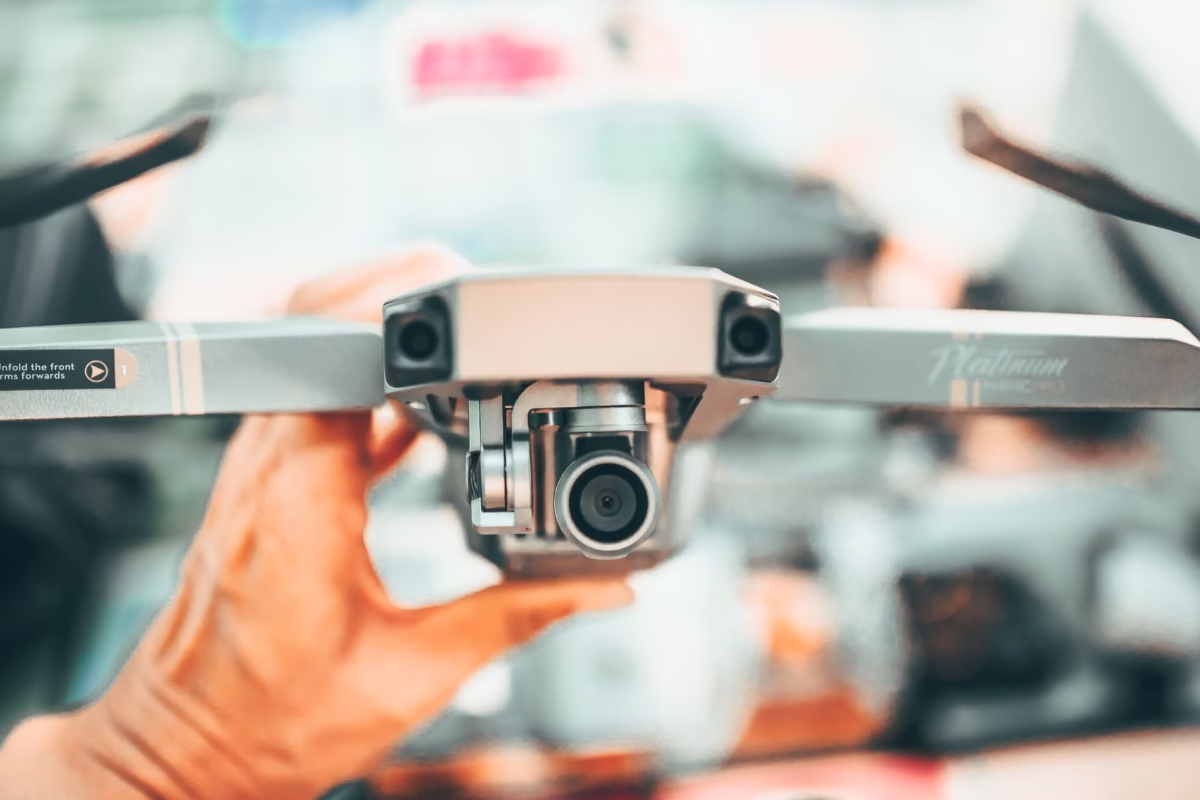
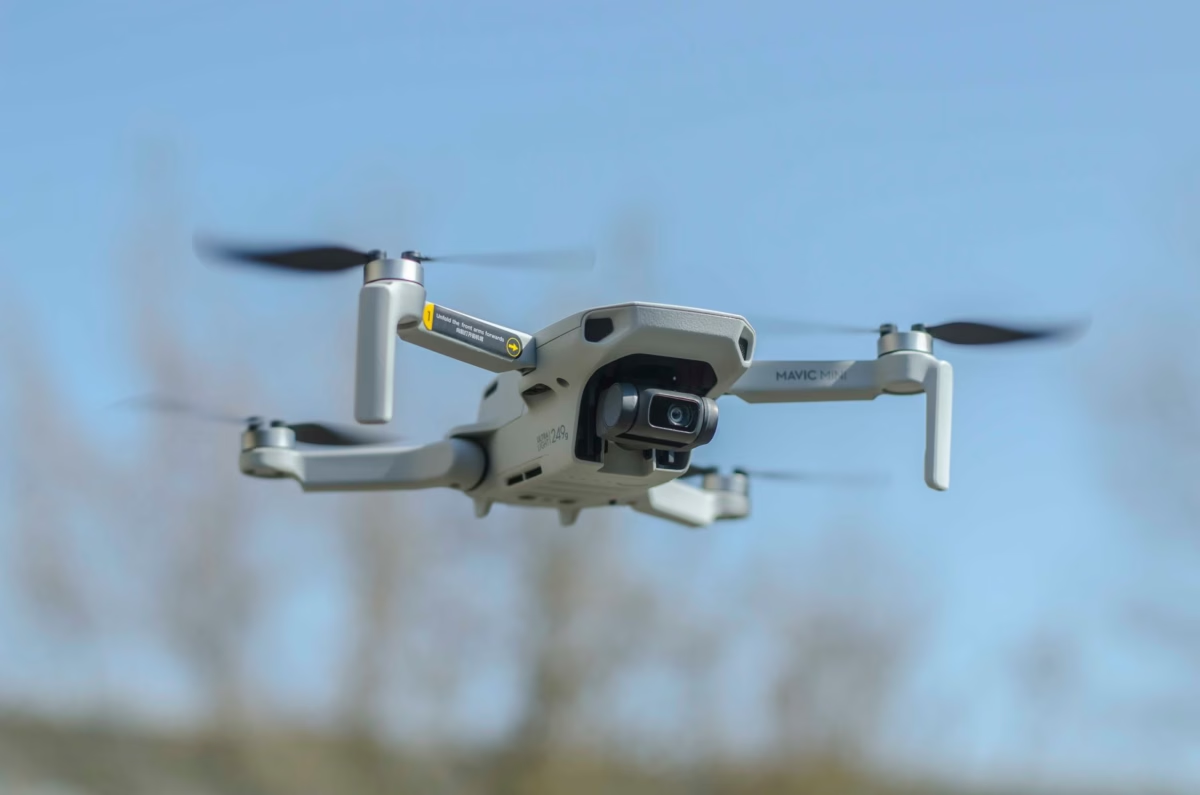
- 🚁 Unmanned Aerial Vehicles (UAVs) & Search and Rescue (SAR): Lightweight 12μm uncooled thermal cores integrated into stabilized drone gimbals help emergency crews locate missing persons, track wildland fire lines through blinding smoke, and spot agricultural irrigation leaks across large fields. Dual IP and analog streams give pilots zero-latency flight video while beaming high-res thermal streams to command vehicles.
- 🤖 Autonomous Mobile Robots (AMRs) & UGVs: Ground robots running in mining operations, agriculture, and manufacturing facilities contend with thick dust, steam, fog, and zero-light conditions. Uncooled thermal cores deliver clear 24/7 navigation vision, letting vision algorithms detect personnel, machinery, and ground drops when visible RGB cameras and short-range LiDAR get blinded.
- ⚡ Substation Monitoring & Automated Thermography: Continuous monitoring of high-voltage transformers, switchgear junctions, and chemical valves requires consistent radiometric tracking. Installing high-res uncooled thermal cameras with automatic isotherm alarms along utility grids lets SCADA systems catch minor temperature spikes, stopping catastrophic station failures before fires start.
- 🛡️ Perimeter Security & Automated Intrusion Detection: High-res LWIR camera modules integrated into pan-tilt security heads provide round-the-clock perimeter surveillance. Unlike visual cameras or active IR illuminators, uncooled thermal sensors easily spot target body heat through tall grass, rain, fog, and light camouflage. To explore real-world integration strategies and deployment teardowns, check out our dedicated industrial thermal vision engineering blog.
5. OEM Uncooled Thermal Sensor Specs & Product Matrix
The table below breaks down technical specifications for integrating our commercial OEM uncooled thermal camera modules into airborne, mobile, and stationary system builds.
| Product Name | Visual Aspect | Resolution & Detector | Interfaces & Protocols | Core Engineering Features | Primary OEM Target Use |
|---|---|---|---|---|---|
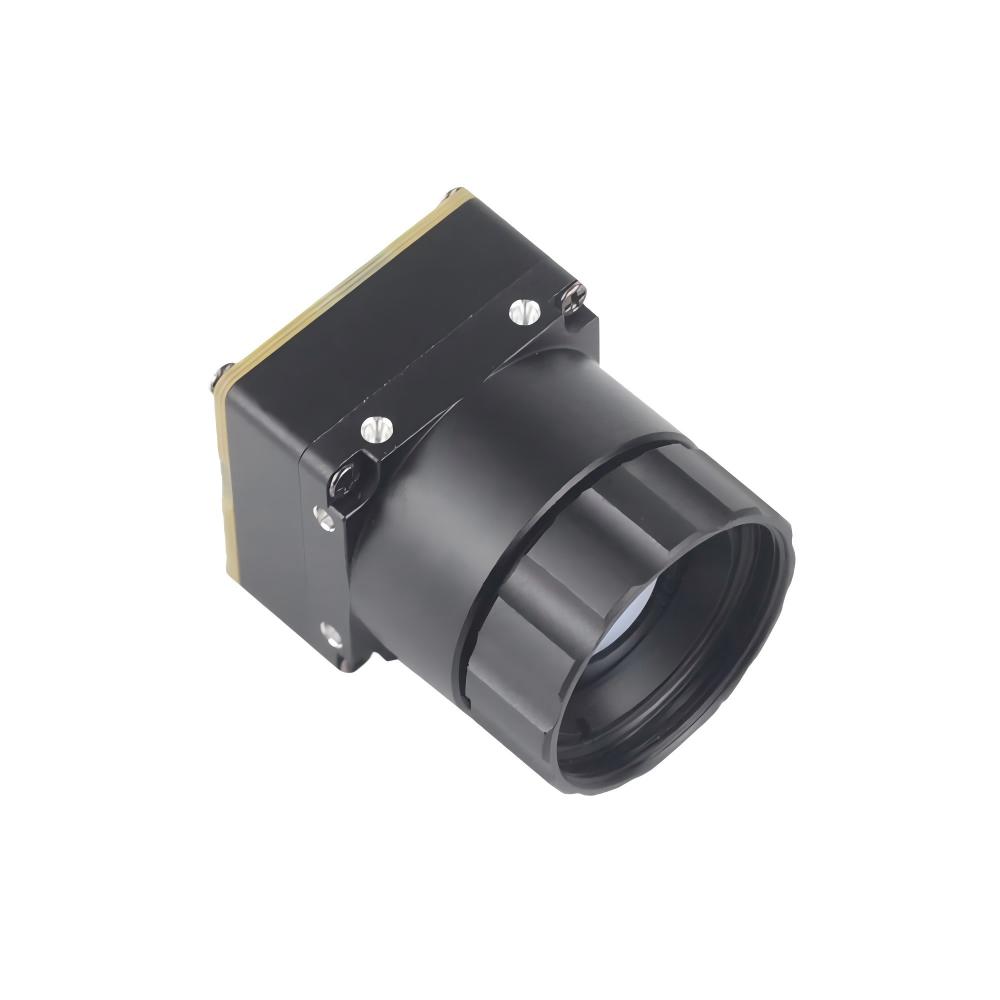
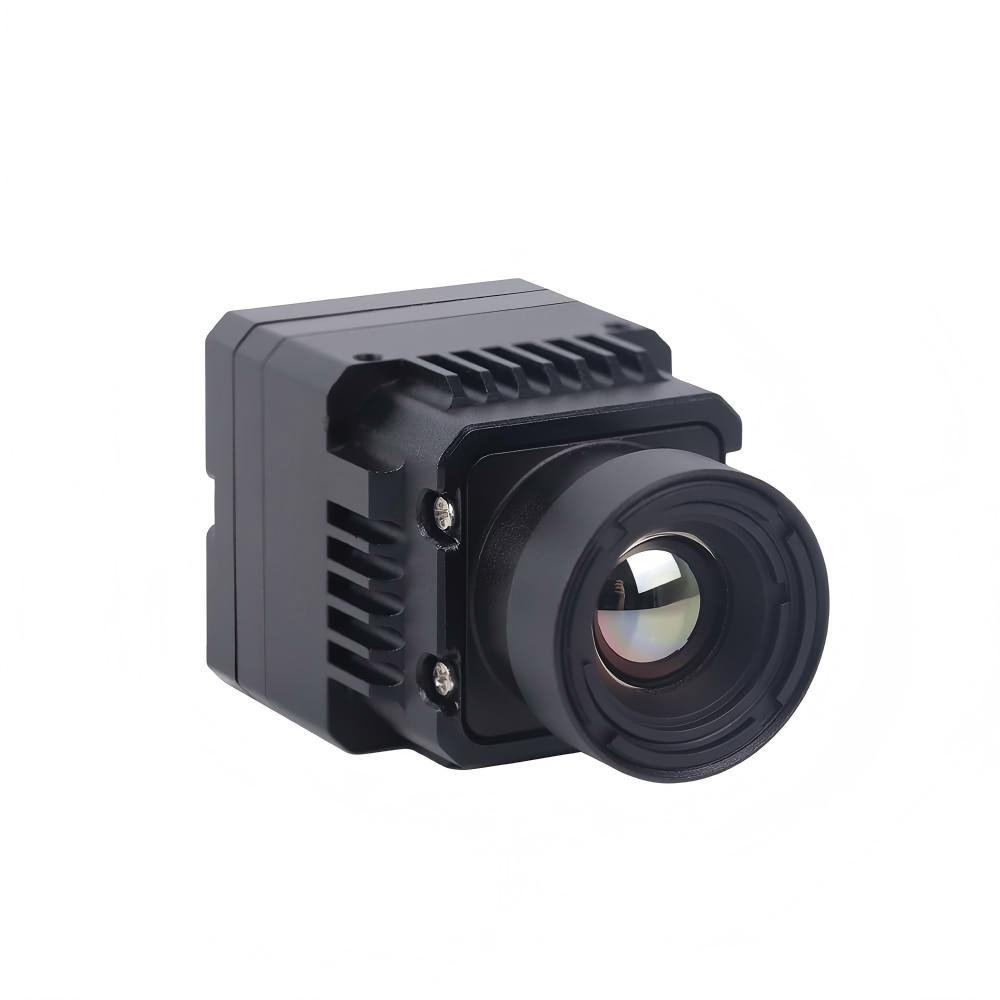
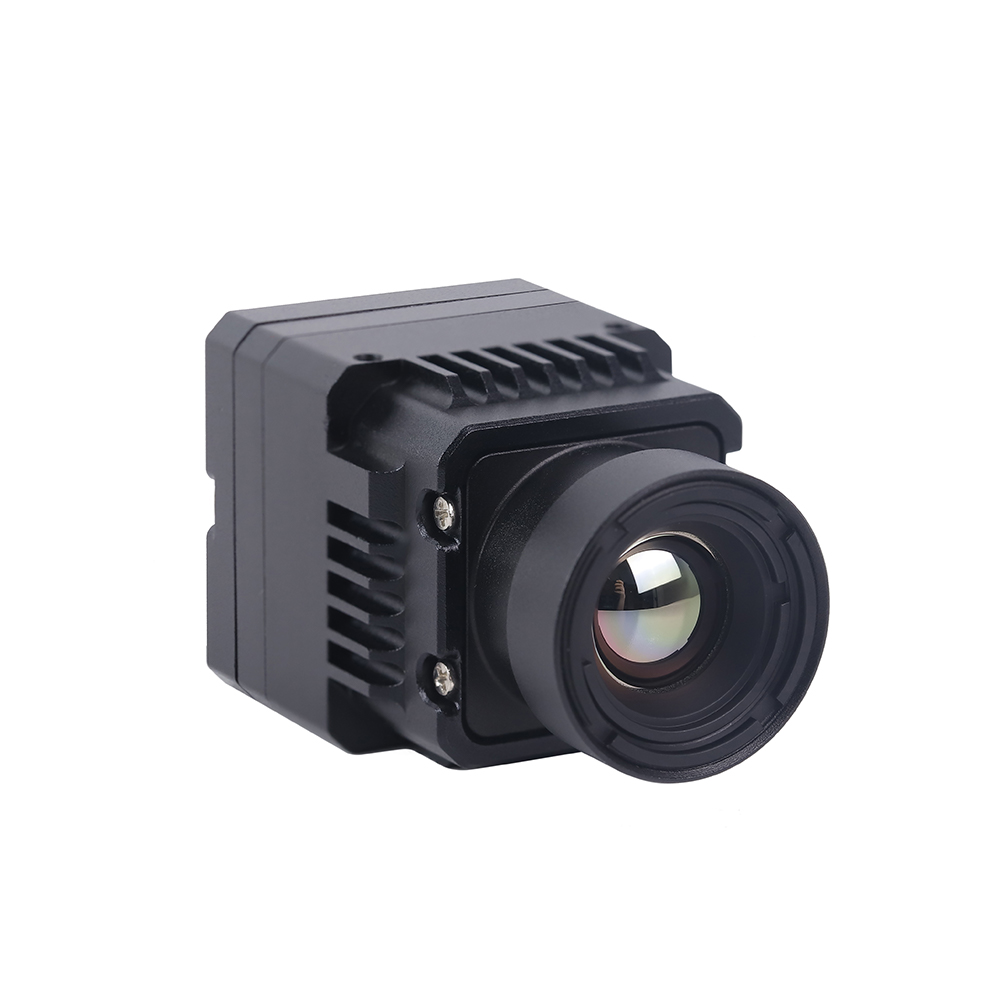
| Uncooled Infrared RJ45 CVBS RTSP IP 640*512 Thermal Sensor Camera Module |
|
640 × 512 Pixels VOx Uncooled Microbolometer Array (8–14μm LWIR) |
• RJ45 Ethernet Network • RTSP / IP Streaming • Analog CVBS Video • Serial Command Bus |
• Hardware ASIC ISP Core • H.264/H.265 Onboard Video Encoder • Advanced 3D DNR & Dynamic Detail Enhancement • High Sensitivity NETD < 35mK–40mK |
• Long-Range UAV Airborne Gimbals • Edge AI Perimeter Defense Systems • Automated Substation Thermography • Autonomous Ground Vehicles |
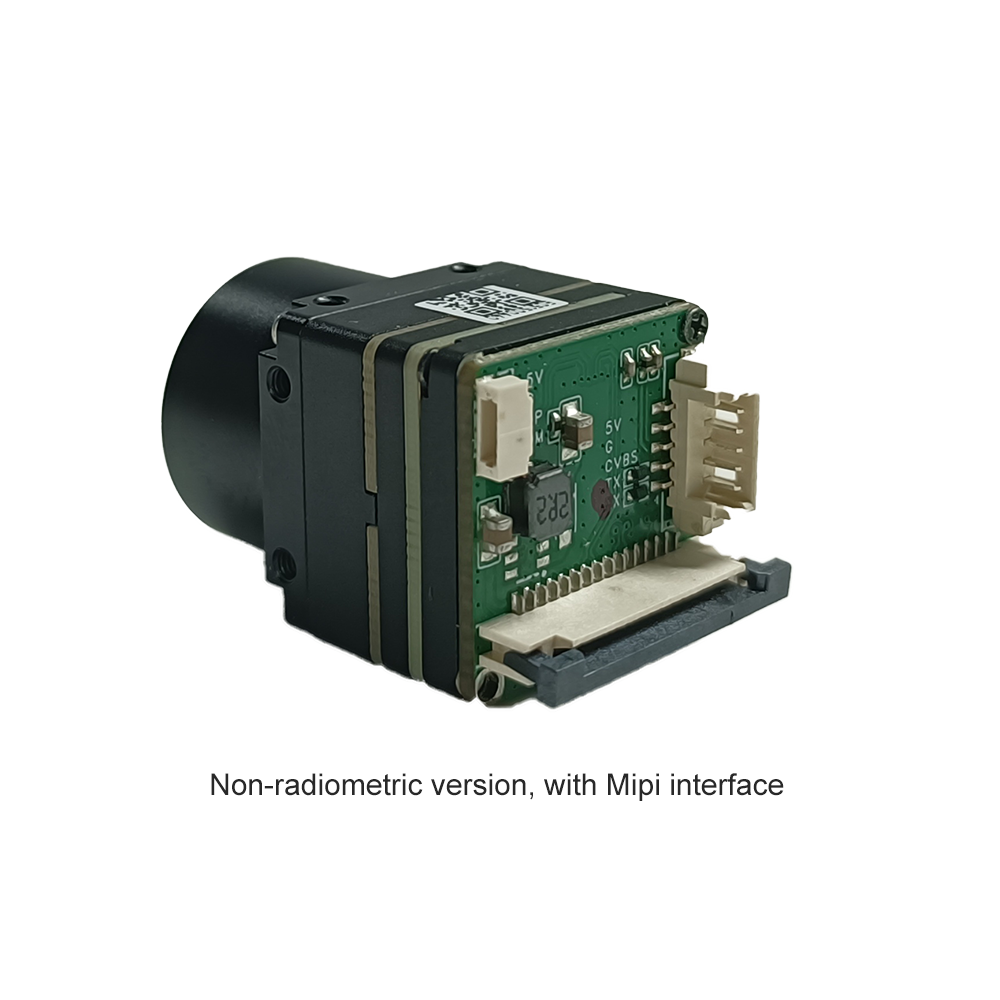
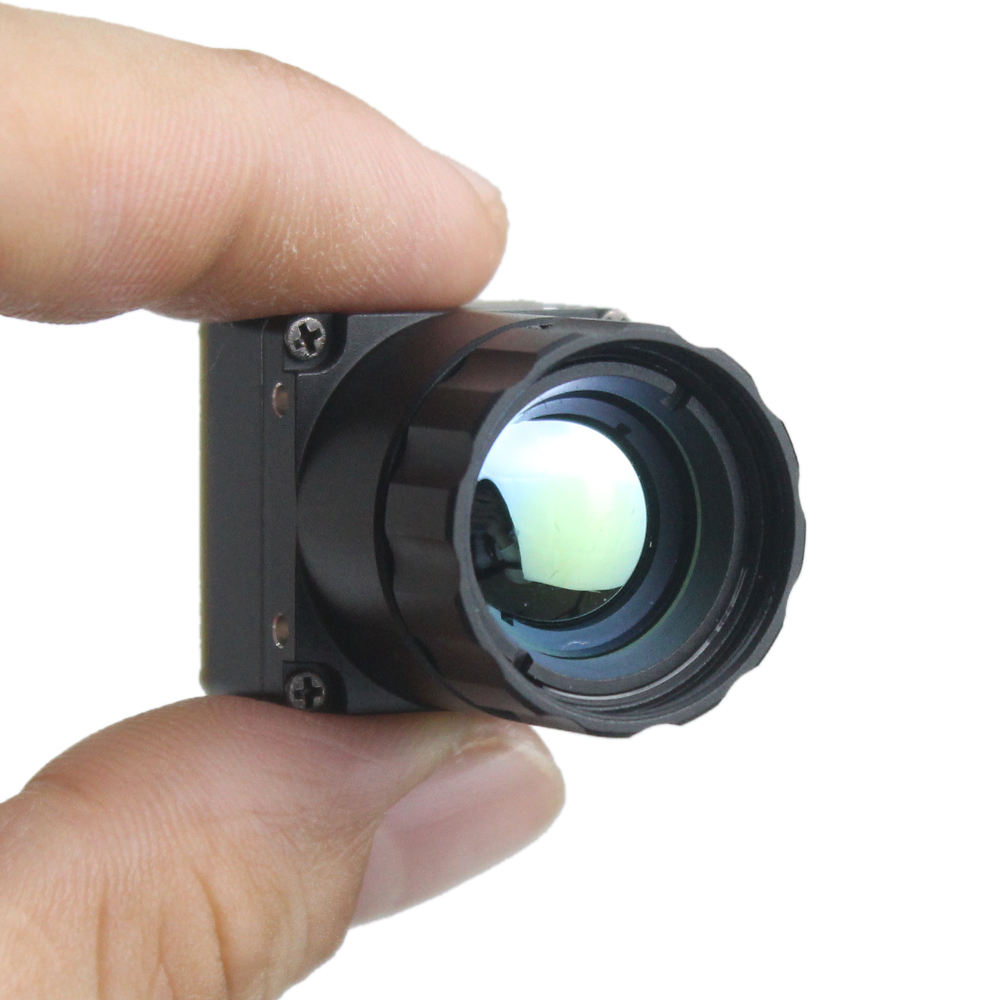
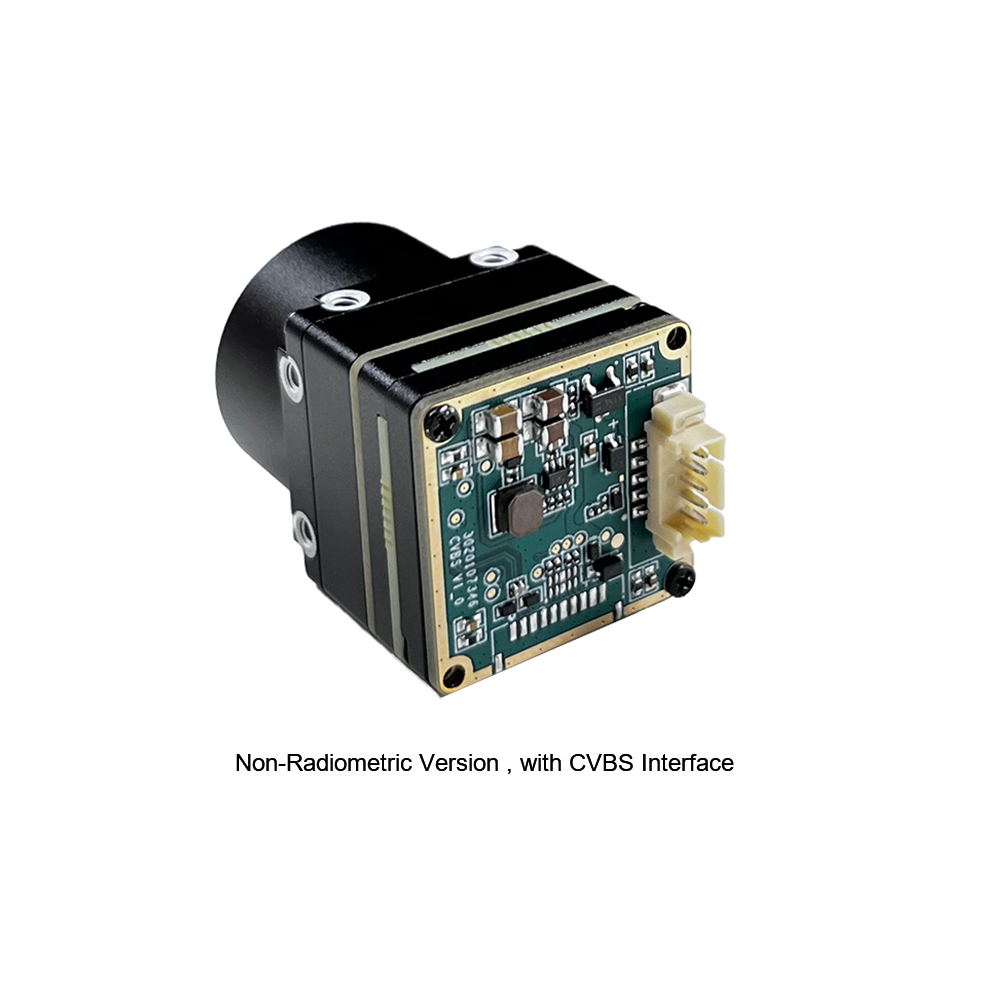
| Uncooled Mini 384*288 Thermal Camera Module For Drones |
|
384 × 288 Pixels Ultra-Miniature VOx Uncooled Core (8–14μm LWIR) |
• Analog CVBS Video • Multi-Pin Modular Header • Direct UART Control |
• Miniaturized SWaP Structural Footprint • Universal Online Temperature Measurement • Isotherm Hotspot Alarm Generation • Ultra-Low Power Draw (< 1.2W) |
• Light Payload UAV / Micro-Drone Gimbals • Machine Vision Production Cells • Robotic Equipment Maintenance • Handheld Tactical Thermography |
Detailed Product Showcase & OEM Integration Linkage
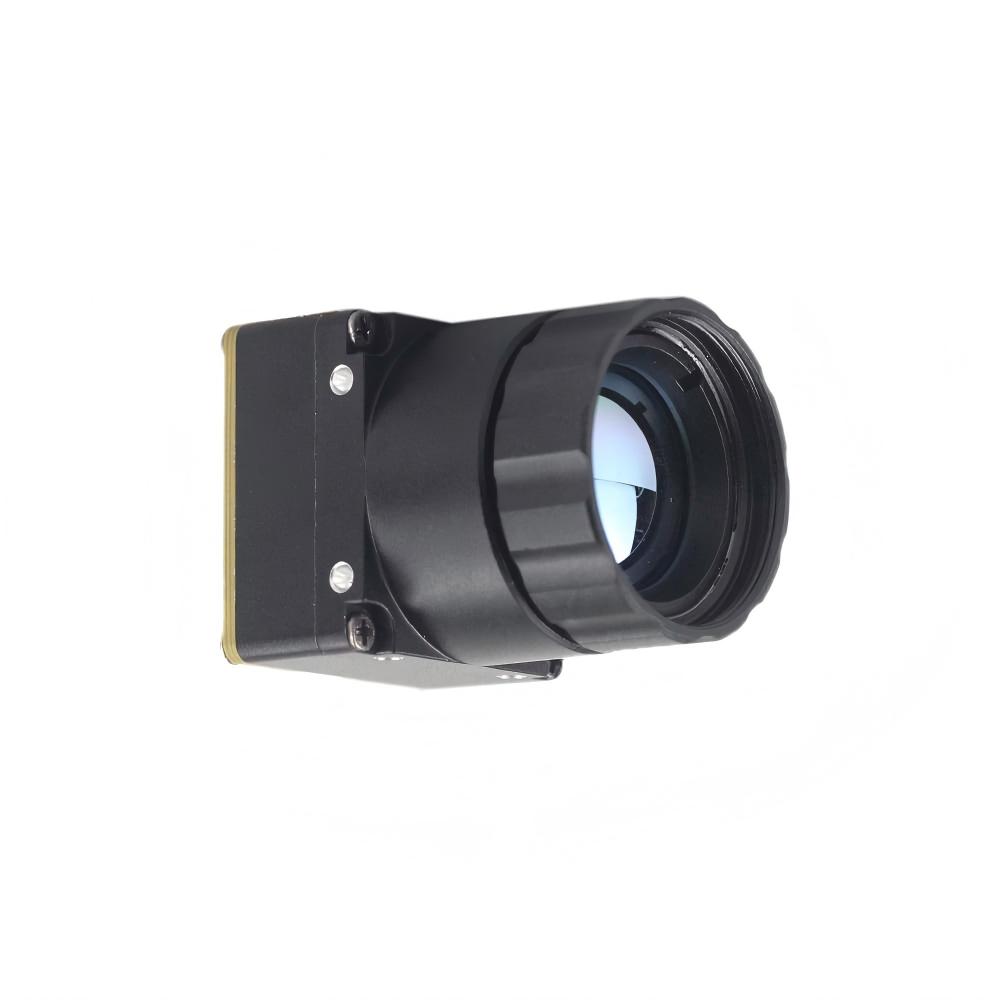
1. Uncooled Infrared RJ45 CVBS RTSP IP 640*512 Thermal Sensor Camera Module
Designed specifically for demanding UAV payloads, autonomous robotics, and smart perimeter systems, this 640x512 uncooled thermal camera module pairs a high-res VOx microbolometer array with an onboard ASIC hardware engine. Featuring direct RJ45 network connectivity and analog CVBS output, it streams compressed H.264/H.265 RTSP video directly into IP networks while maintaining an instant analog video feed for manual steering. The onboard ASIC executes shutterless Non-Uniformity Correction (NUC), 3D Digital Noise Reduction (3D DNR), and Dynamic Detail Enhancement (DDE) in hardware, outputting high-contrast thermal imagery through rough weather and harsh smoke.
2. Uncooled Mini 384*288 Thermal Camera Module For Drones
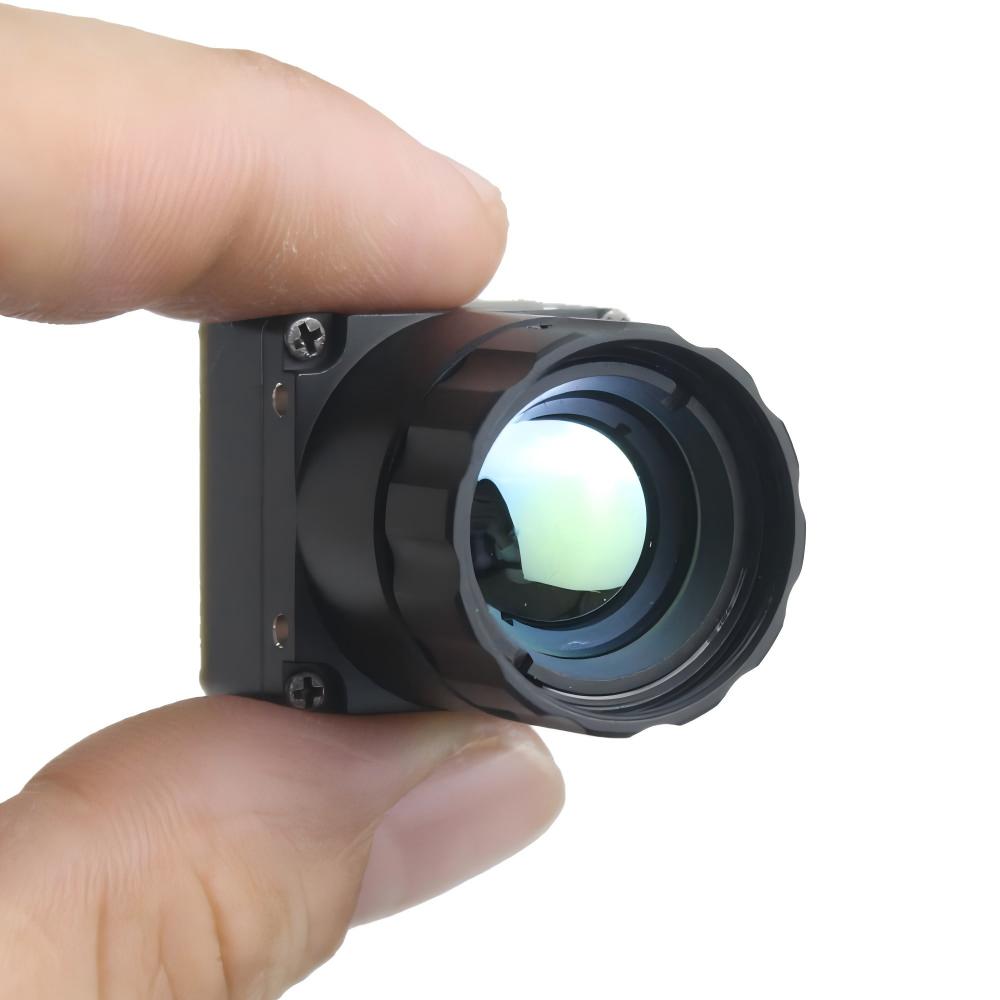
The MINI series infrared thermal imaging temperature measurement module is an ultra-compact, ultra-light thermal sensor optimized for super-tight SWaP budgets. Built around high-sensitivity VOx detectors and low-noise readout circuitry, it delivers clean imagery and reliable temperature telemetry across wide thermal operational windows. Equipped with a flexible multi-pin header, analog CVBS video output, and simple UART commands, this mini module is an ideal thermal core for light drone payloads, machine vision inspection rigs, mobile maintenance robots, and compact tactical optics.

6. Deep-Dive Technical FAQ Engine
Why upgrade from lower-resolution (256x192) sensors to high-resolution (640x512) uncooled thermal camera modules?
Moving from an entry-level 256x192 sensor up to a 640x512 module gives you a massive 666% jump in total active pixel count (327,680 pixels versus just 49,152 pixels). On drone payloads, security towers, and factory inspection lines, pixel count directly determines target recognition range under Johnson's Criteria. A 640x512 array lets operators and vision algorithms spot, identify, and measure tiny thermal anomalies—like a hot transformer bushing or a distant intruder—at much greater standoff distances.
Beyond raw range, higher pixel density makes onboard Edge AI models drastically more reliable. Convolutional neural networks need a healthy block of pixels over a target to analyze shape outlines and thermal gradients accurately. High-res uncooled cores provide the pixel density needed to prevent target pixelation blur, cutting down false positives caused by wind-blown foliage, rain, or glare reflections.
What are the primary operational differences between uncooled thermal (LWIR) and cooled thermal (MWIR) camera modules for commercial integrations?
The practical differences between uncooled Long-Wave Infrared (LWIR, 8–14μm) and cooled Mid-Wave Infrared (MWIR, 3–5μm) modules boil down to power draw, total system weight, startup delays, maintenance cycles, and cost. Cooled MWIR systems rely on mechanical Stirling cryocoolers to freeze their photon arrays down to 77 Kelvin (-196°C). While cooled units deliver extreme long-range sensitivity and fast frame rates, the cryocooler adds a heavy mechanical point of failure, draws 15W to 50W+ of power, takes 5 to 10 minutes to chill down before you get an image, and requires expensive overhaul service every 4,000 to 8,000 running hours.
Uncooled microbolometers run right at ambient temperature without mechanical refrigeration. That means near-instant boot times (under 2–3 seconds), low power consumption (1W to 2.5W), a tiny form factor that easily drops into small drone gimbals, and MTBF figures exceeding 15,000 to 30,000 operational hours. For almost all industrial, robotic, and security builds, uncooled thermal modules deliver the right mix of performance, low power, and long-term reliability.
How do hardware ASIC ISP engines manage low-noise streaming and onboard Edge AI processing in real time?
Modern uncooled thermal modules deliver smooth, low-noise video by running hardware signal processing directly on the camera ASIC as raw 14-bit digital data exits the microbolometer ROIC. Instead of dumping heavy mathematical filtering onto your system CPU, the camera's ASIC pipeline executes Non-Uniformity Correction (NUC), 3D Digital Noise Reduction (3D DNR), and Dynamic Detail Enhancement (DDE) directly in silicon. That guarantees zero latency spatial smoothing and sharp edge definition before video encoding even starts.
For edge AI, modern thermal ASICs combine low-power NPU hardware blocks that evaluate cleaned frame buffers directly inside onboard RAM. Because the AI engine runs on pristine 14-bit or enhanced 8-bit frame buffers, lightweight neural networks run target classification, human tracking, and temperature threshold alarms with minimal power. The module embeds these AI detections (bounding box coordinates and spot temperatures) directly into the video metadata stream, outputting RTSP network streams and serial telemetry without dropping video frames.
What critical design factors govern optical window selection (Germanium vs. Chalcogenide) when housing uncooled thermal cores?
When packaging an uncooled thermal core into an IP67 outdoor housing or payload dome, standard glass, acrylic, and quartz windows won't work because they block LWIR wavelengths (8–14μm). You need specialized LWIR-transparent materials like single-crystal Germanium (Ge) or Chalcogenide glass compounds.
Germanium offers excellent surface hardness, high refractive index values, and top-tier transmission efficiency when treated with Diamond-Like Carbon (DLC) or Anti-Reflective (AR) coatings—making it the ideal choice for rugged military, marine, and harsh industrial environments. Chalcogenide glass, manufactured via moldable glass synthesis, provides a cost-effective alternative for high-volume builds while delivering strong transmission across the LWIR spectrum. Using proper AR coatings on either material prevents internal thermal back-reflections into the microbolometer, protecting your system's native NETD performance and dynamic image range.
7. Implementation Summary & Integration Checklist
When selecting and integrating an OEM uncooled thermal camera module into airborne, mobile, or industrial automation platforms, keep this engineering integration checklist on your bench:
- ⚙️ 1. Target Spatial Resolution: Decide whether long-range target recognition requires a 640x512 array or if a 384x288 array meets your SWaP-C target.
- ⚙️ 2. Video Pipeline Interface: Confirm whether your host architecture needs direct RJ45 RTSP/IP streaming, zero-latency analog CVBS feeds, or simultaneous dual output.
- ⚙️ 3. Thermal Board Isolation: Mount the camera core on thermally insulated standoffs to keep heat from motor drivers and compute SoCs from bleeding into the focal plane.
- ⚙️ 4. Window Material Specs: Use AR-coated Germanium or Chalcogenide protective optics to maximize transmission in the 8–14μm spectrum without internal optical glare.
- ⚙️ 5. Hardware ASIC Activation: Enable onboard ASIC algorithms—like DDE detail enhancement, 3D DNR noise cleanup, and auto-isotherm flags—to save processing overhead on your main CPU.
📚 References & Further Reading
- Industry Standard Hardware Resources: Arducam Embedded Hardware Architecture | Waveshare Modular Vision Development Systems
- Related Guides & Technical Documentation: Advanced Infrared Thermal Sensor Technology Guide
- Engineering Insights & Case Studies: Purpleriver Industrial Thermal Vision Engineering Portal