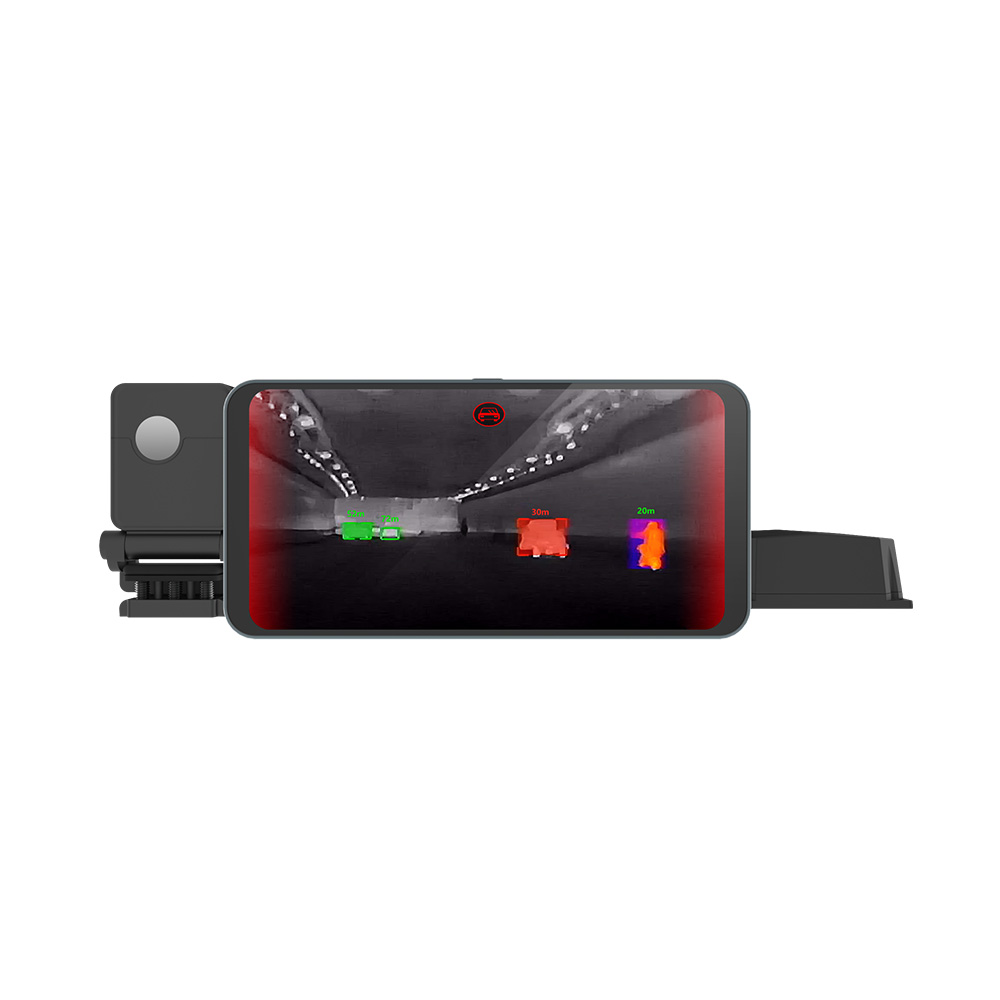


VOx (Vanadium Oxide) Thermal Camera Modules: The Ultimate OEM Guide for AI & Drone Vision
2026年8月20日
LWIR Thermal Camera Modules: Commercial Buyer's Guide to Edge AI & Industrial Thermography
2026年8月21日
VOx Uncooled Thermal Imaging Module Buying Guide: Edge AI & OEM Integration
Modern thermal imaging architecture is going through a massive overhaul right in front of us. Between autonomous field robotics, compact UAV platforms, edge artificial intelligence, and 24/7 plant health monitoring, the hardware demands have shifted fast. Right at the heart of this change sits the VOx uncooled thermal imaging module—a compact electro-optical engine that uses Vanadium Oxide microbolometer arrays to turn long-wave infrared (LWIR) radiation (8 to 14 microns) into clean, high-contrast radiometric data without the weight, bulk, and failure points of cryogenic coolers. If you are an OEM systems architect, an optomechanical engineer, or a hardware developer building tactical payloads, you know the drill: you have to balance brutal SWaP-C (Size, Weight, Power, and Cost) limitations against real-world signal-to-noise ratios, spatial resolution, optical MTF, and low-latency digital pipelines built for edge NPUs.
Integrating an uncooled LWIR core into an edge computing stack today is worlds away from simply grabbing an analog NTSC/PAL feed. Modern systems need direct, uncompressed, pixel-by-pixel 14-bit or 16-bit radiometric raw feeds dumped over USB, MIPI-CSI2, or parallel DVP into embedded processors like NVIDIA Jetson, Rockchip RK3588, or Ambarella vision SoCs. Look, whether you are building automated landmine detection rigs, long-range PTZ perimeter turrets, structural wildfire reconnaissance gear, or sub-250g drone micro-gimbals, you have to get the mechanical, optical, and thermal-drift fundamentals right. If you don't, you will get hit with spatial noise degradation, clipped dynamic ranges, and optical defocus the second your gear hits field temperature swings.
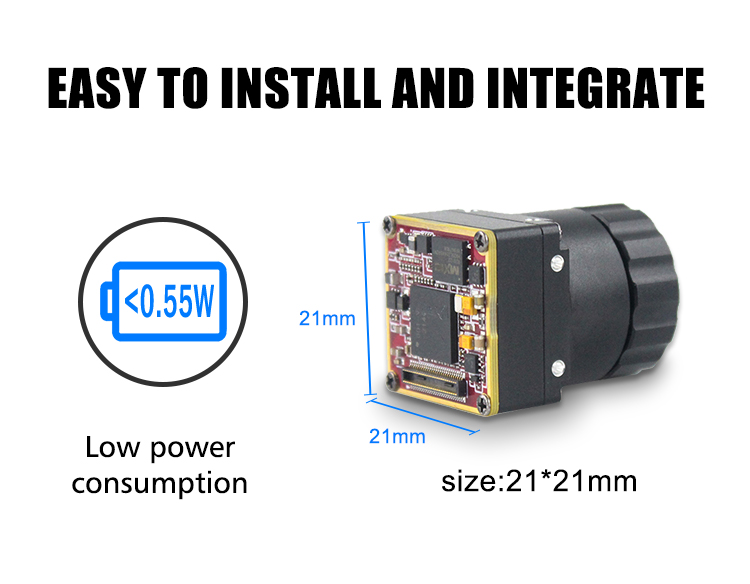
Table of Contents
- 👉 1. Physics & Architecture of VOx Uncooled Microbolometers
- 👉 2. Key Electrical & Optical Interfaces for OEM Integration
- 👉 3. Edge AI Processing & Autonomous Machine Vision Deployment
- 👉 4. Featured Industrial OEM Thermal Cores & Detailed Specifications
- 👉 5. Step-by-Step OEM Selection Matrix & Best Practices
- 👉 6. Frequently Asked Questions (FAQ)
1. Physics & Architecture of VOx Uncooled Microbolometers
Down at the raw silicon layer, uncooled LWIR sensors operate using thermal detector matrices known as microbolometers. Cooled photon engines using Indium Antimonide (InSb) or Mercury Cadmium Telluride (MCT) require mechanical Stirling cryocoolers screaming away at 77 Kelvin to operate. Uncooled microbolometers, by contrast, absorb incoming long-wave infrared energy directly onto thermally isolated, suspended MEMS micro-bridges built right on a silicon substrate.
Here's how the physics actually works on the bench: when LWIR photons slam into the active absorber layer—typically silicon nitride (Si3N4) or a tuned resonant metallic layer—the radiant energy heats up that tiny, suspended membrane. That slight temperature change causes a measurable drop or jump in the electrical resistance of the thin-film thermistor material underneath. A Readout Integrated Circuit (ROIC) CMOS wafer, bonded underneath or built monolithically with the MEMS bridge grid, drops a continuous or pulsed bias voltage across each pixel, measures the differential current output, and digitizes that reading into an accurate spatial thermal map.
Vanadium Oxide (VOx) vs. Amorphous Silicon (a-Si)
In the field, Vanadium Oxide (VOx) has become the gold standard for thermal imaging arrays, easily outclassing legacy Amorphous Silicon (a-Si) across real-world optoelectronic metrics:
- ✅ Temperature Coefficient of Resistance (TCR): VOx delivers an aggressive TCR, typically sitting between -2% and -3% per Kelvin at room temperature. This high sensitivity means the micro-bridge registers noticeable resistance swings from minute thermal variations in the target scene.
- ✅ 1/f Electrical Flicker Noise: The material matrix in VOx generates far lower 1/f low-frequency electrical noise than a-Si films. That translates straight to a cleaner signal-to-noise ratio (SNR), letting you push high-gain pipelines without drowning the image in fixed pattern grain.
- ✅ Noise Equivalent Temperature Difference (NETD): Pairing high TCR with rock-bottom flicker noise allows modern industrial VOx cores to easily achieve thermal sensitivity ratings below 30 mK to 40 mK at f/1.0. That means you can detect surface temperature deltas as fine as 0.03°C, giving you crisp target edges even in low-contrast conditions.
- ✅ Thermal Time Constant: Modern 12 µm VOx pixel geometries have minimal thermal mass, hitting response time constants between 8 ms and 12 ms. This fast thermal cycling prevents ghosting, smearing, and frame lag during rapid drone yaw sweeps and high-speed 50 Hz/60 Hz PTZ tracking.
- ✅ NUC Calibration Stability: Every bolometer array suffers from minor manufacturing variations across individual pixel offsets and gains. VOx arrays feature high temporal stability, meaning that once a Non-Uniformity Correction is executed—whether via mechanical shutter or Scene-Based NUC (SBNUC)—the core holds uniform calibration across wider temperature swings than an a-Si equivalent.
2. Key Electrical & Optical Interfaces for OEM Integration
Getting a bare VOx core smoothly integrated into an embedded carrier board, drone gimbal, or sealed industrial camera housing requires matching the core's electrical interfaces and optical characteristics to your onboard processing hardware and latency budgets.
Digital Communication and Video Streaming Pipelines
Modern OEM VOx cores offer a variety of digital and analog pipes to fit different computational architectures:
- ⚙️ USB 2.0 / USB Type-C (UVC + Radiometric Bulk COM): USB is the go-to standard for rapid development on x86, ARM Linux, and embedded single-board computers. The core enumerates as a plug-and-play USB Video Class (UVC) peripheral for direct 8-bit visual rendering, while simultaneously running a vendor CDC bulk endpoint to stream 14-bit or 16-bit raw radiometric temperature matrices for backend software math.
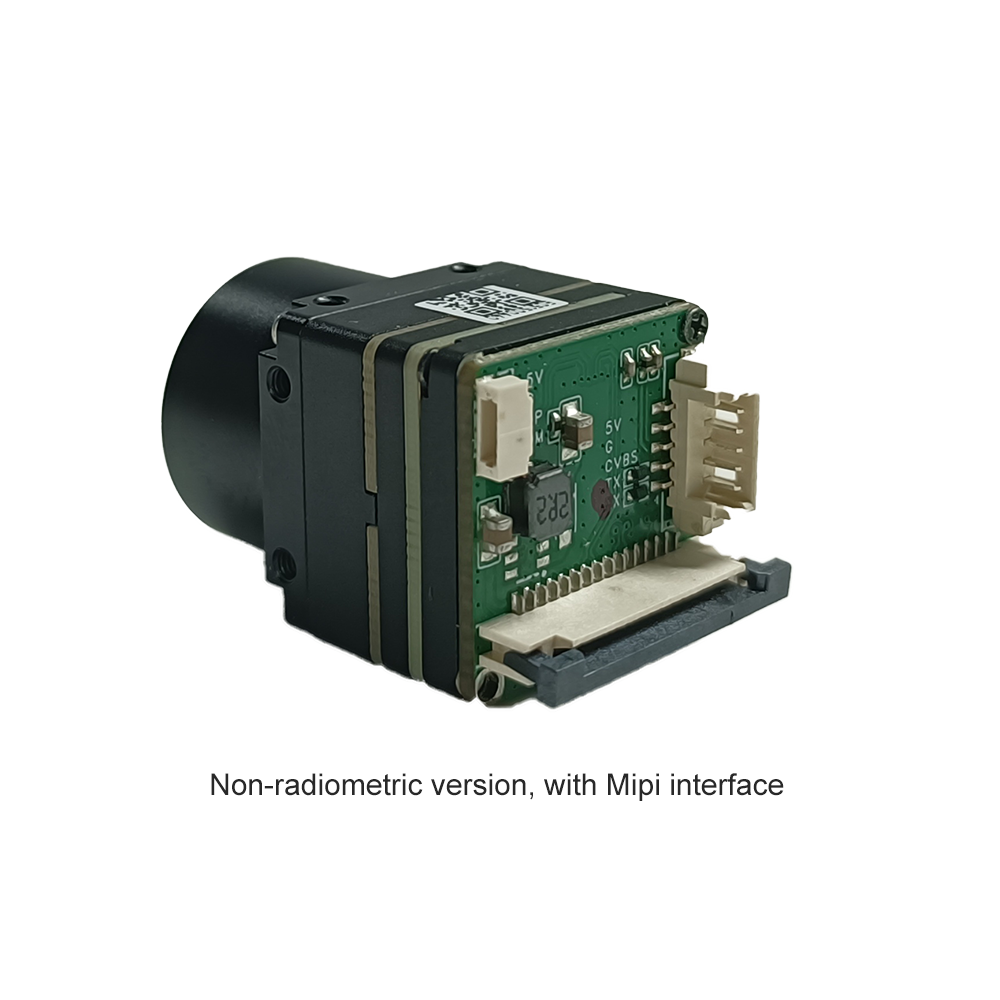
- ⚙️ MIPI-CSI2 (Mobile Industry Processor Interface): For tight SWaP constraints and ultra-low latency builds, direct MIPI-CSI2 lanes dump raw microbolometer data directly into the hardware ISP or video engine of an SoC (like NVIDIA Jetson Orin, NXP i.MX8, or Rockchip RK3588). You bypass USB protocol overhead entirely, cut CPU utilization down to near-zero, and keep glass-to-glass latency under 20 milliseconds.
- ⚙️ Digital Video Port (DVP / CMOS Parallel): DVP streams pixel data in parallel across dedicated pixel-clock (PCLK), horizontal sync (HSYNC), and vertical sync (VSYNC) lines. It is widely used by FPGAs and custom frame grabber boards for dedicated hardware pipelines. If you want a deeper look at embedded interface layouts, check out technical guides covering infrared thermal modules with CVBS interfaces and high-definition streams.
- ⚙️ Analog Video (CVBS / PAL / NTSC): While digital streams dominate modern autonomous setups, composite analog video remains essential for legacy defense vehicle retrofits, long-range RF analog transmitters, and lightweight analog first-person-view (FPV) pilot cameras where latency must remain strictly near zero.
Optical Engineering: Germanium vs. Chalcogenide Optics
Standard optical glass blocks LWIR light entirely. You have to use specialized infrared-transmissive materials to build lenses for these cores:
- ✅ Germanium (Ge) Optics: Germanium is the undisputed heavy-hitter for long-range, narrow-field-of-view lenses. With a massive refractive index around n = 4.0, it allows for compact, high-speed multi-element lens designs (f/1.0 to f/1.2) with outstanding optical transmission. But keep in mind: Germanium elements require Single Point Diamond Turning (SPDT) and will suffer from thermal defocus unless you build in mechanical or optical athermalization sleeves.
- ✅ Chalcogenide Glass: Precision-molded chalcogenide glass alloys allow for cost-effective, high-volume production of complex aspheric lenses. Chalcogenide has a significantly lower thermal drift coefficient (dn/dT) than Germanium, making it the practical choice for passive athermalization across wide operational ranges (-40°C to +85°C). Industrial optics manufacturers like LightPath Technologies build assemblies that hold focus across wide thermal swings while matching modern 12 µm sensor pitch densities.
3. Edge AI Processing & Autonomous Machine Vision Deployment
Pairing compact VOx thermal modules with modern edge neural accelerators has opened up brand-new capabilities for autonomous vision. Standard RGB cameras fall apart when lighting drops, shadows get harsh, or dust, fog, and smoke roll in. Uncooled LWIR cores don't care about ambient illumination—they see thermal emissions radiated straight from the target, delivering reliable edge contrast 24 hours a day.
Raw Radiometric Ingestion vs. Standard 8-Bit AGC Compression
Traditional thermal cameras run internal Automatic Gain Control (AGC) or histogram equalization routines to squeeze 14-bit thermal detector data down into an 8-bit (0–255) grayscale or pseudo-color palette for human monitors. That looks great to an operator sitting in a control room, but it destroys radiometric fidelity and introduces non-linear artifacts that degrade machine vision models.
In modern computer vision stacks, we feed the raw 14-bit radiometric matrix straight into the neural network preprocessing pipeline:
- ✅ Preserving Absolute Thermal Signatures: Edge AI models trained on raw radiometric arrays can evaluate absolute temperature differentials (Celsius or Kelvin), allowing the system to instantly distinguish between passive solar reflections (e.g., sunlight bouncing off sheet metal) and active thermal emitters (e.g., living biological entities, running vehicle engines, or early-stage electrical overheating).
- ✅ Contrast-Limited Adaptive Histogram Equalization (CLAHE): Custom on-edge preprocessing pipelines apply multi-scale CLAHE and spatial bilateral filtering directly to raw frames prior to model ingestion, sharpening structural boundaries while preserving raw micro-Kelvin thermal gradients.
- ✅ Multi-Spectral Sensor Fusion: Advanced robotics utilize dual-stream neural networks (e.g., multi-branch YOLOv8, RT-DETR, or custom transformer backbones) that fuse aligned pixel streams from visible 4K optical sensors and VOx LWIR modules. This sensor fusion creates redundant, all-weather target detection, tracking, and classification capabilities.
- ✅ Search, Rescue, and Reconnaissance: High-sensitivity LWIR sensors provide critical capabilities during emergency scenarios, as demonstrated when thermal imaging drones locate wreckage during emergency search and rescue operations through heavy fog, canopy cover, and rugged mountainous terrain.
4. Featured Industrial OEM Thermal Cores & Detailed Specifications
To help you choose the right engine for your payload, here are two proven industrial VOx uncooled modules covering different resolution tiers, SWaP profiles, and mechanical form factors.
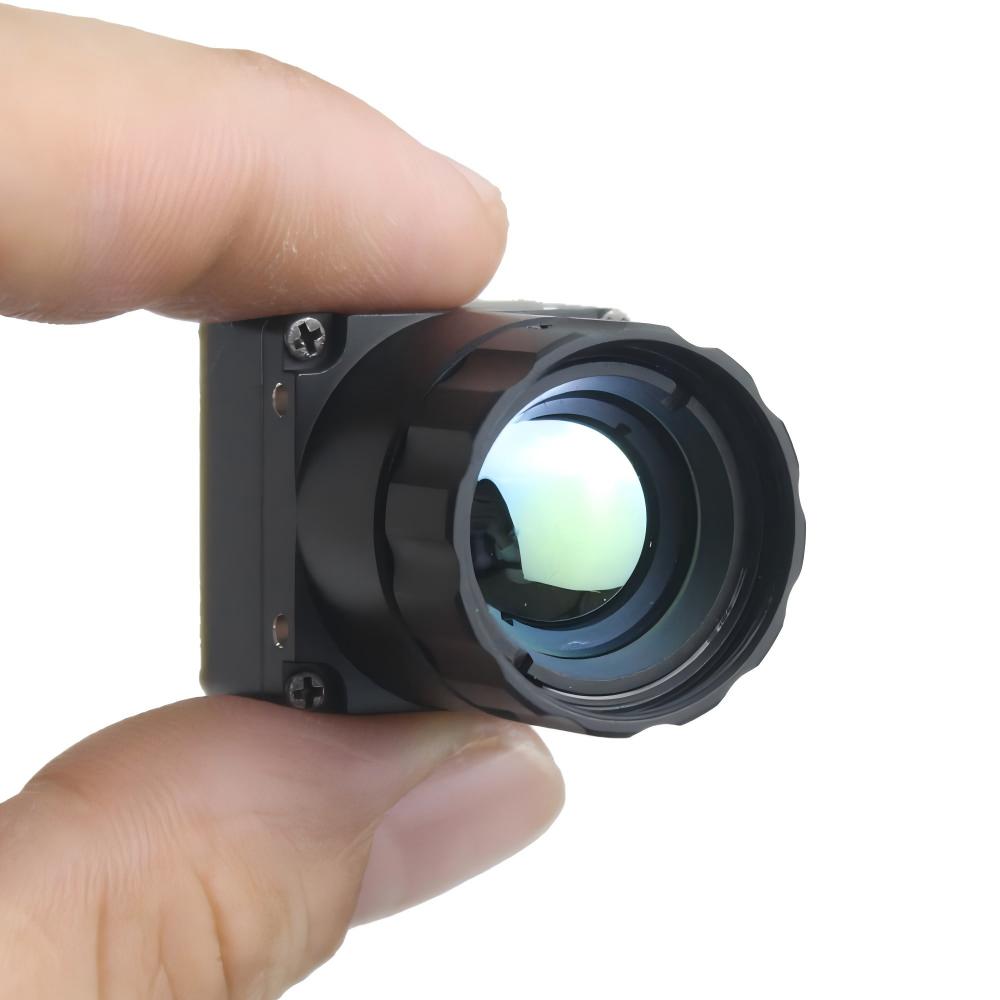
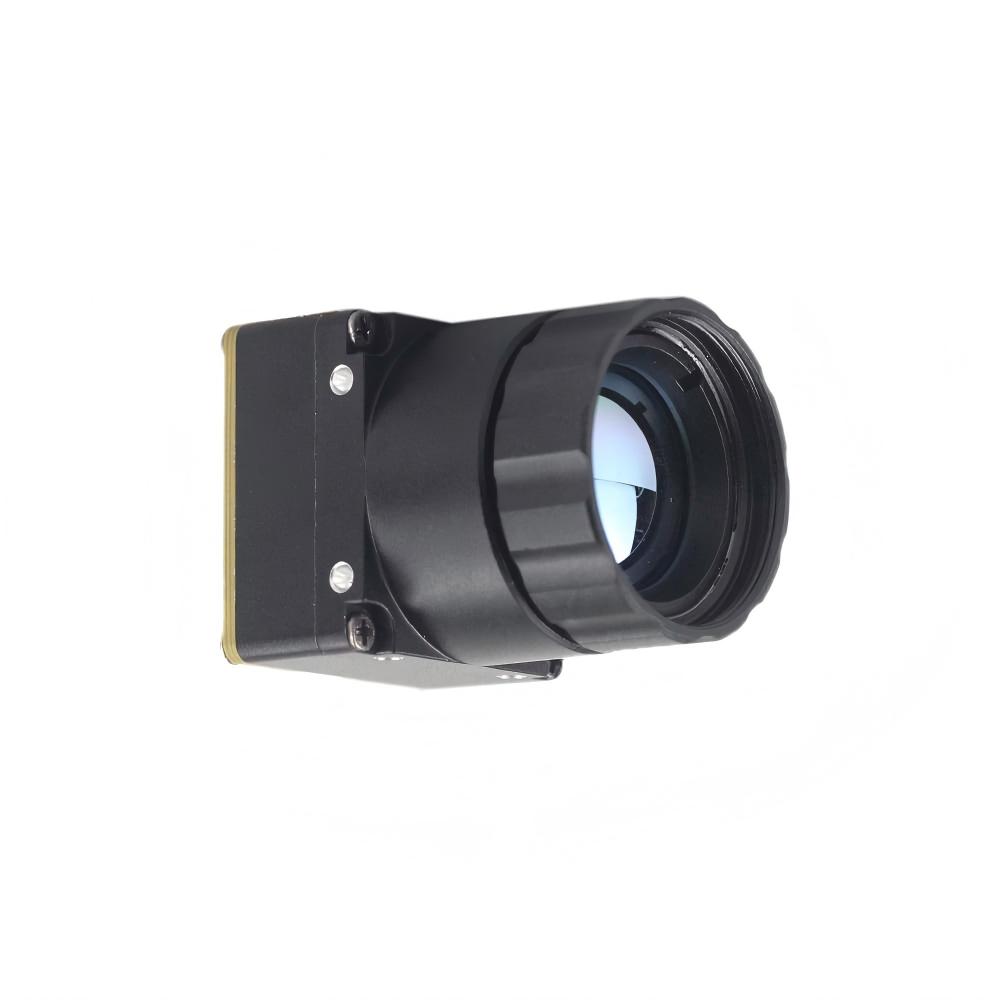
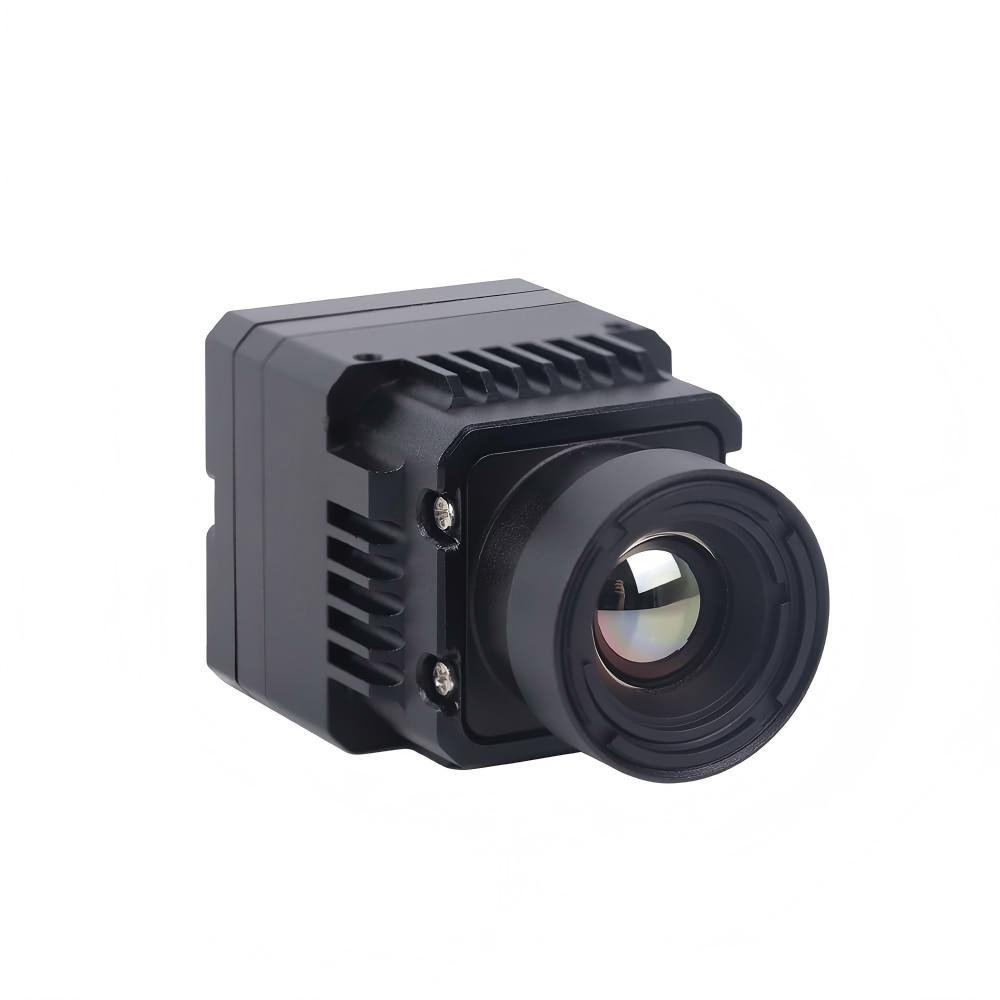
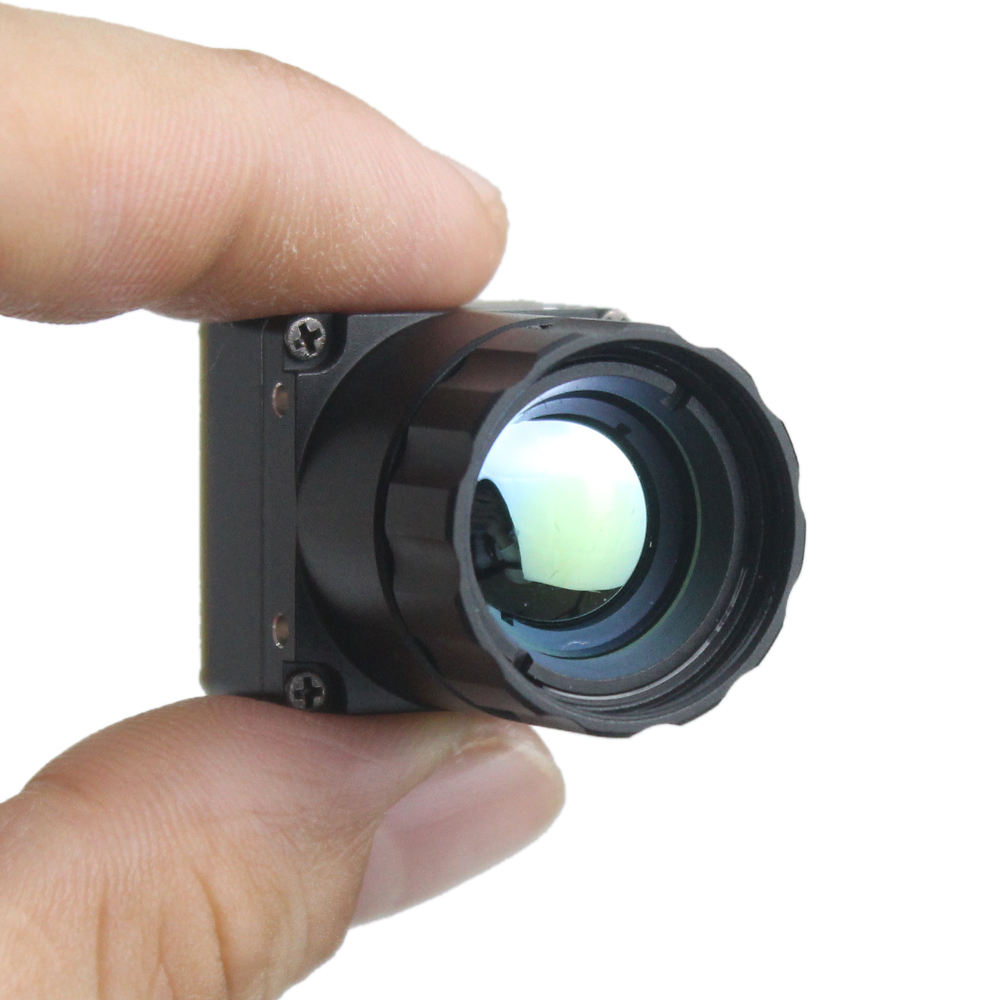
Product Showcase 1: Mini 640 Uncooled LWIR USB Thermal Camera Core Module
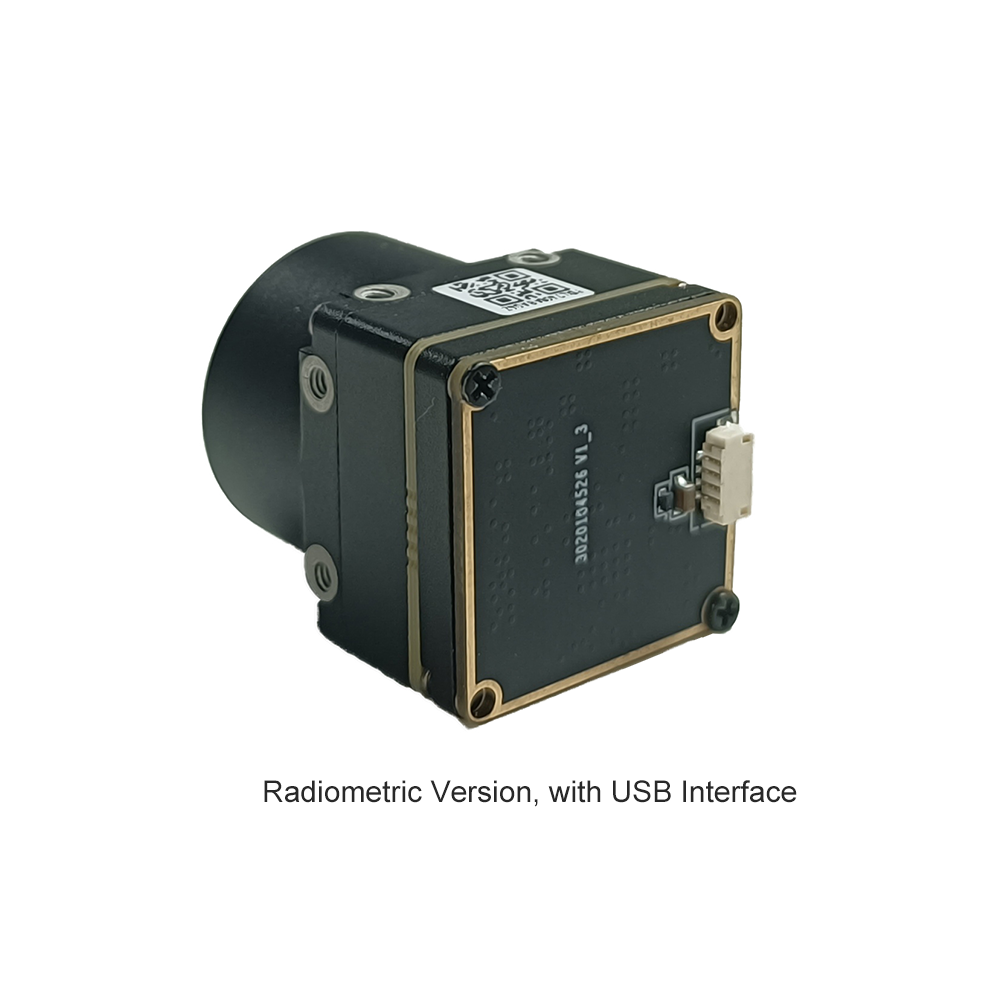
The Uncooled LWIR USB Mini 640*512 Thermal Imaging Camera Core Module is an ultra-compact, high-resolution thermal imaging core designed specifically for integration into unmanned aerial vehicles (similar to DJI payload architectures), stabilized handheld gimbals, long-range electro-optical/infrared (EO/IR) surveillance turrets, and automated industrial inspection systems. Featuring a compact 21 mm by 21 mm footprint and broad lens interchangeability, this module combines sharp, crisp image presentation with strong environmental adaptability.
| Technical Parameter | Engineering Specification |
|---|---|
| Detector Technology | Vanadium Oxide (VOx) Uncooled Microbolometer |
| Active Resolution | 640 × 512 pixels (Optional: 640 × 480 configuration) |
| Pixel Pitch & Spectral Band | 12 µm | 8 µm to 14 µm (Long-Wave Infrared) |
| Thermal Sensitivity (NETD) | ≤ 40 mK (@ 25°C, f/1.0) |
| Frame Refresh Rates | 25 Hz / 30 Hz / 50 Hz selectable |
| Optical Focal Length Options | 5 mm, 9 mm, 13 mm, 18 mm, 35 mm, 50 mm, 75 mm, 100 mm, 150 mm |
| Physical Core Dimensions | Mini-Size: 21 mm × 21 mm (Base module without lens) |
| Host Interfaces & Radiometry | USB 2.0 / Type-C (UVC + Radiometric Raw Data Stream), DVP Digital Output |
| Environmental Adaptability | High shock and vibration tolerance, stable operating temperature performance |
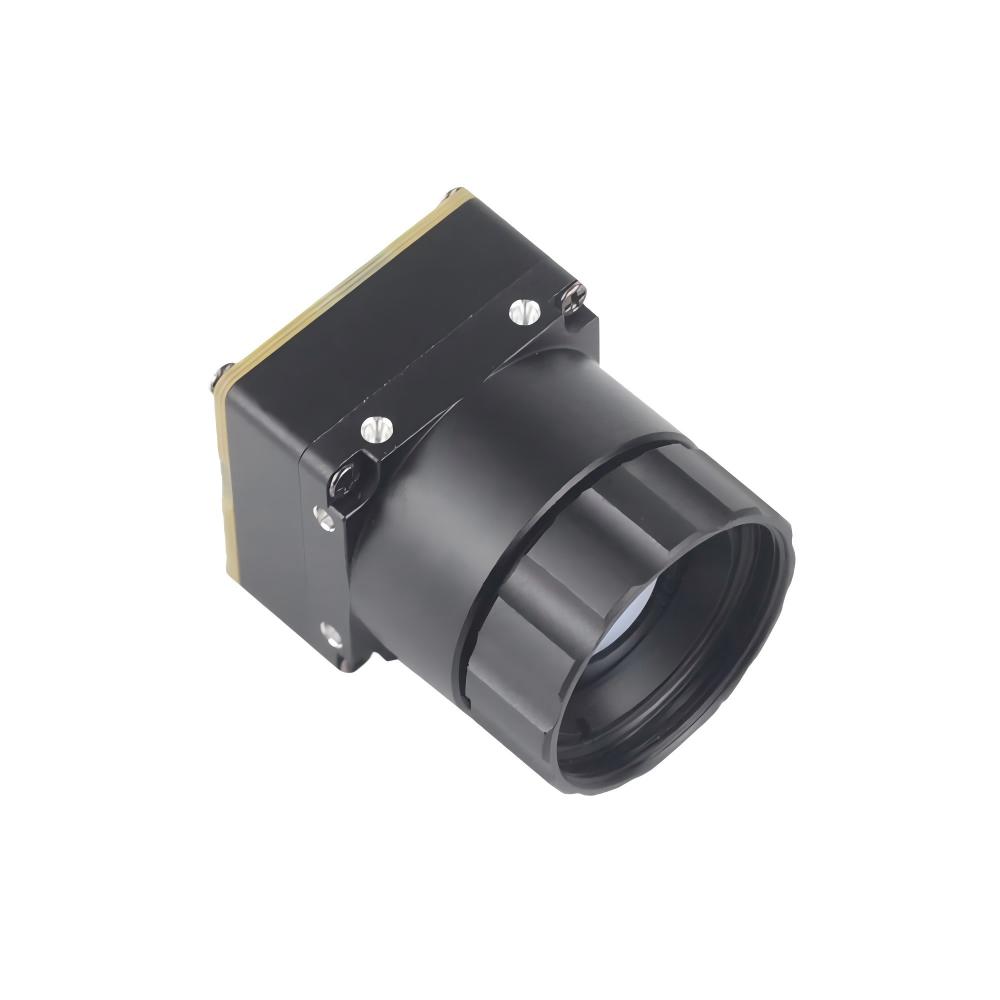
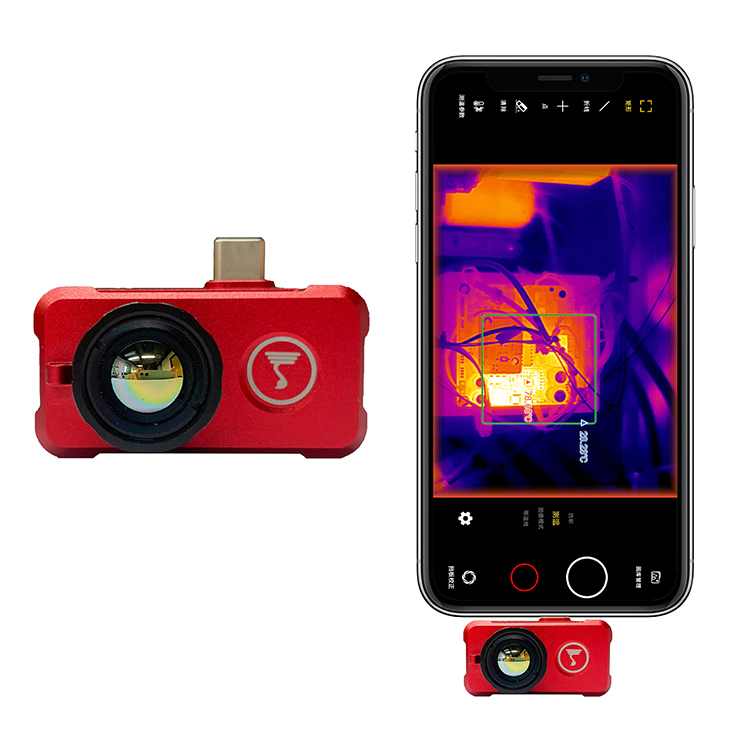
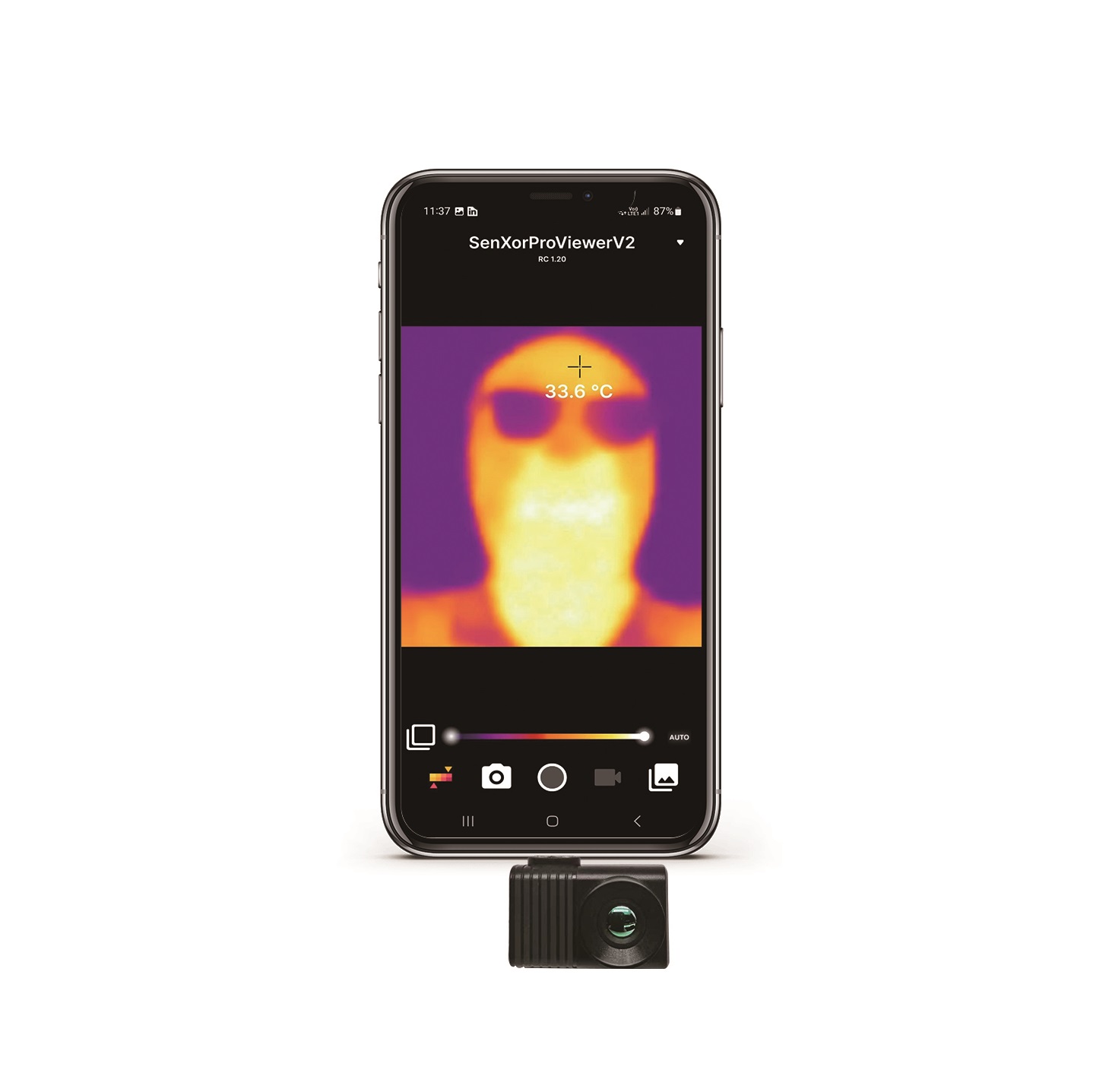
Product Showcase 2: Mini 256 Uncooled LWIR Thermal Imaging Camera Module
The Uncooled LWIR Mini 256*192 Thermal Imaging Camera Module adopts high-performance infrared detectors designed for ultra-clear thermal imaging and accurate temperature measurement. Engineered for deployment in SWaP-constrained applications such as sub-250g reconnaissance micro-drones, automated landmine and sub-surface explosive detection payloads, man-portable scopes, and distributed predictive maintenance sensor arrays, this module captures long-wave infrared radiation and outputs a uniform, high-fidelity thermal image with integrated radiometry.
| Technical Parameter | Engineering Specification |
|---|---|
| Detector Type | Uncooled VOx Infrared Microbolometer FPA |
| Focal Plane Array Resolution | 256 × 192 pixels |
| Pixel Pitch & Spectral Range | 12 µm | 8 µm to 14 µm (LWIR) |
| Thermal Sensitivity (NETD) | ≤ 50 mK (@ 25°C, f/1.0) |
| Video Frame Output Rate | 25 Hz / 50 Hz smooth streaming |
| Radiometric Functionality | Full-frame radiometric point, line, and area temperature analysis |
| Form Factor & Power Draw | Ultra-miniature payload profile, ultra-low continuous power consumption |
| Digital Interface Capabilities | USB Digital Output, DVP Parallel, Serial Command Bus |
| Target Integration Use Cases | Landmine detection, tactical micro-UAVs, security IoT nodes |
5. Step-by-Step OEM Selection Matrix & Best Practices
Specifying the right thermal module is all about matching optical geometry, thermal sinking, and mechanical isolation to your exact deployment environment.
Step 1: DRI Range Calculation via Johnson's Criteria
Thermal optical systems are engineered around Detection, Recognition, and Identification (DRI) targets using Johnson's Criteria. The spatial resolution at target distance is governed by focal length, pixel pitch, and target dimensions:
- ⚙️ Detection (1.5 line pairs / 2 pixels across critical dimension): Lets you confirm that an object is out there in the field of view (e.g., catching a warm blob against cold foliage).
- ⚙️ Recognition (6 line pairs / 6 to 8 pixels across critical dimension): Lets you classify what kind of object it is (e.g., telling a human apart from a deer or a pickup truck).
- ⚙️ Identification (12 line pairs / 12 to 16 pixels across critical dimension): Lets you verify exact target details (e.g., spotting an armed person vs. a civilian, or confirming a specific vehicle type).
- ⚙️ Practical Rule of Thumb: If you are engineering a tactical drone payload to identify a human at 500 meters, step up to the Mini 640 (640x512, 12 µm pitch) with a 35 mm or 50 mm focal length lens to ensure you put enough spatial pixels across the target silhouette.
Step 2: Mechanical Housing Design & Thermal Drift Compensation
Here's a hard truth from the shop floor: uncooled microbolometers measure microscopic temperature changes, so they will happily pick up heat from your own carrier electronics if you let them. High-speed SoCs, FPGAs, and internal power regulators generate significant thermal energy during continuous operation. If heat bleeds unevenly across the sensor housing, you get severe fixed pattern noise (FPN), vignetting, and drifting temperature calibrations.
To keep your imagery stable, bridge the rear of the thermal engine to your external aluminum housing using high-conductivity thermal gap pads. Keep high-draw processors physically isolated from the optical barrel. If you want a deep dive into whole-system electro-mechanical design, read up on international engineering methodologies in this guide on selecting integrated thermal imaging systems.
6. Frequently Asked Questions (FAQ)
How do VOx uncooled thermal imaging modules handle raw data export for custom AI development?
Embedded software engineers and AI developers capture this matrix using dedicated C++/Python SDKs or low-level Linux V4L2 drivers. Pixel-level AD values map directly to absolute temperature units (Kelvin or Celsius) via factory polynomial calibration coefficients. This architecture allows developers to train and deploy custom object detection, instance segmentation, and fire-classification neural networks (such as YOLOv8 or TensorRT engines) directly on thermal radiation gradients without losing edge contrast or temperature fidelity.
How do I protect a VOx thermal core module from direct sun exposure damage in drone and CCTV setups?
First, modern FPGA and DSP image signal processors integrate anti-sun protection algorithms that detect high-density flux clustering and flag potential thermal overload conditions. Second, the module's internal electromechanical calibration shutter can be commanded to drop over the focal plane array when optical power spikes, shielding the MEMS structure from persistent direct radiation. Third, optomechanical designs should incorporate angled lens hoods, deep optical baffles, and motorized down-tilt routines to prevent the optical axis from pointing along direct sun vectors during drone horizon sweeps and return-to-home flight profiles.
What should I evaluate when selecting a VOx thermal module for OEM drone integration?
Third is the frame rate: airborne flight operations require 25 Hz to 50 Hz refresh rates to avoid motion blur and rolling distortion during high-speed low-altitude maneuvers. Fourth is radiometric metadata output: direct raw digital streaming via USB or MIPI-CSI2 enables dual-channel thermal-optical tracking engines and downstream onboard AI vision analytics. Finally, the mechanical core and shutter assembly must withstand continuous brushless motor vibration profiles and high-G launch and landing shocks.
📚 References & Further Reading
- Industry Standard: LightPath Technologies — High-precision infrared optics and chalcogenide lens assemblies.
- Technical Authority: Wikipedia Microbolometer — Principles of microbolometer operation, MEMS architecture, and detector materials.
- Related Guide: Infrared Thermal Module with CVBS Interface & HD Video — Integration workflows for embedded and analog thermal hardware.
- Related Guide: Thermal Imaging Drone Search and Rescue Applications — Real-world case study on emergency aerial response using LWIR thermal sensors.
- Related Guide: Selecting Integrated Thermal Imaging Systems — Comprehensive system architecture and selection criteria for multi-spectral applications.