
دليل تكامل وحدة الكاميرا الحرارية IR: حلول OEM عالية الدقة للطائرات بدون طيار والذكاء الاصطناعي الطرفي
9 يونيو 2026
دليل أفضل وحدة كاميرا حرارية صغيرة: تكامل عالي الدقة للطائرات بدون طيار وراسبيري باي والذكاء الاصطناعي الطرفي
10 يونيو 2026
وحدة الكاميرا الحرارية الصغيرة LWIR: دليل التكامل النهائي للطائرات بدون طيار وحلول الذكاء الاصطناعي الطرفي
أدى التوسع السريع في الأنظمة الذاتية والمركبات الجوية غير المأهولة (UAVs) وعقد الذكاء الاصطناعي الطرفي اللامركزية إلى تسريع الطلب على حمولات تصوير حراري فائقة الصغر وعالية الدقة. غالبًا ما يواجه مهندسو الأنظمة ومهندسو الحمولات المهمة الصعبة المتمثلة في الموازنة بين قيود الحجم والوزن والطاقة والتكلفة (SWaP-C) الصارمة مع تقديم بيانات إشعاعية عالية الدقة. يُعد نطاق الأشعة تحت الحمراء طويلة الموجة (LWIR) (عادةً 8–14 ميكرومتر) أساسيًا لهذه التطبيقات. فهو يتيح العمليات في الظلام الدامس، وعبر العوائق الجوية، وفي البيئات الحرارية المعقدة حيث تقصر المستشعرات البصرية للضوء المرئي تمامًا.
يوفر دليل التكامل التقني هذا نظرة عامة شاملة على وحدة الكاميرا الحرارية الدقيقة ذات الأشعة تحت الحمراء طويلة الموجة الحلول. ويغطي فيزياء المستشعر الأساسية، والواجهات الكهروميكانيكية، والتحكم البرمجي عبر مجموعات تطوير البرمجيات المتقدمة، والتحديات الحرارية الكامنة في عمليات النشر على الطائرات بدون طيار والمنصات الدوارة الدقيقة. صُمم هذا الدليل لمهندسي الأجهزة، ومكاملي الأنظمة، ومطوري الذكاء الاصطناعي الطرفي، وهو يبسط عملية تحويل السيليكون الخام غير المبرد إلى معلومات مكانية وحرارية قابلة للتنفيذ.
انظر، عندما تبني أجهزة جاهزة للعمل الميداني، لا يمكنك الاعتماد على ظروف المختبر النظيفة. في العالم الحقيقي، ستتعرض مستشعراتك لأشعة الشمس الحارقة، وستهتز على هيكل طائرة بدون طيار، وستواجه ضوضاء كهربائية لا نهاية لها. يتطلب التغلب على تحديات التصميم هذه النظر إلى ما وراء مواصفات التسويق الأساسية وفهم الفيزياء الأولية والمشكلات على مستوى اللوحة التي يمكن أن تفسد بياناتك.
جدول المحتويات
- 👉 إزالة الغموض عن تقنية الكاميرا الحرارية الدقيقة ذات الأشعة تحت الحمراء طويلة الموجة
- 👉 المواصفات التقنية ومصفوفة المنتجات
- 👉 مسارات تكامل الأجهزة: الواجهات والبروتوكولات
- 👉 بروتوكولات البرمجيات، والتحكم عبر مجموعة تطوير البرمجيات، والقياس الإشعاعي
- 👉 تصميم النظام الحراري للطائرات بدون طيار / المركبات الجوية غير المأهولة
- 👉 الذكاء الاصطناعي الطرفي الصناعي وحالات استخدام النشر التكتيكي
- 👉 الأسئلة التقنية المتعمقة الشائعة
إزالة الغموض عن تقنية الكاميرا الحرارية الدقيقة ذات الأشعة تحت الحمراء طويلة الموجة
في قلب كل كاميرا حرارية دقيقة غير مبردة وحدة الكاميرا الحرارية الدقيقة ذات الأشعة تحت الحمراء طويلة الموجة يكمن مصفوفة مستوية بؤرية (FPA) من نوع الميكروبولومتر غير المبرد. على عكس النوى الحرارية المبردة التي تتطلب مبردات تقليدية ثقيلة ومستهلكة للطاقة وهشة (تستخدم محركات ستيرلينغ الهيليوم لخفض درجات حرارة التشغيل إلى 77 كلفن)، تعمل الميكروبولومترات غير المبردة في درجات حرارة الغلاف الجوي المحيطة. ويتحقق ذلك باستخدام مواد متقدمة تتغير مقاومتها الكهربائية ديناميكيًا استجابةً للإشعاع الحراري الوارد في النطاق الطيفي 8–14 ميكرومتر.
إليك كيفية عمل ذلك عمليًا. تبدأ العملية الفيزيائية الأساسية عندما يمر الإشعاع تحت الأحمر طويل الموجة الوارد عبر بصريات جرمانيوم عالية النفاذية ويصطدم بمصفوفة من الجسور الدقيقة المعلقة. يشكل كل جسر دقيق بكسل كاشف فردي. ويتكون من صفيحة امتصاص رقيقة مدعومة بأرجل ضيقة وعازلة حراريًا من نيتريد السيليكون تحوم فوق طبقة قراءة عاكسة على ركيزة السيليكون. عندما تصطدم فوتونات الأشعة تحت الحمراء بالصفيحة، فإنها تسخن مادة المستشعر، مما يؤدي إلى تحول واضح في المقاومة الكهربائية. تقيس دائرة القراءة المتكاملة (ROIC) هذا التغير في المقاومة بالتتابع عبر المصفوفة بأكملها (على سبيل المثال، 640 × 512 مرة)، محولة الإشعاع الحراري الفيزيائي إلى جهود رقمية عالية الدقة للمعالجة اللاحقة.
تركيب مادة المستشعر: أكسيد الفاناديوم مقابل السيليكون غير المتبلور
عندما تبحث عن نوى المستشعرات في هذه الصناعة، ستصادف مادتين تجاريتين أساسيتين تستخدمان لبناء هياكل صفائح كاشف الميكروبولومتر: أكسيد الفاناديوم (VOx) والسيليكون غير المتبلور (α-Si).
- ⚙️ أكسيد الفاناديوم (VOx): يُظهر معامل درجة حرارة المقاومة (TCR) ملائمًا للغاية، مما يؤدي إلى انخفاض مستويات الضوضاء الإجمالية وحساسية حرارية فائقة. تهيمن مصفوفات VOx على التطبيقات التجارية والصناعية والدفاعية عالية الأداء حيث يكون التقاط الفروق الدقيقة في درجات الحرارة أمرًا بالغ الأهمية. إذا كان تطبيقك يتطلب اكتشاف التوهجات الحرارية الدقيقة أو تتبع الأجسام على مسافات طويلة، فإن VOx هو المعيار الصناعي.
- ⚙️ السيليكون غير المتبلور (α-Si): يوفر انتظامًا مكانيًا متميزًا عبر المصفوفة وهو متوافق للغاية مع خطوط تصنيع أشباه الموصلات CMOS القياسية والفعالة من حيث التكلفة. بينما تُظهر مستشعرات α-Si تاريخيًا ضوضاء 1/f أعلى من VOx، فإن مستشعرات α-Si الحديثة تُعد خيارات قوية بشكل استثنائي لمراقبة الهياكل الصناعية الحساسة للميزانية وعمليات الأمن قصيرة المدى حيث تكون الأولوية للدقة الحرارية الخام على حساب الضوضاء المنخفضة للغاية والسرعة العالية.
مقاييس الأداء الحرجة موضحة
فرق درجة الحرارة المكافئ للضوضاء (NETD)
يتوافق NETD فيزيائيًا مع أدنى تباين حراري يمكن للمستشعر حله. إنه يمثل عتبة الضوضاء إلى الإشارة للكاشف، ويُقاس بالميلي كلفن (mK). رياضيًا، يكون المصور ذو قيمة NETD الأقل قادرًا على حل فروق درجات حرارة أصغر. في الورشة، نستخدم هذه القاعدة الأساسية البسيطة:
- ✅ أقل من 30mK إلى 40mK (حساسية عالية): يمكنه اكتشاف الاختلافات السطحية الدقيقة، مما يجعله لا غنى عنه لكشف تسرب الغاز، والتحليل الزراعي الدقيق، والمراقبة بعيدة المدى عبر الضباب الجوي الكثيف أو أوراق الشجر الخفيفة.
- ✅ 50mK إلى 80mK (حساسية قياسية): مُحسَّن للصيانة التنبؤية الصناعية، وتحديد النقاط الكهربائية الساخنة، وملاحة الطائرات بدون طيار الروتينية حيث تكون الأهداف متميزة للغاية عن بيئاتها الخلفية.
تباعد البكسل
درجة البكسل هي المسافة الفيزيائية من المركز إلى المركز بين بكسلات الكاشف المتجاورة على مصفوفة الميكروبولومتر، وتُقاس بالميكرومتر (μm). في السنوات الأخيرة، شهدت الصناعة تحولًا هائلاً من معايير 17μm السائدة من حيث الحجم إلى تكوينات 12μm فائقة الصغر للميكروبكسل. ينتج عن هذا التصغير الفيزيائي ديناميكية أداء رئيسية: تحسين الدقة المكانية يتناسب عكسيًا مع درجة البكسل. تسمح درجة البكسل الأصغر (مثل 12μm) للمهندسين البصريين باستخدام عدسات جرمانيوم أصغر وأخف وزنًا لتحقيق نفس الدقة المكانية الفعالة (مجال الرؤية اللحظي - IFOV) مثل مجموعة مستشعر 17μm الأكبر والأثقل. هذه الميزة الميكانيكية تقلص بشكل مباشر المظهر العام لـ SWaP-C لنواة التصوير الحراري.
قيود SWaP-C (الحجم، الوزن، الطاقة، والتكلفة)
في نهاية المطاف، يتطلب دمج قدرات LWIR عالية الأداء في الطائرات بدون طيار الصغيرة الحديثة وأجهزة الحافة الآلية امتثالًا صارمًا لمعايير SWaP-C. كل غرام يُضاف إلى حمولة جوية يُترجم إلى عمر بطارية أقل، ومقاومة أقل للرياح، وانخفاض في قدرة التحمل الكلية للطيران. وبالمثل، فإن تشغيل رقائق تحويل رقمية عالية الطاقة يهدد ميزانية الطاقة للأنظمة التي تعمل بالبطارية. لحل هذه المشكلة، تقوم المنصات الحديثة القائمة على ASIC (الدوائر المتكاملة محددة التطبيق) بدمج إدارة الطاقة، وتحويل الفيديو الرقمي، وتصفية الضوضاء المتقدمة في شريحة سيليكون واحدة (نظام على شريحة). هذا يلغي العبء الثقيل للمعالجة ومتطلبات الطاقة العالية الشائعة في البنى القديمة القائمة على FPGA. منصات النماذج الأولية، مثل تلك التي توفرها استوديو Seeed, ، يمكن أن تسهل جسور تطوير الأجهزة المبكرة مع الحفاظ على ملفات SWaP-C المستهدفة.
المواصفات التقنية ومصفوفة المنتجات
لمساعدة مهندسي أنظمة الأمن، ومصنّعي الطائرات بدون طيار، ومديري المشتريات الصناعية في اختيار نواة المستشعر الدقيقة لتطبيقاتهم، يقدم الجدول أدناه مواصفات مقارنة مفصلة لوحدتي كاميرا حرارية LWIR مصغرتين فائقتَي الصغر من الدرجة التجارية.
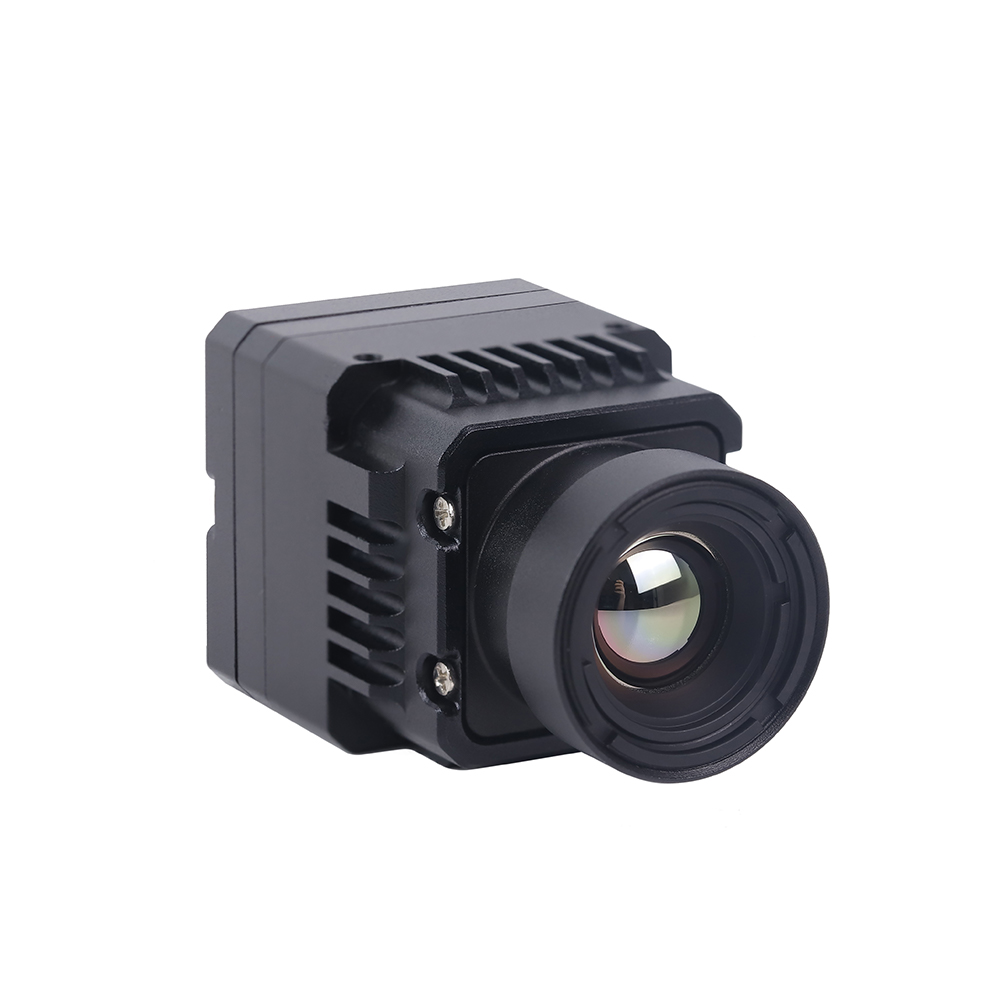
Detailed Showcase: Uncooled LWIR USB Mini 640*512 Thermal Imaging Camera Core Module
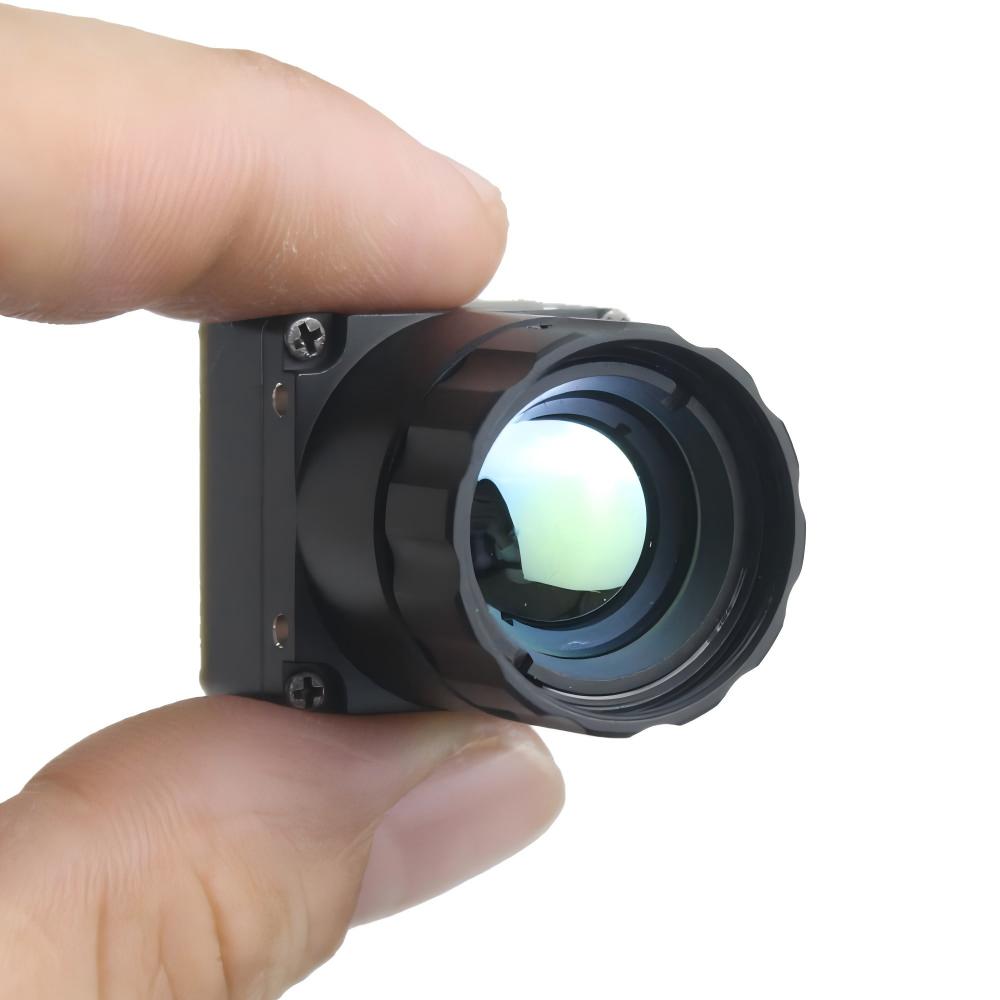
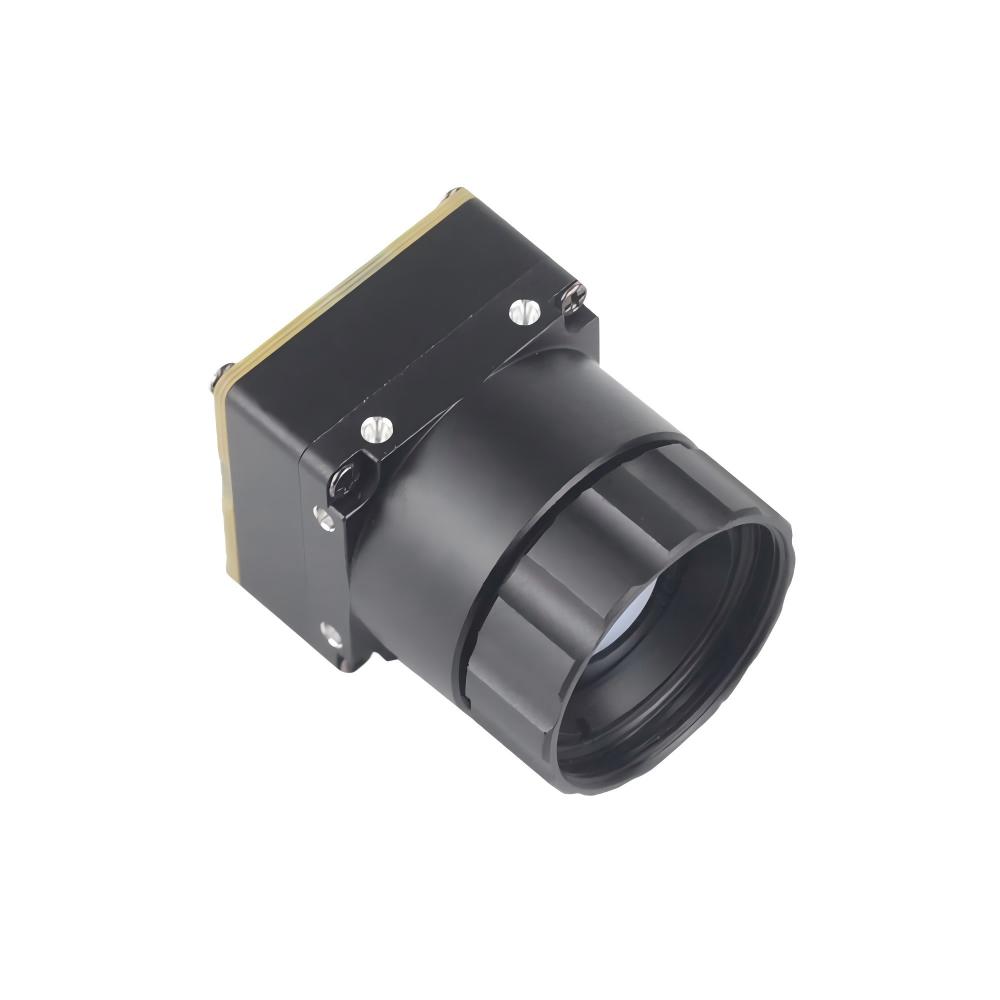
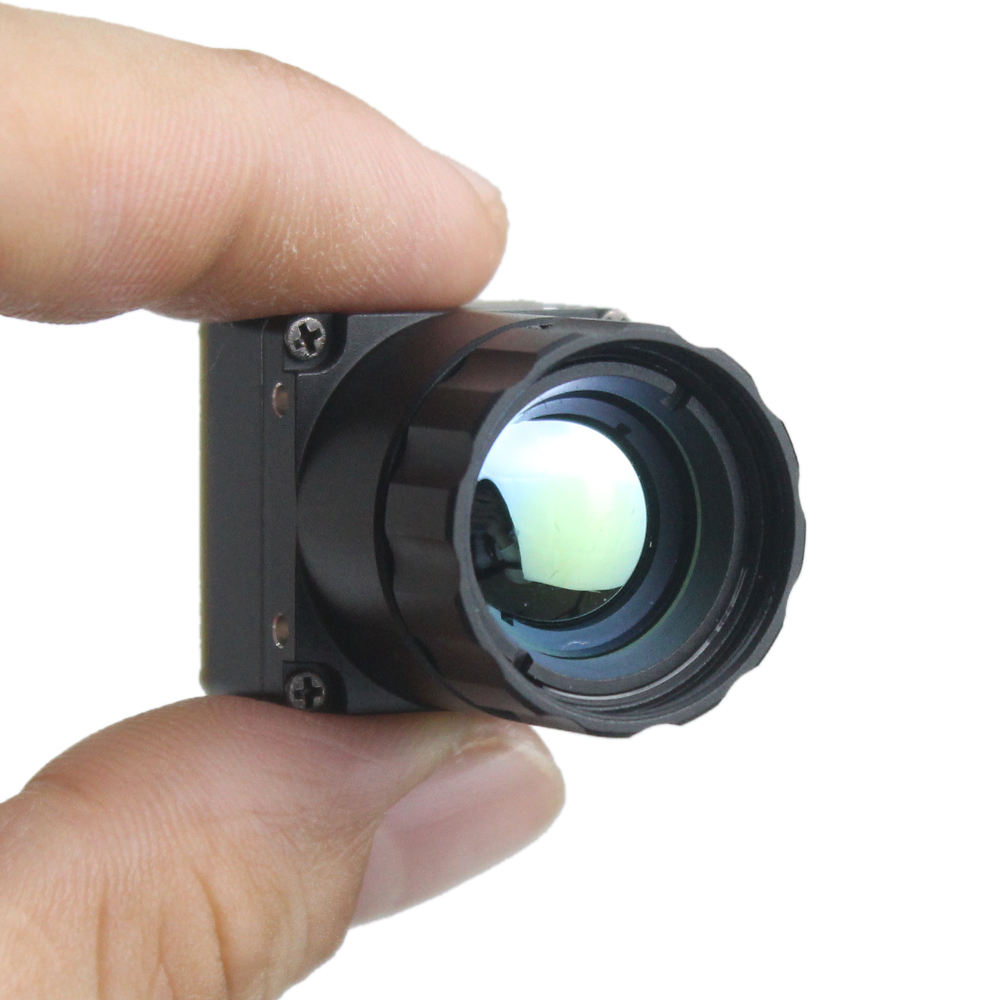
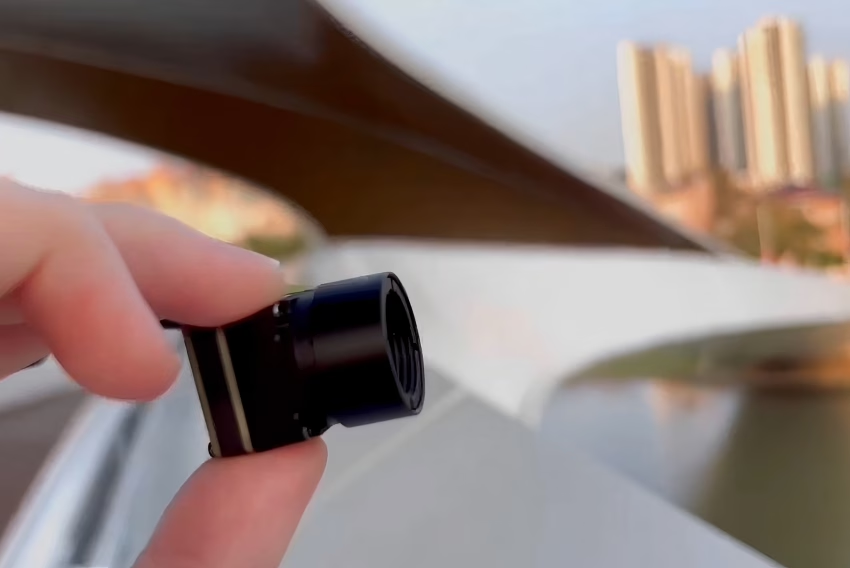
الـ وحدة نواة كاميرا تصوير حراري مصغرة غير مبردة LWIR USB بدقة 640*512 features sharp and crisp image presentation, compact size and low cost. Measuring a microscopic 21mm*21mm, this device sets a new standard for integration. It offers 5/9/13/18/35/50/75/100/150mm lens focal lengths and an optional 640*480 physical resolution, making it highly versatile. It operates with stable performance and strong environmental adaptability, and serves as an exceptional solution for lightweight hand-held systems and small UAV micro-payloads.
When you hold this module in your hand, you realize just how far this tech has come. Weighing practically nothing and using standard USB power, it allows you to get a high-resolution, uncooled thermal pipeline up and running on a test bench in under five minutes. If you're building a hand-held monocular or packing a payload into a tight custom gimbal, this is the building block you want.
Detailed Showcase: Uncooled RJ45 CVBS RTSP IP 640*512 Thermal Sensor Camera Module
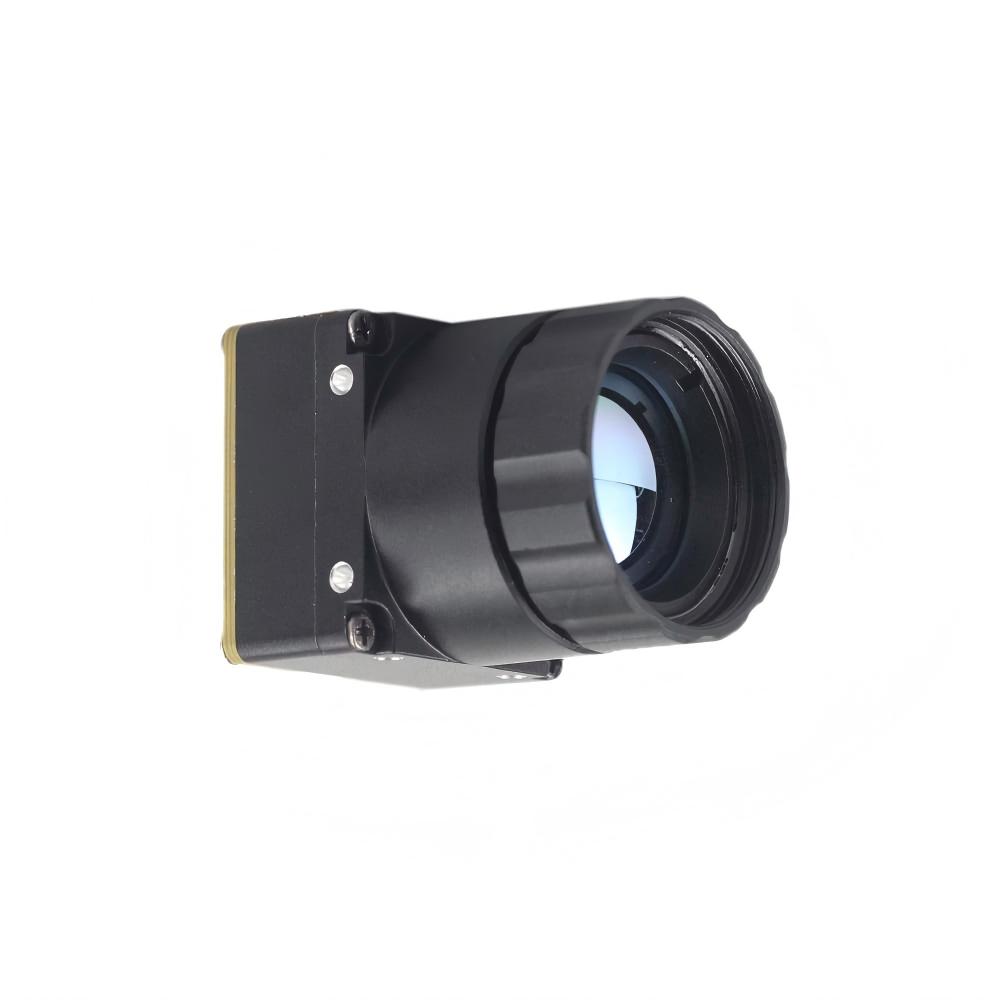
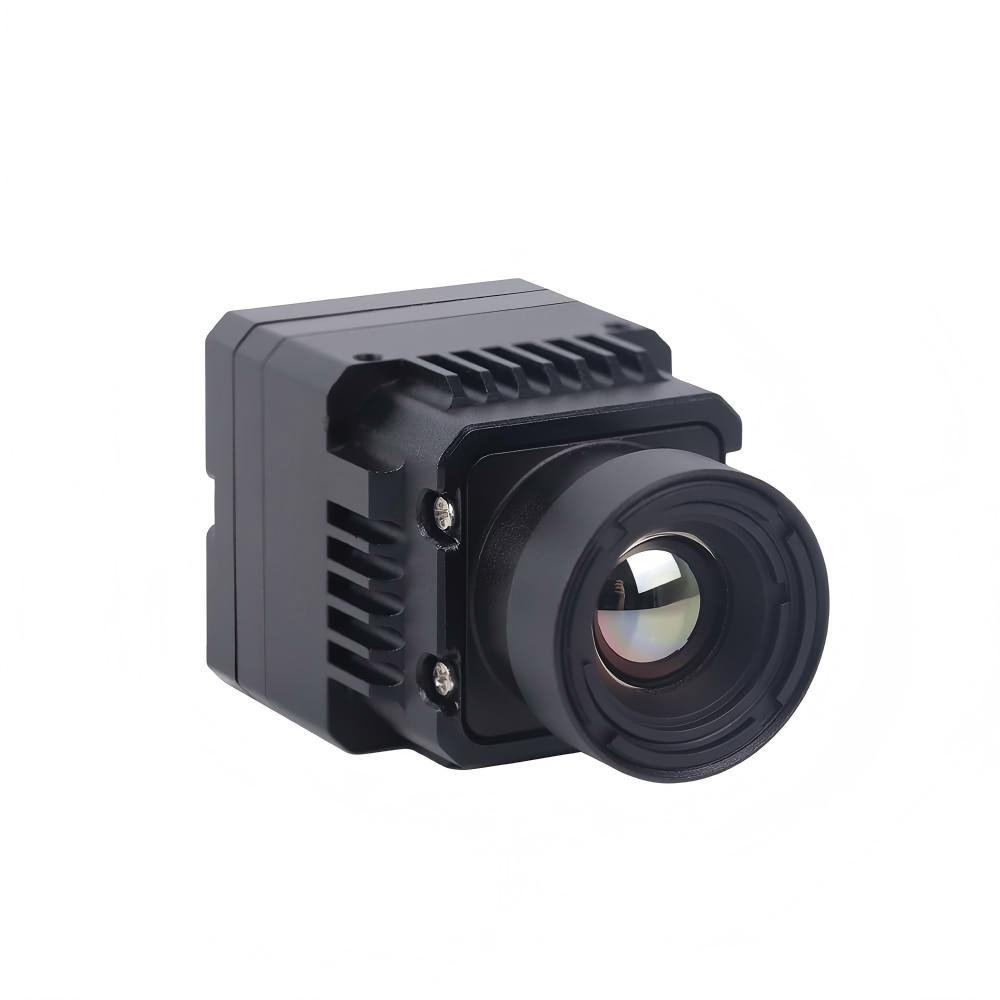
الـ وحدة كاميرا استشعار حراري غير مبردة RJ45 CVBS RTSP IP بدقة 640*512 is a highly specialized ASIC-driven unit built for network structures. Ideal for long-range tactical systems, robotic monitoring, and advanced industrial inspections, this module combines multiple outputs—including RJ45 Ethernet, CVBS analog, and RTSP stream packing—into a single, high-performance platform. Its dynamic ASIC processor handles complex raw-to-compressed pipelines onboard, keeping system power requirements low while providing low-latency, network-ready thermal data.
Here’s the deal: if you are distributing cameras across an entire facility or running Ethernet down a drone tether, you don't want to mess with USB length limits or raw uncompressed video overhead. These network-ready modules handle all the heavy lifting onboard, compression included, and output standard, clean RTSP web streams that any modern network interface can ingest immediately.
مسارات تكامل الأجهزة: الواجهات والبروتوكولات
Selecting the correct hardware interface is critical. It determines video latency, electromagnetic interference (EMI) characteristics, and processing overhead on the host computer. Let's look at how the three primary interface options stack up in real-world scenarios.
1. USB Connection & Class Compliancy (UVC)
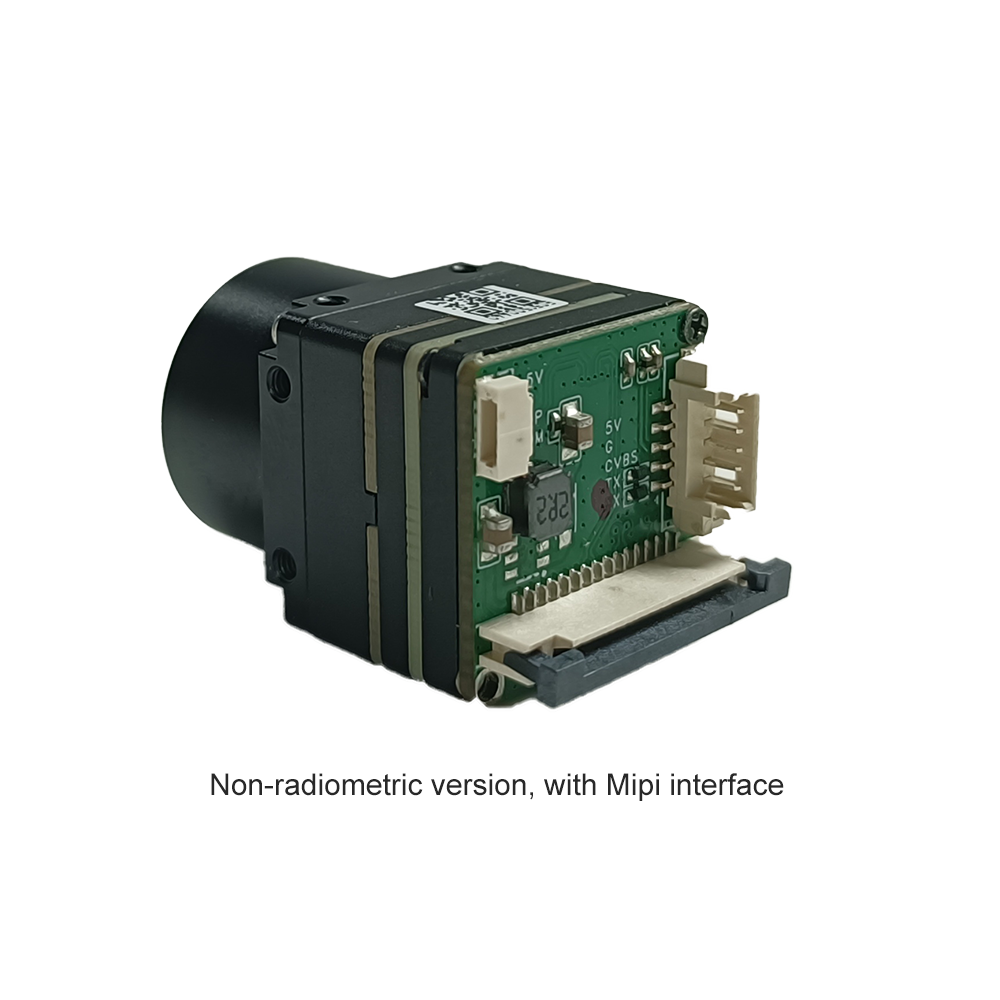
USB interfaces, such as the interface on the Uncooled LWIR USB Mini 640*512 Thermal Imaging Camera Core Module, are popular due to their standard UVC (USB Video Class) design. Key advantages include:
- ✅ Driverless Implementation: The host operating system (including Linux distributions run on single-board computers like Raspberry Pi or Nvidia Jetson, as well as Windows and Android systems) recognizes the thermal module as a generic webcam device. This allows developers to instantly display and capture thermal video streams without compiling complex native drivers.
- ✅ Uncompressed Digital Pipelines: USB 2.0 and USB 3.0 interfaces provide ample bandwidth to stream uncompressed raw digital frames (14-bit data) at high frame rates (30Hz/50Hz). This ensures that pixel-level radiometric accuracy is maintained with zero compression loss.
2. CVBS (Composite Video Broadcast Signal) Analog Video
For ultra-low latency applications, such as FPV piloting on racing drones or remote robotic exploration, analog CVBS remains a critical hardware interface:
- ✅ Zero-Latency Real-Time Feedback: Unlike digital signals that require frame packetization, encoding, and buffering, analog CVBS feeds transmit real-time video with effectively zero latency. This is crucial for drone pilots attempting to maneuver quickly around obstacles in complete darkness.
- ⚙️ EMI Shielding Requirements: Because CVBS is an analog signal, it is sensitive to electromagnetic noise generated by high-power electronic speed controllers (ESCs) and brushless drone motors. Integrators must protect the CVBS line with shielding, route it far from power distribution boards, and ground it properly to prevent dynamic lines and interference patterns across the display loop.
3. RJ45 RTSP / IP Net Linkages
For networked installations, such as security systems and automated factories, network streaming modules like the Uncooled RJ45 CVBS RTSP IP 640*512 Module are highly effective:
- ✅ Onboard H.264 / H.265 Compression: A specialized onboard ASIC chip compresses raw thermal frames into H.264 or H.265 video streams directly inside the camera housing. This compression dramatically reduces transmission bandwidth, allowing high-resolution thermal streams to be transmitted over long distances via Ethernet cables or long-range digital radio systems.
- ⚙️ Standard RTSP Handshake: Relies on the Real-Time Streaming Protocol (RTSP) over IP. This allows users to easily ingest the live video pipeline into commercial Video Management Systems (VMS), custom web apps, or security networks.
بروتوكولات البرمجيات، والتحكم عبر مجموعة تطوير البرمجيات، والقياس الإشعاعي
Developing custom software for an وحدة الكاميرا الحرارية الدقيقة ذات الأشعة تحت الحمراء طويلة الموجة requires a clear understanding of the difference between standard video streaming and radiometric data ingestion.
Radiometric Data (Temperature Matrices) vs. Non-Radiometric Video Stream
A conventional thermal camera can deliver two distinct types of digital video streams:
- ⚙️ Non-Radiometric Streams (AGC-Enabled): Designed for human visualization. The camera’s internal processor applies Automatic Gain Control (AGC) and lookup tables (LUTs) to output colored video (e.g., White-Hot, Black-Hot, Ironbow). This processes the complex dynamic range down to an 8-bit YUV or RGB format. While helpful for operators scanning a scene, actual temperature data is lost in this transformation.
- ⚙️ Radiometric Output (Raw 14-bit): Essential for quantitative engineering inspections and edge AI algorithms. Each pixel represents an analog-to-digital converter (ADC) count that maps to a specific temperature using the Planck radiation equation and calibration parameters:
T_pixel = (D_raw × S) + O
حيث T_pixel represents absolute or relative target temperature, D_raw is the raw digital output count from the microbolometer sensor (typically 14-bit), S is the calibration sensitivity multiplier, and O is the offset parameter determined during factory and dynamic calibration. Outputting raw 14-bit integers preserves these critical temperature relationships across the entire sensor grid.
SDK Functionalities & API Integration
To fully leverage these features, manufacturers supply software development kits (SDKs) written in C, C++, Python, or C#. Key APIs allow systems to control internal parameters on the fly:
- ⚙️ تصحيح عدم التجانس (NUC): Uncooled microbolometers are highly sensitive to self-heating and environmental drift. The NUC API triggers a mechanical shutter to refresh flat-field correction equations. This recalibration process helps eliminate spatial noise and dynamic image artifacts.
- ⚙️ Manual & Automatic Gain Switching: High-gain modes provide low NETD performance across narrow temperature windows (e.g., -20°C to +150°C), ideal for search and rescue operations. Low-gain modes extend the temperature range (up to +550°C or higher), which is crucial for tracking forest fires or industrial smelters.
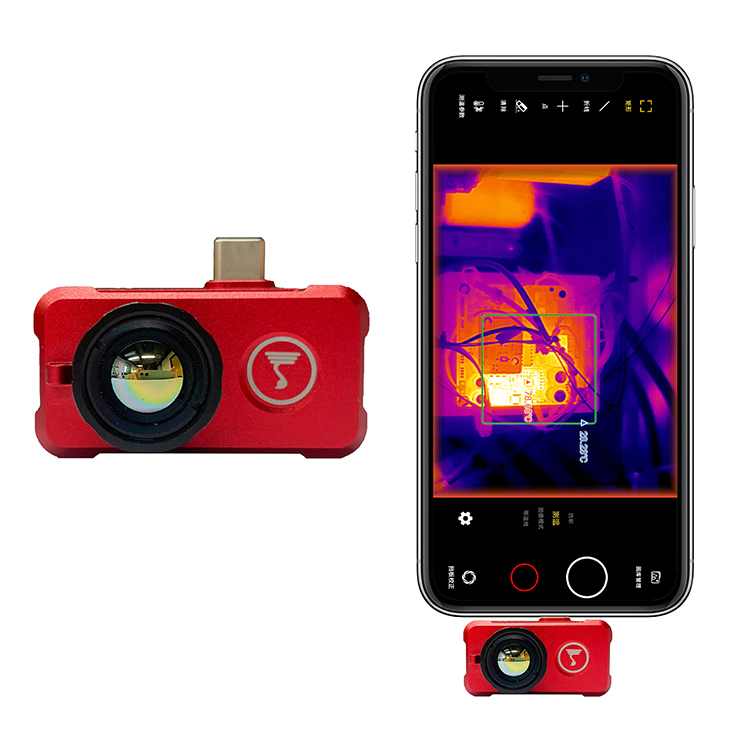
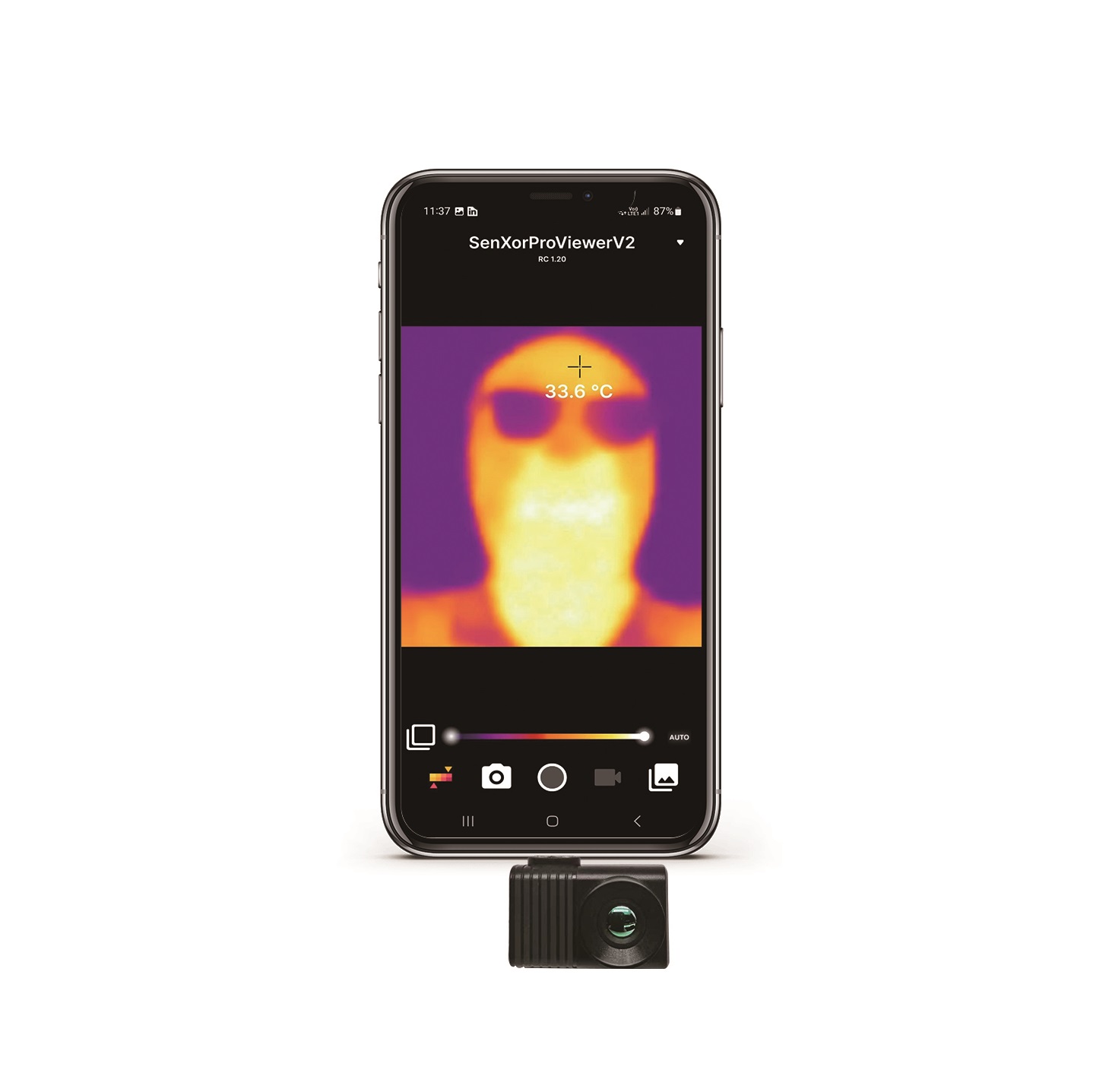
For mobile-specific platforms and localized field diagnostics, technical guides like the Mobile Thermal Imager Series Q3 User Manual help engineers easily map raw data parsing steps when building handheld mobile diagnostics.
The following conceptual Python script illustrates how a developer captures a 14-bit radiometric stream over USB (UVC) using standard developer frameworks, converting raw ADCs into a real-time thermal matrix with dynamic mapping:
import cv2
import numpy as np

# Mock importer representation of a manufacturer's C-DLL wrapper library
from thermal_sdk_wrapper import ThermalCameraCore

def main():
    # Instantiate the USB Mini 640 LWIR Module
    camera = ThermalCameraCore(device_id=0)
    camera.connect()

    # Configure the 14-bit radiometric output mode
    camera.set_output_format("RAW_14_BIT_RADIOMETRIC")
    camera.trigger_nuc_calibration()

    print("Stream online. Reading raw 14-bit sensor data...")

    while True:
        # Fetch raw ADC frame array from the camera core
        raw_frame = camera.grab_frame()

        # Parse pixel values to target temperature equivalents (Celsius)
        # Scaled conversion factors: 0.01 Kelvin step resolution, subtract absolute zero (273.15C)
        temp_celsius = (raw_frame * 0.01) - 273.15

        # Query specific point temperatures (e.g., center-point pixel)
        y_center, x_center = temp_celsius.shape[0] // 2, temp_celsius.shape[1] // 2
        center_temperature = temp_celsius[y_center, x_center]
        print(f"Target Center Temp: {center_temperature:.2f} °C")

        # Normalize the 14-bit image to 8-bit for basic visualization
        visual_gray = cv2.normalize(raw_frame, None, 0, 255, cv2.NORM_MINMAX, dtype=cv2.CV_8U)
        color_mapped = cv2.applyColorMap(visual_gray, cv2.COLORMAP_JET)

        # Display the live feed
        cv2.imshow("LWIR Radiometric Feedback", color_mapped)

        if cv2.waitKey(1) & 0xFF == ord('q'):
            break

    camera.disconnect()
    cv2.destroyAllWindows()

if __name__ == "__main__":
    main()
تصميم النظام الحراري للطائرات بدون طيار / المركبات الجوية غير المأهولة
Integrating a micro LWIR module into an aerial payload requires balancing mechanical dynamics with electrical and optical variables. Because aircraft operate in dynamic environments with rapid temperature swings and high-frequency motor vibrations, protective design measures are essential.
Drone Optical Integration Challenges
1. Mechanical Stabilized Gimbals (2-Axis vs. 3-Axis)
Even with high-resolution 640 × 512 LWIR sensors, stable pointing is critical to prevent motion blur and ensure accurate spatial measurements from the air:
- ⚙️ 3-Axis Gimbals: Essential for broad aerial surveillance. By actively neutralizing yaw, pitch, and roll, they keep the sensor level during complex maneuvers and high-speed turns.
- ⚙️ Weight Dampening: Miniature LWIR cores with a 21mm × 21mm footprint are exceptionally lightweight. This low mass requires precise weight counterbalancing relative to the gimbal's brushless motors. Even a minor imbalance can overdrive the motor drivers, causing jitter and electrical noise in the video stream.
2. Electrical Ground Isolation & Shielding
Industrial drones generate substantial electromagnetic interference (EMI) from their motor ESCs and radio links (e.g., 2.4GHz control, 5.8GHz video telemetry). Unshielded microbolometer chips can read this EMI as high-frequency noise, causing horizontal or vertical banding across the thermal feed. To mitigate this, keep these steps in mind in the shop:
- ⚙️ Enclose the camera module in a grounded, CNC-machined aluminum housing.
- ⚙️ Use copper-foil tape to protect flexible ribbon cables carrying digital video lines.
- ⚙️ Isolate the camera's electrical ground from the main propulsion battery system using optocouplers or isolated DC-to-DC converters.
3. Lens Selection & Field of View (FOV) Configurations
LWIR wavelengths cannot pass through standard optical glass. Instead, they require specialized lenses made from materials like Germanium (Ge), Chalcogenide glass, or Zinc Selenide (ZnSe). Selecting the correct lens configuration depends directly on your mission profile:
- ✅ Short Focal Lengths (5mm, 9mm, 13mm): Provide a wide FOV. These are ideal for close-range mapping, indoor tactical surveillance, and sweeping search and rescue (SAR) operations where covering maximum ground is priority.
- ✅ Long Focal Lengths (50mm, 75mm, 100mm, 150mm): Provide a narrow FOV and higher spatial resolution over long distances. These lenses are critical for long-range defense observation, perimeter security, and high-altitude utility inspections.
When building advanced thermal tracking platforms, pairing these lightweight camera cores with heavy-duty PTZ hardware—such as a كاميرا PTZ كروية للتصوير الحراري—helps drone platforms transition smoothly from wide-area search to long-range threat tracking. For more options in advanced drone payloads and aerial component distribution, engineers can reference integration platforms such as OBSETECH.
الذكاء الاصطناعي الطرفي الصناعي وحالات استخدام النشر التكتيكي
Combining compact thermal cores with low-power Edge AI hardware acceleration allows engineers to deploy intelligent, uncrewed thermal detection systems directly in the field.
1. Autonomous Substation Inspection
Equipped with an LWIR core on a dynamic payload, drones can fly designated GPS routes to inspect high-voltage electrical infrastructure (substations, transformers, isolators).
- ⚙️ Edge AI Application: An onboard single-board computer (such as an Nvidia Jetson Nano) runs a PyTorch or TensorFlow model to process the real-time radiometric stream.
- ✅ Automated Action: By comparing real-time temperatures against historical baseline values, the system can automatically identify overheating components (hot spots) caused by localized resistance or insulation failure. It can then log geotagged alerts for maintenance teams without requiring a human operator to analyze the raw footage.
2. Precision Agriculture & Canopy Health Analysis
Thermal imaging is a highly effective tool for detecting water stress in crops. Dry, water-stressed plants have higher surface temperatures than well-hydrated crops, which are cooled by transpiration.
- ⚙️ Edge AI Application: Multispectral imagery and uncooled thermal video feeds are fused using custom spatial alignment algorithms.
- ✅ Automated Action: Onboard classifiers analyze plant temperatures relative to local environmental baselines, generating real-time Crop Water Stress Index (CWSI) spatial maps. This allows precision farming systems to optimize water consumption dynamically.
3. Tactical Defense & Autonomous Target Tracking
In defense and security applications, compact thermal cores are integrated into micro-UAVs for intelligence, surveillance, and reconnaissance (ISR) missions.
- ⚙️ Edge AI Application: A highly optimized, lightweight object detection algorithm (such as YOLOv8 Nano) is trained specifically on thermal datasets to detect human or vehicle heat signatures.
- ✅ Automated Action: The system automatically extracts targets through foliage, smoke, or complete darkness. Once targets are identified, the drone's flight controller can use visual feedback loops to autonomously track target coordinates, maintaining persistent surveillance.
الأسئلة التقنية المتعمقة الشائعة
Are cost-effective Chinese LWIR micro thermal camera modules reliable compared to high-end legacy Western brands?
How can I stream real-time thermal video from a micro thermal module to a drone or PC?
- USB Core (Direct Digital Data): Connect the camera to an onboard computer (e.g., Raspberry Pi, Jetson Nano) via USB. Using standard UVC-compliant drivers, you can capture frames directly in Python or C++ using libraries like OpenCV. To access radiometric values, you must bypass standard RGB rendering and capture raw 14-bit frames via the manufacturer's proprietary SDK interface.
- CVBS Core (Analog Transmission): Connect the CVBS output wire directly to an analog video transmitter (VTX) operating on standard frequencies (e.g., 1.2GHz or 5.8GHz). On the ground station side, an analog receiver can capture the video and stream it to a low-latency monitor or DVR with virtually zero latency.
- RJ45 RTSP/IP Core (Network Streaming): Assign a static or DHCP IP address to the camera module while it is connected to a shared network switch or long-range digital bridge. You can then stream H.264/H.265 encoded video to your ground control station or software suite using the RTSP protocol. This can be executed with command-line tools like VLC or integrated directly into custom apps:
rtsp://192.168.1.120:554/stream0.
What is the difference between cheap hobbyist thermal sensors and commercial-grade micro LWIR modules?
- Resolution & Spatial Precision: A standard hobbyist sensor offers limited resolution, which translates to a low level of detail. A commercial-grade 640x512 array has approximately 6.6 times the pixel count of a 256x192 sensor:
(640 × 512) / (256 × 192) = 327,680 / 49,152 ≈ 6.67. This higher resolution provides significantly greater spatial clarity, allowing inspectors to identify small faults or targets from much longer, safer distances. - Radiometric Accuracy: Hobbyist sensors often lack precise thermal calibration, leading to temperature readouts that fluctuate with the housing's temperature. Commercial-grade modules are factory-calibrated across broad temperature ranges. They utilize active internal NUC mechanisms and real-time compensation algorithms to maintain accurate temperature measurement, even during rapid environmental changes.
- Integration & SDK Support: Hobbyist sensors typically output basic 8-bit colorized images over highly restricted interfaces. Commercial-grade LWIR cores, by contrast, offer robust SDKs and APIs. These resources allow developers to access raw 14-bit data, adjust microbolometer bias voltages on the fly, implement customized noise-filtering algorithms, and interface with advanced Edge AI platforms.
عند إحكام إغلاق نواة حرارية غير مبردة داخل علبة مقاومة للطقس IP67/IP68، يكون التصميم الحراري السلبي حاسمًا لإيقاف الانحراف الحراري الأساسي وتدهور الصورة. لا تحتاج الميكروبولومترات إلى مبردات نشطة، لكن ASIC الصورة المدمجة ومشفرات الفيديو الشبكية تستهلك بين 1.0 واط و 2.5 واط أثناء التشغيل. في صندوق محكم ضيق بدون تدفق هواء، تخلق الحرارة الداخلية المحتبسة نقاطًا ساخنة عبر هيكل النواة ومصفوفة المستوى البؤري. تؤدي هذه التدرجات الحرارية الموضعية إلى خلل في قراءات درجة الحرارة الإشعاعية وتزيد من ضوضاء المستشعر، مما يقلل من حساسية NETD الفعالة لديك. لحل هذا، صمم مسارات مباشرة لتبديد الحرارة المعدنية—مثل كتلة باردة من الألومنيوم أو النحاس مقترنة بوسادات فجوة عالية التوصيل—تربط اللوحة الحرارية للوحدة مباشرة بالغلاف المعدني الخارجي. هذا يحول كامل الهيكل الخارجي إلى مشتت حراري كبير. أيضًا، تجنب تركيب أجزاء عالية الطاقة (مثل أجهزة الراديو RF أو محولات الطاقة الساخنة) بجوار النواة البصرية مباشرة للحفاظ على استقرار الظروف الحرارية عبر المستشعر.
- المعيار الصناعي: Learn more about custom drone options and payloads from OBSETECH.
- Prototyping Frameworks: Explore hardware accessories and kits at استوديو Seeed.
- Internal Product Guide: Read the technical specifications for the النواة الحرارية Mini 640 غير المبردة LWIR.
- Industrial Integration: See our deep dive on high-performance infrastructure with the كاميرا PTZ كروية للتصوير الحراري.
- Mobile Integration: Download resources and view setups in the Mobile Thermal Imager Series Q3 User Manual.