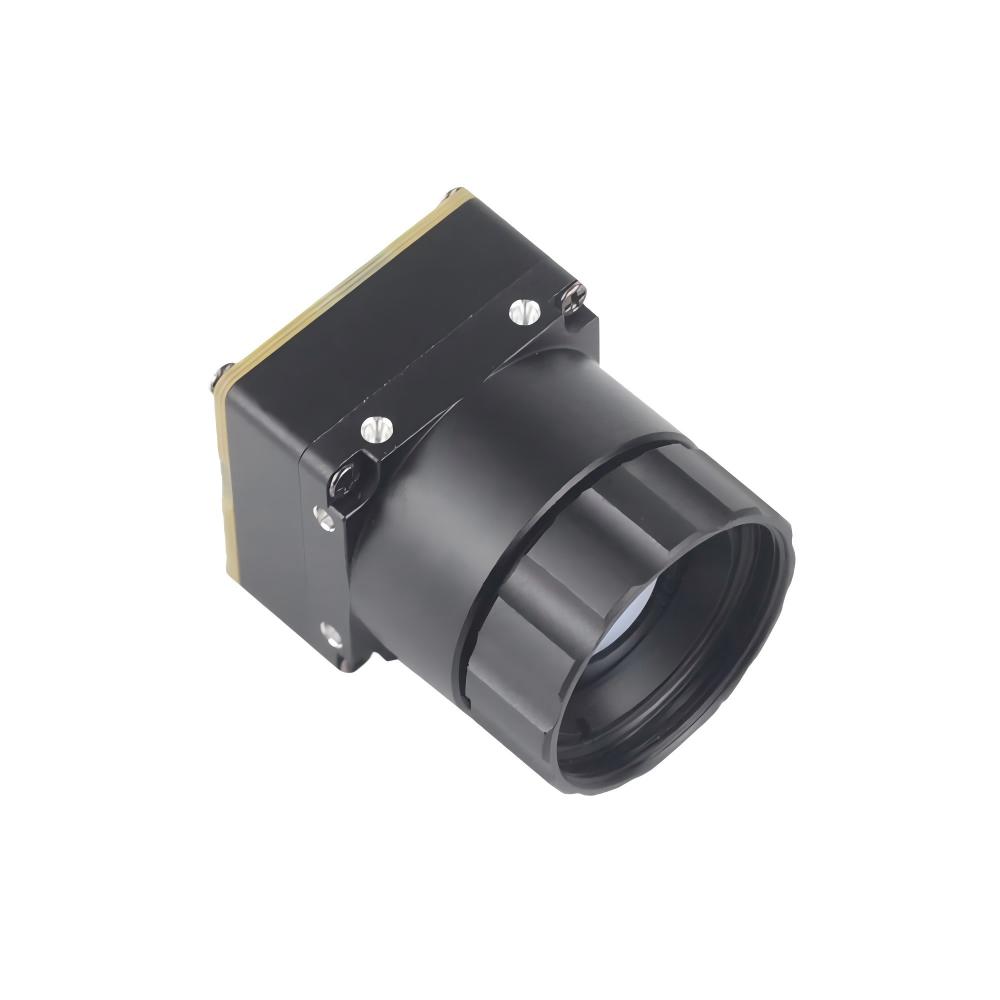
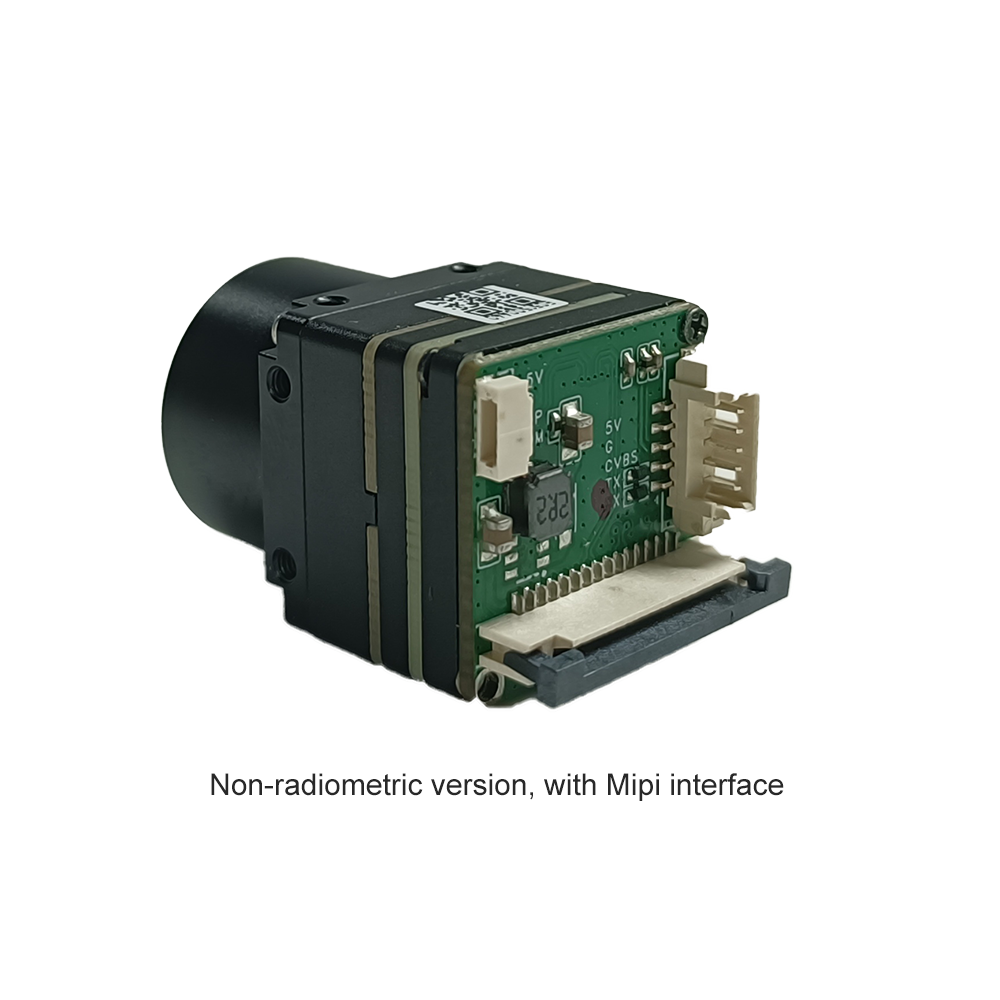
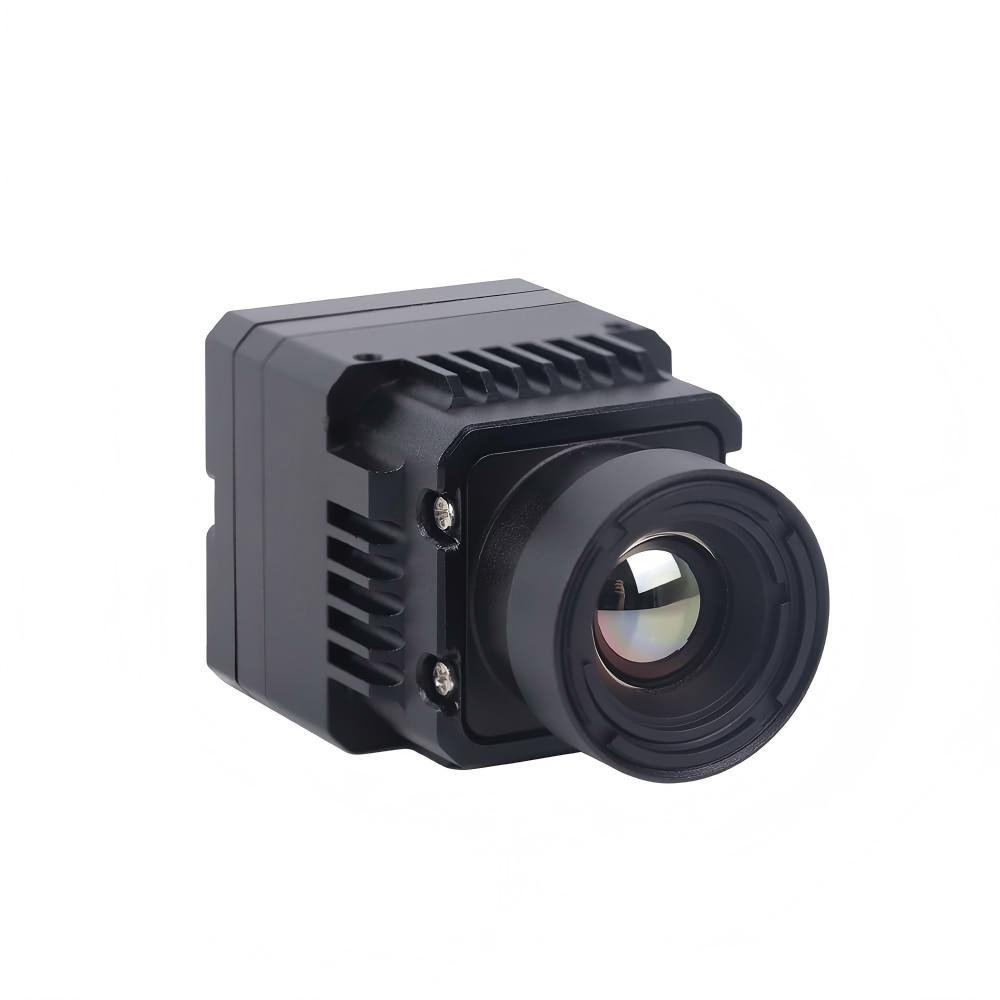

Модуль тепловизионной камеры высокого разрешения: неохлаждаемые ядра LWIR 640x512 для дронов и самостоятельных сборок
9 июня 2026 г.
Микромодуль тепловизионной камеры LWIR: полное руководство по интеграции для дронов и решений периферийного ИИ
10 июня 2026 г.
Руководство по интеграции модуля ИК-тепловизионной камеры: OEM-решения высокого разрешения для дронов и периферийного ИИ
Давайте будем честны: установка модуля ИК-тепловизионной камеры в современную тактическую автономную систему, полезную нагрузку БПЛА или промышленную линию машинного зрения — это совершенно иная задача по сравнению со стандартным оборудованием видимого диапазона. Стандартные RGB-датчики камер видимого света работают, собирая отраженные фотоны. Длинноволновые инфракрасные (LWIR) модули камер, с другой стороны, работают в интенсивной спектральной полосе 8–14 мкм. Они обнаруживают тепло — дисбаланс теплового излучения на уровне микрокельвинов, испускаемый непосредственно самими целями. Это фундаментальное физическое различие полностью меняет подход к механической интеграции, прокладке электрических сигналов и обработке тепловых метаданных на уровне встроенного ПО.
Для проектировщиков систем полезной нагрузки, разработчиков встроенного ИИ и оборонных инженеров преобразование необработанных тепловых измерений в четкую, пригодную для использования цифровую телеметрию представляет собой сложный процесс интеграции. Это исчерпывающее руководство по интеграции служит вашим инженерным планом. Ниже мы разбираем физику микроболометрических датчиков, протоколы аппаратной связи, механические ограничения, выбор оптической сборки и конфигурации радиометрических вычислений на периферии. Устанавливая стабильные интерфейсы с низкой задержкой, OEM-интеграторы могут использовать неохлаждаемые тепловые ядра ASIC высокого разрешения, чтобы обеспечить круглосуточные возможности машинного зрения в самых суровых условиях эксплуатации.
Содержание
Архитектура ядра микроболометра и выбор оптики
Неохлаждаемый модуля ИК-тепловизионной камеры использует массив крошечных, чувствительных к температуре детекторных элементов, называемый матрицей в фокальной плоскости (FPA). Каждый пиксель в этом датчике на основе микроэлектромеханических систем (MEMS) представляет собой подвешенную микромостовую структуру, спроектированную с активным теплопоглощающим слоем сверху. Этот слой, обычно изготовленный из оксида ванадия (VOx) или аморфного кремния (a-Si), изменяет сопротивление при поглощении длинноволнового инфракрасного излучения. Интегральная схема считывания (ROIC) последовательно измеряет это изменение сопротивления по всей сетке, преобразуя эти аналоговые колебания в 14-битный цифровой сигнал. Понимание этой структурной механики тесно связано с пониманием фундаментальной физики, изложенной в Тепловизионная съёмка — Википедия, где подробно описывается, как регистрируется собственная излучаемая тепловая энергия без активной подсветки.
На практике мы сталкиваемся с двумя основными проблемами: тепловой дрейф и механическая вибрация. Поскольку микромосты чрезвычайно тонкие для минимизации тепловой массы, механический удар может исказить необработанные показания. Кроме того, перепады температуры окружающей среды могут нагревать сам корпус камеры, подавляя тепловой сигнал цели. Вот почему выбор правильной химии датчика и структуры микроболометра критически важен с самого начала.
ТЕПЛОВИЗИОННОЕ ВИДЕО В РЕАЛЬНОМ ВРЕМЕНИ
Динамика архитектуры датчика: VOx против аморфного кремния
Выбор правильной химической структуры вашей матрицы датчиков напрямую определяет производительность в суровых условиях эксплуатации:
- ✅ Оксид ванадия (VOx): Обладает исключительно высоким температурным коэффициентом сопротивления (TCR), обычно около -2% на Кельвин. Это обеспечивает превосходную тепловую чувствительность и более низкие характеристики шума 1/f, что приводит к высокостабильным калибровочным кривым и четкому качеству изображения. Это делает VOx явным отраслевым стандартом для тактических, профессиональных применений БПЛА.
- ✅ Аморфный кремний (a-Si): Предлагает более плоскую кривую отклика при широких перепадах температуры, поскольку является более химически однородным и его легче наносить на большие кремниевые пластины. Однако его более низкая общая чувствительность часто приводит к более высокому базовому уровню шума и склонности к дрейфу датчика при быстрых изменениях температуры.
Разрешение, шаг пикселя и математика NETD
Современные приложения переходят на меньшие размеры пикселей, от устаревших матриц с шагом 17 мкм к высококомпактным шагам пикселя 12 мкм. Переход на шаг 12 мкм напрямую уменьшает общий размер FPA. Этот прорыв позволяет интеграторам сочетать датчик с меньшими и более легкими оптическими линзами, значительно оптимизируя системные показатели SWaP при сохранении высокого пространственного разрешения. Сохраняя формат разрешения 640×512 на узле 12 мкм, разработчики достигают более широких полей зрения (FOV) и большей дальности обнаружения, чем при использовании более простых схем 384×288.
Базовая чувствительность модуля измеряется его эквивалентной шумовой разностью температур (NETD), выражаемой в милликельвинах (мК). Математически NETD представляет собой точное изменение температуры сцены на мишени абсолютно черного тела, которое дает отношение сигнал/шум, равное единице:
Где Vn — среднеквадратичный электрический шум, R — тепловая чувствительность, а ΔT — градиент температуры. NETD ≤ 40 мК или ≤ 50 мК указывает на то, что камера может различать мельчайшие разницы температур всего в 0,04°C–0,05°C. Это критически важно для обнаружения целей в густом тумане, при высокой влажности или на сложной местности, где тепловые градиенты минимальны.
Для наглядности: в прибрежных зонах с высокой влажностью стандартные камеры видимого диапазона полностью слепнут. Неохлаждаемый микроболометр с чувствительностью ≤ 40 мК легко прорезает влагу. Он различает тонкие тепловые различия между динамическими целями и их водным фоном, отслеживая мельчайшие отличия в том, как они излучают тепло.
Инфракрасная оптика: германиевые и халькогенидные линзы
Стандартные оптические стекла, такие как диоксид кремния, блокируют длинноволновые инфракрасные волны. В результате оптика LWIR должна изготавливаться из специализированных материалов, пропускающих инфракрасное излучение. Монокристаллический германий (Ge) высоко ценится за исключительно высокий показатель преломления (примерно 4,0), что позволяет создавать компактные конструкции линз с быстрой оптической апертурой (F/1.0 или F/1.1), улавливающие максимум поступающей тепловой энергии. Однако у германия есть серьезный недостаток: его показатель преломления значительно меняется с температурой (dn/dT равен 3,96 × 10⁻⁴ K-1). Этот тепловой дрейф вызывает заметные сдвиги фокуса при колебаниях температуры окружающей среды во время полета.
Для снижения веса и компенсации затрат в оптических конструкциях используются специализированные Халькогенидные стекла. Эти синтетические, формуемые стеклянные структуры (такие как BD-2 или IG6) обладают гораздо более низким тепловым коэффициентом показателя преломления, что делает их идеальными для создания пассивных, атермализованных, фиксированно-фокусных линзовых сборок, сохраняющих резкость от -40°C до +80°C. Оптические новаторы, такие как LightPath Technologies разрабатывают точные халькогенидные и формованные германиевые линзы, уменьшающие хроматические аберрации для полезных нагрузок с двойным полем зрения или большой дальностью. Для приложений, требующих экстремальных дистанций, разработчики могут сочетать эти модули с высококлассными, тяжелыми оптическими компонентами, такими как те, что используются в высокопроизводительных оптических системах 1280x1024 12 мкм разработанных для максимального обнаружения на больших дальностях.
Аппаратные интерфейсы и интерфейсы цифрового потока
Слушайте, когда вы подключаете модуля ИК-тепловизионной камеры с хост-процессорами (такими как NVIDIA Jetson, Edge TPU или промышленными одноплатными компьютерами) ваш выбор физического уровня и протокола передачи напрямую влияет на задержку обработки, стабильность системы и сложность драйверов:
Designing within these specifications is critical. For instance, while streaming via an RJ45 IP interface allows you to route compressed H.264 video streams over long distances using standard switches, the internal compression step on the integrated ASIC adds processing latency. Alternatively, USB UVC streams uncompressed 14-bit frames or 8-bit visual buffers with lower latency, making it ideal for real-time edge processing. However, keeping the cable runs under three meters is essential to avoid timing desynchronization.
For setups that interface directly with custom PCB expansion boards, parallel 14-bit streams route the direct digitizations of the ROIC straight into the processor's input buffers. Although this method provides near-zero latency, it requires writing complex device drivers (such as Linux V4L2 device trees) and routing highly sensitive differential signal lines with strict impedance matching.
OEM-решения продуктов высокого разрешения
To implement these interface technologies, integrators can select from high-performance uncooled VOx core assemblies depending on their system constraints. Below are two industry-proven sensor options designed for rapid hardware deployment.
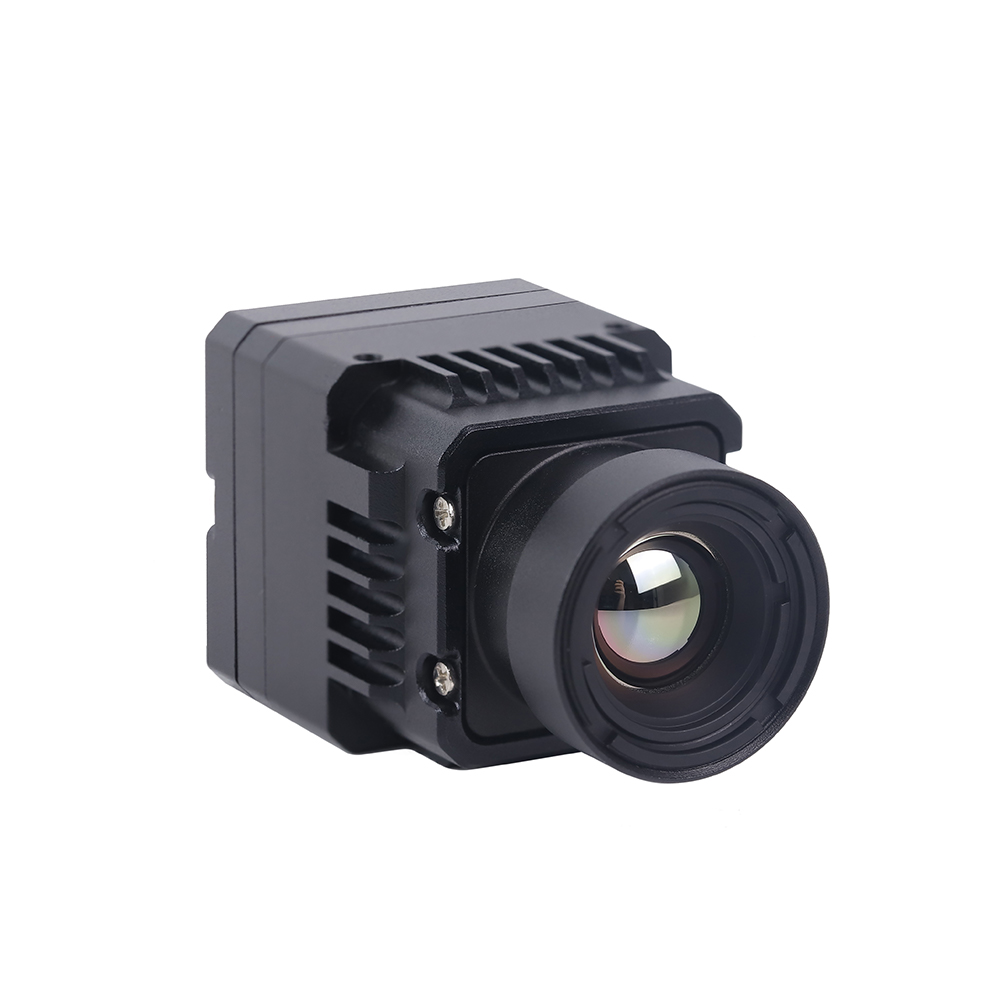
A. Uncooled Infrared RJ45 CVBS RTSP IP 640*512 ASIC Thermal Sensor Camera Module
Built on a powerful ASIC-centered image processing core, this design offers both network-ready digital and analog connectivity in an integrated package. It is engineered specifically for autonomous monitoring stations, pan-tilt-zoom (PTZ) arrays, and real-time security systems requiring multi-path signal outputs.
Critical Specifications:
- ⚙️ FPA Resolution: 640×512 pixels (highly accurate 12μm pitch VOx array)
- ⚙️ Dual Output: Simultaneous digital RTSP stream over RJ45 Ethernet and raw CVBS analog composite video
- ⚙️ On-Board ASIC: Real-time hardware-accelerated non-uniformity correction, digital zoom, and multi-palette color mapping
- ⚙️ Target Use: Persistent perimeter security, robotic surveillance rigs, and networked AI nodes
Посмотреть детали продукта и цены ➔
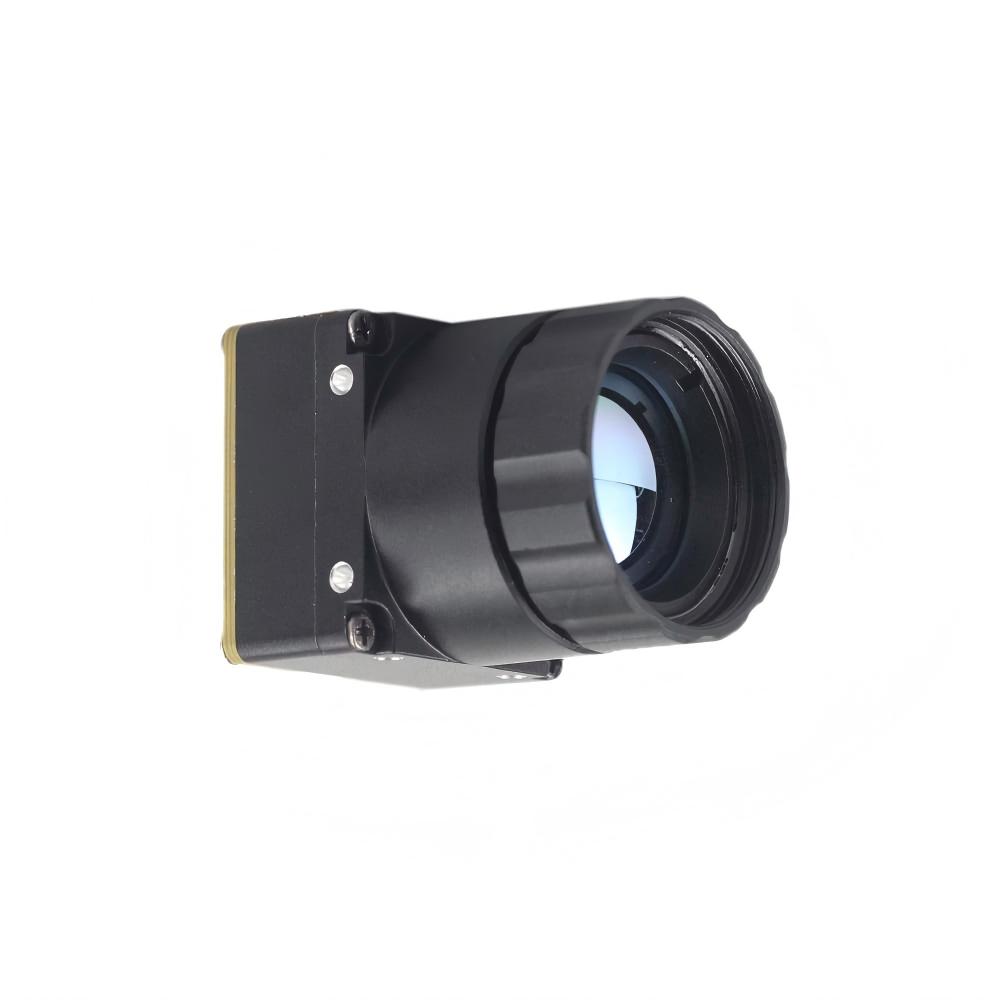
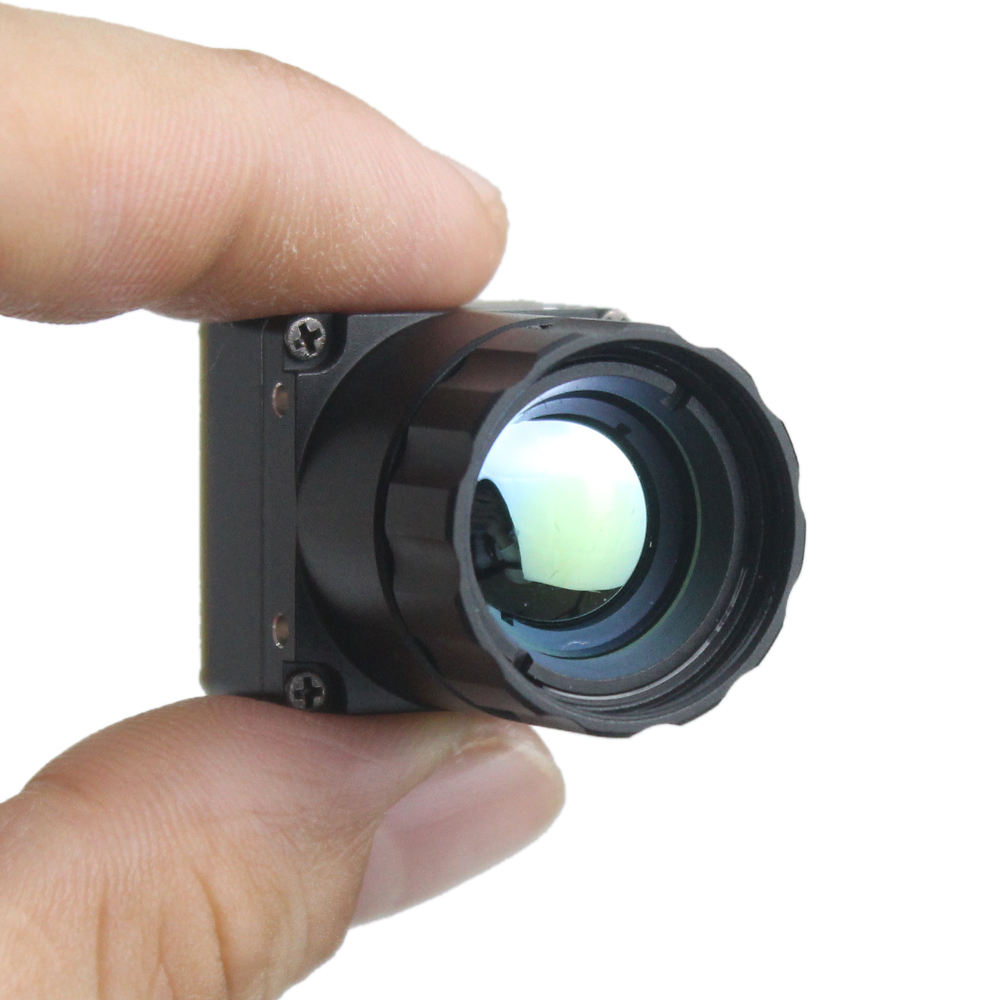
B. Uncooled LWIR USB Mini 640*512 Thermal Imaging Camera Core Module For Drones
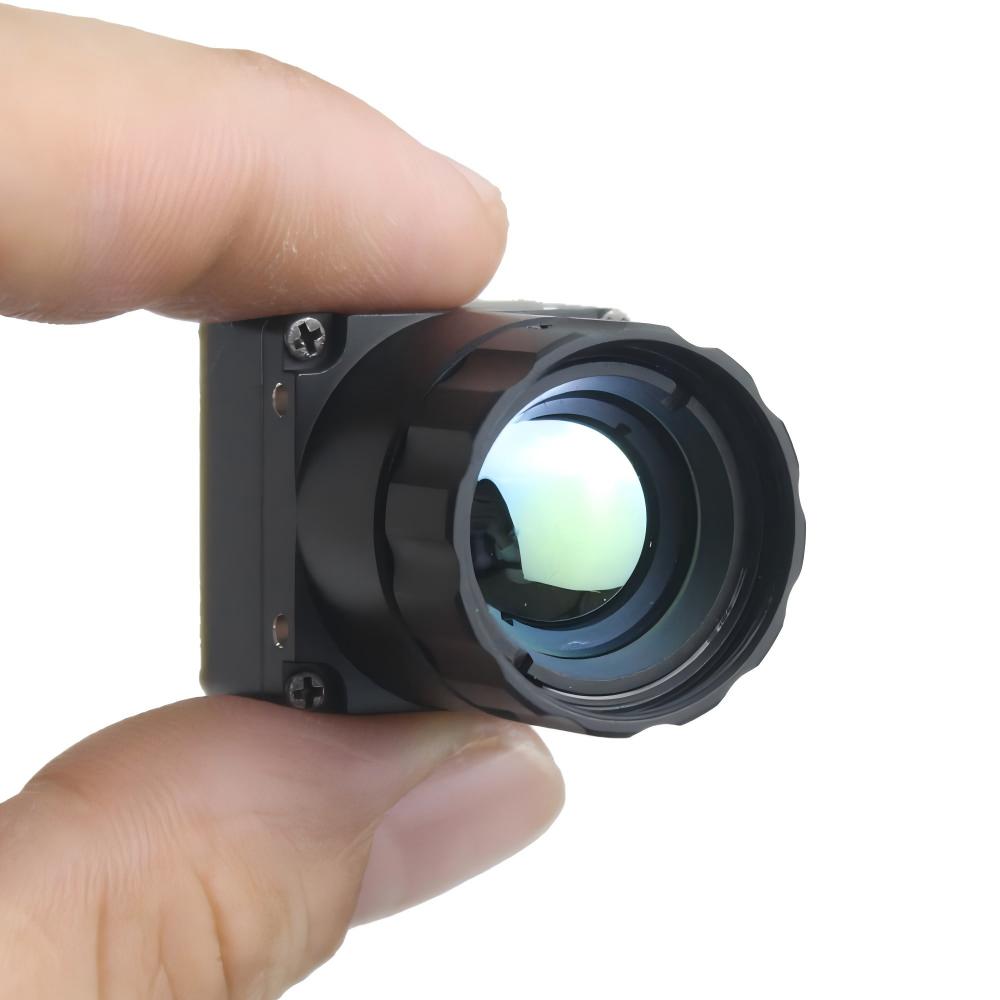
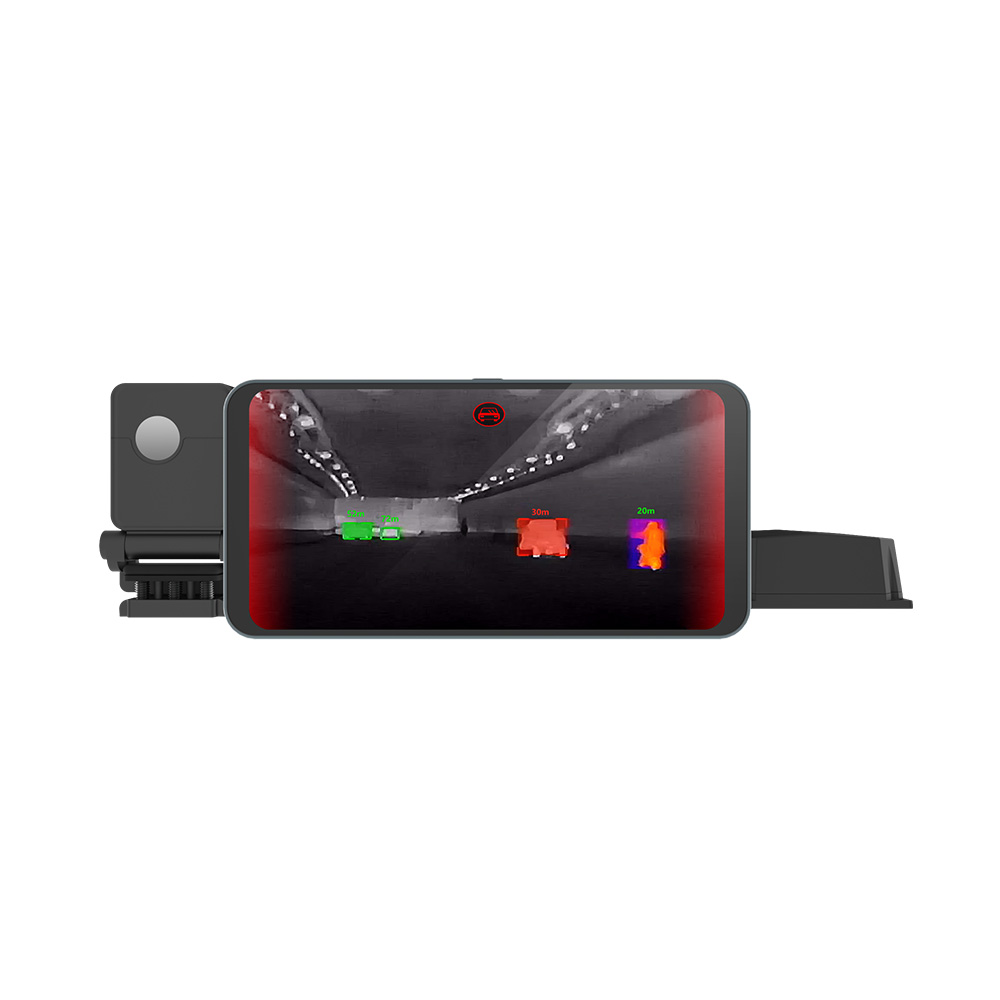
When weight and physical volume are your primary design constraints, this micro-core offers a solution similar in performance to DJI industrial thermal payloads. Measuring just 21mm × 21mm, it is designed for direct integration into weight-critical drone gimbals and compact handheld systems.
Critical Specifications:
- ⚙️ Форм-фактор: Ultra-miniature 21mm × 21mm footprint
- ⚙️ Wide Lens Ecosystem: Threaded mount supports focal lengths including 5mm, 9mm, 13mm, 18mm, 35mm, 50mm, 75mm, 100mm, and 150mm
- ⚙️ Варианты разрешения: Native 640×512 layout with 640×480 resolution options
- ⚙️ Host Connectivity: Plug-and-play UVC protocol via standard USB, ensuring simple integration with Linux and Android systems
Посмотреть детали продукта и цены ➔
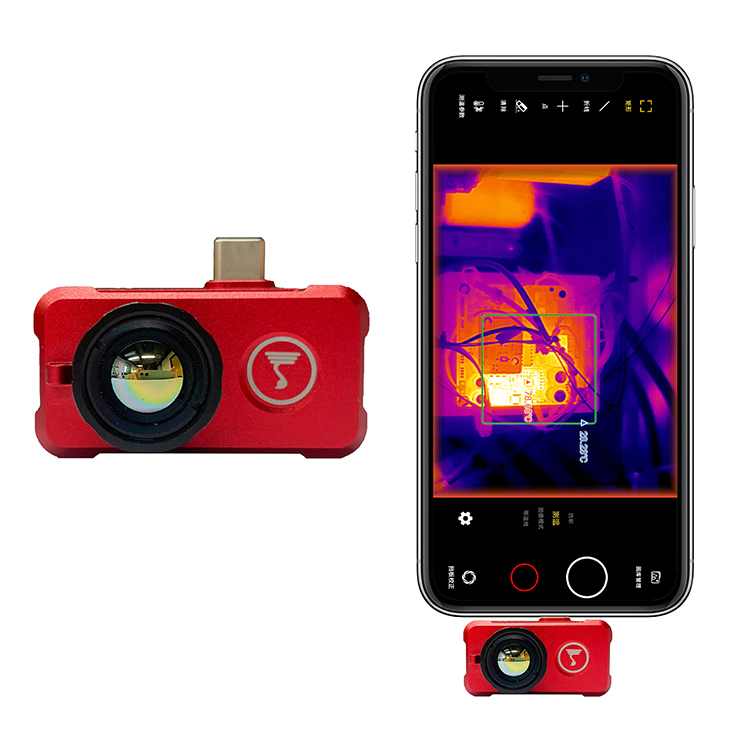
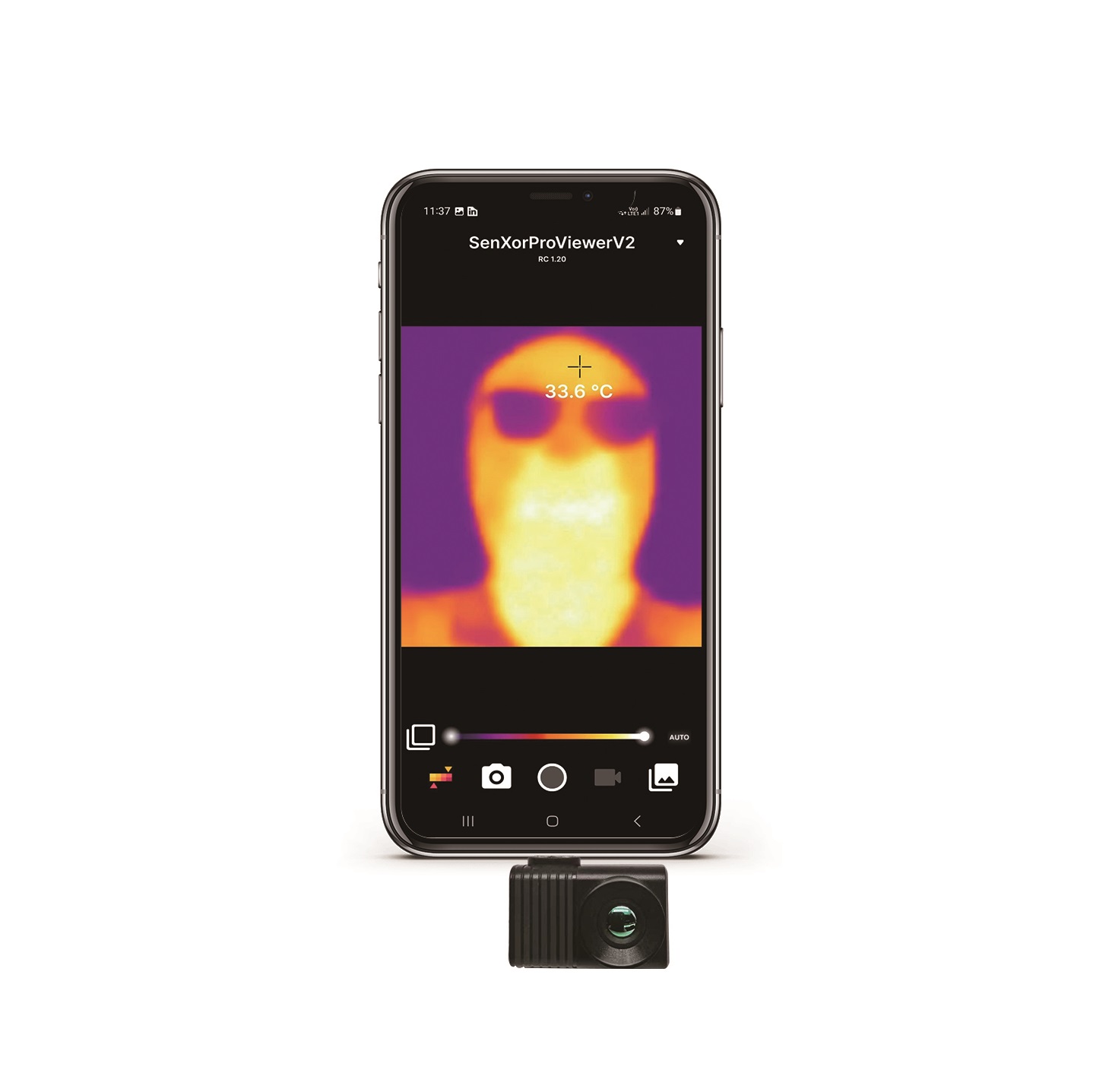
For architectural variations that require simpler resolution brackets relative to budget layouts, engineers can use the smaller MD Series 384x288 LWIR uncooled thermal core modules. Alternatively, for rapid field-testing, dynamic spot validations, or plug-and-play prototyping, you can utilize a mobile-compatible Android USB thermal camera to quickly capture imagery and calibrate target fields in real time.
Инженерия интеграции дронов
Here’s the deal: physical drone integration is where standard engineering concepts often fail. You are mounting a highly temperature-sensitive sensor inside a carbon-fiber housing that is constantly shaken by high-frequency motor vibrations and subjected to massive electromagnetic interference (EMI) from nearby Electronic Speed Controllers (ESCs). If you don't design your payload around these realities, your clean thermal signal will end up looking like static on an old CRT TV.
SWaP-C Optimization and Mechanical Isolation
Every gram of excess payload weight directly reduces your drone's flight window. For weight-critical systems, custom camera enclosures should be machined from lightweight 6061-T6 aluminum or printed using carbon-fiber-filled thermoplastic materials like PA12-CF. Aluminum alloy offers a distinct advantage by doubling as an EMI shield and an efficient passive heat sink.
Unlike cooled sensors, uncooled microbolometers do not require power-hungry cryogenic cooling engines. However, because their sensor calibration is highly sensitive to ambient temperature changes, heat from nearby electronics can warm the microbolometer FPA. This localized heating causes "thermal drift," showing up as spatial noise or cloud-like artifacts on your video feed. To prevent this, isolate the модуля ИК-тепловизионной камеры with low-conductivity mounting spacers made from PEEK or Ultem. Additionally, use high-conductivity thermal interface materials (with a thermal conductivity of ≤ 5 W/mK) to vent heat away from the rear ASIC components to the outer metallic frame of the gimbal assembly.
Electrical Isolation and Power Supply Filtering
A drone’s electrical system is a challenging environment for sensitive sensor arrays. Brushless electronic speed controllers (ESCs) and high-power motors generate significant switching noise and voltage sags across the raw battery terminals. This high-frequency noise can degrade the performance of the microbolometer's sensitive ROIC.
To maintain clean power delivery, isolate the module's supply lines from the main battery bus:
- ⚙️ Dual-Stage Filtration: Route power through a high-efficiency switching buck regulator to step voltage down to 5.5V-6.0V, followed by a dedicated high-rejection Low-Dropout (LDO) linear regulator to lock in a clean, ripple-free +5.0V output (≤ 10mV peak-to-peak ripple). This prevents electrical noise from bleeding into your raw thermal frames.
- ⚙️ Proper Shielding: Enclose high-speed digital lines (such as USB and MIPI arrays) in tin-plated copper shielding socks, and ground code lines at a single common grounding point on the power management card to avoid ground loops.
Communication Integrations using MAVLink Control Loops
To capture payload data and adjust settings from a ground control station, the drone's autopilot (running PX4 or ArduPilot) must translate MAVLink commands into instructions the thermal camera module can understand:
- ⚙️ Triggering Calibration (NUC): Uncooled bolometers regularly run a mechanical shutter calibration called Non-Uniformity Correction (NUC) to reset pixel response variations. Map a dynamic MAVLink command (such as
MAV_CMD_DO_DIGITAL_IMAGER_CONTROL) directly to a serial output channel on the autopilot to manual trigger the camera shutter before critical scanning tasks. - ⚙️ Palette Switching: Send serial control packets via UART or RS232 interfaces to switch the module's internal lookup tables (LUTs) in real time. This allows pilots to jump from "White-Hot" or "Black-Hot" modes to high-contrast "Ironbow" palettes during Search and Rescue (SAR) operations.
Периферийный ИИ и радиометрическое слияние датчиков
For automated target tracking, gas leaks detection, and structural anomaly mapping, feeding flat video output into a machine learning model is not enough. Systems must utilize the raw 14-bit radiometric stream to preserve accurate thermal measurement data.
Extracting Precise Radiometric Temperature Data
In automatic tracking platforms, standard 8-bit visual images (0-255 pixels) lack the depth of detail of raw sensor data. Instead, engineers capture raw 14-bit streams (0-16383 values) to capture every micro-Kelvin measurement. Converting these raw pixel values into actual temperature readings (Celsius) is typically done with a simple linear equation:
For standard uncooled sensor arrays, the scaling factor is 0.1K per Least Significant Bit (LSB). Subtracting the Kelvin offset (273.15) converts the scale to Celsius. The following Python template shows how to read raw 14-bit data vectors, calculate localized temperatures, and generate normalized visual maps using Python and open-source computer vision libraries:
import cv2
import numpy as np

def convert_and_process_radiometric(raw_14bit_array):
    # Establish default uncooled VOx calibration constants
    scaling_slope = 0.1
    kelvin_offset = 273.15

    # Calculate spot temperature in Celsius across the array
    celsius_grid = (raw_14bit_array * scaling_slope) - kelvin_offset

    # Extract structural extremes for localized evaluations
    absolute_min, absolute_max, min_x_y, max_x_y = cv2.minMaxLoc(celsius_grid)

    # Normalize the frame to 8-bit to display and run AI inference
    normalized_8bit = cv2.normalize(raw_14bit_array, None, 0, 255, cv2.NORM_MINMAX, dtype=cv2.CV_8U)
    visual_color_mapped = cv2.applyColorMap(normalized_8bit, cv2.COLORMAP_JET)

    return celsius_grid, visual_color_mapped, absolute_max, max_x_y

# Integration Application Example
# raw_sample = read_usb_14bit_driver_frame()
# temperatures, color_map, max_temp, coordinate = convert_and_process_radiometric(raw_sample)
# print(f"Hot-spot verified: {max_temp:.2f}°C located at coordinates {coordinate}")
Multi-Spectral Alignments and Bi-Spectral Sensor Fusion
To maximize situational awareness, engineers often combine high-resolution visible-light RGB sensors with uncooled thermal cameras. However, overlaying these two fields of view presents two technical challenges: Parallax Errors (caused by the physical distance between the lenses) and differences in Пространственное разрешение (such as pairing a 1080p visible camera with a 640×512 thermal core).
To resolve these spatial differences, systems calculate a 2D affine transformation matrix. By aligning known, high-contrast thermal and optical calibration targets on a flat surface, you map pixel coordinates from the thermal camera onto the visible-light image:
Where the transformation matrix M handles scale, rotation, and alignment translations. Once calibrated, this step ensures that when your AI model (such as YOLOv8) detects a target, the visual bounding box matches the thermal reading with pixel-level precision. This enables robust object tracking across changing lighting conditions.

Углубленные ответы на вопросы по OEM-интеграции
Q1: How do I achieve real-time, low-latency thermal streaming on a Raspberry Pi or other SBC?
cv2.VideoCapture with V4L2 and requesting raw Y16 (16-bit) streams avoids color-space conversion overhead. This allows the host card to focus on edge AI inference and metric tracking, maintaining stable video framerates of 30Hz or 50Hz.
Q2: Which thermal module is best for weight-sensitive applications like DIY or commercial drones?
Q3: Can these thermal sensor modules output raw temperature data for custom AI algorithm analysis?
📚 Ссылки и дополнительная литература
- Отраслевой стандарт: Explore advanced thermal optics design and chalcogenide material developments at LightPath Technologies.
- Underlying Physics: Understand the electromagnetics of radiation and microbolometer properties at Тепловизионная съёмка — Википедия.
- System Setup Reference: Review alternative uncooled cores for industrial integration at our MD Series Uncooled Core Guide.