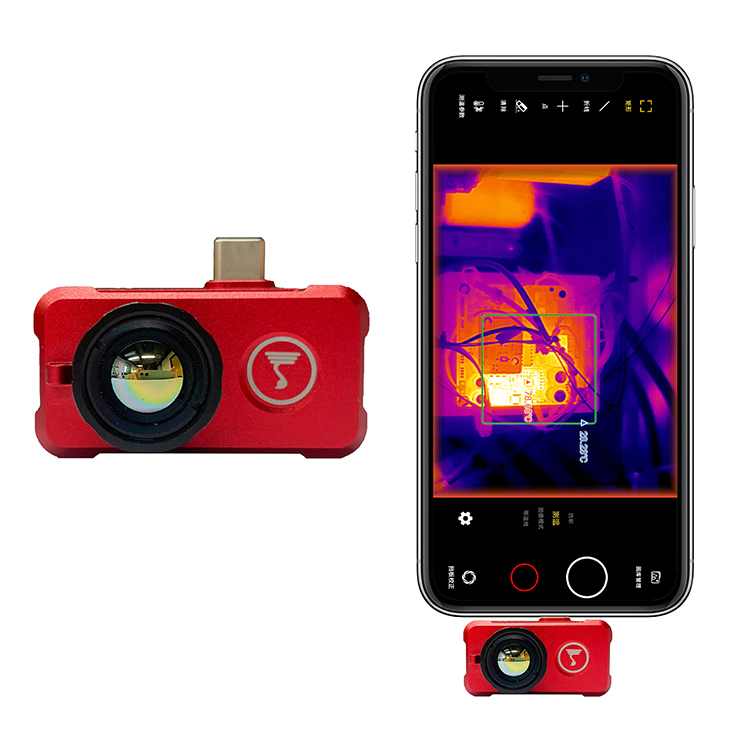
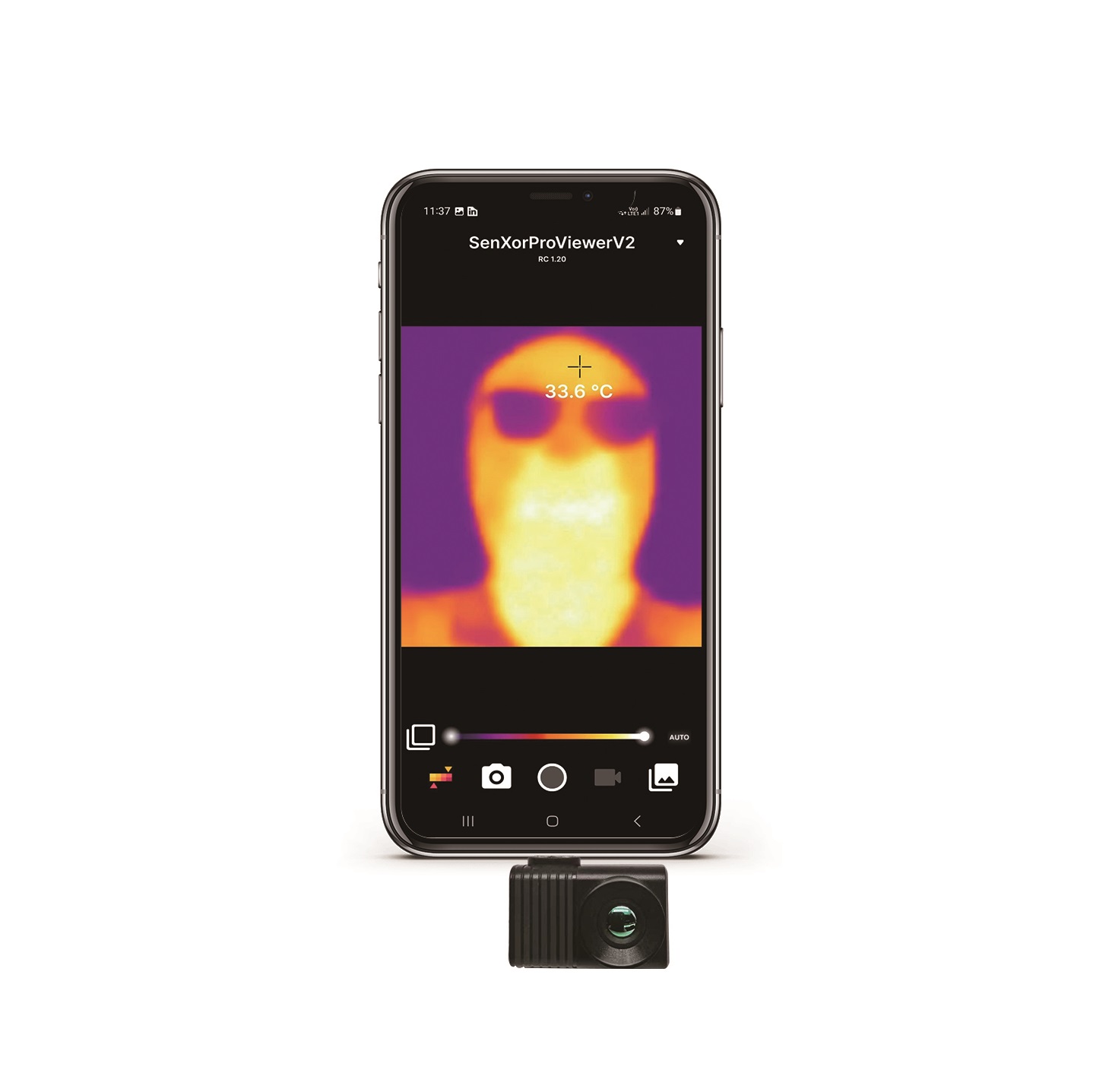
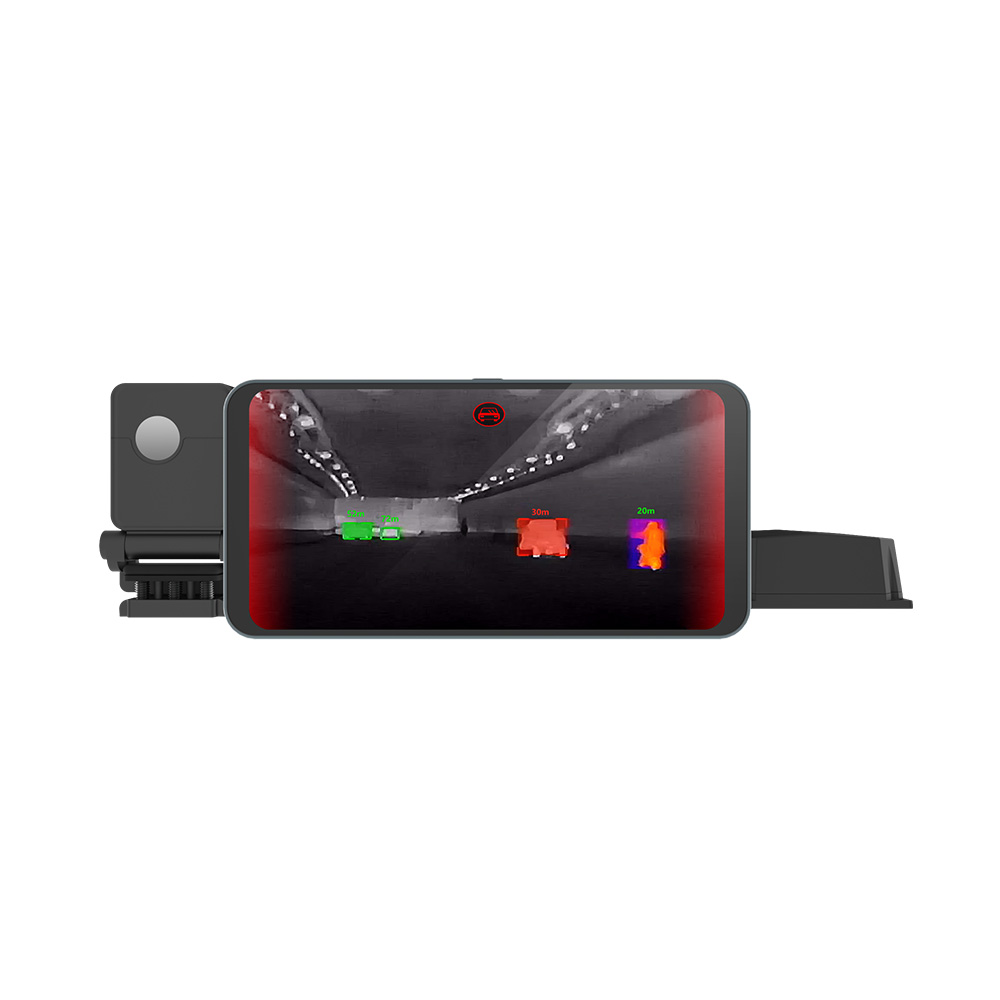

دليل أسعار وحدات الكاميرا الحرارية 2024: من عدة التجميع الذاتي إلى حلول Edge AI الاحترافية
23 يونيو 2026
أفضل وحدة تصوير حراري لتكامل الطائرات بدون طيار: دليل Edge AI و LWIR
٢٤ يونيو ٢٠٢٦
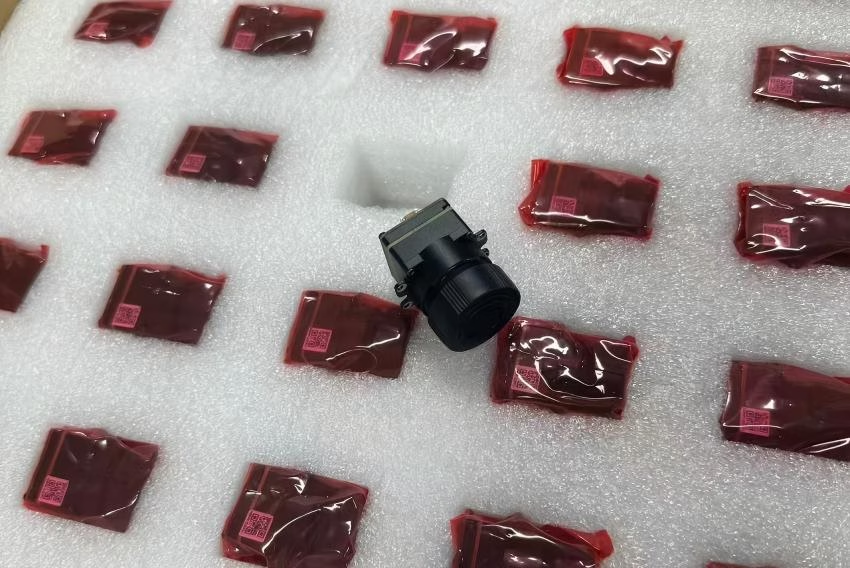
وحدة استشعار التصوير الحراري الاحترافية الفائقة: حلول الأشعة تحت الحمراء طويلة الموجة المعززة بالذكاء الاصطناعي للطائرات بدون طيار والتقنية الذاتية الصنع
تتطلب التطبيقات الصناعية والدفاعية والمدنية الحديثة للطائرات بدون طيار مكونات حمولة تدفع بشكل كبير حدود نموذج تصميم SWaP-C (الحجم، الوزن، الطاقة، والتكلفة). لم يعد الاستشعار الحراري الدقيق مقتصراً على المحاور العسكرية الثقيلة والمستهلكة للطاقة أو مصفوفات الأعمدة الحرارية منخفضة الدقة للهواة. يطلب مهندسو الأنظمة المدمجة اليوم مصفوفات ميكروبولومترية غير مبردة عالية الدقة مدمجة مباشرة مع دوائر متكاملة محددة التطبيق (ASICs) على متن المنصة قادرة على استخراج تدفقات بيانات إشعاعية معايرة بسرعات عالية. هذه وحدة استشعار التصوير الحراري التكوينات المتقدمة تستخدم الكشف في طيف الأشعة تحت الحمراء طويلة الموجة (LWIR) (عادة من 8 إلى 14 ميكرومتر) لتقديم صور واضحة عبر الدخان والغبار الجوي والظلام الدامس، مما يفتح آفاقاً جديدة في تحليلات الذكاء الاصطناعي الطرفي، والتتبع الدفاعي الحرج، والفحص الهيكلي.
يقدم تطبيق وحدة استشعار تصوير حراري من الفئة المؤسسية في البنى الطرفية الآلية اعتبارات صارمة في تصميم العتاد والبرمجيات. يجب على مهندسي النظم التعامل مع خطوط أنابيب معالجة الإشارات التناظرية إلى الرقمية المعقدة، وقيود زمن الانتقال بالميكروثانية لشبكات بروتوكول البث في الزمن الحقيقي (RTSP)، وقيود التثبيت الفيزيائي حيث يؤثر كل غرام مباشرة على مدة التحليق أو عمر البطارية. يحلل هذا الدليل التقني الشامل الفيزياء الأساسية لتقنيات الميكروبولومتر، ويفكك معايير تغليف المستشعر الأساسية، ويشرح بالتفصيل التكاملات الصناعية عالية الأداء، ويضع مقارنات أداء مطلقة لمساعدتك في اختيار نواة LWIR المثالية لمنصتك الجوية أو الرؤية المدمجة من الجيل التالي.
نظام جدول محتويات مزدوج
خريطة الموقع الهيكلية (كتلة تنقل بعرض كامل)
جدول المحتويات
- 👉 بنية النظام المعمقة لوحدة استشعار التصوير الحراري
- 👉 الحسابات الإشعاعية وخوارزميات المعايرة الحرارية
- 👉 دمج الوحدات الحرارية مع هياكل الطائرات بدون طيار والطائرات المسيرة
- 👉 تعمق في البروتوكولات: خطوط أنابيب RTSP، IP، CVBS، وSPI للقياس عن بعد
- 👉 النشرات التكتيكية الجيوسياسية ومكافحة التهديدات
- 👉 مجموعات ميزات ومواصفات المنتج الأساسي من الفئة الاحترافية
- 👉 الأسئلة الشائعة الهندسية المتقدمة ودليل الدمج
قائمة عائمة مطوية لسطح المكتب (تراكب تنقل سريع مدفوع بـ CSS)
[+/-]
بنية النظام المعمقة لوحدة استشعار التصوير الحراري
إليك الأمر: الوحدة من الفئة الصناعية وحدة استشعار التصوير الحراري هي فئة متقدمة ومتزامنة للغاية من علوم المواد، والمحاذاة الفيزيائية دون الميكرونية، والرياضيات الحاسوبية. تستخدم كاميرات الضوء المرئي القياسية مستشعرات CMOS قائمة على السيليكون لالتقاط الفوتونات المرتدة حول طيف 400 إلى 700 نانومتر. ولكن عندما ترتقي إلى منطقة الأشعة تحت الحمراء طويلة الموجة (LWIR)، فأنت تتعقب الطاقة الحرارية المنبعثة مباشرة من الأجسام المستهدفة. إدارة الإشعاع الذاتي من الهيكل المحيط دون إغراق شريحة الميكروبولومتر هو تحدٍ كبير في العتاد يواجهه المهندسون في الورشة كل يوم.
يعتمد كل نواة حرارية احترافية على مسار بصري متخصص لتعمل بشكل صحيح. الزجاج البصري القياسي يحجب تمامًا أطوال موجات الأشعة تحت الحمراء طويلة الموجة (LWIR). جرب استخدام بصريات قياسية وكأنك تضع قطعة صفيحة معدنية صلبة أمام مستشعرك. بدلاً من ذلك، نستخدم عناصر الجرمانيوم من الدرجة البصرية أو مركبات زجاج الكالكوجينيد الدقيقة. تُعالج هذه العناصر بطلاءات متخصصة مضادة للانعكاس من الكربون الشبيه بالألماس (DLC) لإسقاط طاقة حرارية نظيفة وغير مخففة على مصفوفة مستوية بؤرية غير مبردة (FPA). في هذا الإعداد، نترجم تغيرات المقاومة الحرارية الخام إلى بصمات رقمية نظيفة، ونصححها باستخدام ASIC مدمج، ونوجه قيم درجة الحرارة المعايرة مباشرة إلى معالجك الرئيسي.
دور الميكروبولومترات غير المبردة في LWIR
يعتمد التصوير الحراري الحديث بشكل كبير على مصفوفات الميكروبولومتر غير المبردة (FPAs). يلغي هذا التكوين الحاجة إلى تجميعات التبريد المبردة الباهظة الثمن والمستهلكة للطاقة، مما يسمح للمهندسين ببناء أنظمة متينة بجزء بسيط من البصمة الفيزيائية. انظر، إذا كان بإمكانك الاستغناء عن غرف تفريغ النيتروجين السائل دون فقدان الاستجابة في العالم الحقيقي، يصبح نطاقك الهندسي أبسط بكثير.
من الناحية الفيزيائية، مصفوفة الميكروبولومتر هي شبكة من بكسلات غشائية مجهرية معلقة مباشرة فوق قاعدة سيليكون للقراءة. كل بكسل فردي مصمم باستخدام مادة ماصة—عادةً أكسيد الفاناديوم (VOx) أو السيليكون غير المتبلور (α-Si)—ومدعوم بأرجل هيكلية فائقة الرقة ومعزولة للغاية. عندما يمر إشعاع LWIR الوارد عبر هدفك ويصطدم بهذا الماص، يسخن العنصر، مما يغير مقاومته الكهربائية. يحكم هذا الأداء معامل درجة الحرارة للمقاومة (TCR). في التطبيقات الحرارية الواقعية، تقدم تكوينات VOx عمومًا قيم TCR أعلى وملامح ضوضاء 1/f أقل من مصفوفات α-Si القياسية، مما يؤدي إلى تجانس فائق للصورة وفرق درجة حرارة مكافئ للضوضاء (NETD) أقل بكثير.
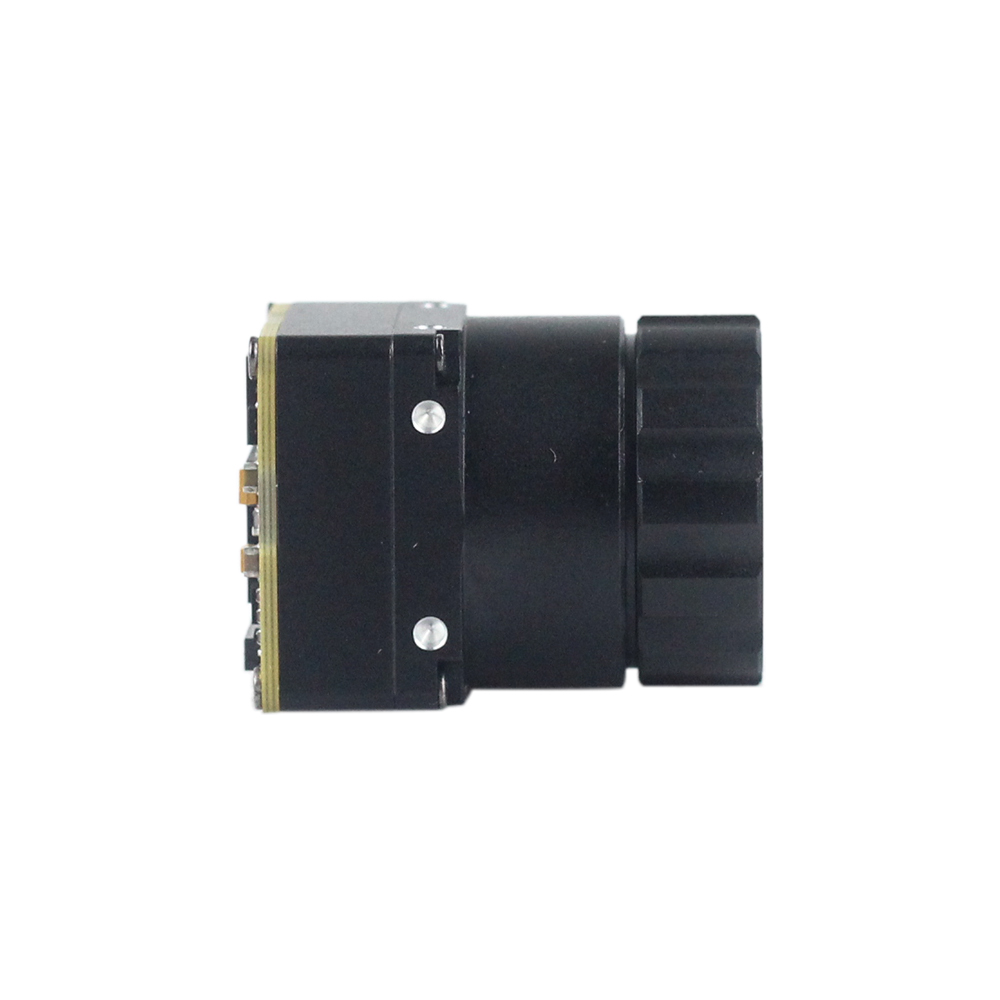
دائرة القراءة المتكاملة (ROIC) والتغليف على مستوى الرقاقة (WLP)
بمجرد أن تسجل مصفوفتك هذه التغيرات الدقيقة في المقاومة، تحتاج إلى طريقة لقراءتها ورقمنتها في الوقت الفعلي. هنا يأتي دور دائرة القراءة المتكاملة (ROIC)، المربوطة مباشرة تحت شبكة المستشعر المعلقة. تتولى ROIC الجزء الأكبر من العمل الشاق، حيث تشغل محولات تناظرية رقمية عالية السرعة (ADCs)، ومضاعفات، ومكبرات متكاملة لمسح المصفوفة صفًا تلو الآخر وإخراج إشارات رقمية نظيفة.
نظرًا لأن الميكروبولومترات المعلقة هشة للغاية وحساسة لتيارات الهواء المحيط، يجب أن تكون محكمة الإغلاق تحت تفريغ عالي. بدون ختم تفريغ قوي، ستثبط جزيئات الهواء المحيط الاستجابة الحرارية، مما يجعل مستشعرك عديم الفائدة. يستخدم المصنعون الحديثون التغليف على مستوى الرقاقة (WLP) لإغلاق الغطاء السيليكوني مباشرة فوق مبيت الكاشف بينما لا يزال في غرفة التفريغ. يلغي نهج التصنيع المتخصص هذا العلب المعدنية الضخمة، منتجًا نوى خفيفة الوزن ومدمجة تناسب بسهولة المحاور الدقيقة وأنظمة العرض العلوية المدمجة.
المعالجة المعتمدة على ASIC مقابل ملتقطي الإطارات من جانب المضيف
بمجرد رقمنتها، تحتوي الإطارات الحرارية الخام على اختلافات مكانية ناتجة عن اختلافات طفيفة في تكوين كل بكسل. يتطلب حل هذه الاختلافات من المطورين اختيار مسار معالجة:
- ⚙️ المعالجة من جانب المضيف: يقوم هذا الأسلوب بتوجيه بيانات المستشعر الخام مباشرة عبر واجهات SPI أو المتوازية إلى معالج النظام الرئيسي لديك. وفي حين أنه يحافظ على تكلفة حزمة المستشعر معقولة، فإن تحليل التدفقات الخام غير المعايرة يمكن أن يثقل كاهل المعالج المضيف بسرعة، مما يتسبب في تأخر النظام وفقدان الإطارات في التطبيقات الديناميكية.
- ⚙️ المعالجة عبر ASIC/DSP المدمجة: تتميز النوى الحرارية عالية الأداء بدائرة متكاملة محددة التطبيقات (ASIC) أو معالج إشارة رقمية (DSP) مخصص ومدمج. من خلال تشغيل تصحيح عدم الانتظام (NUC)، وإدارة البكسلات المعيبة، وتصفية الضوضاء، ورسم الخرائط اللونية مباشرة على العتاد المحلي، تقوم الوحدة بإخراج تدفق عالي السرعة ومعالج بالكامل وجاهز لاستدلال الرؤية الحاسوبية على الحافة دون تحميل وحدة المعالجة المركزية الرئيسية لديك.
الحسابات الإشعاعية وخوارزميات المعايرة الحرارية
يتطلب نشر مستشعر LWIR في المراقبة الصناعية فهماً قوياً للفيزياء الأساسية المعنية. في الورشة، يجب أن ننظر عن كثب في كيفية تفاعل الانتقال الجوي، والانبعاثية للهدف، والانعكاسات الخلفية قبل أن تصل تلك الأشعة الحرارية إلى عناصر المستشعر لديك. هذه الديناميكيات أساسية للمبدأ مبدأ التصوير الحراري.
قانون بلانك والنموذج الرياضي الأساسي
ينص قانون بلانك على أن كل جسم فوق الصفر المطلق يصدر طاقة كهرومغناطيسية. بالنسبة للأهداف النموذجية (-40 درجة مئوية إلى +150 درجة مئوية)، يبلغ هذا الانبعاث ذروته تماماً ضمن نطاق LWIR. يتم نمذجة إجمالي الطاقة الإشعاعية المنبعثة من جسم أسود مثالي بواسطة قانون ستيفان-بولتزمان:
حيث:
- ⚙️ E هي الانبعاثية الطاقية الإشعاعية (W · m-2).
- ⚙️ σ هو ثابت ستيفان-بولتزمان (5.67 × 10⁻⁸ W · m-2 · K-4).
- ⚙️ T هي درجة الحرارة المطلقة للهدف (K).
Of course, real-world targets aren't perfect blackbodies. They have an emissivity factor (ε) that reduces the actual energy emitted. To resolve actual target temperatures in real-world environments, your radiometric processing pipeline must continuously solve the basic thermal equation:
حيث:
- ⚙️ Wtotal represents the final infrared power captured by the detector matrix.
- ⚙️ ε is the target's actual surface emissivity (highly variable; e.g., polished aluminum is ~0.05, concrete is ~0.95).
- ⚙️ τ is the atmospheric transmission coefficient.
- ⚙️ Wobj is the thermal radiation originating from the target.
- ⚙️ Wrefl is the background ambient radiation reflected off your target into the sensor path.
- ⚙️ Watm is the self-emission of the atmosphere between your sensor and the target.
If your SDK doesn't actively calculate and compensate for these real-world environmental variables, your temperature readings will drift significantly. To learn more about how thermal radiation dynamics interact with various sensor architectures, explore the academic analyses available in the Wikipedia Infrared Imaging Section.
Shutter-Based Non-Uniformity Correction (NUC)
As ambient air temperatures change and internal electronics heat up, the baseline readings of your microbolometer elements will naturally drift over time. This drift manifests in your video stream as fixed pattern noise (FPN), degrading image quality.
To eliminate this noise, high-quality modules utilize a physical internal shutter. The NUC sequence executes dynamically through the following integrated sequence:
- ⚙️ Step 1: System firmware triggers an internal mechanical solenoid, placing a uniform-temperature shutter plate directly in front of the active optical path.
- ⚙️ Step 2: The ROIC and ASIC read and log the baseline drift values of every pixel across this uniform thermal target.
- ⚙️ Step 3: The onboard processor updates the Offset Non-Uniformity matrix, saving the new baseline values directly to local EEPROM.
- ⚙️ Step 4: The shutter snaps open, and the revised offset calculations are applied frame-by-frame, restoring image clarity.
In high-speed tracking or tactical operations, safety is paramount, and a 500ms image freeze during a shutter cycle can be a liability. To address this, modern defense platforms use advanced algorithms to predict sensor drift over time, minimizing physical shutter cycles or running shutterless computational NUC models that estimate offsets dynamically based on scene motion.
دمج الوحدات الحرارية مع هياكل الطائرات بدون طيار والطائرات المسيرة
Integrating a high-performance thermal sensor into custom Unmanned Aerial Vehicle (UAV) systems presents complex hardware challenges. Projects demanding long flight endurances require a careful balance between aerodynamic profiles, physical layout, power routing, and optical paths.
Navigating the SWaP-C Framework
- ✅ Size: Minimal frontal surface profiles are essential to reduce aerodynamic drag on airborne platforms.
- ✅ Weight: Every gram saved extends flight times. Utilizing wafer-level packaged (WLP) thermal sensors with lightweight, compact optics keeps sensor core weight under 30 grams, preserving battery life.
- ✅ Power: Airborne systems operate on tight DC budgets. Optimal sensor designs consume less than 1.5 Watts, avoiding excess heat and preventing voltage sags on the flight controller.
- ✅ Cost: Using commercial off-the-shelf (COTS) components with standard communication interfaces lowers development overhead and accelerates project timelines.
Mounting and Mechanical Stabilization
Uncooled LWIR sensors are highly sensitive to vibrations. Standard drone motors running at high RPMs will introduce significant image blur unless addressed mechanically. The solution requires mounting the camera core within a dedicated 3-axis brushless gimbal.
In the shop, we use custom damping plates paired with silicone isolation grommets. The durometer rating of these grommets must be matched to your payload's physical mass to isolate vibrations effectively. Additionally, connectivity cables should consist of highly flexible, micro-coaxial ribbon lines to prevent any mechanical drag on your gimbal's stabilizer motors.
Mitigating Electromagnetic Interference (EMI)
Drones are high-EM-noise environments. Modern platforms pack high-current speed controllers (ESCs), multi-frequency telemetry links, and GPS units into close quarters, which can easily introduce noise into sensitive analog lines:
- ⚙️ Faraday Shielding: Enclosing your thermal sensor's processing boards in custom-stamped copper foil or mu-metal tape blocks interference from high-power 2.4GHz/5.8GHz video links.
- ⚙️ Power Line Conditioning: Drone batteries experience massive voltage fluctuations under hard acceleration. Routing power to your thermal module through a dedicated, low-noise linear regulator (LDO) prevents horizontal noise lines from appearing in your video feed.
For systems teams developing multi-rotor platforms, review the mechanical layouts and airframe integration options available through OBSETECH.
تعمق في البروتوكولات: خطوط أنابيب RTSP، IP، CVBS، وSPI للقياس عن بعد
Choosing the right digital interface is critical when integrating a thermal imaging sensor module into embedded systems, robot platforms, or security networks. Each protocol balance is optimized for specific trade-offs across bandwidth, latency, system complexity, and resolution.
| Protocol Parameter | Analog CVBS | Direct SPI Telemetry | IP / Ethernet (RTSP) |
|---|---|---|---|
| Data Transmission Type | Analog Composite Signal (NTSC/PAL) | Low-level Digital Bus | Packetized Digital Network Streams |
| ملف زمن الانتقال | Low (< 5 ms) | Ultra-Low (< 2 ms) | Moderate (70 ms – 150 ms) |
| Relative Bandwidth | Low (Analog Cable) | High (Requires high clock speed) | Moderate (Standard compressed H.264/265) |
| أقصى مسافة إرسال | ~50 meters via coaxial lines | ~15 centimeters (PCB trace limits) | ~100 meters (UTP/RTSP) / Unlimited via IP |
| Radiometric Frame Value | No (Visual thermal output only) | Full raw pixel metadata output | Yes (Embedded within JSON/Metadata stream) |
| العبء الإضافي للأجهزة | Simple Frame Grabber required | Heavy SPI parsing on Host CPU | Standard IP Decoder / VLC Stack |
Direct Analog Composite (CVBS)
Analog CVBS remains a reliable option for low-latency transmission. In this setup, the camera core's internal digital-to-analog converter outputs traditional PAL or NTSC standard analog formats. While you won't get individual radiometric temperature calculations per pixel over CVBS, its near-zero lag is crucial for manual drone piloting when milliseconds matter.
SPI Telemetry Bus
For projects using low-overhead microcontrollers like the ESP32 or STM32 black pill boards, SPI (Serial Peripheral Interface) provides direct access to pixel values. Raw frames are clocked out directly to your host processor's board. Keep in mind that SPI lacks internal error correction, so keeping your ribbon cable connections under 10cm is critical to preserve signal integrity.
Network Protocol (IP / RTSP)
Standard industrial IoT installations require robust network topologies, typically leveraging an RJ45 physical connection streaming H.264/H.265 compressed frames via RTSP. The module's internal ASIC compresses raw thermal data, and standard RTP packetizes it for network distribution. Accessing this feed via OpenCV on a remote system is straightforward using the python routing script below:
import cv2

# Connect to the RTSP pipeline of the ASIC module
rtsp_url = "rtsp://192.168.1.120:554/live/vga"
cap = cv2.VideoCapture(rtsp_url)

while cap.isOpened():
    ret, frame = cap.read()
    if not ret:
        break

    # Process the frame (e.g., color thresholding, AI human detection)
    gray_frame = cv2.cvtColor(frame, cv2.COLOR_BGR2GRAY)
    cv2.imshow("Thermal Edge AI Stream", gray_frame)

    if cv2.waitKey(1) & 0xFF == ord('q'):
        break

cap.release()
cv2.destroyAllWindows()
For more details on setting up modern industrial networking protocols, check out this guide on Industrial Networking and Device Infrastructures.
النشرات التكتيكية الجيوسياسية ومكافحة التهديدات
Uncooled LWIR sensors play an increasingly vital role in today's defense and security landscapes. These solid-state modules are designed for reliability under continuous thermal stresses, finding use across physical threat-assessment systems and field-monitoring applications.
A primary application for these modules is within Counter-UAV (C-UAV) defensive positions. While radar systems excel at tracking targets at long ranges, they often struggle to detect small wood or carbon composite drones at low altitudes. Thermal camera modules address this gap by tracking the heat signatures from drone speed controllers, batteries, and motors, maintaining lock through smoke, fog, and absolute darkness. Additionally, these sensors are integrated into automated perimeter networks, monitoring secure facilities and identifying motion over wide, unlit areas.
Unmanned Airborne Search-and-Rescue (SAR)
In dense foliage, rugged terrain, or smoggy conditions, optical cameras fall short. Deploying an uncooled LWIR sensor on a stabilized drone airframe allows search teams to locate missing persons by tracking their body heat against the colder terrain. Edge processors running onboard can analyze the thermal feed in real-time, instantly highlighting humans or vehicles for ground rescue teams.
Landmine Mitigation and Humanitarian De-mining
Buried landmines alter the heat transfer properties of the surrounding soil. Throughout the day, the thermal inertia of metal or explosive casings leads to subtle surface temperature variations compared to loose soil. By deploying dual-sensor payloads that combine high-resolution LWIR cores with optical cameras, automated platforms can identify minefield patterns and map hazards, letting personnel locate threats from a safe distance.
Tactical Surveillance and Perimeter Protection
Critical storage sites, borders, and outposts rely on multi-spectral surveillance networks. Professional-grade LWIR cores can detect human heat signatures at distances over 1,000 meters in absolute darkness. Integrating the thermal imaging sensor module with automated target-tracking software provides continuous coverage for secure properties, automatically flagging unauthorized boundary breaches.
For a deeper look at physical threat assessment and tactical optical assemblies, review this analysis of Active Threat Assessment and Perimeter Defense Operations.
مجموعات ميزات ومواصفات المنتج الأساسي من الفئة الاحترافية
To assist integration engineers in evaluating high-performance options, the following matrix compares two professional-grade thermal imaging sensor modules:
Technical Comparison Matrix
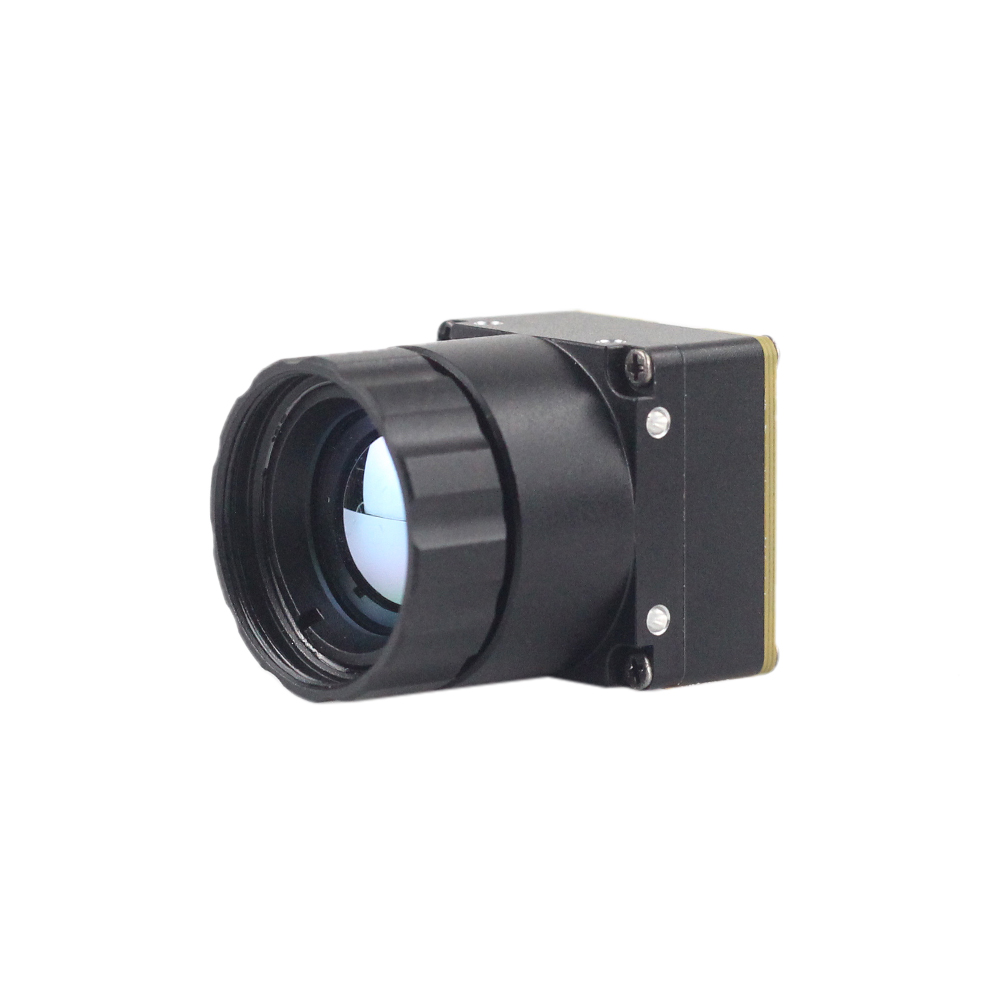
| المواصفات | 640*512 ASIC Thermal Sensor Camera Module | Mini 256*192 LWIR Thermal Camera Module |
|---|---|---|
| Model Web URL | Product Page | Product Page |
| Product Image Reference | 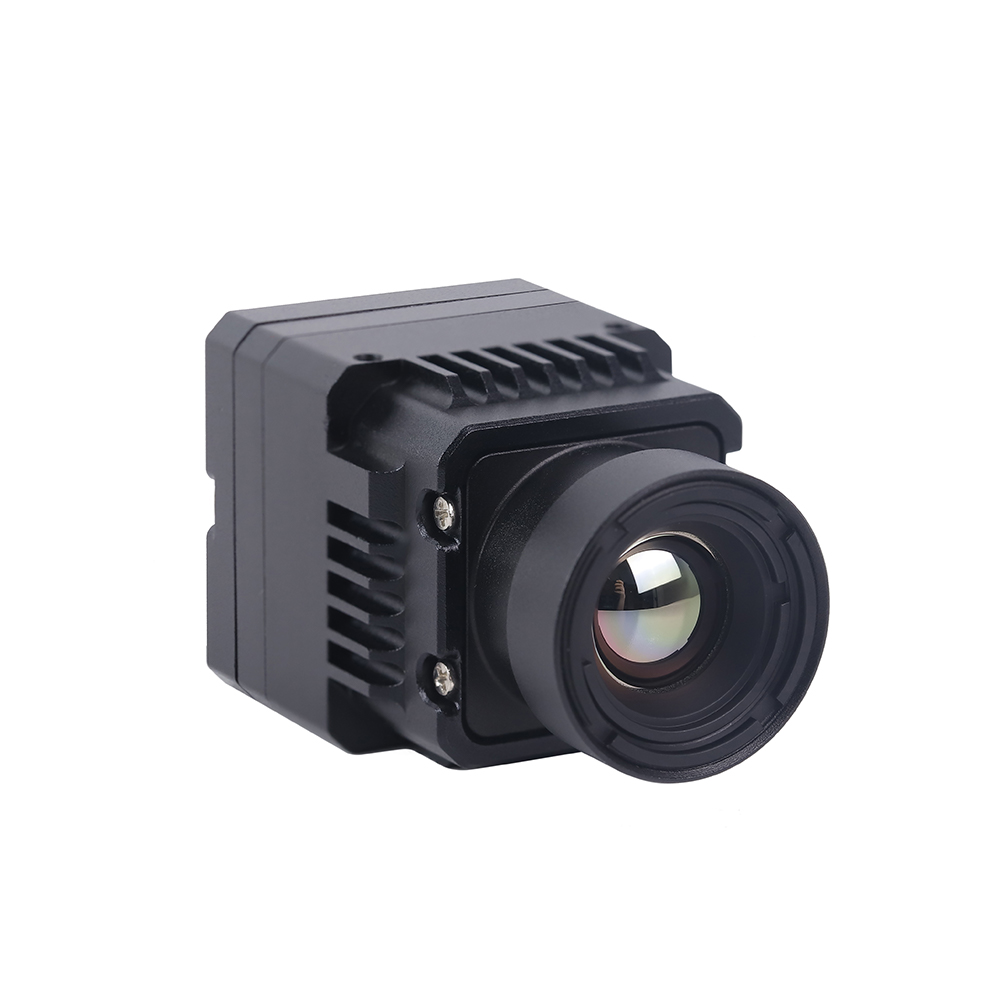 |
 |
| الدقة | 640 * 512 بكسل (VGA) | 256 * 192 Pixels (QVGA Narrow) |
| Core Technology | Uncooled Microbolometer with ASIC Processor | Uncooled LWIR Microbolometer |
| Physical Interfaces | RJ45 Ethernet, CVBS Analog, RTSP IP Protocol | Mini Ribbon Cable Multi-Pin Interface |
| Form Factor Optimization | Integrated System Assembly | Ultra-Compact Package for UAV Integration |
| Radiometric Accuracy | Matrix-Wide Radiometric Measurement Data | Point, Line, and Area Thermal Radiometry |
| Target Use Cases | Industrial Monitoring, Long-Range Surveillance | Drone Payloads, Mines Detection, DIY Systems |
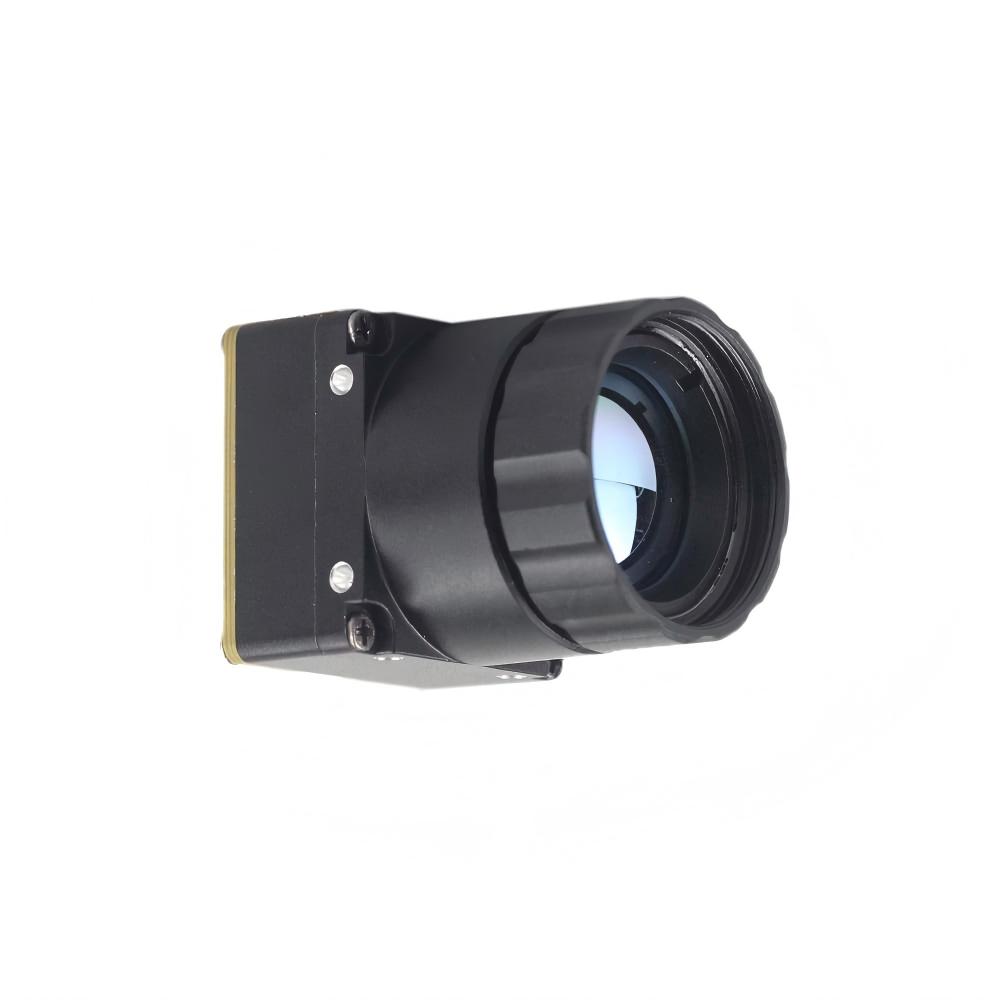
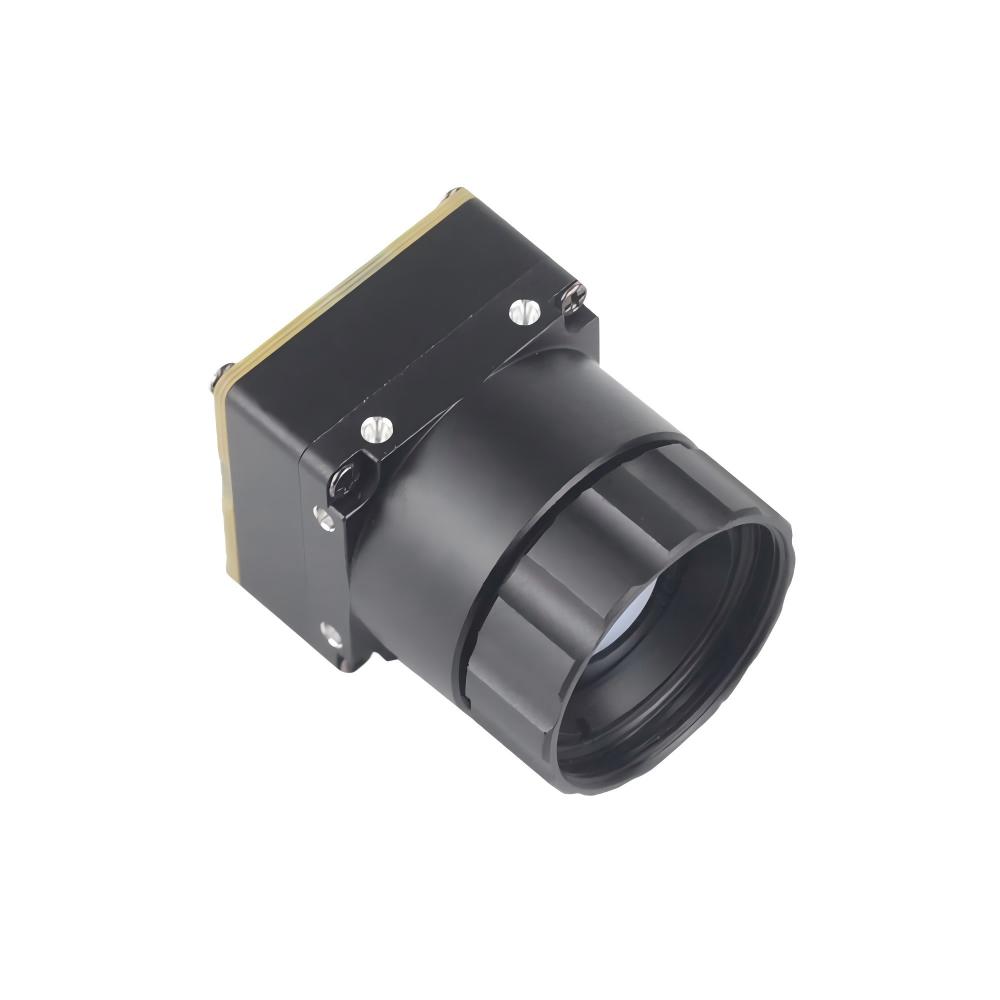
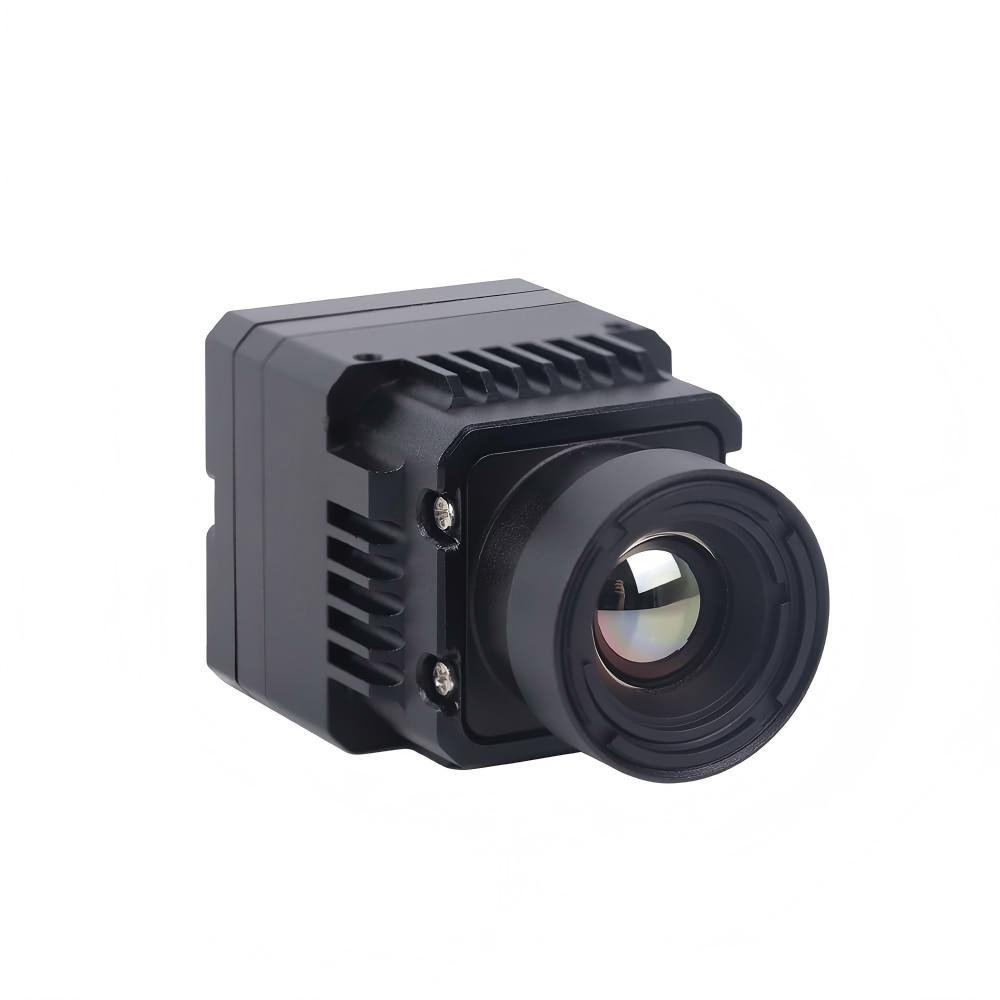
وحدة كاميرا استشعار حراري غير مبردة RJ45 CVBS RTSP IP بدقة 640*512
الـ وحدة كاميرا استشعار حراري ASIC غير مبردة RJ45 CVBS RTSP IP بدقة 640*512 is engineered for high-performance integration into advanced networks. This highly capable module features a 640x512 resolution core that provides crisp thermal imagery, making it well-suited for industrial inspections, automated security diagnostics, and stabilized aerial drone payloads.
The integrated processing hardware delivers compressed IP streams using standard protocols (including H.264/H.265 models via RTSP), enabling seamless plug-and-play setup with network digital storage arrays and monitoring stations. In addition, its analog CVBS output pathway enables local video streaming with minimal latency, supporting real-time tracking during remote operations.
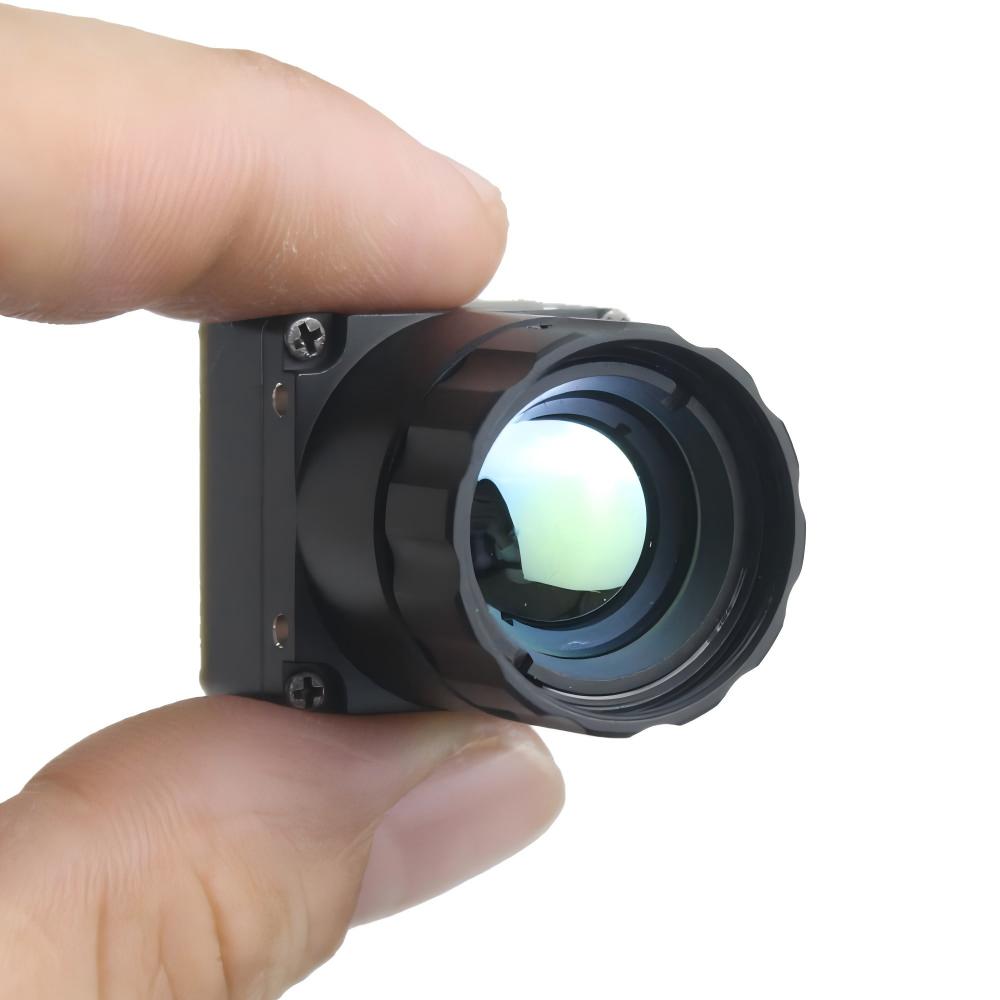
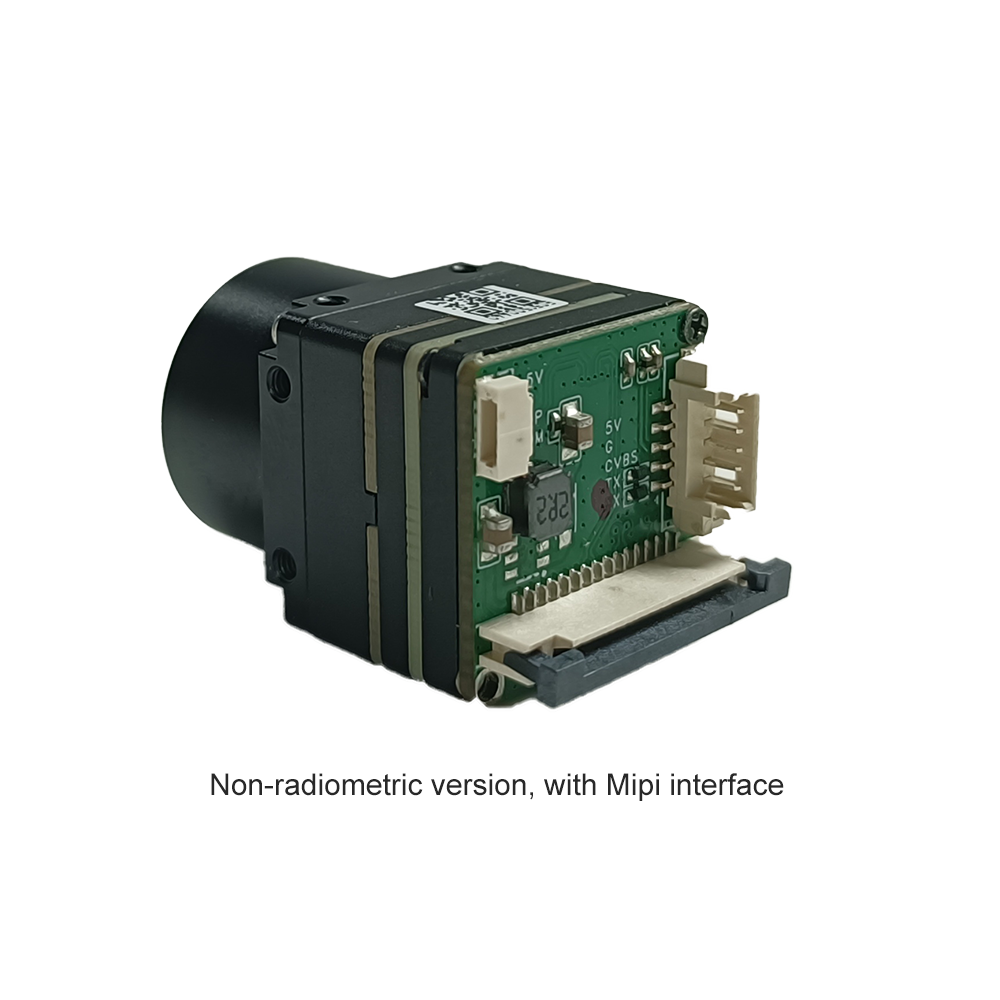
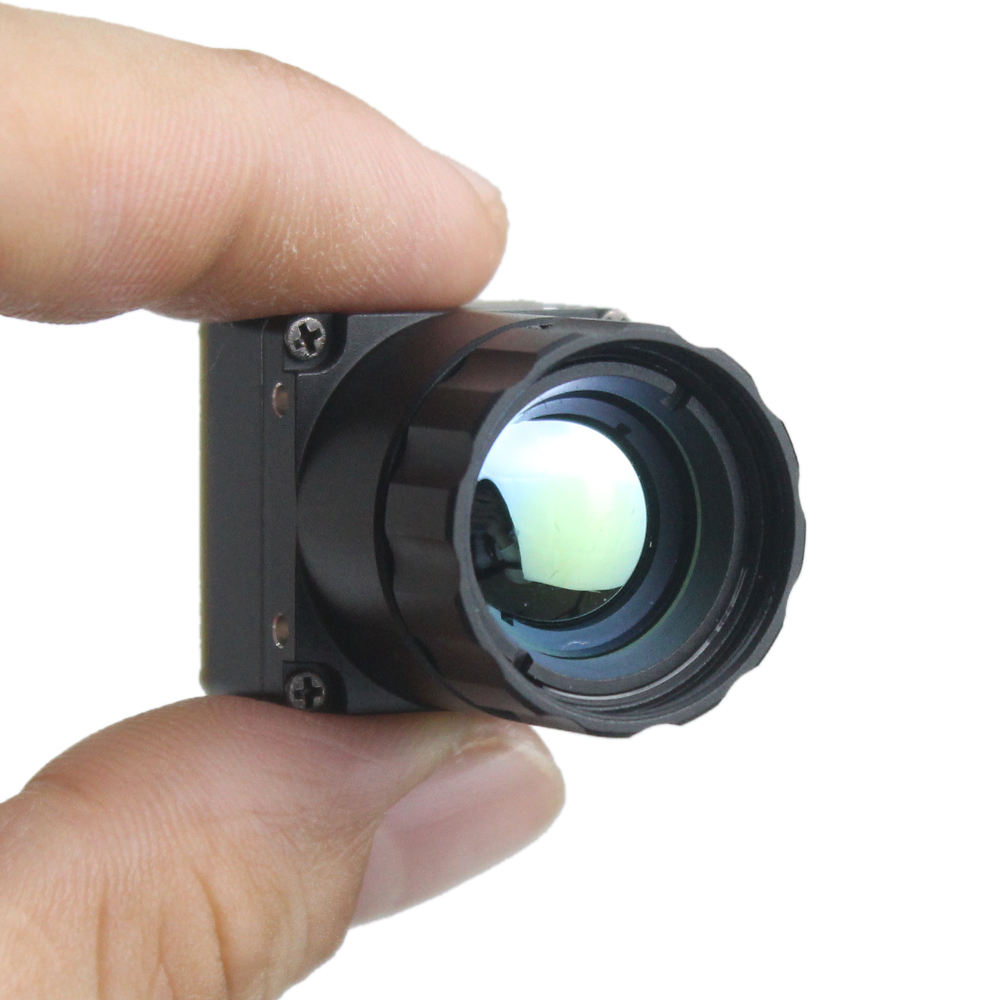
وحدة كاميرا تصوير حراري بالأشعة تحت الحمراء ذات الموجة الطويلة غير المبردة Mini 256*192 مشابهة لـ DJI للكشف عن الألغام
For operations where physical space and payload weight are highly restricted, the وحدة كاميرا تصوير حراري بالأشعة تحت الحمراء ذات الموجة الطويلة غير المبردة Mini 256*192 مشابهة لـ DJI للكشف عن الألغام provides a highly integrated solution. Built with high-performance microbolometer technologies, this compact module offers accurate radiometry, long-term calibration stability, and reliable performance in demanding environments.
The sensor is lightweight and highly optimized under the SWaP-C framework, making it an excellent match for portable, multi-rotor surveillance payloads. By mapping raw infrared energy across its array, it outputs clean, radiometric imagery that can be used to track temperature changes and identify hidden objects (such as buried mines) in the field.
الأسئلة الشائعة الهندسية المتقدمة ودليل الدمج
Q1: Can I stream high-resolution thermal data to a Raspberry Pi or ESP32?
Yes, but the integration path depends heavily on your choice of hardware host. When interface streaming is evaluated, processor speed, bus width, and memory structures must be balanced:
- ⚙️ Raspberry Pi Integration: Connecting high-performance modules to a Raspberry Pi 4 or 5 is straightforward. Since the thermal sensor module's onboard ASIC outputs direct IP video streams, you can connect the core's RJ45 link directly to the Pi's Gigabit Ethernet port. Standard libraries (like OpenCV or GStreamer) decode the RTSP feed with minimal CPU overhead, freeing up your processing budget for computer vision models or local data storage.
- ⚙️ ESP32 Microcontroller Integration: The ESP32 does not have the processing power or memory (SRAM) to decode high-resolution RTSP H.264 streams. Instead, you'll need to interface with lower-resolution cores via a low-overhead SPI bus. Operating at 20MHz to 24MHz, the ESP32 can pull raw frame data frame-by-frame and display it using double buffers to prevent screen tearing.
Q2: How do your modules compare to standard DIY sensors like the MLX90640?
The performance differences between entry-level thermopiles and professional uncooled thermal camera modules are significant across all physical and operational parameters:
- ⚙️ Resolution & Sensitivity: Hobbyist sensors like the MLX90640 are simple thermopiles with small arrays (typically 32x24 pixels). A professional-grade uncooled core provides resolutions up to 640x512, translating to 327,680 individual pixels. This much higher pixel density delivers sharp thermal imagery with details that classification models can easily resolve, far outperforming the fuzzy, low-resolution streams from DIY thermopiles.
- ⚙️ الحساسية الحرارية (NETD): While standard thermopiles have a thermal sensitivity of 100mK or higher, professional LWIR modules achieve thermal sensitivity levels under 40mK, allowing them to resolve temperature variations as small as 0.04°C.
- ⚙️ Frame Rates: DIY modules typically experience lag at high refresh rates, while professional-grade uncooled modules consistently run at 25Hz to 50Hz, keeping fast-moving objectives in clear focus with no visual tearing.
Q3: Do these modules support custom integration for drones or niche industrial projects?
Yes, professional uncooled LWIR camera modules are designed to support custom integration across drone platforms and specialized industrial environments.
To simplify software integration, these modules are backed by robust software development kits (SDKs) and APIs compatible with standard operating systems, including Windows, Linux (for Ubuntu-based ROS/ROS2 robotics), and Android. These libraries give developers direct control over administrative systems, including writing custom non-uniformity correction (NUC) shutter commands, setting target temperature thresholds to trigger system alarms, tracking absolute local minimum, maximum, and average region-of-interest (ROI) temperatures, and modifying pseudo-color palettes (e.g., White Hot, Black Hot, Ironbow, Rainbow) dynamically.
On the hardware side, these compact modules are well-suited for integration with industrial IoT networks and robotic platforms. With their uncooled, solid-state designs, they deliver reliable long-term performance under the dust, vibration, and thermal shifts common in factory environments.
📚 المراجع والقراءات الإضافية
- 👉 المعيار الصناعي: التصوير بالأشعة تحت الحمراء في ويكيبيديا | Tech Overviews
- 👉 المعيار الصناعي: OBSETECH | UAV System Engineering
- 👉 Related Guide: LWIR Thermal Calibration & Principles Guide | Core Principles
- 👉 Related Guide: Industrial IP Networking Protocol Matrices | Interface Integration
- 👉 Related Guide: Tactical Defense Systems & Surveillance Tracking | Deployments