
وحدة كاميرا تصوير حراري USB عالية الدقة لـ Raspberry Pi: دليل التكامل 640x512
١ يوليو ٢٠٢٦
وحدة كاميرا الرؤية الليلية الحرارية الحقيقية بالأشعة تحت الحمراء: دليل التكامل B2B
١ يوليو ٢٠٢٦
الدليل الشامل لدمج كاميرا الوحدة الحرارية: حلول 384x288 للطائرات بدون طيار وراسبيري باي ومشاريع OEM للشركات
في المشهد سريع التطور للأتمتة الصناعية والمركبات الجوية غير المأهولة ورؤية الحاسوب المنشورة على الحافة، تحولت متطلبات التصوير الحراري عالي الدقة من رفاهية متخصصة إلى ضرورة معمارية أساسية. دمج كاميرا الوحدة الحرارية في الأنظمة المدمجة الحديثة يتطلب أكثر من مجرد أجهزة هواة قياسية جاهزة. يواجه مهندسو النظم ومدراء البحث والتطوير ومدراء منتجات OEM عقبات معقدة، تشمل ميزانيات الوزن الصارمة (SWaP)، وسلامة الإشارة عالية التردد، والعبء الهندسي لاستخراج البيانات الإشعاعية الخام. لنكن واقعيين: تاريخياً، تعطلت خطوط المشاريع بسبب نوى الكاميرات الاستهلاكية المغلقة المصدر أو ضعف دعم SDK الذي فشل في سد الفجوة بين واجهات الأجهزة المخصصة وأنظمة التشغيل المدمجة القياسية مثل لينكس أو ROS.
للتغلب على هذه العوائق، برزت نوى LWIR (الأشعة تحت الحمراء طويلة الموجة) غير المبردة ذات الدرجة الصناعية التي تتميز بدقة 384x288 بكسل كنقطة مثالية في الصناعة. بموازنة الحساسية الحرارية والوزن والمدى البصري، توفر نوى الميكروبولومتر 12μm هذه أكثر من ضعف مساحة المستشعر النشط لمستشعرات 256x192 للمستوى المبتدئ دون التكلفة والحجم المتزايدين بشكل كبير لنوى فئة VGA. يوضح هذا الدليل الشامل الاعتبارات التقنية والكهربائية والبصرية لدمج كاميرات الوحدة الحرارية عالية الأداء 384x288 في الطائرات بدون طيار وأنظمة راسبيري باي المخصصة وأجهزة إنترنت الأشياء الخاصة، مدعوماً بأحدث الممارسات الهندسية من رواد السوق.
جدول المحتويات
- 👉 نظرة عامة معمارية على هندسة مستشعر LWIR
- 👉 توضيح التسلسل الهرمي للدقة: نوى 384x288 مقابل 256x192
- 👉 معماريات الواجهة الكهربائية: MIPI و USB و CVBS
- 👉 مخطط تكامل نظام راسبيري باي ولينكس
- 👉 هندسة حمولة محور الطائرة بدون طيار وتحسين SWaP-C
- 👉 عرض منتج الوحدة الحرارية Purpleriver 384x288
- 👉 خطوط تخصيص OEM/ODM الصناعية
- 👉 الأسئلة الشائعة حول تكامل وتنفيذ الأجهزة
نظرة عامة معمارية على هندسة مستشعر LWIR
إليكم الأمر: تحت غطاء أي كاميرا وحدة حرارية حقيقية تكمن مصفوفة مستشعر ميكروبولومتر غير مبرد مصممة لكشف الإشعاع في طيف الأشعة تحت الحمراء طويلة الموجة (LWIR)، الذي يتراوح عادة من 8μm إلى 14μm. على عكس مستشعرات CMOS السيليكونية للضوء المرئي التي تعتمد على توليد الشحنة بتحريض الفوتون، تستخدم الأكوام الحرارية أو الميكروبولومترات غير المبردة مواد تتغير مقاومتها الكهربائية ديناميكياً عند امتصاصها للإشعاع تحت الأحمر الساقط. في الورشة، نعتمد على أكسيد الفاناديوم (VOx) الأغشية الرقيقة كمادة الاستشعار النشطة. لماذا؟ لأنها توفر معامل درجة حرارة مقاومة (TCR) استثنائياً وتحافظ على ضوضاء 1/f عند الحد الأدنى المطلق مقارنة ببدائل السيليكون غير المتبلور (a-Si) الأرخص.
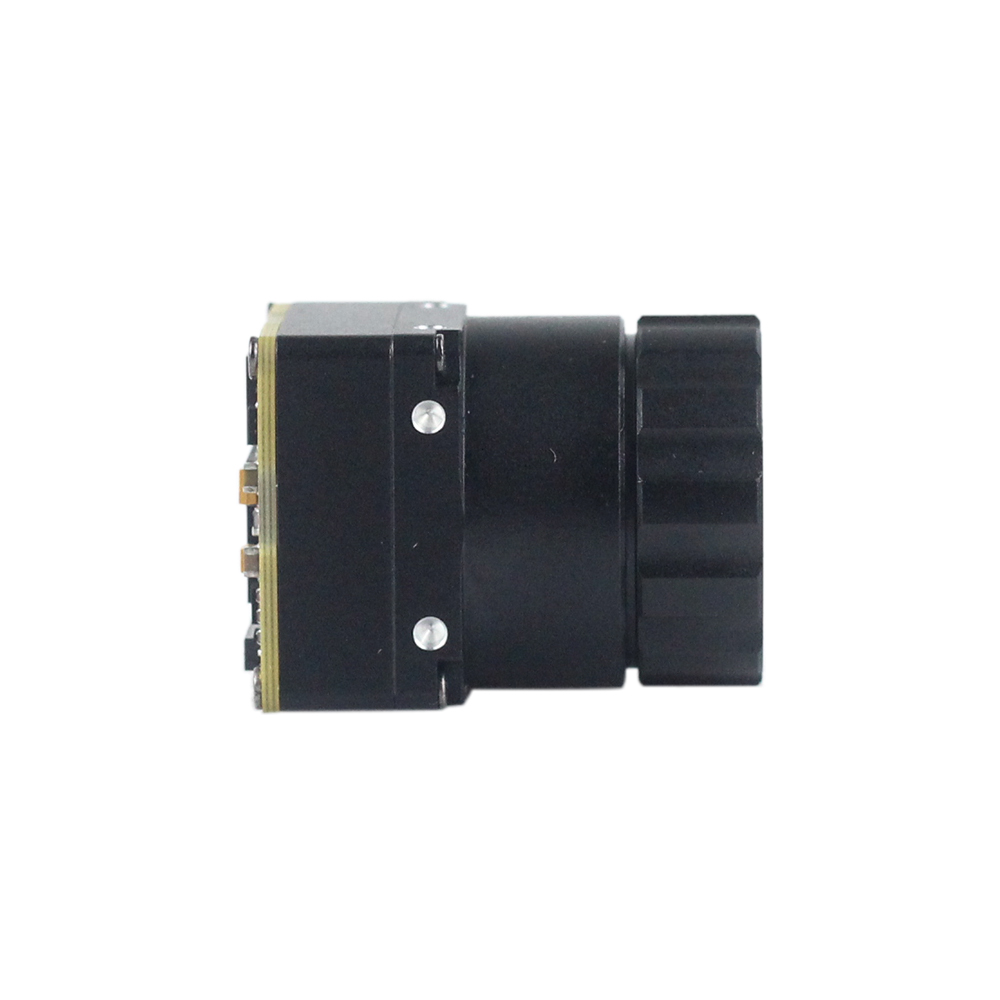
تبدأ سلسلة المعالجة داخل نواة حرارية حديثة غير مبردة عندما يمر إشعاع الأشعة تحت الحمراء طويلة الموجة (LWIR) الوارد عبر مجموعة عدسات من الجرمانيوم عالي النقاء. هذه العدسات ليست زجاجًا عاديًا - إنها مطلية بطبقات متخصصة مضادة للانعكاس (AR) لتعظيم كفاءة النقل في نطاقات الأشعة تحت الحمراء. بمجرد أن تصطدم طاقة الأشعة تحت الحمراء المستهدفة بمصفوفة المستوى البؤري (FPA) المكونة من مصفوفة مقياس الميكروبولومتر VOx، تتعرض مكونات البكسل الفردية لتغير طفيف في درجة الحرارة. يتسبب هذا الإزاحة الحرارية في تحول في المقاومة الكهربائية عبر كل هيكل جسر ميكروني فردي. تقوم دائرة القراءة المتكاملة المدمجة (ROIC) بعد ذلك بتحويل هذه التقلبات الدقيقة في المقاومة إلى إشارات رقمية خام 14-بت أو 16-بت عبر محول تناظري إلى رقمي (ADC) داخلي عالي السرعة. أخيرًا، يقوم معالج الإشارة الرقمية (DSP) الموجود على اللوحة أو مصفوفة البوابات القابلة للبرمجة الميدانية (FPGA) المخصصة بتنفيذ إجراءات معايرة معقدة، مثل تصحيح عدم الانتظام (NUC)، واستبدال البكسلات التالفة (BPR)، ورسم الخرائط الإشعاعية، مما ينتج تيارًا حراريًا مستقرًا للغاية ومنخفض الضوضاء.
دور تباعد البكسل (12μm مقابل 17μm)
الأداء الديناميكي الحراري للمستشعر الحراري تحكمه جزئيًا مسافة تباعد البكسل - المسافة الفعلية من مركز عنصر بكسل واحد إلى مركز العنصر التالي. التحول من مصفوفات 17μm القديمة إلى تصاميم تباعد البكسل 12μm الحديثة ليس مجرد تعديل بسيط؛ إنه يغير قواعد اللعبة بالكامل في مجال البصريات الكهربائية الصناعية:
- ✅ الكفاءة البصرية: يسمح تباعد البكسل الأصغر بتعبئة مصفوفة 384x288 على شريحة مستشعر فعلية أصغر بكثير. هذا يقلل من البصمة الإجمالية للمستشعر ويسمح لمهندسي النظم باستخدام عناصر بصرية من الجرمانيوم أصغر حجمًا وأخف وزنًا وأكثر فعالية من حيث التكلفة لتحقيق نفس مجال الرؤية (FOV). هذا يعني أنك توفر الوزن دون التضحية برؤيتك.
- ✅ ثابت الزمن الحراري: مع أحجام البكسل الفردية الأصغر، تقل الكتلة الحرارية لكل جسر VOx بشكل كبير. هذا يسمح للبكسل بالاستجابة بشكل أسرع لتغيرات درجة الحرارة العابرة، مما يؤدي إلى تقليل التأخر الحراري وضبابية الحركة أثناء المسح عالي السرعة أو طيران الطائرات بدون طيار.
الحساسية الحرارية (NETD)
فرق درجة الحرارة المكافئ للضوضاء (NETD) هو المقياس الأساسي لتقييم حساسية كاميرا الوحدة الحرارية. يُعبر عنه بالميلي كلفن (mK)، ويحدد NETD أدنى فرق في درجة الحرارة يمكن للمستشعر تمييزه عن أرضية الضوضاء الخلفية. تظهر الوحدات ذات الدرجة الصناعية NETD ≤ 40 ملي كلفن أو ≤ 50 ملي كلفن عند $f/1.0$. هذا يدل على أن المستشعر يمكنه بسهولة اكتشاف فروق درجات حرارة صغيرة تصل إلى 0.04 درجة مئوية. يتطلب تحقيق قيم NETD المنخفضة هذه معلمات معايرة عالية الدقة يتم تنفيذها عبر الأجهزة الموجودة على اللوحة، بما في ذلك خوارزميات تصحيح عدم الانتظام في الوقت الفعلي (NUC) واستبدال البكسلات التالفة.
توضيح التسلسل الهرمي للدقة: نوى 384x288 مقابل 256x192
عندما تكون في الميدان لتصميم نظام حراري مدمج، يجب على المهندسين الاختيار بين دقات المستشعر المختلفة. بينما النوى 256x192 للمستوى الأساسي - مثل تلك الدونجل USB الرخيصة المخصصة للهواة أو المستشعرات الحرارية الاستهلاكية المدمجة - فعالة من حيث التكلفة على الورق، إلا أنها تفشل في التطبيقات الصناعية والتجارية والدفاعية الحرجة. يوفر اختيار كاميرا وحدة حرارية غير مبردة 384x288 مزايا تشغيلية هائلة:
ميزة كثافة المعلومات
دعونا ننظر إلى الرياضيات. ينتج مستشعر 384x288 بالضبط 110,592 بكسل منفصل من البيانات الحرارية. في المقابل، ينتج مستشعر 256x192 فقط 49,152 بكسل. يوفر الانتقال إلى تكوين 384x288 زيادة بنسبة 125% في إجمالي دقة البيانات النشطة. يمنع هذا التوسع الهائل في البيانات المكانية أخطاء متوسطات البكسل الفرعي، مما يمكّن نماذج الذكاء الاصطناعي الطرفي (Edge AI) من عزل محيط الهدف في وقت أبكر بكثير وبدقة أكبر. كما تسمح كثافة البكسل الأعلى بقياسات درجة حرارة أكثر دقة، حيث تقل احتمالية تجميع الكاميرا لدرجة حرارة هدف صغير مع بيئة الخلفية الأبرد.
الدقة المكانية ومجال الرؤية اللحظي (iFOV)
يقيس iFOV الدقة المكانية لبكسل فردي، محددًا أصغر مساحة هدف يمكن تمييزها على مسافة محددة. رياضيًا، يُعبر عن iFOV كالتالي:
إذا فحصنا عدسة جرمانيوم ثابتة بطول بؤري 19 مم مقترنة بميكروبولومتر 12 ميكرومتر:
على مسافة 100 متر، يحل كل بكسل حجم بقعة فيزيائية يبلغ حوالي 6.3 سم. في تطبيقات الأمن الحرجة، أو إعدادات الرؤية الآلية، أو المسوحات الجوية، تضمن هذه الدقة المكانية المتزايدة تحديد الهدف بدقة، مما يمنع الإيجابيات الكاذبة الخطيرة. لتحليل أعمق لاختيار التجميعات البصرية LWIR المستهدفة، راجع هذا الدليل الشامل دليل اختيار نواة LWIR الصناعية.
معماريات الواجهة الكهربائية: MIPI و USB و CVBS
لدمج كاميرا الوحدة الحرارية بنجاح في الأجهزة المخصصة، يجب عليك اختيار طبقة اتصال الأجهزة المناسبة. توفر وحدات الكاميرا الحرارية الصناعية 384x288 ثلاث واجهات كهربائية رئيسية، كل منها مناسبة لمتطلبات هندسية مميزة:
| نوع الواجهة | عمق البيانات ونوع الإشارة | الأنسب لـ | العبء الإضافي للأجهزة |
|---|---|---|---|
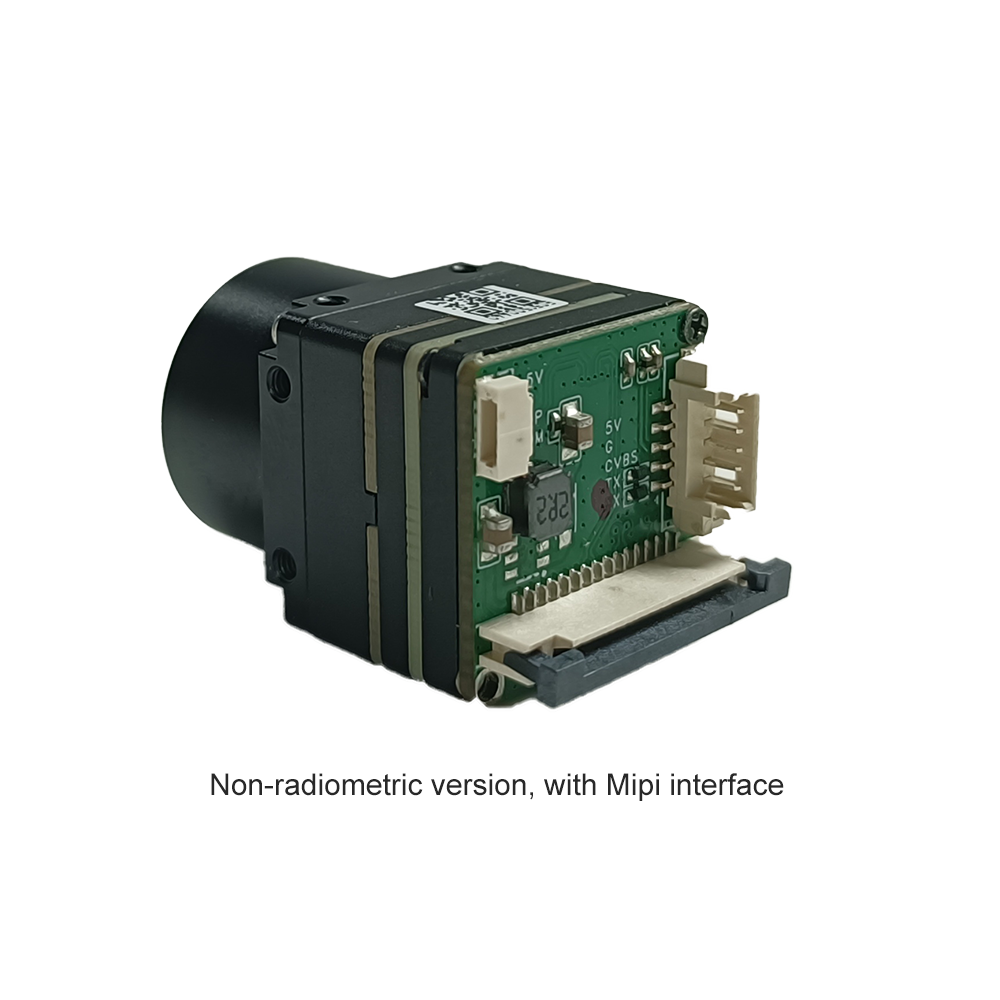
| MIPI CSI-2 | بيانات رقمية خام 14-بت، مسار عرض نطاق ترددي عالي | أنظمة SOC المضمنة (NVIDIA Jetson, Rockchip) | عالي (يتطلب مشغلات نواة مخصصة/BSPs) |
| USB (UVC + Bulk) | Dynamic Color Video & Radiometric raw matrices | Raspberry Pi, industrial PCs, rapid prototyping | Low (Standard plug-and-play driver stacks) |
| CVBS | Standard analog composite video (PAL/NTSC) | Analog FPV systems, legacy analog monitors | Minimal (Direct wiring to transmitter/monitor) |
1. MIPI CSI-2 (Mobile Industry Processor Interface)
MIPI CSI-2 has emerged as the gold standard for high-bandwidth, direct-to-processor camera connections. It transmits uncompressed, high-bit-depth raw digital thermal data (typically 14-bit or 16-bit) directly to the video capture pipeline of the host system-on-chip (SoC). This allows the host processor to access the raw sensor values without any decompression latency or protocol translation overhead, opening up opportunities for hardware-accelerated image signal processing (ISP) using specialized GPU or NPU modules.
While MIPI CSI-2 offers the lowest possible frame latency and maximum system performance, it demands complex, custom board support package (BSP) driver configurations. Let me tell you from experience: routing differential high-frequency lanes on custom PCBs requires careful length-matching to prevent phase distortion and EMI. Keep those cable runs under 10 cm unless you enjoy debugging signal integrity headaches with active, dedicated signal extenders.
2. USB Interface (UVC & Bulk Endpoints)
The Universal Serial Bus (USB) interface is preferred for rapid development on single-board computers (SBCs) and general development workstations. This interface utilizes a bifurcated approach: it streams pre-processed, colorized thermal video feeds using the standard USB Video Class (UVC) protocol, while concurrently exposing raw 14-bit radiometric temperature matrices over custom USB bulk transfer endpoints.
The primary advantage of the USB approach is physical plug-and-play simplicity. Most modern operating systems (Linux, Windows, macOS) ship with native UVC drivers, eliminating the need to compile custom kernel modules. However, keep in mind that these systems exhibit higher latencies compared to direct MIPI pipelines, and managing high-bandwidth bulk data transfers can introduce significant CPU overhead on low-power host microcontrollers.
3. CVBS (Composite Video Baseband Signal)
CVBS is an analog, standard-definition television transmission format (NTSC or PAL) widely used in legacy systems. The on-board image processor of the thermal module reconstructs the digitized thermal readings, maps them to a user-selectable color palette, and translates the resulting visual stream into an analog waveform. This output can be transmitted directly over co-axial lines or high-power analog RF video links.
CVBS features exceptionally low delay, high resistance to physical electromagnetic interference, and the ability to operate across long cable runs (up to 100 meters) without signal dropouts. The primary limitation is data content: because the signal is strictly analog video, all raw thermodynamic pixel metadata is lost, making it impossible to perform post-processing temperature calculations on the receiving hardware.
مخطط تكامل نظام راسبيري باي ولينكس
Integrating a high-performance thermal camera core with a single-board computer like the Raspberry Pi (4/5) or an NVIDIA Jetson module allows for rapid prototyping of smart IoT cameras, edge AI thermal classifiers, and portable test instrumentation. Real-world implementation relies heavily on robust data ingest patterns that bridge kernel-space acquisition with user-space processing applications.
The system architecture begins at the Linux kernel level, where the physical core is recognized via the standard USB UVC or serial drivers. The driver maps the incoming frames into the Virtual Video for Linux (V4L2) core, making them accessible to user-space applications through the /dev/videoX device nodal interface. Control paths, configuration updates, and micro-command payloads are routed concurrently through a virtual serial interface (such as /dev/ttyUSBX) governed by the host application's operational state.
Navigating the Software Pipeline
To capture and process the thermal stream without dropping frames or stalling the system queue, developer applications can leverage highly efficient software pipelines. Using a system utility framework like GStreamer, developers can structure low-overhead capture networks that route raw YUYV or raw 16-bit greyscale (Y16) frame buffers into OpenCV processing threads with minimum latency:
gst-launch-1.0 -v v4l2src device=/dev/video0 ! video/x-raw,format=Y16,width=384,height=288 ! videoconvert ! appsink
This command captures the raw 16-bit thermal stream, bypasses complex color conversion processes at the driver level, and forwards the raw pixel units. The application can then analyze, manipulate, and colorize the frames programmatically.
Radiometric Data Extraction and SDK Communication
For accurate thermographic diagnostics, applications must be able to convert raw pixel data into absolute temperature values. The following Python integration pipeline demonstrates how to capture raw frames via OpenCV, extract the 14-bit digital numbers, apply factory calibration parameters, and visualize the processed output in real-time:
import cv2
import numpy as np

# Configure V4L2 video capture stream from the thermal module (raw format)
try:
    cap = cv2.VideoCapture(0, cv2.CAP_V4L2)
    cap.set(cv2.CAP_PROP_FOURCC, cv2.VideoWriter_fourcc('Y', '1', '6', ' '))
    cap.set(cv2.CAP_PROP_CONVERT_RGB, False)
except Exception as e:
    print(f"Error accessing thermal module camera: {e}")
    exit(1)

while True:
    ret, frame = cap.read()
    if not ret:
        break

    # Raw 14-bit radiometric data is packaged in 16-bit uint representation
    raw_14bit = frame.astype(np.uint16)

    # Apply calibration formula: Temperature (Celsius) = (Raw_Value * 0.1) - 273.15
    # This example maps raw digital numbers directly to Celsius
    temperature_celsius = (raw_14bit * 0.1) - 273.15

    # Isolate maximum temperature target point in the FOV frame
    min_val, max_val, min_loc, max_loc = cv2.minMaxLoc(temperature_celsius)

    # Normalize 14-bit raw values to standard 8-bit for visualization
    norm_frame = cv2.normalize(raw_14bit, None, 0, 255, cv2.NORM_MINMAX, dtype=cv2.CV_8U)
    colorized_thermal_feed = cv2.applyColorMap(norm_frame, cv2.COLORMAP_JET)

    # Overlay temperature coordinates on top of user visualization frame
    cv2.putText(colorized_thermal_feed, f"Max Temp: {max_val:.2f} C", (15, 30),
                cv2.FONT_HERSHEY_SIMPLEX, 0.7, (255, 255, 255), 2)

    cv2.imshow("Real-Time Thermal Analysis Map", colorized_thermal_feed)
    if cv2.waitKey(1) & 0xFF == ord('q'):
        break

cap.release()
cv2.destroyAllWindows()
هندسة حمولة محور الطائرة بدون طيار وتحسين SWaP-C
Deploying thermal cameras on small unmanned aircraft systems (sUAS) requires strict adherence to Size, Weight, Power, and Cost (SWaP-C) constraints. Adding weight directly impacts battery runtimes, while electromagnetic interference can jeopardize flight stability.
The electrical design begins with clean power distribution. Unregulated aircraft bus power (typically 12V to 24V from multi-cell LiPo batteries) is highly susceptible to high-frequency voltage ripples generated by Electronic Speed Controllers (ESCs) and high-RPM brushless DC (BLDC) motors. Without adequate filtration, this electrical noise can degrade the performance of highly sensitive thermography arrays, showing up as visual banding or noise in the thermal output.
To prevent this, we always route incoming DC lines through a specialized high-rejection, low-pass power filter (such as an LC filter network) before passing the voltage to a dedicated low-dropout (LDO) linear regulator. This regulator steps the voltage down to a clean 3.3V or 5V DC supply, maintaining a high Power Supply Rejection Ratio (PSRR) to shield the delicate sensor arrays or on-board processing units from power-line noise.
Drone Mechanical & Environmental Isolation Guide
- ⚙️ Vibration Dampening & Microphonics: High-frequency kinetic impulses from fast-spinning props can cause mechanical vibrations that distort the microbolometer readings. To mitigate this microphonic noise, mount the camera core to the gimbal frame using low-durometer silicone gel vibration dampers, protecting the uncooled sensor from micro-vibration noise.
- ⚙️ Electromagnetic Shielding (EMI): High-power RF telemetry modules and video transmitters mounted close to thermal cameras can induce pattern noise across the uncooled sensor array. Fully housing the thermal camera module inside an industrial CNC aluminum enclosure provides mechanical protection and functions as a Faraday shield against EMI.
- ⚙️ Environmental Protection & Calibration: Airborne payloads face rapid temperature and humidity swings during high-speed ascents and descents. Ensure the system can handle hot and cold conditions without losing optical focus, and implement automated shutter-based or software-driven NUC algorithms to maintain accuracy across changing ambient temperatures. For more on this, check out this diagnostic look at thermal camera environmental testing.
عرض منتج الوحدة الحرارية Purpleriver 384x288
Purpleriver designs and manufactures high-performance uncooled long-wave infrared thermal camera cores. Their systems combine uncooled microbolometer sensor elements with robust ... image signal processing pipelines. This makes them ideal for commercial application fields like safety inspection, research laboratories, and embedded drone payloads.
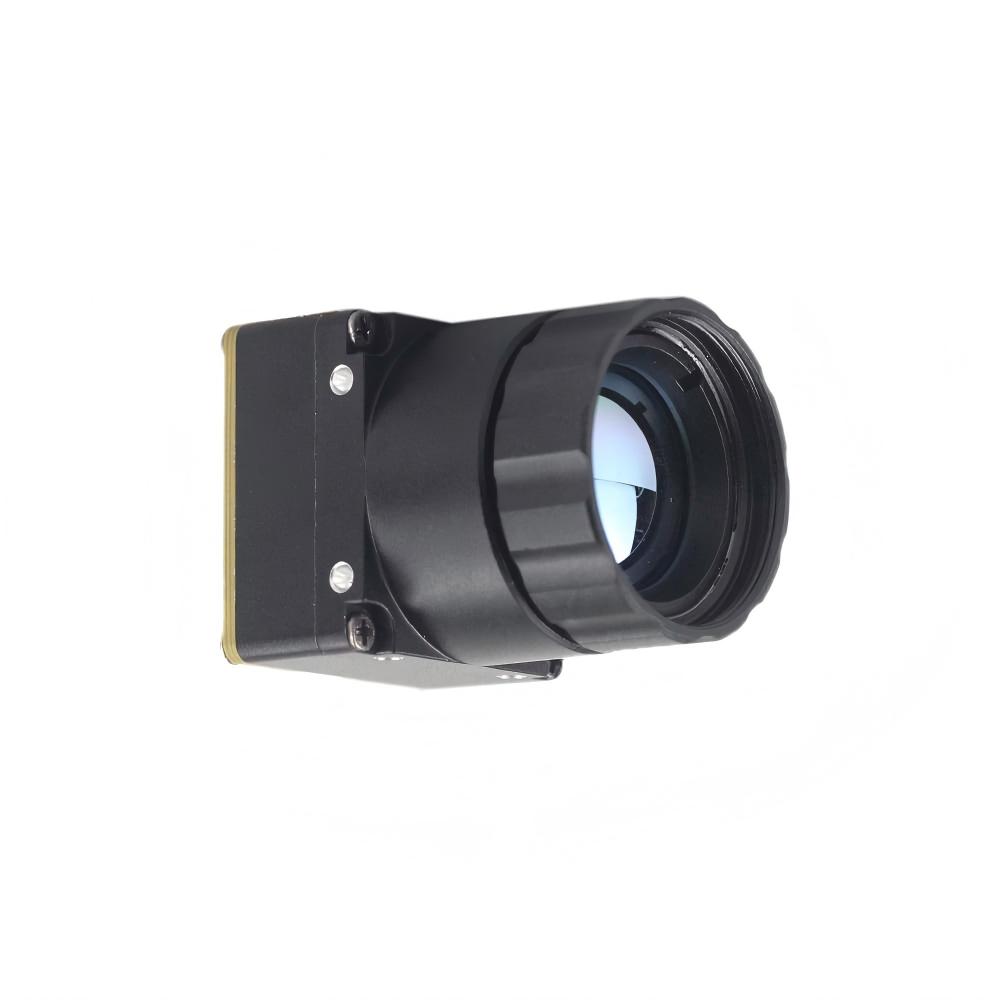
وحدة الكاميرا الحرارية غير المبردة MD Series بدقة 384x288 بالأشعة تحت الحمراء
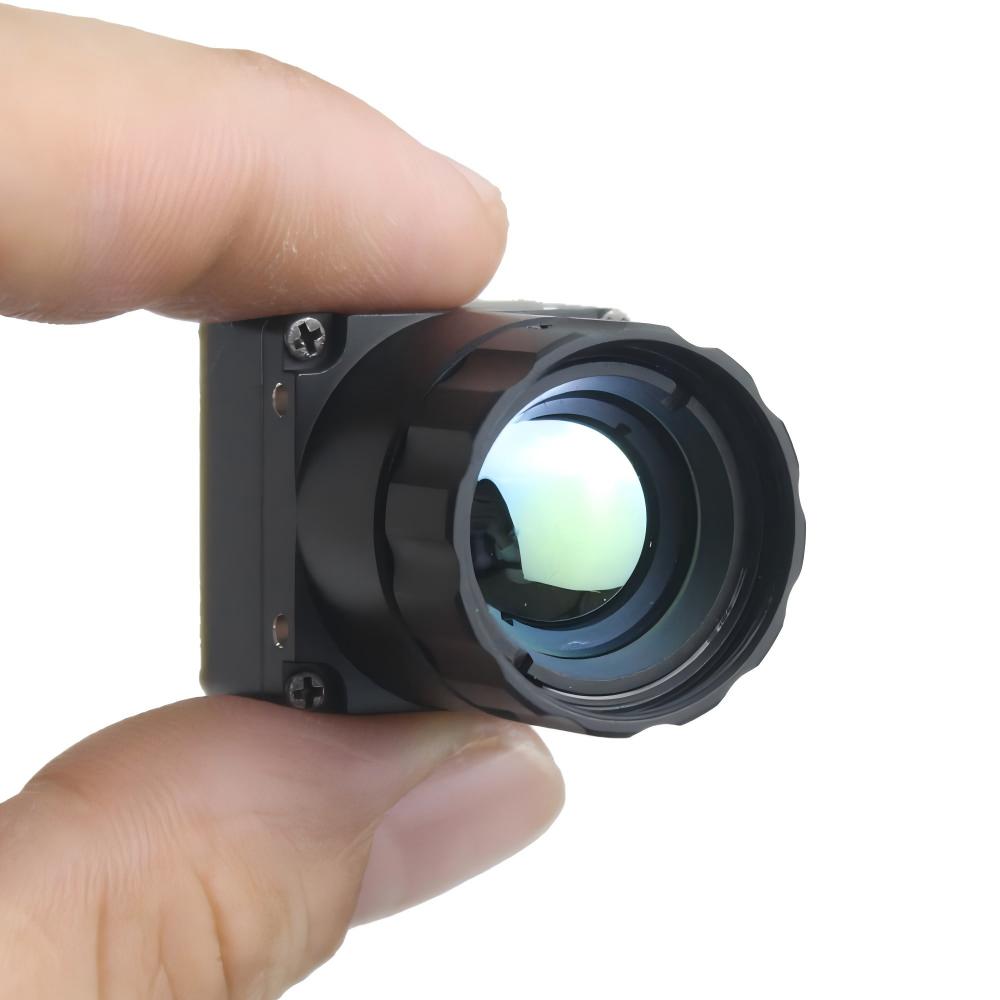
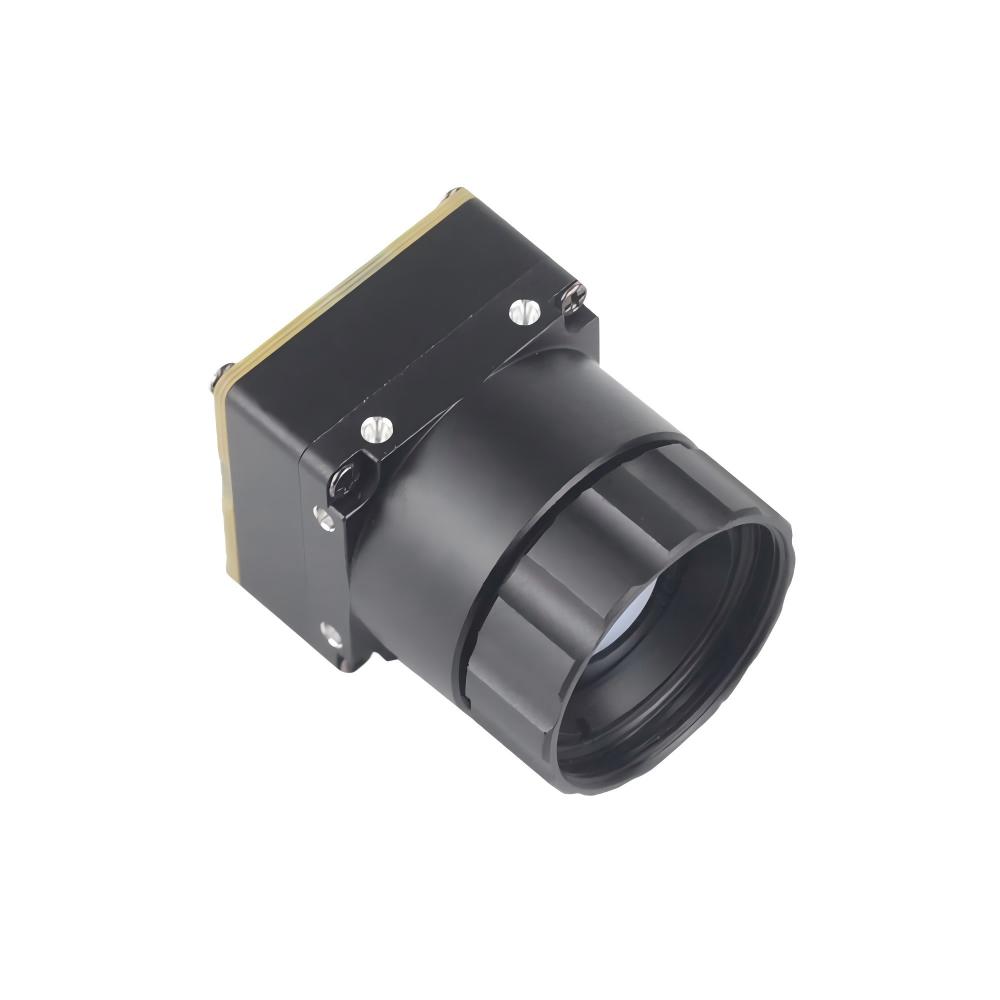
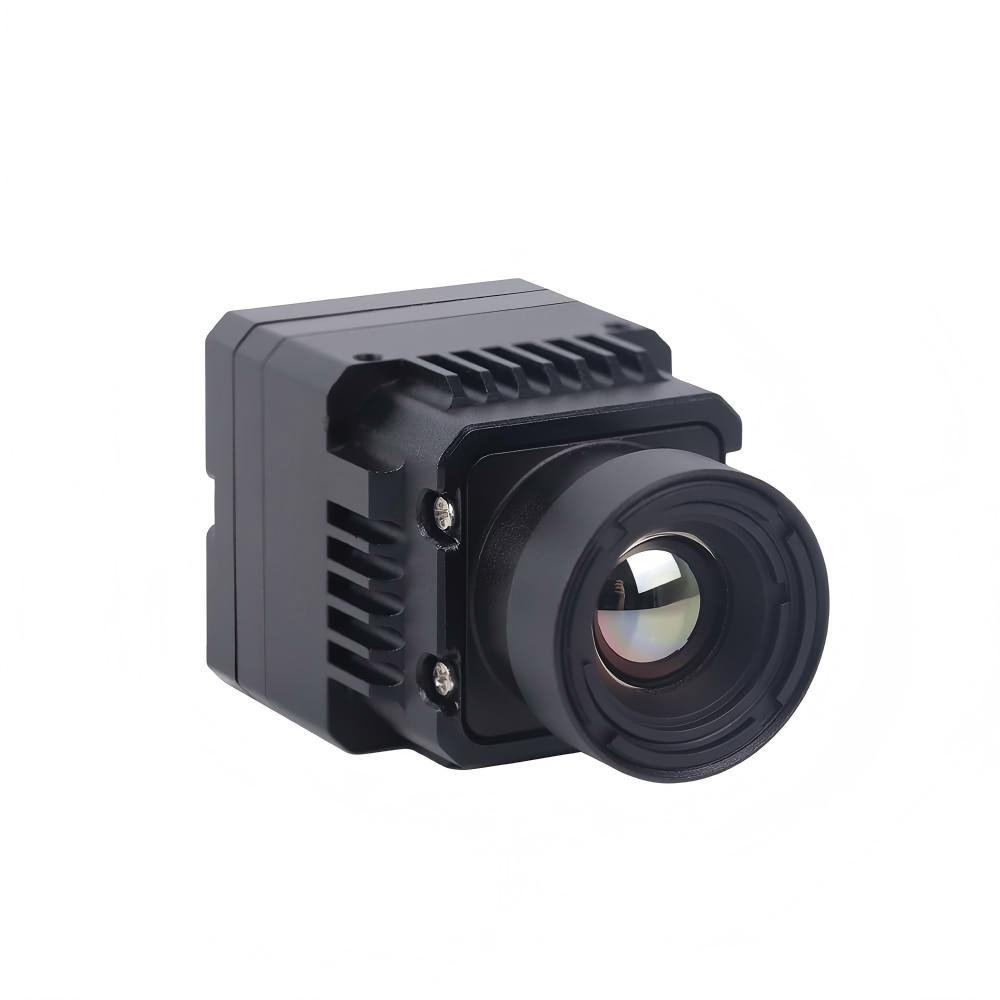
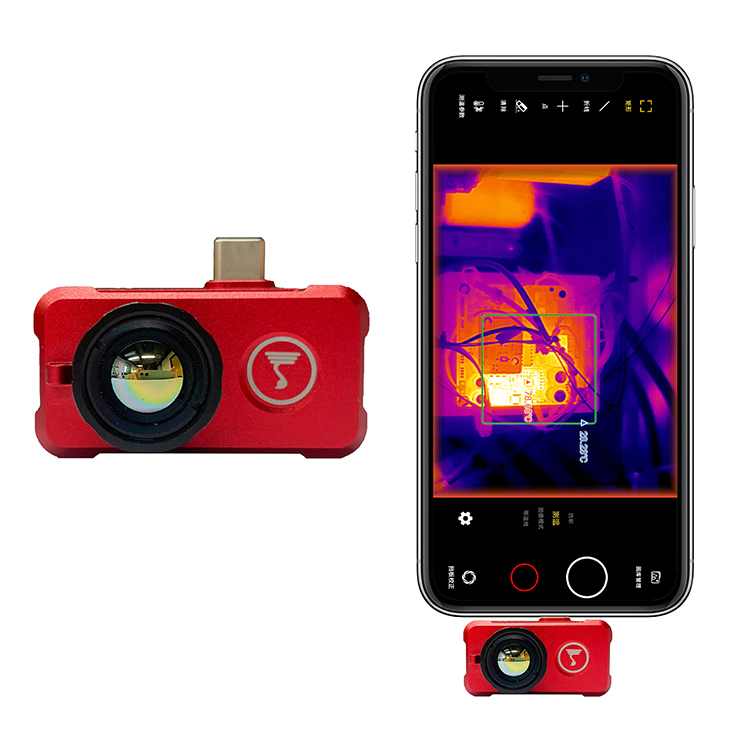
The Purpleriver thermal camera module is designed for industrial-grade precision in applications such as security, temperature monitoring, and drone integration. Featuring an uncooled infrared detector with a 12μm pixel pitch, it delivers high sensitivity and sharp thermal imaging. Its compact size, plug-and-play functionality, and multiple interfaces (MIPI/USB/CVBS) ensure versatile and rapid integration into various systems. Backed by a team with a Hong Kong University of Science and Technology background and former Huawei Hisilicon expertise, this module offers OEM/ODM customization to meet specific project requirements, ensuring unparalleled performance and adaptability.
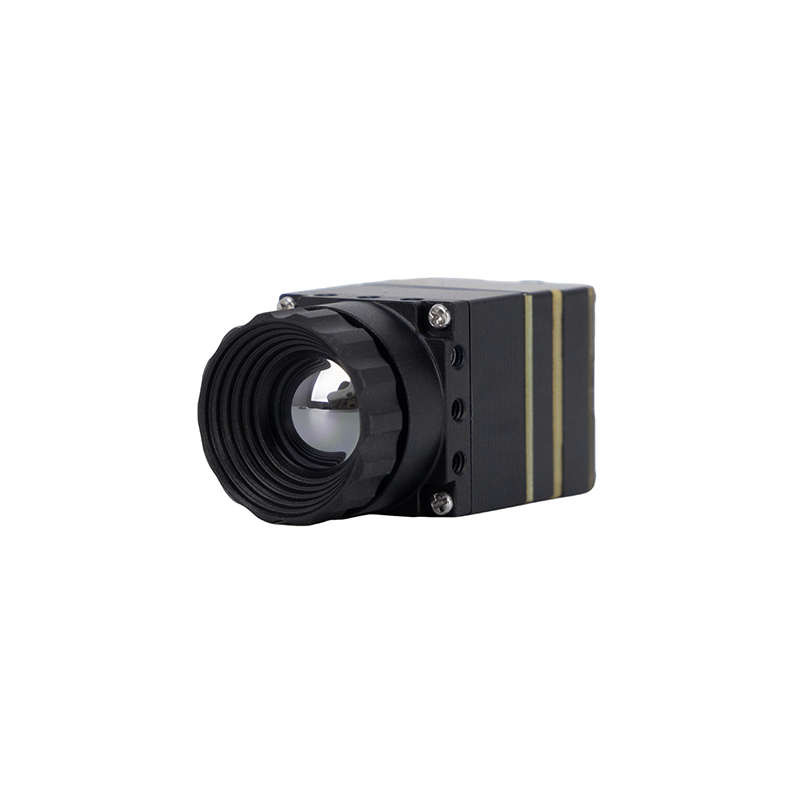
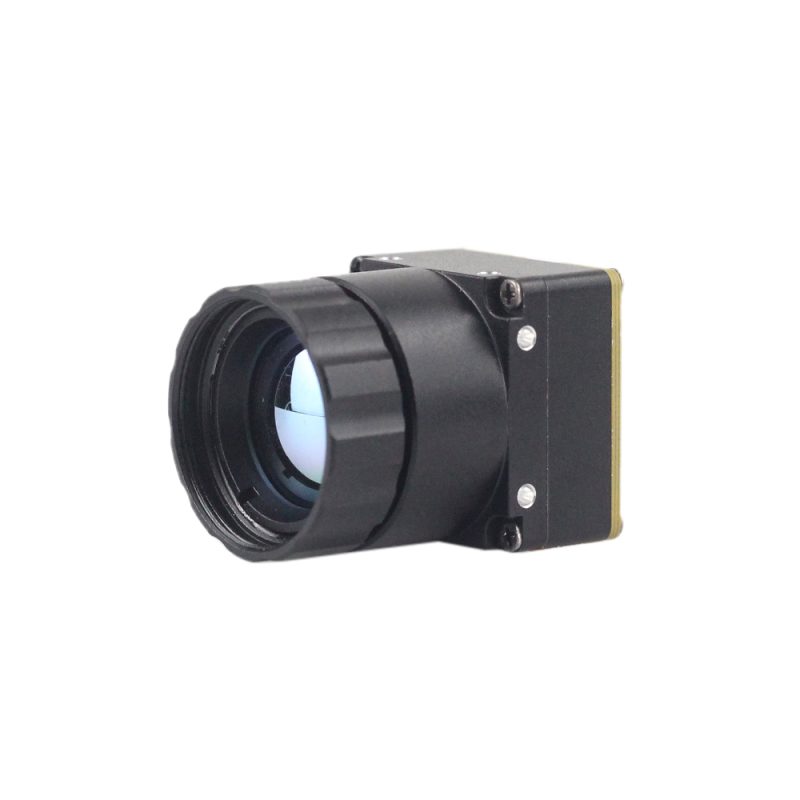
وحدة كاميرا حرارية مصغرة غير مبردة 384*288 للطائرات بدون طيار
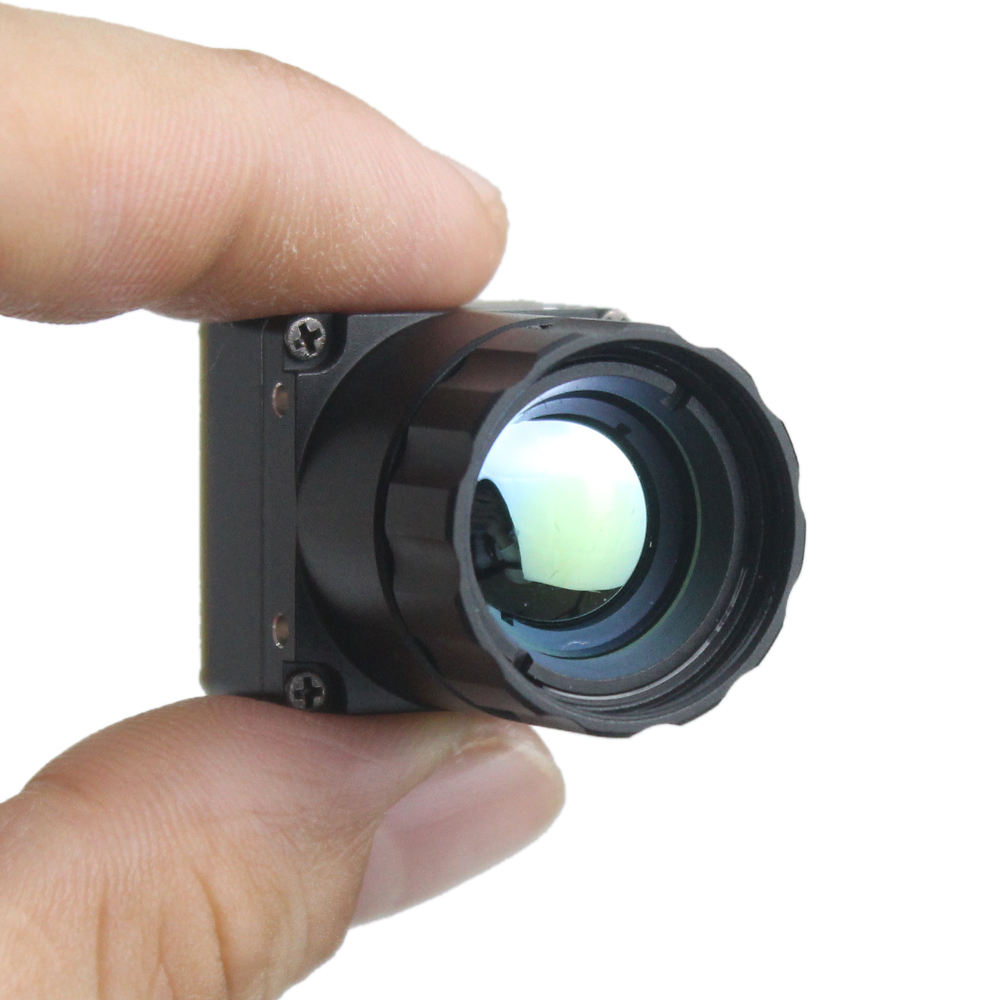
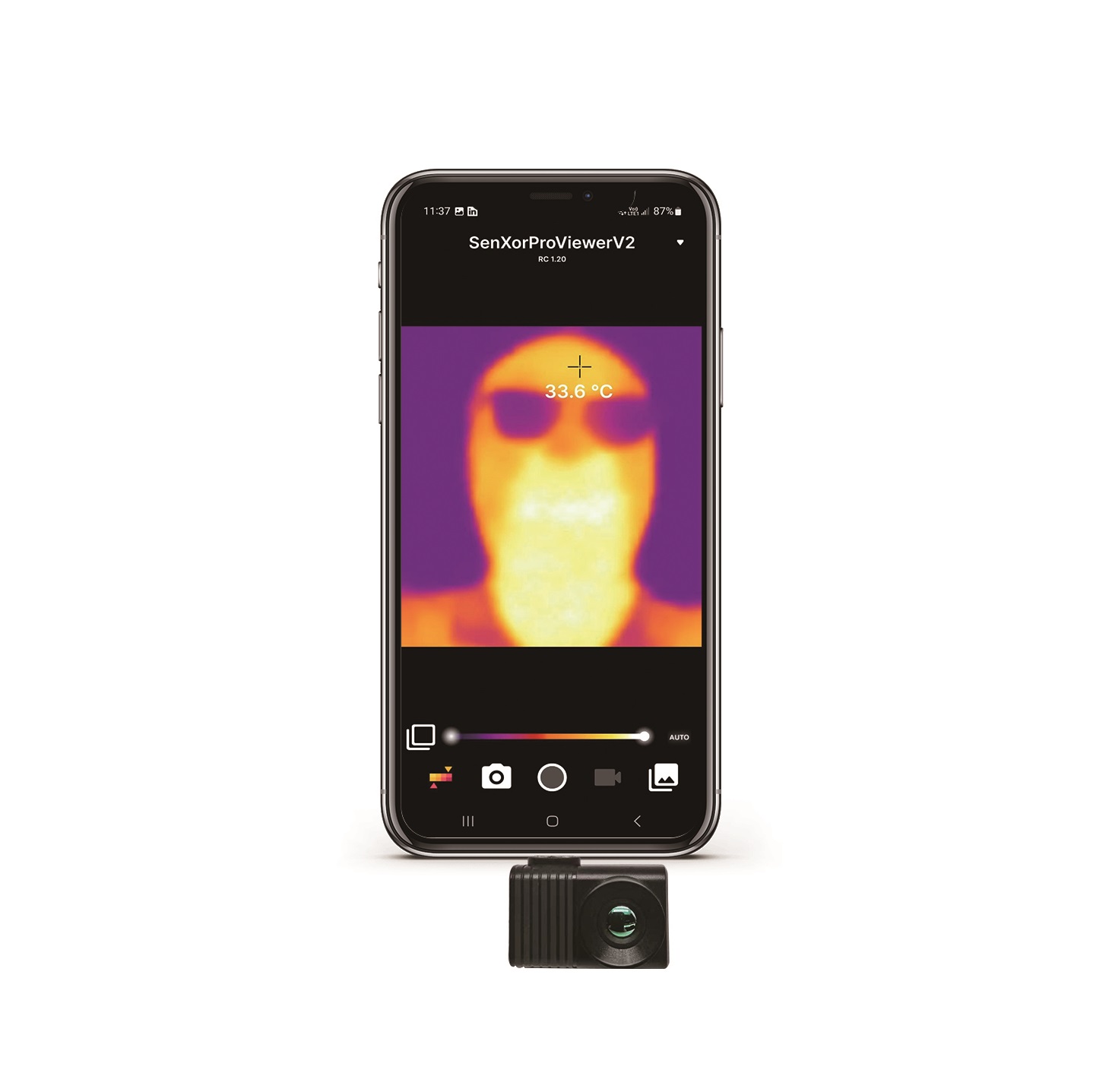
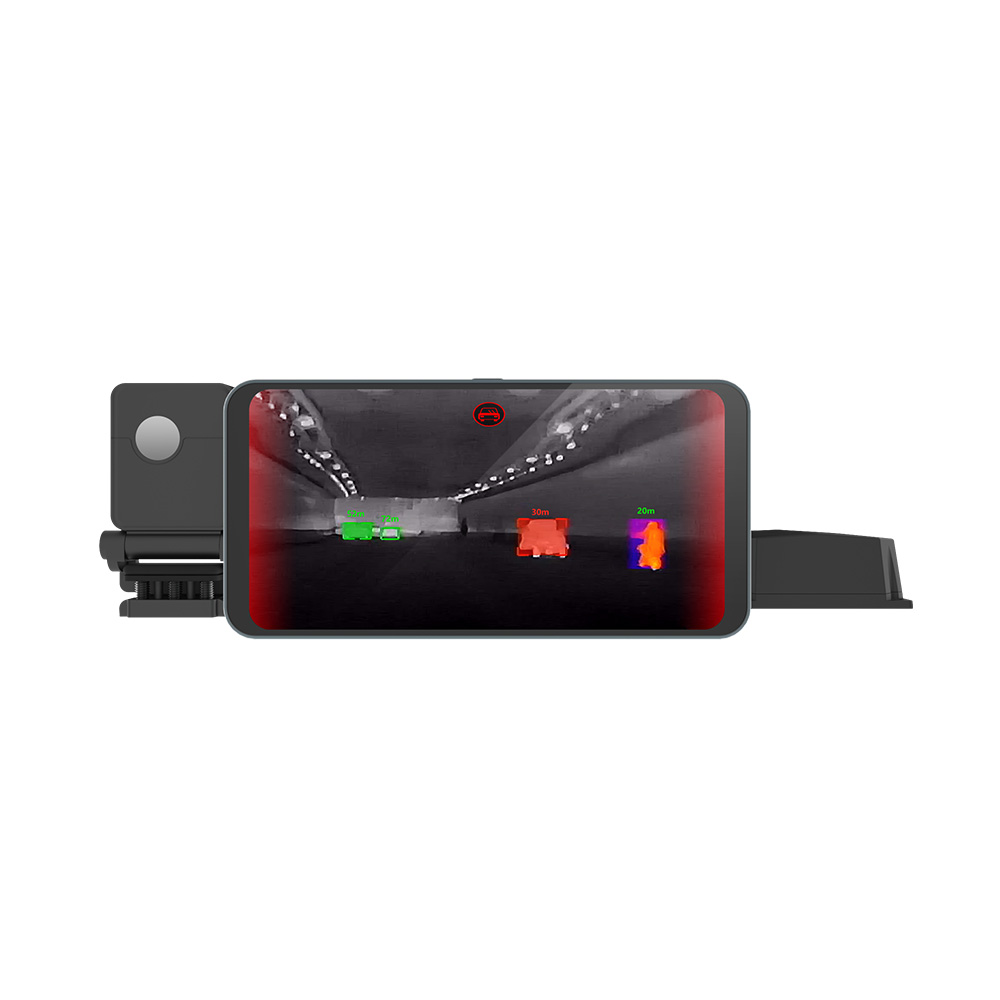
وحدة قياس درجة الحرارة بالتصوير الحراري بالأشعة تحت الحمراء من سلسلة MINI هي جهاز تصوير حراري بالأشعة تحت الحمراء لقياس درجة الحرارة عبر الإنترنت عالي الدقة وصغير الحجم وعالمي. يستخدم كواشف عالية الجودة، بدقة عالية، وأداء مستقر، ووظائف قوية. وهو مزود بواجهات متعددة، مما يجعله منتجًا مفضلاً في مجالات التطبيق مثل الرؤية الآلية، والتفتيش الأمني، والتصنيع الذكي، وصيانة المعدات، والروبوتات المحمولة جوًا على الطائرات بدون طيار، وما إلى ذلك.
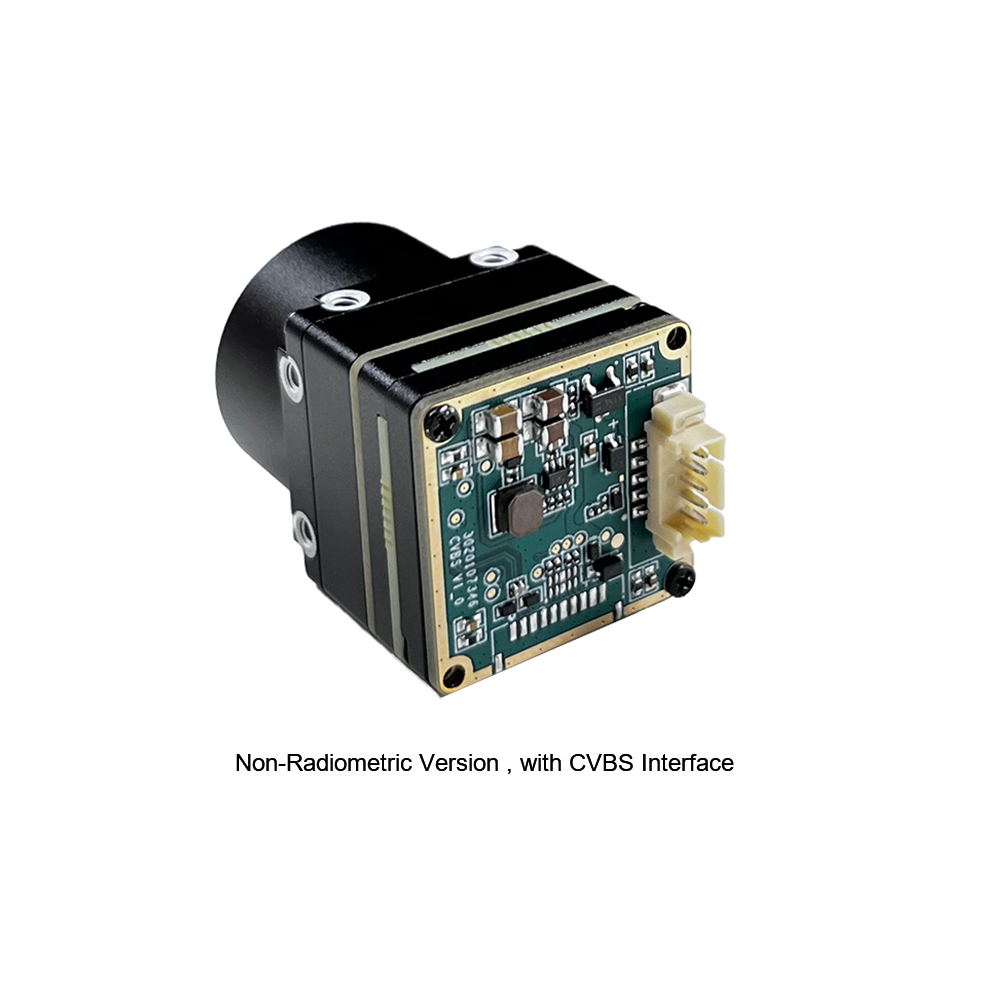
Comparative Specifications Matrix
To help system designers select the appropriate hardware core for their projects, the physical, electrical, and optical operational characteristics of the MD Series and MINI Series are compared below:
| Technical Parameters | MD Series 384x288 Module | Uncooled MINI 384x288 Drone Core |
|---|---|---|
| Resolution (FPA Layout) | 384 x 288 Pixels | 384 x 288 Pixels |
| Pixel Pitch Size | 12μm microbolometer structure | 12μm microbolometer structure |
| النطاق الطيفي | 8μm to 14μm (LWIR) | 8μm to 14μm (LWIR) |
| Sensitivity (NETD) | ≤ 40mK (@25°C, f/1.0) | ≤ 50mK (@25°C, f/1.0) |
| Available Interfaces | MIPI CSI-2, USB 2.0 (UVC), CVBS Analog | USB 2.0 (UVC), CVBS Analog Video |
| Thermographic Functionality | Advanced regional radiometric analysis | Real-time temperature measurement |
| Typical Power draw | Extremely low (< 1.1 W) | Optimized low power (< 0.9 W) |
| Target Customizations | Excellent (Deep B2B OEM custom designs) | Payload adaptation & Gimbal integrations |
خطوط تخصيص OEM/ODM الصناعية
Off-the-shelf consumer thermal imagers are rarely suitable for complex industrial applications. Specialized designs require tailored physical configurations, custom lens arrangements, and unique communication protocols.
The customization pipeline begins during the initial requirements definitions, where product managers establish electrical, physical, and atmospheric operational boundaries. Once these parameters are set, engineers translate standard module command sets into industrial system protocols (such as SPI, Modbus, or CAN Bus formats). This protocol layer allows the camera's configuration registers to communicate seamlessly with PLCs, smart automotive nodes, or edge flight controllers. Concurrently, engineers work to optimize optical components and protective factors to ensure stable thermal performance in challenging deployable environments.
Protocol Customization (SPI, Modbus, CAN Bus)
Modern industrial and military architectures rely on highly robust communication protocols. While USB is suitable for basic workbench tests, field integrations demand cleaner bus architectures:
- ⚙️ CAN Bus (Controller Area Network): Essential for automotive, aerospace, and robotic system controls. It enables long-distance, error-resistant communications between various nodes without requiring a centralized host-PC architecture.
- ⚙️ Modbus Protocol: The standard for programmable logic controllers (PLCs) in manufacturing plants. This interface allows the camera to trigger alarms or control shutoffs when a component exceeds a predefined temperature threshold.
- ⚙️ Low-Power SPI (Serial Peripheral Interface): Ideal for microcontrollers and edge processors. SPI allows for rapid data transfers across custom carrier boards while minimizing complexity and power consumption.
Environmental Optimization & Tough Protective Coatings
Deploying sensors in extreme industrial thermal chambers or marine operations requires ruggedized system protection:
- ⚙️ DLC (Diamond-Like Carbon) Optical Coatings: Protects external-facing Germanium lenses from abrasive sand, dirt, and chemical exposure, ensuring long-term field survivability.
- ⚙️ Conformal PCB Isolation Coatings: Shields sensitive board components from moisture, condensation, salt spray, and corrosive atmospheres.
- ⚙️ Automated Shutter Calibration: Integrates robust calibration targets that allow the camera core to maintain measurement accuracy across wide operating temperature changes (-40°C to +80°C).
To optimize performance across these harsh conditions, B2B manufacturers regularly source advanced optical assemblies through specialized precision partners, such as Rising Optics, to deliver accurate dual-spectrum focusing capabilities. To learn more about general industrial and outdoor portable thermal designs, check out this guide on thermal imaging tools.
الأسئلة الشائعة حول تكامل وتنفيذ الأجهزة
How do I stream real-time, high-resolution thermal video to a Raspberry Pi or Linux system?
Real-time stream integration into Raspberry Pi or general x86/ARM Linux architectures can be achieved by utilizing Purpleriver's comprehensive Software Development Kits (SDK) alongside standard operating system frameworks. Unlike standard consumer sensor platforms, which lack open-source code and are locked down to proprietary app frameworks, Purpleriver modules provide a highly versatile, open-system architecture.
For the most reliable integration, we recommend utilizing the USB-UVC digital output pipeline. In this configuration, the Linux operating system recognizes the camera dual-port structure. This structures the video feed as a standard raw YUV output on the primary /dev/videoX channel, while simultaneously maintaining a raw command/radiometric link via /dev/ttyUSBX or virtual COM interfaces. Through this configuration route, developers can run our optimized GStreamer capture commands directly from memory space pipelines, or read raw matrices using Python and OpenCV integration codes without suffering from dropped frame packets. If your project has strict space or layout limitations, please consult with our team regarding custom MIPI CSI device-tree bindings for custom carrier designs.
For DIY and commercial integration, why should I upgrade from a 256x192 sensor to a 384x288 uncooled thermal camera module?
Moving from an entry-level 256x192 sensor (such as the hobbyist-grade Tiny1 series) to an industrial-grade 384x288 uncooled thermal camera module with a 12μm pixel pitch provides a massive leap in spatial processing performance. While a 256x192 sensor may be sufficient for basic thermal checks, its low pixel density limits its effectiveness at longer distances.
The 384x288 resolution upgrade delivers more than double the spatial data points (110,592 vs. 49,152 pixels). This has several major practical benefits: First, the increased sensor density provides the sharpness and range needed for critical operations like drone mapping, security monitoring, and automated manufacturing. Second, the improved spatial resolution (iFOV) allows you to resolve small targets at much greater distances, preventing accuracy loss from sub-pixel temperature blending. Third, edge AI models can detect and classify objects faster and with fewer false positives, ensuring reliable performance in demanding environments. Additionally, our advanced 12μm VOx sensor microbolometers optimize spatial performance without increasing the lens's physical size. This ensures your systems remain light, compact, and highly efficient.
Are these thermal module cameras suitable for custom weight-sensitive payloads like drone gimbals and thermal scopes?
Yes, Purpleriver's MINI Series thermal cores are designed specifically for weight-sensitive applications. Our hardware and firmware are optimized to deliver maximum performance within strict weight budgets, making them ideal for multi-spectral drone gimbals, compact hand-held thermal scopes, and miniature military/industrial optics.
Our core design team leverages their extensive R&D backgrounds from the Hong Kong University of Science and Technology and former Huawei Hisilicon silicon platform engineering to optimize every design. These optimizations are built into every core, including micro-sized form factor, low power consumption (less than 0.9W on mini layouts), and complete OEM/ODM customization options. To integrate the best microchip solutions with our camera modules, system architects often coordinate with major semiconductor companies like جي إم شيب to design custom, low-power edge processing hubs and smart companion boards.
📚 المراجع والقراءات الإضافية
- المعيار الصناعي: JM Chip Semiconductor Technologies
- المعيار الصناعي: Rising Optics Precision Lens Engineering
- Related Guide: Thermal Imaging Camera Module Guide: Choosing the Right LWIR Core
- Related Guide: High and Low Temperature Humidity Environmental Test Operations
- Related Guide: Heat Vision Revolution: Essential Optical Thermal Tools