
وحدة مصفوفة كاميرا تصوير حراري AMG8833 مع طاقة USB: هل هي جاهزة لقياس درجة الحرارة بالأشعة تحت الحمراء الصناعية؟
23 يوليو 2026
دليل وحدة كاميرا الرؤية الليلية الحرارية المدمجة بالأشعة تحت الحمراء الحقيقية مع إضاءة IR مدمجة
27 يوليو 2026
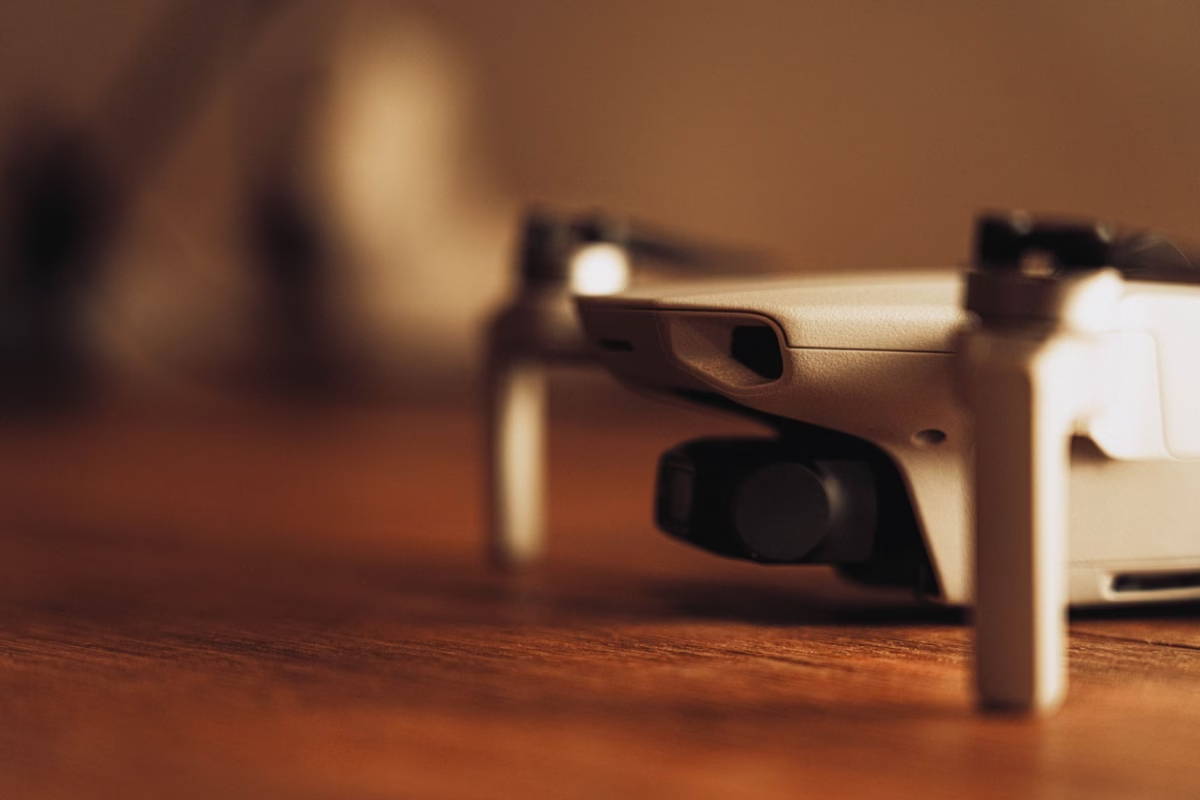
وحدة كاميرا تصوير حراري بالأشعة تحت الحمراء غير مبردة MIPI 640 384 256 9mm للطائرات بدون طيار: دليل التخصيص الشامل
انظر، في عالم الأنظمة الجوية غير المأهولة (UAS)، لا يُعد الحجم والوزن والطاقة (SWaP) مجرد مقياس تصميمي رائج - إنه القانون المطلق. إذا كنت مُصنعًا للمعدات الأصلية (OEM) أو مُدمجًا للحمولات، فأنت دائمًا عالق بين مطلبين قاسيين: تقديم تغذية حرارية واضحة بدون زمن انتقال للرحلات الآلية وعمليات التدقيق الهيكلي، مع الحفاظ على خفة المنصة بما يكفي للبقاء في الجو فعليًا. إليك جوهر الأمر: توجيه البيانات الحرارية الخام مباشرة عبر بروتوكول الواجهة التسلسلية للكاميرا 2 (CSI-2) التابع لواجهة معالج الصناعة المتنقلة (MIPI) الأصلي إلى معالج الحافة المضيف الخاص بك يغير قواعد اللعبة بالكامل. أنت تتخلص من عبء زمن الانتقال، وتتجاوز خسائر تحويل الإشارة، وتستغني عن وزن العتاد الإضافي المرتبط بإعدادات الأنالوج القديمة أو USB الضخمة.
اعتبر هذا الدليل الشامل مخططك المُختبر ميدانيًا لدمج نوى الميكروبولومتر ذات الموجات تحت الحمراء الطويلة (LWIR) في منصات الجيل التالي من الطائرات بدون طيار. سواء كنت تبني منصات استطلاع خفيفة الوزن للرؤية بالشخص الأول (FPV) بحجم 5 بوصات تعمل بمستشعرات 256x192 أو 384x288، أو حمولات تفتيش صناعية تجمع مصفوفة عالية الدقة 640x512 مع عدسة لا حرارية 9mm، فقد وضعنا المواصفات البصرية والحرارية والكهربائية والخوارزمية التي تحتاجها لتبسيط عملية البناء.
جدول المحتويات
- 👉 بنيات دقة المستشعر: مقارنة مصفوفات الميكروبولومتر 256 و 384 و 640
- 👉 ميزة بروتوكول MIPI CSI-2 في تصميم حمولة الطائرات بدون طيار
- 👉 هندسة العدسة البصرية 9mm للعمليات التكتيكية بالطائرات بدون طيار
- 👉 تحسين SWaP ودمج المحور الدوار لأنظمة الطائرات غير المأهولة (UAV)
- 👉 تشكيلة منتجات OEM ومصفوفة المواصفات
- 👉 الأسئلة المتكررة (FAQ)
بنيات دقة المستشعر: مقارنة مصفوفات الميكروبولومتر 256 و 384 و 640
اختيار مصفوفة الميكروبولومتر LWIR المناسبة هو أول مفترق طرق رئيسي عند تكوين وحدة كاميرا حرارية غير مبردة. الدقة المكانية لذلك الميكروبولومتر تحدد مدى اكتشاف الهدف، ووضوح الصورة، وهامش التقريب الرقمي، وعبء المعالجة، والتكلفة الإجمالية لقائمة المواد (BOM). تستخدم نوى الأشعة تحت الحمراء غير المبردة الحديثة مصفوفات مستوى بؤري (FPAs) من أكسيد الفاناديوم (VOx) أو السيليكون غير المتبلور (a-Si) مضبوطة على نطاق الموجات تحت الحمراء الطويلة من 8 ميكرومتر إلى 14 ميكرومتر. في الورشة، نميل دائمًا تقريبًا إلى VOx للطائرات بدون طيار الدفاعية والصناعية الثقيلة بسبب معامل درجة حرارة المقاومة (TCR) الأعلى، والضوضاء الحرارية الأقل، واستقرار المعايرة على المدى الطويل.
1 تباعد البكسل، الدقة المكانية، ونطاقات DRI
الانتقال من إعدادات البكسل القديمة 17 ميكرومتر إلى ميكروبولومترات تباعد البكسل الحديثة 12 ميكرومتر يعزز الكفاءة البصرية بشكل كبير مع تقليص البصمة الفيزيائية للحمولة. تباعد البكسل الأضيق يعني الحصول على قطر مصفوفة مستوى بؤري أصغر لنفس فئة الدقة بالضبط. هذا يتيح لك استخدام زجاج جرمانيوم أخف وأصغر في المقدمة دون تقليل فتحة تجميع الضوء.
- ⚙️ مصفوفة 256x192 (49,152 بكسل): مصممة خصيصًا للطائرات بدون طيار الصغيرة (micro-UAVs)، وتجنب العوائق في المساحات الضيقة، وتغذية الرؤية بالشخص الأول (FPV) المحدودة. عند إقرانها بعدسة 9mm، تمنحك نواة 256x192 نظامًا فائق الاكتناز حيث يكون الوعي الظرفي الواسع أكثر أهمية بكثير من التفاصيل الحرارية الدقيقة.
- ⚙️ مصفوفة 384x288 / 384x256 (110,592 بكسل): العمود الفقري الموثوق لرسم الخرائط التجارية، واستطلاع الزراعة، وتدقيق البنية التحتية متوسطة المدى. تحتوي على أكثر من ضعف بكسلات مستشعرات فئة 256، مما يحقق التوازن الأمثل بين التفاصيل المكانية ومتطلبات الحوسبة. للاستراتيجيات المعمارية العميقة حول توصيل نوى فئة 384، راجع دليلنا الهندسي حول دمج وحدة الكاميرا الحرارية (384×288).
- ⚙️ مصفوفة 640×512 (327,680 بكسل): الخيار الأول للتصوير الحراري الاحترافي بالطائرات بدون طيار، والاستخبارات والمراقبة والاستطلاع التكتيكية، والبحث والإنقاذ، وتدقيق شبكات الجهد العالي. توفر المصفوفة 640×512 المزودة بعدسة واسعة الزاوية 9 مم دقة مكانية تفوق بأربع مرات وحدات 320×240 القديمة، مما يسمح للمشغلين بمسح مساحات شاسعة في مسار طيران واحد مع الحفاظ على كثافة بكسل كافية لاكتشاف الشذوذ الحراري الدقيق من مسافات آمنة. للمراقبة بعيدة المدى التي تتطلب مجالات رؤية ضيقة، ألق نظرة على تحليلنا التقني لـ وحدة كاميرا حرارية 640×512 مع بصريات 35 مم.
عند حساب اكتساب الهدف الفعلي في الميدان، نعتمد على معايير جونسون. تعتمد مسافة الكشف الواقعية على الأبعاد الحرجة للهدف (d)، والبعد البؤري البصري الفعال (f)، وتباعد بكسل المستشعر (p)، ومجال الرؤية اللحظي (IFOV):
IFOV = p / f
لـ p = 12 ميكرومتر (0.012 مم) و f = 9 مم:
IFOV = 0.012 مم / 9 مم = 1.333 مللي راديان
مسافة الكشف النظرية (N = 1.5 دورة على الهدف، d = 1.8 م لإنسان):
مدى_الكشف = (d / (2 × N × IFOV)) = (1.8 / (2 × 1.5 × 0.001333)) ≈ 450 متر
عند إجراء الحسابات، يميز مستشعر 640×512 ملامح الهدف على مسافة تزيد بـ 2.5 مرة عن مستشعر 256×192 باستخدام نفس العدسة البصرية 9 مم. هذا يبقي أجهزة الطائرة بدون طيار باهظة الثمن بعيدة عن الأذى عند فحص خطوط الجهد العالي الخطرة أو المداخن الصناعية.
2 الحساسية الحرارية (NETD) وتحسين معدل الإطارات
فرق درجة الحرارة المكافئ للضوضاء (NETD) هو المقياس الأساسي الذي يحدد الدقة الحرارية للمستشعر. يُعبر عنه بالميلي كلفن (mK)، ويخبرك NETD بأصغر فرق درجة حرارة مطلوب لتوليد نسبة إشارة إلى ضوضاء (SNR) تساوي واحدًا. تترجم أرقام mK المنخفضة مباشرة إلى صور أنظف وتباين أفضل عند تتبع البصمات الحرارية الدقيقة.
وحداتنا الحرارية الاحترافية القياسية للطائرات بدون طيار مُصنفة عند < 40 ملي كلفن (مُختبرة عند f/1.0، +30°C، 30Hz)، بينما تنخفض الوحدات المضبوطة حسب الطلب إلى أقل من < 30 ملي كلفن. الحساسية العالية منقذة للحياة أثناء ظروف الطيران منخفضة التباين - مثل الأيام الملبدة بالغيوم، أو الرطوبة الكثيفة، أو الجولات الليلية المتأخرة عندما تتساوى درجات حرارة المشهد. يمنح تصنيف mK المنخفض نماذج الرؤية بالذكاء الاصطناعي على متن الطائرة حواف أهداف واضحة على الرغم من التشويش الخلفي الكثيف.
ضبط معدل الإطارات لا يقل أهمية بمجرد التحليق في الجو. يؤدي تشغيل معدلات إطارات منخفضة (مثل 8.7Hz أو 9Hz، المستخدمة غالبًا لتجنب ضوابط التصدير EAR/ITAR) إلى ضبابية حركة هائلة، وتأخر في الغالق، وتمزق في الإطارات أثناء مناورات الانعراج السريعة، أو إمالة المحور، أو التمريرات السريعة على ارتفاع منخفض. للطيران الذاتي السلس، والتقاط الهدف السريع، والقيادة عبر منظور الشخص الأول الواضحة، تريد تغذية بمعدل كامل 25Hz، أو 30Hz، أو 60Hz يسمح الفيديو عالي معدل الإطارات وغير المضغوط 14-بت لخطوط أنابيب معالجة الصور بتشغيل تقليل الضوضاء المكاني-الزماني دون إنشاء تشوهات شبحية قبيحة. للتعمق أكثر في الضبط الخوارزمي والمستشعرات عالية الحساسية، اقرأ دليلنا حول وحدات LWIR احترافية مُعززة بالذكاء الاصطناعي.
ميزة بروتوكول MIPI CSI-2 في تصميم حمولة الطائرات بدون طيار
في الماضي، اعتمدت بناءات الطائرات بدون طيار الخفيفة بشكل كبير على الفيديو التناظري المركب القديم (NTSC/PAL) أو وصلات USB 2.0/3.0 القياسية. تشتهر عمليات التشغيل التناظرية بكونها عرضة بشكل كبير للتداخل عالي التردد للترددات الراديوية (RF) المنبعث من وحدات التحكم الإلكترونية في السرعة (ESCs) للمحركات عديمة المسفرات عالية الطاقة وأجهزة إرسال الفيديو (VTX). يظهر هذا التداخل على شكل خطوط تشويش مزعجة، وتمزق أفقي، وتباين باهت. على الجانب الآخر، تُدخل وصلات USB 2.0 القياسية تأخيرات فوضوية في التخزين المؤقت للإطارات (40 مللي ثانية إلى 120 مللي ثانية) وتستهلك الحمل الزائد لوحدة المعالجة المركزية للمضيف فقط لتشغيل مكدسات تعريف نظام التشغيل.
1 MIPI CSI-2 مقابل USB 2.0/3.0 والفيديو التناظري: زمن الوصول وعرض النطاق الترددي
يُعد الانتقال إلى MIPI CSI-2 (الواجهة التسلسلية للكاميرا 2) الأصلية خطوة هائلة إلى الأمام لبناءات حاسوب طيران الطائرات بدون طيار. صُممت MIPI CSI-2 خصيصًا لأنظمة الرؤية المضمنة والمحمولة عالية السرعة، وتعمل كناقل تفاضلي من نقطة إلى نقطة. تدفع البيانات مباشرة من دائرة القراءة المتكاملة (ROIC) للمستشعر مباشرة إلى محرك الوصول المباشر للذاكرة (DMA) لمعالج التطبيق.
مصفوفة مقارنة الواجهة المعمارية
| المقياس / المعامل | MIPI CSI-2 الأصلية | USB 2.0 / USB 3.0 UVC | تناظري (NTSC / PAL) |
|---|---|---|---|
| زمن الوصول من الزجاج إلى الزجاج | < 5 ms to 10 ms | 40 ms – 100 ms | 60 ms – 120 ms |
| Data Bandwidth Overhead | Zero Protocol Overhead (RAW14) | High USB Packet Encapsulation | Bandwidth Limited (< 0.4 MP) |
| Host CPU Utilization | < 1% (Direct Memory Access) | 15% – 35% (Driver Stack) | 10% – 20% (Frame Grabber) |
| Radiometric Precision | Full 14-Bit Uncompressed Digital Counts | Often Compressed to 8-Bit YUV | 8-Bit Analog Quantized Loss |
| EMI Immunity | Extremely High (Differential Pairs) | Moderate (Shielded Cable) | Very Poor (RF Ground Noise) |
The real winning factor with MIPI CSI-2 is how natively it handles raw 14-bit radiometric thermal feeds. In radiometric setups, every pixel value corresponds to an actual analog-to-digital converter (ADC) count linked directly to the infrared energy striking the sensor detector. By piping uncompressed 14-bit frames straight to your host processor over MIPI, you bypass image compression artifacts and dynamic range loss. That lets your onboard CPU execute real-time radiometric temperature measurements, auto gain control (AGC), dynamic histogram equalization, and custom palette mapping without bottlenecking.
When running flexible printed circuits (FPC) from the thermal core to your main processor board, make sure your layout team specifies low-profile, high-integrity board-to-board connectors—like those built by هيروس إلكتريك—to keep your differential signals clean under vibration.
2.2 Direct Interface to Edge AI Processors (NVIDIA Jetson, Raspberry Pi)
Modern UAV builds increasingly rely on Edge AI to run local target classification, track thermal anomalies, and adjust flight paths autonomously without needing a ground link. MIPI CSI-2 modules plug right into the hardware CSI ports on standard System-on-Modules (SoMs):
- ⚙️ NVIDIA Jetson Orin Nano / Orin NX / AGX Orin: The native MIPI CSI-2 bus interfaces straight to Jetson’s hardware Image Signal Interface (NVCSI). Raw 14-bit thermal frames bypass CPU system memory entirely through CUDA Inter-Process Communication (IPC) zero-copy buffers. TensorRT-accelerated Deep Neural Networks (like YOLOv8, EfficientDet, or custom thermal segmentation models) process 640x512 thermal video inside GPU VRAM at frame rates over 60 FPS, giving you instant target identification for personnel or hot spots.
- ⚙️ Raspberry Pi Compute Module 4 (CM4) / Raspberry Pi 5: Using standard Unicam MIPI CSI-2 connections and Linux kernel drivers (V4L2 framework), developers can build low-cost, ultra-light search drones. Workflows using `libcamera` grab uncompressed raw pixel buffers to trigger local alerts, log GPS-tagged radiometric TIFFs, or trigger failsafe parachutes if on-board temps spike.
هندسة العدسة البصرية 9mm للعمليات التكتيكية بالطائرات بدون طيار
Designing optics for long-wave infrared is a completely different ballgame than dealing with visible light. Standard optical glass absorbs LWIR radiation (8 μm to 14 μm) like a brick wall. That means LWIR lenses must be ground from single-crystal Germanium (Ge), Chalcogenide glass, or Zinc Selenide (ZnSe). To handle harsh flight environments, these optical elements are treated with High-Efficiency Anti-Reflective (AR) or Diamond-Like Carbon (DLC) exterior coatings to resist atmospheric dust, wind erosion, and moisture exposure.
3.1 Field of View (FOV) Calculations Across Array Form Factors
A 9mm focal length lens sits right in the optical sweet spot for tactical drone operations. It offers a wide enough Field of View (FOV) for piloting while retaining the spatial clarity needed for target identification. You can calculate your total horizontal field of view ($\text{HFOV}$) using the active horizontal array dimension ($W$) and the effective focal length ($f = 9\text{ mm}$):
HFOV = 2 × arctan( W / (2 × f) )
Here is how a fixed 9mm LWIR lens behaves across the three common sensor resolutions using modern 12 μm pixels:
- 640x512 Array (W = 640 × 0.012 mm = 7.68 mm):
- ⚙️ $\text{HFOV} = 2 \times \arctan(7.68 / 18) \approx 46.2^\circ$
- ⚙️ $\text{VFOV} = 2 \times \arctan((512 \times 0.012) / 18) \approx 37.6^\circ$
- ✅ In the Field: Outstanding situational coverage. Flying at an altitude of 50 meters, a single frame captures a ground swath 42.6 meters wide—perfect for search-and-rescue sweeps and rapid solar panel mapping.
- 384x288 Array (W = 384 × 0.012 mm = 4.608 mm):
- ⚙️ $\text{HFOV} = 2 \times \arctan(4.608 / 18) \approx 28.6^\circ$
- ⚙️ $\text{VFOV} = 2 \times \arctan((288 \times 0.012) / 18) \approx 21.7^\circ$
- ✅ In the Field: Delivers a balanced, mid-range framing optimized for utility corridor inspections and localized facility checks.
- 256x192 Array (W = 256 × 0.012 mm = 3.072 mm):
- ⚙️ $\text{HFOV} = 2 \times \arctan(3.072 / 18) \approx 19.3^\circ$
- ⚙️ $\text{VFOV} = 2 \times \arctan((192 \times 0.012) / 18) \approx 14.6^\circ$
- ✅ In the Field: Narrower view best suited for forward-looking pilot navigation, close obstacle avoidance, or fixed tracking feeds on small airframes.
3.2 Athermalized Germanium Optics vs. Motorized Focus Mechanisms
Drones experience extreme temperature swings, often climbing from hot asphalt up into freezing air within minutes. Single-crystal Germanium has a massive refractive index temperature coefficient ($\frac{dn}{dT} = 3.96 \times 10^{-4} \text{ K}^{-1}$), meaning standard uncompensated optics go wildly out of focus as environmental temperatures drop.
To keep focus locked tight from -40°C to +80°C, hardware designers choose between two main barrel designs:
- ✅ Passively Mechanically Athermalized Lenses: These optical assemblies combine Germanium and Chalcogenide elements housed inside a dual-metal barrel pairing materials with opposing coefficients of thermal expansion (CTE)—typically high-grade Aluminum and Invar alloys. As thermal expansion occurs, the mechanical structure automatically compensates by shifting the lens elements the exact physical distance needed to hold the focal plane flat on the detector. Passive setup requires zero draw from your battery, zero driver software, introduces no lag, and has zero motors to fail in flight.
- ⚙️ Motorized Continuous Focus Assemblies: These use miniature stepper motors or voice-coil actuators to physically shift lens elements. While great for variable zoom, motorized focus units add noticeable weight, increase physical package size, pull current from the flight battery, and suffer from mechanical backlash under heavy airframe vibration. That's why fixed, passively athermalized 9mm prime lenses remain the go-to choice for low-SWaP builds.
تحسين SWaP ودمج المحور الدوار لأنظمة الطائرات غير المأهولة (UAV)
In aerospace payload engineering, every gram saved on hardware equals extra flight endurance, faster climb rates, or headroom for secondary sensors like LiDAR and rangefinders.
4.1 PCB Layout, Thermal Dissipation, and Miniature Footprints
Squeezing an uncooled LWIR core down to a tiny 21mm x 21mm PCB footprint takes tight, high-density multi-layer HDI board design. Here is how we manage it on the bench:
- ⚙️ Noise Isolation: Microbolometers measure temperature variations down to tiny fractions of a millikelvin. Parasitic heat or electrical noise from nearby switching regulators or processors can throw off sensor uniformity. We use split ground plane barriers to isolate sensitive analog bias lines from high-current switching nodes.
- ⚙️ Shutterless NUC Algorithmic Tuning: Older thermal cores relied on a noisy mechanical shutter that slammed closed periodically to recalculate pixel offsets, freezing video for half a second. Modern low-SWaP cores run shutterless algorithmic Non-Uniformity Correction (NUC). Onboard logic constantly monitors scene dynamics and internal thermal sensors to update gain matrices on the fly without interrupting your live video feed.
- ⚙️ Thermal Paths: While uncooled microbolometers consume very little power (typically < 0.8W to 1.2W), onboard FPGA/SoC processing generates localized heat. We pour heavy copper layers and place dense thermal via arrays beneath processing chips to dump heat out to the outer aluminum shell, keeping the focal plane stable.
For custom payload enclosures, rigid-flex PCB runs, and tight IPC-Class 3 surface-mount SMT assembly, we routinely collaborate with fabrication experts like شركة Shenzhen ChiYi Electronics Co., Ltd..
4.2 Electromagnetic Shielding & Structural Integration
A drone airframe is an electrically noisy environment. Unshielded sensor boards sitting inches away from ESC switching lines, high-amperage power tracks, and multi-watt telemetry links will pick up severe RF interference, showing up as rolling horizontal bands across your thermal image.
To eliminate interference, we focus on two critical design steps:
- ⚙️ Full Metallic Enclosures: Enclosing the 21mm x 21mm core in a lightweight, CNC-machined 6061 aluminum housing acts as a Faraday cage. It isolates low-noise amplifiers and ADCs from RF noise while functioning as an integrated heatsink and rigid chassis.
- ✅ Gimbal Mass Balancing: Keeping core module mass under 25 grams cuts rotational inertia on 2-axis and 3-axis gimbals. Lighter payloads let you run smaller gimbal motors at reduced drive currents, cutting power draw and preventing gimbal motor heat from soaking back into the camera housing.
تشكيلة منتجات OEM ومصفوفة المواصفات
To help you pick the right hardware for your flight platform, here is a direct comparison of our primary uncooled thermal imaging camera cores built for drone payload integration.
| Specification / Model | Uncooled Infrared Mini2 640x512 9mm MIPI Module | Uncooled LWIR USB Mini 640x512 Core Module |
|---|---|---|
| نوع الكاشف | مقياس ميكروبولوميتر غير مبرد من أكسيد الفاناديوم (VOx) | مقياس ميكروبولوميتر غير مبرد من أكسيد الفاناديوم (VOx) |
| Array Resolution | 640 × 512 بكسل (256 & 384 arrays available) | 640 × 512 / 640 × 480 Optional |
| تباعد البكسل | 12 ميكرومتر | 12 ميكرومتر |
| Spectral Response | 8 μm to 14 μm (LWIR) | 8 μm to 14 μm (LWIR) |
| الحساسية الحرارية (NETD) | < 40 mK (@ f/1.0, 30Hz, +30°C) | < 40 mK (@ f/1.0, 30Hz, +30°C) |
| Video Interface | Native MIPI CSI-2 (14-bit Uncompressed RAW Data Stream) | USB 2.0 / Type-C Direct Digital Output (UVC Compliant) |
| تكوينات العدسة البصرية | 9mm Athermalized Germanium Optics | 5مم، 9مم، 13مم، 18مم، 35مم، 50مم، 75مم، 100مم، 150مم |
| Dimensions & Weight | 21 مم × 21 مم PCB Footprint (< 25 grams) | 21 مم × 21 مم PCB Footprint (< 30 grams) |
| استهلاك الطاقة | < 0.8W Operational | < 1.0W Operational |
| Target Applications | Embedded Edge AI, Jetson/RPi integration, tactical SAR, micro FPV platforms | Plug-and-play commercial inspection payloads, fast-turnaround UAV gimbals |
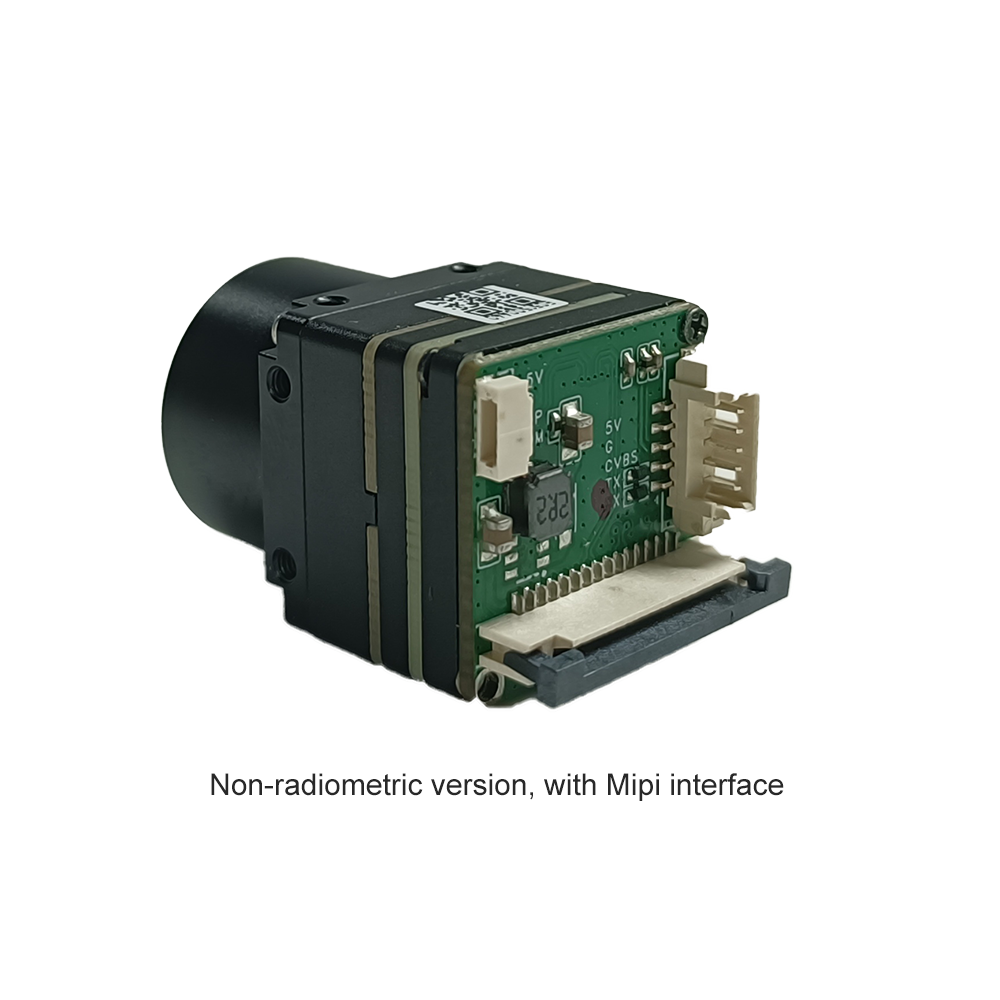
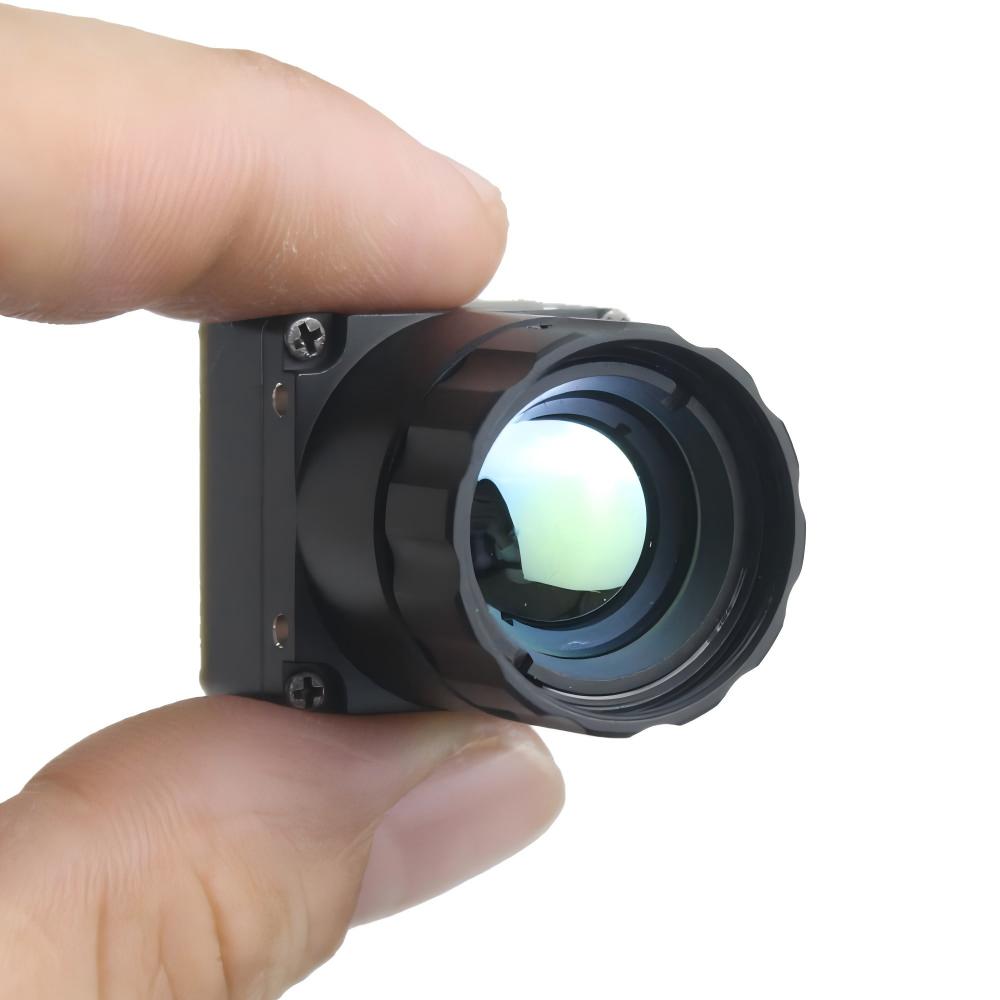
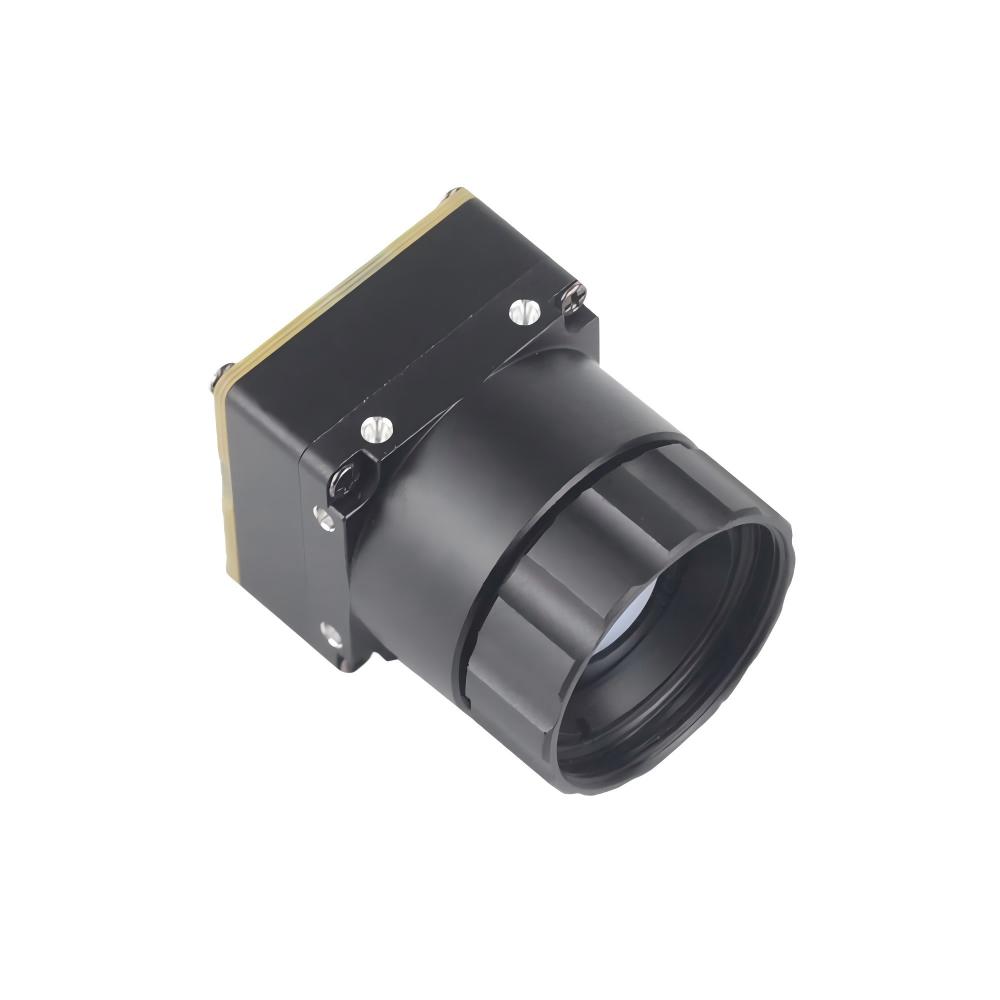
Uncooled Infrared Mini2 640x512 9mm Thermal Imaging Camera Module For Drones
The top-tier core for custom drone payload integration. Featuring a high-resolution 640x512 VOx sensor paired with a 9mm athermalized lens, this module outputs raw uncompressed 14-bit thermal video directly over native MIPI CSI-2. Designed for minimal power draw and ultra-low latency, it’s built specifically for Edge AI processing, tactical search-and-rescue, and high-altitude inspections.
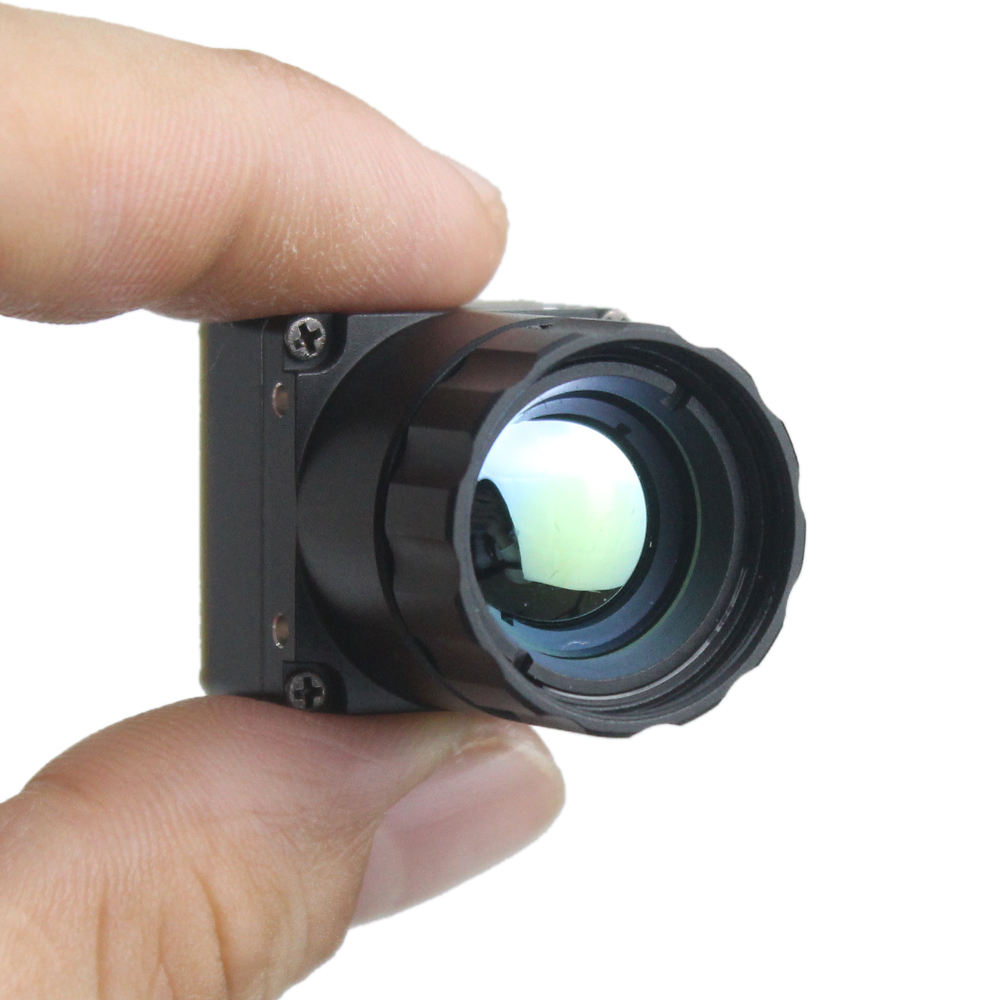
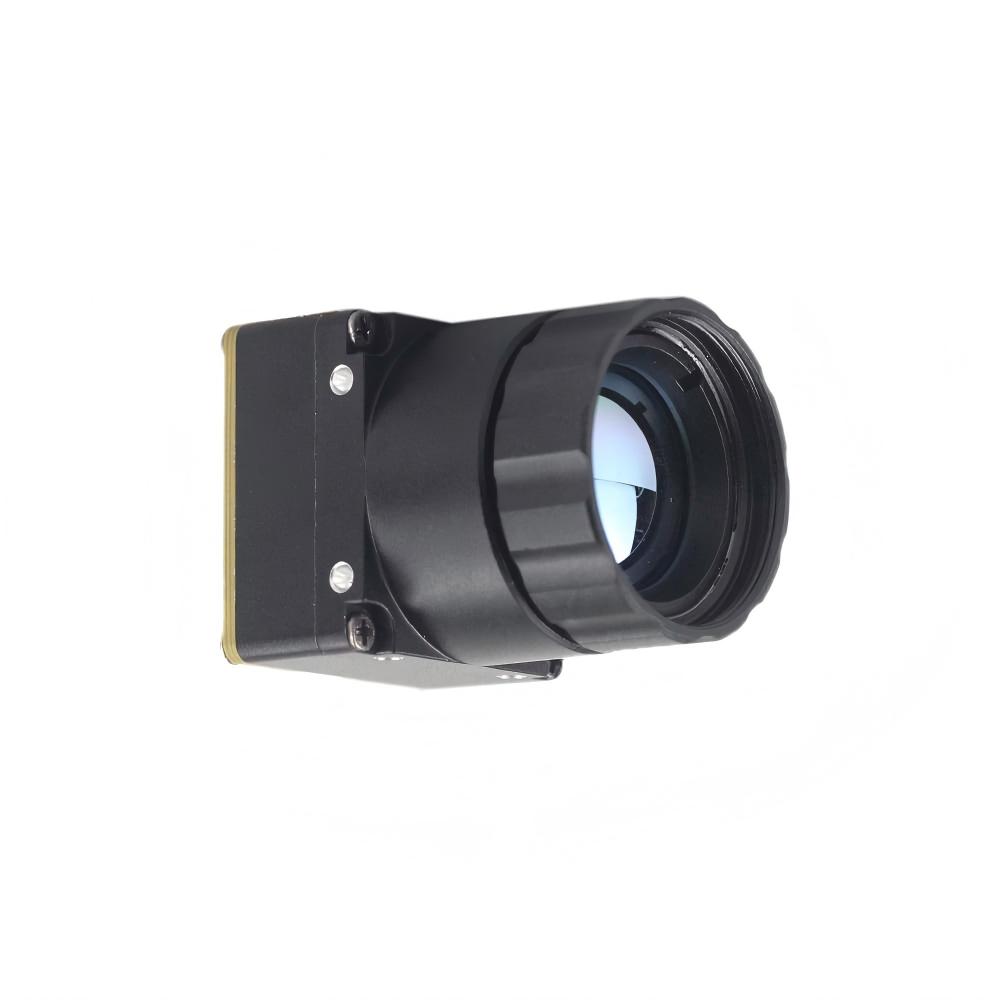
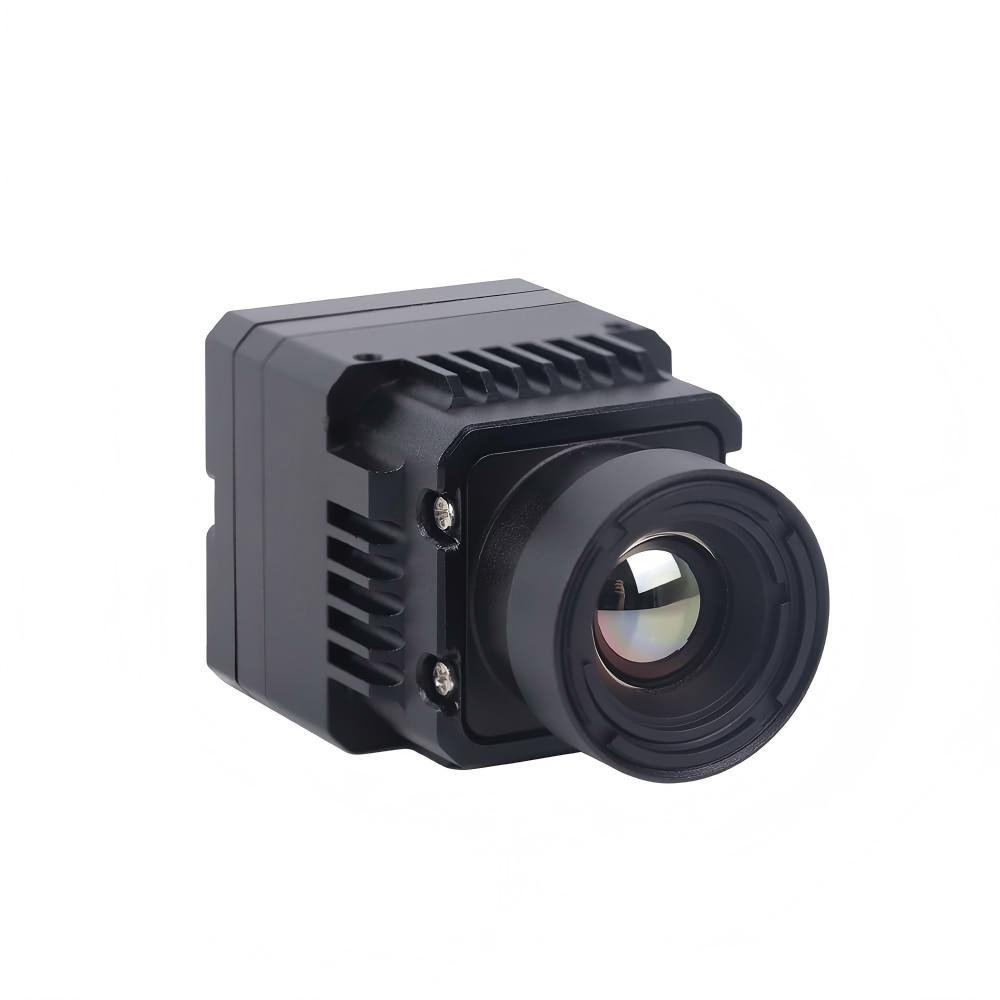
وحدة كاميرا تصوير حراري مصغرة LWIR غير مبردة بدقة 640*512 مع USB للطائرات بدون طيار مشابهة لـ DJI
Engineered for fast commercial deployment and quick bench prototyping. Offers a tiny 21mm x 21mm footprint, multiple lens options from 5mm up to 150mm, and direct UVC-compliant USB output. High thermal stability and simple plug-and-play setup make it ideal for commercial gimbals and rapid engineering builds.
الأسئلة المتكررة (FAQ)
What are the core technical trade-offs between 256x192, 384x288, and 640x512 thermal microbolometer resolutions for drone payloads?
A 384x288 sensor strikes a solid middle ground for commercial inspections and crop scouting, doubling the detail of basic cores. But for industrial missions—like powerline audits, search and rescue, or tactical scouting—640x512 is the industrial standard. Packing 327,680 individual pixels, a 640x512 array with a 9mm lens lets you fly higher and cover more ground safely while keeping enough clarity to feed real-time AI classification models.
How does the native MIPI CSI-2 interface lower latency and improve Edge AI processing compared to traditional USB thermal modules?
MIPI CSI-2 hooks straight into the hardware video input pins of processors like the NVIDIA Jetson or Raspberry Pi CM4. Frame data streams directly into RAM via zero-copy Direct Memory Access (DMA), dropping latency down under 10 milliseconds. Because MIPI preserves the raw, uncompressed 14-bit data, onboard GPUs or neural accelerators access pure radiometric numbers instantly, running target tracking and automated temperature checks at full frame rates.
Why is passive mechanical athermalization necessary for 9mm Germanium thermal drone lenses operating in extreme climates?
Motorized focus mechanisms can fix this, but they add weight, pull power from your flight battery, introduce mechanical failure points, and need custom software drivers. Passively athermalized barrels solve the issue mechanically. By combining optical elements with metal housings engineered from complementary expansion alloys (like Aluminum and Invar), the barrel physically expands or contracts to offset thermal shifts. That keeps your 9mm lens locked in focus from -40°C to +80°C without pulling a single milliwatt of power.
Is a 21mm x 21mm thermal camera core compact and lightweight enough for 5-inch FPV drone platforms and mini gimbals?
By using 12 μm VOx sensors and dense multi-layer board layouts, this core fits directly inside narrow airframe noses, 5-inch FPV scout builds, or mini 2-axis/3-axis gimbals. The minimal weight keeps payload inertia low, meaning your gimbal motors run cooler and pull less power, ultimately preserving flight time.
📚 المراجع والقراءات الإضافية
- Precision Interconnect Standard: High-density, high-reliability board-to-board FPC connectors for embedded vision provided by هيروس إلكتريك.
- Manufacturing & SMT Assembly: High-precision HDI PCB fabrication and surface-mount technology services by شركة Shenzhen ChiYi Electronics Co., Ltd..
- Related Payload Integration Guide: Learn how to optimize 384x288 microbolometer integration strategies in our Ultimate Guide to Thermal Module Camera Integration (384x288).
- Long-Range Thermal Optics: Technical analysis on narrow FOV long-range thermal camera cores in our guide on Thermal Camera Module 640x512 with 35mm Optics.
- AI Sensor Enhancements: Exploring high-sensitivity, AI-assisted LWIR cores in our deep-dive on وحدات LWIR احترافية مُعززة بالذكاء الاصطناعي.