
High-Definition Infrared Thermal Module with CVBS: The Ultimate Integration Guide for FPV, Drones, and Edge AI
2026年7月13日
How to Choose the Best Smartphone Thermal Imaging Camera Module: A Complete OEM Buyer’s Guide
2026年7月14日
How to Choose the Right Industrial Thermal Camera Module for AI & Edge Integration
The industrial automation landscape is undergoing a silent, thermal revolution. As Edge AI, autonomous robotics, and predictive maintenance systems migrate from centralized cloud servers directly to the shop floor and aerial payloads, the demand for highly integrated, low-latency machine vision has systems engineers scrambling. Let's be honest: deploying a standard, off-the-shelf optical sensor is a fool's errand when you are dealing with invisible gas leaks, electrical hotspots, or dark, dust-choked manufacturing environments. Enter the modern industrial thermal camera module—an uncooled Long-Wave Infrared (LWIR) powerhouse designed to convert invisible electromagnetic radiation into actionable, pixel-level temperature data. Here's the deal: selecting the wrong module is an incredibly costly mistake. Mismatching your sensor interface, thermal sensitivity, or calibration baseline can lead to critical system drift, dropping frames, and failed edge classification models in the field.
To bridge the massive gap between complex infrared physics and practical, boots-on-the-ground system engineering, this architectural guide provides an uncompromising, deep-dive evaluation framework. We dissect the critical trade-offs between MIPI and USB interfaces, examine the raw physics of microbolometer sensor drift under continuous 24/7 industrial stress, and show you exactly how to optimize embedded SDKs for real-time convolutional neural networks (CNNs) at the edge. Whether you are integrating a thermal payload onto an autonomous inspection drone, engineering a DIY thermal scope, or upgrading a complex PLC-driven factory floor line, this comprehensive blueprint serves as your definitive engineering reference.
1. The Physics of LWIR & Microbolometer Technology in AI
At the heart of every modern industrial thermal camera module lies an uncooled microbolometer array optimized for the Long-Wave Infrared (LWIR) spectrum, typically covering wavelengths from 8 to 14 micrometers. Look, unlike active optical sensors that require external illumination, LWIR sensors detect the passive blackbody radiation emitted by all objects with a temperature above absolute zero. To understand this deep physical relationship, refer to the foundational documentation on Wikipedia Infrared Imaging.
Within the microbolometer, each pixel consists of a suspended microscopic bridge structure coated with a temperature-receptive material, such as Vanadium Oxide (VOx) or Amorphous Silicon (a-Si). As incident infrared radiation strikes this bridge, the material's electrical resistance changes dynamically. This change is measured by an integrated Readout Integrated Circuit (ROIC) patterned directly onto the silicon wafer, converting thermal fluctuations into digital values. Read more about the granular engineering of these sensor elements at Wikipedia Microbolometer.
When selecting a module for Edge AI applications, thermal sensitivity—quantified as Noise Equivalent Temperature Difference (NETD)—is the absolute make-or-break metric. A sensor with an NETD of <40 mK (millikelvin) can resolve temperature differences as minute as 0.04°C. For computer vision algorithms, low NETD values directly translate to higher-contrast thermal gradients. High-contrast gradients prevent edge-blending, allowing lightweight object-detection networks to segment boundaries precisely even in low-thermal-signature scenes. If your neural network suffers from low confidence scores when processing thermal images, the root culprit is almost always a high-NETD sensor generating a noisy, flat thermal profile where target objects blend hopelessly into the background.
We also have to account for physical microbolometer design when facing environmental fluctuations on the industrial floor. Continuous vibrations, rapid thermal cycles, and regional humidity levels can alter the structural integrity of the micromachined bridge. VOx arrays typically exhibit lower 1/f noise characteristics and a superior temperature coefficient of resistance (TCR) compared to standard amorphous Silicon. In the shop, we prefer VOx-based modules for high-precision, long-term deployments where frequent manual calibrations are physically impossible. By retaining a stable resistance profile across temperature swings, VOx-based modules preserve the integrity of input signals, ensuring that subsequent classification filters run on consistent, uncorrupted thermal matrices.
2. Interface Battleground: MIPI CSI-2 vs. USB vs. Ethernet
Integrating a thermal sensor into custom silicon, Single Board Computers (SBCs), or Programmable Logic Controllers (PLCs) requires a rigorous evaluation of the data transport layer. Choosing incorrectly can introduce crippling latency, excessive CPU overhead, or nightmare hardware-level incompatibilities.
MIPI CSI-2: The Low-Latency Edge King
MIPI CSI-2 (Mobile Industry Processor Interface Camera Serial Interface 2) is the industry standard for direct chip-to-chip communications. By routing raw sensor data directly into the host processor's Image Signal Processor (ISP) or Hardware Acceleration pipeline, MIPI bypasses the overhead of intermediate protocol conversion chips. This achieves sub-millisecond latencies and keeps CPU utilization near zero. MIPI is the premier interface for weight-sensitive, battery-powered platforms such as aerial drones and handheld DIY thermal scopes running on platforms like NVIDIA Jetson Nano or Raspberry Pi Compute Modules. Our comprehensive guide on choosing uncooled sensors explores these hardware trade-offs in deeper detail; see the Thermal Camera Module Selection Guide.
USB direct-connect: Rapid Prototyping & PC-Based Inspection
For applications where developmental agility outweighs absolute hardware minimization, USB interfaces (such as USB 2.0 or Type-C carrying UVC/Bulk endpoints) are highly advantageous. USB modules host an onboard-microcontroller or FPGA that packages the raw microbolometer data into standard transport packets. This allows developers to plug the module directly into x86 or ARM-based industrial PCs and immediately extract dual streams of radiometric and visualized colorized data via standard APIs. It removes the complex driver-compilation overhead associated with MIPI interfaces, making USB ideal for rapid factory automation prototyping and field-service laptops.
Ethernet & Industrially Hardened Pipelines
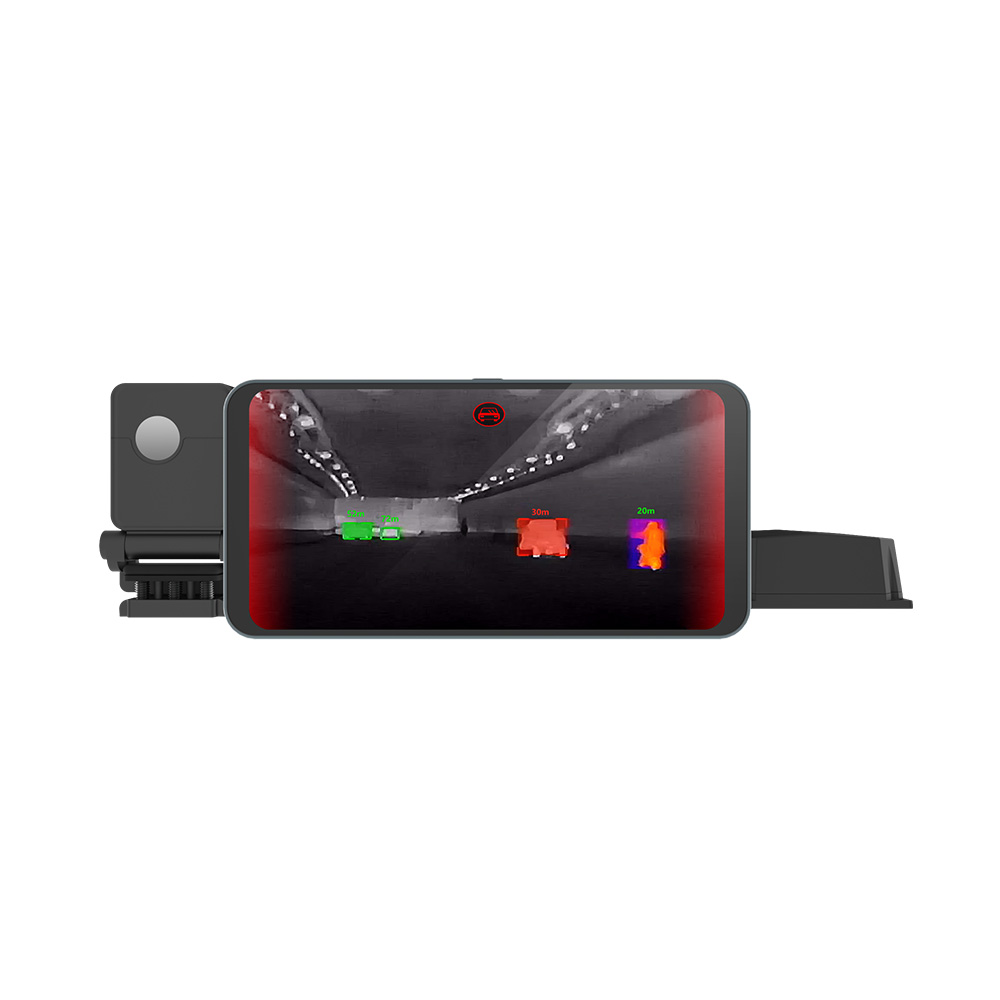
In massive factory floors, processing hardware is often isolated in localized server racks far from the harsh physical environments where the sensors reside. USB and MIPI fail here due to strict physical cable-length limitations (typically under 3 meters for USB without active boosters, and mere centimeters for MIPI). Ethernet, transportable via Ruggedized RJ45 or M12 connectors using standard protocols like Modbus/TCP or GigE Vision, allows cable runs up to 100 meters without signal degradation. If you are designing for fixed factory-automation cells or vehicle-mounted municipal inspections, transitioning the data stream over network lines is non-negotiable. Learn more about heavy-duty mobile and transit-based thermal setups in our dedicated Vehicle-Mounted Thermal Camera Guide.
Let's look at how the processing pipeline differs conceptually between these physical pathways. In a MIPI implementation, the responsibility for executing Non-Uniformity Correction (NUC), Bad Pixel Replacement (BPR), and spatial filtering lies entirely on the host Linux kernel and corresponding edge board. Under USB pipelines, these operations are usually executed inside the module's onboard ARM-Cortex or FPGA logic, outputting clean, pre-processed frames. While the USB pipeline reduces target processor load, it introduces structured packet jitter. Engineers must analyze these microsecond timing dynamics when pairing thermal inputs with high-velocity positioning systems or multi-axis robotic actuators.
3. Specifying Optics & Spatial Resolution for Long-Range Detection
A high-performance microbolometer is useless without paired, high-transmission infrared optics. Unlike optical cameras that use glass lenses, standard glass completely absorbs LWIR radiation. Thermal lenses must be precision-engineered from specialized materials—typically Chalcogenide or Germanium—which boast high refractive indices and high light transmission within the 8–14 μm band.
When selecting your lens assembly, you must balance spatial resolution, field of view (FOV), and target detection ranges (calculated via Johnson's Criteria for Detection, Recognition, and Identification):
- ⚙️ Short-Range Wide FOV (e.g., 5mm to 9mm lenses): Optimized for close-quarters monitoring, indoor security, and drone navigation. A wide FOV maximizes situational awareness but spreads the spatial resolution over a wide angular area, which reduces long-range detection.
- ⚙️ Medium-to-Long-Range Narrow FOV (e.g., 18mm, 35mm, or 50mm lenses): Crucial for high-altitude drone payloads or perimeter defense. These lenses concentrate the target pixel density onto distant objects, allowing for advanced edge classification at hundreds of meters.
- ⚙️ Super-Telephoto Optics (e.g., 75mm, 100mm, or 150mm lenses): Designed for highly specialized, static installations such as border security, maritime tracking, and early wildfire detection, where pinpoint temperature anomalies must be detected across kilometers of open space.
To understand the exact impact of focal depth, engineers calculate Instantaneous Field of View (IFOV). Measured in milliradians, IFOV defines the physical area projected onto an individual pixel of the detector configuration. A smaller IFOV allows a system to accurately read temperatures on highly localized surfaces from massive, safe distances. When managing highly critical zones—such as high-voltage junction boxes or distant chemical reactor domes—matching spatial focal layout is vital. Swapping a generic wide-angle optic for a high-performance Germanium telephoto frame ensures that the Target Heat Signature is not averaged out by cold neighboring background environments.
4. Edge AI Integration: SDKs, SDK Architectures, and CNN Optimization
The ultimate goal of incorporating a thermal sensor into an engineering setup is to convert raw physical measurements into automated, machine-driven diagnostics. Standard thermographic imagery cannot simply be fed directly into an off-the-shelf optical Convolutional Neural Network (CNN). Optical networks are trained on 3-channel RGB (Red-Green-Blue) color spaces, whereas raw scientific thermal modules output single-channel, high-bit-depth (typically 14-bit or 16-bit) grayscale Y16 arrays representing true radiometric data.
To run high-accuracy computer vision inferences at the edge, developers must deploy a highly optimized software and conversion architecture:
First, raw 14-bit data contains vast dynamic ranges that can overwhelm basic activation layers in deep networks. Standard linear reduction to 8-bit resolution can compress valuable surface temperature variances into raw grays, masking the exact structures required for object identification. Developers overcome this by incorporating adaptive Histogram Equalization or contrast-limited adaptive histogram equalization (CLAHE) within the preprocessing pipeline. Crucially, this enhancement must be configured to run inside a high-speed local processing loop so it does not introduce frame stutter or disrupt synchronous sensor polling mechanisms.
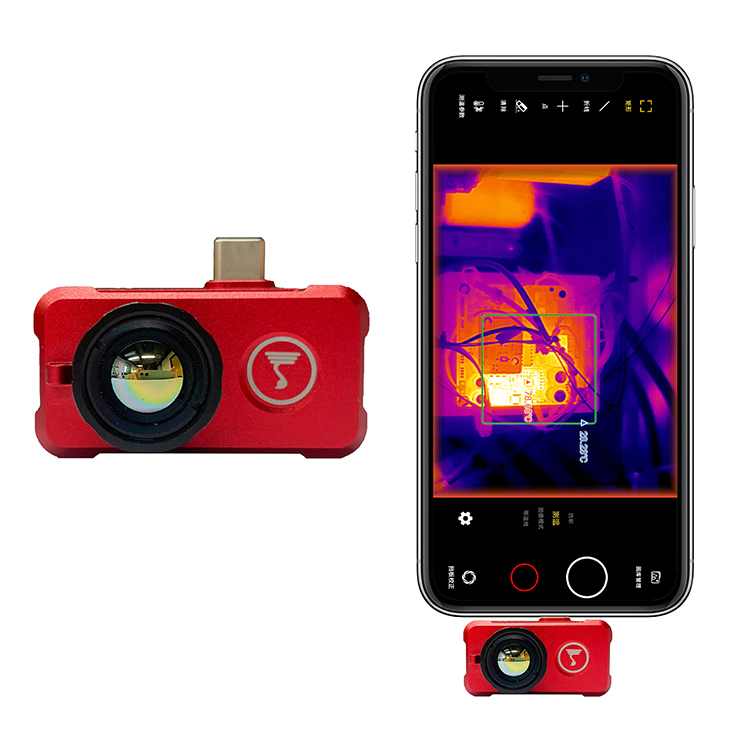
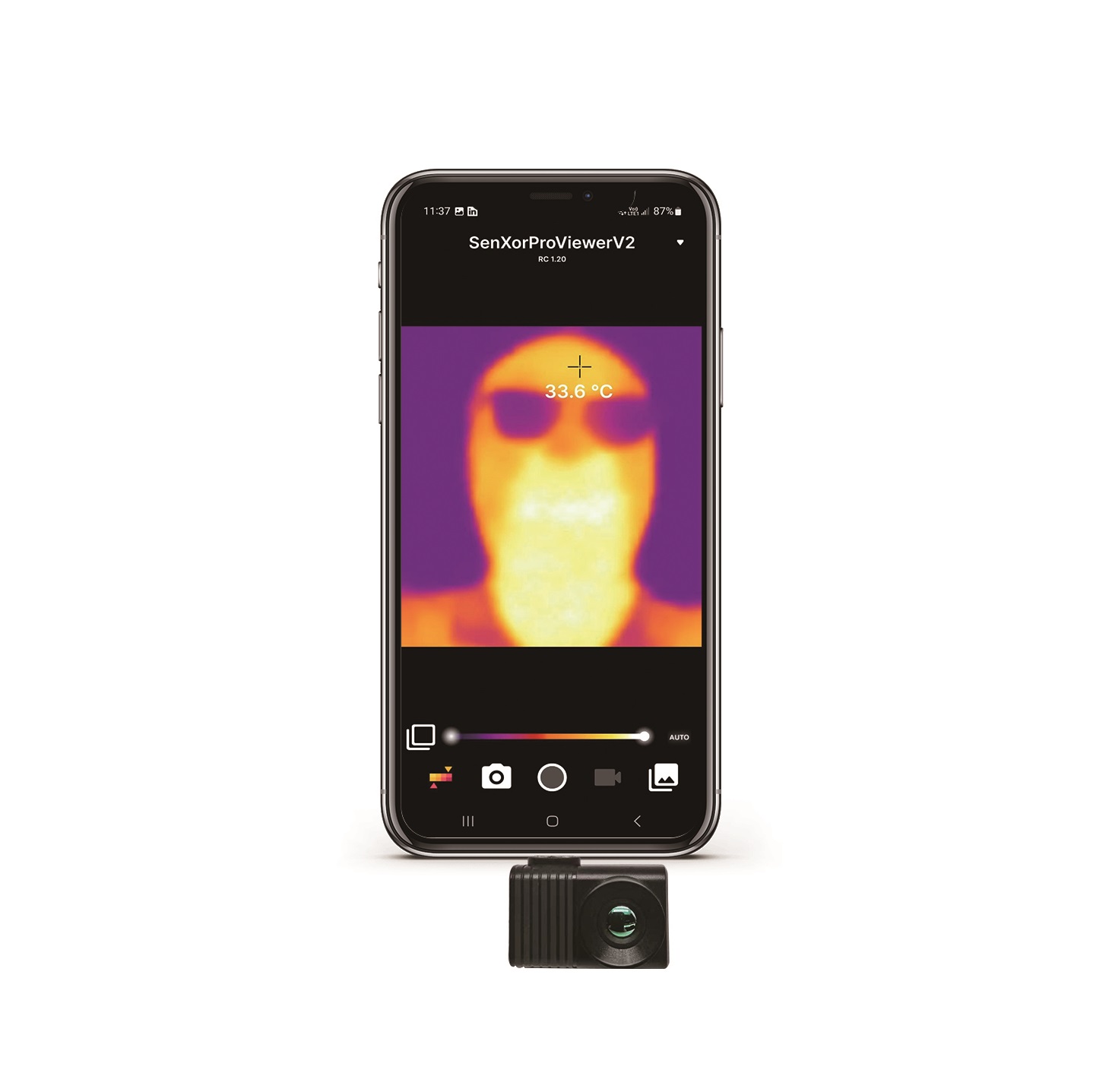
By leveraging a robust SDK compiled for target platforms (such as those optimized from advanced architectures like HiSilicon or specialized HKUST-incubated AI designs), engineers gain direct access to continuous raw temperature streams. This enables real-time calculations: extracting absolute target temperatures from specified bounding boxes, triggering on-chip Automatic Gain Control (AGC) parameters, and executing Non-Uniformity Corrections (NUC) dynamically. Users can map these dynamic corrections to physical controls utilizing custom software interfaces. For external tools and firmware downloads supporting these dynamic pipelines, check out our Mobile Thermal Imager Series Manual & Software page.
In addition to structural formatting, running networks at frame rates exceeding 30Hz requires strategic quantization of the CNN models. Converting standard FLOAT32 weights into native INT8 formats reduces inference latency by up to 400% on typical embedded TPUs. Since thermal targets present fewer high-frequency details compared to standard visible spectrum subjects, optimized INT8 models achieve similar classification accuracy to their heavier float counterparts. This structural optimization is highly effective for UAV inspection suites and localized robotics programs, enabling continuous monitoring within tight power and footprint profiles.
5. Comparative Catalog: Uncooled Miniature Thermal Camera Modules
Below we present the physical specifications of our high-grade miniature uncooled thermal core series, purpose-designed for deep system configurations, dynamic UAV integrations, and specialized Edge-AI architectures.
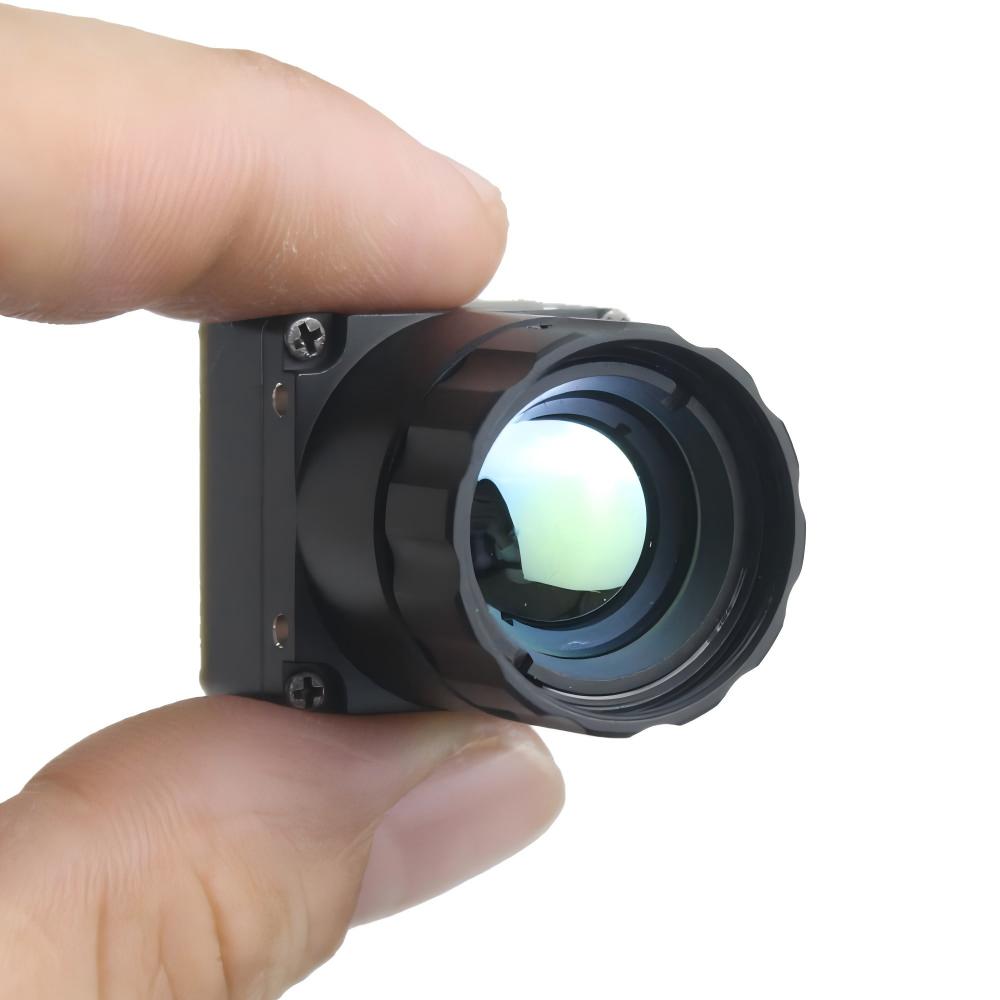
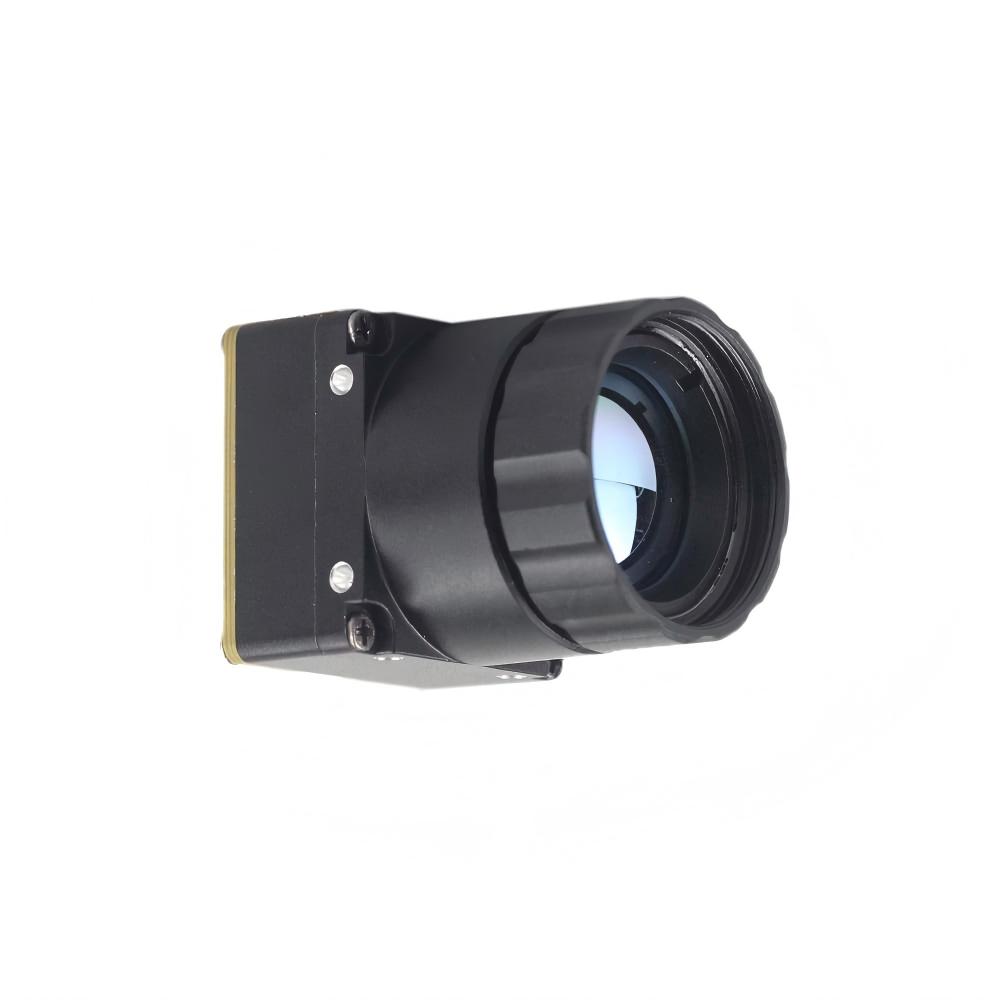
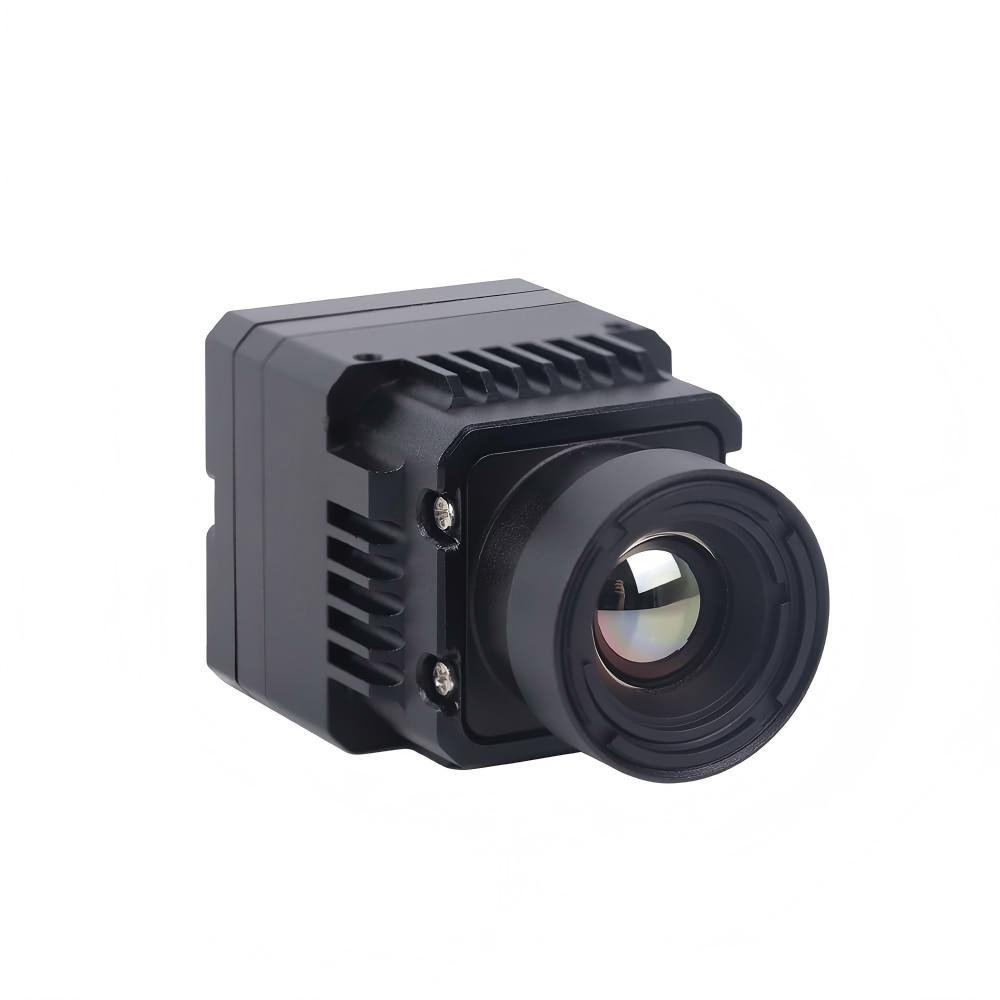
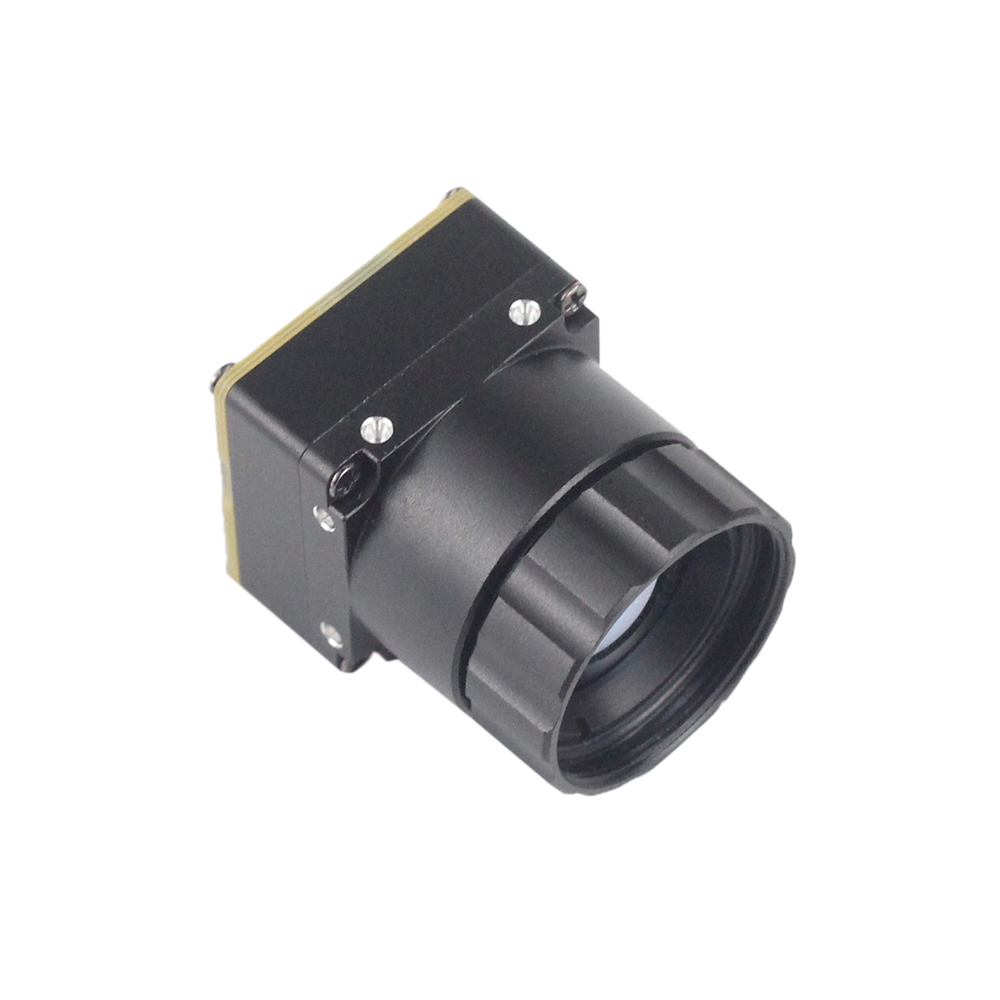
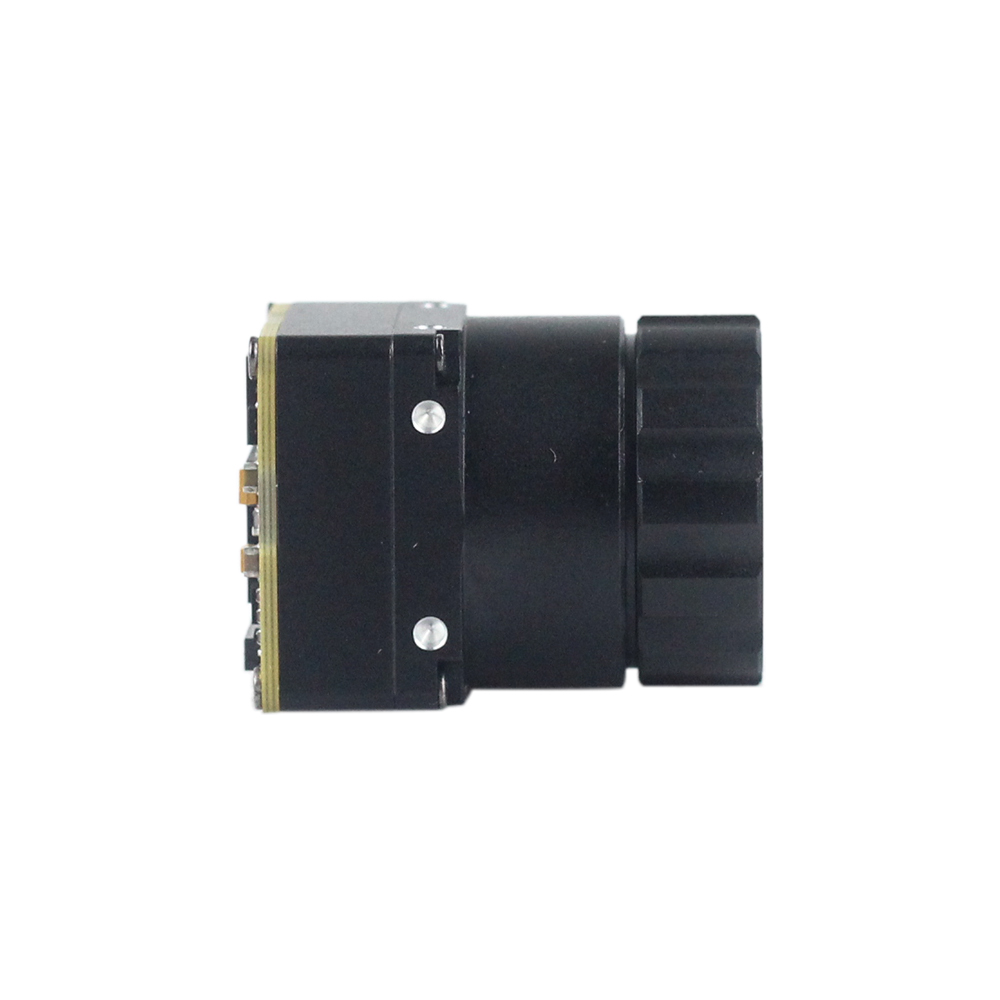
Uncooled LWIR USB Mini 640*512 Thermal Imaging Camera Core Module For Drones Similar To DJI
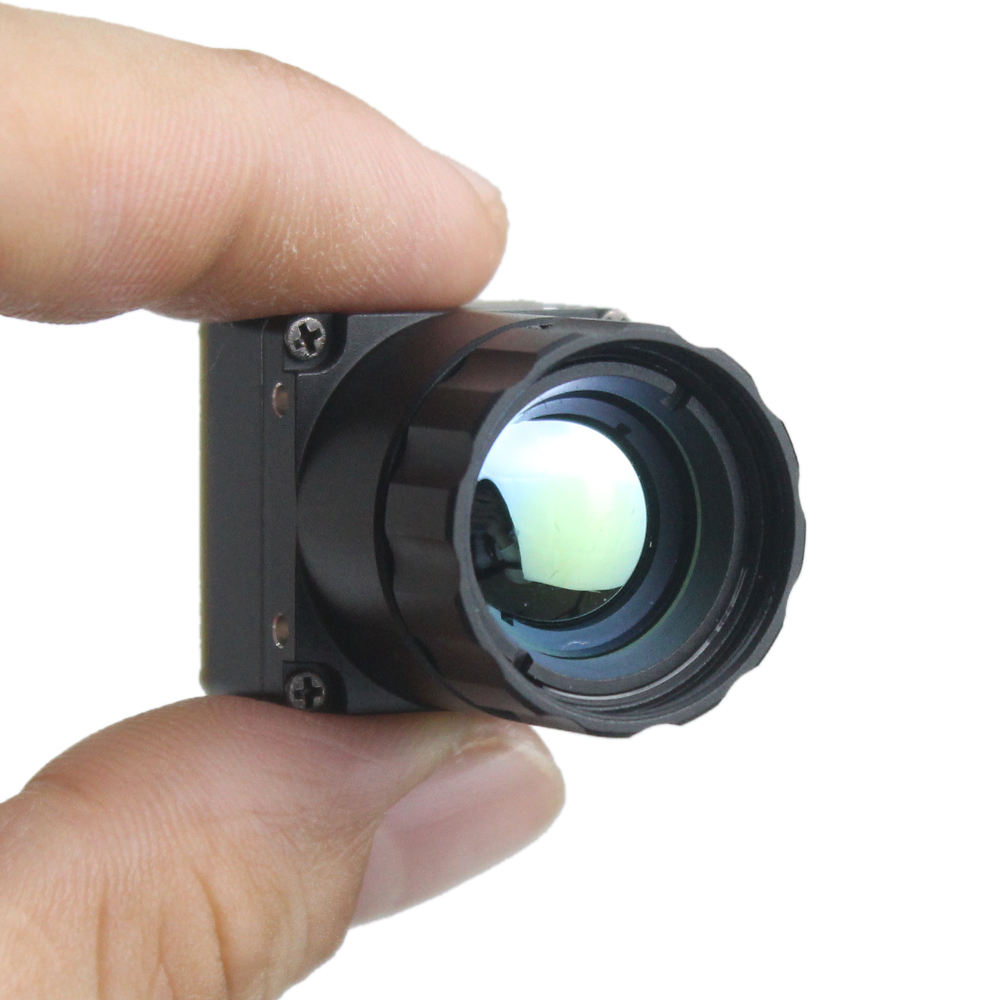
Key Application: High-performance drone integrations, industrial QA, and lightweight research equipment.
Form Factor: Ultra-miniature footprint of 21mm*21mm.
Lens Options: Compatible with extensive 5mm, 9mm, 13mm, 18mm, 35mm, 50mm, 75mm, 100mm, and 150mm lens selections.
Special Features: Sharp and crisp image presentation, compact size, stable performance, and exceptionally strong environmental adaptability.
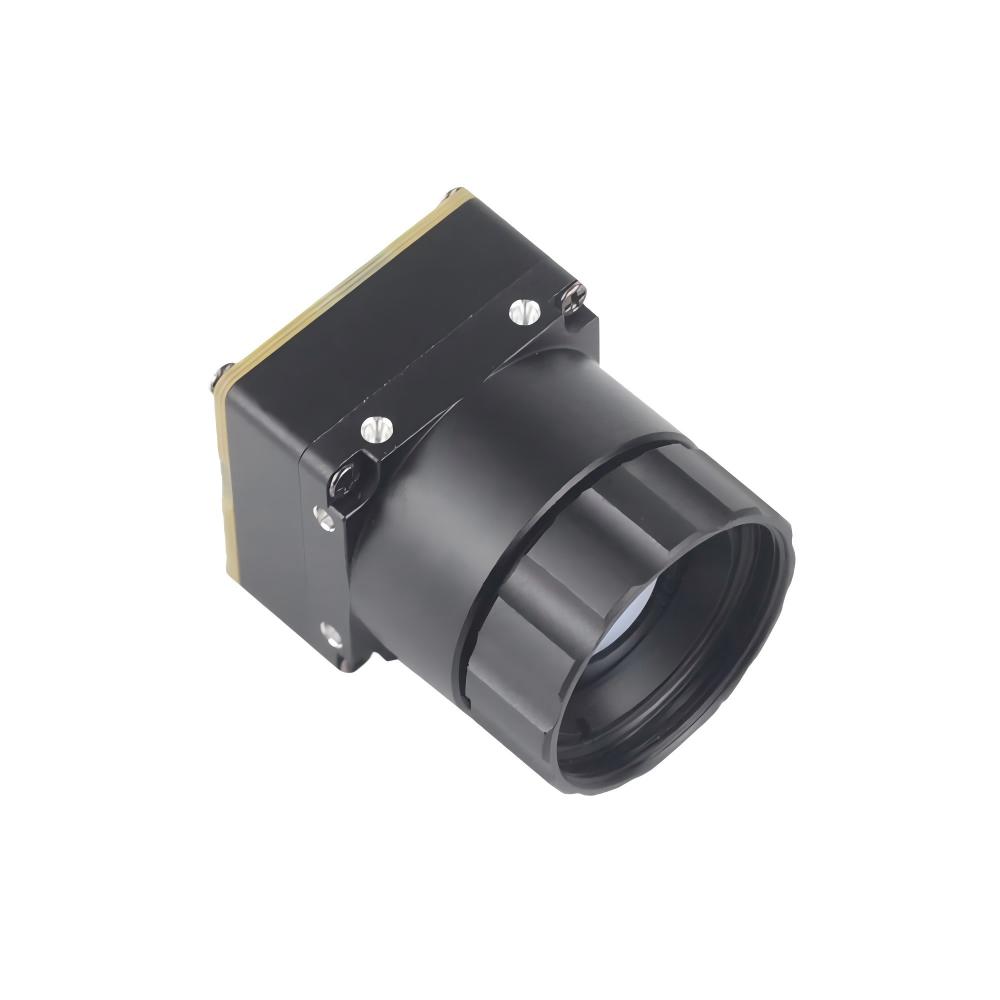
Uncooled Infrared Mipi 640 384 256 9mm Thermal Imaging Camera Module For Drones
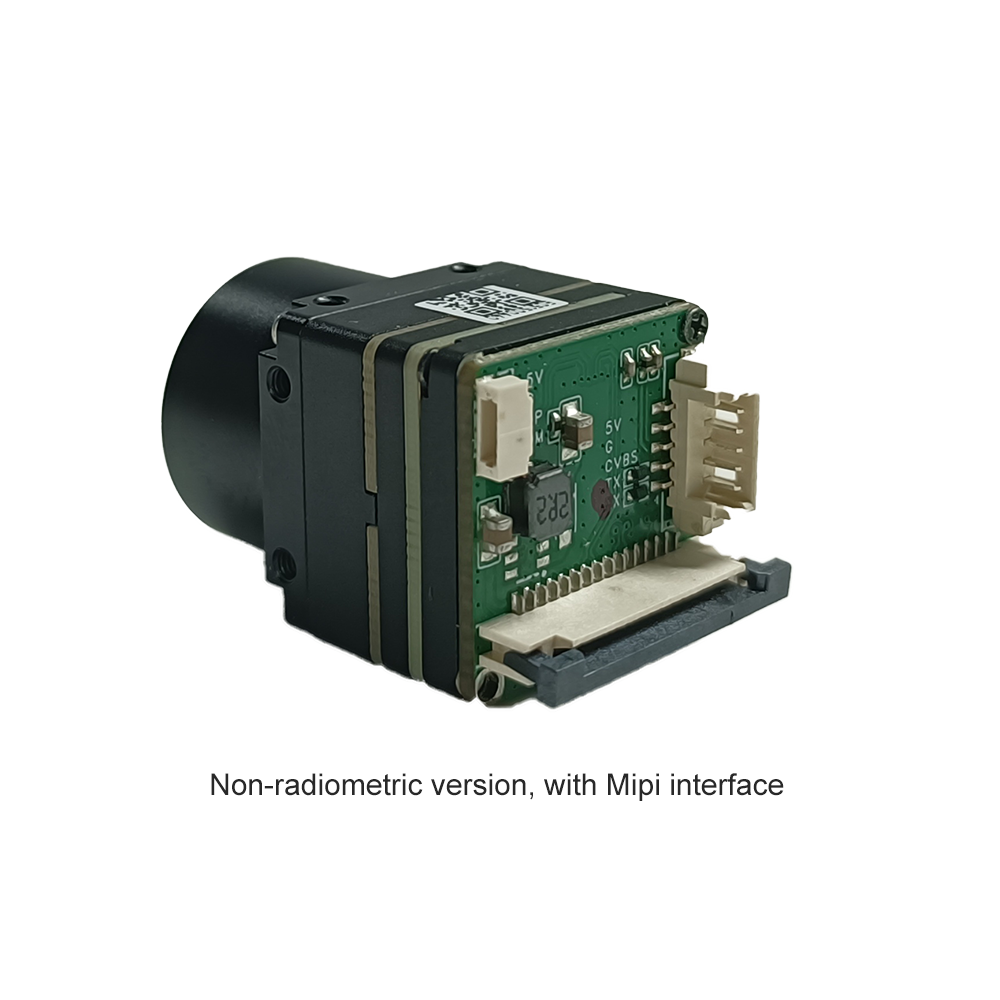
Key Application: Heavy-duty embedded aerial inspections and native MIPI CSI developmental boards.
Lens Configuration: 9mm optical layout matching industrial drone parameters.
Design Focus: Low cost, micro footprint, direct processor integration, minimized logic payload latency, and clean frame generation.
Resolutions: Flexible multi-tier array options supporting 640x512, 384x288, and 256x192 structures.
| Feature / Spec | Uncooled LWIR USB Mini 640*512 Core Module | Uncooled Infrared MIPI Mini2 640/384/256 Core Module |
|---|---|---|
| Output Interfaces | USB (Raw UVC/Data Stream), Plug-and-Play | MIPI CSI-2 (Direct Chip-to-Chip Interface) |
| Available Resolutions | 640*512 / 640*480 (Optional) | 640x512 / 384x288 / 256x192 (Multi-tier Scale) |
| Form Factor (W * H * D) | Ultra-miniature: 21mm * 21mm footprint | Ultra-compact, low-profile airborne frame optimization |
| Lens Focal Length Options | 5mm, 9mm, 13mm, 18mm, 35mm, 50mm, 75mm, 100mm, 150mm | 9mm optimized default, customizable focal depths on request |
| Target Application Space | Industrial PC Vision, Lab Diagnostics, UAV Payloads, Handheld Devices | Embedded Edge AI Boards, High-acceleration UAVs, Robot Integration |
6. Deep-Dive Industrial FAQ
Why do standard thermal camera modules degrade in reliability under continuous 24/7 industrial environments?
How do I choose between MIPI, USB, and Ethernet interfaces for DIY thermal scopes or PLC-based machine vision?
Can these compact thermal camera modules run object detection and intelligence at the edge without heavy PC hardware?
How do lens materials differ, and is Germanium always necessary for industrial thermal sensing?
What does "radiometric" mean, and how does it impact automated thermal diagnostics?
📚 References & Further Reading
- Industry Standard (Infrared Sensing Foundations): Wikipedia Infrared Imaging Guide
- Industry Standard (Microbolometer Engineering): Wikipedia Microbolometer Technical Analysis
- Related Guide (Choosing Uncooled Core Sensors): A Comprehensive Guide to Uncooled LWIR Detector Arrays
- Related Guide (Field Use & Calibration Tool Download): Mobile Thermal Systems App & Software Suite
- Systems Installation (Heavy Transit & Defense Setup): Vehicle-Mounted Thermal Inspection Core Systems