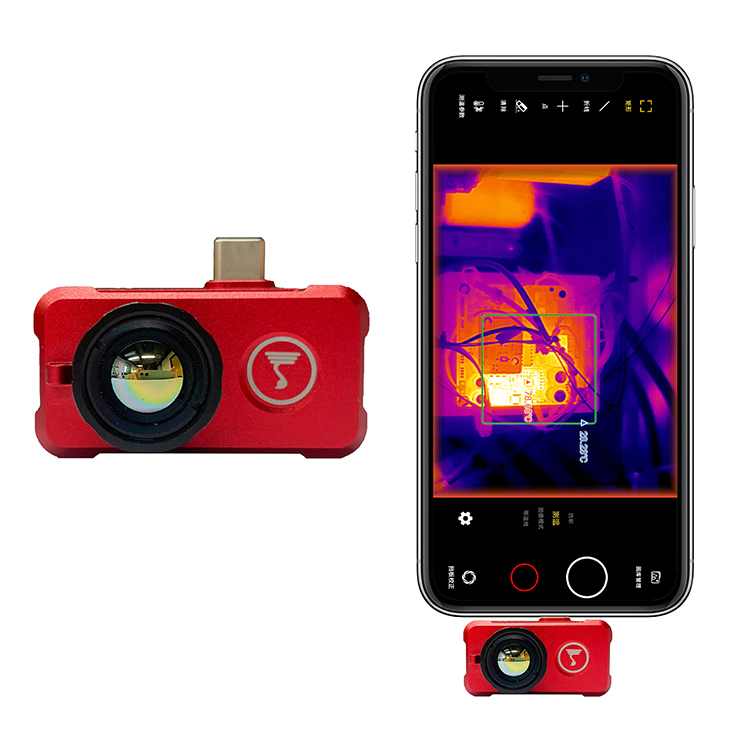
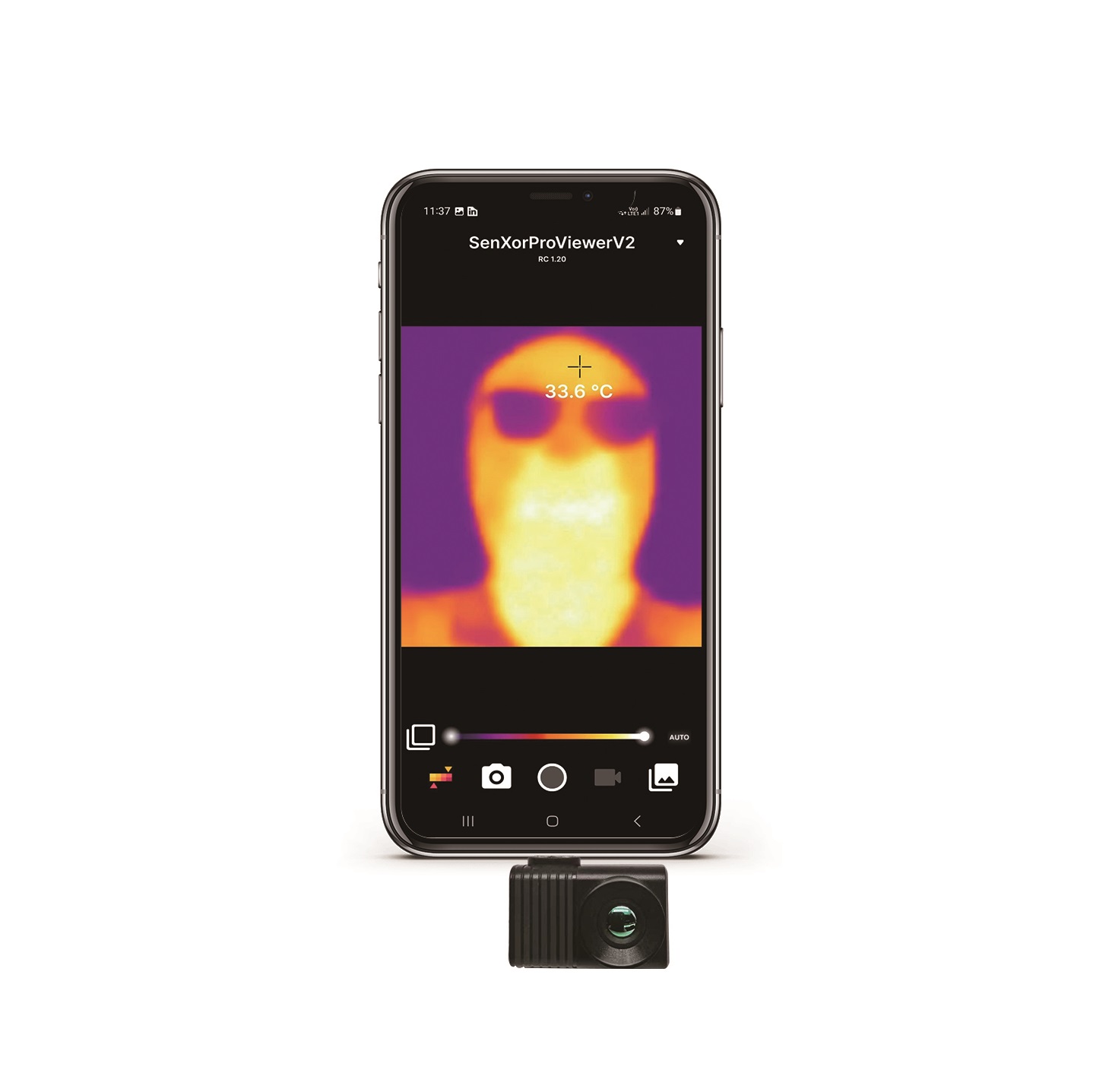


Portable Yourunxing YWX256 Mini Security USB Mobile Cell Phone Infrared Thermal Imaging Camera Module 256x192 Resolution 25hz: The Ultimate OEM Guide
2026年7月28日
Infrared Camera Module Selection Guide: High-Res Thermal Imaging for Drones & Embedded AI
2026年7月29日

Industrial Thermal Imaging Module: High-Res LWIR Cores for Drones & Edge AI
If you're building electro-optical systems today, you already know that the thermal imaging module is the absolute heart of modern thermographic inspection, autonomous navigation, defense payloads, and factory automation. Operating squarely within the Long-Wave Infrared (LWIR) spectrum (8μm to 14μm), these compact infrared cores capture ambient blackbody thermal radiation and convert it into high-fidelity radiometric data streams or crisp visual heat maps. Unlike standard visible-spectrum CMOS sensors that get blinded the moment light drops or dust kicks up, LWIR uncooled focal plane arrays (FPAs) detect razor-thin temperature differentials (ΔT) down to sub-30 millikelvin levels. Look, that means full operational vision through pitch blackness, thick smoke, heavy dust, and dense atmospheric fog where standard daylight vision systems choke completely.
Here's the deal: for OEM system integrators, embedded hardware designers, and drone payload engineers, picking the right thermal camera module isn't just about scanning a datasheet. You're balancing optical resolution (from compact 256×192 entry-level arrays up to high-def 640×512 or 1280×1024 powerhouses), pixel pitch (12μm versus 17μm), thermal sensitivity (NETD), digital bus latency (MIPI-CSI2, UVC USB, Parallel digital), and tight SWaP-C constraints (Size, Weight, Power, and Cost). As computational workloads move away from distant cloud servers down into local hardware, modern thermal cores now come equipped with onboard Image Signal Processors (ISP) and low-latency pipelines built specifically to feed hungry Edge AI processors like the NVIDIA Jetson Orin series, Raspberry Pi Compute Modules, and custom Neural Processing Units (NPUs).
Table of Contents
- 👉 1. Physics & Core Microbolometer Architecture
- 👉 2. Embedded Interfaces: MIPI CSI-2, UVC USB & Digital Protocols
- 👉 3. SWaP-C Optimization for Drones & Edge AI Hardware
- 👉 4. Radiometric Calibration vs. Qualitative Thermal Vision
- 👉 5. Optical Engineering: Germanium vs. Chalcogenide Lenses
- 👉 6. Featured Industrial LWIR Thermal Modules & Real Specs
- 👉 7. Technical FAQ & Developer Troubleshooting Guide
1. Physics & Core Microbolometer Architecture
Let's talk detector physics. Modern uncooled thermal camera modules run on microbolometer Focal Plane Arrays (FPAs). A microbolometer array is basically a grid of microscopic absorbing elements suspended over a silicon substrate, separated by a tiny air gap that acts as an optical resonant cavity. When Long-Wave Infrared (LWIR) photons in the 8μm to 14μm band hit that absorber layer, the temperature of the surface ticks upward, directly changing the electrical resistance of the material. That shift in resistance is read out row-by-row by an integrated Readout Integrated Circuit (ROIC) sitting right underneath the pixel grid.
In the shop, we analyze these sensors based on thermal conductance ($G_{th}$) and heat capacity ($C_{th}$) of those suspended micro-bridge legs. Every single pixel relies on extreme thermal isolation from the silicon substrate below it. That isolation maximizes the temperature spike (ΔT) per unit of incoming thermal radiation power ($P_{in}$), governed by the classic thermal response equation:
ΔT = Pin / √(Gth2 + ω2Cth2)
Where ω is the angular frequency of scene intensity modulation. The thermal time constant (τ = Cth / Gth) sets the hard frame rate ceiling for uncooled FPAs, usually sitting between 8ms and 12ms. Balancing this thermal inertia allows smooth 25Hz, 30Hz, or 50Hz video acquisition while holding onto ultra-low sensitivity thresholds.
1.1 VOx vs. a-Si Detector Physics
When picking an uncooled thermal core, you'll hit two dominant semiconductor detector materials: Vanadium Oxide (VOx) and Amorphous Silicon (a-Si). Here is how they stack up on the test bench:
- ⚡ Vanadium Oxide (VOx): Packs a higher Temperature Coefficient of Resistance (TCR ≈ 2% to 3% per °C), giving you lower noise floors and significantly better thermal sensitivity (NETD). VOx microbolometers are the go-to choice for demanding UAV surveillance, long-range target tracking, predictive maintenance, and precise radiometric analysis. While VOx requires tight manufacturing process controls, it delivers unmatched FPA uniformity across changing temperatures.
- ⚡ Amorphous Silicon (a-Si): Offers standard CMOS fabrication compatibility, driving down production costs for high-volume automotive night vision or basic commercial tools. However, a-Si tends to suffer from higher 1/f flicker noise and slightly slower thermal response times compared to high-tier VOx, meaning your ISP pipeline has to work harder with spatial digital filtering.
1.2 Understanding NETD and Signal-to-Noise Ratios
Noise Equivalent Temperature Difference (NETD) is the golden metric for evaluating thermal sensor performance. Measured in millikelvins (mK), NETD tells you the exact target temperature difference where the microbolometer signal equals the system noise level. Lower numbers mean cleaner, sharper images:
NETD = VN / (∂VOut / ∂T)
Here, VN is the RMS electrical noise voltage from the ROIC, and (∂VOut / ∂T) is the sensor responsivity. Heavy-duty industrial cores drop NETD ratings below 30mK to 40mK at 25°C. Lower NETD numbers mean your camera can pick out subtle thermal details even in flat, low-contrast scenes—like high humidity, torrential fog, or isothermal environments where background and target temperatures align closely.
Pushing high-density digital streams from high-res focal plane arrays down to your processing unit takes bulletproof signal integrity. In custom hardware builds, engineers rely on ultra-flexible micro-coaxial wiring harnesses from specialists like Micro Coaxial Cable Man to feed high-speed digital signals through tight multi-axis drone gimbals without kicking electrical noise back into sensitive ROIC power rails.
2. Embedded Interfaces: MIPI CSI-2, UVC USB & Digital Protocols
Plugging an uncooled thermal module into your embedded platform means choosing the right physical transport protocol. You have to balance latency, raw data bandwidth, host CPU usage, and board connector real estate.
The signal flow is straightforward: raw data from the VOx FPA flows into an onboard ISP for non-uniformity correction, frame equalization, and palette mapping. From there, the interface controller pumps video through physical interfaces like MIPI CSI-2 or USB UVC straight into host RAM using Direct Memory Access (DMA). This allows host edge processors running TensorRT or OpenCV to handle real-time tracking, target detection, or temperature extraction without getting bogged down by CPU serialization bottlenecks.
2.1 MIPI CSI-2 Direct Sensor Coupling
When sub-millisecond bus latency and zero-copy performance matter, MIPI CSI-2 is the undisputed standard in robotics, drone gimbals, and tactical equipment. USB layers force frames into heavy host driver stacks; MIPI CSI-2 connects the thermal module's ISP straight into the host application processor's hardware camera receiver (found on chipsets like Rockchip RK3588, Raspberry Pi BCM2711, or NVIDIA Jetson Orin).
By running high-speed differential D-PHY or C-PHY lanes, MIPI CSI-2 streams raw 14-bit radiometric data or 8-bit YUV/RGB frames with near-zero latency. That native pipeline lets your Edge AI models process 50Hz thermal video with minimal CPU load, leaving plenty of compute headroom for flight routines, navigation, and multi-sensor fusion.
2.2 Onboard ISP Pipelines & Latency Reduction
Raw microbolometers generate high-dynamic-range 14-bit or 16-bit counts. Modern industrial thermal cores process these raw feeds through embedded hardware ISPs before handing them off to the host interface:
- ⚙️ Digital Detail Enhancement (DDE): Advanced spatial high-pass filtering that sharpens subtle scene features—like power lines, structural edges, and distant targets—without blowing up background noise.
- ⚙️ Adaptive Automatic Gain Control (AGC): Dynamic range compression algorithms (including CLAHE and non-linear histogram equalization) that transform 14-bit raw thermal data into clear 8-bit visual palettes (White Hot, Black Hot, Ironbow, Rainbow) optimized for human eyes or vision AI networks.
If you're laying out custom circuit boards or debugging high-speed digital buses, check out our comprehensive B2B Integration Guide for Thermal & IR Modules to streamline hardware design and timing verification.
3. SWaP-C Optimization for Drones & Edge AI Hardware
Out in the field, whether you are building UAV payloads, ground rovers, or soldier-wearable optics, SWaP-C (Size, Weight, Power, and Cost) rules everything. Every extra gram burns flight time and slows gimbal response.
| SWaP-C Architectural Parameter | Miniature Core (256×192 Resolution) | High-Definition Core (640×512 Resolution) |
|---|---|---|
| Core Module Physical Mass | < 15 grams (Lens dependent) | < 32 grams (Lens dependent) |
| Typical Electrical Power Consumption | 350 mW to 500 mW @ 3.3V DC | 1.0 W to 1.3 W @ 5.0V DC |
| Physical Enclosure Envelope | 21mm × 21mm × 21mm | 30mm × 30mm × 28mm |
| Operating Temperature Qualification | -40°C to +80°C industrial class | -40°C to +85°C military/industrial class |
3.1 Payload Weight & Thermal Dissipation Management
Ultra-compact LWIR modules (under 20 grams) let drone builders fit dual electro-optical/infrared (EO/IR) gimbals without sacrificing payload capacity. But keeping things tiny inside sealed gimbal housings brings thermal management front and center. Heat generated by the ISP and power regulators can build up inside the shell, creating uneven thermal gradients across the detector die that distort temperature readings.
To keep sensor drift under control, you need solid thermal pathways. Use high-performance thermal gap pads to bridge heat directly from the core engine to the outer aluminum chassis. Rugged board-to-board connectors and structural mounts sourced from industrial suppliers like TE Connectivity provide mechanical stability and thermal dissipation under heavy flight vibration.
3.2 Edge AI Thermal Analytics Integration
Autonomous drones and ground vehicles need instant target identification without relying on laggy wireless cloud links. Integrating LWIR modules into local edge platforms means routing 14-bit radiometric or 8-bit visual feeds through zero-copy DMA buffers directly into hardware-accelerated inferencing engines like TensorRT, ONNX Runtime, or OpenVINO.
Because infrared vision cuts right through shadows, glaring sunlight, and complete night conditions, thermal-trained AI models (like custom YOLOv8 networks) deliver dependable object detection for search and rescue, power line monitoring, agricultural inspection, and perimeter security systems.
4. Radiometric Calibration vs. Qualitative Thermal Vision
In the shop, we divide thermal modules into two distinct functional categories based on your end goal: Qualitative Vision Modules and Quantitative Radiometric Modules.
Qualitative cores focus on high contrast, sharp structural edges, and dynamic color palettes so operators or computer vision models can spot shapes quickly. Quantitative radiometric cores, on the other hand, undergo multi-point factory calibration using blackbody targets, enabling them to measure exact surface temperatures on every single pixel in the matrix.
4.1 Temperature-Linear Output Calibration
Radiometric modules deliver a Temperature-Linear (T-Linear) digital output where 14-bit pixel values correspond directly to real temperatures in Kelvin or Celsius. The module solves Planck's radiation law on the fly, adjusting for atmospheric attenuation:
Spixel = R / (B · exp(F / Ttarget) - 1) + O
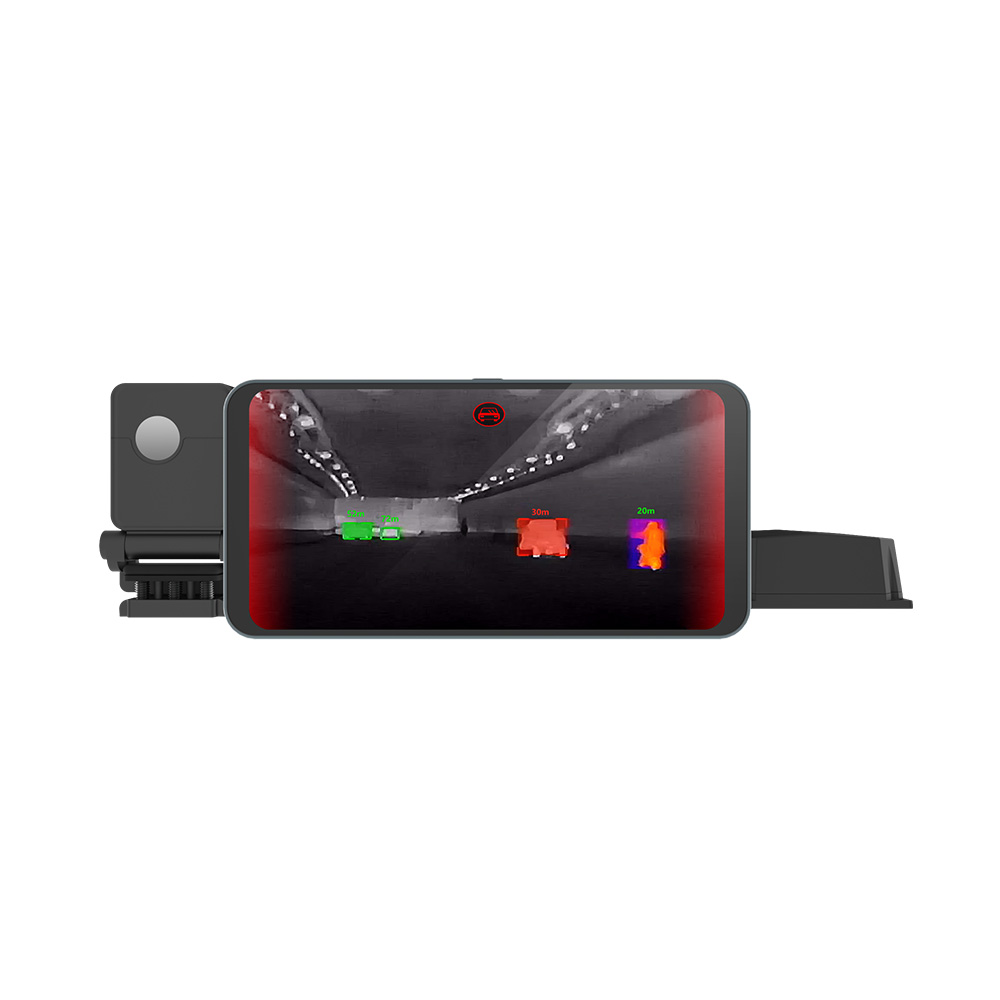
Where R, B, F, and O are factory-calibrated Planck constants tied to the core's optical path and detector die. By factoring in target emissivity (ε), distance, humidity, and ambient reflection, the module delivers surface temperature accuracy within ±2°C or ±2%. That level of precision is vital for substation monitoring, solar panel diagnostics, and early fire safety systems. For mobile thermal surveillance on vehicles, take a look at our specialized Vehicle Mounted Thermal Camera Systems.
4.2 Non-Uniformity Correction (NUC) & Shutter Control
Microbolometer manufacturing variations mean every pixel has slight differences in baseline resistance and thermal response. Non-Uniformity Correction (NUC) fixes these variations to deliver a clean, uniform image grid.
Standard thermal modules drop a mechanical shutter across the optical path every few minutes to perform Flat-Field Correction (FFC), updating pixel offsets while briefly pausing live video output. Advanced cores built for drones and rapid surveillance switch to shutterless NUC technology. These shutterless designs combine ambient housing thermistors with scene-based non-uniformity correction (SBNUC) algorithms to correct offset drift continuously without freezing video or adding heavy mechanical components.
5. Optical Engineering: Germanium vs. Chalcogenide Lenses
Standard optical glass blocks LWIR light, rendering typical lenses completely opaque between 8μm and 14μm. Thermal imaging systems require optics engineered from specialized infrared-transparent materials:
- 🔍 Monocrystalline Germanium (Ge): Features an exceptionally high refractive index (n ≈ 4.0) with minimal optical dispersion across the LWIR band. Germanium is the ultimate glass for high-res thermal optics, providing maximum throughput and razor-sharp MTF performance. Lenses are typically coated with Diamond-Like Carbon (DLC) anti-reflective coatings to withstand scratches, salt spray, and harsh weather.
- ⚙️ Chalcogenide Glass: An amorphous compound containing sulfur, selenium, or tellurium. Unlike Germanium elements that require diamond turning, Chalcogenide optics can be precision-molded at high volumes, drastically lowering production costs for high-quantity OEM integrations.
- 🛡️ Passive Optical Athermalization: Germanium changes refractive index with temperature shift (dn/dT). Without proper design, broad operating spans (-40°C to +80°C) cause image defocus. Lenses built with passive mechanical compensation spacers or hybrid chalcogenide optics hold sharp focus across extreme temperature swings without needing heavy motor drives.
6. Featured Industrial LWIR Thermal Modules & Real Specs
To help you evaluate hardware for your next system design, here are the detailed parameters for two of our benchmark thermal imaging engines. Explore full options, alternative optics, and starter kits through the Purpleriver Thermal Imaging Core Platform.
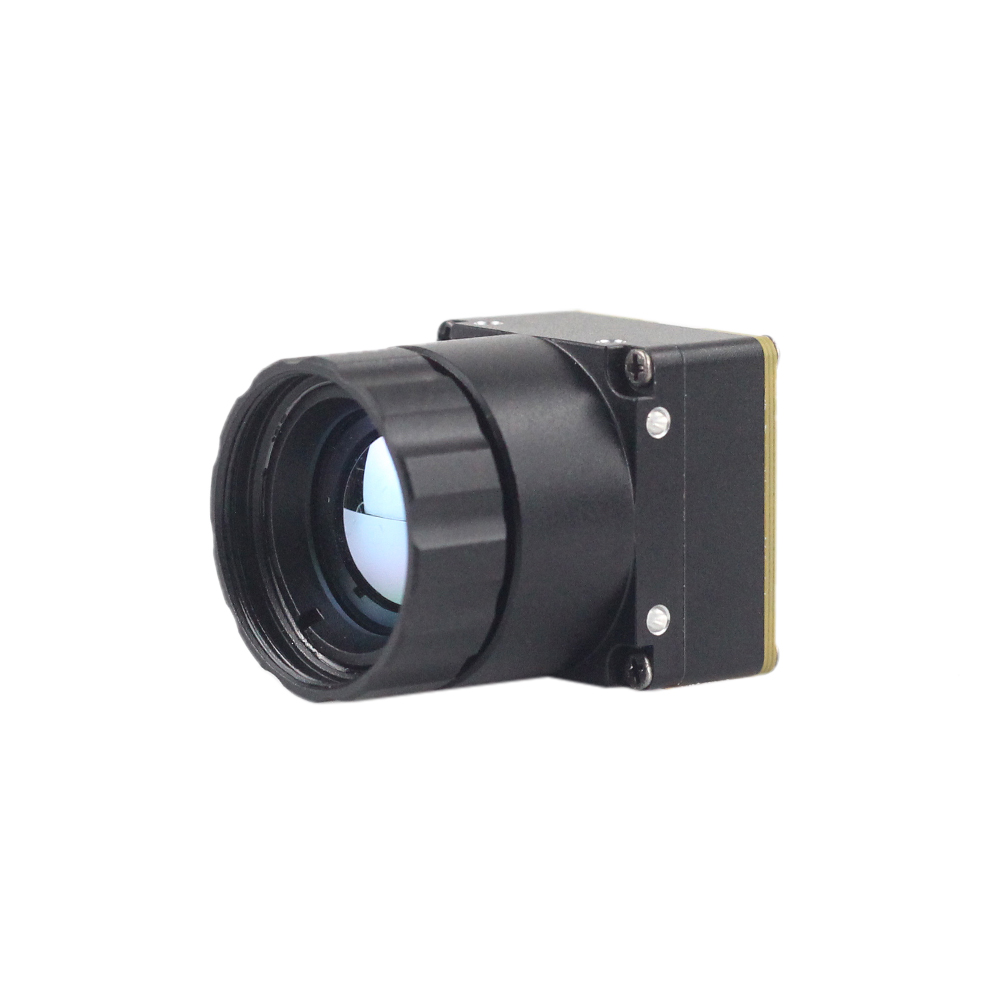
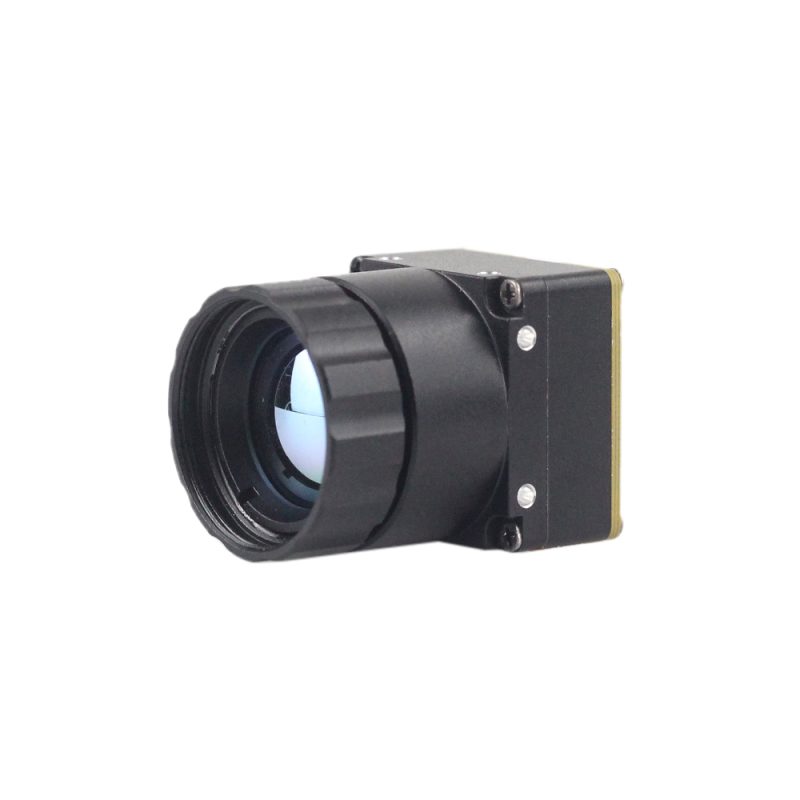
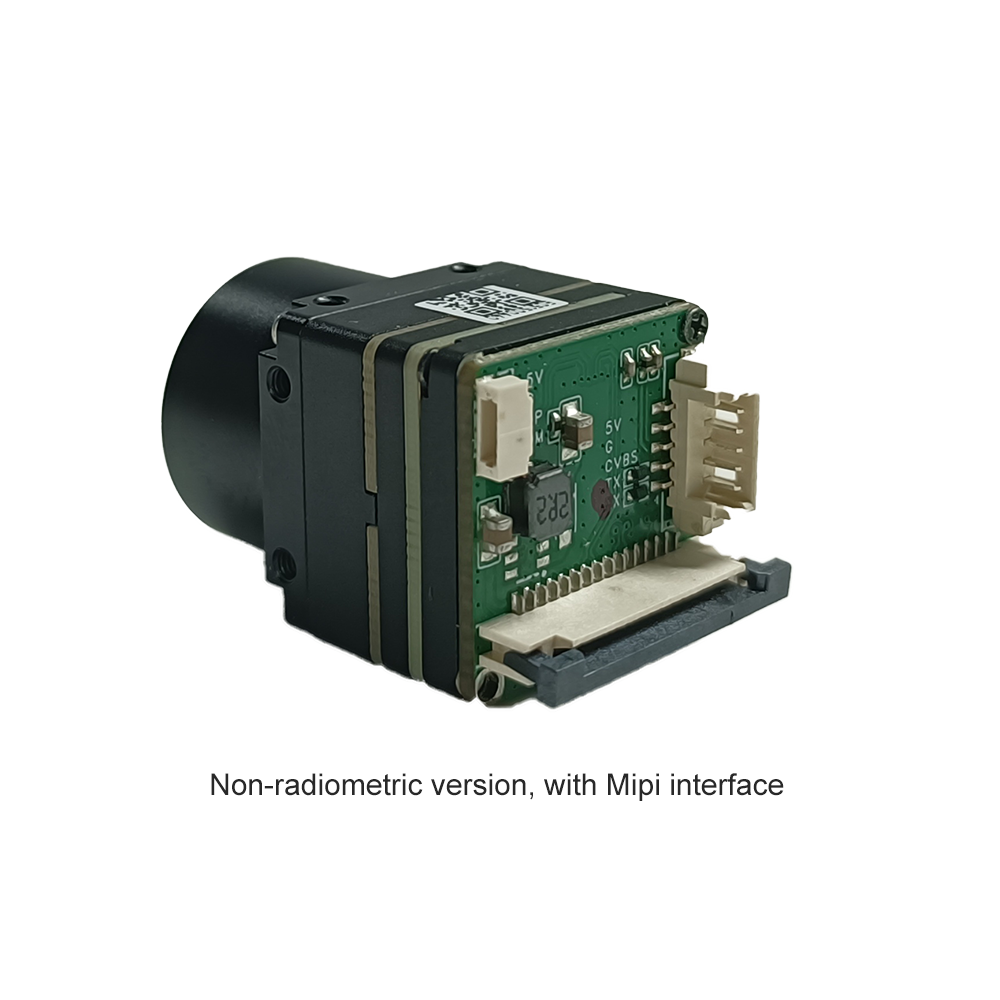
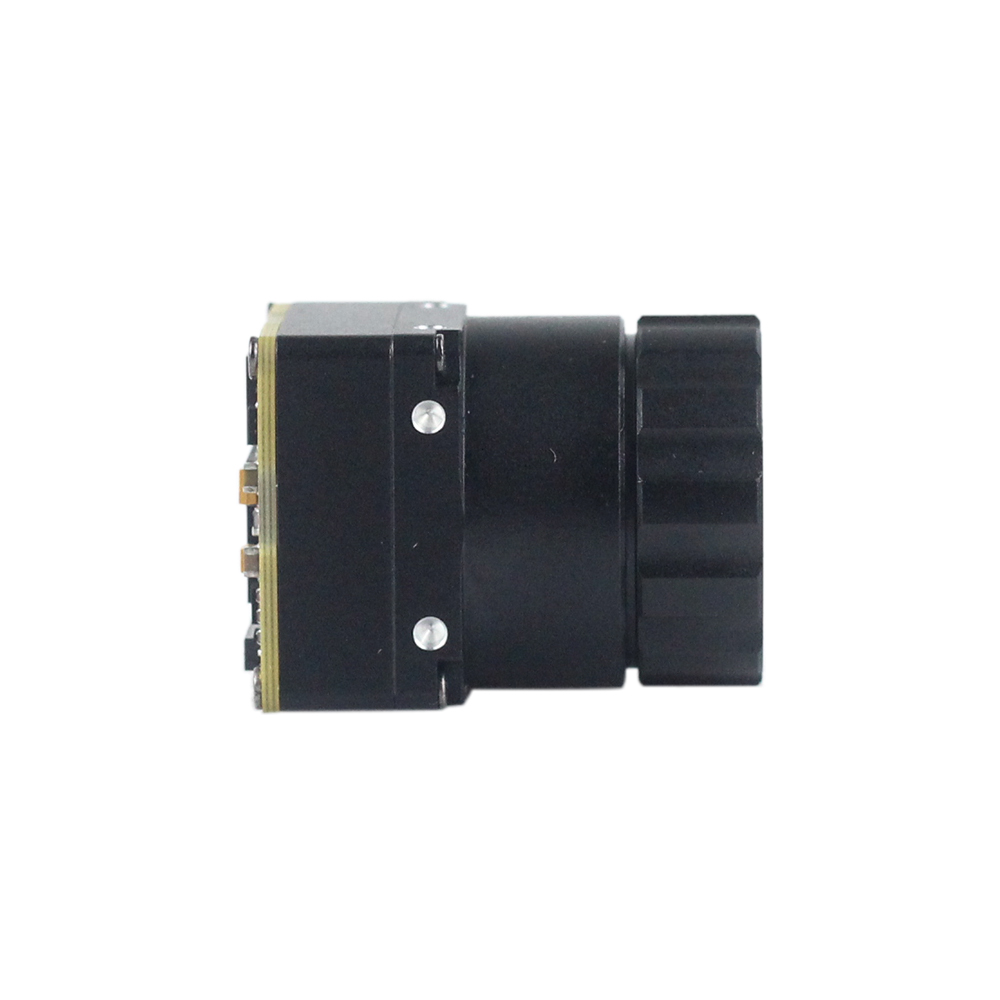
Mini 256 Uncooled LWIR Thermal Camera Module
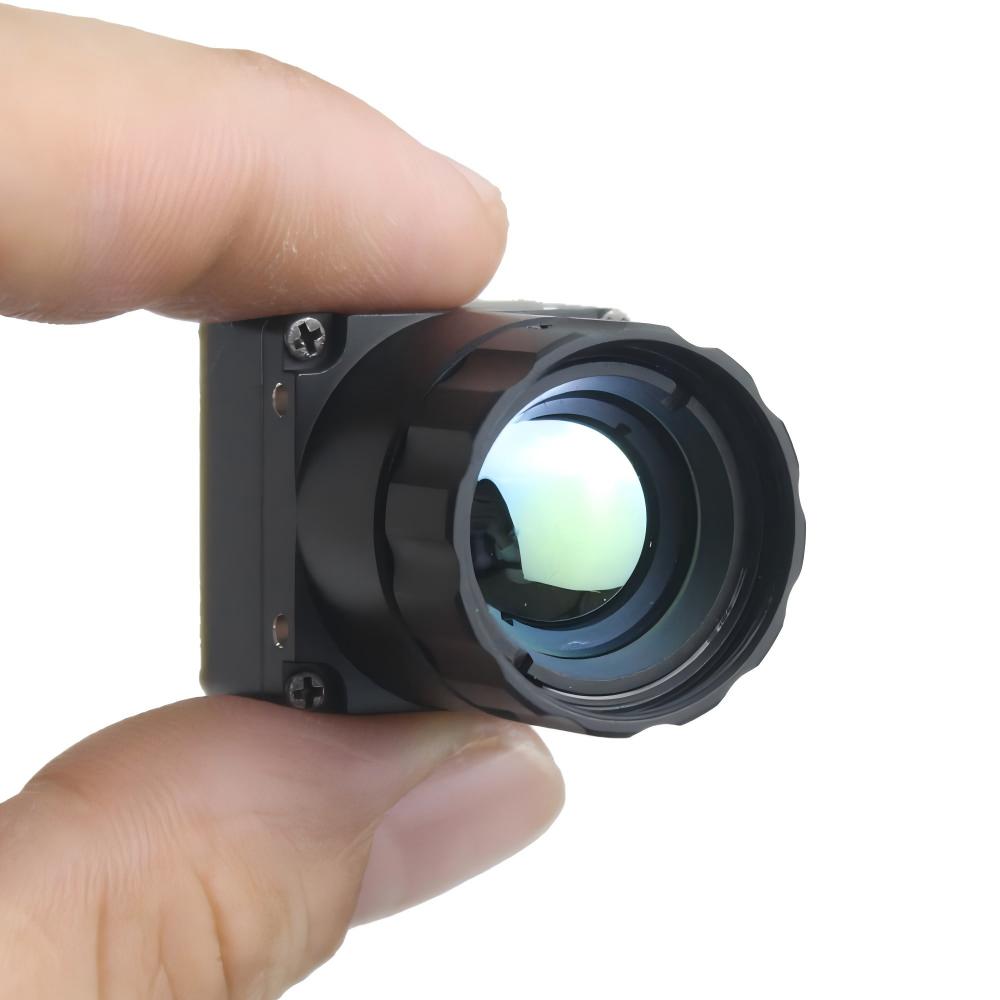
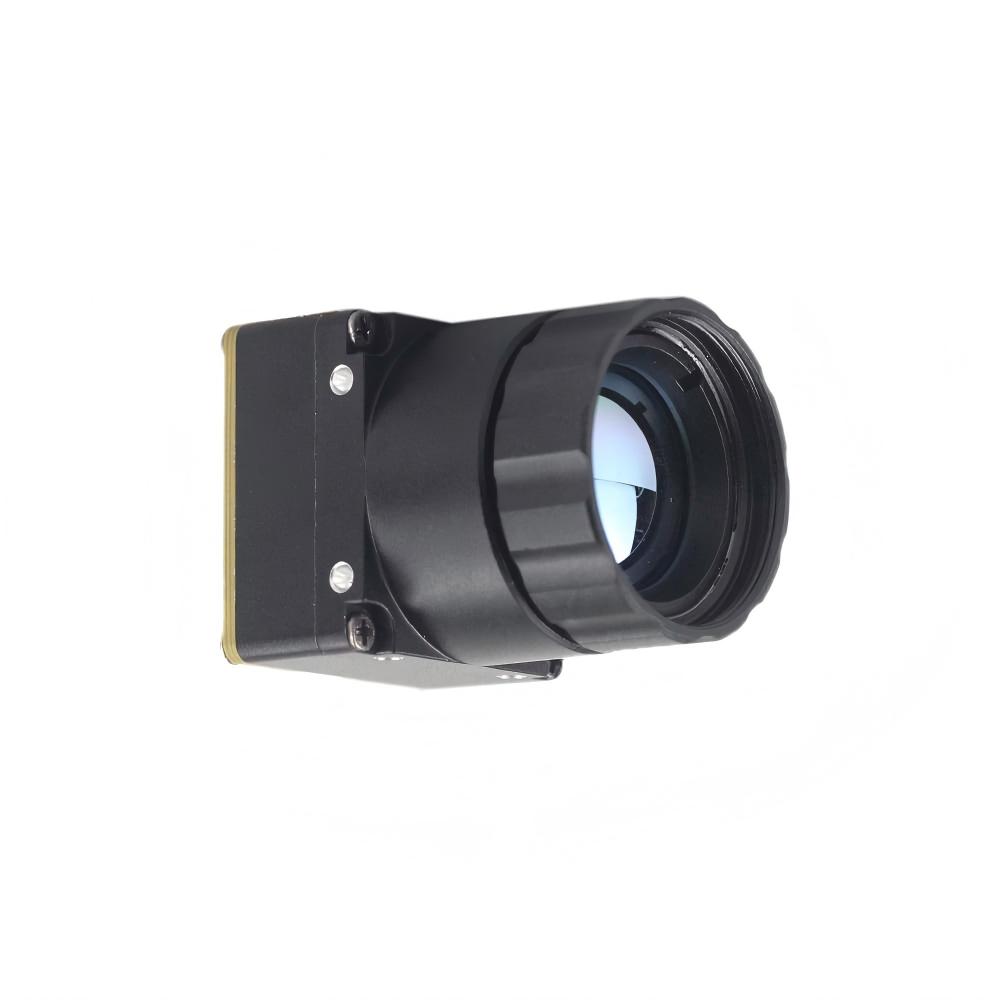
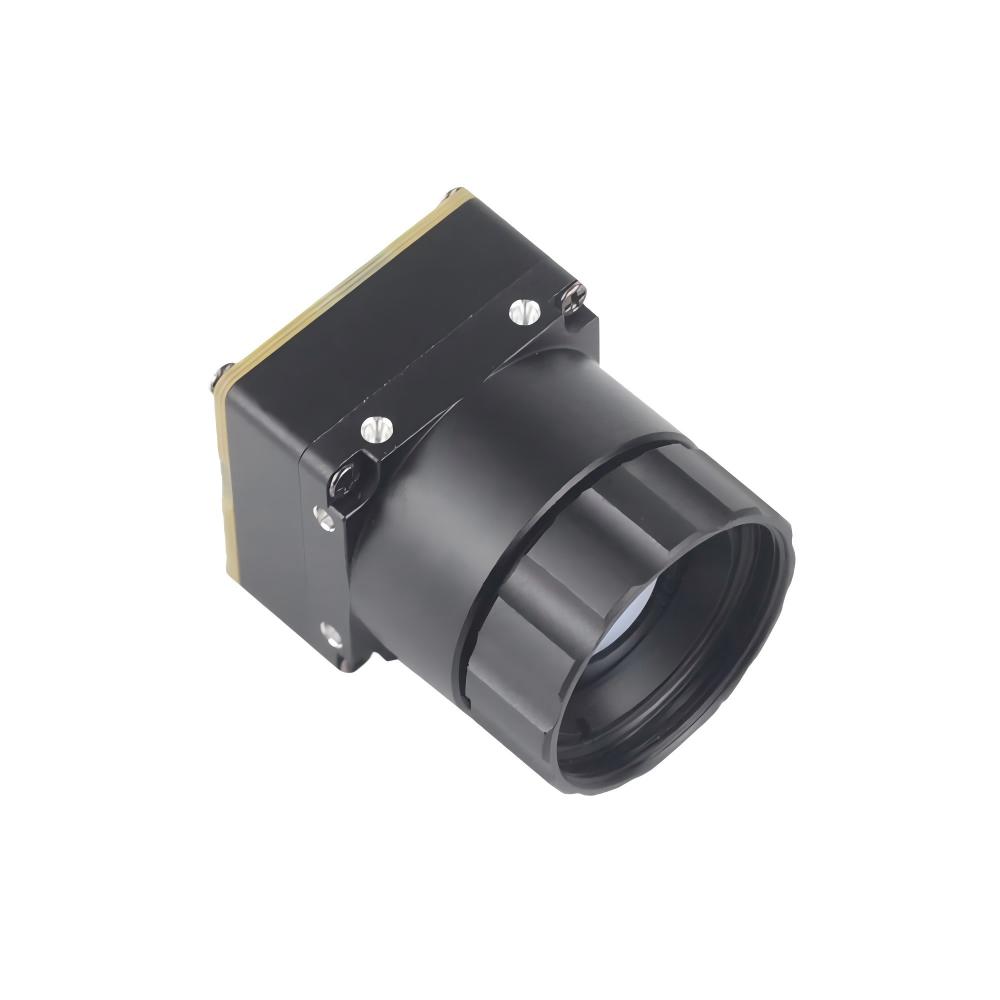
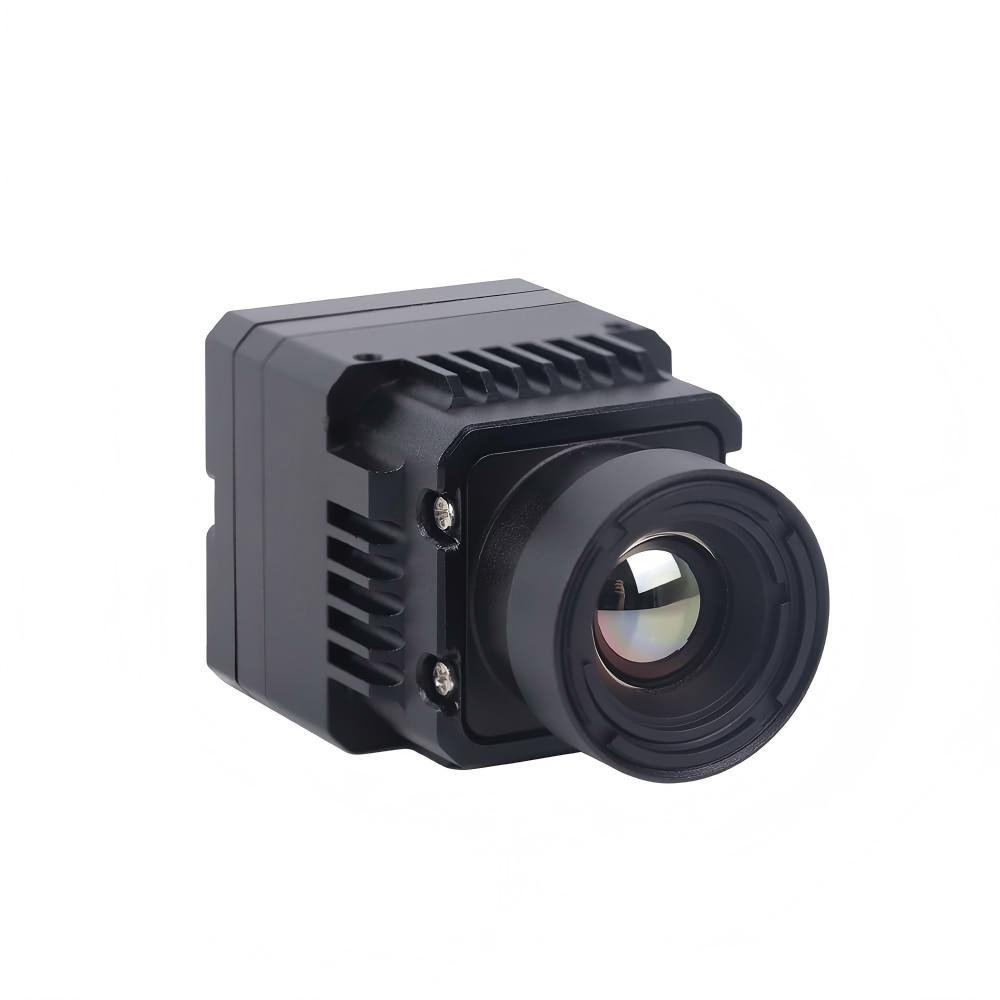
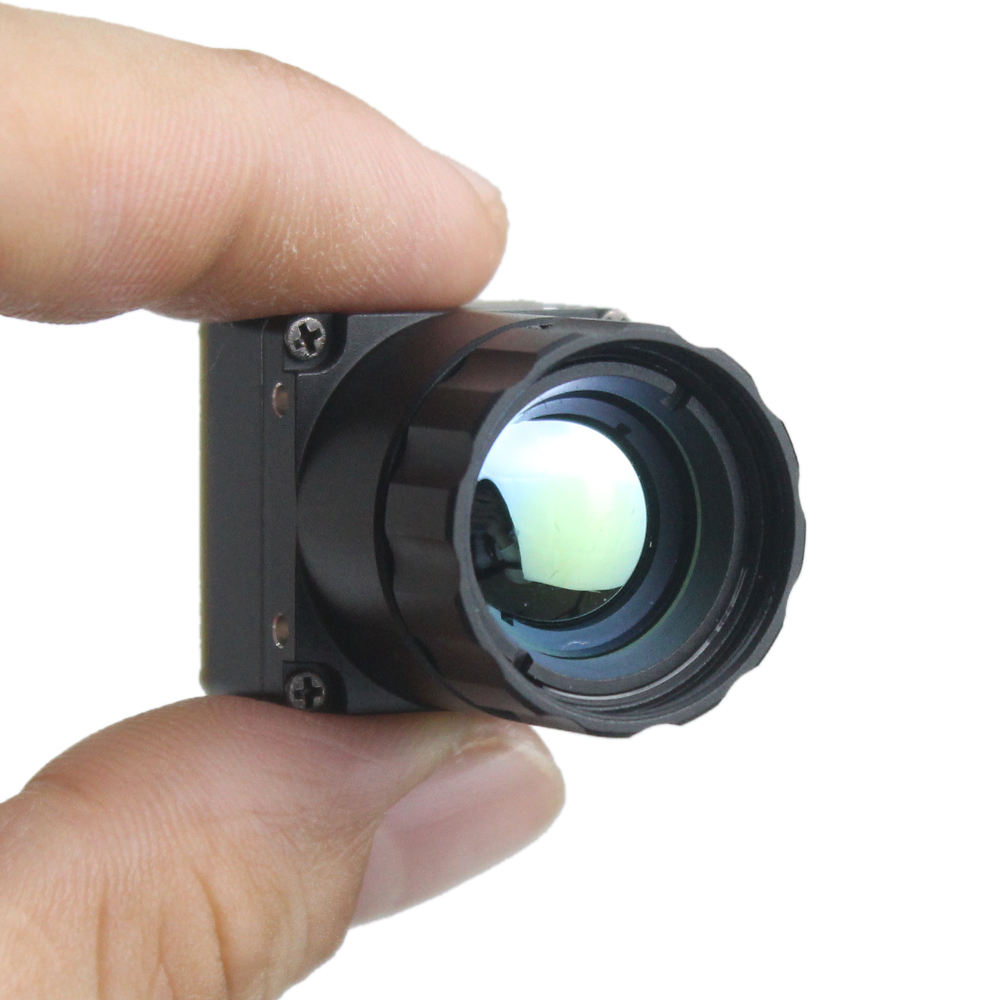
The Mini 256 Uncooled LWIR Thermal Camera Module features a high-performance infrared microbolometer array built for ultra-clear vision and precise radiometric telemetry. Engineered for handheld tools, compact ground robotics, inspection equipment, and lightweight UAV payloads, it captures ambient thermal energy and outputs clean, low-noise video with accurate pixel-level temperature data.
| Parameter | Specification |
|---|---|
| Focal Plane Array Resolution | 256 × 192 pixels |
| Pixel Pitch | 12 μm high-density array |
| Spectral Response Range | 8 μm ~ 14 μm (LWIR) |
| Thermal Sensitivity (NETD) | ≤ 40 mK @ 25°C, F/1.0 |
| Output Digital Interfaces | DVP Parallel, USB 2.0, UART control commands |
| Radiometric Functionality | Full-frame T-Linear absolute temperature radiometric output |
Uncooled Infrared MIPI 640×512 9mm Thermal Imaging Module
The Uncooled Infrared Mini2 640×512 9mm Thermal Imaging Camera Module is tailored for drone payload integration, aerial inspection platforms, and high-definition surveillance systems. Featuring exceptional image crispness, low power draw, and a tiny physical footprint, it delivers professional thermal optics for advanced UAV applications.
| Parameter | Specification |
|---|---|
| Focal Plane Array Resolution | 640 × 512 High-Definition resolution |
| Pixel Pitch & Focal Length | 12 μm pitch with 9mm high-throughput LWIR lens |
| Spectral Response Band | 8 μm ~ 14 μm (LWIR) |
| Thermal Sensitivity (NETD) | ≤ 35 mK @ 25°C |
| Digital Data Interfaces | MIPI CSI-2, USB, Direct Digital interface options |
| Visual ISP Enhancement | Integrated Digital Detail Enhancement (DDE) and dynamic AGC controls |
7. Technical FAQ & Developer Troubleshooting Guide
How can I stream real-time video from a thermal imaging module to embedded boards like Raspberry Pi with minimal latency?
Look, keeping glass-to-glass latency below 50ms on single-board computers (SBCs) like the Raspberry Pi 4/5, Rockchip RK3588, or NVIDIA Jetson comes down to hardware choice. You need a thermal core equipped with direct digital hardware interfaces—specifically MIPI CSI-2 or low-overhead UVC USB configuration.
Using MIPI CSI-2, the thermal core registers as a native V4L2 device directly inside the Linux kernel. That routes 14-bit raw or 8-bit visual frames straight into host system RAM over Direct Memory Access (DMA), bypassing CPU memory copy cycles completely. Purpleriver modules feature onboard ISP hardware that handles spatial filtering, detail enhancement, and palette mapping right on the sensor board. That keeps host CPU load under 5%, leaving plenty of headroom for 50Hz streaming alongside your Edge AI pipelines. Our SDKs include native C++ and Python bindings for zero-copy frame ingestion directly into OpenCV.
Are these compact thermal imaging modules suitable for custom Edge AI integration on drones?
Absolutely. Purpleriver's uncooled LWIR thermal cores are designed specifically for strict SWaP (Size, Weight, and Power) applications. Drawing between 350mW and 1.2W while weighing under 35 grams with optics, these modules preserve flight endurance and keep motor load down on multi-axis stabilization gimbals.
The cores deliver dual output streams: an 8-bit visual stream sharpened by Digital Detail Enhancement (DDE) for neural network target identification (such as YOLOv8, MobileNet, or custom CNNs), plus a 14-bit radiometric raw stream for threshold temperature monitoring. This lets your payload execute onboard target tracking, SAR ops, power grid inspection, or wildfire detection right on processors like the Jetson Orin Nano, eliminating reliance on spotty wireless video links.
What is the operational difference between 12μm and 17μm pixel pitch thermal camera modules?
Pixel pitch is simply the center-to-center spacing between pixels on the microbolometer die. Moving from older 17μm pixel designs down to modern 12μm geometry gives you two major optical and mechanical advantages:
1. Smaller Optical Apertures: A 12μm pixel array at 640×512 resolution forms a physically smaller FPA die than a 17μm sensor with the same resolution. That means you can use significantly smaller, lighter Germanium optical elements to get the same focal length and field of view, slashing overall lens mass by up to 40%.
2. Compact Module Footprint: Smaller silicon real estate translates to reduced power consumption and tighter housing enclosures. Since a 12μm pixel gathers less total photon energy than a larger 17μm pixel, high sensitivity (NETD ≤ 35mK) requires advanced VOx processing and low-noise ROIC design—standard features on modern Purpleriver modules.
How do shutterless thermal modules maintain calibration without a mechanical shutter?
Traditional thermal modules drop a mechanical shutter in front of the detector periodically to run Flat-Field Correction (FFC / NUC). That updates baseline calibration, but it freezes live video for half a second to a full second.
In high-speed drone navigation, tracking, or robotic vision, video pauses are unacceptable. Shutterless thermal modules ditch the physical shutter entirely using three mechanisms:
- ⚙️ Precision thermistors mounted across the lens housing, chassis, and detector array to measure internal thermal gradients in real time.
- ⚙️ Factory-calibrated thermal drift tables stored in flash memory that dynamically offset pixel response as operational temperatures swing.
- ⚙️ Scene-Based Non-Uniformity Correction (SBNUC) algorithms that monitor motion across frames, constantly removing fixed-pattern noise without interrupting your live video feed.
📚 References & Further Reading
- ✅ Industry Standard Component Solutions: Learn more about high-reliability inter-board connectors and electrical infrastructure via TE Connectivity.
- ✅ High-Frequency Interconnects: Technical micro-coaxial cable assemblies engineered for multi-axis drone gimbals from Micro Coaxial Cable Man.
- ✅ Related Payload System Guide: Explore ruggedized mobile thermography platforms with our Vehicle Mounted Thermal Camera Systems.
- ✅ Developer B2B Integration Guide: Review pinout details, software SDK architectures, and electrical timing diagrams via our B2B Integration Guide for Thermal & IR Modules.