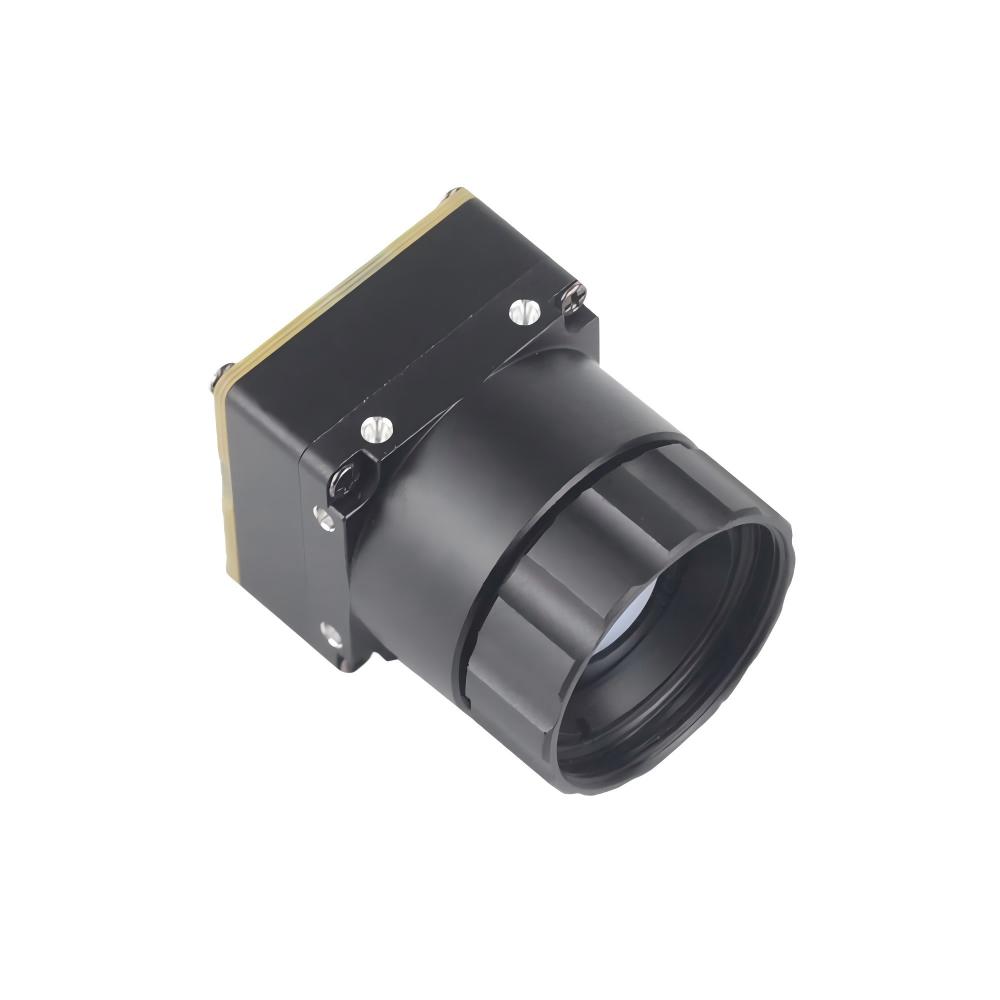
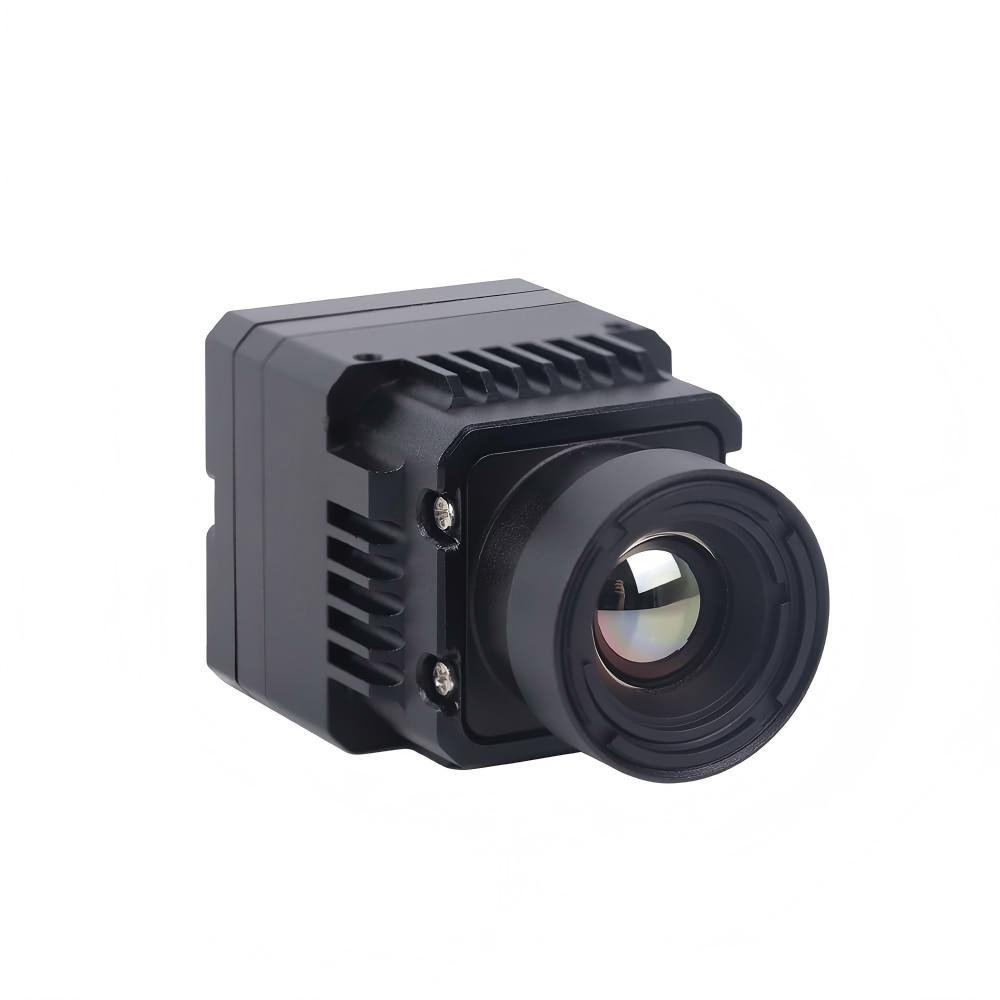
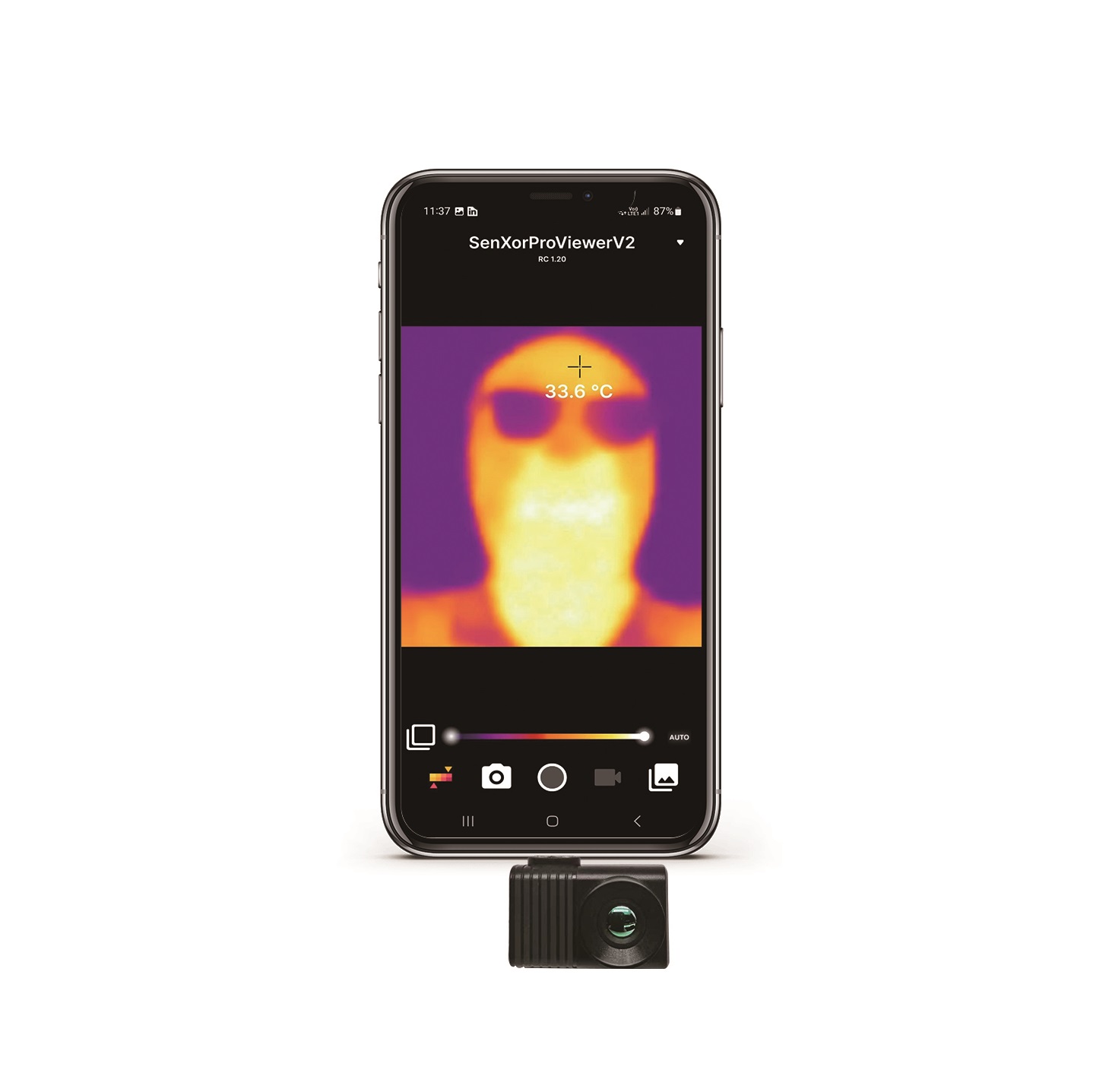
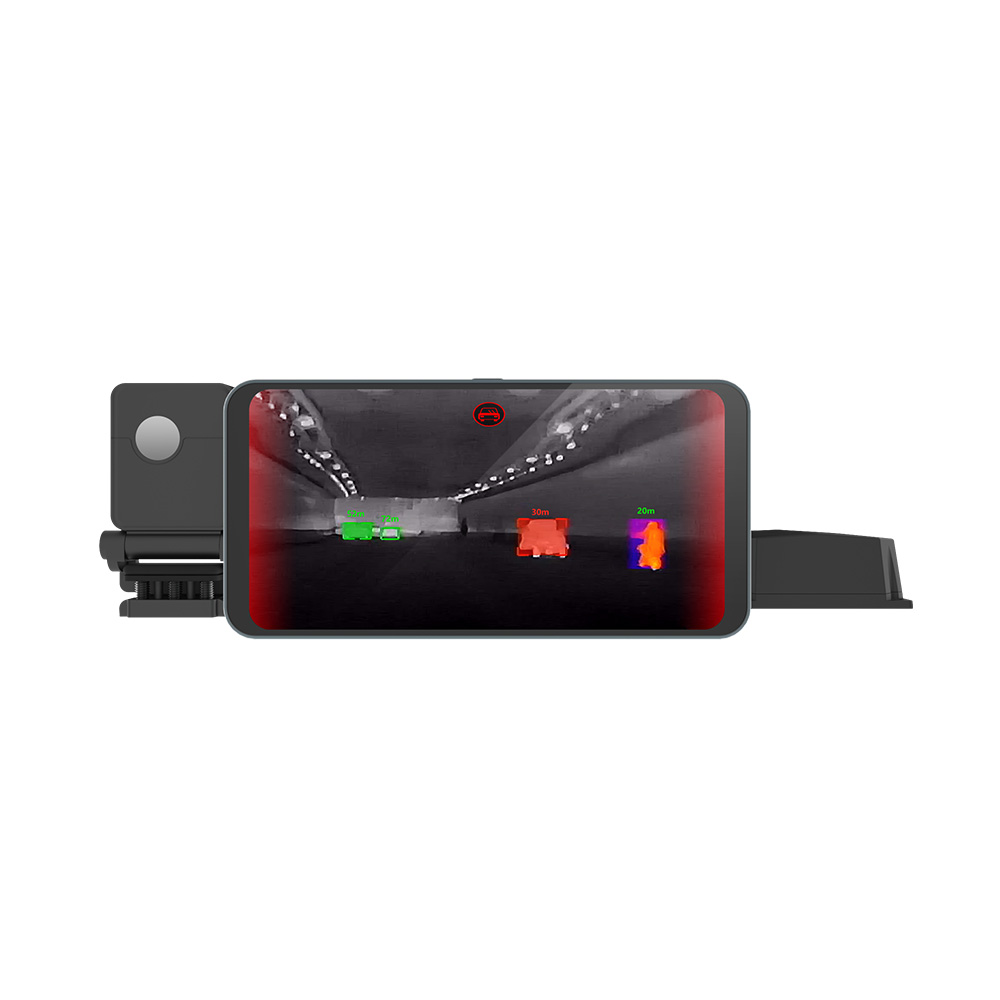


High-Performance Thermal Micro Camera Module for Drones & Embedded AI Systems
2026年8月3日
Upgrading to Mini2 Thermal Modules: Compact 640x512 LWIR Cores for Drone & Edge AI Integration
2026年8月4日

PurpleRiver Industrial AI Thermal Imaging: Mini LWIR Modules & OEM Solutions
In modern industrial automation, defense robotics, and aerial surveillance, long-wave infrared (LWIR) sensing has shifted from simple night-vision imaging to precision radiometric analysis and on-sensor edge artificial intelligence. Look, if you've spent any time designing payloads in the shop or deploying hardware out in the field, you know that thermal imaging isn't just about getting a fuzzy gray outline anymore. Today, it's all about precision radiometry and crunching numbers right on the sensor. Guangzhou Purpleriver Electronic Technology Co., Ltd. (PurpleRiver) leads this transition by delivering ultra-compact LWIR camera cores that combine high thermal sensitivity, advanced non-uniformity correction (NUC), and lightweight form factors tailored for demanding embedded deployments. Incubated through key research partnerships at the Hong Kong University of Science and Technology (HKUST) and backed by semiconductor R&D talent from Huawei HiSilicon, PurpleRiver designs thermal imaging engines that meet demanding SWaP (Size, Weight, and Power) constraints without sacrificing radiometric accuracy or imaging clarity.
Integrating high-resolution LWIR microbolometer technology into micro-UAV payloads, autonomous ground vehicles (AGVs), and industrial power grid inspection infrastructure requires careful trade-offs between optical transmission, power conversion efficiency, interface protocols, and real-time processing pipelines. Here's the deal: if your optics choke thermal throughput or your processing board pulls too many watts, your flight times drop and your thermal readings drift. This technical guide examines the underlying physics of PurpleRiver LWIR sensor cores, explores on-edge neural network inference architectures, analyzes target industrial applications—including landmine detection and electrical infrastructure monitoring—and provides exhaustive hardware specifications for system integration engineers, drone payload manufacturers, and defense OEM partners.
Table of Contents
- 👉 1. The Physics & Architecture of Uncooled LWIR Miniaturization
- 👉 2. Edge AI Integration & On-Core Thermal Analytics
- 👉 3. Key Industrial & Defense Applications
- 👉 4. PurpleRiver Hardware & OEM Customization Engine
- 👉 5. Featured Products: PurpleRiver LWIR Thermal Core Comparison
- 👉 6. Deep-Dive Frequently Asked Questions (FAQ)
1. The Physics & Architecture of Uncooled LWIR Miniaturization
Uncooled Long-Wave Infrared (LWIR) camera modules operate by converting blackbody thermal radiation emitted by object surfaces into readable electronic signals without requiring bulky, power-hungry cryogenic cooling engines. That operational freedom is massive. In the shop, removing the cooler means you eliminate heavy compressors, mechanical wear points, and huge power draws, turning a massive lab instrument into an ultra-compact system built for mobile, tactical, and embedded deployments. By understanding the physics under the hood, system designers can optimize optical throughput, sensor selection, and signal conditioning pipelines for mission-critical operations in tough real-world environments.
The operational foundation of PurpleRiver LWIR camera modules is an uncooled microbolometer focal plane array (FPA). These specialized solid-state sensors detect electromagnetic radiation residing strictly within the 8 µm to 14 µm atmospheric transmission window. This spectral waveband is particularly valuable for industrial thermal analysis because ambient surface emissions peak near room temperature (300 K) according to Planck's Law of Blackbody Radiation. In this band, atmospheric absorption caused by water vapor, carbon dioxide, and ozone is minimized, allowing thermal radiation to propagate across long distances with limited signal degradation.
1.1 Microbolometer Arrays & Spectral Sensitivity Range (8–14 µm)
Each individual pixel within the microbolometer matrix consists of a miniature suspended absorber membrane supported by micro-machined legs anchored to a silicon Readout Integrated Circuit (ROIC) substrate. The absorber material is engineered primarily using Vanadium Oxide (VOx) or Amorphous Silicon (a-Si). When incident long-wave infrared radiation strikes the suspended membrane, the energy is absorbed, causing an immediate rise in the membrane's localized physical temperature. This temperature elevation changes the electrical resistance of the material.
The underlying ROIC applies a uniform bias voltage or current across each pixel to measure this resistance shift, converting physical thermal variation into a proportional analog voltage. Vanadium Oxide (VOx) film technology is selected for high-grade PurpleRiver sensors because it exhibits a superior Temperature Coefficient of Resistance (TCR) of approximately -2% to -3% per Kelvin at room temperature. This high TCR yields exceptional thermal response sensitivity, minimal electrical noise, and fast pixel response thermal time constants under 10 ms, enabling smooth 50 Hz/60 Hz real-time video capture without motion blur.
1.2 Pixel Pitch Reductions: Transitioning from 17µm to 12µm VOx/a-Si Sensors
A primary technological advancement in modern thermal engineering is the reduction of sensor pixel pitch from older 17 µm standards down to 12 µm, and even sub-10 µm architectures. Transitioning to a 12 µm pixel pitch allows microbolometer designers to pack significantly more thermal sensing elements into a smaller active physical area. For instance, a high-resolution 640×512 array manufactured with a 12 µm pixel pitch has an active sensor diagonal of roughly 9.8 mm, compared to 14.0 mm for a legacy 17 µm sensor array.
| Feature / System Parameter | 17 µm Sensor Array Architecture | 12 µm Sensor Array Architecture |
|---|---|---|
| Active Sensor Area (640×512) | 10.88 mm × 8.70 mm | 7.68 mm × 6.14 mm |
| Germanium Lens Diameter Requirements | Requires Larger Lens Elements | ~40% Reduction in Optical Volume |
| Overall Module Structural Weight | Standard Heavy-Weight Assembly | Ultra-Lightweight Embedded Core |
| Thermal Mass per Sensing Element | Higher Pixel Thermal Inertia | Reduced Mass / Fast Response (<10ms) |
This dimensional shrinkage provides several transformative physical advantages for SWaP-constrained industrial applications:
- ⚙️ Reduced Optical Aperture Requirements: Because the focal plane footprint is smaller, lenses designed for 12 µm arrays require significantly shorter focal lengths to achieve matching fields of view (FOV). Smaller optical elements directly reduce the required mass and volume of costly, dense Germanium (Ge) glass elements by as much as 40%.
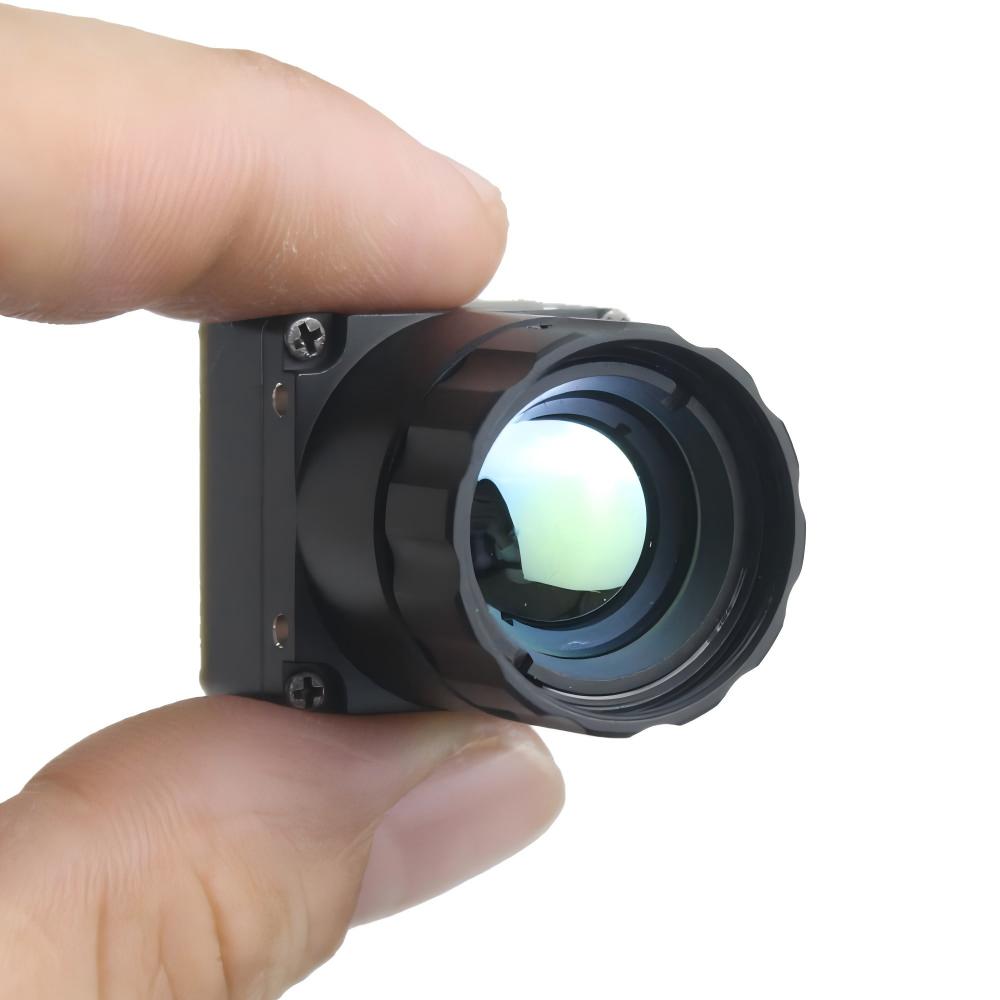
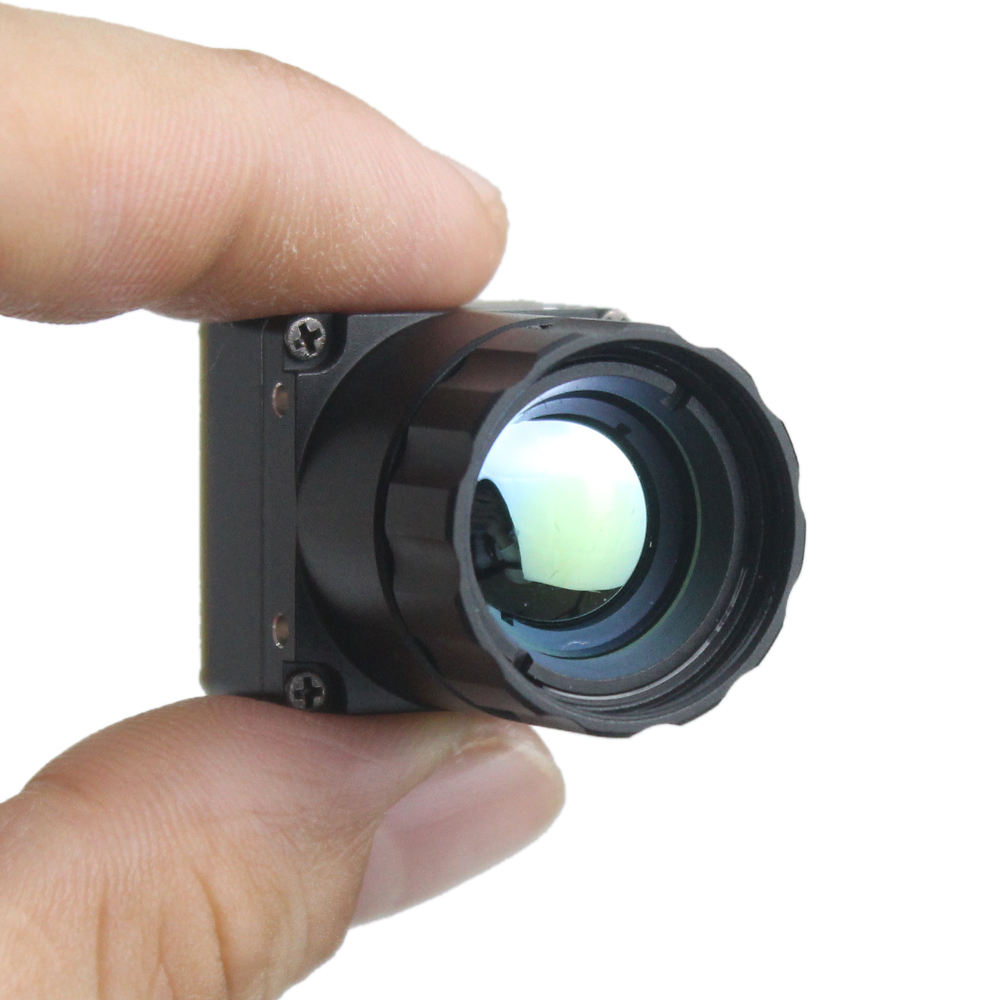
- ✅ Enhanced System Miniaturization: Shrunken sensor packages and lightweight optics allow complete thermal camera engines—such as the PurpleRiver mini series—to be housed within an ultra-compact 21 mm × 21 mm footprint. These modules easily fit inside micro-drone gimbals, handheld monoculars, and compact robotic payloads. Reliable, high-density board-to-board electrical connections, such as those manufactured by Hirose Electric, ensure robust high-speed signal flow between the miniaturized sensor stack and host carrier boards.
1.3 Thermal Sensitivity (NETD <30mK to <50mK) and Radiometric Precision
Noise Equivalent Temperature Difference (NETD) is the key figure of merit when evaluating thermal sensitivity. Expressed in millikelvins (mK), NETD represents the target temperature difference at which the signal-to-noise ratio (SNR) equals unity. Simply put, a lower NETD value means the sensor can resolve much finer, subtle thermal variations across a scene. That's critical when you're trying to pick out camouflaged targets or pinpoint tiny electrical heating anomalies before a breaker blows.
PurpleRiver LWIR core modules achieve high sensitivity, reaching NETD levels under 30 mK to 50 mK at f/1.0 optics aperture settings. This performance allows PurpleRiver modules to resolve minor surface gradient details even in difficult weather conditions such as fog, light rain, or heavy atmospheric smoke. High physical sensitivity is coupled with comprehensive radiometric calibration algorithms running directly on onboard processors:
Target Surface Radiance = f( Scene Temperature, FPA Temperature, Surface Emissivity, Atmospheric Transmission )
Onboard Digital Signal Processors (DSPs) constantly calculate temperature calibrations using real-time internal thermistor telemetry to adjust for thermal drift across ambient operating envelopes (-40°C to +80°C). Digital Non-Uniformity Correction (NUC) algorithms automatically normalize baseline pixel offsets, eliminating fixed-pattern noise (FPN) without requiring bulky mechanical shutter cycles during critical surveillance windows. For continuous high-bandwidth video and telemetry streaming, systems like the Uncooled Infrared RJ45 CVBS RTSP Thermal Module stream fully calibrated, frame-by-frame radiometric datasets for automated industrial control systems.
2. Edge AI Integration & On-Core Thermal Analytics
Legacy thermal camera systems operated as passive video sensors, continuously streaming raw thermal video over wireless downlinks to remote operator stations or central control rooms for human analysis. But let's be honest: if you're running high-speed drone collision avoidance or tracking targets on an autonomous ground vehicle, you can't afford to wait on an unstable radio link. Real-time autonomous systems demand low-latency processing that operates locally right at the payload level. Edge AI solves this limitation by moving computational neural inference models directly onto the thermal core hardware.
2.1 Embedded Neural Networks vs. Cloud Thermal Processing
Running convolutional neural networks (CNNs) directly on embedded processing hardware eliminates network transmission delays and bandwidth strain. Standard thermal video streams generate significant data volumes—a raw 640×512 16-bit radiometric stream running at 30 frames per second generates data rates over 150 Mbps. Continuously transmitting raw video over long-range RF links consumes significant battery power, introduces high video latency (often 200–500 ms), and leaves operations vulnerable to RF interference, jamming, or atmospheric signal fading.
PurpleRiver addresses these challenges using an Edge AI processing architecture that integrates low-power Neural Processing Units (NPUs) directly alongside the microbolometer ROIC circuitry. Local hardware handles spatial thermal gradient processing, running quantized deep-learning vision models locally in under 15 milliseconds. Instead of outputting heavy raw video feeds, the module can operate in low-bandwidth telemetry mode, transmitting only compact bounding-box coordinates, temperature telemetry, or automated alarm flags over long-range radio links. This design ensures reliable, continuous operation even when remote wireless connections are interrupted.
2.2 Computer Vision Pipelines: Object Detection, Anomaly Detection & Radiometric Isotherms
Thermal imagery presents unique image processing challenges compared to traditional visual-spectrum RGB feeds. Thermal images lack optical textures, fine visual color cues, and shadow profiles, while target scene contrast changes based on ambient diurnal temperatures, localized weather, and operational thermal dynamics.
To overcome these challenges, PurpleRiver embedded vision pipelines process raw radiometric 14-bit array data alongside normalized 8-bit visual streams:
- 🔥 Radiometric Isotherm Extraction: Isotherms isolate specific temperature ranges across the array. The vision processor flags pixels exceeding defined absolute thermal thresholds (for example, identifying electrical busbar contacts operating above 85°C).
- ⚡ Dynamic Contrast Enhancement (DCE): Onboard spatial histogram equalization algorithms dynamically scale visual dynamic range frame-by-frame, enhancing low-contrast targets without overexposing localized thermal hotspots.
- 🧠 Deep Neural Network Target Classification: Lightweight YOLO (You Only Look Once) and MobileNet network structures, trained specifically on large long-wave infrared datasets, run directly on the onboard NPU accelerator. These models identify targets based on signature thermal contours rather than visual surface features, maintaining high detection rates in complete darkness, heavy smoke, or dense natural background cover. System developers can also connect these cores to popular edge compute modules, such as the Raspberry Pi via standard USB or SPI connections, enabling custom algorithm deployment and prototyping.
2.3 Hardware Accelerators: NPU Architectures and Low-Power Inference
Deploying deep neural network pipelines onto battery-powered micro-UAVs and field-deployed robotics requires high power efficiency. PurpleRiver LWIR camera engines use specialized application-specific integrated circuits (ASICs) and ultra-low-power FPGA hardware accelerators optimized specifically for tensor matrix multiplication:
- ⚙️ INT8 Quantization Engine: Neural network models are converted from 32-bit floating point (FP32) to 8-bit integer (INT8) precision formats. This reduces total DRAM memory bandwidth and model storage requirements by up to 75% with negligible degradation in object detection precision.
- ⚡ Direct Readout DMA Pipelining: Uncompressed 14-bit raw radiometric frames stream directly from the microbolometer ROIC into the NPU SRAM caches via Direct Memory Access (DMA) channels. Bypassing main CPU system buses minimizes memory transfer overhead and prevents frame drops during peak processing loads.
- 🔋 Ultra-Low Power Budgeting: The complete processing pipeline—including sensor power regulation, digital noise reduction, radiometric temperature calculation, and NPU inference execution—operates within a low 1.5 W to 2.5 W power envelope. This thermal power efficiency preserves battery runtime for lightweight aerial platforms. For global deployments requiring localized metric software customization, developers can consult detailed technical specifications on the LWIR Radiometric Measuring Camera Core product documentation.
3. Key Industrial & Defense Applications
The combination of high-sensitivity LWIR microbolometer arrays, compact mechanical profiles, and on-core Edge AI processing makes PurpleRiver thermal modules adaptable across a wide range of demanding industrial, commercial, and defense applications.
3.1 UAV Payload Integration for Aerial Inspection and Landmine/UXO Detection
Undetected landmines, unexploded ordnance (UXO), and improvised explosive devices (IEDs) present ongoing safety hazards in post-conflict zones around the globe. Manual ground clearance using conventional metal detectors is hazardous, labor-intensive, and slow. Lightweight UAV platforms equipped with PurpleRiver thermal imaging engines provide an airborne alternative for non-contact wide-area surveying.
Aerial detection of buried threats relies on measuring thermal inertia variations between buried metallic or plastic casings and surrounding topsoil. Throughout normal day-night solar heating cycles, surface soil absorbs and dissipates heat energy at different rates than buried dense objects. This thermal difference creates small localized surface temperature gradients directly above buried targets:
- ☀️ Solar Radiation Phase (Daytime): Topsoil absorbs solar irradiance quickly, while dense buried objects absorb heat at a slower rate, forming localized surface "cool spots."
- 🌙 Radiative Cooling Phase (Nighttime): Surface topsoil radiates thermal energy rapidly into the sky, while buried casings slowly discharge retained heat upward, forming visible surface "hot spots."
Because these surface temperature differentials are often less than 0.1°C (100 mK), detection requires high sensor sensitivity. PurpleRiver 256×192 and 640×512 mini thermal modules deliver sub-40 mK NETD sensitivity, enabling them to capture these micro-thermal signatures. Mounted on 3-axis stabilized UAV gimbals, the onboard Edge AI engine runs spatial clustering algorithms that automatically flag suspicious thermal anomalies, tagging them with real-time GPS metadata to allow clearance teams to focus on confirmed target locations.
3.2 Power Grid Infrastructure Monitoring & Substation Hotspot Analysis
Electrical power distribution grids require continuous monitoring to prevent catastrophic equipment failures, costly blackout events, and transformer fires. Defective busbar connections, degraded high-voltage insulators, unbalanced phase loads, and failing internal switchgear generate localized resistive heating ($I^2R$ losses) well before physical component failure occurs.
Deploying radiometric PurpleRiver LWIR camera engines into automated pan-tilt perimeter enclosures or aerial monitoring drones enables continuous, non-contact thermal tracking across electrical substations. The camera's radiometric engine monitors absolute surface temperatures across critical power infrastructure against predefined safety thresholds:
- ✅ Normal Operating Thermal Range: Components operate within expected ambient temperature limits (Delta-T under 10°C).
- ⚠️ Alert Condition (Delta-T 10°C to 30°C): Indicates early contact resistance elevation; scheduled for routine preventive maintenance.
- 🚨 Critical Fault Level (Delta-T exceeding 40°C): Indicates severe resistive degradation; triggers immediate automated system isolation alerts to prevent equipment damage.
If a monitored switch contact exceeds pre-set thermal thresholds, the thermal core automatically issues real-time alert messages over industrial protocols (Modbus, RTSP, or MQTT). This automated reporting allows utility operators to address developing faults early, extending component lifespans and reducing unplanned power outages.
3.3 Autonomous Robotics & Perimeter Security Defense Systems
For unmanned ground vehicles (UGVs), autonomous delivery robots, and automated defense perimeters, standard optical visual cameras struggle in zero-light conditions, dense fog, atmospheric smoke, or heavy direct glare. Long-wave infrared cameras operate reliably in these challenging environments because they detect emitted heat signatures rather than relying on reflected ambient light.
PurpleRiver LWIR camera modules integrate easily into multi-sensor payloads alongside LiDAR, optical cameras, and radar sensors. Onboard neural networks process incoming thermal imagery at frame rates up to 60 Hz, detecting human movement, vehicle engines, and livestock over long distances. System developers seeking comprehensive sensor hardware details can explore options on the PurpleRiver Thermal Imaging Solutions Hub.
4. PurpleRiver Hardware & OEM Customization Engine
Industrial, commercial, and defense applications often require customized hardware integration rather than off-the-shelf camera builds. PurpleRiver provides comprehensive OEM and ODM design services, offering flexible configurations across board layouts, optical elements, and high-speed communication interfaces.
4.1 Form Factor Engineering: Ultra-Compact 21mm × 21mm Layouts
Physical spatial limitations present a key design challenge when integrating thermal modules into micro-UAV gimbals, wearable tactical systems, and handheld inspection tools. PurpleRiver solves this using high-density, multi-layer rigid-flex PCB stacking techniques. The primary sensor array, power management ICs (PMICs), microbolometer ROIC drivers, and hardware NPU processing blocks fit within a miniature 21 mm × 21 mm physical profile.
This micro-form factor reduces total module weight down to 15 grams (without lens assemblies). Minimizing payload mass reduces strain on motor gimbals and helps extend overall flight battery endurance for airborne drone platforms.
4.2 Lens & Optics Customization: Fixed Focus to Multi-Focal Germanium Systems
Because long-wave infrared thermal radiation (8–14 µm) cannot pass through standard optical glass, specialized Germanium (Ge) or Chalcogenide glass lenses with custom anti-reflective coatings are required. PurpleRiver provides a versatile range of factory-installed optical systems tailored for specific field applications:
- 🔍 Wide Field-of-View Optics (5.0 mm, 9.0 mm, 13 mm): Wide angle lenses designed for short-range situational awareness, indoor mobile robotics, and close-proximity equipment inspection.
- 🎯 Mid-Range Inspection Optics (18 mm, 35 mm, 50 mm): Balanced lenses suited for mid-altitude drone mapping, perimeter security, and agricultural thermal surveillance.
- 🔭 Long-Range Telephoto Optics (75 mm, 100 mm, 150 mm): Narrow field-of-view telephoto lenses optimized for long-range target tracking, coastal surveillance, and high-altitude power line maintenance.
- 🛡️ Protective Lens Coatings: Diamond-Like Carbon (DLC) outer coatings protect exposed front lens elements against atmospheric salt-spray corrosion, blowing sand, and physical scratches in harsh outdoor environments.
4.3 Digital & Analog Video Interfaces: USB, MIPI, CVBS, RJ45 Ethernet RTSP
To ensure compatibility across diverse host systems, PurpleRiver thermal camera modules offer a comprehensive set of output video interfaces:
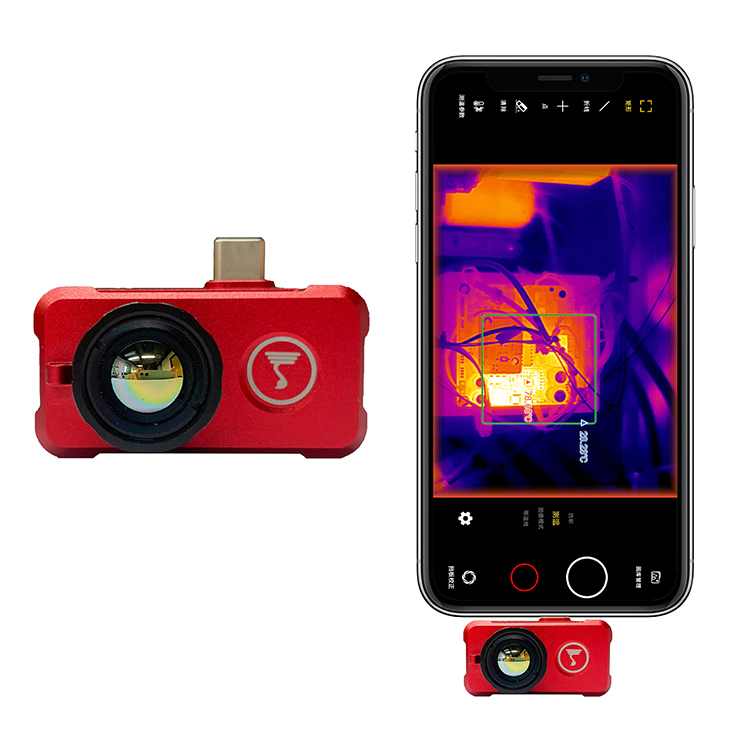
- 🔌 USB 2.0 / USB Type-C (UVC Standard): Plug-and-play video streaming and radiometric data transmission compatible with Windows, Linux, Android, and macOS host software without requiring custom drivers.
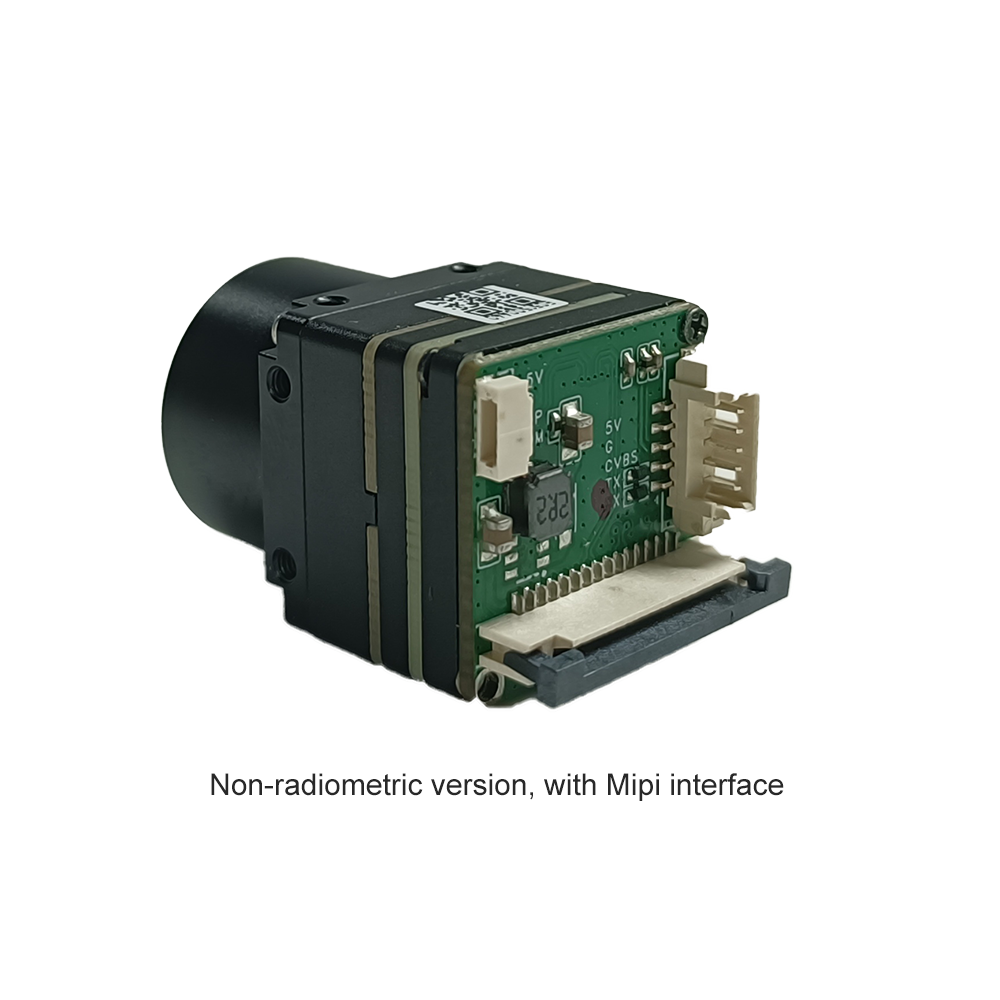
- ⚡ MIPI-CSI2 Digital Output: Direct, uncompressed digital interfaces designed for low-latency ribbon cable connection to embedded application processors (e.g., NVIDIA Jetson, Rockchip, NXP i.MX).
- 🌐 RJ45 Industrial IP Ethernet: Embedded hardware encoding for RTSP, ONVIF, and HTTP network streaming, ideal for fixed industrial installation networks.
- 📺 Legacy CVBS Analog Output: Zero-latency composite video signals for direct connection to legacy display monitors and analog long-range RF downlinks.
5. Featured Products: PurpleRiver LWIR Thermal Core Comparison
Below is a technical feature breakdown of flagship PurpleRiver uncooled mini LWIR camera cores, demonstrating their integration capabilities for drone, defense, and power grid monitoring systems.
1. Uncooled LWIR Mini 256*192 Thermal Imaging Camera Module
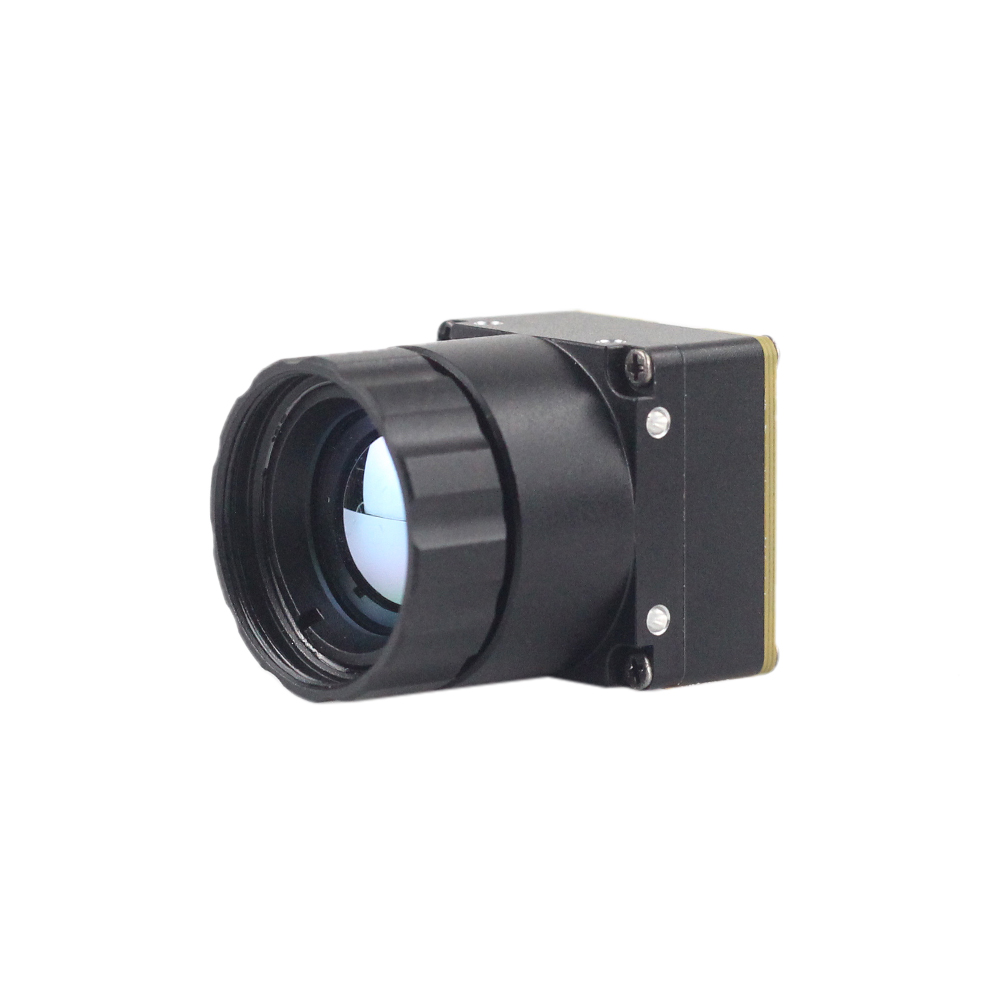
The Mini 256 Uncooled LWIR Thermal Camera Module uses high-performance infrared detectors for clear thermal imaging and accurate temperature measurement. It captures infrared radiation and outputs uniform thermal images with full radiometric data. Its lightweight form factor makes it ideal for micro-drone integration and subsurface landmine detection.
| Resolution | 256 × 192 Pixels |
| Spectral Range | 8 µm – 14 µm (Long-Wave Infrared) |
| Detector Material | Uncooled Vanadium Oxide (VOx) Microbolometer |
| Pixel Pitch | 12 µm Architecture |
| Thermal Sensitivity (NETD) | < 50 mK at f/1.0 @ 25°C |
| Primary Applications | Subsurface Mine Detection, Micro-Drones, Handheld Inspection Tools |
2. Uncooled LWIR USB Mini 640*512 Thermal Imaging Camera Core Module
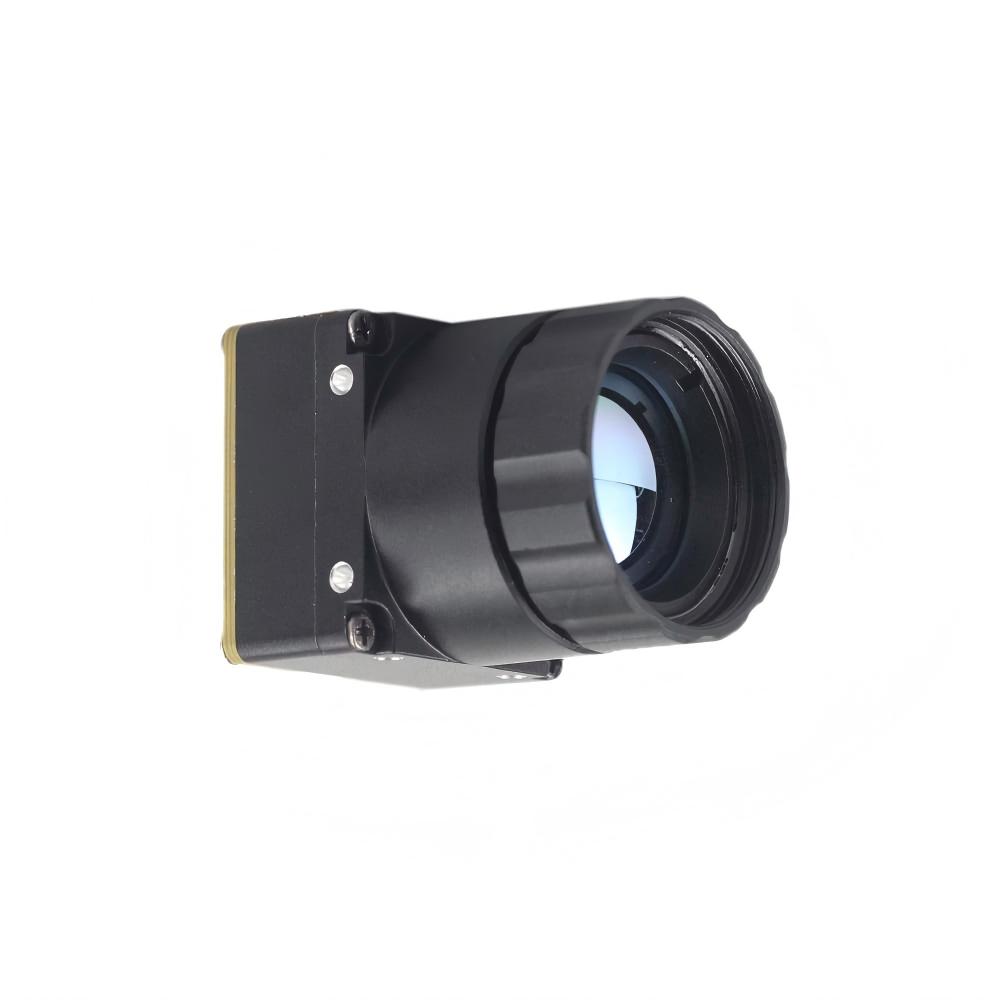
This Mini Uncooled Infrared Thermal Imaging Module provides crisp imagery, a miniature size, and low cost. Featuring a compact 21mm × 21mm footprint, it supports multiple lens focal lengths (5/9/13/18/35/50/75/100/150mm), optional 640×480 resolution, reliable performance, and strong environmental adaptability for UAV payloads and long-range security systems.
| Resolution | 640 × 512 Pixels (640×480 Optional) |
| Spectral Range | 8 µm – 14 µm (Long-Wave Infrared) |
| Module Dimensions | Ultra-Miniature 21 mm × 21 mm Layout |
| Pixel Pitch | 12 µm Pixel Engine |
| Thermal Sensitivity (NETD) | < 30 mK to < 40 mK at f/1.0 @ 25°C |
| Lens Options | 5 / 9 / 13 / 18 / 35 / 50 / 75 / 100 / 150 mm Options |

6. Deep-Dive Frequently Asked Questions (FAQ)
What is PurpleRiver in the tech and thermal imaging industry?
The company's core product portfolio includes ultra-compact LWIR camera cores (available in 256×192, 384×288, and 640×512 matrix resolutions), high-bandwidth IP network thermal camera modules, and customized OEM processing boards. PurpleRiver systems integrate on-core artificial intelligence, low-power NPU inference accelerators, and precise radiometric measurement algorithms directly into sensor hardware. These modules are deployed globally across micro-UAV payloads, post-conflict mine and UXO detection platforms, power grid automated inspection installations, border security robotics, and handheld thermal tools.
Are PurpleRiver thermal camera cores compatible with commercial UAVs and drones?
PurpleRiver modules offer flexible hardware and software integration options for drone platforms:
- 🔌 Electrical Interfaces: Modules support standard connectivity options, including USB (UVC class compliant), MIPI-CSI2, RJ45 Ethernet, and legacy analog CVBS.
- 🔋 Low Power Draw: Operating on an efficient 1.5W to 2.5W power budget, these cores can draw power directly from the host drone's internal power bus or gimbal controller.
- 💻 Software Interoperability: Software SDKs and APIs support integration with autopilot stacks (such as Pixhawk, ArduPilot, and PX4) using MAVLink telemetry protocol streams. Ground station software can view live radiometric thermal feeds, log georeferenced thermal targets, and monitor real-time edge AI detection alerts over standard downlinks.
Can PurpleRiver provide custom Edge AI algorithm and hardware OEM services?
Customization services cover three primary technical domains:
- Hardware Design: Custom PCB shape factors, alternative connector placements (such as Hirose high-density board-to-board interconnects or locking flex-cable ports), custom input voltage regulation, and specialized electromagnetic interference (EMI) shielding for high-noise defense or industrial environments.
- Optical System Customization: Custom lens configurations ranging from wide-angle 5.0 mm optics to long-range 150 mm focal length telephoto assemblies, fitted with specialized Diamond-Like Carbon (DLC) or anti-reflective coatings designed for harsh marine, desert, or industrial settings.
- Embedded Edge AI & Firmware Development: Custom model acceleration and quantization for customer-supplied neural network architectures onto onboard NPU hardware. PurpleRiver engineers can train custom thermal detection models (such as identifying specialized component defects, human targets, or agricultural stress indicators) and integrate custom radiometric reporting, web interfaces, or output telemetry formats directly into module firmware.
📚 References & Further Reading
- Industry Standard Interconnects: Hirose Electric Connectors
- Single Board Compute Edge Systems: Raspberry Pi Foundation Embedded Hardware
- Product Catalog: PurpleRiver Thermal Imaging Solutions Hub
- High-Bandwidth Network Modules: Uncooled Infrared RJ45 CVBS RTSP IP Thermal Module
- Radiometric Technical Core Documentation: LWIR Radiometric Measuring Camera Core