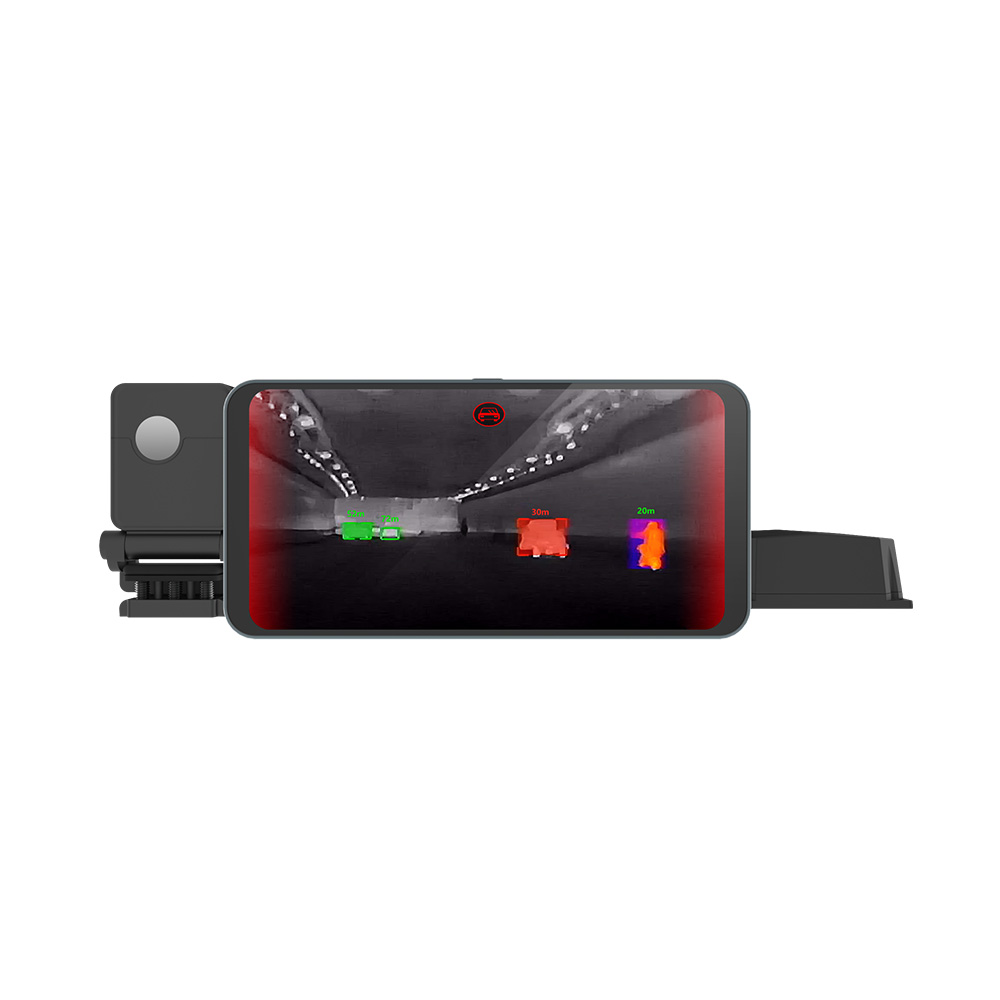

OEM Thermal Camera Core Buying Guide: Edge AI, MIPI/USB & Drone Integration
2026年7月29日
Infrared Thermal Sensor Module Guide: Selecting High-Res IR Modules for Edge AI & Drones
2026年7月30日
Uncooled Thermal Module Solutions: High-Res AI & OEM Integration Guide
Look, in the rapidly changing world of electro-optical sensor integration, the uncooled thermal module has become the absolute workhorse for autonomous systems, industrial automation, predictive maintenance, and tactical defense payloads. As edge processing hardware gets faster and smaller, system integrators and OEM engineers are kicking bulky, high-maintenance cooled infrared sensors to the curb. Instead, they're building around micro-scale Vanadium Oxide (VOx) focal plane arrays. Modern uncooled thermal cores hand you exceptional thermal sensitivities—we're talking Noise Equivalent Temperature Difference (NETD) under 30mK to 40mK—at a tiny fraction of the power draw. That lets you capture continuous thermal signatures on platforms where space and power budget are tight, like unmanned aerial vehicles (UAVs), tactical ground robotics, handheld thermal scopes, and long-range perimeter monitoring stations.
Here's the deal: integrating high-resolution thermal vision into custom OEM gear isn't just about snapping a module into a case. It takes a deep, practical understanding of signal processing pipelines, thermal dissipation strategies, optical transfer functions, and high-speed digital video protocols. Whether you're streaming raw radiometric pixel data over direct low-latency MIPI CSI-2 buses to an onboard Edge AI system-on-chip (SoC), or pushing H.264/H.265 encoded IP video over RJ45 RTSP to a Remote Ground Control Station (GCS), your choice of thermal engine directly determines your detection range, AI inference accuracy, and thermal stability in the field. This guide gives you the engineering blueprint covering core physics, hardware interface pinouts, optical selection, thermal management, and practical integration tactics for building real-world thermal systems.
Table of Contents
- 👉 1. Understanding Uncooled Thermal Modules: Core Physics & ASIC Processing
- 👉 2. Video Output Architectures: Low-Latency MIPI vs. Network-Native RJ45 RTSP
- 👉 3. Edge AI Analytics, Thermal Calibration & SWaP Optimization
- 👉 4. OEM Uncooled Thermal Sensor Modules: Specs & Benchmarks
- 👉 5. System Architecture Decision Matrix: Resolution, Optics & DRI Ranges
- 👉 6. Deep-Dive OEM Integration FAQ
1. Understanding Uncooled Thermal Modules: Core Physics & ASIC Processing
1.1 Microbolometer Array Mechanics (VOx vs. a-Si)
At the center of every modern uncooled thermal module sits a microbolometer focal plane array (FPA). Unlike cryogenic cooled sensors that need power-hungry Stirling coolers to chill detector temperatures down to 77 Kelvin, uncooled microbolometers detect long-wave infrared (LWIR) radiation—typically in the 8μm to 14μm spectrum—right at ambient operating temperatures. That single difference gets rid of the heavy mechanical coolers, physical wear, high power draw, and lengthy warm-up times that plague cooled photon detectors. It's why uncooled cores are the go-to choice for embedded setups and mobile hardware.
When LWIR thermal energy hits the microbolometer, the lens focuses it onto tiny suspended absorbing membranes on each pixel. That absorbed heat changes the material's electrical resistance. The Readout Integrated Circuit (ROIC) underneath continuously samples this resistance change, converting thermal flux from the scene into multiplexed analog voltage signals. On the manufacturing bench, you'll run into two primary detector materials: Vanadium Oxide (VOx) and Amorphous Silicon (a-Si).
Mini 640×512 Thermal Imaging Core Demo Video
Vanadium Oxide (VOx): In the shop, VOx is still the top pick for tough thermal applications. It gives you a much higher Temperature Coefficient of Resistance (TCR)—around 2% to 3% per Kelvin—and stays far quieter when it comes to 1/f flicker noise compared to silicon options. VOx arrays regularly deliver superior thermal sensitivity, staying under 30mK to 40mK NETD. That level of precision lets a VOx sensor pull fine temperature differences out of washed-out scenes—like subtle moisture leaks, hidden structural framing, or targets masked by heavy fog and rain. To get top optical performance across the LWIR spectrum, these cores pair up with specialized chalcogenide or monocrystalline Germanium lens systems, like those designed by optical vendors such as LightPath Technologies.
Amorphous Silicon (a-Si): Amorphous silicon is cheaper to churn out on standard silicon fab lines and handles ambient temperature swings pretty uniformly. But let's be real: a-Si detectors suffer from lower TCR values and higher thermal mass per pixel. That means lower thermal sensitivity and slower response times. Because of this gap, VOx remains the dominant choice for high-res (640x512 and up) tactical scopes, drone gimbals, and high-speed industrial diagnostic tools.
The industry benchmark has settled around a 12μm pixel pitch. Moving down to 12μm from older 17μm arrays drops the physical surface area of the focal plane array without cutting native resolution. A 640x512 12μm FPA lets you use a smaller focal length lens to get the same field of view (FOV) you'd get on a 17μm sensor. That shrinks the lens glass diameter, slashes overall payload weight, and shrinks the sensor housing, making your SWaP-C (Size, Weight, Power, and Cost) targets much easier to hit.
1.2 Dedicated ASIC Image Processing Algorithms (NUC, DDE, 3DNR)
Raw pixel data directly off the ROIC is messy, non-linear, and loaded with spatial noise. Because each microbolometer pixel has tiny manufacturing variances and reacts to localized heat in the camera body, raw frames look grainy, washed out, and full of fixed-pattern noise (FPN). An industrial thermal core handles this by routing raw ROIC signals through an onboard Application-Specific Integrated Circuit (ASIC) that processes the video feed in real time.
This ASIC runs real-time image pipelines right in hardware, keeping frame output consistent and lag-free. Three main algorithm layers do the heavy lifting here:
- ⚙️ 1. Non-Uniformity Correction (NUC): Every microbolometer pixel responds on a slightly different gain and offset curve. NUC math adjusts these multipliers and offsets on every single pixel in real time. Old-school thermal cores relied on a mechanical shutter dropping across the lens every few minutes to recalibrate against a flat temperature, freezing your video for half a second to a full second. Modern cores run Shutterless NUC algorithms. They calculate spatial background drift on the fly using scene dynamics and internal thermal telemetry. No mechanical shutter means zero video dropouts—a absolute must-have if you're flying fast drones or running target tracking algorithms.
- ⚙️ 2. Digital Detail Enhancement (DDE): Thermal scenes can hit massive dynamic ranges—think a clear -40°C winter sky sitting right next to a +400°C industrial exhaust stack. Standard 8-bit displays squash that 14-bit raw range down, destroying subtle temperature details. DDE algorithms apply high-pass spatial filters to split fine high-frequency details (like power lines, target outlines, or structural seams) from broad background gradients. Boost local contrast on those high frequencies, and you get sharp, clear edges without blowing out high-temperature zones.
- ⚙️ 3. 3D Noise Reduction (3DNR): Electronic heat noise inside the ROIC can cause fine pixel jitter. The ASIC's 3DNR engine compares pixel neighborhoods across sequential frames, applying dynamic temporal filtering to smooth out gaussian noise. Smart motion-aware logic makes sure you don't get ugly ghosting artifacts when panning the camera quickly or maneuvering a vehicle.
2. Video Output Architectures: Low-Latency MIPI vs. Network-Native RJ45 RTSP
Your digital hardware interface decides how smoothly your thermal engine talks to down-stream mission computers, edge AI chips, local IP networks, or flight controllers. The two primary paths—direct low-latency raw interfaces like MIPI CSI-2 versus encoded IP streams over RJ45—handle very different jobs on the workbench.
2.1 Native MIPI CSI-2 Protocol Routing for Edge AI Acceleration
If you're building autonomous drones, small UAVs, tracking payloads, or smart thermal sights, latency is your main enemy. In closed-loop flight hardware or automated tracking systems, video delays over 20 milliseconds will throw off your control loops, causing overshoot or dropped target locks. Compact thermal cores built for these jobs expose direct, native MIPI CSI-2 (Mobile Industry Processor Interface Camera Serial Interface 2) outputs.
MIPI CSI-2 streams uncompressed raw video (8-bit, 10-bit, or raw 14-bit radiometric pixel data) over fast differential lines straight into the camera inputs of edge SoCs like the NVIDIA Jetson Orin series, Rockchip RK3588, or Raspberry Pi Compute Module 4. By skipping H.264/H.265 compression encoders and ethernet software stacks entirely, MIPI CSI-2 gets your glass-to-glass latency down below 10 milliseconds.
Streaming uncompressed 14-bit radiometric data over MIPI also gives onboard AI models (like YOLOv8, TensorRT detectors, or custom neural nets) direct access to exact temperature values for every pixel instead of compressed 8-bit RGB color approximations. That raw feed lets your AI run real-time object detection and radiometric thermal diagnostics (spotting overheating transformers or engine hot spots) directly in shared memory. If you're routing custom board traces for drone payloads, check out our full technical write-up on MIPI thermal camera module integration for drones.
2.2 Network-Native IP Encoding & Dual CVBS Signal Paths
For facility security, plant monitoring, border surveillance, and fixed IP camera rigs, running raw MIPI traces over a circuit board won't work once you cross short trace distances (usually capped around 15 cm). These installs need network-native thermal modules that can pump encoded video over standard Ethernet cables up to 100 meters without signal loss.
Network-native thermal engines integrate an IP encoder chip directly onto the sensor stack. This hardware encoder compresses ASIC video into clean H.264 or H.265 streams on the fly, outputting over an RJ45 Ethernet connector (or small Molex headers) using standard networking protocols:
- 🌐 Real-Time Streaming Protocol (RTSP): Delivers fast unicast or multicast video streams directly to Ground Control Stations like QGroundControl, Mission Planner, or media software (VLC, OBS) via basic network URL calls (like
rtsp://192.168.1.168:554/stream0). - 🔒 ONVIF (Profile S / Profile G / Profile T): Guarantees smooth drop-in compatibility with commercial Video Management Software (VMS), enterprise NVRs, and security systems without needing custom SDK code.
- ⚡ Dual CVBS Analog Fallback: To keep compatibility with legacy analog gear, long-range wireless analog video links, or FPV pilot goggles, advanced IP thermal cores offer an analog CVBS (Composite Video) signal (NTSC/PAL) at the same time. That gives you an uncompressed video signal even if network switches lose power or drop connection.
3. Edge AI Analytics, Thermal Calibration & SWaP Optimization
3.1 Thermal Management and Mechanical SWaP-C Constraints
Stuffing a high-res uncooled thermal module inside a fully sealed IP67/IP68 housing comes with real mechanical thermal management demands. Microbolometer chips don't use active cooling, but the core's high-speed image ASIC and network encoder boards churn out 1.0W to 2.5W of continuous heat during operation.
If that thermal energy gets trapped inside an enclosed body, internal temperatures rise, creating thermal gradients across the microbolometer FPA. Temperature shifts across the core chassis degrade the sensor's native NETD sensitivity and throw off temperature measurement calibration. To prevent heat drift and keep your build reliable, stick to these thermal practices:
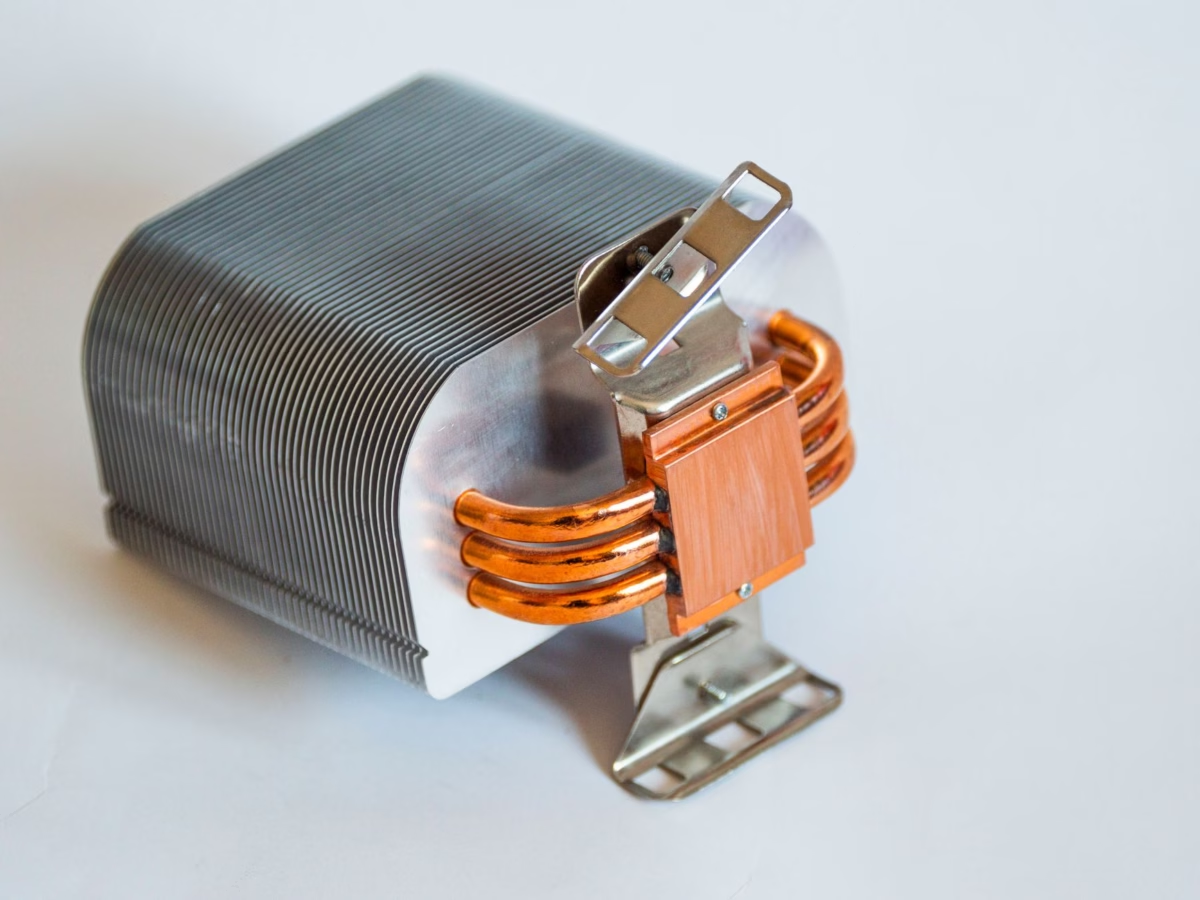
- 🌡️ Conductive Heat Sinking: Mount a dedicated thermal cold plate (copper or CNC-machined 6061-T6 aluminum) right against the module's primary heat sink area, coupling it straight to the outer metal shell. That pulls heat away from the sensitive optical stack passively.
- 🛠️ Vibration Isolation & Mechanical Decoupling: Aircraft motors and vehicle frames inject high-frequency jitter. Mount your thermal core housing using tuned silicone mounts or rubber dampers to protect internal Germanium elements and thin ROIC bond wires from vibration fatigue.
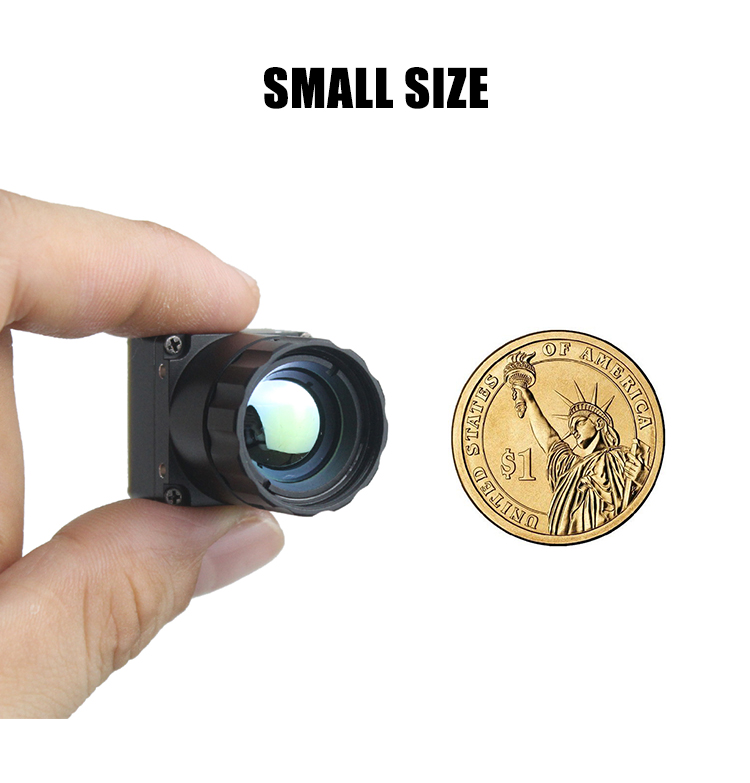
- ⚖️ Weight & Mass Distribution Optimization: Cutting payload grams gives you instant flight time gains on drones. Compact thermal engines under 30 grams keep gimbal inertia low, allowing you to run smaller gimbal motors while retaining clean multi-axis image stabilization.
3.2 Gimbal & Multi-Sensor PTZ Payload Harmonization
Modern pan-tilt-zoom (PTZ) optical systems rarely rely on thermal alone. Multi-sensor payloads on tactical drones and perimeter towers combine an optical zoom lens, an uncooled thermal engine, and a laser rangefinder (LRF) inside one integrated head.
Getting these channels to line up requires mechanical and electronic alignment (boresighting). You need to align the optical axis of the thermal lens directly with the optical center of the daylight camera. High-end ASIC thermal cores help out here by letting you store optical pan and tilt pixel offsets inside core firmware, making digital pixel alignment easy during factory setup.
When running signal cables through 360-degree continuous rotation slip rings in PTZ heads, using native IP output cores (RJ45/RTSP) reduces line count down to just power and four differential Ethernet wires, boosting connection reliability in demanding outdoor environments. For mechanical design ideas, explore our architectural breakdown of integrated thermal spherical PTZ camera systems.
4. OEM Uncooled Thermal Sensor Modules: Specs & Benchmarks
To help you evaluate hardware options for your upcoming build, here is a detailed breakdown and spec comparison of our production-ready OEM uncooled thermal cores.
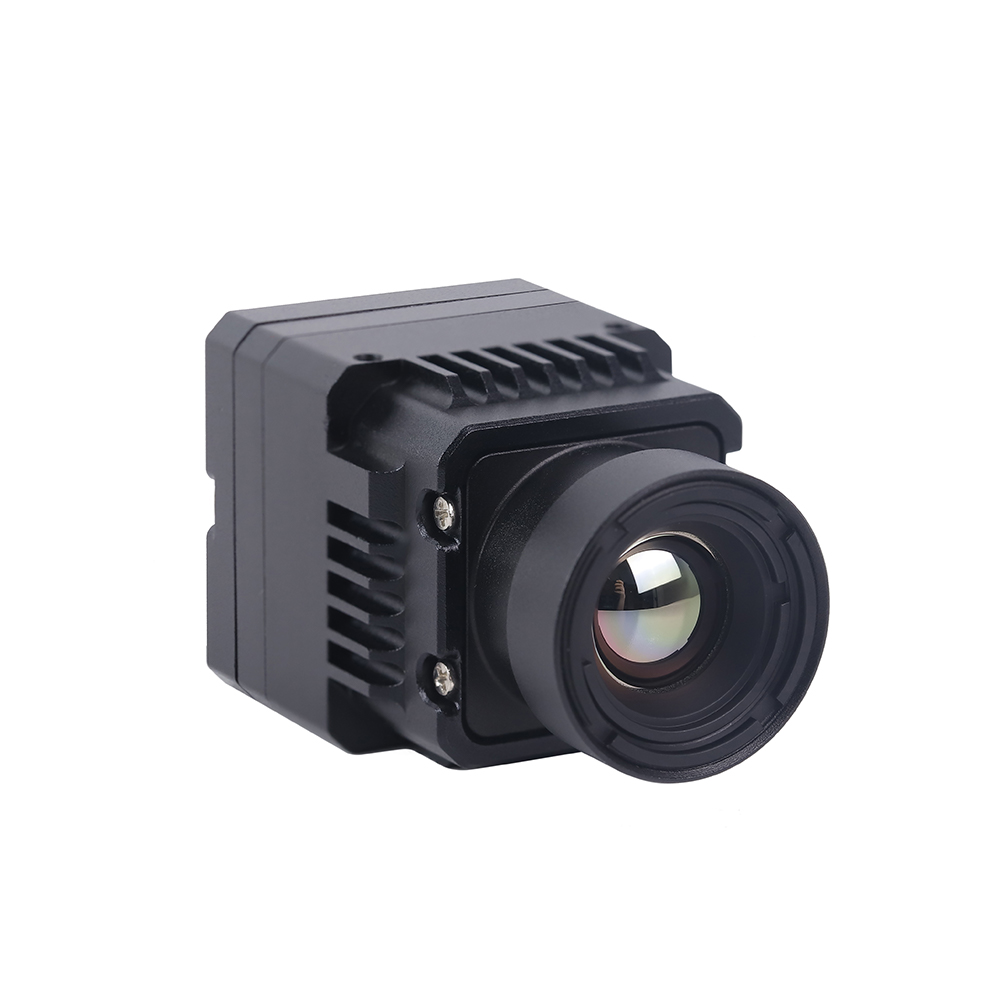
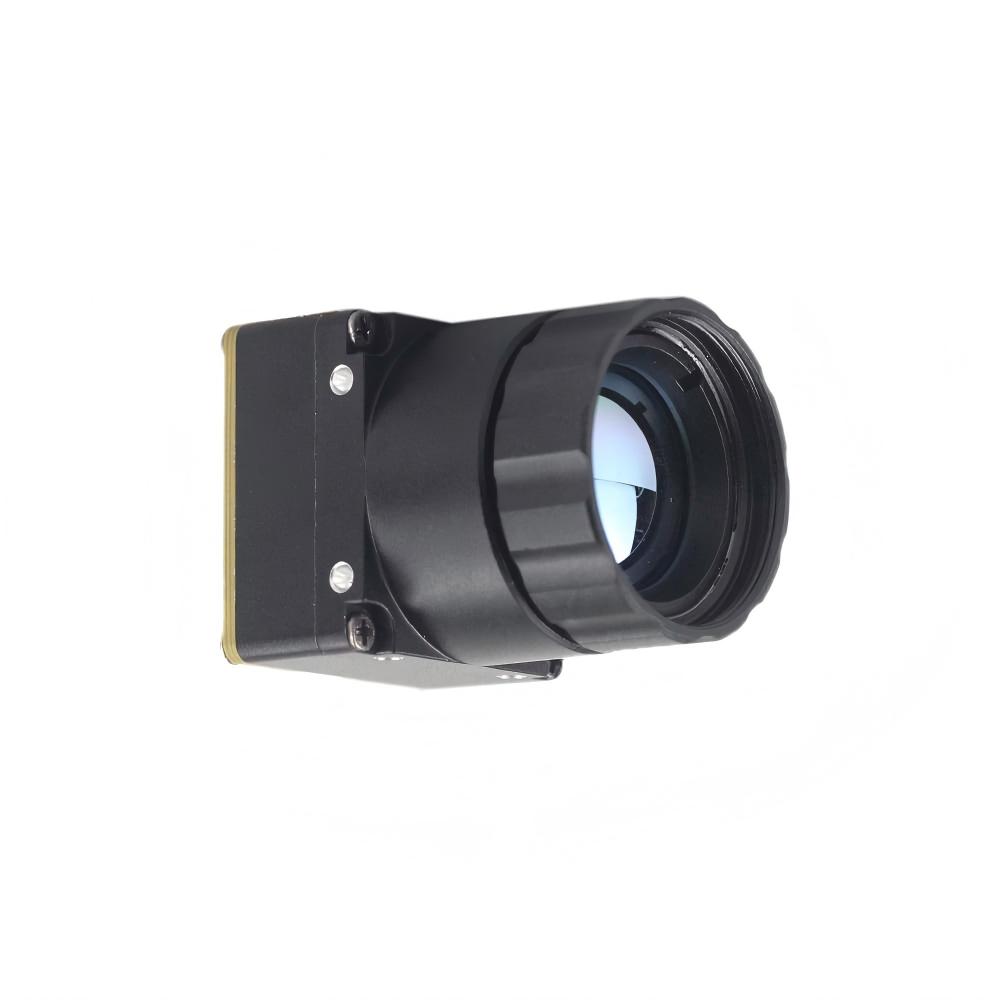
Uncooled Infrared RJ45 CVBS RTSP IP 640*512 Thermal Sensor Camera Module
Built for network security integration, industrial plants, and long-range IP surveillance, this 640x512 uncooled thermal core runs a high-sensitivity 12μm VOx microbolometer array. Driven by an onboard video ASIC, it delivers crisp, detailed thermal output with NETD under 40mK. Featuring dual RJ45 Ethernet and CVBS analog video outputs, it supports simultaneous RTSP/ONVIF IP streaming alongside direct analog monitoring.
- ⚙️ Array Resolution: 640 × 512 Pixels (12μm Pixel Pitch)
- ⚙️ Detector Type: Vanadium Oxide (VOx) Microbolometer
- ⚙️ Interfaces: RJ45 Ethernet (IP), CVBS Analog, RS232/RS485 Control
- ⚙️ Protocols: RTSP, ONVIF Profile S, UDP, HTTP
- ⚙️ Image Processing: Shutterless NUC, DDE, 3DNR, Multi-Palette Support
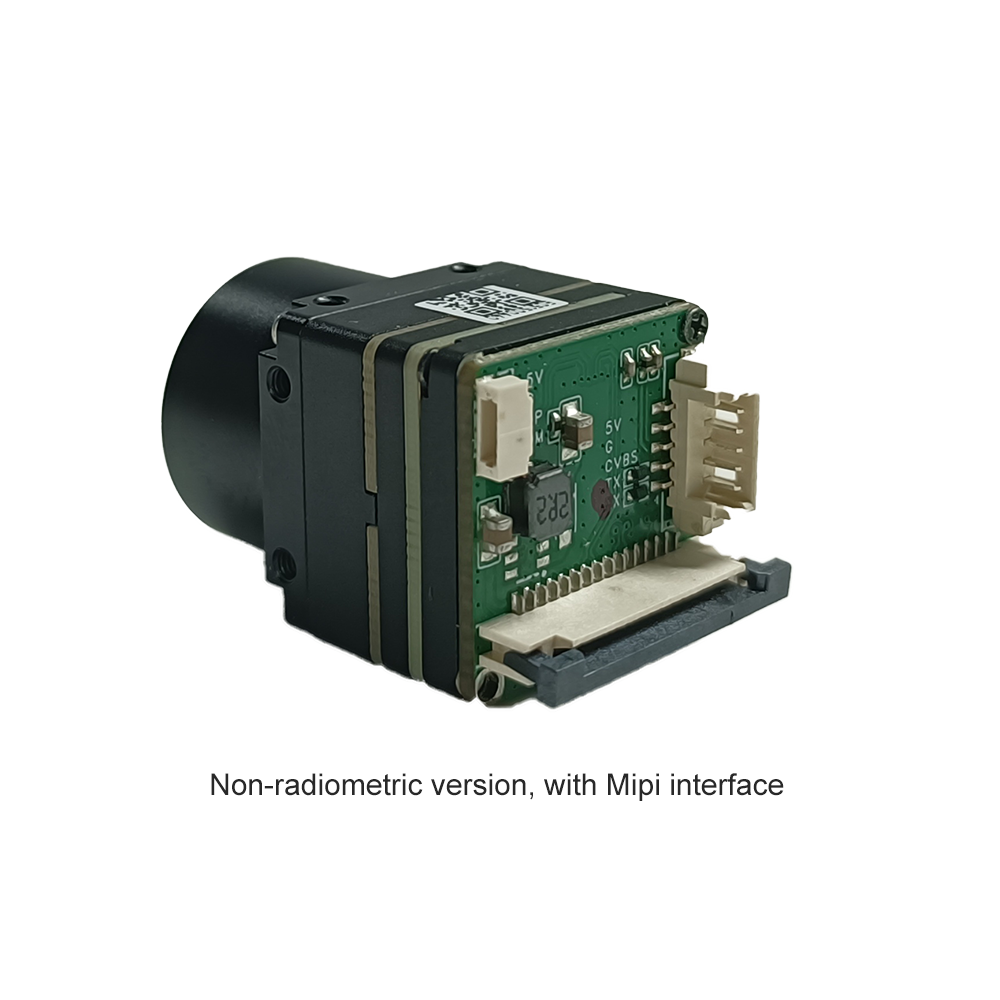
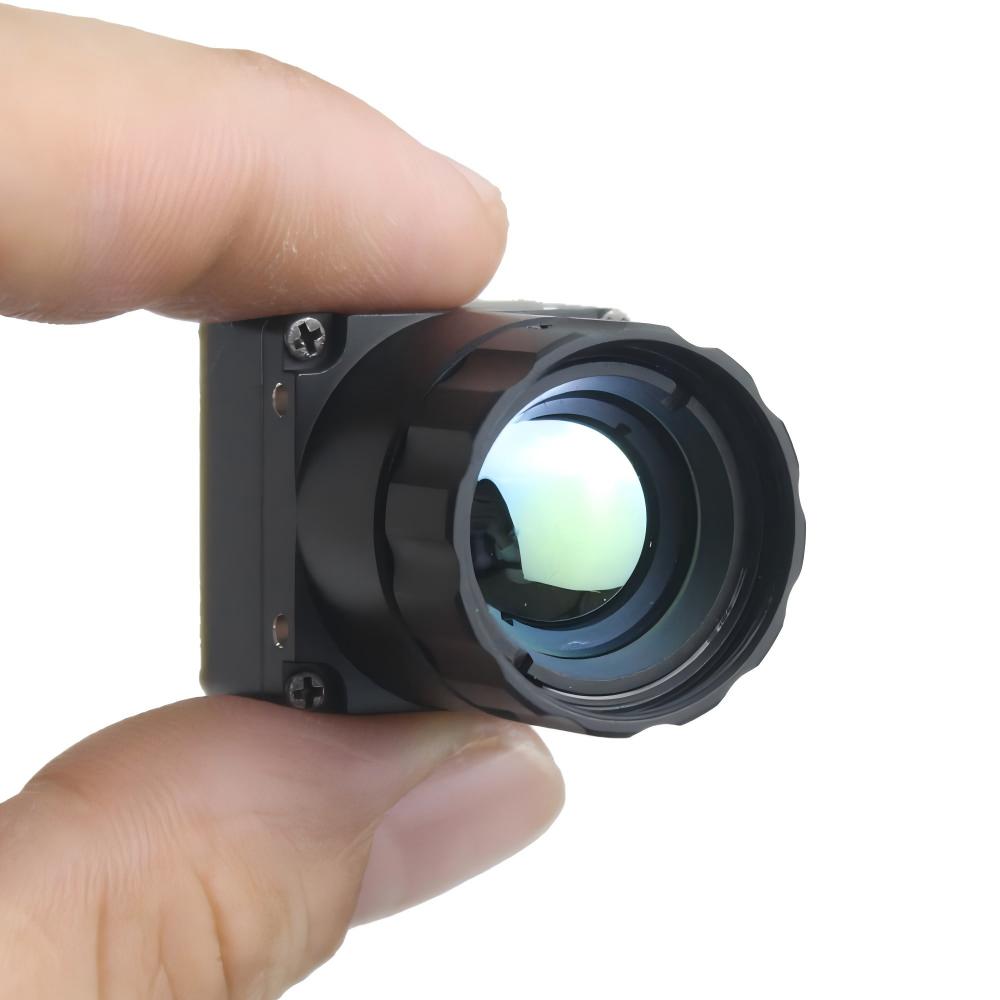
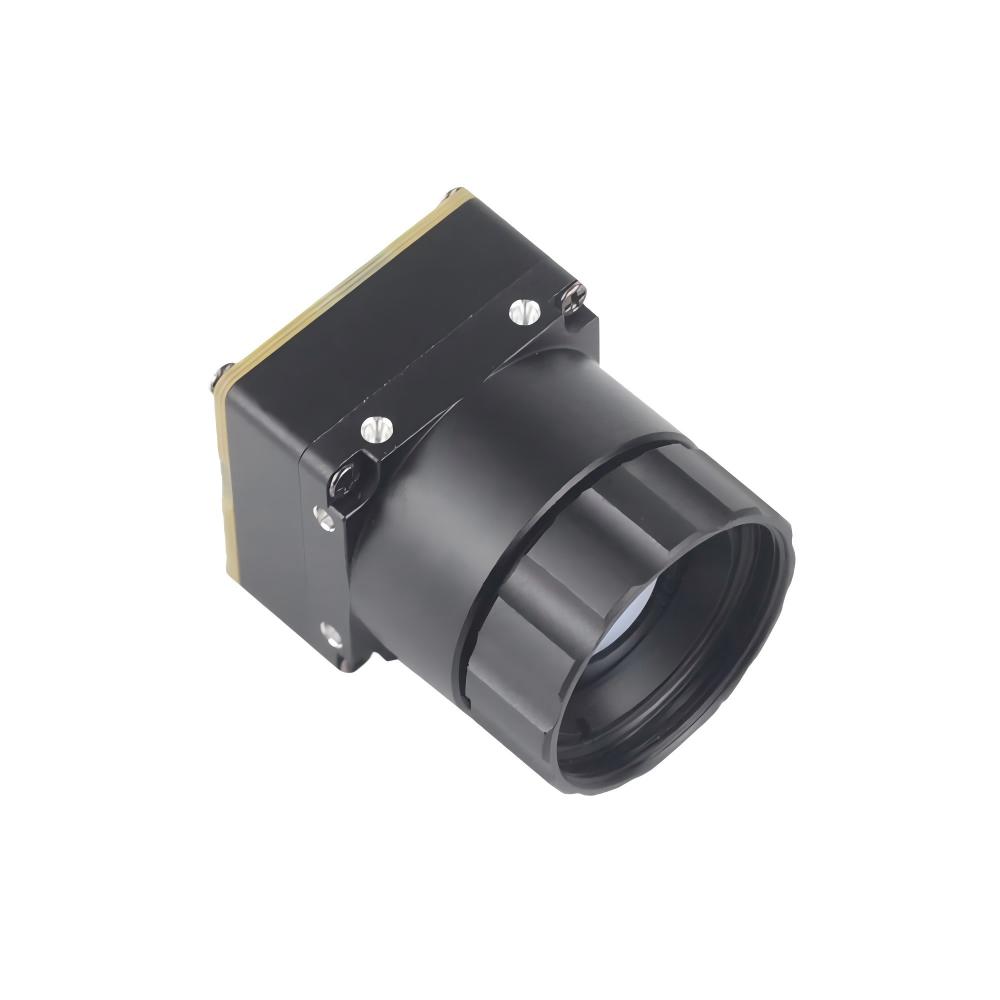
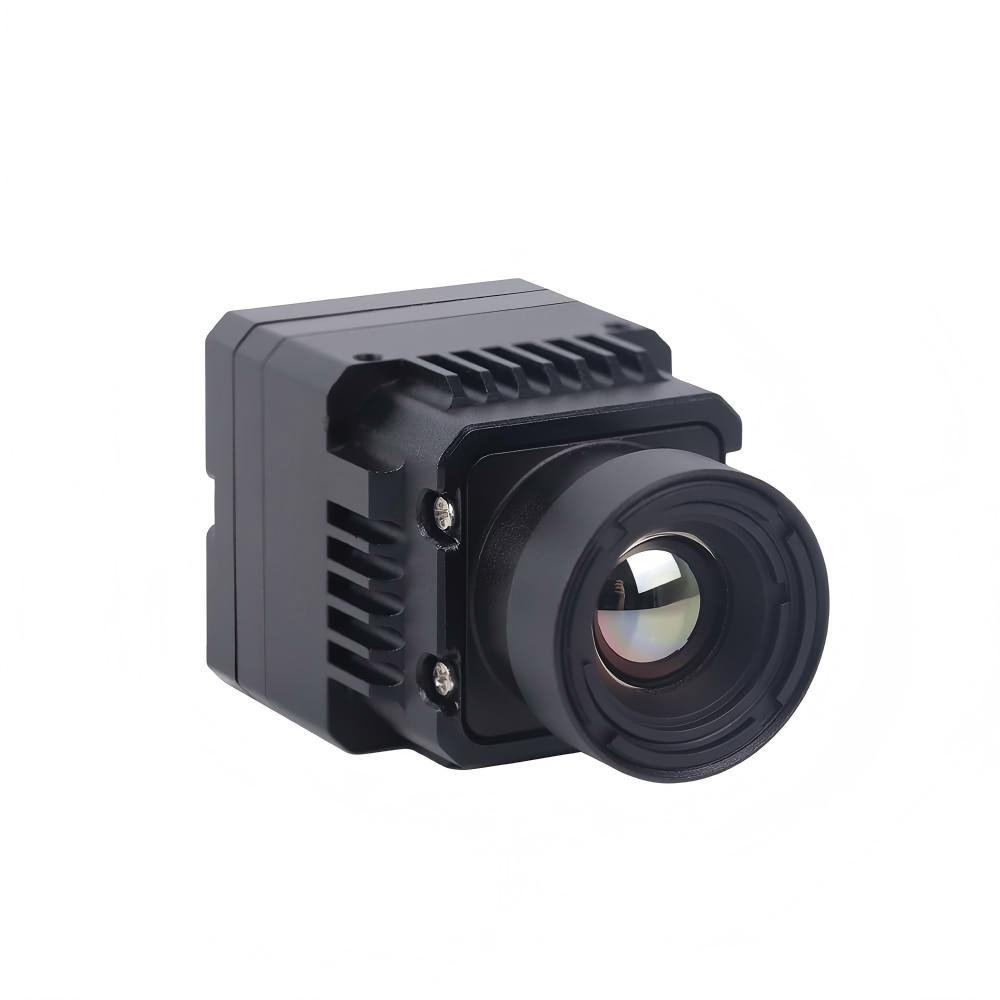
Uncooled Infrared Mipi 640 384 256 9mm Thermal Imaging Camera Module For Drones
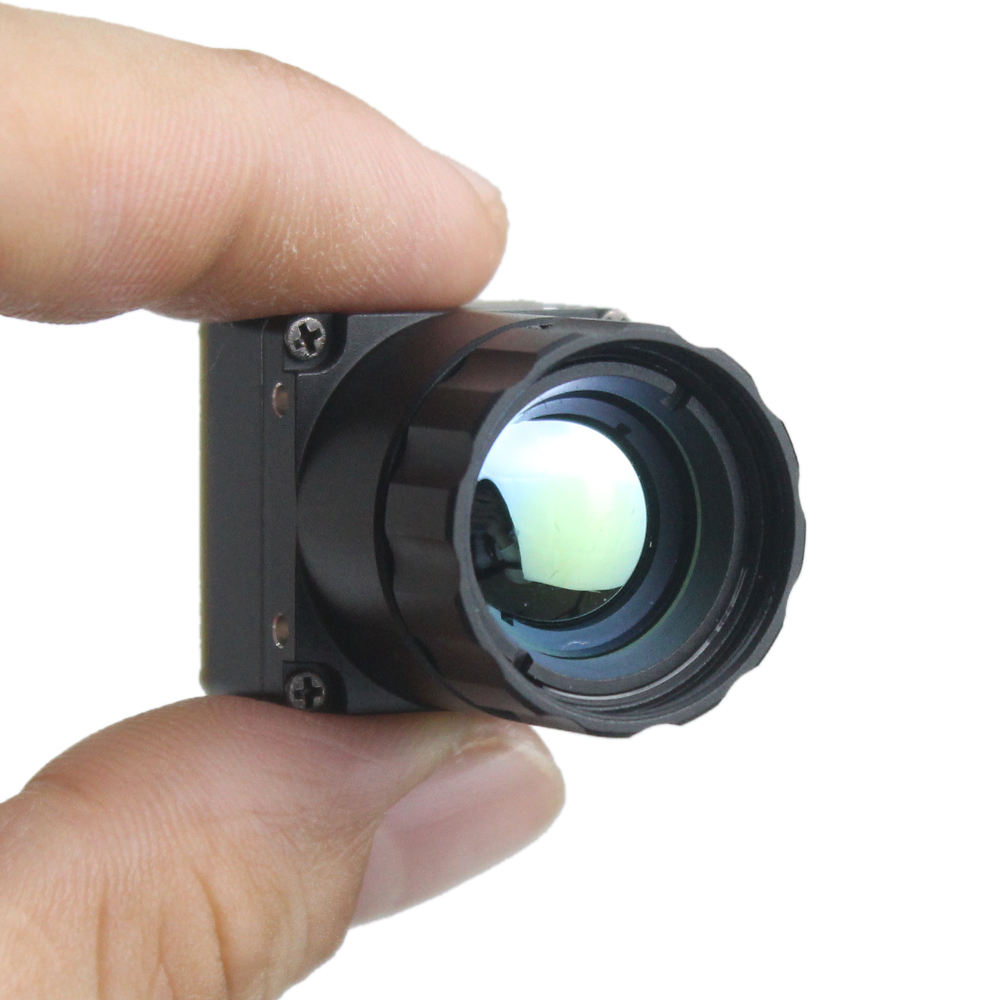
Designed from the ground up for tight drone gimbals, micro-UAV payloads, and embedded AI platforms, the Mini2 series packs top-tier thermal imaging into a lightweight, compact footprint. Offering array options up to 640x512 and a pre-focused 9mm lens, this core pushes direct native MIPI CSI-2 raw video output for immediate processing on host computers.
- ⚙️ Resolution Options: 640×512, 384×288, 256×192 (12μm VOx Array)
- ⚙️ Optical Configuration: 9mm Athermalized Fixed-Focus Lens
- ⚙️ Primary Output Interface: Native Low-Latency MIPI CSI-2
- ⚙️ Power & Mass: Ultra-low Power Consumption (<1.2W), Lightweight Build
- ⚙️ Target Applications: Drone Gimbals, Handheld Scopes, Robotics, Edge AI Tracking
Hardware Specification Benchmark Comparison
| Core Parameter | RJ45 RTSP IP 640×512 Module | Mini2 MIPI 640/384/256 Drone Core |
|---|---|---|
| Focal Plane Resolution | 640 × 512 Pixels | 640×512 / 384×288 / 256×192 Selectable |
| Pixel Pitch & Material | 12μm Vanadium Oxide (VOx) | 12μm Vanadium Oxide (VOx) |
| Spectral Sensitivity | 8μm to 14μm (LWIR) | 8μm to 14μm (LWIR) |
| Thermal Sensitivity (NETD) | < 40mK @ f/1.0, 25°C | < 40mK (Standard), < 30mK (Optional) |
| Video Output Pipeline | RJ45 IP Stream (H.265/H.264) + CVBS Analog | Native MIPI CSI-2 Raw / YUV Stream |
| Streaming Latency | 120ms – 180ms (Network Dependent) | < 10ms (Ultra-Low Latency Direct Digital) |
| Optics Mount | M12 / Threaded Lens Options | Integrated 9mm Athermalized Lens |
| Operating Power | < 1.8W typical @ 5V–12V DC | < 1.2W typical @ 3.3V–5V DC |
5. System Architecture Decision Matrix: Resolution, Optics & DRI Ranges
Choosing the right resolution—256x192, 384x288, or 640x512—comes down to calculating your target size, lens focal length, and operating range using Johnson's Criteria. Johnson's Criteria lays out how many resolved pixel line pairs you need across a target's critical dimension to hit reliable Detection, Recognition, and Identification (DRI) metrics:
- 🎯 Detection (1.5 Pixels across target): The operator or AI can tell an object is present (like spotting a hot point against cool background brush).
- 🔍 Recognition (6.0 Pixels across target): You can classify the target class (telling a human apart from an animal, or a truck from a car).
- 🎯 Identification (12.0 Pixels across target): You can pinpoint specific features (seeing if a person is holding a tool, or recognizing a specific vehicle model).
Here is how those resolutions stack up in real-world terms on the bench:
- ✅ 256 × 192 Format (49,152 Total Active Pixels): A low-cost option for short-range jobs. Works great for short-range obstacle avoidance, basic handheld tools, and small indoor ground robots under 100 meters. But at medium distances, targets cover only 1 or 2 pixels, making classification pretty much impossible.
- ✅ 384 × 288 Format (110,592 Total Active Pixels): A solid middle ground, giving you 2.25 times the pixel density of 256x192 cores. Popular for farm inspection drones, localized building checks, and mid-range site surveillance.
- ✅ 640 × 512 Format (327,680 Total Active Pixels): The standard for defense payloads, long-range drone rigs, mapping platforms, and AI-driven tracking systems. Delivering over 4.2 times the spatial pixel density of 256x192 modules, a 640x512 core puts far more pixels on target at equal focal lengths. That lets you run wider-angle optics to cover more ground without sacrificing DRI detection performance.
Focal Length vs. Field of View (FOV) Decision Matrix (12μm 640×512 Core)
| Lens Focal Length | Horizontal FOV | Human Detection (1.8m) | Human Recognition (1.8m) | Primary Application Domain |
|---|---|---|---|---|
| 9.1mm Lens | ~ 48° | ~ 380 Meters | ~ 95 Meters | Wide-Area Search & Rescue, Indoor Robotics, sUAS Flight Awareness |
| 13mm Lens | ~ 33° | ~ 540 Meters | ~ 135 Meters | Mid-Altitude Drone Mapping, Power Line Thermal Inspection |
| 19mm Lens | ~ 23° | ~ 790 Meters | ~ 198 Meters | Tactical Reconnaissance, Perimeter Fence Line Surveillance |
| 25mm Lens | ~ 17.5° | ~ 1,040 Meters | ~ 260 Meters | Long-Range Border Monitoring, Coastal Patrol PTZ Stations |
| 35mm Lens | ~ 12.5° | ~ 1,450 Meters | ~ 362 Meters | Extreme Stand-off Reconnaissance, Fixed Heavy Target Tracking |
6. Deep-Dive OEM Integration FAQ
Why choose an uncooled thermal module over cooled sensors for drone and embedded AI integration?
How do I interface an uncooled IR module with my embedded system using MIPI or RJ45 RTSP?
Should I choose a 256x192 or 640x512 uncooled thermal sensor module for my project?
What are the primary thermal management considerations when designing a sealed IP67 enclosure for a thermal module?
How does shutterless NUC (Non-Uniformity Correction) improve target acquisition in high-speed UAV operations?
📚 References & Further Reading
- 📌 Industry Standard: Wikipedia Microbolometer Fundamentals
- 📌 Optical Engineering Partner: LightPath Technologies Precision Optics
- 📌 Related Guide: MIPI Thermal Camera Module Integration for Drones
- 📌 System Architecture: Integrated Thermal Spherical PTZ Camera Systems
- 📌 Compliance & Terms: Thermal-Image Technical Terms of Use