
90mm Thermal Imaging Camera Module with Edge AI: Long-Range Precision
2026年7月6日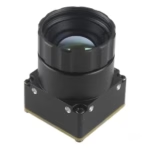
SPI Thermal Camera Module: High-Res LWIR Cores for ESP32 & Raspberry Pi Integration
2026年7月7日
For systems integrators, unmanned aerial vehicle (UAV) manufacturers, and automation engineers, selecting an infrared sensor is a delicate balance of weight, thermal sensitivity, and spatial resolution.
Here's the deal: the industry-standard thermal imaging camera module 640x512 VOx represents the absolute sweet spot for modern thermal diagnostics. It offers four times the pixel density of standard 256x192 sensors, allowing for long-distance spot measurements without compromising spatial resolution.
By leveraging Vanadium Oxide (VOx) microbolometer technology, these modules achieve superior thermal sensitivity (low NETD) and rock-solid stability under harsh conditions. In the shop, we find this makes them ideal for edge AI processing, industrial drone mapping, and real-time radiometric monitoring.
Look, this guide is designed to provide you with a comprehensive technical blueprint of 640x512 VOx thermal cores. We will cover core structural optics, low-latency communication protocols (USB-C/MIPI/SDKs), and practical integration pipelines for Edge AI platforms, ROS, and unmanned micro-gimbals.
Table of Contents
1. Fundamentals of 640x512 VOx Microbolometer Technology
An uncooled long-wave infrared (LWIR) camera core relies on a focal plane array (FPA) of microbolometers to detect thermal radiation, typically in the $8\ \mu\text{m}$ to $14\ \mu\text{m}$ spectral band. Unlike cooled photon-detecting counterparts that require bulky, power-hungry cryocoolers, these uncooled sensors operate at ambient temperatures, making them highly reliable for continuous industrial deployment.
The core technology behind these uncooled sensors is the microbolometer. For a detailed breakdown of the physical principles of thermal radiation, detection, and its broad industrial spectrum, refer to the Wikipedia Thermography Article.
Each pixel on a VOx (Vanadium Oxide) focal plane array is a micro-machined membrane suspended over a silicon substrate, separated by an insulating vacuum gap. This membrane contains an IR absorber layer and a thermistor material whose electrical resistance changes in response to temperature variations.
The choice of thermistor material determines the sensor's performance. The two primary materials used are Vanadium Oxide (VOx) and Amorphous Silicon ($\alpha\text{-Si}$):
- ✅ Vanadium Oxide (VOx): Offers a high Temperature Coefficient of Resistance (TCR) of approximately $-2\%$ to $-3\%$ per Kelvin at room temperature. This results in a larger resistance swing for minor thermal fluctuations, providing superior thermal sensitivity (often $<40\text{ mK}$ NETD) and lower 1/f noise.
- ❌ Amorphous Silicon ($\alpha\text{-Si}$): Although easier to manufacture using standard semiconductor lines, $\alpha\text{-Si}$ has lower thermal stability over time and a higher noise floor, requiring more aggressive digital filtering, which can lead to image artifacts during dynamic scenes.
Resolution Metrics: 640x512 vs. 256x192
The spatial resolution of a thermal sensor determines its ability to resolve fine detail at a distance. A $640 \times 512$ array contains 327,680 effective pixels, which is approximately 6.67 times more spatial data than a $256 \times 192$ array (49,152 pixels).
For industrial inspections, such as electrical busbar diagnostics or high-altitude drone agricultural surveys, this difference in pixel density is critical. Standard 256x192 sensors can suffer from pixel-averaging. When viewing a distant heat source (like a faulty electrical connection or a thermal anomaly on a power line), the target's thermal energy may fill only a fraction of a single pixel. The sensor averages the hot target with the cooler surrounding background, resulting in an artificially low temperature reading.
A 640x512 sensor resolves the same target across multiple discrete pixels, preventing this averaging effect and ensuring accurate radiometric data. For a deeper look into how these specifications translate to real-world industrial environments, check out our article on how thermal imaging features vary by target applications.
The sensitivity of a VOx core is measured in milliKelvin (mK) using Noise Equivalent Temperature Difference (NETD). An NETD of $<50\text{ mK}$ ($0.05^\circ\text{C}$) indicates that the sensor can distinguish temperature differences as small as $0.05^\circ\text{C}$ from the baseline noise floor. High thermal sensitivity is critical for identifying subtle thermal gradients, such as moisture intrusion behind building walls or faint gas leaks. This sensitivity remains consistent across the $8\ \mu\text{m}$ to $14\ \mu\text{m}$ LWIR spectrum, where atmospheric absorption of IR energy is at its lowest.
2. Hardware Architectures: UAVs, Edge AI & Live Streaming
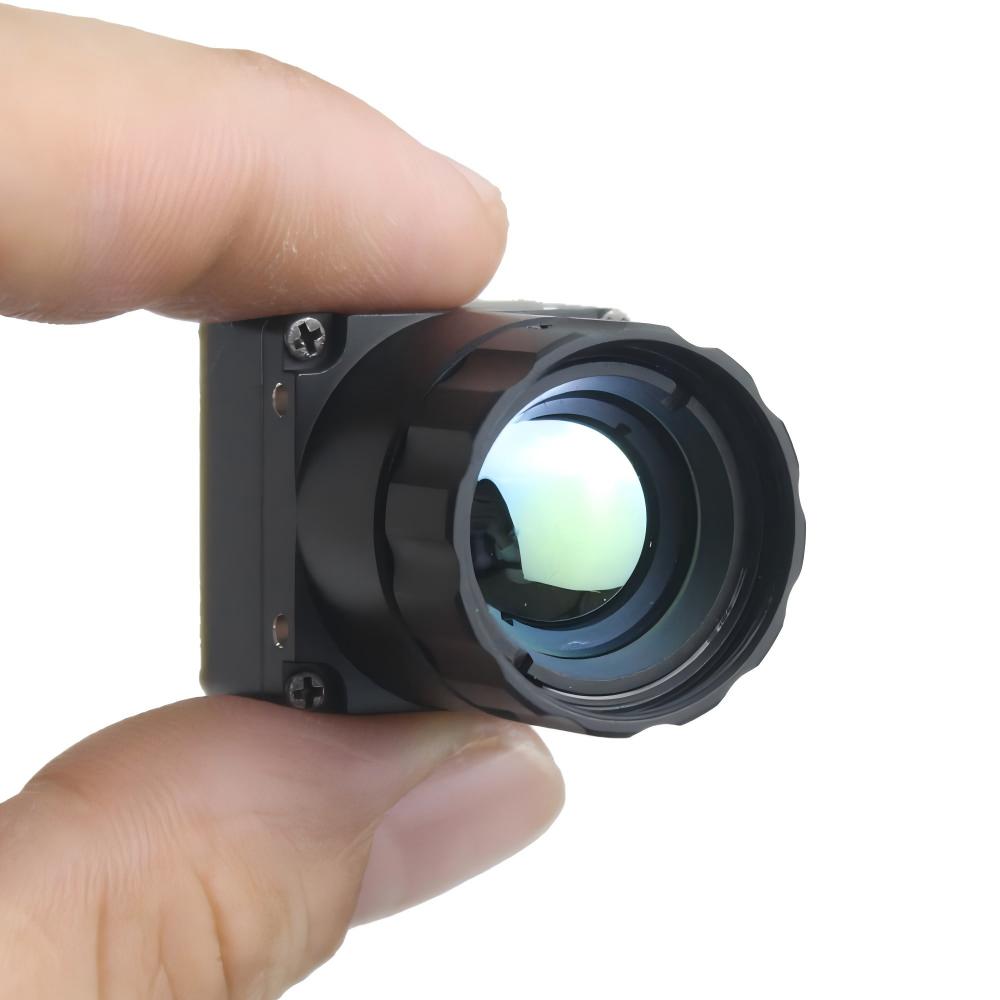
Integrating an uncooled LWIR sensor into space-constrained or power-limited systems requires a clear understanding of its hardware architecture and connectivity options. In airborne operations like payload integration for micro-drones, every gram affects flight time. Industrial-grade micro-cores feature compact footprints (often as small as $21\text{ mm} \times 21\text{ mm}$) and weigh less than 15–20 grams without a lens. Operating power consumption is typically kept below $1.5\text{ W}$, minimizing thermal dissipation requirements and avoiding heat buildup within sealed airframes that could affect sensor calibration.
Choosing the right interface is key to balancing distance, latency, and processing requirements:
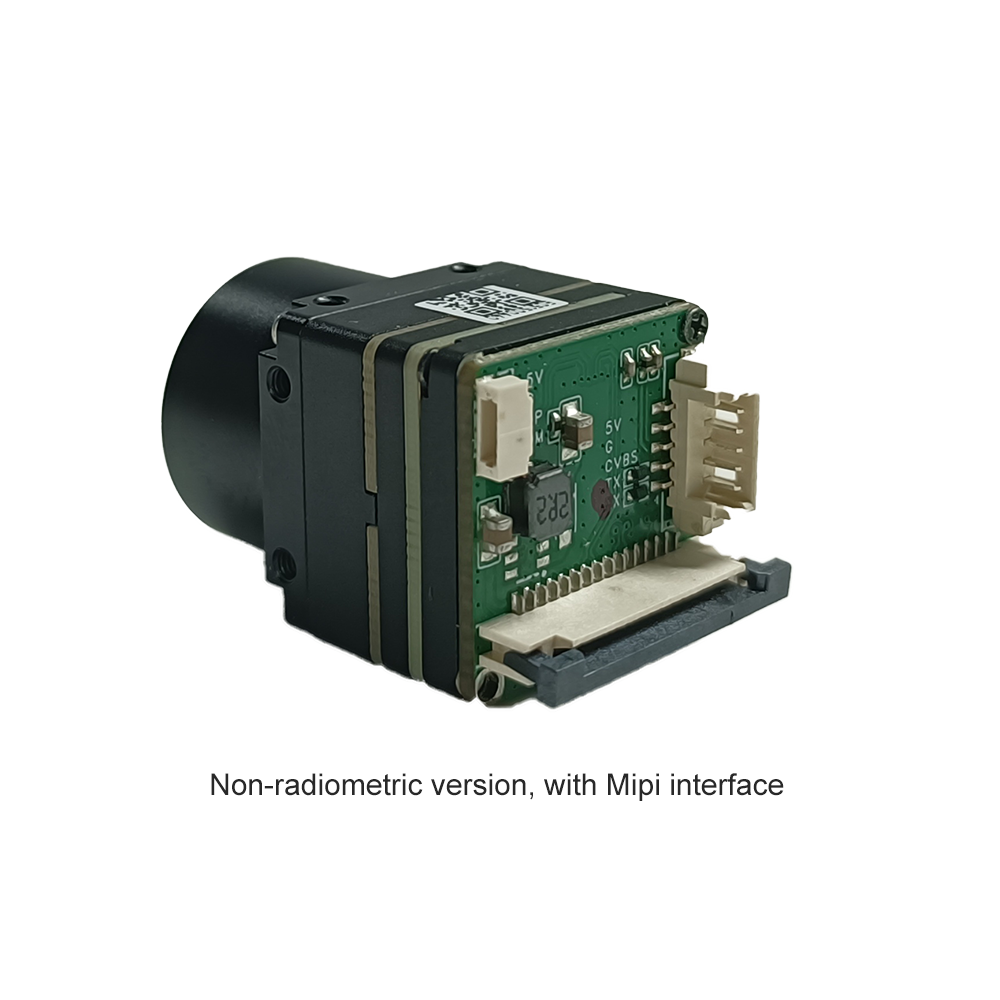
- ⚙️ MIPI-CSI (Mobile Industry Processor Interface - Camera Serial Interface): This is the preferred choice for direct connection to system-on-chips (SoCs) such as the NVIDIA Jetson Orin Nano or Raspberry Pi. It provides direct register-level control, ultra-low latency, and uses minimal CPU overhead by routing raw pixel data straight to the ISP (Image Signal Processor) or GPU memory.
- ⚙️ USB-C (UVC Compliance): Best for rapid prototyping and plug-and-play desktop/SBC integrations. It streams standard 8-bit YUV or MJPEG video formats directly to host applications, but extracting 14-bit raw radiometric data requires using proprietary API libraries.
- ⚙️ BT.656 / Parallel Digital: Commonly used for integration with legacy FPGAs and custom RF video transmitters.
- ⚙️ Composite Analog (PAL/NTSC): Ideal for low-latency FPV drone gimbals, offering near-zero latency ($<10\text{ ms}$) transmission over analog open-band RF links, though it does not transmit radiometric temperature coordinate data.
Because uncooled microbolometers are highly sensitive to their own internal temperature changes, they must account for thermal drift. Standard modules use a mechanical shutter mechanism to run Non-Uniformity Correction (NUC) cycles. During a NUC (typically heard as a light click), the shutter closes momentarily to present a uniform thermal target, allowing the sensor to recalibrate the offset values of each individual pixel. For critical aerospace applications where a 1-second freeze-frame is unacceptable, advanced modules use "shutterless" NUC algorithms. These systems rely on real-time temperature sensors placed across the camera body to compensate for thermal drift using look-up tables (LUTs) in the device's firmware.
3. Comparative Technical Specifications Matrix & Product Showcase
To help integrators select the right thermal core for their platform, the following detailed matrix and showcase compare our leading uncooled modules, available through our trusted global distribution network at KUYANG.
| Parameter / Feature | Mini 256 LWIR Core Module | Mini 640 LWIR Core Module |
|---|---|---|
| Sensor Technology | Uncooled VOx Microbolometer | Uncooled VOx Microbolometer |
| Resolution | $256 \times 192$ (49,152 pixels) | $640 \times 512$ / $640 \times 480$ (Up to 327,680 pixels) |
| Spectral Range | $8\ \mu\text{m}$ to $14\ \mu\text{m}$ (LWIR) | $8\ \mu\text{m}$ to $14\ \mu\text{m}$ (LWIR) |
| NETD (Sensitivity) | < 50 mK @ $25^\circ\text{C}$ (F/1.0) | < 40 mK @ $25^\circ\text{C}$ (F/1.0) |
| Core Dimensions | Miniaturized ultra-compact assembly | $21\text{ mm} \times 21\text{ mm}$ module footprint |
| Focal Length options | Optimized fixed focal range | 5 / 9 / 13 / 18 / 35 / 50 / 75 / 100 / 150 mm optional |
| Features | Ultra-clear thermal imaging, accurate temperature measurement, uniform thermal image output with radiometry. Similar to DJI mine detection systems. | Sharp and crisp image presentation, compact size, low cost, stable performance and strong environmental adaptability. Similar to DJI drone sensors. |
Product 1: Uncooled LWIR Mini 256*192 Thermal Imaging Camera Module Similar To DJI For Detecting Mines
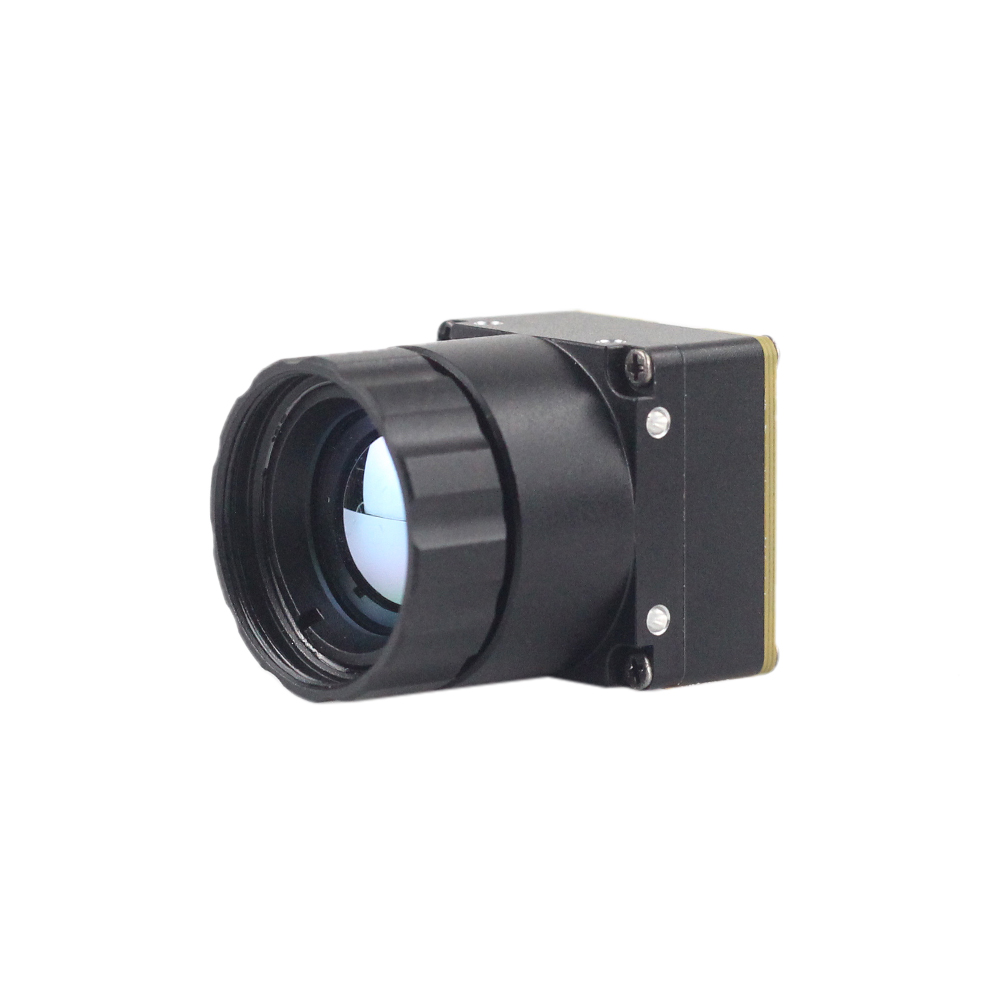
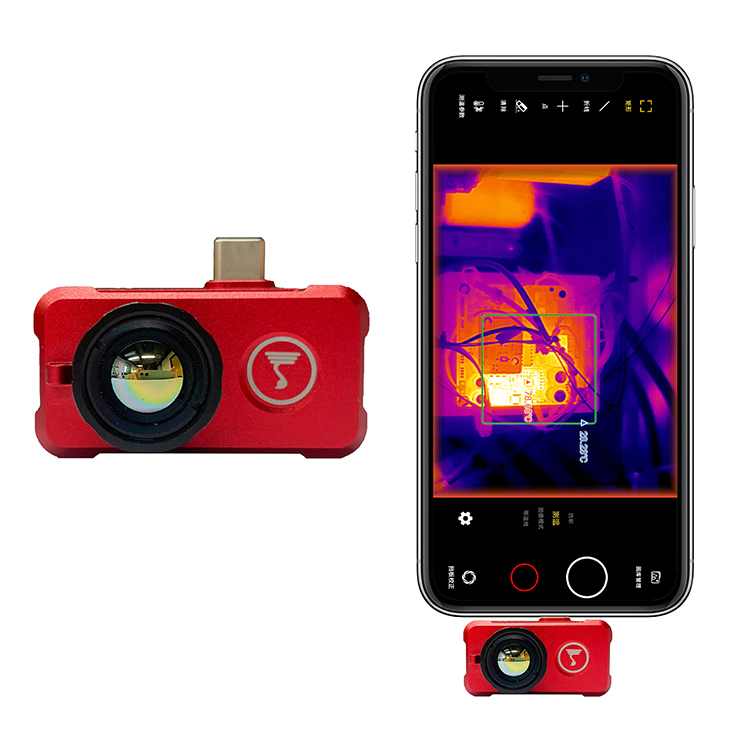
The Mini 256 Uncooled LWIR thermal Camera Module adopts high-performance infrared detectors for ultra-clear thermal imaging and accurate temperature measurement. It captures infrared radiation and outputs a uniform thermal image with radiometry, providing a lightweight yet powerful payload for landmine detection and localized structural assessments.
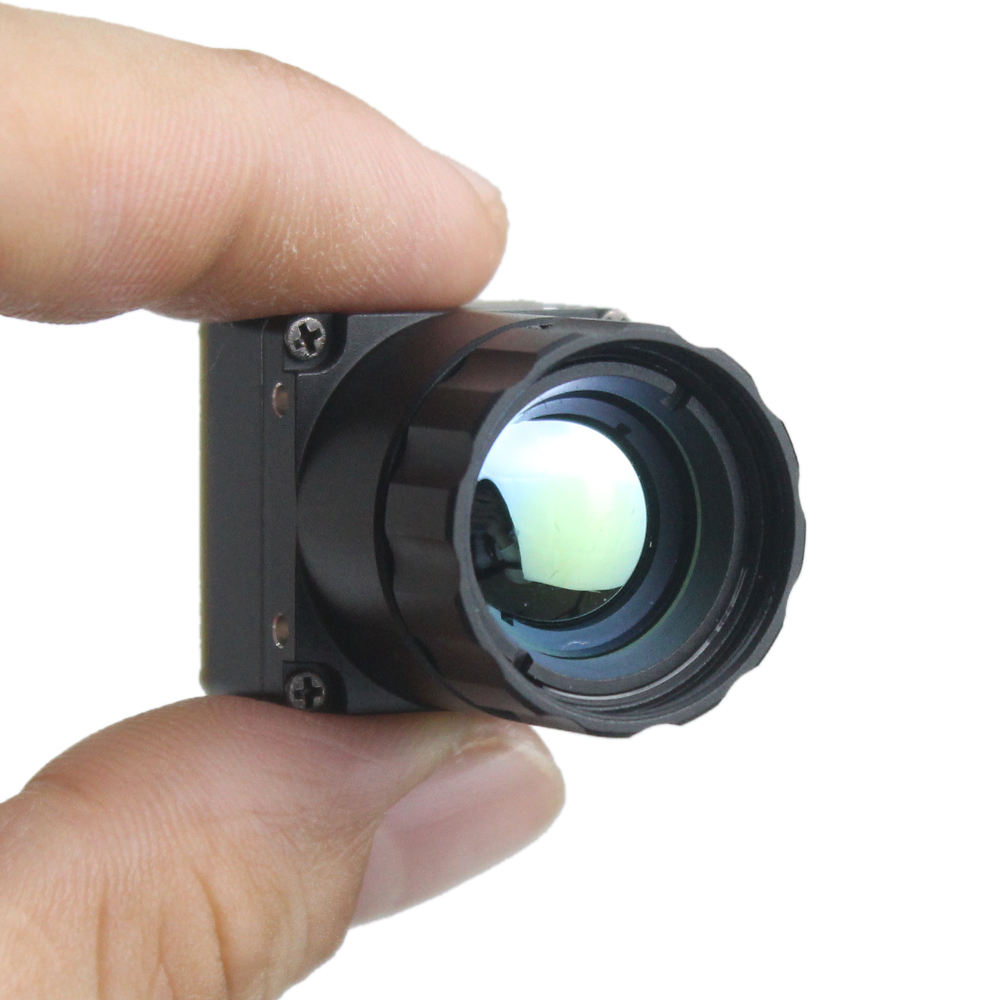
Product 2: Uncooled LWIR USB Mini 640*512 Thermal Imaging Camera Core Module For Drones Similar To DJI
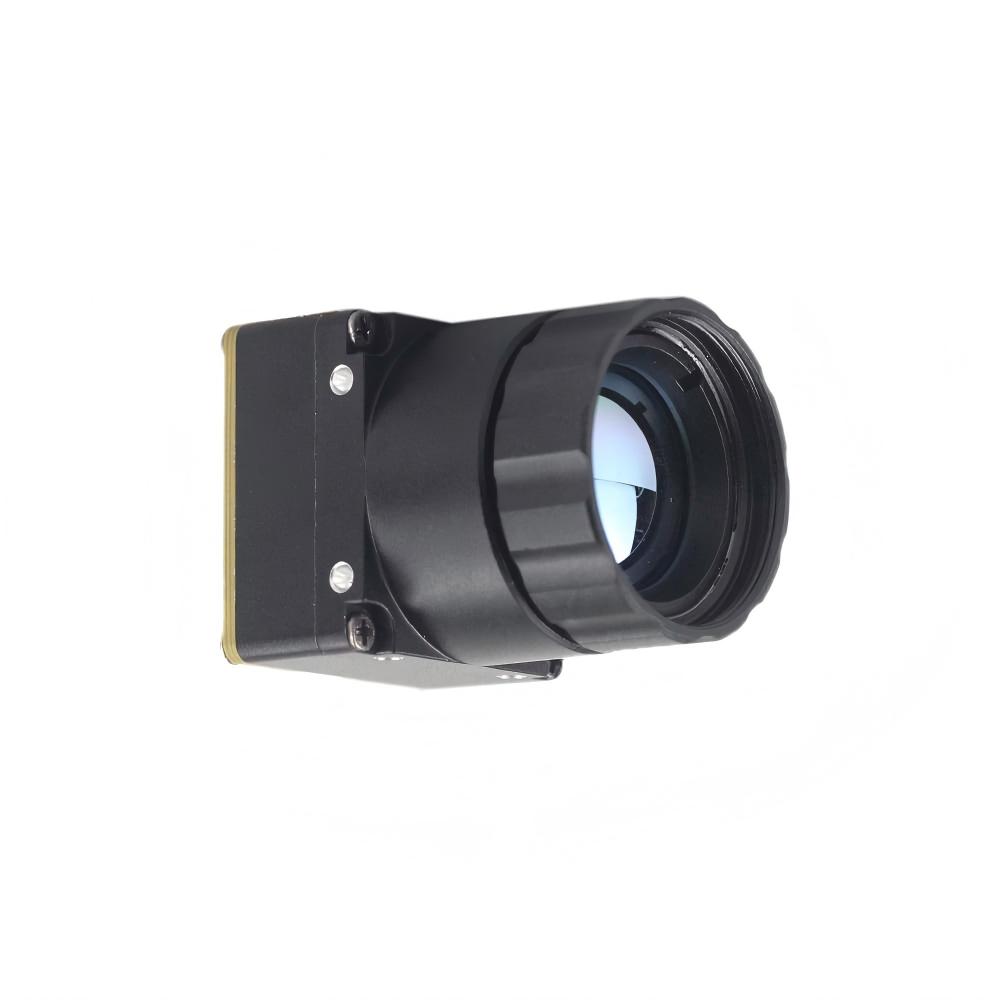
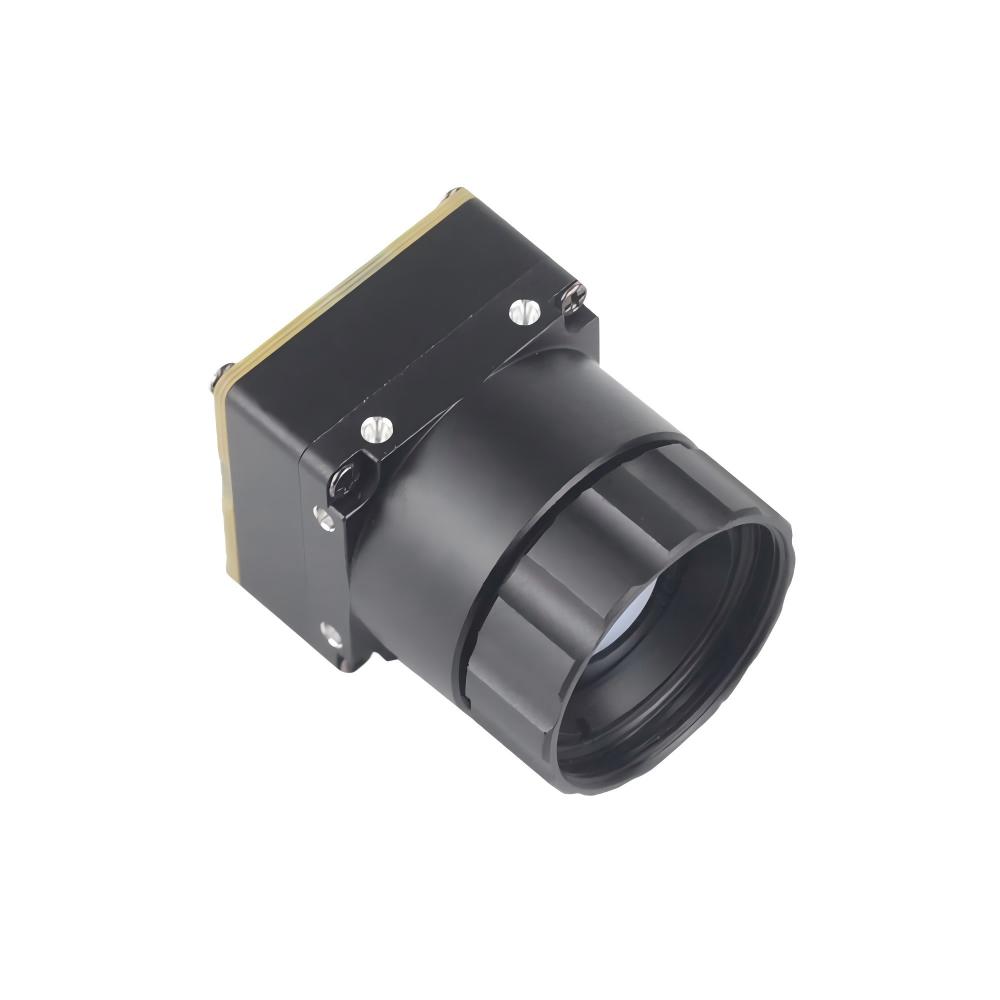
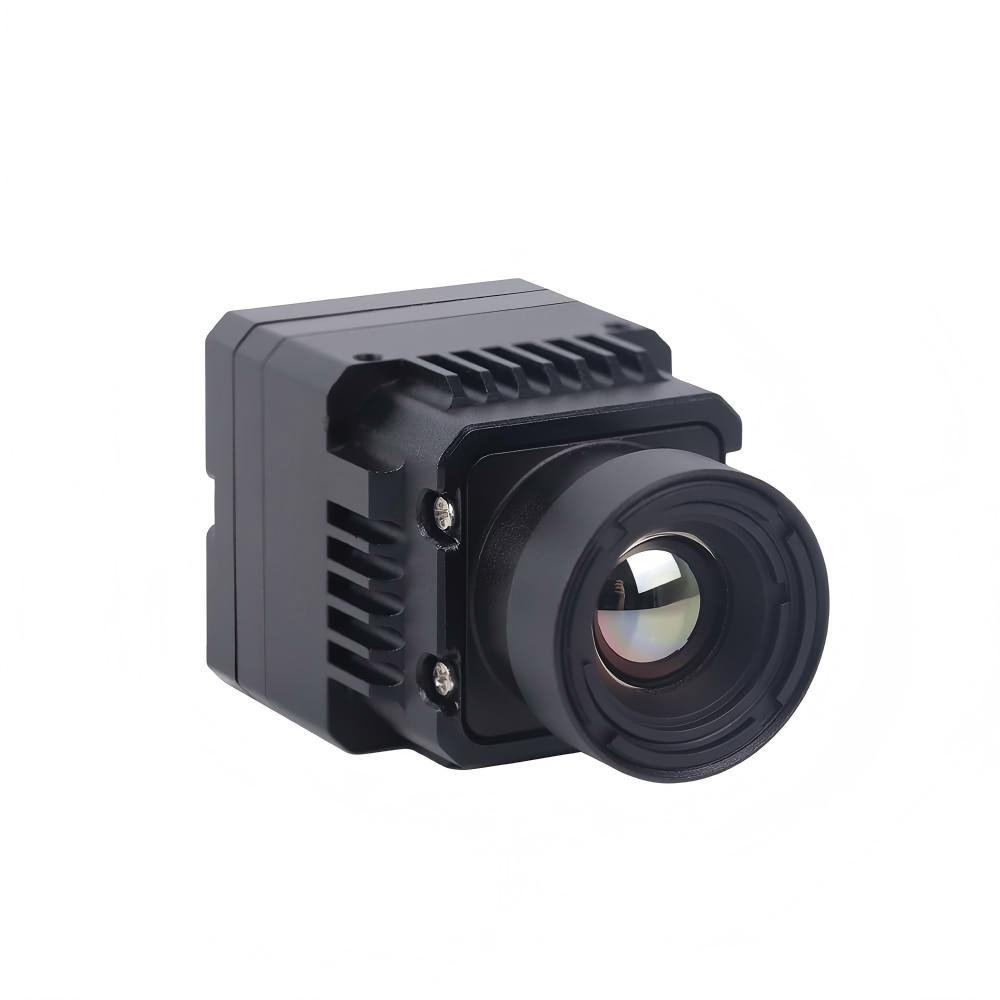
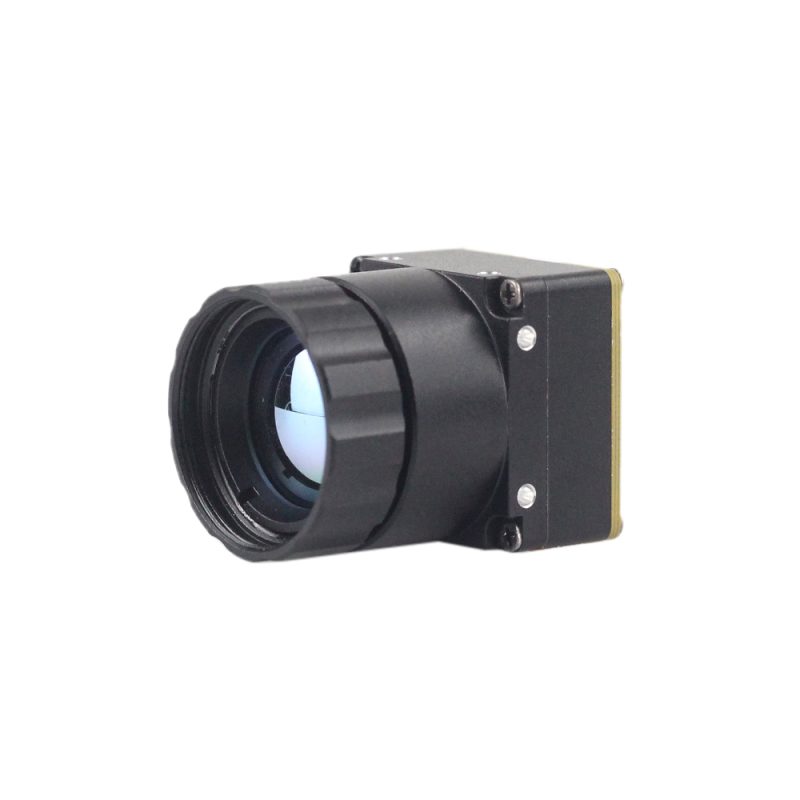
Engineered for high-altitude drone maneuvers and deep hardware stack integrations, this mini uncooled infrared thermal imaging module features sharp and crisp image presentation, compact size, and low cost. It features a micro size of 21mm*21mm, various lens focal lengths (5/9/13/18/35/50/75/100/150mm), and customizable 640*480 or 640*512 resolution settings, providing highly stable performance and environmental adaptability.
4. Software Integration: SDKs, ROS, & Raw Radiometric Extraction
Extracting data from a 640x512 VOx thermal core involves separating the colorized video output from the raw radiometric temperature data.
Standard video streams (YUV or H.264/MJPEG) undergo Automatic Gain Control (AGC) and color-mapping (such as Ironbow or Rainbow palettes) directly inside the camera's FPGA. While this 8-bit output is ideal for human operators, it discards the underlying temperature information. For quantitative thermal analysis, systems must read the 14-bit raw digital output. In this mode, each pixel contains a raw Digital Number ($DN$) that is proportional to the incident infrared radiation.
The conversion from raw $DN$ to absolute temperature ($T$ in Kelvin) is governed by internal calibration equations programmed into the module's EEPROM, which can be expressed as:
$$T_{\text{pixel}} = (DN \times \text{Gain\_Factor}) + \text{Offset\_Constant}$$
Most SDKs automate this conversion, outputting a floating-point array of absolute temperatures at the sensor's native $640 \times 512$ resolution.
Python OpenCV and ROS Integration Architecture
To build autonomous robotic mapping platforms, you can integrate this data stream directly into Python and the Robot Operating System (ROS). Below is a typical implementation using Python and OpenCV to capture the raw 14-bit frame, translate it to Kelvin, and publish it as an image message.
import cv2
import numpy as np

def capture_radiometric_frame(device_index=0):
    # Initialize connection to the thermal core (configured for raw 14-bit output)
    cap = cv2.VideoCapture(device_index, cv2.CAP_V4L2)

    # Configure the capture driver to request raw 14-bit digital pass-through
    cap.set(cv2.CAP_PROP_CONVERT_RGB, False)

    ret, frame = cap.read()
    if not ret:
        print("[Error] Failed to acquire raw frame from VOx core.")
        return None

    # Express the image as a 16-bit unsigned numpy array
    raw_14bit = frame.astype(np.uint16)

    # Example Calibration logic: 1 mK per least significant bit (LSB)
    # Temperature in Kelvin = Raw DN * 0.1
    celsius_frame = (raw_14bit * 0.1) - 273.15

    return celsius_frame

if __name__ == "__main__":
    temp_matrix = capture_radiometric_frame(0)
    if temp_matrix is not None:
        print(f"Center pixel temperature: {temp_matrix[256, 320]:.2f} °C")
For robotic integrations, this array can be wrapped using the standard ROS packaging system:
<node name="thermal_core_node" pkg="thermal_camera_driver" type="vox_driver_node" output="screen">
  <param name="device_path" value="/dev/video0" />
  <param name="output_mode" value="14bit_radiometric" />
  <param name="frame_rate" value="50" />
</node>
Integrating a 640x512 VOx core with Edge AI frameworks (like YOLOv8 running on an NVIDIA Jetson platform) improves detection accuracy in low-light and adverse weather conditions. Applying object detection to raw thermal data allows security systems, search-and-rescue teams, and agricultural monitors to identify targets based on thermal anomalies, without relying on visible light. For more tips on incorporating thermal imaging sensors into everyday workflows, read our practical guide to thermal imaging.
5. Deep-Dive Frequently Asked Questions
Why do some thermal camera modules have laggy frame rates, and can the 640x512 VOx module stream smoothly?
The high-performance Mini 640 VOx Thermal Core bypasses these consumer limitations, offering professional-grade frame rates up to 50 Hz. Operating at 50 Hz drops the latency between consecutive frames down to just 20 milliseconds. This high frame rate is critical for drone gimbals (preventing pixel stabilization issues during fast flights), industrial monitoring (tracking high-speed processes on automated assembly lines), and security tracking.
How do I export raw radiometric temperature data for analysis to a Raspberry Pi or Arduino?
Professional 640x512 VOx core architectures solve this by supporting a raw digital output mode. This format streams the uncompressed 14-bit grayscale sensor values directly over digital interfaces such as USB-C (using the UVC class) or SPI/MIPI pins. When integrating with a Raspberry Pi: configure your video driver (such as V4L2) to request the raw pixel format (often designated as 'Y14' or 'Mono16'), read the resulting 16-bit buffer, and apply the calibration coefficients included with the module's SDK to convert these raw values into absolute temperatures. Due to processing power and memory limitations, Arduino microcontrollers are generally not suited for handling continuous raw 640x512 video streams.
Why are high-resolution thermal sensors so expensive, and is a 640x512 VOx module worth the investment for HVAC and inspection?
Additionally, fabricating high-pixel-count microbolometer arrays requires suspended micromachined structures for every single pixel on the silicon wafer. A tiny defect on the wafer can ruin an entire chip, making 640x512 arrays much more expensive to manufacture than smaller 256x192 sensors. Despite the higher upfront cost, upgrading to a 640x512 VOx sensor pays for itself in commercial HVAC and building inspections. The higher resolution provides four times the pixel density, which prevents pixel-averaging errors and allows inspectors to detect micro-faults from a safe and practical working distance.
📚 References & Further Reading
- Industry Standard: Wikipedia Thermal Imaging Technology
- Related Guide: Practical Applications of Thermal Imaging in Daily and Field Life
- Technical Reference: Exploring Thermal Product Features and Positioning Matrices
- Manufacturing Partner: KUYANG Professional Electronic Products Store