
Infrared Camera Module Selection Guide: High-Res Thermal Imaging for Drones & Embedded AI
2026年7月29日
Uncooled Thermal Module Solutions: High-Res AI & OEM Integration Guide
2026年7月30日
OEM Thermal Camera Core Buying Guide: Edge AI, MIPI/USB & Drone Integration
Look, the world of electro-optical engineering has changed drastically over the last few years. We used to be stuck dealing with heavy, power-hungry thermal cameras that cost a small fortune and required massive heatsinks just to stay operational. Not anymore. Today, whether you're building a lightweight payload for a small unmanned aerial vehicle (sUAV), designing handheld diagnostic optics, or dropping autonomous inspection gear on a factory floor, uncooled long-wave infrared (LWIR) engines are the name of the game.
Modern embedded builds demand high-resolution vision that can squeeze into tight, thermally constrained enclosures without killing your power budget. Selecting the right thermal camera core isn't just about grabbing the highest sensor resolution off a spec sheet. In the shop, we look at the complete picture: Size, Weight, Power, and Cost (SWaP-C), signal routing bottlenecks (MIPI CSI-2 vs. USB UVC), raw NETD thermal sensitivity, and onboard Edge AI processing muscle.
I put together this integration guide as an engineering blueprint for optical designers, system integrators, and OEM hardware leads. We're going to break down hardware communication protocols, ISP processing pipelines, mechanical mounting gotchas, and real-world thermal management strategies so you can bypass interface bottlenecks and shave months off your hardware design cycle.
Table of Contents
- 👉 1. What is a Thermal Camera Core? Fundamentals & SWaP Architecture
- 👉 2. Hardware Interfaces: MIPI CSI-2, USB, Ethernet, and Analog Video
- 👉 3. Edge AI Processing & Image Signal Processor (ISP) Pipelines
- 👉 4. Drone, UAV, and Mechanical Payload Integration
- 👉 5. Featured OEM Thermal Camera Cores: Specifications & Comparison
- 👉 6. Deep-Dive Frequently Asked Questions (FAQ)
1. What is a Thermal Camera Core? Fundamentals & SWaP Architecture
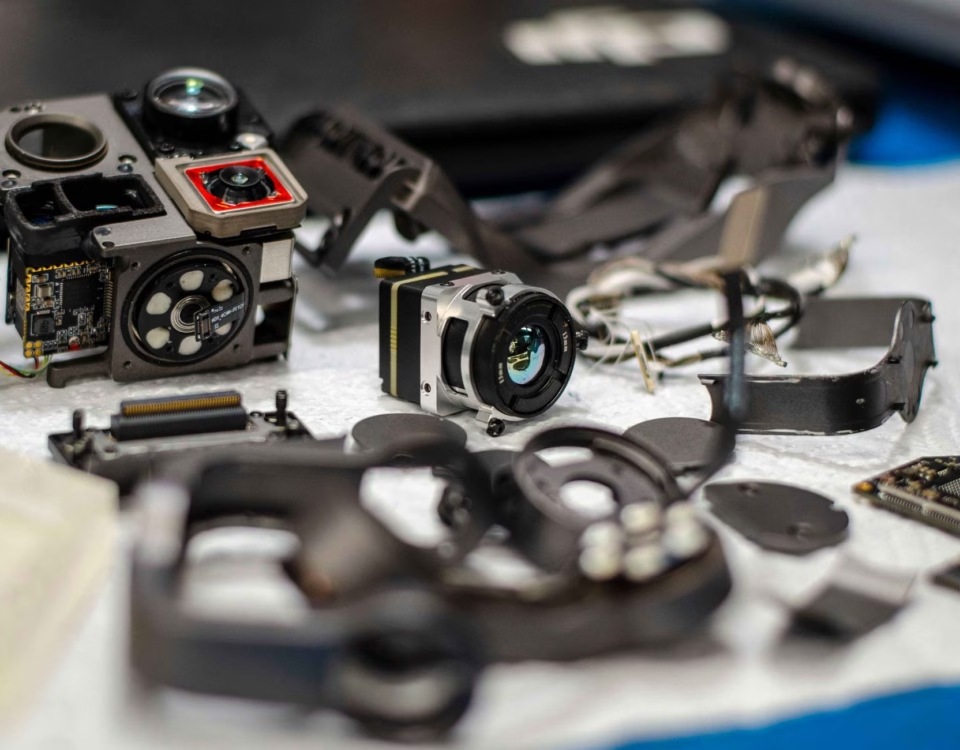
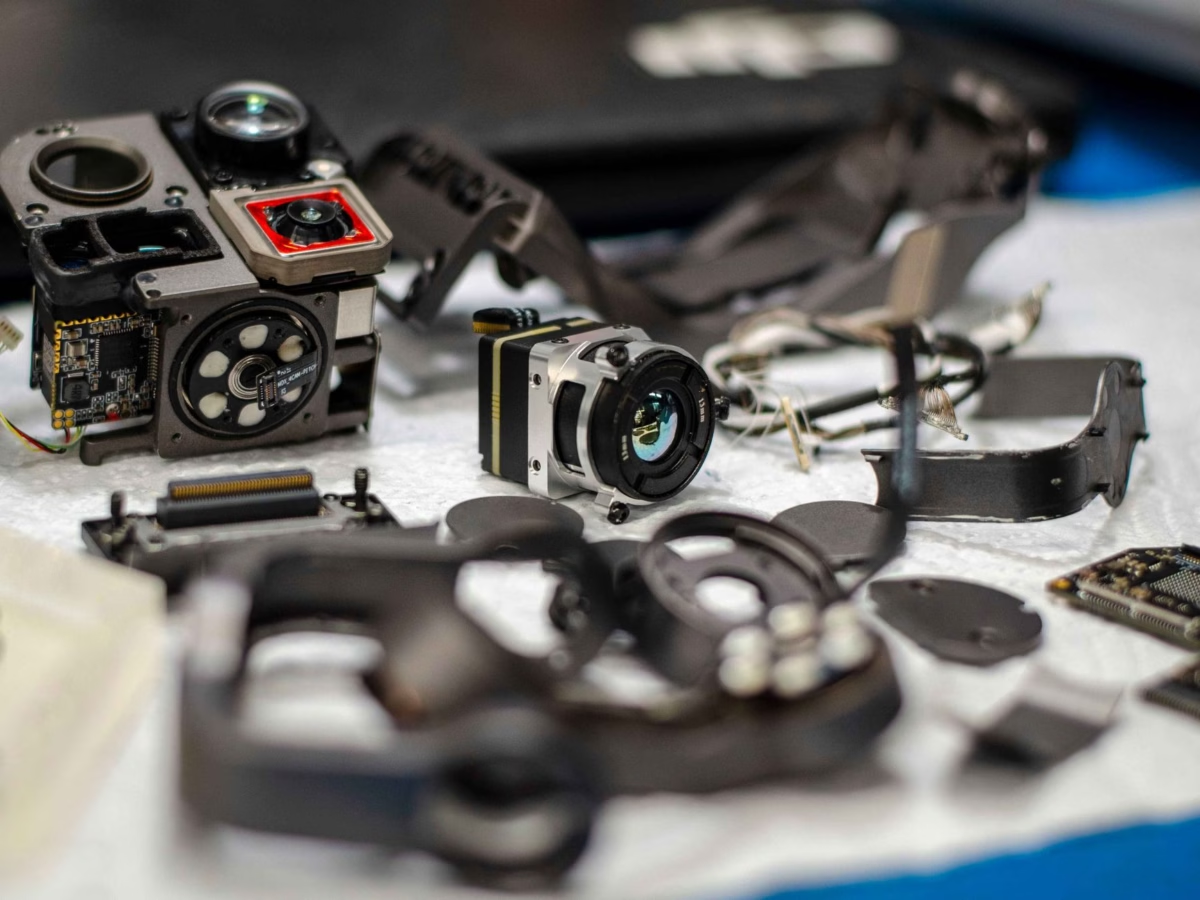
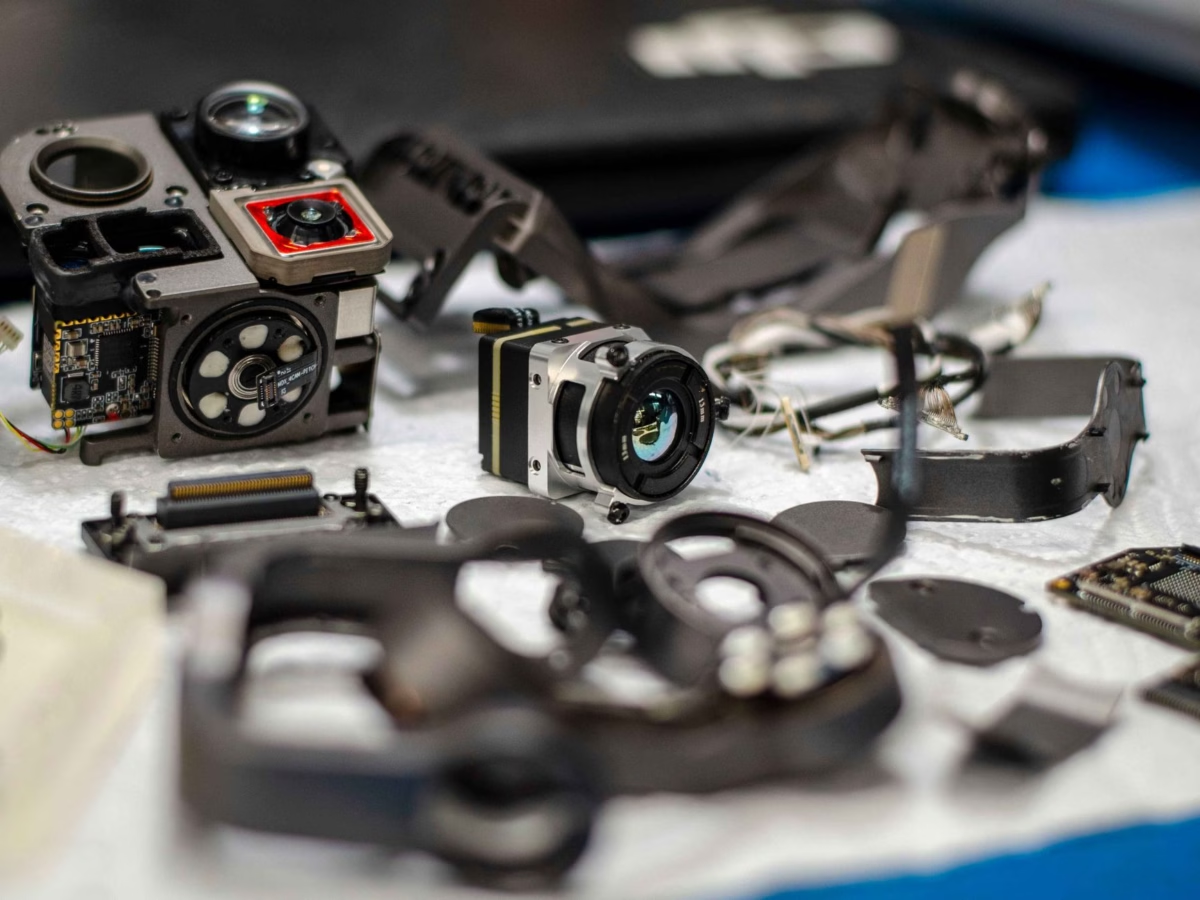
When engineers talk about a thermal camera core—or an OEM thermal engine—we're referring to the stripped-down, electro-optical engine of an infrared system. Strip away the outer weather-proof enclosure, handheld grips, batteries, and external displays, and you're left with the core engine: objective optics, a specialized Focal Plane Array (FPA) detector, Readout Integrated Circuits (ROIC), and an onboard processing board handling detector bias, A/D conversion, non-uniformity correction (NUC), and video formatting.
Standard visible spectrum cameras pick up light bouncing off objects between 0.4 µm and 0.7 µm. LWIR thermal cores operate out in the 8 µm to 14 µm spectral range, detecting raw heat radiated directly by matter. Every object above absolute zero radiates heat proportional to its temperature, and the microbolometer FPA inside the core converts those microscopic radiant energy shifts into resistance changes. The onboard electronics process those signals into a clean 2D thermal frame.
Microbolometer Sensor Technology: VOx vs. a-Si
Here's the deal on sensor substrates: the material science under the hood directly determines your scene noise, thermal sensitivity, startup speed, and operational stability when ambient temperatures start swinging wildly in the field. You'll run into two main sensor substrates on the market today: Vanadium Oxide (VOx) and Amorphous Silicon (a-Si).
- ✅ Vanadium Oxide (VOx): In the shop, VOx is our hands-down pick for industrial, defense, and high-end commercial platforms. VOx offers a significantly higher Temperature Coefficient of Resistance (TCR) and lower 1/f noise compared to silicon alternative substrates. What does that mean for you? Superior Noise Equivalent Temperature Difference (NETD)—frequently pushing sensitivity down to <30mK to <40mK. That extreme thermal resolution means a VOx core can pull crisp target details out of low-contrast environments like heavy fog, rain, or total optical darkness.
- ⚙️ Amorphous Silicon (a-Si): Amorphous silicon detectors are fabbed using standard silicon lithography, making them cheaper for high-volume consumer builds. But look, a-Si arrays carry lower TCR values and higher thermal time constants, giving you higher scene noise and elevated NETD numbers. They work fine for basic motion sensors or budget thermal tools, but if you're building drone payloads, target tracking gimbals, or optical gas diagnostic setups, stick with VOx.
If you want to dig deeper into the physical chemistry and absorption characteristics of microbolometers, check out the technical writeup on Wikipedia Microbolometer.
The SWaP-C Imperative in OEM Electro-Optical Systems
Ask any aerospace or robotics lead engineer about their biggest headache, and they'll tell you it comes down to SWaP-C: Size, Weight, Power, and Cost. Older legacy engines were total tanks—measuring well over 50mm x 50mm, weighing 100+ grams, pulling over 2.5 Watts, and needing bulky heatsinks just to survive. Next-generation OEM cores have flipped the script entirely:
SWaP-C Benchmarks for Next-Generation Thermal Cores
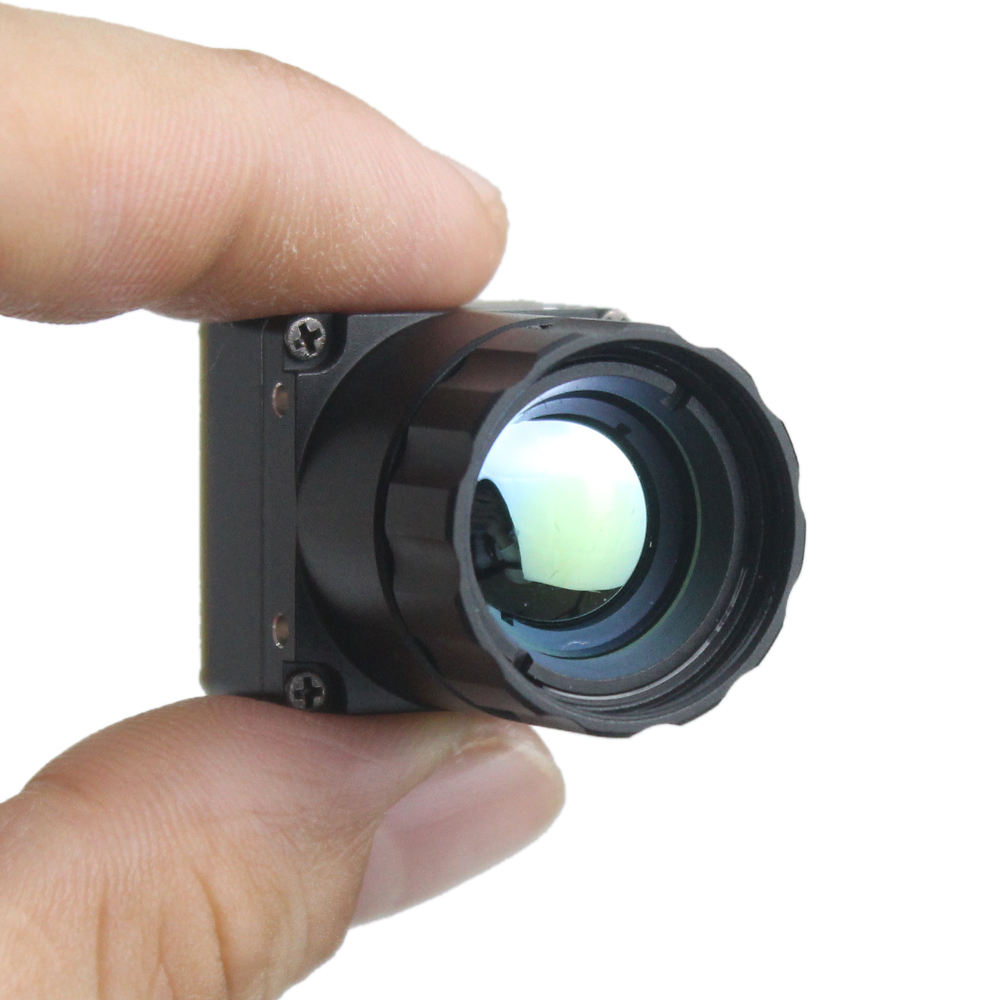
📏 Size (Miniature Form Factor): Standard core dimensions have shrunk down to a tight 21mm × 21mm profile. This compact footprint lets you drop thermal optics directly into standard M12 mounts, tiny pan-tilt gimbals, handheld diagnostic gear, and cramped UAV bays without custom enclosure redesigns.
⚖️ Weight (Payload Minimization): Lightweight core structures dropping under 15 grams cut down rotational inertia on motor gimbals, allowing smaller motor drivers and giving your battery-powered UAV precious extra minutes of flight time.
⚡ Power (Thermal Efficiency): Low-power Readout Integrated Circuits (ROIC) drop steady-state consumption down to <0.8W to <1.0W. Lower power draw means less heat generated internally, which dramatically simplifies passive thermal design inside sealed IP67/IP68 enclosures.
💰 Cost (Commercial Viability): Wafer-Level Packaging (WLP) and refined VOx microbolometer yields have brought unit costs down to earth, making mass integration practical for commercial security networks, industrial IoT, and agricultural optics.
2. Hardware Interfaces: MIPI CSI-2, USB, Ethernet, and Analog Video
Connecting an OEM thermal camera core to your host processor—whether that's an embedded System-on-Chip (SoC), flight computer, FPGA, or industrial single-board computer—means choosing the right interface standard. Get this wrong, and you'll run straight into high video latency, bad signal integrity, messy cabling, or lost radiometric data.
| Interface Standard | Target Host Hardware | Video Latency | Max Cable Distance | Primary Use Case |
|---|---|---|---|---|
| MIPI CSI-2 | Embedded SoCs (Jetson, Rockchip, NXP, HiSilicon) | Ultra-Low (< 5ms) | Short Trace (< 15cm) | Drone gimbals, Edge AI vision, direct SoC integration |
| USB 2.0 / USB-C (UVC) | Industrial PCs, Laptops, SBCs (Raspberry Pi, x86) | Low-Medium (20 - 50ms) | Standard (< 3m to 5m) | Plug-and-play prototyping, handheld tools, inspection labs |
| Ethernet (GigE / IP) | Network Video Recorders (NVR), Industrial Switches | Medium (50 - 100ms) | Long (< 100m Cat6) | Perimeter security, fixed industrial thermography networks |
| Analog Video (CVBS) | Legacy FPV Transmitters, Field Monitors | Zero Latency (< 1ms) | Coaxial (< 50m) | Tactical FPV drones, legacy analog composite displays |
MIPI CSI-2 (Mobile Industry Processor Interface)
If you're designing for zero latency and low processing overhead, MIPI CSI-2 is the industry gold standard. It plugs the thermal camera core straight into the application processor's native camera interface logic. By pushing raw uncompressed digital frames over high-speed differential pairs, MIPI eliminates extra bridge chips, driver translation layers, and protocol conversion bloat.
The big win here is sub-frame latency (< 5 ms), dropping frames directly into the host's Direct Memory Access (DMA) pipeline. When you're building high-speed drone sense-and-avoid algorithms, fast-tracking gimbals, or tactical military optics, every millisecond counts. Just keep in mind: high-speed differential signal routing takes careful board layout work—you'll need 100-ohm controlled differential impedance on your PCB and flex cables kept under 15 cm.
USB 2.0 / USB-C (USB Video Class - UVC)
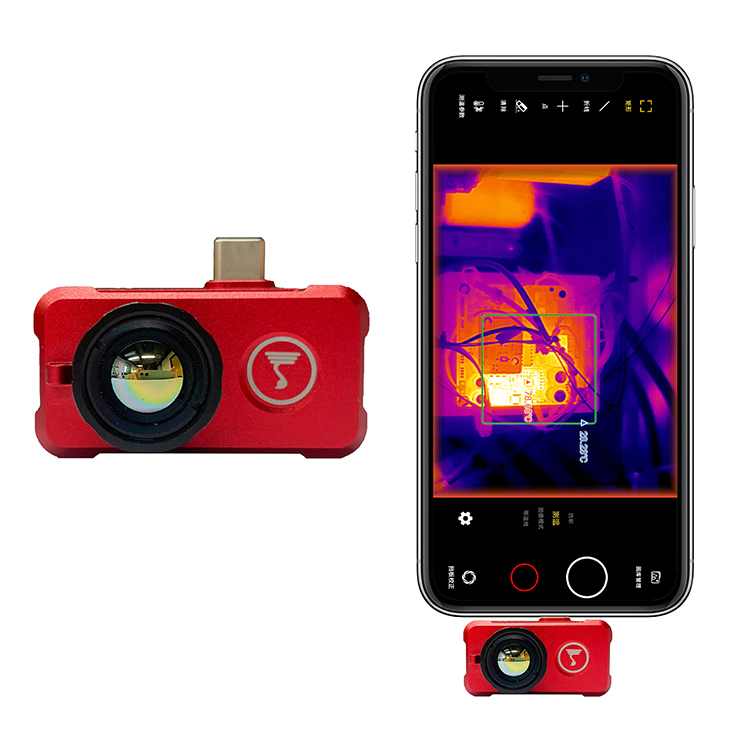
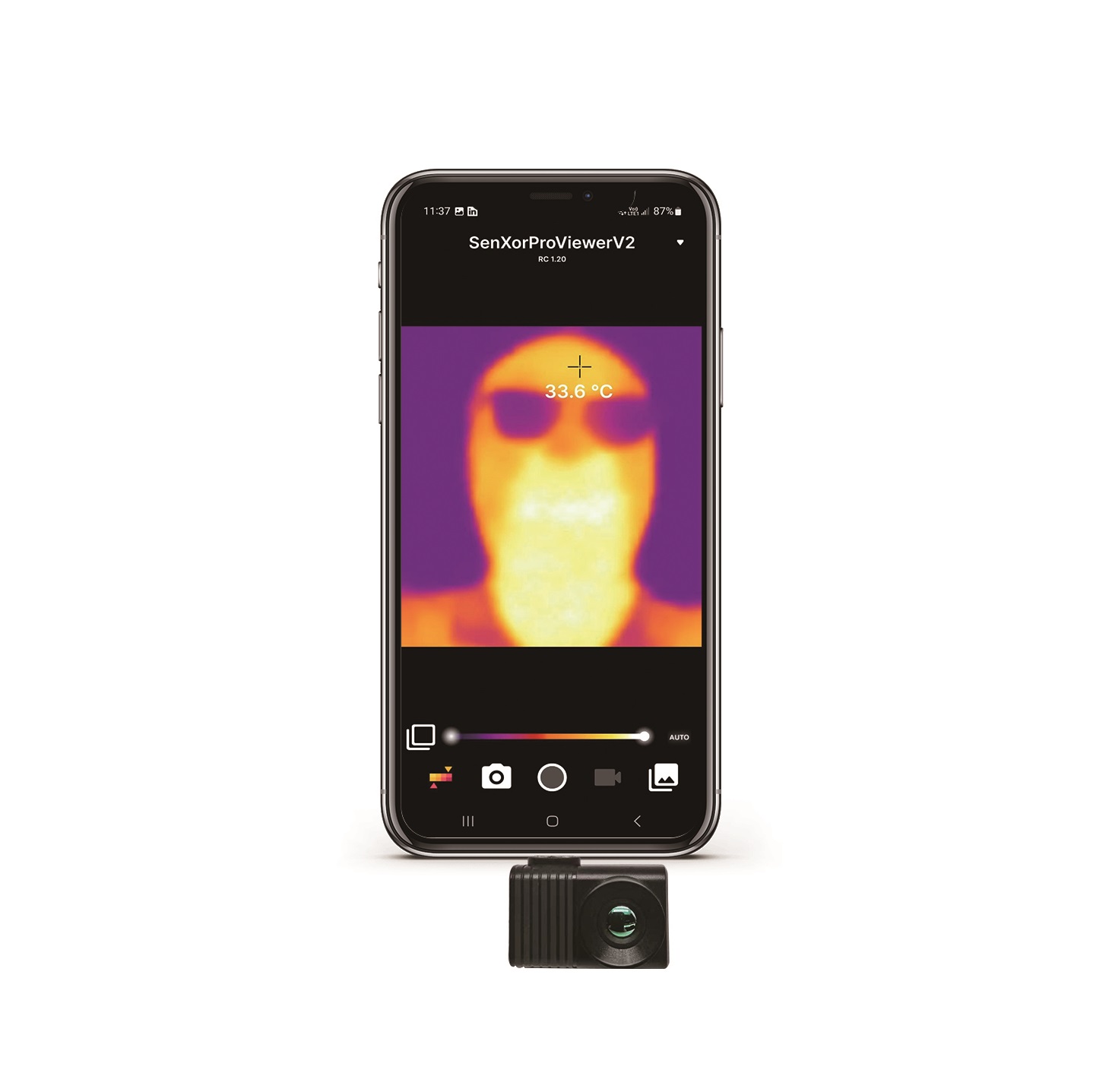
USB-equipped thermal cores leverage standard USB Video Class (UVC) protocols, making them driverless plug-and-play video devices across Linux, Windows, macOS, and Android platforms. In the shop, USB cores are our top choice when we want to get quick evaluation builds running on standard bench PCs or single-board computers like Raspberry Pis.
Beyond streaming standard 8-bit visual feeds, advanced USB thermal cores feature dual-stream data pathways. Utilizing vendor SDKs, your application can pull raw 14-bit radiometric telemetry over secondary USB endpoints simultaneously while displaying normal UVC video. If you're building compact diagnostic gear or lower-resolution systems, check out our guide on 256x192 Thermal Camera Module Integration Strategies for practical OEM setup approaches.
3. Edge AI Processing & Image Signal Processor (ISP) Pipelines
Raw physical outputs straight off an uncooled VOx microbolometer look like noise without serious signal processing behind them. Tiny pixel-to-pixel silicon inconsistencies, ambient housing temperature drift, and flat high-dynamic-range scenes mean an advanced onboard Image Signal Processor (ISP) pipeline is mandatory inside the core hardware.
The Standard Thermal ISP Hardware Sequence
- ⚙️ 1. Non-Uniformity Correction (NUC): Calibrates individual pixel response variations across non-linear temperature curves using 2-point offset/gain matrix tables. Cores use either ultra-quiet flag shutters or continuous shutterless digital NUC algorithms.
- ⚙️ 2. Bad Pixel Replacement (BPR): Tracks dead, stuck, or noisy pixels on the microbolometer sensor in real time and smoothly interpolates their values using surrounding healthy pixels.
- ⚙️ 3. 3D Spatial-Temporal Noise Reduction (3D DNR): Combines multi-frame temporal filters with spatial edge preservation to clean out background thermal white noise without causing motion blur or target ghosting artifacts.
- ⚙️ 4. Digital Detail Enhancement (DDE): Uses spatial high-pass filtering to pull out subtle fine-structure thermal details—like thin wires, fence lines, or distant vehicle structures—hidden inside wide dynamic scenes.
- ⚙️ 5. Dynamic Range Compression (DRC): Compresses wide 14-bit raw radiometric sensor depth (16,384 discrete energy levels) down into standard 8-bit display color matrices (256 grayscale values) using smart adaptive histogram equalization.
Integrating Onboard Edge AI Acceleration
Modern high-tier thermal cores are now adding onboard Neural Processing Units (NPUs) directly into the processing pipeline. Pushing inference operations down to the edge camera core cuts host communication bandwidth demands and unloads heavy compute workloads from your main system CPU.
Onboard NPU acceleration lets you run tight, compressed deep-learning convolutional neural networks (like YOLOv8 nano models) right on the sensor. The thermal core can handle Automated Target Recognition (ATR)—finding, classifying, and tracking humans, vehicles, drones, or hot spots right inside the engine hardware. The engine then passes light bounding-box metadata streams over serial links alongside video, giving tracking gimbals the data they need to stay locked on target without burning power on external mission GPUs.
For more details on thermal radiant emission equations and quantitative imaging physics, review Wikipedia Thermography.
4. Drone, UAV, and Mechanical Payload Integration
Dropping an OEM thermal camera core into an aerial payload or stabilized gimbal assembly throws plenty of tough electro-mechanical challenges your way. UAV platforms are nasty operational environments: motor vibration, rapid ambient temperature changes, tight mechanical enclosures, and continuous RF noise from telemetry transmitters and motor ESCs.
Optical Lens Selection Strategy & DRI Performance
Matching your core to the right Germanium lens dictates your overall spatial resolution, Field of View (FOV), and real-world Detection, Recognition, and Identification (DRI) distance metrics under Johnson's Criteria.
- 🔍 Short Focal Lengths (5mm to 9mm Optics): Delivers wide field-of-view profiles (from 45° to over 60° horizontal FOV). Perfect for low-altitude pilot situational awareness, obstacle avoidance, indoor search and rescue, or wide field ag inspection.
- 🔍 Mid-Range Focal Lengths (13mm to 25mm Optics): Offers balanced spatial resolution for medium-altitude operations. Great for spotting thermal faults in solar arrays, powerline infrastructure inspection, and regional perimeter guard duties.
- 🔍 Long-Range Telephoto Optics (35mm to 150mm Optics): Narrow FOV setups tailored for high-altitude tactical flight, border patrol, wildlife monitoring, and maritime search and rescue.
Thermal Management & Mechanical Isolation Guidelines
Microbolometer FPAs are sensitive to physical thermal gradients. If onboard processing electronics dump heat unevenly across the sensor housing, thermal gradients creep across the VOx chip, causing ugly image shading and severe offset calibration drift. In the shop, we follow three strict physical layout rules:
- 🛠️ 1. Passive Thermal Heat Dissipation: Ensure the metallic core housing is thermally coupled to your aluminum gimbal chassis or internal heatsink using thermal interface pads with high thermal conductivity (k > 3.0 W/mK).
- 🛠️ 2. Mechanical Vibration Damping: High-frequency motor vibration causes optical jitter and connector wear over time. Secure core modules inside vibration-isolated gimbal mounts using tuned silicone dampening grommets. Always add service loops to flexible flat cables (FFC) to isolate mechanical movement from internal connectors.
- 🛠️ 3. Electromagnetic Shielding (EMI): Unshielded camera electronics pick up high-frequency RF noise from 2.4GHz/5.8GHz telemetry links and ESC switching harmonics. Maintain continuous ground plane bonding across the core chassis, interface breakout boards, and host frame, wrapping sensitive ribbon cables in lightweight aluminum EMI shielding.
5. Featured OEM Thermal Camera Cores: Specifications & Comparison
To help system integrators and engineering managers select the right platform, here is an engineering teardown of top-tier, ultra-compact LWIR OEM camera cores engineered specifically for custom optical assemblies, embedded vision systems, and UAV payloads.
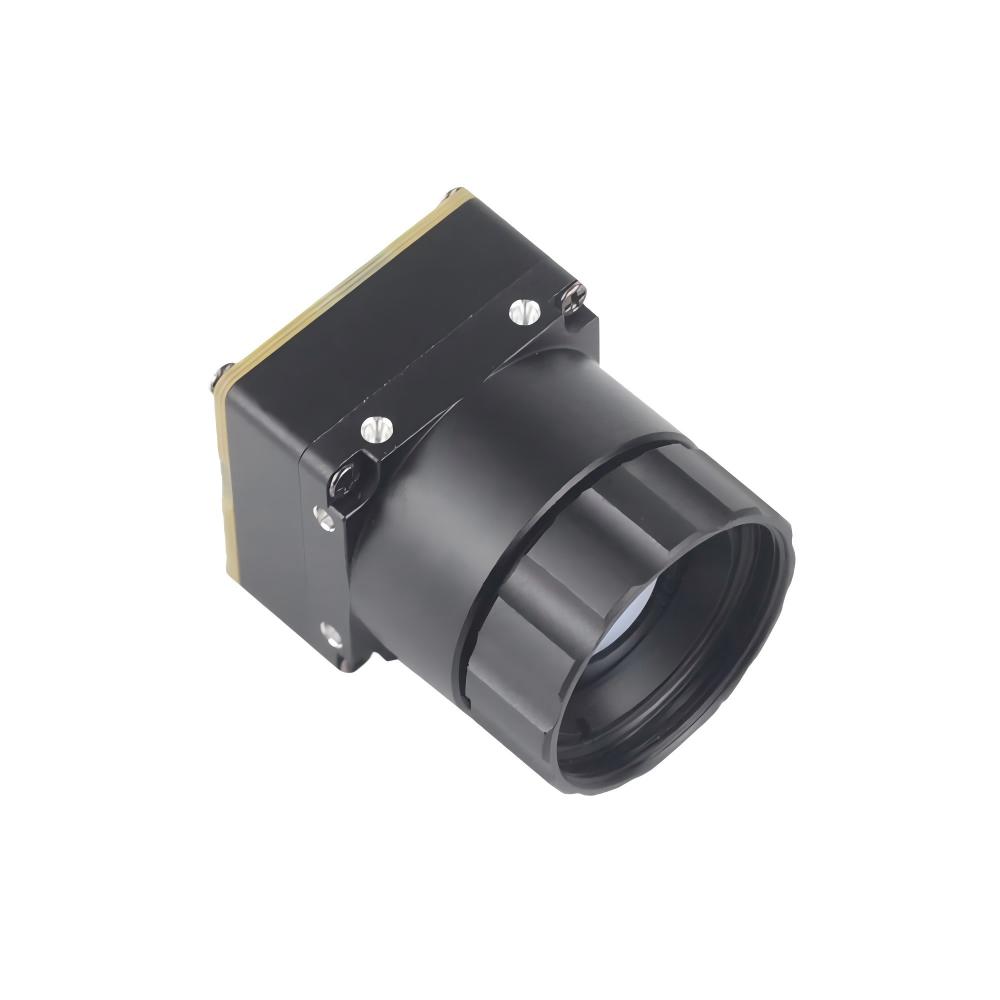
Uncooled LWIR USB Mini 640*512 Thermal Imaging Camera Core Module
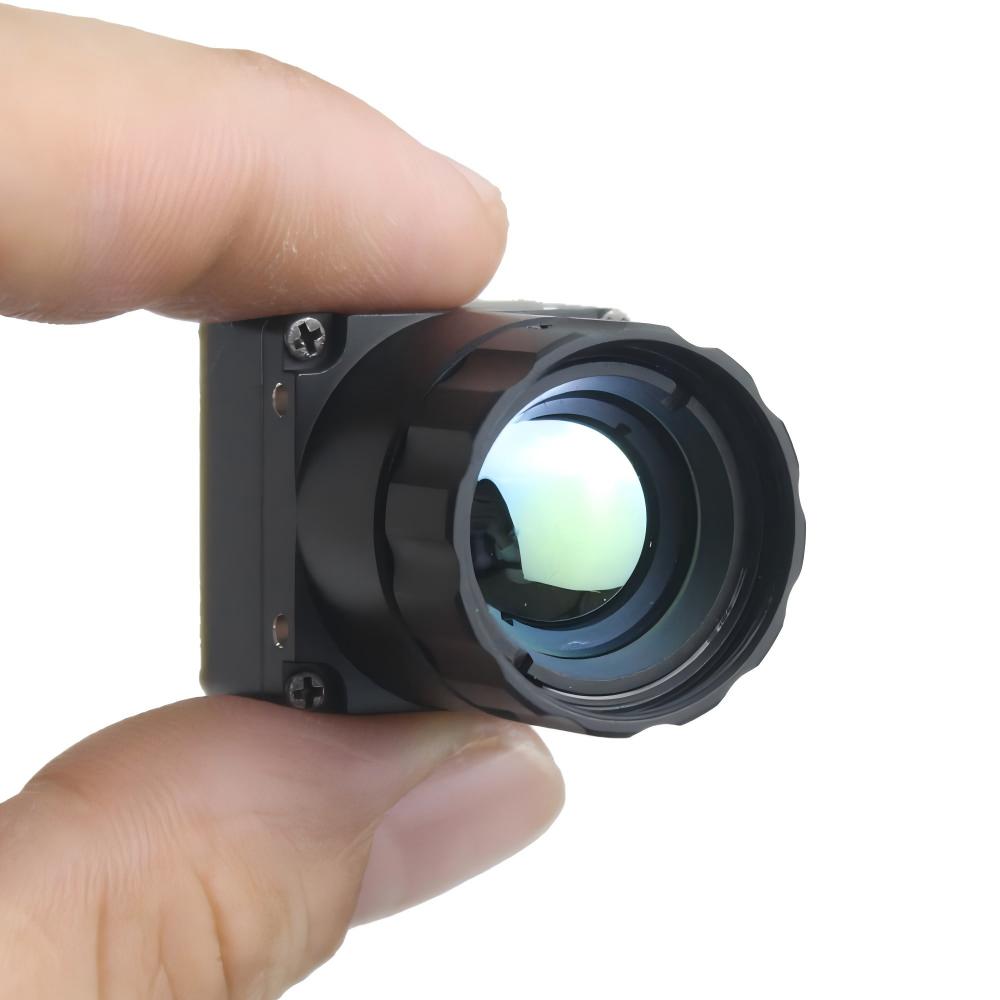
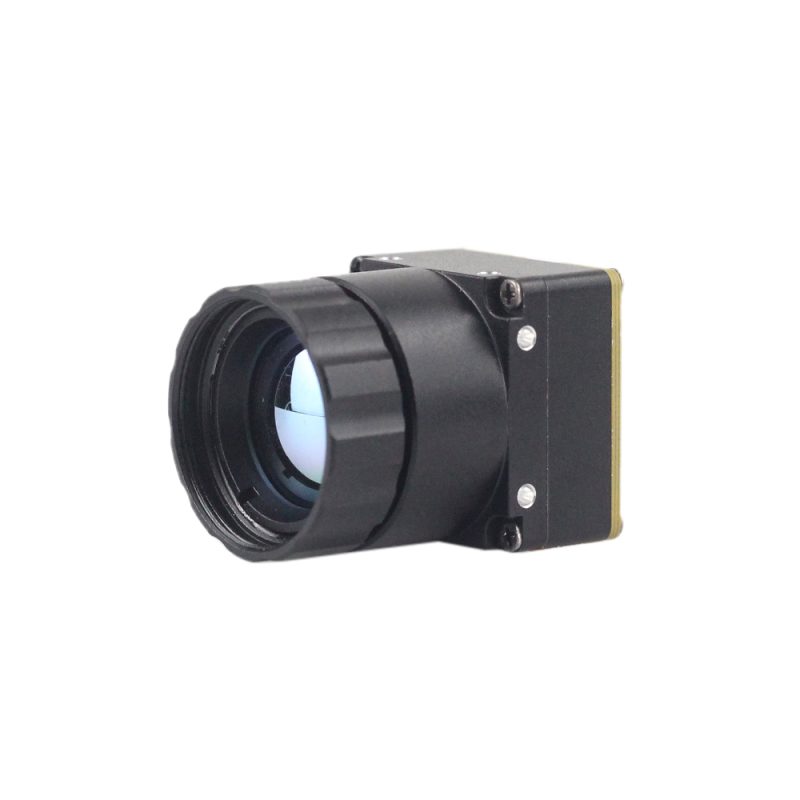
The Uncooled LWIR USB Mini 640*512 Thermal Camera Core is an ultra-compact, high-resolution electro-optical engine designed for seamless plug-and-play integration into small unmanned aerial vehicles (drones similar to DJI platforms), handheld diagnostic tools, and compact industrial vision systems. Featuring a high-sensitivity VOx microbolometer detector packaged within an ultra-miniature 21mm × 21mm footprint, this thermal module delivers exceptionally sharp, crisp thermal image presentation at standard display resolutions (640×512 and 640×480 optional).
Engineered for maximum optical flexibility, the module supports a wide spectrum of modular focal length Germanium lenses—ranging from ultra-wide 5mm optics up to long-range 150mm telephoto assemblies. Operating under low power consumption profiles (< 1.0W), it offers superior environmental adaptability and stable radiometric performance across extreme industrial operating conditions.
| Detector Type | Uncooled VOx Microbolometer | Resolution | 640×512 / 640×480 Optional |
| Pixel Pitch | 12µm | Spectral Range | 8 µm – 14 µm (LWIR) |
| Dimensions | Mini-Size 21mm × 21mm | Interface Protocol | USB 2.0 / Type-C (UVC Standard) |
| Lens Options | 5 / 9 / 13 / 18 / 35 / 50 / 75 / 100 / 150mm | Power Consumption | < 1.0W Steady State |
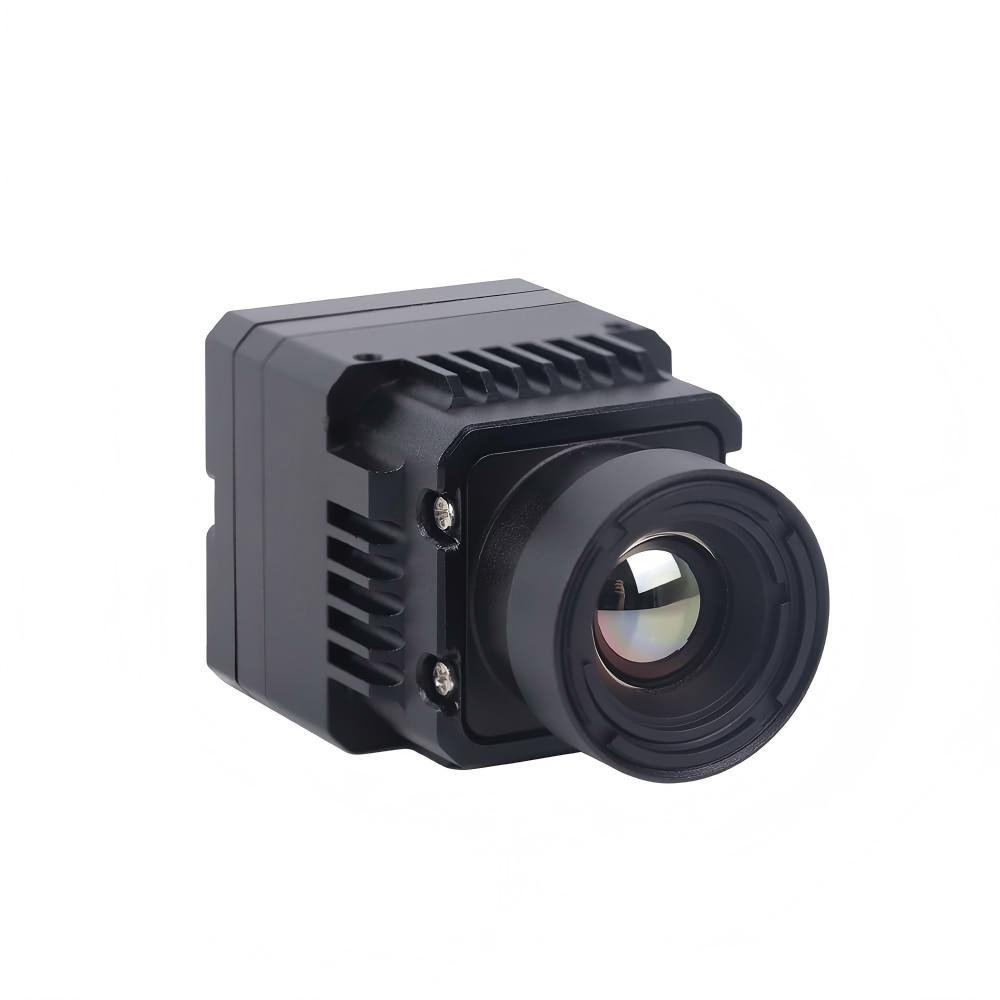
Uncooled Infrared MIPI Mini2 640 / 384 / 256 Thermal Imaging Module
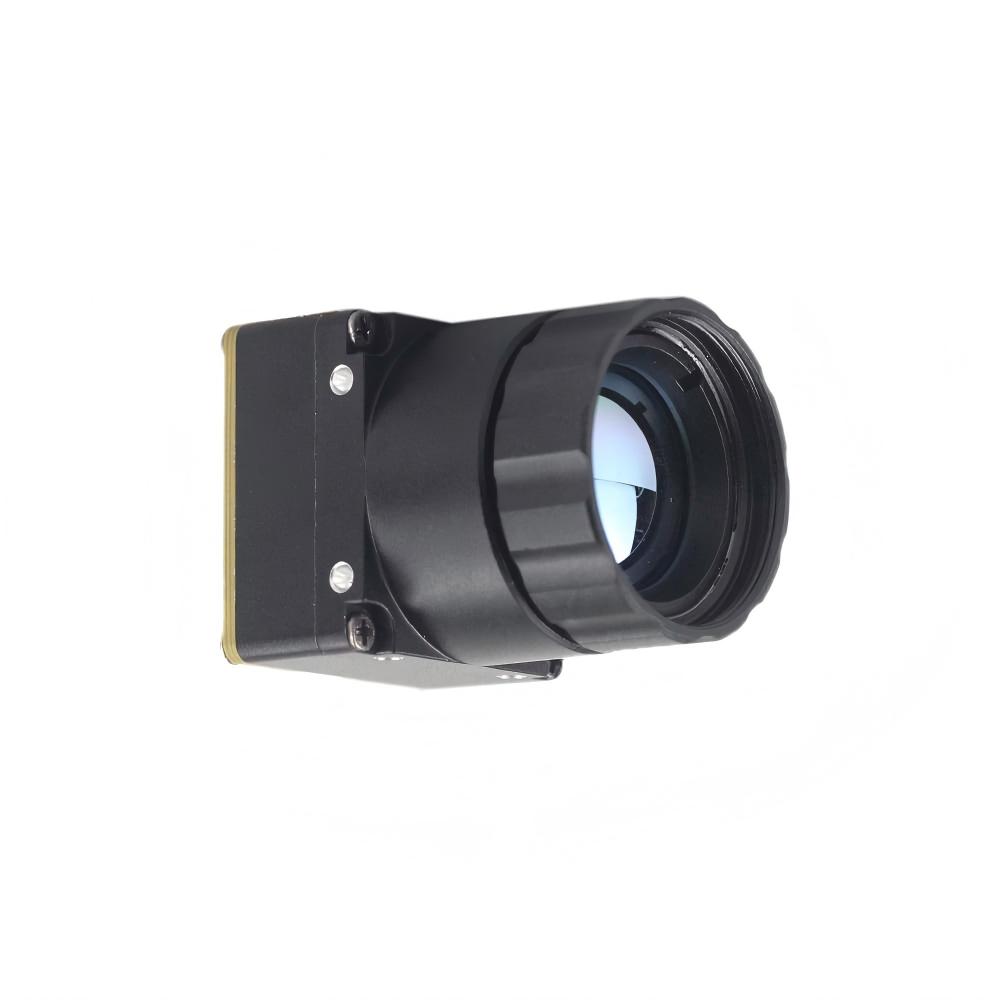
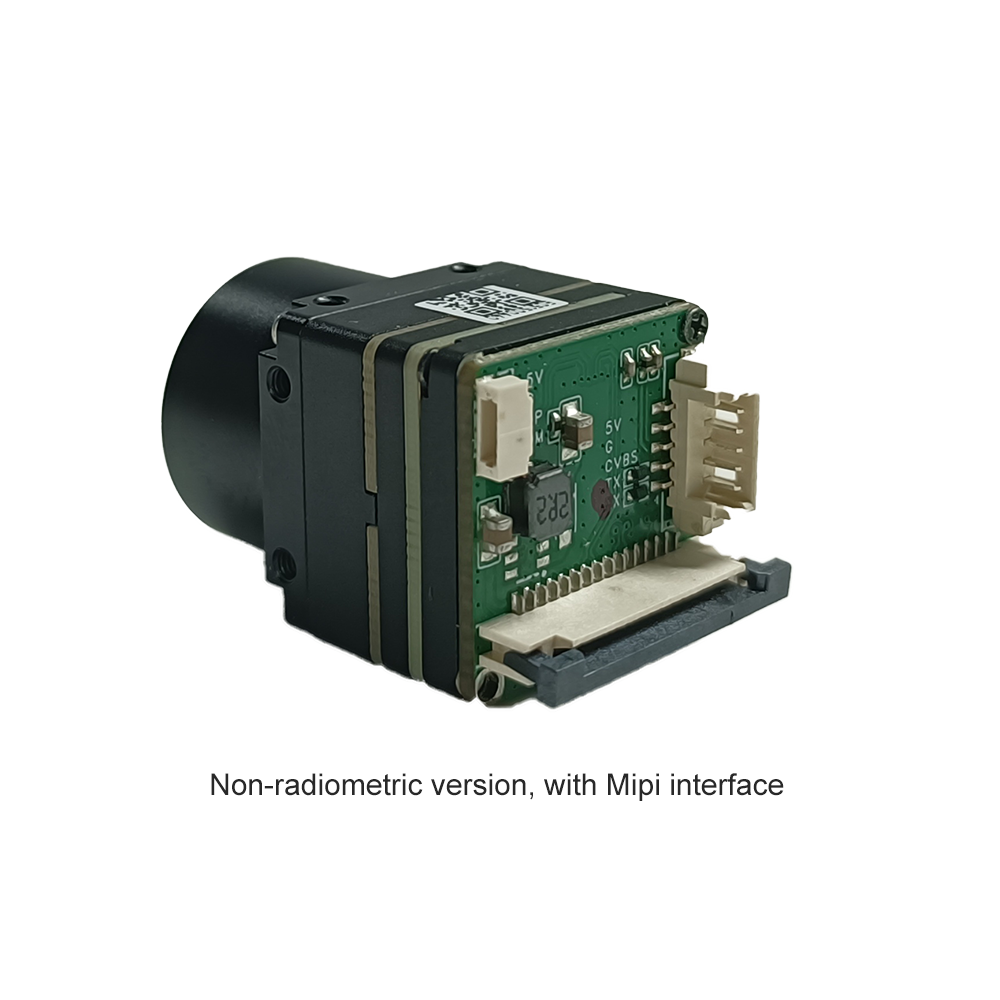
The Uncooled Infrared MIPI Mini2 Thermal Camera Core Module is specifically designed for weight-critical sUAV payloads, tactical reconnaissance drones, and embedded edge vision platforms requiring zero-latency image streaming. Built around high-performance VOx microbolometer technology, the Mini2 series offers multi-resolution array configurations (640×512, 384×288, and 256×192) paired with a standard lightweight 9mm thermal lens assembly.
By utilizing a native high-speed MIPI CSI-2 hardware interface, the Mini2 module connects straight to embedded host SoCs, bypassing USB hub latencies and delivering sub-frame raw thermal feeds directly into AI target-tracking algorithms. Featuring a compact 21mm × 21mm cross-section, low power draw (< 0.8W), and a sub-15 gram mass profile, this thermal engine represents an ideal solution for commercial drone gimbals and robotic optics.
| Detector Type | Uncooled VOx Microbolometer | Array Resolutions | 640×512 / 384×288 / 256×192 |
| Pixel Pitch | 12µm | Interface Protocol | MIPI CSI-2 Low Latency Direct SoC Bus |
| Dimensions | Mini-Size 21mm × 21mm | Standard Optics | 9mm Germanium Fixed Lens |
| Thermal Sensitivity | NETD < 40mK (@25°C, F/1.0) | Module Weight | Ultra-lightweight (< 15g) |
Comprehensive Side-by-Side Architectural Matrix
| Feature Parameter | Uncooled LWIR USB Mini 640 Module | Uncooled Infrared MIPI Mini2 Module |
|---|---|---|
| Sensor Core Material | Uncooled VOx Microbolometer | Uncooled VOx Microbolometer |
| Native Resolution Options | 640 × 512 / 640 × 480 | 640 × 512 / 384 × 288 / 256 × 192 |
| Pixel Pitch | 12µm | 12µm |
| Spectral Waveband | 8 µm – 14 µm (LWIR) | 8 µm – 14 µm (LWIR) |
| Thermal Sensitivity (NETD) | < 40mK (@25°C, F/1.0) | < 40mK (@25°C, F/1.0) |
| Primary Hardware Bus | USB 2.0 / Type-C (UVC) | MIPI CSI-2 High Speed Bus |
| Form Factor Footprint | 21mm × 21mm Miniature Profile | 21mm × 21mm Ultra-Mini Profile |
| Optics Versatility | Wide Range: 5mm up to 150mm Lens Mounts | Standard 9mm Fixed Lens (Modular Options) |
| Power Draw | < 1.0W Steady State | < 0.8W Steady State |
| Optimal Integration Target | SBCs, Industrial PCs, Diagnostic Tools | Weight-Critical UAV Gimbals, SoC Edge AI |
6. Deep-Dive Frequently Asked Questions (FAQ)
Q1: Can I replace or upgrade the thermal camera core in an existing imager, optical sight, or industrial drone payload?
Look, retrofitting a legacy imager with a modern micro LWIR camera core is totally doable, but you need to lock down three major engineering constraints: physical mechanical packaging, optical back focal length, and electronic bus signaling.
First off, today's OEM cores use ultra-compact 21mm × 21mm physical footprints, which are way smaller than legacy thermal engines. You'll need to design custom CNC-machined aluminum adapter mounts or precision 3D-printed brackets to align the new core's optical axis with your enclosure's lens centerline. Second, your Back Focal Length (BFL) between the primary Germanium lens and the microbolometer cover glass has to be set precisely using metallic precision shims or adjustable optical mounts to keep focus locked over broad temperature shifts.
Finally, address the electronic signaling. If your older housing expects composite CVBS analog or custom serial data, upgrading to a modern MIPI CSI-2 or USB core means adding an onboard bridge processor or routing direct to an upgraded host SBC. If you're managing custom hardware sample orders or reviewing build specs, hit the secure client interface over at Customer Portal Management.
Q2: How reliable are modern uncooled VOx thermal camera core modules for high-stress commercial and defense drone builds?
In the shop, we treat tier-1 uncooled Vanadium Oxide (VOx) cores as bulletproof industrial solutions. Modern manufacturing relies on Wafer-Level Packaging (WLP), hermetically sealing the VOx microbolometer under high vacuum right on the semiconductor wafer before assembly. That seals out moisture and keeps vacuum degradation from ever becoming an issue in the field.
These core engines undergo brutal Environmental Stress Screening (ESS)—including thermal shock testing from -40°C to +80°C and dynamic multi-axis vibration profiles matching military specs. Because uncooled VOx engines don't use failure-prone mechanical cryocoolers like cooled photon detectors do, MTBF (Mean Time Between Failures) specs regularly cross 10,000 continuous operational hours. Combined with continuous shutterless NUC algorithms, these engines hold steady thermal sensitivity (NETD < 40mK) even when mounted on high-vibration drone frames.
Q3: How do I select and configure the optimal output protocol (MIPI CSI-2, USB, or Composite/HDMI) for custom target hardware?
Picking your output protocol comes down to a few cold, hard project realities: your host compute hardware, system latency limits, software stack overhead, and physical wiring distances.
Go with MIPI CSI-2: When you're building UAV payloads, fast gimbals, or autonomous edge platforms powered by embedded SoCs (NVIDIA Jetson Orin, Rockchip RK3588, NXP i.MX series). MIPI streams raw video directly into memory via DMA with practically zero latency (< 5 ms), perfect for real-time target tracking and Edge AI networks. Keep your flex circuits short (under 15 cm) with strict 100-ohm differential traces.
Go with USB 2.0 / USB-C (UVC): When you're interfacing with x86 single-board computers, industrial PCs, or mobile diagnostic tools where driverless, plug-and-play capability speeds up software development. USB cables can run up to 3–5 meters easily, and you can pull both 8-bit visual streams and raw 14-bit radiometric telemetry simultaneously using software SDKs.
Go with Composite (CVBS) / HDMI: When piping video straight into standard FPV transmitters, field monitors, or legacy analog ground stations without needing host CPU processing. To order hardware evaluation setups or breakout accessories, drop by the OEM Order Processing Page.
Q4: What is the technical distinction between raw 14-bit radiometric output and 8-bit AGC visual video streaming?
Here's the technical reality: it boils down to absolute temperature measurement data versus pretty picture display streams.
Raw 14-Bit Radiometric Data: This is the uncompressed, pure physical signal straight off every single pixel on the microbolometer array. A 14-bit depth gives you 16,384 distinct digital energy steps per pixel. This raw feed carries absolute, calibrated temperature math, letting host software calculate exact surface temperatures, trigger dynamic alarm thresholds, or run non-destructive testing (NDT) algorithms. It takes higher bus bandwidth and vendor SDK parsing, but it gives you total data access.
8-Bit AGC Visual Video: This is a processed video stream formatted purely for human eyes or standard displays. The core's internal ISP takes that heavy 14-bit radiometric data, applies dynamic range compression (DRC), Automatic Gain Control (AGC), and detail enhancements, and squeezes it down into 256 grayscale or false-color levels (like White Hot, Black Hot, or Ironbow). It looks sharp on a screen, but absolute temperature readings get discarded during compression—so you can't run quantitative temperature measurements off an 8-bit stream.
Q5: How does shutterless Non-Uniformity Correction (NUC) differ from mechanical flag shutter calibration in continuous thermal imaging?
Non-Uniformity Correction (NUC) is essential for maintaining a clean thermal image. As an uncooled microbolometer warms up or cools down, individual pixel offset values drift, creating noise and vignetting if left uncalibrated.
Mechanical Flag Shutter NUC: Uses a small physical solenoid flag that drops down in front of the sensor for a fraction of a second. The camera captures a uniform temperature baseline off the shutter blade and recalculates its offset tables. It's accurate, but it brings three drawbacks: your video drops out for a second (which can mess up high-speed missile tracking or autonomous flight code), it makes an audible click, and it adds a mechanical moving part that can eventually wear out.
Shutterless NUC Algorithms: Replaces physical hardware shutters with Scene-Based Non-Uniformity Correction (SBNUC) algorithms running inside the core's ISP board. By analyzing spatial frame motion and temporal statistics continuously, shutterless logic dynamically calculates and wipes out pixel drift without blocking the optical path. That gives you uninterrupted 50Hz/60Hz video streaming, total silent operation, and zero moving mechanical parts—making shutterless cores hands-down better for high-speed tracking, covert ops, and mission-critical UAV flight safety.
📚 References & Further Reading
- Microbolometer Fundamentals: Wikipedia Microbolometer Sensor Technology Guide
- Thermographic Principles: Wikipedia Infrared Thermography Physics Overview
- Modular Core Integration: 256x192 Thermal Camera Module OEM Integration Architecture
- USB 640 Product Architecture: Purpleriver Mini 640 Uncooled LWIR USB Thermal Camera Core Datasheet
- MIPI Mini2 Product Architecture: Purpleriver Uncooled Infrared MIPI Mini2 Thermal Module Datasheet