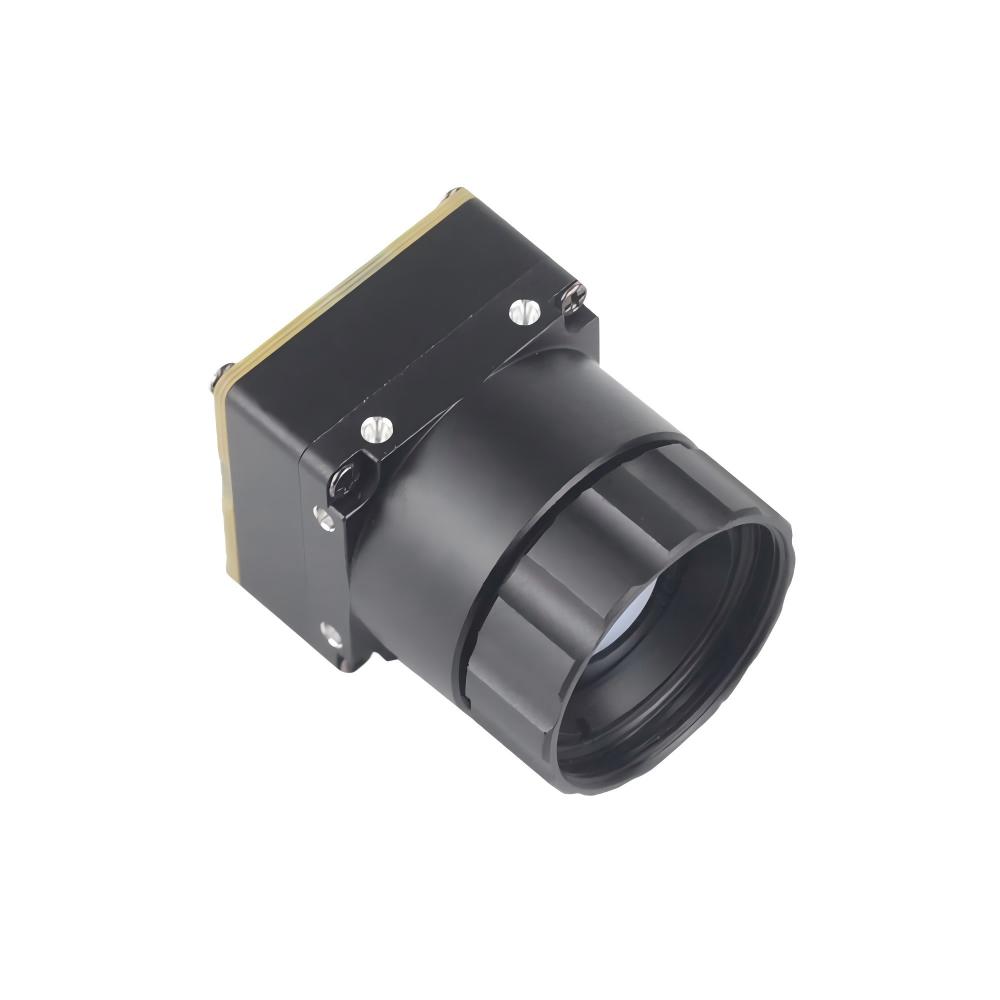
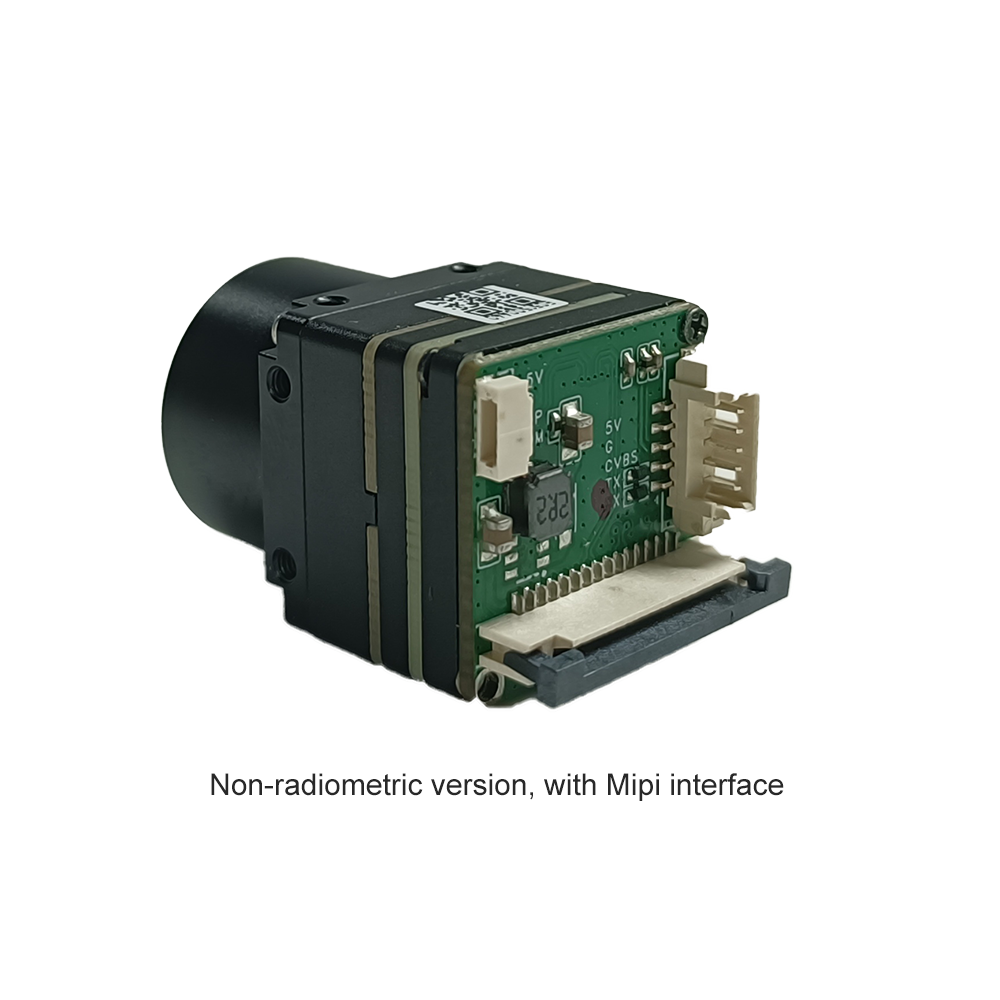
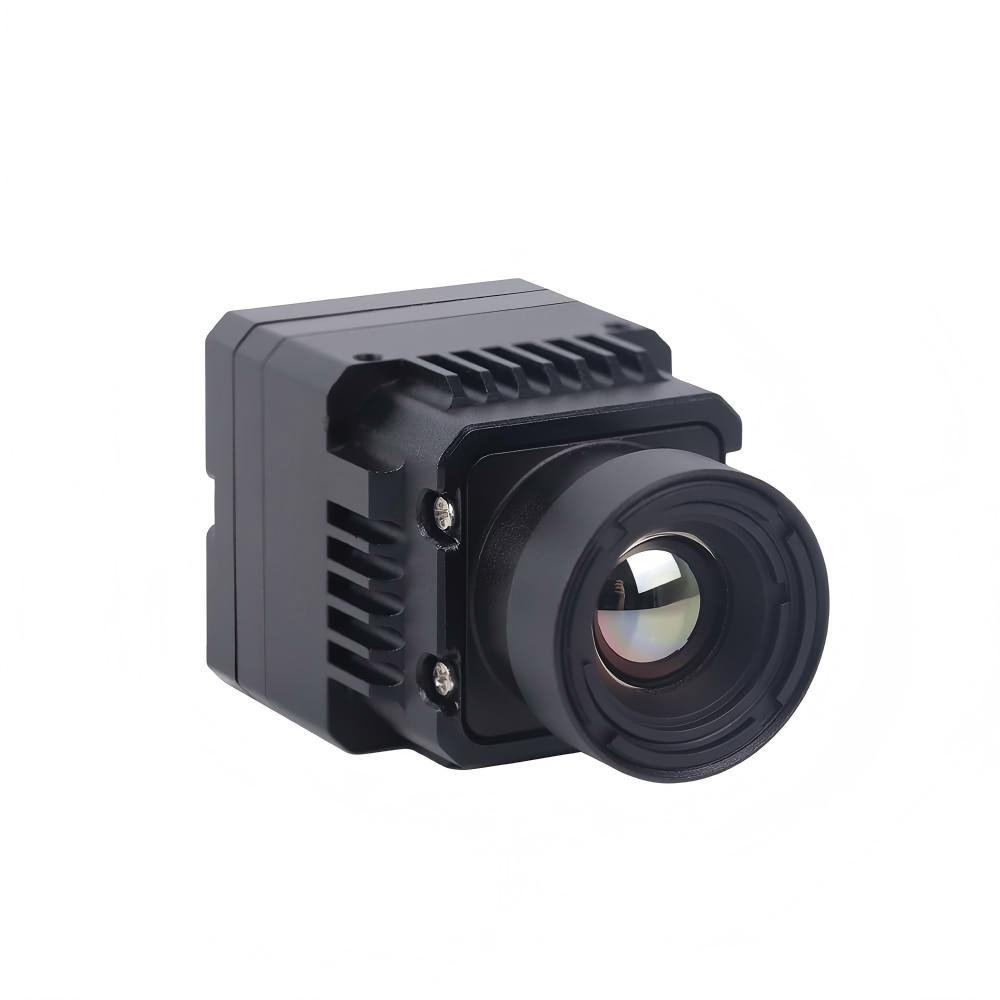
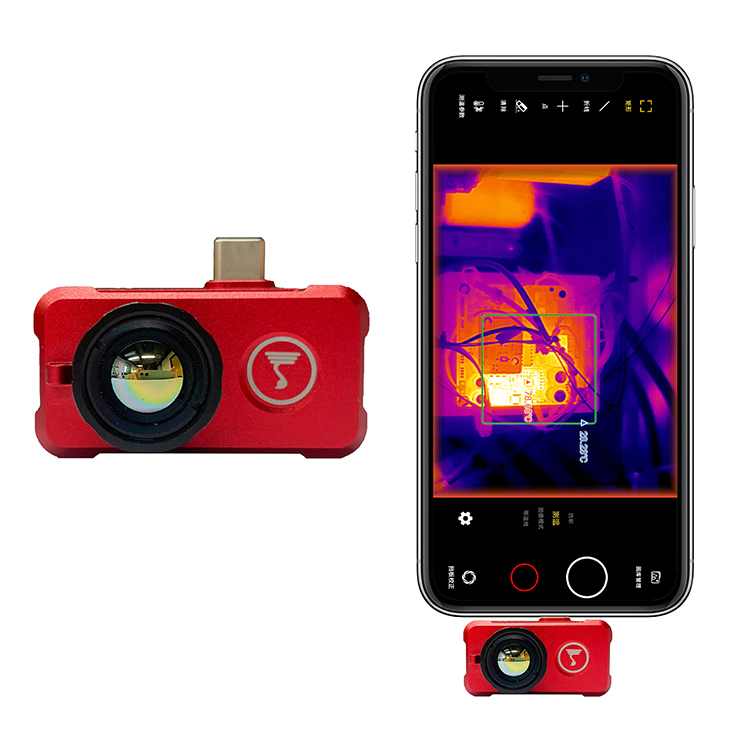

Next-Gen LWIR Thermal Module Guide: OEM Integration for Drones & AI Vision
2026年8月3日
PurpleRiver Industrial AI Thermal Imaging: Mini LWIR Modules & OEM Solutions
2026年8月4日

High-Performance Thermal Micro Camera Module for Drones & Embedded AI Systems
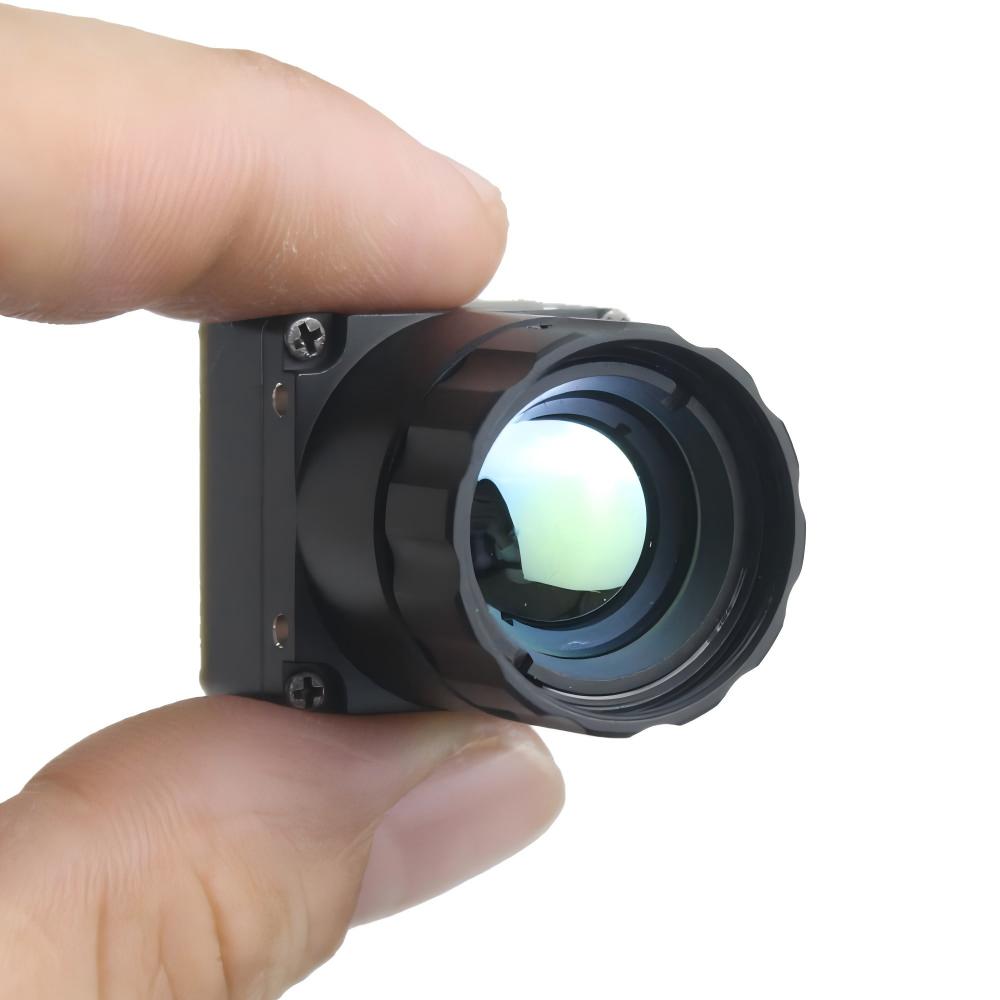
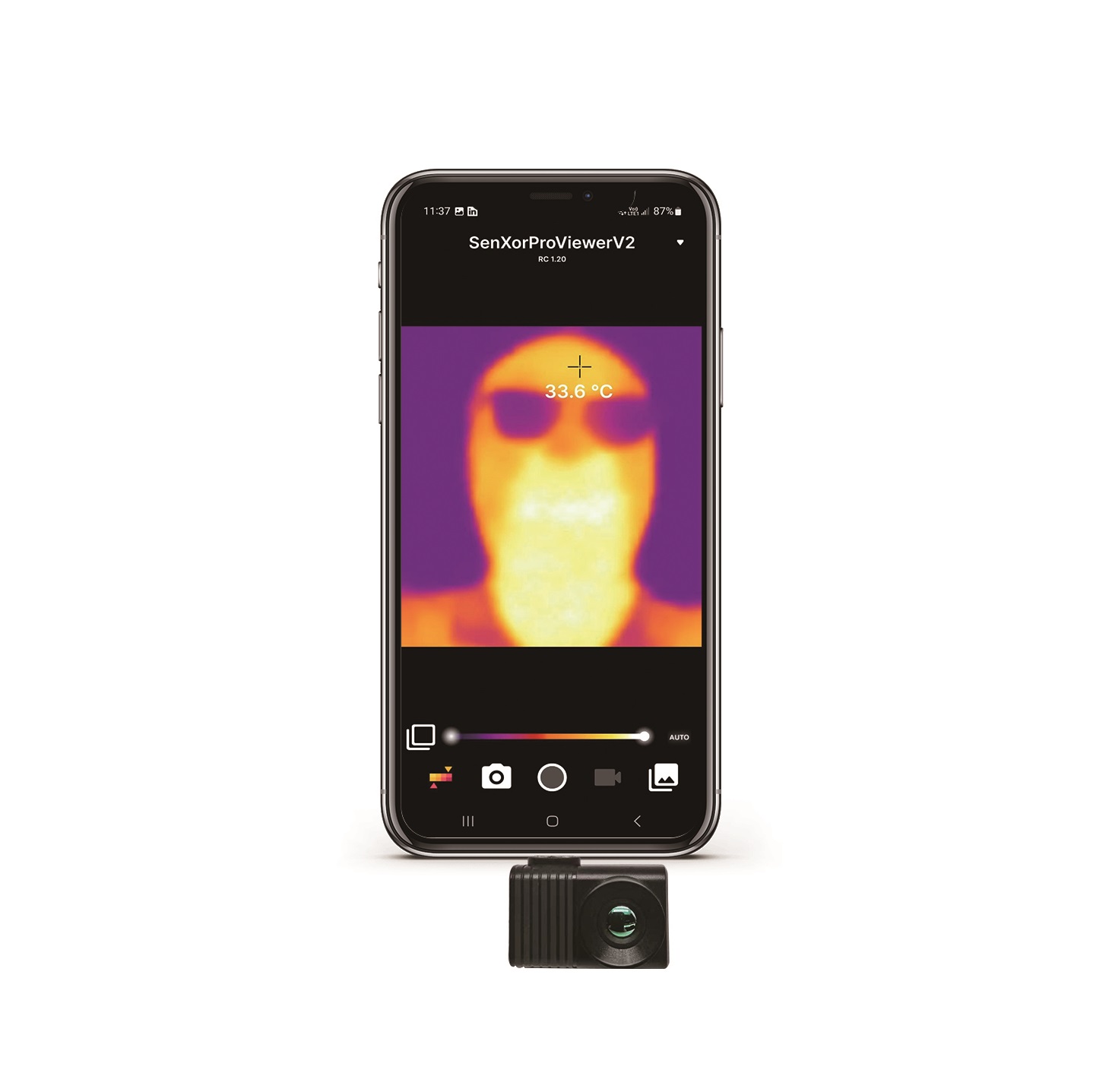
Look, if you’ve been building or integrating optical hardware over the last decade, you know we've hit a massive tipping point in long-wave infrared (LWIR) technology. The relentless push to shrink thermal optics and focal plane arrays (FPAs) isn't just an incremental improvement—it's completely rewritten the rules for field thermography, tactical UAV design, and real-time edge processing. Microbolometer sensors dropping down to sub-12μm pixel pitches mean we can now field a high-performance Thermal Micro Camera Module that delivers incredible Size, Weight, Power, and Cost (SWaP-C) savings without sacrificing Noise-Equivalent Temperature Difference (NETD) sensitivity. Whether you're flying low-altitude reconnaissance with a sub-250g drone or running edge analytics on an industrial robotics platform, having a rugged, ultra-compact thermal engine is no longer a luxury feature for night vision—it is the bedrock of real-time target recognition, high-precision radiometry, and multi-spectral situational awareness.
Here's the deal on the software and processing side: as embedded artificial intelligence and edge hardware have surged forward, the demand for raw, uncompressed thermal data has exploded. Modern machine vision models don't just want a pretty pseudo-color image stream; they need low-latency, 14-bit absolute temperature matrices fed straight into neural network accelerators. A modern thermal micro camera module bridges the physical realities of blackbody heat radiation directly into modern computer vision pipelines. By delivering flexible output interfaces—from zero-latency analog CVBS feeds to direct uncompressed digital frames over USB-C or MIPI-CSI2—these micro modules give hardware engineers and systems integrators the freedom to execute real-time thermal analytics right on localized edge hardware like NVIDIA Jetson cores or Raspberry Pi setups.
Table of Contents
- 👉 1. LWIR Uncooled Microbolometer Architecture & Sensor Physics
- 👉 2. Airborne & Drone Payload Integration: SWaP Optimization & Video Pipelines
- 👉 3. Embedded AI Systems & Edge Processing: Raspberry Pi & Machine Vision
- 👉 4. Commercial Thermal Micro Camera Module Hardware Catalog
- 👉 5. Enterprise Applications: Landmine Detection to Predictive Maintenance
- 👉 6. Deep-Dive Technical FAQ
1. LWIR Uncooled Microbolometer Architecture & Sensor Physics
When you pull off the housing of any high-performance thermal micro camera module, you find an uncooled microbolometer Focal Plane Array (FPA) sitting right at the core. Unlike old-school military photon detectors that required heavy, noisy, and power-hungry Stirling cryocoolers to hit liquid nitrogen temperatures, today's uncooled sensors rely on micro-machined Vanadium Oxide (VOx) or Amorphous Silicon (a-Si) thin-film thermistors. These tiny membranes are suspended micro-mechanically over a silicon substrate, forming suspended bridges that thermally isolate each pixel so incoming infrared radiation creates a measurable change in electrical resistance.
In the shop, we look at the signal flow through a clear, multi-stage optoelectronic chain:
- ⚙️ Infrared Optical Capture: Incoming long-wave radiation in the 8μm to 14μm spectrum passes through anti-reflective coated Germanium or Chalcogenide glass lenses, focusing raw blackbody radiation onto the active sensor array.
- ⚙️ Thermal Absorber Excitation: Incident thermal energy heats up the suspended VOx membrane. Because VOx features a high Temperature Coefficient of Resistance (TCR), even fractional Kelvin temperature swings produce clean, predictable resistance shifts across the array.
- ⚙️ ROIC Integration & Digitization: The underlying Readout Integrated Circuit (ROIC) applies a precise bias voltage across the thermistors, reading out tiny current changes using Capacitive Transimpedance Amplifiers (CTIA). High-speed 14-bit or 16-bit Analog-to-Digital Converters (ADCs) immediately convert those analog currents into digital count values.
- ⚙️ Digital Signal Conditioning & Radiometry: Embedded FPGA firmware runs real-time Non-Uniformity Correction (NUC), replaces dead pixels, manages dynamic range, and filters out spatial noise to output clean, raw 14-bit radiometric pixel values ready for downstream processing.
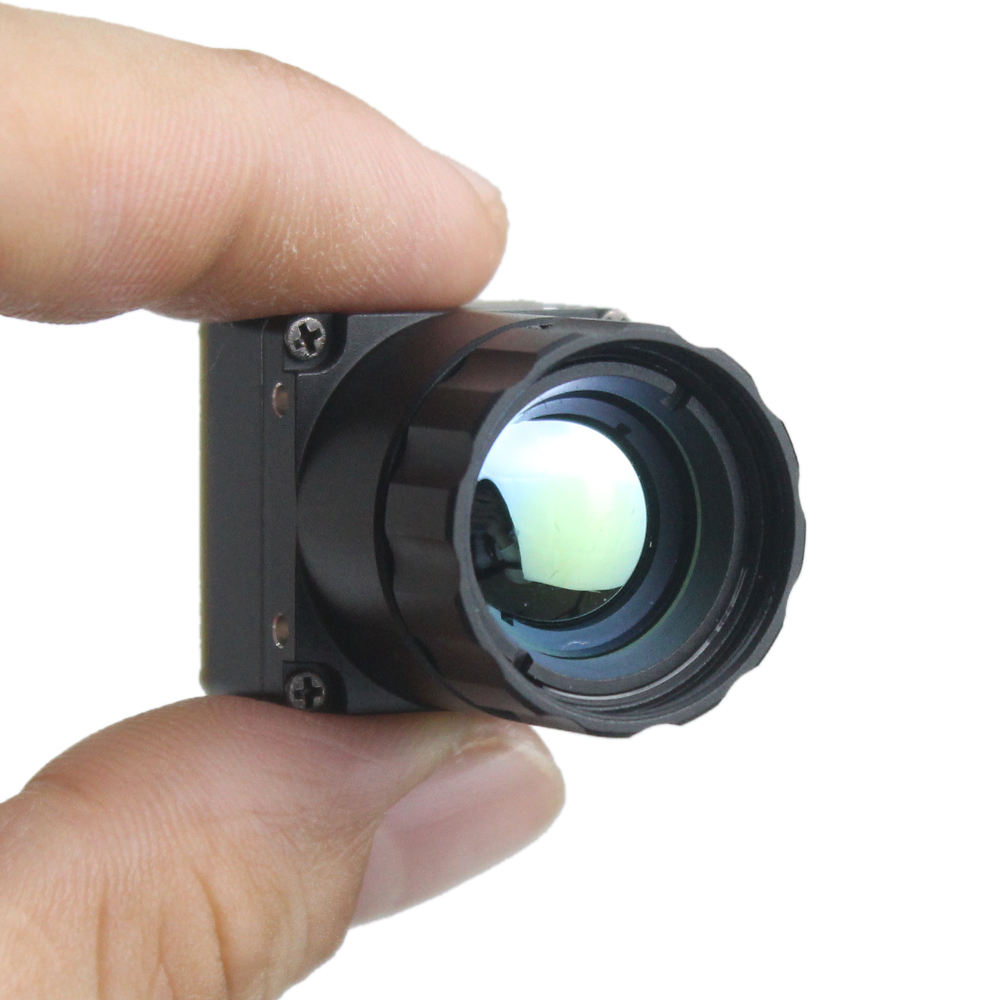
Spectral Range & Detectivity
These sensors operate right in the heart of the Long-Wave Infrared (LWIR) atmospheric window from 8μm to 14μm. Down here on Earth, objects sitting around ambient room temperatures (roughly 300 Kelvin) emit peak thermal radiance right in this exact spectrum, described precisely by Planck's Law of thermal radiation:
M(λ, T) = (2πh c²) / (λ⁵ * (e^(hc / (λ k_B T)) - 1))
Because atmospheric moisture and carbon dioxide absorb very little energy across the 8-14μm band, LWIR thermal micro camera modules can punch right through heavy dust, smoke, fog, and total nighttime darkness over impressive operational distances.
Thermal Sensitivity (NETD)
When engineers evaluate thermal sensitivity, Noise Equivalent Temperature Difference (NETD) is the primary metric that matters. Expressed in millikelvins (mK), NETD defines the smallest thermal delta the camera can resolve above its background noise floor. Premium micro modules boast NETD figures under 40mK (and under 35mK when paired with fast f/1.0 optics). Getting sensitivity this tight requires ultra-efficient thermal isolation on each pixel bridge alongside low-noise ROIC design. Lower NETD numbers mean sharper boundary edges, richer detail, and dramatically better target distinction when inspecting low-contrast targets in damp, overcast, or thermal-cluttered environments.
Pixel Pitch and Optical Efficiency
Over the last few years, the industry standard has aggressively migrated from legacy 17μm pitch arrays down to ultra-compact 12μm pixel pitches. Shrinking the pixel footprint lets us cram standard thermal resolutions (like 384×288 or 640×512) into a significantly smaller physical FPA footprint. That directly scales down the required lens diameter and optical focal lengths, pulling massive weight off airborne gimbals. If you need maximum radiometric precision in tiny form factors, check out our in-depth engineering breakdown covering top pro-grade thermal imaging sensor modules for AI-enhanced LWIR vision.
Digital Processing & Radiometry
To turn simple digital pixel counts into absolute surface temperatures (true radiometry), every camera core undergoes meticulous factory calibration against NIST-traceable blackbody targets across wide operational sweeps (typically -20°C to +150°C in high-gain mode, and up to +550°C in low-gain mode). Onboard lookup tables (LUTs) adjust raw count values on the fly by calculating environmental variables, distance offset, reflected background temperature, and target surface emissivity.
2. Airborne & Drone Payload Integration: SWaP Optimization & Video Pipelines
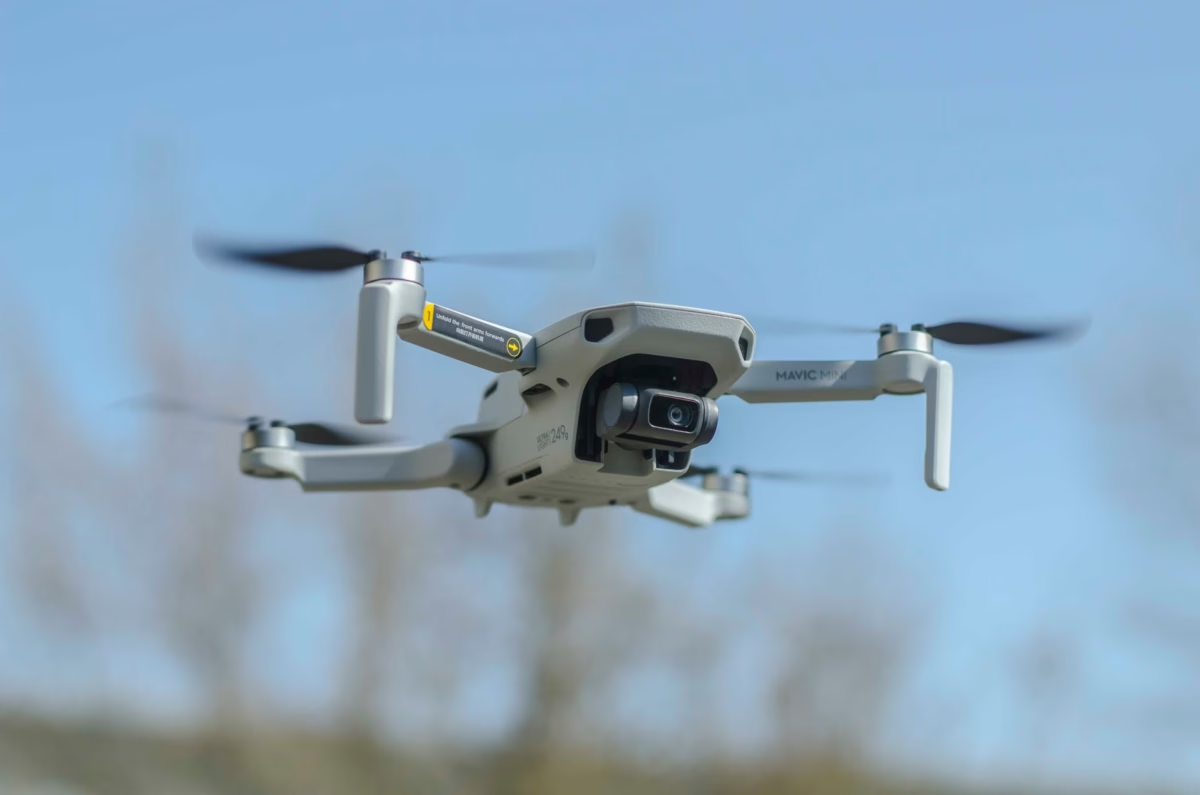
Integrating a thermal micro camera module into an unmanned aerial vehicle (UAV) is all about managing physical trade-offs. You are fighting for every gram of payload capacity and every milliwatt of battery life, all while isolating sensitive microbolometers from violent motor vibration and high-frequency electrical noise generated by electronic speed controllers (ESCs).
In practice, a reliable airborne payload integration breaks down into three key hardware subsystems:
- ✅ Low-Noise Power Regulation: Low-dropout (LDO) linear regulators deliver clean 3.3V or 5V DC power directly to the thermal core, preventing ESC voltage ripple and motor hash from bleeding into the sensitive microbolometer ROIC.
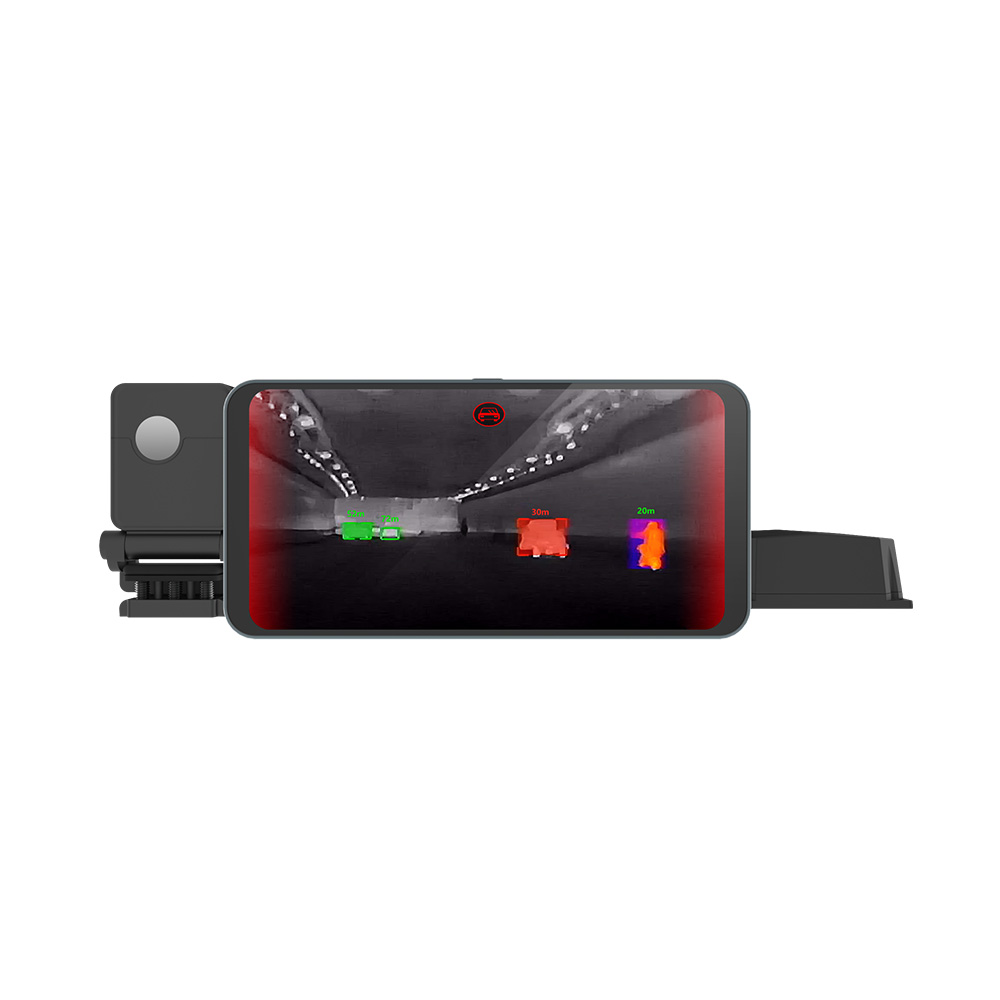
- ✅ Dual Video Pipeline: Simultaneous routing of zero-latency analog CVBS feeds directly to pilot FPV transmitters for low-altitude maneuvering, while streaming uncompressed 14-bit digital matrices over USB-C or MIPI-CSI2 to an onboard companion computer for edge AI analytics.
- ✅ Structural Thermal Management: Precision CNC-machined aluminum housings double as rigid mounting frames and passive heat sinks, drawing internal core heat away from the FPA to prevent internal thermal drift and calibration offset during flight.
SWaP Engineering for Micro UAVs
When you're building drone payloads, mass directly dictates flight duration. Modern core thermal engines weigh under 15 grams (without glass) and draw less than 1.0 Watt during continuous operation. Keeping power draw down isn't just about saving battery power—it prevents internal self-heating. Excessive heat inside an uncooled module creates non-uniform temperature gradients across the FPA, causing annoying thermal drift and ruining radiometric accuracy during long missions.
Video Streaming Interfaces: CVBS vs. Digital Streams
Choosing your video interface comes down to how your aircraft uses the thermal data:
- 📌 CVBS (Composite Video Blanking and Sync): Analog NTSC/PAL video remains the go-to standard for live pilot orientation. With near-zero transmission latency (<1ms), CVBS feeds let drone operators safely steer through tree lines, power cables, and tight obstacles in complete darkness.
- 📌 USB 2.0 / Type-C & MIPI-CSI2: Digital protocols pump uncompressed raw pixel values or YUV frames right into embedded host boards. MIPI-CSI2 uses direct memory access (DMA) to feed frames straight into GPU/NPU memory pipelines, bypassing USB controller overhead and yielding blindingly fast frame rates for deep learning object detectors. For custom hardware builds, engineers frequently source robust OEM components from trusted manufacturing partners like KUYANG.
Mechanical Stabilization & Gimbal Isolation
Microbolometer FPAs are sensitive to high-frequency microphonic vibrations caused by spinning drone props and high-KV brushless motors. If left unmitigated, structural vibration causes blur, micro-jitter, and ugly fixed-pattern noise across your footage. Always couple your module with high-durometer silicone dampers and a properly tuned 3-axis brushless gimbal. For step-by-step guidance on mechanical drone payload design, read our comprehensive manual on top thermal camera modules for drone AI-powered imaging.
3. Embedded AI Systems & Edge Processing: Raspberry Pi & Machine Vision
In modern industrial automation, waiting for cloud processing is a dealbreaker. Autonomous ground robots and automated inspection rigs need onboard edge compute to make split-second decisions without internet latency. Linking a compact thermal micro camera module to single-board computers (SBCs)—like the Raspberry Pi 4/5 or an NVIDIA Jetson Orin board—gives you instant, localized thermal intelligence.
The processing pipeline runs through a clean hardware-to-software stack:
The thermal core streams raw 14-bit frame data over USB or MIPI interface ports directly into Linux kernel space via standard V4L2 drivers. The host application grabs the frame buffer and unpacks raw digital counts into precise 32-bit floating-point temperature matrices. From there, OpenCV handles spatial filtering, contrast adjustment (CLAHE), and false-color palette application. Finally, normalized tensor arrays are pushed straight into lightweight neural networks (like TensorRT or ONNX Runtime) to detect hot spots, classify objects, and trigger immediate control outputs.
Software SDK & OpenCV Processing Workflow
Working with raw 14-bit radiometric streams is straightforward when handled programmatically. The Python example below demonstrates how to ingest a raw thermal matrix, compute absolute Celsius temperatures per pixel, run CLAHE contrast expansion, map false-color palettes, and extract high-temperature anomaly masks:
import cv2
import numpy as np

def process_radiometric_thermal_frame(raw_14bit_array, gain_factor=0.04, offset=273.15):
    """
    Processes raw 14-bit digital output from Thermal Micro Camera Module.
    Converts digital counts to absolute Celsius and generates colorized output.
    """
    # Step 1: Convert raw 14-bit digital counts to absolute Celsius temperature matrix
    # Temperature (C) = (Raw_ADC_Value * Gain_Factor) - Kelvin_Offset
    temperature_celsius = (raw_14bit_array.astype(np.float32) * gain_factor) - offset

    # Step 2: Normalize 14-bit dynamic range down to 8-bit visual range (0-255)
    norm_8bit = cv2.normalize(raw_14bit_array, None, 0, 255, cv2.NORM_MINMAX, dtype=cv2.CV_8U)

    # Step 3: Apply Contrast Limited Adaptive Histogram Equalization (CLAHE) for edge enhancement
    clahe = cv2.createCLAHE(clipLimit=3.0, tileGridSize=(8,8))
    enhanced_8bit = clahe.apply(norm_8bit)

    # Step 4: Apply INFERNO color palette for clear visual thermography
    color_mapped = cv2.applyColorMap(enhanced_8bit, cv2.COLORMAP_INFERNO)

    # Step 5: Identify thermal anomaly threshold (e.g., locations exceeding 80.0 degrees Celsius)
    anomaly_mask = np.uint8(temperature_celsius > 80.0) * 255

    return temperature_celsius, color_mapped, anomaly_mask

# Example frame processing simulation
if __name__ == "__main__":
    # Simulated 384x288 raw 14-bit frame buffer
    raw_frame_buffer = np.random.randint(7000, 9000, (288, 384), dtype=np.uint16)
    temp_map, visual_frame, thermal_alerts = process_radiometric_thermal_frame(raw_frame_buffer)
    print(f"Frame Processing Complete. Max Detected Temp: {temp_map.max():.2f} °C")
Edge AI Object Detection Pipelines
Pairing real-time thermal arrays with efficient AI models (like YOLOv8-Nano) lets edge devices run detection pipelines above 30 FPS with ease. Because thermal LWIR sensors read emitted heat instead of ambient reflected light, your computer vision models aren't thrown off by harsh sun glare, deep shadows, direct headlights, heavy smoke, or complete nighttime darkness. To explore embedded SBC thermal integration further, check out our full technical guide on top thermal camera module solutions for Raspberry Pi AI integration.
4. Commercial Thermal Micro Camera Module Hardware Catalog
Matching the right thermal engine to your project means weighing active array resolution, lens options, interface compatibility, and exact physical size. The catalog below highlights our primary commercial thermal micro camera modules engineered specifically for airborne payloads, edge AI setups, and industrial monitoring devices.
| Module Preview | Model Name & Identifier | Resolution & Detector Type | Output Interfaces | Core Technical Specifications | Target Applications |
|---|---|---|---|---|---|
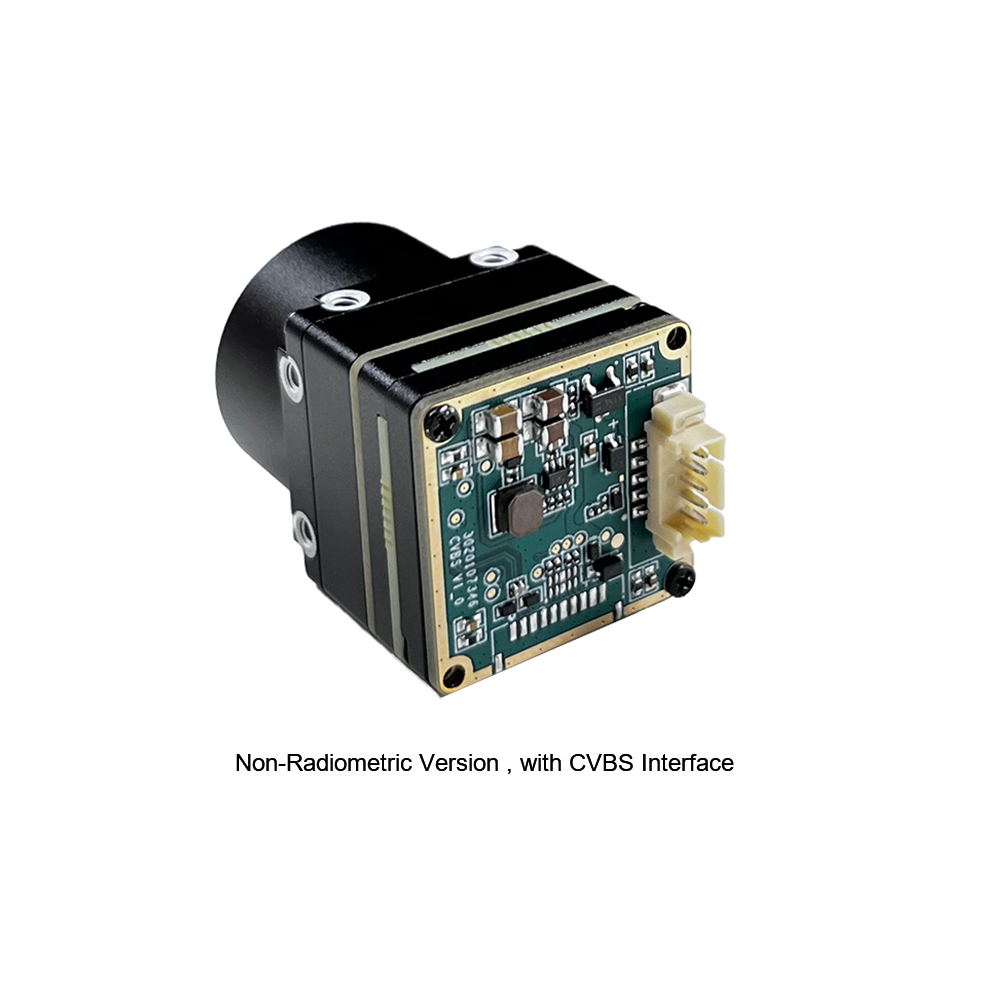 |
Uncooled Mini 384*288 Thermal Camera Module For Drones SKU: MINI-384-DRONE |
384 × 288 Uncooled VOx Infrared Microbolometer FPA |
• CVBS Analog (PAL/NTSC) • USB 2.0 / Type-C Digital • UART Command Interface |
• High Resolution & Stable NETD Performance • Precision Online Radiometric Temperature Measurement • Ultra-Small SWaP Factor for Airborne Payloads • Universal Multi-Interface Connector Board |
• Drone Airborne Thermal Gimbal • Machine Vision & Optical Inspection • Intelligent Manufacturing & Robotics • Predictive Equipment Maintenance |
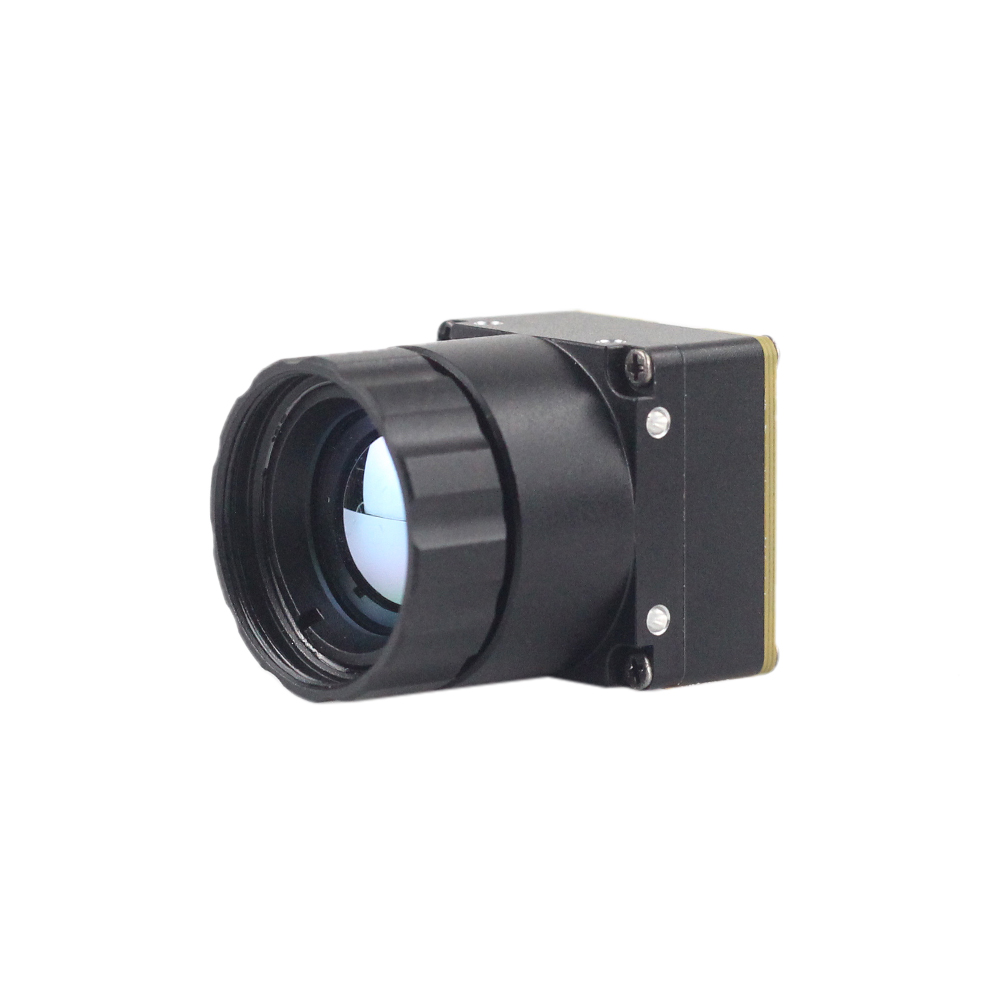 |
Uncooled LWIR Mini 256*192 Thermal Imaging Camera Module SKU: MINI-256-LWIR |
256 × 192 Uncooled LWIR Microbolometer Array |
• Analog CVBS Video Feed • USB Digital Output • Serial Communication Port |
• Ultra-Clear Thermal Signature Imaging • Full-Frame Uniform Thermal Output with Radiometry • Ultra-Low Power Consumption Engine • Similar Form-Factor to Commercial DJI Thermal Cores |
• Tactical Mine & UXO Detection • Micro Reconnaissance UAV Payloads • Handheld & Wearable Thermal Devices • Border Patrol & Perimeter Safety |
Comprehensive Product Hardware Analysis
1. Uncooled Mini 384*288 Thermal Camera Module For Drones
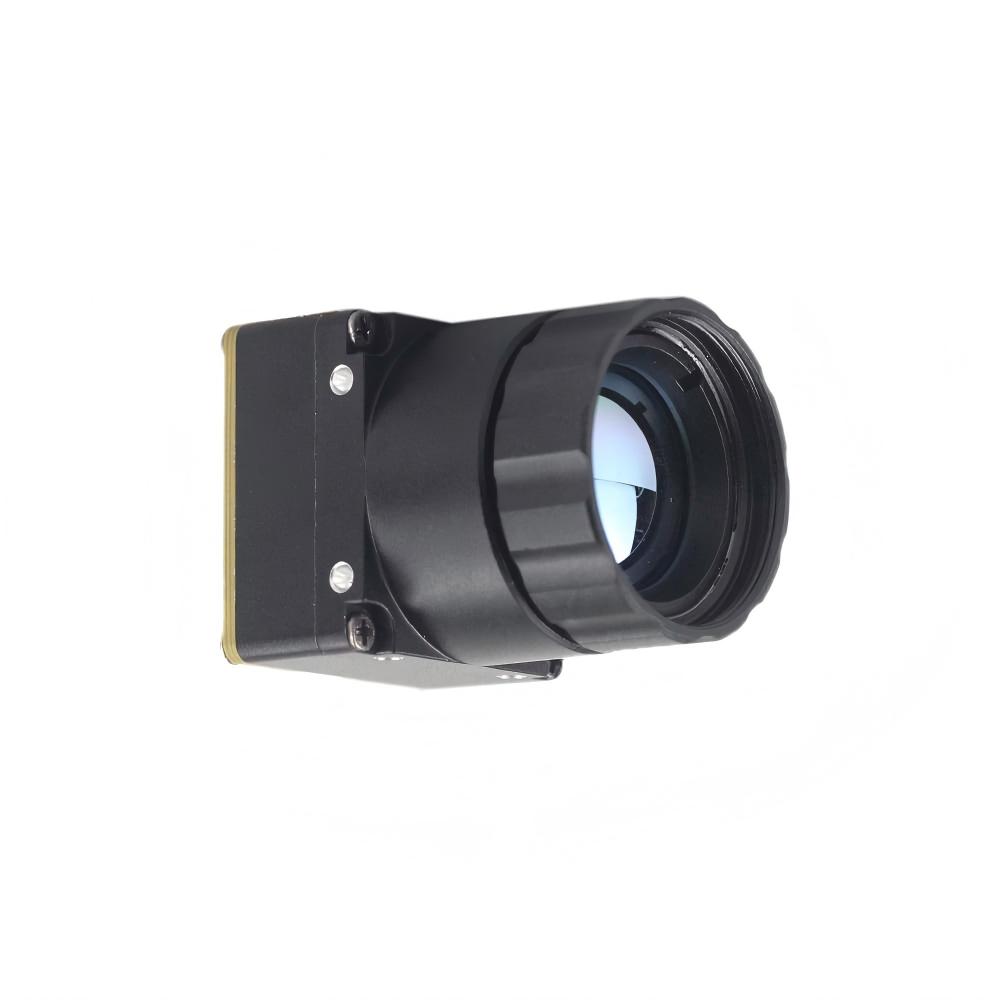
The MINI series infrared thermal core is built from the ground up for high-precision, low-SWaP industrial tasks. It combines a premium VOx uncooled detector with robust onboard radiometric signal conditioning. Offering multi-protocol digital and analog outputs, it connects cleanly into aerial gimbals, machine vision setups, automated robotic inspection cells, and smart factory monitoring networks.
2. Uncooled LWIR Mini 256*192 Thermal Imaging Camera Module Similar To DJI For Detecting Mines
Engineered around an ultra-efficient 256×192 microbolometer array, the Mini 256 core delivers clear thermal imaging and accurate per-pixel radiometry while drinking minimal power. Featuring a compact footprint matched to popular commercial thermal UAV cores, this module excels in tactical minefield sweeps, handheld observation monoculars, nano-drone payloads, and automated perimeter security rigs.
5. Enterprise Applications: Landmine Detection to Predictive Maintenance
Having compact thermal modules with tight NETD figures unlocks massive advantages across defense, utility, and municipal infrastructure sectors.
Tactical Airborne Mine Detection & UXO Sensing
Buried unexploded ordnance (UXO) and landmines alter the soil density around them, causing distinct thermal inertia differences compared to undisturbed dirt. As the sun heats the ground during the day and it cools at night, surface temperature deltas reveal the outline of buried hazards.
By flying a low-altitude survey drone equipped with a Mini 256 LWIR Engine, demining crews run non-contact thermal sweeps. Localized AI models analyze surface temperature shifts in real time, pinpointing hidden mine locations without putting human operators in harm's way.
Electrical Grid & Industrial Predictive Maintenance
When electrical components fail—whether it's a loose busbar lug, an overloaded phase, or a breaking insulator—resistive heating happens first ($P = I^2 R$). Placing mounted Mini 384 thermal cores inside substations gives utility teams 24/7 radiometric monitoring.
When an active component spikes past safe operational limits (for example, ΔT > 15°C above ambient baseline), SCADA systems raise instant alerts, allowing engineers to isolate issues before a catastrophic arc flash destroys expensive infrastructure.
Fire Reconnaissance & Search and Rescue (SAR)
When fighting structural or forest fires, standard RGB daylight cameras get completely blinded by thick smoke and ash. LWIR radiation passes right through air particulate layers, letting drone operators map hot spots, spot structural collapse hazards, and find missing persons by tracking human thermal body heat ($37^\circ\text{C}$).
6. Deep-Dive Technical FAQ
Q: How do I integrate a thermal micro camera module with Raspberry Pi or microcontrollers for real-time video?
Here's how you hook these up in the shop: First, handle power properly. Feed the module clean, regulated DC voltage (typically 3.3V or 5V DC) using a low-noise LDO power rail. Uncooled microbolometers are highly sensitive to power rail noise, and dirty power will show up immediately as fixed pattern noise across your thermal image.
If you just need a live video feed on a monitor, use the analog CVBS output connected to a USB capture card or composite display. But if you're building an embedded AI application on a Raspberry Pi, grab the digital stream over USB-C or MIPI-CSI2. Digital connections send uncompressed 14-bit raw temperature matrices straight into host memory using native Linux V4L2 drivers, skipping analog signal conversion losses entirely.
On the software end, use the Purpleriver SDK in Python or C++. You'll send serial UART commands to control shutter events (NUC calibration) or adjust gain modes. Inside your main processing loop, grab raw frame buffers, run them through OpenCV for dynamic range normalization (using CLAHE), apply false-color mapping palettes (like INFERNO), and feed the array directly into your computer vision network at up to 60 FPS.
Q: What is the ideal resolution (256x192 vs 384x288) for lightweight drone or DIY optical setups?
Deciding between 256×192 and 384×288 thermal cores comes down to target distance, instant field of view (iFOV), and payload weight limits. A 256×192 core (like our Mini 256) gives you 49,152 active pixels. That's ideal for close-to-medium range tasks where keeping mass and power draw as low as possible is critical—think sub-250g micro-drones, handheld monoculars, and short-range security rigs operating under 30 meters altitude.
Stepping up to a 384×288 resolution core delivers 110,592 pixels—over 2.25 times the pixel density. When you calculate target resolution using Johnson’s Criteria, target acquisition breaks down to clear pixel requirements across the target's critical dimension:
Detection ≈ 1.5 pixels | Recognition ≈ 6.0 pixels | Identification ≈ 12.0 pixels
Carrying a 384×288 module on a drone means you can fly higher and safer while still resolving fine thermal details—like individual solar panel cell defects, hot powerline splices, or buried mine anomalies. That extra spatial resolution gives you the ideal balance between wide ground coverage and long-range detection.
Q: Does Purpleriver offer full OEM/ODM hardware and software customization?
Absolutely. Purpleriver delivers complete OEM and ODM customization services for drone builders, defense integrators, and industrial equipment OEMs. Our core engineering team brings decades of combined experience from elite technical institutions including the Hong Kong University of Science and Technology (HKUST) and Huawei HiSilicon. We own the entire hardware and software development pipeline—from raw FPA board layouts to customized AI neural network deployment.
On the hardware front, we engineer custom PCB dimensions, flexible ribbon routing, aerospace-grade connectors, and IP67 aluminum housings. For optical setups, we provide custom Germanium optics, DLC (Diamond-Like Carbon) coatings, motorized lenses, and custom focal lengths matching your exact target geometry.
On the firmware side, we build tailored NUC calibration routines, shutterless algorithms, expanded temperature measurement ranges (up to +550°C and higher), and custom control protocols like MAVLink or Pelco-D. We can also optimize deep learning neural network layers to run directly on localized NPU targets for direct edge detection and custom radiometric alerts.
📚 References & Further Reading
- Industry Standard: Open-source Computer Vision Library integration at OpenCV.org
- Hardware Supply Partner: Microelectronics and payload hardware components available at KUYANG Hardware Store
- Related Guide: Top Thermal Camera Modules for Drone AI-Powered Imaging for UAVs
- Related Guide: Top Thermal Camera Modules for Raspberry Pi High-Res AI Imaging
- Related Guide: Top Pro-Grade Thermal Imaging Sensor Modules for AI-Enhanced LWIR Vision