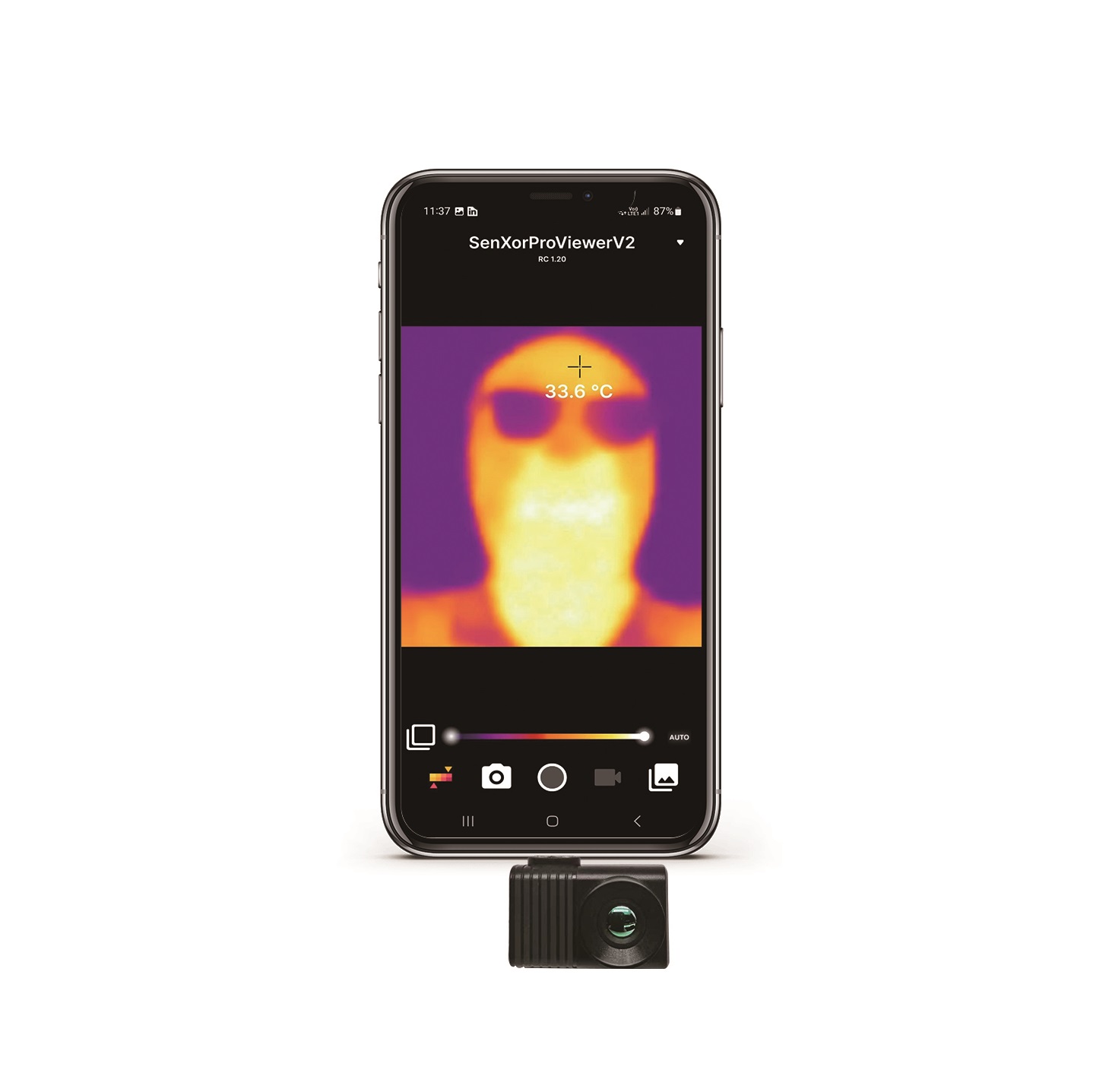

Best Thermal Camera Module Supplier: OEM High-Res Cores for Drones & Edge AI
2026年9月2日
Custom Thermal Camera Module: OEM/ODM IR Cores for Drones, Scopes & Embedded AI
2026年9月3日
Thermal Camera Module Manufacturer: High-Res Uncooled LWIR Cores for OEM & Embedded Vision
In modern autonomous robotics, perimeter defense surveillance, predictive maintenance, and drone-based optical payload design, conventional visual spectrum sensors fail the moment they hit complete darkness, dense smoke, maritime fog, thick tree canopies, or military camouflage. Integrating long-wave infrared (LWIR) sensing is no longer some exotic, optional add-on; it has become an absolute baseline requirement for mission-critical situational awareness. But anyone who has spent time on the hardware bench knows the reality: embedded vision engineers, hardware architects, and original equipment manufacturers (OEMs) constantly run into brutal physical roadblocks. For years, legacy thermal cores have plagued system designs with excessive power dissipation, unmanageable thermal drift when ambient temperatures swing, export red tape, and bulky enclosures that instantly blow past tight SWaP (Size, Weight, and Power) budgets.
Here's the deal: cutting out middlemen and working directly with a vertically integrated thermal camera module manufacturer is the only practical way around these hardware headaches. Modern uncooled microbolometer engines—built around precision vanadium oxide (VOx) thin-film architectures with tight 12μm pixel pitches—deliver true military-grade radiometric precision and tack-sharp thermal contrast right onto compact, thermally stabilized carrier boards. When you mate versatile physical interfaces like MIPI-CSI2, USB-UVC, and legacy analog CVBS with onboard Non-Uniformity Correction (NUC) pipelines, these OEM cores bridge raw focal plane array physics directly into Edge AI computing setups (think NVIDIA Jetson, Rockchip RK3588, and specialized neural accelerators). That drastically slashes development cycles for unmanned aerial systems (UAVs), tactical electro-optical gimbals, and automated factory monitoring rigs.
Table of Contents
- 👉 1. Physics & Detector Topologies: VOx vs. a-Si Microbolometers
- 👉 2. Embedded System Integration & SWaP-C Optimization
- 👉 3. Radiometric Temperature Measurement, NUC, and Thermal ISP Pipeline
- 👉 4. Factory OEM Product Profiles & Engineering Comparison
- 👉 5. Mission-Critical Applications: From Mine Detection to Edge AI Thermography
- 👉 6. Sourcing Criteria: Firmware, Custom Optics & Turnkey Customization
- 👉 7. Deep-Dive Technical FAQ
1. Physics & Detector Topologies: VOx vs. a-Si Microbolometers
Strip away the rugged aluminum housing and the anodized lens barrel, and the heart of any thermal imaging core is its Focal Plane Array (FPA). In uncooled Long-Wave Infrared (LWIR) devices running across the standard 8μm to 14μm atmospheric transmission window, incoming thermal radiation isn't collected like visible light on standard silicon photodiodes. Instead, the incident photon flux is absorbed by an array of microscopic, MEMS-machined bridge structures suspended over an underlying silicon substrate. Each suspended micro-bridge incorporates an infrared-absorbing layer bonded to a thermally responsive material. When thermal energy hits it, its electrical resistance shifts. In modern semiconductor fabrication, two primary materials battle it out for market share: Vanadium Oxide (VOx) and Amorphous Silicon (a-Si).
Look at the physics, and the choice becomes clear for demanding field applications. Vanadium Oxide gives you a substantially higher Temperature Coefficient of Resistance (TCR), consistently measuring between -2% and -3% per Kelvin at room temperature. What does that mean in the shop? It means a minuscule change in target surface temperature creates a measurable swing in resistance. That massive sensitivity advantage translates directly into higher signal-to-noise ratios (SNR) inside the CMOS Readout Integrated Circuit (ROIC). Because of this property, VOx microbolometers achieve dramatically better Noise Equivalent Temperature Difference (NETD) figures—routinely operating below 40 mK, and easily dropping under 30 mK when matched with high-transmission f/1.0 Germanium optics. On top of that, VOx exhibits significantly lower 1/f flicker noise than amorphous silicon. If you are tracking targets over cold open water, through zero-contrast night skies, or across rain-slicked terrain, VOx delivers a crisp, clean silhouette where a-Si turns into a muddy, noisy mess.
Now, amorphous silicon (a-Si) does have a place in low-end consumer hardware because it runs on standard, high-volume CMOS foundry lines, keeping initial wafer processing costs down. But you pay for that cost cut in performance. Amorphous silicon features a noticeably lower TCR (roughly -1.5% to -2.0% per Kelvin) and suffers from high intrinsic 1/f noise due to the disordered atomic structure of the material. That physical bottleneck drives typical real-world NETD ratings up into the 50 mK to 70 mK range. In high-speed tactical environments or high-precision industrial testing, an a-Si sensor produces a grainier image with limited dynamic range. To compensate, developers often end up applying aggressive spatial blur filters that wash out fine structural edges and obscure rapid thermal changes.
Mini 640×512 Thermal Imaging Core Demo Video
Another major shift in the industry is the rapid migration from bulky legacy 17μm and 25μm pixel pitch architectures down to ultra-compact 12μm (and emerging sub-10μm) geometries. Shrinking the pixel pitch to 12μm shrinks the physical silicon footprint of the entire array for any native resolution—whether it is 256×192 or 384×288. A smaller focal plane array means your optical engineer can slash the clear aperture and focal length requirements of the Germanium (Ge) or Chalcogenide objective lens. Because optical-grade Germanium is dense, heavy, and expensive, cutting lens diameter drops total payload weight and mass moment of inertia by huge margins. For multi-axis drone gimbals, that weight reduction directly translates into longer flight times, smaller motors, and faster stabilization response. For a thorough deep dive into focal plane metrics, take a look at our engineering-focused thermal imaging camera module guide.
2. Embedded System Integration & SWaP-C Optimization
If you are engineering autonomous micro-UAVs, helmet-mounted thermal sights, man-portable night optics, or remote off-grid monitoring pods, you know SWaP-C (Size, Weight, Power, and Cost) rules every architectural decision. A high-resolution thermal imaging core cannot just produce pretty pictures; it must squeeze every bit of radiometric performance out of every milliwatt it consumes. That means eliminating power-hungry interface converter chips, passive heat traps, and bulky external processing boards.
Modern embedded hardware demands native, low-latency digital video bus options that feed directly into edge processors such as the NVIDIA Jetson Orin family, Rockchip RK3588, NXP i.MX8, or Raspberry Pi compute modules. Sourcing directly from an experienced thermal camera module manufacturer guarantees native access to the interfaces hardware designers actually need:
- ⚙️ MIPI-CSI2 (Mobile Industry Processor Interface - Camera Serial Interface 2): Running dual-lane or quad-lane differential configurations, MIPI-CSI2 is the undisputed standard for low-latency embedded vision. It dumps uncompressed 14-bit or 16-bit raw digital radiometric frames directly into the host system-on-chip (SoC) memory via direct DMA and Linux Video4Linux2 (V4L2) driver layers. Bypassing USB bridges strips out driver latency, avoids frame drops, and keeps glass-to-glass latency below 10 milliseconds. That is a must-have requirement for autonomous drone navigation, high-speed collision avoidance, and kinetic counter-UAS targeting systems.
- ⚙️ USB-UVC (Universal Video Class) 2.0 / 3.0: Perfect for fast prototyping, diagnostic bench rigs, and deployment on industrial x86 or ARM platforms. The core supplies a standard 8-bit YUV/MJPEG video feed for direct operator display while running an independent, non-blocking programmatic bulk endpoint to pull full-frame 14-bit radiometric temperature arrays simultaneously.
- ⚙️ Analog Composite (CVBS - PAL/NTSC): Digital buses get all the attention in edge computing, but zero-latency analog video remains vital on the front lines. First-person-view (FPV) defense loitering munitions and long-range military wireless video links rely on analog transmission because digital video compression and decompression buffers create piloting latency that can cause a high-speed craft to miss its target.
Beyond video transport, system control requires deterministic command interfaces. Reliable industrial cores feature dedicated I2C, SPI, and high-speed UART buses (clocking from 115,200 up to 921,600 baud). These buses let your software toggle color palettes (White Hot, Black Hot, Rainbow, Ironbow), drive motorized continuous-focus Germanium optics, command electronic zoom steps (1× to 8×), tune spatial contrast algorithms, and read real-time region-of-interest (ROI) temperatures. Keeping these embedded microcontrollers and transceivers reliable across multi-year production runs demands robust component lifecycle management through verified semiconductor supply chains like Shenzhen ChiYi Electronics Co., Ltd. and component distribution hubs like JM Chip.
3. Radiometric Temperature Measurement, NUC, and Thermal ISP Pipeline
An uncooled thermal camera module is fundamentally an analytical radiometer disguised as an imaging device. While visual CMOS sensors simply count photons reflecting off an object in the visible spectrum, an LWIR microbolometer absorbs thermal emissions and converts incoming radiant power ($W$) into analog voltages. The readout circuitry converts those voltages into 14-bit or 16-bit Digital Numbers (DN). Turning those raw digits into stable, repeatable temperature readings calibrated to tenths of a degree requires an advanced onboard Image Signal Processor (ISP) pipeline.
Because microbolometers are fabricated via MEMS processes, every individual pixel across the array has slight physical variations: slightly different electrical resistance, divergent thermal conductance to the silicon substrate ($G_{th}$), and variable thermal capacitance ($C_{th}$). Without real-time corrections, the raw output looks like an unreadable screen of static, a phenomenon known as Fixed Pattern Noise (FPN). To clean this up on the fly, the thermal ISP executes a multi-stage hardware processing pipeline:
- ⚙️ Non-Uniformity Correction (NUC): This step normalizes the gain and offset coefficients of every pixel on the detector array.
- ✅ Shutter-based NUC: A precision mechanical shutter swings into the optical path for a fraction of a second, presenting a completely uniform thermal reference surface. The onboard processor reads this flat field and recalculates its offset calibration matrix instantly.
- ✅ Shutterless Scene-Based NUC (SBNUC): In continuous tracking missions, missile seekers, or high-vibration drone monitoring, you cannot tolerate a mechanical click that freezes the video feed for 500 milliseconds. Proprietary SBNUC algorithms analyze scene dynamics over time and apply spatio-temporal statistical filters to cancel fixed pattern noise dynamically without physical shutter mechanisms.
- ⚙️ Bad Pixel Replacement (BPR): Every production wafer has a tiny fraction of dead, blind, or noisy pixels. During factory calibration, these coordinates are permanently burned into onboard non-volatile EEPROM. At runtime, the ISP identifies these bad pixels and interpolates their values from healthy neighboring pixels without degrading edges.
- ⚙️ Digital Detail Enhancement (DDE) & Adaptive Dynamic Range Compression: A raw microbolometer delivers 14-bit dynamic range—that is 16,384 discrete levels. Standard monitors and edge neural nets work with an 8-bit scale (256 shades of gray). If you run a basic linear scale down, subtle human signatures vanish in high-contrast outdoor scenes. Advanced thermal ISPs apply bilateral spatial filtering to split the scene into low-frequency base layers (large ambient thermal trends) and high-frequency detail layers (human silhouettes, vehicle engine vents, power line hardware). A specialized Contrast Limited Adaptive Histogram Equalization (CLAHE) engine compresses the base layer while amplifying high-frequency details, giving you clean, high-contrast imagery even in scenes containing extreme hot and cold zones.
For industrial thermography and predictive maintenance, the radiometric engine calculates target surface temperature ($T_{obj}$) by solving the classic radiometric transfer equation in real time:
$$T_{obj} = \sqrt[4]{\frac{DN_{corrected} - (1 - \epsilon)\tau_{atm}\sigma T_{refl}^4 - (1 - \tau_{atm})\sigma T_{atm}^4}{\epsilon \tau_{atm} \sigma}}$$
In this equation, $\epsilon$ represents target emissivity, $\tau_{atm}$ is atmospheric transmittance, $\sigma$ is the Stefan-Boltzmann constant, $T_{refl}$ is reflected ambient temperature, and $T_{atm}$ is the atmospheric temperature. Factory multi-point calibration using computer-controlled blackbody cavities ensures temperature readings stay accurate within ±2°C or ±2% across standard operating environments from -20°C to +150°C, with extended industrial options reaching well over +550°C. For non-destructive testing setups and European/CIS deployment strategies, review our dedicated Russian language thermal camera module overview.
4. Factory OEM Product Profiles & Engineering Comparison
Different applications demand different trade-offs between resolution, weight, and signal processing capabilities. To support system builders across commercial robotics, border security, and high-voltage grid inspection, we manufacture dedicated LWIR cores built around distinct operational profiles. Here is a breakdown of our standard factory production lines.
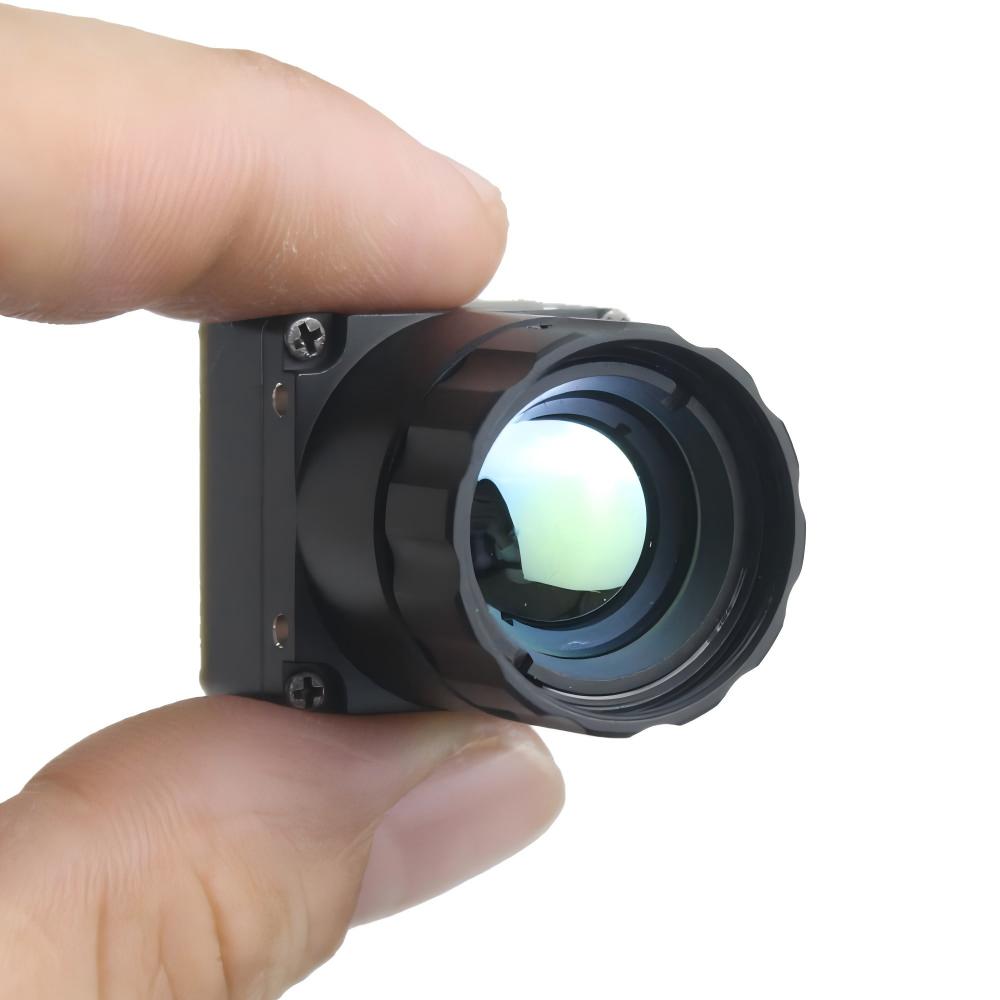
Mini 256 Uncooled LWIR Thermal Imaging Camera Module
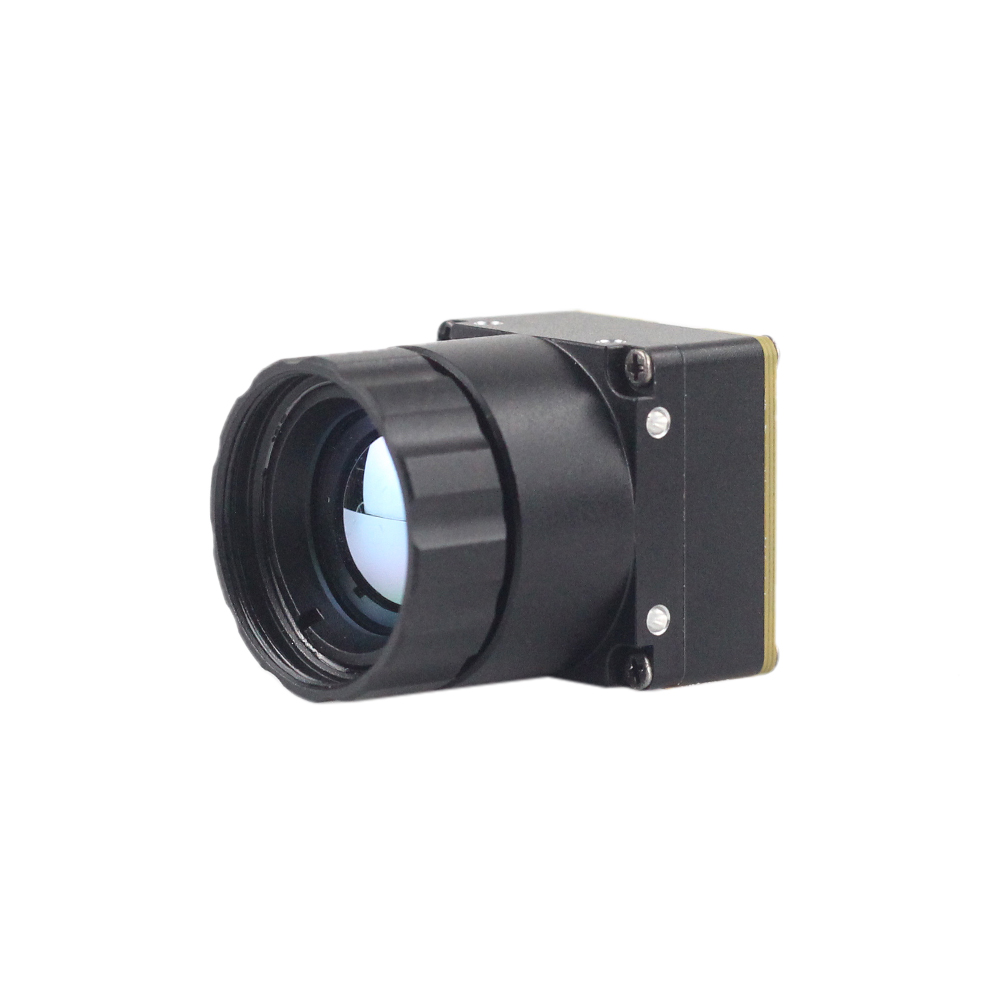
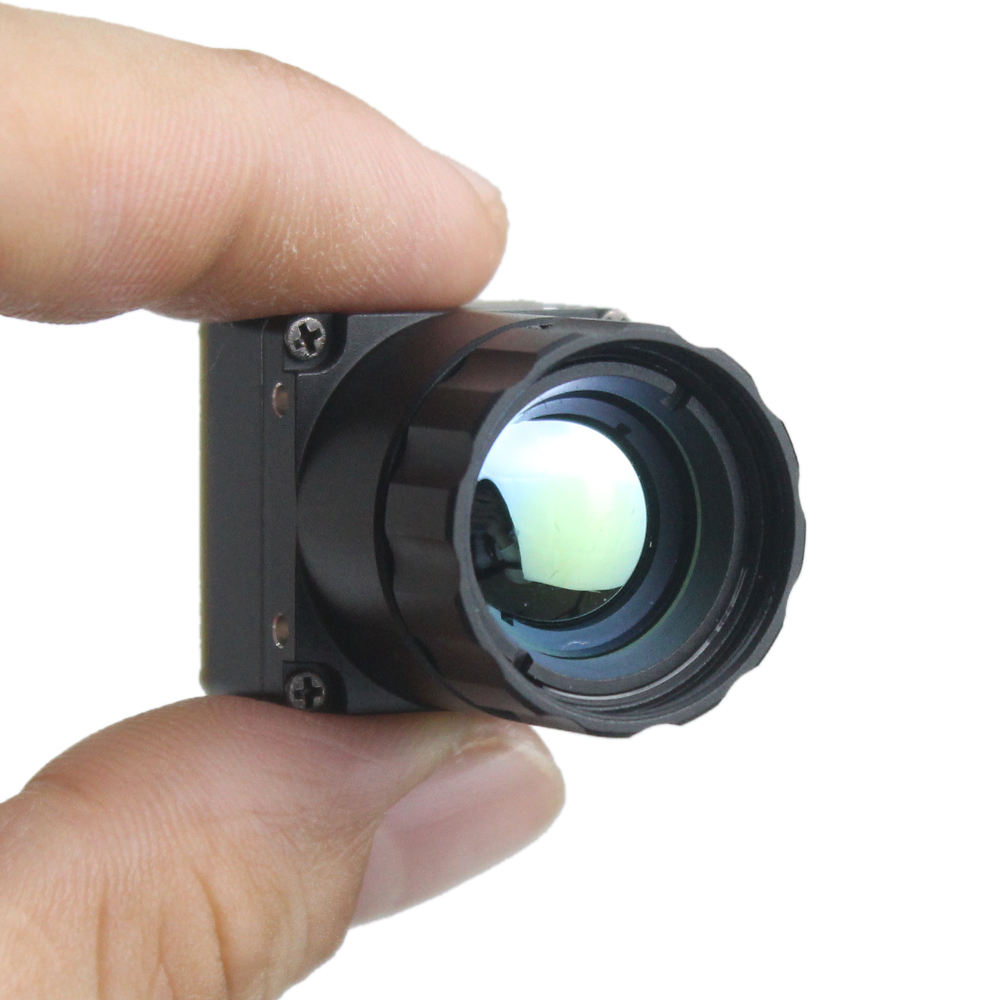
The Mini 256 uncooled LWIR core is built for applications where every gram and milliwatt counts. Featuring a form factor compatible with commercial aerial gimbals (including DJI-class drone platforms), this micro-core is ideal for airborne humanitarian demining, UXO scanning, perimeter patrols, and ultralight ground robotics. It pulls tiny thermal variations out of noisy backgrounds and delivers calibrated per-pixel radiometric arrays alongside smooth visual streams.
| Detector Material | Uncooled Vanadium Oxide (VOx) Microbolometer |
| Native Resolution | 256 × 192 pixels |
| Pixel Pitch | 12 μm |
| Spectral Band | 8 μm to 14 μm (LWIR) |
| Thermal Sensitivity (NETD) | < 40 mK @ 25°C, f/1.0 |
| Output Interfaces | USB-UVC / Direct Digital Interface / Micro UART Control Bus |
| Radiometric Functionality | Full-frame radiometric temperature measurement (Spot, Line, Regional Max/Min) |
| Form Factor Advantage | Ultra-lightweight footprint engineered for direct integration into drone gimbals |
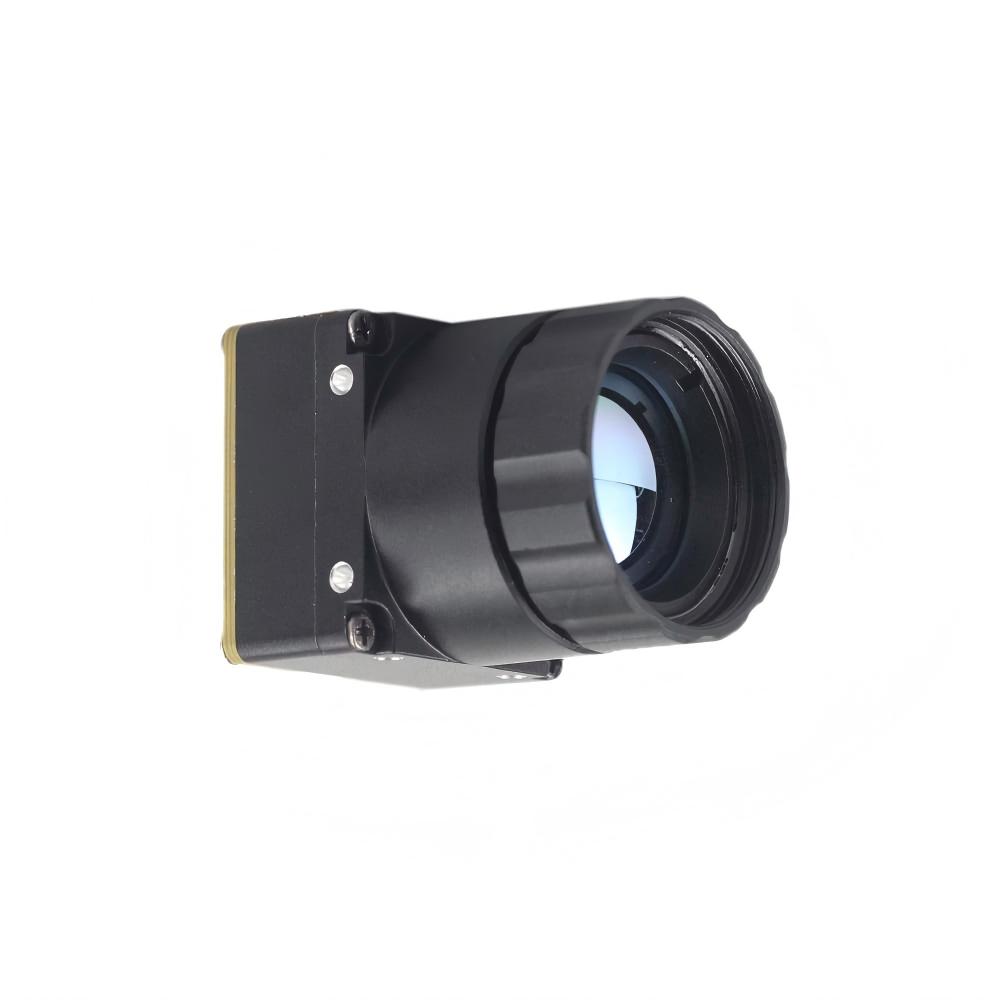
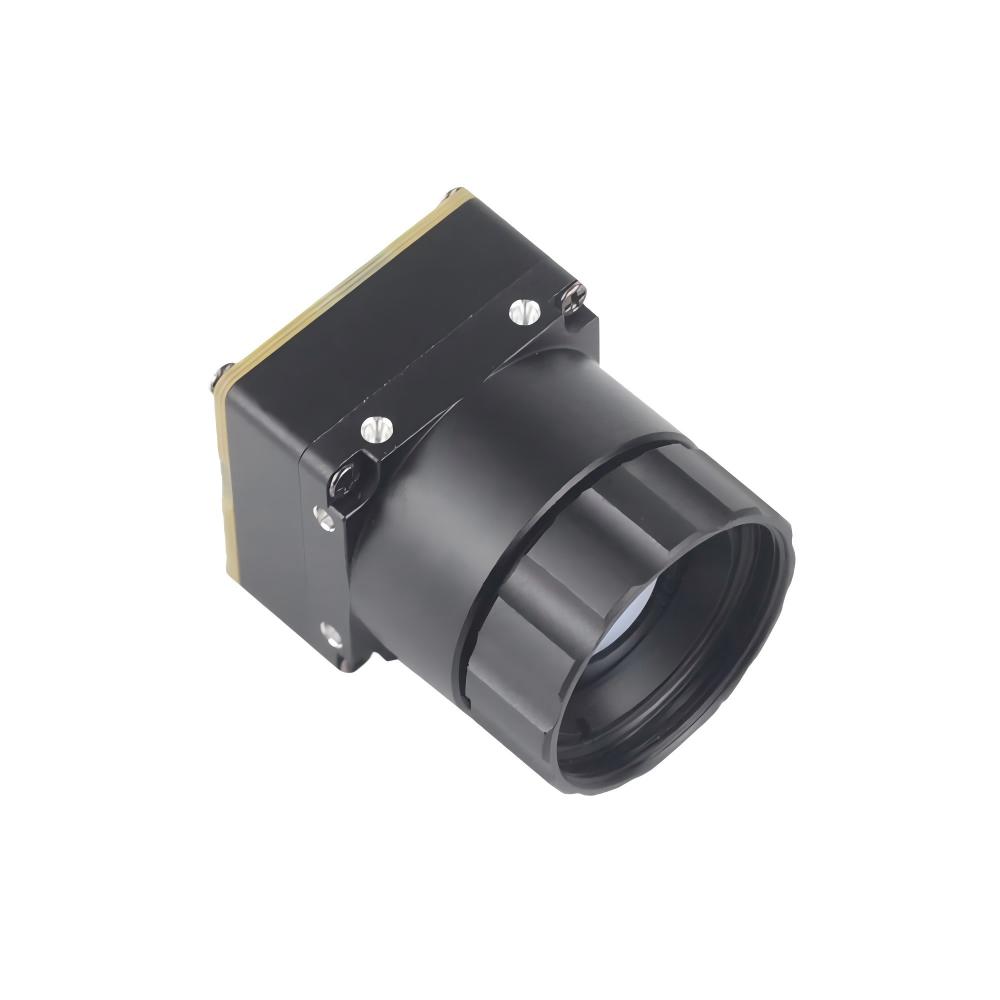
MD Series 384x288 Uncooled Infrared Thermal Camera Module
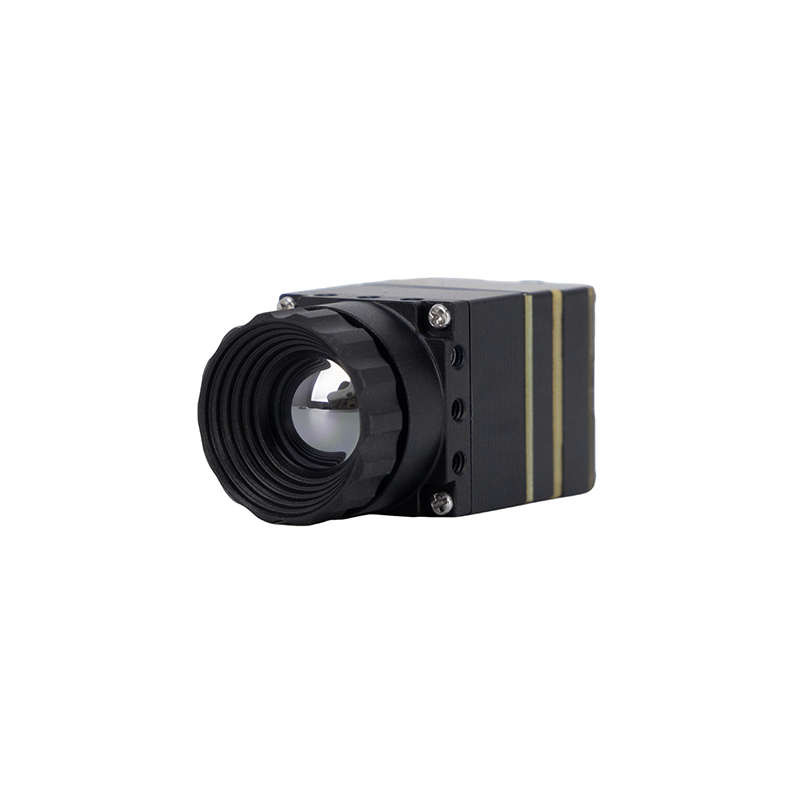
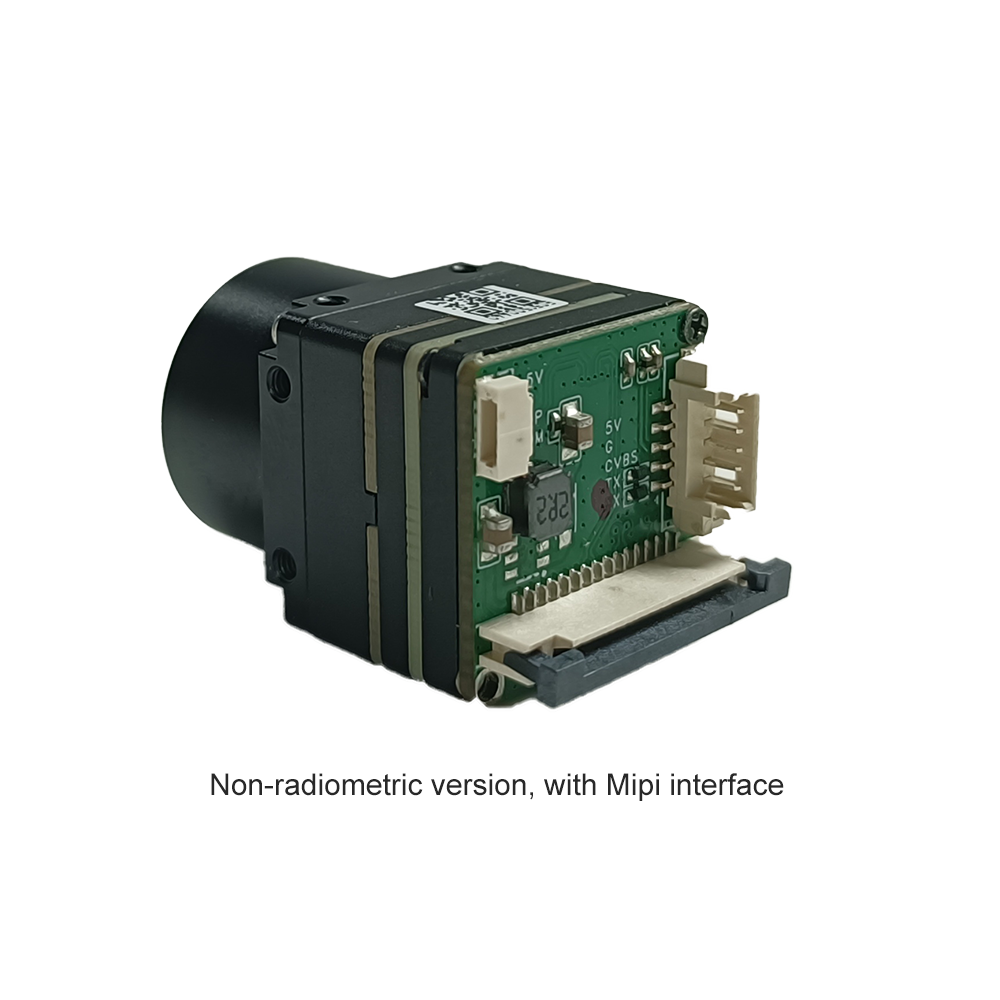
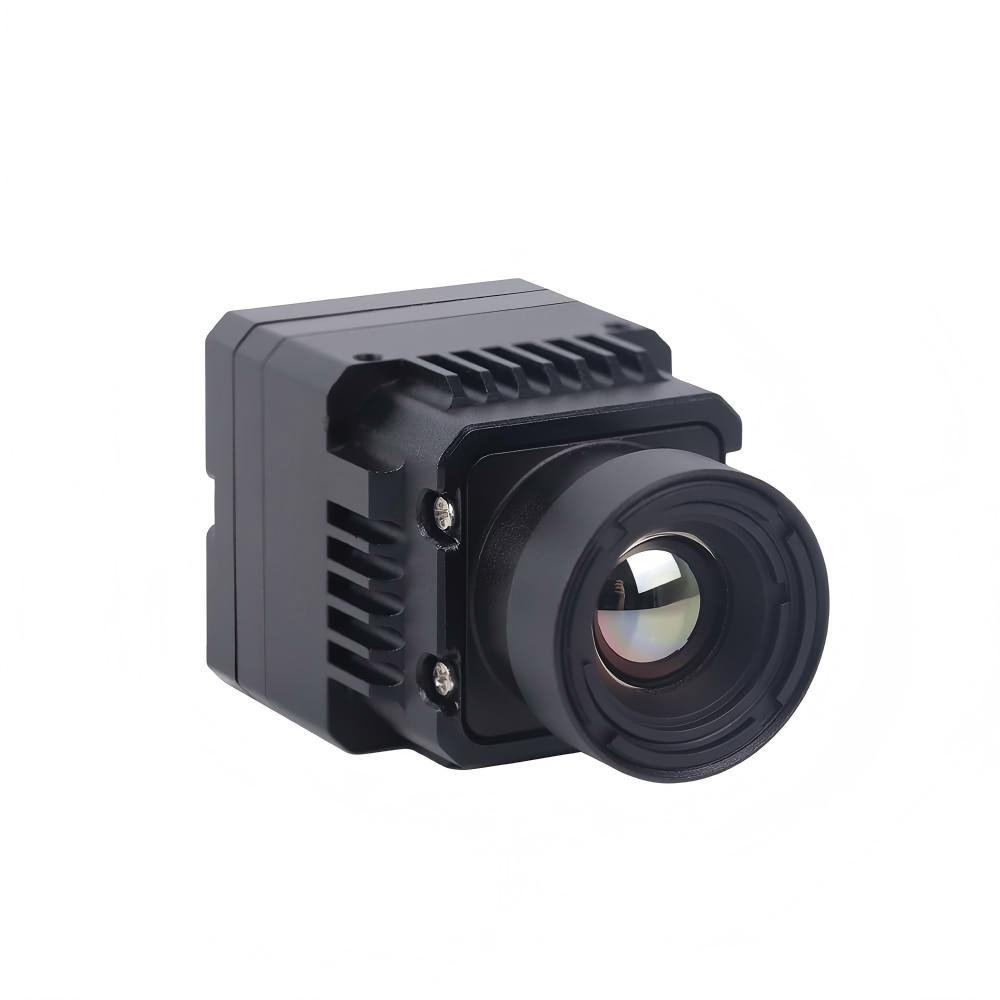
The MD Series (Purpleriver) camera core is built for industrial-grade durability and high-reliability defense payloads. Featuring an uncooled 12μm VOx sensor running at 384×288 resolution, it delivers exceptional thermal sensitivity and razor-sharp imagery. With support for triple physical output buses (MIPI / USB / CVBS), this core drops cleanly into modern embedded vision architectures. Backed by our engineering leadership hailing from the Hong Kong University of Science and Technology (HKUST) and senior hardware designers from Huawei HiSilicon, the MD Series is available with complete turnkey OEM/ODM customization options.
| Detector Architecture | High-Sensitivity Uncooled VOx Focal Plane Array |
| Resolution Matrix | 384 × 288 pixels |
| Pixel Pitch | 12 μm |
| Sensitivity (NETD) | ≤ 35 mK (@ 25°C, f/1.0) |
| Supported Interfaces | Simultaneous / Configurable MIPI-CSI2, USB-UVC, and Analog CVBS |
| Lens Configurations | Multiple factory athermalized Germanium lenses (Wide-Angle to Telephoto) |
| Engineering Heritage | Engineered by HKUST researchers & former Huawei HiSilicon core processor architects |
| Customization Scope | Full OEM/ODM: Custom PCB shapes, connector pinouts, firmware filters, Linux V4L2 drivers |
If your project calls for specialized optical integration, custom carrier boards, or multi-sensor fusion hardware, check out our full collection of electro-optical engineering teardowns in the optoelectronics engineering index.
5. Mission-Critical Applications: From Mine Detection to Edge AI Thermography
Pairing 12μm VOx detectors with embedded digital interfaces and onboard radiometric processing brings military-grade thermography into accessible commercial and tactical payloads. Here is how our modules perform in the field today:
1. Drone-Based Subsurface Landmine and UXO Detection
Humanitarian demining units and explosive ordnance disposal (EOD) teams face massive risks when clearing non-metallic or plastic-cased landmines, which traditional metal detectors miss entirely. Modern aerial demining tactics rely on small UAVs carrying high-sensitivity LWIR cores like the Mini 256 to spot buried munitions by tracking natural diurnal temperature cycles.
Look at the physics of heat transfer in soil. During the day, solar radiation warms the surface. A buried landmine, IED, or unexploded ordnance shell has radically different thermal conductivity, heat capacity, and thermal diffusivity than the surrounding dirt. As a result, the soil directly above a buried hazard heats up at a different rate during morning sunlight and retains heat longer after dusk. During these thermal crossover windows, the Mini 256 catches these subtle millikelvin anomalies, clearly outlining buried threats from a safe altitude without triggering mechanical pressure fuzes.
2. Industrial High-Voltage Switchgear and Predictive Maintenance
In power distribution substations, high-voltage switchgear cabinets, and chemical processing facilities, catastrophic equipment failures do not just happen out of nowhere. They start as localized thermal anomalies caused by loose busbar bolts, unbalanced phases, harmonic loads, or worn bearings. The MD Series 384x288 Module provides 24/7 automated thermal monitoring inside switchgear enclosures or on pan-tilt inspection mounts. By analyzing per-pixel radiometric data in real time, the system continuously calculates maximum temperatures and differential trends across critical terminals. Over-temperature alarms trigger automated alerts long before high contact resistance leads to an explosive arc flash.
3. Edge AI Object Detection and Target Classification
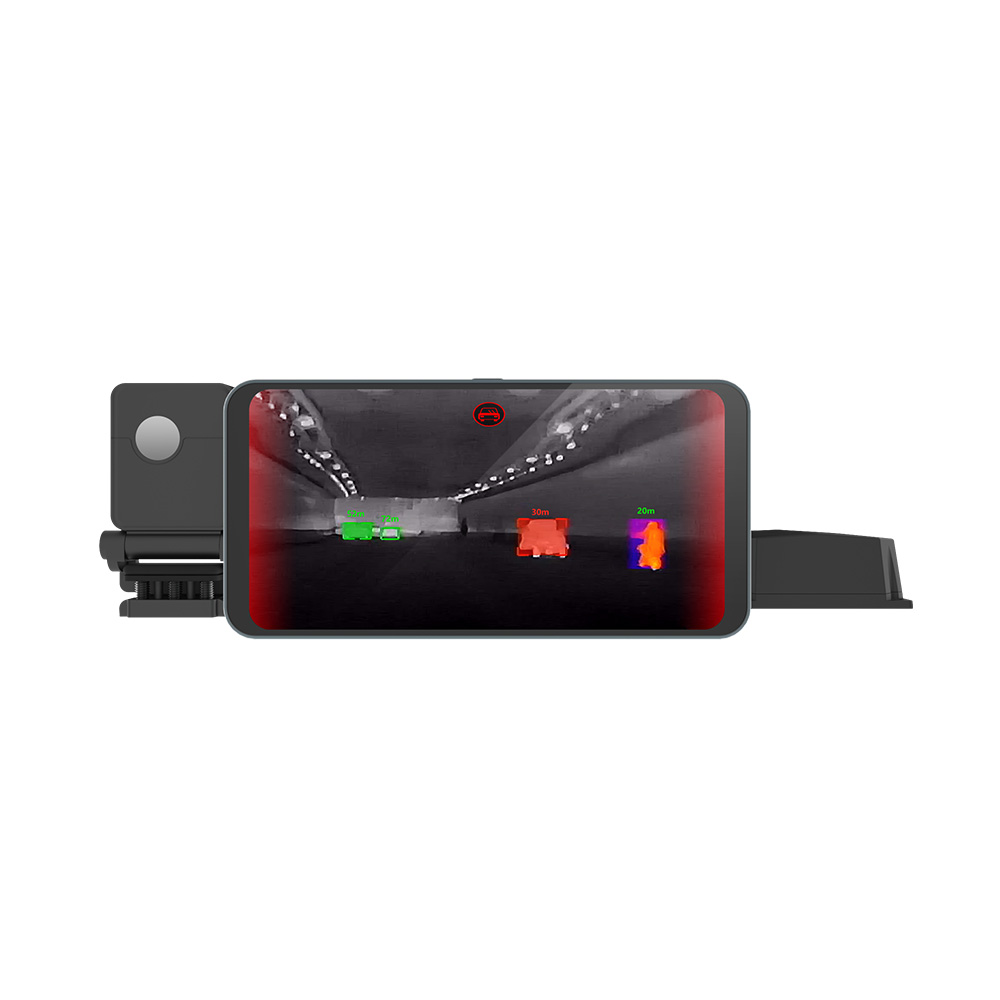
Running deep learning models like YOLOv8, YOLOv10, or MobileNet SSD in the field requires reliable input data regardless of weather conditions. Standard RGB sensors fold when blinding headlights hit them, or when operating in heavy smoke, blowing dust, or thick fog. Feeding raw 14-bit or edge-enhanced thermal frames over low-latency MIPI-CSI2 directly into an embedded Neural Processing Unit (NPU) gives autonomous surveillance systems the reliability they need. Integrators can reliably detect, classify, and track people, vehicles, or rogue drones hundreds of meters away using thermal signatures alone, unaffected by ambient light levels.
6. Sourcing Criteria: Firmware, Custom Optics & Turnkey Customization
When selecting a long-term thermal camera module manufacturer, engineering teams need to look far beyond high-level catalog specs. Successfully bringing an infrared product to market requires deep technical collaboration across optical physics, PCB layout, mechanical packaging, and low-level Linux driver development.
Athermalized Optical Design and Material Science
Standard glass types like N-BK7 or fused silica are completely opaque to thermal wavelengths between 8μm and 14μm. LWIR systems require specialized materials such as monocrystalline Germanium (Ge), Zinc Selenide (ZnSe), or Chalcogenide amorphous glass. Germanium has a high refractive index (around 4.0 at 10μm), allowing compact multi-element lens designs. But Germanium has a massive downside: its thermal coefficient of refractive index ($dn/dt \approx 3.96 \times 10^{-4}/\text{°C}$) is roughly forty times higher than optical glass.
Without careful optical engineering, a thermal lens will defocus rapidly as ambient temperatures swing across standard operating limits (-40°C to +80°C). A true manufacturing partner designs robust athermalized optical assemblies. By combining lens elements with mechanical barrels made from materials with opposing thermal expansion coefficients (such as specialized aluminum, stainless steel, and Delrin spacers), the barrel mechanically shifts the optics to compensate for thermal focal drift. That keeps your Modulation Transfer Function (MTF) razor-sharp across the entire operating temperature range.
Firmware Flexibility and Embedded Board-Level Redesign
Standard off-the-shelf catalog sensors rarely drop cleanly into custom spherical drone gimbals, explosion-proof ATEX enclosures, or compact handheld monoculars. System integrators regularly need custom board modifications: altered PCB outlines, custom flexible printed circuit (FPC) routings, specific Hirose or Samtec board-to-board connectors, and specialized filtering to isolate the sensor from noisy drone motor ESCs.
With an engineering team drawn from the Hong Kong University of Science and Technology (HKUST) and senior processor architects from Huawei HiSilicon, our factory delivers direct, low-level firmware adaptation. We build custom Linux Video4Linux2 (V4L2) kernel modules, write specialized ROS/ROS2 nodes, provide Android camera HAL bridges, and develop FPGA-level image filters configured specifically for your target compute platform.

7. Deep-Dive Technical FAQ
How do I choose the right thermal camera module for embedded systems like Raspberry Pi or drone gimbals?
What is the advantage of sourcing from an OEM thermal module manufacturer over generic off-the-shelf sensors?
Can your thermal imaging modules output simultaneous radiometric data and video streaming?
📚 References & Further Reading
- Industry Standard: Sourced electronic ICs and verified optoelectronic distribution via JM Chip
- Industry Standard: Surface mount integration and hardware engineering specifications via Shenzhen ChiYi Electronics Co., Ltd.
- Related Guide: Comprehensive Thermal Imaging Camera Module Selection Guide for LWIR Cores
- Related Guide: Russian Regional Guide: Low SWaP Thermal Imaging Camera Modules
- Related Guide: Purpleriver Optoelectronics & Thermal Core Engineering Technical Archives