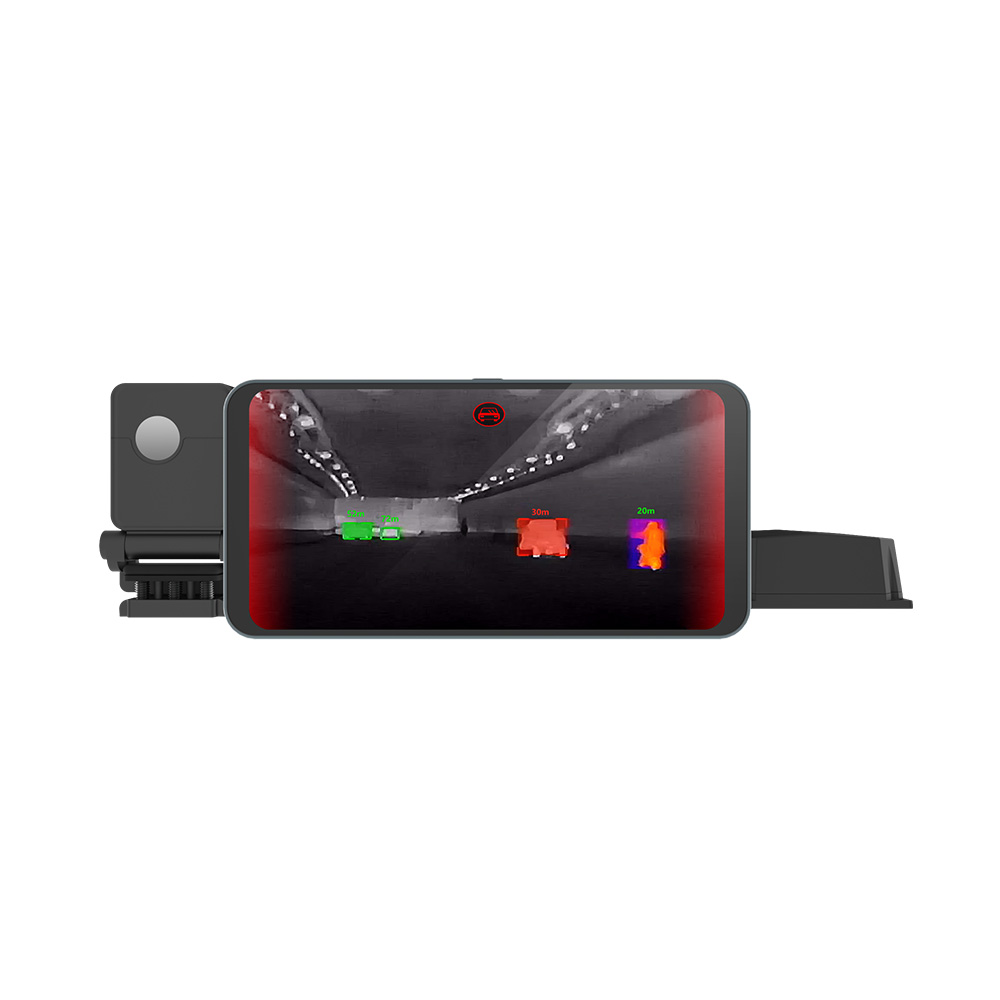

وحدة كاميرا تصوير حراري بالأشعة تحت الحمراء غير مبردة MIPI 640 384 256 9mm للطائرات بدون طيار: دليل التخصيص الشامل
27 يوليو 2026
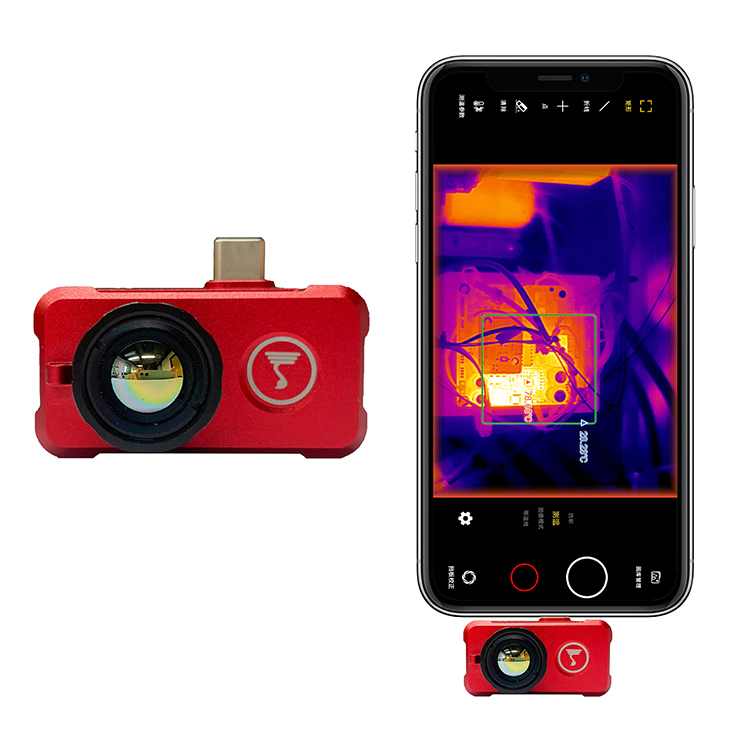
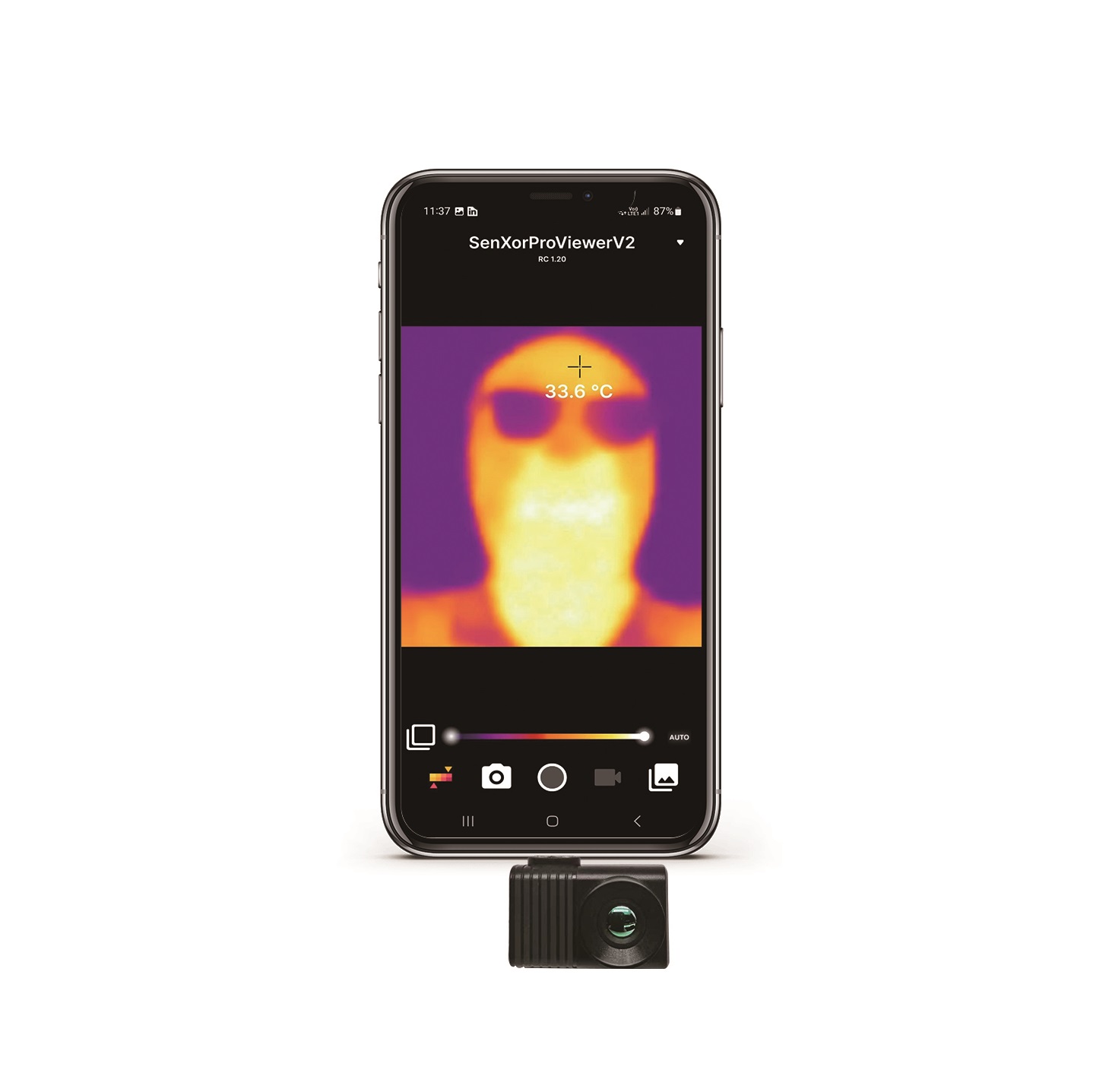
وحدة كاميرا التصوير الحراري بالأشعة تحت الحمراء المحمولة YWX256 الصغيرة للأمن عبر USB للهاتف المحمول بدقة 256x192 ومعدل 25 هرتز: دليل OEM الشامل
28 يوليو 2026
دليل وحدة كاميرا الرؤية الليلية الحرارية المدمجة بالأشعة تحت الحمراء الحقيقية مع إضاءة IR مدمجة
تتطلب الأجهزة الصناعية الحديثة، والحمولات الدفاعية، وإعدادات الاستشعار الذاتي أنظمة رؤية كهروضوئية عالية الأداء. انظر، عندما تقوم ببناء معدات يجب أن تعمل في الظلام الدامس، أو الدخان الكثيف، أو الضباب الثقيل، أو التضاريس الفوضوية، فإن المستشعرات البصرية القياسية لن تفي بالغرض. الجمع بين وحدة كاميرا الرؤية الليلية الحرارية المدمجة بالأشعة تحت الحمراء الحقيقية مع إضاءة مدمجة بالأشعة تحت الحمراء يغير قواعد اللعبة في التصوير ثنائي الطيف. من خلال الجمع بين مقياسات الميكروبولومتر السلبية ذات الموجات الطويلة تحت الحمراء (LWIR) وإضاءة VCSEL/LED النشطة ذات الموجات القريبة من تحت الحمراء (NIR) داخل مساحة صغيرة، لم يعد على مهندسي تصميم OEM الاختيار بين الكشف الحراري بعيد المدى والتعرف البصري الحاد على الهدف.
يتيح نشر وحدات الكاميرا الهجينة ثنائية الطيف لفرق الأجهزة بناء مركبات جوية بدون طيار (UAVs) صلبة، وروبوتات أرضية تكتيكية، وأنظمة دفاع محيطي، ومعدات فحص آلي للمصانع. إليك الأمر: يرشدك هذا الدليل عبر الآليات العملية لدمج النوى الحرارية المصغرة، وتقييم الأداء الإشعاعي، وإعداد البروتوكولات المضمنة، وتحقيق أقصى استفادة من إضاءة الأشعة تحت الحمراء النشطة عند بناء حمولات الجيل التالي.
سواء كنت تتعامل مع ميزانيات الطاقة على الطائرات بدون طيار الصغيرة أو تبديد الحرارة في العبوات المغلقة IP67، فإن الحصول على بنية الأجهزة الصحيحة من اليوم الأول يوفر أشهرًا من إعادة تصميم اللوحات لاحقًا.
دعنا نشمر عن سواعدنا ونحلل كيفية عمل هذه البصريات ثنائية الطيف تحت ظروف المختبر والميدان الحقيقية.
جدول المحتويات
- 👉 الهندسة ثنائية الطيف: الحرارية السلبية ذات الموجات الطويلة تحت الحمراء مقابل إضاءة الأشعة تحت الحمراء القريبة النشطة
- 👉 بنية الأجهزة الكهروضوئية وميكانيكا دمج المستشعرات
- 👉 بروتوكولات التكامل المضمنة، ومجموعات تطوير البرمجيات، وبنى الذكاء الاصطناعي الطرفي
- 👉 مجالات التطبيق الصناعي الأساسي، والطائرات بدون طيار، والدفاع
- 👉 مصفوفة مقارنة منتجات OEM التجارية وعرض المنتج
- 👉 الأسئلة التقنية الشائعة المتعمقة واعتبارات تصميم النظام
الهندسة ثنائية الطيف: الحرارية السلبية ذات الموجات الطويلة تحت الحمراء مقابل إضاءة الأشعة تحت الحمراء القريبة النشطة
لاختيار وتنفيذ وحدة كاميرا الرؤية الليلية الحرارية المدمجة بالأشعة تحت الحمراء الحقيقية مع إضاءة مدمجة بالأشعة تحت الحمراء, الصحيح، يجب أن تتعرف على كيفية تصرف التصوير النشط بالأشعة تحت الحمراء القريبة (NIR) والتصوير الحراري السلبي بالموجات الطويلة تحت الحمراء (LWIR) في البرية. يمتد الإشعاع الكهرومغناطيسي عبر نطاقات موجية متعددة، ولكل نطاق فيزياؤه الخاصة، ومنحنيات امتصاصه، وحيل الفوتون.
الاستشعار السلبي بالموجات الطويلة تحت الحمراء (LWIR)
تعمل مستشعرات LWIR ضمن طيف 8.0 ميكرومتر إلى 14.0 ميكرومتر. تقيس مصفوفات الميكروبولومتر - المبنية عادةً بأكسيد الفاناديوم (VOx) أو السيليكون غير المتبلور (a-Si) - إشعاع الحرارة المنبعث مباشرة من الأجسام الأكثر دفئًا من الصفر المطلق (-273.15 درجة مئوية). لأن LWIR لا تهتم بالضوء المرئي المحيط وتتتبع الطاقة الحرارية المنبعثة بدلاً من الفوتونات المنعكسة:
- ✅ موثوقية في انعدام الضوء: تعمل بشكل نظيف في الظلام الدامس، وأعمدة المناجم تحت الأرض، والممرات الصناعية غير المضاءة، والمواقع التكتيكية النائية دون الحاجة إلى مصادر ضوء إضافية.
- ✅ اختراق العوائق: تمر موجات LWIR الأطول مباشرة عبر الجسيمات الصغيرة المحمولة جوًا. هذا يعني أن صورتك تخترق دخان الديزل الكثيف، والضباب، وسحب الغبار، والغطاء النباتي حيث تتعامى الكاميرات البصرية.
- ✅ تباين عالي للهدف: تبرز البصمات الحرارية فورًا. ينعزل البشر، ومحركات المركبات، والقواطع عالية الجهد، ونقاط الاحتكاك الساخنة فورًا مقابل الخلفيات الباردة، مما يجعل الكشف الآلي مباشرًا.
فهم كيفية انتقال الحرارة عبر نطاقات الأشعة تحت الحمراء هذه أمر أساسي إذا كنت تصمم معدات قياس درجة حرارة بدون تلامس. إذا كنت بحاجة إلى تجديد معلوماتك حول حسابات الميكروبولومتر والقياس الإشعاعي الطيفي، فراجع دليل ويكيبيديا للتصوير الحراري.
الإضاءة النشطة بالأشعة تحت الحمراء القريبة (NIR)
تعتمد الرؤية الليلية النشطة بالأشعة تحت الحمراء القريبة على مستشعرات السيليكون القياسية CMOS أو CCD التي تسجل الضوء بين 750 نانومتر و950 نانومتر، أي أعلى بقليل مما يمكن للعين البشرية رؤيته (380 نانومتر إلى 740 نانومتر). عندما يحل الليل وينخفض الضوء المحيط إلى الصفر، يقوم منير الأشعة تحت الحمراء النشط الموجود على متن الجهاز (باستخدام مصابيح LED أو ليزرات VCSEL بطول موجي 850 نانومتر أو 940 نانومتر) بإغراق المنطقة المستهدفة بضوء غير مرئي.
- ⚙️ التفاصيل الدقيقة المنعكسة: يلتقط المستشعر البصري ضوء الأشعة تحت الحمراء القريبة المنعكس، مما ينتج فيديو أحادي اللون عالي الدقة وعالي الإطارات.
- ⚙️ التعرف الإيجابي (PID): بينما يمنحك التصوير الحراري كتلًا واضحة للأهداف، إلا أنه لا يمنحك تفاصيل طلاء السطح أو النصوص. توضح الأشعة تحت الحمراء القريبة النشطة ملامح الوجه، والأرقام التسلسلية للمعدات، ولوحات الترخيص، والرموز الشريطية الهيكلية.
ميزة الحمولة الهجينة ثنائية الطيف
عمليًا، يؤدي وضع كلا المستشعرين في وحدة صغيرة واحدة إلى حل التنازل القديم بين الكشف بعيد المدى والتعرف عن قرب. في خط أنابيب رؤية مدمج، تتولى قناة الأشعة تحت الحمراء طويلة الموجة السلبية مهمة الكشف والتوجيه (العثور على بصمة حرارية عبر الأشجار أو الضباب)، بينما تعمل قناة الأشعة تحت الحمراء القريبة النشطة كمحفز للتحقق (إضاءة الهدف عن قرب لتأكيد ماهيته، أو قراءة الأرقام التسلسلية، أو توجيه مناورات الروبوتات الدقيقة).
بنية الأجهزة الكهروضوئية وميكانيكا دمج المستشعرات
يتطلب بناء كاميرا حرارية مدمجة بدرجة صناعية مزودة بإضاءة أشعة تحت حمراء مدمجة هندسة كهروبصرية حقيقية. يجب عليك محاذاة محورين بصريين توأمين، وعزل الميكروبولومترات الحساسة عن حرارة اللوحة الموضعية، وإدارة توصيل الطاقة، وتصحيح أخطاء اختلاف المنظر داخل هيكل معدني صغير.
مصفوفات الميكروبولومتر وتدرج البكسل
قلب الجانب الحراري هو مصفوفة ميكروبولومتر غير مبردة. تستخدم النوى الحرارية الحديثة مقاومات غشاء رقيق من أكسيد الفاناديوم (VOx) مترسبة فوق دائرة متكاملة لقراءة السيليكون (ROIC). تتراوح أحجام مصفوفة البكسل من إعدادات $256 \times 192$ المدمجة إلى مصفوفات عالية الدقة $640 \times 512$ أو $1024 \times 768$.
| المعامل | جيل تباعد البكسل 17 ميكرومتر | جيل تباعد البكسل 12 ميكرومتر (المعيار الحالي) |
|---|---|---|
| مساحة المستشعر (256×192) | ~4.35 مم × 3.26 مم | ~3.07 مم × 2.30 مم (تقليص المساحة بنسبة 30%) |
| قطر العدسة البصرية | يتطلب عناصر عدسة جرمانيوم أكبر | يستخدم بصريات كالكوجينيد / طول بؤري مدمج أصغر |
| Thermal Mass & Response | Higher thermal capacitance | Faster thermal time constants (≤10 ms) |
| Typical NETD Sensitivity | ≤ 50 mK | ≤ 35 mK to ≤ 40 mK |
Noise Equivalent Temperature Difference (NETD) defines thermal sensitivity—it tells you the smallest temperature delta the microbolometer array can pull out of background noise. Good OEM modules hit NETD ratings ≤ 35 mK @ f/1.0. Lower NETD numbers mean clean, detailed thermal frames even when high humidity, rain, or overcast conditions flatten out scene contrast.
Built-in Active IR Illuminator Engineering
Here's a common trap: putting a high-power active NIR illuminator right next to an uncooled thermal microbolometer inside a sealed housing generates heat. Active LEDs produce real thermal energy. If that heat bleeds into the microbolometer substrate, your radiometric calibration drifts off and image quality degrades fast.
- ⚙️ Wavelength Selection (850nm vs 940nm): 850nm NIR gives higher quantum efficiency on CMOS chips, delivering longer illumination range per watt. But keep in mind, 850nm diodes produce a faint dull red glow visible to human eyes nearby. If covert performance is mandatory for defense or tactical gear, 940nm is the way to go—it sits in a strong water absorption band and is completely invisible to human eyes.
- ⚙️ VCSEL vs. Traditional Surface-Emitting LEDs: Modern miniature dual-spectrum modules use Vertical-Cavity Surface-Emitting Lasers (VCSELs) instead of standard LED arrays. VCSELs give you superior wall-plug efficiency (>40%), tight spectral widths (<2 nm), predictable beam profiles, and tiny surface-mount footprints.
- ⚙️ Thermal Isolation & Heat Sinking: Quality modules use split copper ground planes, ceramic isolation layers, and active Non-Uniformity Correction (NUC) algorithms to prevent illuminator thermal bleed from messing up thermal readings.
Optical Axis Alignment & Parallax Correction
LWIR requires specialized transmissive optical materials like Germanium (Ge) or Chalcogenide glass, while NIR CMOS sensors use standard glass lenses. As a result, dual-spectrum camera modules feature two separate optical channels placed side-by-side. That physical offset creates parallax error when looking at close-up targets.
To resolve parallax, onboard FPGAs or DSP processors execute hardware image warping. By applying pre-calibrated factory lens matrices, internal firmware overlays the sharp NIR edge channel right over the thermal heatmap in real time, maintaining accurate pixel alignment from short inspection ranges out to infinity.
بروتوكولات التكامل المضمنة، ومجموعات تطوير البرمجيات، وبنى الذكاء الاصطناعي الطرفي
When you are hooking these modules up to drone payloads, autonomous mobile robots (AMR), or custom industrial boxes, physical pinouts, real-time video streaming, and flexible software APIs are critical.
Digital Communication and Video Interfaces
Modern miniature dual-spectrum modules come with standard high-speed parallel and serial interface options:
- ⚙️ MIPI CSI-2 (الواجهة التسلسلية للكاميرا): The go-to standard for embedded hardware. MIPI CSI-2 routes raw thermal and visual frames straight into host SoCs like NVIDIA Jetson, NXP i.MX, or Raspberry Pi compute modules with near-zero frame latency.
- ⚙️ USB 2.0 / USB 3.0 Type-C (UVC Compliant): Plug-and-play capability across Linux, Windows, and Android. Standard UVC handles visual streams, while custom vendor endpoints pass raw 16-bit radiometric temperature arrays for analysis.
- ⚙️ DVP Parallel & SPI / UART Serial Control: Digital Video Port (DVP) outputs facilitate low-level hardware connections with custom FPGAs and microcontrollers. Dedicated UART or I2C buses handle control commands (triggering NUC shutters, swapping color palettes, dimming IR illuminators via PWM) and reporting sensor health.
Software Driver Integration & Linux Platforms
Getting hardware running smoothly comes down to solid Linux kernel drivers and clean SDKs. If you want to check out step-by-step driver setup, V4L2 device bindings, and C/C++ frame grabbing on common embedded boards, read our step-by-step engineering walkthrough on thermal camera driver integration on Raspberry Pi setups.
Edge AI Computer Vision Pipelines
Once dual-spectrum streams hit your host processor, edge AI models can process both channels simultaneously. Hardware teams frequently use open-source frameworks like OpenCV alongside accelerated engines like TensorRT or ONNX Runtime to execute real-time fusion:
- 🚀 Dynamic Laplacian Fusion: High-frequency edge maps are pulled from the active NIR image using spatial gradients and blended straight into the thermal color space. You get razor-sharp visual outlines without destroying temperature accuracy.
- 🚀 Multi-Input Deep Learning Models: Multi-channel YOLO or MobileNet neural networks accept aligned thermal-NIR matrices together. This dual-input strategy keeps detection rates high even if targets wear thermal insulation or background ground temperatures match target heat signatures.
- 🚀 Automated Thermal Threshold Alarms: Background firmware routines check 16-bit radiometric array data continuously, firing hardware interrupts when designated spot or zone temperatures cross preset limits.
مجالات التطبيق الصناعي الأساسي، والطائرات بدون طيار، والدفاع
The flexibility of a وحدة كاميرا الرؤية الليلية الحرارية المدمجة بالأشعة تحت الحمراء الحقيقية مع إضاءة مدمجة بالأشعة تحت الحمراء makes it a frontline pick across multiple tough operational fields.
1. Unmanned Aerial Vehicles (UAVs) & Search and Rescue Payloads
Weight, dimensions, and power draw dictate drone payload design. Ultra-light thermal modules under 50 grams consuming ≤1.5W allow micro-drones to stay airborne longer on night missions. The LWIR sensor picks up body heat through thick brush or heavy smoke, while the built-in active IR illuminator assists close-in verification, landing alignment, and obstacle avoidance in complete darkness. For more field context, review our deep dive on thermal imaging technology applications in search and rescue operations.
2. Demining Operations & Subsurface Anomaly Detection
Finding buried landmines and unexploded ordnance (UXO) demands high thermal sensitivity and stable radiometry. Buried metallic or plastic objects change local soil density and moisture retention, creating subtle micro-kelvin surface temperature differentials as the ground heats up and cools down. Dual-spectrum drone payloads let operators survey minefields safely from the air, mapping thermal patterns across large land plots.
3. Mobile Industrial Robotics & Autonomous Guided Vehicles (AGVs)
AGVs and mobile inspection crawlers working unlit underground mines, power substations, and industrial manufacturing floors need non-stop spatial awareness. The active NIR illuminator feeds visual odometry and SLAM navigation algorithms, while the LWIR thermal camera scans overhead machinery, catching overheating bearings, failing electrical busbars, and steam leaks long before equipment fails. To see how we build and test these systems, explore our overview on enterprise optoelectronic manufacturing capabilities.
مصفوفة مقارنة منتجات OEM التجارية وعرض المنتج
Here is a direct side-by-side spec comparison of commercial uncooled thermal camera modules built for embedded drone payloads, robotic navigation, and tactical dual-spectrum night vision setups.
| معلمة المواصفة | Mini 256 Uncooled LWIR Thermal Core | Mini2 640x512 MIPI Thermal Module |
|---|---|---|
| Thermal Resolution | 256 × 192 Microbolometer Array | 640 × 512 HD Microbolometer Array |
| Pixel Pitch & Detector Material | 12 μm Uncooled VOx (8 ~ 14 μm LWIR) | 12 μm Uncooled VOx (8 ~ 14 μm LWIR) |
| الحساسية الحرارية (NETD) | ≤ 40 mK @ f/1.0, 25°C | ≤ 35 mK @ f/1.0, 25°C |
| Lens Configuration | Athermalized Fixed Focal Lens Optics | 9mm Precision Germanium Drone Optic |
| Primary Output Interfaces | DVP / USB 2.0 / Serial Communication | Low-Latency MIPI CSI-2 / USB 2.0 |
| Radiometric Measurement Range | Full-screen radiometric (-20°C to +150°C) | Spot, Line, & Regional telemetry calibration |
| Target Application Profile | Mine detection, portable instruments, micro UAVs | HD drone payloads, robotics, defense systems |
Detailed Product Specifications & Overview
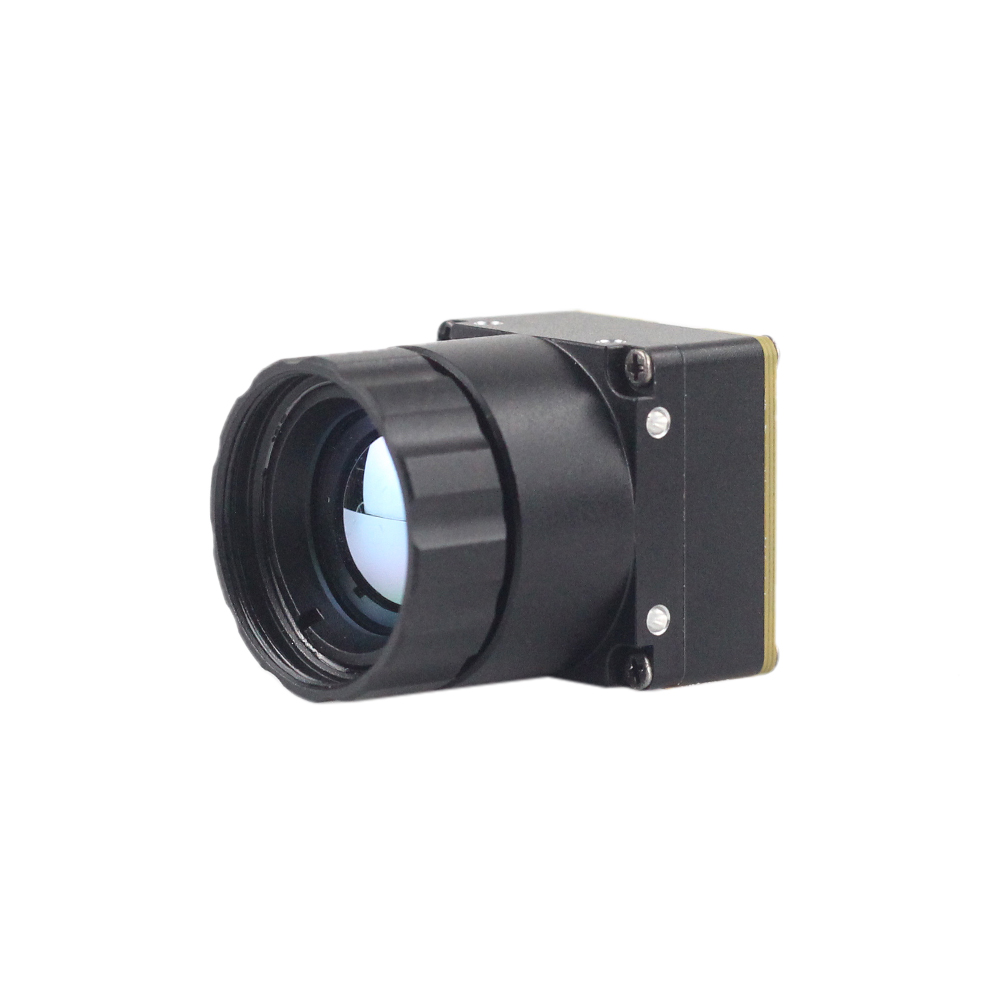
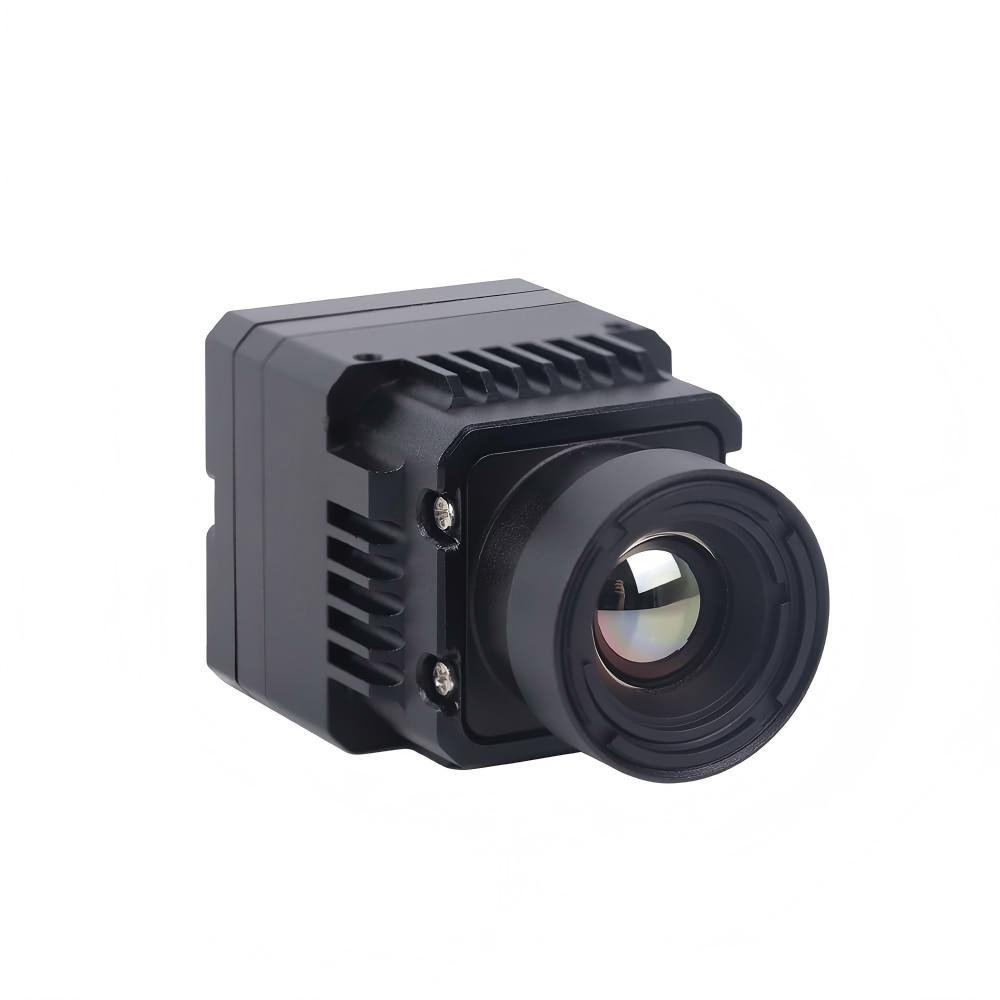
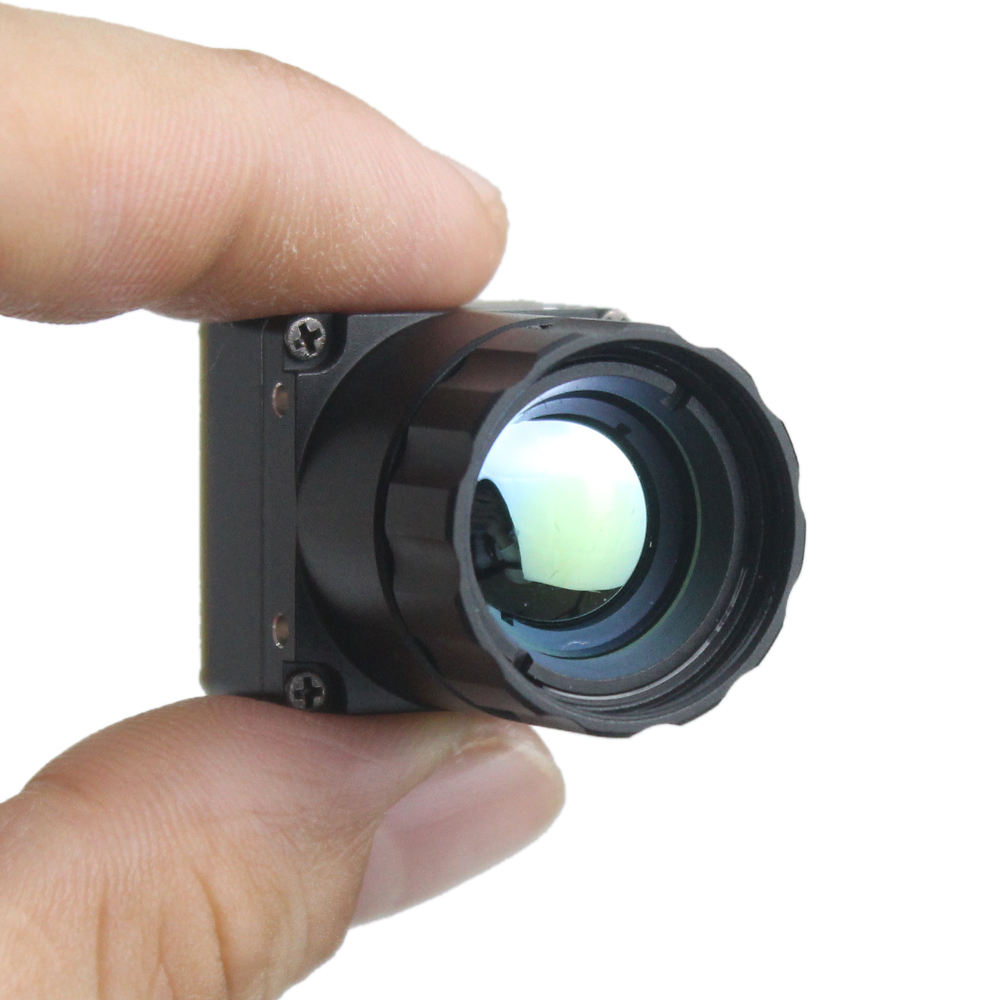
وحدة كاميرا تصوير حراري بالأشعة تحت الحمراء ذات الموجة الطويلة غير المبردة Mini 256*192 مشابهة لـ DJI للكشف عن الألغام
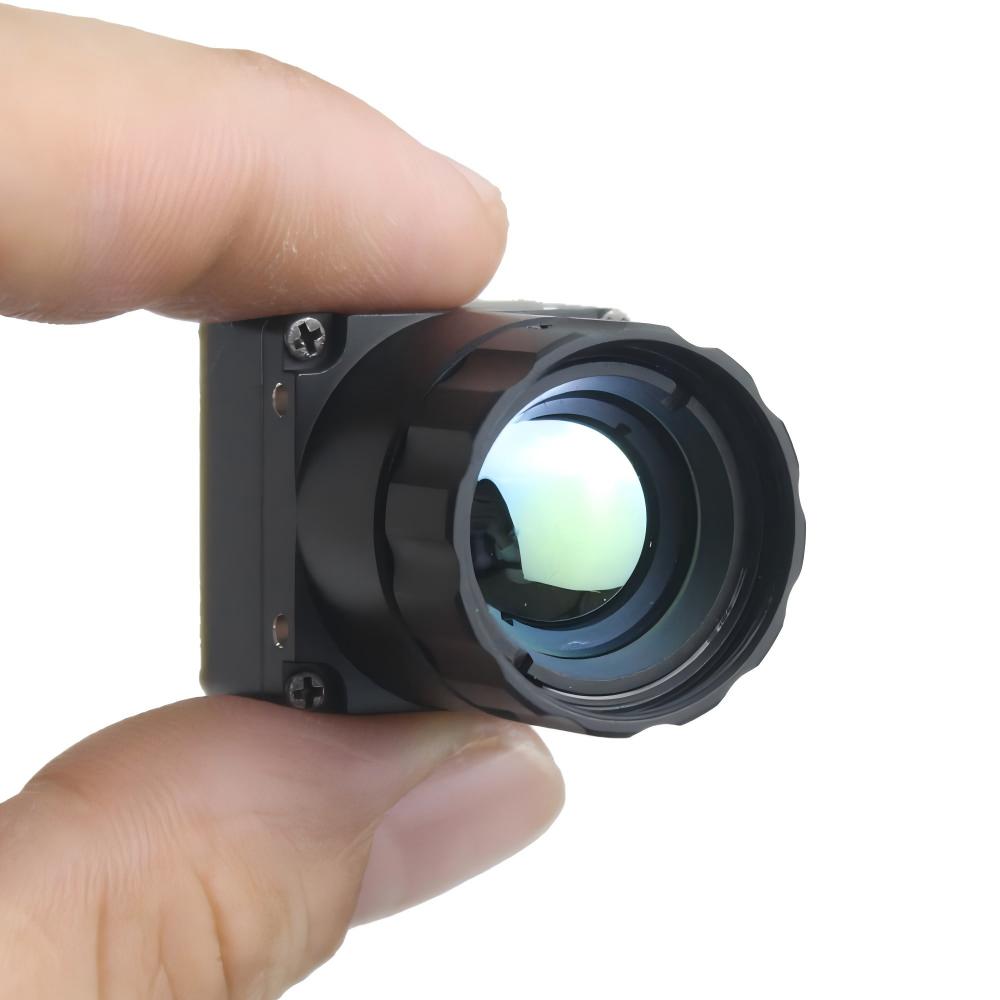
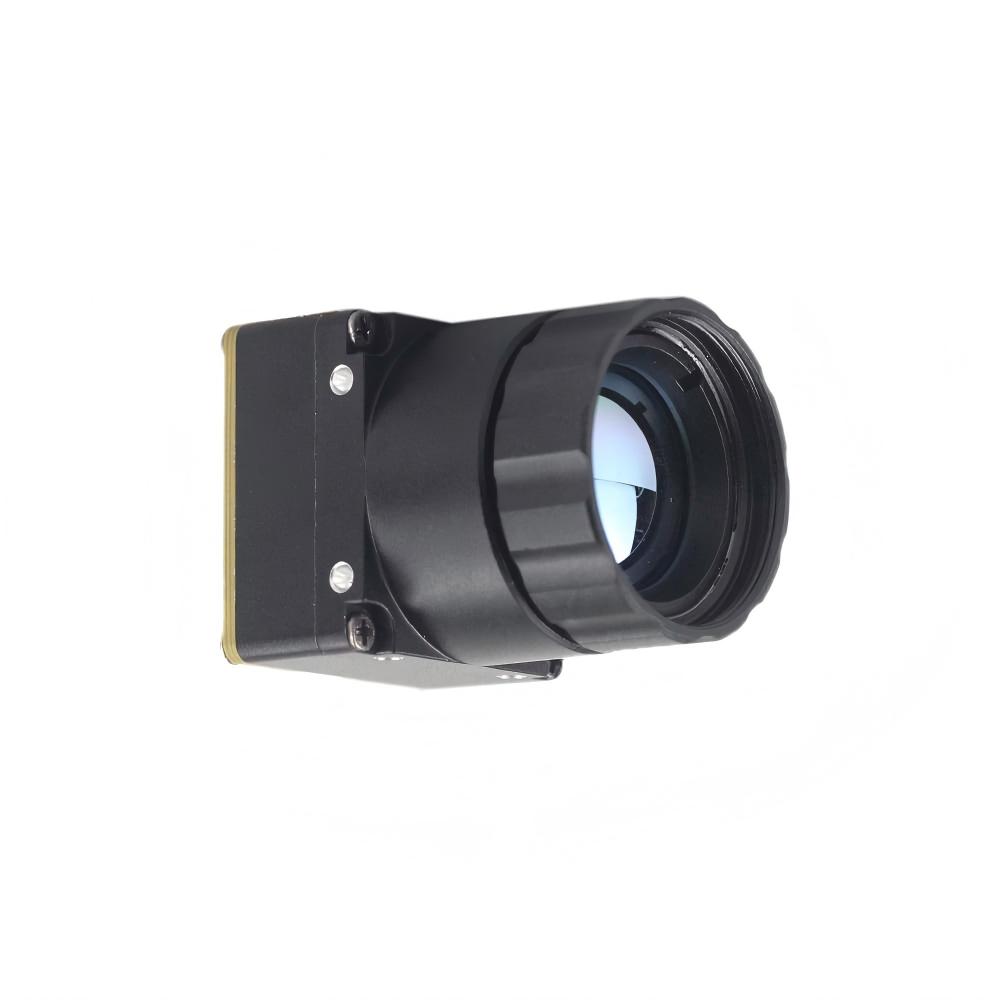
The Mini 256 Uncooled LWIR Thermal Camera Module incorporates high-performance Vanadium Oxide infrared detectors engineered for ultra-clear thermal imaging and precise non-contact temperature measurement. Designed for integration into lightweight drone gimbals, handheld survey tools, and mine-detection platforms, this module captures long-wave infrared radiation and outputs uniform, radiometrically calibrated thermal frames across challenging environmental conditions.
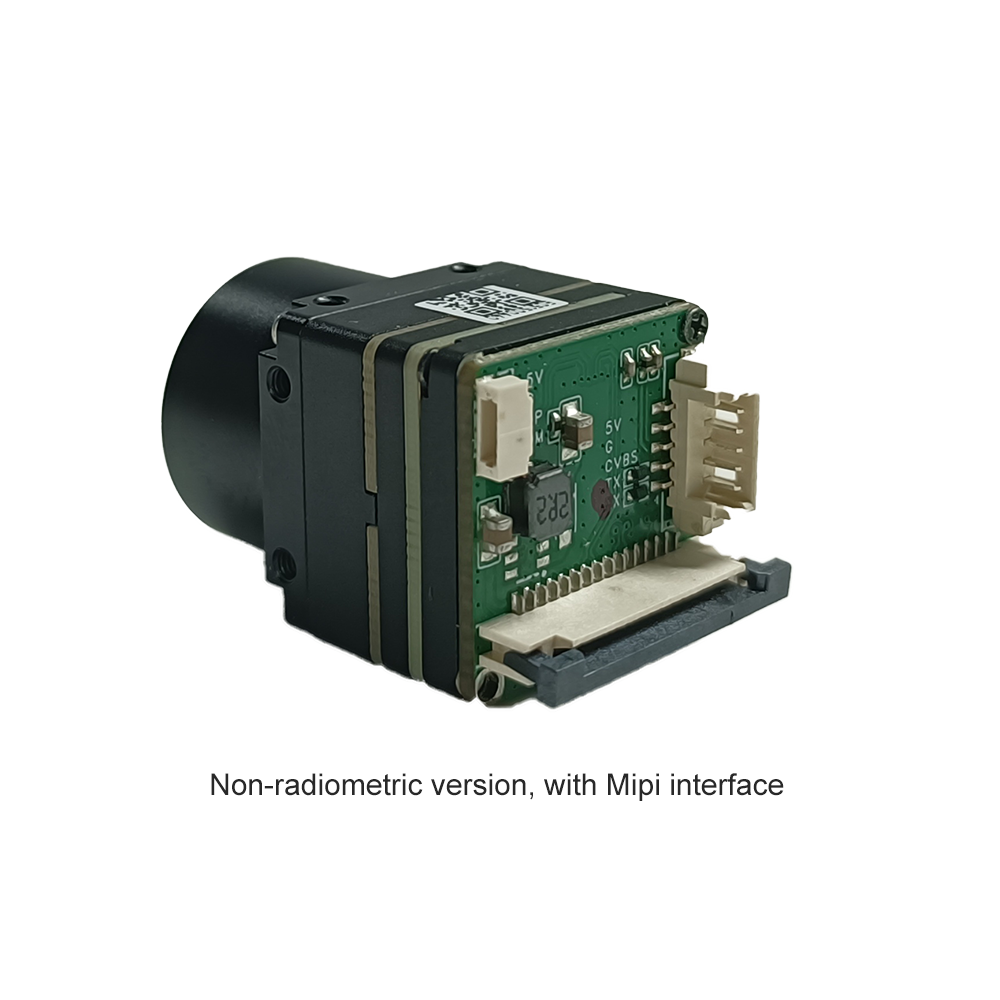
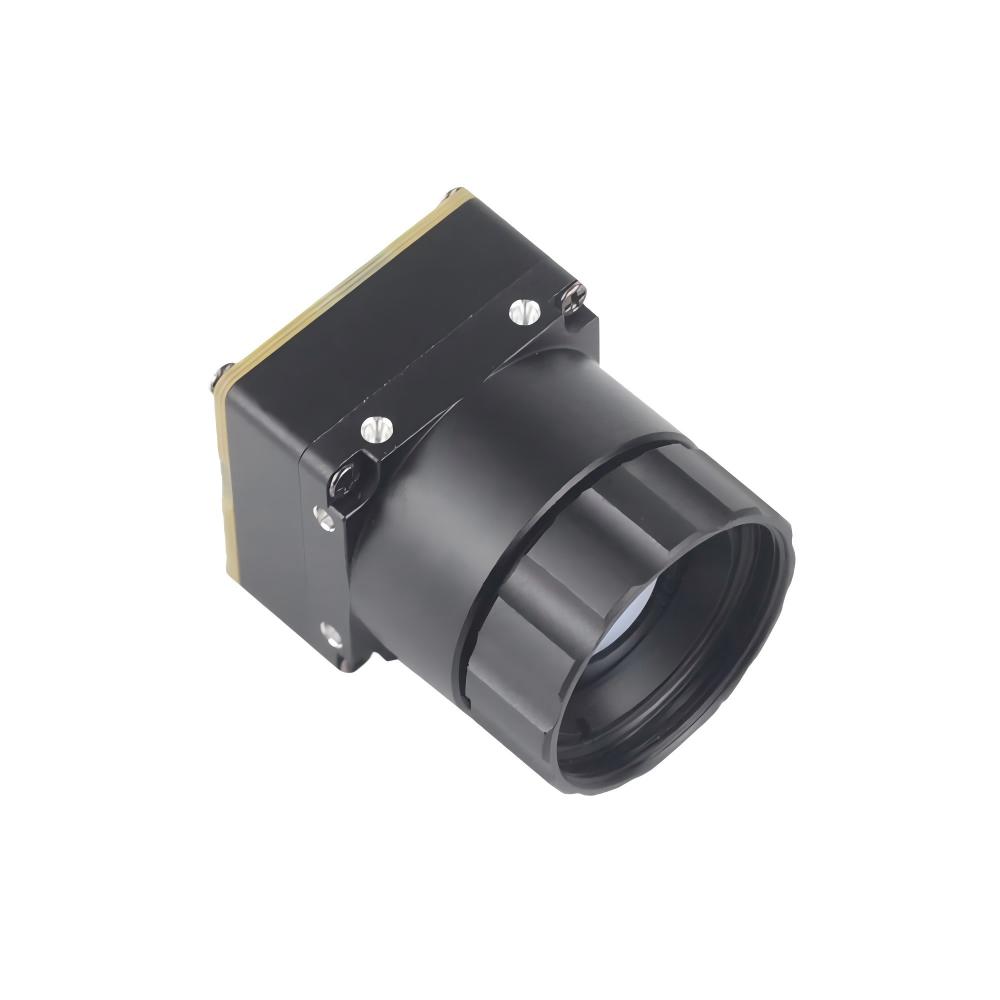
وحدة كاميرا تصوير حراري بالأشعة تحت الحمراء غير مبردة Mipi 640 384 256 9mm للطائرات بدون طيار
Engineered specifically for drone integration and autonomous systems, the Mini2 thermal camera module offers native MIPI CSI-2 digital connectivity and resolutions up to 640x512. Featuring a 9mm precision Germanium optical lens, a 12μm pixel pitch array, and an NETD rating ≤35mK, this module delivers sharp imagery, compact dimensions, and low power consumption for professional aerial surveillance and defense applications.

الأسئلة التقنية الشائعة المتعمقة واعتبارات تصميم النظام
What is the fundamental operational difference between low-light digital night vision and a true thermal module with an IR illuminator?
In contrast, a true thermal camera module operates within the Long-Wave Infrared (LWIR) waveband (8–14 μm), detecting thermal energy naturally emitted by objects relative to their absolute temperature. It requires zero ambient light and penetrates atmospheric obscurants with minimal beam attenuation. By combining a true thermal microbolometer with an active IR illuminator and a visible/NIR sensor into a unified payload, systems achieve long-range thermal detection through heavy obscurants, alongside active NIR illumination at closer range for positive target identification, reading labels, and navigating tight spatial environments.
How can design engineers integrate these miniature thermal camera modules into embedded Raspberry Pi or NVIDIA Jetson host boards?
Software integration relies on vendor-provided SDKs written in C/C++ or Python. These toolkits decode raw 16-bit radiometric telemetry (where each pixel value correlates directly to an absolute temperature value) alongside false-color YUV/RGB video buffers. Developers can route these array matrices into computer vision libraries like OpenCV to execute frame blending, automated region-of-interest (ROI) temperature monitoring, edge enhancement, and real-time deep learning inference using YOLO or MobileNet architectures.
Why is an active IR illuminator required if the thermal microbolometer already operates in total darkness?
Adding an active NIR illuminator paired with a visible/NIR sensor resolves this limitation. When the LWIR sensor detects a target signature at long range, the onboard active IR illuminator activates at closer distance, casting invisible 850nm or 940nm light across the target. The secondary optical sensor captures this reflected light, outputting high-definition video that reveals fine structural details, alphanumeric codes, and facial features. This dual-spectrum synergy ensures fast target detection combined with positive optical identification.
How does Noise Equivalent Temperature Difference (NETD) affect performance in low thermal contrast environments?
In low thermal contrast conditions—such as during steady rain, dense fog, high humidity, or cold uniform landscapes—targets and backgrounds tend to reach thermal equilibrium. Under these conditions, sensors with higher NETD ratings (≥50mK) generate noisy images where targets blend into the background. Conversely, high-sensitivity thermal cores featuring NETD ratings ≤35mK resolve subtle fractional-degree temperature differences, keeping targets clearly defined even in challenging environments.
What mechanical and optical window materials are required when designing custom weatherproof enclosures for thermal camera cores?
1. Optical Transmittance Windows: Standard optical glass, acrylic, and polycarbonate block Long-Wave Infrared radiation (8–14 μm). Thermal channels require specialized transmissive window materials such as optical-grade Germanium (Ge), Zinc Selenide (ZnSe), or specialized Chalcogenide glass coated with Anti-Reflective (AR) layers to ensure maximum thermal throughput.
2. Thermal Management & Isolation: Active NIR illuminators emit heat during operation. If this thermal energy transfers to the microbolometer substrate, it can introduce thermal drift and calibration errors. Enclosure designs must incorporate isolated aluminum or copper heat sinks and ceramic barriers to draw active illuminator heat away from the LWIR sensor board.
3. Environmental Ingress Protection: For drone and outdoor security applications requiring IP67 or IP68 ratings, housings should utilize dual fluoroelastomer O-rings, pressure-equalization vents (Gore-Tex membranes), and vibration-dampening mounts to protect sensitive electro-optics from mechanical shock.
📚 References & Further Reading
- Industry Standard: OpenCV Open-Source Computer Vision Library Platform
- Thermal Physics Overview: Wikipedia Thermography Technical Foundations
- Embedded Integration Guide: Thermal Camera Driver Setup on Raspberry Pi Platforms
- Field Deployment Analysis: Thermal Imaging Applications in Search and Rescue & Defense Operations
- Manufacturing Standards: Enterprise Strength & Optical Manufacturing Capabilities