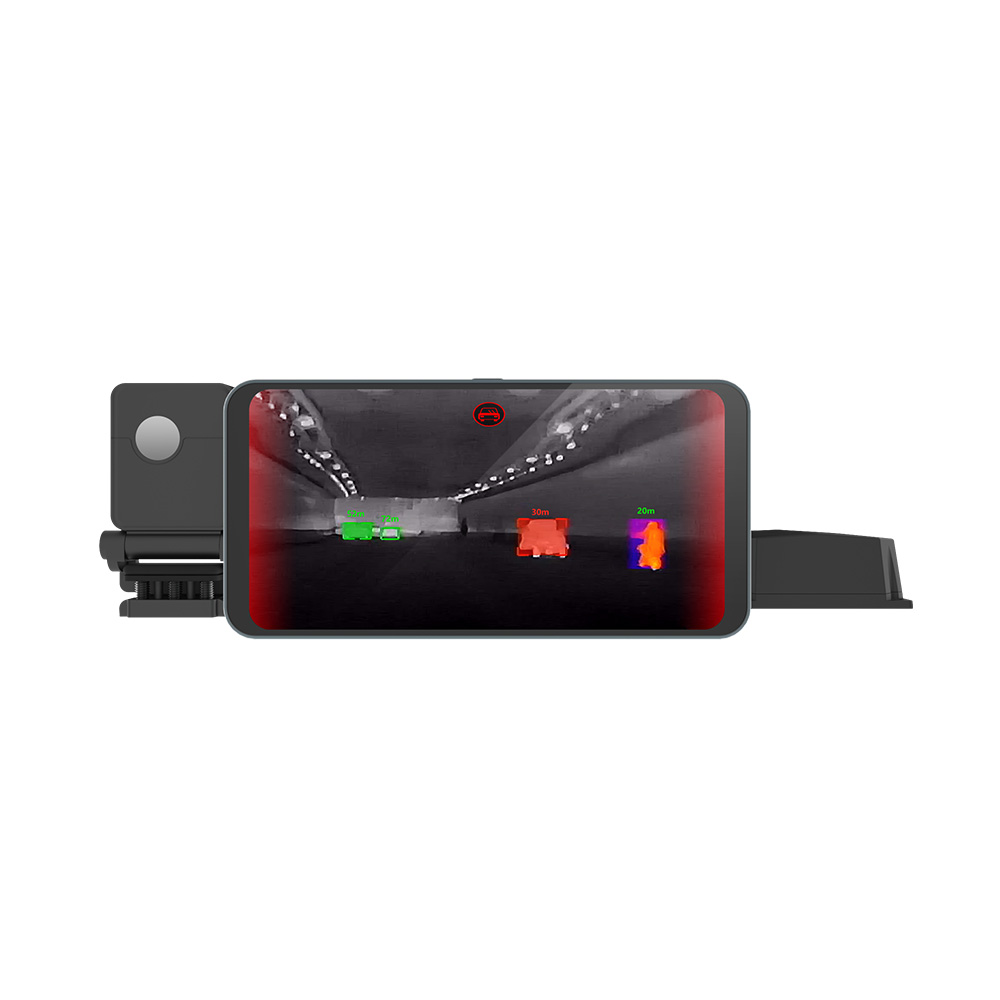

USB Thermal Imaging Sensor Module Guide: High-Res LWIR Integration for Edge AI & SBCs
2026年9月20日
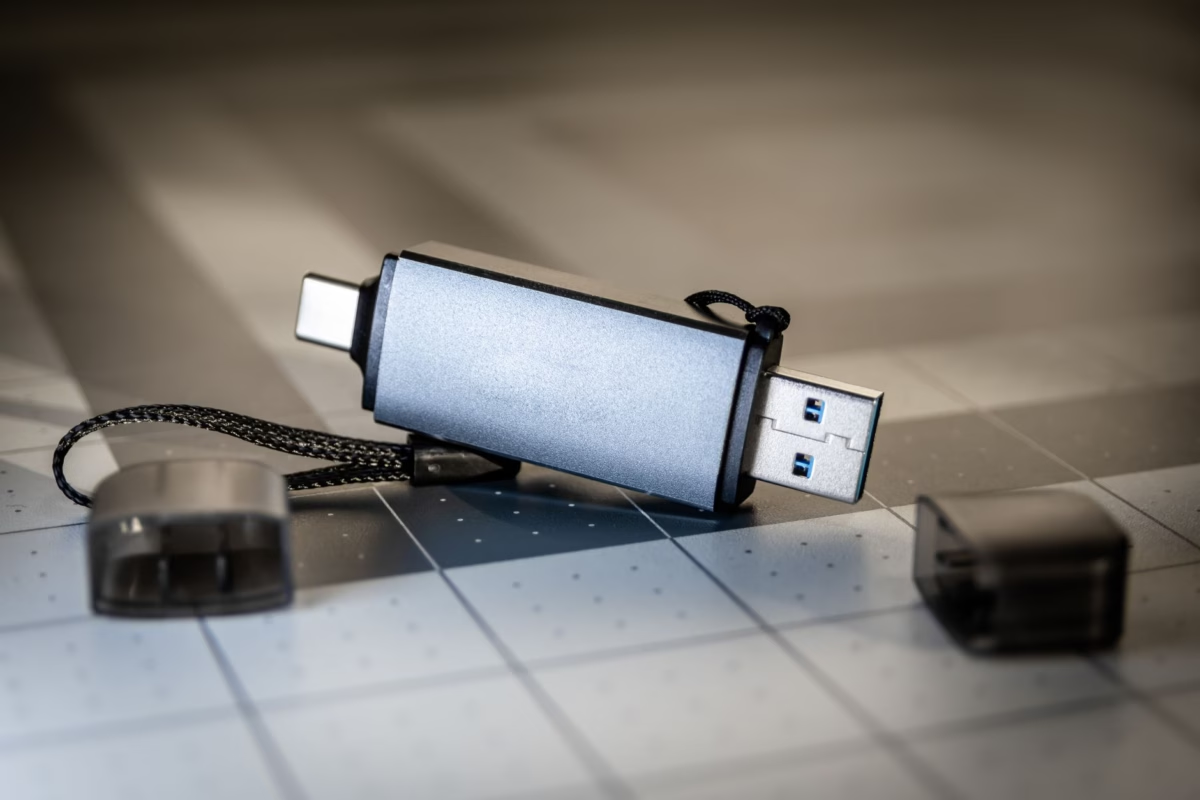
Industrial USB Thermal Camera Core: Compact LWIR OEM Modules for Embedded Vision & Inspection
In automated manufacturing, predictive maintenance, and autonomous unmanned aerial vehicle (UAV) payloads, thermal imaging has shifted from auxiliary diagnostic hand tools to embedded, real-time sensing nodes. Machine vision system engineers and OEM integrators face a major hurdle: standard consumer-grade USB-C thermal dongles are locked into proprietary mobile operating system sandboxes, suffer from severe thermal drift without active heatsinking, and throttle frame rates under extended duty cycles. Industrial applications demand continuous long-wave infrared (LWIR) sensing that delivers deterministic radiometric telemetry directly to host microprocessors without driver overhead, dropped packets, or thermal throttling.
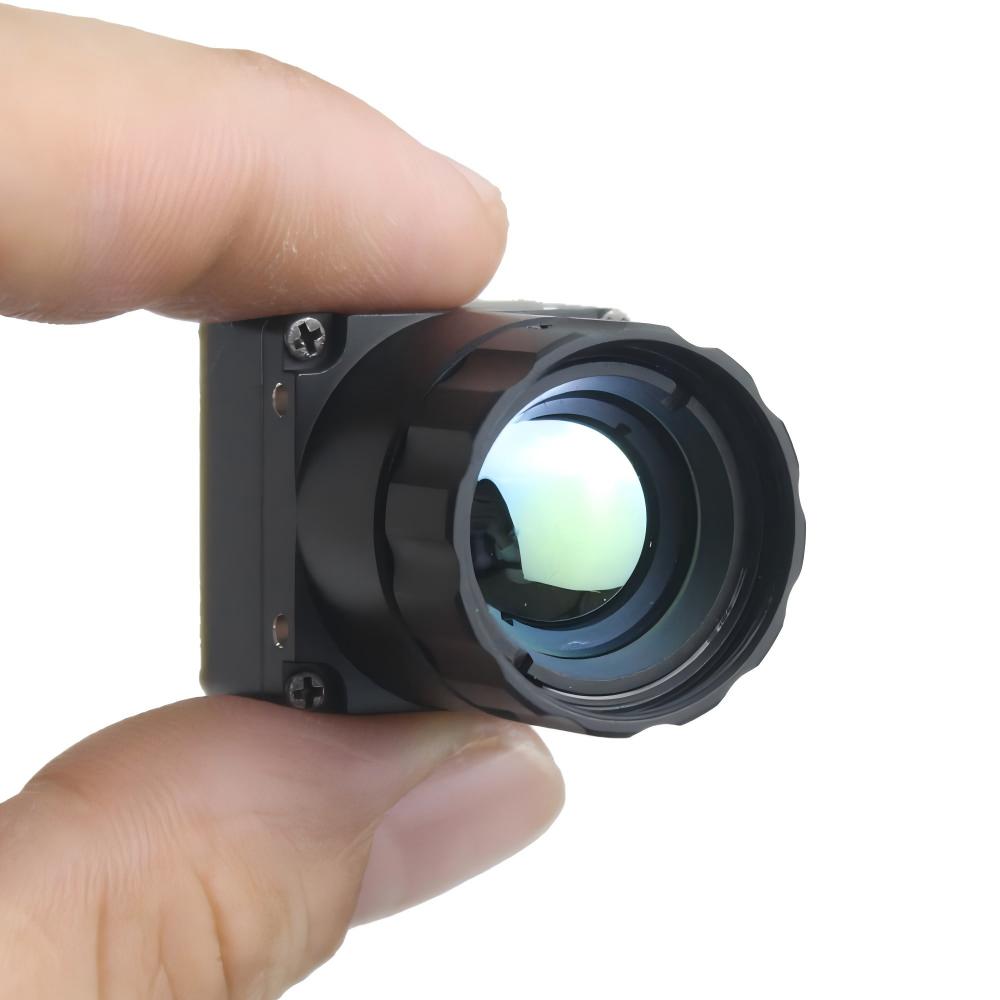
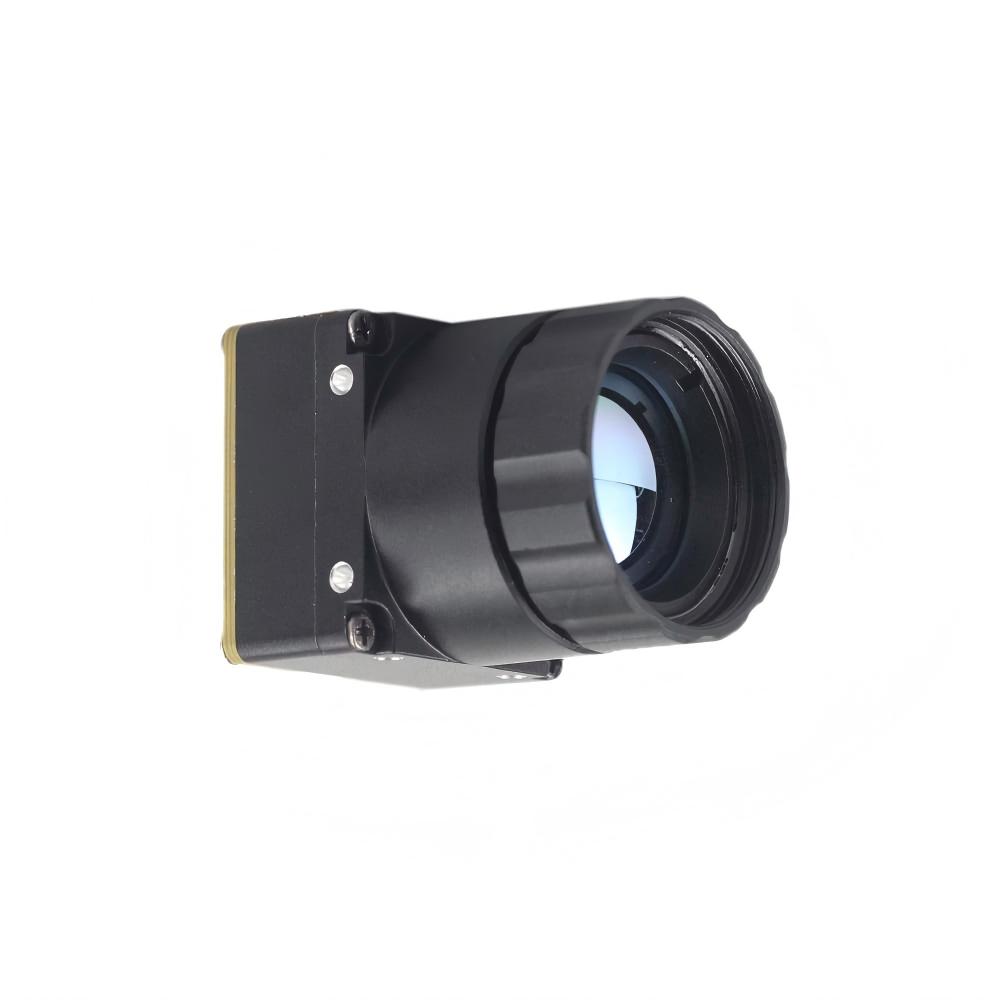
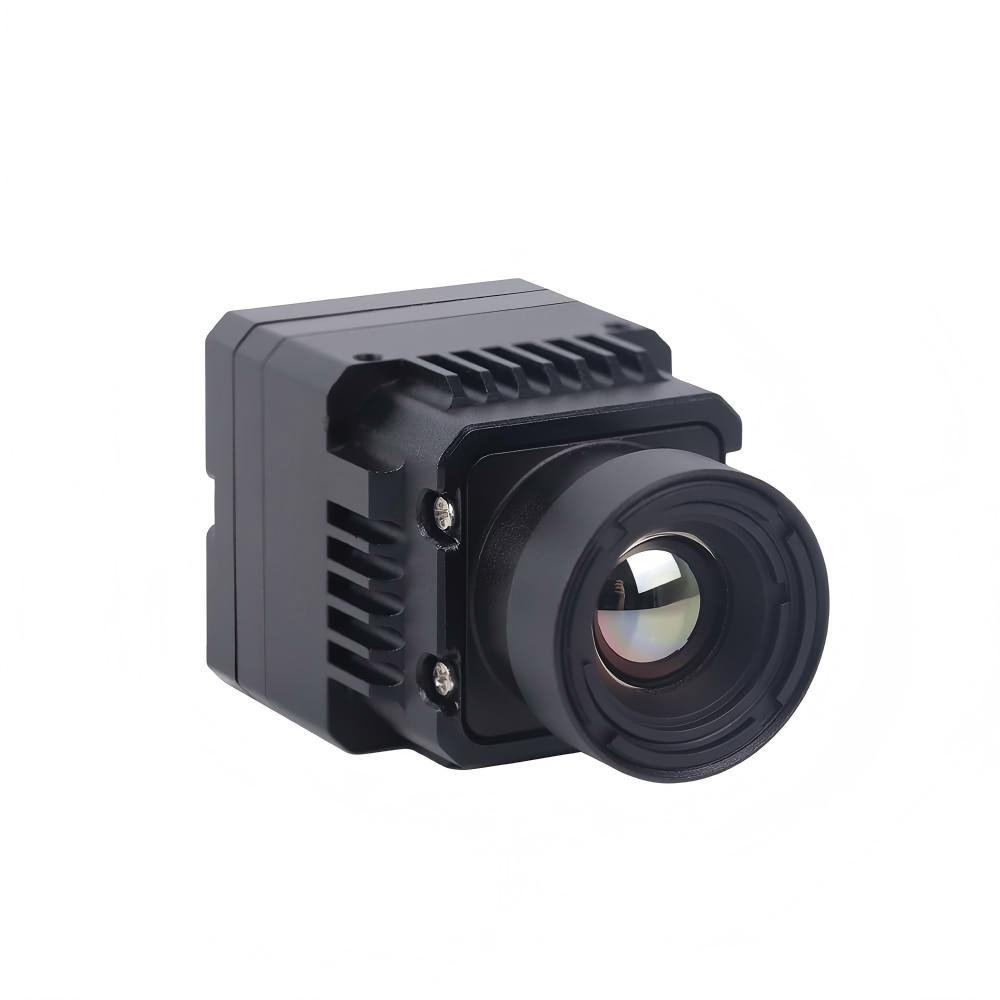
تختلف industrial usb thermal camera core bridges the gap between precision electro-optical engineering and plug-and-play computing. By housing an uncooled vanadium oxide (VOx) microbolometer with a fine 12μm pixel pitch within a ruggedized, sub-miniature form factor, these OEM modules interface natively via standard USB Video Class (UVC) drivers to Linux, Windows, and Robot Operating System (ROS) environments. Whether deployed in automated printed circuit board assembly (PCBA) inline inspection, critical infrastructure perimeter security, or tactical drone gimbals, a dedicated industrial USB thermal camera core delivers low-latency 14-bit or 16-bit raw digital temperature data, athermalized multi-lens adaptability, and 24/7 radiometric repeatability across broad operating envelopes.
جدول المحتويات
- 👉 1. Uncooled LWIR Microbolometer Physics & 12μm Pixel Pitch Engineering
- 👉 2. Industrial USB Interfacing: UVC Protocol, V4L2, & Raw Radiometric Pipelines
- 👉 3. Mitigating Thermal Drift: Shutter Calibration, NUC, & Continuous Duty Thermal Management
- 👉 4. Optical Geometries: Athermalized Lens Selection (5mm to 150mm) & IFOV Calculations
- 👉 5. OEM Product Specifications Matrix: Mini 640 vs. MD Series 384
- 👉 6. Embedded System Architecture: Edge AI, Jetson Pipelines, & Interconnect Engineering
- 👉 7. Frequently Asked Questions (Deep-Dive Engineering Answers)
1. Uncooled LWIR Microbolometer Physics & 12μm Pixel Pitch Engineering
At the mechanical and physical center of any high-performance industrial USB thermal camera core lies an uncooled focal plane array (FPA) microbolometer. Unlike cryogenic cooled detectors fabricated from Indium Antimonide (InSb) or Mercury Cadmium Telluride (MCT) operating at liquid nitrogen temperatures (~77 Kelvin), industrial OEM uncooled LWIR cores operate at or near ambient room temperatures. They utilize micro-machined Vanadium Oxide (VOx) thin-film resistor bridges suspended above a silicon readout integrated circuit (ROIC) via microscopic thermal isolation legs fabricated through precision MEMS lithography.
Vanadium Oxide is preferred over amorphous silicon (α-Si) in demanding machine vision roles due to its substantially higher Temperature Coefficient of Resistance (TCR), typically ranging from -2% to -3% per Kelvin at 300 Kelvin. When long-wave infrared radiation within the 8μm to 14μm atmospheric transmission window strikes the microbolometer's silicon nitride absorber membrane, the membrane's physical temperature changes. This minute thermal delta alters the electrical resistance of the underlying VOx material. The underlying ROIC measures this resistance differential by applying a periodic bias voltage or bias current, integrating the charge onto an integration capacitor, and generating an analog voltage proportional to the incident radiative flux.
Because microbolometers operate in thermal equilibrium with their environment, achieving an exceptional signal-to-noise ratio requires isolating the absorber membrane from conductive and convective losses. The entire microbolometer array is sealed within an ultra-high vacuum cavity, either at the chip scale through Wafer-Level Packaging (WLP) or via traditional metallic hermetic packaging with anti-reflective coated Germanium window lids. Without this high-vacuum environment (typically maintained below $10^{-3}$ Torr), ambient air molecules would conduct heat away from the suspended pixel bridges, degrading sensitivity and drastically inflating thermal response times.

This solid-state detection mechanism yields a remarkably low Noise Equivalent Temperature Difference (NETD), routinely achieving sensitivity ratings of ≤40 mK to 50 mK at an optical aperture of f/1.0. A sensitivity threshold of 40 mK signifies that the core can differentiate temperature gradients across target surfaces as fine as 0.04°C. Such high thermal resolution is crucial when diagnosing subtle thermal signatures, such as incipient junction failure on a densely populated printed circuit board, subsurface delamination in aerospace composites, or gas leak anomalies in petrochemical distribution headers.
Modern micro-optics and semiconductor fabrication have advanced the industry standard to a 12μm pixel pitch, down from legacy 17μm and 25μm architectures. Compressing pixel pitch to 12μm significantly increases the pixel density per silicon wafer. This shrinking provides system integrators with concrete mechanical and optical benefits:
- ✅ Substantial SWaP-C Optimization: Shrinking the pixel pitch to 12μm reduces the physical area of a 640×512 focal plane array by approximately 50% compared to an equivalent 17μm array. This allows optics designers to utilize lenses with shorter focal lengths to capture identical angular fields of view (FoV). Smaller lenses require smaller physical clear apertures, yielding drastic weight reductions for SWaP-constrained (Size, Weight, Power, and Cost) airborne payloads, handheld scopes, and tight robotic end-effectors.
- ✅ Accelerated Thermal Time Constants: Because the physical volume and thermal capacitance ($C_{th}$) of each individual suspended microbolometer bridge are reduced, the thermal time constant ($\tau = C_{th} / G_{th}$, where $G_{th}$ represents thermal conductance of the support arms) drops into the 8ms to 12ms bracket. This rapid thermal responsiveness minimizes micro-motion blurring and tailing artifacts during high-speed aerial passes or high-cadence assembly line automated optical inspections (AOI).
- ✅ Enhanced Modulation Transfer Function (MTF): The denser pixel packing improves spatial frequency response at the system level. High-frequency structural details—such as thin traces on microelectronics, edge transitions on machined components, and tiny thermal cracks in structural welds—render with crisper edge acutance, eliminating the softened, blurred pixel blending common in older detector nodes.
2. Industrial USB Interfacing: UVC Protocol, V4L2, & Raw Radiometric Pipelines
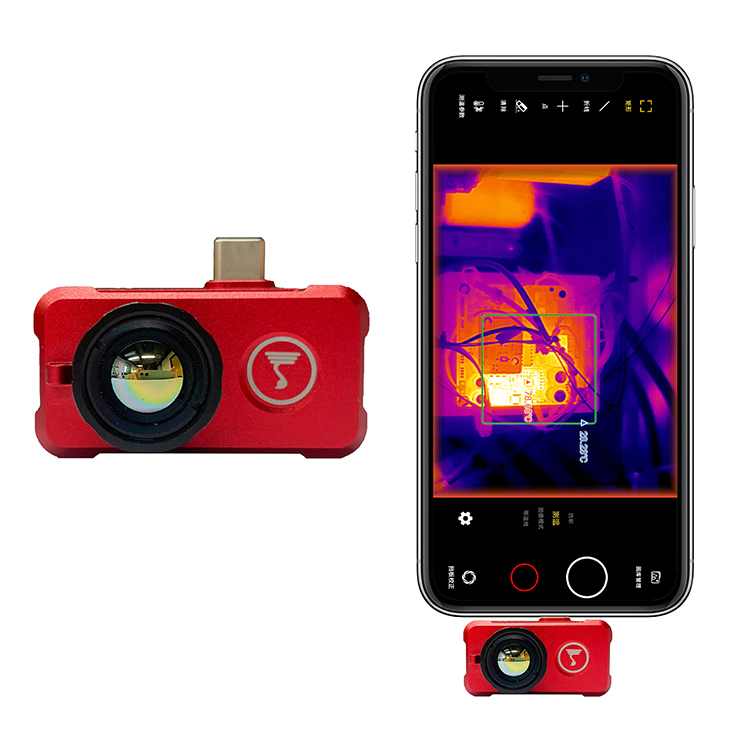
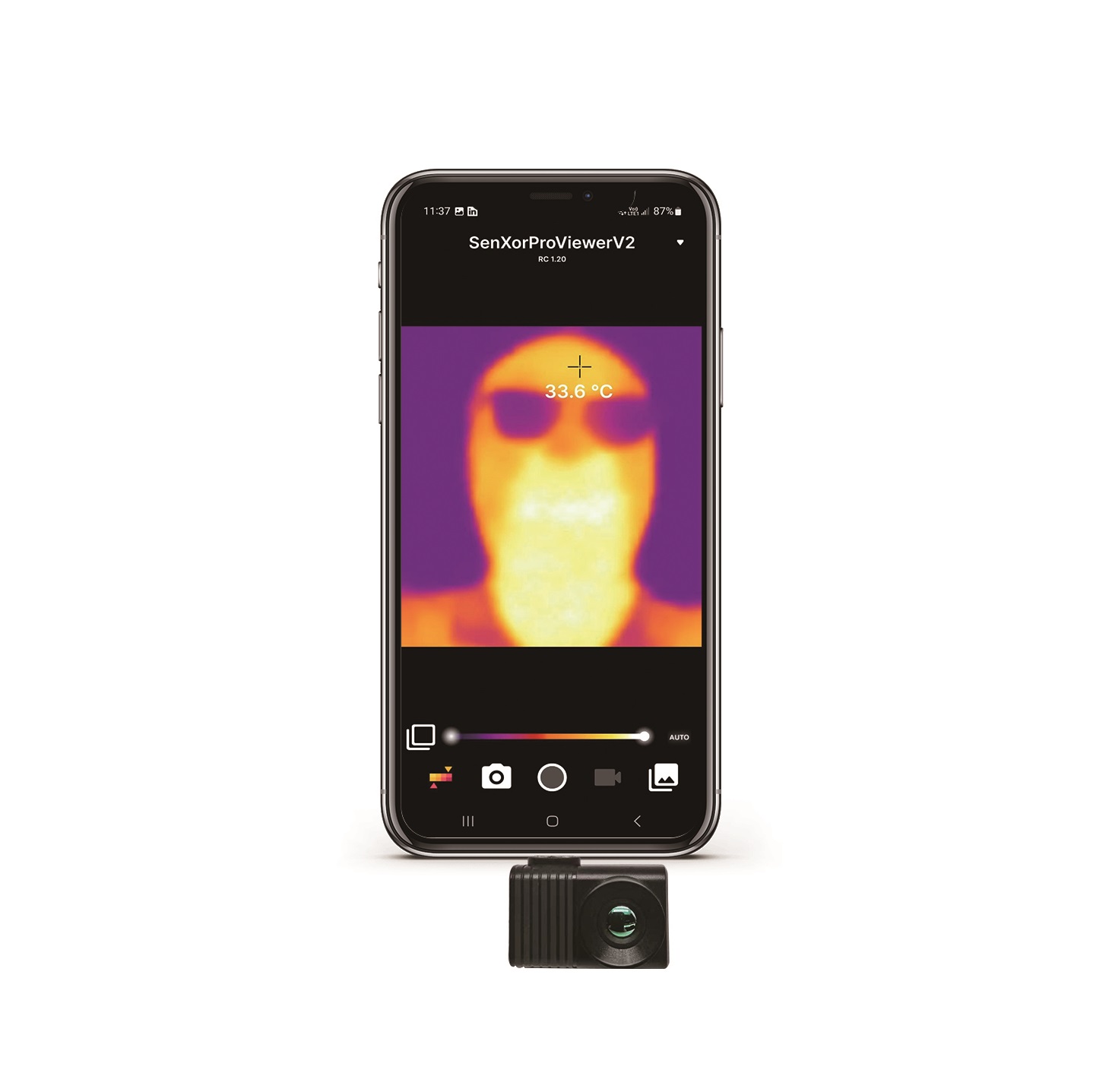
Commercial and consumer smartphone thermal cameras typically rely on closed, vendor-locked software development kits (SDKs) and proprietary USB device descriptors. These consumer products present severe integration hurdles: they are prone to unexpected driver deprecation, require runtime-loaded user-space binary blobs, and throttle throughput during continuous multi-hour runs. An industrial USB thermal camera core eliminates these systemic software failures by adhering directly to the international USB Implementers Forum (USB-IF) USB Video Class (UVC 1.1 / 1.5) standard.
Because it operates as a standard UVC imaging peripheral, the camera interfaces natively with operating systems across multiple embedded compute platforms without requiring bespoke driver stacks:
- ⚙️ Linux Environments (Embedded Ubuntu, Debian, Yocto): The core registers natively as a standard
/dev/video*node through the native Video4Linux2 (V4L2) driver subsystem. System architects can poll, configure, and capture video frames using low-overhead POSIXioctlcalls, streamlined GStreamer pipelines, or Python bindings via OpenCV without installing third-party kernel extensions. - ⚙️ Windows Systems (Desktop & IoT Enterprise): The module enumerates cleanly via DirectShow and Microsoft Media Foundation pipelines, eliminating custom unsigned kernel drivers (
.sys) that frequently fail enterprise cybersecurity compliance tests and secure-boot integrity audits. - ⚙️ Robot Operating System (ROS / ROS2): The standardized video stream feeds directly into ubiquitous ROS wrappers, such as
كاميرا USBوكاميرا V4L2nodes, instantly populatingsensor_msgs/Imagemessage topics for mapping, obstacle avoidance, simultaneous localization and mapping (SLAM), and industrial robotics workflows.
Industrial imaging architectures typically separate downstream consumers into two primary operational modes: standard video displays for human operators and digital radiometric streams for automated vision pipelines. An industrial USB core supports these operational needs through a dual-pipeline transmission methodology:
1. Dynamic Palette Streaming (YUV / RGB): The on-board image signal processor (ISP) performs real-time histogram equalization, spatial bilateral noise filtering, dynamic contrast enhancement, and color-lookup table mapping (such as Ironbow, Rainbow, White-Hot, or Black-Hot palettes). The module outputs standard 8-bit YUV422 or MJPEG streams at 25Hz to 50Hz for immediate display on operator human-machine interfaces (HMIs), tactical drone ground control stations (GCS), or web-based WebRTC video dashboards.
2. Uncompressed Raw Radiometric Ingestion (Y16 / GREY16): For automated process control, deep learning edge inference, and quantitative thermal testing, visual false-color displays are inadequate. In this operational mode, the ISP bypasses non-linear tone mapping to deliver uncompressed, linear 14-bit or 16-bit digital pixel arrays formatted as Y16. Each discrete pixel intensity value directly correlates to absolute physical temperature via an internal factory calibration equation:
Temperature (Kelvin) = Pixel Value / 100
In this format, a raw integer pixel readout of 30315 maps precisely to 303.15 Kelvin, or exactly 30.00°C. Machine vision engineers can feed this pure numerical matrix directly into analytical environments like NumPy, MATLAB, or TensorRT. This allows algorithms to calculate geometric temperature distributions, track moving target thermal profiles, and evaluate temperature delta limits without introducing compression artifacts or frame-latency overhead.
Furthermore, bidirectional parameter control—including emissivity adjustments, background reflection compensation, ambient air temperature offsets, and manual Non-Uniformity Correction (NUC) triggering—is managed deterministically through UVC Extension Units (XU). By sending standard USB control transfers across endpoint zero, developers bypass the need for auxiliary serial RS-232 or TTL UART links, simplifying wiring harness architectures to a single USB 2.0 or Type-C bus.
3. Mitigating Thermal Drift: Shutter Calibration, NUC, & Continuous Duty Thermal Management
Because microbolometer arrays are designed to absorb thermal radiation, they cannot inherently distinguish between long-wave infrared energy emitted by an external target and heat radiated from the camera's internal components. In continuous 24/7 operating environments, the heat generated by digital signal processors (DSPs), field-programmable gate arrays (FPGAs), power management ICs (PMICs), and USB physical layer (PHY) chips flows conductively through the camera chassis into the optical barrel and focal plane array.
Without compensation, this internal parasitic heat creates spatial non-uniformity across the array, causing fixed-pattern noise (FPN), corner vignetting, and inaccurate radiometric readings. To combat thermal drift during continuous industrial duty cycles, an industrial USB thermal camera core combines optomechanical mitigation hardware with continuous algorithmic calibration:
The Electromechanical Shutter Mechanism: To eliminate fixed-pattern noise, the core incorporates a miniature, magnetically actuated solenoid shutter. At automated intervals or upon detecting an internal temperature threshold delta, this shutter blade momentarily swings in front of the VOx sensor, presenting a spatially uniform, high-emissivity blackbody reference surface. The onboard processor reads this uniform reference frame and executes a Non-Uniformity Correction (NUC) routine, recalibrating individual pixel offset coefficients across the array:
Vالمصحح(i, j) = G(i, j) × [Vخام(i, j) - Vخوارزمية(i, j)] + Offsetglobal
Where $G(i, j)$ represents the factory-calibrated gain coefficient for pixel coordinate $(i, j)$, $V_{raw}$ is the active scene measurement, and $V_{shutter}$ is the spatial offset captured against the reference shutter blade. This update strips out low-frequency 1/f flicker noise and baseline drift, keeping radiometric accuracy within tight industrial tolerances (typically ±2°C or ±2%).
Thermal Structural Isolation & Advanced Firmware Modeling: Industrial camera cores isolate the optical bench from high-dissipation digital electronics using precision thermal barriers and conductive routing to outer heatsinking points. Backed by extensive engineering backgrounds—such as teams with Hong Kong University of Science and Technology (HKUST) credentials and former Huawei HiSilicon optical processing experience—these cores run real-time temperature compensation firmware. Thermistors embedded throughout the lens mount and ROIC feed continuously into multi-variable polynomial thermal drift models. This compensation minimizes the frequency of physical shutter actuations, preventing blind frames during high-speed automated sorting or critical UAV flight maneuvers.
- ⚙️ Multi-Zone Thermistor Tracking: Discrete PT1000 or high-precision NTC thermistors placed directly at the lens housing, the FPA substrate, and the PMIC supply rail continuously feed junction delta measurements into the FPGA calibration engine.
- ⚙️ Dynamic Polynomial Offset Shifting: Rather than forcing a mechanical shutter freeze every 60 seconds, the module updates offset registers algorithmically as temperatures climb, preserving situational awareness in fast-moving automation environments.
- ⚙️ Passive Conductive Heat Sinking: The aluminum outer casing functions as an engineered thermal conduction sink, featuring flat mounting datum planes designed to dump internal heat directly into external machine frames or drone gimbal chassis structures.
For system integrators seeking detailed implementation guides on integrating thermal vision modules into autonomous systems, explore our analysis of high-performance thermal camera modules with embedded artificial intelligence.
4. Optical Geometries: Athermalized Lens Selection (5mm to 150mm) & IFOV Calculations
Conventional optical glass (such as BK7 or fused silica) is completely opaque within the long-wave infrared spectrum (8μm to 14μm). Consequently, LWIR optics are machined from specialized infrared-transmitting materials, primarily monocrystalline Germanium (Ge) and Chalcogenide glasses. These optical elements feature durable anti-reflective (AR) treatments and Diamond-Like Carbon (DLC) exterior coatings to withstand corrosive environments, industrial chemical vapors, and airborne particulates.
A critical consideration in long-wave infrared optical design is the thermal coefficient of refractive index ($dn/dt$). Germanium exhibits an exceptionally high $dn/dt$ of approximately $396 \times 10^{-6}/\text{K}$ at 10.6μm. Without compensation, temperature swings in outdoor aerial or high-temperature factory installations alter the lens's focal length, resulting in severe image defocus. Industrial modules counter this using athermalized optics: optomechanical assemblies that pair materials with opposing thermal expansion properties (such as specialized aluminum alloys and Delrin spacers) to shift optical elements mechanically as temperatures change, preserving sharp focal planes across -20°C to +60°C operating envelopes.
Designing an automated thermal vision inspection cell requires calculating the Instantaneous Field of View (IFOV), which defines the spatial resolution of a single pixel:
IFOV = Pixel Pitch (p) / Lens Focal Length (f)
When working with a 12μm ($0.012\text{ mm}$) sensor and an $18\text{ mm}$ focal length lens:
IFOV = 0.012 / 18 = 0.000667 \text{ radians} = 0.67 \text{ mrad}
To determine the real-world spatial measurement spot size ($S$) projected by an individual pixel at an operational distance ($D$):
S = IFOV × D
According to industrial radiometry standards (adapted from Johnson's criteria for target acquisition), while thermal target detection requires only 1 to 2 pixels, repeatable and accurate temperature measurement demands that the target feature span at least a $3 \times 3$ or $4 \times 4$ pixel array. This requirement prevents optical energy loss caused by the system's Point Spread Function (PSF) bleeding onto neighboring pixels.
| البعد البؤري (f) | Horizontal FoV (640×512, 12μm) | IFOV (12μm Core) | Pixel Footprint at 10m ($S$) | Primary Industrial Application |
|---|---|---|---|---|
| 0 مم | ~88.0° | 2.40 mrad | 24.0 mm | Switchgear cabinet monitoring, wide robotic close-up vision |
| 0 مم | ~48.0° | 1.33 mrad | 13.3 mm | Automated guided vehicle (AGV) pathfinding, short-range drone flights |
| 0 مم | ~33.0° | 0.92 mrad | 9.2 mm | Roof moisture mapping, solar panel aerial inspection |
| 0 مم | ~24.0° | 0.67 mrad | 6.7 mm | Utility distribution maintenance, conveyor hotspot monitoring |
| 0 مم | ~12.5° | 0.34 mrad | 3.4 mm | Perimeter security intrusion detection, refinery flare stack audits |
| 0 مم | ~8.8° | 0.24 mrad | 2.4 mm | Long-distance high-voltage substation diagnostic payloads |
| 0 مم | ~5.8° | 0.16 mrad | 1.6 mm | Critical infrastructure stand-off surveillance, maritime monitoring |
| 0 مم | ~4.4° | 0.12 mrad | 1.2 mm | Long-range border tracking, tactical electro-optical systems |
| 0 مم | ~2.9° | 0.08 mrad | 0.8 mm | Extreme stand-off coastal security, early wildfire tracking |
5. OEM Product Specifications Matrix: Mini 640 vs. MD Series 384
For system integrators sourcing embedded LWIR modules, Purpleriver provides two specialized industrial options: the ultra-miniature Mini 640 core—engineered specifically for SWaP-constrained aerial gimbals—and the versatile MD Series 384, designed for multi-bus industrial process automation.
Product Spotlight: Uncooled LWIR USB Mini 640*512 Thermal Camera Core Module
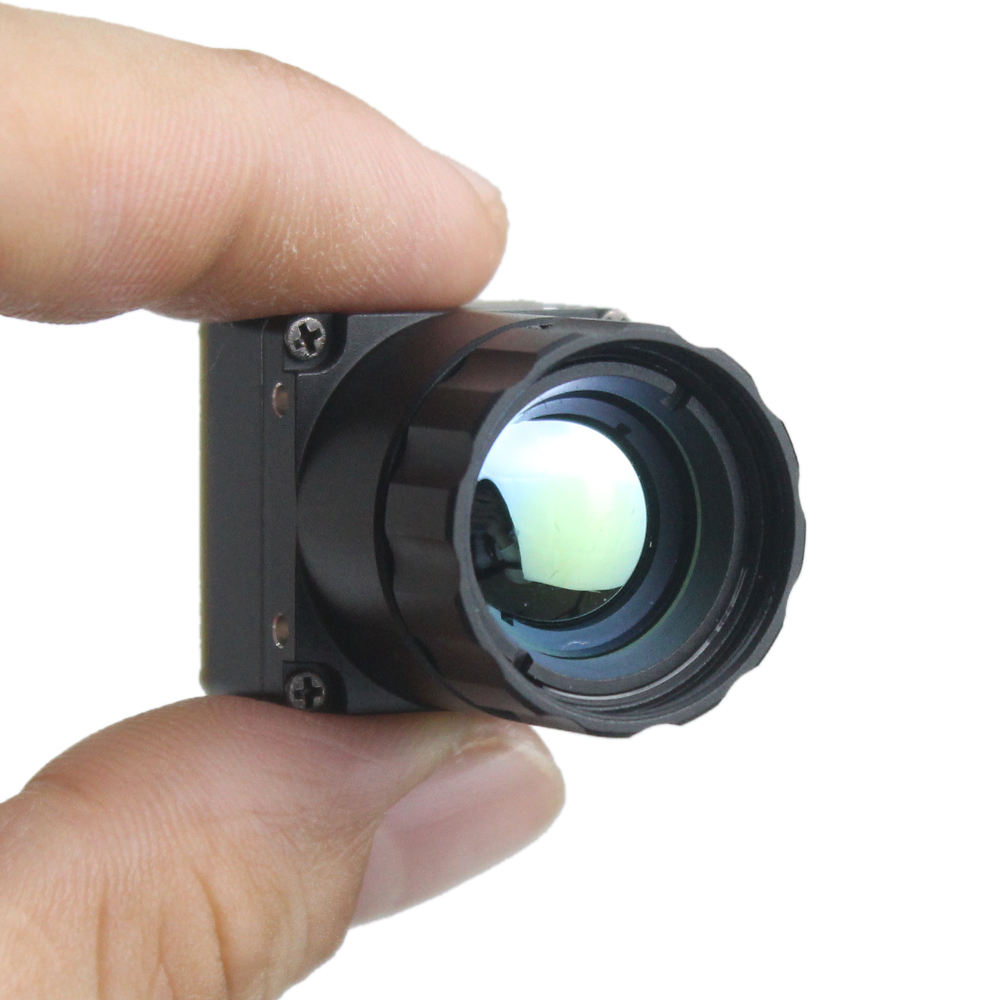
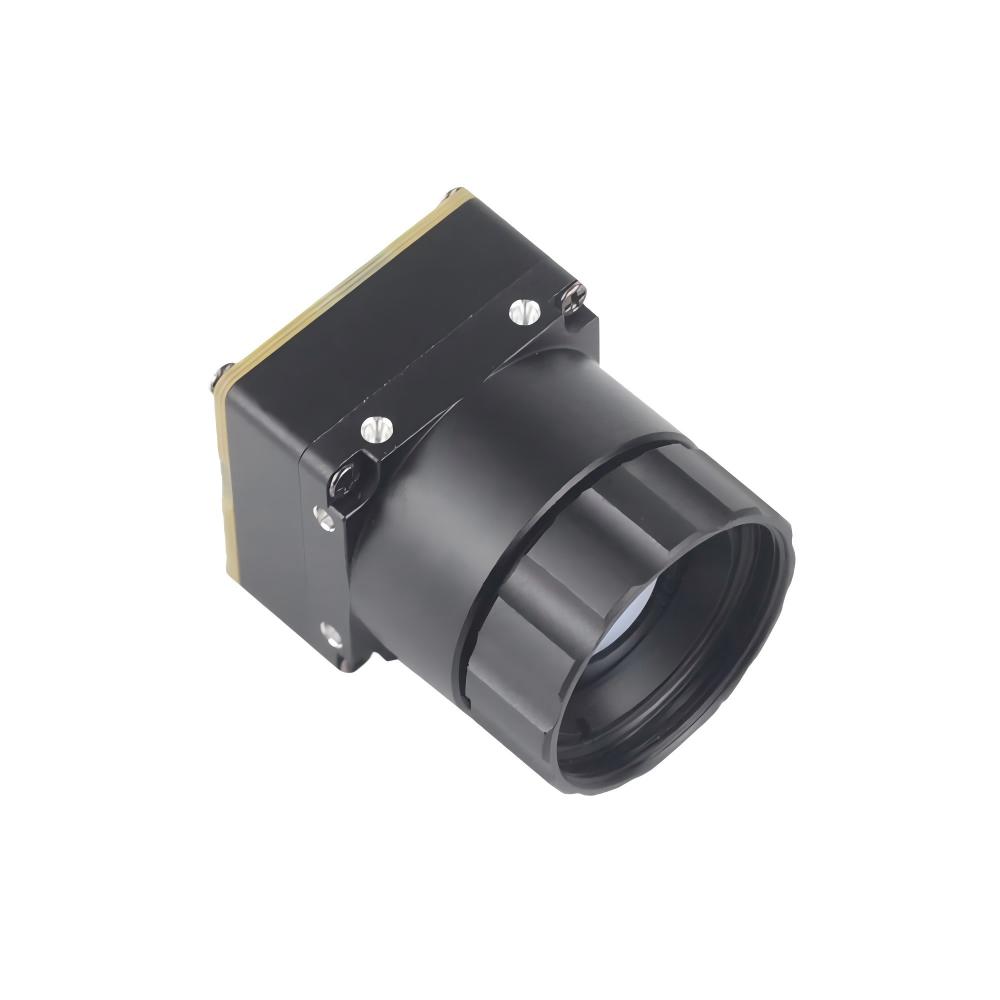
الـ Uncooled LWIR USB Mini 640*512 Module sets an industry standard for SWaP-optimized drone and robotic vision. Delivering high-resolution 640×512 thermal imaging (with optional 640×480 configurations), this core achieves a compact form factor with a 21مم × 21مم footprint. Designed to meet the requirements of aerial platforms similar to enterprise DJI systems, it features sharp image presentation, low unit power consumption, and strong environmental adaptability. It pairs seamlessly with a wide range of optics, including 5mm, 9mm, 13mm, 18mm, 35mm, 50mm, 75mm, 100mm, and 150mm lenses, allowing developers to adapt one common core across both close-proximity inspection and long-range surveillance applications.
Product Spotlight: MD Series 384x288 Uncooled Infrared Thermal Camera Module
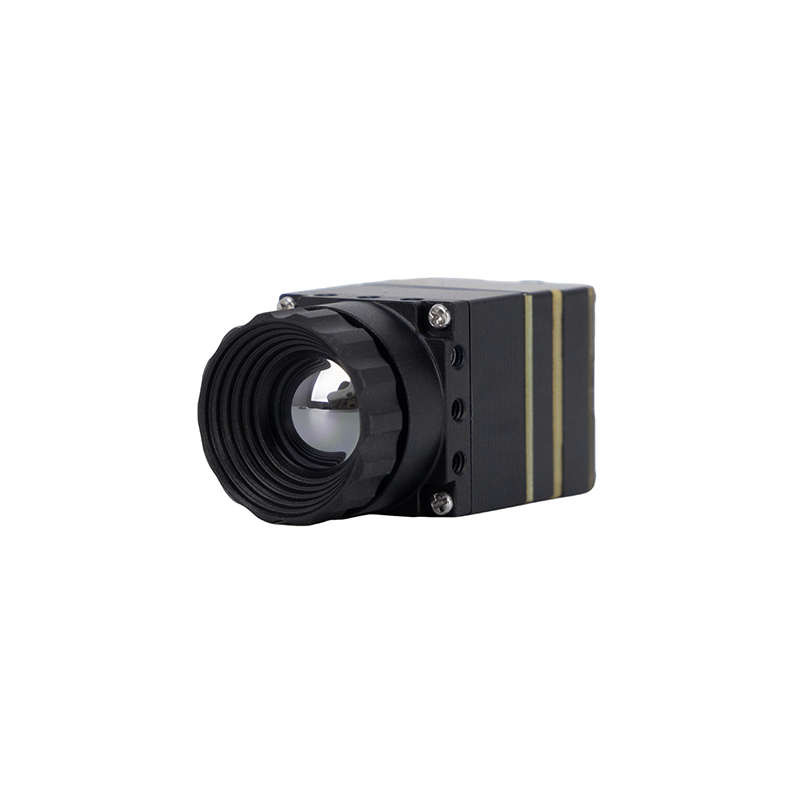
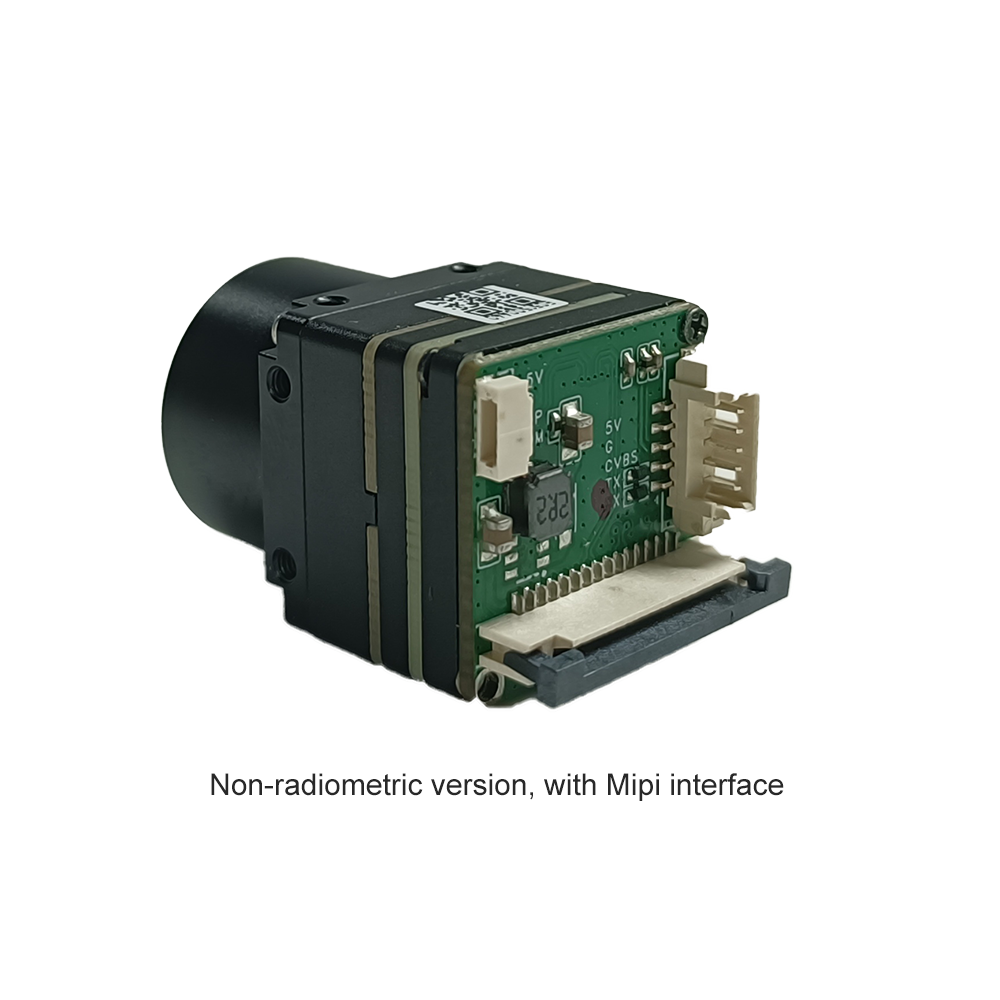
الـ Purpleriver MD Series 384x288 Module is engineered for high-precision industrial tasks, including factory temperature monitoring, security fencing, and edge AI drone operations. Built around an uncooled 12μm pixel pitch detector, it provides high sensitivity and sharp thermal fidelity. Backed by an engineering team with Hong Kong University of Science and Technology (HKUST) backgrounds and former Huawei HiSilicon optical processing expertise, this module offers versatile connectivity with native MIPI CSI-2, standard USB, and analog CVBS interfaces. Supporting extensive OEM/ODM customization, the MD Series is well-suited for automated manufacturing setups requiring direct edge processor integration.
| المعامل الهندسي | Mini 640 Core Module | MD Series 384 Module |
|---|---|---|
| معمارية الكاشف | ميكروبولومتر أكسيد الفاناديوم (VOx) غير المبرد | Uncooled Infrared VOx Detector |
| دقة المصفوفة | 640 × 512 (اختياري 640 × 480) | 384 × 288 native |
| تباعد البكسل | 12 ميكرومتر | 12 ميكرومتر |
| النطاق الطيفي | 8 μm – 14 μm (LWIR) | 8 μm – 14 μm (LWIR) |
| Footprint / Dimensions | Ultra-Miniature 21mm × 21mm | Compact Industrial Form Factor |
| الأطوال البؤرية المتاحة | 5 / 9 / 13 / 18 / 35 / 50 / 75 / 100 / 150 مم | Configurable multi-lens optical suite |
| واجهات العتاد | USB (Standard UVC), direct digital output | USB, MIPI CSI-2, Analog CVBS |
| الحساسية الحرارية (NETD) | ≤40 mK to 50 mK at f/1.0 | ≤40 mK at f/1.0 |
| خرج إشعاعي | 14/16-bit Raw Radiometric Y16 + Colorized YUV | Digital Raw Radiometric Stream + Real-Time Video |
| Key Integrator Target | Drone Gimbal Payloads, Mobile Inspection, Wearables | Factory Machine Vision, Security Nodes, Robotics |
6. Embedded System Architecture: Edge AI, Jetson Pipelines, & Interconnect Engineering
Deploying an industrial USB thermal camera core into edge computing platforms (such as NVIDIA Jetson Orin Nano/AGX, Raspberry Pi Compute Module 4, or Rockchip RK3588 boards sourced via hardware ecosystems like DFRobot) requires careful engineering across physical cabling, low-overhead kernel configurations, and real-time inference processing.
Interconnect Engineering & High-Flex Micro-Coaxial Cabling: In robotic arms, pan-tilt-zoom (PTZ) positioners, and 3-axis UAV brushless gimbals, conventional USB cables present serious reliability issues. Standard outer jackets create mechanical resistance that strains gimbal stabilization motors, and typical shielded twisted pairs can degrade under continuous cyclic flexing. Integrators should route high-speed USB differential lines (D+/D-) using ultra-fine micro-coaxial cable assemblies, such as those manufactured by رجل الكابل المحوري الصغير. These micro-coaxial solutions provide 360-degree EMI shielding against high-power brushless motor PWM interference while passing easily through slip-rings and tight hinge joints without signal attenuation.
Optimized Linux Radiometric Extraction Pipeline: Processing 16-bit radiometric telemetry alongside deep learning models requires capturing frames without redundant memory copies. The following Python pipeline demonstrates capturing raw 16-bit radiometric frames from a Purpleriver USB core using native OpenCV and V4L2 drivers, converting raw sensor values into absolute Celsius measurements, and triggering an alarm when a defined thermal threshold is exceeded:
import cv2
import numpy as np

def init_industrial_thermal_stream(device_index=0):
    # Initialize the camera using the standard Linux V4L2 backend
    cap = cv2.VideoCapture(device_index, cv2.CAP_V4L2)

    # Request uncompressed 16-bit raw radiometric capture (Y16 format)
    cap.set(cv2.CAP_PROP_FOURCC, cv2.VideoWriter_fourcc('Y', '1', '6', ' '))
    cap.set(cv2.CAP_PROP_CONVERT_RGB, 0)

    if not cap.isOpened():
        raise RuntimeError("Failed to link to industrial USB thermal camera via V4L2")
    return cap

def process_thermal_pipeline():
    cap = init_industrial_thermal_stream(0)
    print("LWIR Radiometric Ingestion Pipeline Initialized.")

    while True:
        ret, frame = cap.read()
        if not ret:
            print("Dropped radiometric telemetry frame")
            break

        # Cast raw array to float32 for absolute temperature calculations
        raw_counts = frame.astype(np.float32)

        # Factory Calibration Model: Value / 100 = Absolute Kelvin
        # Convert Kelvin to Celsius: T_celsius = (Value / 100) - 273.15
        temp_celsius = (raw_counts / 100.0) - 273.15

        # Quantitative machine vision threshold checks
        max_temp = np.max(temp_celsius)
        min_temp = np.min(temp_celsius)
        mean_temp = np.mean(temp_celsius)

        # Locate exact coordinates of the hottest scene element
        y_loc, x_loc = np.unravel_index(np.argmax(temp_celsius), temp_celsius.shape)

        if max_temp > 85.0:  # Industrial anomaly trip-point in Celsius
            print(f"CRITICAL HOTSPOT DETECTED: {max_temp:.2f}°C at coordinates [X:{x_loc}, Y:{y_loc}]")

        # Normalize the 16-bit numerical matrix to an 8-bit visual false-color map
        visual_norm = cv2.normalize(temp_celsius, None, 0, 255, cv2.NORM_MINMAX, dtype=cv2.CV_8U)
        colorized_heatmap = cv2.applyColorMap(visual_norm, cv2.COLORMAP_MAGMA)

        # Overlay diagnostic text on the visual operator frame
        telemetry_str = f"Max: {max_temp:.1f}C | Mean: {mean_temp:.1f}C"
        cv2.putText(colorized_heatmap, telemetry_str, (10, 25),
                    cv2.FONT_HERSHEY_SIMPLEX, 0.6, (0, 255, 0), 2)
        cv2.circle(colorized_heatmap, (x_loc, y_loc), 5, (0, 0, 255), 2)

        cv2.imshow("Industrial Radiometric Feed", colorized_heatmap)
        if cv2.waitKey(1) & 0xFF == ord('q'):
            break

    cap.release()
    cv2.destroyAllWindows()

if __name__ == "__main__":
    process_thermal_pipeline()
For more architectural insights on integrating edge AI computing directly with LWIR camera modules, review our detailed guide on edge AI UAV thermal module integration or explore our comprehensive background on custom OEM/ODM thermal imaging engineering.
أسئلة متكررة
Can this industrial USB thermal camera core stream directly via standard UVC without proprietary software on Linux or Windows?
How does an industrial USB thermal core prevent thermal drift and inaccurate measurements during 24/7 continuous operation?
What lens options and mechanical configurations are available for drone gimbals and compact vision systems?
📚 المراجع والقراءات الإضافية
- Industry Standard Hardware: Embedded Machine Vision Accessories & Ecosystems at DFRobot
- Interconnect Engineering: High-Flex Drone Gimbal Cabling Solutions at رجل الكابل المحوري الصغير
- Related Guide (Edge AI Integration): High-Performance Thermal Module: Edge AI UAV OEM Integration
- Related Guide (Embedded UAV Payloads): High-Performance Thermal Micro Camera Module for AI Drones
- Related Guide (OEM/ODM Engineering): Purple River Electronic Technology: Thermal Vision Engineering & Development