
Thermal Camera Sensor Module Guide: High-Res OEM Cores for Drones & SBCs
2026年6月11日
High-Resolution USB Thermal Camera Module: Custom OEM Cores for PCBA & Drone Integration
2026年6月12日
Industrial Guide Blueprint: Choosing the Right LWIR Thermal Camera Module
In the high-speed world of autonomous systems and industrial automation, the LWIR (Long-Wave Infrared) thermal camera module has officially crossed the chasm from an elite military luxury to the backbone of modern Edge AI and UAV platforms. Look, we’re moving way past the visible spectrum. These days, engineers are hitting a massive roadblock: how to squeeze a high-fidelity 640x512 resolution into the brutal "SWaP" (Size, Weight, and Power) limits required for drone gimbals or handheld IoT gear. Picking a module isn’t just about looking at a spec sheet; it’s about the raw ASIC processing power under the hood, those clever shutterless calibration algorithms, and whether or not the digital interfaces like USB and RJ45 RTSP will actually play nice with your stack.
Make no mistake—this is your OEM blueprint for high-stakes integration. Whether you’re building a tactical bird for Search and Rescue (SAR), a robot to monitor a factory floor 24/7, or a perimeter security system that doesn’t sleep, you need to know the guts of uncooled LWIR tech. We’re going to peel back the curtain on high-sensitivity cores—the kind of tech incubated by heavy hitters from HKUST and Huawei HiSilicon. In the shop, we’re seeing Chinese-made thermal cores set the pace globally for reliability, NETD (thermal sensitivity), and cost-efficiency. By locking into that 8-14μm spectrum, these modules give you eyes in environments where standard CMOS sensors just go blind.
Here’s the deal: technology is moving so fast that what worked last year is already gathering dust. If you want a system that survives the real world, you have to understand exactly how these photons turn into actionable data. We’re talking about precision optics, specialized ASICs, and the kind of thermal clarity that makes the difference between a False Positive and a saved life. Let's get into the weeds of how this hardware actually operates in the field.
Table of Contents
- 👉 1. What is LWIR? Decoding the 8-14μm Spectrum
- 👉 2. The Anatomy of an Uncooled LWIR Module
- 👉 3. Key Performance Metrics: Resolution, Pitch, and NETD
- 👉 4. Integration Protocols: USB vs. RJ45 vs. CVBS
- 👉 5. Edge AI & UAV Application Scenarios
- 👉 6. Product Showcase: Comparative Specs for 640x512 Modules
- 👉 7. Supply Chain Intelligence: The HKUST & HiSilicon Advantage
- 👉 8. Deep-Dive FAQ: Technical Deep-Dive
1. What is LWIR? Decoding the 8-14μm Spectrum
Let's talk science for a second. Thermal imaging, or Thermography, works by catching electromagnetic radiation that literally every object emits once it's above absolute zero. Unlike the standard cameras your phone uses—which need photons to bounce off a surface in the 0.4-0.7μm range—an LWIR thermal camera module lives in the "long-wave" neighborhood (8-14 micrometers). This is the sweet spot because it’s where most of the heat from things like people, engines, and gear (typically -50°C to 150°C) is actually happening.
Atmospheric Transmission and Zero-Light Operability
In the field, engineers pick LWIR over MWIR for drone and security work because it just handles the atmosphere better. LWIR radiation isn't moody about things like solar glint—essentially sunlight bouncing off stuff—and it punches through smoke, light fog, and dust way better than shorter wavelengths. On top of that, these sensors are "passive." They don't need a flashlight or an IR illuminator to see. It’s total 0.000 lux operation. If you want the lowdown on how this data flies from a drone to your screen, check out our guide on drone image transmission.
The "uncooled" part of the name refers to the microbolometer sensor. In the old days, you needed massive, power-hungry cryogenic coolers to get sensors down to liquid nitrogen temps just to get a picture. Modern uncooled VOx (Vanadium Oxide) sensors work just fine at room temperature. This makes today's lwir thermal camera module reliable, silent, and affordable enough for actual mass-market deployment without needing a government-sized budget.
2. The Anatomy of an Uncooled LWIR Module
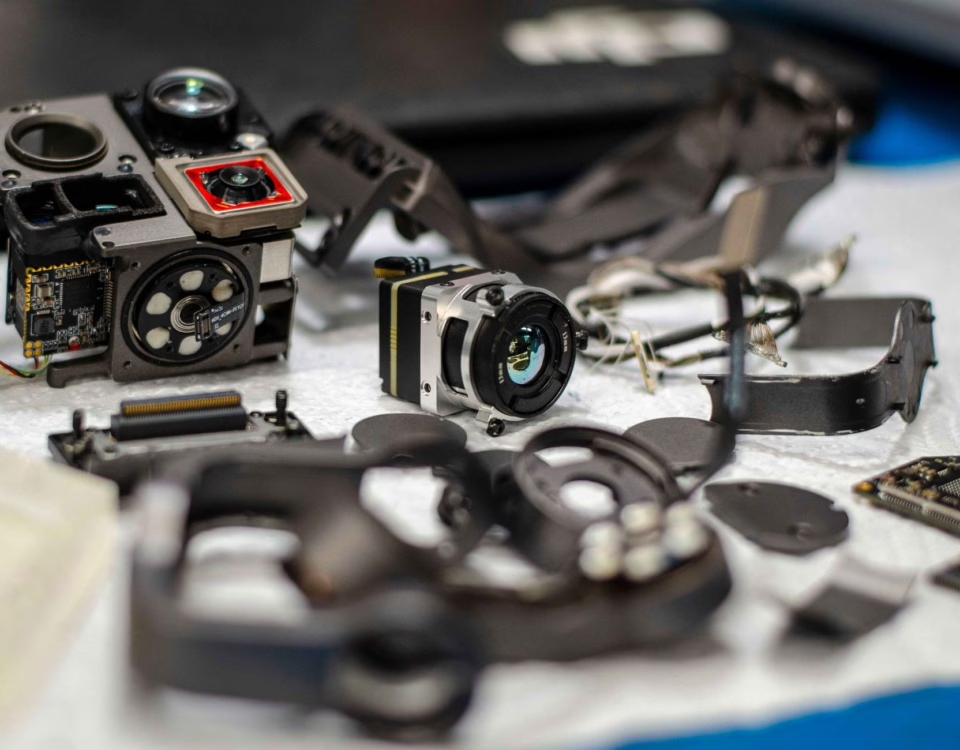
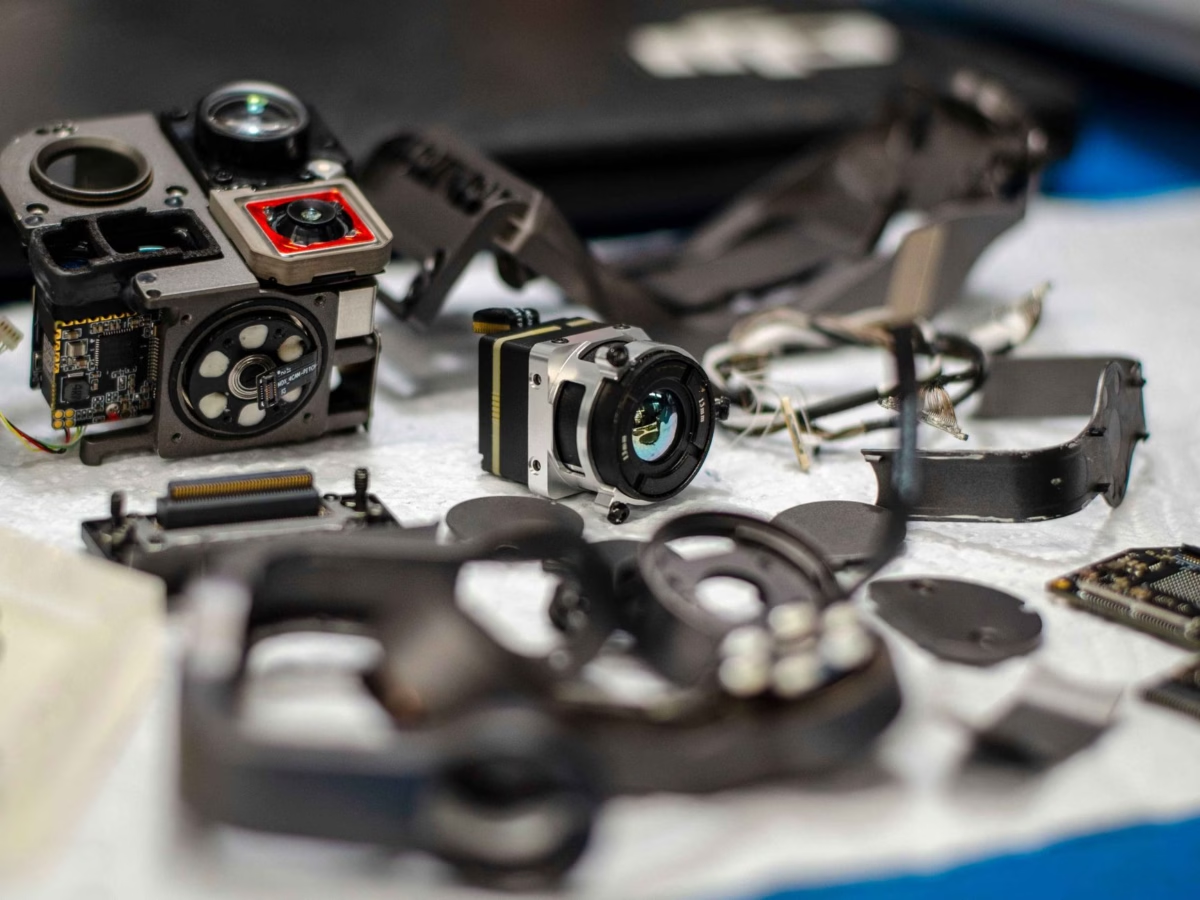
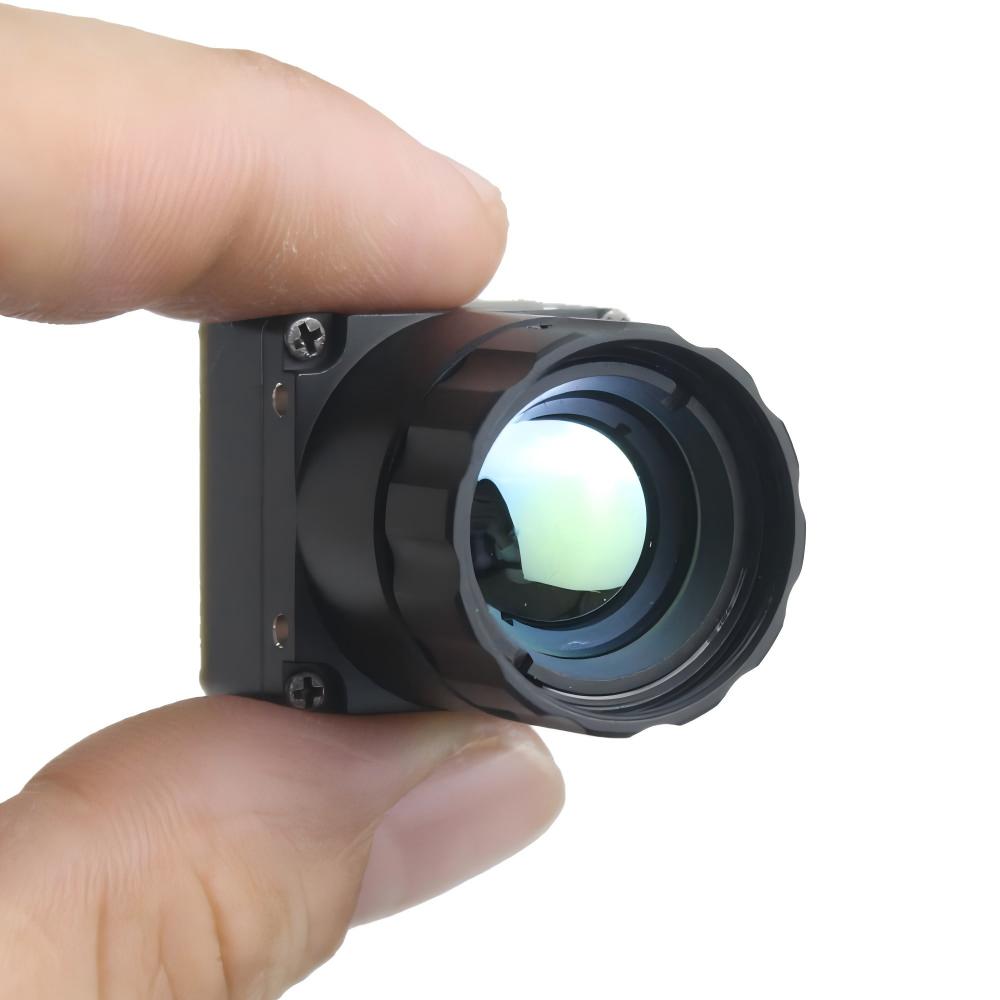
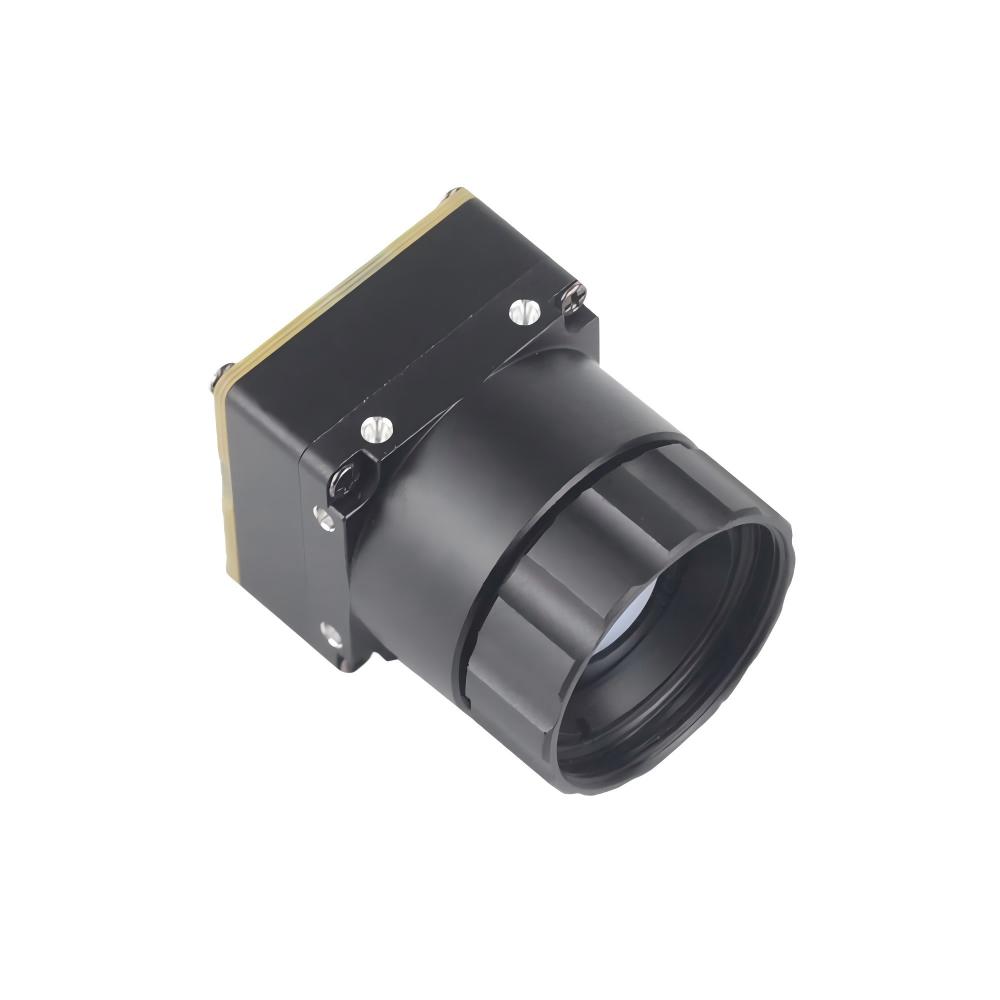
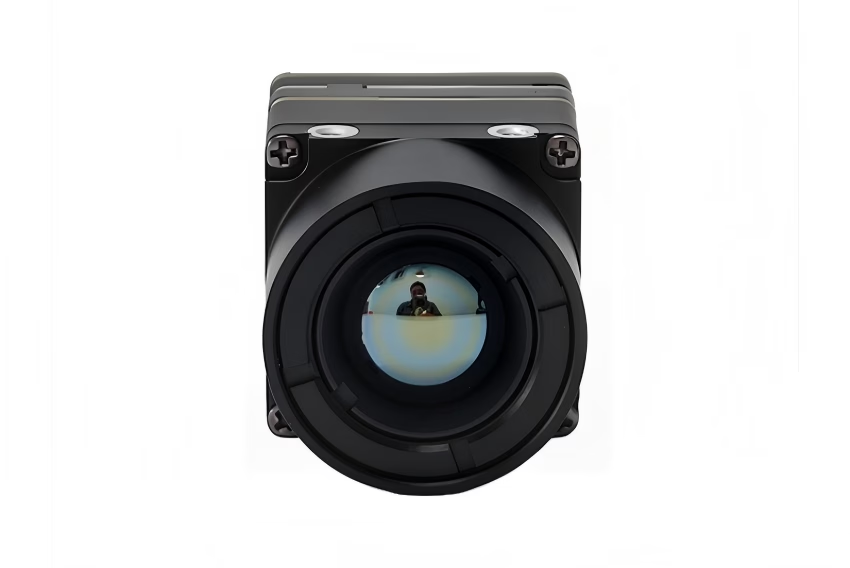
Look at one of these industrial thermal cores and you’re looking at a masterpiece of micro-engineering. To cram everything into a 21mm x 21mm square, you’ve got to stack three layers perfectly: the optics, the focal plane array (FPA), and the digital backend.
Optical Stack and Lens Materials
You can't use standard glass here—it's basically a brick wall to long-wave infrared. LWIR modules have to use Germanium or Chalcogenide glass. These lenses are diamond-turned and treated with anti-reflective coatings so the 8-14μm signal actually gets through. Your choice of lens focal length—whether it's a wide 5mm for broad awareness or a 150mm beast for long-distance spotting—dictates your Field of View (FOV) and your DRI (Detection, Recognition, and Identification) ranges.
The Role of the ASIC: Miniaturization at Scale
The real brain of the operation is the Application-Specific Integrated Circuit (ASIC). The top-tier modules are leaning on ASIC tech built by experts who came out of big tech houses like Huawei HiSilicon. The ASIC does the heavy lifting: Non-Uniformity Correction (NUC), fixing dead pixels on the fly, and Digital Detail Enhancement (DDE). By putting these complex math problems on a dedicated chip instead of a general processor, you cut down latency and save your battery. When we’re wiring these up in high-vibration spots, we usually use precision Molex connectors to make sure the signal doesn't drop when things get bumpy.
3. Key Performance Metrics: Resolution, Pitch, and NETD
When you're comparing thermal cores for a serious project, don't get distracted by the marketing fluff. You need to look at three things: Resolution, Pixel Pitch, and NETD.
- ✅ Resolution (640x512): We used to settle for 384x288, but 640x512 is the new standard. It gives you about 2.5 times the pixels, which means you can tell the difference between a dog and a person from twice as far away.
- ✅ Pixel Pitch (12μm vs 17μm): This is the distance between pixels. Moving to 12μm lets us make smaller sensors without losing detail. Smaller sensors mean smaller, lighter lenses—huge for drones where every gram counts.
- ✅ NETD (Thermal Sensitivity): Think of this as the "clarity" of the heat. A module with an NETD under 40mK (milli-Kelvin) can see a temp difference of 0.04°C. You need this to spot a hiker hidden in a forest where everything is roughly the same temperature.
4. Integration Protocols: USB vs. RJ45 vs. CVBS
Choosing the interface is usually where engineers pull their hair out. The hardware choice locks you into your software stack, so you better get it right the first time.
USB / UVC (Universal Video Class)
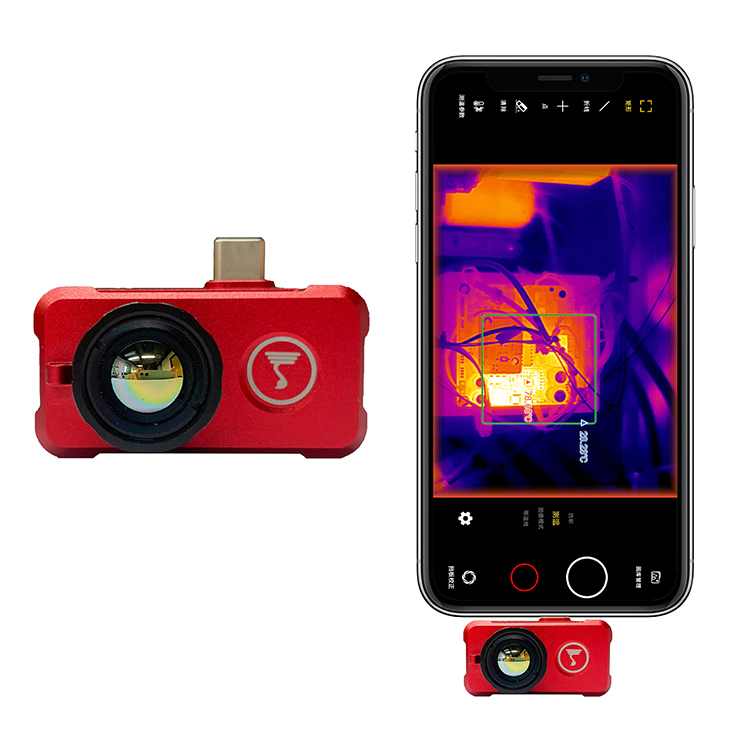
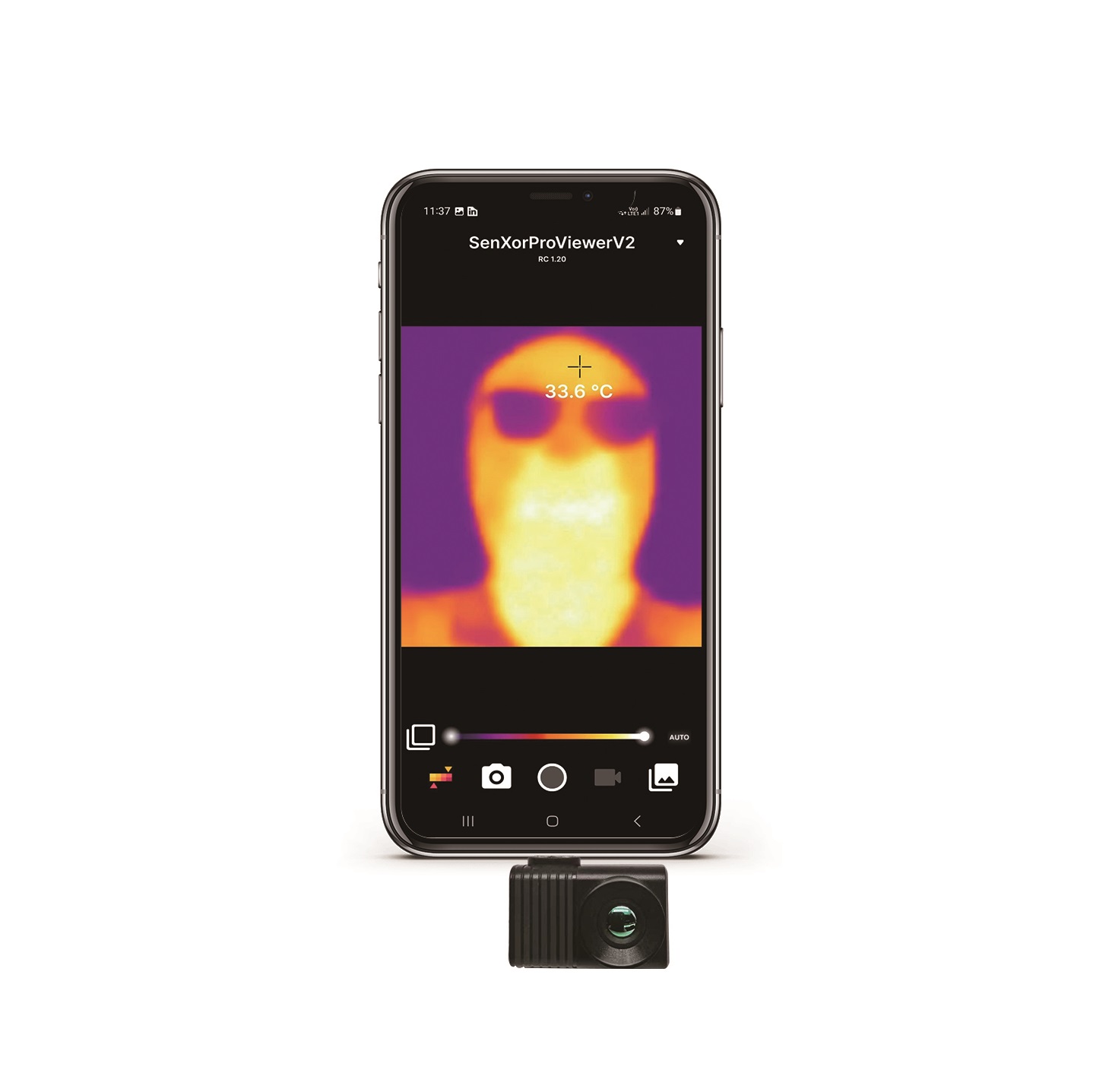
⚙️ The USB thermal core is your best friend for prototyping. It uses the UVC protocol, so Windows, Linux, and Android see it as just another webcam. You can use standard tools like OpenCV to start crunching data immediately. It’s perfect for handhelds or PC-based inspection rigs where you just want it to work out of the box.
RJ45 / RTSP / IP
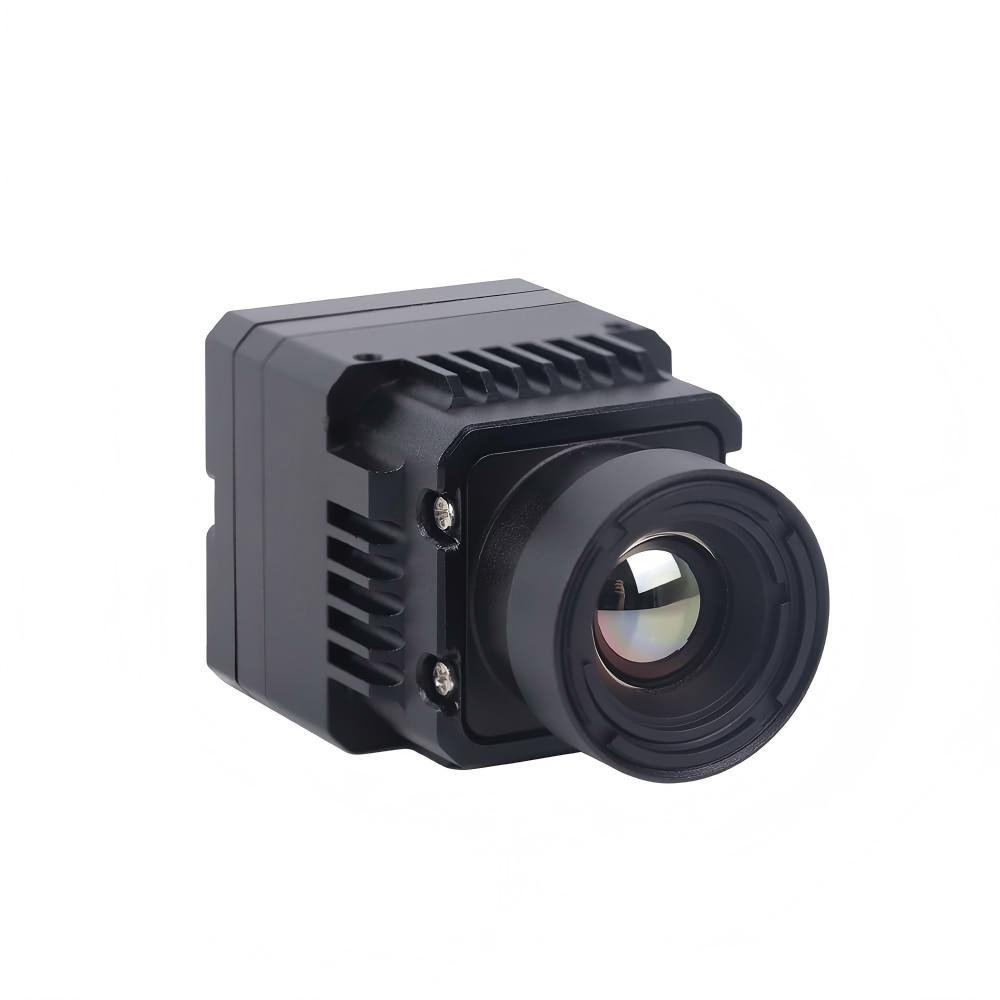
⚙️ If you’re doing security or fixed monitoring, go with IP. These units usually have an RJ45 port and support RTSP. You can plug them right into your NVR (Network Video Recorder) or VMS. They usually have built-in H.264/H.265 compression, so they don't choke your network when you're streaming 640x512 video.
CVBS (Analog)
⚙️ People think analog is dead, but it’s still king for FPV drone pilots. CVBS has basically zero latency. When you're flying a drone at 60 miles an hour, you can't wait for a digital signal to buffer. Many new modules offer "hybrid" outputs—digital IP for the recording and analog for the pilot's goggles.
5. Edge AI & UAV Application Scenarios
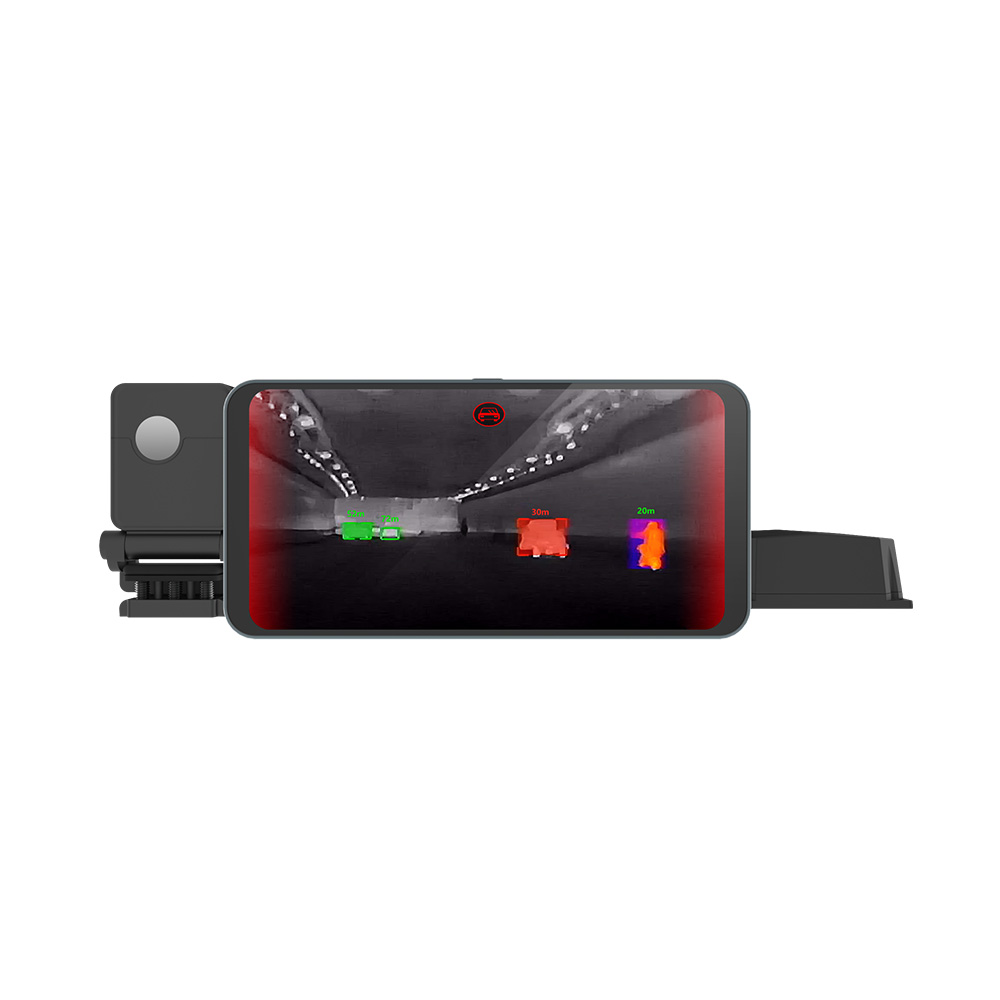
The marriage of LWIR sensors and Edge AI is a game changer. Putting a 640x512 core together with an AI-ready SoC means the camera can spot humans, track animals, or find fire starts entirely on its own—no cloud required.
Outdoor Hunting and Search & Rescue
Thermal imaging is "essential hardware" these days. Like we talked about in our post on outdoor hunting scopes, seeing through the brush changes everything. For SAR teams, that 640 resolution lets you clear a massive area from 300 feet up because you can actually tell if that heat signature is a person or a warm rock.
Industrial Power Line Inspection
Drones with these modules are flying power line checks every single day. A bad connector or a failing insulator gets hot. A calibrated thermal module spots that "hot spot" before it blows, saving the utility company a fortune in emergency repairs and preventing blackouts. It's preventative maintenance on steroids.
6. Product Showcase: Comparative Specs for 640x512 Modules
Let's look at two heavy hitters in the LWIR space. One is built for mobile flexibility, and the other is a network-ready workhorse.
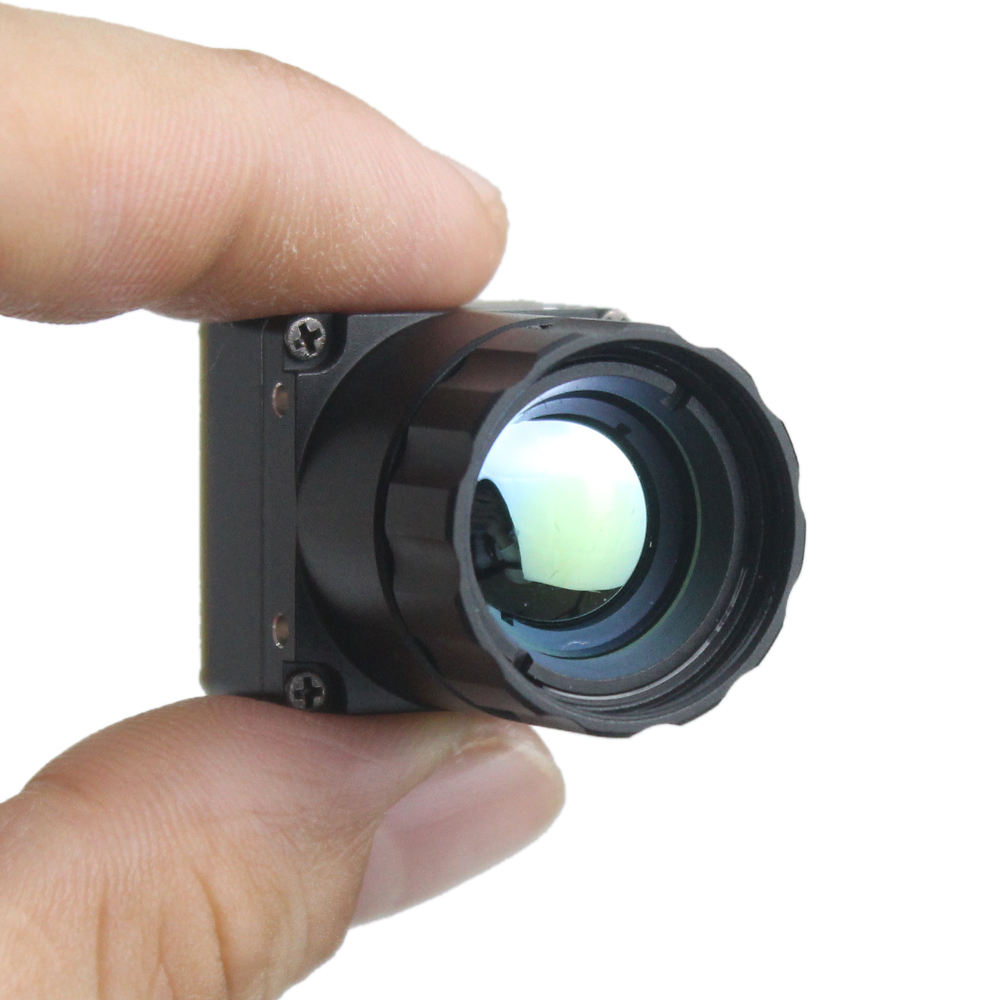
Product 1: Mini 640 Uncooled LWIR USB Core
If you're an engineer needing high-res imaging in a tiny footprint—think DJI-style enterprise gimbals—this is your module.
| Feature | Specification |
|---|---|
| Dimensions | 21mm * 21mm (Mini Size) |
| Resolution | 640*480 / 640*512 Optional |
| Optical Lens Support | 5/9/13/18/35/50/75/100/150mm |
| Connectivity | USB / UVC Plug-and-Play |
| Core Type | Uncooled LWIR VOx Microbolometer |
View Product Details & Pricing ➔
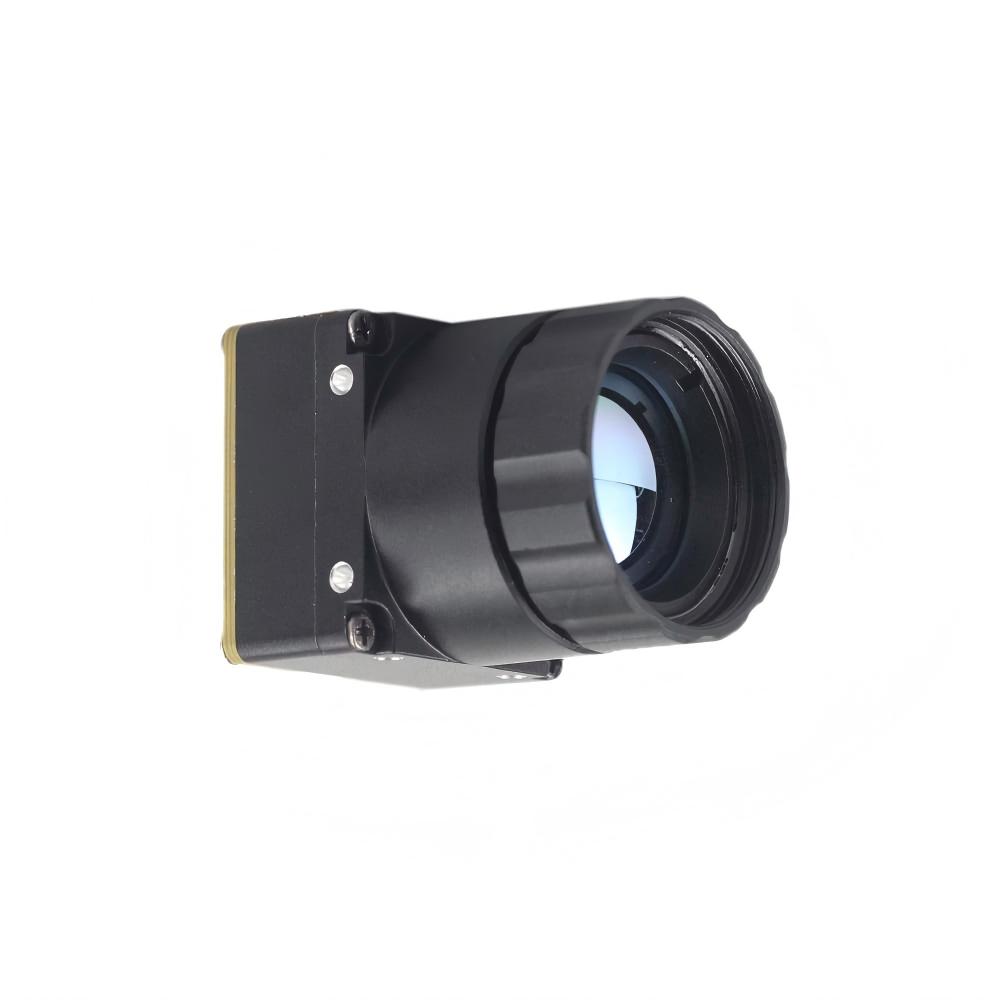
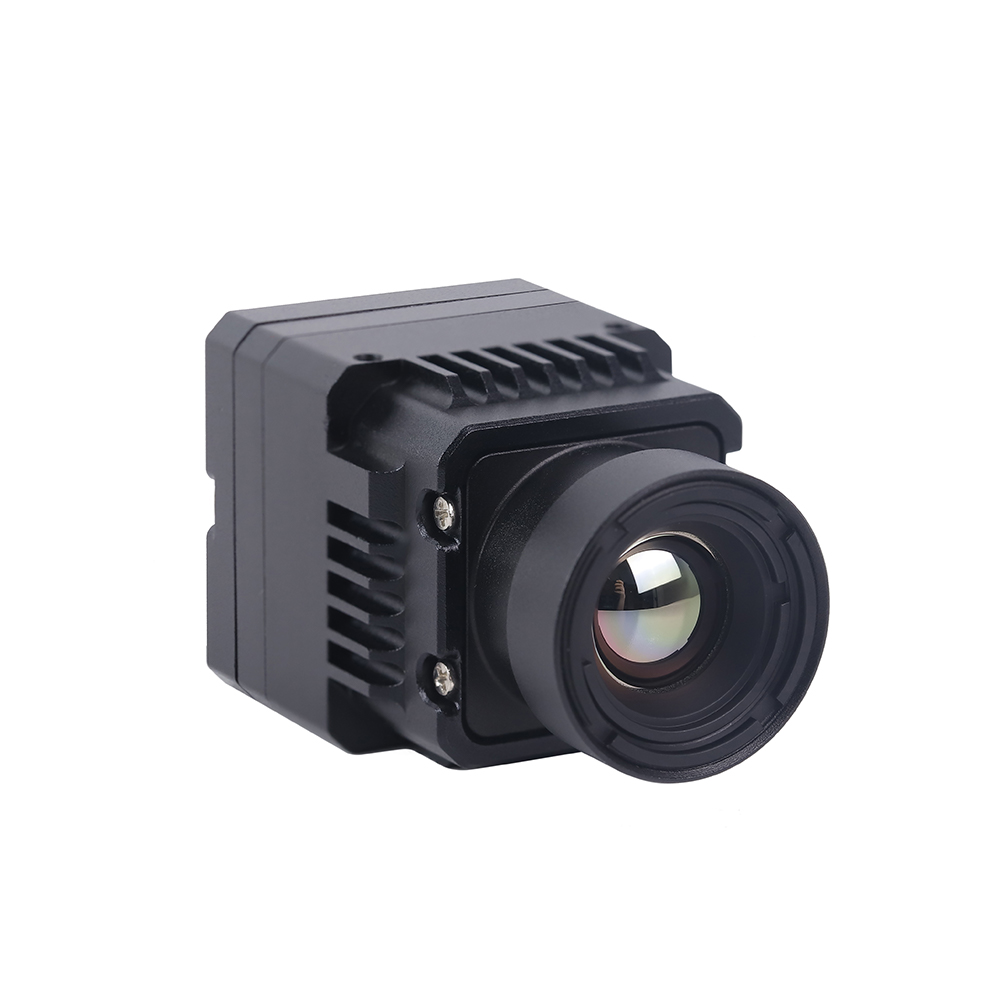
Product 2: RJ45 CVBS RTSP IP 640 ASIC Module
This is the "big gun" for network integration. It uses a custom ASIC to handle the image processing and streaming so your main computer doesn't have to break a sweat.
| Intelligence Metric | Capability |
|---|---|
| Processing Architecture | Custom ASIC for Thermal ISP |
| Video Interfaces | RJ45 (Ethernet), CVBS (Analog), RTSP Stream |
| Resolution | 640*512 High Fidelity |
| Primary Application | Long-range Drones & Perimeter Security |
View Product Details & Pricing ➔
7. Supply Chain Intelligence: The HKUST & HiSilicon Advantage
Here’s the straight talk: the thermal market has shifted big time towards Chinese manufacturing hubs. The tech inside our 640x512 modules is the result of some high-level brainpower. Most of this was cooked up at the Hong Kong University of Science and Technology (HKUST), where they perfected the materials science for high-sensitivity VOx bolometers.
Then you've got the Signal Processing (ISP) side. A lot of that comes from engineers with deep resumes at Huawei HiSilicon. That matters because HiSilicon basically led the world in security AI chips. They’ve brought that "smart" DNA to thermal cores, offering noise reduction and dynamic range compression that used to cost five times as much. For guys like us buying this hardware, it means we get military-grade performance with a massive, stable supply chain that won't leave us hanging mid-production.
8. Deep-Dive FAQ: Technical Deep-Dive
Are Chinese-made LWIR thermal camera modules reliable for professional-grade and B2B projects?
Why do thermal camera modules have lower resolutions than visible light cameras, and can they stream directly to a PC?
What makes uncooled LWIR modules better than optical cameras for smoke, haze, and nighttime visibility?
📚 References & Further Reading
- Industry Standard: Introduction to Thermography Principles
- Related Guide: Drone Image Transmission Architecture
- Specialized Optics: Precision Interconnects for Compact Imaging Systems
- Case Study: LWIR Application in Outdoor Search and Tracking