

Best Thermal Module for Security Camera: OEM Integration & Selection Guide
2026年10月9日
High-Resolution Electrical Inspection Infrared Camera Module: OEM Integration & Buying Guide
2026年10月10日
Traditional fire protection frameworks fail systematically at the structural boundary layer. Conventional ultraviolet/infrared (UV/IR) point sensors and aspirating smoke detection systems suffer from an intractable operational flaw: they inherently require physical smoke particulates or open, flicker-frequency flames to enter their line of sight or volumetric intake envelope. In mission-critical applications—such as wildfire surveillance perimeters, lithium-ion battery energy storage systems (BESS), open-air industrial waste depots, chemical processing facilities, and petrochemical transport corridors—waiting for aerosolized smoke particles or an open ignition flame means that structural failure has already taken place. Sub-surface smoldering, dynamic thermal runaway in clustered cylindrical cells, micro-arcing in high-voltage distribution terminals, and localized overheating remain invisible to optical and standard charge-coupled payloads until catastrophic ignition occurs.
Uncooled Long-Wave Infrared (LWIR) radiometric thermal camera modules shift this operational baseline, changing fire safety engineering from post-event reactive suppression to real-time predictive early warning. By directly quantifying surface radiance across the 8 to 14 micrometer spectral band via microbolometer focal plane arrays, an OEM fire detection thermal camera module measures minute, milli-Kelvin temperature shifts per pixel. When integrated into tactical unmanned aerial vehicles (UAVs), quadruped robotics platforms, pan-tilt-zoom (PTZ) industrial payloads, and static edge-AI monitoring enclosures, these miniature sensors deliver the physical detection capability needed to identify pre-combustion anomalies across wide operational distances. This capability allows autonomous safety systems to isolate damaged systems, redirect automated suppression mechanisms, and prevent multi-million-dollar industrial infrastructure losses.
Table of Contents
- 👉 1. The Physics of Early Thermal Detection: LWIR vs. Conventional Systems
- 👉 2. Core Architectural Engineering of OEM Thermal Fire Modules
- 👉 3. System Integration: SWaP-C Optimization for Drones & Field Robotics
- 👉 4. OEM Product Showcase: Mini-Series Fire Detection Modules
- 👉 5. Early Warning Algorithms: Mitigating False Alarms in Dynamic Environments
- 👉 6. Comprehensive Integration & Deployment FAQ
1. The Physics of Early Thermal Detection: LWIR vs. Conventional Systems
Planck’s Law, Emissivity, and Sub-Surface Smoldering
To design an early fire warning architecture, engineers must account for the fundamental physics governing thermal radiation emission. Every object at an absolute temperature above absolute zero emits electromagnetic radiation governed by Planck’s spectral distribution equation. The Stefan-Boltzmann law integrates this spectral radiance across all operational wavelengths, establishing that total emissive power scales proportionally with the fourth power of absolute temperature: W = εσT⁴, where ε represents surface emissivity, σ represents the Stefan-Boltzmann constant, and T denotes thermodynamic temperature in Kelvin. In early-stage thermal events—such as deep-seated smoldering in forest duff, biomass piles, chemical storage vaults, or internal pouch cell swelling in a lithium battery pack—initial surface heating typically resides between 330 Kelvin and 473 Kelvin (approximately 57°C to 200°C).
According to Wien’s Displacement Law (λ_max · T = 2897.8 μm·K), the peak wavelength of radiant emission for an object within this critical 330 K to 473 K pre-combustion envelope occurs precisely between 6.1 μm and 8.7 μm, extending directly into the 8–14 μm uncooled Long-Wave Infrared (LWIR) atmospheric band. In sharp contrast, visible spectrum optical payloads (operating at 0.4–0.7 μm) and standard silicon-based Near-Infrared (NIR) sensors (operating at 0.75–1.4 μm) receive virtually zero photon emission from anomalies at these temperatures. By the time an optical sensor captures visible smoke plumes or a flame flicker profile, the local exothermic reaction has already surpassed the activation energy threshold for self-sustaining combustion. OEM developers evaluating sensor trade-offs should consult this technical analysis on komercyjny przewodnik po kamerach na podczerwien obrazowanie termowizyjne ai vs bliska podczerwien, which outlines how spectral sensitivity parameters directly influence automated fire and surveillance triggers.
Emissivity values (ε) play a direct role in non-contact temperature calculations. While organic materials, dry brush, and industrial rubber feature high emissivity coefficients between 0.90 and 0.98, raw industrial metals (such as aluminum busbars, copper interconnects, and stainless-steel fuel vessels) can exhibit emissivity coefficients below 0.15. When calculating radiometric data, the digital signal processor within the thermal camera module must dynamically compensate for these surface variations. It must factor in reflected apparent temperature, relative humidity, and target-to-lens path distance to extract true absolute radiometric values from raw digital outputs, preventing missed detections in low-emissivity target environments.
Because microbolometer arrays integrate energy across the full 8–14 μm band, small mathematical errors in emissivity estimation can lead to temperature calculation offsets of tens of degrees. Modern embedded radiometric engines compensate for this by maintaining localized region-of-interest (ROI) look-up tables. Each defined ROI can be assigned discrete material profiles, path transmission factors, and background ambient reflections. When monitoring critical infrastructure like high-voltage switchgear cabinets, where bare oxidized copper interfaces directly with ceramic insulators and polymer wire sheathing, this per-pixel or per-zone emissivity attribution ensures that localized micro-arcing is flagged well before thermal degradation compromises mechanical insulation.
Atmospheric Attenuation, Smoke Penetration, and Optical Depths
In actual fire deployments, the operational envelope is filled with dense suspended particulate matter, aerosols, unburned hydrocarbon droplets, and high concentrations of combustion gases, including water vapor, carbon monoxide, and carbon dioxide. Electromagnetic transmission through such obscurants is governed by the Beer-Lambert extinction law: I = I₀ · exp(-γx), where γ represents the extinction coefficient (composed of both absorption and scattering components) and x represents the optical path length across the observation corridor.
The scattering component is heavily wavelength-dependent, modeled primarily by Rayleigh scattering when particle radii are significantly smaller than the operational wavelength (r << λ, where scattering cross-section is inversely proportional to the fourth power of the wavelength: σ_s ∝ λ⁻⁴), transitioning to Mie scattering as particulate diameters approach the wavelength of the incident radiation (r ≈ λ). Typical wildfire smoke and industrial combustion particulates produce airborne particle distributions with mean radii ranging from 0.1 μm to 1.5 μm. For optical and near-infrared systems, these particulate dimensions fall directly within the Mie scattering domain, causing rapid beam diffusion, phase distortion, and total optical extinction over short standoff distances.
Conversely, for an uncooled LWIR sensor operating in the 8–14 μm spectral band, the wavelength is roughly an order of magnitude larger than the mean particulate radius. As a result, the scattering cross-section drops significantly. Uncooled LWIR energy penetrates heavy aerosol suspensions, industrial soot, dust plumes, and high-density smoke blankets with minimal attenuation. For autonomous firefighting drone platforms, robotic crawler fleets, and fixed early-warning pan-tilt systems, an LWIR radiometric module maintains clear visibility through obscurants. This enables detection loops to calculate precise hotspot coordinates and track flame-spread vectors even when visible cameras are completely blinded by heavy smoke.
The transmission advantage of the 8–14 μm band is further reinforced by the atmospheric transmission window itself. While Mid-Wave Infrared (MWIR, 3–5 μm) payloads suffer from heavy atmospheric absorption spikes caused by combustion-generated carbon dioxide (CO₂) absorption bands around 4.2 to 4.4 μm, the uncooled LWIR spectrum remains clear of this primary gaseous attenuation profile. This distinction is critical when deploying fixed perimeter systems monitoring flare stacks, chemical refining tanks, or landfill edges, where continuous gaseous outgassing would otherwise blind mid-band optical detectors.
2. Core Architectural Engineering of OEM Thermal Fire Modules
VOx Microbolometer Arrays vs. Amorphous Silicon (a-Si)
The core of every modern radiometric fire detection thermal camera module is an array of thermally sensitive resistor elements suspended over an integrated silicon Read-Out Integrated Circuit (ROIC). The two predominant thin-film material technologies deployed in uncooled focal plane arrays (FPAs) are Vanadium Oxide (VOx) and Amorphous Silicon (a-Si). For mission-critical industrial fire detection, VOx systems provide distinct performance advantages.
Vanadium Oxide offers a high Temperature Coefficient of Resistance (TCR), typically ranging from -2% to -3% per Kelvin at room temperature, while maintaining a lower 1/f flicker noise floor than comparable thin-film Amorphous Silicon formulations (which hover near -1.5% TCR). This higher resistance change per Kelvin translates directly into superior Noise Equivalent Temperature Difference (NETD). High-grade VOx microbolometer cores achieve NETD values of ≤40 mK to ≤50 mK at f/1.0, enabling the sensor array to resolve temperature differences smaller than 0.04°C. In early fire detection scenarios, this low noise floor is critical: it prevents noise spikes from triggering threshold alarms across large outdoor observation distances, where subtle thermal gradients in dense biomass or BESS battery skins must be extracted from ambient thermal noise.
A critical operational factor for embedded robotics and continuous monitoring is shutter management. Microbolometer arrays experience thermal drift caused by changing ambient chassis temperatures and internal electronic self-heating. Conventional systems cycle a physical mechanical shutter across the sensor plane to calibrate non-uniformity correction (NUC) tables. However, physical shutter cycles temporarily freeze the video output for 500 to 1200 milliseconds—a disruption that can blind autonomous drone collision-avoidance systems or interrupt rate-of-rise algorithms. Modern OEM thermal cores designed for fire defense implement advanced shutterless algorithms or intelligent adaptive NUC routines. These systems use dynamic scene-based non-uniformity correction (SBNUC) paired with internal thermal sensors embedded directly on the ROIC die, delivering uninterrupted radiometric telemetry without mechanical wear or blind spots.
Radiometric Signal Chain, DDE, and Dual-Gain Architecture
The radiometric signal chain within an OEM thermal core must preserve signal integrity from photon conversion to digital output. As infrared radiation strikes each suspended microbolometer pixel membrane, the absorbed energy induces a temperature rise that alters the membrane's electrical resistance. The underlying ROIC biases each pixel, integrates the resulting signal current, and directs these microvolt signals into on-chip 14-bit or 16-bit Analog-to-Digital Converters (ADCs). This wide dynamic digitization depth provides the dynamic range needed to measure absolute scene temperatures down to fractional Kelvins without prematurely clipping highlights.
A central design challenge in fire detection systems is balancing high thermal sensitivity for early smoldering with a dynamic range wide enough to track open hydrocarbon combustion. To resolve this trade-off, industrial-grade OEM cores utilize a dual-gain architecture:
- ⚙️ High Gain Mode: Typically calibrated to map temperatures from -20°C to +150°C. In this mode, the module maximizes thermal resolution, providing sub-50 mK sensitivity to spot minute overheating in machinery bearings, high-voltage switches, and non-ignited electrical conduits.
- ⚙️ Low Gain Mode: The ROIC dynamically adjusts its integration capacity and capacitor banks to cover a range from 0°C to +550°C (with extended calibrations reaching +1500°C). This mode prevents pixel saturation and blooming when dynamic flames erupt, allowing edge processors to analyze internal flame geometries, locate structural support failures, and track combustion cores.
Downstream from the ADC, the module's Image Signal Processor (ISP) runs hardware-accelerated Digital Detail Enhancement (DDE) and non-linear adaptive dynamic range mapping. DDE filters high-frequency spatial components, isolating low-contrast thermal boundaries within flat backgrounds without distorting underlying absolute pixel radiometric values. For optomechanical system engineers designing around specific sensor dimensions and optical working distances, this architectural analysis of the modul kamery termowizyjnej 256x192 25mm provides a detailed breakdown of core performance across continuous deployment configurations.
3. System Integration: SWaP-C Optimization for Drones & Field Robotics
Mechanical Envelopes, Thermal Dissipation, and Connectors
Deploying early fire warning payloads onto aerial platforms, quadruped inspection robots, and pan-tilt-zoom masts requires strict optimization of Size, Weight, Power, and Cost (SWaP-C). In tactical unmanned aerial systems (UAS), micro-gimbal platforms cannot tolerate excessive mass or unbalanced mechanical volumes without degrading battery flight endurance and motor stability. Leading OEM uncooled thermal modules achieve footprints as small as 21 mm × 21 mm, with bare-core masses well below 30 grams. This ultra-lightweight profile allows engineers to package these radiometric sensors into sub-250g category drones and two-axis stabilized micro-gimbals without compromising structural margins.
Thermal dissipation requires careful planning within sealed gimbal shells or IP67-rated hazardous-environment explosion-proof housings. A microbolometer array cannot distinguish between ambient external photons and its own internal mechanical thermal bloom. If heat generated by the on-board FPGA, ADC array, or power converter conducts into the focal plane mounting plate, it introduces thermal drift and spatial non-uniformities. System integrators must route conductive heat away from the ROIC using copper or pyrolytic graphite thermal straps, coupling internal digital processors directly to external aluminum chassis heat-sinks, while mechanically isolating the detector core to prevent parasitic thermal offsets.
Electrical interconnects require high shock tolerance and signal integrity under continuous vibrational profiles. Board-to-board micro-ribbon solutions must maintain positive engagement despite multi-axis motor vibration and drone flight dynamics. Engineers frequently specify low-profile, high-pin-count interconnect systems from industry-standard manufacturers:
- ✅ Ruggedized Harness Coupling: For positive-locking micro-ribbon wiring harnesses that resist sustained high-frequency motor vibration in UAS, hardware engineers rely on high-reliability industrial connectors from Molex.
- ✅ High-Density Miniature Footprints: For ultra-compact, high-frequency board-to-board interfaces in miniature gimbal axes and drop-deployable edge sensor pods, developers deploy low-profile multi-pin components from Hirose Electric.
For a detailed breakdown of board-to-board timing, low-noise power-plane filtering, and trace impedance matching for thermal sensors in autonomous systems, see this technical reference on интеграция высокоточного теплового payloads.
Lens Selection and DRI Range Calculations
Sensor integration requires matching target detection distance to the focal length (f) of the optomechanical lens subsystem. System designers calculate Detection, Recognition, and Identification (DRI) metrics based on Johnson’s Criteria, modified for early-stage thermal anomaly detection:
Target Critical Dimension (d_c) × Focal Length (f) = Range (R) × Pixel Pitch (p) × N_pixels
For early fire detection, industry standards require at least 2 to 3 pixels across the hotspot's critical dimension to reliably trigger an alarm above the sensor's noise floor and prevent false positive single-pixel reads. A typical pre-ignition smoldering hotspot might measure approximately 0.5 meters across. With a 12 μm pixel pitch microbolometer, selecting the correct optical focal length directly determines the effective range of the system:
- ⚙️ Wide-Angle Optics (5 mm to 9 mm): Deliver broad horizontal fields of view (FOV) from 50° to 90°. These lenses are suited for low-altitude indoor factory mapping, rack-level battery room monitoring, and wide-area industrial perimeter scans where broad situational coverage outweighs long-distance resolution.
- ⚙️ Medium Optics (13 mm to 25 mm): Provide a balanced compromise between coverage and optical reach, making them ideal for search-and-rescue UAVs operating at standard flight altitudes of 50 to 100 meters above ground level (AGL).
- ⚙️ Telephoto Optics (35 mm, 50 mm, up to 150 mm): Concentrate spatial resolution down to narrow fields of view (<10°), enabling high-altitude perimeter patrol aircraft and fixed mountain-top surveillance systems to isolate micro-hotspots at ranges exceeding 2 to 5 kilometers.
Standard glass blocks transmission across the 8–14 μm spectral band. Consequently, all transmissive optical elements must be machined from monocrystalline Germanium (Ge) or specialized Chalcogenide glass alloys, coated with durable Anti-Reflective (AR) and hard carbon treatments. Crucially, as ambient temperatures fluctuate across drone operational profiles (-40°C to +80°C), Germanium's high thermal refractive index variation (dn/dT) can cause rapid focus shift. To prevent this, optomechanical assemblies must implement optical athermalization—using mechanical balance barrels that combine low-expansion Invar alloys with aluminum to automatically compensate for temperature changes and keep the focal plane sharp across the operational envelope.
4. OEM Product Showcase: Mini-Series Fire Detection Modules
Below is a comparative breakdown of two industrial-grade OEM LWIR sensor modules designed for integration into firefighting UAV payloads, edge-AI safety networks, and automated robotic platforms:
| Parameter | Mini 256 Uncooled LWIR Module | Mini 640 Uncooled LWIR USB Module |
|---|---|---|
| Product Image | 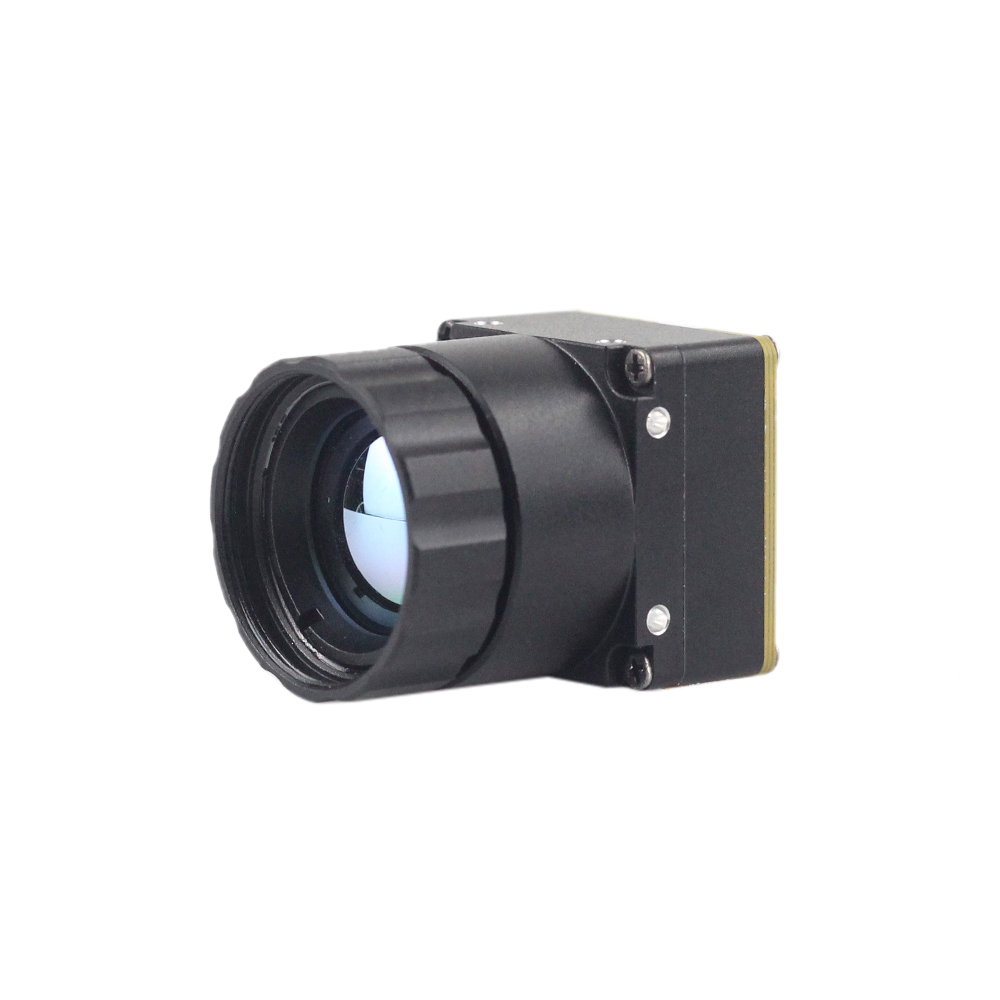 |
|
| Detector Resolution | 256 × 192 pixels | 640 × 512 pixels (640 × 480 optional) |
| Spectral Band | 8 to 14 μm (Uncooled LWIR) | 8 to 14 μm (Uncooled LWIR) |
| Detector Technology | High-performance Uncooled VOx Bolometer | High-performance Uncooled VOx Bolometer |
| Form Factor / Size | Ultra-compact SWaP miniature core footprint | Mini-size: 21mm × 21mm base envelope |
| Available Focal Lengths | Integrated wide/mid fixed-focus lenses | 5 / 9 / 13 / 18 / 35 / 50 / 75 / 100 / 150 mm |
| Temperature Radiometry | Accurate temperature measurement, uniform radiometric thermal output | Full-frame absolute radiometry, high environmental adaptability |
| System Video Interface | Parallel / Serial CMOS / Universal Core Connector | USB standard digital video output / Embedded options |
| Primary Applications | Sub-surface mine detection, micro-drone payloads, ultra-low payload integration | Tactical firefighting drones, high-altitude wildfire patrols, fixed pan-tilt early warning |
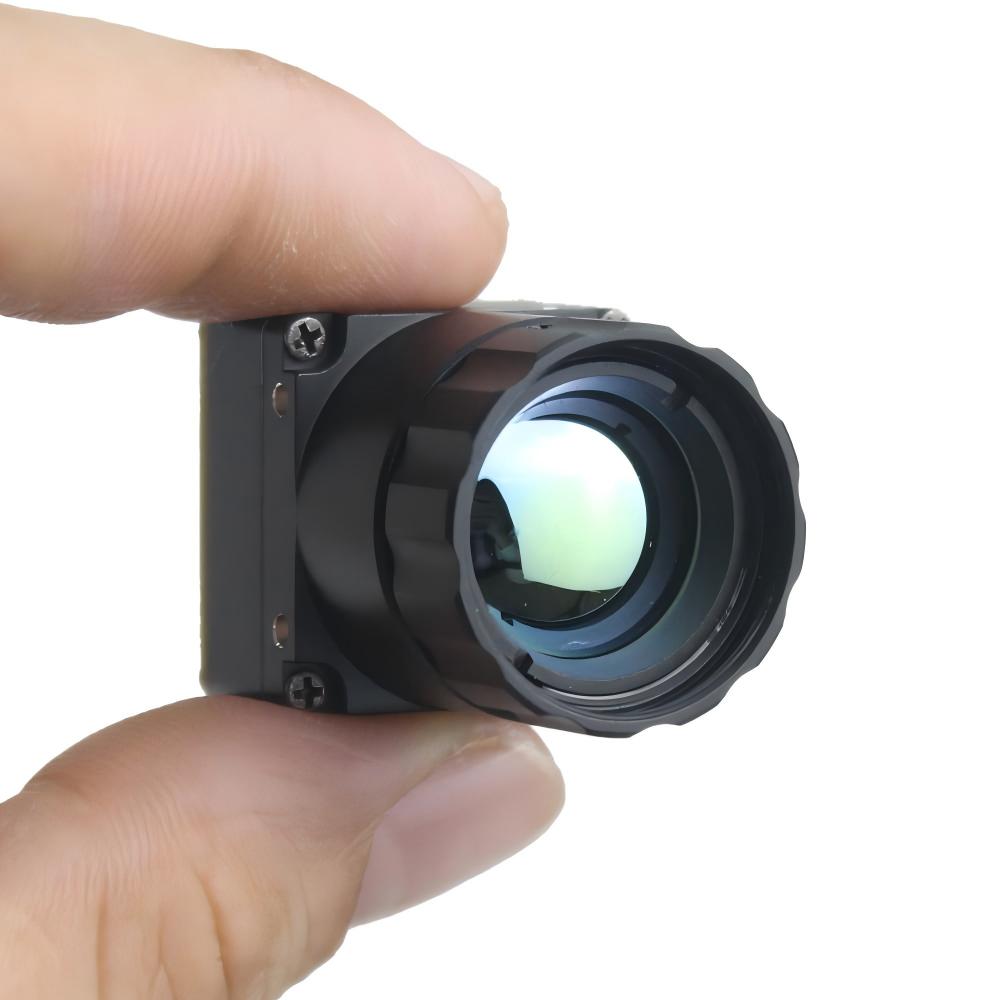
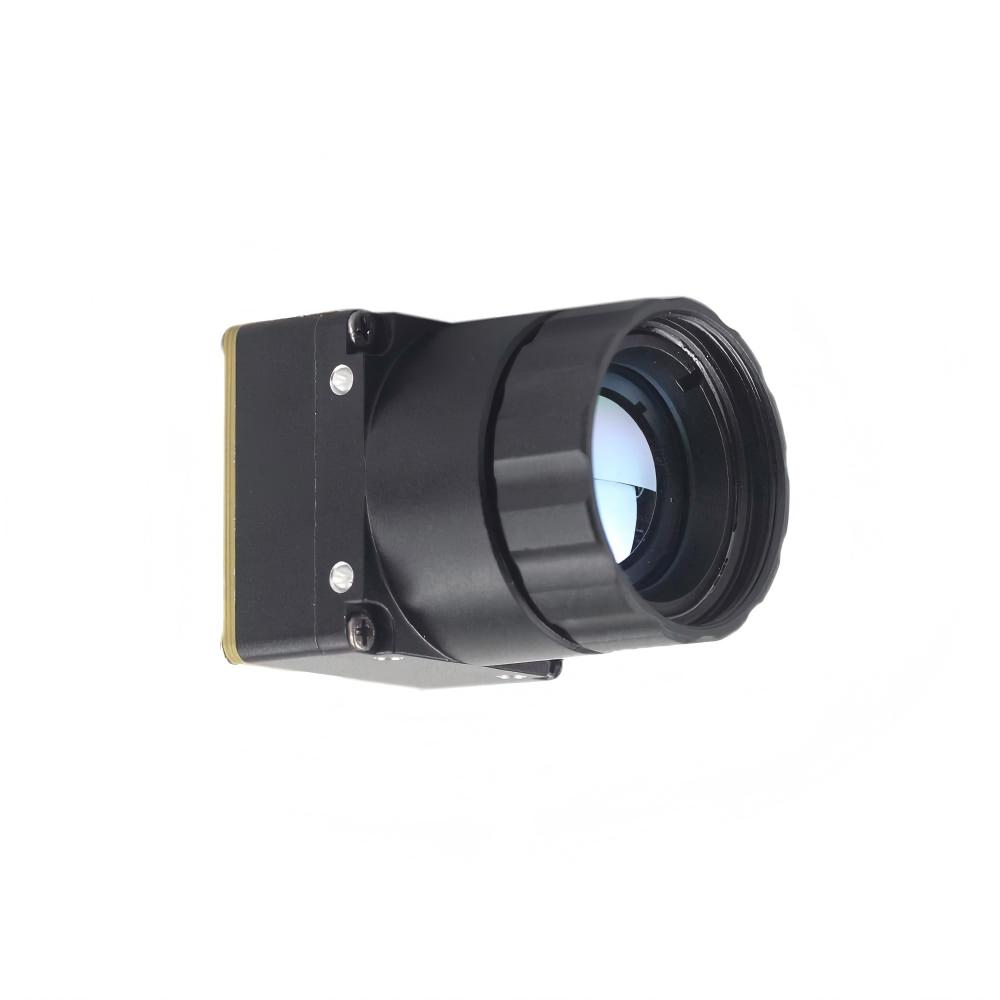
Spotlight: Mini 256 Uncooled LWIR Thermal Camera Module
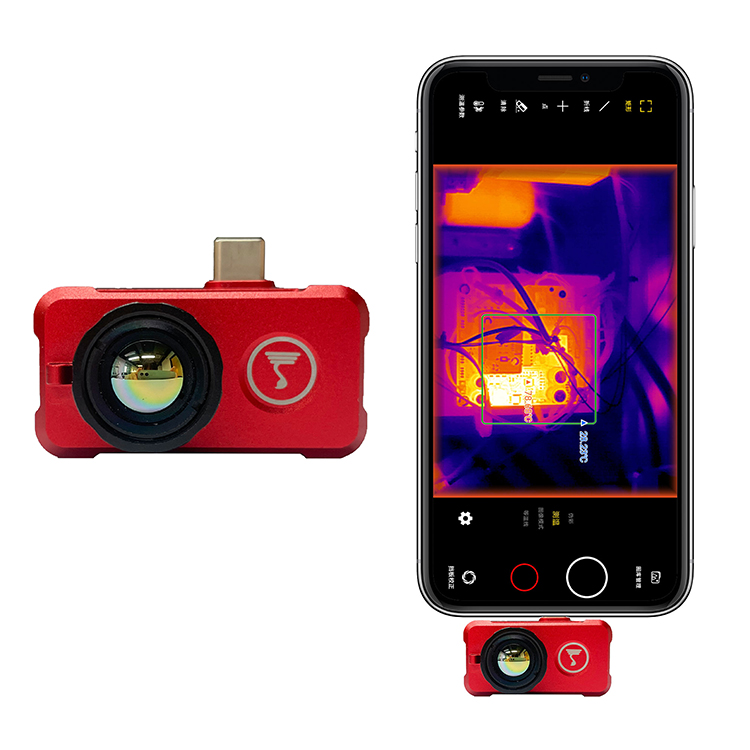
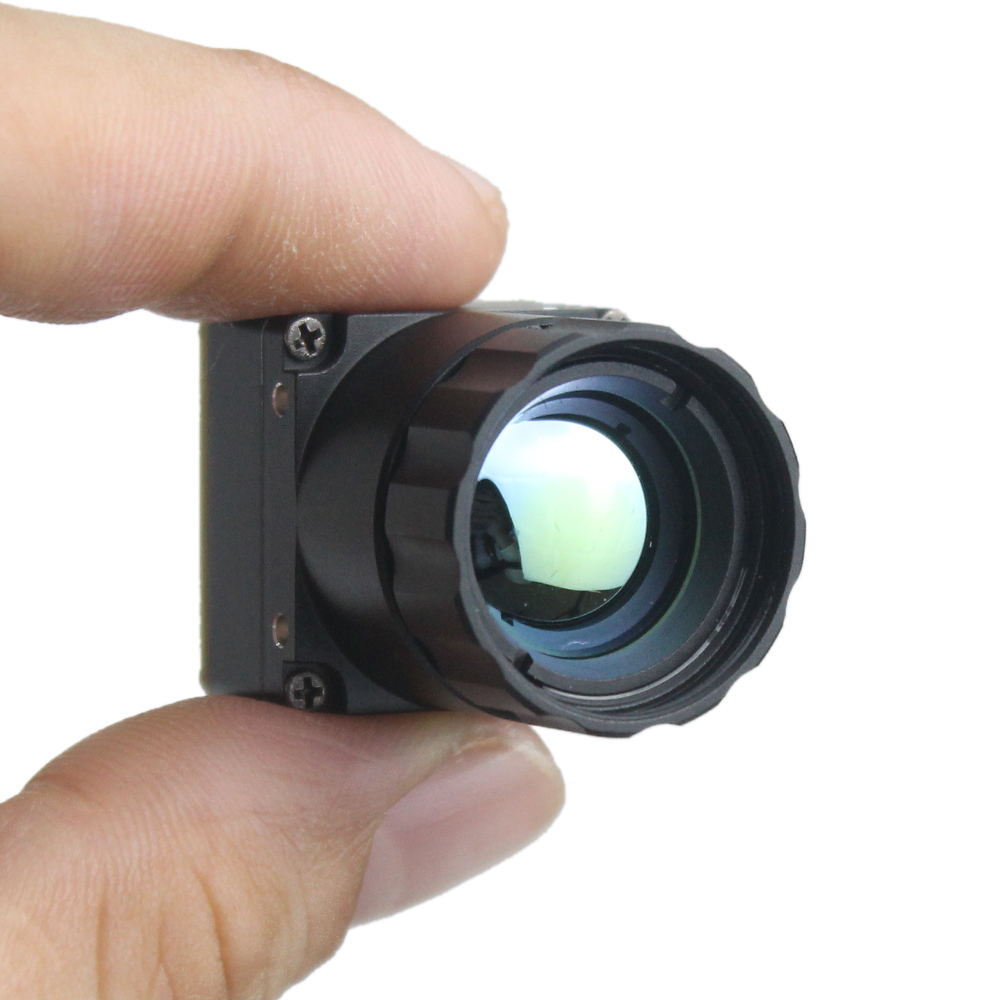
The Mini 256 Uncooled LWIR Thermal Camera Module uses high-performance infrared detectors to deliver clear thermal imaging and consistent radiometric temperature measurements. Engineered for size- and weight-constrained systems, the module captures scene radiation and converts it into a uniform thermal image with embedded temperature data. Its high thermal sensitivity lets it detect subtle sub-surface heat variations, making it well-suited for micro-drones, ground-penetrating sensor pods, mine detection units, and compact industrial fire-warning heads.
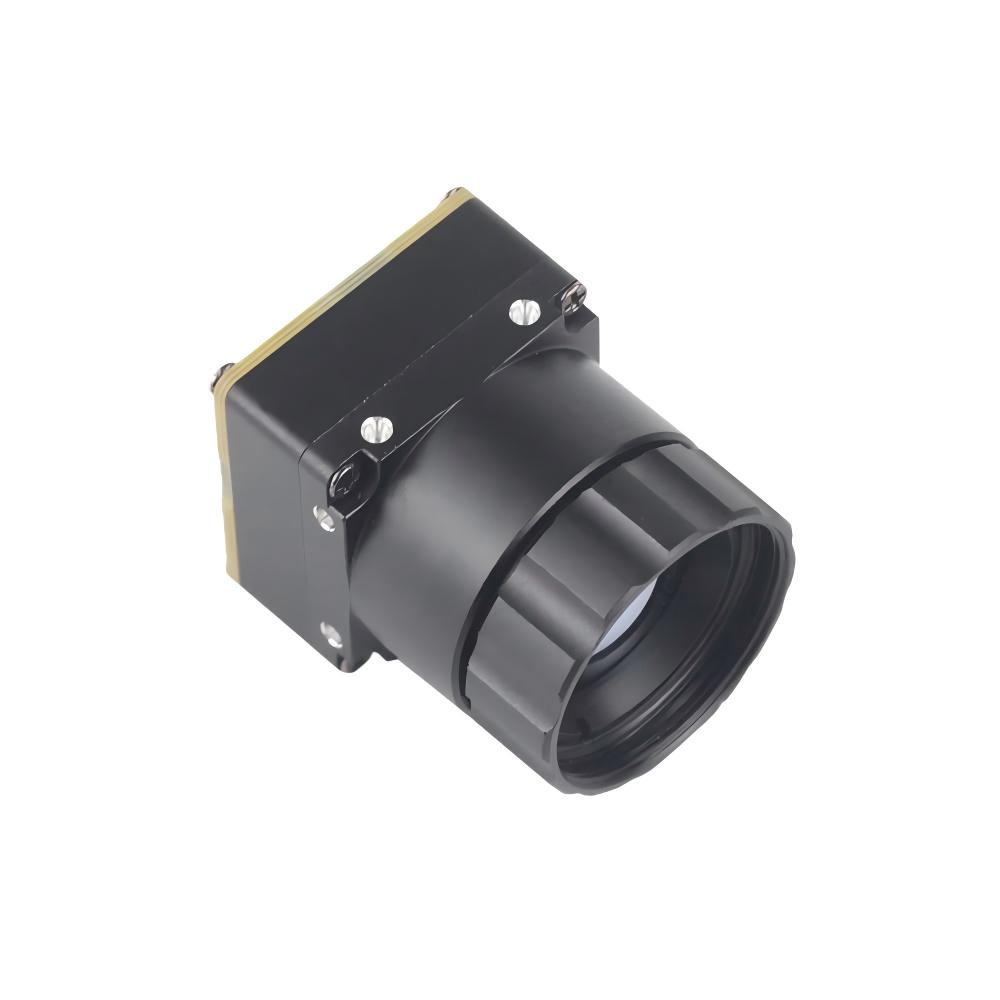
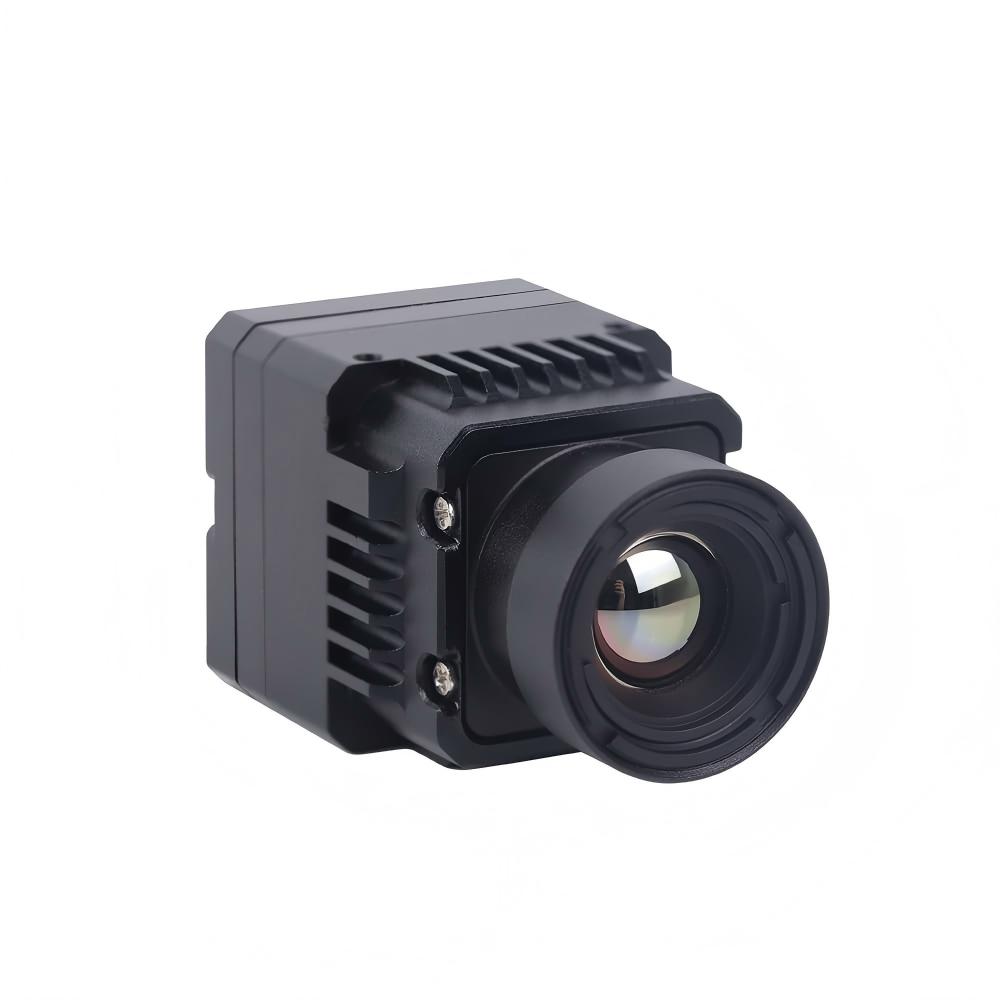
Spotlight: Mini 640 Uncooled LWIR USB Thermal Camera Core Module
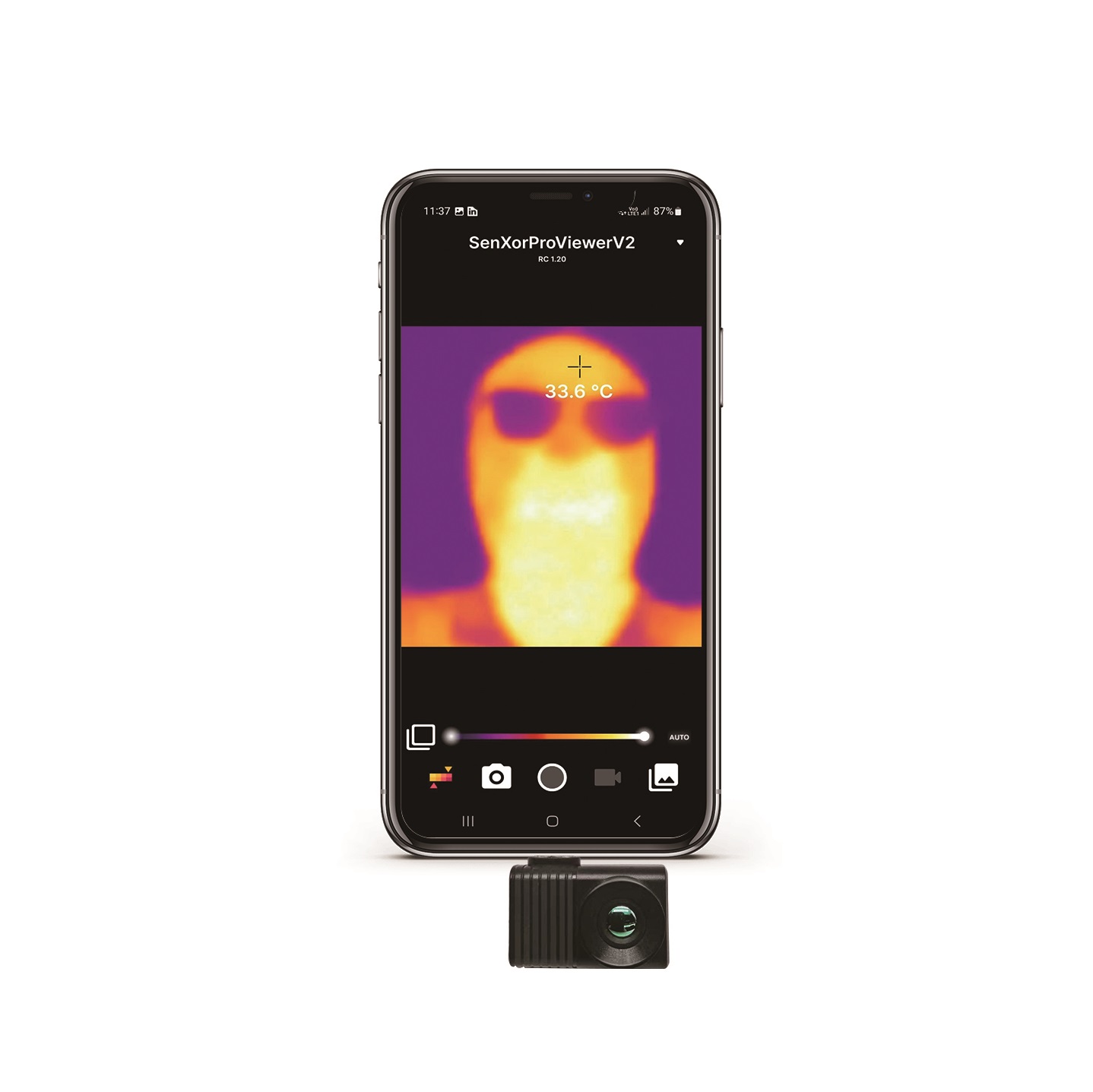
Featuring a compact 21 mm × 21 mm base envelope, the Mini 640 Uncooled LWIR USB Thermal Camera Module delivers 640×512 (or 640×480) resolution for high-definition thermal analytics. It provides sharp image presentation, low unit power consumption, and predictable performance across dynamic industrial environments. Supported by an extensive optical lineup—including 5 mm, 9 mm, 13 mm, 18 mm, 35 mm, 50 mm, 75 mm, 100 mm, and 150 mm lenses—this module can be tailored for wide-area short-range monitoring or long-range standoff aerial platforms. The integrated USB interface simplifies digital data transfer to onboard computers, making it an effective plug-and-play core for commercial drones and perimeter defense systems.
5. Early Warning Algorithms: Mitigating False Alarms in Dynamic Environments
Rate-of-Rise (RoR) Temperature Filtering
A primary limitation of simple threshold-based thermal alarms is their vulnerability to false positives in ambient environments. For example, concrete slabs, dark vehicle hoods, and industrial metal roofs exposed to intense solar irradiation can reach temperatures exceeding 65°C, easily exceeding static trip points. Modern early warning fire detection thermal camera modules address this by processing raw radiometric streams using temporal Rate-of-Rise (RoR) algorithms run on adjacent edge processors.
Instead of relying solely on an absolute threshold (T_scene > T_alarm), the algorithmic engine calculates the first and second mathematical derivatives of temperature over time across distinct tracking matrices:
Rate of Rise = dT / dt > K_threshold AND d²T / dt² > 0
Passive solar loading follows a smooth, low-frequency sinusoidal curve driven by diurnal atmospheric shifts, where dT/dt rarely exceeds 0.5°C to 1.0°C per minute. Conversely, an internal short-circuit inside a lithium-ion cell or an active hydrocarbon smolder exhibits exponential heat release, generating steep thermal spikes where dT/dt can exceed 10°C to 25°C within a two-to-five-second window. By calculating these temporal differentials directly on the 14-bit radiometric stream, edge firmware confirms genuine exothermic reactions while filtering out slow environmental thermal shifts.
Thermal Plume Morphology and Spatial Variance
To distinguish between true combustion and hot, non-hazardous industrial machinery (such as forklift internal combustion exhausts, heavy-duty electric motors, and high-temperature steam lines), the vision pipeline combines radiometric readings with spatial morphology tracking. A typical operational sequence proceeds as follows:
The system passes raw radiometric frames through a spatial differencing filter to extract high-gradient boundaries. When a thermal cluster crosses an initial warning baseline, a morphology algorithm analyzes the shape of the hotspot:
- ⚙️ Convective Plume Dynamics: True open fires and advanced smoldering sites generate convective thermal plumes that produce turbulent, oscillating temperature gradients. By evaluating the centroid stability of the hotspot across a moving 30-frame window, the edge classifier detects the upward drift, fluttering boundaries, and rapid aspect-ratio shifts typical of convective air columns.
- ⚙️ Geometric Edge Regularity: Industrial engine blocks, exhaust manifolds, and factory pipes have rigid, predictable geometric silhouettes with clean straight edges and fixed aspect ratios. The classifier calculates spatial gradient variance around the boundary; human-made machinery creates sharp, localized discontinuities, whereas smoldering thermal anomalies diffuse gradually into surrounding insulation or substrates.
- ⚙️ Specular Reflection Elimination: Direct sunlight reflecting off polished metal or glass surfaces can mimic dangerous hotspot temperatures. However, because solar glint lacks physical thermal mass, the apparent hotspot moves across the sensor array in direct synchronization with drone gimbal motion. By coupling the UAV's inertial measurement unit (IMU) telemetry with optical flow vectors in the thermal image, the processor flags and ignores stationary, perspective-dependent specular reflections.
6. Comprehensive Integration & Deployment FAQ
Why replace traditional optical flame detectors with an uncooled LWIR thermal camera module?
An uncooled Long-Wave Infrared (LWIR) radiometric thermal camera module continuously measures surface temperatures across thousands of independent spatial measurement points. Operating across the 8–14 μm spectral band, it detects micro-Kelvin thermal changes long before ignition occurs. Moreover, LWIR wavelengths penetrate through dense hydrocarbon smoke, airborne dust, and high-particulate industrial environments that easily blind conventional optical detectors. This provides automated safety networks with the early detection window needed to isolate electrical circuits, deploy localized fire suppression agents, or evacuate personnel before open flames emerge.
Can these fire detection modules be integrated into lightweight UAVs or sub-250g drones?
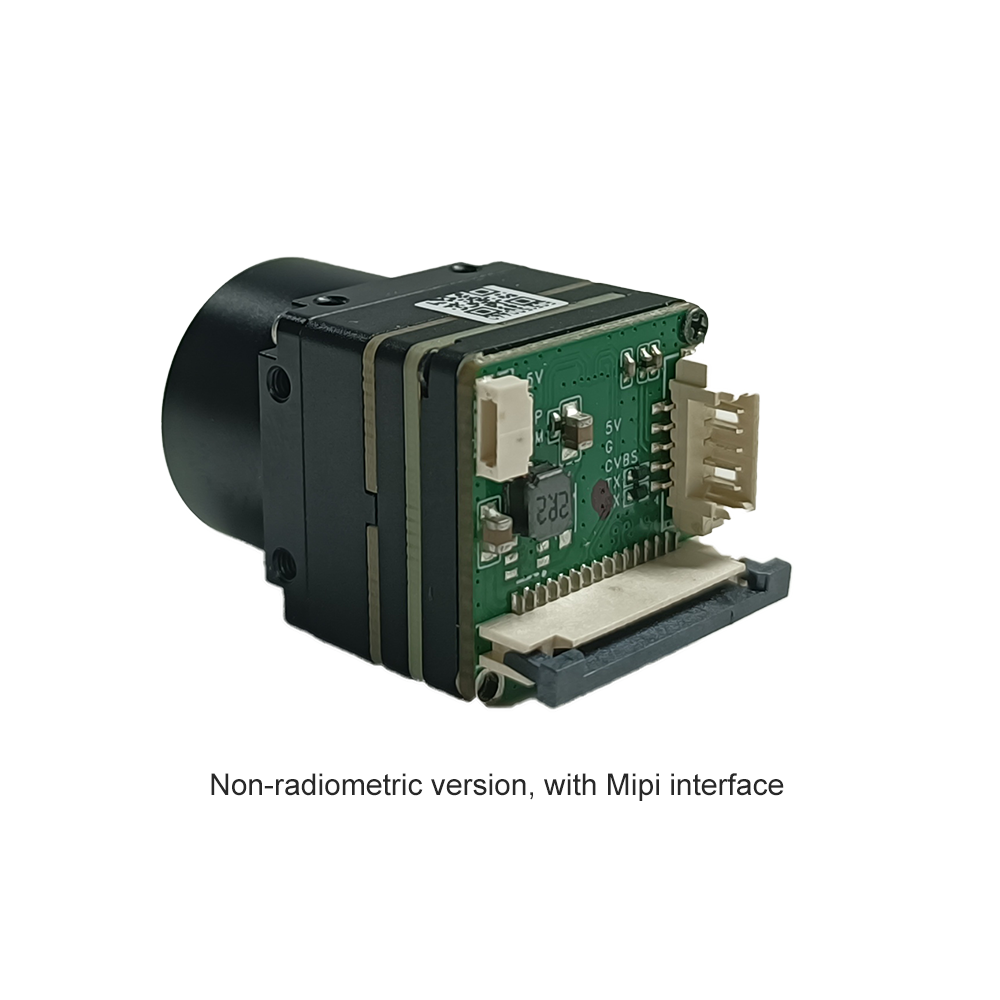
The modules interface smoothly with standard UAV flight computing architectures, transmitting video and radiometric data via USB, MIPI-CSI2, or low-voltage parallel CMOS lines. Concurrently, basic serial telemetry lines pass real-time temperature extremes and coordinate alerts over MAVLink serial connections. This provides commercial inspection drones, indoor warehouse surveillance robots, and tactical firefighting quadcopters with high-resolution radiometric monitoring and onboard edge analytics in an ultra-compact payload footprint.
How do edge AI thermal modules prevent false alarms from hot machinery and sunlight reflections?
The system tracks the Rate-of-Rise (dT/dt) of the target; solar heating and machinery warm-ups follow predictable, slow thermal curves, whereas combustion events exhibit rapid, exponential temperature spikes. Additionally, the edge system analyzes morphological shape profiles. Machine surfaces feature rigid geometrical outlines with clean boundaries and static pixel positions. In contrast, fire hazards create convective, turbulent thermal plumes that flicker, expand, and shift organically across successive frames. By cross-referencing spatial edge gradients, temporal heating rates, and target movement relative to gimbal inertial measurement units (IMUs), edge processors accurately identify genuine fire hazards while ignoring environmental and mechanical heat signatures.
📚 References & Further Reading
- Industry Standard: High-reliability PCB-level ribbon connection systems and micro-harness assemblies engineered by Molex.
- Industry Standard: Micro-pitch board-to-board high-shock connectors for stabilized camera gimbals manufactured by Hirose Electric.
- Related Guide: Przewodnik po kamerach na podczerwień: Obrazowanie termowizyjne AI vs. bliska podczerwień
- Related Guide: Moduł kamery termowizyjnej 256×192 25mm: Najlepsze rozwiązania optomechaniczne
- Related Guide: Интеграция высокоточного теплового модуля: Практическое руководство по электронике