

Custom Thermal Camera Module: OEM/ODM IR Cores for Drones, Scopes & Embedded AI
2026年9月3日
Custom Thermal Imaging Module ODM: High-Performance LWIR Cores & Edge AI Integration
2026年9月4日

Thermal Camera Core OEM: High-Resolution LWIR Modules for Drones & Vision Systems
Here’s the deal: if you’ve ever tried balancing a thermal gimbal on a sub-250g quad while chasing microvolt-level sensor noise, you know that integrating infrared isn't just about grabbing a sensor off the shelf. Modern unmanned aerial vehicles (UAVs), autonomous mobile robots (AMRs), and handheld tactical gear operate under brutal SWaP-C (Size, Weight, Power, and Cost) constraints. Selecting a thermal camera core OEM partner isn't simply a matter of sourcing raw Long-Wave Infrared (LWIR) silicon. It is an architectural commitment that directly dictates your flight endurance, embedded thermal budgets, optical Modulation Transfer Function (MTF), and real-time edge processing latency. When you're shoehorning an uncooled thermal imager into an airborne payload or an intrinsically safe gas-monitoring package, you have to look straight at the raw physics—sensor thermal drift, readout noise, and structural mechanics under harsh operating conditions.
Moving away from boxed consumer thermal gadgets to an industrial-grade OEM core gives you direct control over what matters: uncompressed 14-bit or 16-bit radiometric data arrays, bare-metal hardware interfaces like MIPI-CSI2, USB UVC, and parallel LVDS, and low-level SDKs that don't get in your way. Designing around uncooled Vanadium Oxide (VOx) microbolometer arrays with a 12μm pixel pitch allows systems teams to slash payload mass in half while doubling spatial detection envelopes. This guide cuts through the marketing noise to deliver a practical engineering blueprint for evaluating, designing, and packaging custom OEM thermal cores into mission-critical aerospace, industrial defense, robotic inspection, and automated platforms.
Table of Contents
- 👉 1. LWIR Detector Architecture: VOx Microbolometer Physics & Sensitivity
- 👉 2. Mechanical & Optical SWaP-C Architecture for Drone Integration
- 👉 3. Digital Hardware Interfaces & Low-Latency Video Pipelines
- 👉 4. Edge Processing, Advanced ISP, and Radiometric Calibration
- 👉 5. Industrial OEM Core Selection: Real Product Specifications
- 👉 6. OEM/ODM Customization: Optics, Custom Carrier Boards & Edge AI
- 👉 7. Deep-Dive Industrial FAQ
1. LWIR Detector Architecture: VOx Microbolometer Physics & Sensitivity
Look under the hood of any high-performance thermal engine, and you will find an uncooled Focal Plane Array (FPA). In our world, the engineering debate comes down to two materials: Vanadium Oxide (VOx) versus Amorphous Silicon (a-Si). In high-reliability designs, VOx wins out almost every time. Incoming electromagnetic radiation in the 8μm to 14μm atmospheric transmission window enters through an anti-reflective coated Germanium front element and hits suspended microbolometer pixel membranes. Each membrane functions as an ultra-sensitive thermistor bridge suspended over silicon read-out circuitry via micro-machined legs. As incoming infrared energy heats the membrane, its bulk electrical resistance drops. The underlying Readout Integrated Circuit (ROIC) sweeps these resistance shifts, converting microscopic microvolt signals into a serialized 14-bit or 16-bit raw digital datastream destined for an FPGA or an Image Signal Processor (ISP).
The core physical reason VOx dominates industrial applications is its Temperature Coefficient of Resistance (TCR). VOx consistently delivers a TCR between -2%/K and -3%/K at room temperature, while a-Si lingers with lower sensitivity and significantly higher 1/f flicker noise. In practical terms, higher TCR gives you a massive signal-to-noise head start, directly lowering the sensor's Noise Equivalent Temperature Difference (NETD). NETD is the gold standard for thermal sensitivity: it defines the delta in target temperature required to produce an output signal exactly matching system noise floor.
NETD = (4 · F² · √Δf) / (π · Ad · τo · ε · [dP/dT]λ1-λ2 · D*)
Where F represents the lens f-number (typically f/1.0 to f/1.2 in compact OEM packages), Δf is the electrical noise bandwidth governed by the ROIC integration window, Ad is the detector pixel area, τo is the physical transmittance percentage of the optical assembly, and D* is the normalized detectivity of the VOx substrate. Field-ready industrial cores must deliver an NETD of ≤ 30mK to ≤ 40mK at f/1.0, 300K. If you are inspecting composite airframes for subsurface delamination, running gas detection passes, or troubleshooting high-voltage lines, an inferior 50mK+ sensor produces a muddy image where minor thermal anomalies disappear into background noise. For an in-depth refresher on infrared spectral dynamics, check out Wikipedia Infrared Imaging.
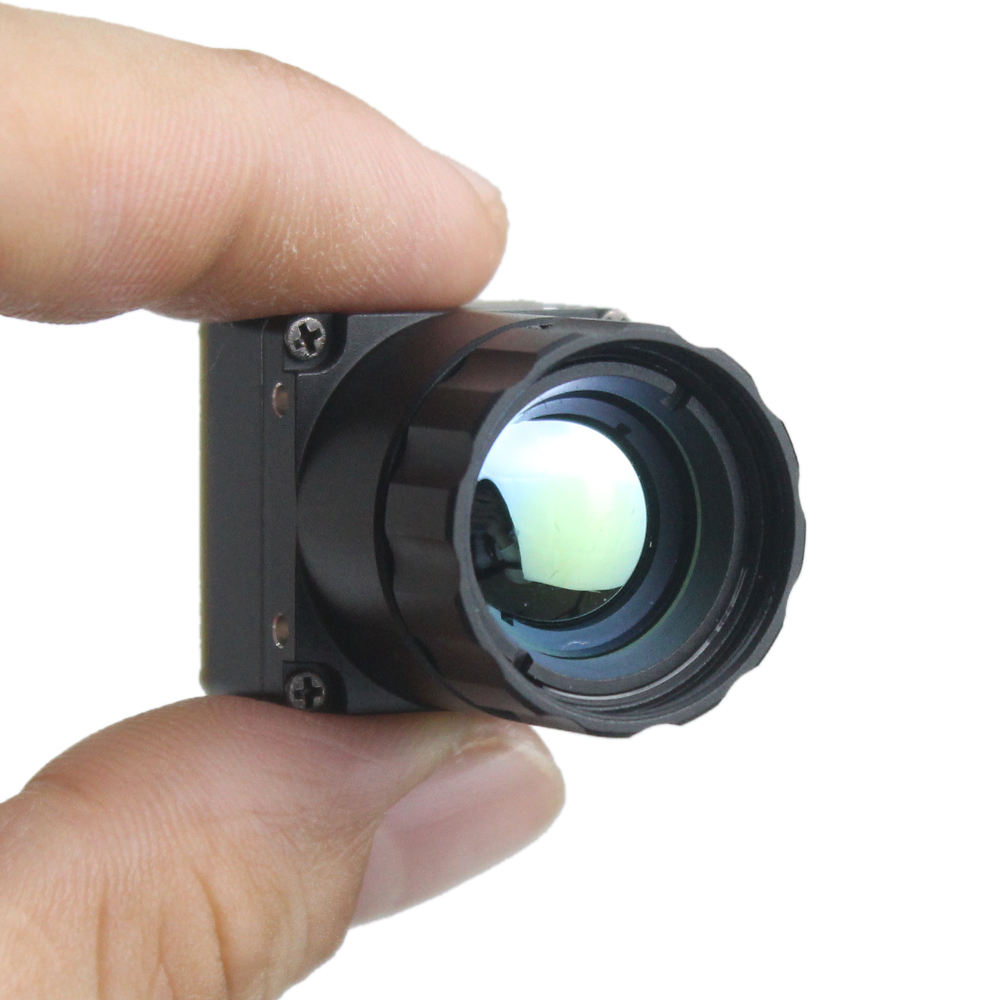
Over the past few years, the optical design landscape underwent a tectonic shift: transitioning from 17μm pitch arrays down to 12μm microbolometers. For engineers designing for flight, this changes the game across the board:
| Architectural Metric | 17μm Pixel Pitch Core | 12μm Pixel Pitch Core | Impact on OEM System Design |
|---|---|---|---|
| FPA Active Area (640×512) | 10.88 mm × 8.70 mm | 7.68 mm × 6.14 mm | Slays sensor die real estate by over 50% |
| Required Lens Focal Length | 25 mm (for nominal 25° HFOV) | 18 mm (for equivalent 25° HFOV) | Shorter focal lengths allow far stubbier optical barrels |
| Optics Mass (Germanium Glass) | ~45 g to 65 g | ~18 g to 28 g | Cuts expensive optical Germanium mass by more than half |
| Diffraction Limit Impact | Airy disc fits cleanly inside pixel | Airy disc hits the pixel edge limit | Demands precision aspheric optics and higher MTF glass |
| Parasitic Capacitance & Power | Higher substrate capacitance | Lower substrate capacitance | Allows faster read cycles and cuts steady-state power draw |
Shrinking to 12μm means that to hit the same Johnson Criteria detection, recognition, and identification (DRI) distances, you can use smaller optical element diameters and much shorter barrels. That weight savings cascades right down through your gimbal structure, mounting plates, and motor sizing. If you want a deep dive on how physical detectors assemble into modular thermal engines, check out our shop analysis on VOx uncooled thermal modules.
2. Mechanical & Optical SWaP-C Architecture for Drone Integration
In aerial robotics, payload weight is an unforgiving tax on battery life. The basic physics of rotorcraft hovering lift tells the story plainly:
ΔTflight ≈ - (Δmpayload / mtotal) · Thover
When you bolt a bulky, poorly balanced thermal payload onto a 3-axis brushless gimbal, you trigger a cascade of mechanical headaches:
- ⚙️ Oversized Gimbal Actuators: You're forced to jump from compact 2204 motors to heavier 2806-class stators just to handle the moment of inertia (I = m · r²) driven by a long, heavy optical snout.
- ⚙️ Thermal & Power Penalty: Your gimbal drivers run hot trying to stabilize an unbalanced mass during aggressive flight maneuvers, wasting battery power and cooking your sealed housing.
- ⚙️ Resonance & Jitter Cascades: Heavy, asymmetric cores drop the mechanical resonant frequency right into the sweet spot of drone motor harmonics (100 Hz to 250 Hz), causing high-frequency video jitter that ruins optical MTF.
Adopting an ultra-compact 21mm × 21mm form-factor eliminates these issues. It positions the center of gravity within millimeters of your gimbal pitch-and-roll axes, keeping angular momentum negligible and holding stabilization draw well under 1.5 Watts in standard flight regimes.
Thermal stability inside the core itself demands equal discipline. Remember: an uncooled microbolometer detects fractional micro-Kelvin changes on its membrane. If heat generated by your FPGA, power stages, or ROIC bleeds unevenly into the sensor substrate, your factory calibration drifts out the window, replaced by nasty fixed-pattern noise. In the shop, we address this with structural heat sinks. Thermally conductive gap pads (K ≥ 3.0 W/m·K) shunt processor heat directly into the outer chassis shell, while isolating the sensor plane via low-expansion structural standoffs. Embedded thermistors on the focal plane track real-time substrate telemetry so the ISP can apply continuous gain and offset adjustments. On forward-facing aircraft mounts, keep the front Germanium lens out of raw propeller wash; localized aerodynamic cooling across the front optic can trigger artificial temperature gradients during aggressive forward acceleration.
3. Digital Hardware Interfaces & Low-Latency Video Pipelines
A capable OEM thermal core must play nice with modern host computing architectures. Depending on whether your system relies on an embedded edge AI processor, a flight controller, or an analog link, interface selection makes or breaks your latency pipeline:
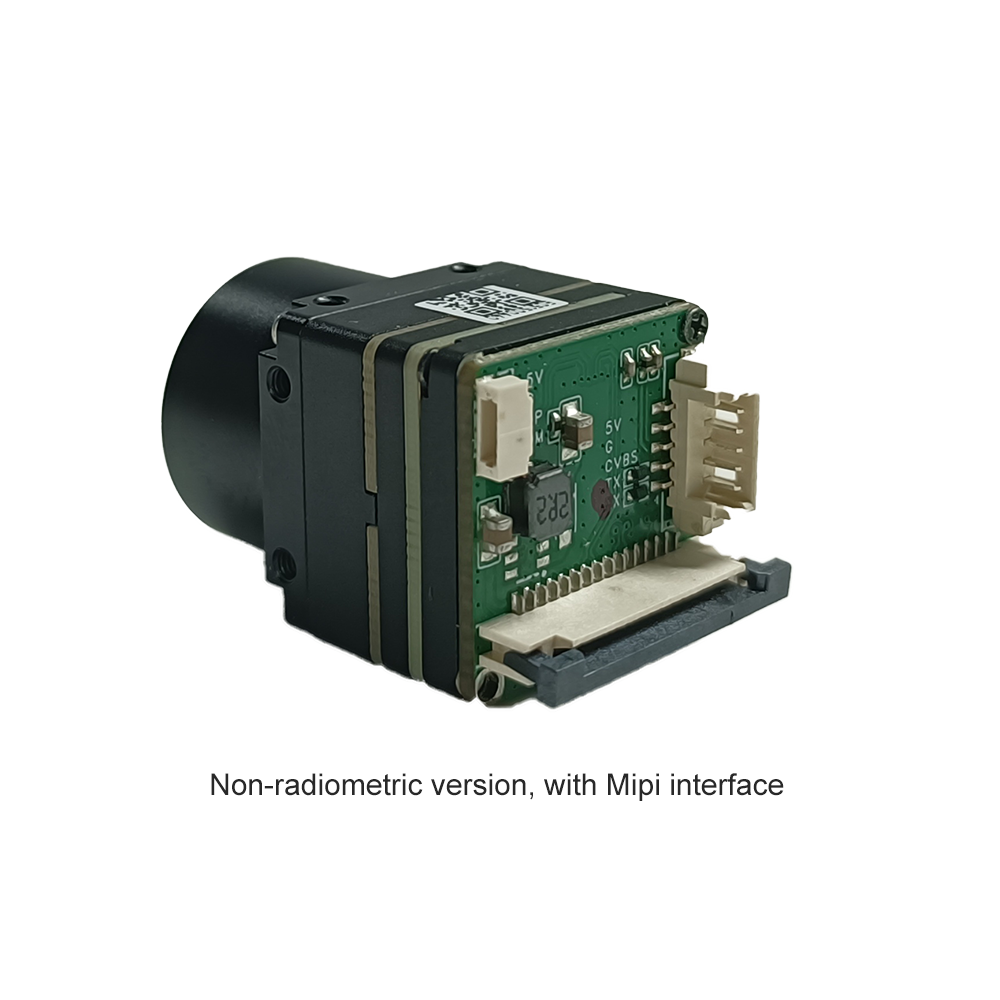
- ✅ MIPI-CSI2 (Mobile Industry Processor Interface): The direct 2-lane or 4-lane D-PHY bus is the gold standard for high-speed embedded vision. MIPI dumps uncompressed 14-bit or 16-bit raw radiometric frames straight into the host processor's hardware Image Signal Processor or Direct Memory Access (DMA) ring buffers. Interface latency is practically non-existent (≤ 5ms), avoiding USB driver stack overhead. Pushing a 640×512 array at 50Hz in 16-bit raw requires roughly 262 Mbps—easily managed by modern MIPI lanes on processors like the NVIDIA Jetson Orin, Rockchip RK3588, or NXP i.MX8 platforms.
- ✅ USB UVC (Universal Video Class): Running over USB 2.0 or 3.0, UVC compliance provides seamless plug-and-play operation across Linux, Windows, Android, and ROS without fussing with kernel-level driver patches. Solid OEM cores provide dual endpoints: one streaming an 8-bit colorized YUV/RGB stream for human monitors, and a concurrent bulk pipe carrying the full 14-bit radiometric telemetry for back-end computing. Video latency usually clocks in between 30ms and 45ms. For portable inspection tools and handheld equipment, read our field teardown on 640×512 USB UVC camera modules.
- ✅ CVBS Analog Video: Pushing a 75Ω composite signal (NTSC/PAL), CVBS remains an essential fallback for long-range 5.8GHz analog links on FPV drones and search-and-rescue airframes. Because analog generation bypasses complex frame buffers, it yields sub-10ms glass-to-glass latency, giving manual pilots the real-time responsiveness they need when navigating tight structures.
4. Edge Processing, Advanced ISP, and Radiometric Calibration
Every raw microbolometer array comes out of semiconductor fabrication with spatial variations. Without aggressive real-time calibration, your thermal display is basically unusable due to heavy fixed-pattern noise (FPN). The digital signal engine corrects these non-linearities on the fly:
Vi,j(T) = Gi,j · Φ(T) + Oi,j
Here, Gi,j represents the individual pixel gain matrix and Oi,j is the offset bias matrix across your array.
In standard cores, Non-Uniformity Correction (NUC) relies on a physical Flat-Field Correction (FFC) shutter. Every couple of minutes, a tiny mechanical solenoid drops a flag in front of the sensor for 100ms to 300ms to refresh the baseline offset values. But if you are flying an autonomous drone at 40 knots, a 300ms video freeze can cause navigation drift or drop a lock on a tracking target. Premium OEM engines solve this with Scene-Based NUC (SBNUC). SBNUC uses optical flow tracking and temporal noise filters to separate static sensor pattern noise from actual environmental movement, giving you seamless, shutterless operation without sudden feed freezes.
Next up is dynamic range compression. Raw thermal streams are 14-bit arrays offering 16,384 distinct digital counts. But the actionable data—like a lost hiker in cold brush or a failing bearing on an industrial pump—might only span 40 to 80 counts within that broad range. If you apply a standard linear stretch across an 8-bit monitor (0–255), you wipe out critical detail. Modern OEM image pipelines fix this using Digital Detail Enhancement (DDE):
- ⚙️ Bilateral Domain Separation: The incoming 14-bit datastream splits into a low-frequency base layer (representing overall environmental temperature swings) and a high-frequency detail layer (capturing edges, fine surface features, and small targets).
- ⚙️ Adaptive Histogram Balancing: The base layer undergoes Contrast Limited Adaptive Histogram Equalization (CLAHE) to stop uniform spaces like cold skies from blowing out contrast, while the high-frequency detail passes through dynamic edge-gain filters.
- ⚙️ Digital Synthesis: The boosted detail layer blends cleanly back over the balanced base layer, yielding a balanced 8-bit image ready for target tracking libraries like OpenCV without edge halos.
For predictive maintenance, fire prevention, or electrical asset mapping, you need real numbers, not just gray gradients. Radiometric cores convert Digital Numbers (DN) directly into real-world surface temperatures (Tobj) using Planck's radiation law, while factoring in atmospheric transmittance (τatm), emissivity (ε), background reflection (Trefl), and internal core thermistor readings:
DN = ετatm · f(Tobj) + (1 - ε)τatm · f(Trefl) + (1 - τatm) · f(Tatm) + f(Tint)
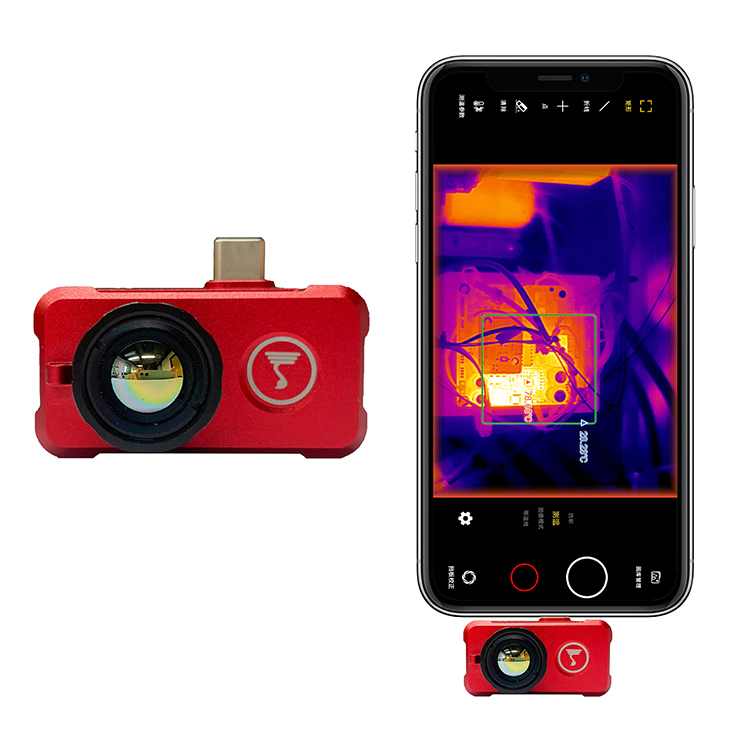
An integrated ISP computes this multi-variable compensation per-pixel at full frame rates, delivering thermal accuracy within ±2°C or ±2%. To see how these calibrated engines deploy onto compact edge platforms, check out our guide on choosing thermal imaging camera modules for mobile and embedded devices.
5. Industrial OEM Core Selection: Real Product Specifications
When selecting hardware for production, paper promises don't fly. Below are two proven production-grade modules engineered specifically for UAV integration, robotic navigation, and precision monitoring:
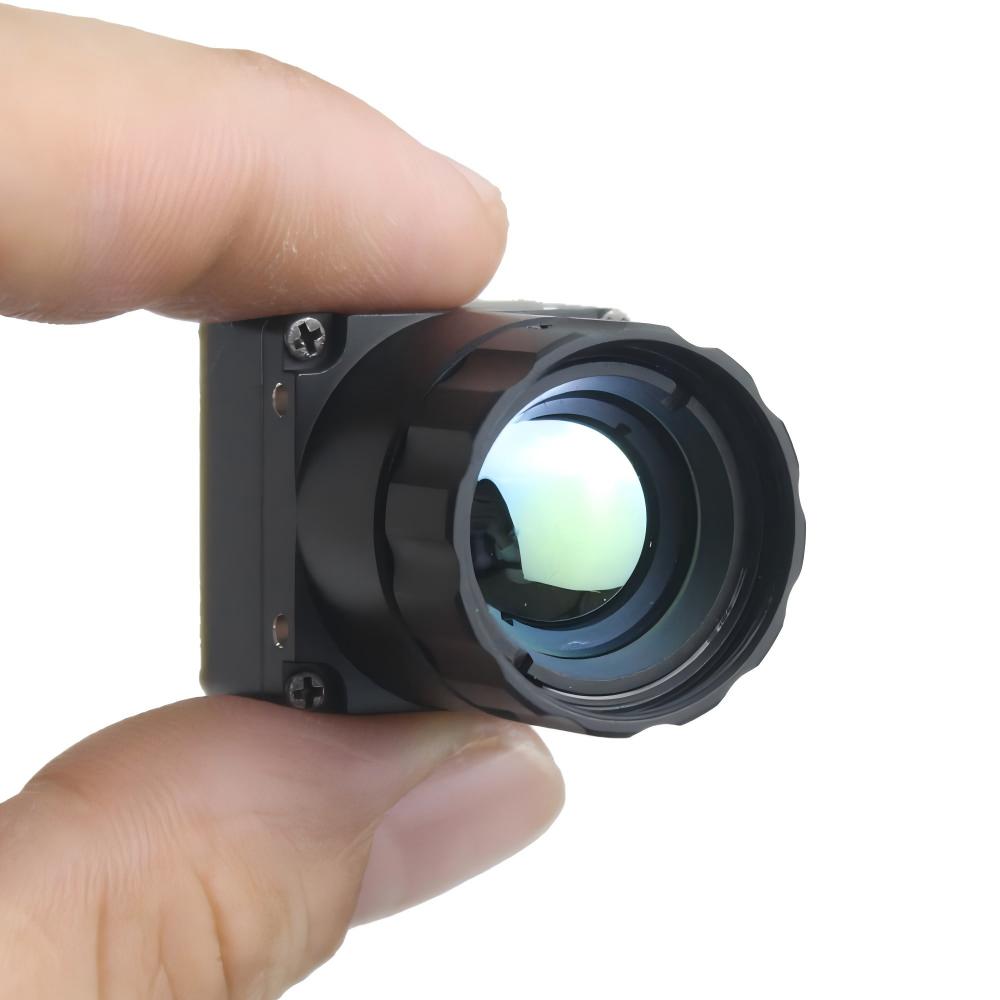
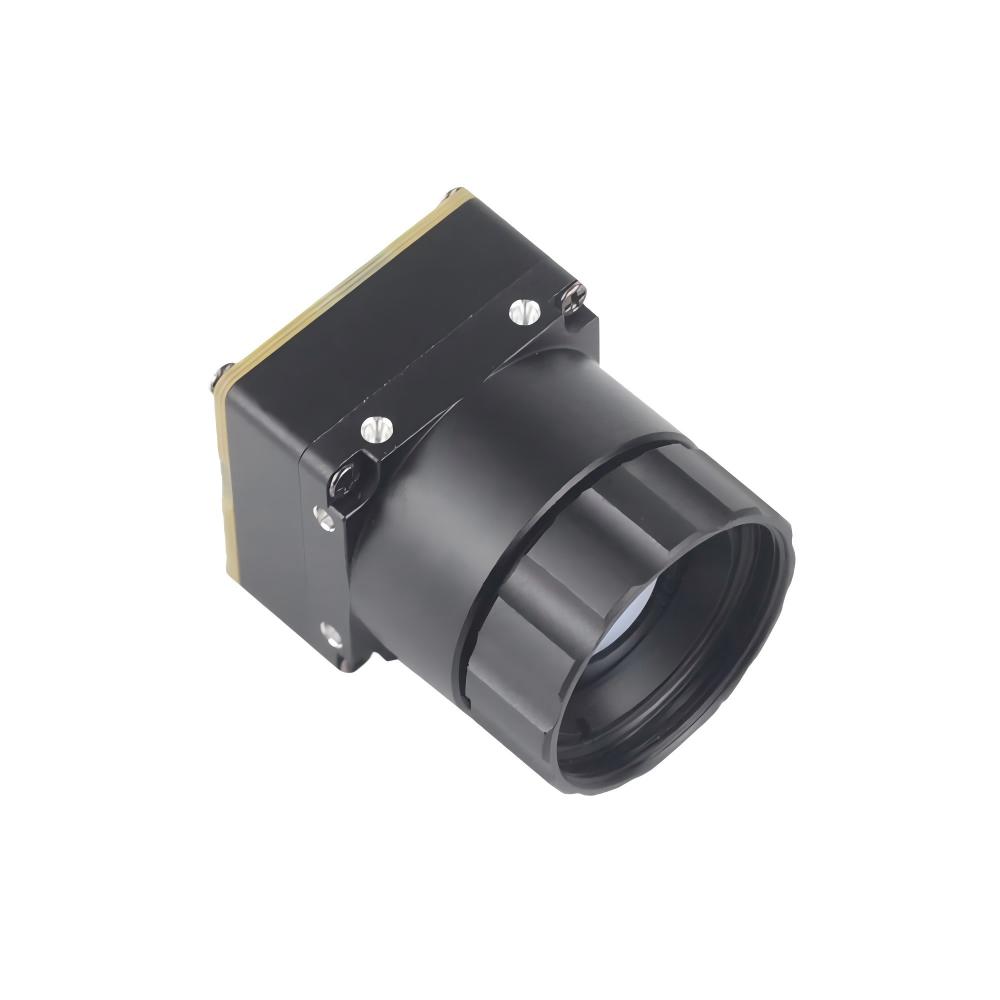
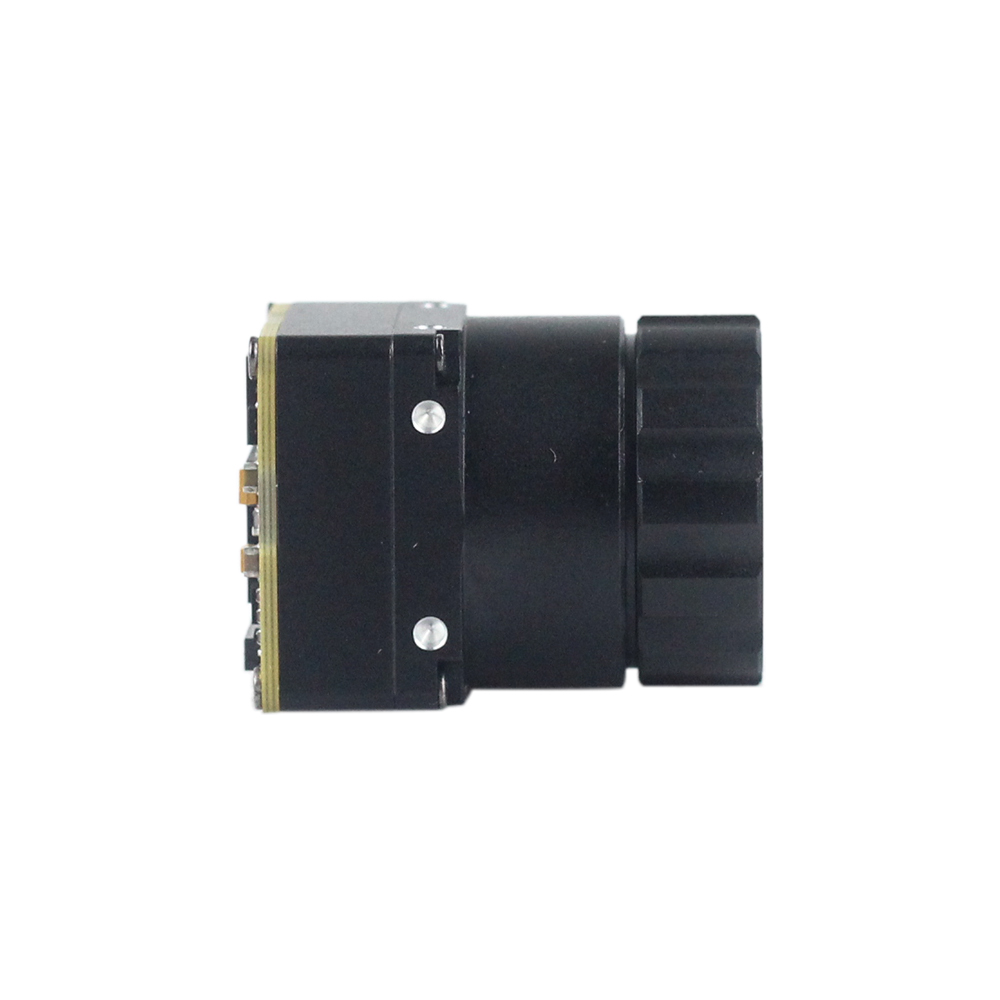
Uncooled LWIR USB Mini 640*512 Thermal Imaging Camera Core Module For Drones Similar To DJI
The Mini 640 is an uncooled LWIR engine purpose-built for lightweight airborne systems. Packaged into a tiny 21mm × 21mm footprint, it brings crisp, low-noise infrared imaging to payloads where every gram counts. It slots directly into mini-gimbal envelopes, matching the mechanical footprint requirements of tactical micro-drones and compact industrial crawlers.
| Module Dimensions | Mini-Size of 21mm × 21mm |
| Detector Resolution | 640 × 512 (640 × 480 optional) |
| Detector Technology | Uncooled Long-Wave Infrared (LWIR) VOx |
| Available Lens Options | 5mm, 9mm, 13mm, 18mm, 35mm, 50mm, 75mm, 100mm, 150mm |
| Imaging Characteristics | Sharp and crisp image presentation, low-noise output |
| Environmental Adaptability | Stable performance under dynamic operating temperatures and strong environmental adaptability |
| Target Application | Drone gimbals similar to DJI, tactical UAVs, aerial inspections, robotics |
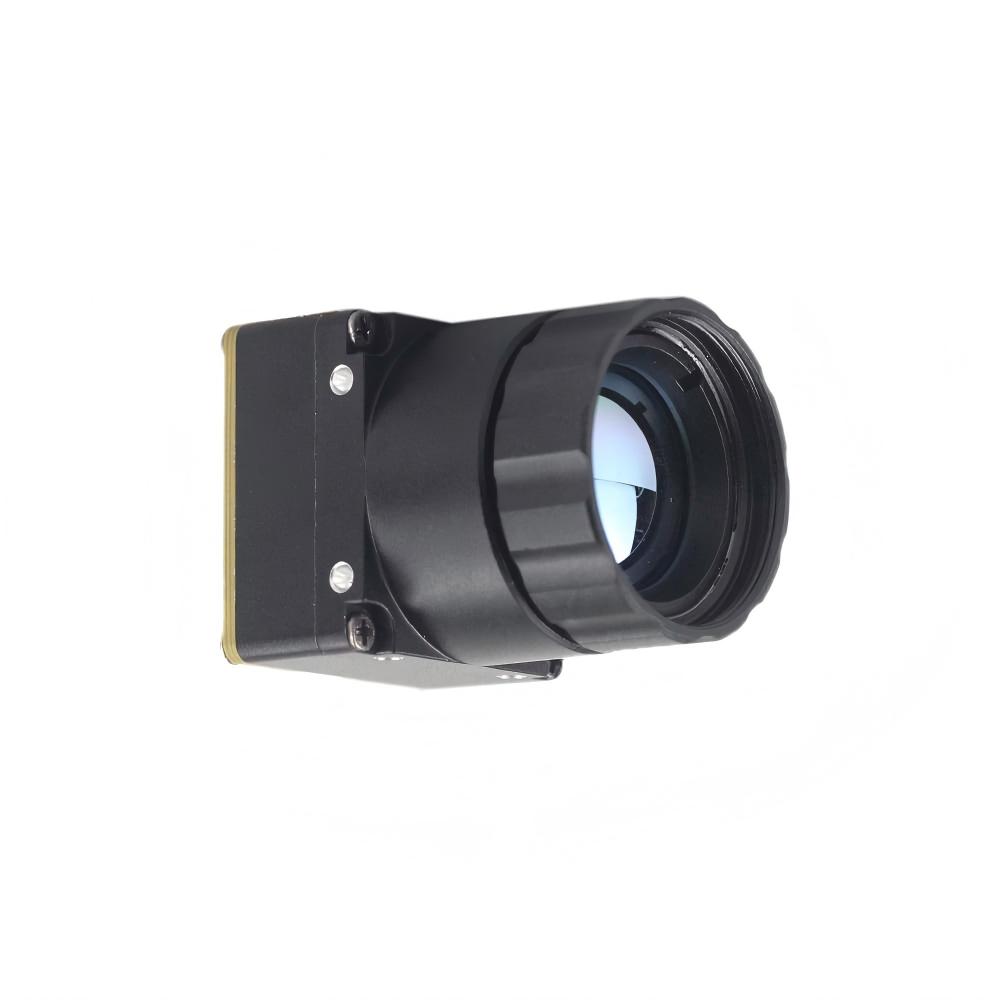
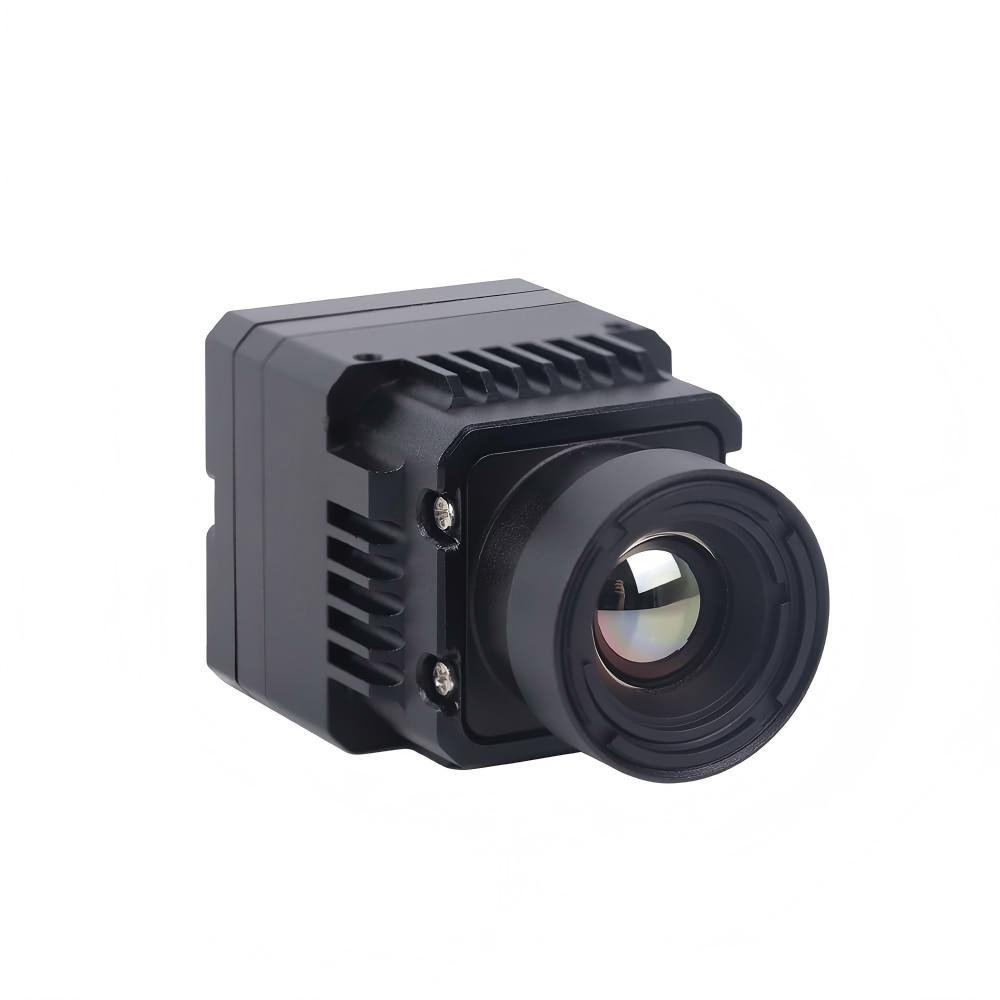
MD Series 384x288 Uncooled Infrared Thermal Camera Module
The MD Series 384×288 is an uncooled thermal core tailored for industrial machinery, security platforms, and compact aerial inspection systems. Utilizing a high-sensitivity 12μm pixel pitch, this module delivers crisp edge definition and high sensitivity across wide ambient temperature swings. Developed by an engineering team with HKUST academic roots and former Huawei HiSilicon semiconductor backgrounds, this engine provides concurrent interface output and full OEM/ODM hardware flexibility.
| Detector Array Resolution | 384 × 288 |
| Pixel Pitch | 12μm |
| Thermal Sensitivity | High-sensitivity uncooled infrared detector |
| Hardware Interfaces | MIPI / USB / CVBS (Triple concurrent interface support) |
| Integration Features | Compact form factor, plug-and-play functionality, rapid integration |
| Engineering Background | HKUST team background, former Huawei HiSilicon engineering leadership |
| Customization Level | Full OEM/ODM customization for specialized mechanics, firmware, and optics |
| Primary Applications | Perimeter security, industrial temperature monitoring, commercial drone payloads |
6. OEM/ODM Customization: Optics, Custom Carrier Boards & Edge AI
Every commercial airframe and field application comes with unique integration hurdles. Off-the-shelf camera enclosures usually force you into ugly compromises: oversized enclosures, added adapter boards, or bulky wiring harnesses. True OEM/ODM engineering addresses the challenge at every layer of the system stack:
1. Optical Engineering & Coatings: Match your lens precisely to your operational DRI envelope. We integrate wide-angle glass (5mm, 9mm, 13mm) for search-and-rescue and close-in indoor obstacle avoidance, mid-range barrels (18mm, 35mm, 50mm) for general inspection, and long-range telephoto configurations (75mm, 100mm, 150mm) for standoff tracking. Depending on environmental exposure, opt for single-crystal Germanium or cost-optimized Chalcogenide glass elements. Front surfaces can be finished with High-Efficiency Anti-Reflective (HEAR) coatings for sealed enclosures, or Diamond-Like Carbon (DLC) hard-carbon finishes to withstand sand, salt spray, and abrasive particulate wash without degrading transmission.
2. Custom Rigid-Flex Carrier Boards: When dealing with cramped dual-sensor EO/IR gimbals or compact handheld devices, rigid square boards simply won't fit. Custom multi-layer rigid-flex carrier assemblies solve this by separating the sensor head from your processing back-end. You can install the sensor inside the optical ball while routing the ISP, power regulators, and PHY components over a slim flex ribbon back into the main fuselage. We can also integrate vibration-rated board-to-board connectors (Hirose or Samtec), automotive-grade FPD-Link III / GMSL2 serializers for long internal cable runs, or active Power-over-Ethernet (PoE) modules for fixed industrial networks.
3. Firmware Optimization & Edge AI Pipelines: Standard consumer video pipelines apply dynamic tone mapping, contrast boosts, and lossy compression designed for human eyes, which ruins performance for computer vision. We provide direct access to uncompressed 14-bit linear data straight off the microbolometer, bypassing typical consumer ISP post-processing. Your engineers can ingest radiometric frames via zero-copy DMA buffers into Linux (V4L2) or ROS/ROS2 nodes. From there, point the uncompressed data straight at TensorRT-optimized models like YOLOv8-Thermal. Feeding raw 14-bit thermal values to neural networks delivers vastly superior detection accuracy for low-contrast, camouflaged, or nocturnal targets compared to models forced to parse compressed 8-bit RGB video.
7. Deep-Dive Industrial FAQ
Can I easily integrate or swap an OEM thermal camera core into custom drones, gimbals, or vision systems?
How do your Chinese OEM thermal cores compare in imaging quality and reliability for industrial use?
What level of customization and SDK support is provided for OEM/ODM projects?
📚 References & Further Reading
- Industry Standard: Wikipedia Infrared Imaging
- Open Source Vision: OpenCV Computer Vision Library
- Related Guide: VOx Uncooled Thermal Imaging Modules Engineering Analysis
- Related Guide: 640×512 USB UVC Thermal Camera Module Integration
- Related Guide: How to Choose the Best Smartphone & Embedded Thermal Imaging Camera Module