
Лучший тепловизионный модуль камеры для интеграции с дронами: Руководство для B2B OEM-производителей
2 июля 2026 г.
Тепловизионный модуль камеры 640 512 35 мм: Полное руководство по B2B-интеграции для дронов и Edge AI
3 июля 2026 г.
Как выбрать лучший инфракрасный тепловизионный модуль камеры для дронов, Raspberry Pi и интеграции с Edge AI
Краткое описание и системные архитектурные принципы
Развитие технологии неохлаждаемых длинноволновых инфракрасных (LWIR) сенсоров перешло от тяжелых, энергоемких узлов военного класса к ультракомпактным модулям высокого разрешения инфракрасные модули тепловизионных камер предназначенные для интеграции в беспилотные летательные аппараты (БПЛА), одноплатные компьютеры (SBC) и периферийные системы искусственного интеллекта. Для инженеров-электронщиков, системных интеграторов и программных архитекторов выбор подходящего тепловизионного ядра — это не просто вопрос разрешения. Он требует тщательного баланса между весовыми ограничениями, электрическими интерфейсами, протоколами передачи данных и тепловой чувствительностью (NETD).
Чтобы помочь сориентироваться в этой сфере, данное руководство по развертыванию анализирует физические, электрические и вычислительные требования к интеграции высокопроизводительных LWIR-модулей. Сравнивая сырые интерфейсы, такие как MIPI CSI-2, с сетевыми инкапсулированными потоками, такими как RJ45 RTSP/IP, это руководство предоставляет точные критерии, необходимые для развертывания неохлаждаемых микроболометрических матриц в сложных мультисенсорных средах.
Благодаря систематической оценке оптических характеристик, аппаратных конвейеров, программных интерфейсов и физических ограничений команды разработчиков систем могут оптимизировать свои проекты тепловизионного зондирования. В этом документе излагаются физические принципы получения сырого длинноволнового инфракрасного сигнала, подробно описываются основополагающие различия между конфигурациями с прямым управлением регистрами и потоковой передачей по сети, а также предоставляется пошаговое руководство по осуществлению аппаратной интеграции.
Содержание
- 👉 Физические и оптические основы LWIR-тепломодулей
- 👉 Электрические интерфейсы и видеопротоколы: MIPI CSI-2 против RTSP/IP
- 👉 Подробный обзор продуктов: технические характеристики и спецификации
- 👉 Пошаговое руководство по интеграции с Raspberry Pi
- 👉 Развертывание промышленного периферийного ИИ и ядро мультисенсорного слияния
- 👉 Углубленные часто задаваемые вопросы (FAQ)
Физические и оптические основы LWIR-тепломодулей
Разработка тепловизионной системы промышленного класса требует глубокого понимания физики, материаловедения и оптической инженерии. Неохлаждаемые модули тепловизионных камер работают в длинноволновом инфракрасном (LWIR) диапазоне, обычно от 8 мкм до 14 мкм. В отличие от камер видимого света, которые полагаются на отраженные фотоны, LWIR-сенсоры обнаруживают собственное тепловое излучение объектов, которое прямо пропорционально их абсолютной термодинамической температуре, как описано законом Планка и законом Стефана-Больцмана.
1 Разрешение, шаг пикселя и формат сенсора
Ядром неохлаждаемой тепловизионной камеры является ее микроболометрическая фокальная матрица (FPA). Современные FPA изготавливаются с использованием тонкопленочных резисторов из оксида ванадия (VOx) или аморфного кремния (α-Si), нанесенных на кремниевую считывающую интегральную схему (ROIC).
Вот как основные архитектурные решения проявляются на плате:
- ⚙️ Разрешение: Стандартные конфигурации тепловидения включают матрицы 256×192, 384×288 и 640×512 пикселей. Разрешение напрямую определяет пространственную детализацию сцены. Матрица 640×512 содержит 327 680 отдельных микроболометрических детекторов, обеспечивая сырой пространственный контекст, подходящий для поисково-спасательных операций с дронов, автоматизированных инспекций солнечных панелей и сложных конвейеров обнаружения объектов периферийного искусственного интеллекта.
- ⚙️ Шаг пикселя: Это обозначает расстояние между центрами соседних детекторных элементов на сенсорной матрице, измеряемое в микрометрах (мкм). Индустрия перешла от матриц с шагом 17 мкм к 12 мкм. Уменьшение шага пикселя позволяет уменьшить размер кремниевого кристалла, снижая общий вес и производственную стоимость сенсора. Однако меньший шаг пикселя также уменьшает активную площадь захвата каждого пикселя, требуя более высоких оптических характеристик (меньшего f-числа) и обновленных алгоритмов усиления сенсора для поддержания высокой тепловой чувствительности.
2 Понимание оптических параметров: фокусное расстояние, поле зрения и f-число
Поскольку стекло поглощает длинноволновую инфракрасную энергию, неохлаждаемые инфракрасные модули используют специализированные линзы из монокристаллического германия (Ge) или халькогенидного стекла, дополненные антибликовыми (AR) покрытиями.
- ⚙️ Фокусное расстояние (f): Измеряемое в контексте дистанций поиска и развертывания, фокусное расстояние управляет как угловым полем зрения (FOV), так и мгновенным полем зрения (IFOV). IFOV представляет собой пространственное разрешение одного пикселя на определенном расстоянии (d):
IFOV = Шаг пикселя / fИспользование 9-мм объектива на сенсоре 12 мкм дает IFOV:
IFOV = (12 * 10^-6 м) / (9 * 10^-3 м) = 1,33 мрадЭто означает, что на расстоянии 100 метров один пиксель разрешает область размером 13,3 см.
- ⚙️ Поле зрения (FOV): Рассчитывается с использованием физического размера сенсора (Ширина × Высота) и фокусного расстояния объектива (f), горизонтальные (H_FOV) и вертикальные (V_FOV) вычисления выражаются как:
θ = 2 * arctan(W / (2 * f))Чип с разрешением 640×512 и шагом 12 мкм имеет активную ширину сенсора 7,68 мм (640 * 12 мкм). В сочетании с 9-мм объективом он достигает широкого горизонтального поля зрения примерно 46,2°, что делает его высокоэффективным для широкомасштабного картографирования с дронов и воздушного мониторинга коммунальных сетей.
- ⚙️ Апертура (f-число): Обозначается как F/1.0, F/1.2 или F/1.3, это отношение фокусного расстояния объектива к диаметру входного зрачка. Поскольку тепловая энергия, излучаемая объектами окружающей среды, низка, длинноволновые инфракрасные оптические системы требуют светосильных апертур (обычно F/1.0 до F/1.2) для максимизации сбора фотонов:
Тепловой поток, достигающий FPA ∝ 1 / (F/#)^2Объектив F/1.0 доставляет вдвое больше тепловой энергии на сенсорную матрицу по сравнению с объективом F/1.4, значительно улучшая качество изображения модуля и общее отношение сигнал/шум.
3 Тепловая чувствительность (NETD) и профили калибровки
Эквивалентная шуму разность температур (NETD) определяет минимальную разность температур, которую может разрешить неохлаждаемый микроболометрический сенсор. Она представляет собой шумовой предел системы, где отношение сигнал/шум равно единице (S/N = 1), измеряется в милликельвинах (мК).
- ⚙️ Промышленный стандарт: NETD <50 мК (при 25°C, F/1.0) является отраслевым стандартом для высокопроизводительных модулей. Высококлассные компоненты, такие как современные неохлаждаемые ядра, достигают чувствительности ≤40 мК. Более низкие значения NETD напрямую приводят к более чистым тепловым профилям, снижению шума типа «соль и перец» и лучшим профилям дальности в условиях низкого контраста (например, в пасмурные или дождливые дни).
- ⚙️ Калибровка (NUC): Длинноволновые инфракрасные микроболометры очень чувствительны к температуре самого корпуса камеры, которая может дрейфовать и вызывать смещение коэффициентов усиления от пикселя к пикселю со временем. Для поддержания корректных, свободных от дрейфа изображений модули реализуют коррекцию неоднородности (NUC). Это выполняется с помощью внутреннего механического затвора (или беззатворных алгоритмов для специализированных приложений) для повторной калибровки FPA по равномерному температурному источнику.
- ⚙️ Форматы данных (8-бит против 14-бит): Для машинного зрения и измерения температуры неохлаждаемое ядро формирует два основных формата данных:
- ✅ 14-битные цифровые необработанные данные (Y14): Обеспечивает прямой цифровой выход, пропорциональный исходной энергетической яркости или калиброванной температуре каждого пикселя. Этот высокоскоростной поток критически важен для радиометрических приложений, позволяя разработчикам вычислять абсолютные температуры в широком динамическом диапазоне (например, от -20 °C до +150 °C или +550 °C).
- ✅ 8-битное сжатое видео (YUV422 / Mono8 / RGB): Формируется путем обработки 14-битного необработанного сигнала автоматическими алгоритмами динамического диапазона, такими как адаптивное выравнивание гистограммы с ограничением контрастности (CLAHE). Этот сжатый выходной сигнал предназначен для прямой визуализации и наблюдения человеком.
Электрические интерфейсы и видеопротоколы: MIPI CSI-2 против RTSP/IP
При интеграции модуля инфракрасной тепловизионной камеры во встраиваемую платформу выбор физического электрического интерфейса представляет собой ключевой архитектурный шаг.
1 MIPI CSI-2 (Mobile Industry Processor Interface) — углубленный анализ
MIPI CSI-2 — это высокоскоростной последовательный дифференциальный интерфейс «точка-точка», разработанный для мобильных и встраиваемых камерных систем.
- ⚙️ Физический уровень: Работает на физическом уровне MIPI D-PHY, используя одну высокоскоростную тактовую линию с синхронизацией от источника и одну или несколько дифференциальных линий данных.
- ⚙️ Signal Routing and Integrity: MIPI differential trace lines must be precisely length-matched (within 0.1 mm mismatch tolerance) and kept away from high-frequency lines (such as switching power regulators or high-speed RAM pathways) to prevent electromagnetic interference. Imbalance in trace impedance (which should be maintained at 100 Ω differential ±10%) can degrade data packets, resulting in frame drops or synchronization issues in the video feed.
- ⚙️ Latency Analysis: MIPI CSI-2 bypasses local compression codecs, streaming raw video formats (such as RAW8, RAW10, RAW12, RAW14, or YUV422) directly into the Host processor's memory via Direct Memory Access (DMA). This provides minimal latency (typically <5 ms propagation delay), which is essential for closed-loop drone flight control adjustments, hazard evasion systems, and highly responsive camera gimbals.
- ⚙️ Driver Configuration: Interfacing a MIPI thermal module using Linux requires loading a matching driver into the kernel via a Device Tree Blob (DTB). This driver registers the thermal module with the Video4Linux2 (V4L2) sub-system, allowing developers to query camera features and change capture profiles via industry-standard ioctl calls.
2.2 RJ45 Ethernet, RTSP, and IP-Based Streaming Pipelines
For systems where the thermal sensor is installed far from the primary processing unit (such as on tall security towers, large industrial robotic arms, or expansive drone platforms), MIPI CSI-2 is limited by its short transmission range (typically <15 cm without dedicated active signal buffers). In these scenarios, RJ45 IP and RTSP configurations are the preferred approach.
- ⚙️ Ethernet Physical Layer: Uses standard 100Base-TX/1000Base-T physical layer transceiver circuits (PHYs) to transmit network data reliably over distances up to 100 meters using standard copper Twisted Pair (Cat5e/Cat6) cables.
- ⚙️ Onsite Compression Encoding: A dedicated onsite ASIC or System-on-Chip (SoC) sitting within the camera module captures raw sensor data, processes it, and compresses it using standard video standards like H.264 or H.265. This encoding step introduces a slight delay (typically 80 ms to 150 ms) depending on frame rate, keyframe intervals (GoP), and the performance of the encoder.
- ⚙️ Network Streaming Protocols:
- ✅ RTSP (Real-Time Streaming Protocol): Manages the video stream connection, supporting system control actions like play, pause, and teardown.
- ✅ RTP (Real-time Transport Protocol): Packages the H.264/H.265 compressed frames into individual UDP network packets, sending them to target clients in real time.
- ✅ RTCP (RTP Control Protocol): Monitors transmission quality, providing feedback on packet loss and jitter to help the video encoder dynamically adjust its bitrate.
- ⚙️ Integration with IoT and Security Software: Because the module acts as a standard network device, it integrates directly with standard Video Management Systems (VMS) like Milestone, Qognify, and open-source software like ZoneMinder, as well as developer libraries like OpenCV (
cv2.VideoCapture("rtsp://...")). This allows the camera to plug directly into pre-existing network infrastructure without needing specialized low-level device drivers.
2.3 Comparative Interface Matrix for Hardware Architects
| Metric / Parameter | Интерфейс MIPI CSI-2 | RJ45 Ethernet / RTSP / IP Interface |
|---|---|---|
| Формат данных | Raw Digital (Y14 14-bit / YUV422 8-bit) | Compressed Stream (H.264 / H.265) |
| Transmission Distance | <15 cm (requires short flat flex cables) | Up to 100 meters (utilizes standard network cabling) |
| System Latency | Direct DMA (<5 ms) | Compression/Decompression Delay (80 ms - 150 ms) |
| Host Resource Usage | High CPU overhead for raw pixel-to-temperature conversion | Low CPU overhead (decoded via GPU or hardware-accelerated blocks) |
| Cabling Weight/Factor | Micro-thin Flex Cable (ideal for lightweight gimbals) | Cat5e/Cat6 Shielded Cable (thicker and heavier) |
| Multi-Camera Routing | Requires dedicated hardware lanes on the CPU | Standard network routing via commercial Ethernet switches |
| Driver Integration | Low-level kernel driver & custom DTB compiled configuration | Universal network compatibility; streams via standard sockets |
For further technical system designs and advanced multi-protocol drone configurations, refer to the Purpleriver Drone Integration Thermal Blog.
Подробный обзор продуктов: технические характеристики и спецификации
Selecting an uncooled LWIR sensor core requires analyzing physical and electronic parameters from the manufacturer's data sheets. Below are two representative modules, showcasing the distinction between a raw, lightweight MIPI CSI-2 interface and an integrated RJ45 network-streaming core.
3.1 Purpleriver Mini2 640x512 9mm LWIR MIPI Module
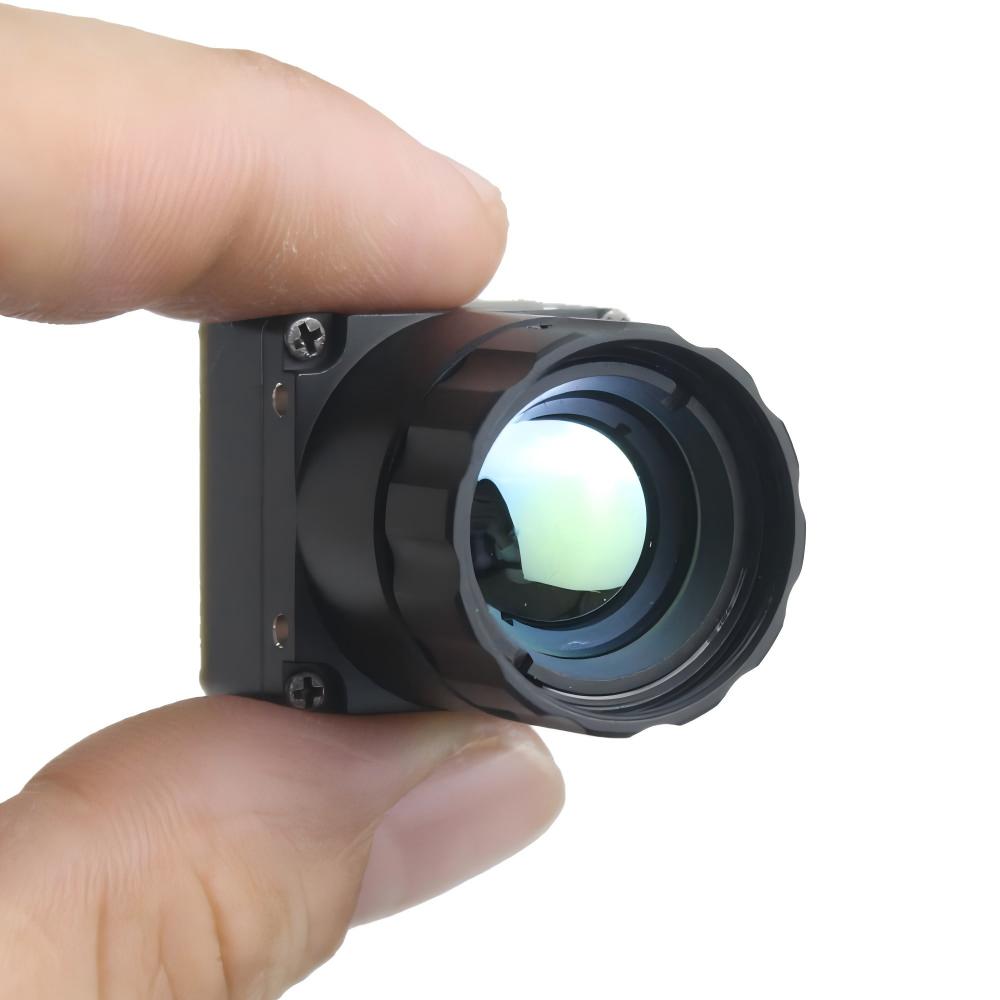
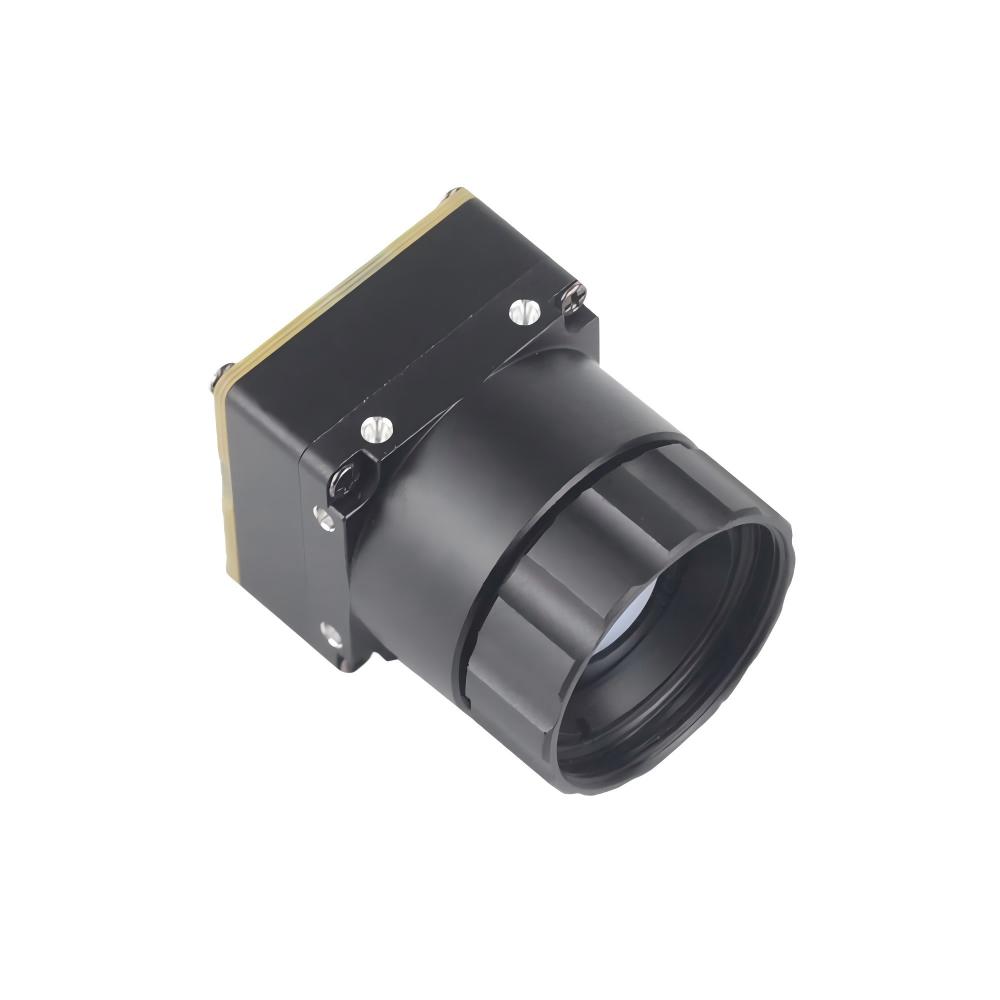
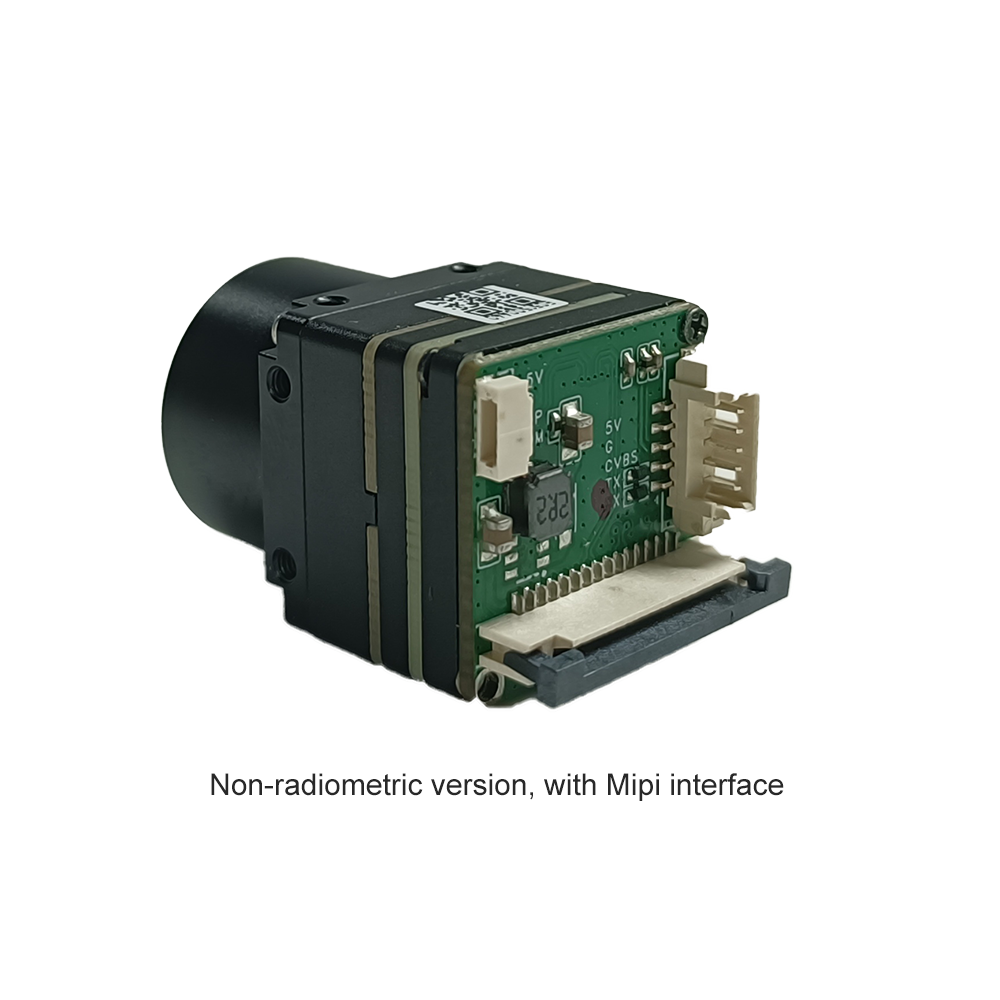
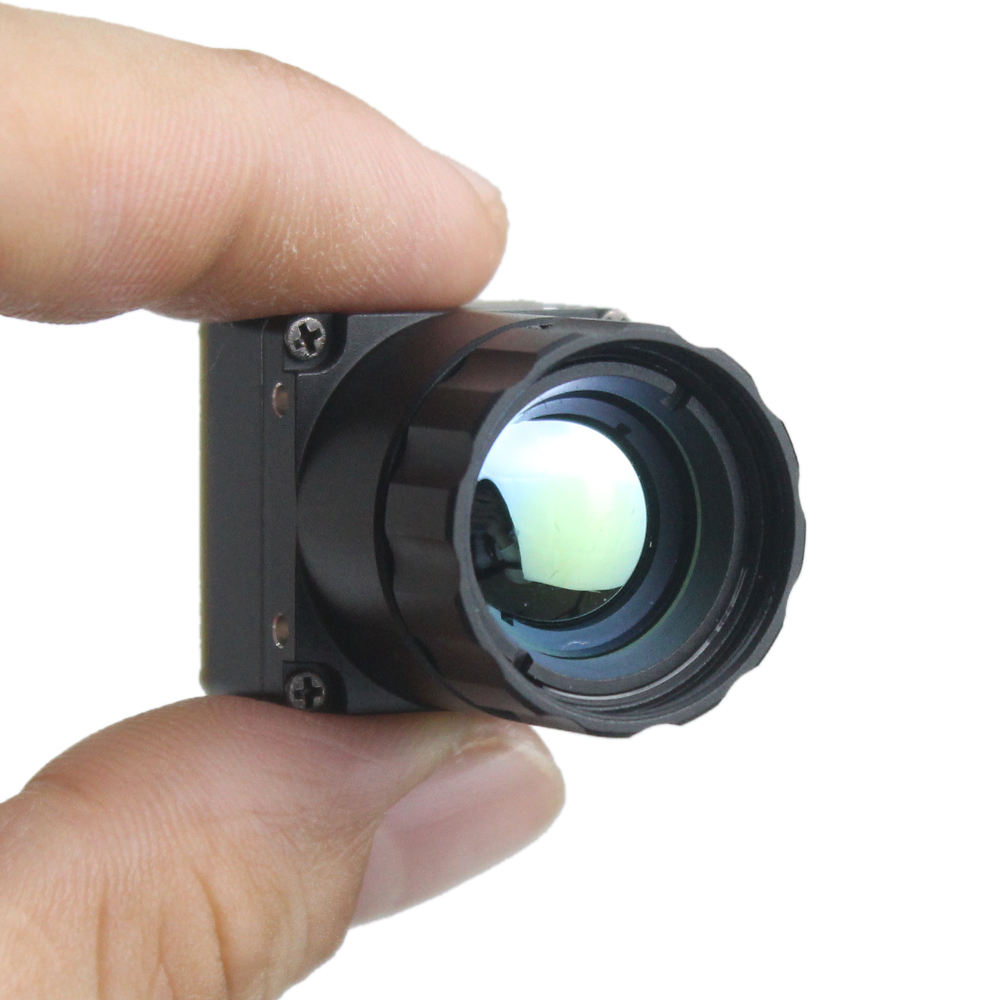
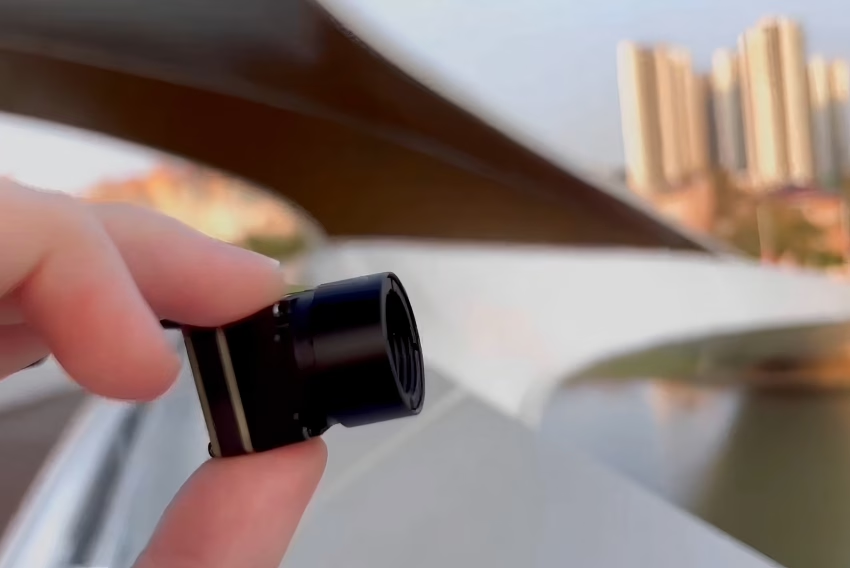
The → Purpleriver Mini2 640x512 9mm Uncooled Infrared MIPI Thermal Imaging Camera Module is engineered specifically for SWaP-constrained (Size, Weight, and Power) applications, such as lightweight multirotor UAV payloads and compact handheld devices.
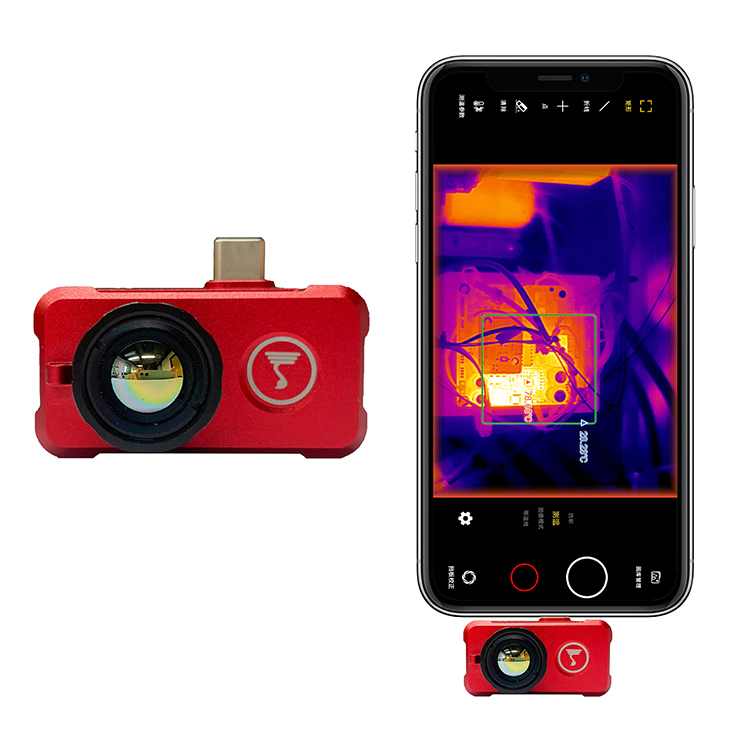
Uncooled Infrared Mini2 640x512 9mm Thermal Imaging Camera Module For Drones features sharp and crisp image presentation, extremely compact size, and low cost. It outputs a 14-bit digital stream directly via a lightweight MIPI interface, removing unnecessary processing overhead. This allows for direct temperature measurements while keeping weight to an absolute minimum.
- ✅ Primary Applications: Lightweight drone payloads, thermal mapping, compact hand-held diagnostic systems, micro-UAV gimbals.
- ✅ Key Advantage: Extremely compact 21 mm × 21 mm physical footprint. Can be integrated directly into brush-less gimbals without affecting stabilization kinetics.
Посмотреть детали продукта и цены ➔
3.2 Purpleriver 640x512 ASIC RJ45 RTSP IP Thermal Module
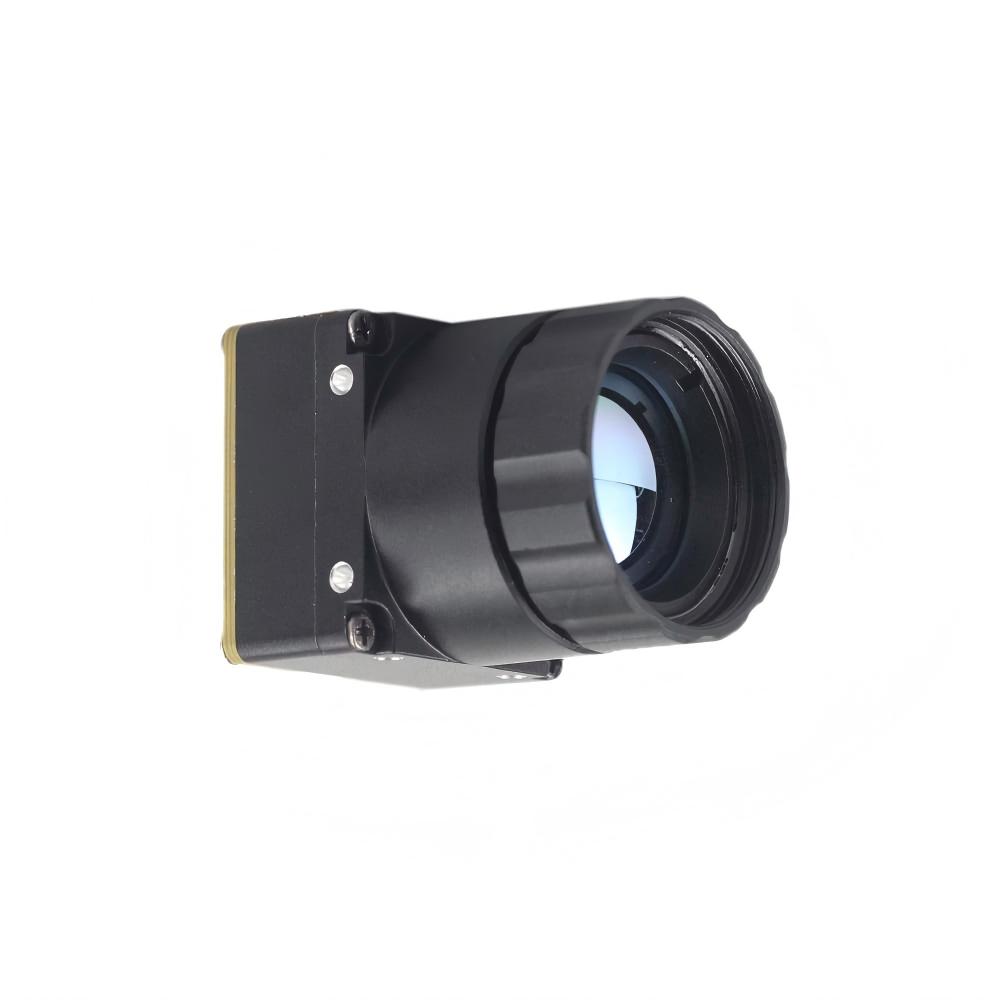
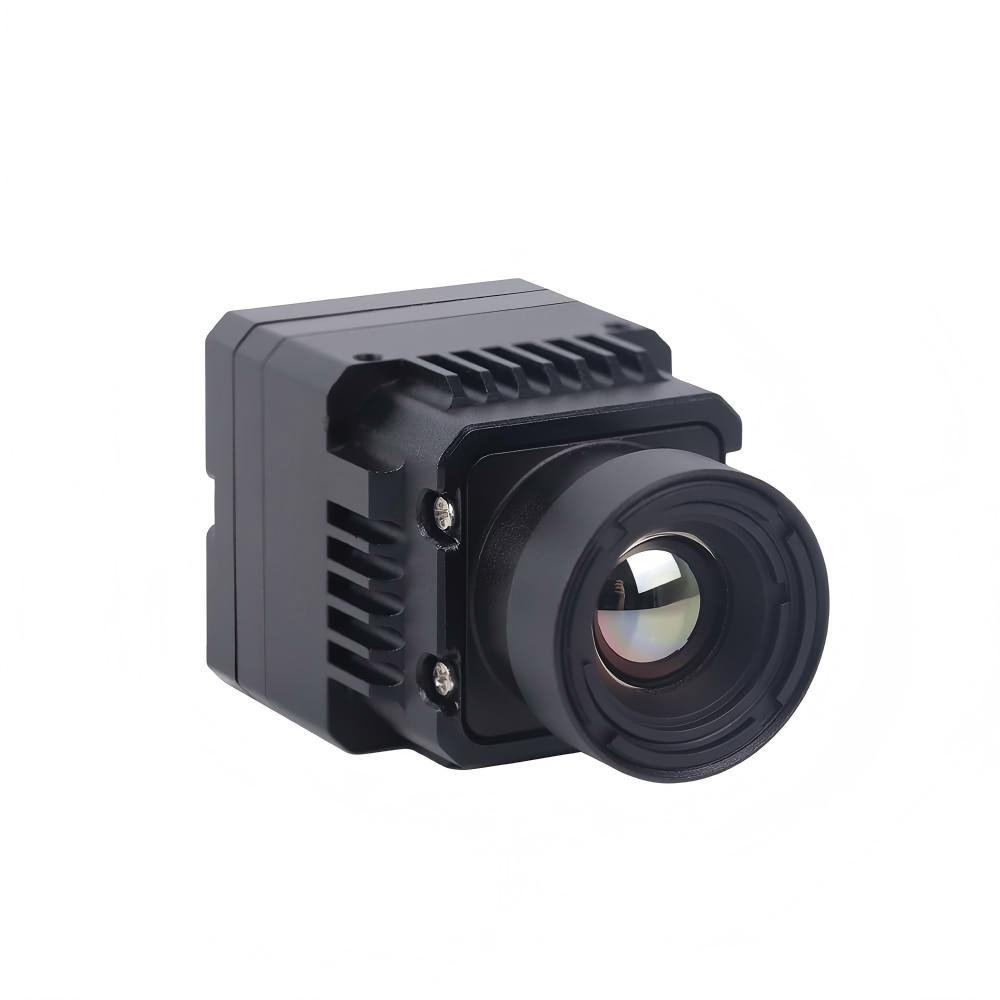
The → Purpleriver Uncooled Infrared RJ45 CVBS RTSP IP 640*512 ASIC Thermal Sensor Camera Module incorporates an onboard Application-Specific Integrated Circuit (ASIC) designed to process, compress, and stream thermal video directly over standard network infrastructure.
Here's the deal: with this module, you aren't wasting days cooking up custom image tuning routines. The processing loop is hardwired right on the module, letting your host processor focus on actual high-level automation logic.
This module provides an integrated solution with RJ45 Ethernet, CVBS analog, and RTSP video. Features an onboard ASIC that handles advanced image processing, non-uniformity correction (NUC), and digital zoom within the camera module itself. This allows for direct network streaming via RTSP with low latency, dropping the processing requirements of the host controller.
- ✅ Primary Applications: Continuous facility monitoring, automated robotics, perimeter security, optical-thermal pan-tilt tracking arrays.
- ✅ Key Advantage: Integrated physical interfaces. The double-stacked processing board acts as a standalone video endpoint server, streamlining software integration over IP.
Посмотреть детали продукта и цены ➔
3.3 Complete Hardware Specification Matrix
| Diagnostic Criteria | Purpleriver Mini2 640x512 9mm MIPI Module | Purpleriver 640x512 ASIC RJ45 RTSP IP Module |
|---|---|---|
| Detector Materials | Uncooled Vanadium Oxide (VOx) Microbolometer | Uncooled Vanadium Oxide (VOx) Microbolometer |
| Array Resolution | 640 × 512 pixels | 640 × 512 pixels |
| Шаг пикселя | 12 мкм | 12 мкм |
| Спектральный диапазон | 8 μm to 14 μm (LWIR) | 8 μm to 14 μm (LWIR) |
| Тепловая чувствительность (NETD) | ≤ 40 mK (at 25°C, F/1.0) | ≤ 40 mK (at 25°C, F/1.0) |
| Частота кадров | 25 Hz / 50 Hz options | 25 Hz |
| Lens Selection | 9mm integrated lens assembly | Germanium selections (9mm, 13mm, 19mm supported) |
| Dynamic Video Interfaces | MIPI CSI-2 (15-pin FPC connector) | RJ45 Ethernet, CVBS (Analog), UART Control |
| Temperature Range Support | -20°C to +150°C (up to +550°C option) | -20°C to +150°C standard range |
| Temperature Accuracy | ± 2°C or ± 2% of the active reading | ± 2°C or ± 2% of the active reading |
| Потребляемая мощность | ≤ 1.2 W during continuous streaming | ≤ 2.0 W (due to network PHY and ASIC operation) |
| Weight (Approximate) | < 15 grams (without external lens assembly) | < 55 grams (features dynamic rugged housing) |
| Физические размеры | 21 mm × 21 mm × 11.5 mm | 38 mm × 38 mm × 28.5 mm |
Explore the full range of uncooled modules and camera accessories directly on the Purpleriver Shop Directory.
Пошаговое руководство по интеграции с Raspberry Pi
Interfacing the Purpleriver Mini2 640 MIPI uncooled LWIR sensor raw parallel bus with a standard single-board computer like the Raspberry Pi (Model 4B, 5, or Compute Module 4) requires careful planning of hardware pinouts, kernel configuration, and driver integration.
4.1 Hardware Interfacing & Pinout Configurations
The Purpleriver Mini2 640 MIPI module provides a 15-pin FPC (Flat Flexible Cable) interface that routes high-speed MIPI differential pairs alongside I2C parameter registers, control signals, and system power inputs.
- ⚙️ MIPI Paths: The differential data and clock lanes must be connected directly to the camera receiver input connector on the Raspberry Pi board. Use a shielded, impedance-controlled FPC ribbon cable designed specifically for high-speed camera signals.
- ⚙️ I2C Management Lines: Connect the camera's
I2C_SDAиI2C_SCLcontrol pins directly to the Raspberry Pi's hardware I2C bus pins (typically GPIO 2 and GPIO 3). These pins allow the Raspberry Pi to communicate with the thermal module's internal register space, enabling control of operations like manual calibration (NUC), gain states, and temperature scale configurations. - ⚙️ Power Requirements: The thermal camera module requires a clean, low-ripple +3.3V power source. Any noise on the power lines can degrade the sensitive measurements of the microbolometer FPA. To protect against noise-induced pixel artifacts, decouple the +3.3V supply line with a low-ESR 10 μF capacitor in parallel with a 0.1 μF ceramic capacitor, placed as close to the camera FPC connector as possible.
4.2 Software Stack Configuration for Raspberry Pi (MIPI Pipeline)
To enable the uncooled thermal core raw pipeline, you must configure the Raspberry Pi's boot options to load the correct helper driver overlay and allocate enough memory for the high-bandwidth video stream.
On the Raspberry Pi OS, edit the system hardware configuration file /boot/firmware/config.txt (or /boot/config.txt on older operating systems):
# Open the hardware configurations file for editing
sudo nano /boot/firmware/config.txt
Add the following configuration lines to activate the camera driver sub-tree and configure the system memory split:
# Enable the hardware I2C bus interface
dtparam=i2c_arm=on

# Set the GPU memory allocation to at least 128MB to handle high-resolution frames
gpu_mem=128

# Load the Purpleriver raw camera driver overlay
# This registers the module under the Video4Linux2 sub-system
dtoverlay=purpleriver-mini2-mipi,csi-lanes=2
Save the file (Ctrl+O, then Enter), exit (Ctrl+X), and reboot the Raspberry Pi to apply the new configurations:
sudo reboot
Verify that the system detects the custom thermal module correctly and lists it under the native Linux media infrastructure:
# Query the V4L2 utility to list active media controllers and formats
v4l2-ctl --list-devices
You should see an output representing the verified hardware registration:
Purpleriver Camera (platform:bcm2835-unicam):
    /dev/video0
4.3 Python Application Script for 14-bit Temperature Extraction
Once the camera is registered on /dev/video0, you can access the pixel data stream. This Python script uses OpenCV and Numpy to read the raw, 14-bit radiometric digital values (Y14) from the camera, extract absolute real-world temperatures, and display the thermal video stream.
import cv2
import numpy as np

def init_thermal_capture(device_index=0):
    cap = cv2.VideoCapture(device_index, cv2.CAP_V4L2)
    if not cap.isOpened():
        raise IOError(f"Unable to access the uncooled video node at /dev/video")

    # Configure raw 14-bit pixel data mode using standard fourcc codec
    cap.set(cv2.CAP_PROP_FOURCC, cv2.VideoWriter_fourcc(*'Y14 '))
    cap.set(cv2.CAP_PROP_FRAME_WIDTH, 640)
    cap.set(cv2.CAP_PROP_FRAME_HEIGHT, 512)
    return cap

def convert_raw_to_celsius(raw_frame):
    raw_radiometric = raw_frame.astype(np.float32)
    # Apply standard linear formula: Temp (C) = (Raw_Value / 64.0) - 273.15
    celsius_grid = (raw_radiometric / 64.0) - 273.15
    return celsius_grid

def main():
    try:
        cap = init_thermal_capture(0)
        print("Raw radiometric data pipeline started. Press 'q' to exit.")

        while True:
            ret, frame = cap.read()
            if not ret:
                print("Failed to capture frame.")
                break

            raw_data = frame.view(dtype=np.uint16).reshape((512, 640))
            temperatures = convert_raw_to_celsius(raw_data)

            center_y, center_x = 256, 320
            center_temp = temperatures[center_y, center_x]

            norm_frame = cv2.normalize(raw_data, None, 0, 255, cv2.NORM_MINMAX, dtype=cv2.CV_8U)
            color_mapped_image = cv2.applyColorMap(norm_frame, cv2.COLORMAP_IRONBOW)

            text_label = f"Center Temp: {center_temp:.2f} C"
            cv2.circle(color_mapped_image, (center_x, center_y), 5, (0, 255, 0), 1)
            cv2.putText(color_mapped_image, text_label, (20, 40),
                        cv2.FONT_HERSHEY_SIMPLEX, 0.8, (255, 255, 255), 2, cv2.LINE_AA)

            cv2.imshow("Radiometric Thermal Stream", color_mapped_image)

            if cv2.waitKey(1) & 0xFF == ord('q'):
                break

    except Exception as err:
        print(f"System execution failure: {err}")
    finally:
        if 'cap' in locals():
            cap.release()
        cv2.destroyAllWindows()

if __name__ == "__main__":
    main()
Развертывание промышленного периферийного ИИ и ядро мультисенсорного слияния
Integrating an uncooled thermal imaging camera module into an industrial machine vision pipeline requires processing capabilities beyond simple color mapping. Real-world edge systems combine uncooled LWIR cores with visible-light (RGB) camera streams and deploy advanced deep learning models directly on edge devices, such as the NVIDIA Jetson platform.
5.1 Integrating LWIR Modules with NVIDIA Jetson Orin Nano / Xavier
The NVIDIA Jetson architecture utilizes hardware-accelerated GStreamer pipelines to process high-resolution video streams in real time with minimal CPU utilization. These pipelines write video frames directly into unified system memory (NVMM) for GPU acceleration.
To stream from the Purpleriver 640x512 RJ45 RTSP camera module with hardware-accelerated decoding, developers can initialize OpenCV using this optimized GStreamer pipeline configuration:
import cv2

def get_jetson_rtsp_pipeline(rtsp_url, target_width=640, target_height=512):
    # Optimized GStreamer pipeline using Jetson's hardware NVDEC decoder
    gst_pipeline = (
        f"rtspsrc location={rtsp_url} latency=50 ! "
        "rtph264depay ! "
        "h264parse ! "
        "nvv4l2decoder ! "
        f"nvvideoconvert ! "
        f"video/x-raw(memory:NVMM), width={target_width}, height={target_height}, format=BGRx ! "
        "nvvidconv ! "
        "video/x-raw, format=BGR ! "
        "appsink drop=true sync=false"
    )
    return cv2.VideoCapture(gst_pipeline, cv2.CAP_GSTREAMER)

# Connect using configured network coordinates
rtsp_feed = "rtsp://192.168.1.150:554/stream1"
cap = get_jetson_rtsp_pipeline(rtsp_feed)
Integrating target-detection models like YOLOv8 on uncooled thermal video feeds allows edge systems to reliably classify targets (such as humans or wildlife) in complex conditions, including total darkness, fog, or dust.
5.2 Multi-Sensor Fusion: RGB and LWIR Alignment
A common challenge in drone inspection and perimeter monitoring installations is matching the wide field of view of a visible light (RGB) camera with the narrower, thermally-sensitive field of view of an uncooled LWIR sensor. Because the sensors are physically separated, their image streams have spatial misalignment (parallax error).
To resolve this parallax error, you can use a planar homography transformation matrix (H) to align and overlay the thermal image onto the visible-light image source. This 3×3 matrix is calculated during system calibration by matching co-planar reference points in both image spaces.
import cv2
import numpy as np

def perform_sensor_homography_warp(lwir_frame, rgb_frame, H_matrix):
    """
    Warps and aligns an uncooled thermal frame (640x512) to match
    the coordinate space of a high-resolution visible-light RGB frame.
    """
    height_rgb, width_rgb, _ = rgb_frame.shape

    # Warp the thermal frame to match the coordinate perspective of the RGB image
    warped_thermal = cv2.warpPerspective(lwir_frame, H_matrix, (width_rgb, height_rgb))

    # Combine the aligned frames using a 60/40 transparency blend
    fused_image = cv2.addWeighted(rgb_frame, 0.6, warped_thermal, 0.4, 0)

    return fused_image

# Example 3x3 homography matrix calculated during calibration
H_test = np.array([
    [1.15, -0.02, 120.0],
    [0.01,  1.12,  85.0],
    [0.00,  0.00,   1.0]
], dtype=np.float32)
By applying this calibration alignment step, autonomous systems can analyze and confirm targets across both thermal and visible spectrums, significantly reducing false-positive rates during target search procedures.
Углубленные часто задаваемые вопросы (FAQ)
How do I choose the best interface (MIPI vs. RJ45/RTSP) for a drone thermal camera module?
Can I interface this infrared thermal imaging camera module with a Raspberry Pi or Arduino?
Why upgrade from standard hobbyist sensors to Purpleriver's industrial modules?
How does atmospheric attenuation affect uncooled thermal cameras in long-range drone applications?
What is the purpose of the Non-Uniformity Correction (NUC) shutter, and can it be bypassed?
📚 Ссылки и дополнительная литература
- Industrial Standard Hardware Resources: KUYANG Hardware Catalog
- Embedded Prototyping Ecosystem Parts: DFRobot Sensors & Accessories
- Drone Integration Guidelines & Algorithms: Purpleriver Drone Integration Thermal Blog