
Лучшие решения ИК-камерных модулей для дронов и встраиваемого ИИ: руководство по OEM-интеграции
31 июля 2026 г.
Лучшие решения ИК-камерных модулей для дронов и встраиваемого ИИ: руководство по OEM-интеграции
Если вы создаете автономные системы, промышленные дроны для инспекций или платформы технического зрения для периферийного ИИ, интеграция высокопроизводительного ИК-камерный модуль (инфракрасного камерного модуля) — это не просто дополнительная функция, а стандартная операционная процедура. Инженеры-аппаратчики, разработчики полезной нагрузки дронов и специалисты по компьютерному зрению постоянно находятся между жесткими ограничениями по размеру, весу, мощности и стоимости (SWaP-C) и высокими требованиями к производительности: тепловая чувствительность менее 50 мК, доставка кадров с нулевой задержкой и поддержка прямых интерфейсов, таких как MIPI CSI-2, USB 3.0 и CVBS. Независимо от того, создаете ли вы оборудование для ночных поисково-спасательных операций, инспекции высоковольтных сетей, точного земледелия или запускаете периферийное отслеживание целей на NVIDIA Jetson или Raspberry Pi, выбор правильного неохлаждаемого длинноволнового инфракрасного (LWIR) ядра определяет надежность вашей системы, тепловую точность и время выхода на рынок.
В Purpleriver наша инженерная команда объединяет академические исследования Гонконгского университета науки и технологий (HKUST) и практический опыт обработки сигналов бывших ведущих разработчиков Huawei HiSilicon. Мы устраняем разрыв между сложной физикой фокальных матриц (FPA) и практической интеграцией оборудования OEM/ODM. Это руководство отсекает маркетинговую шелуху, чтобы дать системным интеграторам реальные инженерные знания о физике сенсоров, многопротокольном аппаратном дизайне, выборе оптики и конвейерах ускорения периферийного ИИ — подкрепленные реальными тестами производительности наших флагманских неохлаждаемых тепловизионных камерных модулей.
Содержание
- 👉 Основы технологии ИК-камерных модулей: ближний ИК против LWIR тепловой физики
- 👉 Аппаратные интерфейсы, протоколы и оптимизация SWaP-C
- 👉 Архитектура интеграции полезной нагрузки дронов и встраиваемых ИИ-систем
- 👉 Сравнение и характеристики коммерческих ИК-камерных модулей Purpleriver
- 👉 Процесс кастомизации OEM/ODM: ускорение от сенсора к алгоритму
- 👉 Углубленные часто задаваемые вопросы (FAQ)
Основы технологии ИК-камерных модулей: ближний ИК против LWIR тепловой физики
Прежде чем добавлять детали в CAD-модель или писать код драйвера, необходимо понять физику волнового диапазона, определяющую ваш ИК-камерный модуль выбор. Широкий термин "инфракрасный" охватывает несколько различных спектральных диапазонов, каждый из которых определяется различными оптическими свойствами, окнами пропускания атмосферы и химическим составом материалов детекторов.
Спектр за пределами видимого света делится на ближний инфракрасный (NIR: 0,75–1,4 мкм), коротковолновый инфракрасный (SWIR: 1,4–3 мкм), средневолновый инфракрасный (MWIR: 3–5 мкм) и длинноволновый инфракрасный (LWIR: 8–14 мкм). NIR и SWIR полагаются на отраженную световую энергию (как и камеры видимого света), тогда как LWIR улавливает излучаемую лучистую энергию непосредственно от тепловых тел.
Ближний инфракрасный (NIR) против длинноволнового инфракрасного (LWIR)
Стандартные кремниевые КМОП-сенсоры изображения со снятым ИК-фильтром работают в ближнем инфракрасном диапазоне (NIR, 0,7–1,1 мкм). Суть в следующем: эти системы полностью зависят от отраженного окружающего света или активных осветителей, таких как светодиодные матрицы 850 нм или 940 нм. Хотя это подходит для недорогих камер безопасности, снимающих четкие монохромные детали, модули NIR не могут считывать разницу температур окружающей среды, не могут проникать сквозь густой дым или туман и становятся полностью черными в условиях нулевой освещенности без активных ИК-ламп.
Модули длинноволнового инфракрасного диапазона (LWIR, 8–14 мкм) используют совершенно иной подход. В них применяется технология неохлаждаемых микроболометров, обычно на основе тонких пленок оксида ванадия (VOx) или аморфного кремния (α-Si). Датчики LWIR улавливают пассивное тепловое излучение абсолютно черного тела, испускаемое каждым физическим объектом с температурой выше абсолютного нуля, в соответствии с законом Планка и законом Стефана — Больцмана. Чтобы глубже разобраться в математике пассивного теплового излучения, обратитесь к справочному материалу по тепловидению в Википедии. Поскольку LWIR ИК-камерный модуль измеряет собственное тепловое излучение, он надежно работает в полной темноте, плотном дыму, атмосферной дымке и при резких солнечных бликах без необходимости в энергоемких осветителях.
| Физика и рабочие параметры | Модули ближнего инфракрасного диапазона (NIR) | Неохлаждаемый тепловизионный модуль LWIR |
|---|---|---|
| Спектральный диапазон | 0,7–1,1 мкм | 8–14 мкм (окно пропускания LWIR) |
| Физика детектора и материал | Матрица кремниевых фотодиодов (CMOS, электронная запрещенная зона) | Неохлаждаемый микроболометр на основе оксида ванадия (VOx) |
| Основной источник энергии | Отраженное окружающее излучение / активная ИК-светодиодная подсветка | Испускаемое тепловое излучение абсолютно черного тела (закон Планка) |
| Работа в ночное время | Требуется активный ИК-источник (850/940 нм) | 100% пассивный режим, работа без подсветки |
| Проникновение сквозь дым / туман / пыль | Минимальное (рассеивание на взвешенных частицах) | Высокая проникающая способность (длина волны превышает размер частиц) |
| Возможность измерения температуры | Отсутствует (только визуальный монохромный контраст) | Полное радиометрическое попиксельное картирование температуры |
Архитектуры датчиков: шаг пикселя микроболометра (12 мкм против 17 мкм)
В основе современного тепловидения LWIR лежит микроболометрическая матрица в фокальной плоскости (FPA). Микроболометр поглощает тепловое излучение, нагревая активную пленку VOx и изменяя ее электрическое сопротивление. Интегрированная схема считывания (ROIC) преобразует это изменение сопротивления непосредственно в цифровые отсчеты. Уменьшение шага детектора с устаревших 17 мкм до современных 12 мкм кардинально изменило подход к проектированию встраиваемых модулей:
- ✅ Снижение массы, габаритов и энергопотребления (SWaP): Переход на шаг пикселя 12 мкм уменьшает физический размер матрицы детекторов почти на 50% по сравнению с матрицей 17 мкм того же разрешения. Это уменьшение позволяет инженерам-оптикам использовать значительно более компактные и легкие германиевые линзы, снижая общую массу полезной нагрузки.
- ✅ Более высокое пространственное разрешение и дальность захвата цели: При фиксированном фокусном расстоянии объектива меньший шаг пикселя сужает мгновенное поле зрения (IFOV). Это означает больше пикселей на цель на больших расстояниях, увеличивая показатели дальности обнаружения, распознавания и идентификации (DRI).
- ✅ Эквивалентная шуму разность температур (NETD): Тепловая чувствительность измеряется в милликельвинах (мК). Высококачественные микроболометрические модули на основе VOx в сочетании с малошумящими схемами ROIC достигают значений NETD ниже 40 мК (и менее 35 мК при хорошей цифровой пространственной фильтрации). Это позволяет датчику обнаруживать перепады температуры с точностью до 0,035 °C, обеспечивая четкий контраст изображения даже в пасмурные дни с низкой контрастностью.
Аппаратные интерфейсы, протоколы и оптимизация SWaP-C
Plugging an ИК-камерный модуль into a compact embedded system, mobile robot, or flight controller requires picking an interface bus that matches your processor's capabilities, throughput needs, and physical vibration constraints.
Architectural Flow: Core Sensor to Host Processing System
1. Sensor Core: VOx Microbolometer Focal Plane Array (384x288 / 640x512, 12µm pitch)
2. Onboard Hardware ISP: Non-Uniformity Correction (NUC), Digital Detail Enhancement (DDE), 3D Noise Reduction
3. Interface Bus Options:
⚙️ MIPI CSI-2 Lanes: Ultra-low latency raw radiometric feed directly to host SoC ISP
⚙️ USB 2.0 / 3.0 (UVC): Plug-and-play video & Y16 raw data over standard OS drivers
⚙️ CVBS Analog Output: Zero-buffer real-time composite feed for long-range analog FPV transmitters
4. Target Host Processing Hardware: NVIDIA Jetson, Rockchip RK3588, Raspberry Pi, Custom ARM64 Carrier Boards
Physical Interfaces: MIPI CSI-2 vs. USB vs. CVBS Analog
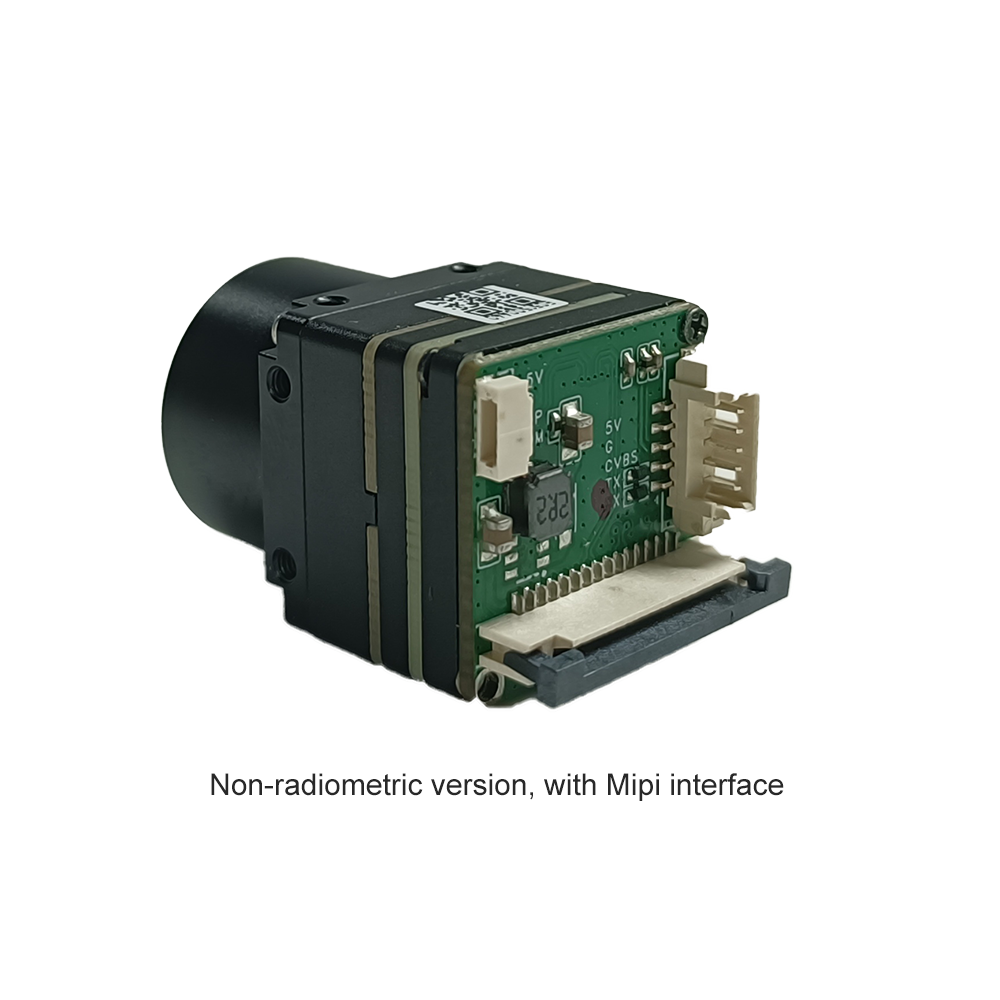
- ⚙️ MIPI CSI-2 (Camera Serial Interface): The gold standard for embedded AI edge nodes (NVIDIA Jetson Orin, Rockchip RK3588, Raspberry Pi CM4). MIPI feeds raw, uncompressed high-frame-rate pixel data right into the host SoC's hardware image signal processor. Bypassing USB stack latency gets frame delay down under 10ms. High-density board-to-board connectors from manufacturers like Amphenol give you solid electrical contacts that won't shake loose under heavy drone motor vibration.
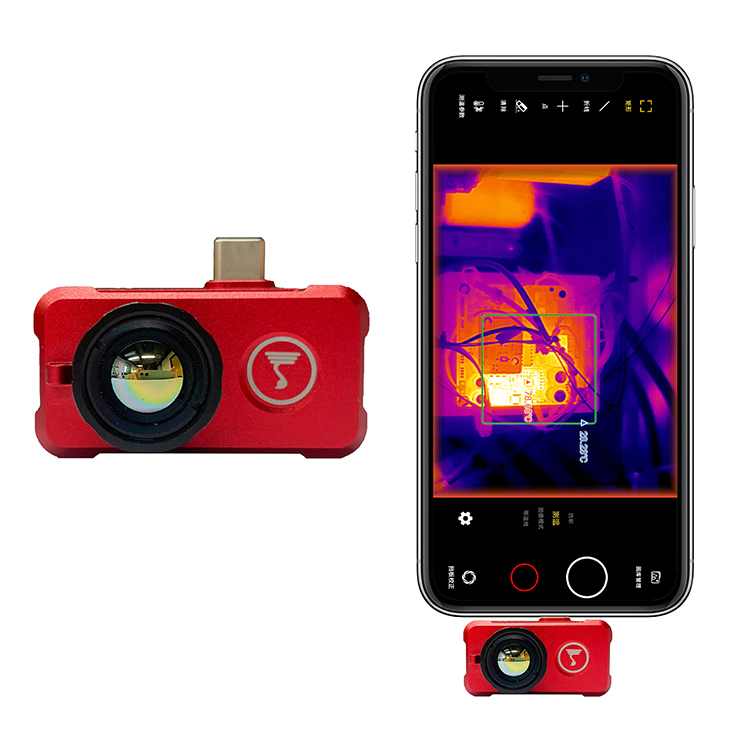
- ⚙️ USB Interface (UVC Protocol): Ideal for quick prototyping, diagnostic software, and cross-platform tools. Running over USB 2.0 or USB 3.0 Type-C, these camera modules match standard USB Video Class (UVC) profiles. They stream pre-processed visual frames (YUV/RGB) alongside raw 16-bit (Y16) radiometric temperature arrays over standard Linux V4L2 drivers—no custom kernel hacking required.
- ⚙️ CVBS (Composite Video Blanking and Sync): Essential for legacy aircraft hardware and real-time analog monitors. CVBS drives a zero-latency analog composite video feed straight to standard analog RF transmitters, making it a reliable pick for FPV pilots who can't tolerate digital video buffering lag.
SWaP-C Strategy for Embedded Systems
When you're building compact thermal gear, balancing size, weight, power, and cost (SWaP-C) is critical. For an in-depth look at engineering cost reduction strategies, review our technical guide on 2025 Low-Cost Fast Thermal Module Integration.
On the bench, optimizing SWaP-C boils down to three core steps:
- 🔧 1. Miniaturized Board Footprint: Micro-sized modules with board footprints down to 21mm × 21mm bring bare-module mass under 15g (before optics). Saving that weight gives you room for bigger battery cells or a secondary daylight camera payload.
- 🔧 2. Power & Thermal Management: Clean board layouts pulling less than 1.0W keep self-heating to a minimum. Excessive board heat creates thermal drift across the VOx microbolometer, messing up temperature calibration and triggering frequent shutter recalibration cycles. Low power draw also means you can ditch heavy copper heat sinks.
- 🔧 3. Standardizing Hardware Interfaces: Using core boards with flexible output pinouts lets engineering teams build multiple product models around a single core hardware architecture. That simplifies inventory management and cuts down software maintenance overhead.
Архитектура интеграции полезной нагрузки дронов и встраиваемых ИИ-систем
Mounting an ИК-камерный модуль into a multirotor gimbal payload or an autonomous robot requires careful handling of mechanical vibration, optical alignment, and software pipelines.
Airborne platforms subject payloads to high-frequency micro-vibrations from motors and propellers. If you don't isolate those vibrations, you'll end up with micro-jitter and spatial noise across your thermal frames. To keep images sharp, mount thermal modules on silicone-isolated 3-axis brushless gimbals. Long-range wireless streaming also demands clean RF links. To dive deeper into wireless data setups, check out our engineering article on Drone Image Transmission Module Principles & Functions.
Edge AI Processing Pipeline: OpenCV, TensorRT, and Linux V4L2
When running edge-based computer vision—like automated target tracking, search-and-rescue detection, or substation thermal monitoring—the thermal video data flows through a structured processing pipeline:
Stage-by-Stage Processing Architecture
- ⚙️ Stage 1: Raw Thermal Sensing: The VOx microbolometer array detects incoming 8–14µm thermal energy, converting radiation changes into a 14-bit digital stream.
- ⚙️ Stage 2: Onboard Hardware ISP Processing: High-performance hardware ISP algorithms execute Non-Uniformity Correction (NUC), 3D Noise Reduction (3DNR), and Contrast Limited Adaptive Histogram Equalization (CLAHE) / Digital Detail Enhancement (DDE).
- ⚙️ Stage 3: Bus Interface Ingestion: Video data streams via MIPI CSI-2 directly into host memory via Direct Memory Access (DMA), or over USB using Linux V4L2 device nodes (`/dev/videoX`).
- ⚙️ Stage 4: Zero-Copy Memory Buffer Transfer: Using CUDA Unified Memory, frame buffers pass straight from host memory to the GPU runtime space without hitting CPU copy bottlenecks.
- ⚙️ Stage 5: AI Model Inference Execution: TensorRT-accelerated models (such as YOLOv8-Thermal) process 640x512 array frames, spitting out target bounding boxes, thermal segmentation overlays, and pixel temperature telemetry over UART or CAN bus.
Сравнение и характеристики коммерческих ИК-камерных модулей Purpleriver
Purpleriver manufactures industrial uncooled thermal camera modules designed for quick setup and low thermal drift. Built on research expertise from HKUST and former Huawei HiSilicon ISP engineers, our camera cores deliver solid thermal imagery across demanding operational environments.
Featured Product Showcase
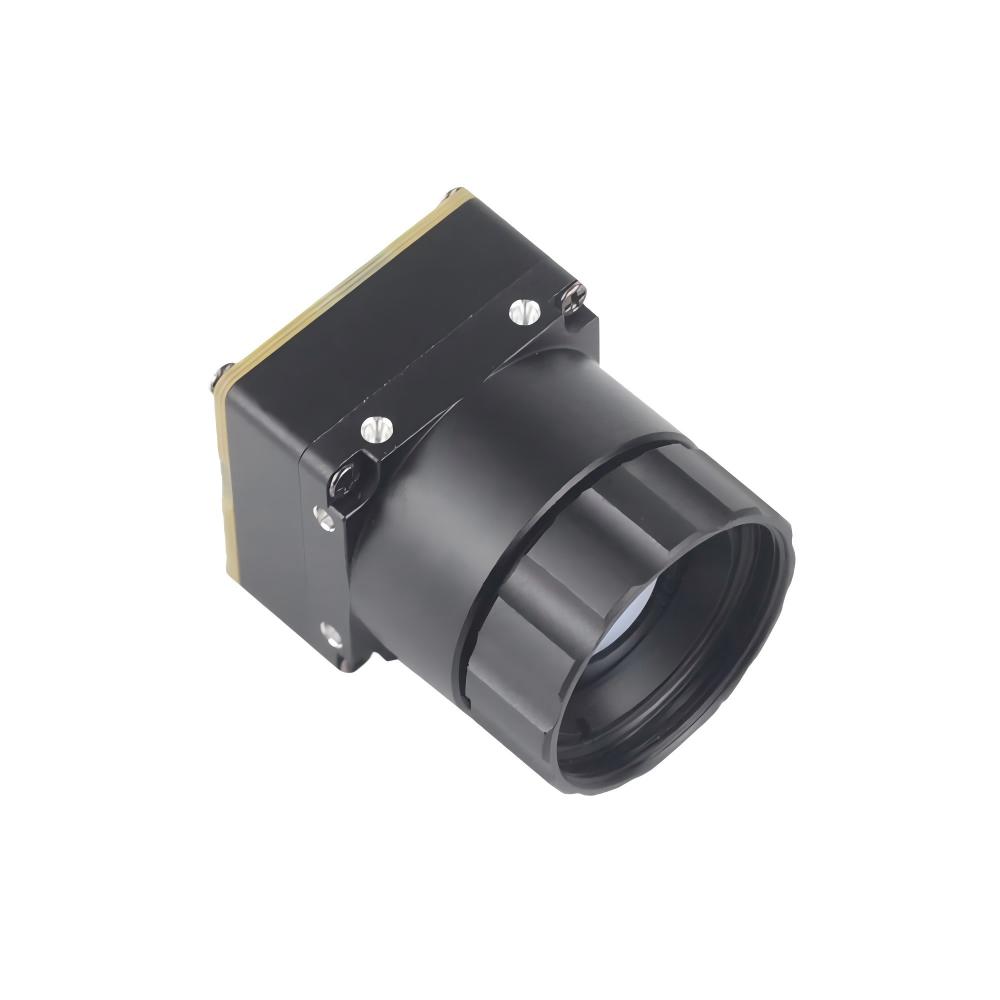
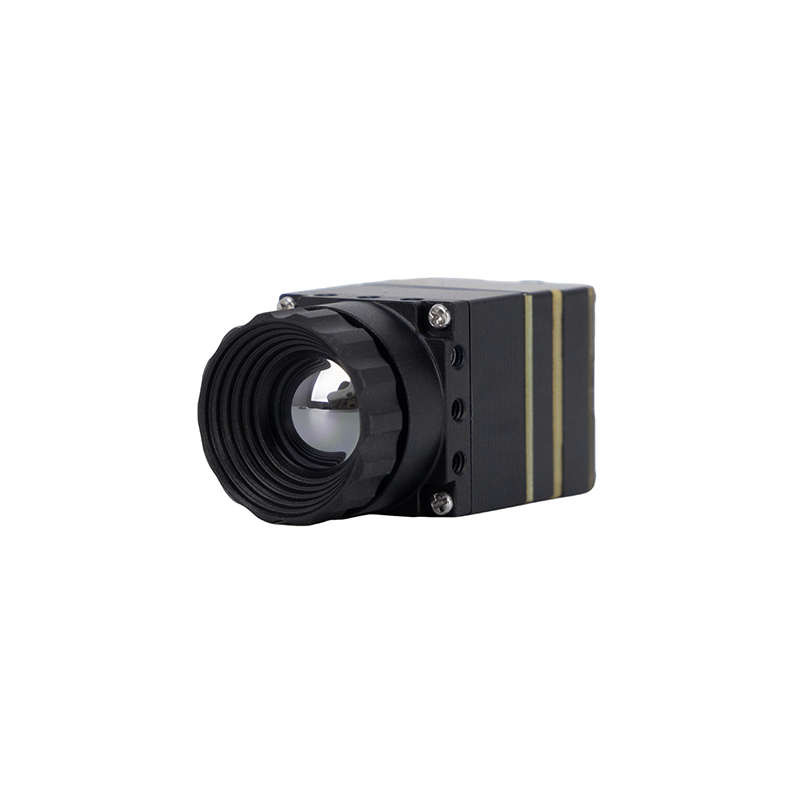
1. MD Series 384x288 Uncooled Infrared Thermal Camera Module
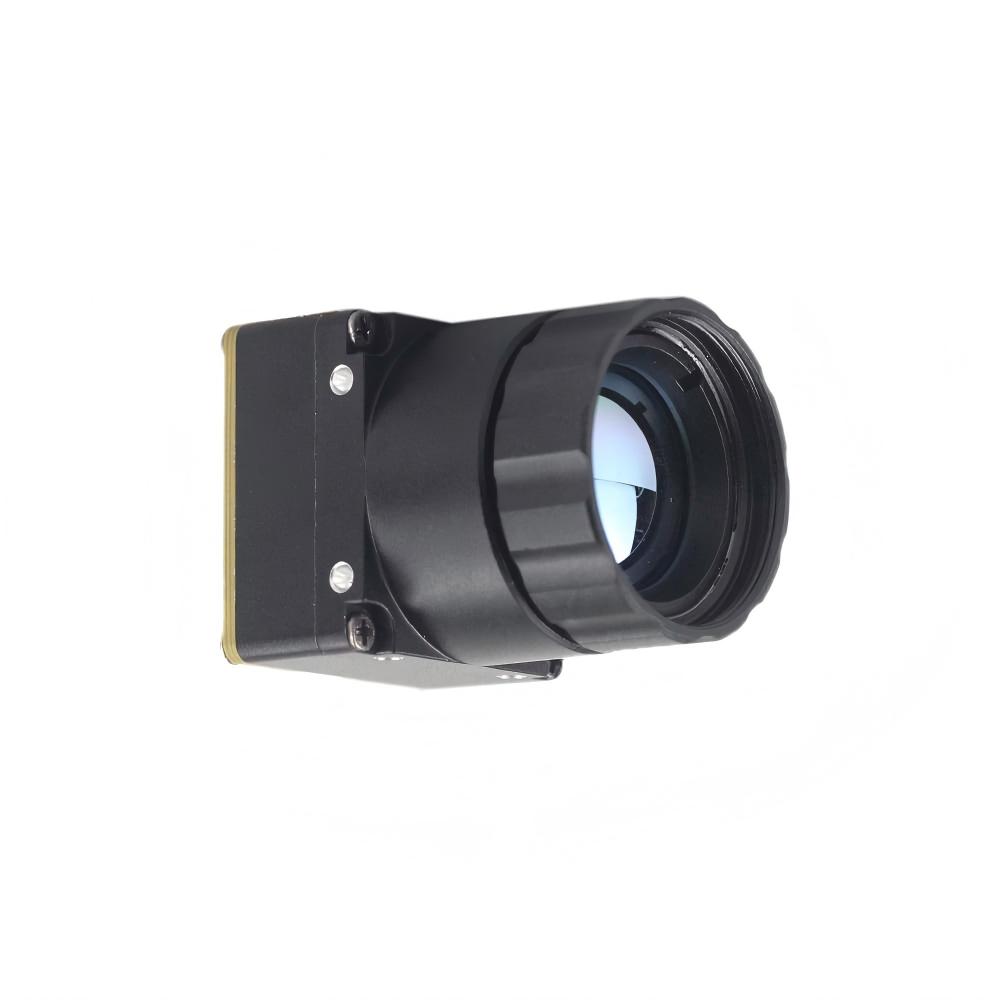
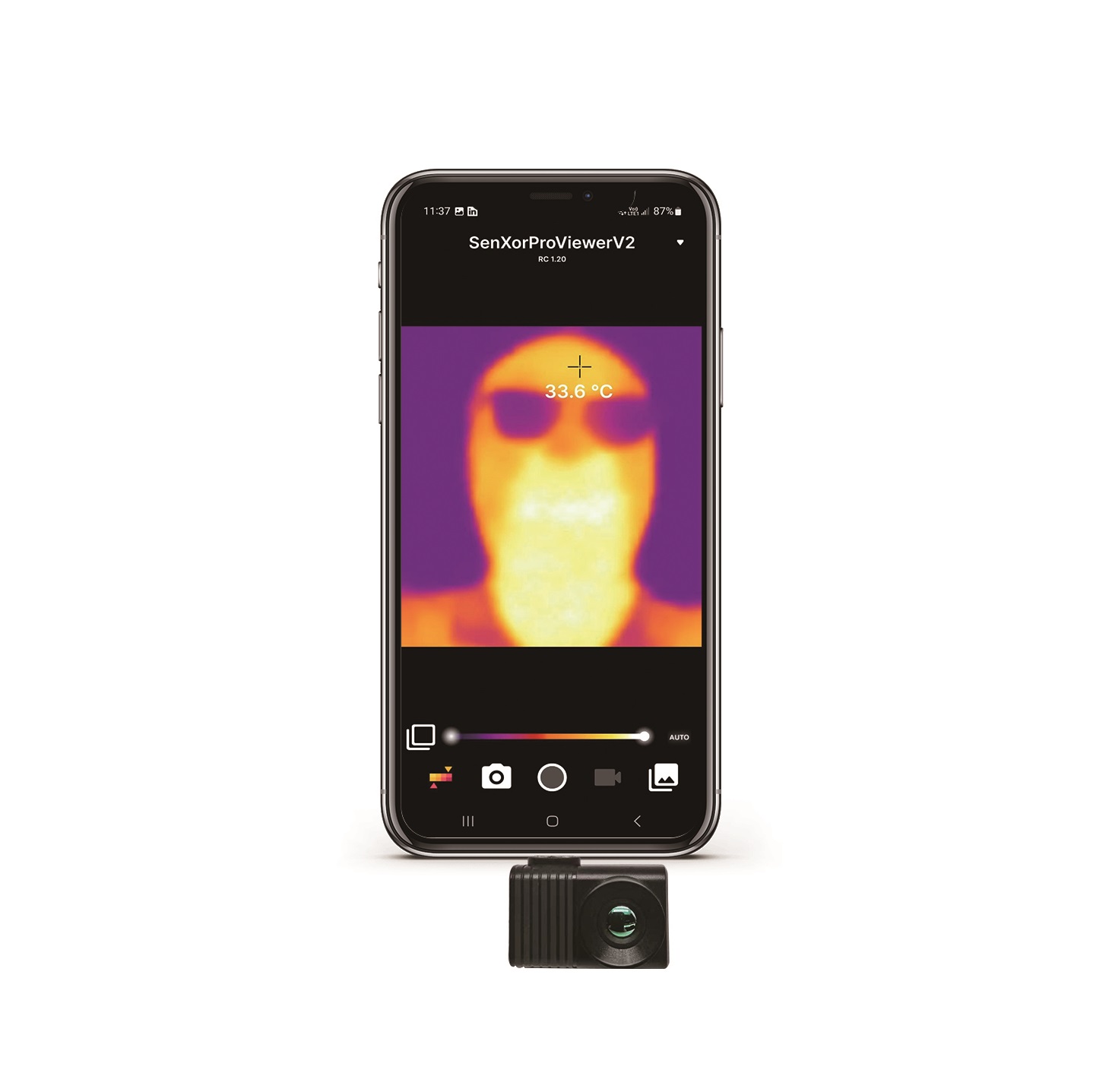
The Purpleriver MD Series thermal camera module is built for industrial jobs like perimeter monitoring, high-voltage equipment inspection, and drone payloads. Packing an advanced uncooled detector with a 12μm pixel pitch, it delivers sharp thermal resolution with sub-40mK sensitivity. Its compact footprint, plug-and-play capability, and multi-interface hardware (MIPI, USB, and CVBS) speed up integration on both legacy systems and new ARM64 designs. Built by engineers with HKUST and Huawei HiSilicon backgrounds, the MD Series offers full OEM customization options.
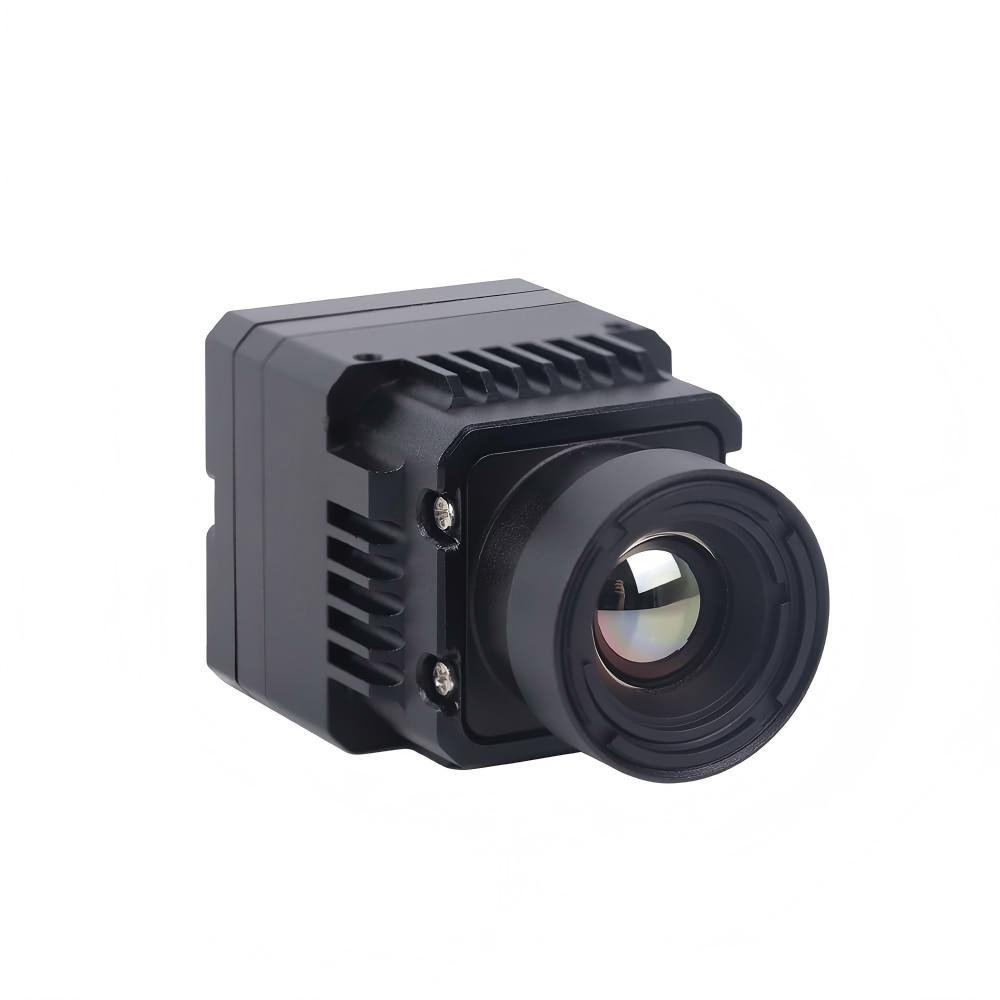
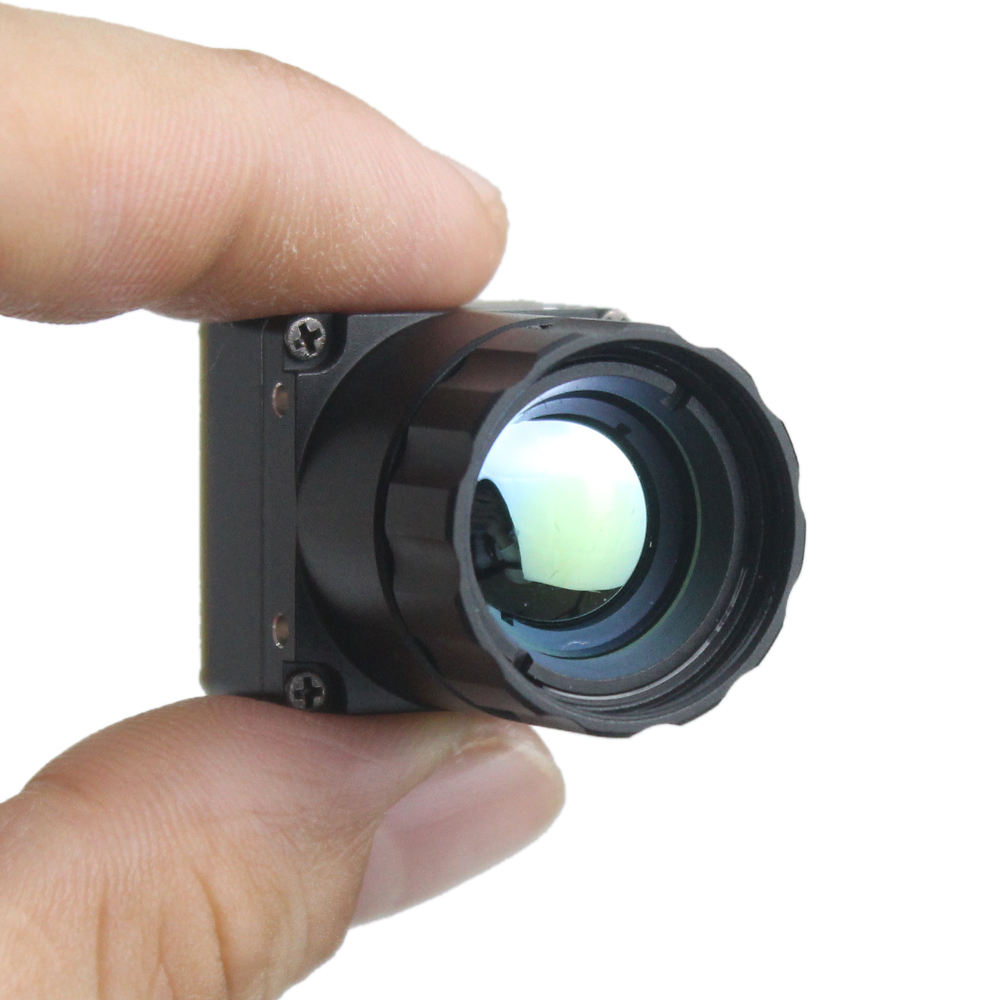
2. Uncooled LWIR USB Mini 640*512 Thermal Imaging Camera Core Module
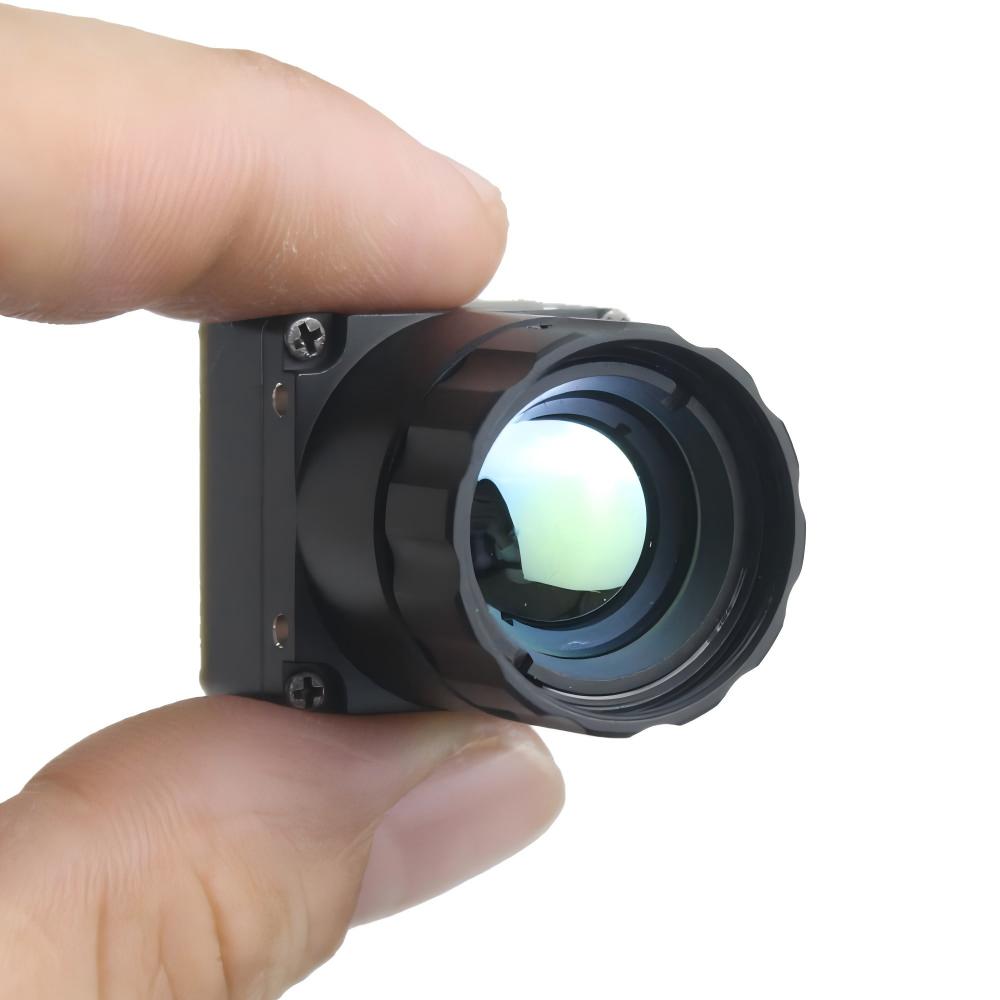
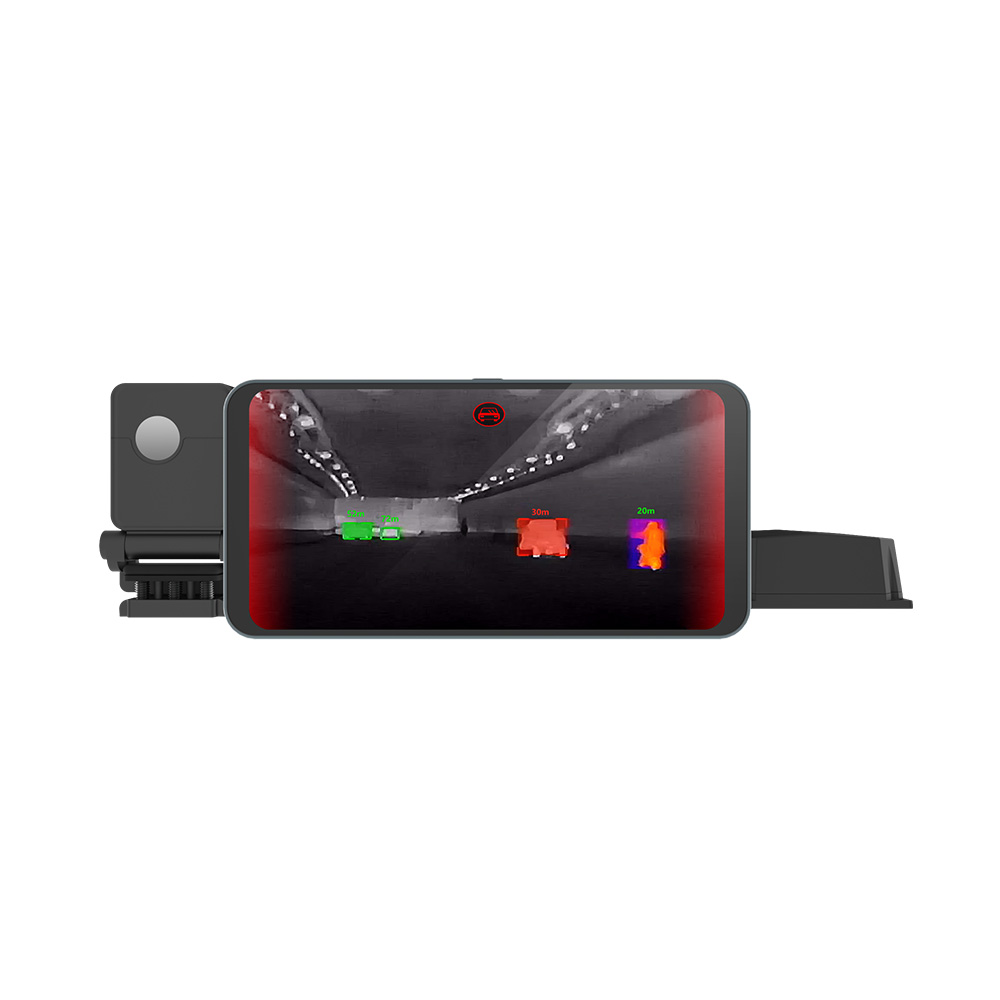
The Mini 640 LWIR module packs high-resolution thermal imaging into an ultra-small profile tailored for DJI-class drone payloads. Featuring a tiny 21mm × 21mm footprint, this core delivers rich thermal contrast with minimal spatial noise. It supports a wide range of optics (from 5mm wide-angle lenses up to 150mm telephoto optics) alongside selectable 640×480 or 640×512 output modes. Its standard USB output simplifies software integration on Linux edge systems, keeping performance rock-solid in tough outdoors environments.
Technical Specification Comparison
| Specification Parameter | MD Series 384x288 Thermal Module | Mini 640 LWIR USB Core Module |
|---|---|---|
| Product Visual |
|
|
| Product Title & Link | MD Series 384x288 Uncooled Infrared Module | Mini 640 LWIR USB Core Module |
| Инфракрасное разрешение | 384 × 288 pixels | 640 × 512 pixels (640×480 option available) |
| Pixel Pitch & Detector | 12 µm VOx Uncooled Microbolometer | 12 µm VOx Uncooled Microbolometer |
| Spectral Band | 8 µm to 14 µm (LWIR Window) | 8 µm to 14 µm (LWIR Window) |
| Physical Dimensions | Ultra-compact OEM Core Board Layout | Miniaturized 21mm × 21mm Core Profile |
| Supported Lenses | Custom Fixed & Athermalized Lenses | 5 / 9 / 13 / 18 / 35 / 50 / 75 / 100 / 150 mm |
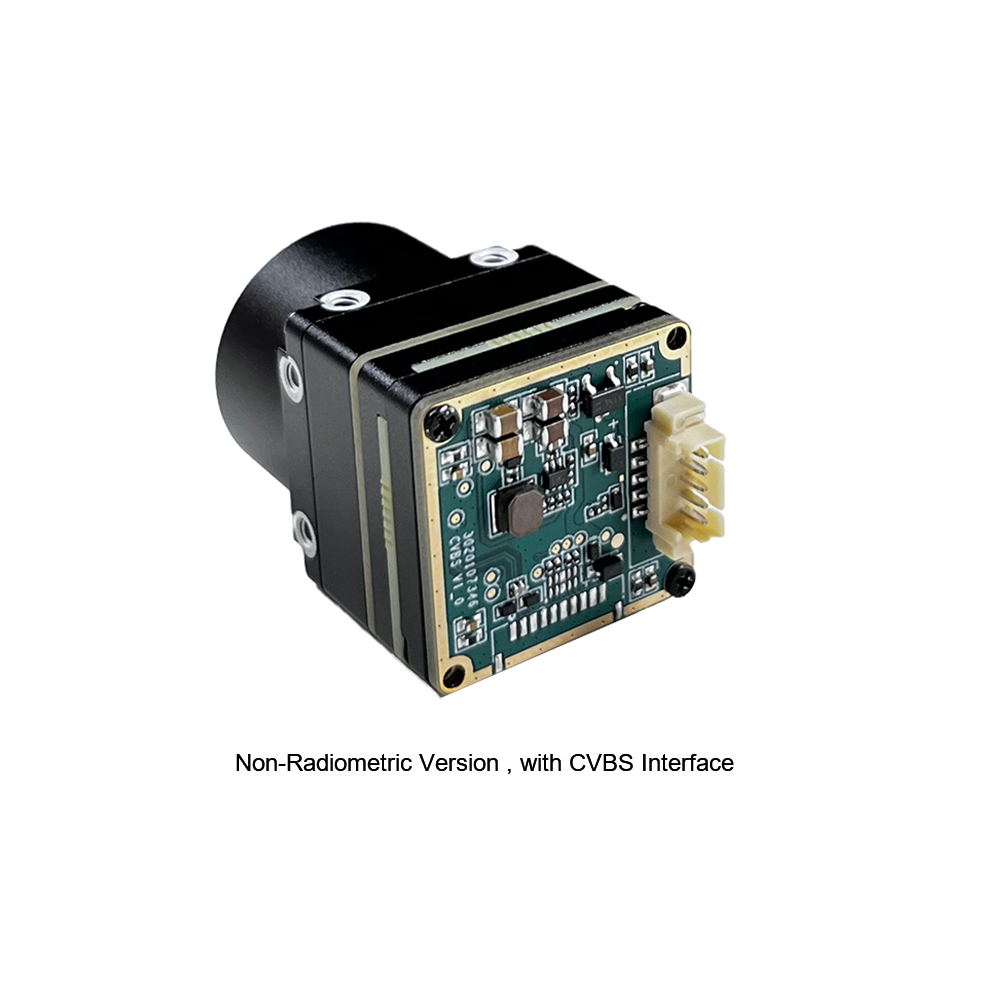
| Hardware Interfaces | MIPI CSI-2, USB 2.0/3.0, CVBS Analog | USB Type-C / Mini USB (UVC Standard) |
| Engineering Lineage | HKUST Background & Huawei HiSilicon ISP Core | Industrial High-Adaptability Rugged Core |
| Primary Deployment Target | Embedded AI Vision, Drone Payload, Security | DJI-Type Gimbal Payloads, Long-Range UAVs |
Процесс кастомизации OEM/ODM: ускорение от сенсора к алгоритму
Off-the-shelf camera modules don't always fit specific mechanical enclosures, optical specs, or driver requirements. Purpleriver offers end-to-end OEM/ODM customization services to match your hardware build. For technical documentation, SDK access, and reference hardware designs, visit our Thermal Image Industrial Resource Hub.
Purpleriver Engineering Customization Lifecycle
Phase 1: Optomechanical Tailoring & Weatherproof Housing
Optical engineers select or design germanium optics ranging from 5mm ultra-wide lenses to 150mm telephoto assemblies. Custom athermalized lens mounts keep image focus sharp across temperature swings (-40°C to +80°C). Sealed IP67 aluminum housings protect optics in harsh industrial applications.
Phase 2: Carrier Boards & Custom Electrical Interfaces
Board layouts get matched to tight mechanical specs. Electrical engineers customize pinouts, implement rugged high-vibration board connectors (like Samtec or Hirose), and design wide-input power stages that take 3.3V up to 24V direct battery rails.
Phase 3: Firmware & Onboard ISP Enhancement Tuning
Our HiSilicon-based ISP firmware gets adjusted for your specific use case. We can implement custom color palettes (White Hot, Black Hot, Ironbow, Rainbow), tweak regional dynamic range compression, and code on-screen display (OSD) temperature warnings right onto the stream.
Phase 4: SDK Acceleration & Target OS Drivers
Software developers get tailored C/C++ SDK libraries, Python bindings, ROS/ROS2 packages, and Linux device tree overlays cross-compiled for your target platform (ARM64, x86_64, NVIDIA JetPack, Rockchip SDKs).
Углубленные часто задаваемые вопросы (FAQ)
How do I integrate an IR camera module with Raspberry Pi or embedded Linux platforms via USB/MIPI?
Hooking up a Purpleriver ИК-камерный модуль to single-board computers like a Raspberry Pi 4/5, NVIDIA Jetson Orin Nano, or Rockchip RK3588 depends on your choice of physical interface bus. Over USB Type-C or Mini-USB, the module acts as a standard USB Video Class (UVC) device. Under Linux, the OS mounts it automatically as a Video4Linux2 node at `/dev/videoX`. You can start grabbing frames right away using standard OpenCV calls like `cv2.VideoCapture(0)`. The module outputs standard visual YUV/RGB video frames as well as 16-bit raw radiometric Y16 arrays containing raw temperature count readings.
If your build requires sub-10ms latency and minimal CPU load, MIPI CSI-2 is the way to go. Plugging in over MIPI means connecting the camera's flex cable straight to the host board's CSI receiver. Purpleriver provides Linux kernel device tree overlays (.dtbo) and V4L2 sub-device drivers compiled for your specific kernel target. Once configured, raw 14-bit or 16-bit thermal frames stream directly into system RAM using Direct Memory Access (DMA), letting you run zero-copy pipelines inside OpenCV, CUDA, or ROS/ROS2 nodes.
What is the functional difference between a standard grayscale IR camera and an uncooled LWIR thermal camera module?
Look, standard grayscale IR cameras operate in the Near-Infrared (NIR) spectrum (0.7µm to 1.1µm). They use silicon CMOS image sensors sensitive to shortwave IR light. The key thing to remember is that NIR cameras rely completely on reflected light energy, meaning they need active IR LED illuminators (like 850nm or 940nm lamps). Turn off those lights in a pitch-black room, and an NIR camera goes blind. They also can't read temperatures or pick up thermal emissions from objects.
An uncooled Long-Wave Infrared (LWIR) thermal camera core runs in the 8µm to 14µm band using Vanadium Oxide (VOx) microbolometer technology. An LWIR core detects passive thermal energy emitted directly by every object based on its surface temperature. It produces crisp imagery in total darkness, dense smoke, fog, and dust without needing artificial lighting. Plus, radiometric LWIR cores give you pixel-by-pixel temperature readings, making them mandatory tools for electrical inspections, predictive maintenance, and search payloads.
How do I choose the optimal IR resolution (256x192 vs 384x288 vs 640x512) for drone payload optimization?
Picking thermal resolution comes down to balancing spatial detail and detection distance against your SWaP-C target. A entry-level 256×192 sensor core works fine for short-range inspections (under 30–50 meters), like indoor robotics navigation or handheld thermal tools. But its low pixel count restricts how far out you can pick up small targets.
A 384×288 core (like our Purpleriver MD Series) strikes a solid balance for mid-range drone payloads, utility pole checks, and agricultural mapping. Packing double the pixel density of entry-level units, it provides clean thermal detail and target detection out to several hundred meters while drawing less than 1.0W in an ultra-light format.
For high-altitude drone operations, search-and-rescue missions, and long-range perimeter security, 640×512 resolution (like the Purpleriver Mini 640 Series) is the industrial standard. With over 320,000 active thermal pixels, a 640×512 core lets drones fly at higher, safer altitudes while still picking up tiny thermal anomalies or finding people over 1 kilometer away. Purpleriver's 12µm pixel architecture delivers this performance inside a tiny 21mm×21mm module body.
What is Radiometric Thermal Imaging, and how do I extract raw pixel temperature values in software?
Radiometric thermal imaging means the camera reads actual surface temperatures for every single pixel in a frame, rather than just displaying relative visual contrast. In radiometric mode, the sensor converts raw digital counts into temperature readings using factory calibration curves, taking ambient sensor body temperature into account.
When capturing video through Purpleriver SDKs or Linux V4L2 Y16 streams, each pixel is output as a 16-bit unsigned integer (UINT16). Developers convert raw Y16 values to degrees Celsius (°C) using linear conversion equations provided in our documentation: `Temperature_Celsius = (Raw_Y16_Value / Scale_Factor) - Kelvin_Offset`. This lets you write automated software triggers—like firing an alarm if an electrical transformer exceeds safe temperature thresholds—directly inside your edge software pipeline.
How does Non-Uniformity Correction (NUC) operate in uncooled microbolometer thermal core modules?
Uncooled microbolometer arrays contain hundreds of thousands of individual VOx detector elements, and each pixel has slight variations in gain and electrical resistance. As ambient operational temperatures swing, those small variations create spatial noise across the image, known as fixed-pattern noise (FPN).
Non-Uniformity Correction (NUC) cleans up that noise using internal calibration hardware. Uncooled thermal modules use an internal mechanical shutter. Periodically—or when internal temperature sensors detect a thermal shift—the shutter clicks closed for a split second to present a uniform thermal surface to the detector. The onboard ISP recalculates gain and offset adjustments for every pixel, restoring clear image contrast across the frame.
📚 References & Further Reading
- Industry Standard Interconnects: Amphenol High-Reliability Board-to-Board Interconnect Systems
- Physics Standard: Wikipedia Thermography Principles & Infrared Physics Overview
- Related Integration Guide: 2025 Low-Cost Fast Thermal Module Integration Guide for Engineers
- Drone Payload Systems Guide: Principles and Functions of Drone Image Transmission Modules