
Top IR Camera Module Solutions for Drones & Embedded AI: OEM Integration Guide
2026年7月31日
Top IR Camera Module Solutions for Drones & Embedded AI: OEM Integration Guide
If you're building autonomous systems, industrial inspection drones, or edge AI vision platforms, integrating a high-performance ir camera module (infrared camera module) isn't just an extra feature—it's standard operating procedure. Hardware engineers, drone payload architects, and computer vision developers are constantly caught between tough Size, Weight, Power, and Cost (SWaP-C) limits and demanding performance specs: sub-50mK thermal sensitivity, zero latency frame delivery, and direct interface support like MIPI CSI-2, USB 3.0, and CVBS. Whether you're building gear for nighttime search-and-rescue, high-voltage utility inspection, precision agriculture, or running edge target tracking on an NVIDIA Jetson or Raspberry Pi, picking the right uncooled Long-Wave Infrared (LWIR) core makes or breaks your system's reliability, thermal accuracy, and time-to-market.
At Purpleriver, our engineering team brings a mix of academic research from the Hong Kong University of Science and Technology (HKUST) and hands-on signal-processing experience from former Huawei HiSilicon core developers. We bridge the gap between complex focal plane array (FPA) physics and practical OEM/ODM hardware integration. This guide cuts through the marketing fluff to give system integrators real engineering insights into sensor physics, multi-interface hardware design, optical selection, and edge AI acceleration pipelines—backed by real-world performance benchmarks from our flagship uncooled thermal camera modules.
Table of Contents
- 👉 1. Fundamentals of IR Camera Module Tech: Near-IR vs. LWIR Thermal Physics
- 👉 2. Hardware Interfaces, Protocols, & SWaP-C Optimization
- 👉 3. Drone Payload & Embedded AI Systems Integration Architecture
- 👉 4. Purpleriver Commercial IR Camera Module Comparison & Specs
- 👉 5. OEM/ODM Customization Workflow: Sensor-to-Algorithm Acceleration
- 👉 6. Deep-Dive Frequently Asked Questions (FAQ)
1. Fundamentals of IR Camera Module Tech: Near-IR vs. LWIR Thermal Physics
Before throwing parts into a CAD model or writing driver code, you've got to understand the waveband physics driving your ir camera module choices. The broad "infrared" label covers several distinct spectral bands, each governed by different optical properties, atmospheric transmission windows, and detector material chemistries.
The spectrum beyond visible light breaks down into Near-Infrared (NIR: 0.75µm to 1.4µm), Short-Wave Infrared (SWIR: 1.4µm to 3µm), Mid-Wave Infrared (MWIR: 3µm to 5µm), and Long-Wave Infrared (LWIR: 8µm to 14µm). NIR and SWIR rely on reflected light energy (just like visible light cameras), whereas LWIR captures emitted radiant energy directly from thermal bodies.
Near-Infrared (NIR) vs. Long-Wave Infrared (LWIR)
Standard Silicon CMOS image sensors with their IR-cut filter popped off operate in the Near-Infrared band (NIR, 0.7µm – 1.1µm). Here's the deal: these systems rely completely on reflected ambient light or active illuminators, like 850nm or 940nm LED arrays. While that's fine for low-cost security cameras capturing crisp monochrome details, NIR modules can't read ambient temperature differences, can't cut through heavy smoke or fog, and go pitch black in zero-light environments without active IR lamps.
Long-Wave Infrared (LWIR, 8µm – 14µm) core modules take a completely different path. They use uncooled microbolometer technology, usually built on Vanadium Oxide (VOx) or Amorphous Silicon (α-Si) thin films. LWIR sensors pick up passive blackbody thermal radiation emitted by every physical object above absolute zero, following Planck's Law and the Stefan-Boltzmann law. To dig deeper into the math behind passive thermal radiation, take a look at the Wikipedia Thermal Imaging reference. Because an LWIR ir camera module measures native thermal radiation, it works reliably in pitch-black settings, dense smoke, atmospheric haze, and harsh sun glare without needing power-hungry illuminators.
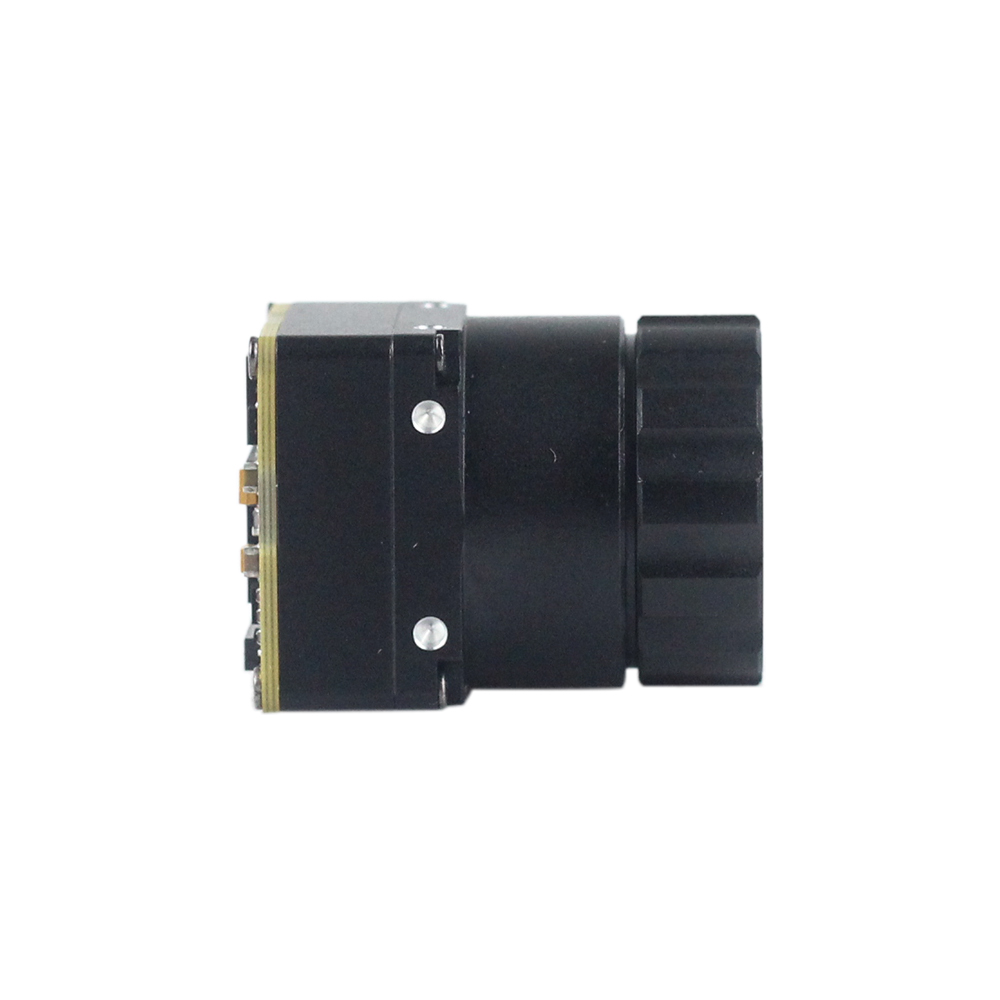
| Physics & Operational Parameter | Near-Infrared (NIR) Modules | Uncooled LWIR Thermal Core Module |
|---|---|---|
| Spectral Range | 0.7 µm – 1.1 µm | 8 µm – 14 µm (LWIR Transmission Window) |
| Detector Physics & Material | Silicon Photodiode Array (CMOS Electron Bandgap) | Vanadium Oxide (VOx) Uncooled Microbolometer |
| Primary Energy Source | Reflected Ambient / Active IR LED Illumination | Emitted Blackbody Thermal Radiation (Planck's Law) |
| Nighttime Operation | Requires Active IR Light Source (850nm/940nm) | 100% Passive, Zero-Illumination Operation |
| Smoke / Fog / Dust Penetration | Minimal (Scatters on airborne particulate matter) | High Penetration (Wavelength exceeds particle size) |
| Temperature Measurement Capability | None (Visual Monochrome Contrast Only) | Full Radiometric Pixel-by-Pixel Temperature Mapping |
Sensor Architectures: Microbolometer Pixel Pitch (12µm vs. 17µm)
At the heart of modern LWIR thermal imaging is the microbolometer focal plane array (FPA). A microbolometer absorbs thermal radiation, heating up the active VOx film and changing its electrical resistance. An integrated Read-Out Integrated Circuit (ROIC) converts that resistance change directly into digital counts. Shrinking the detector pitch from legacy 17µm down to modern 12µm pixel pitch has changed the game for embedded core designs:
- ✅ SWaP Reduction: Dropping down to a 12µm pixel pitch shrinks the physical footprint of the detector array by nearly 50% compared to a 17µm array with the same resolution. That shrinkage lets optical engineers use much smaller, lighter germanium lenses—knocking down total payload mass.
- ✅ Higher Spatial Resolution & Target Acquisition Range: Keeping the lens focal length fixed, a smaller pixel pitch tightens your Instantaneous Field of View (IFOV). That means more pixels on target at long distances, pushing out your Detection, Recognition, and Identification (DRI) range metrics.
- ✅ Noise Equivalent Temperature Difference (NETD): Thermal sensitivity is measured in millikelvins (mK). High-grade VOx microbolometer cores paired with low-noise ROIC designs hit NETD figures under 40mK (and sub-35mK with good digital spatial filtering). This allows the sensor to detect temperature shifts as fine as 0.035°C, yielding sharp image contrast even on low-contrast, overcast days.
2. Hardware Interfaces, Protocols, & SWaP-C Optimization
Plugging an ir camera module into a compact embedded system, mobile robot, or flight controller requires picking an interface bus that matches your processor's capabilities, throughput needs, and physical vibration constraints.
Architectural Flow: Core Sensor to Host Processing System
1. Sensor Core: VOx Microbolometer Focal Plane Array (384x288 / 640x512, 12µm pitch)
2. Onboard Hardware ISP: Non-Uniformity Correction (NUC), Digital Detail Enhancement (DDE), 3D Noise Reduction
3. Interface Bus Options:
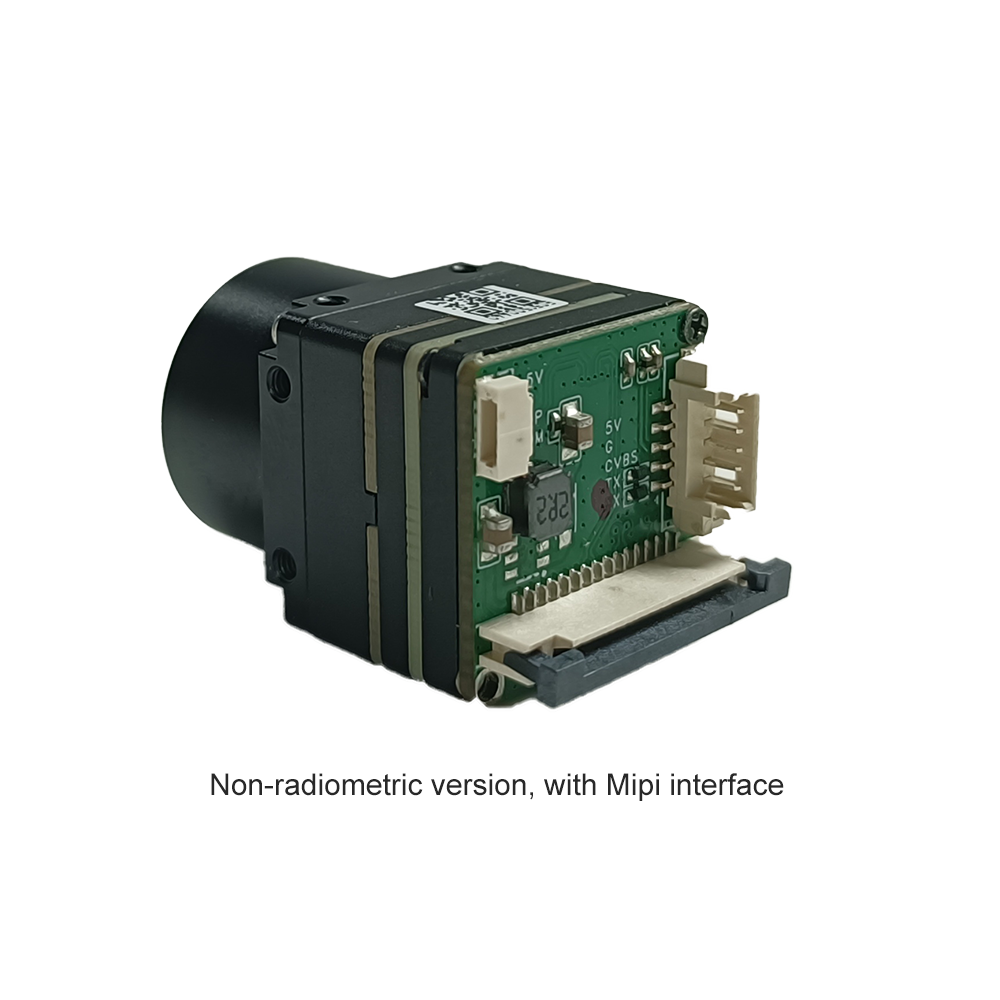
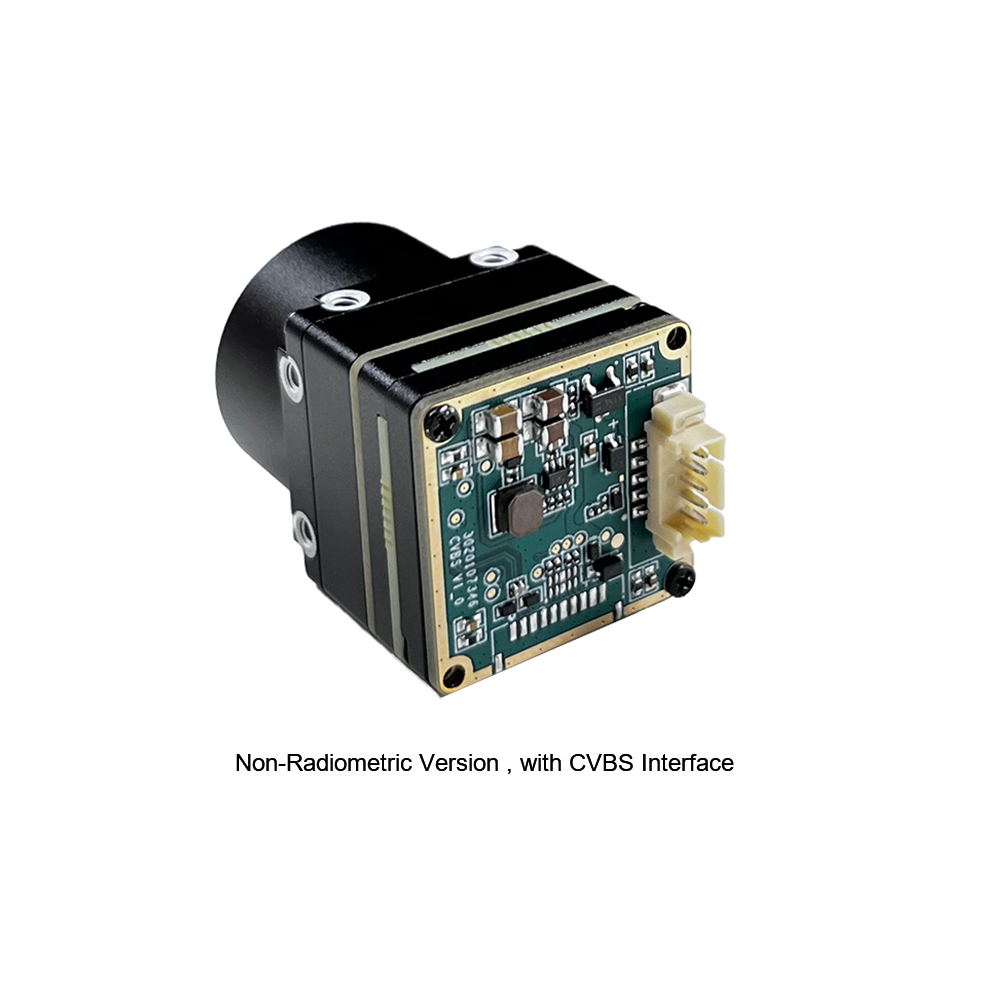
⚙️ MIPI CSI-2 Lanes: Ultra-low latency raw radiometric feed directly to host SoC ISP
⚙️ USB 2.0 / 3.0 (UVC): Plug-and-play video & Y16 raw data over standard OS drivers
⚙️ CVBS Analog Output: Zero-buffer real-time composite feed for long-range analog FPV transmitters
4. Target Host Processing Hardware: NVIDIA Jetson, Rockchip RK3588, Raspberry Pi, Custom ARM64 Carrier Boards
Physical Interfaces: MIPI CSI-2 vs. USB vs. CVBS Analog
- ⚙️ MIPI CSI-2 (Camera Serial Interface): The gold standard for embedded AI edge nodes (NVIDIA Jetson Orin, Rockchip RK3588, Raspberry Pi CM4). MIPI feeds raw, uncompressed high-frame-rate pixel data right into the host SoC's hardware image signal processor. Bypassing USB stack latency gets frame delay down under 10ms. High-density board-to-board connectors from manufacturers like Amphenol give you solid electrical contacts that won't shake loose under heavy drone motor vibration.
- ⚙️ USB Interface (UVC Protocol): Ideal for quick prototyping, diagnostic software, and cross-platform tools. Running over USB 2.0 or USB 3.0 Type-C, these camera modules match standard USB Video Class (UVC) profiles. They stream pre-processed visual frames (YUV/RGB) alongside raw 16-bit (Y16) radiometric temperature arrays over standard Linux V4L2 drivers—no custom kernel hacking required.
- ⚙️ CVBS (Composite Video Blanking and Sync): Essential for legacy aircraft hardware and real-time analog monitors. CVBS drives a zero-latency analog composite video feed straight to standard analog RF transmitters, making it a reliable pick for FPV pilots who can't tolerate digital video buffering lag.
SWaP-C Strategy for Embedded Systems
When you're building compact thermal gear, balancing size, weight, power, and cost (SWaP-C) is critical. For an in-depth look at engineering cost reduction strategies, review our technical guide on 2025 Low-Cost Fast Thermal Module Integration.
On the bench, optimizing SWaP-C boils down to three core steps:
- 🔧 1. Miniaturized Board Footprint: Micro-sized modules with board footprints down to 21mm × 21mm bring bare-module mass under 15g (before optics). Saving that weight gives you room for bigger battery cells or a secondary daylight camera payload.
- 🔧 2. Power & Thermal Management: Clean board layouts pulling less than 1.0W keep self-heating to a minimum. Excessive board heat creates thermal drift across the VOx microbolometer, messing up temperature calibration and triggering frequent shutter recalibration cycles. Low power draw also means you can ditch heavy copper heat sinks.
- 🔧 3. Standardizing Hardware Interfaces: Using core boards with flexible output pinouts lets engineering teams build multiple product models around a single core hardware architecture. That simplifies inventory management and cuts down software maintenance overhead.
3. Drone Payload & Embedded AI Systems Integration Architecture
Mounting an ir camera module into a multirotor gimbal payload or an autonomous robot requires careful handling of mechanical vibration, optical alignment, and software pipelines.
Airborne platforms subject payloads to high-frequency micro-vibrations from motors and propellers. If you don't isolate those vibrations, you'll end up with micro-jitter and spatial noise across your thermal frames. To keep images sharp, mount thermal modules on silicone-isolated 3-axis brushless gimbals. Long-range wireless streaming also demands clean RF links. To dive deeper into wireless data setups, check out our engineering article on Drone Image Transmission Module Principles & Functions.
Edge AI Processing Pipeline: OpenCV, TensorRT, and Linux V4L2
When running edge-based computer vision—like automated target tracking, search-and-rescue detection, or substation thermal monitoring—the thermal video data flows through a structured processing pipeline:
Stage-by-Stage Processing Architecture
- ⚙️ Stage 1: Raw Thermal Sensing: The VOx microbolometer array detects incoming 8–14µm thermal energy, converting radiation changes into a 14-bit digital stream.
- ⚙️ Stage 2: Onboard Hardware ISP Processing: High-performance hardware ISP algorithms execute Non-Uniformity Correction (NUC), 3D Noise Reduction (3DNR), and Contrast Limited Adaptive Histogram Equalization (CLAHE) / Digital Detail Enhancement (DDE).
- ⚙️ Stage 3: Bus Interface Ingestion: Video data streams via MIPI CSI-2 directly into host memory via Direct Memory Access (DMA), or over USB using Linux V4L2 device nodes (`/dev/videoX`).
- ⚙️ Stage 4: Zero-Copy Memory Buffer Transfer: Using CUDA Unified Memory, frame buffers pass straight from host memory to the GPU runtime space without hitting CPU copy bottlenecks.
- ⚙️ Stage 5: AI Model Inference Execution: TensorRT-accelerated models (such as YOLOv8-Thermal) process 640x512 array frames, spitting out target bounding boxes, thermal segmentation overlays, and pixel temperature telemetry over UART or CAN bus.
4. Purpleriver Commercial IR Camera Module Comparison & Specs
Purpleriver manufactures industrial uncooled thermal camera modules designed for quick setup and low thermal drift. Built on research expertise from HKUST and former Huawei HiSilicon ISP engineers, our camera cores deliver solid thermal imagery across demanding operational environments.
Featured Product Showcase
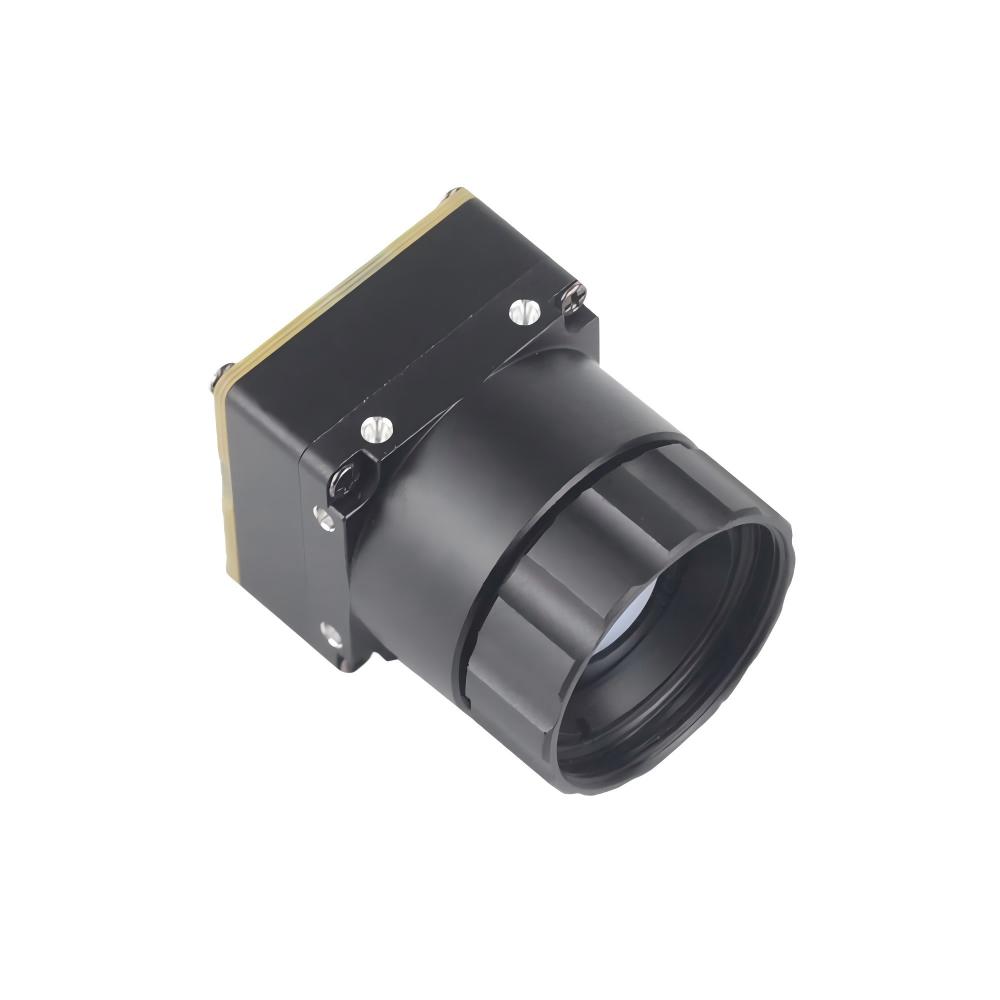
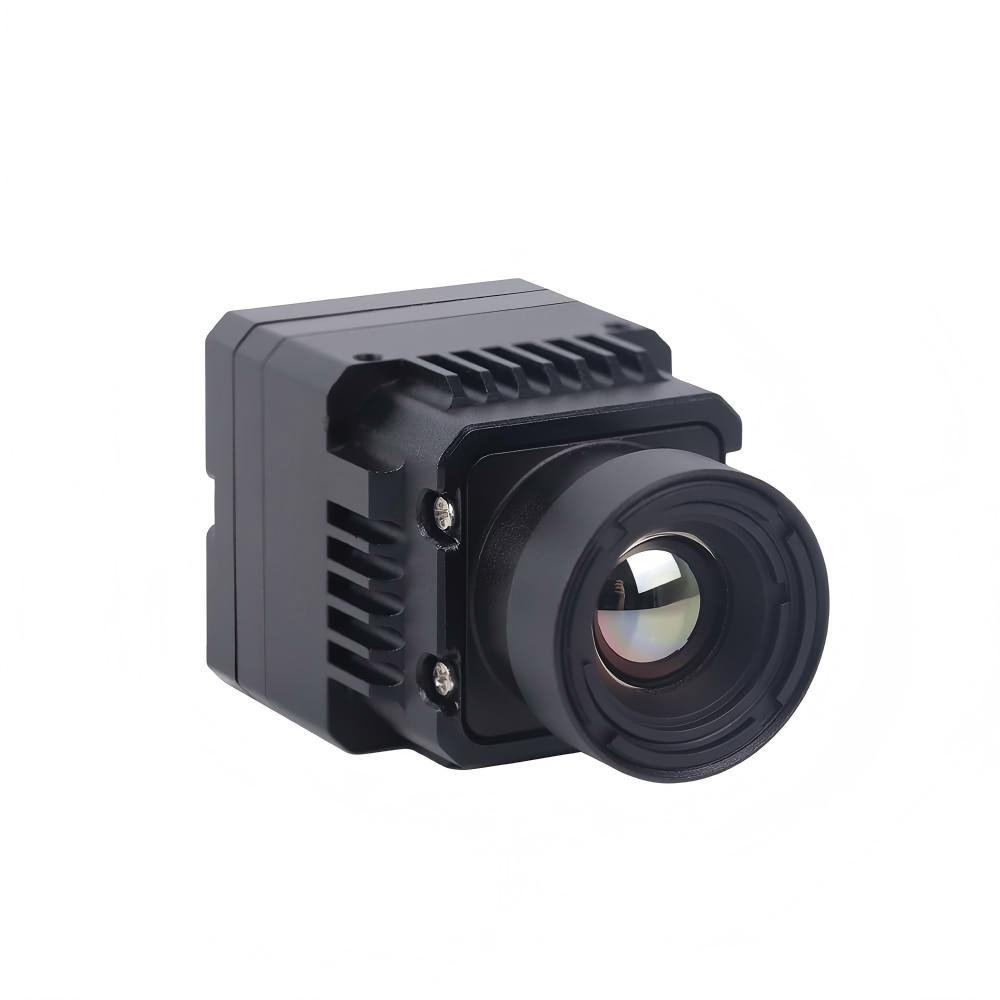
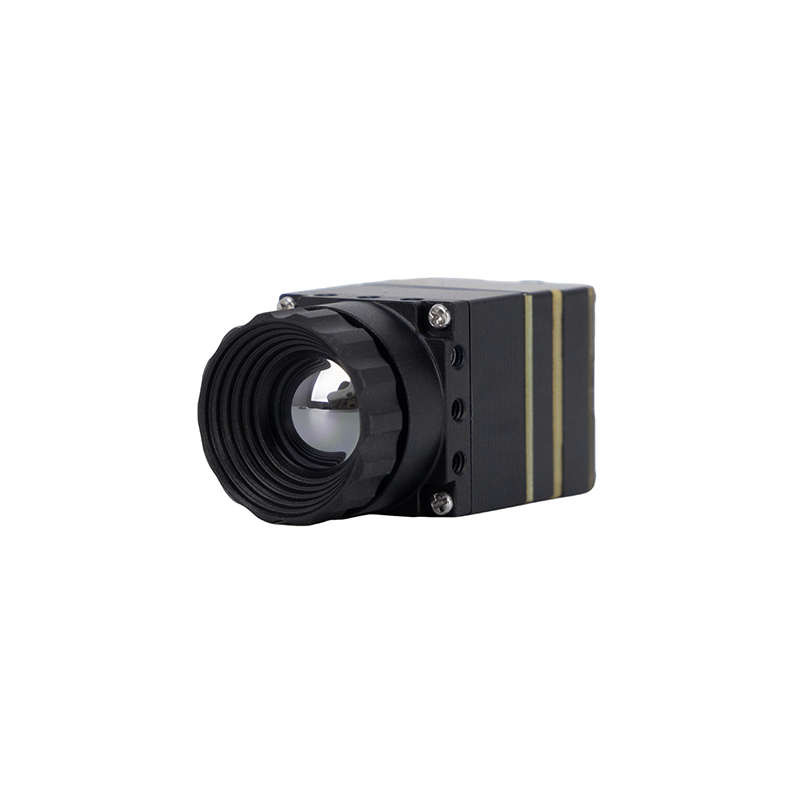
1. MD Series 384x288 Uncooled Infrared Thermal Camera Module
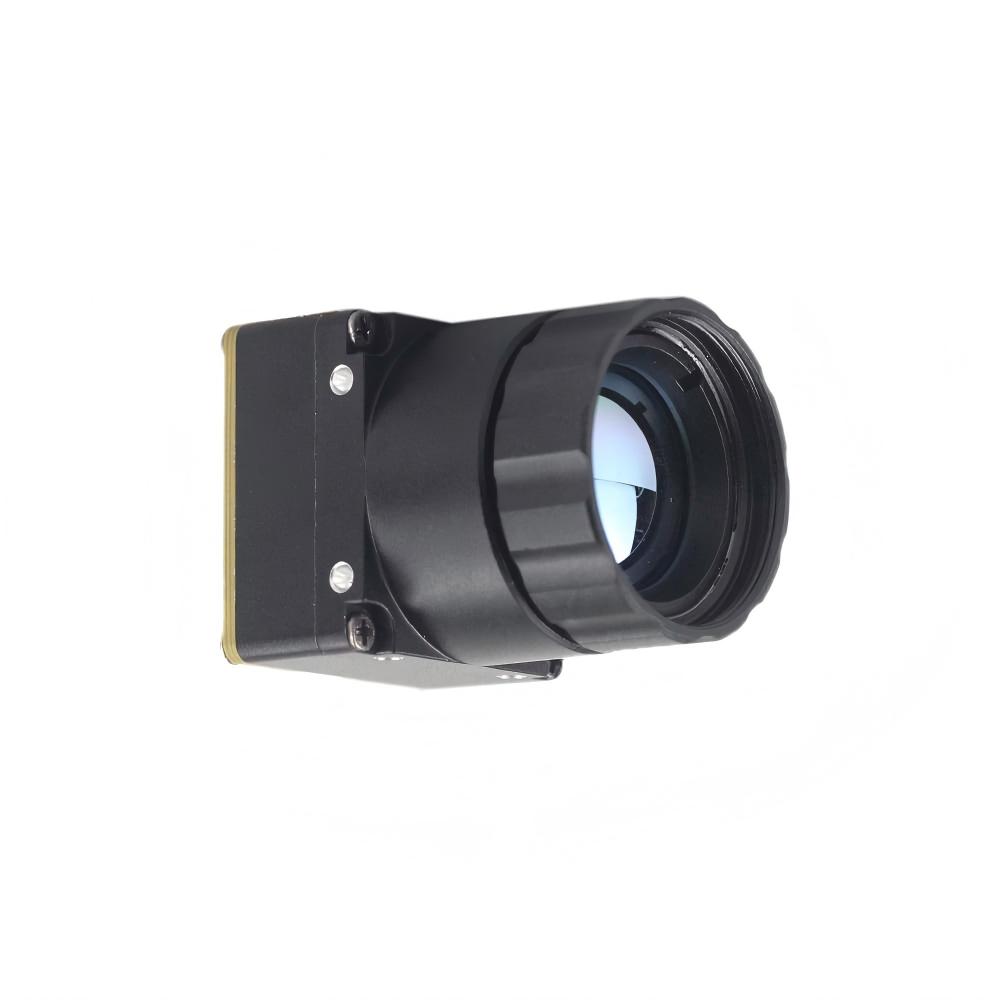
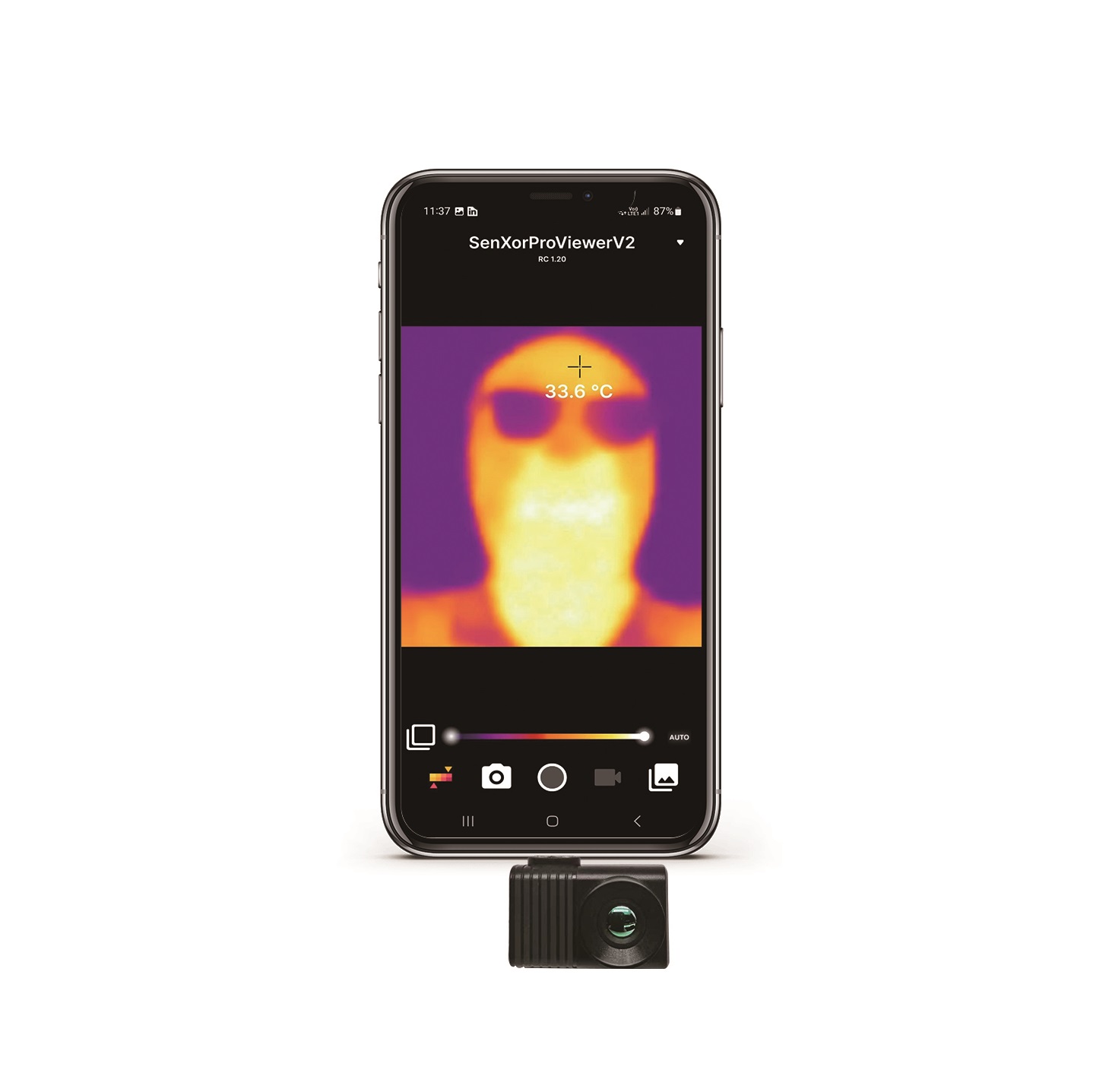
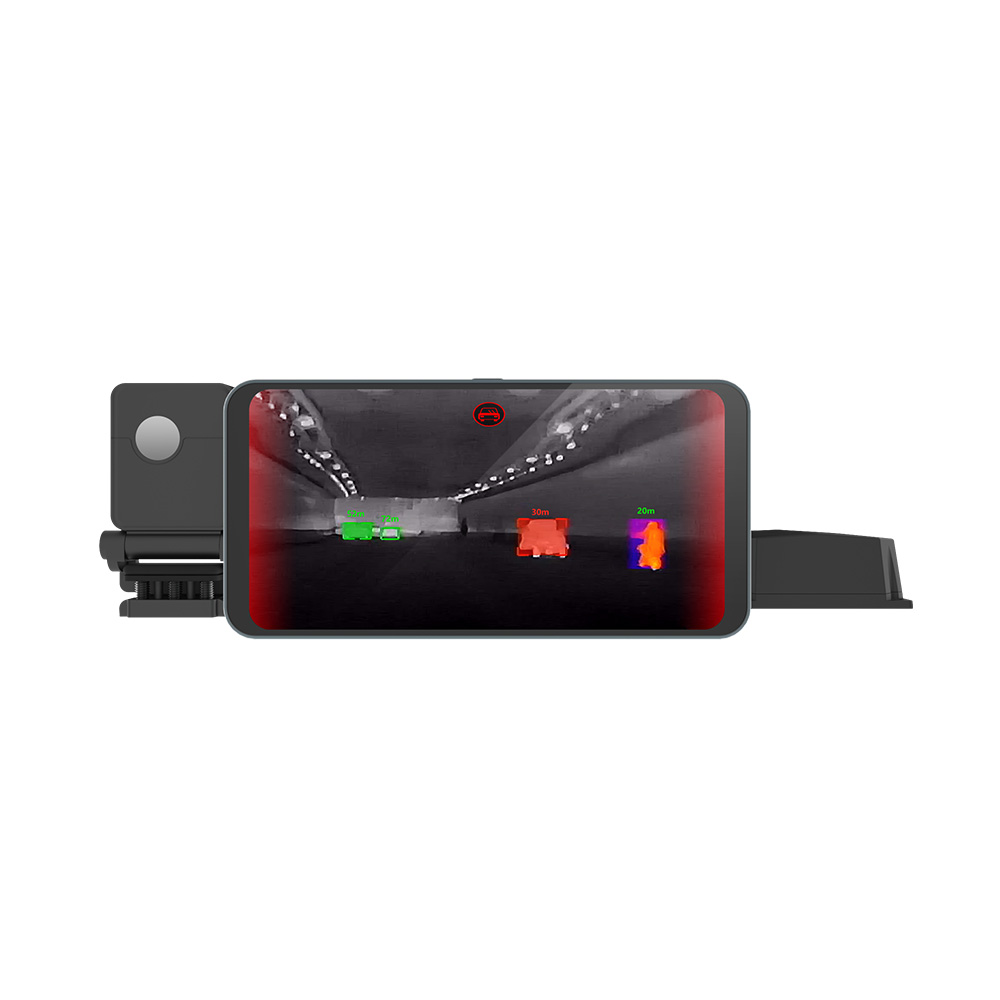
The Purpleriver MD Series thermal camera module is built for industrial jobs like perimeter monitoring, high-voltage equipment inspection, and drone payloads. Packing an advanced uncooled detector with a 12μm pixel pitch, it delivers sharp thermal resolution with sub-40mK sensitivity. Its compact footprint, plug-and-play capability, and multi-interface hardware (MIPI, USB, and CVBS) speed up integration on both legacy systems and new ARM64 designs. Built by engineers with HKUST and Huawei HiSilicon backgrounds, the MD Series offers full OEM customization options.
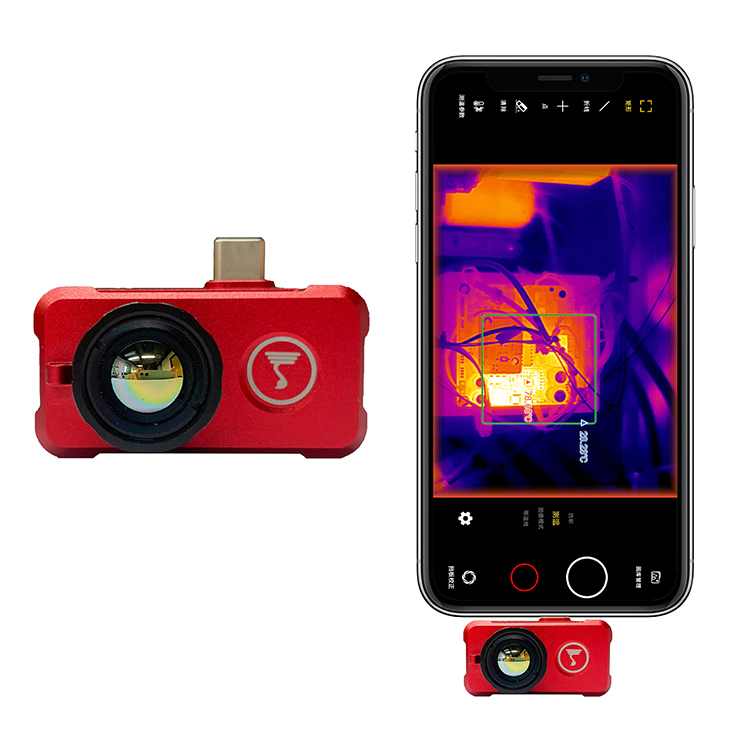
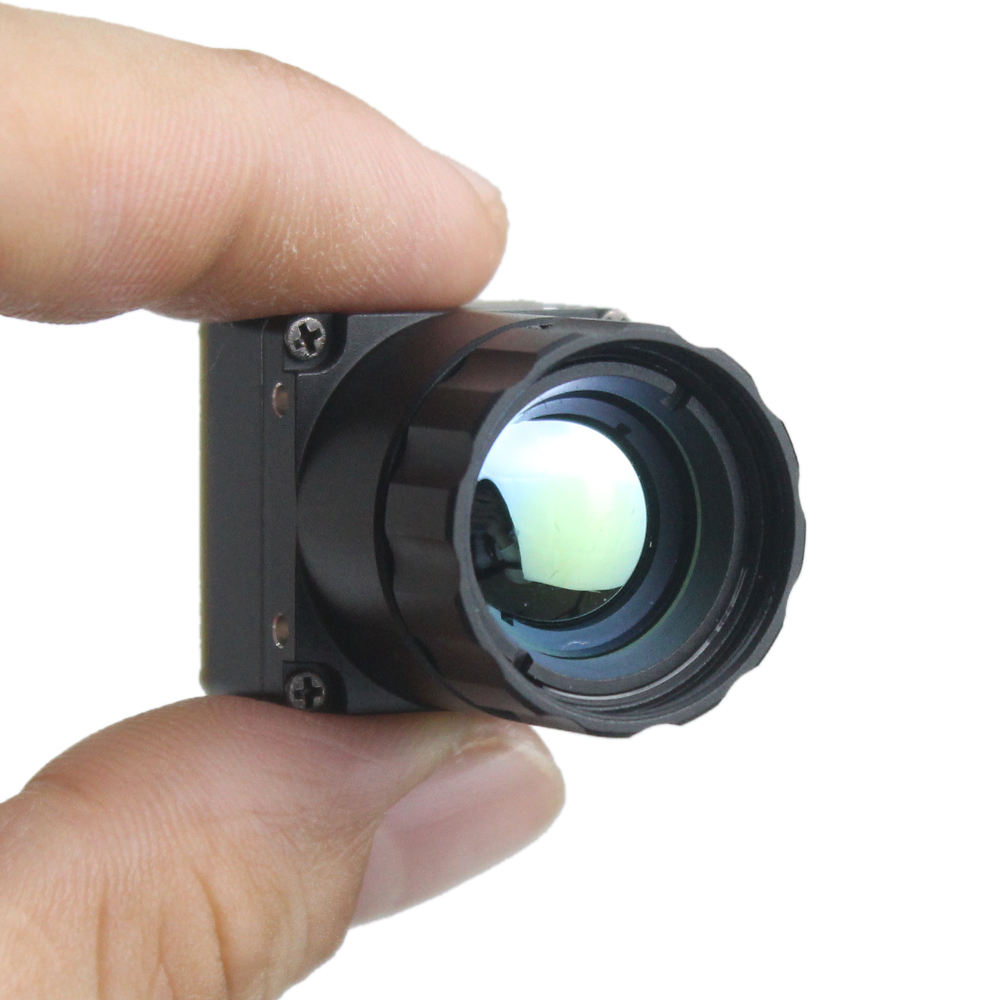
2. Uncooled LWIR USB Mini 640*512 Thermal Imaging Camera Core Module
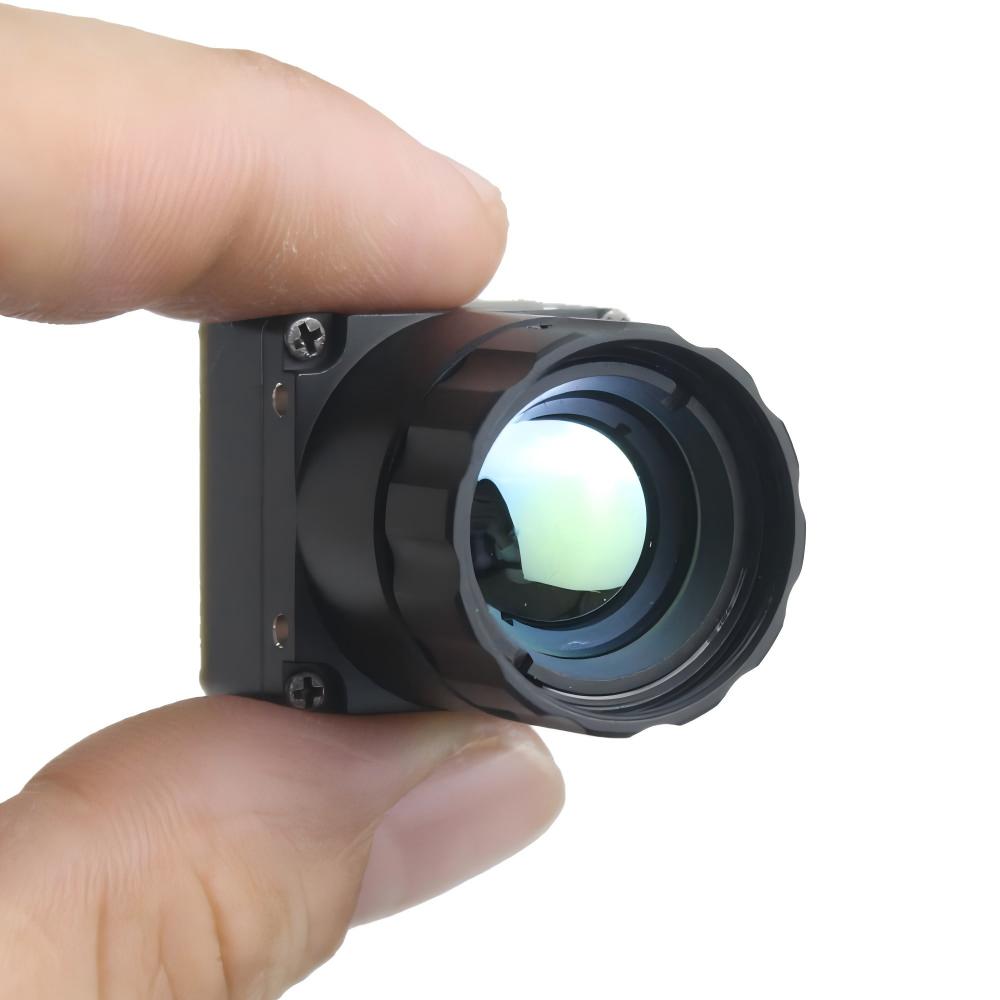
The Mini 640 LWIR module packs high-resolution thermal imaging into an ultra-small profile tailored for DJI-class drone payloads. Featuring a tiny 21mm × 21mm footprint, this core delivers rich thermal contrast with minimal spatial noise. It supports a wide range of optics (from 5mm wide-angle lenses up to 150mm telephoto optics) alongside selectable 640×480 or 640×512 output modes. Its standard USB output simplifies software integration on Linux edge systems, keeping performance rock-solid in tough outdoors environments.
Technical Specification Comparison
| Specification Parameter | MD Series 384x288 Thermal Module | Mini 640 LWIR USB Core Module |
|---|---|---|
| Product Visual |
|
|
| Product Title & Link | MD Series 384x288 Uncooled Infrared Module | Mini 640 LWIR USB Core Module |
| Infrared Resolution | 384 × 288 pixels | 640 × 512 pixels (640×480 option available) |
| Pixel Pitch & Detector | 12 µm VOx Uncooled Microbolometer | 12 µm VOx Uncooled Microbolometer |
| Spectral Band | 8 µm to 14 µm (LWIR Window) | 8 µm to 14 µm (LWIR Window) |
| Physical Dimensions | Ultra-compact OEM Core Board Layout | Miniaturized 21mm × 21mm Core Profile |
| Supported Lenses | Custom Fixed & Athermalized Lenses | 5 / 9 / 13 / 18 / 35 / 50 / 75 / 100 / 150 mm |
| Hardware Interfaces | MIPI CSI-2, USB 2.0/3.0, CVBS Analog | USB Type-C / Mini USB (UVC Standard) |
| Engineering Lineage | HKUST Background & Huawei HiSilicon ISP Core | Industrial High-Adaptability Rugged Core |
| Primary Deployment Target | Embedded AI Vision, Drone Payload, Security | DJI-Type Gimbal Payloads, Long-Range UAVs |
5. OEM/ODM Customization Workflow: Sensor-to-Algorithm Acceleration
Off-the-shelf camera modules don't always fit specific mechanical enclosures, optical specs, or driver requirements. Purpleriver offers end-to-end OEM/ODM customization services to match your hardware build. For technical documentation, SDK access, and reference hardware designs, visit our Thermal Image Industrial Resource Hub.
Purpleriver Engineering Customization Lifecycle
Phase 1: Optomechanical Tailoring & Weatherproof Housing
Optical engineers select or design germanium optics ranging from 5mm ultra-wide lenses to 150mm telephoto assemblies. Custom athermalized lens mounts keep image focus sharp across temperature swings (-40°C to +80°C). Sealed IP67 aluminum housings protect optics in harsh industrial applications.
Phase 2: Carrier Boards & Custom Electrical Interfaces
Board layouts get matched to tight mechanical specs. Electrical engineers customize pinouts, implement rugged high-vibration board connectors (like Samtec or Hirose), and design wide-input power stages that take 3.3V up to 24V direct battery rails.
Phase 3: Firmware & Onboard ISP Enhancement Tuning
Our HiSilicon-based ISP firmware gets adjusted for your specific use case. We can implement custom color palettes (White Hot, Black Hot, Ironbow, Rainbow), tweak regional dynamic range compression, and code on-screen display (OSD) temperature warnings right onto the stream.
Phase 4: SDK Acceleration & Target OS Drivers
Software developers get tailored C/C++ SDK libraries, Python bindings, ROS/ROS2 packages, and Linux device tree overlays cross-compiled for your target platform (ARM64, x86_64, NVIDIA JetPack, Rockchip SDKs).
6. Deep-Dive Frequently Asked Questions (FAQ)
How do I integrate an IR camera module with Raspberry Pi or embedded Linux platforms via USB/MIPI?
Hooking up a Purpleriver ir camera module to single-board computers like a Raspberry Pi 4/5, NVIDIA Jetson Orin Nano, or Rockchip RK3588 depends on your choice of physical interface bus. Over USB Type-C or Mini-USB, the module acts as a standard USB Video Class (UVC) device. Under Linux, the OS mounts it automatically as a Video4Linux2 node at `/dev/videoX`. You can start grabbing frames right away using standard OpenCV calls like `cv2.VideoCapture(0)`. The module outputs standard visual YUV/RGB video frames as well as 16-bit raw radiometric Y16 arrays containing raw temperature count readings.
If your build requires sub-10ms latency and minimal CPU load, MIPI CSI-2 is the way to go. Plugging in over MIPI means connecting the camera's flex cable straight to the host board's CSI receiver. Purpleriver provides Linux kernel device tree overlays (.dtbo) and V4L2 sub-device drivers compiled for your specific kernel target. Once configured, raw 14-bit or 16-bit thermal frames stream directly into system RAM using Direct Memory Access (DMA), letting you run zero-copy pipelines inside OpenCV, CUDA, or ROS/ROS2 nodes.
What is the functional difference between a standard grayscale IR camera and an uncooled LWIR thermal camera module?
Look, standard grayscale IR cameras operate in the Near-Infrared (NIR) spectrum (0.7µm to 1.1µm). They use silicon CMOS image sensors sensitive to shortwave IR light. The key thing to remember is that NIR cameras rely completely on reflected light energy, meaning they need active IR LED illuminators (like 850nm or 940nm lamps). Turn off those lights in a pitch-black room, and an NIR camera goes blind. They also can't read temperatures or pick up thermal emissions from objects.
An uncooled Long-Wave Infrared (LWIR) thermal camera core runs in the 8µm to 14µm band using Vanadium Oxide (VOx) microbolometer technology. An LWIR core detects passive thermal energy emitted directly by every object based on its surface temperature. It produces crisp imagery in total darkness, dense smoke, fog, and dust without needing artificial lighting. Plus, radiometric LWIR cores give you pixel-by-pixel temperature readings, making them mandatory tools for electrical inspections, predictive maintenance, and search payloads.
How do I choose the optimal IR resolution (256x192 vs 384x288 vs 640x512) for drone payload optimization?
Picking thermal resolution comes down to balancing spatial detail and detection distance against your SWaP-C target. A entry-level 256×192 sensor core works fine for short-range inspections (under 30–50 meters), like indoor robotics navigation or handheld thermal tools. But its low pixel count restricts how far out you can pick up small targets.
A 384×288 core (like our Purpleriver MD Series) strikes a solid balance for mid-range drone payloads, utility pole checks, and agricultural mapping. Packing double the pixel density of entry-level units, it provides clean thermal detail and target detection out to several hundred meters while drawing less than 1.0W in an ultra-light format.
For high-altitude drone operations, search-and-rescue missions, and long-range perimeter security, 640×512 resolution (like the Purpleriver Mini 640 Series) is the industrial standard. With over 320,000 active thermal pixels, a 640×512 core lets drones fly at higher, safer altitudes while still picking up tiny thermal anomalies or finding people over 1 kilometer away. Purpleriver's 12µm pixel architecture delivers this performance inside a tiny 21mm×21mm module body.
What is Radiometric Thermal Imaging, and how do I extract raw pixel temperature values in software?
Radiometric thermal imaging means the camera reads actual surface temperatures for every single pixel in a frame, rather than just displaying relative visual contrast. In radiometric mode, the sensor converts raw digital counts into temperature readings using factory calibration curves, taking ambient sensor body temperature into account.
When capturing video through Purpleriver SDKs or Linux V4L2 Y16 streams, each pixel is output as a 16-bit unsigned integer (UINT16). Developers convert raw Y16 values to degrees Celsius (°C) using linear conversion equations provided in our documentation: `Temperature_Celsius = (Raw_Y16_Value / Scale_Factor) - Kelvin_Offset`. This lets you write automated software triggers—like firing an alarm if an electrical transformer exceeds safe temperature thresholds—directly inside your edge software pipeline.
How does Non-Uniformity Correction (NUC) operate in uncooled microbolometer thermal core modules?
Uncooled microbolometer arrays contain hundreds of thousands of individual VOx detector elements, and each pixel has slight variations in gain and electrical resistance. As ambient operational temperatures swing, those small variations create spatial noise across the image, known as fixed-pattern noise (FPN).
Non-Uniformity Correction (NUC) cleans up that noise using internal calibration hardware. Uncooled thermal modules use an internal mechanical shutter. Periodically—or when internal temperature sensors detect a thermal shift—the shutter clicks closed for a split second to present a uniform thermal surface to the detector. The onboard ISP recalculates gain and offset adjustments for every pixel, restoring clear image contrast across the frame.
📚 References & Further Reading
- Industry Standard Interconnects: Amphenol High-Reliability Board-to-Board Interconnect Systems
- Physics Standard: Wikipedia Thermography Principles & Infrared Physics Overview
- Related Integration Guide: 2025 Low-Cost Fast Thermal Module Integration Guide for Engineers
- Drone Payload Systems Guide: Principles and Functions of Drone Image Transmission Modules