
How to Choose the Right Industrial Thermal Camera Module for AI & Edge Integration
2026年7月14日
640*512 Thermal Camera Module: The Ultimate OEM Guide for Drone & AI Integration
2026年7月15日
How to Choose the Best Smartphone Thermal Imaging Camera Module: A Complete OEM Buyer’s Guide
The integration of Long-Wave Infrared (LWIR) sensing into mobile platforms has transformed from a niche rugged-phone novelty into a high-growth sector for hardware startups, industrial inspection brands, and consumer electronics OEMs. While a standard smartphone excels at capturing visible light, it is fundamentally blind to the mid-to-long infrared spectrum where thermal signatures reside. For product developers, field device engineers, and system integrators, selecting the ideal microbolometer-based smartphone thermal imaging camera module is a complex balancing act of spatial resolution, thermal sensitivity, optical configuration, and cross-platform software integration.
This comprehensive technical guide dissects the physical, electrical, optical, and software parameters required to specify, source, and integrate high-performance LWIR modules into mobile device ecosystems. Whether you are developing an external USB-C plug-and-play accessory for Android/iOS, designing an integrated rugged smartphone payload, or prototyping a dual-spectrum inspection tool, this blueprint lays out the critical engineering decisions that influence performance, cost, and time-to-market.
Here is the deal: when you are designing for the pocket, every millimeter and milliwatt counts. Standard industrial designs just won't cut it. You need a dedicated, ground-up understanding of how these micro-sized thermal sensors interact with modern mobile operating systems and hardware architecture.
Table of Contents
- 👉 1. Industrial LWIR Physics: Inside Microbolometer Evolution
- 👉 2. The Mobile Integration Bottleneck: USB-C, UVC, & Power Budgets
- 👉 3. Thermal Optics & Lens Selection for Mobile Forms
- 👉 4. Product Showcase: OEM Uncooled LWIR Core Modules
- 👉 5. Software SDKs, Radiometry, & Calibration Algorithms
- 👉 6. Deep-Dive OEM Integration FAQ
1. Industrial LWIR Physics: Inside Microbolometer Evolution
At the heart of every true smartphone thermal imaging camera module sits an uncooled microbolometer focal plane array (FPA). Unlike visible light image sensors (CMOS/CCD) that rely on silicon to detect photons in the 400 to 700 nm range, thermal infrared modules operate in the Long-Wave Infrared (LWIR) band, typically spanning from 8 microns to 14 microns. This spectral band corresponds to the peak blackbody radiation emitted by objects in standard ambient temperature ranges (from minus 40 degrees Celsius to over 500 degrees Celsius).
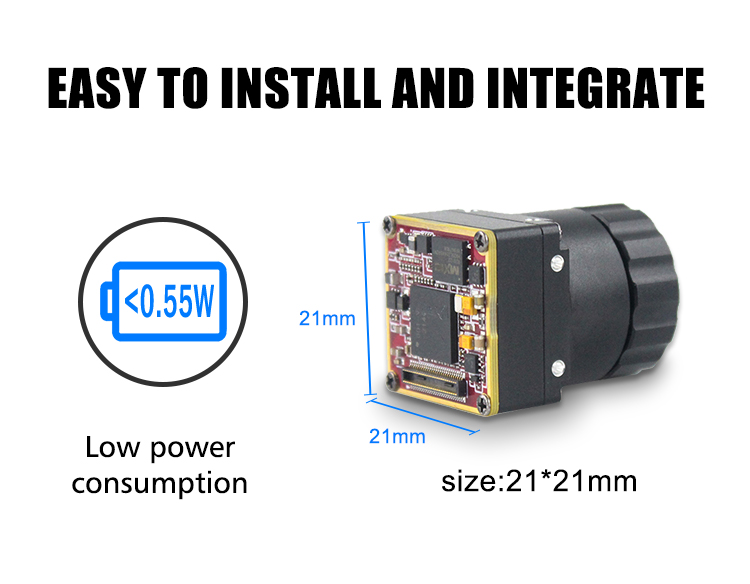
The basic physics cycle begins when an object emits infrared radiation. This radiant energy passes through a specialized lens element constructed of a material transparent to LWIR radiation, such as Germanium or chalcogenide glass. The lens focuses the energy onto the suspended micro-membranes of the microbolometer FPA. Each pixel in the array consists of a thin-film sensing material supported by legs above a silicon Read-In Integrated Circuit (ROIC). As the pixel absorbs radiation, its temperature changes, which in turn alters its electrical resistance. The ROIC continuously measures these resistance variations, converting them into digital counts representing raw thermal values.
Sensor Materials: VOx vs. a-Si
In the shop, we generally run into two primary thin-film materials suspended over the ROIC when choosing microbolometers:
- ✅ Vanadium Oxide (VOx): Widely recognized as the industry standard for high-performance industrial and consumer applications. VOx exhibits an exceptionally high Temperature Coefficient of Resistance (TCR), resulting in superior thermal sensitivity and lower 1/f noise. This translates to sharper thermal images and more stable temperature measurements.
- ✅ Amorphous Silicon (a-Si): Historically used as a lower-cost manufacturing alternative because it can be integrated directly into conventional CMOS foundry streams. While newer a-Si sensors have closed the gap, they generally exhibit lower sensitivity and higher overall noise figures compared to VOx at microscopic pixel pitches.
Pixel Pitch and Thermal Sensitivity (NETD)
Pixel pitch, defined as the physical distance from the center of one pixel to the center of the next, directly determines the physical dimensions of the sensor chip and its corresponding optics. The industry has rapidly evolved from 17-micron pixel standards down to ultra-compact 12-micron structures, and even down to 10-micron configurations in specialized military-grade hardware.
In mobile design, a smaller pixel pitch allows a 640 by 512 resolution sensor to fit within a physical footprint that previously could only accommodate a smaller 320 by 240 resolution sensor. This reduction drastically minimizes the overall cost, size, and weight of the lens assemblies. However, as the physical collection area of each individual pixel shrinks, it captures fewer thermal photons. To combat the potential rise in image noise, manufacturers have implemented sophisticated readout architectures to maintain low Noise Equivalent Temperature Difference (NETD).
NETD, measured in millikelvins (mK), is the key metric of thermal sensitivity. It represents the smallest temperature change that the sensor can resolve from the surrounding background noise. An NETD of less than 40 mK indicates that the sensor can distinguish temperature differences as tiny as 0.04 degrees Celsius. Low NETD figures are indispensable when operating in low-contrast thermal environments, such as locating damp areas behind plaster board or diagnosing minor electrical imbalances on complex circuit boards.
The Role of Non-Uniformity Correction (NUC)
Because microbolometer pixels are highly sensitive to their own ambient thermal energy and local heat dissipation within the smartphone housing, the raw image output always suffers from pixel-to-pixel drift, also known as fixed-pattern noise (FPN). To maintain a uniform and accurate image, the module must apply Non-Uniformity Correction (NUC). In typical configurations, a mechanical shutter drops periodically in front of the array to provide a completely uniform temperature reference, allowing the camera to recalibrate pixel offsets. In highly compact mobile accessories, engineers sometimes utilize shutterless NUC algorithms that predict and offset drift through heavy software-side computational models, which eliminates mechanical bulk but demands significantly more computational power from the host application processor.
For a deeper exploration of how modern microbolometer systems are integrated into physical projects, see this detailed resource on micro thermal camera modules in automated design and robotics.
2. The Mobile Integration Bottleneck: USB-C, UVC, & Power Budgets
Integrating a thermal sensor into a smartphone chassis or deploying it as an external plug-in accessory via USB-C introduces harsh hardware constraints. Unlike heavy industrial thermal cameras with dedicated processing units and large battery packs, a mobile thermal module must run efficiently on the smartphone's power supply and work within standardized driver frameworks without degrading the user experience.
Protocol Standardization: USB Video Class (UVC)
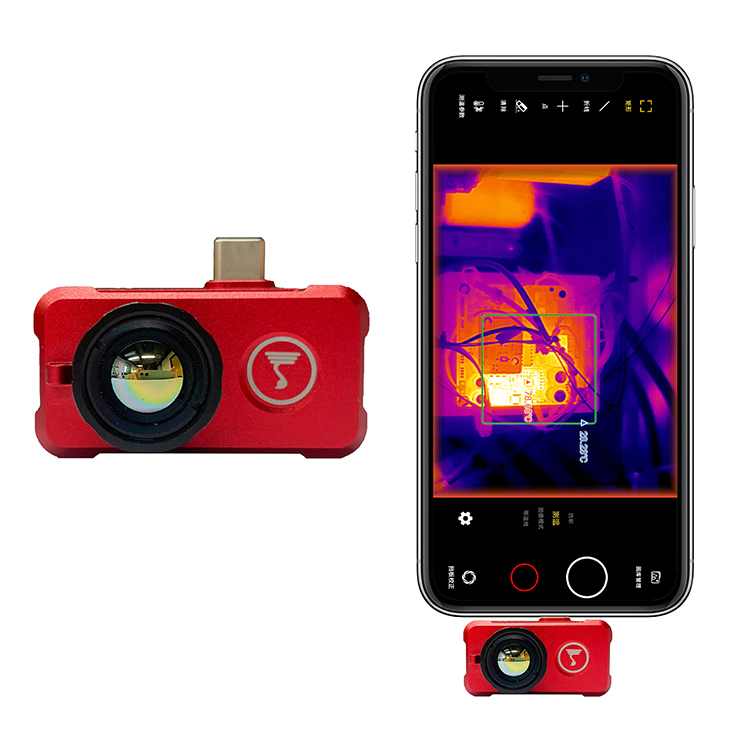
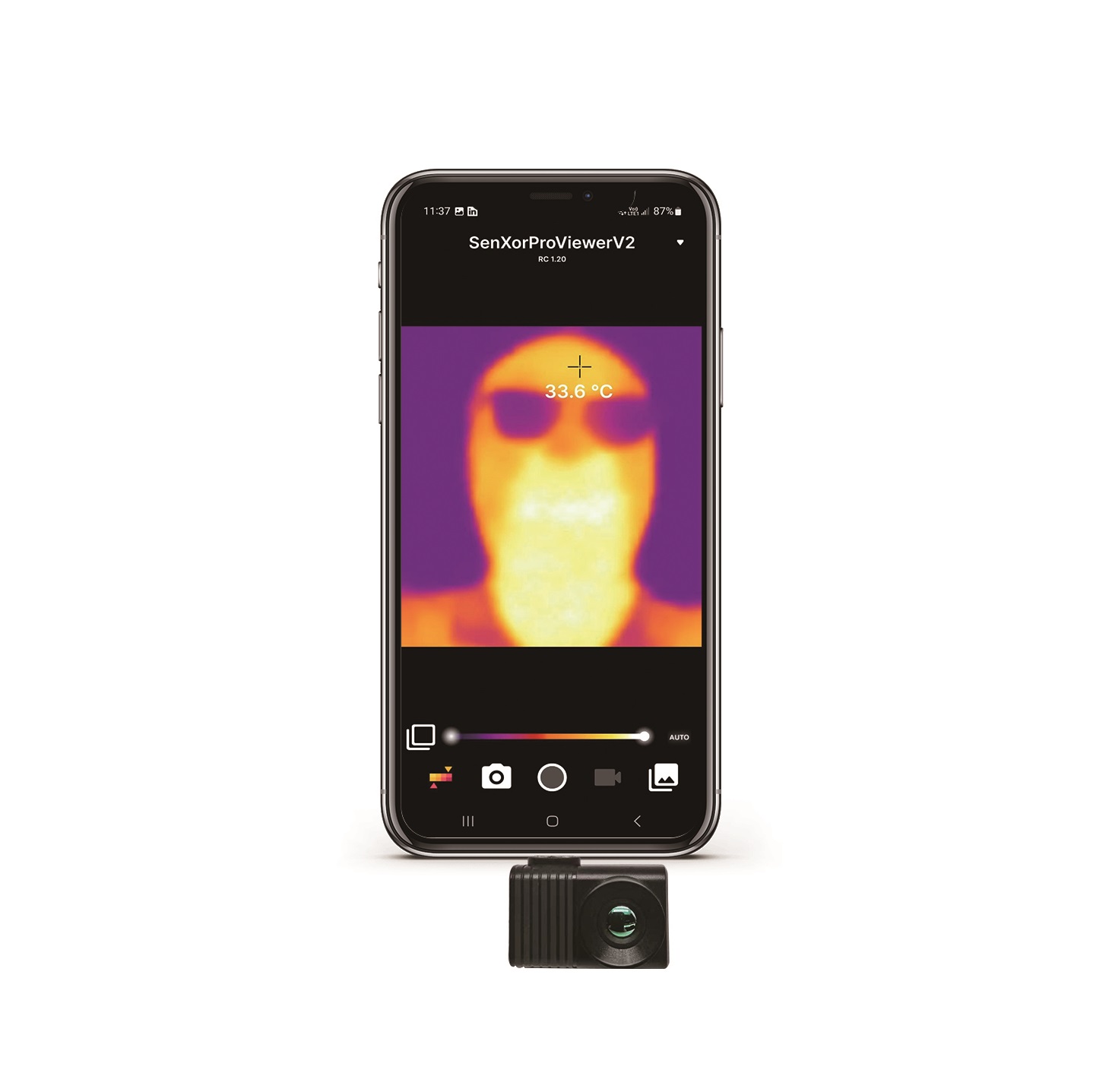
For external plug-and-play accessories, adopting the USB Video Class (UVC) protocol is highly recommended. By emulating a standard UVC device, the thermal camera module can stream video frames to Android, iOS, or Windows hosts without requiring custom drivers. This architecture facilitates rapid application development and ensures compatibility across a wide range of mobile OS versions. Prototyping platforms like Arduino and Raspberry Pi can quickly parse these streams during the initial validation phases.
However, standard UVC is optimized for standard visible color spaces (YUV or MJPEG) and does not natively support the transmission of uncompressed 14-bit (RAW14) digital data required for absolute radiometry (temperature measurement per pixel). To overcome this bottleneck, engineers must implement a dual-stream or multi-pipe framework:
- ⚙️ Stream 1: Standard YUV Video: One stream sends standard, color-mapped 8-bit YUV video for visual representation and UI rendering.
- ⚙️ Stream 2: RAW14 Data Stream: A secondary control transfer pipe or a custom extension unit (XU) streams the raw 14-bit data packets. This keeps display performance fast while ensuring the raw dataset remains available for precision analytics.
Power Subsystems and Heat Sinking
Thermal modules operate on low-power architectures, but every milliwatt counts when running off a smartphone's battery. A typical uncooled core consumes between 150 mW and 500 mW during steady-state operations. A sudden jump in current occurs during mechanical shutter activation when a small solenoid draws 100 mA to 200 mA additional current for less than 100 milliseconds. Designers must ensure the host power supply remains stable and noise-free during these rapid transient spikes to prevent digital lines from dropping frames.
Look, heat dissipation is the other side of this challenge. Because microbolometers are highly sensitive to ambient temperatures, heat bleeding from the phone’s CPU, battery, or screen backlight can skew temperature readings. Thermally isolating the accessory using low-thermal-conductivity mounting brackets (e.g., polyimide or ceramic spacers) is critical for maintaining precision. Active digital temperature sensors (thermistors) embedded on the FPA and ambient housing feed temperature calibration loops in real time, letting the software compensate for any thermal gradients across the sensor array.
Electromagnetic Compatibility (EMC)
Because mobile sensors operate in close proximity to high-frequency cellular antennas (5G, LTE), Wi-Fi, and Bluetooth transmitters, the thermal module's internal analog-to-digital converters (ADCs) must be thoroughly shielded. A lack of proper ground-plane design in the module's PCB can lead to horizontal scanning artifacts and high fix-pattern noise (FPN) when the phone radio is active. Metal shields on the camera casing and isolated differential signals are mandatory safeguards.
3. Thermal Optics & Lens Selection for Mobile Forms
Standard optical glass used in smartphone cameras is completely opaque to LWIR radiation. Instead, specialized infrared optics are required to focus thermal energy onto the sensor array. This makes selecting the lens assembly one of the most critical steps in configuring an OEM smartphone thermal imaging camera module.
Optical Materials: Germanium vs. Chalcogenide
Historically, Germanium (Ge) has been the material of choice for high-end infrared lenses due to its high refractive index (approximately 4.0) and ultra-low dispersion in the 8 to 12 micron band. However, Germanium is expensive and heavy. At elevated temperatures, its transmission performance drops drastically as the material undergoes thermal absorption transitions.
For lightweight and high-volume mobile devices, chalcogenide glass has become a highly popular alternative. Composed of an alloy of elements such as sulfur, selenium, and tellurium, chalcogenide can be molded into precise aspheric shapes, eliminating the need for expensive diamond turning during manufacturing. While it has a slightly lower transmission rating than Germanium, high-performance anti-reflective (AR) coatings minimize reflection losses to under 1.5 percent per lens surface. Innovations in chalcogenide lens production by pioneers like LightPath Technologies have drastically lowered the cost of compact LWIR assemblies, enabling scalable consumer pricing.
Lens Specifications: Field of View (FOV) and Spatial Resolution
In mobile integration, FOV is determined by the combination of the sensor's physical size (dictated by resolution and pixel pitch) and the focal length of the optical lens. Choosing the right focal length directly impacts the target application:
| Focal Length (mm) | Typical FOV (on 640x480, 12µm) | Primary Application Profile | Max Recommended Distance |
|---|---|---|---|
| 5.0 mm | ~88° × 66° | Wide-area indoor inspection, HVAC checks, construction modeling | 0.5m to 5m |
| 13.0 mm | ~33° × 25° | Industrial predictive maintenance, mechanical panels, close surveys | 2m to 20m |
| 35.0 mm | ~12.5° × 9.4° | Security perimeter scanning, search and rescue, animal observation | 15m to 100m |
| 75.0+ mm | < 6° narrow angle | Long-distance infrastructure modeling, aerial drone surveying | 50m to 500m+ |
For close-up component inspections on target circuit boards, Instantaneous Field of View (IFOV) is another key metric. IFOV defines the angular coverage of a single pixel, measured in milliradians (mrad). A smaller IFOV ensures that hot spots are not averaged out across adjacent cold zones, which is vital for precise temperature readings on micro-electronics.
4. Product Showcase: OEM Uncooled LWIR Core Modules
For system integrators selecting real-world components, the following physical modules illustrate the trade-offs between resolution, size, and functionality:
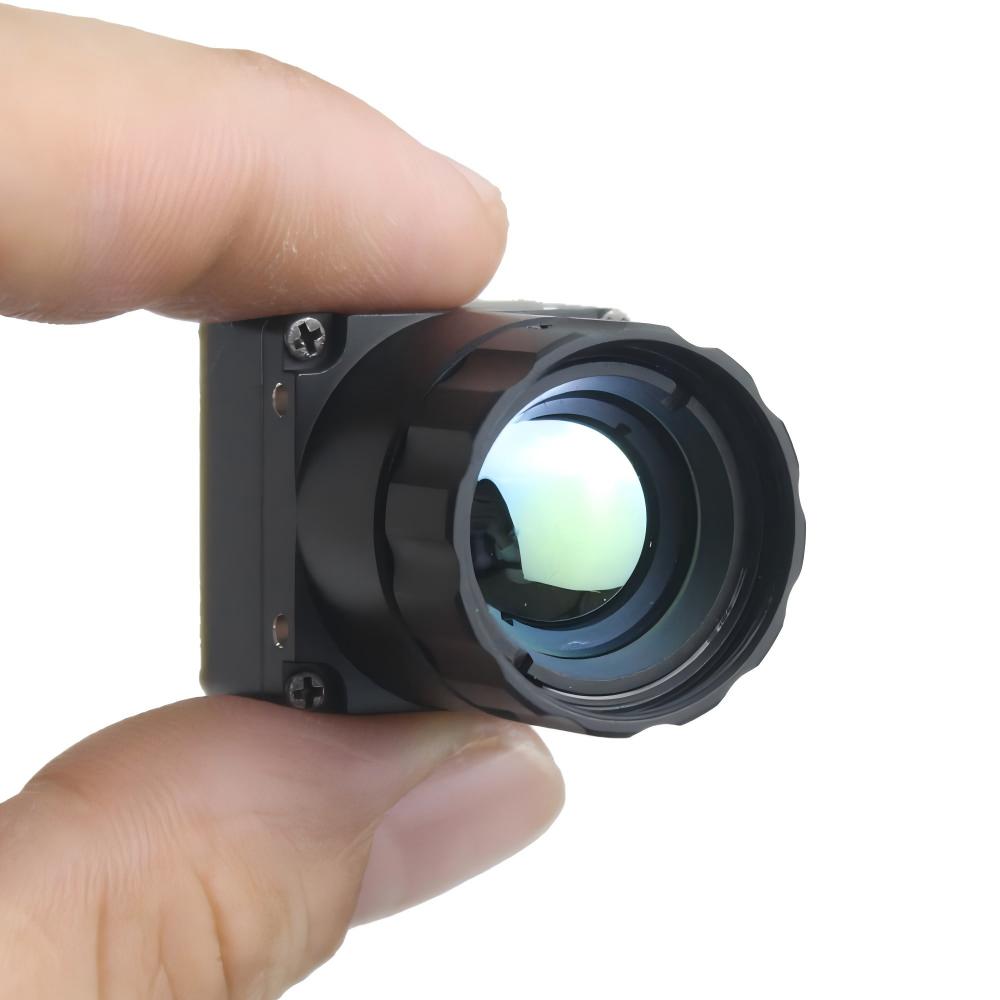
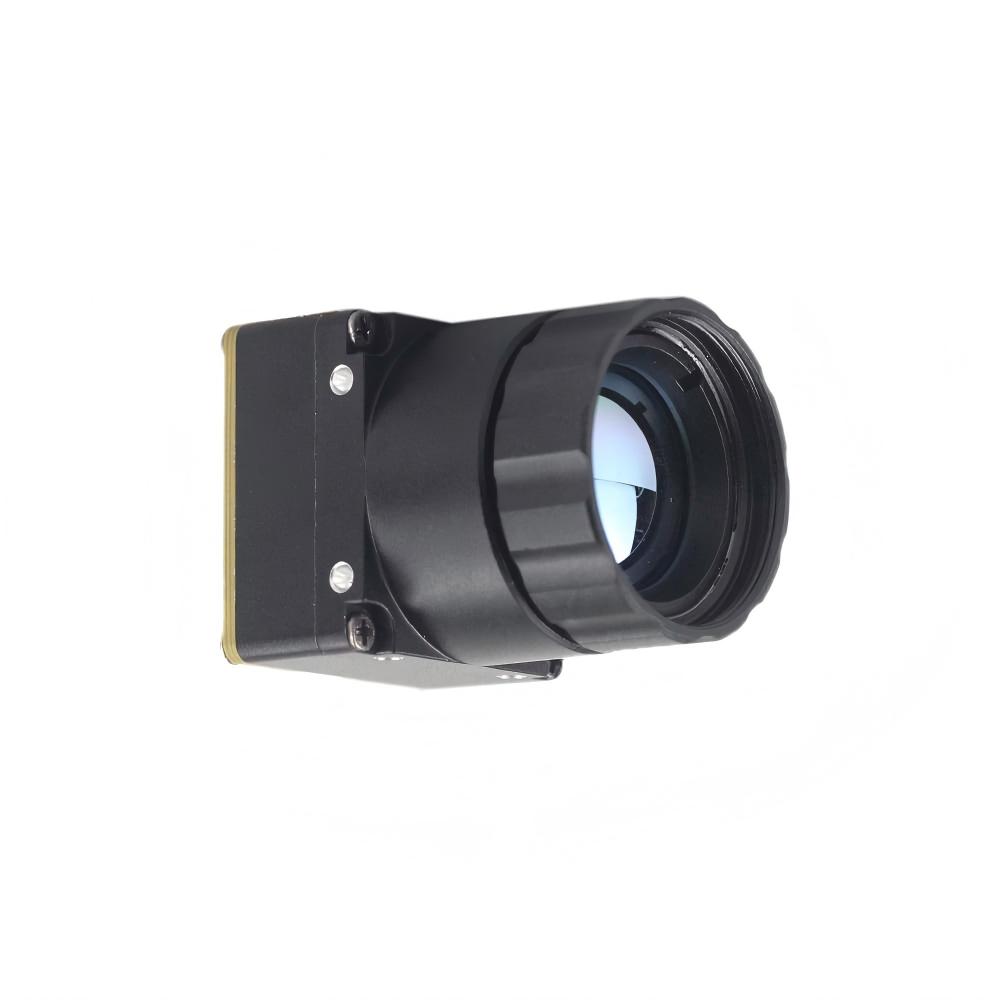
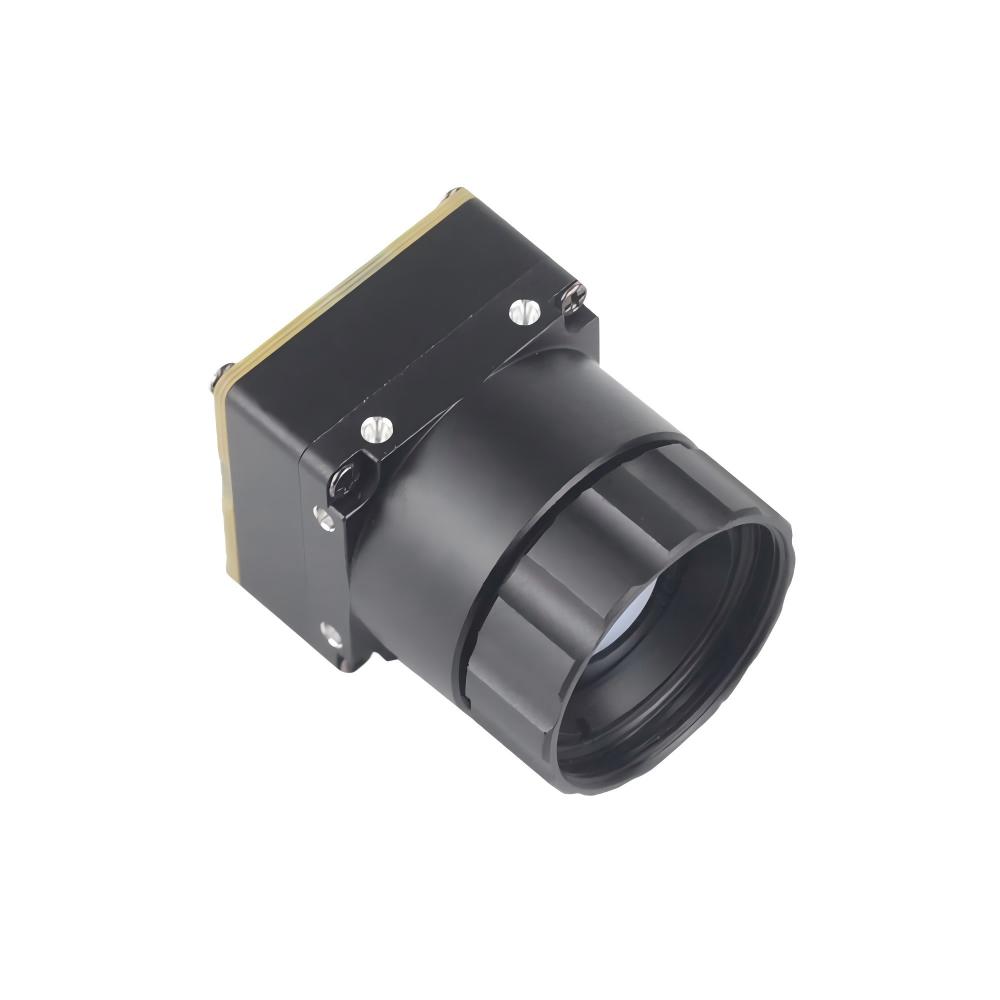
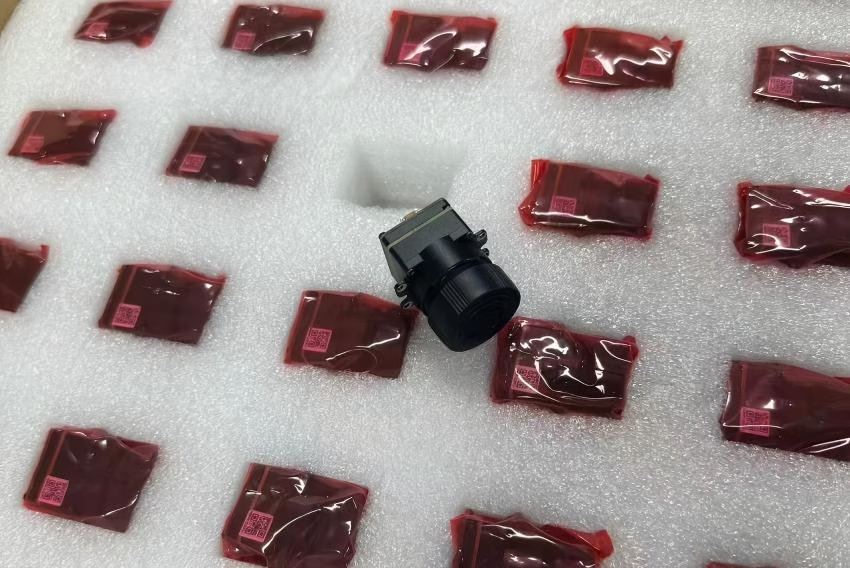
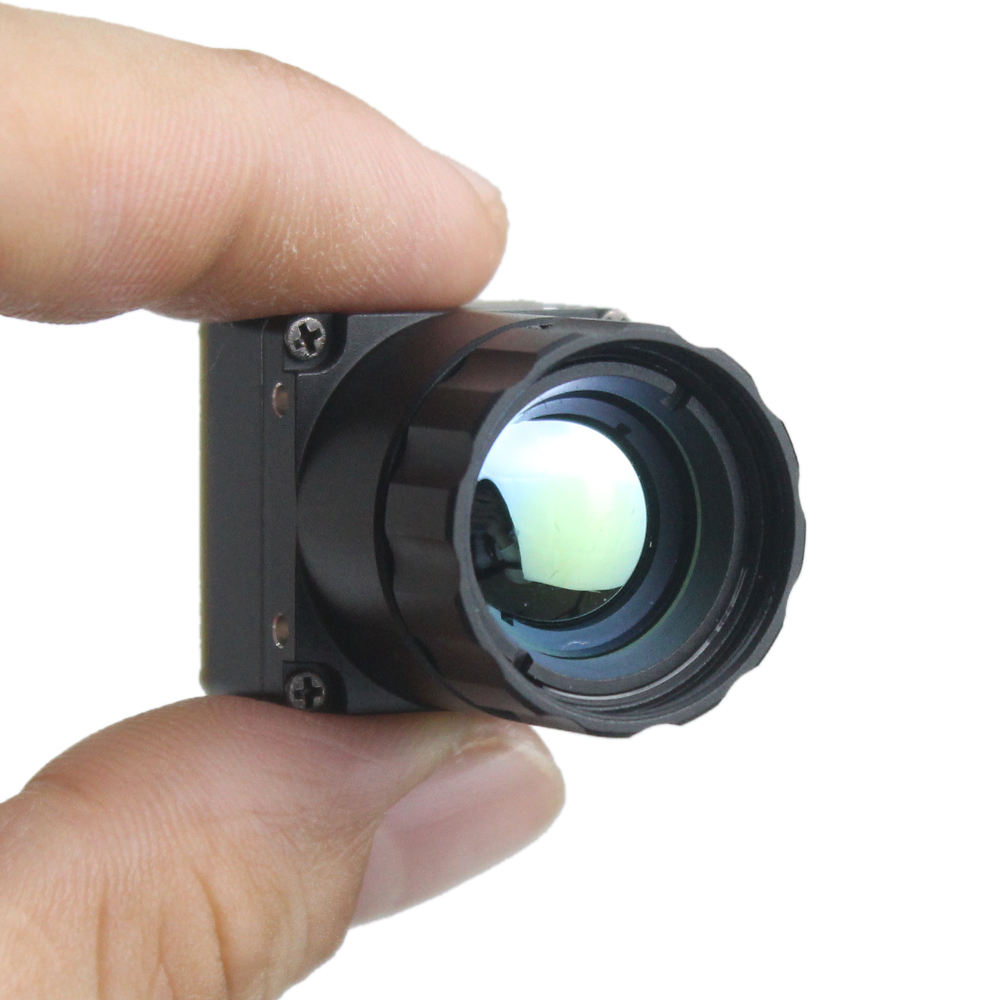
Uncooled LWIR USB Mini 640*512 Thermal Imaging Camera Core Module For Drones Similar To DJI
This high-resolution module delivers professional-grade LWIR imaging in an incredibly compact package. It is engineered for applications demanding sharp thermal clarity and broad structural modeling, making it ideal for drone payloads and high-end industrial systems.
Mini uncooled infrared thermal imaging module features in sharp and crisp image presentation, compact size and low cost.
Mini-Size of 21mm*21mm, 5/9/13/18/35/50/75/100/150mm, 640*480 resolution optional, stable performance and strong environmental adaptability.
View Product Details & Pricing ➔
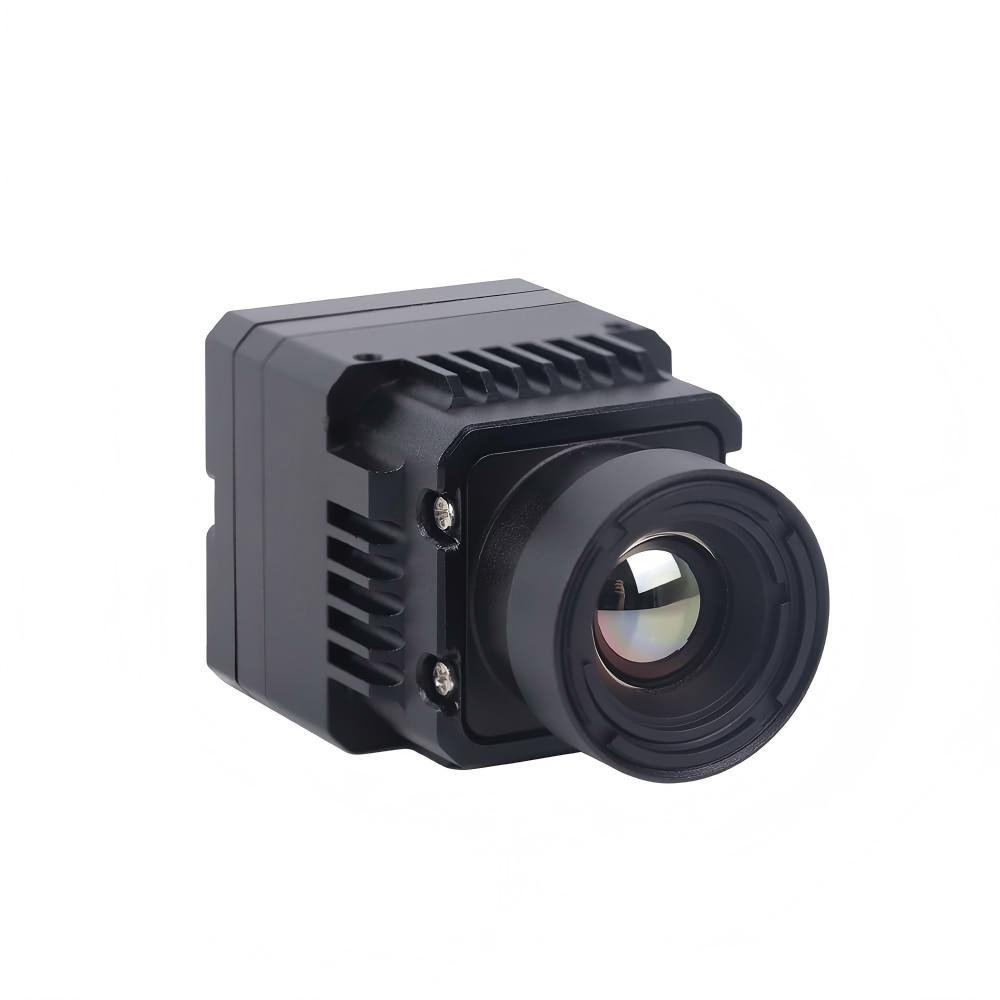
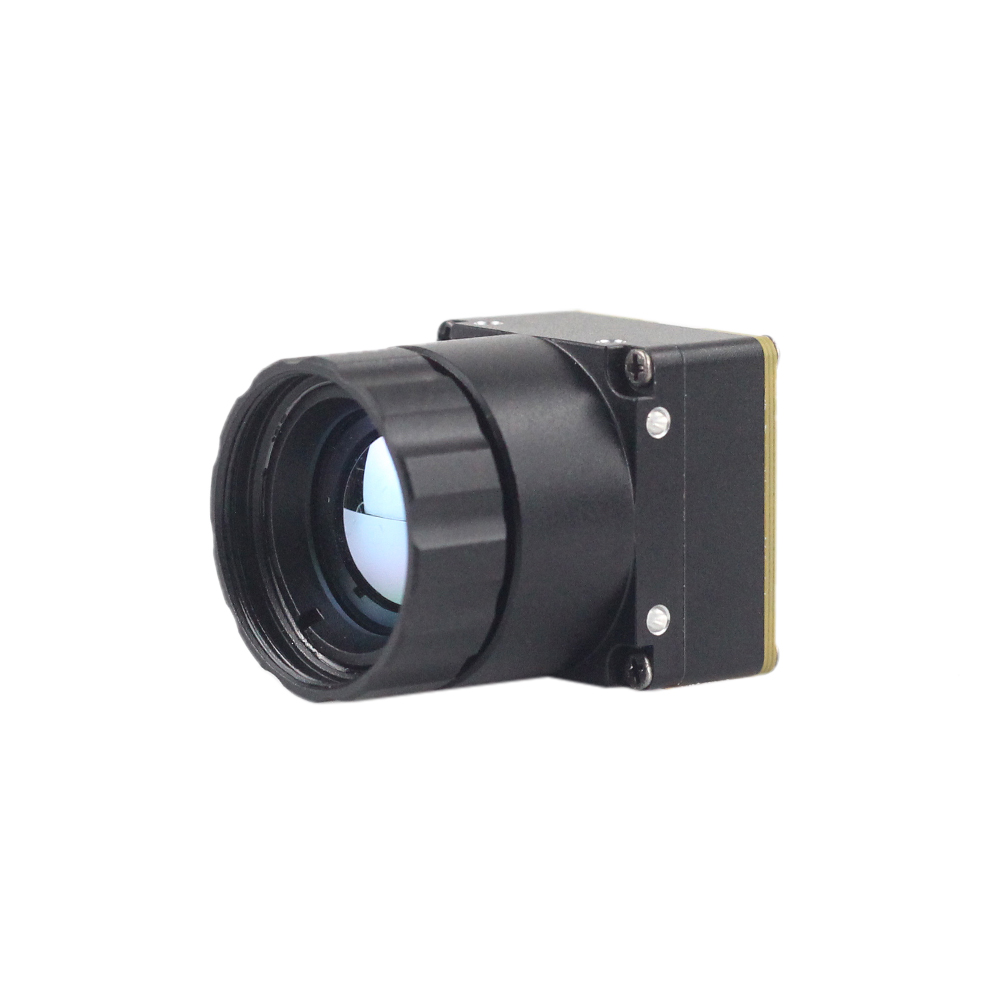
Uncooled LWIR Mini 256*192 Thermal Imaging Camera Module Similar To DJI For Detecting Mines
For budget-sensitive consumer or targeted safety equipment, this compact module offers a great balance of footprint and imaging quality. Designed for low-power operation, it is highly suited for handheld systems, battery-powered portable safety tools, and field assessments.
Mini 256 Uncooled LWIR thermal Camera Module adopts high-performance infrared detectors for ultra-clear thermal imaging and accurate temperature measurement. It captures infrared radiation and outputs a uniform thermal image with radiometry.
View Product Details & Pricing ➔
5. Software SDKs, Radiometry, & Calibration Algorithms
While proper hardware and optics are essential for clean data capture, a smartphone thermal imaging camera module relies heavily on host-side software to transform raw signals into temperature measurements and clear thermal imagery.
The Radiometric Calculation Equation
Uncooled microbolometers measure total LWIR power rather than direct surface contacts. Converting this raw pixel intensity, often called the Digital Number (DN), into a calibrated temperature requires correcting for several environmental variables, such as object emissivity, ambient reflection, and atmospheric transmission loss. The core math behind this calibration comes from Planck's radiation law, adjusted for real-world scenarios:
True_Radiation_Power = (Measured_Power - (1 - Emissivity) * Ambient_Reflected_Power) / Emissivity
If the target object has an emissivity of 0.95 (such as matte black paint), the measurement is highly stable because almost all of the captured energy originates from the object itself. However, if the target is polished copper (emissivity around 0.05), the sensor primarily measures reflections from the surrounding environment instead. A robust software API must allow real-time emissivity adjustments to ensure calculated temperatures remain accurate.
Dynamic Range Compression & Contrast Management
Raw thermal sensor data is typically digitized at 14-bit resolution, translating to 16,384 distinct gray levels. However, standard smartphone displays can only project 8-bit dynamic ranges (256 color states).
To produce a clear and useful image, the internal software must apply Dynamic Range Compression. Simple linear scaling often results in flat, washed-out images where slight temperature variances are lost in the noise. To prevent this, professional thermal systems use Contrast Limited Adaptive Histogram Equalization (CLAHE). CLAHE dynamically redistributes the 256 display colors based on local temperature variations in the scene, highlighting fine heat patterns in cooler areas without overexposing hot regions.
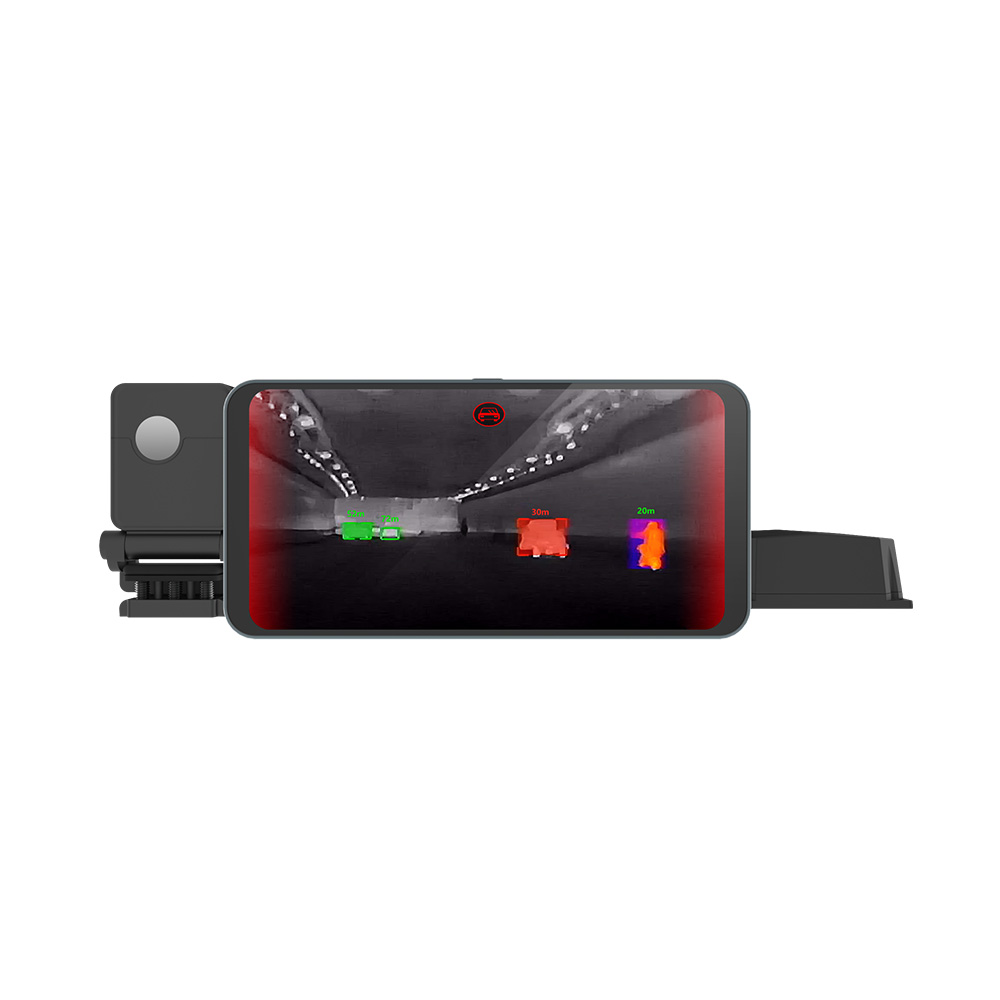
To see how these advanced calibration pipelines perform in demanding, high-stakes environments, explore this analysis of how thermal imaging systems improve driving safety and how thermal sensors are shaping automotive engineering.
6. Deep-Dive OEM Integration FAQ
Can mainstream smartphones like Apple or Samsung detect real thermal imaging natively, or are the apps fake?
Should I integrate a smartphone thermal camera module or buy a standalone thermal imaging device?
What should I look for in a high-value thermal imaging module for Android/iOS integration?
How does target emissivity degrade thermal measurement accuracy, and how can engineers compensate in their mobile app?
What calibration maintenance is required for mobile LWIR cores to prevent spatial noise over time?
📚 References & Further Reading
- Industrial Standard Prototyping: Arduino Development Hub
- Infrared Optical Physics: LightPath Technologies Chalcogenide Assemblies
- Related Guide (Automotive Integration): How Thermal Imaging Enhances Modern Automotive Safety
- Related Guide (Next-Gen Sensing): Infrared Thermal Technologies and Driving Frontiers
- Related Guide (OEM Integration): High-Resolution Micro Thermal Core Integration Guide
_