
How to Choose the Best Smartphone Thermal Imaging Camera Module: A Complete OEM Buyer’s Guide
2026年7月14日
Wholesales Portable Infrared Thermal Camera Module Mini: OEM Solutions
2026年7月15日
640*512 Thermal Camera Module: The Ultimate OEM Guide for Drone & AI Integration
In the rapidly advancing landscapes of unmanned aerial systems (UAS), edge-computing artificial intelligence, and automated industrial inspection, thermal imaging has transitioned from a specialized military asset to a foundational civilian and industrial sensor modality. Achieving the optimal balance between spatial resolution, thermal sensitivity, weight, power, and cost (SWaP-C) remains the primary engineering bottleneck for hardware architects. The 640*512 thermal camera module has emerged as the global industry benchmark—offering the precise sweet spot where pixel payload density matches the real-time processing limitations of embedded edge processors like NVIDIA Jetson, Raspberry Pi, and proprietary drone flight controllers.
To assist system integrators, optical designers, defense contractors, and drone OEMs in navigating the complexities of long-wave infrared (LWIR) hardware development, this comprehensive technical blueprint dissects the optical mechanics, sensor physics, interface protocols, and real-world deployment challenges of uncooled microbolometer cores. By analyzing sensor performance metrics, radiometric data streams, and hardware processing pipelines, this guide establishes a rigorous selection framework for engineering projects requiring robust, high-performance infrared payloads.
Table of Contents
- 👉 1. Optical & Sensor Physics: Why 640*512 LWIR is the OEM Sweet Spot
- 👉 2. Interface Protocols and Embedded Integration Frameworks
- 👉 3. Deep UAV Flight Controller & Edge AI Processing Pipelines
- 👉 4. Purpleriver OEM Thermal Cam Products & Technical Specifications
- 👉 5. Calibration, Radiometry, and Environmental Ruggedization
- 👉 6. Deep-Dive Hardware Engineering FAQ
1. Optical & Sensor Physics: Why 640*512 LWIR is the OEM Sweet Spot
Underpinning the physics of thermal imaging is the detection of infrared radiation in the Long-Wave Infrared (LWIR) spectrum, typically ranging from 8 μm to 14 μm. At these wavelengths, the dominant source of radiation is blackbody emissions from objects at terrestrial temperatures, generally spanning from -40°C to 150°C. A 640*512 thermal camera module utilizes an uncooled microbolometer—an array of MEMS (Micro-Electro-Mechanical Systems) thin-film resistors suspended over a silicon read-out integrated circuit (ROIC). As infrared radiation strikes these suspended elements, the material's temperature fluctuates, causing a measurable shift in electrical resistance that the ROIC translates into raw digital values.
Let's talk numbers because that is where the rubber meets the road. The choice of a 640*512 pixel array represents a massive mathematical advantage over lower-resolution options. An array of 640*512 yields exactly 327,680 individual pixels. Comparing this to a standard entry-level 384*288 core (which possesses only 110,592 pixels) reveals a 2.96x increase in total spatial resolution. In the field, that mathematical gap is the difference between identifying a critical failure and guessing at noise. This spatial density directly dictates the sensor's optical performance capabilities, quantified by key parameters:
- ⚙️ IFOV (Instantaneous Field of View): Defined by the equation IFOV = d / f, where d is the pixel pitch (typically 12 μm in modern architectures) and f is the lens focal length. A smaller pixel pitch coupled with a higher resolution array translates to a significantly narrower IFOV. This allows system operators to resolve intricate target details at far greater distances, which is critical for overhead drone reconnaissance.
- ⚙️ NETD (Noise Equivalent Temperature Difference): Typically expressed in millikelvins (mK), NETD represents the sensor's thermal sensitivity. Premium 640*512 ASIC cores routinely achieve an NETD of ≤40mK or ≤50mK. This means the sensor can resolve temperature differentials as minute as 0.04°C, an essential requirement for recognizing structural faults, moisture intrusion, or human heat signatures against cluttered background noise.
- ⚙️ Drift and Ambient Compensation: Unlike visible light CMOS sensors, microbolometers are highly susceptible to ambient optical temperature changes. Professional-grade OEM cores utilize automated shutter mechanisms or shutterless algorithms to continually calibrate the offset variations across the sensor active array. For deeper material analysis on thermal conduction in automotive and industrial thermal sensor housings, see the insights on Thermal Imaging: Safeguarding the Safety of Automobile Driving.
When you are deploying these sensors in harsh, unpredictable environments, mechanical alignment and high-integrity component connections are absolutely vital. In our projects, we rely on standard hardware prototyping tools such as Arduino microcontrollers for ambient telemetry logging, while high-frequency digital lines require secure physical interconnections. These interconnect systems, such as miniature dynamic board-to-board connectors engineered by Amphenol, ensure loss-free thermal and digital signal propagation during intense physical vibrations experienced on drone wings or within heavy machinery.
2. Interface Protocols and Embedded Integration Frameworks
Integrating a high-resolution 640*512 thermal microbolometer core into a custom embedded system requires deep-level matching of digital and analog physical interfaces. Depending on the target system’s processing constraints, weight boundaries, and software architecture, developers must choose the correct hardware bus profile.
Analog vs. Digital Output Pipelines
Look, for legacy designs or low-latency analog RF transmitters on FPV drones, the CVBS (Composite Video Baseband Signal) interface remains highly viable. CVBS outputs a real-time, zero-latency NTSC or PAL television signal. However, modern digital-first architectures rely on digital serialization streams. These are typically segmented into native parallel interfaces, serialized buses, and network streaming layers:
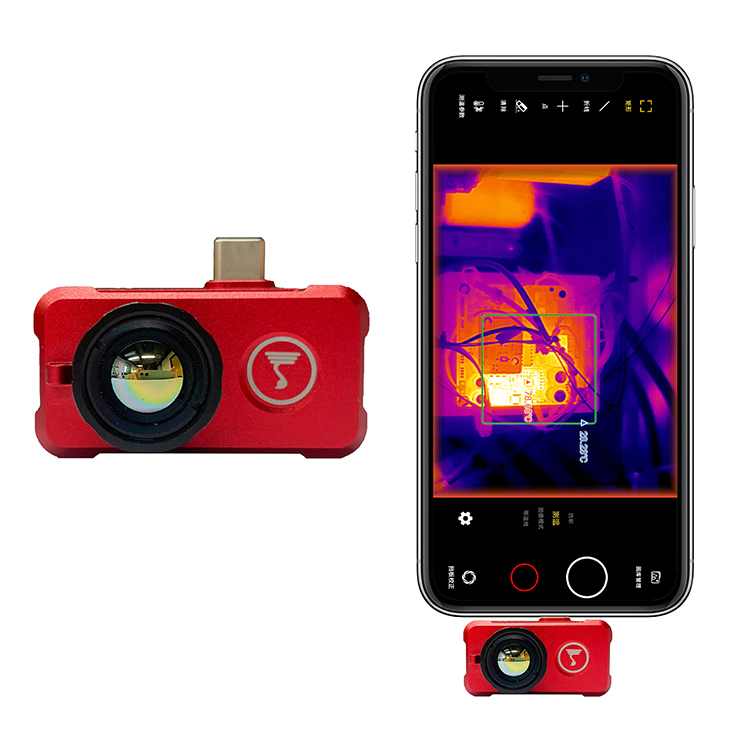
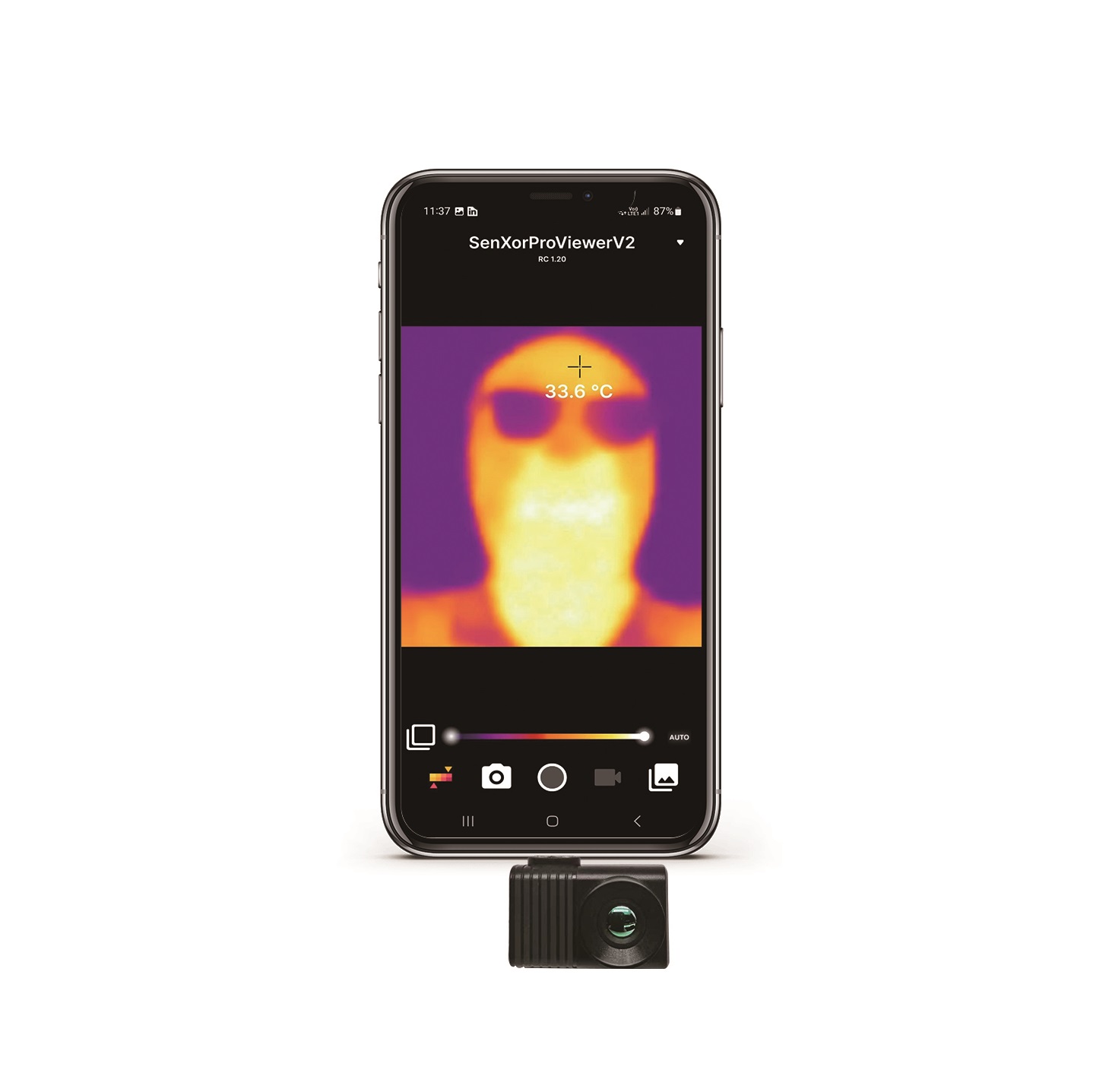
- ⚙️ USB & USB Type-C: Operates as a plug-and-play UVC (USB Video Class) device. This interface allows the microbolometer to stream raw, uncompressed 14-bit radiometric digital data or 8-bit colorized YUV/RGB video directly to host controllers without custom kernel drivers. This is ideal for quick software development on systems like the Raspberry Pi or Android-based handheld tools.
- ⚙️ RJ45 IP Streams (RTSP Protocol): For security infrastructure and enterprise UAV operations, integrating an RJ45 port onto the ASIC carrier board allows the core to encode video onboard using H.264 or H.265 compression codecs. The video is then broadcast as a Real-Time Streaming Protocol (RTSP) IP stream, which can be monitored remotely via Ethernet.
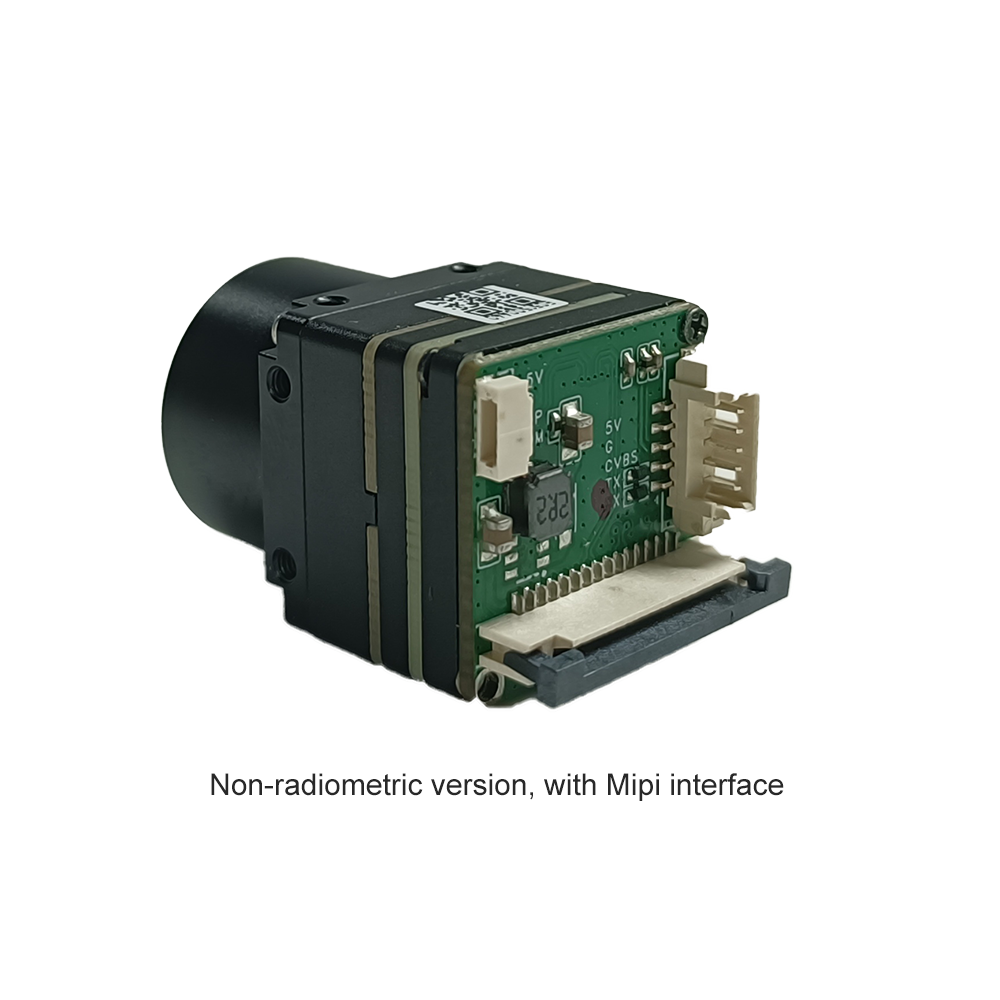
- ⚙️ MIPI CSI-2 & Parallel CMOS: Flat-ribbon interfaces utilized for direct, ultra-low-latency chip-to-chip connection with single-board computers (SBCs). These interfaces bypass compression overhead, allowing for the execution of time-sensitive machine vision operations on raw sensor outputs.
| Interface Class | Bandwidth Potential | Maximum Cable Length | Integration Complexity | Best Fit Application |
|---|---|---|---|---|
| Parallel/MIPI CSI-2 | Very High (Uncompressed) | < 15 cm | High (Requires custom kernel driver) | SBCs, Jetson Nano, Custom PCB Design |
| USB-C / UVC | High (Raw Radiometric) | < 3 meters | Low (Standard OS Class Driver) | Rapid prototyping, PC, Android handheld devices |
| RJ45 (Ethernet/RTSP) | Medium (Compressed H.264/265) | Up to 100 meters | Medium (Standard TCP/IP Networking) | Security CCTV, Long-range UAV telemetry slip rings |
| CVBS Analog | Low (Standard Definition) | Depends on coaxial shielding | Extremely Low (Direct Screen Binding) | FPV drones, Legacy telemetry links |
3. Deep UAV Flight Controller & Edge AI Processing Pipelines
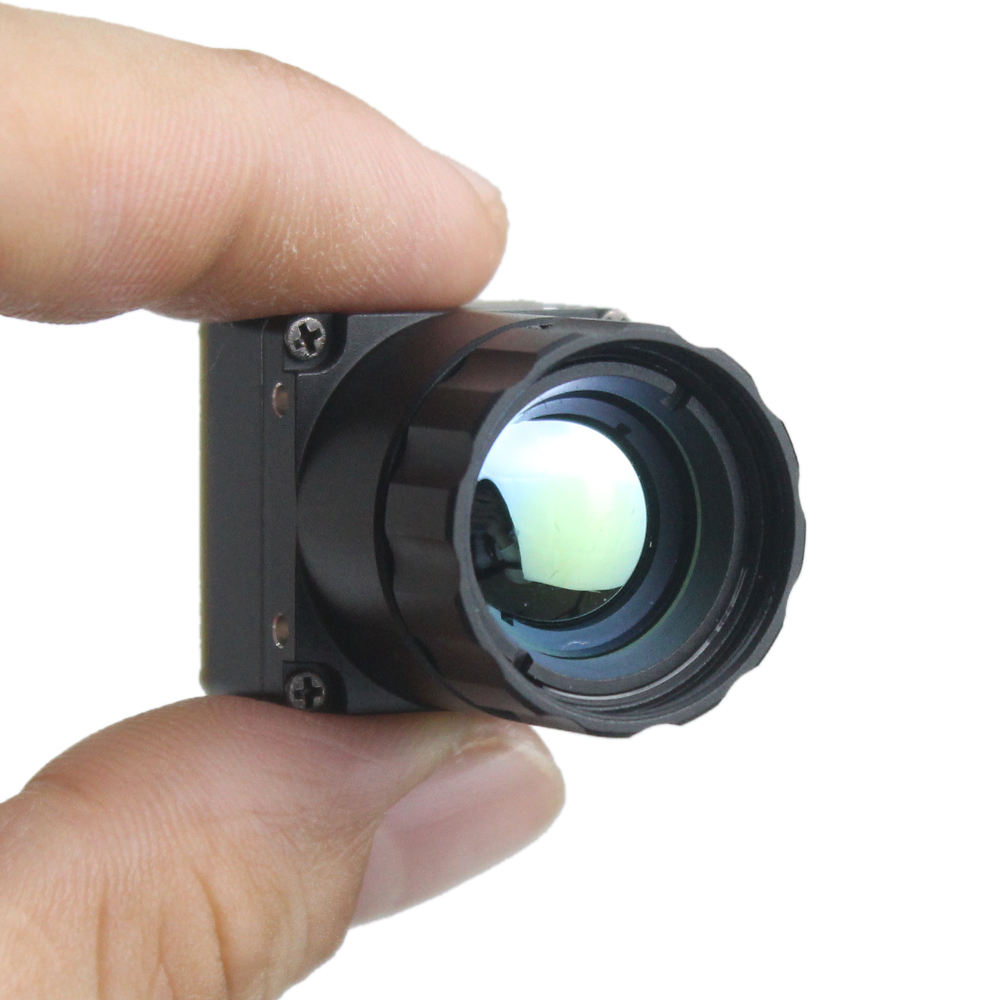
Integrating a thermal camera module onto a UAV requires strict adherence to physical payload limitations and electrical design parameters. The flight dynamics of multirotors require lightweight hardware; every additional gram of payload weight reduces flight endurance minutes. In the shop, we prioritize ultra-compact mini-size modules (such as those measuring 21mm * 21mm) to minimize aerodynamic drag, ease mechanical balancing within mini-gimbals, and keep power draw to an absolute minimum.
From a hardware perspective, a drone’s autopilot system (such as ArduPilot or PX4 running on Pixhawk hardware) coordinates flight telemetry but does not possess the processing capacity to parse 640*512 radiometric data. Thus, developers use a co-processor scheme: a high-efficiency Edge AI single-board computer acts as an intermediary payload companion. This companion computer receives raw frames from the thermal core, processes target identification metadata, and relays navigation adjustments to the flight controller over serial protocols (such as MAVLink).
Recommended Reading on UAV Edge AI Topologies:
Establishing stable video pipelines on compact payloads is difficult. For structured analysis on matching mini LWIR uncooled cores inside drone gimbals to edge processing boards, read the comprehensive industry breakdown at Best LWIR Thermal Imaging Camera Module Mini Cores for Edge AI & UAVs.
In autonomous inspection and surveillance, AI algorithms must execute inference operations locally to prevent network latency failures. Typical AI pipelines run custom-trained YOLO (You Only Look Once) or MobileNet object detection networks on the incoming 14-bit thermal feed. Because uncooled LWIR cameras are not affected by solar glare, shadows, or complete darkness, they provide a highly consistent dataset for neural networks. This makes them ideal for tasks like wild animal tracking, structural inspection, and search-and-rescue operations. Processing must be optimized using tensor acceleration frameworks (like TensorRT) to guarantee a stable 30 FPS pipeline on the Edge computing platform.
4. Purpleriver OEM Thermal Cam Products & Technical Specifications
To support high-reliability engineering integration, we provide catalog listings and comprehensive raw technical parameters for our leading uncooled 640*512 LWIR thermal imaging modules. These cores are specifically engineered for drop-in drone integration and embedded AI systems.
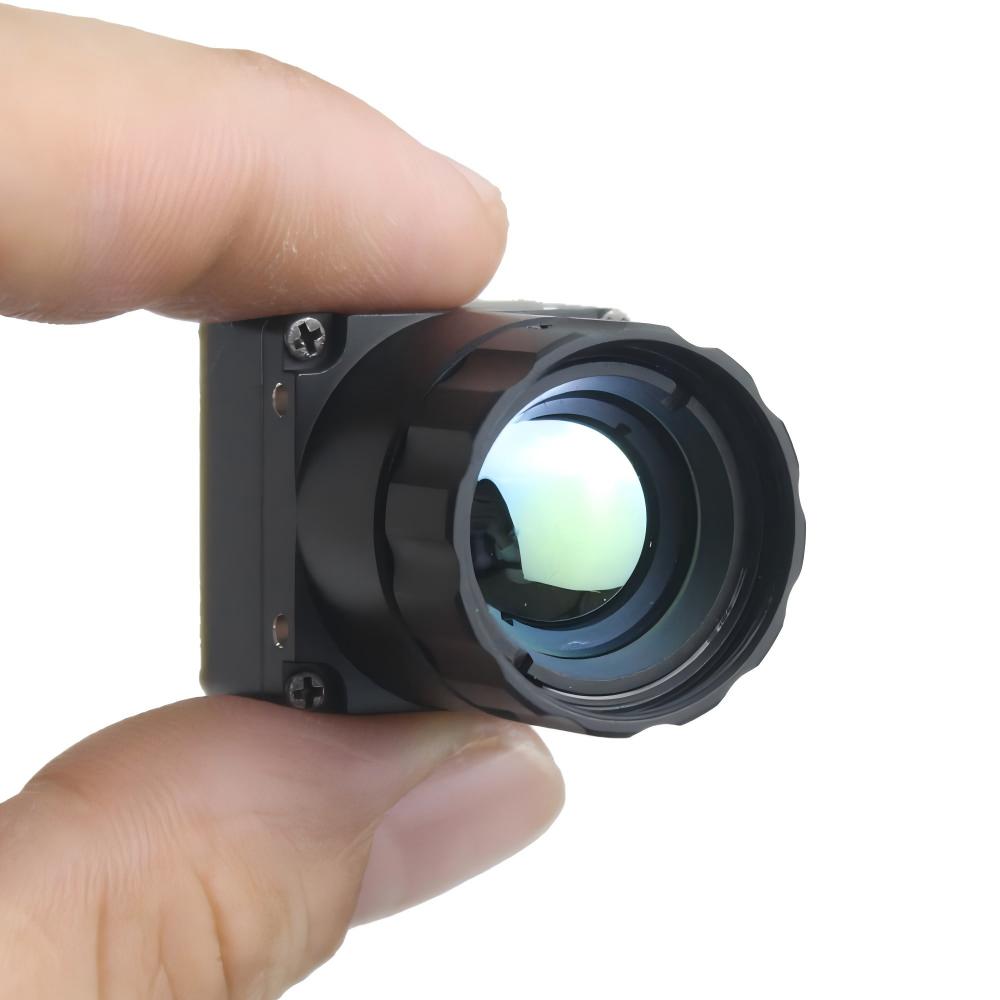
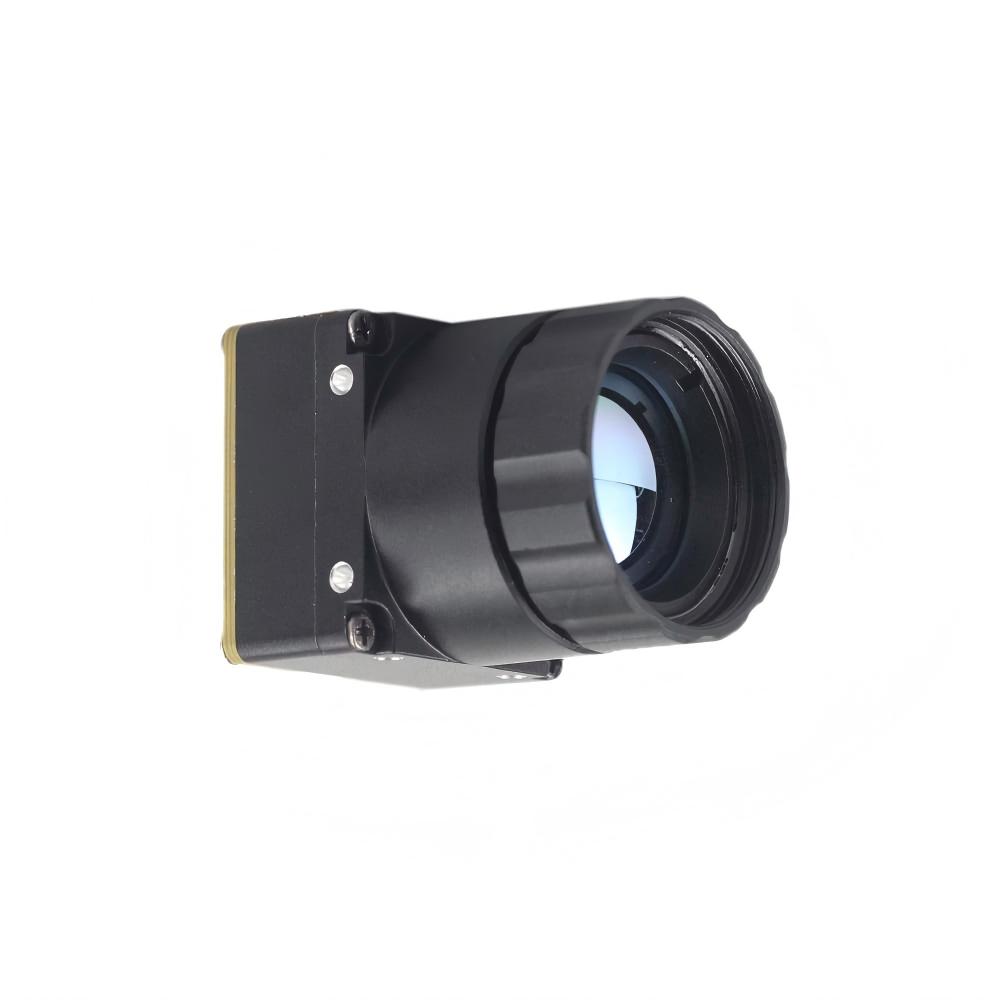
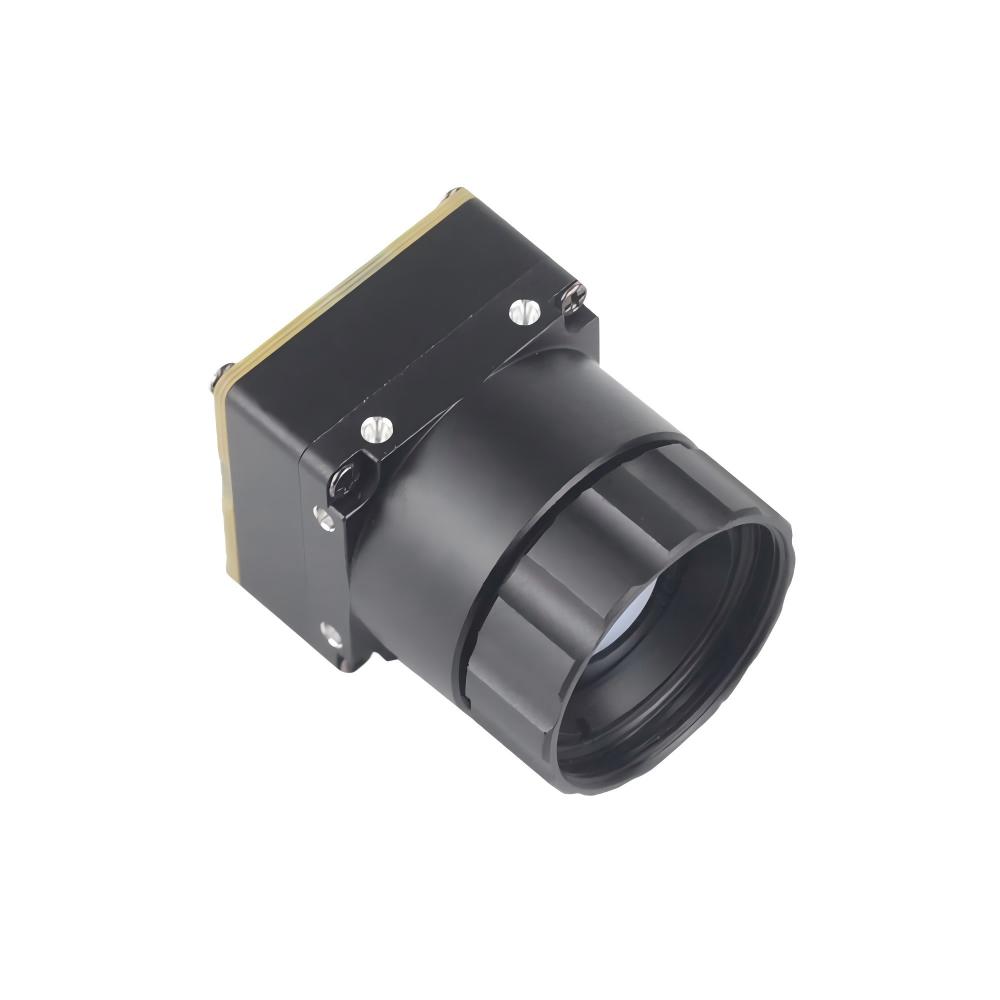
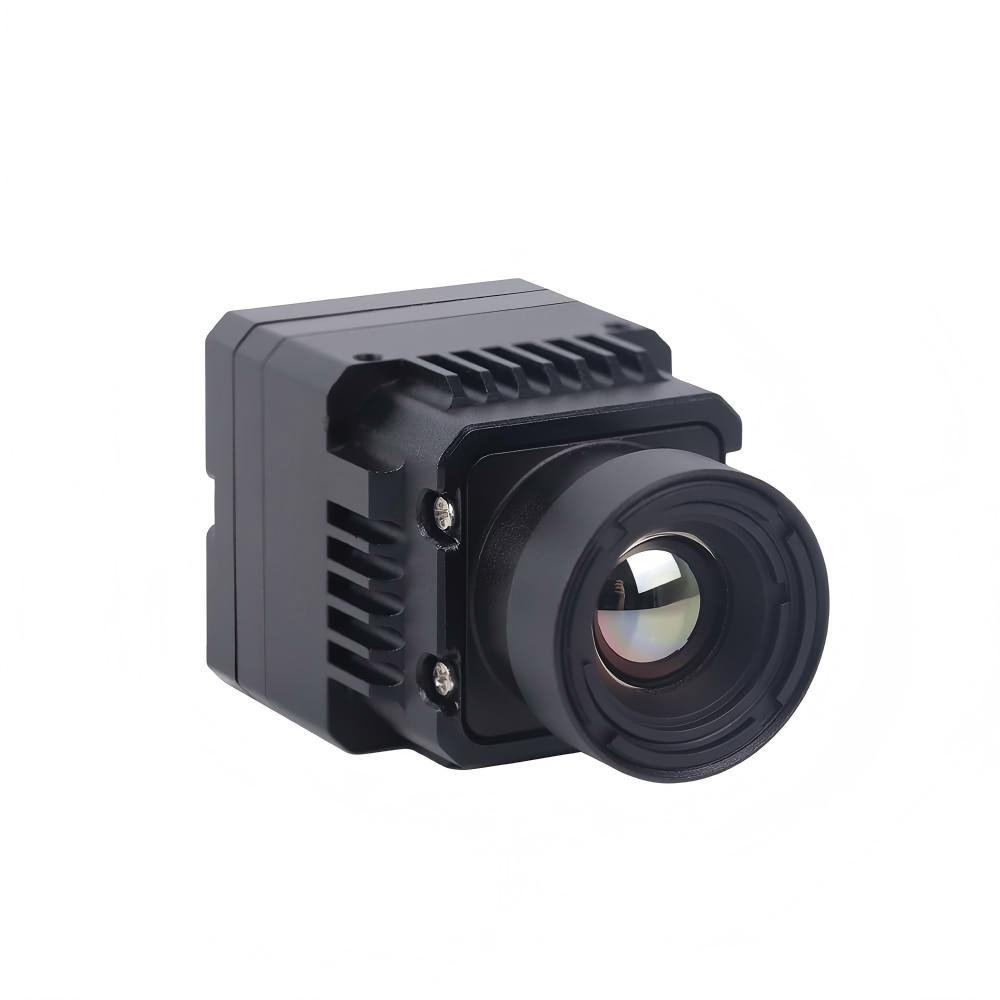
Uncooled LWIR USB Mini 640*512 Thermal Imaging Camera Core Module For Drones Similar To DJI
Mini uncooled infrared thermal imaging module features in sharp and crisp image presentation, compact size and low cost.
Product Profile: This incredibly compact Uncooled LWIR USB Mini 640*512 thermal imaging sensor module delivers crisp, high-definition infrared video outputs while maintaining an exceptionally small mechanical footprint. Designed to meet the stringent SWaP-C requirements of drone manufacturers, it serves as a lightweight alternative to consumer thermal payloads.
Primary Applications: Micro-UAV gimbals, handheld night-vision monoculars, portable electrical inspection tools, IoT agricultural thermal imaging nodes.
| Technical Parameter | Engineering Specification Value |
|---|---|
| Resolution Options | 640*480 & 640*512 Active Microbolometer Array |
| Physical Form Factor Size | Mini-Size of 21mm*21mm (Carrier-board dependent) with stable performance and strong environmental adaptability |
| Optical Lens Selection | 5/9/13/18/35/50/75/100/150mm focal lengths optional |
| Primary Data Interfaces | USB, USB Type-C, Raw Digital Output Channels |
| Core Feature Profile | Sharp and crisp image presentation, compact size and low cost |
Uncooled Infrared RJ45 CVBS RTSP IP 640*512 Thermal Sensor Camera Module
Uncooled Infrared Mini 640*512 ASIC Thermal Imaging Camera Module For Drones
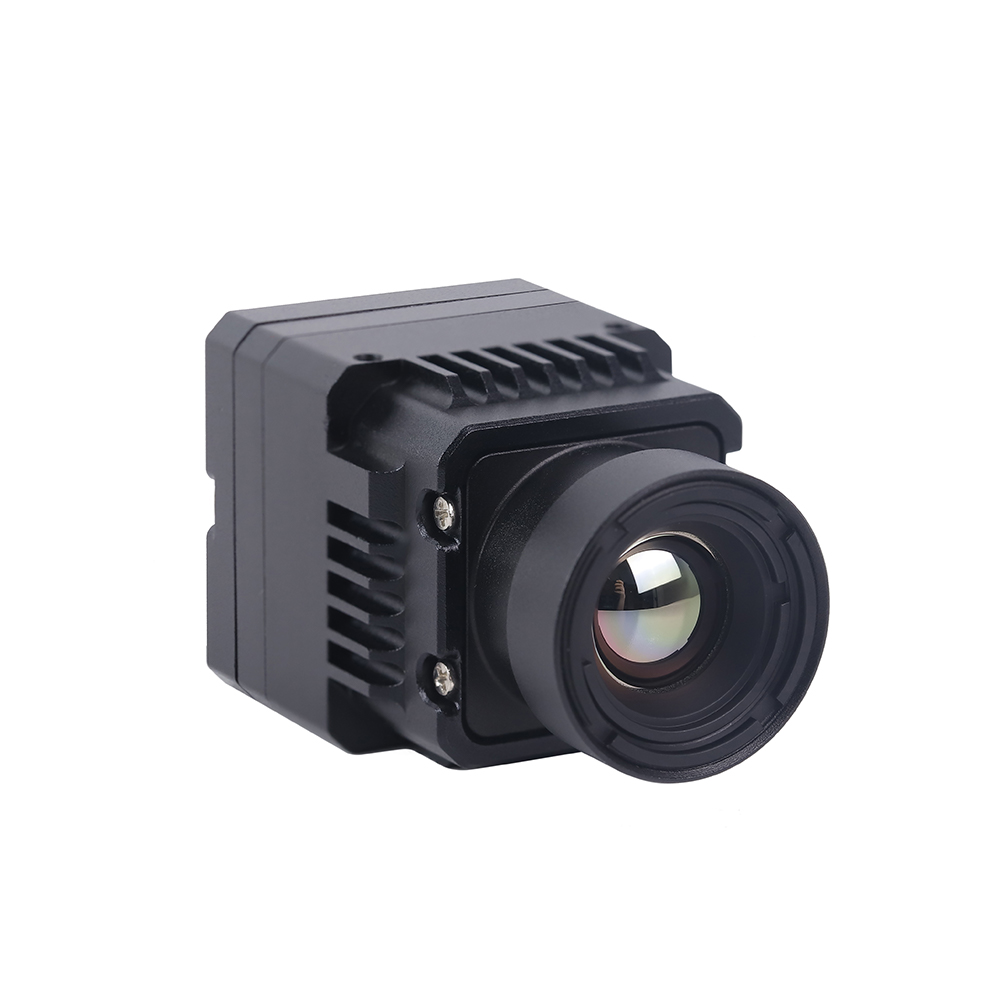
Product Profile: Backboned by our specialized onboard Application-Specific Integrated Circuit (ASIC) processing core, this powerful module encodes and streams live video directly over Ethernet IP standards. This module simplifies integration by handling heavy video compression and network stack processing on-chip, freeing up resources on the host system.
Primary Applications: Perimeter security network cameras, industrial fixed thermal monitors, network-enabled AI search-and-rescue arrays, agricultural animal monitoring.
| Technical Parameter | Engineering Specification Value |
|---|---|
| Sensor Configuration | Uncooled Infrared Mini 640*512 array with ASIC Thermal Imaging processing engine |
| Output Interfaces | RJ45 Ethernet, CVBS analog, RTSP/Onvif network stream architecture |
| Integration Target | Drop-in payload optimization for commercial Drones and fixed installations |
| Network Streaming Profile | Real-time video streaming with low latency encoding directly processed on the module |
5. Calibration, Radiometry, and Environmental Ruggedization
In professional B2B settings, thermal camera modules must maintain calibration and performance under challenging operational conditions. Key considerations include:
1. Radiometric vs. Non-Radiometric Sensors
Here's the deal: a standard thermal camera module provides a visual representation of temperature differences using color palettes. In contrast, radiometric modules are calibrated to measure the absolute temperature of each pixel. This requires complex processing algorithms to correct for environmental factors such as atmospheric absorption, target emissivity, and reflected ambient energy.
2. Calibration Under Varied Thermal Profiles
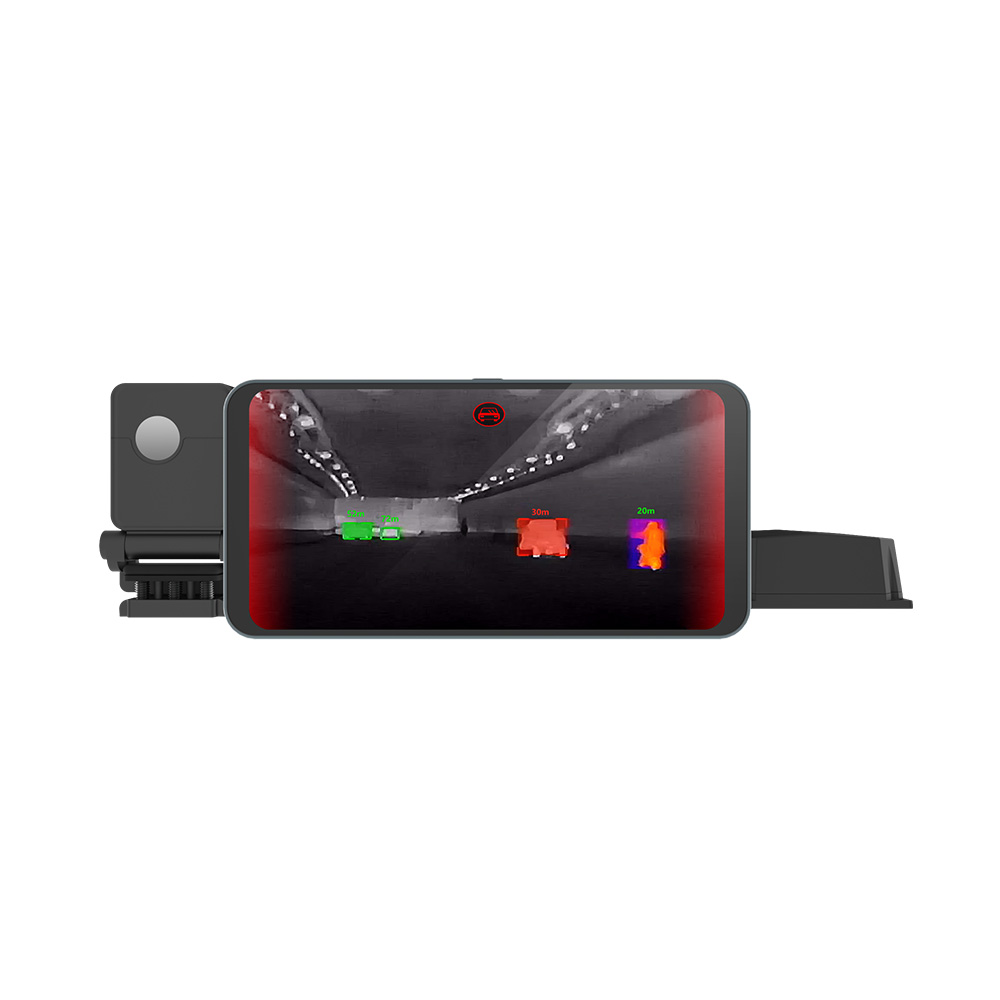
Uncooled microbolometers are highly sensitive to thermal fluctuations within the camera module housing. To prevent pixel drift, high-performance designs utilize automated calibration mechanisms or predictive software algorithms to dynamically adjust the sensor's response curves. This is especially critical in transport applications, where rapid temperature transitions occur as vehicles move from tunnels to open terrain. For a detailed analysis of thermal housing dynamics in automotive environments, see Infrared Thermal Imaging Paves the Way for New Driving Frontiers.
3. Electromagnetic and Mechanical Protection
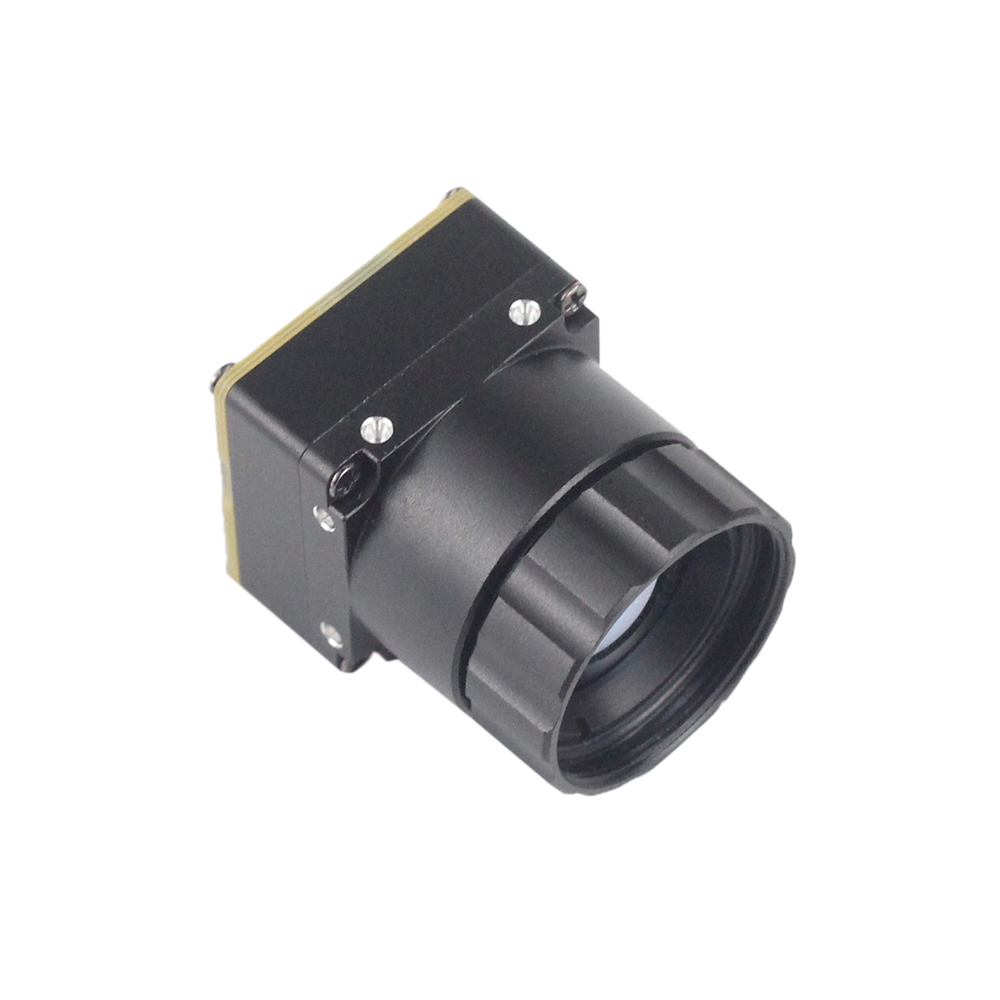
Integrating a thermal module into rugged outdoor platforms requires shielding against electromagnetic interference (EMI) and mechanical stress. Using high-grade interconnects from trusted industrial manufacturers like Amphenol ensures stable signal transmission during high-vibration drone flights or inside industrial machinery. Additionally, the optical assembly must be sealed to protect against dust and water ingress (typically IP67 rated) while using germanium-coated lenses to protect the sensitive internal elements.
6. Deep-Dive Hardware Engineering FAQ
Why choose a 640*512 thermal module over 384*288 for drone and security integration?
Can your 640*512 thermal camera module stream live high-resolution video to Raspberry Pi or custom embedded systems?
How does Purpleriver address the common issues of low frame rates and image lag in compact thermal modules?
📚 References & Further Reading