
CMOS Sensor Selection & Integration: Commercial Sourcing Guide for AI & Thermal Vision Systems
2026年8月24日
384x288 Thermal Camera Module: The Sweet-Spot Sensor for Drones & Machine Vision
2026年8月25日

True IR vs. Near-Infrared: Ultimate Guide to True Thermal Sensor Modules
Let's clear the air on something that drives optical engineers up the wall: the word "infrared" gets thrown around far too casually in the security and drone industries. If you walk into a trade show or browse commercial specs, you will see sub-$50 dashcams and budget security rigs claiming "infrared night vision" because they have a cluster of 850 nm or 940 nm LEDs soldered around a standard lens. Here's the deal: that is Near-Infrared (NIR). It is not thermal imaging. It is simply active flashlight surveillance operating just outside what the naked human eye can see, bouncing reflected photons off whatever is directly in front of the lens.
True IR—specifically Long-Wave Infrared (LWIR) sitting between 8.0 and 14.0 µm—operates on entirely different physics. You aren't collecting bounced light from an artificial beam. You are measuring pure, emitted blackbody radiance radiating directly out of physical matter. This difference is not semantic; it is a fundamental hardware divide. It separates a cheap camera that goes pitch black the second your LED illuminator runs out of throw distance from a calibrated radiometric engine that spots heat signatures through thick fog, cuts through zero-lux dust storms, and calculates exact surface temperatures down to hundredths of a degree.
For systems engineers, unmanned aerial vehicle (UAV) payload integrators, and industrial automation architects, picking the wrong sensor topology ruins projects. Specifying NIR when you need LWIR means complete contrast failure the moment smoke or marine fog rolls in. You get zero target acquisition beyond artificial beam range, and zero capability to run automated temperature threshold triggers. Moving from an active-illumination Silicon CMOS sensor to a passive Vanadium Oxide (VOx) microbolometer core isn't a small upgrade—it is a shift from imaging reflected light to measuring thermodynamic state variables. This guide breaks down the raw physics, focal plane arrays, lens materials, processing pipelines, and OEM integration rules so you can build your platforms right the first time.
Table of Contents
- 👉 1. Spectral Physics: The Electromagnetic Boundary (NIR vs. SWIR vs. MWIR vs. True IR)
- 👉 2. Sensor Core Engineering: CMOS Photodiodes vs. Uncooled VOx Microbolometers
- 👉 3. Optical Physics & Transmission: Germanium vs. Optical-Grade Glass
- 👉 4. Image Processing & Edge Radiometry: ASICs, NUC, and Dynamic Range Compression
- 👉 5. Application Matrix: Industrial Automation, UAV Payloads, and Defense
- 👉 6. OEM Product Specifications & Hardware Showcase
- 👉 7. Engineering Deep-Dive FAQ
1. Spectral Physics: The Electromagnetic Boundary (NIR vs. SWIR vs. MWIR vs. True IR)
When you sit down to design an electro-optical payload, the first thing you have to look at is the radiation math. Everything in the universe warmer than absolute zero (0 Kelvin or -273.15 °C) radiates electromagnetic energy. How much energy and at what wavelength is governed directly by Planck’s Radiation Law:
L(λ, T) = (2 · h · c²) / [ λ⁵ · (exp((h · c) / (λ · k_B · T)) - 1) ]
Where h is Planck’s constant, c is the speed of light, k_B is the Boltzmann constant, T is the target's absolute temperature in Kelvin, and λ is the wavelength. Pair that with Wien’s Displacement Law (λ_peak ≈ 2898 / T µm·K), and you quickly realize why different sensor technologies exist. As target temperatures shift, their peak emission waveband moves dramatically across the spectrum.
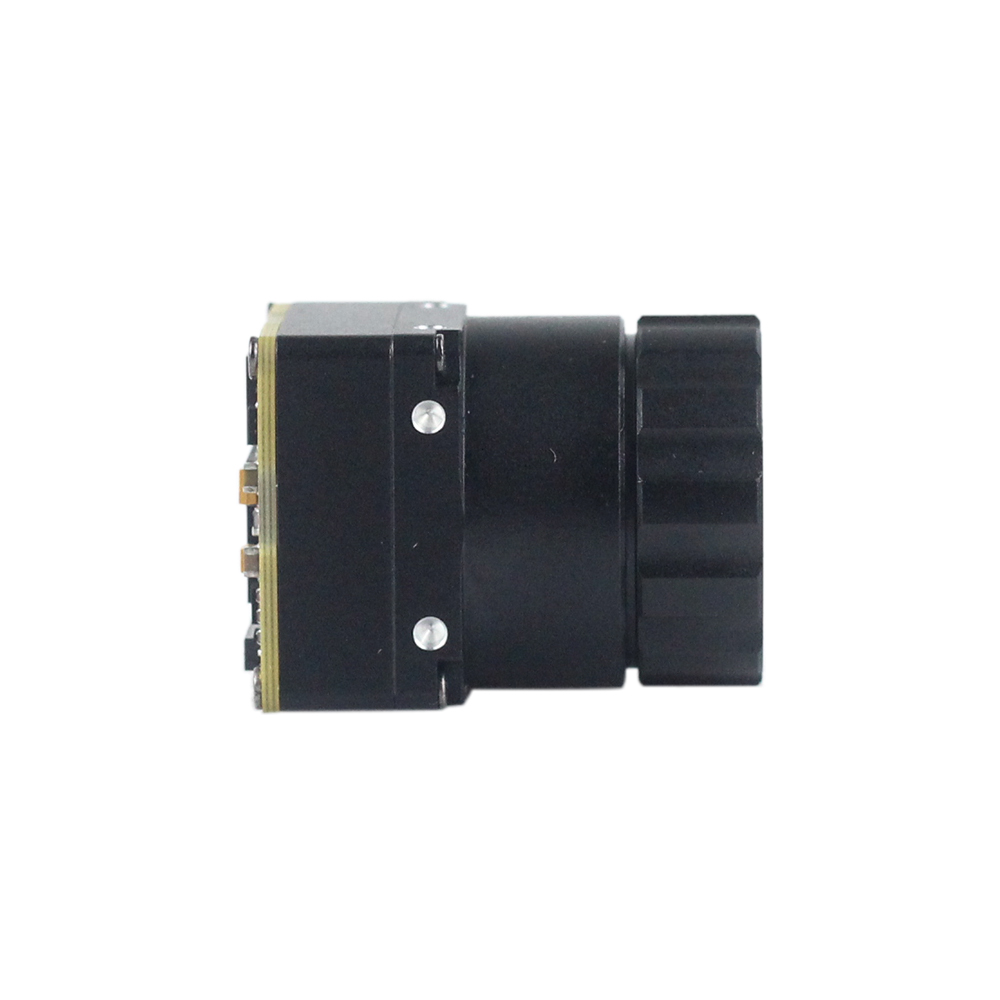
To cut through marketing jargon, here is how the electro-optical spectrum breaks down in the field:
- 🔍 Near-Infrared (NIR: 0.75 – 1.0 µm): Sitting right on the shoulder of visible light, NIR photons behave almost identically to red visible light. Ambient objects between -40 °C and +85 °C emit practically zero measurable thermal photons here. When an NIR camera gives you a night picture, it is 100% reliant on reflected photons—either from the moon or an 850 nm / 940 nm LED emitter. Cut the illuminator power, and your sensor goes completely dark. Worse, because the wavelength is so short, particulate matter like fog and smoke scatters it instantly via Rayleigh and Mie scattering.
- 🔍 Short-Wave Infrared (SWIR: 1.0 – 2.5 µm): SWIR is a fascinating transitional waveband. It still behaves largely like reflected light, meaning you get intuitive shadows and high-contrast facial recognition, but it uses specialized Indium Gallium Arsenide (InGaAs) sensors. SWIR can see through standard glass optics, punch right through atmospheric haze, and spot specific chemical or moisture absorption bands. You can image extremely hot objects like molten metal or furnace linings (500 °C+), but for everyday ambient scenes, it won't give you thermal emission data.
- 🔍 Mid-Wave Infrared (MWIR: 3.0 – 5.0 µm): MWIR matches the first major atmospheric transmission window where self-emitted thermal radiation from hot items (300 °C to 1000 °C, like jet exhausts or industrial flare stacks) becomes intense. Built around materials like InSb (Indium Antimonide) or MCT (Mercury Cadmium Telluride), these focal plane arrays deliver insane spatial resolution and long-distance contrast. But there is a catch: they require cryogenic Stirling cycle coolers running at 77 Kelvin. The size, weight, power draw, and mechanical maintenance (SWaP-C) of those coolers make MWIR impractical for small UAVs and tight automation enclosures.
- 🔍 Long-Wave Infrared (LWIR / "True IR": 8.0 – 14.0 µm): This is true, uncooled thermal imaging. Terrestrial targets—humans, vehicles, soil, concrete, industrial machinery—radiate their peak thermodynamic energy right in this 8–14 µm band. A True IR microbolometer doesn't care if you are in a windowless bunker or an open field at midnight. It needs zero ambient lighting, ignores visual camouflage entirely, cuts straight through heavy smoke or dust, and provides calibrated data for real radiometric temperature calculations. If you are designing a payload and need advice on form factor selection, check out our breakdown on how to choose the best infrared thermal imaging camera module.
2. Sensor Core Engineering: CMOS Photodiodes vs. Uncooled VOx Microbolometers
The gap between Near-IR and True IR starts right inside the semiconductor crystal lattice. You cannot solve an optical problem in software if the physical sensor material literally cannot interact with the incoming photons.
Silicon CMOS Sensor Physics (The NIR Ceiling): Standard visible and NIR cameras are built on Silicon (Si) active-pixel CMOS architectures. Silicon has a bandgap energy of about 1.1 eV at room temperature. When a photon hits the photodiode with energy greater than that bandgap, it knocks a valence electron into the conduction band (the photoelectric effect), creating an electron-hole pair that gets collected as charge. But photon energy is inversely proportional to wavelength (E = h · c / λ). Once you push past 1.1 µm, photon energy drops below the 1.1 eV threshold. The physics simply stop working: Silicon becomes completely transparent to long-wave thermal photons. No amount of sensor amplification or ISO boosting can make a standard CMOS chip read an 8–14 µm thermal emission.
Microbolometer Arrays (The True IR Engine): True IR modules throw out the photoelectric effect entirely. Instead, they use thermal absorption arrays called microbolometers. Look at a microbolometer array under an electron microscope, and you won't see a standard flat chip; you will see thousands of microscopic MEMS bridge membranes suspended on structural legs over a Silicon Readout Integrated Circuit (ROIC). The entire die is sealed under high vacuum inside a wafer-level package (WLP) to eliminate convective and conductive heat loss to the chassis.
The active sensing film on these micro-bridges is almost universally Vanadium Oxide (VOx) or Amorphous Silicon (a-Si). In modern optoelectronics, VOx is the gold standard. It features a massive Temperature Coefficient of Resistance (TCR)—typically shifting its electrical resistance by 2% to 3% for every single Kelvin change in temperature—while maintaining exceptionally low 1/f flicker noise. Specialized wafer foundries, such as JM Chip, have dialed in WLP processes down to 12 µm and 10 µm pixel pitches, packing massive thermal resolution into tiny modular cores.
Here is what happens during an exposure cycle:
- ⚙️ Photon Absorption: The incoming 8–14 µm thermal flux hits the suspended VOx membrane, heating it by a fraction of a millikelvin.
- ⚙️ Resistance Shift: That minute temperature change causes a measurable drop in the electrical resistance of the VOx film.
- ⚙️ ROIC Sampling: The underlying Readout Integrated Circuit injects a calibrated bias voltage across the bridges, reading the micro-ohmic variations across the entire matrix simultaneously.
- ⚙️ High-Bit Digitization: Onboard high-speed ADCs turn those analog voltage shifts into clean 14-bit or 16-bit digital counts representing raw scene radiance.
3. Optical Physics & Transmission: Germanium vs. Optical-Grade Glass
One of the most expensive mistakes an engineer can make during hardware prototyping is mounting a True IR thermal core behind a standard glass or acrylic protective window. In the lab, it seems intuitive: glass is transparent, right? But the physics of molecular resonance tell a completely different story.
Standard optical glasses—fused silica, borosilicate, standard BK7, and acrylics—have high internal transmission from 0.35 µm up to about 2.0 µm. Beyond 2.5 µm, the silicon-oxygen (Si-O) bonds in the glass lattice begin to vibrate, creating massive multi-phonon absorption resonance bands. In the 8.0–14.0 µm True IR waveband, regular glass behaves like a solid brick wall. In fact, to an LWIR sensor, a glass window looks like an opaque, shiny mirror that reflects the thermal signature of the room back at the sensor. Point an uncooled microbolometer at a window, and you won't see what's outside—you will just see the surface temperature of the glass pane itself.
To bend and focus LWIR photons, you have to use specialized infrared optical substrates:
- 💎 Monocrystalline Germanium (Ge): Germanium is the undisputed king of thermal optics. It has a staggering refractive index (n ≈ 4.00 at 10 µm), which allows optical designers to create fast f/1.0 and f/1.1 apertures with shallow curvature and minimal spherical aberration using very few lens elements. Coated with Broad-Band Anti-Reflective (BBAR) and Diamond-Like Carbon (DLC) layers, Germanium lenses achieve over 95% photon transmission and can survive harsh salt spray, desert sand abrasion, and high-vibration flight environments.
- 💎 Chalcogenide Glass: Made by combining chalcogen elements (sulfur, selenium, tellurium) with germanium or arsenic, chalcogenides are glass compounds engineered specifically for infrared transmission. Unlike single-crystal Germanium, chalcogenide can be precision hot-molded into aspheric and diffractive shapes, which cuts manufacturing costs in high-volume production. Even better, it has a tiny thermal index coefficient (dn/dT), making it crucial for designing passively athermalized lenses that hold optical focus from -40 °C up to +85 °C without mechanical motor compensation.
- 💎 Zinc Selenide (ZnSe) & Zinc Sulfide (ZnS): Grown via Chemical Vapor Deposition (CVD), these materials offer wide transmission envelopes stretching from the visible spectrum all the way out to 14 µm. Cleartran (multi-spectral ZnS) is the material of choice when you need a single common optical aperture that handles visible, SWIR, and LWIR channels at the same time on a multi-sensor payload gimbal.
4. Image Processing & Edge Radiometry: ASICs, NUC, and Dynamic Range Compression
Raw digital data streaming off an uncooled microbolometer array looks awful. If you wired the raw 14-bit ADC output straight to a display, all you would see is a gray screen covered in vertical streaks and fixed salt-and-pepper noise. Because every individual VOx pixel has tiny manufacturing variations in baseline resistance and responsivity, thermal cores require dedicated Image Signal Processing (ISP) ASICs to run intense mathematical cleanup in real time.
Non-Uniformity Correction (NUC): Without NUC, fixed-pattern noise (FPN) ruins image contrast. The ISP handles this with dedicated calibration routines:
- ⚙️ Mechanical Shutter NUC: A solenoid drops a tiny, isothermal shutter blade in front of the FPA for roughly 100 to 200 milliseconds. The processor samples the completely flat blackbody surface, computes the exact offset error for every pixel, and saves an offset correction map to memory. That quick "click" you hear in thermal devices is this physical shutter recalibrating against internal thermal drift.
- ⚙️ Shutterless Scene-Based Algorithms: For missile guidance, FPV drone racing, or autonomous UAV navigation, you cannot have the video stream freeze—even for a tenth of a second. Advanced ASICs run scene-based NUC (SBNUC) routines that analyze motion vectors across sequential frames to mathematically cancel out fixed-pattern noise on the fly without physical shutter interruptions.
Dynamic Range Compression & Detail Enhancement: A microbolometer outputs raw 14-bit or 16-bit data (16,384 to 65,536 discrete steps). Standard monitors and human eyes can only process 8-bit gray levels (256 steps). If you do a linear conversion, you will blow out subtle temperature differences. Thermal ISPs run complex Dynamic Detail Enhancement (DDE) and Contrast Limited Adaptive Histogram Equalization (CLAHE). These algorithms separate the high-amplitude background dynamic range from the low-amplitude, high-frequency spatial details, sharpening human silhouettes, wire fences, and structural edges without blowing out the highlights.
Onboard Radiometric Calculation Engines: For fire prevention, substation diagnostics, and industrial safety, pretty pictures aren't enough—you need absolute temperature numbers. The radiometric ASIC applies Planck's curves at the edge, actively compensating for three primary variables:
- 📌 Target Emissivity (ε): Correcting for how efficiently the surface radiates energy versus reflecting background heat.
- 📌 Atmospheric Transmission & Path Radiance: Calculating signal loss and atmospheric humidity absorption across operational distances.
- 📌 Internal Core Temperature (T_core): Real-time thermistors placed throughout the lens housing and sensor die feed drift telemetry to the ASIC, ensuring temperature measurements remain stable even as the camera heats up in the sun.
5. Application Matrix: Industrial Automation, UAV Payloads, and Defense
Look at the side-by-side engineering reality between active Near-Infrared sensors and passive True IR thermal cores. Knowing these operational boundaries keeps you from designing payloads that fail in real-world conditions.
| Operational Parameter | Near-Infrared (NIR: 0.75 – 1.0 µm) | True IR (LWIR: 8.0 – 14.0 µm) |
|---|---|---|
| Illumination Dependency | Active: Requires 850/940 nm LEDs or ambient light | Passive: 100% independent of any illumination |
| Zero-Lux Darkness Performance | Completely blind beyond illuminator throw range | Full imaging contrast and target tracking range |
| Dense Smoke & Dust Penetration | Severely degraded by severe photon backscatter | High penetration capability (minimal scattering) |
| Temperature Measurement | Physically impossible (reads only reflected photons) | Pixel-by-pixel calibrated absolute radiometry |
| Target Camouflage Penetration | Fails against standard visual camouflage patterns | Bypasses visual camouflage via heat dissipation |
| Optics Material | Standard Optical Glass (BK7, Fused Silica, Plastic) | Monocrystalline Germanium, Chalcogenide, ZnSe |
UAS Reconnaissance & Search and Rescue (SAR): Mounting NIR spotlights on a drone burns valuable battery power, creates a massive spotlight that gives away the drone's position, and only illuminates a small tunnel of visibility. True IR cores allow UAVs to fly silently in absolute darkness, scanning acres of terrain, finding lost hikers through tree canopies, and tracking vehicles via residual engine and tire friction heat.
Sub-Surface Landmine & UXO Detection: LWIR modules are proving game-changing for clearing unexploded ordnance. By tracking diurnal solar cycles, True IR sensors pick up tiny thermal inertia differences on the surface. Buried metallic or plastic mine casings heat up and cool down at different rates than the surrounding soil, creating distinct thermal halos on the ground that high-sensitivity microbolometers map cleanly from above.
Industrial Radiometric Monitoring: In electrical substations and battery manufacturing lines, True IR cameras run continuous 24/7 thermography. Operating over RTSP IP streams, onboard edge algorithms flag failing switchgear, loose busbars, and thermal runaway events long before physical smoke or flames appear.
If you are working across global supply chains, check out our regional technical breakdowns, such as the Arabic High-Performance Thermal Sensor Buyer's Guide or our diagnostic integration guides like the Polish Type-C Mobile Thermal Camera Module. For high-volume manufacturing pipelines and custom OEM procurement, work directly with established industrial partners like KUYANG.
6. OEM Product Specifications & Hardware Showcase
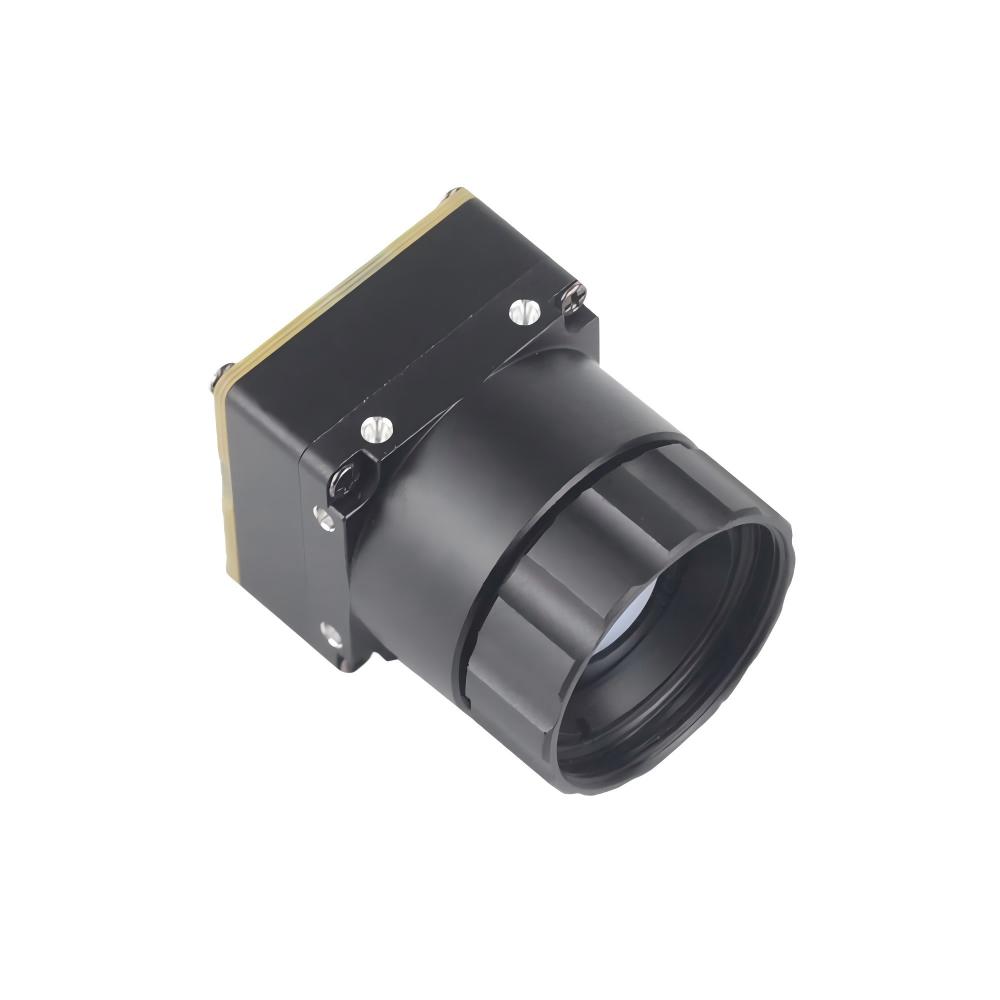
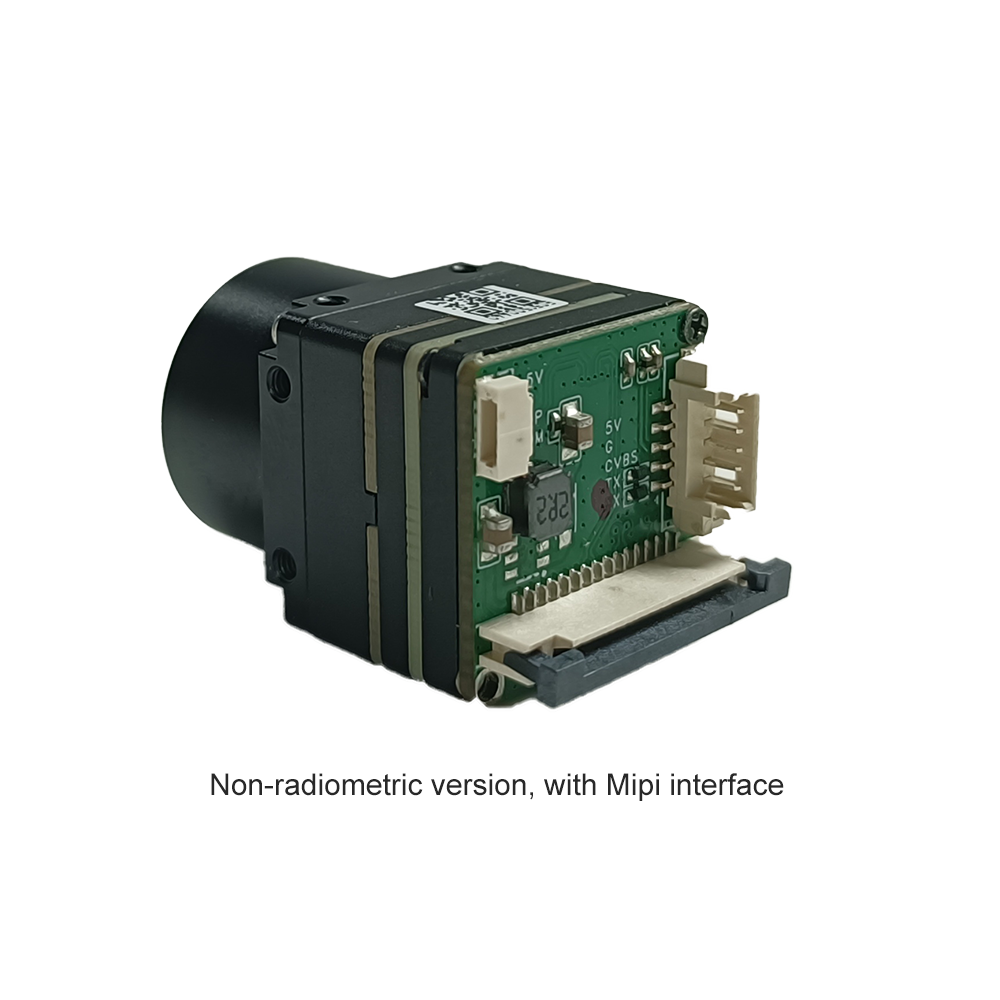
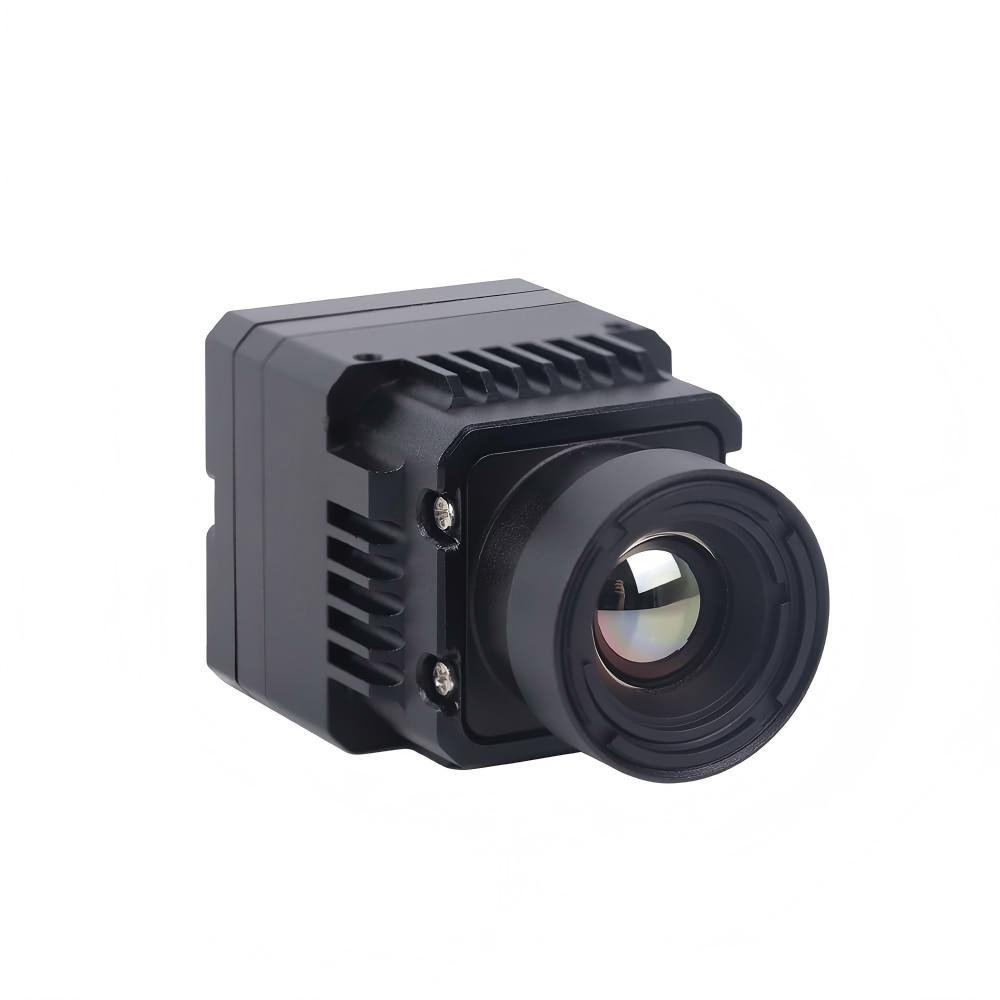
When you are ready to bolt a production-ready True IR thermal core into your chassis, you need to match resolution, interface bandwidth, power budgets, and mechanical mounting points. Below are two field-proven OEM thermal camera modules built specifically for high-reliability integration.
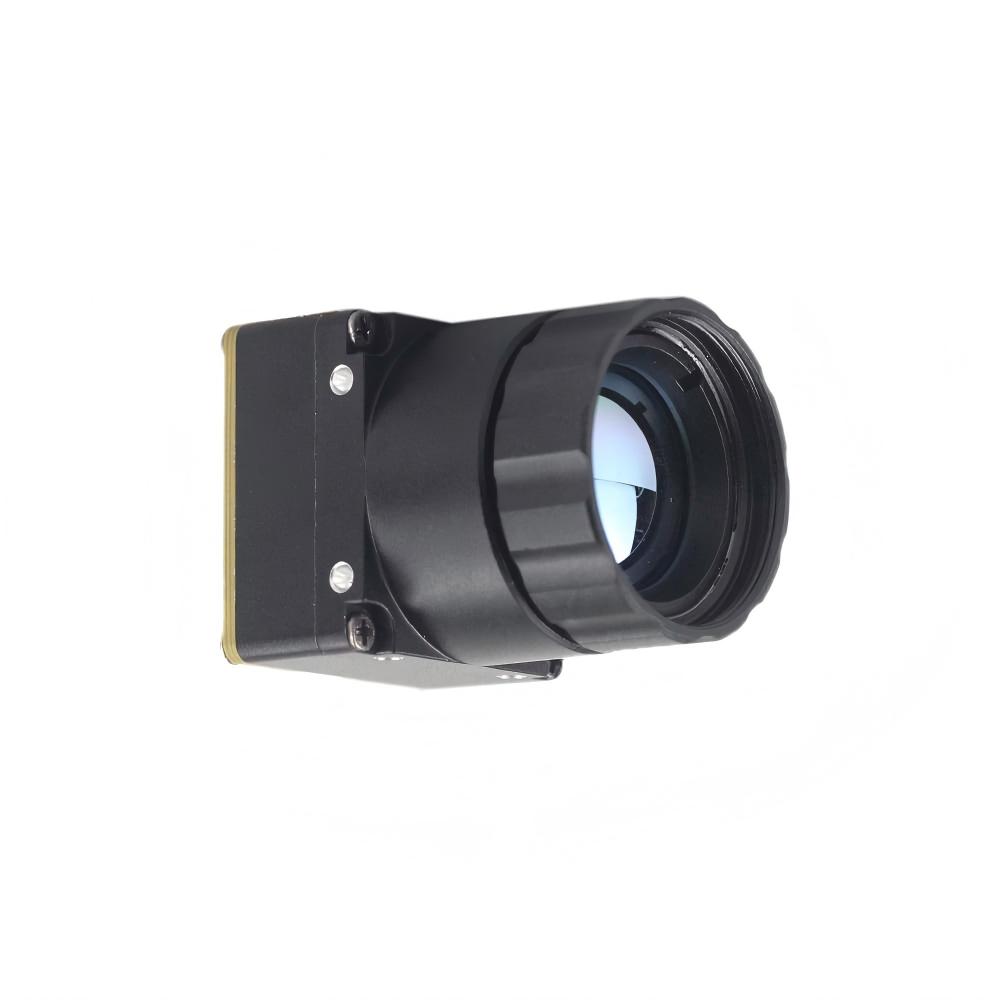
Uncooled Infrared RJ45 CVBS RTSP IP 640*512 Thermal Sensor Camera Module
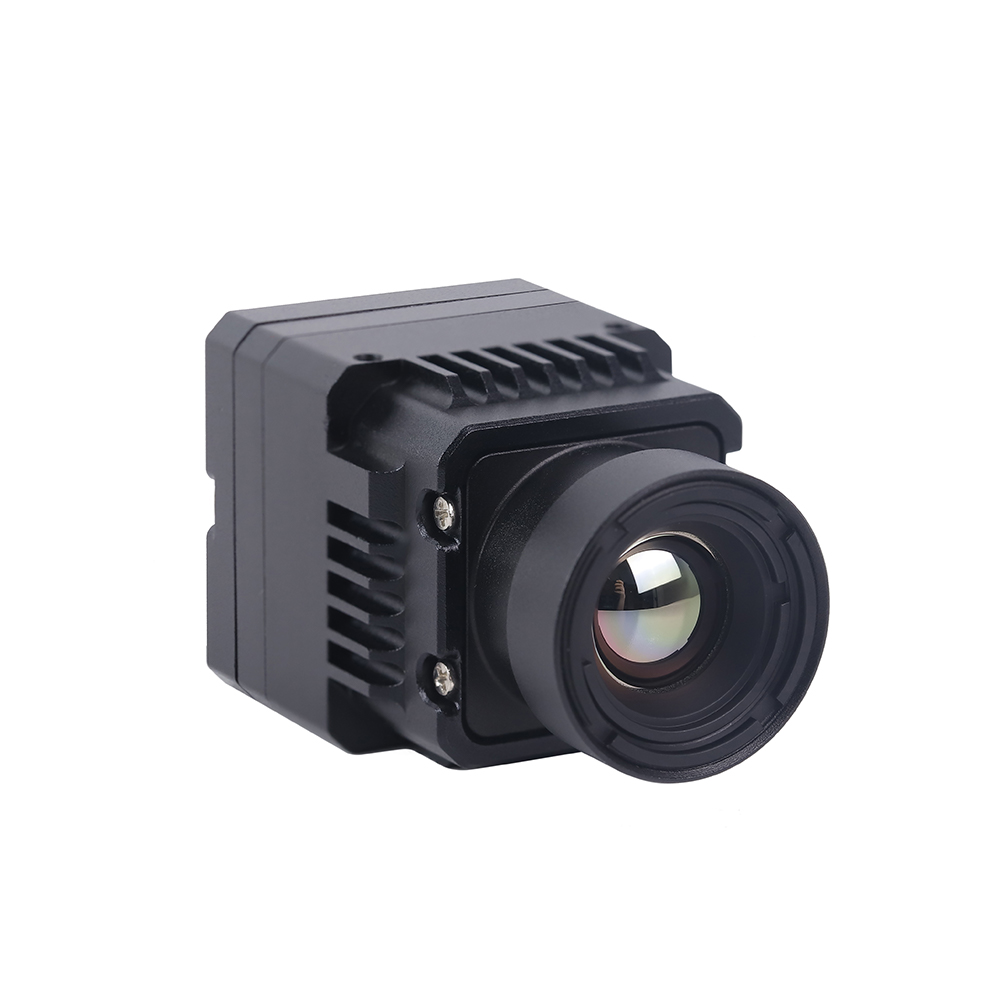
Product Overview: The Uncooled Infrared Mini 640*512 ASIC Thermal Imaging Camera Module is built for demanding drone gimbals, long-range robotic surveillance, and industrial edge monitoring. Packing a 640×512 uncooled VOx microbolometer array with a high-performance ASIC processor, it delivers ultra-sharp thermal video over both standard Ethernet IP streams (RTSP) and low-latency analog CVBS feeds simultaneously.
| Detector Resolution | 640 × 512 VOx Uncooled Microbolometer |
| Spectral Band | 8.0 – 14.0 µm (LWIR / True IR) |
| Video & Network Interfaces | RJ45 (Ethernet), RTSP / IP Streaming, CVBS Analog Video |
| Processing Core | Dedicated Low-Power ASIC with Hardware NUC & DDE |
| Primary Target Applications | Drone Gimbals, Industrial Automation, Security Payloads, Robotics |
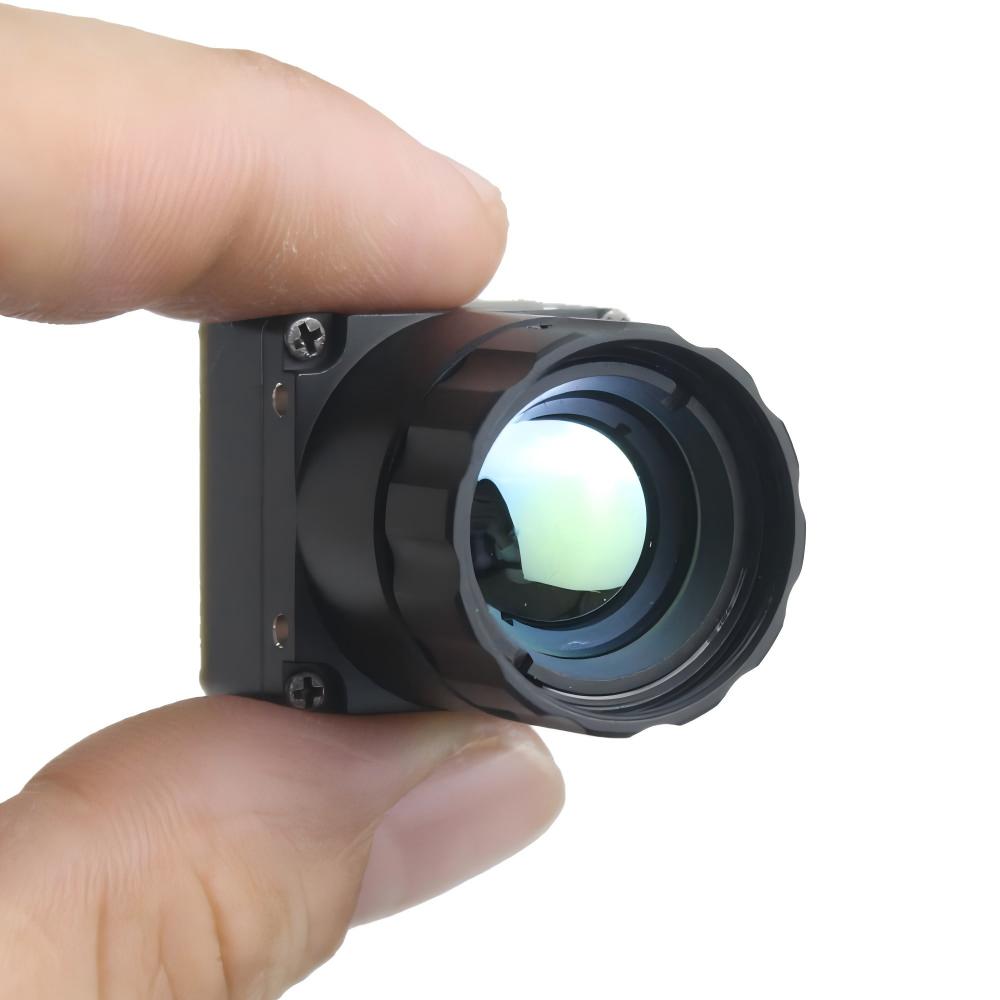
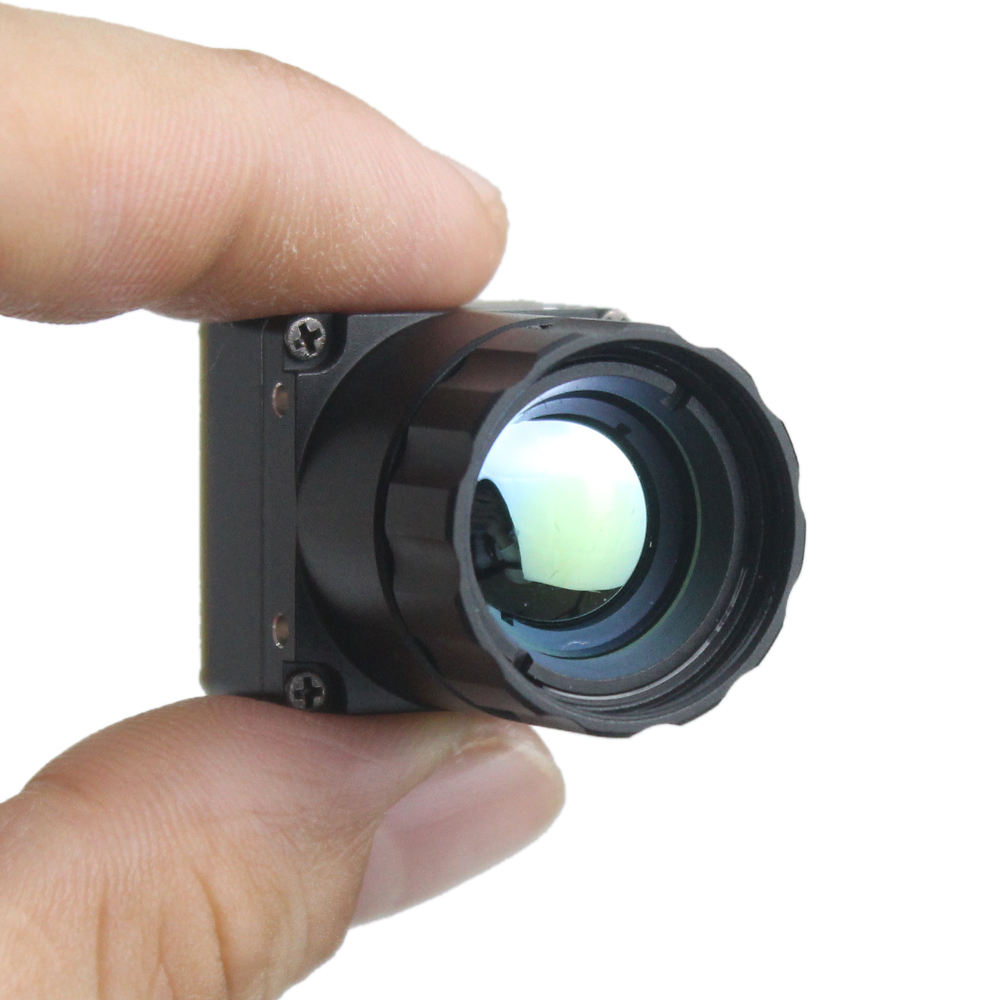
Uncooled LWIR Mini 256*192 Thermal Imaging Camera Module
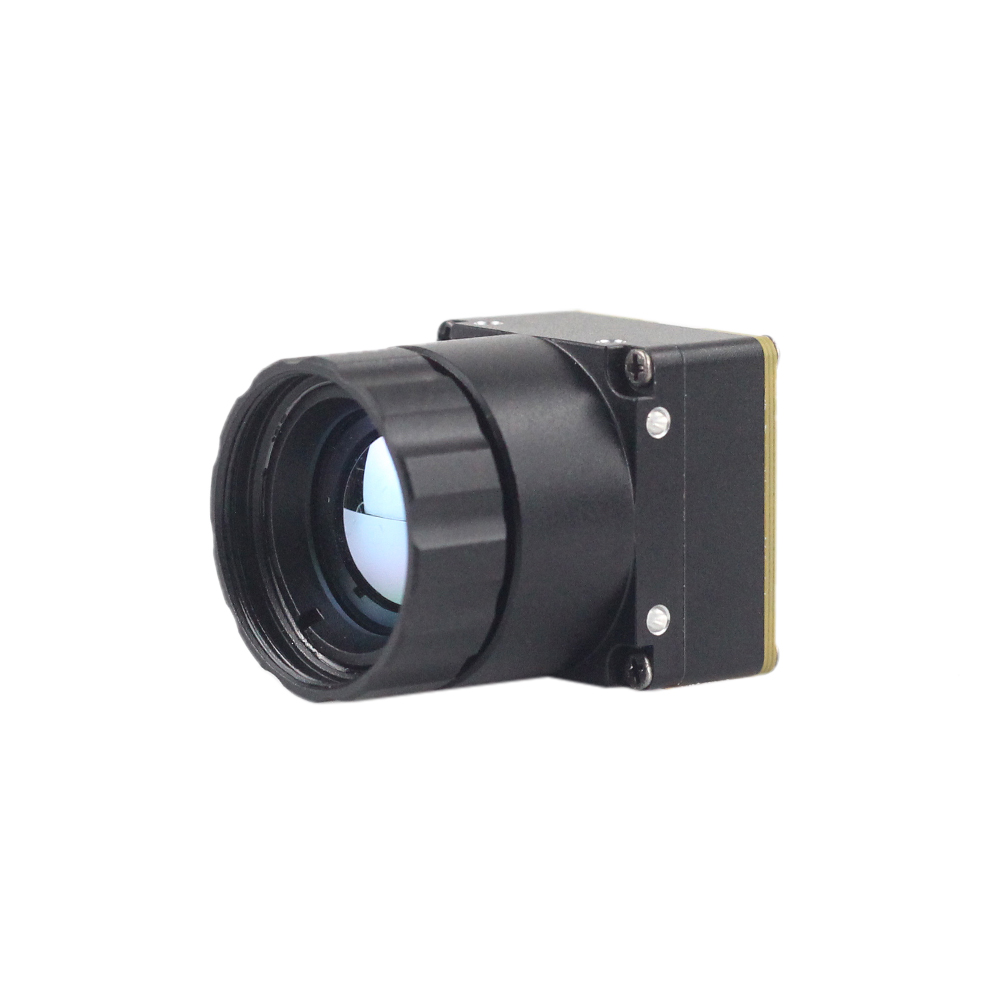
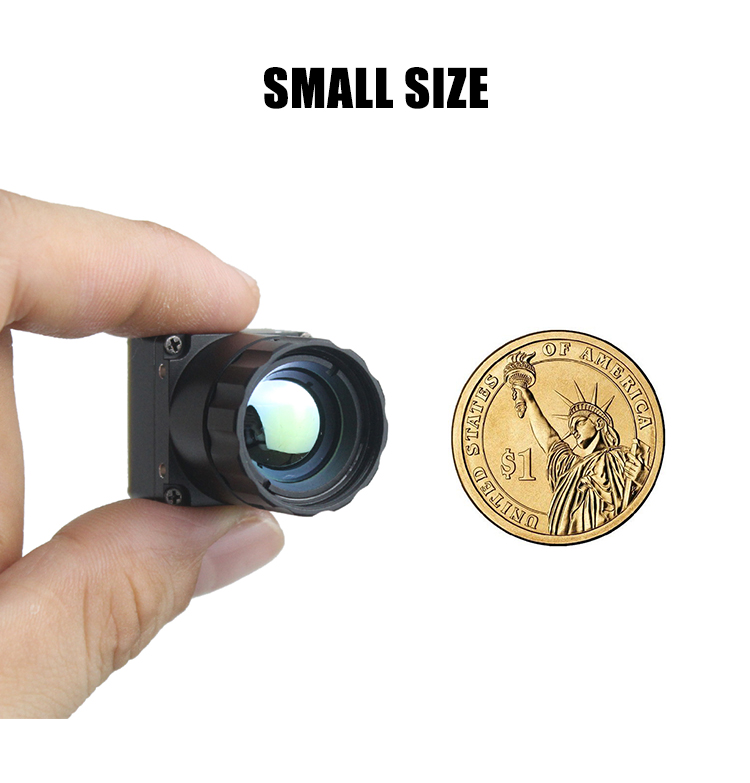
Product Overview: The Mini 256 Uncooled LWIR Thermal Camera Module is an ultra-compact, SWaP-optimized core engineered for weight-critical deployments. Similar in class to payload sensors on commercial enterprise drones, it captures clean 8–14 µm thermal images and outputs full-frame radiometric data, making it ideal for sub-surface landmine mapping, micro-UAVs, and handheld diagnostic gear.
| Detector Resolution | 256 × 192 VOx Uncooled Microbolometer |
| Spectral Band | 8.0 – 14.0 µm (LWIR / True IR) |
| Radiometric Capability | Full-Frame Temperature Measurement & Uniform Image Output |
| Form Factor & SWaP-C | Ultra-Miniature Lightweight Enclosure for Compact Payloads |
| Specialized Applications | Sub-Surface Landmine Detection, Micro-Drones, Portable Thermography |
7. Engineering Deep-Dive FAQ
What is the exact physical difference between Near-Infrared (NIR) imaging and True IR thermal imaging?
True IR (Long-Wave Infrared, 8.0 to 14.0 µm) operates in the thermal emission domain governed by Planck’s and Stefan-Boltzmann’s laws. True IR systems use uncooled microbolometer sensor arrays made of Vanadium Oxide (VOx) or Amorphous Silicon (a-Si) placed behind Germanium optics. These sensors directly absorb the blackbody radiation emitted by physical matter. As a result, True IR operates perfectly in pitch-black zero-lux environments, punches through thick smoke and marine fog, and provides pixel-by-pixel radiometric temperature data.
Can standard consumer smartphone cameras or security webcams be converted into True IR thermal sensors using software?
Any smartphone app claiming to give you "thermal vision" is just applying a false-color look-up table (LUT) like Ironbow or Rainbow over a normal visible-light image based on brightness levels. Real thermal imaging requires physical microbolometer hardware (such as VOx micro-bridge arrays) behind long-wave transmissive optics like Germanium or Chalcogenide glass.
Why is Germanium required for True IR lenses instead of standard optical crown glass?
Monocrystalline Germanium (Ge) is the primary material for True IR optics because it is highly transparent across the 2.0 to 14.0 µm spectrum and has an exceptionally high refractive index of about 4.0. That high index lets optical engineers design fast, compact f/1.0 lenses with minimal optical aberrations using very few elements. When treated with anti-reflective and Diamond-Like Carbon (DLC) coatings, Germanium lenses deliver over 95% transmission and survive harsh field conditions.
What parameters should systems engineers prioritize when integrating True IR cores into UAV and robotic platforms?
1. FPA Resolution & Pixel Pitch: Native resolutions like 640×512 with a 12 µm pitch offer far better spatial detail, wider FOV options, and longer DRI (Detection, Recognition, Identification) ranges than entry-level 256×192 cores.
2. Thermal Sensitivity (NETD): Noise Equivalent Temperature Difference defines how well the sensor resolves tiny temperature variations. Look for an NETD ≤ 40 mK (or ≤ 30 mK at f/1.0) for high-contrast imaging in low-thermal-gradient conditions.
3. SWaP-C Optimization: Keep the form factor compact and power consumption under 1.5W to maximize flight times and maintain gimbal balance.
4. Interface Compatibility: Match the core output to your system architecture—Ethernet (RJ45/RTSP) for IP networks, low-latency analog CVBS for FPV piloting, or raw DVP/MIPI for embedded processing boards.
5. Onboard Radiometry & Edge Processing: For predictive maintenance or automated safety triggers, make sure the core includes onboard Non-Uniformity Correction (NUC), Dynamic Detail Enhancement (DDE), and a factory-calibrated radiometric engine.
📚 References & Further Reading
- Industry Standard: Advanced Semiconductor Microbolometer Foundries: JM Chip
- Industry Standard: OEM Optoelectronic Manufacturing & Global Sourcing: KUYANG
- Related Guide: Integration Strategy & Selection: How to Choose the Best Infrared Thermal Imaging Camera Module
- Related Guide: Comprehensive High-Performance Sensor Core Buyer's Guide (Arabic Edition): دليل مشتري النواة عالية الأداء بالأشعة تحت الحمراء
- Related Guide: Mobile Form Factor Thermal Diagnostic Modules (Polish Edition): Mini Kamera Termowizyjna USB Typ-C