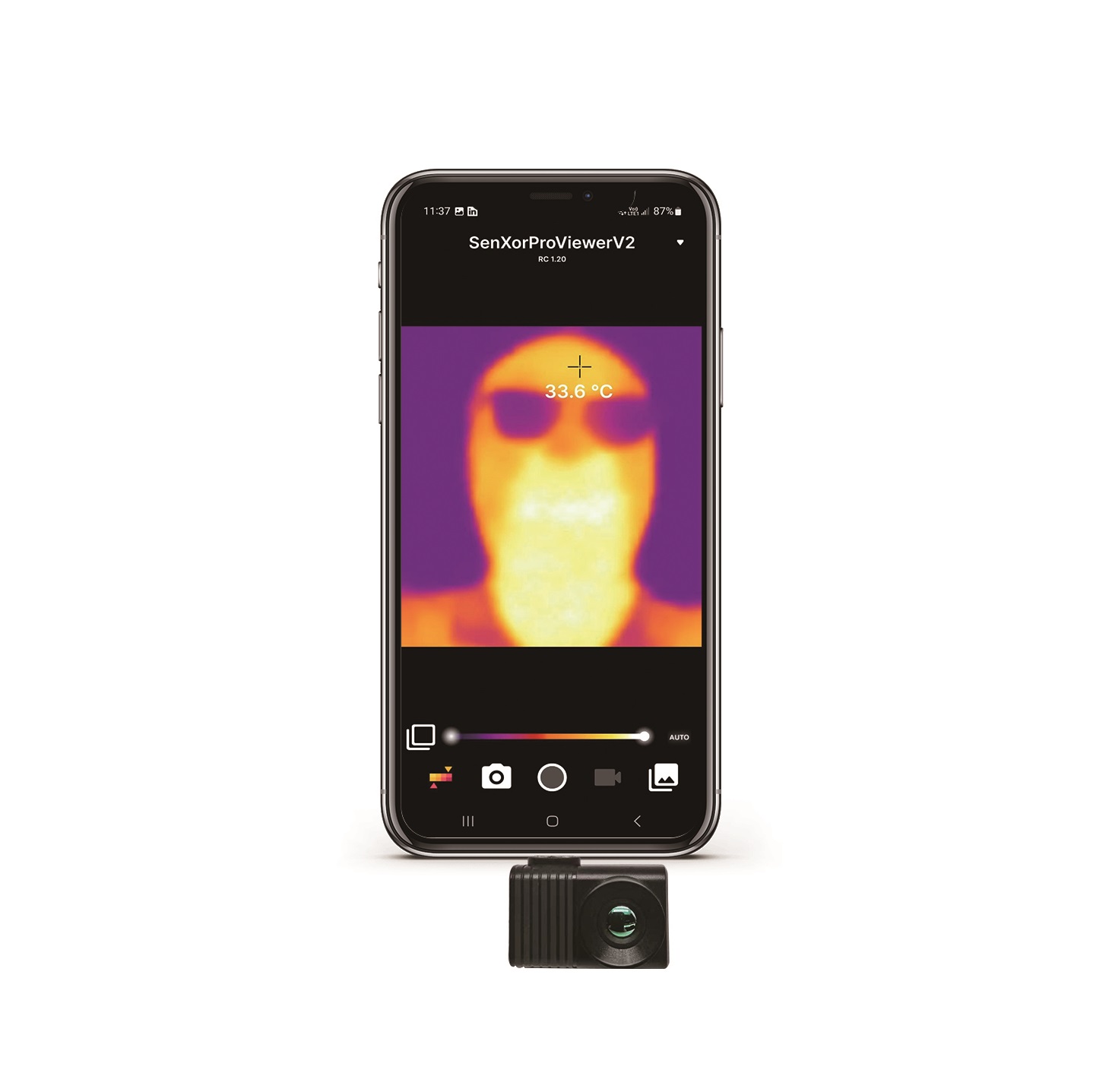


Thermal Imaging Sensor Integration Guide: OEM Cores & Edge AI Vision
2026年9月9日
Thermal Camera Module Bulk Order: OEM LWIR Cores for Drones & Embedded Systems
2026年9月10日
Top Uncooled LWIR Thermal Camera Core Supplier | 640 & 1280 OEM Modules
If you have spent any time in the lab or the field building electro-optical payloads, airborne surveillance pods, defense gear, or machine vision rigs, you already know this truth: picking your uncooled long-wave infrared (LWIR) camera core supplier is the single hardware choice that makes or breaks your product. A thermal core is not just another optical sensor you drop onto an I2C bus and forget. Far from it. It is a temperamental, ultra-sensitive optoelectronic subassembly. Inside that tiny casing, you have a MEMS microbolometer focal plane array (FPA), a blazing-fast readout integrated circuit (ROIC), real-time non-uniformity correction (NUC) pipelines, and precise factory-calibrated radiometric lookup tables (LUTs) all fighting against ambient thermal drift.
Here is the deal: cut corners on your OEM thermal core supplier, and you will pay for it through every phase of prototyping and production. We see integration teams get blindsided constantly. They get locked into cores plagued by brutal spatial fixed-pattern noise (FPN), endless calibration drift under direct sun, bloated SWaP-C (size, weight, power, and cost) footprints, or closed-source video pipelines that withhold the raw 14-bit or 16-bit radiometric matrices. If you cannot extract per-pixel linear digital temperature values, your edge analytics and automated tracking algorithms are essentially flying blind. Serious industrial and defense integrations demand sub-35 millikelvin (mK) Noise Equivalent Temperature Difference (NETD), modern low-latency pipes like MIPI-CSI2 or USB 3.0, and rock-solid Linux SDKs that run without choking your embedded processor.
Look at how fast computational intelligence is shifting to edge platforms today. Whether you are running perimeter security nodes, drone-mounted ISR payloads, predictive maintenance setups on factory floors, or night-vision ADAS stacks, your thermal engine must feed clean data straight into modern neural accelerators. You need a trusted partner who can stamp out high-yield production runs across everything from featherweight 640×512 micro-payloads up to ultra-high-definition 1280×1024 optical engines without skipping a beat. In this deep-dive engineering guide, we will unpack microbolometer physics, interface bottlenecks, raw thermography math, and the hardware realities you must evaluate when sourcing OEM thermal camera modules.
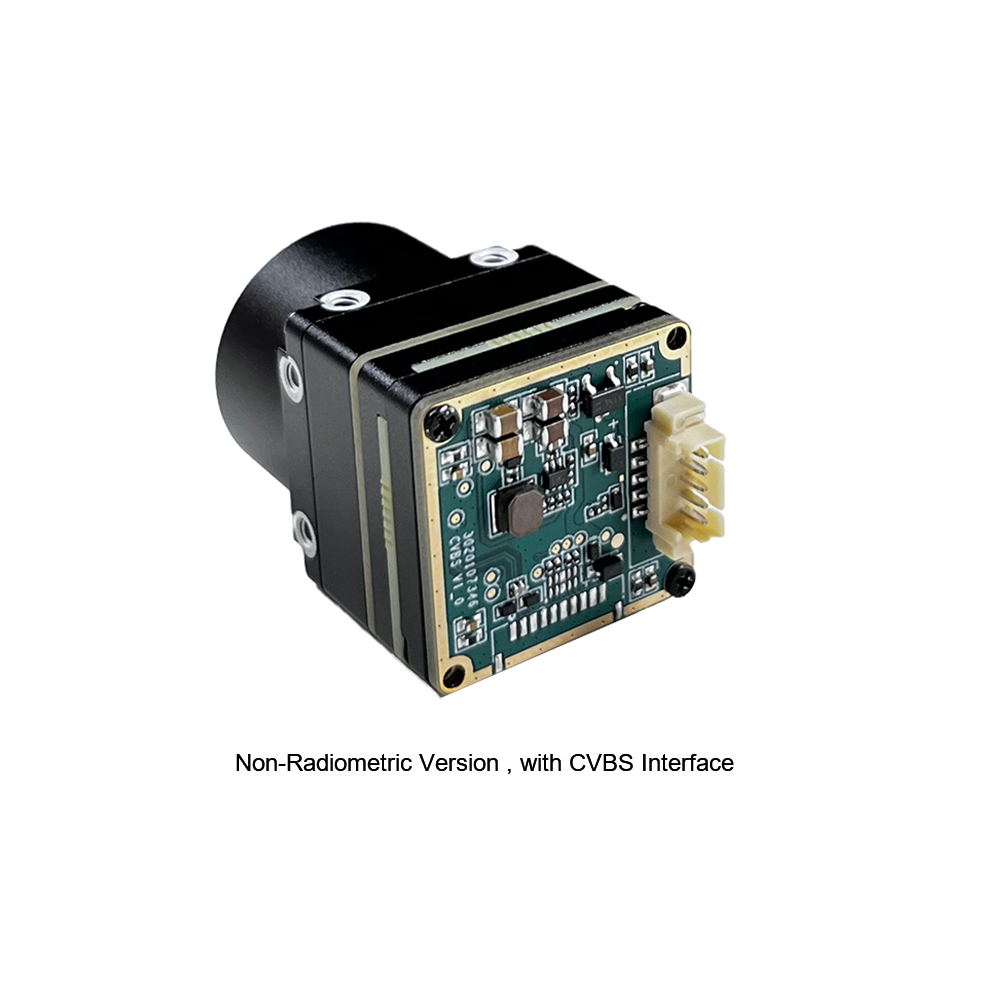
Table of Contents
- 👉 1. Uncooled LWIR Physics & VOx Microbolometer Core Architecture
- 👉 2. Hardware Interfaces & Embedded Processing: MIPI, USB, and Edge AI
- 👉 3. The Radiometric Signal Chain: NUC Calibration, SBNUC, and Raw Thermography
- 👉 4. OEM Product Showcase: 640×512 Mini and 1280×1024 High-Resolution Cores
- 👉 5. SWaP-C Trade-off Matrix: Uncooled LWIR vs. Cooled MWIR Systems
- 👉 6. OEM Supplier Vetting: Calibration, Quality Control, and Thermal Drift Testing
- 👉 7. Deep-Dive Industrial FAQ
1. Uncooled LWIR Physics & VOx Microbolometer Core Architecture
Let's get down to the brass tacks of the physics. The Long-Wave Infrared (LWIR) atmospheric transmission window runs from 8 μm to 14 μm. Everything in our terrestrial world operating between -40°C and +80°C emits peak radiant energy in this exact band, dictated by Planck's Law and the Stefan-Boltzmann relationship. Unlike photon-counting sensors found in cryogenically cooled tactical systems, an uncooled thermal core uses a microbolometer array. These are pure thermal detectors: they absorb incident infrared photons, heat up an isolated micromachined bridge, and translate that minute change in temperature into a measurable shift in electrical resistance.
The optomechanical build of a modern microbolometer focal plane array is a masterclass in MEMS manufacturing. Each pixel is essentially a microscopic membrane suspended above an underlying silicon ROIC via ultra-thin, high-aspect-ratio isolation legs. Those micro-legs are critical: they stop heat from draining conductively into the silicon substrate so that even fractional micro-Kelvin changes from target radiation will register. Underneath each membrane sits a vacuum cavity and a quarter-wave reflective mirror that bounces unabsorbed IR photons right back through the active absorber layer to maximize quantum efficiency across the 8–14 μm spectrum.
When you start sizing up core suppliers, the material they deposit on that thermistor layer is your first major architectural fork in the road. In the commercial and defense world, the battle comes down to Vanadium Oxide (VOx) versus Amorphous Silicon (a-Si):
- ✅ Vanadium Oxide (VOx): In the shop and out in the field, VOx is the gold standard for high-performance thermal imaging. VOx thin films deliver a stellar Temperature Coefficient of Resistance (TCR), typically hovering around -2% to -3% per Kelvin at room temperature. Even better, VOx has inherently low 1/f structural flicker noise. That clean noise floor allows production cores to reliably hit Noise Equivalent Temperature Difference (NETD) ratings under 35 mK (often breaking 30 mK with f/1.0 optics). When you are trying to pick out a target against low-contrast maritime chop or through cold, wet fog, that sensitivity makes all the difference.
- ⚙️ Amorphous Silicon (a-Si): The main selling point of amorphous silicon is manufacturing convenience: you can run it on standard CMOS foundry lines, which brings down initial wafer costs. But there is a performance penalty. Its TCR is noticeably lower (around -1.5% to -2.0%/K), and the disordered atomic structure of amorphous films pumps up 1/f noise. That pushes NETD figures up past 45 mK or 50 mK and demands longer thermal integration times. For high-speed target tracking, dynamic drone gimbals, or long-range reconnaissance, a-Si simply runs out of gas.
At the same time, the industry has pushed hard from legacy 17 μm pixel pitches down to 12 μm nodes, with advanced labs even exploring sub-10 μm structures. Pixel pitch defines your optical packaging and real-world system reach. Your Instantaneous Field of View (IFOV), which sets your spatial sampling at a given distance, comes down to a straightforward equation:
IFOV = Pixel Pitch (p) / Focal Length (f)
Shifting from a 17 μm sensor down to a 12 μm array means you can slash your Germanium objective lens focal length by roughly 30% while maintaining identical spatial resolution and Detection, Recognition, and Identification (DRI) ranges under the Johnson criteria. Smaller Germanium elements mean massive savings in payload weight, barrel length, and bill of materials (BOM) cost. The catch? A 12 μm pixel has roughly half the photon collection area of a 17 μm pixel. Premium module suppliers solve this physical deficit by shaving the thermal mass of the suspended membrane, achieving rapid thermal time constants (down around 8 ms to 12 ms) and keeping NETD sensitivities exceptionally tight.
When your system architecture calls for ultra-compact dimensions without sacrificing low-noise performance, purpose-built engines like the uncooled infrared MIPI camera module give developers an off-the-shelf path to rapid prototyping on constrained frames. And for engineering teams deploying systems internationally, comprehensive regional documentation like this Arabic thermal camera module integration guide helps maintain consistent baseline standards across distributed global development sites.
2. Hardware Interfaces & Embedded Processing: MIPI, USB, and Edge AI
In modern production builds, thermal camera modules are no longer dumb analog sensors spitting out NTSC/PAL composite video to a dashboard monitor. They operate as high-speed data hubs streaming wide-bandwidth digital frames straight into microprocessors, FPGAs, or neural network hardware accelerators. If your hardware interface introduces frame drops, latency spikes, or packet jitter, your control loops fail.
When you vet an OEM thermal core, scrutinize the physical digital interfaces on the board:
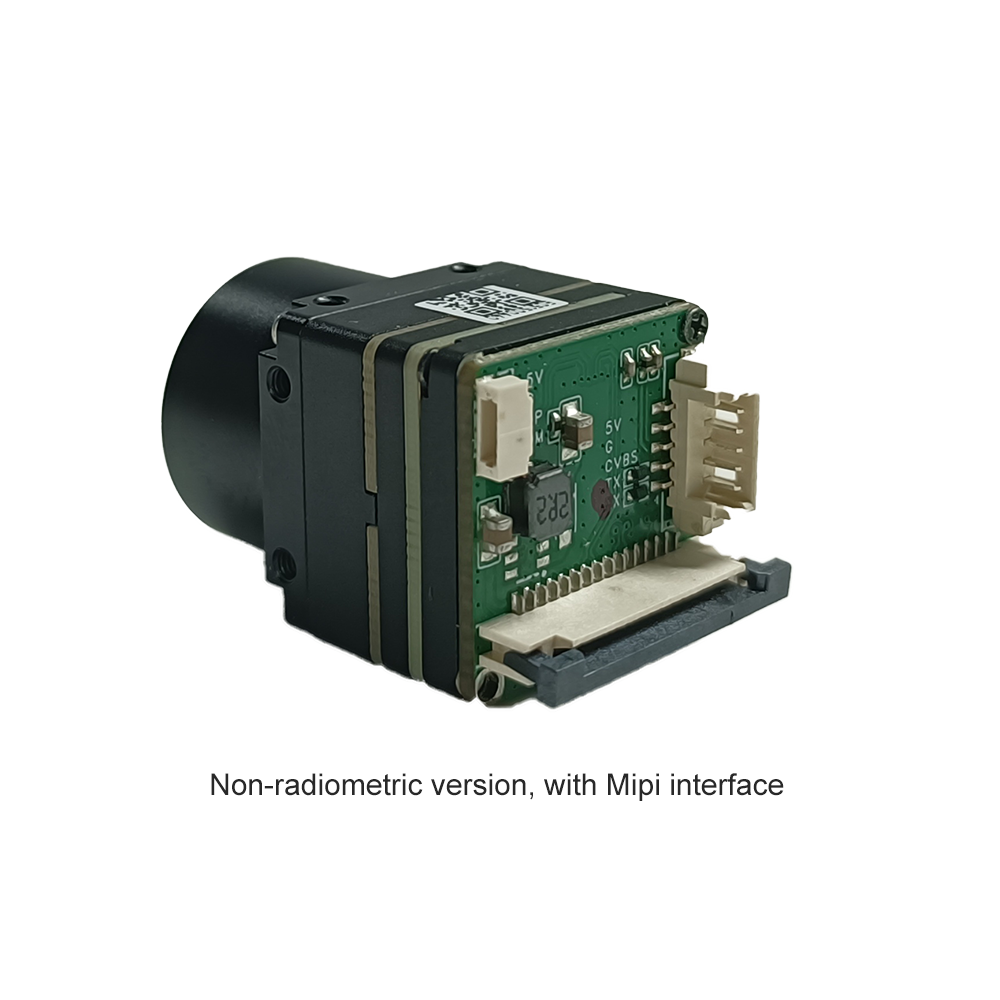
- ⚙️ MIPI-CSI2 (Mobile Industry Processor Interface): For tight embedded integrations like micro-drones, man-portable sights, and handheld thermal gear, MIPI-CSI2 is the undisputed champion. It offers a point-to-point, high-speed differential serial pipeline that pipes raw 14-bit or 16-bit uncompressed frames straight into your application processor's internal ISP. You eliminate extra bridge chips, USB PHYs, and Ethernet transceivers. That cuts milliwatts of power, frees up PCB real estate, and wipes out high-frequency EMI noise inside packed avionics enclosures.
- ⚙️ USB 3.0 / UVC Radiometric: For industrial test stations, robotic inspection arms, and standard x86 PC stacks, USB 3.0 offers true plug-and-play operation. The best thermal modules implement dual-endpoint UVC streaming: Endpoint A dishes out an 8-bit visual stream (YUV/RGB with pseudo-color palettes applied) for the human operator, while Endpoint B feeds an interleaved, fully radiometric 14-bit linear data buffer straight to your inspection software.
- ⚙️ Parallel CMOS / LVDS / DVP: If you are building high-reliability defense pods, tracking gimbals, or custom aerospace avionics, LVDS or parallel digital buses remain essential. These hook directly into FPGA fabrics like AMD Xilinx Artix/Zynq or Intel Cyclone devices, allowing hard real-time, deterministic, sub-millisecond signal processing with zero OS overhead.
The rise of embedded edge AI has overhauled how thermal data is processed. Autonomous UAVs and ground robotics cannot afford round-trip latency to a cloud server; they have to detect targets, track heat signatures, and classify hazards right at the edge. Modules that provide clean Linux Video4Linux2 (V4L2) drivers interface natively with edge architectures like the NVIDIA Jetson ecosystem. By pushing raw 14-bit thermal frames directly into shared CUDA unified memory via DMA, your edge pipeline can fire YOLOv8, YOLOv10, or custom lightweight detection networks through TensorRT at a locked 30 or 60 frames per second without bogging down the host CPU.
In high-performance aerial systems and multi-axis gimbal payloads, such as those engineered by drone specialists like OBSETECH, tight hardware synchronization is everything. Gimbal stabilization loops spin at 400 Hz to 1000 Hz, demanding rock-solid frame timing and hardware sync pins (frame sync in/out) directly from the thermal core. Without clean hardware synchronization, mechanical vibration and drone jitter will smear your imagery, degrade your non-uniformity correction, and break your target lock mid-mission.
3. The Radiometric Signal Chain: NUC Calibration, SBNUC, and Raw Thermography
Here is an insider reality: a raw microbolometer straight off the fab line is virtually unusable. Due to atomic-level manufacturing variations, wafer-stress gradients, and microscopic variations in leg resistance, every individual pixel on an FPA responds differently. Point an uncalibrated bolometer at an entirely uniform thermal scene, and the raw output looks like pure television static. This spatial fixed-pattern noise completely buries the actual scene. Turning that noisy signal into an accurate, high-contrast 14-bit thermal matrix takes serious radiometric processing.
The bedrock of this processing is Two-Point Non-Uniformity Correction (NUC). In the factory, the OEM mounts the core inside an environmental chamber facing lab-grade blackbody sources set to distinct temperatures (typically T1 = 10°C and T2 = 50°C). For every pixel coordinate (i, j), the onboard processor calculates unique gain (G) and offset (O) values:
S_corrected(i, j) = G(i, j) × [S_raw(i, j) - O(i, j)]
These calibration coefficients are flashed into the module's non-volatile memory. But once that camera is out in the real world, heat from nearby components, power regulators, and changing outdoor ambient temperatures heats up the housing. This induces spatial drift, causing fixed-pattern noise to creep back into the image.
To keep the image crisp in dynamic field conditions, thermal engineers lean on two correction techniques:
- ⚙️ Mechanical Shutter NUC: This is the classic, rock-solid method. A tiny electromechanical solenoid flips an opaque, uniform paddle in front of the sensor for roughly 100 to 250 milliseconds. The processor reads this uniform flat surface, recalculates the global offset matrix O(i, j), and wipes away thermal drift instantly. The catch? That brief freeze can trip up high-speed autonomous tracking or momentarily blind an operator during critical maneuvers.
- ⚙️ Scene-Based NUC (SBNUC): For applications where moving parts are a liability or where visual freezing is unacceptable, advanced suppliers implement shutterless Scene-Based NUC. SBNUC continuously analyzes inter-frame optical motion, scene trajectories, and statistical pixel variances across the frame. By tracking the background drift over time, the algorithm mathematically scrubs away static sensor noise without dropping a frame. This makes shutterless engines ideal for missile seekers, high-G weapon sights, and high-vibration drone platforms where mechanical shutters can jam.
After NUC comes Bad Pixel Replacement (BPR). Pixels that are dead, noisy, or saturated get mapped during factory calibration. In runtime, the core's FPGA or DSP replaces those bad pixels on the fly using spatial neighbor interpolation (such as median or weighted Gaussian filtering), leaving a clean, seamless image.
The true mark of an industrial-grade thermal core is how it handles radiometry. Cheap consumer cores compress the internal 14-bit data stream down to an 8-bit visual output (0 to 255 values) via an aggressive Automatic Gain Control (AGC) curve. That makes the image look nice and punchy for a human viewer, but it permanently throws out the actual temperature data. In contrast, an industrial OEM module delivers raw, uncompressed 14-bit or 16-bit linear Digital Numbers (DN) and gives you the exact radiometric conversion math in the API:
T_Kelvin = B / [ln(R / (DN - O) + F)]
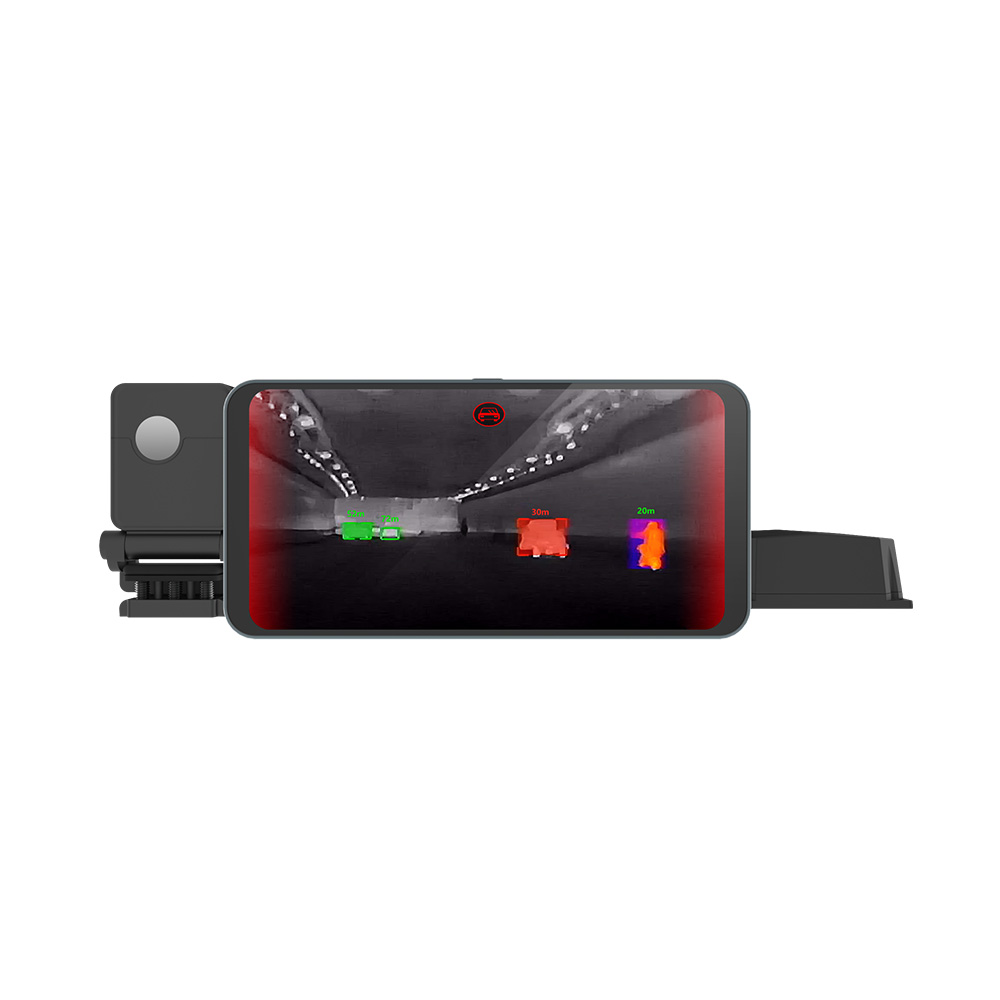
where B, R, O, and F are sensor-specific radiometric constants derived from blackbody calibration runs. Having access to this raw thermographic data is non-negotiable for industrial asset monitoring, automated process control, and active vision systems like thermal imaging safeguarding automobile driving through zero-visibility dust storms, dense fog, and pitch-black highways.
4. OEM Product Showcase: 640×512 Mini and 1280×1024 High-Resolution Cores
To support diverse engineering envelopes across industrial automation, robotics, and tactical surveillance, Purpleriver supplies two purpose-engineered uncooled LWIR cores. These engines represent years of fine-tuning across size, weight, power, and high-fidelity thermal imaging.
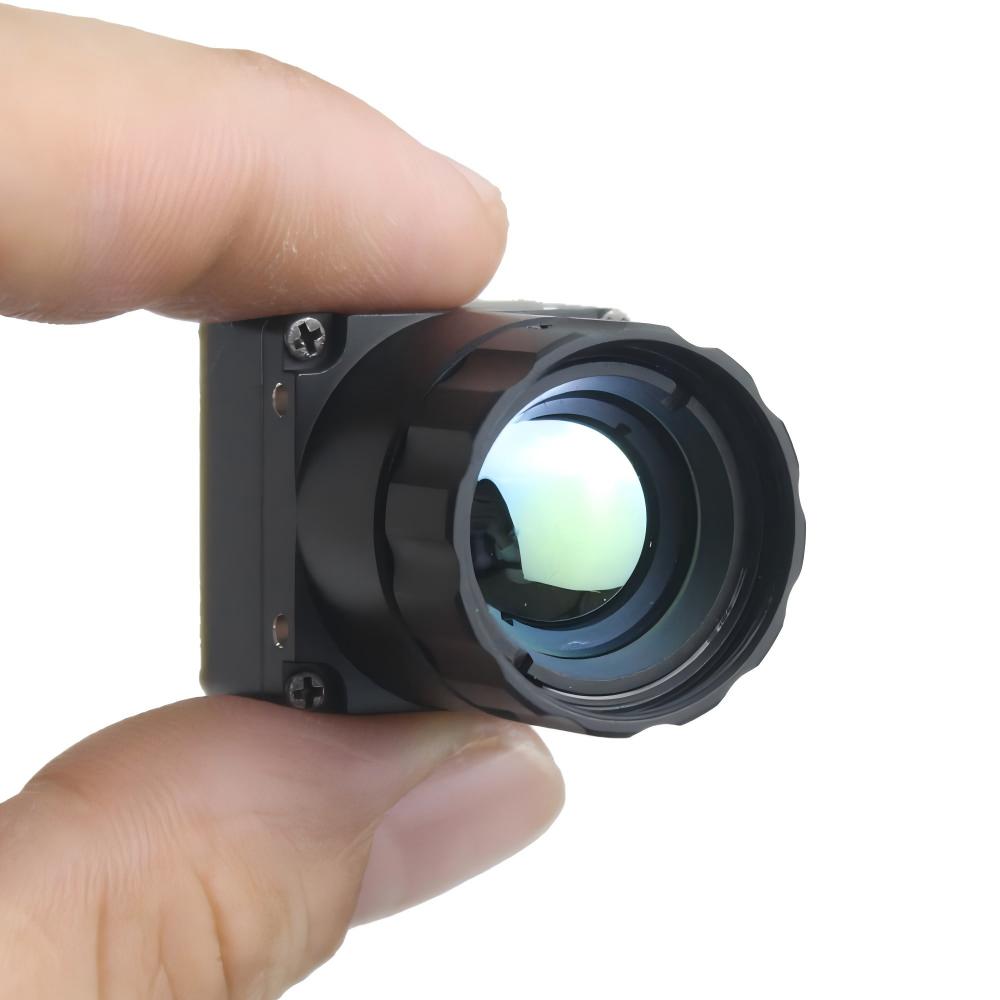
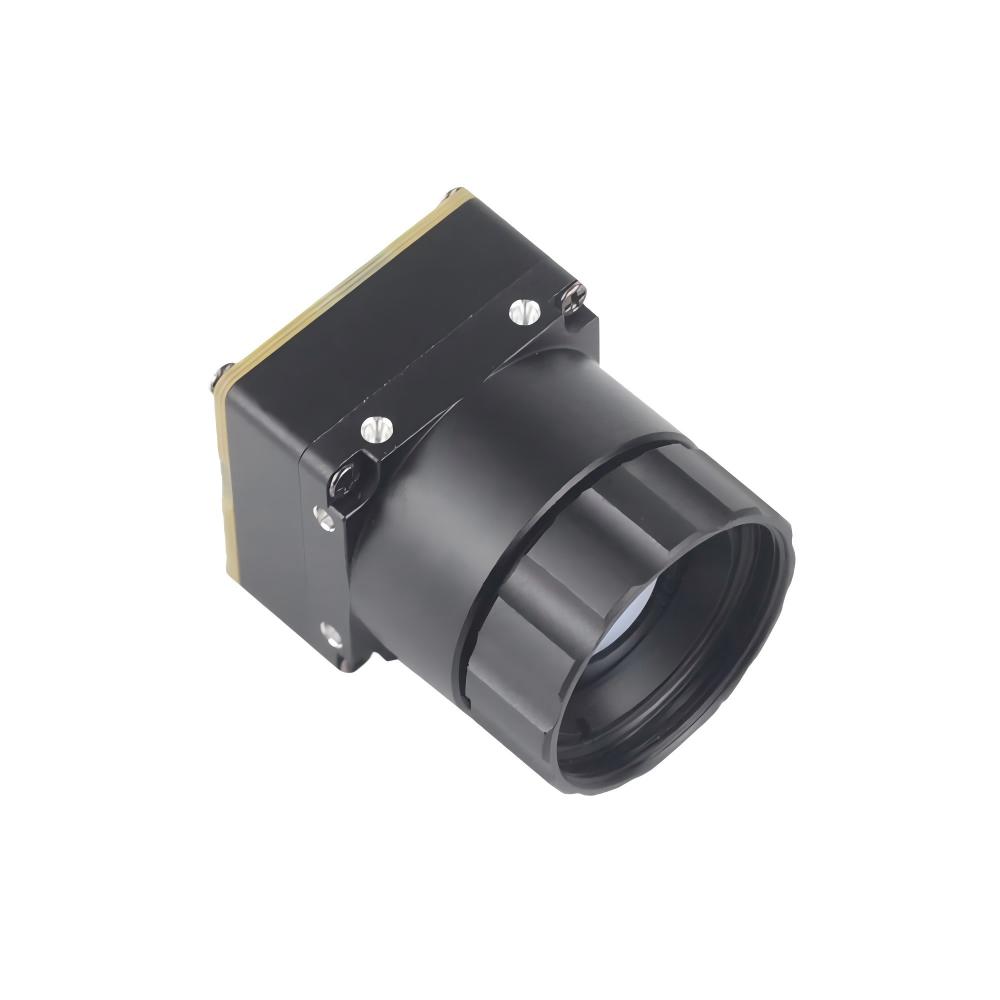
Mini 640×512 Uncooled LWIR Thermal Imaging Core Module
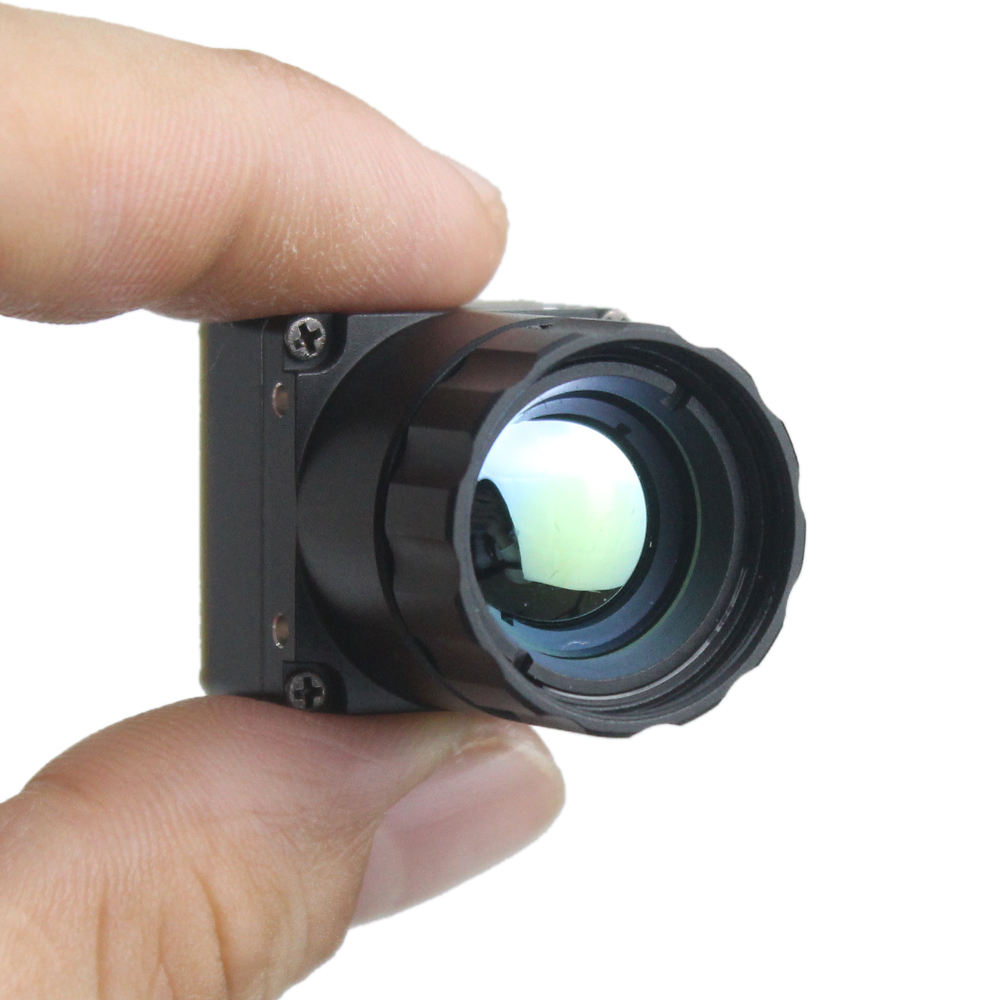
Engineered specifically for micro drone gimbals, compact tactical wearables, and volume OEM integration, the Mini 640×512 core module matches or exceeds the technical specifications of premier drone camera systems, including payloads similar to DJI Enterprise thermal solutions. Characterized by an ultra-miniature 21mm × 21mm footprint, this core delivers high-precision thermography without penalizing payload weight.
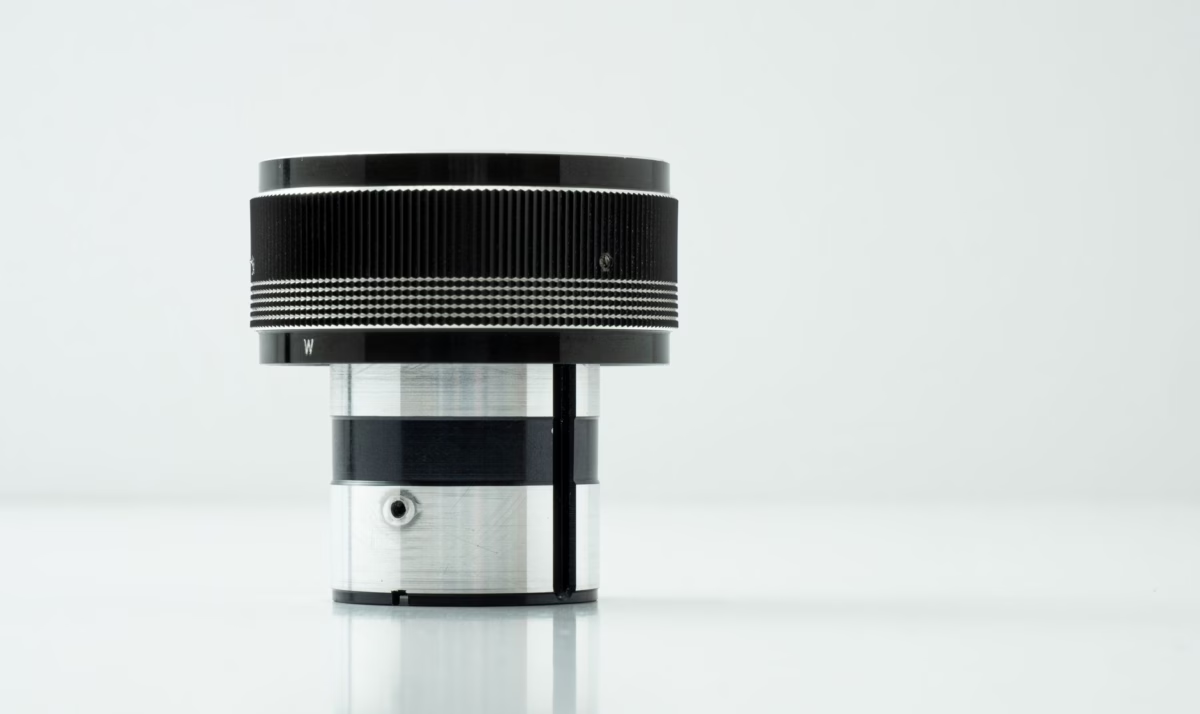
Featuring crisp image presentation, industry-leading sub-35mK thermal sensitivity, and low power dissipation, the Mini 640 accommodates a diverse array of optical configurations. From an expansive 5mm wide-angle optic for situational awareness up to an ultra-long-range 150mm telephoto Germanium lens, it provides unmatched adaptability across demanding aerospace and robotic platforms.
| Parameter | Engineering Specification |
|---|---|
| Detector Architecture | Uncooled VOx (Vanadium Oxide) Microbolometer |
| Array Resolution | 640 × 512 pixels (Optional 640 × 480 operational modes) |
| Spectral Range | 8 μm to 14 μm (LWIR) |
| Physical Form Factor | Ultra-Miniature: 21mm × 21mm chassis footprint |
| Interchangeable Lenses | 5mm, 9mm, 13mm, 18mm, 35mm, 50mm, 75mm, 100mm, 150mm options |
| Digital Interface Options | USB 2.0 / 3.0, MIPI-CSI2, Digital Raw Output, SDK integration |
| Environmental Adaptability | Stable performance across extreme thermal environments (-40°C to +80°C) |
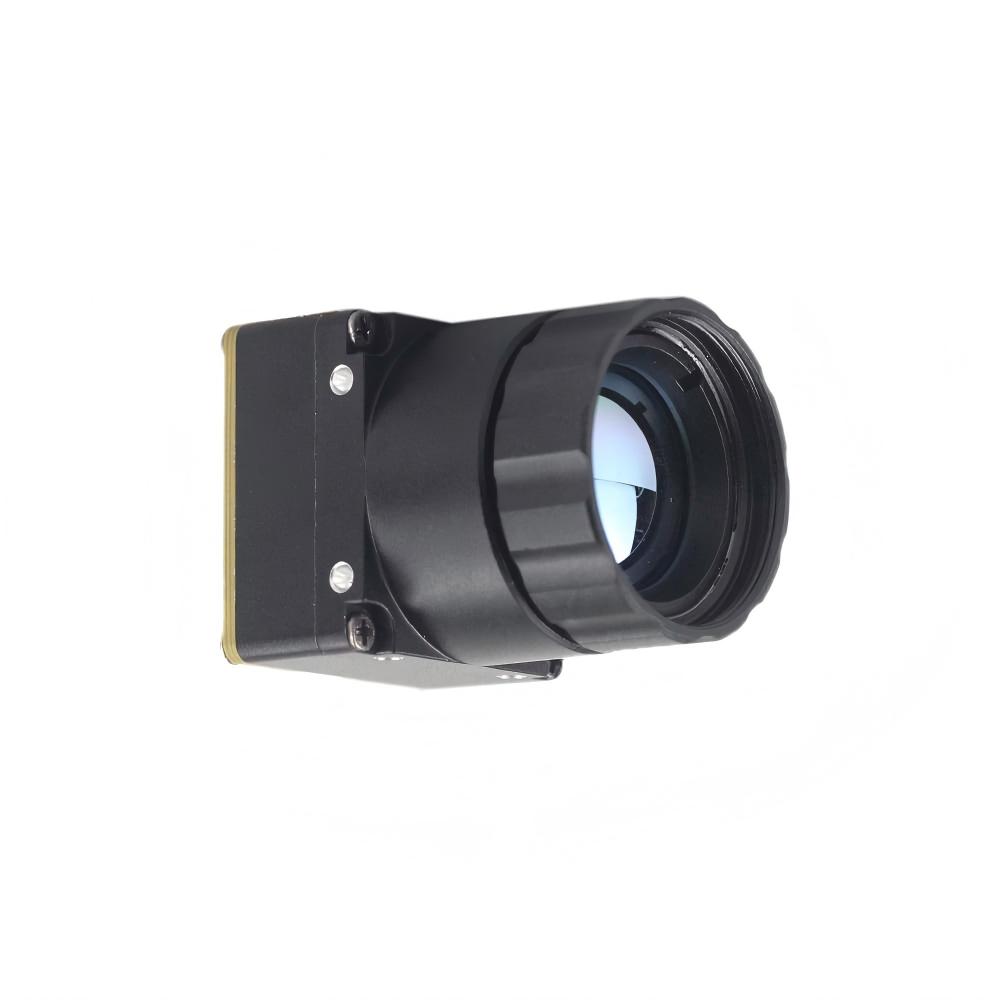
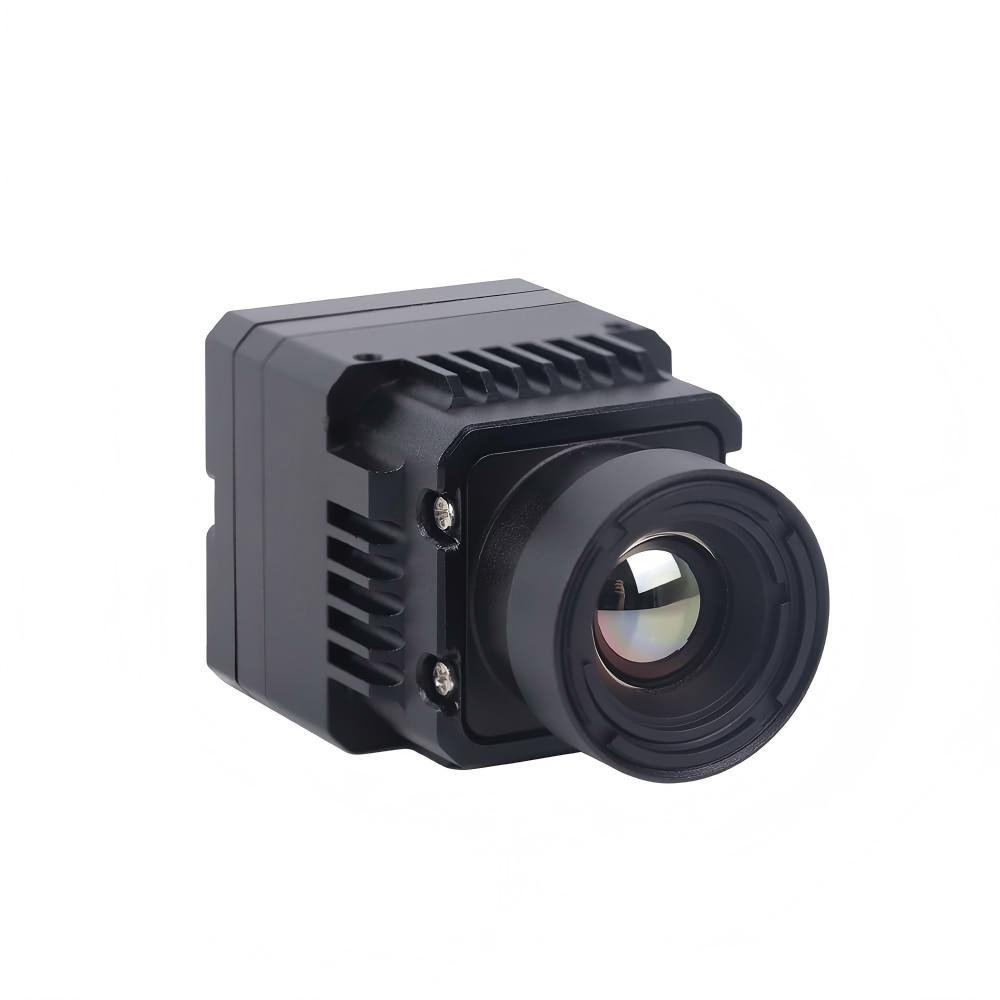
High-Resolution 1280×1024 Uncooled Infrared LWIR Camera
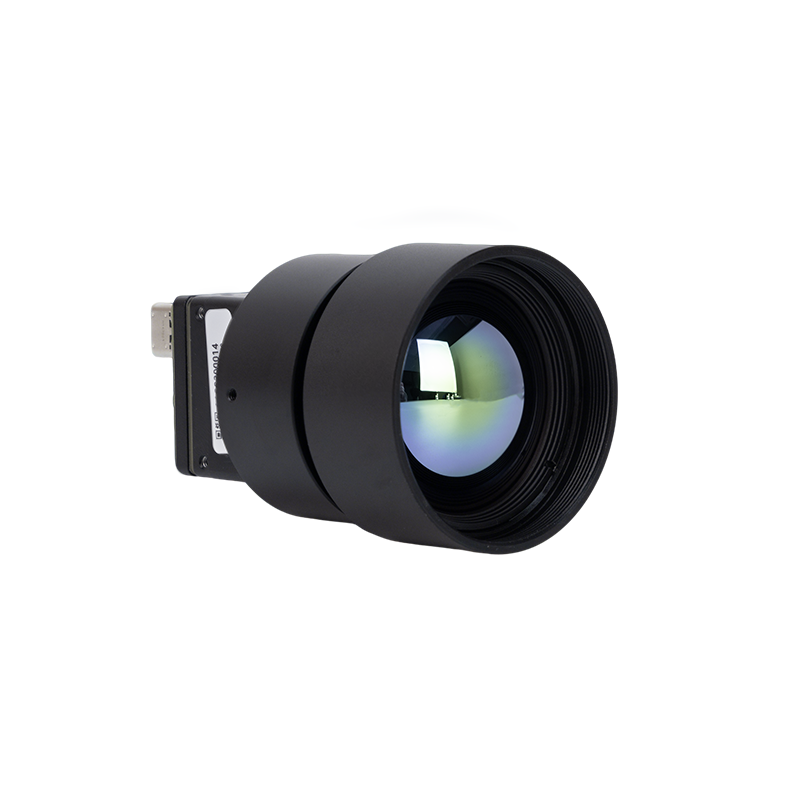
Representing the peak of uncooled infrared sensor technology, the High-Resolution 1280×1024 LWIR Camera core provides four times the spatial resolution of standard 640×512 sensors. Delivering 1.31 megapixels of crisp thermal data, this module is engineered for long-range tactical border surveillance, wide-area search and rescue, critical perimeter monitoring, and high-precision industrial inspection.
Supplied standard with a precision-machined 25mm high-transmittance infrared lens, this core enables systems architects to detect, recognize, and identify targets at ranges previously accessible only via expensive cryogenically cooled camera cores. The module outputs uncompressed radiometric data alongside real-time enhanced video for rapid integration into complex control platforms.
| Parameter | Engineering Specification |
|---|---|
| Detector Technology | High-Density VOx Microbolometer Array |
| Native Pixel Array | 1280 × 1024 pixels (High-Definition Megapixel Array) |
| Waveband | 8 μm to 14 μm (LWIR) |
| Integrated Primary Optic | Standard 25mm High-Performance Infrared Lens Assembly |
| Radiometric Accuracy | Full matrix factory calibrated; real-time per-pixel temperature reading |
| System Interfaces | Direct digital video output, industrial connectivity ports, command SDK |
| Deployment Scenarios | Border security, long-range fire prevention, wide-area optical surveillance |
5. SWaP-C Trade-off Matrix: Uncooled LWIR vs. Cooled MWIR Systems
One of the oldest debates in electro-optical system design is whether to deploy an uncooled Long-Wave Infrared (LWIR) VOx core or bite the bullet on a cryogenically cooled Mid-Wave Infrared (MWIR) system. Cooled MWIR engines operate down in the 3 μm to 5 μm band using InSb (Indium Antimonide) or MCT (Mercury Cadmium Telluride) detectors that must be chilled down to cryogenic temperatures (~77 Kelvin) by an integrated Stirling mechanical cooler.
Make no mistake: cooled MWIR delivers stunning sensitivity (NETD < 20 mK) and punches through high humidity over long naval corridors. But the SWaP-C hit is brutal. That Stirling cooler is an ultra-precise mechanical pump running under extreme helium pressure. It has real moving parts that wear down. Cooled thermal cores carry MTBF ratings of just 3,000 to 10,000 hours before the cryocooler gives up the ghost, requiring expensive factory rebuilds.
| System Trade-Off Vector | Uncooled LWIR (VOx Microbolometer) | Cooled MWIR (Cryo-Stirling InSb/MCT) |
|---|---|---|
| System Boot Latency | Instantaneous: Image output in < 2 to 3 seconds | Prolonged: Requires 5 to 10 minutes to cryo-cool to 77K |
| Continuous Power Draw | Ultra-low: Typically 0.8W to 2.5W total draw | High: 15W to 50W steady-state cooler consumption |
| Operational Lifespan (MTBF) | Solid-State: > 30,000 to 50,000 hours (No moving cryocooler) | Limited: 3,000 to 10,000 hours (Stirling pump wear) |
| Physical Weight (SWaP) | Micro-Payload: < 20g bare core up to 90g cased | Heavy: > 600g to 3.5kg minimum system envelope |
| Unit Procurement Cost | Economical: 1x baseline commercial/OEM scale | Extremely Costly: 8x to 20x factor vs uncooled modules |
| Acoustic & Vibration Footprint | Completely silent; zero mechanical vibration | Piston vibration; requires gimbal mechanical dampening |
For roughly 95% of real-world jobs—perimeter surveillance, commercial security, industrial robotic checks, firefighting drones, and tactical ground recon—a modern uncooled VOx core paired with quality telephoto Germanium optics gets you the DRI performance you need. You get instant-on capability, zero maintenance overhead, and a price tag that won't blow up your development budget.
6. OEM Supplier Vetting: Calibration, Quality Control, and Thermal Drift Testing
When you are sourcing thermal cores, never base your design on a glossy PDF datasheet. In the microbolometer world, the gap between paper specs and production yields can be vast. Foundries cut corners on wafer purities, skimp on burn-in testing, and rush calibration sweeps. Before signing off on an OEM vendor for your production run, verify their shop-floor practices:
- ⚙️ Thermal Chamber Burn-In: Bargain suppliers love to calibrate modules at a comfortable 25°C room temperature and call it a day. The minute you put that drone up in freezing air or run that sensor under full desert sun, the imagery collapses into noise patterns and dark curtains. A serious supplier runs 100% of their production units through environmental thermal cycling from -40°C to +80°C, building comprehensive offset lookup tables across the full operational range.
- ⚙️ Multi-Point Blackbody Verification: Ask your supplier about their calibration fixtures. They should be running automated multi-collimator rigs with cavity blackbodies calibrated to an emissivity of ≥ 0.995. This is the only way to catch noisy pixels, identify unstable thermal time constants, and eliminate 1/f noise outliers before the module gets soldered into your payload.
- ⚙️ Vibration and Mechanical Shock (MIL-STD-810H): If your module is heading onto a drone, a weapon sight, or a ground vehicle, it will take a beating. Verify that the core's vacuum seal, MEMS micro-bridge structure, and optical barrel have passed severe multi-axis random vibration and high-G drop tests without losing focus or cracking seals.
- ⚙️ Software Stack and SDK Maturity: Great silicon with terrible software is a paperweight. Your supplier must provide production-ready SDKs for Linux (Ubuntu, Debian, Yocto), Windows, and Android, paired with clean C/C++, Python, and ROS/ROS2 wrappers. You need direct API calls to control ROIC integration times, shutter cycles, bad-pixel maps, emissivity adjustments, and DMA buffer grabs.
Mini 640×512 Thermal Imaging Core Demo Video
7. Deep-Dive Industrial FAQ
Why do many low-cost uncooled LWIR camera cores suffer from noisy image quality, and how do industrial-grade suppliers resolve this?
Purpleriver resolves this through high-purity Vanadium Oxide (VOx) microbolometer focal plane arrays that deliver true sub-35mK NETD sensitivity. Our production protocol subjects every single camera core to multi-point environmental temperature chamber cycling from -40°C to +80°C. Coupled with intelligent scene-based adaptive non-uniformity correction (SBNUC) algorithms and low-noise readout integrated circuits (ROIC), our modules suppress fixed-pattern noise and maintain pristine, high-contrast thermal imagery across volatile operating environments.
Can your uncooled LWIR camera cores provide direct 14-bit or 16-bit raw radiometric data for custom engineering projects?
Purpleriver provides full SDK and driver-level access to the linear, uncompressed 14-bit or 16-bit raw digital radiometric stream over native MIPI-CSI2, USB, or Ethernet interfaces. Each pixel represents a calibrated digital number directly translatable into Kelvin, Celsius, or Fahrenheit values using our factory radiometric transformation matrices. This provides machine vision developers, edge AI engineers, and thermographers with the uncorrupted data required for industrial condition monitoring, hot-spot geolocation, automated thermal defect inspection, and deep-learning target segmentation models.
When should our engineering project choose an uncooled LWIR core instead of an expensive cooled MWIR module?
In contrast, Purpleriver's uncooled VOx LWIR cores (such as the Mini 640×512 and High-Resolution 1280×1024 engines) turn on instantly (< 2 to 3 seconds), consume minimal electrical power (< 1.5W), and contain no cryogenic moving parts, delivering solid-state MTBF ratings exceeding 30,000 hours. When integrated with high-performance Germanium optics, modern uncooled VOx cores achieve human and vehicle detection ranges out to several kilometers, offering a reliable, maintenance-free, and cost-effective solution for aerial drone payloads, autonomous mobile robots (AMRs), border fence cameras, and continuous industrial monitoring stations.
What are the primary optical considerations when integrating Germanium lenses with a 12µm uncooled thermal core?
Because Germanium exhibits a very high thermal refractive index coefficient (dn/dT), ambient temperature swings cause significant focal drift. High-performance OEM camera cores address this by incorporating optical barrels with mechanical athermalization (using compensating mechanical alloys with differential thermal expansion rates) or actively motorized athermal optics driven by internal core temperature sensors. Purpleriver offers a broad portfolio of factory-matched, pre-aligned athermalized optics ranging from 5mm wide-angle lenses up to 150mm telephoto assemblies, ensuring sharp optical focus across the entire operating temperature spectrum.
📚 References & Further Reading
- Industry Standard: Accelerate embedded edge AI computing, neural network inference, and real-time radiometric processing via the NVIDIA Jetson architecture.
- Industry Standard: Explore advanced commercial UAV integrations and multi-axis stabilized gimbal payloads engineered by OBSETECH.
- Related Guide: Read our engineering breakdown on compact multi-interface optronics in the uncooled infrared MIPI camera module guide.
- Related Guide: Access international optoelectronic design resources via our Arabic thermal camera module technical guide.
- Related Guide: Learn how long-wave infrared sensors are revolutionizing active vehicle safety in our whitepaper on thermal imaging safeguarding automobile driving.