

Best Night Thermal Camera Module for DIY Projects & Tactical Integration
2026年7月9日
Best 256x192 Thermal Camera Module: Integration Guide & OEM Solutions
2026年7月10日
# Best Mini Thermal Camera Module Guide: High-Res LWIR Cores for Raspberry Pi, Drones & DIY
For hardware architects, robotics engineers, and drone system integrators, selecting the right long-wave infrared (LWIR) sensor core is a critical decision that dictates system mass, power budgets, and processing pipelines. While low-end consumer thermopile arrays struggle with spatial resolution and thermal latency, high-performance uncooled VOx microbolometer modules bridge the gap between lab-grade radiometry and edge computing deployment. Whether you are designing sub-250g commercial drone payloads, building localized wildfire detection networks, or deploying real-time Edge AI vision models on the NVIDIA Jetson platform, achieving the optimal balance between size, weight, power, and cost (SWaP-C) requires looking past simple datasheets and analyzing raw sensor physics.
This ultimate technical architectural guide covers the foundational physics of uncooled LWIR sensor arrays, breaks down critical interfaces like SPI, USB, and MIPI CSI-2, and evaluates two market-leading micro-scale thermal camera modules. By examining optical configurations, software development kits (SDKs), and thermal sensitivity parameters, this resource is designed to help you confidently transition your next autonomous system, DIY thermal scope, or industrial inspection tool from a prototyping board to scale production.
Table of Contents
1. Optical Physics & SWaP-C Optimization in Mini LWIR Sensor Cores
Uncooled VOx vs. a-Si Detectors
The heart of any modern mini thermal camera module is the focal plane array (FPA), which converts incoming long-wave infrared radiation (typically 8μm to 14μm) into a digital signal. Look, if you are designing for high-performance drone payloads or tactical gear, the choice of detector material isn't just a footnote—it is the foundation of your entire signal chain. Modern commercial modules rely almost exclusively on two uncooled technologies: Vanadium Oxide (VOx) and Amorphous Silicon (a-Si). In our shop, Vanadium Oxide microbolometers are highly preferred for professional military, industrial, and drone applications. They exhibit a significantly higher Temperature Coefficient of Resistance (TCR) compared to Amorphous Silicon. This fundamental material property allows VOx detectors to register minute temperature variations with much lower electrical noise.
An Amorphous Silicon microbolometer has the manufacturing advantage of a simpler fabrication process using standard, high-volume semiconductor processing lines. However, to match the noise performance of a high-efficiency VOx array, a-Si arrays must often integrate longer capture windows (increased integration time), which can dramatically increase motion blur and lag in dynamic tracking scenarios. For high-speed applications like drone payload imaging or handheld tactical scoping, VOx sensors offer cleaner edges, sharper thermal responsiveness, and more stable performance under dynamic ambient environmental transitions. When you are tracking a fast-moving target on a cold night, that difference isn't academic—it is the difference between a clean lock and a smeared blob of useless pixels.
Microbolometer Pixel Pitch and NEDT Explained
When analyzing a mini thermal module's technical datasheet, two core parameters define its ultimate spatial and thermal resolution: Pixel Pitch and Noise Equivalent Temperature Difference (NETD).
- ⚙️ Pixel Pitch (expressed in micrometers, μm): This is the physical center-to-center distance between two adjacent detector pixels on the FPA. Historically, 17μm was the industry standard for commercial thermal imaging systems. Modern high-resolution cores have transitioned to a 12μm pixel pitch. Moving from 17μm to 12μm has two critical integration benefits: First, it allows a 640x512 resolution sensor to fit within a physical footprint that previously would only accommodate a 336x256 array, radically optimizing the core's Size, Weight, and Power (SWaP) profile. Second, it enables the use of smaller, lighter, and less expensive Germanium (Ge) optics while maintaining the exact same spatial resolution (instantaneous field of view, or IFOV).
- ⚙️ Noise Equivalent Temperature Difference (NETD, expressed in milliKelvins, mK): This measures the thermal sensitivity of the module—specifically, the minimum temperature difference the camera can resolve when its signal-to-noise ratio is equal to one. An industry-standard thermal core exhibits an NETD of less than or equal to 50mK (at F/1.0, 300K). High-sensitivity professional modules push this past less than or equal to 40mK. A lower NETD translates directly to cleaner structural imaging under low-contrast, isothermal conditions (such as cold night environments or overcast days), allowing automated classification systems designed by leaders like KUYANG to easily segment low-contrast targets from cluttered backgrounds.
Micro-Scale Thermal Camera Optics: Understanding Lens Selection
Unlike visible light cameras that utilize inexpensive optical glass, LWIR radiation is completely blocked by standard silicate glass. Mini thermal modules must employ specialized, highly transparent infrared optic materials, predominantly Germanium (Ge) or chalcogenide glasses. Germanium boasts an exceptionally high refractive index (approximately 4.0) and minimal chromatic aberration in the 8-14μm band, but it is expensive to extract and diamond-turn into highly polished aspheric lenses.
Here is the deal with focal length: it directly dictates your field of view (FOV) and target acquisition distance. A short focal length lens (e.g., 5mm, 9mm, or 13mm) yields a wide field of view, making it ideal for indoor security monitoring, close-quarters robotics navigation, or agricultural crop canopy scanning. Conversely, long-range tracking, localized search-and-rescue, and drone reconnaissance require telephoto optics running focal lengths of 35mm, 50mm, 75mm, 100mm, or up to 150mm. When deploying telephoto LWIR lenses on weight-sensitive platforms like sub-250g drones, a critical balance must be struck: large Germanium optics add significant payload mass and require motorized autofocus mechanisms or precise manual focus threads, increasing mechanical cost and complexity. You have to design your gimbal drives with this added weight in mind, or your stabilization is going to suffer.
2. Embedded Interfaces: SPI, USB, MIPI CSI-2 & Analog Video
The Driver Pipeline: Real-Time Radiometry vs. Compressed Video
To effectively design industrial hardware around a mini thermal camera, an engineer must distinguish between two primary data stream types generated by the core:
- ⚙️ Radiometric Stream: The sensor outputs raw 14-bit digital data corresponding directly to the thermal energy received at each individual pixel point. This mathematical matrix is required for absolute temperature calculations, thermal gradient analysis, and raw data feeding for Edge AI models. Streaming this uncompressed data requires high-speed buses and custom parser pipelines on the host microcomputer.
- ⚙️ Visual Stream: The sensor's onboard processor applies a Non-Uniformity Correction (NUC), an Automatic Gain Control (AGC) curve, and maps the 14-bit sensor array into compressed 8-bit digital video (such as YUV422, RGB, or standard H.264/265 packages). This is optimal for low-latency displays, pilot viewfinders, and human target identification.
Raspberry Pi and Jetson Nano Interfacing Protocols
Choosing the physical connection path dictates your processing hardware choices and shapes your entire integration layout:
USB (Universal Serial Bus - UVC Protocol): This is the easiest connection standard for single-board computers (SBCs) like the Raspberry Pi 4/5 or NVIDIA Jetson Developer Kits. Using the standard USB Video Class (UVC) driver framework, the thermal module presents itself as a plug-and-play webcam. High-performance modules can stream both 8-bit colorized video feed and 14-bit raw radiometric metadata interleaved into the UVC frame container, allowing developers to extract accurate coordinates without custom micro-kernel drivers. For further integration examples with Linux-based edge devices, read our detailed guide on the best raspberry pi thermal camera module for high-res edge AI linux.
SPI (Serial Peripheral Interface): For microcontrollers like the ESP32 or STM32, USB pipelines are too resource-heavy. In these scenarios, a low-overhead SPI interface is used. Through SPI pin configurations, the microcontroller polls the thermal core's Read-Out Integrated Circuit (ROIC) frame-by-frame. While bandwidth limits restrict resolutions to 256x192 or lower at reduced framerates, SPI is highly power efficient and ideal for remote monitoring and simple battery-operated industrial IoT setups.
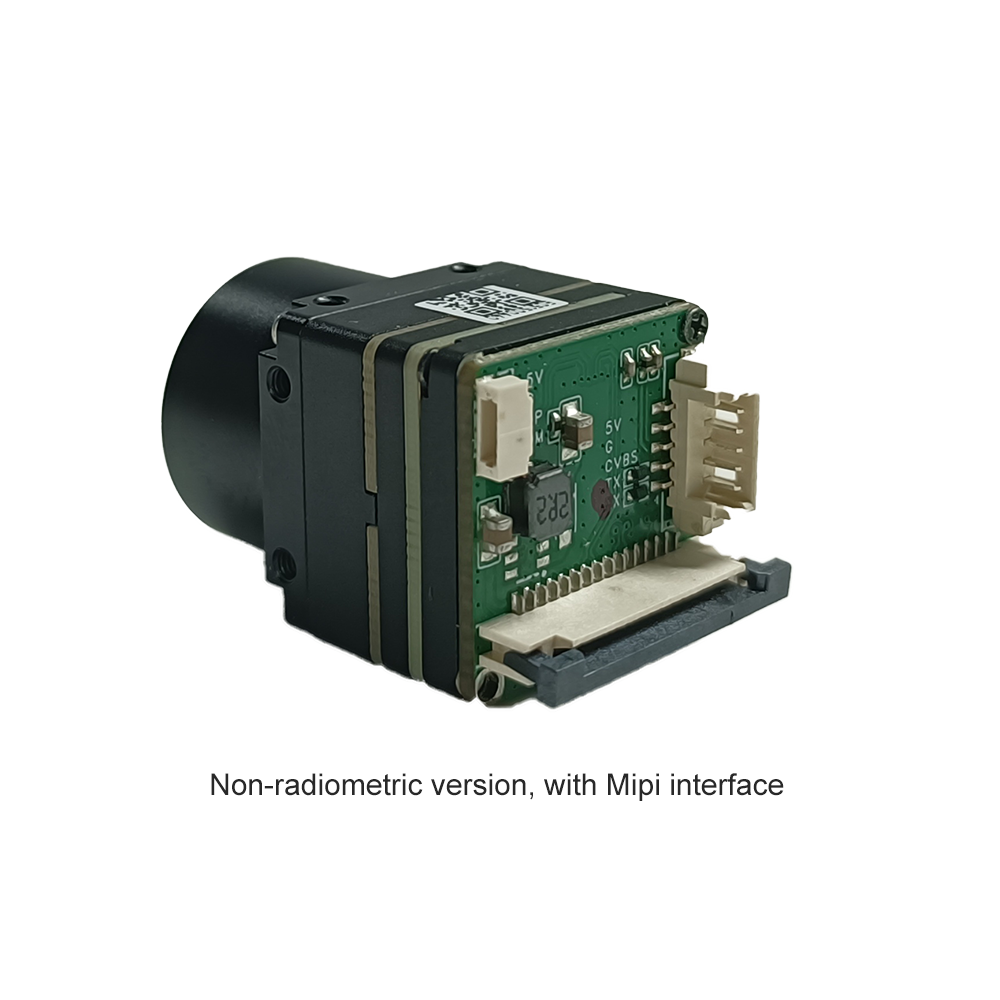
MIPI CSI-2: For critical latency-sensitive systems, nothing matches Mobile Industry Processor Interface (CSI-2). Directly routing pixels through CSI-2 bypasses the intermediate USB conversion step, dropping latency to sub-millisecond levels and lowering host CPU usage, which is perfect for real-time collision avoidance on autonomous mobile robots (AMRs).
3. Industrial-Grade Mini LWIR Thermal Camera Modules
The table below breaks down two high-performance mini LWIR uncooled thermal imaging camera modules designed for rapid mechanical integration on embedded platforms.
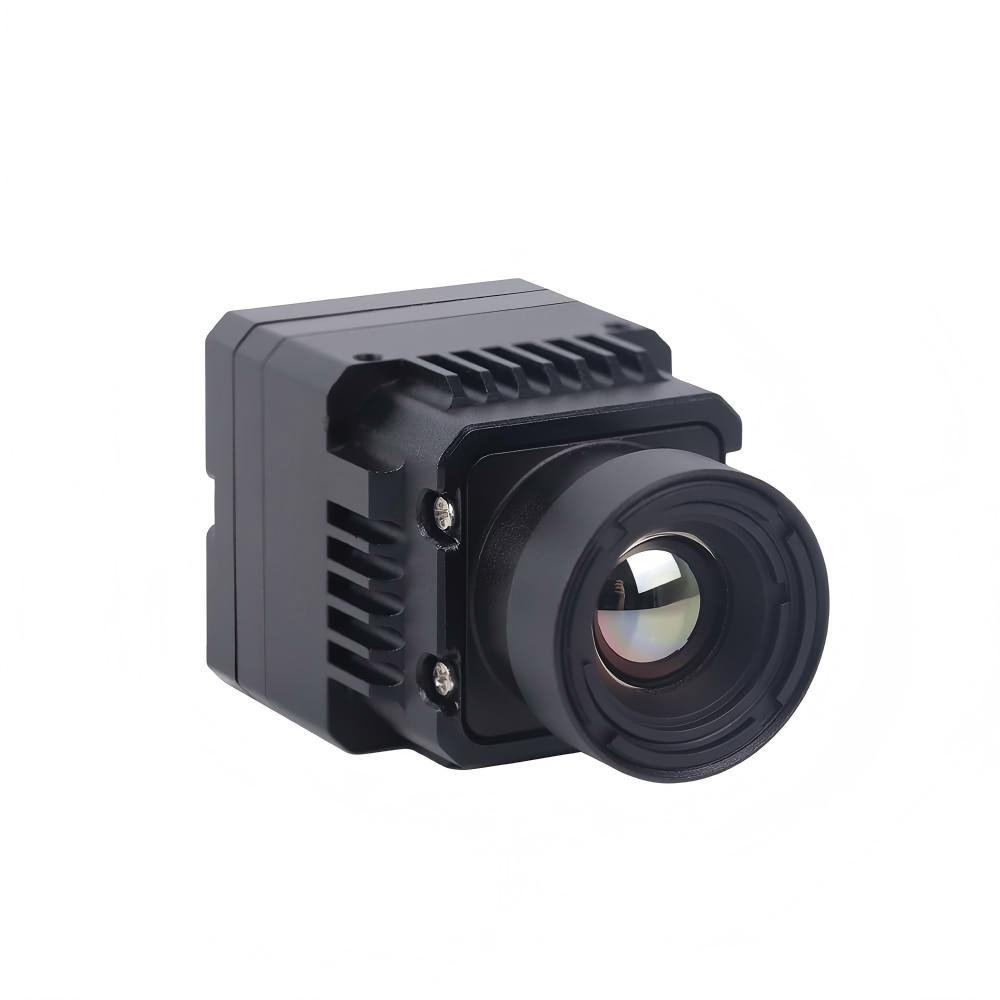
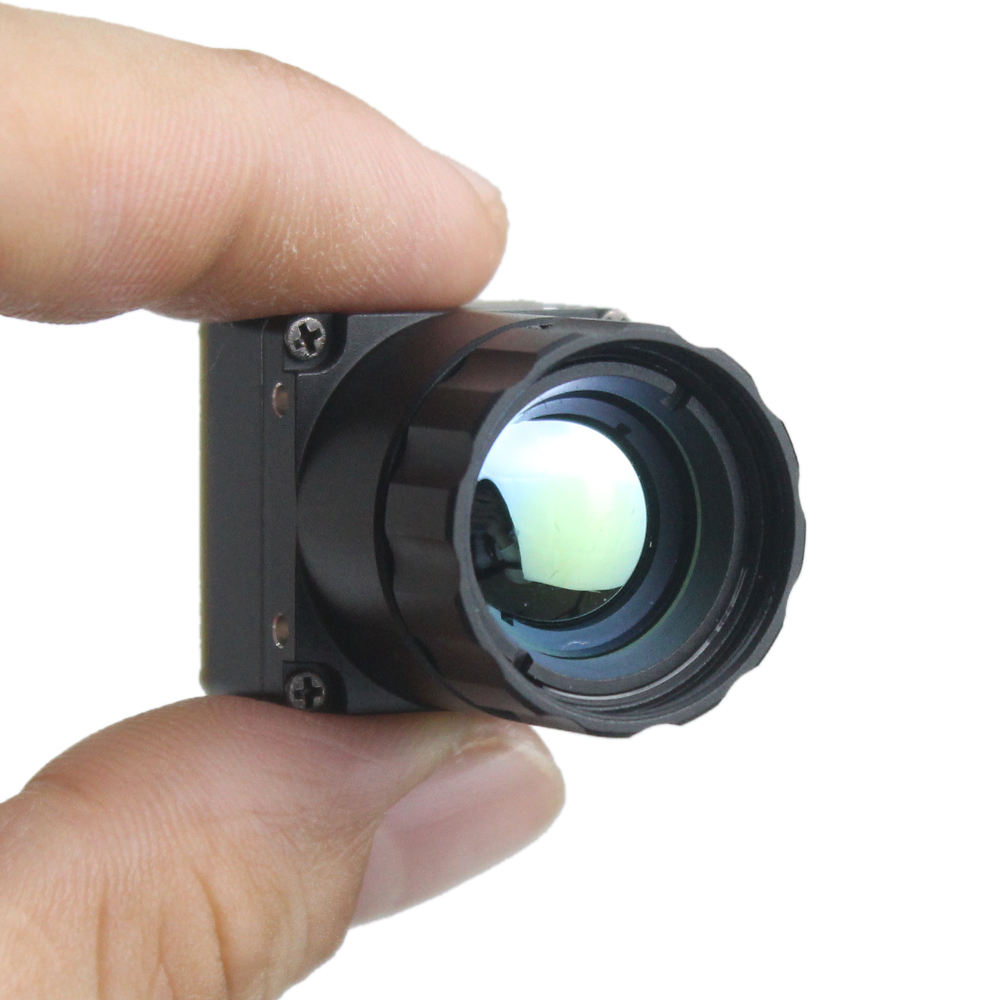
Uncooled LWIR USB Mini 640*512 Thermal Imaging Camera Core Module For Drones Similar To DJI
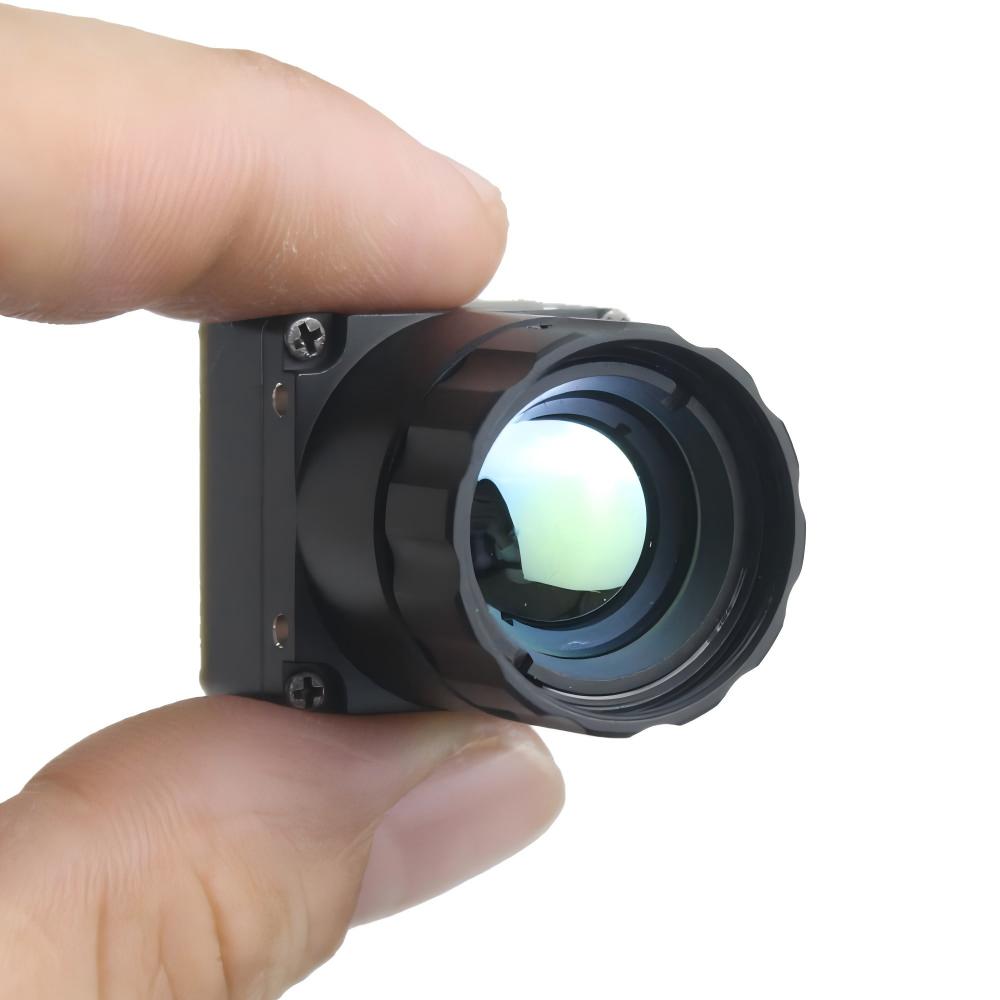
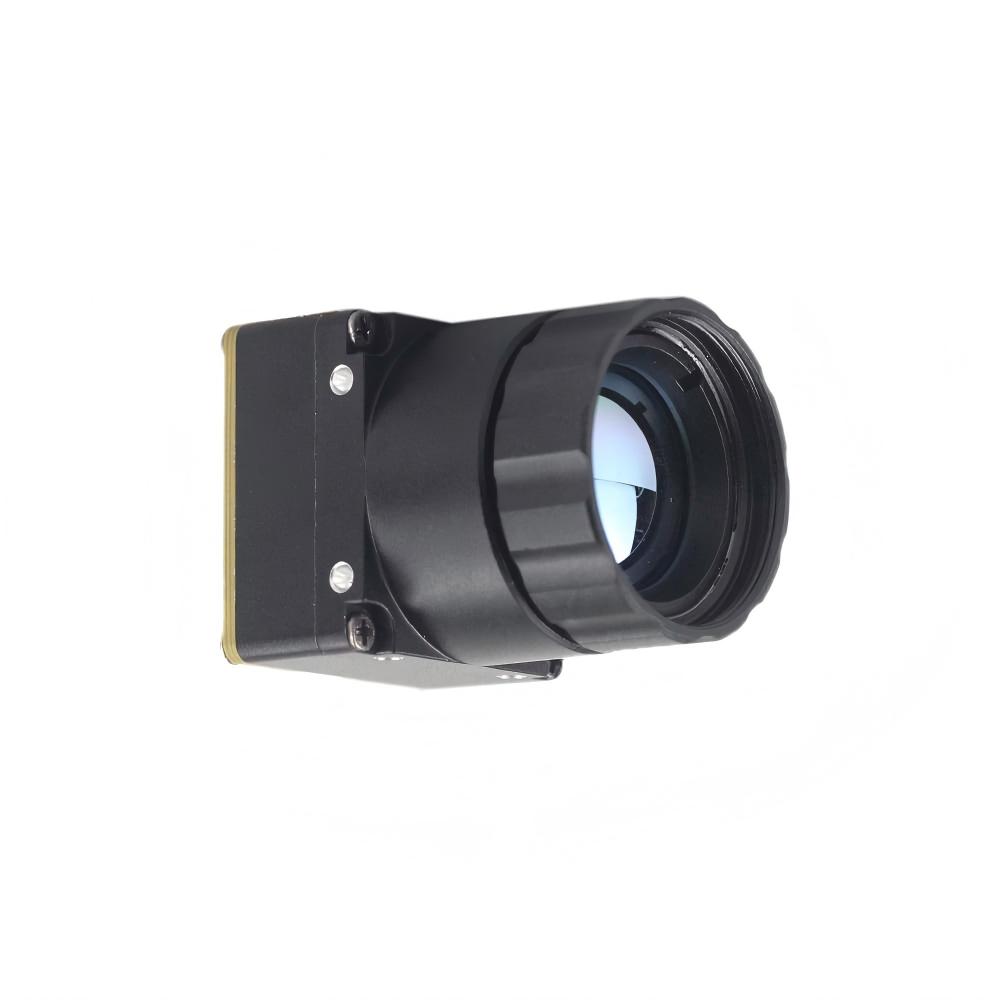
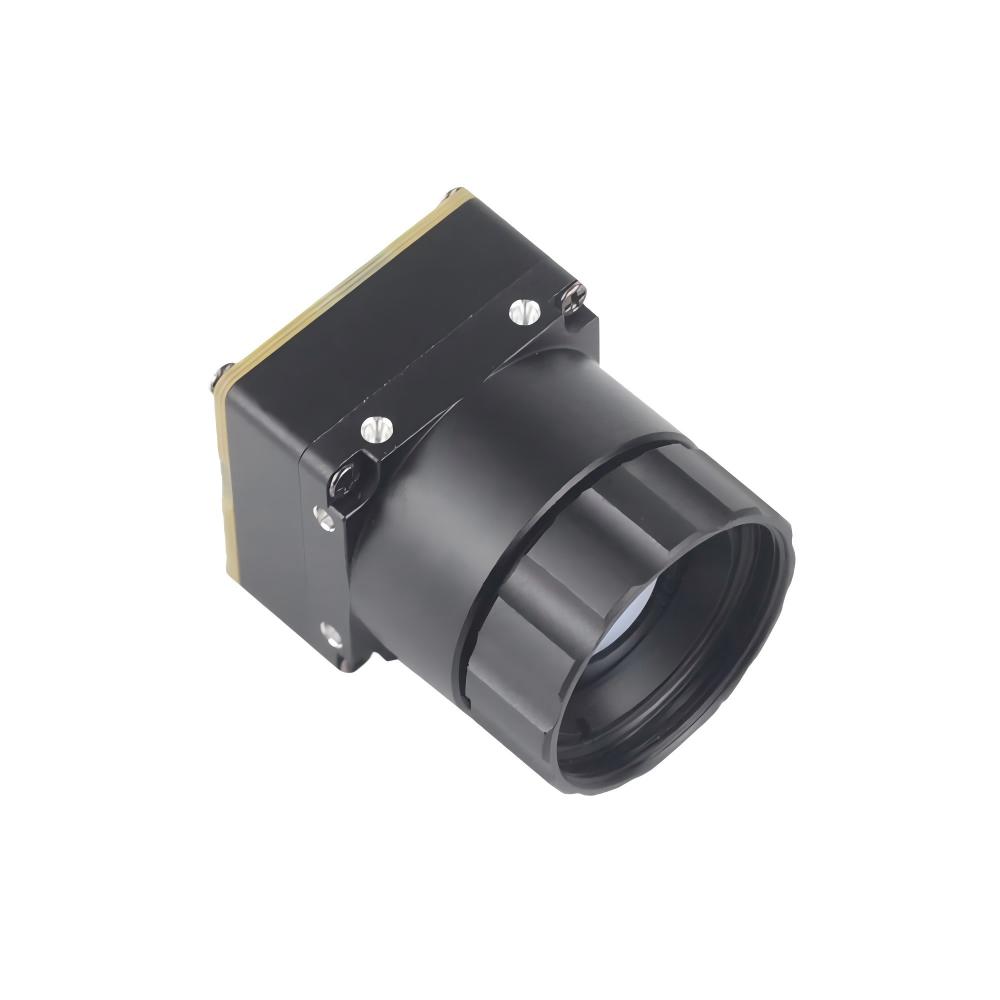
Integrating a highly sensitive 640x512 microbolometer array into a miniature chassis body measuring just 21mm by 21mm puts the Uncooled LWIR USB Mini 640*512 Thermal Imaging Camera Core Module at the leading edge of modern sensor miniaturization. This specialized camera module features sharp and crisp image presentation in a compact size, making it a perfect low-cost alternative for drone and robotic platforms.
Deploying with a modular lens selection encompassing 5mm, 9mm, 13mm, 18mm, 35mm, 50mm, 75mm, 100mm, and 150mm configurations, as well as an optional 640*480 resolution mode, this core offers incredible flexibility. It provides outstanding environmental adaptability and stable performance across standard operating envelopes, making it highly comparable to DJI enterprise-class thermal camera payloads.
View Product Details & Pricing ➔
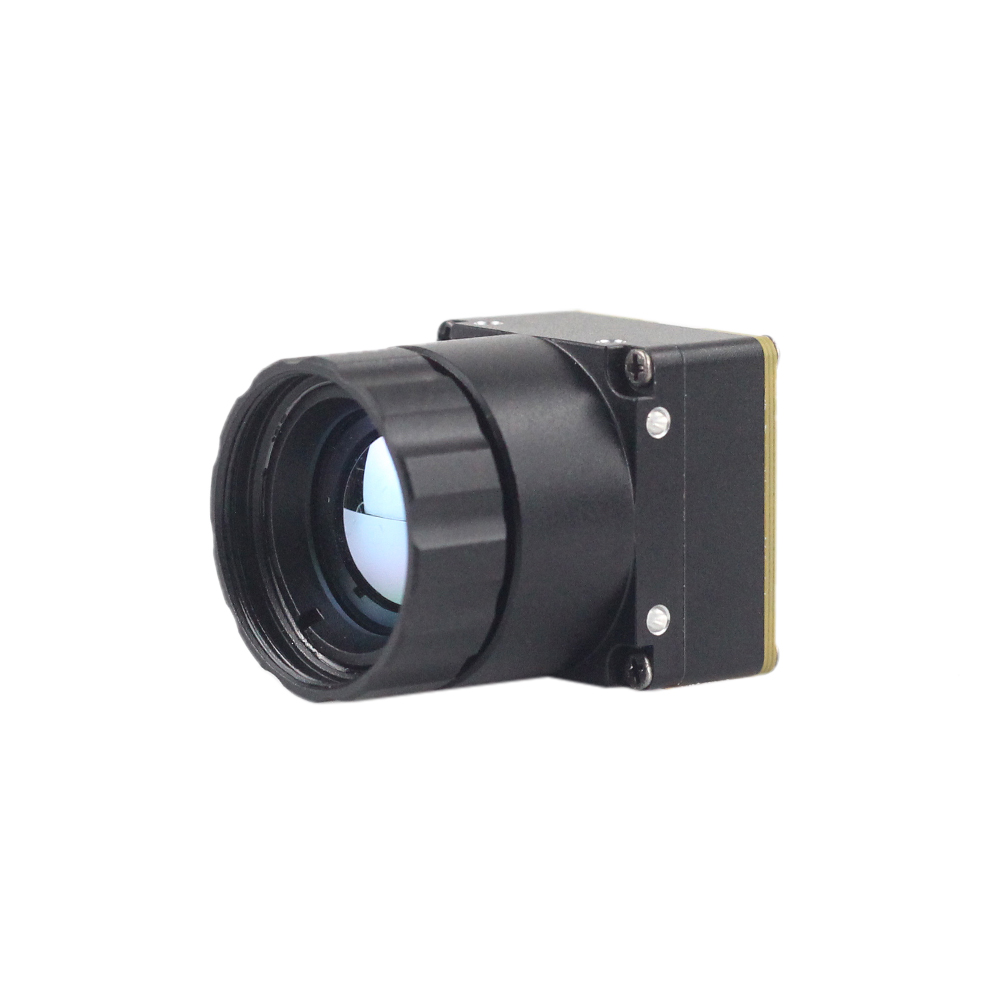
Uncooled LWIR Mini 256*192 Thermal Imaging Camera Module Similar To DJI For Detecting Mines
For applications demanding high thermal accuracy, compact dimensions, and specialized mission profiles, the Uncooled LWIR Mini 256*192 Thermal Imaging Camera Module delivers high-performance infrared tracking. Built on high-performance infrared detectors designed for ultra-clear thermal imaging and accurate temperature measurement, this sensor is engineered to capture infrared radiation and output a uniform thermal image with precise radiometry.
The module retains the ultra-miniature 21mm by 21mm physical footprint, making it perfectly suited for mounting on lightweight ground exploration rovers and micro-UAVs. Whether used for detecting underground anomalies, buried ordnance, mine clearance, or local industrial inspection, it delivers the necessary precision without adding bulk or high costs to the target system.
View Product Details & Pricing ➔
4. Developer SDKs, Calibration Pipelines & AI Integration
Raw Temperature Matrix Output vs. AGC Colorized Frames
When writing machine vision pipelines, using the raw radiometric stream is key to accurate thermal analysis. The raw 14-bit stream outputs digital counts (ADCs) per pixel that can be converted directly into Kelvin temperatures via calibration formulas: T = Pixel Value * Calibration Factor + OFFSET. These mathematical matrices provide real-time absolute temperatures, which are essential for industrial alarm systems, cell profiling, or search-and-rescue target confirmation.
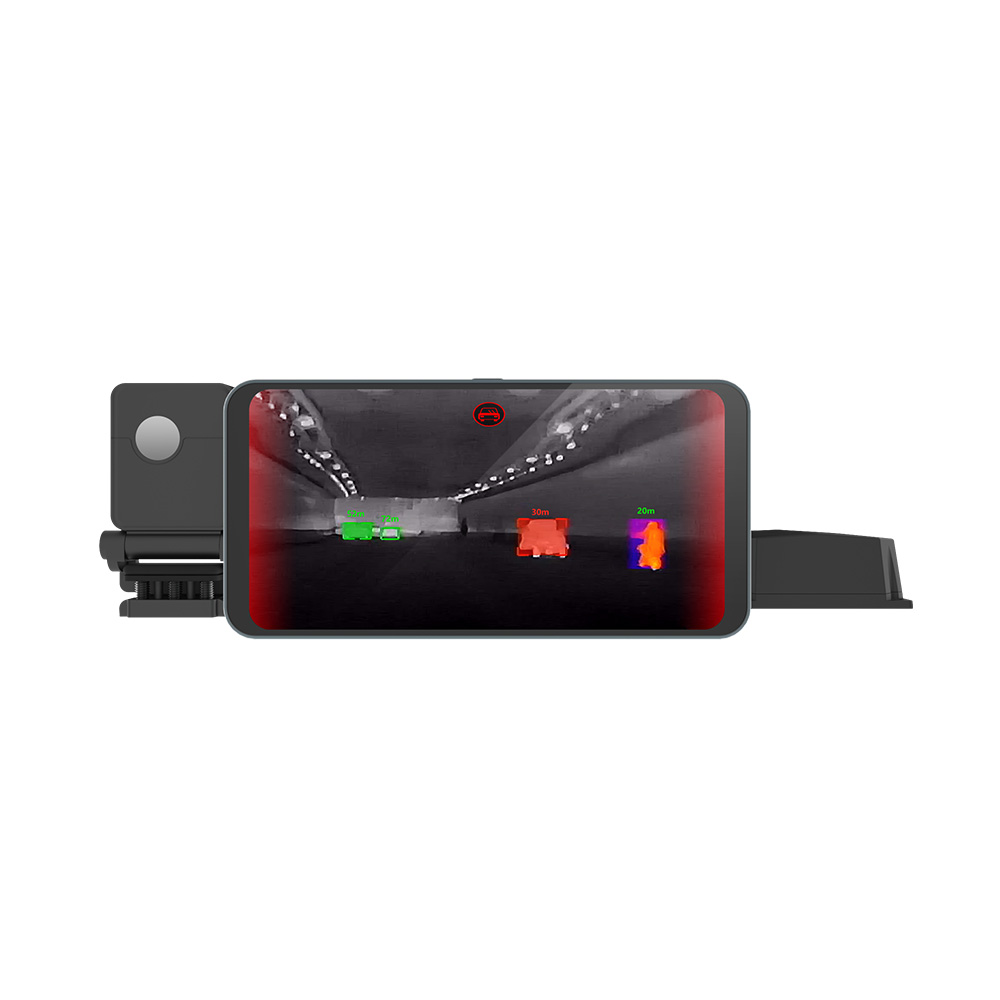
Contrastingly, for visual tracking pipelines like drone feeds, raw frames are processed through built-in Automatic Gain Control (AGC) and localized histogram equalization algorithms. These algorithms stretch the lower dynamic range signals of the target scenes into high-contrast 8-bit greyscale or pseudo-color frames (e.g., Ironbow, Rainbow, White-Hot). This processing highlights physical features and structures while discarding absolute raw temperature data, making it ideal for human vision and visual monitoring systems. For unique real-world examples of visual-based mobile thermal setups in road vehicles, see our post on implementing an extremely practical thermal automotive camera system.
Implementing Edge AI Models (YOLO / OpenCV)
Integrating raw radiometric matrix arrays into edge hardware platforms like the NVIDIA Jetson series or Raspberry Pi opens up custom possibilities for automated targeting and recognition. Since thermal signatures are relatively decoupled from changing lighting conditions, they are highly reliable inputs for deep-learning computer vision architectures like YOLOv8 or SSD-MobileNet. Our comprehensive developer SDKs allow developers to tap directly into the low-level firmware pipelines of our modules, reading the raw video matrix stream directly into memory arrays, as detailed in our analysis of varying thermal functionalities across manufacturer lines.
Using C++ or Python wrapped with OpenCV, engineers can write high-frequency threshold routines that overlay tracking vectors on standard video output. For instance, in automated surveillance, a developer can run a lightweight convolutional neural network (CNN) model only over high thermal-intensity bounding regions, drastically reducing host processing strain and optimizing battery power on un-tethered autonomous systems.
5. Deep-Dive Integration FAQ
Can I stream real-time, high-resolution thermal video to a Raspberry Pi or ESP32?
Are these mini thermal camera modules suitable for sub-250g drones or DIY scopes?
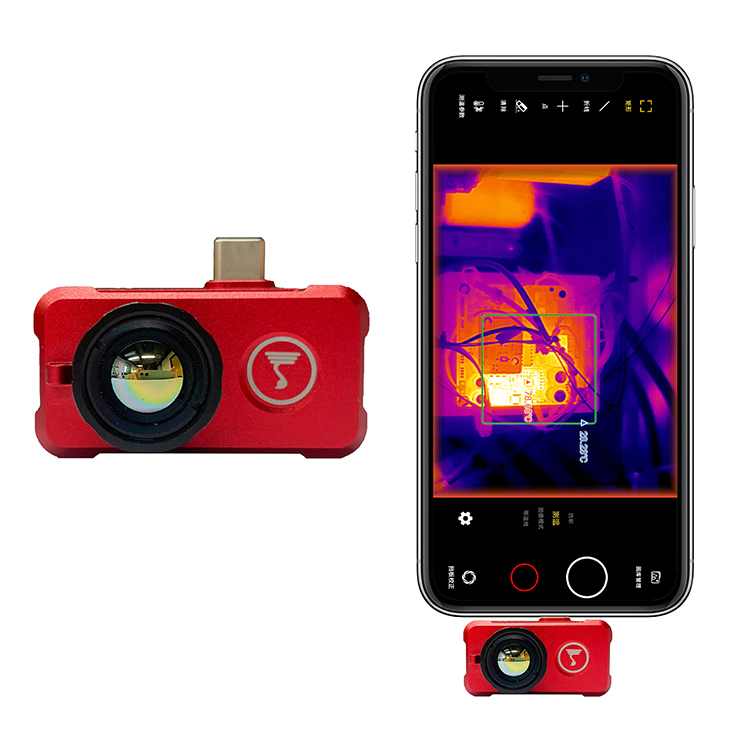
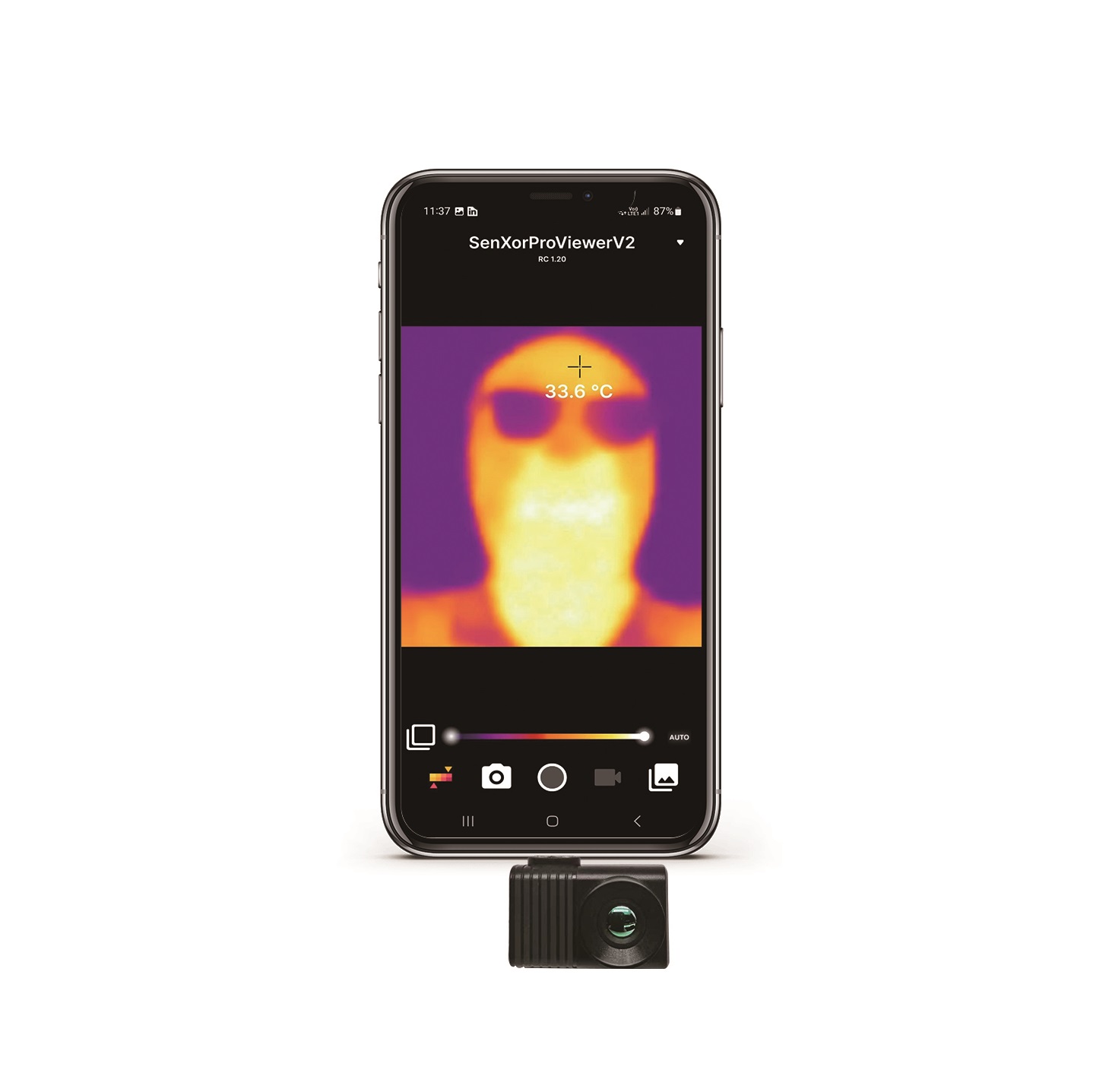
Why choose Purpleriver's OEM mini module over a cheap smartphone thermal attachment?
📚 References & Further Reading
- Industry Standard Platform: NVIDIA Jetson Embedded Computing Developer Ecosystem
- Industrial Manufacturing Partner: KUYANG Electronic Component Arrays
- High-Resolution Linux Integration: Best Raspberry Pi Thermal Core Module for Edge AI & Linux Operations
- Mobility Application Showcase: A Practical Guide to Thermal Automotive Integration Design
- Module Parameter Variations Explained: How Market Positioning & Features Vary Across Advanced Thermal Sensors